



Abstract
The COVID-19 pandemic, caused by SARS-CoV-2, still lacks a valid treatment strategy. Various plant-derived compounds, such as alkaloids, phenolics, tannins, lecithin, coumarins, lignans, and anthocyanidins, have been extensively studied for their antiviral properties. These compounds have shown efficacy against a range of viruses, such as coxsackievirus (CV), dengue virus (DENV), enterovirus 71 (EV71), hepatitis B (HBV) and C (HCV) viruses, herpes simplex virus, HIV, influenza, measles virus (MV), respiratory syncytial virus (RSV), avian infectious bronchitis virus (IBV), and SARS-Co-V. The use of plant-based remedies to treat viral infections is a traditional approach passed down through generations and has now been used for drug discovery. These natural products are often valued for their non-toxicity, easy availability, low cost, and potential as nutraceuticals with minimal side effects. Phytochemicals are increasingly seen as promising agents for long-term, supportive therapy. In light of this, we aim to review the potential of specific phytochemicals as immunomodulatory agents and preventive measures against COVID-19. Herbal medicines are widely utilized for treating viral infections, but research into the specific antiviral constituents, their mechanisms of action, bioavailability, absorption, and metabolism remains limited. Recent studies have provided valuable insights into how these natural compounds interact with the viral lifecycle, including viral entry, replication, assembly, release, and the interaction between the virus and the host. This review highlights the key phytochemicals found in herbs that have demonstrated significant antiviral activity, particularly against COVID-19, and their potential role in managing viral infections.
Keywords
Introduction
For millennia, nature has been a rich source of medicinal substances, from which many modern pharmaceuticals have been derived. Specifically, plants have been utilized in folk medicine for various ailments, and their diverse natural products have significantly contributed to the design and development of new therapeutic agents. 1 Currently, viral infections represent one of the most significant global challenges to healthcare systems due to the high morbidity and mortality rates associated with other diseases. As reported by various studies, life-threatening viruses, including human immunodeficiency virus (HIV), hepatitis viruses (A, B, and C), herpes simplex virus (HSV), severe acute respiratory syndrome coronavirus (SARS-CoV), and influenza, have a significant impact on human health. 2 Additionally, the emergence of SARS-CoV-2 in late 2019 has further intensified the viral threat among large populations, as well as posing significant fatalities worldwide, and eliciting a global health concern. The lack of safe and effective antiviral treatments & management strategies against these viruses has exacerbated global health issues and socioeconomic development 3
Traditionally, medicinal plant extracts have been used to treat viral infections. Boots Drug Company (England) was a pioneer that re-explored the antiviral properties of herbal plants. 4 Natural products have long been essential in treating infectious diseases, with approximately three-quarters of these conditions managed by natural remedies. Approximately 80% of the global population relies on traditional medicine to maintain health and treat disease. 5 Over the years, numerous studies have investigated the virocidal activities of various medicinal plant extracts in aqueous and alcoholic formulations. The COVID-19 caused by SARS-CoV-2 began in Wuhan, China, in December 2019 and was reported by the World Health Organization (WHO) on 11 February 2020. The virus spread rapidly to countries like Europe and the Americas, with a significant rise in new cases by early March 2020. 6 Therefore, COVID-19 outbreak has become one of the most significant pandemics of recent times. 7
Before COVID-19 pandemic, two major coronavirus outbreaks had occurred, one was the Severe Acute Respiratory Syndrome (SARS) outbreak in 2002 and the other was the Middle East Respiratory Syndrome (MERS) outbreak in 2012.8,9 All of these epidemics began with animal-to-human followed by human-to-human transmission, and the primary cause of mortality was due to severe atypical pneumonia.8,9 In the twenty-first century, COVID-19 (SARS-CoV-2) is the third major outbreak caused by coronaviruses, following SARS (SARS-CoV) and MERS (MERS-CoV). SARS-CoV-2 spread rapidly, prompting the WHO to declare it a global pandemic (COVID-19 pandemic) on March 11, 2020. While some individuals infected with SARS-CoV-2 remain asymptomatic, others may experience severe illness or even death. 9 The rapid spread of COVID-19 can be attributed to the higher transmissibility of SARS-CoV-2 compared to SARS and MERS, as well as its ability to mutate and give rise to new variants.9,10
However, it has been explored that clinical trials and in silico studies on natural products, such as Ashwagandha, Guduchi, Yashtimadhu, and Tulsi, depicted profound effects and could elicit potent preventive and therapeutic agents against COVID-19 and other viral diseases.11-14 This review focused on the mechanistic insights of herbal medicines that elicit interferons as well as antibody secretions, leading to an increased immune response against SARS-CoV-2.
Coronavirus Overview
SARS-CoV-2 is a single-stranded, positive-sense RNA virus of Beta-CoV. Coronaviruses are classified into four genera: Alpha-CoV, Beta-CoV, Delta-CoV, and Gamma-CoV. These viruses are characterized by a protein envelope adorned with crown-like spikes, which play a crucial role in their pathogenicity, primarily causing respiratory and enteric diseases. The M (membrane), E (envelope), and S (spike) proteins that encase the virus and are responsible for viral assembly, pathogenesis, and invasion of target cells. 14 Coronaviruses (CoVs), belonging to the family Coronaviridae, are enveloped, positive-sense, single-stranded RNA, 26–32 Kbp large genomes, and can infect both animals as well as humans.10,14 Based on their genetic and serological characteristics, coronaviruses are classified into four genera: Alpha, Beta, Gamma, and Delta coronaviruses. 14 Human coronaviruses (HCoVs) account for 15%–30% of all common cold cases, with more severe respiratory infections caused by strains like SARS-CoV, MERS-CoV, and SARS-CoV-2 underscoring the heightened pathogenic potential of emerging coronaviruses. The Coronaviridae family includes several species that primarily affect the upper respiratory and gastrointestinal tracts of mammals and birds. Coronaviruses that infect humans are classified into the alpha coronaviruses, such as HCoV-NL63 and HCoV-229E, and beta coronaviruses, such as HCoV-OC43, HCoV-HKU1, SARS-CoV, MERS-CoV, and SARS-CoV-2.10,14 During the COVID-19 pandemic, improved dietary habits and an increased focus on strengthening the immune system were observed around the globe.15,16
Since the early twenty-first century, several viral infections like Ebola, HIV, Influenza, and Coronaviruses have posed substantial public health challenges, contributing to considerable morbidity and mortality. Among them, influenza is responsible for an average of 300,000 to 500,000 deaths annually.17,18 Human coronaviruses such as HCoV-229E, HCoV-OC43, HCoV-NL63, and HCoV-HKU1 typically cause the common cold, but can also lead to more severe complications, including pneumonia in some cases, like SARS-CoV, MERS-CoV, and SARS-CoV-2.18,19
The first major coronavirus outbreak, caused by SARS-CoV, emerged in 2002, leading to widespread illness and high mortality rates globally.20,21 In 2012, the World Health Organization (WHO) identified MERS-CoV as a sixth human coronavirus, which led to higher fatality rates. 22 The COVID-19 pandemic, caused by SARS-CoV-2, is the most recent and significant coronavirus outbreak, closely related to both SARS-CoV and MERS-CoV, and also associated with severe pneumonia during earlier outbreaks.20,22 To date, seven human coronaviruses have been identified: HCoV-NL63, HCoV-229E, HCoV-HKU1, HCoV-OC43, SARS-CoV, MERS-CoV, and SARS-CoV-2. Four of these (HCoV-NL63, HCoV-229E, HCoV-HKU1, and HCoV-OC43) are endemic in human populations.20-23 The genomes of HCoV-229E and HCoV-NL63 are approximately 27.5 kb, while HCoV-OC43 and HCoV-HKU1 have genomes exceeding 30 Kbps. The genetic structure of SARS-CoV-2 has been extensively characterized and published,24-25 showing high similarity with both SARS-CoV and MERS-CoV (Figure 1).

Phylogenetic Representation of Beta-Coronaviruses, Especially SARS-CoV-2.
Due to the novel nature of SARS-CoV-2, many uncertainties remain regarding its behavior. However, given the high genetic similarity between SARS-CoV-2 and previous coronaviruses, research into herbal compounds that demonstrated antiviral effects against SARS-CoV and MERS-CoV may offer valuable insights regarding SARS-CoV-2, which could be used as a potential treatment for COVID-19. Drug discovery from herbs involves identifying active compounds that can be developed into therapeutic agents, providing an alternative or complementary approach to combat SARS-CoV-2 and other viral infections. 25
Phytochemicals as Immunity Boosters
Recent studies suggest that individuals recovering from COVID-19 do not develop long-lasting or robust immunity against re-infection. As a result, it is unlikely that vaccine-based approaches or treatments utilizing hyperimmune serum will offer significant benefits for patients with active infections. Additionally, currently available approved antiviral drugs and those under clinical trials have shown limited efficacy against SARS-CoV-2. Therefore, there is an urgent need to identify more effective antiviral molecules against COVID-19 and strategies to enhance immune responses. 18
To date, no definitive therapeutic agent or vaccine offers an absolute prevention of COVID-19. 26 However, robust immunity can prevent infection and reduce the severity of the disease. 27 Although Ayurveda, as a long-standing tradition, offers various remedies to prevent COVID-19. Ancient Ayurvedic texts on Indian tradicinal medicine, such as the Charak Samhita (dating back over 5000 years), described the potential treatments for conditions similar to COVID-19. A growing literature supports the use of herbal regimens to strengthen immunity and even treat SARS-CoV-2 infections with minimal side effects. 27
Several common herbs and phytochemicals are known to enhance immunity, such as Withania somnifera (Ashwagandha),
28
Tinospora cordifolia (Guduchi), and Ocimum sanctum (Tulsi),
29
which have been considered to boost the immune system and combat viral infections
30
(Figure 2). Moreover, some medicinal plants listed below have potentially active phytoconstituents combating broad-spectrum respiratory infections, which are discussed in the manuscript.

Phytochemicals: Immunity Boosters and Potential Mechanism of Action.
Herbal medicines have been used with conventional treatments to combat respiratory viral infections. Evidence suggests that herbal remedies are effective against SARS-CoV.31,32 Typically, it is attributed to the inhibition of viral replication; however, the exact mechanisms of their antiviral effects remain unexplored.
Innate immunity serves as the first line of defense against pathogens, including SARS-CoV-2. 33 However, SARS-CoV-2 has evolved various mechanisms to evade the host's immune defenses by interfering with or delaying type I and III interferons (IFN-I and IFN-III) signaling.24,27 Additionally, studies have shown that hyperglycemia can impair IFN-I production and signaling, weakening the innate immune response and hindering viral clearance. 34 Lymphopenia, a decrease in lymphocyte counts, has also been identified as a hallmark of severe SARS-CoV-2 infection, correlating with increased disease severity.34,35 These findings underscore the urgent need for enhanced immune responses and more effective antiviral therapies to combat SARS-CoV-2. By leveraging the immunomodulatory properties of herbal medicines, we may find a valuable approach to combat COVID-19 and other emerging viral diseases.
Medicinal Plants and Phytopharmaceuticals
Phytochemicals such as flavonoids, phenolics, glycosides, alkaloids, terpenoids, tannins, lignans, and coumarins, which possess significant therapeutic potential, including antiviral effects. These bioactive compounds might inhibit viral genome replication and modulate various biological processes. Accumulated research supports the medicinal benefits of phytochemicals has turned the pharmaceutical industry to produce herbal medicines as a promising source of novel compounds for drug development.36-38
Phytochemical studies focus on extracting, characterizing, and evaluating the bioactivity of plant-derived compounds. Plant polysaccharides can stimulate or suppress immune system functions, influencing both innate and adaptive immune responses. Among the diverse classes of phytochemicals, flavonoids are particularly noteworthy.36-38 These compounds, which include flavones, isoflavones, flavonols, flavonones, and xanthones, are known for their strong antioxidant, anti-inflammatory, and anticancer activities. Flavonoids work by inhibiting proteins involved in cell proliferation, promoting apoptosis, and suppressing angiogenesis. Natural plant products have potential applications in the treatment of cardiovascular diseases, cancer, microbial-mediated infectious diseases, hyperuricemia, and mood disorders.37-39 Development in nanotechnology enhances the safety, selectivity, and efficacy of phytomolecules, and leads these nanoformulations as potential candidates in medicine.40,41 Additionally, amino acids and proteins in herbs are often used as natural nutritional supplements, particularly for patients recovering from illness.
Each group of phytochemicals, including flavonoids, alkaloids, terpenoids, and tannins, contains numerous individual compounds, each with distinct pharmacological activities. 42 Flavones, for instance, include over 9000 known structures. Alkaloids, another important class of plant-derived bioactive compounds, are abundant in medicinal plants. Over 10,000 alkaloids have been identified, and more than 80 have been used clinically, such as berberine from Berberis asiatica as an anti-bacterial and anti-inflammatory, ephedrine from Ephedra sinica as an anti-asthamatic, camptothecin from Camptotheca acuminata, and vincristine from Catharanthus roseus as an anti-cancer drug. Furthermore, several medicinal plants, including Hypericum perforatum, Rosmarinus officinalis, Zingiber officinale, and Opuntia ficus-indica, possess a broad range of biological activities and may offer synergistic effects when combined with conventional antibiotics. Additionally, natural biopolymers play crucial roles in wound management by supporting processes such as hemostasis, inflammation, and tissue remodeling.42,43
Certain plant families or genera often contain similar or identical bioactive compounds. For example, scopolamine is found in both Belladonna and Datura species, while berberine is present in the Berberidaceae, Ranunculaceae, and Rutaceae families. Saponins from Panax ginseng can also be found in Panax notoginseng. 44 Similarly, different parts of a plant may contain overlapping active ingredients. For instance, both the leaves and roots of P. ginseng contain ginsenosides, polysaccharides, flavonoids, triterpenoids, and other bioactive compounds, which suggests that the plant has overall therapeutic properties. Therefore, plants offer a rich source of phytochemicals with diverse biological activities that can be harnessed for therapeutic purposes. From enhancing immune responses to treating viral infections and chronic diseases, phytochemicals are increasingly recognized for their potential in drug development. As research advances, these natural compounds hold promise as effective, sustainable alternatives to conventional pharmaceutical treatments.
Anti-Viral Effect of Medicinal Plants
Phytomolecules of the O. sanctum, such as eugenol, linalool, apigenin, and ursolic acid, have shown antiviral activity against a variety of viruses, including hematopoietic necrosis virus, polio virus type 3, herpes simplex virus, hepatitis B virus, Newcastle disease virus, and adenoviruses. 45 In Ayurveda, O. sanctum has been used as a traditional Indian medicine for ailments such as coughs, colds, flu, and fever, and has been an integral part of herbal medicine. Given its diverse therapeutic properties, it is plausible that O. sanctum could also provide symptomatic relief in COVID-19 management.
Similarly, the antiviral potential of extracts from various medicinal plants, including Andrographis paniculata, Artemisia annua, Cannabis sativa, Curcuma longa, Echinacea purpurea, Olea europaea, Piper nigrum, and Punica granatum, has been explored against SARS-CoV-2 and has shown promise in hindering the virus's ability to adsorb to host cells and inhibiting its replication.46,47 Additionally, they also exert immunomodulatory effects, controlling the excessive cytokine release often observed in severe COVID-19 cases. 48
Flavonoids
Flavonoids are polyphenolic compounds found abundantly in plants and have potent antiviral, anti-inflammatory, and antioxidant properties, which are effective in the treatment of various diseases, including cancer, type 2 diabetes, and even other human coronaviruses. 49 Flavonoids exert their effects at the molecular level by interfering with viral replication and protein translational processes.37,39,50,51 Specifically, flavonoids have demonstrated inhibitory activity against SARS-CoV-2, binding to key viral targets essential for viral entry and replication.37,39 Additionally, flavonoids have shown promise in reducing the severity of COVID-19 in obese patients. 51 More than 70 flavonoids have been screened and identified, which show potent inhibitory effects against specific SARS-CoV-2 targets.37,39,50,51 Researchers have shown their potential inhibitory activity against SARS-CoV; they inhibit viral entry, absorption, and penetration. Quercetin, a common flavonoid in scallions, apples, and tea, binds well to S-protein, ACE2, RdRp, and PLpro, indicating excellent potential against SARS-CoV-2. 52 Epigallocatechin-3-gallate (EGCG), a catechin present in green tea, inhibits the 3CL protease of SARS-CoV-2. 53
Alkaloids
Alkaloids are organic compounds containing nitrogen as a core component and have been recognized for their antiviral potential, particularly through their ability to inhibit viral replication by interfering with viral DNA polymerase. 54 Resoquine, a synthetic derivative of quinine, has shown efficacy against SARS-CoV-2. 55 Alkaloids, emetine and berberine, isolated from Ipecacuanha root, and T. cordifolia, respectively, have been found effective against SARS-CoV-2.56,57 Furthermore, lycorine, an alkaloid, has been shown to reduce viral load in the blood following infection with the Zika virus, another highly pathogenic arbovirus.56-58
Carotenoids
Carotenoids, particularly found in fruits, vegetables, and algae, are naturally occurring phytochemicals known for their antioxidant, anti-inflammatory, and immune-boosting properties. There are over 600 types of carotenoids, which play a crucial role in disease prevention. Astaxanthin, a carotenoid, has been identified as a promising candidate for COVID-19 treatment due to its antioxidant effects. 59 Other carotenoids, such as zeaxanthin, lutein, and their derivatives like crocin and picrocrocin, have demonstrated antiviral activity against viruses such as HIV-1 and Hepatitis B. 60
Polyphenols and Phenolic Compounds
Phenolic compounds are a large family of plant metabolites that have a wide range of pharmacological and biological effects. These compounds have long been utilized in traditional medicine, particularly for treating respiratory infections and the common cold. Polyphenols are effective in combating coronavirus infections (SARS-CoV and MERS-CoV) and modulating immune responses to prevent excessive inflammation. 61 Stilbenes are polyphenolic compounds, are produced by plants as phytoalexins in response to pathogen exposure. These compounds, particularly resveratrol, have demonstrated significant antioxidant, anticancer, and antiviral properties. Resveratrol (trans-3,4′,5-trihydroxystilbene) is a polyphenolic compound with a C6-C2-C6 skeleton, which has antioxidant and antiviral properties that stimulate the immune system, downregulate the pro-inflammatory cytokines, and reduce lung injury associated with COVID-19. 62 Polygonum cuspidatum is particularly rich in resveratrol and also contains a higher amount of resveratrol glycoside compound (polydatin). 63 The deglycosylation of polydatin can increase resveratrol yield, improve the utilization rate of P. cuspidatum, reduce costs, and further promote industrial resveratrol production.64,65 Polyphenols can inhibit viral replication by interfering with enzymes necessary for the virus's lifecycle and fusion with host cells.13,14
Essential Oils
Essential oils are volatile, hydrophobic liquids extracted from plants and exhibit a wide range of therapeutic properties, such as antiviral, antibacterial, antifungal, and anti-inflammatory activities. Due to their lipophilic nature, essential oils can easily penetrate viral capsid membranes, disrupting viral proteins and potentially leading to viral inactivation. 66 Recent studies have explored the antiviral properties of cannabis terpenes, and other essential oils containing isoborneol (a monoterpene) have demonstrated antiviral activity against herpes simplex virus type-1 (HSV-1) and other viruses. 67 A study suggested that essential oils from Illicium verum, Citrus limon, Pelargonium graveolens, and Syzygium aromaticum are promising alternatives, which inhibit the entry of SARS-CoV-2 delta variant, possibly due to interaction of ACE-2 receptors with (E)-anetole, limonene and beta-pinene, citronellol, and eugenol, respectively. 68
Therefore, phytochemicals such as flavonoids, alkaloids, carotenoids, phenolics, and essential oils possess substantial antiviral, immunomodulatory, and anti-inflammatory properties. Their ability to target viral replication, modulate immune responses, and mitigate the severity of infections suggests their potential as complementary therapies in managing COVID-19 and other viral diseases. As research continues, these natural compounds may serve as valuable alternatives to conventional antiviral treatments, enhancing prevention and treatment strategies for viral infections (Figure 3).
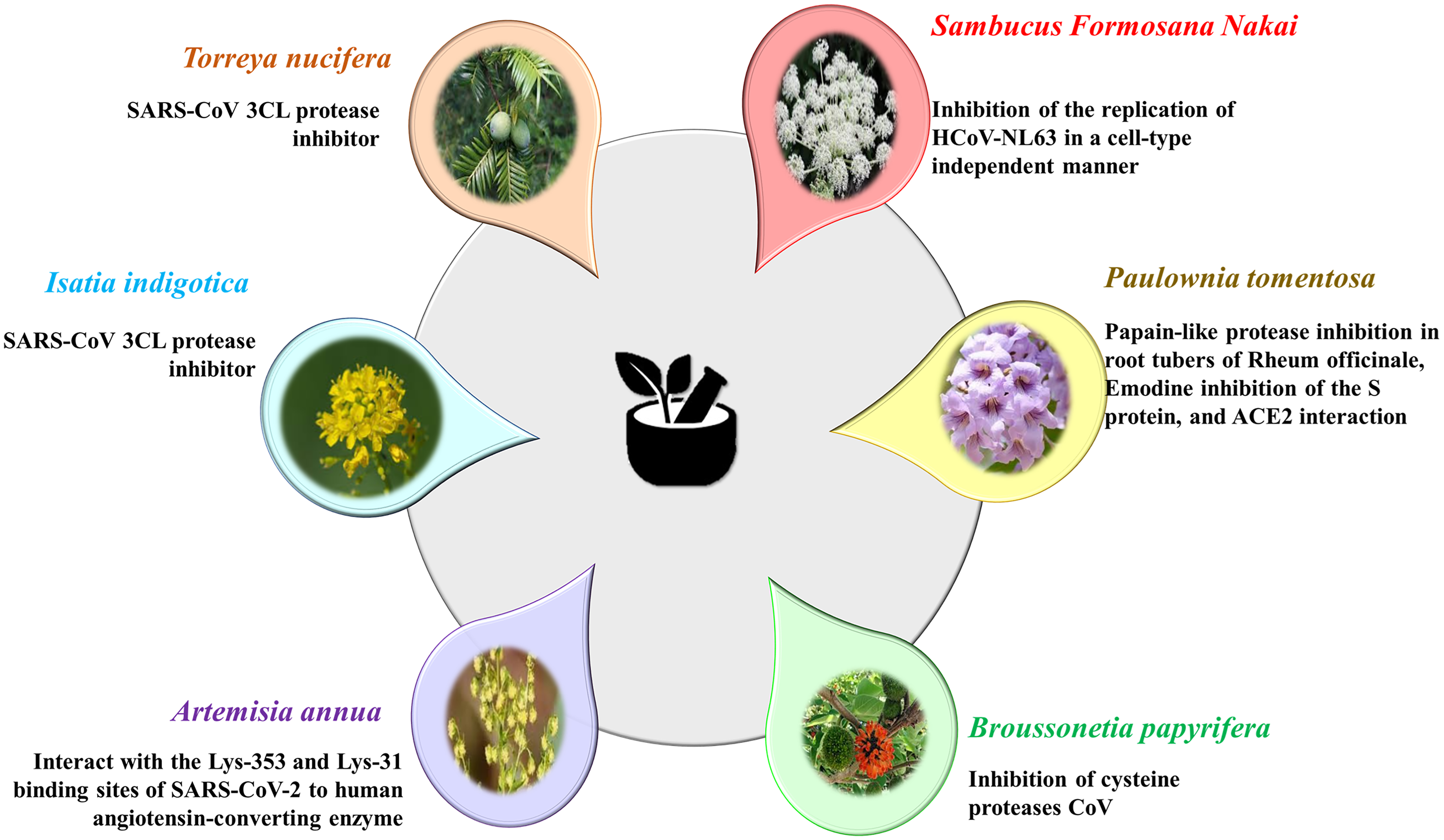
Antiviral Properties of the Potential Medicinal Plants.
Glycosides
Glycosides, sugar molecules bonded to other functional groups, are found in many plant-based drugs as well as poisons, and play a crucial role in the treatment of various infections. A recent study found that isorhamnetin-3-O-neohesperidin and typhaneoside synergistically with other glycoside congeners and could act as anti-nociceptive constituents in TCM-based drug discovery and development. 69 Numerous studies have demonstrated the antiviral effects of glycosides, with certain cardiac glycosides showing effectiveness against both DNA and RNA viruses, including cytomegalovirus, herpes simplex virus, influenza virus, and coronaviruses. 70 These glycosides primarily target host cell proteins, making them promising candidates for combating viral infections. 71 Specifically, glycosides disrupt viral attachment, preventing the release of new viral particles by interfering with enzymes like hemagglutinin and sialidase. 72 Iridoid glycosides from Fructus gardenia have shown potent antiviral effects against the influenza-A virus through suppressing viral replication. 73 Mutations in the gene encoding the spike protein of coronaviruses have been considered to discover broad-spectrum anti-coronavirus agents, which are essential to combating the COVID-19 pandemic. 74 Cardiac glycosides have demonstrated activity against viruses such as influenza A, parainfluenza, SARS-CoV, and SARS-CoV-2, primarily through the modulation of the Na+/K + ATPase pump. 75 Additionally, phenylethanoid glycosides, which inhibit protease and kinase activities essential for viral entry, metabolism, and replication, have emerged as potential therapeutic candidates for COVID-19. 76 Glycosides like digoxin and ouabain, commonly used in heart disease management, have shown antiviral effects against several coronaviruses, including SARS-CoV-2, particularly in patients with comorbidities such as hypertension and cardiac disease. 77
Saponins
Saponins are non-ionic surfactants known for their antifungal, antibacterial, cytotoxic, and antiviral properties. 78 They interact with viral envelopes and capsid proteins, leading to the disruption of the viral particles and affecting host cell membranes, preventing viral attachment and fusion, thereby hindering the spread of infections. Quillaja saponaria, containing tri-terpenoid saponins, has demonstrated antiviral activity against both human and animal viruses, particularly HIV-1 and HIV-2. 78 Similarly, saponins from Anagallis arvensis have shown activity against HSV-1 and poliovirus type 2, while saikosaponins, derived from Bupleurum species, inhibit early stages of viral replication. 79 Still, more future research will be needed to validate saponins as a potential therapeutic agent against COVID-19.
Tannins
Tannins, naturally occurring polyphenolic compounds found in plant seeds, bark, and fruits, are well known for their antioxidant, anti-inflammatory, and antiviral properties. To combat oxidative stress as well as to reduce the production of reactive oxygen species (ROS) and reactive nitrogen species (RNS), tannins show therapeutic effects against viral infections. 80 Their antiviral activity has been demonstrated against various viruses, including enteroviruses, rotaviruses, HSV, HIV, and coronaviruses. 81 Certain tannins, such as pedunculagin, tercatain, and punicalin, bind to SARS-CoV-2 and disrupt viral binding by interacting with viral proteases, such as His41 and Cys145. Recent studies suggest that teas containing gallotannin, such as Haritaki and green tea, may have therapeutic potential against COVID-19 by inhibiting 3CLpro protease activity, though clinical trials are necessary to confirm the efficacy. 82
Anthraquinones
Anthraquinones are aromatic compounds of plants that possess low toxicity and high bioactivity, which are widely used for medicinal purposes to treat constipation, arthritis, multiple sclerosis, and cancer. 83 In-silico studies have suggested that anthraquinone-based therapy could be employed against SARS-CoV-2. Anthraquinone derivatives such as emodin, aloin A and B, rubiadin, aloe-emodin, and chrysophanic acid inhibit the Mpro protease, a critical target for coronavirus replication. 84 Emodin, extracted from Rheum officinale and Polygonum multiflorum, has also been shown to block the S-protein's binding to the ACE2 receptor, preventing viral entry in SARS-CoV-2. 85 Furthermore, anthraquinone derivatives like hypericin demonstrate antiviral activity against a range of viruses, including HSV, vaccinia, and parainfluenza viruses. 86
Conclusion
The COVID-19 pandemic has posed a significant global threat, although the situation has now stabilized. Traditional allopathic treatments have proven insufficient in many cases, leading to increased interest in complementary and alternative medicine as potential solutions. Phytochemical-rich herbal remedies offer a broad spectrum of biological activities and are considered promising candidates for managing respiratory viral diseases such as the COVID-19 pandemic. Plant-derived compounds, such as alkaloids, flavonoids, phenolic compounds, glycosides, saponins, tannins, and anthraquinones, exhibit significant antiviral potential through mechanisms like inhibition of viral replication, interference with viral entry, and modulation of immune responses. With the continued impact of COVID-19, these natural compounds deserve further investigation as potential therapeutic agents for current and future viral pandemics.
Future Perspective
Plant-derived remedies have shown potential in treating viral infections. Unfortunately, many of these herbs have been underexplored, and initial research findings have not been successfully converted into comprehensive clinical trials. This gap has prompted scientists and researchers across various medical fields to focus more on aromatic herbs and ethnomedicinal plants to explore their potential as antiviral agents. However, more rigorous scientific investigation is necessary to fully understand or elucidate their therapeutic potential and validate their efficacy.
Over the past 50 years, extensive research in ethnopharmacology and phytomedicine has led to the discovery of numerous antiviral compounds derived from natural products. Volatile oils, aqueous extracts, and organic extracts have shown promising antiviral properties. During the COVID-19 outbreak, people from all sectors of society doctors, nurses, police officers, airline crews, and social organizations, have joined forces in the fight against the pandemic, contributing in numerous ways to manage and mitigate its impact. Scientists are at the forefront, and their continuous effort towards vaccine development has been recognized globally. Although governments around the world have spared little effort in their response to the crisis, they have aimed to restore normal life. However, the situation is balanced now, but the collective efforts of healthcare professionals, researchers, and governments continue to play a crucial role in navigating the aftermath. This review summarizes the modest contribution to the ongoing global efforts to combat the COVID-19 pandemic. The nutraceuticals developed through these efforts may serve as adjuncts and complementary treatments, providing additional support in the fight against COVID-19 and future viral pandemics, and contributing to the protection of global health under the umbrella of one health.
Footnotes
Acknowledgment
We acknowledge the Graphic Era (Deemed to be) University for sustainable research support.

Authors’ Contributions
JS, SM, KP, IS, and DS wrote the initial draft, JS, IS, and DS revised the manuscript. JS and IS prepared the figures. All authors reviewed the final manuscript.
Funding
The authors received no financial support for the research, authorship, and/or publication of this article.
Declaration of Conflicting Interests
The authors declared no potential conflicts of interest with respect to the research, authorship, and/or publication of this article.