



Abstract
The cashew apple with high nutritional and bioactive profile have always been underutilized. Cashew apple juice is a dense source of essential nutrients, including vitamin C, B-complex vitamins, calcium, potassium, magnesium, and a diverse array of antioxidants such as carotenoids and polyphenols. The phytochemical constituents of cashew apple juice, particularly its polyphenolic compounds like anacardic acids, flavonoids, and tannins, have demonstrated significant anti-inflammatory, antibacterial, antiviral, and anticancer properties. These bioactivities suggest promising applications in the development of natural therapeutic agents, functional foods, and nutraceuticals that can support immune function and combat chronic diseases. Besides, its high content of fermentable sugars mainly glucose, fructose, and sucrose make it suitable and sustainable substrate for bioethanol production through microbial fermentation. The present study examines the potential contribution of cashew apple juice in renewable energy generation in the form of bioethanol, medicine, and nutrition with an emphasis on its multifunctional benefits. This work reveals that cashew apple valorization embodies the circular economy's goal of decoupling growth from resource extraction, demonstrating how waste can become a cornerstone of sustainable development thus, suggesting further research on the transformation of cashew apple fruits into bioethanol and other value-added products.
Introduction
Several studies have reported that agricultural waste has great applications in bioethanol production, nutrients, and healthcare sector. 1 Usually, large amounts of agricultural waste are generated during harvesting, transportation, processing, and consumption. 2 For instance, nut harvesting from the cashew tree (Anacardium occidentale L.) of the Anacardiaceae family produces a substantial amount of biowaste comprising nut shells and fruit remains that contribute to environmental pollution and waste disposal challenges.3,4 Cashew, native to Brazil, is a fruit tree that thrives in tropical climate. 5 A report shows that cashew tree was introduced to prevent the Sahara Desert from advancing and reduce soil erosion in some African countries. 6 Cashew nuts are popularly valued and grown in different areas globally. 7 Cashew apple production is influenced by cashew tree cultivation regions, with West Africa's Nigeria, Ivory Coast, Benin, and Ghana being the largest global producers. 8 Cashew processing is advanced in South and Southeast Asia. 8 Brazil and Central America have cashew industries with potential for value-added products and valorization. 9 The southern Tanzanian areas are the primary locations for cashew growing; Mtwara and Lindi alone account for more than 87% of Tanzania's total cashew production.8ontributions are comparatively lower. 10 Cashew is a major cash crop and the third most produced edible nut in the world after groundnuts and almond.7,11,12 Cashew production grew from 0.29 to 2.60 million metric tons in 1961 to 2013, respectively. 5 From 2010 to 2021, cashew production was estimated at 3 to 3.7 million metric tons. 13 Thus, from 1961 to 2021, the global cashew nut production grew by almost 12-fold cumulatively in the 60-year period or by 20% on average per annum. This growth is attributed to different factors including improved farming techniques, expanded cultivation areas, and growing demand for cashew in developed and developing markets. 5 Cashew is a plant with different parts, each having special qualities and application. 14 Cashew is an edible seed covered with a hard shell rich in oils and nutrients. 14 The cashew shell is a significant waste used to make lubricants, varnishes, and resins. 15 These are complemented by cashew apple, a large, fleshy pedicel that grows from the stem of the nut. 16 The cashew apple is frequently referred to as the cashew tree's false fruit which is thrown away when the nut is harvested. 16 The cashew apple is yellow, orange, or red in color, juicy and is utilized to make jams, drinks, and fermented goods such as wine. 17 Only nuts are processed and consumed, and the remaining cashew apple parts are discarded as waste products. After nut separation, large quantities of cashew apples are wasted, yet they can be turned into valuable commodities. Studies show that approximately 36.9 million tons of cashew apple are produced which accounts for 90% of the weight of the cashew fruit. 14 When the nut is removed from cashew apple, 90–95% of the total fruit weight is typically discarded due to limited technical knowledge, high processing equipment costs, poor postharvest management, low adoption of processing technologies, and the fruit's astringent taste. 18 A report indicates that 1,050,000 tons of cashew apple were produced in 2023 19 revealing that large amount of cashew apple are produced as waste products during the nut separation and are discarded while some are used for animal feed. 14 Thus, cashew apple serves as an abundant and eco-friendly raw material that can be efficiently processed into valuable products such as bioethanol. The production of bioethanol from cashew apple necessitates careful management of cashew apple. Still, cashew apple has a wide range of application in nutrition and medicine. Studies indicate that cashew apple is used in making juice and alcoholic drinks like cashew wine. 18 Moreover, cashew apple juice is used to make nutritional and healthful dried fruit treats, jams, and syrups. 18 Since cashew apple juice is rich in bioactive chemicals, it has a variety of medical uses such as anti-inflammatory and antioxidant properties provided by its high polyphenol and vitamin C content which lower inflammation and boost the immunity. 4 Studies show that cashew apple juice extracts control blood sugar levels because it contains anti-diabetic effects. 20 Besides, the antibacterial qualities of cashew apple extracts render its capability to fight off bacterial illnesses, including some foodborne diseases. 4 Given this backdrop, the review aimed to establish the potential applications of cashew apple juice in nutrition, medicine, and as a source of eco-friendly bioenergy in the form of bioethanol. Revealing the potential of cashew apple, an agricultural waste in diverse uses encourages more research towards its wide application and supports circular economy in addition to environmental conservation. Notwithstanding, cashew's widespread guarantees the availability of cashew apples that go with them which are frequently thrown away or destroyed, causing financial losses as well as environmental issues. The review's justification is to compile the body of knowledge regarding cashew apples’ juice nutritional, medicinal, and industrial potential, with an emphasis on their bioactive constituents and uses in juice production, bioethanol production, and therapeutic applications. The study attempts to demonstrate how cashew apples’ juice can be valorized, transforming what is typically seen as agricultural waste into useful resources, by combining research from many sectors. The current review pursues the potential applications of cashew apple in nutrition, medicine, and as a source of eco-friendly bioenergy in the form of bioethanol.
Phytonutrients and Phytochemicals from Cashew Apple Juice: Benefits and Challenges
Cashew apple shown in Figure 1 is a plentiful but underutilized agro-industrial waste. 21 It contains the juice which is highly nutritious and biochemically rich feedstock which is potential for production of bioethanol, despite its little commercial use. 22 Cashew apple juice potential for bioethanol production is because of its high content of fermentable sugars. 22 A report indicates that cashew apple has a dry matter content of about 12.32%, while its composition varies depending on several factors. 23 Its total fiber content ranges from 3.5% to 10.85%, while its crude protein level ranges from 6.45% to 12.5%. 23 The cashew apple juice is a valuable source of fermentable sugars since its total sugar content mostly glucose ranges from 6% to 54.7%. 23 Thus, cashew apple juice is a promising and affordable feedstock for generation of bioethanol through anaerobic fermentation because of its natural sugar composition. Besides, its abundance of vitamins, minerals, dietary fibers, and bioactive substances, cashew apple juice is excellent for nutrition and medicine. 18 Cashew apple juice is a rich source of essential nutrients and bioactive compounds including vitamin C, polyphenols, flavonoids, tannins, carotenoids, fructose, glucose, dietary fiber, minerals like potassium, magnesium, and calcium, and bioactive compounds like anacardic acid and alkaloids. 24 These nutrients and bioactive compounds together contribute to overall health and wellness, making cashew apple juice a valuable addition to any diet. 24 Its antioxidant and anti-inflammatory properties help protect against chronic diseases like diabetes, heart disease, and cancer. 25 Table 1 summarizes the composition of cashew apple juice.
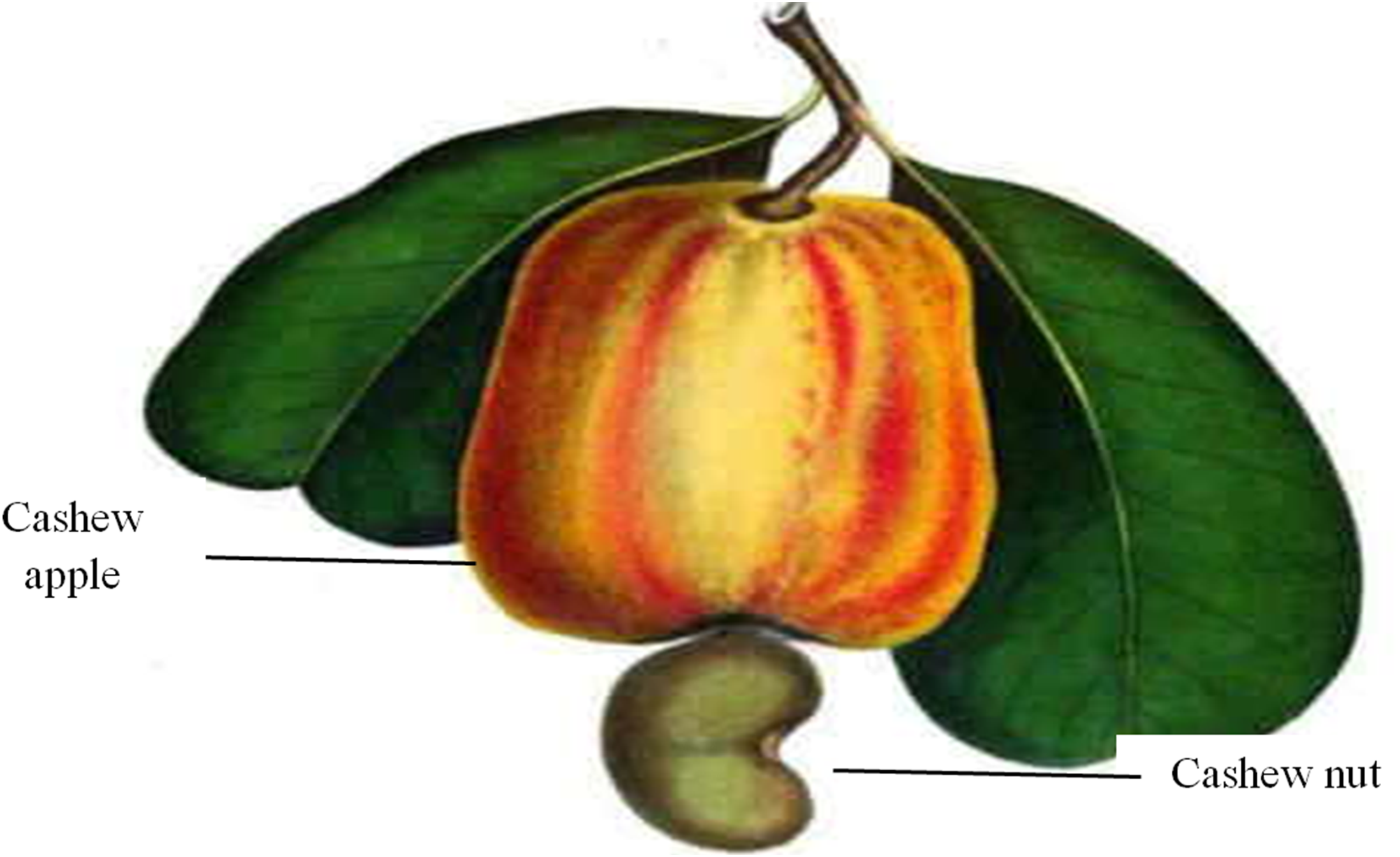
An Image of Cashew Apple. 30
Chemical Composition of Cashew Apple Juice.

Because of its diverse biochemical makeup including; high vitamin C which supports the immunity and acts as an antioxidant, presence of glucose and fructose which provides quick energy and serves as substrates for fermentation, minerals such as magnesium, zinc, and iron which are critical for metabolic and cardiovascular health, cashew apple juice exhibits a unique convergence of nutritional, therapeutic, and bioethanol benefits.19,22
Cashew apple juice is a rich source of vital vitamins, minerals, and bioactive molecules that promote general health and wellbeing. 31 Reports show that cashew apple juice has five times the amount of vitamin C as oranges, making it a powerful antioxidant and immune-boosting source. 32 It contains high levels of vitamin A and B-complex which promote healthy skin, eyesight, and metabolism. 33 The minerals potassium, magnesium, iron, and phosphorus present in cashew apple are essential for preserving the body's electrolyte balance, muscle contraction, and oxygen transfer. 18 Cashew apple juice is a fast and easily digestible energy source and is a natural provider of carbohydrates mainly fructose, glucose, and sucrose. 34 Studies indicate that cashew apple contains about 10.5% of reducing sugar, making it a good source of energy for human health. 4 Still, cashew apple juice phytochemical makeup including tannins, polyphenols, flavonoids, and carotenoids offers potent antioxidant qualities that combat free radicals, lessen oxidative stress, and lower the chance of developing chronic illnesses.9,18 Cashew apple juice have a pH range of 3.5 to 4.8, making it quite acidic which support immune function, aids in digestion and promote skin health. 23 Cashew apple juice which is rich in 61.21% dietary fibers, aids in regulating blood sugar levels, supporting heart health, promoting gut health, prevents constipation and promotes regular bowel movements.22,23 Besides, dietary fiber is essential for lowering the risk of long-term conditions like diabetes, heart disease, and colon cancer. 35 Cashew apple juice is rich in bioactive molecules like tannins, flavonoids, and phenolic acids that have important therapeutic benefits. 36 Studies show that cashew apple juice has long been used to treat throat infections because of its potent antibacterial activity, making it useful against a variety of harmful bacteria and fungus. 37 Cashew apple juices’ anti-inflammatory and antioxidant properties aid in reducing inflammation and oxidative stress, the two factors that are crucial in the emergence of long-term illnesses like diabetes, cardiovascular disease, and neurological diseases. 38 Cashew apple juice rich in polyphenols possesses potential anti-cancer properties, potentially causing apoptosis and inhibiting tumor growth in cancer cells. 39 Since cashew apple juice possesses antibacterial and astringent qualities that speed up healing from cuts, burns, and skin infections, it has long been used for wound healing and skincare. 39 Numerous research investigations have confirmed that cashew apple juice possesses a variety of bioactive qualities with potential health advantages. Cashew apple juice has been shown to have antibacterial activity, especially against clinical isolates like Staphylococcus aureus and Streptococcus mutans, where notable inhibitory zones demonstrated potent antimicrobial effects. 40 Furthermore, the juice has demonstrated effectiveness against urinary tract bacteria that are resistant to antibiotics, such as Pseudomonas aeruginosa and Enterococcus faecalis, indicating that it may be used to treat resistant infections. 40 Phenolics, flavonoids, and tannins were found in phytochemical analyses. These compounds have antibacterial activity against a variety of bacteria, including Streptococcus pyogenes, Micrococcus luteus, and Salmonella typhimurium. 41 Cashew apple juice has anti-inflammatory and wound-healing properties, which considerably reduce inflammation (ear oedema). 18 An anti-inflammatory and wound-healing property, cashew apple juice significantly reduces inflammation and accelerates wound contraction. 42 This effect is likely due to its high content of vitamin C and antioxidant phytochemicals, which help modulate inflammatory responses and promote tissue repair. 42 Furthermore, cashew apple juice exhibits anticancer and antimutagenic potential. 43 As the interest in natural and plant-based therapies grows, cashew apple juice has the potential for use in cosmetic and pharmaceutical applications, opening the door to new and innovative health solutions.
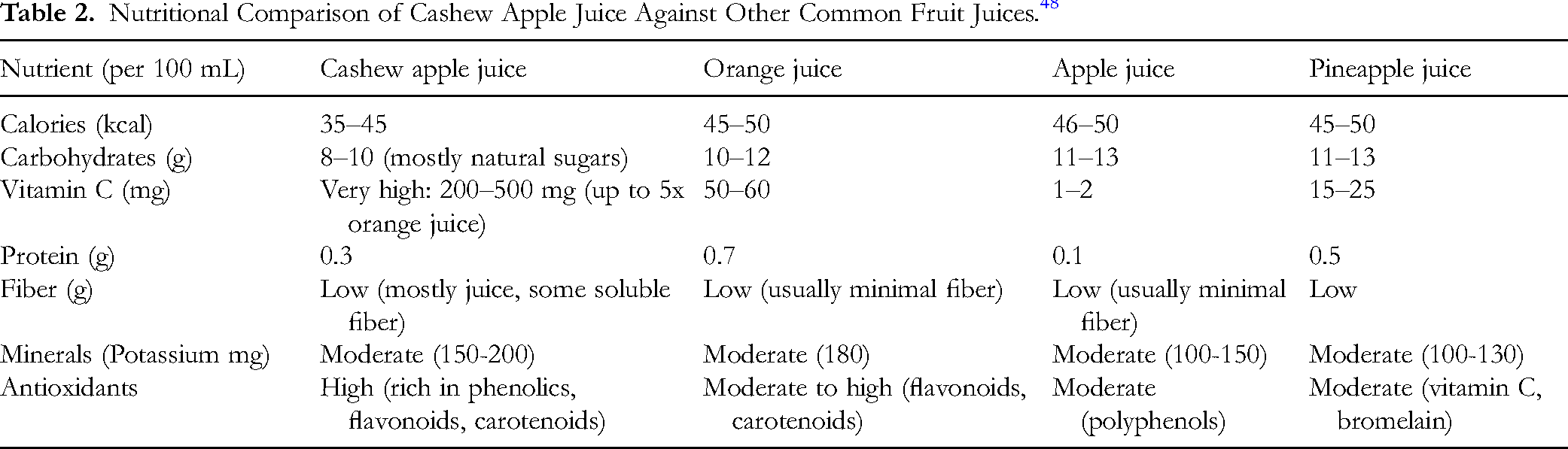
Cashew apple juice has a rich nutritional content and many health benefits thus, have great potential in nutrition and medicine. 18 With essential vitamins and minerals like vitamin C, calcium, potassium, and magnesium, cashew apple juice has a comprehensive nutritional importance. 44 Although their high dietary fiber content promotes intestinal health and digestion, their bioactive components such as flavonoids and polyphenols have anti-inflammatory and anti-oxidant properties which lower the risk of chronic diseases like cancer, diabetes, and heart disease. 45 From medicinal perspective, cashew apple juice has high vitamin C and tannin content which have antimicrobial qualities which help to control blood sugar, and promote wound healing. 46 Additionally, they have significant economic potential because they may be converted into juice, jam, vinegar, and alcohol, reducing waste and benefiting farmers in terms of boosting their economy. 47 The nutritional comparison of cashew apple juice and other common juice is presented in Table 2.
Nutritional Comparison of Cashew Apple Juice Against Other Common Fruit Juices. 48
However, cashew apple has several challenges that prevent them from being used widely, despite their nutritional and commercial potential. They are difficult to store and transport due to their extreme perishability, which causes them to decay 24 to 48 h after harvesting. 49 Additionally, some customers may find their astringent flavor and texture unattractive because of tannins and other components. 50 Their underutilization is further exacerbated by low market demand and awareness because are not as well-known or promoted as other tropical fruits. The lack of large-scale processing infrastructure in many cashew-producing countries adds additional obstacle while extraction and processing provide challenges, requiring specialized procedures to increase flavor and reduce astringency. 51 Additionally, certain people may have sensitivity or allergic responses to cashew apple juice, especially because of specific bioactive components that can cause allergic actions. 52
Cashew apples are a rich nutritional profile and bioactive components but are frequently thrown away in the environment. However, recent studies show how promising it is to produce bioethanol, in nutrition and medicine. 22 A report indicates that yeast fermentation procedures of cashew apple juice produces bioethanol that is comparable to pineapple fruit wastes with 10–12 0Brix, 53 its high sugar content in the range 8–12 0Brix fermentable sugars makes cashew apple juice attractive feedstock for production of bioethanol. 54 Furthermore, producing biofuels from cashew apple supports sustainability and lessen agricultural waste. 19 A nutrient-dense fruit that is high in vitamin C more than oranges, dietary fiber, potassium, magnesium, iron, polyphenols, and flavonoids, cashew apple juice aid in digestion, immune system support, and general health in addition to producing bioethanol. 44 Thus, cashew bears promising potential for use in diverse critical fields which consequently attracts more attention and research for full realization. However, there are numerous important obstacles for the increased production of cashew apple juice. Because of their high moisture and sugar content, cashew apples spoil 24 to 48 h after harvest, making them extremely perishable. Because of quick spoiling, transport routes are limited, and urgent processing is required, which is especially difficult in remote locations with little infrastructure. Besides, there is insufficient infrastructure for extraction, fermentation, and preservation of juice on a big scale. Thus, there is a significant amount of cashew apple waste due to lack of cold chains or mobile processing facilities. Unless preservation methods like juice concentration, freezing, or drying are used, the seasonality of cashew harvesting usually once a year causes inconsistent feedstock supply, which is likely to disrupts continuous bioethanol production. Scaling initiatives are made more difficult by logistical and regulatory obstacles. Thorough clinical testing, standardization, and clearance by regulatory agencies like the Food and Drugs Administration (FDA), National Agency for Food and Drug Administration and Control (NAFDAC) are necessary for cashew apple juice used for therapeutic or nutraceutical use. However, these procedures can be expensive and time-consuming. Still, strict national and international fuel criteria, including quality control, purification, and adherence to environmental laws must be met by the ethanol produced cashew apple juice. Reliable and economical collection is hampered logistically by inadequate rural roads, a lack of cold storage, and unstable power sources, which make it difficult to coordinate supply chains from farm collection to processing centers.
Bioethanol Production from Cashew Apple Juice: Benefits and Challenges
A report reveals that the world is now shifting to sustainable and renewable energy sources, and interest for bioethanol generation from non-food biomass has grown significantly. 55 Cashew apple, a commonly accessible and underutilized agricultural waste has high sugar content, making it a suitable raw material for bioethanol production in form of bioethanol. 21 Apple juice bears promise as a feedstock for the production of bioethanol. 56 Because it contains a lot of sugar, primarily glucose, fructose, and sucrose, cashew apple juice is a great substrate for fermentation to produce bioethanol. 6 By acting as a renewable fuel substitute, bioethanol lessens the dependency on fossil fuels and cut down greenhouse gas emissions. In major cashew-producing countries where enormous quantities of fruit are thrown away as trash after nut harvesting, the bioethanol potential of cashew apple is particularly obvious. Producers can generate new value streams, encourage sustainable farming methods, and support rural economic growth by turning this agricultural by-product into bioethanol. It has the potential in technological developments, mainly in the expansion of alternative energy sources through the processing of its waste thus, adding value to the product. 57 Studies show that cashew apple is wasted in the environment during cashew processing although it can be processed into bioethanol, an alternative energy source. 58 Reports indicate that cashew apple juice contains high amount of fermentable sugars including glucose, fructose, and sucrose.19,59 Studies show that cashew apple juice contains a range of 10 to 11.3 ˚Brix with a density of 1.042 g/cm3 and average pH of 3.7. 19 The sugar content and pH highlight the potential of wasted cashew apples for bioethanol production. Due to their high content of fermentable sugars, cashew apples serve as an excellent feedstock for bioethanol production. 19 Still, a report indicates that one kilogram of cashew apple can yield 500–600 mL of bioethanol. 60 This highlights that low amount of cashew apple can yield substantial amount of bioethanol. Studies reveal that bioethanol with alcohol content of 7.5% was obtained after 5 days fermentation of cashew apple juice, resulting into 46.7% after distillation at 94.5 °C and 95% following re-distillation at 78.2 °C. 60 Besides, a study indicates that cashew apple juice treated with Saccharomyces cerevisiae yielded bioethanol of 75% after distillation. 6 Bioethanol production from cashew apple can be done using either fresh or dried cashew apples. 57 However, studies show that fresh cashew apples yield higher concentration of bioethanol, 9.2% v/v than dried cashew apples, 7% v/v. 57 This is due to addition of water in dried cashew apple powder, causing dilution of total soluble solids.
Cashew apples offer numerous benefits as raw materials for bioethanol production. Cashew apples are plentifully available in tropical regions where cashew tree is cultivated, often posing a challenge when disposed into the environment. 19 Cashew apples, which are leftovers from cashew nuts processing offer a cost-effective option when used as raw materials for generation of bioethanol. Purchases expenses are much cheaper because cashew apples have limited market value because they are usually regarded as residues since are not the main focus of cashew farming. 19 Therefore, because of their affordability, cashew apples are a desirable substitute for more costly feedstocks like corn or sugarcane that have usually a competition with food supply. The cost-effectiveness of bioethanol production from cashew apple juice when compared to conventional sources like sugarcane and corn is influenced by several factors. Because cashew apple juice doesn't require a lot of pre-processing and is high in fermentable sugars, it can be produced at a lower cost. Its raw material costs are also frequently low or even free because it is a by-product of the cashew industry. More importantly, sugarcane and corn are globally significant food sources and therefore directly compete with the food supply chain, unlike cashew apple fruits. However, financial limitations might prevent its widespread use. However, using cashew apples to produce bioethanol contributes to environmental and economic sustainability by adding value to an otherwise underutilized resource while reducing waste. 61 Furthermore, using cashew apples promotes sustainability by minimizing greenhouse gases emissions, encouraging circular economy, and reducing agricultural waste in comparison to fossil fuels. 61 A circular economy seeks to eradicate waste, maintain the circulation of materials, and restore natural ecosystems. Cashew apples, typically thrown away despite their nutritional benefits, can be converted into products such as bioethanol, nutrients, and medicine. 9 This repurposing minimizes waste and promotes sustainable economic growth, embodying the fundamental principles of circular economy. Moreover, the high sugar content ranging from 50–200 g/L of glucose and fructose, vitamin C, minerals and amino acids in cashew apples allows for direct fermentation into bioethanol, eliminating the need for complex pre-processing thus, improving production effectiveness. 19 Thus, bioethanol from cashew apple juice offers numerous applications such as fuel for electric power, in fuel cells, and in energy cogeneration systems. 62 Bioethanol from cashew apple provides several environmental benefits compared to fossil fuels as it burns cleaner, releases significantly less carbon dioxide (CO2), sulphur oxides (SOx), and nitrogen oxides (NOx), which contributes to a decrease in greenhouse gases emissions. 63 Furthermore, bioethanol is non-toxic and biodegradable, reducing the possibility of environmental contamination from fuel leaks and oil spills linked to fossil fuels. 64 Cashew-based bioethanol production helps to reduce organic waste pollution caused by cashew waste. 19 Since cashew tree bears fruit every year, bioethanol from cashew apples is a renewable and sustainable energy source that can replace fossil fuels, the limited and rapidly depleting source of energy. 65 Reports show that during machinery operation, bioethanol consumption is low compared to gasoline for instance; a generator operating for 60 min consumes 12% of bioethanol and 40% gasoline compared to of gasoline it could consume when using gasoline alone. 6 Because of such environmental advantages, bioethanol is environmentally responsive and sustainable substitute for fossil fuels.
Despite its enormous potential, there are several challenges in producing bioethanol from cashew apples. Reports show that preserving cashew apples is a significant challenge because they decay easily due to high moisture content which ranges from 85%-90% thus, require quick processing or preservation using efficient techniques. 19 Still, cashew apple contains tannin, a polyphenol compound that inhibits bioethanol production by interfering with the fermentation process of microorganisms such as yeast which are essential for converting sugars into bioethanol. 59 Due to this cost, pre-treatment methods like enzymatic treatment and activated carbon adsorption are required to neutralize the inhibitory compounds, ensuring efficient bioethanol production. However, storage facilities and preservation methods such as drying or ensiling can help to maintain the quality of cashew apple over time. 44 Besides, managing cashew apples supply chain for maintaining efficient bioethanol production is a challenge. 21 Because of geographical and seasonal fluctuations in the availability, it is challenging to guarantee a steady and adequate supply of cashew apples. 66 Cashew apples’ high perishability, ineffective infrastructure for collection and processing, and small economies of scale can raise operating and logistical expenses. 67 However, to address this issue and ensure a consistent supply of feedstock, collaboration among cashew processing businesses, marketplaces, and agricultural sectors is necessary. A report indicates that cashew apples for bioethanol production should be collected within 3 days after cashew nut separation. 31 Still, the infrastructure required for large-scale bioethanol production is lacking in many cashew-producing developing regions, which may limit the initiative's scalability. 68 Assuring environmental sustainability and optimizing resource efficiency also depend on the appropriate processing and use of fermentation by-products such as cashew apple pulp. 68
Conclusion
Cashew apple juice is rich in vital nutrients including vitamins, minerals, dietary fibers, and bioactive molecules that altogether have a variety of pharmacological characteristics. Frequent cashew apple juice consumption can help to avoid diseases including pathogenic infections and chronic illnesses as well as treat nutrient deficiencies. The cashew apple juice is used to make bioethanol. This aligns with the Sustainable Development Goals of the UN since it lessens carbon emissions and dependency on fossil resources which adds to sustainable energy sources. Besides, cashew apple juice offers nutritional and medicinal benefits in addition to supporting circular economy. Thus, cashew apples have a lot of promise as a source of bioethanol and nutraceuticals, providing financial and health advantages. More focused research is recommended on the wide availability of cashew apple in different critical fields, the key idea and an approach to environmental waste management.
Materials and Methods
The current review analysed a variety of scholarly literature from Google Scholar database focusing on the uses of cashew apple through a structured sampling and bench review methodology in 5 stages including the introduction, phytonutrients and phytochemicals from cashew apple juice: benefits and challenges, bioethanol production from cashew apple juice: benefits and challenges, conclusion, and materials and methods. The study undertook an in-depth analysis of the potential of cashew apple juice in bioethanol generation, a clean energy source, aligning with Sustainable Development Goals (SDGs), particularly SDG7, which focuses on ensuring universal access to affordable, reliable, and modern energy by 2030. 69 Besides, the application of cashew apple juice in nutrition and medicine has been examined. The roadmap emphasizes how cashew apple-derived products can address environmental challenges, promote circular economy, and enhance sustainable production and utilization of bioethanol. The review used the keywords including cashew apple, cashew apple juice, bioethanol, nutrients, antioxidants, cancer cells, antibiotics to search relevant information for the study. From the search using the keywords, 102 articles were obtained but only 69 articles were found relevant to the study thus, were selected for inclusion.
Footnotes
Acknowledgements
Authors are grateful to Mkwawa University College of Education for materials support.

Funding
The authors received no financial support for the research, authorship, and/or publication of this article.
Declaration of Conflicting Interests
The authors declared no potential conflicts of interest with respect to the research, authorship, and/or publication of this article.
Data Availability Statement
All data used for the research described are presented in the article.