



Abstract
Background
Cardiovascular disorders, including atherosclerosis, are the leading causes of mortality worldwide, and prophylactic measures to combat these disorders deserve special attention.
Objective
This study was designed to determine the effects of pure lycopene, raw tomato, and tomato puree on the lipid profile of albino rats fed a high-fat diet in vivo in rats and in silico in humans.
Materials and methods
Twenty-five albino rats were divided into five groups of five rats each: the group fed a normal diet; the group fed a high-fat diet; the group fed a high-fat diet plus pure lycopene; the group fed a high-fat diet plus freeze-dried raw tomato; and the group fed a high-fat diet plus freeze-dried tomato puree. After six weeks of treatment, blood samples were collected from the rats, and the serum lipid profile was determined using an enzymatic colorimetric method.
Result
The total serum cholesterol levels (TC), total triglycerides (TG), low-density lipoprotein (LDL), and cholesterol-to-HDL ratio levels were significantly (p < .05) increased in the group fed a high-fat diet compared to the group fed a normal diet. However, the mean TC, TG, LDL, and cholesterol/HDL ratio of the groups fed with high-fat diet plus pure lycopene, those fed a high-fat diet plus freeze-dried raw tomato, and those fed with high-fat diet plus freeze-dried tomato puree were significantly (p < .05) lower compared to the group fed with high-fat diet and the group fed with normal diet. The high-density lipoprotein (HDL) levels were significantly lower in the group fed with high-fat diet compared to the treatment groups fed with high-fat diet plus freeze-dried raw tomato and those fed with high-fat diet plus freeze-dried tomato puree. Interestingly, the group fed with high-fat diet plus freeze-dried raw tomato apparently had the lowest mean values of TC, TG, LDL, and TC/HDL ratio and the highest value of HDL among the treatment groups. The in-silico analysis in human showed the PPARA protein as the hub gene involved in lipid metabolism of tomatoes, primarily implicating the PPAR signaling pathway, adipocytokine signaling pathway, and thyroid hormone signaling pathway. 9-Octadecenoic acid, Cis 9-Octadecanoic acid, Methyl cis-9-octadecenoate were the three most active compounds involved.
Conclusion
These findings can enhance our understanding of the supplementation of lycopene and tomato products as potential measures to protect against hyperlipidemia, excessive abdominal fat deposition, and associated diseases in mammals, including humans.
Introduction
Cardiovascular diseases (CVDs) are the leading cause of death worldwide, thus, preventative strategies to reduce their prevalence should receive particular focus. 1 The majority of the time, atherosclerosis is the primary sign of cardiovascular diseases. It can progress silently for a long time until it causes serious adverse events, such a heart attack or stroke, at that point. 2 Public health measures currently in use are mostly concentrated on improving lifestyles through medicine or medical treatments, and lowering serum cholesterol to minimize the risk of coronary heart disease. The development of metabolic syndrome, a group of illnesses that includes insulin resistance, hypertension, and hyperlipidaemia, is one of the most worrisome features of obesity. 3 When combined, these illnesses raise the chance of experiencing more serious health problems like heart attacks and strokes. 4 Comprehensive and frequently expensive healthcare measures are needed to manage the comorbidities associated with obesity. These therapies include medication, lifestyle modifications, and even surgical procedures. 5 The prevalence of obesity is still rising despite these measures, suggesting that the public health strategies in place may not be adequate. 6 Effective preventive and therapeutic measures are desperately needed, as the burden of obesity and its associated comorbidities rises. Promoting healthy dietary practices, boosting physical activity levels, and putting laws in place that support healthier surroundings are just a few of the many strategies needed to address this public health emergency. 7 Furthermore, more investigation is required to look at cutting-edge therapy alternatives, such as the advantages of functional foods, bioactive substances, and other non-pharmacological therapies that might supplement current treatment. 8
The risk of complications can be decreased by using several types of treatment strategies to help prevent and/or cure cardiovascular diseases.9,10 Previous research has demonstrated that a lower cholesterol level is linked to a lower risk of cardiovascular diseases. 11 Furthermore, triacylglycerol and low-density lipoproteins (LDL) have been found to share some additional similarities as important lipid risk factors for cardiovascular diseases. 12 Diet has a significant impact on reducing these levels of circulating lipids and has a long-term effectiveness that is on par with the majority of existing medication treatments. Supplementing the diet with dietary antioxidants, like lycopene, which is naturally found in tomatoes and tomato-derived products, is one diet plan that might be advantageous for enhancing the lipid profile.1,13 Furthermore, tomatoes (Solanum lycopersicum) as widely consumed fruits have a high nutritional profile that includes vitamins, minerals, antioxidants, and bioactive substances, all of which add to their many health advantages. 14 Of these advantages, tomatoes’ ability to lower blood cholesterol has attracted a lot of attention lately. Elevated blood lipid levels, or hyperlipidaemia, are a key risk factor for cardiovascular diseases (CVDs). 15
The main pigment that gives tomatoes their red colour, lycopene, has been the subject of much research due to its potential to decrease cholesterol and its role in lipid metabolism. 16 Lycopene has been shown in numerous studies to lower low-density lipoprotein (LDL) cholesterol, which is commonly known as “bad” cholesterol because it plays a part in the development of atherosclerosis. For instance, Zhang et al's meta-analysis 17 of 12 clinical studies revealed that supplementing with lycopene significantly lowered LDL cholesterol levels in hypercholesterolaemia patients. The antioxidant qualities of lycopene, which shield lipids from oxidation, may be a factor in the compound's ability to decrease cholesterol, according to the authors.
Tomatoes’ antioxidant and anti-inflammatory qualities also contribute to their anti-hyperlipidemic benefits. 18 Chronic inflammation and oxidative stress are linked to hyperlipidaemia and both of these factors play a role in the development of CVDs. 15 Tomatoes are rich in antioxidants such as beta-carotene, lycopene, and vitamin C, which are important in lowering inflammation and oxidative stress. 18
The use of plant parts to moderate human conditions and ailments is as old as man.19,20 Consuming tomatoes and their products have been linked to a lower incidence of degenerative diseases, such as cardiovascular problems, according to empirical research. 21 It has been proposed that in healthy males, consuming large amounts of tomato juice can inhibit the production of thiobarbituric reactive species (TBARS) and LDL oxidation. 21 Lycopene is a carotenoid that gives fruits and vegetables their red color and has antioxidant qualities.
This study aimed at finding out how albino rats’ lipid profiles were affected by lycopene, tomato extract, and tomato puree as well simulate in silico activity in homo sapiens.
Materials and Methods
Study Design and Location
This experimental study was conducted in the Department of Medical Laboratory Science, Ebonyi State University, Abakaliki, Nigeria.
Preparation of Tomato Products and Pure Lycopene
This study utilized fresh raw tomatoes, tomato puree, and pure lycopene. Approximately 50 kilograms of mature, ripe tomatoes (Solanum lycopersicum) were procured from the International Market in Abakaliki, Ebonyi State, Nigeria. All tomatoes were selected at peak ripeness to ensure maximal lycopene content, as recommended by Rao and Rao. 22 To prepare tomato juice, the fresh tomatoes were thoroughly washed to remove dirt and contaminants, homogenized using a mechanical blender, and then gently simmered in a small quantity of olive oil at low heat to enhance lycopene bioavailability through lipid-mediated absorption. 23
Tomato puree was purchased from a local grocery store in Abakaliki and was industrially processed through sequential steps including sorting, seed removal, crushing, heating at 65-75 °C, and preservation. Pasteurization was carried out under controlled conditions at 80-85 °C and 560-745 hPa. Post-processing, the puree was deep-frozen at −70 °C to retain phytonutrient stability. It was later subjected to freeze-drying for 48 h at a chamber temperature of −20 °C and a condenser temperature of −80 °C, following the procedure adapted from Zhang and colleagues. 24 Dried extracts were stored at 4 °C in opaque containers to prevent photodegradation. Pure lycopene (≥90% purity) was purchased as a red crystalline powder from Clanol Pharmaceutical Stores, Abakaliki, Nigeria. This compound was manufactured by Sigma-Aldrich, USA, a globally recognized supplier of research-grade chemicals.
Standardized Preparation of Tomato Extract
To ensure reproducibility and accuracy, the preparation of tomato extract was performed using a modified protocol from George et al 25 and Nara et al. 26 Only unblemished, vine-ripened tomatoes of the same cultivar were selected to maintain consistency in lycopene concentration. The tomatoes were first washed with distilled water to remove surface contaminants. Enzyme deactivation was achieved via blanching—submerging tomatoes in boiling water for 2-3 min, followed by immediate cooling in an ice bath. This process inhibits enzymatic degradation of carotenoids and other phytochemicals.
For homogenization, the tomatoes were chopped into smaller fragments and blended into a smooth puree. A solvent extraction method was employed using 95% ethanol in a 1:3 ratio (one part tomato paste to three parts ethanol) based on the protocol by Sadek and colleagues. 27 The mixture was stirred continuously and left to stand at ambient temperature (25 °C) for 24 h to ensure optimal extraction of bioactive compounds. Following maceration, the extract was filtered through multiple layers of sterile cheesecloth to eliminate particulate matter. The resulting filtrate, rich in lycopene and other phytonutrients was stored in sterile amber bottles at 4 °C until further analysis.
Experimental Animals
Twenty-five male albino rats, with ages between 5-7 months, weighing between 178-182 g, all in good health, and obtained from the Animal Farm of Faculty of Agriculture and Natural Sciences, Ebonyi State University, Abakaliki, Ebonyi State, were used in this study. They were bred in the animal housing section of College of Health Sciences, Ebonyi State University, Abakaliki, Nigeria. The animals were placed in plastic cages with metal net covers, and were subjected to a standardized laboratory condition of ventilation, temperature, (26 ± 2) °C and natural light throughout the study. The animals were fed with standard forage and water which was available ad libitum until the end of the experiment.
Experimental Design
The study involved in vivo analysis on Albino Wistar rats, and in silico simulation for humans. The twenty-five Wistar albino rats were placed in five groups (A, B, C, D, and E), each with five rats of similar weights, and placed in separate cages. The groups are defined as follows:
Negative Control Group; Fed with standard forage and normal tap water daily ad libitum. Positive Control Group; Fed with a high-fat diet (basal diet + 5% tallow + 1% cholesterol + 0.02% bile salt). Group of induced Hyperlipidemia and treated with pure lycopene; fed with high-fat diet (basal diet + 5% tallow + 1% cholesterol + 0.02% bile salt) plus 0.1% lycopene. Group of induced Hyperlipidemia and treated with raw tomato; fed with high-fat diet (basal diet + 5% tallow + 1% cholesterol + 0.02% bile salt) plus 24% of the raw tomatoes powder. Group of induced Hyperlipidemia and treated with tomato puree: fed with a high-fat diet (basal diet + 5% tallow + 1% cholesterol + 0.02% bile salt) plus 24% of tomato puree.
Groups D and E were all supplemented as to have the same quantity of lycopene (100 mg per kg of diet). Cholesterol powder and bile salts were obtained from the UC Biochemicals, Enugu, Nigeria. The duration of the experiment was for six weeks (42 days) and the experiment was terminated on the 43rd day. Note, the dosage calculation and administration of tomato extract, tomato puree, and lycopene to the experimental animals were based on the predetermined protocol by Khayat-Nouri and Namvaran-Abbas.28,29
Blood Sample Collection and Biochemical Analysis
At the end of experimental period, blood samples were collected from the rats after a 12 h period of fasting into clean dry plain tubes at room temperature and centrifuged at 3000 rpm for 10 min. The serum was aspirated and stored at −20 °C, until it was used for biochemical analysis. The lipid profile such as serum total cholesterol (TC), triglycerides (TG), high-density lipoprotein (HDL) and low-density lipoprotein (LDL) were determined using an enzymatic colorimetric method, 30 Randox kit, made in Crumlin-Northern Ireland but purchased from Cjay reagents Abakaliki, Ebonyi State. Procedures for biochemical analyses were as per the manufacturer's protocols.
Randomisation: To guarantee similar baseline features and reduce selection bias, albino rats were selected at random to one of five study groups using simple randomisation techniques. Every albino rat had a special identifying number issued to it. Using a randomisation process, the identifying numbers were then assigned at random to each of the study groups
Blinding: To avoid bias in the administration of diets and the evaluation of lipid profiles in each group, the study used single-blinding. The labels for the food and treatment were coded, and the code keys were kept secret until the trial was over.
Gas Chromatography-Mass Spectrometry Analysis of Dichloromethane of Tomato Extract
The protocol followed previous method. Briefly, the GC-MS analysis was carried out with a Clarus 500 Perkin Elmer gas chromatograph outfitted with an Elite-5 capillary column (5% phenyl, 95% dimethyl polysiloxane) (30 nm × 0.25 mm ID × 0.25 mm df) and a mass detector turbo-mass gold of the company that was operated in EI mode. The injector worked at 290 °C, and the oven temperature was controlled in the following order: 50 °C at 8 °C/min to 200 °C (5 min) at 7 °C/min to 290 °C (10 min). Helium served as the medium for the gas at the rate of flow of 1 ml/min. The National Institute of Standards and Technology (NIST) database, which contains more than 62 000 patterns, was used for the interpretation of the mass spectrum. The names and molecular weights of the extract's constituents were determined using the retention time and peak area acquired from the mass spectra of the unknown compounds and those of the known compounds stored in the library. 31
In Silico Simulation
To further understand and extrapolate the findings of this study to human, we performed the underlisted analysis:
ADMET Analysis
We performed the ADMET and physicochemical analysis of the compounds using Swiss ADME.
Putative Gene, Protein-Protein Interaction, Gene Ontology and KEGG Pathway Evaluation
We curated putative genes associated with the identified compound using SwissTargetPrediction. We curated genes associated with lipid metabolisms using NCBI and OMIM. Venny 2.1 was used to identify common genes. STRING database was used for protein-protein interaction as well as gene ontology and Kyoto encyclopedia of genes and genomes (KEGG) pathway. We used Cytoscape to visualization. Cytohubba plug in was used for identification of hub genes and most important compounds and pathways.
Ethical Consideration
All experiments were conducted in accordance with the guidelines provided by the University Research Ethics Committee on the Use of Laboratory Animals. Prior to the study, the ethical approval was obtained from the Experiments and Ethics Committee of the College of Health Sciences, Ebonyi State University, Abakaliki, Nigeria (EBSU/REC/BMS/2210/04/003).
The reporting of this study conforms to ARRIVE guidelines 2.0. 32
Statistical Analysis
Data generated from this study was analyzed using Statistical Package for Social Sciences (SPSS) version 25 for windows, SPSS Inc, Chicago, IL, USA. The data are presented in terms of mean ± SD. The differences between the groups were determined by one-way analysis of variance (ANOVA). Level of significance was established at p < .05 with 95% Confidence interval.
Results
The result of the Gas chromatography-mass spectrometry analysis of dichloromethane of tomato extract as well as the physicochemical properties/ADMET properties of the identified compounds is represented in table 1.
Physicochemical (ADMET) Properties of the Compounds Found in the Tomato.

The initial mean body weights of the animals before the treatment and their final mean body weights after the treatment is as shown in table 2. There were no significant (p > .05) differences in the initial mean body weights of the animals across all the groups before the treatment. By contrast, there were significant (p < .05) differences in the final mean body weights of the animals across the groups after high-fat diet, and treatment with lycopene, and various tomato products. Group B indicated significantly (p < .05) higher final mean body weight (192.6 ± 2.73 g), when compared with group A (181.2 ± 0.75 g). However, the final mean body weight of group C (182.2 ± 1.33 g), group D (183.0 ± 1.02 g), and group E (182.2 ± 0.74 g), were significantly (p < .05) lower when compared with that of group B and group A. Group D apparently had the lowest final mean body weight, when compared to all other groups. Meanwhile, there was no significant (p > .05) difference in the final mean body weights between group C, group D, and group E. Furthermore, the mean final body weight was significantly higher when compared with the initial body weight in groups B (p = .001), D (p = .024) and E (p = .009) respectively. In contrast, no significant differences were observed between the initial and final body weights of groups A and C respectively.
the Initial and Final Body Weights of the Rats Before and After 6-Weks of Exposure to High-fat Diet.

Data are expressed as means ± SD for n = 5 animals per group. *Significant difference between initial and final body weight.
significantly (p < .05) different compared with group A.
significantly (p < .05) different compared with group B.
Figure 1 shows the effects of hyperlipidemic diet (group B) and treatment with pure lycopene (group C), raw tomato juice (group D) and tomato puree (group E) on the total cholesterol levels of the Wistar rats. Data indicated that the hyperlipidemic diet induced significantly (p < .001) higher TC level (8.34 ± 0.61 mmol/L) in group B compared, with the control (4.14 ± 0.14 mmol/L). The TC levels of the treatment groups; C (2.82 ± 0.12 mmol/L), D (2.40 ± 0.14 mmol/L), and E (2.64 ± 0.14 mmol/L) indicated significant decreases (p < .001) when compared with the control and hyperlipidemic groups respectively. Among the treatment groups, the lycopene group (C) showed the highest mean TC, followed by group E and group D. However, no significant differences were found when the treatment groups were compared with each other.
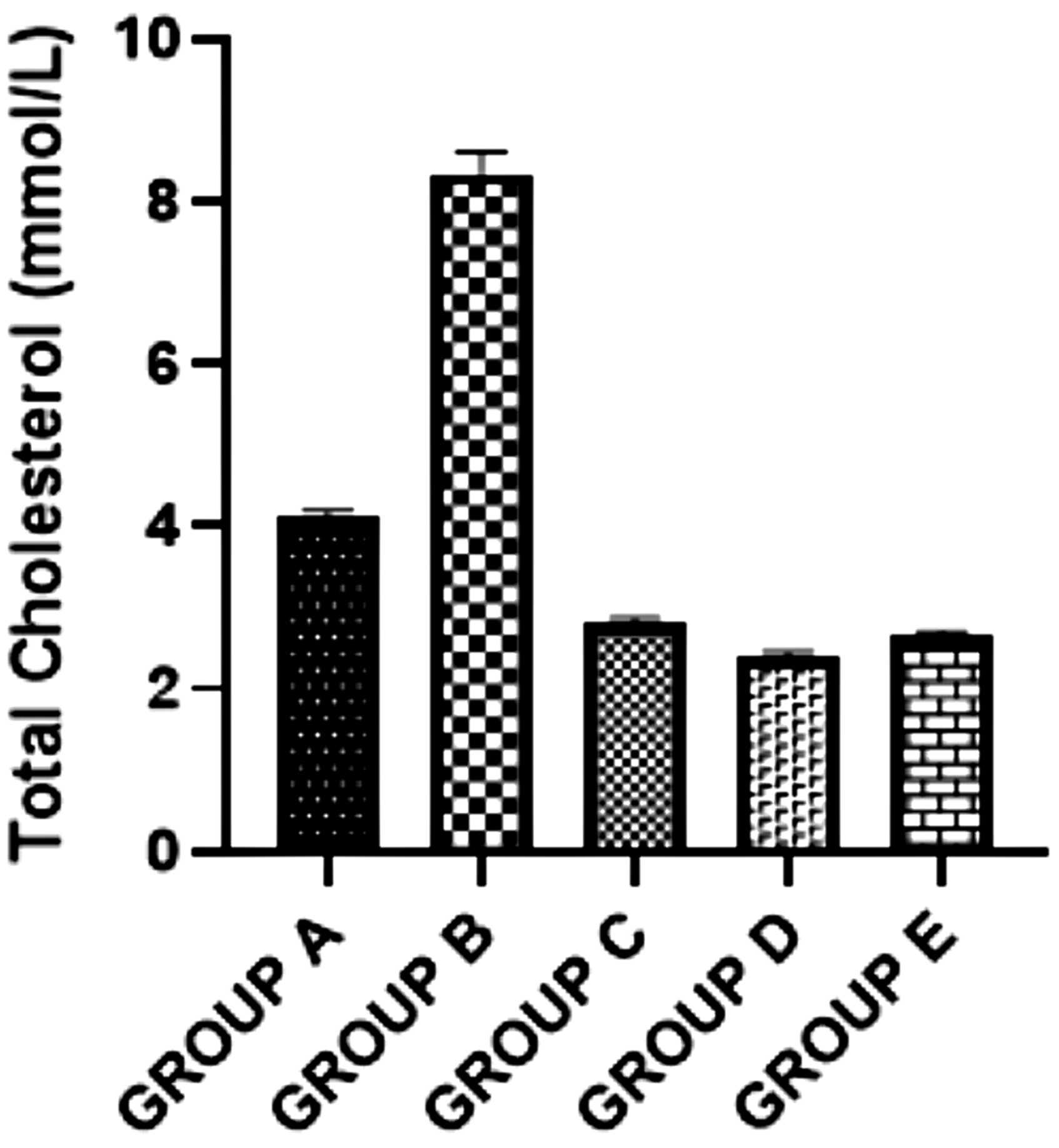
The Mean Total Cholesterol Concentration Among Different Study Groups.
The mean triglyceride levels of the five study groups are compared and shown in Figure 2. Analysis of variance indicated that the experimental group fed with hyperlipidemic diet (group B) had significantly higher triglyceride level (2.88 ± 0.08 mmol/L) compared with the control (2.10 ± 0.15 mmol/L). The treatment groups C (1.76 ± 0.16), D (1.66 ± 0.10 mmol/L) and E (1.72 ± 0.15 mmol/L) indicated significantly lower triglyceride levels compared with the control group A (p < .01) and group B (p < .001) respectively. Regarding the treatment groups, the lycopene group (C) showed the highest mean TC, followed by group E and group D. However, the mean triglyceride levels did not differ among the treatment groups.
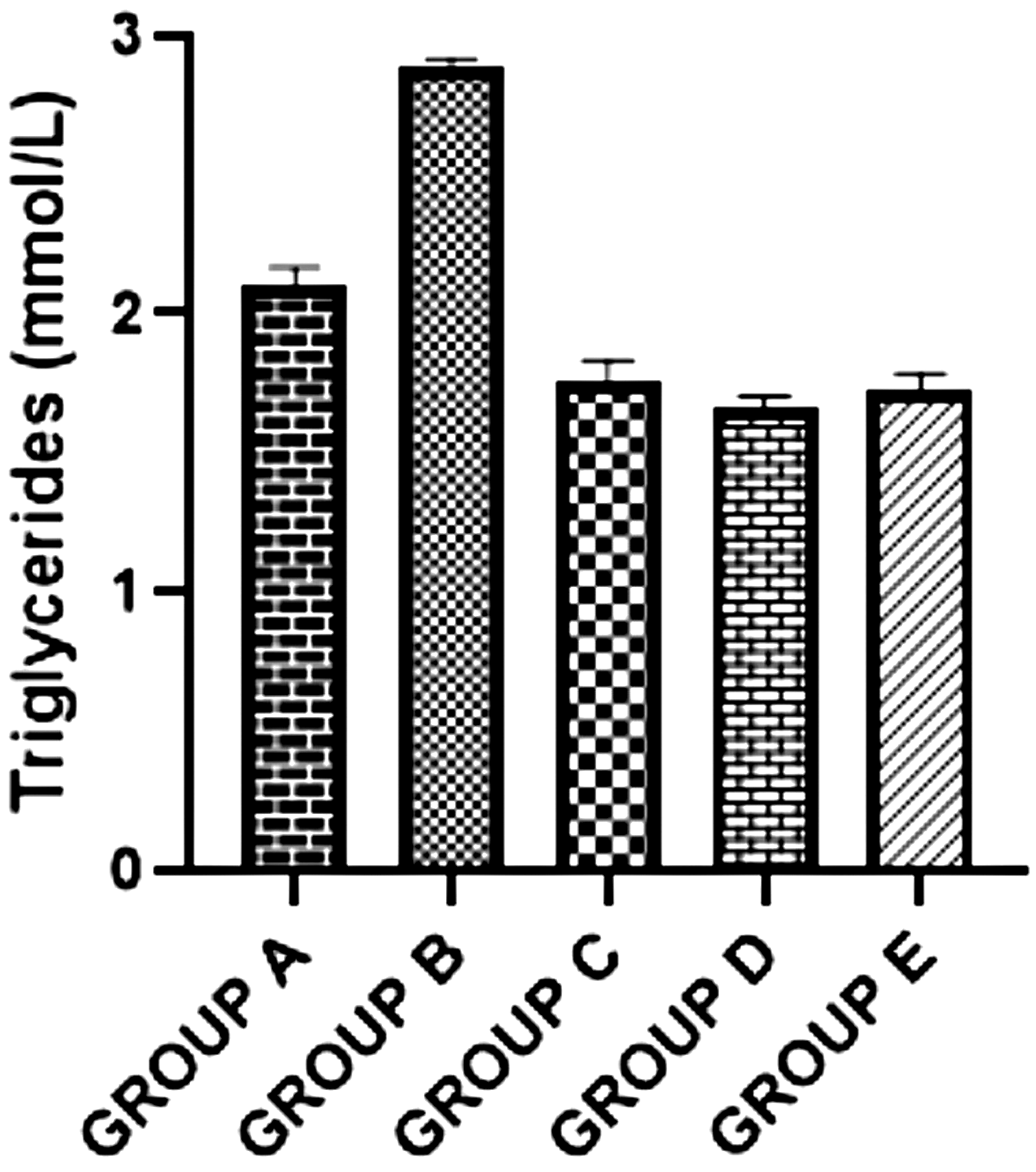
The Mean Triglycerides Concentration Among Different Study Groups.
Figure 3 shows comparison of the mean HDL concentrations of the different study groups A to E. The group D treated with raw tomato had significantly (p < .001) higher HDL level (2.46 ± 0.10 mmol/L) compared with the control (1.24 ± 0.14 mmol/L), group B (1.22 ± 0.08 mmol/L), group C (1.24 ± 0.10), and group E (1.46 ± 0.05 mmol/L). Similarly, group E rats treated with tomato puree indicated significantly higher HDL compared with group A (p = .004), group B (p = .002) and group C (p = .004).

The Mean High Density Lipoprotein Concentration among Different Study Groups.
The effects of hyperlipidemic diet (group B), lycopene (group C), raw tomato (group D), and tomato paste (group E) on the serum low-density lipoprotein of the albino rats are as shown in Figure 4. Group B significantly (p = .016) had a higher mean concentration of LDL (2.30 ± 0.14 mmol), when compared with group A (2.08 ± 0.26 mmol/l). The mean LDL of group C (1.71 ± 0.07 mmol/l), group D (1.40 ± 0.14 mmol/l), and group E (1.66 ± 0.10 mmol/l), were significantly (p < .001) lower when compared with those of group B and group A. Interestingly, group D had significantly (p < .01) lower mean values of LDL when compared with the other treatment groups C and D. Meanwhile, there was no significant (p > .05) difference in the mean values of LDL between group C and E.

The Mean Low-Density Lipoprotein Among Different Study Groups.
The mean TC/HDL ratio of the study groups are as shown in Figure 5. Data indicated that group B had significantly (p < .001) higher TC/HDL ratio (6.88 ± 1.01) compared with control group (3.39 ± 0.55), groups C (2.29 ± 0.26), D (0.97 ± 0.04) and E (1.80 ± 0.09) respectively. Group A also indicated significantly higher mean TC/HDL ratio compared with groups C (p = .004), D (p < .001) and E (p < .001) respectively. Regarding the treatment groups, the raw tomato group (D) indicated a significantly lower mean TC/HDL ratio compared with group D (p = .001) and group E (p = .022).

the Mean Total Cholesterol High Density Lipoprotein Ratio among Different Study Groups.
Figure 6 shows the protein-protein interaction of the various proteins involved in the lipid reduction potential of tomato extract. A total of three hundred twenty-six (326) genes related to lipid metabolism were retrieved from NCBI and OMIM. These genes were compared with the genes predicted with SwissTargetPrediction using the Compounds identified. PPARA was identified as the common gene in both targets using Venn diagram (Venny 2.1.0). Figure 7 shows the hub genes involved in tomato extract lipid metabolism. The top 6 genes were PPARA, PPARGC1A, NCOA1, RXRA, NCOR1 and NCOR2 with PPARA as the major target proteins.
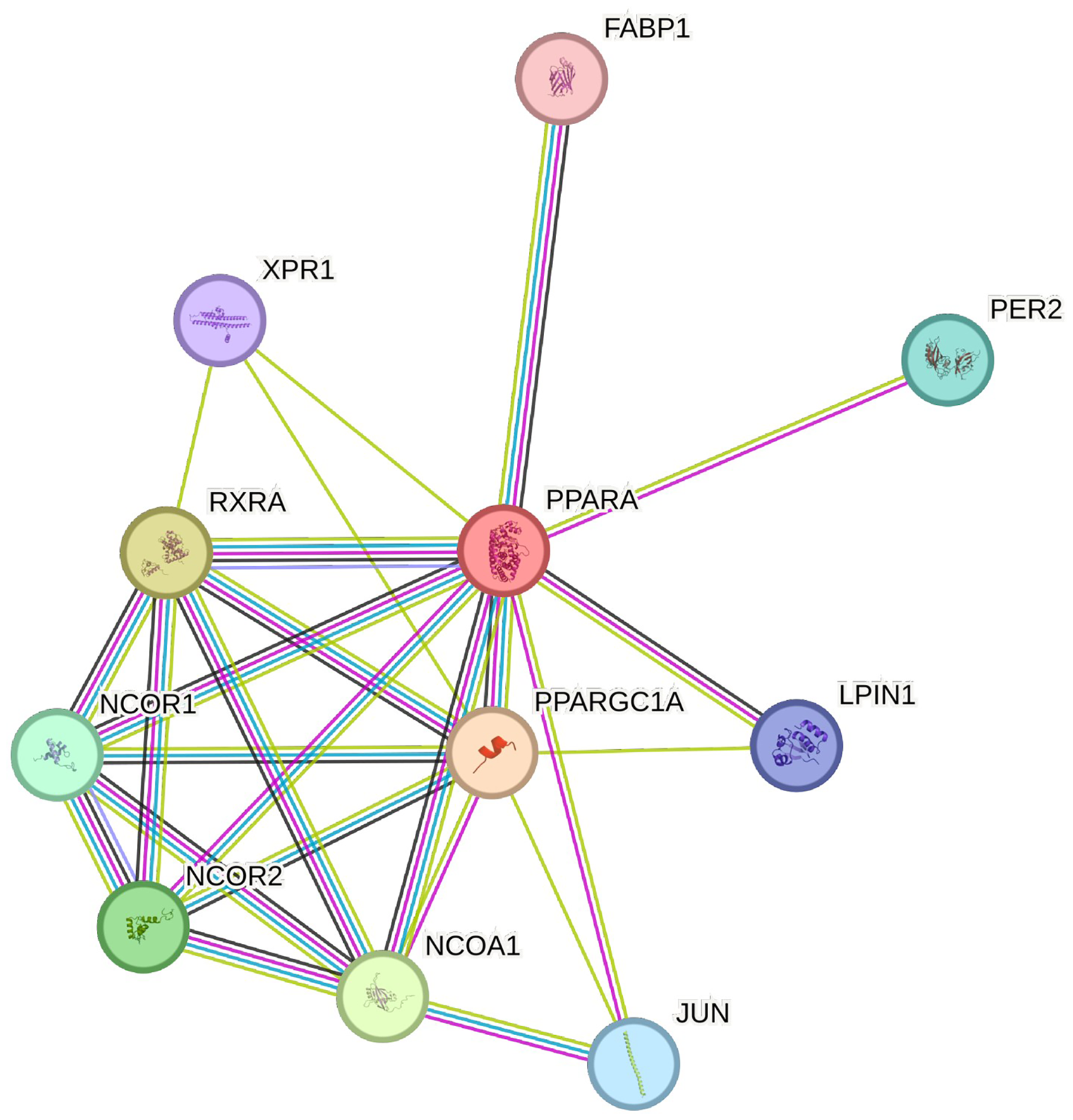
Protein-Protein Interaction Network Showing Proteins Involved In Lipid Reduction Action Of Tomato Extract.

Hub Putative Genes Involved in Lipid Reduction Action of Tomato Extract.
Table 3 shows the functional enrichment approach to find Gene ontology terms for lipid control mechanism of tomato. The gene ontology and pathway enrichment analysis showed that the hub genes regulate four (4) different cellular components which are the chromatin (GO:0000785), nucleoplasm (GO:0005654), transcriptional regulator complex (GO:0005667) and the transcriptional repressor complex (GO:0017053). The molecular function of the hub genes showed they are involved in: Transcription factor binding (GO:0008134), RNA polymerase II-specific DNA-binding transcription factor binding (GO:0061629), nuclear receptor binding (GO:0016922), transcription regulator activity (GO:0140110), Transcription coregulator activity (GO:0003712), DNA binding (GO:0003677), chromatin binding (GO:0003682), transcription coactivator activity (GO:0003713), Transcription coregulator binding (GO:0001221) enzyme binding (GO:0019899), nuclear steroid receptor activity (GO:0003707), and Sequence-specific DNA binding (GO:0043565). The enrichment analysis showed 15 biological processes. Among these are Regulation of cellular ketone metabolic process (GO:0010565), Regulation of fatty acid metabolic process (GO:0019217), Positive regulation of fatty acid oxidation (GO:0046321), Regulation of lipid metabolic process (GO:0019216), Gluconeogenesis (GO:0006094), Negative regulation of cellular biosynthetic process (GO:0031327), Regulation of ATP metabolic process (GO:1903578), Positive regulation of fatty acid beta-oxidation (GO:0032000), Fatty acid metabolic process (GO:0006631), Negative regulation of metabolic process (GO:0009892), Negative regulation of glycolytic process (GO:0045820), Positive regulation of gluconeogenesis (GO:0045722), Negative regulation of phosphate metabolic process (GO:0045936), Regulation of cellular carbohydrate metabolic process (GO:0010675), Negative regulation of nitrogen compound metabolic process (GO:0051172). A total of 3 Kyoto Encyclopedia of Genes and Genomes (KEGG) pathways were identified to be regulated by the hub genes. The major pathways involved in this activity were PPAR signalling pathway, Adipocytokine signalling pathway and Thyroid hormone signalling pathway.
Functional Enrichment Approach to Find Gene Ontology Entries for Lipid Control Mechanism of Tomato.

Abbreviations: FDR, false discovery rate.
Figure 8 shows the interaction of the compound-target-pathway of the compounds, hub genes and pathways that are involved in tomato metabolism. The result showed that the compounds that played role were 2-Ethylhexane (3-methylheptane), Ethylcyclohexane, 3,5-Dimethyloctane, 2,4,4-Trimethylhexane, Endo-tricyclo [5.2.1.0(2.6)] decane, Cyclopentacycloheptene (Azulene), 1,6-Methano[10] annulene, Methyl tridecanoate, Cis 9-Octadecanoic acid, 9-Octadecenoic acid, Methyl cis-9-octadecenoate, Oleic acid amide (Adogen 73) and Tetradecahydrobenzo[a] cyclodecene.

Interaction Of The Compound-Target-Pathway Of The Compounds, Hub Gens And Pathways That Are Involved In Tomato Metabolism.
The compound-target-pathway analysis of top 10 activities showed 9-Octadecenoic acid, Cis 9-Octadecanoic acid, Methyl cis-9-octadecenoate, 2,4,4-Trimethylhexane, Endo-tricyclo [5.2.1.0(2.6)] decane and 3,5-Dimethyloctane as the most active compounds in tomato with respect to lipid metabolism (in respective order) while PPARA was the most important target (hub gene). PPAR signalling pathway followed by Adipocytokine signalling pathway were the most involved pathway (Figure 9).

Top 10 Most Active Compound-hub-Gene-Pathway Analysis.
Discussion
Cardiovascular disorders are major issue of public health concern. Therefore, the main goal of public health programs is to minimize the risk of cardiovascular illnesses, especially by lowering blood cholesterol and promoting healthier lifestyles. Examining the potential of dietary antioxidants—like lycopene, which is found naturally in tomatoes and tomato-based products—comes to mind when doing this. Consuming tomatoes and tomato-derived products is linked to a lower risk of cardiovascular diseases, according to mounting empirical data.13,23,33 Thus, the purpose of this investigation was to ascertain how pure lycopene, raw tomatoes, and tomato puree affected the lipid profile of albino rats, considering the early atherosclerosis events brought on by a high-fat diet in vivo.
Obesity is well recognized as a primary cause of elevated risk of conditions like dyslipidemia, insulin resistance, hypertension, and atherosclerosis, as well as an independent risk factor for cardiovascular illnesses.34,35 Obesity frequently results in adipose tissue inflammation, which can be lessened by lowering body fat percentage. 36 After six weeks of exposure to a high-fat diet, the weight of the albino rats was significantly suppressed by the administration of lycopene, raw tomato (RT), and tomato puree (TP), preventing overweight. It's interesting to note that, in contrast to the RT and TP groups, the rats in the pure lycopene group saw a greater influence on sustaining their body weights, as evidenced by the fact that the animals’ mean final weight did not vary from their initial body weight. Tomato juice intake dramatically lowered body weight, body fat, waist circumference, and BMI, according to a prior study. 37 Adipokine expression and secretion have also been shown to be mediated by lycopene.38,39 In line with this, dietary-based interventions have demonstrated that adipokine consumption can change adipokines to a more anti-inflammatory profile.40,41
When group B animals were fed a high-fat diet exclusively, their serum levels of total cholesterol (TC), triglycerides (TG), low density lipoprotein (LDL), and cholesterol to HDL ratio levels were significantly higher than those of group A animals fed a regular diet alone. This indicates that a six-week addition of 1% cholesterol to the rats’ diet can change the concentration of blood lipids by raising the levels of TC, TG, LDL, and TC/HDL ratio. These outcomes agree with the findings of earlier research conducted by Vaskonen et al and Gorinstein et al42,43 After a 6-week period, the albino rats were given lycopene, raw tomatoes, and tomato puree, which prevented the hyperlipidemic effects of a high-fat/high-cholesterol diet by lowering the rats’ TC, triglyceride, LDL, and TC/HDL ratios, but increasing the HDL. This is consistent with other research that found that consumed lycopene, whether in tomato paste, juice, or pure form, decreased serum cholesterol levels.44-46
According to reports, lycopene's hypolipidemic effects are mostly caused by prevention of hepatic lipid production.47-49 This may be partly because the lycopene compounds block the function of macrophage 3-hydroxy-3-methyl glutaryl coenzyme A reductase, an important enzyme involved in the manufacture of cholesterols. Moreover, lycopene may modify lipid metabolism processes including lipogenesis by inducing the AMP-activated protein kinase (AMPK) signaling pathway. Ripe tomatoes contain compounds called esculeoside A and esculeogenin A, which have been demonstrated to have inhibitory effects on the buildup of cholesterol ester in human monocyte-derived macrophages.50,51
Furthermore, the TC, TG and LDL levels of the corresponding groups treated with raw tomato juice, tomato puree, and pure lycopene did not differ statistically significantly; nonetheless, the raw tomato group appeared to have a more positive effects than the lycopene and tomato puree groups. In addition, the raw tomato group presented significantly higher HDL and lower TC/HDL levels compared with the other groups. It is unclear why the raw tomato group showed a more pronounced hypolipidemic effects. However, because lycopene works well with other bioactive substances like phenolic compounds (chlorogenic acid, caffeic acid, rutin, and naringenin), folates, and antioxidant vitamins (E and C), it is believed that raw tomato extract has a higher antilipidemic activity than pure lycopene. 52 Furthermore, it's thought that longer processing periods and thermal processing are often linked to higher losses of bioactive components in tomato. 42 Similar to this, some tomato components—such as the pulp, seeds, and skin—are eliminated as byproducts of industrial processing. This implies that the final product as seen in tomato puree can lose certain important functional components. 53 However, our findings did not support earlier research showing that tomato puree or paste had a greater lowering effect on lipids than raw tomatoes. 28
The in silico simulation of the lipid profile reduction of tomato extract showed PPARA protein as the primary target protein in altering lipid metabolism in humans. and PPAR signaling pathway, Adipocytokine signaling pathway and Thyroid hormone signaling pathway as the major pathway involved in the process. This makes the protein and the associated pathways target for lipid reduction therapy. The peroxisome proliferator-activated receptor alpha (PPARA) is ligand-activated transcription factors that belong to the superfamily of nuclear hormone receptors (which include PPARβ/δ, and PPARγ) and play an important role in nutrient homeostasis54,55 and function as key regulator of lipid metabolism. It is activated by oleylethanolamide, a naturally occurring lipid that regulates satiety. 56 PPARA lowers plasma TG in part by reducing very low-density lipoprotein (VLDL) production by inducing genes involved in fatty acid oxidation and the concomitant reduction in lipid availability for VLDL production.57‐59 Comparison of human and murine PPARA shows 85% identity at the nucleotide level and 91% identity at the amino acid level levelling a comparative result. 58
This study is potentially prone to a number of limitations. It has provided information on the effect of tomato products on lipid metabolism of Wistar rats as well as the in silico simulation on humans. However, the application to humans needs clinical validation via randomised clinical trial. Due to differences in metabolism, body size, and other physiological factors, the precise doses used in rat studies may not always translate to humans. As a result, without additional research, the selected dose ranges may not be applicable to dietary recommendations for humans or therapeutic use. By conducting studies that explore a wider range of doses and determining the minimal effective dose as well as the safety threshold, a clearer picture of how these tomato-based products could be used in clinical settings will be provided. More so, the present study did not add antioxidation assay.
Conclusion
The results of this study indicated that tomato products and pure lycopene were effective in lowering serum levels of TC, TG, LDL and TC/HDL ratio in albino rats fed with high-fat/high-cholesterol diet. They also increased the HDL level and helped the rats lose weight. Interestingly, the raw tomato group appeared to have a more pronounced hypolipidemic effects than the lycopene and tomato puree groups. The in silico simulation in humans showed PPARA protein as target gene in lipid metabolism control which had affinity with compounds contained in the tomato extract. The tomato-based products therefore, may present a viable way to lower the chance of developing cardiovascular diseases. Thus, an increase in consumption of tomatoes and their products in the diet is recommended because of their positive effects on the tested parameters. In other words, the findings indicate that not just lycopene, but whole tomato products (like raw tomato powder and puree) can have a beneficial effect on lipid profiles. This suggests that whole foods might offer a broader range of health benefits due to the synergistic effects of various bioactive compounds in tomatoes, beyond lycopene alone. Encouraging the consumption of whole tomatoes or tomato-based foods, rather than relying solely on supplements, aligns with public health strategies that advocate for the consumption of whole, minimally processed foods for disease prevention.
Footnotes

Ethical Considerations
Ethical approval for this study was obtained from Experiments and Ethics Committee of the College of Health Sciences, Ebonyi State University, Abakaliki, Nigeria (EBSU/REC/BMS/2210/04/003).
Funding
The authors received no financial support for the research, authorship, and/or publication of this article.
Declaration of Conflicting Interests
The authors declared no potential conflicts of interest with respect to the research, authorship, and/or publication of this article.
Data Availability Statement
The datasets used in this study are present in the article. The gene sets utilized are available in NCBI and OMIM which are publicly available.
Statement of Human and Animal Rights
All procedures in this study were conducted in accordance with the Ethics Committee of the College of Health Sciences, Ebonyi State University, Abakaliki, Nigeria approved protocol.
Statement of Informed Consent
There are no human subjects in this article and informed consent is not applicable.