Peptic ulcer is a major health disease which could be defined as destruction in different parts of the gastrointestinal track mainly the lining mucosa of the stomach as well as the proximal duodenum. Additionally, the treatment of this illness emphases different challenges as the currently available medications have major side effects as well as limited effectiveness. On the other hand, natural products exhibited a chief role in prevention and curing various health issues. Different natural metabolites such as alkaloids (as isocorydine), flavonoids (as Sofalcone), terpenoids (as aescine), coumarins (as esculin), and tannins (as castalagin) exhibited a great part in the prevention in addition to healing of peptic ulcer with different mechanisms of action such as H2 antagonists or Inhibition of the gastric H+, K + -ATPase. One hundred and eighty-five secondary metabolites were reported from higher plants and marine ecosystem. Therefore, this review provides an overview of the natural products obtained from different plants and marine sources as potential candidates with well reported gastro protective potential along with their mechanism of action and structural aspects whenever applicable. Herbal formulations and natural products in clinical trials have been mentioned in this review. Finally, drug likeness property, ADME/Toxicity profile of the compounds were evaluated.
Peptic ulcer is considered as a destruction of the lining mucosa of the gastrointestinal system.1 Different parts in the gastrointestinal system as; the stomach, the esophagus, the proximal duodenum, jejunum are mainly affected in peptic ulcer disease.2,3 Moreover, an imbalance among some endogenous aggressive factors is implicated in the development of this illness as leukotrienes, refluxed bile, hydrochloric acid, and reactive oxygen species.1,4 The pathogenesis of peptic ulcers continues to be prevalent. Moreover, different factors contribute to the progress of gastric damage as long term consumption of non-steroidal anti-inflammatory medications, alcohol consumption, smoking, stressful lifestyle, alcohol intake, Helicobacter pylori infections, in addition to previous family history.5,6 Consequentially, searching for suitable medications for the prevention and treatment of peptic ulcers is an important challenge facing the scientists nowadays as it is definitely a chief human disease influencing mainly 8% to 10% of the population.7
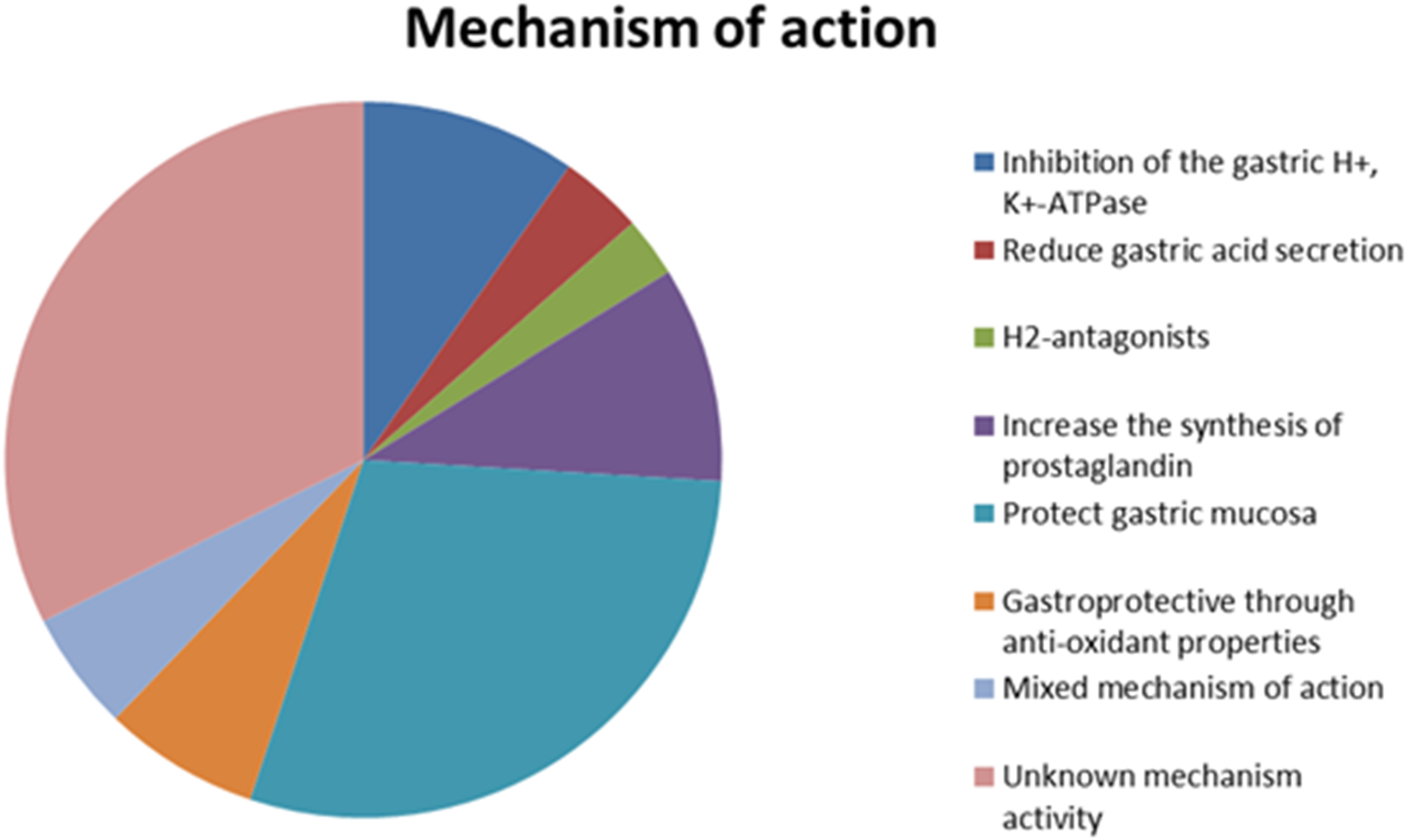
The incidence of this disease is greater in men than in women.8 While current approaches in our understanding have highlighted the multifactorial pathogenesis of gastric ulcers, secretion of gastric acid is still distinguished as a noteworthy part of this illness, consequently the key therapeutic object to control acid secretion utilizing antacids, H2 receptor blockers as ranitidine, famotidine, anticholinergics as; pirenzepin, telezipine or proton pump blockers as omeprazole, lansoprazole.9 On the other hand, gastric ulcer medication encounters recently a chief drawback as majority of the remedy currently depicted in the market reveal partial efficacy against gastric illness and are often associated with numerous drawbacks,8 as antacid common side effects include (alkalosis, belching, nausea, and abdominal cramps), H2 receptor blockers can cause on the long term use (lethargy, headache, dizziness, impotence, skin rashes, ranitidine and cimetidine can cause reversible mental confusion in elderly patients, anticholinergic as; pirenzepin, telezipine cause blurred vision, dry mouth, and constipation, proton pump blockers as omeprazole, lansoprazole cause osteoporosis, vitamin B12 deficiency, and hypomagnesemia. Therefore, it is necessary to investigate new therapeutic alternatives with lower adverse effects, which enhance the ulcer healing process and prevent new relapses.10 In this context, utilizing natural molecules is in continuous extension all over the world for the prevention as well as treatment of different pathologies. Moreover, natural metabolites are ranked at the top in the pharmaceutical industry as inspiring sources of novel potentially bioactive metabolites.3,11‐13 Furthermore, clinical investigation has documented the efficacy of different natural metabolites for the cure of gastroduodenal illness.14 The medicinal properties of numerous plants are attributed mainly to the existence of varied group of metabolites such as; flavonoids, alkaloids, steroids, phenolic compounds, terpenoids, tannins, phenolic acids as well as anti-oxidant micronutrients, eg, Cu, Mn, Zn.15 These secondary molecules exhibited their activity through various mechanism of actions as; inhibition of the gastric H+, K + -ATPase, reduce gastric acid secretion, protection of gastric mucosa, H2-antagonists, as well as increase the synthesis of prostaglandin (Figure 1).
Different Mechanism of Actions Exerted by Natural Metabolites as Gastro Protective Agents.
Considering the medicinal properties of natural metabolites in preventing and reducing of the gastric lesions caused by various ulcerogenic elements, the overview of the current review is to focus on the chemical structures and the mechanism of action of different metabolites isolated from plants and marine organisms. Data collection was carried out on Pubmed in addition to Google Scholar covering all the published articles till 2023. In this review, the literature search was carried out using databases with keywords Natural Products and antiulcer and gastroprotective. The ADME (Absorption, Distribution, Metabolism, and Excretion) properties of the natural compounds analyzed in this study were evaluated using well-established theoretical and computational methods. Specifically, absorption rates and overall drug-likeness were assessed based on Lipinski's Rule of Five (Ro5) and Veber's rule, which are widely accepted criteria for predicting oral bioavailability and pharmacokinetic behavior.
Lipinski's Rule of Five evaluates compounds against the following parameters. First, molecular weight (MW) should be below 500 Daltons. Second, the Log P (partition coefficient between octanol and water) value should be less than 5. Third, compounds should have no more than 5 hydrogen bond donors (HBD). Finally, there should be no more than 10 hydrogen bond acceptors (HBA). Compounds that satisfy these conditions are more likely to exhibit favorable absorption and permeability characteristics.16 Veber's rule complements these criteria by incorporating additional parameters related to molecular flexibility and polarity. Specifically, it requires compounds to have a total of 10 or fewer rotatable bonds (RTB) and a polar surface area (TPSA) not exceeding 140 Ų. These metrics are critical for evaluating molecular properties that influence oral bioavailability.17 These drug likeness profiling were predicted using Swiss ADME server.18
Inhibition of the Gastric H+, K + -ATPase
The membrane-bound enzyme, gastric H+, K + -ATPase, is located in the apical membrane of parietal cells. It mainly pumps protons into the gastric region utilizing energy obtained from ATP hydrolysis.19 Therefore, this enzyme considered as a promising pharmacological target for the innovation of drugs for the treatment of acid-associated disturbance (Figure 2). In this context, different flavonoidal metabolites as minimiflorin (1), mundulin (2), as well as the chalcone lonchocarpin (3) were obtained from Lonchocarpus oaxacensis in addition to L. guatemalensis roots.20 Minimiflorin exhibited the highest activity with IC50 value of 9.6 ± 0.9 µg/ml, followed by mundulin and lonchocarpin with their IC50 values of 70 ± 10 and 171 ± 35 µg/ml, respectively. They inhibit gastric H+, K + -ATPase by different mechanisms as binding to the active site, which prevents the pump from hydrolyzing ATP (which is a necessary step for active proton exchange between gastric lumen and cytosol). Additionally, they can exert their effect through their antioxidant properties; reduce oxidative stress in gastric mucosal cell, which indirectly decreasing the activity of H+, K + -ATPase. Moreover, the hydroxyl group in flavonoids play an important role in their inhibitory effect through binding to the lysine residue of the H+ /K+ ATPase.21,22 Additionally, jacareubin (4), 6-desoxyjacareubin (5), 1,3,5,6-tetra-hydroxy-2-(3-hydroxy-3-methylbutyl)-xanthone (6), along with 1-hydroxy-35,6-tri-O-acetyl-2(3,3-dimethylallyl)-xanthone (7) are xanthones derivatives previously obtained from Calophyllum brasilienses heartwood. Jacareubin (4) exhibited powerful inhibition of gastric H+, K + -ATPase enzyme with IC50 value of 46.7 ± 7.6, followed by 6-desoxyjacareubin, 1,3,5,6-tetra-hydroxy-2-(3-hydroxy-3-methylbutyl)-xanthone, as well as 1-hydroxy-35,6-tri-O-acetyl-2(3,3-dimethylallyl)-xanthone with IC 50 values of 1581 ± 37, 173 ± 8.6, and 16 05 ± 216, respectively.23
Chemical Structures of Compounds 1-19.
Additionally, palmonine F (8), cholest-5-ene-3b,7a-diol (9), (22E)- cholesta-5,22-diene-3b,7a-diol (10), ergosta-5,24(28) diene 3b,7a-diol (11) in addition to cholesta-5,22-diene-3b-ol (12) are diterpenoid sterols were isolated from Mediterranean gorgonian Eunicella singularis. They achieved their gastroprotective potential through increasing the levels of gastric hexosamine and improving the gastric barrier strength both physically and by the blockage of H+, K+ /ATPase pump.19 Moreover, boldine (13) is an alkaloid previously obtained from Peumus boldus. During in vivo evaluation of its gastroprotective potential, it was capable of protecting the gastric mucosa against the damage caused by ethanol/HCl as well as indomethacin, which was verified by reducing the lesion region and histological investigation. Additionally, the alkaloid decreased the oxidative stress as well as inflammatory mediators in ethanol-ulcerated tissue. It also has elevated mucin-like glycoprotein quantity. Consequently, its effect is mainly depend on non-protein sulfhydryl groups in addition to prostanoids.24 Taxifolin (14), a flavonoid was isolated from Mimusops balata showed potent ability to inhibit the proton pump activity.25 Furthermore, xyloccensin-E (15) as well as xyloccensin-I (16) limonoids derivatives were obtained from Xylocarpus molluccens fruits. They exhibited inhibition of the proton pump potential with IC50 values of 157.93 and 218.95 μg/ml, respectively.26 (+)-O-Methylarmepavine (17), N-Methylcorydaldine (18), isocorydine (19) alkaloids were isolated from Annona squamosa twigs. N-methylcorydaldine (18) showed the highest anti secretory activity followed by isocorydine, and (+)-O-methylarmepavine with IC50 values of 60.9, 88.42, and 111.83 μg/ml, respectively.27
Reduce Gastric Acid Secretion
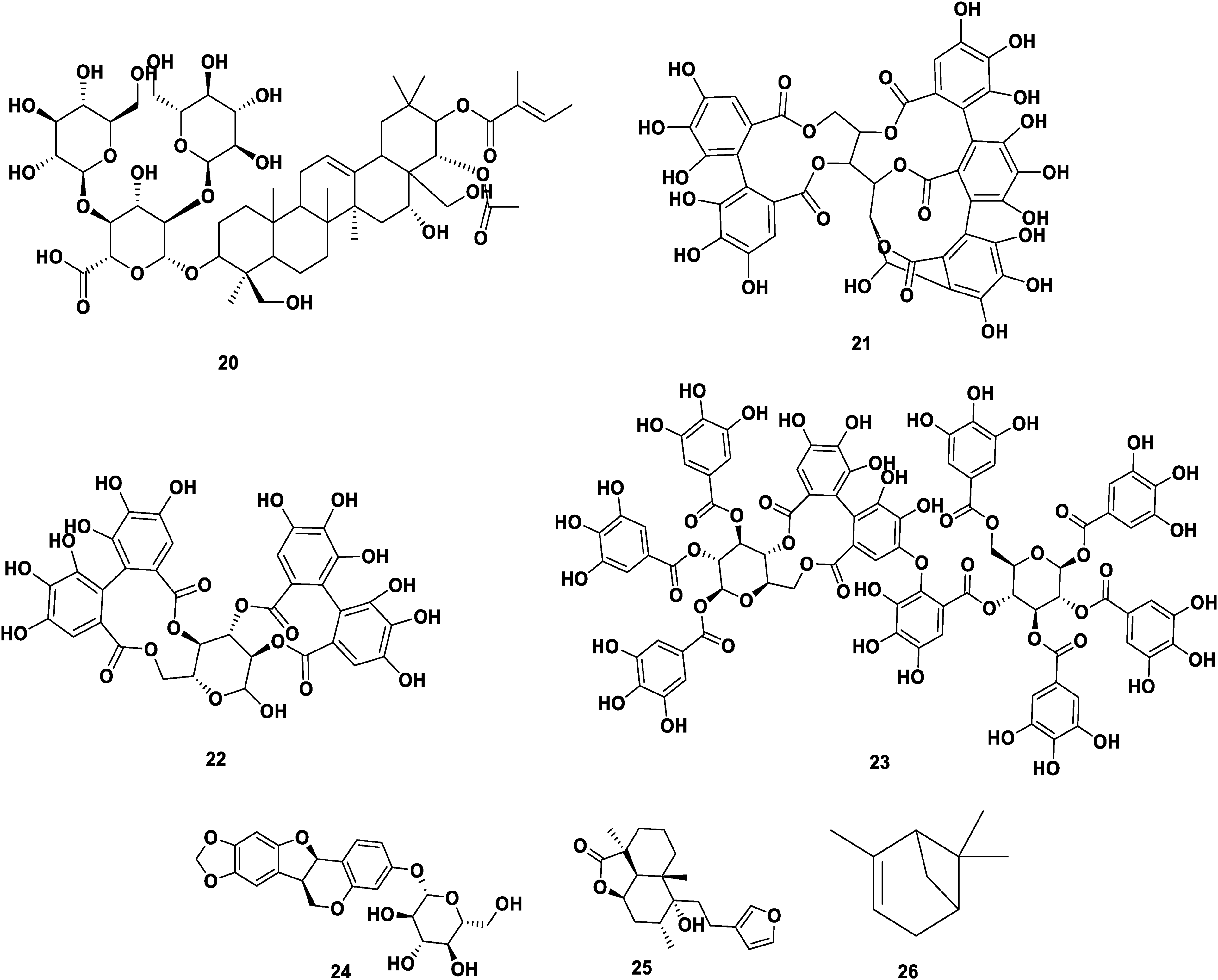
Reducing gastric acid production and regeneration of gastric mucosal has been the chief approaches for available medication of peptic ulcer illness. Various natural secondary metabolites achieved their gastroprotective potential through reducing gastric acid secretion. They are known for their anti-inflammatory, antioxidant, and cytoprotective effects, which could indirectly reduce gastric acid section by modulating inflammatory pathway or improving mucosal defense mechanism.28,29 In this context, aescine (20) a triterpene glucoside, was obtained from the horse chestnut Aesculus hippocastanum dried seeds. It exerted its gastro protective potential through in vivo antisecretory action (Figure 3) with non-prostaglandin dependent mechanisms.30 On the other hand, castalagin (21), pedunculagin (22), and phyllyraeoidin (23) are groups of tannins, which were previously isolated from Quercus suber as well as Q. coccifera. They showed protective potential against ethanol-induced gastric ulcer. Their protection percentage ranged from 66% to 83% with castalagin (21) being the most potent one.31 Trifolirhizin (24) is a tetra-acetate glucoside was previously isolated from Sophora flacescens root belongs to family Leguminosae. It exhibited in vivo gastroprotective and antibacterial action against H. pylori as well as HCl ethanol-induced gastric lesion in rats. Its activity originated from reduction of total acid output, scavenging of the free radicals and the antibacterial potential against H. pylori.31 Additionally, marrubiin (25) a diterpene, was obtained from Marrubium vulgare leaves. It showed gastroprotective potential in ethanol-, and indomethacin-induced ulcer rat models through stimulating the mucus synthesis as an important gastroprotective factor and reducing acid gastric secretion.32 Alpha-pinene (26), a monoterpene molecule mostly found in volatile oils with gastroprotective potential isolated from different medicinal plants, including Hyptis species. Pretreatment with alpha pinene inhibited significantly the gastric mucosal lesions induced by ethanol, reduced the volume as well as the acidity of the gastric juice and elevated the mucus gastric wall.33
Chemical Structure of Compounds 20-26.
H2-Antagonists
Nowadays, H2- antagonists, as omeprazole as well as antimuscarinics, mainly base the available medical treatment of gastric ulcer on inhibiting the gastric acid secretion. In this context, hesperidin (27), neohesperidin (28) are dihydrochalcones were isolated from Citrus aurantium fruit and Agathsoma serratifolia leaves, respectively (Figure 4). They exhibited a significant capacity in reducing the ulcer index in cold-restraint mediated ulcer in a dose-dependent manner. Additionally, they showed their action through inhibiting the histaminergic activity and reducing the acid and pepsin output.25 Trans-crotonin (29) and trans dehydrocrotonin (30) are nor-clerodane diterpene obtained from Croton cajucara bark.
Chemical Structure of Compounds 27-31.
They performed their gastroprotective activity through increase PGE2 production and a noncompetitive antagonist of H2 receptor as well as by reducing the maximum response of the receptor regardless of the concentration of histamine.34 Papain a nitrogenous molecule (31) was isolated from the unripe fruit of Papaya proteinase. It effectively protected the exogenous ulcer and decreased the histamine-mediated acid secretion in rats.35
Increase the Synthesis of Prostaglandins
The chief mechanism of NSAID-related damage of the gastroduodenal mucosa is cyclooxygenase-1 (COX-1) inhibition, which is responsible for prostaglandin synthesis. Additionally, it is associated with reducing mucosal blood flow, low mucus and bicarbonate secretion, and cell proliferation inhibition. NSAIDs reversibly inhibit the enzyme in a concentration-dependent manner. Those compounds increase the synthesis of prostaglandin by enhancing the activity of cyclooxygenase (COX) pathway, this enzyme catalyzes the conversion of arachidonic acid into prostaglandin particularly prostaglandin E2 (PGE2) which promotes mucus and bicarbonate secretion while improving mucosal blood flow, thereby strengthening the gastric barrier and accelerating tissue repair.36 Ferruginol (32) is a diterpene metabolite was isolated from Podocarpus ferrugneus (Figure 5). It showed a gastroprotective potential through stimulating the synthesis of gastric PGE2, reducing gastric acid output as well as improving the anti-oxidant potential of the gastric mucosa by conserving GSH levels.37 Additionally, rutin (33) a natural flavonoid compound, was previously isolated from several plants such as Carpobrotus edulis and Ruta graveolens. It exerted its gastroprotective activity through increasing PGE2 levels in ethanol-related injury in rats model.38 Sofalcone (34), a flavonoid metabolite which was isolated from Sophora subprostrata. It has been utilized for gastritis and gastric ulcers treatment in Japan and South Korea. Moreover, different studies have suggested that sofalcone (34) exerted its activity through inhibiting 15-hydroxy-prostaglandin (PG)-dehydrogenase, increasing blood flow in mucosa as well as maintaining the mucosal macromolecular glycoprotein.39 Furthermore, dehydroleucodine (35) a guaianolide type sesquiterpene lactone was obtained from Artemisia douglasiana. It exerted its effect through increasing prostaglandin (PG) production. Additionally inhibiting sulfhydryl-containing compounds of the mucosa.34 Niga-ichigoside F1 (36) as well as 2β,3β-19-α-trihydroxyursolic acid (37), are pentacyclic triterpenes which were reported from Rubus imperialis. Their gastroprotective potential was estimated in the HCl/ethanol-induced ulcer in mice model. Consequently, these triterpenes metabolites significantly reduced the lesion index, total lesion area, in addition to percentage of lesion in comparison to the control group. Moreover, they also strengthened the defensive factors as; stimulating mucus synthesis in addition to preserving the high levels of prostaglandin contents of the gastric mucosa.40 Lapachol (38) was obtained from Tabebuia heptaphylla rhizome. In a dose-dependent manner, they elevated PGE2 synthesis by 2.5 and 2.3 fold, respectively.41 1,3-Dicyclohexyl-2-cyperenyl-isourea (39), and dihydroprenyl lapachol cyperenate (40) are sesquiterpene compounds which were obtained from Jatropha isabelii rhizomes. At a dose of 231 μM, the former one increased PGE2 synthesis by 4.4-fold, while the later one increased PGE2 synthesis by 8.2 and 2.5-fold at a dose of 331 and 167 μM, respectively.23 Myricetin (41) is a flavonoidal metabolite obtained from various vegetables and fruits. It exhibited its potential through oxidative damage prevention, promoting PGE2 production, as well as inhibiting NF-κB activation.25 Moreover, tannic acid (42) is a phenolic compound obtained from various plants as, teas, grains, and fruits. It showed gastroprotective potential through inhibiting the K+ ATP channels, NO, –SH, as well as elevating PGE2 synthesis.42 Oleanolic acid (43) is a triterpene compound widely distributed in various plants as Fabiana imbricata and Lantana camara. It played a great gastroprotective activity against peptic ulcers stimulated by pylorus ligature and ethanol in rats. Diligustilide (44), a dimeric phthalide was obtained from Ligusticum porteri roots and rose (Apiaceae). The anti-ulcer potential of diligustilide depended upon the participation of the endogenous non-protein –SH groups as well as prostaglandins on the ethanol gastric ulcer lesions.43 Violacein (45) an indole alkaloid previously obtained from Chromobacterium violaceum. It provided a noteworthy gastroprotective potential in an indomethacin-induced ulcer model through maintaining some vital protein molecules, which was mediated by endogenous prostaglandins, NOS, K + ATP channel opening, inhibition of apoptosis as well as gastric microvascular permeability.44 2S, 3R, 4E, 8E-2-(Heptadecanoylamino)- heptadeca-4, 8-diene-1, 3-diol (46) is a ceramide was obtained from the soft coral Cespitularia stolonifera. It exhibited a significant increase in mucus production by increasing in mucosal PGE2. 24-Methyl- cholesta-5, 24(28)-diene-3β-ol (47), 24- methylcholesta-5,24(28)-diene-3β-acetate (48), 4-methyl-24- methylcholesta-22-ene-3-ol (49), are steroids obtained previously from Cespitularia stolonifera soft coral. They exerted their gastroprotective potential through increasing in mucus production with an increase in mucosal PGE2.45
Chemical Structure of Compounds 32-49.
Protect Gastric mucosa:
Arbutin (50), a hydroquinone glycoside was isolated from Turnera diffusa as a native plant growing in America and Africa (Figure 6). Additionally, it is traditionally utilized for the treatment of different diseases as diabetes mellitus, diarrhea, peptic ulcer, and alcoholism. It protected the mucosal membrane, enhanced mucus production, elevated level of NO, IL-10 as well as inhibited acid secretion to stabilize the inflammation and mucosal erosion induced by ethanol and aspirin.46 Additionally, naringenin (51) a flavone, was isolated from Grapefruit Greek oregano, Tart cherries and Citrus aurantium. It increased both the amount of mucus and its glycoprotein content, enhanced total proteins. hexosamines, neutral glycoproteins and sulphated macromolecules.47 Solidagenone (52) is a labdane diterpene which was obtained from the rhizomes of Solidago chilensis. It exerted its gastroprotective potential by increasing mucosal defensive factors independent of endogenous prostaglandin.39 Moreover, kolaflavanone (53), garcinia biflavonoid GB1 (54), garcinia biflavonoid GB2 (55), are biflavonoids were obtained from Garcinia kola seeds. They decreased gastric lesions produced by indomethacin as well as acidified ethanol. The impacts of kolaflavanone on both indomethacin in addition to ethanol-induced hemorrhagic erosion could be accompanied with an elevation in gastric mucosal blood flow as well as gastric mucus secretion. Anisaldehyde (56), benzaldehyde (57), eugenol (58) and anethol (59), are mono methoxybenzene metabolites which were previously isolated from Pimpinella anisum. They inhibited the ulcerative lesions in all animals treated with necrotizing agents by maintaining the structural integrity of the gastric epithelium.37 Sofalcone (60) is a chalcone obtained from Sophora subprostrata. It enhanced gastric blood flow, promoted the synthesis of muco-substances of the gastric mucosa as well as elevated the impacts on gastric tissue PGs contents.25 Cashew gum (CG) (61) is a hetero polysaccharide metabolite which was isolated from Anacardium occidentale. Its gastroprotective mechanism is depending on elevating adherent gastric mucus, decreasing in free radical production as well as lipid peroxidation.32 Isoliquiritigenin (62) a chalcone, was obtained from Glycyrrhiza glabra. It inhibited gastric ulcer induced by indomethacin through increase gastric mucus secretion, which counteract the reduction in COX2 level caused by indomethacin.48 Rhamnogalacturonan (63) a polysaccharide, was isolated from Acmella oleracea. It exhibited its gastroprotective potential through acting as a protective coating to the mucosa surface by increasing mucus synthesis scavenging radicals, as well as diminishing acid and pepsin secretion.49 Limonene (64) is a monoterpene molecule was obtained from Citrus aurantium. It revealed its gastroprotective potential through increasing the gastric mucus, which neutralizes H+ concentration in the gastric juice.50 Ginsenoside Rb1 (65), a steroid glycoside, which was obtained from Panex ginseng. It decreased gastric acidity by promoting mucus and bicarbonate secretion.37 2’,3,4,4’,6'-pentahydroxychalcone (66), 2’,3,4-trihydroxychalcone (67). 2’,4’,6'trihydroxychalcone (68). 2’,4'-dihydroxy-3’,5'-diprenyl-4-O-prenyl-chalcone (69). 2’,4'-dihydroxy-3'-methoxychalcone (70). 2’,4'-dihydroxy-5'-prenyl-4-O-prenylchalcone (71). 2’,4,4’,6'-tetrahydroxychalcone (72). 2’,4,4'-trihydroxy-3,3’,5'-tris-(3-methylbut-2-enyl) chalcone (73), 2’,4,4'-trihydroxy-3,3’,5,5'-tetrakis-(3-methyl-but-2-enyl)-4,4'-bis-(O-3-methylbut-2-enyl)chalcone (74), 2’,4,4'-trihydroxy-3,3’,5,5'-tetrakis-3-methyl-but-2-enyl) chalcone (75), 2’,4,4'-trihydroxy-3,3’,5-tris-(3-methylbut-2-enyl)-4-4'-di-O-allylchalcone (76). 2’,4,4'trihydroxy-3,3'-bis-(3-methylbut2-enyl) chalcone (77). 2’,4,4'-trihydroxy-3,3'-diprenylchalcone (78). 2’,4,4'-trihydroxy-3,5,5'-tris-(3-methylbut-2-enyl)-4'-O-(3-methylbut-2-enyl) chalcone (79). 2’,4,4'-trihydroxychalcone (80). 2’,4-dihydroxy-3-prenyl-4'-O-prenylchalcone (81). 2’,4-dihydroxy-4'-methoxy-3-5-bis-(3-methyl-but-2-enyl) chalcone (82). 2'-hydroxy-4,4'-di oprenylchalcone (83). 2,4'-di-O-prenylchalcone (84). 2,4,4'-trihydroxy-3,3’,5'-tris-(3-methylbut-2-enyl)-4-O-allyl-4-O-propargylchalcone (85). 3’,5'-dihydroxy-4'-prenyl-5-O-prenylchalcone (86). 3,3’,4-trihydroxychalcone (87). 3,4,4'4'-trihydroxychalcone (88). 4'-hydroxy-3'-prenyl-4-O-prenylchalcone (89). 4,4'-di-O-geranyl chalcone (90). 4,4'-di-O-prenylchalcone (91). 4,4'-dihydroxy-3,3'-diprenylchalcone (92). 4,4'-dimethoxy-3,3'-diprenylchalcone (93). 4-hydroxy-3-prenyl-4'-O-prenylchalcone (94). 2’,4-bis-(carbomethoxy)-4'-(3-carboxy-2-butenyl-oxy)dihydrochalcone (95). 2’,4-bis(carboxymethoxy)-4'-(3-methyl-2-butenyl-oxy)dihydrochalcone (96). 2'-carboxymethoxy-4-4'-bis-(3-methyl-2-butenyl-oxy) dihydrochalcone (97) are chalcone derivatives isolated from the Chinese crude drug Sophora subprostrata root. They significantly raised gastric blood flow, promoted the production of mucosubstances of the gastric mucosa with enhanced effects on PGs contents.51 Sophoradin (98) is another chalcone was isolated from Sophora tonkinensis. It exhibited noteworthy elevation in gastric blood flow, with stimulating the production of mucosubstances of the gastric mucosa as well as increasing the impacts on gastric tissue PGs contents.52
Chemical Structure of Compounds 50-102.
On the other hand, leucocyanidin (99) is a flavonoid, which is the major metabolite in unripe plantain banana (Musa sapientum L. var. paradisiaca. It exerted a significant protection in aspirin-induced lesions.53 Epitaondiol (100), sargaol (101) a meroditerpene and chromene derivatives, respectively, obtained from Stypopodium flabelliforme brown algae They showed a significant gastroprotective potential to the gastric mucosa in the HCl/EtOH model in mice with ED50 values of 40, 35 mg/kg, respectively (Areche, San-Martín, Rovinosa, & Sepúlveda, 2011). Arabinogalactan (102) is a polysaccharide constitutes the cell wall of different plants as mango Mangifera indica L. and Lyciumm ruthenicum Murr. They exhibited a protective potential to the gastric tissue by decreasing acid and pepsin secretion, improving the mucous synthesis coating the entire mucosal membranes.54,55 All these compounds protect the gastric mucosa through their antioxidant activity; by neutralizing reactive oxygen species (ROS) and reducing oxidative stress, which is a major factor in gastric mucosal injury. This helps protect gastric epithelial cells from damage caused by free radicals, commonly associated with conditions like gastritis and peptic ulcers.
Additionally, they possess powerful anti-inflammatory effects through inhibiting the production of pro-inflammatory cytokines, such as TNF-α, IL-6, and IL-1β, which are involved in gastric mucosal inflammation. Reducing inflammation minimizes tissue damage and promotes healing of the gastric lining. Moreover, they exert cytoprotective potential by enhancing the production of protective gastric mucosal factors, such as prostaglandins which increase mucus and bicarbonate secretion, strengthening the mucosal barrier against gastric acid and other irritants36,56
Gastroprotective Through Anti-Oxidant Properties:
Arabinoxylan (103), a polysaccharide, was isolated from sugarcane bagasse Figure 7. It exhibited a significant gastroprotection by inhibiting the reduction of the gastric wall mucus, with powerful anti-oxidant properties.57 Astragaloside IV (104), a glycosylated cycloartane-type triterpene obtained from Astragalus zahlbruckneri. This molecule significantly inhibited leucocyte adhesion to endothelial cells, scavenged free radical of both superoxide and hydroxyl radicals, as well as inhibited the synthesis and release of different inflammatory mediators as interleukin-1 and tumor necrosis factor. It has been estimated that NO serves as an anti-oxidant in mucosal dysfunction related to ischemia–inflammatory conditions of the gastrointestinal tract.58 Additionally, kolaviron (105) a biflavonoid, was isolated from Garcinia kola seed. This metabolite showed protection against the oxidation of serum lipoprotein both in vitro and in vivo, by exerting metal chelation, anti-oxidant in addition to scavenging of radical species implicated in the oxidative process.37 Quercetin (106) is a flavonoid found in different food sources such as fruits, vegetables, nuts, and seeds. It exhibited significant gastroprotective potential in ethanol-induced gastric ulcer through its antiperoxidative, anti-oxidant and anti-histaminic effects.59 It displayed stronger antioxidant and anti-inflammatory properties at lower concentrations than kaempferol (108) with IC50 values as 1.84,5.318, receptively making it effective in oxidative stress-related gastric disorders. Desmosdumotin C (107) is a chalcone, previously isolated from Mitrella kentia. It exhibited gastroprotective potential by decreasing gastric ulcer lesions, reduction of edema as well as leucocytes infiltration in comparison to the control group. Moreover, it was observed that desmosdumotin C preserved glutathione (GSH) level, reduced malondialdehyde (MDA) level, elevated NP-SH content as well as NO level.60 Kaempferol (108) is a flavonoid was obtained from various green vegetables as spinach and herbs such as dill and chives. Additionally, it showed gastroprotective potential through preserving glycoproteins levels, inhibiting neutrophil accumulation in addition to MPO potential, therefore adjusting the pro-inflammatory cytokines levels, and enhancing NO production.61 Additionally, nobiletin (109), a flavonoid isolated from various citrus fruits showed gastroprotective potential through enhancing anti-oxidant potential, promoting the levels of PGE2, and reducing pro-inflammatory cytokines through the MAPK pathway.62 Garcinol (110) a polyisoprenylated benzophenone, was isolated from Garcinia indica rind. It showed its anti-ulcer activity through its free radical scavenging properties.63 3,5-diprenyl-4-hydroxyacetophenone (111), is acetophenone obtained from Ageratina pichinchens. It hindered gastric mucous loss and enhanced the removal of free radicals formed because of the ethanol-induced mucosal ulcer. 4a, 24-dimethyl-5a-cholest-8b,18-dihydroxy,22Een-3b-ol (ST-1) (112) is a steroid obtained from the soft coral Nephthea sp. It showed its gastroprotective potential through the reduction in oxidative damage and leukotriene activity.64 Lupeol (113) is a pentacyclic terpenoid found in olives, mangos, and Japanese pear. This metabolite reduced oxidative stress as well as inflammation impacted by H. pylori.65 3-Hydroxy-β-lapachone (114), cyperenoic acid (115) are a naphthoquinone and sesquiterpene metabolites previously isolated from Tabebuia heptaphylla bark, and the rhizomes of Jatropha isabeli, respectively. They showed their potential through reinforcement of the defensive factors such as GSH, which exerted protective effect against damage induced by free radicals and incorporated in reducing the formation of gastric lesions.66 Isoorientin (116) is a flavonoid glycoside, found in various plants such as Eremurus persicus. It showed protective potential through decreasing MDA level and increasing SOD activity as well as GSH levels in the stomach tissue of rats.67 These metabolites mainly exerted their gastroprotective potential through chelation of transition metal ions, inhibition of oxidant enzymes, and regeneration of α- tocopherol from α- tocopheroxyl radicals. Additionally, they promote gastric mucosa formation, decrease acid mucosal secretion, suppress the production of pepsinogen and diminish the ulcerogenic lesions.68
Chemical Structure of Compounds 103-115.
Mixed Mechanism of Action:
Calein D (117) is a germacrene sesquiterpene lactone isolated from Calea urticifoliaFigure 8. It significantly diminished the ulcer index with maximum effect at a dose of 30 mg/kg in ethanol-induced gastric ulcer.69,70 Escin (118) is a triterpenoid saponin obtained from Aesculus hippocastanum. Escin exerted its gastroprotective potential on relieving inflammation through regulating the glucocorticoid receptors (GR), which is unlike the mechanisms of action of both GCS and NSAIDs.71 Biochin A (119) and formononetin (120) two flavonoids were isolated from Andrographis paniculata with powerful anti-ulcer potential by preserving the mucin content and antioxidants in stomach.37 Rutaecarpine (121) a quinazolino carboline alkaloidal component isolated from Evodia rutaecarpa and Bentham Rutaceae. It stimulated the endogenous CGRP, which is a sensory neuropeptide present exclusively in primary afferent nerve in the stomach release through activation of vanilloid receptors.72 Hypolaetin-8-glucoside (122), a flavonoid which was isolated from Sideritis mugrunensis. It exerted its potential through selective inhibitor of 5- lipoxygenase.73 Additionally, silymarin (123) a flavonoid which was isolated from Silybum marian. It exerted its potential through protecting gastric mucosal NO, NP-SH as well as the alteration of capsaicin-sensitive gastric sensory afferents.74 Moreover, atractylenolide III (124) a sesquiterpenoid which was previously obtained from Atractylodes ovata. It inhibited MMP-2 and MMP-9 expression, decreased the ECM damage and prevented gastric ulcer formation.75 Citral (125) is a monoterpenoid found in lemon, limes orange with anti-nociceptive potential, and counteracting gastric injury induction.65O, C- (3)-seco-9-ene-6β-taondiol (126) is a meroterpenoid obtained from Stypopodium flabelliforme Chilean Seaweed. It exhibited its activity through the enhancement of prostaglandins, sulfhydryl groups, and NO production.76
Chemical Structure of Compounds 117-126.
Unknown Mechanism Activity:
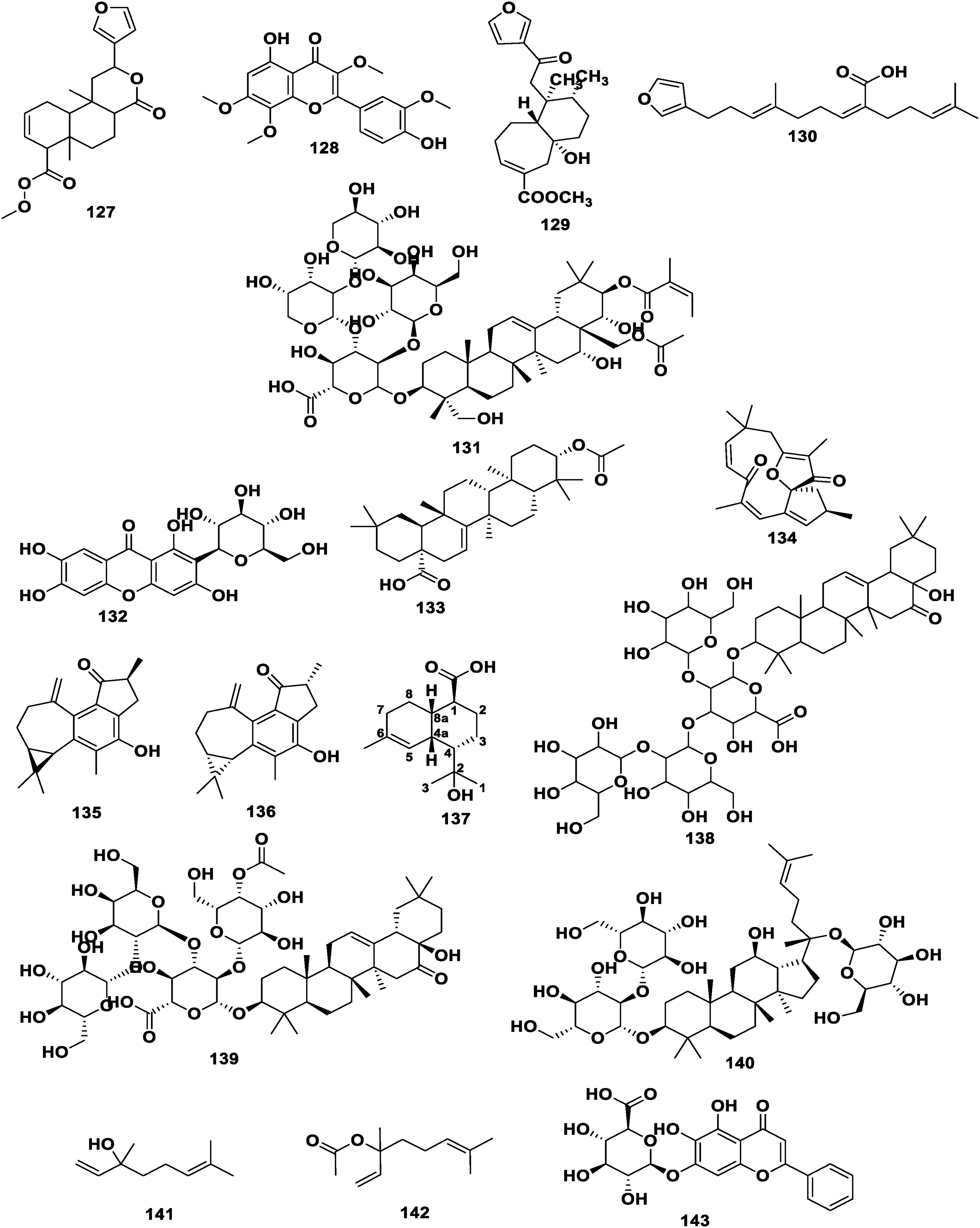
Diverse natural metabolites showed potent anti-ulcer activities. Unfortunately, some of them still their mechanism of action remains unexplored (Figure 9). In this context, cordatin (127) a furan diterpene, was isolated from Aparisthmium cordatum. Although its mechanism of action is unknown, it looked to be associated with antisecretory property.77 Additionally, ternatin (128) a tetramethoxyflavone, was isolated from Egletes viscosa. Pretreatment of animals with this flavonoid (25 and 50 mg/kg, i.p.) significantly inhibited gastric lesions caused by ethanol but no effect on those induced by restraint stress or indomethacin which is probable to its involvement of a prostaglandins-independent mechanism of gastro protection.78 Aparisthman (129), a diterpene was isolated from Aparisthmium cordatum. While the mechanism responsible for its anti-ulcerogenic potential remains unknown, it appeared to be associated with a significant increase of the stomach defensive mechanisms such as prostaglandin production and mucus synthesis.34 Centipedic acid (130) a diterpene obtained from Egletes viscosa flower buds. It afforded gastroprotective effect by various and complementary ways, as affecting the levels of NP-SH, endogenous prostaglandins, nitric oxide, and TRPV1-receptor as well as K ATP channel activation.79 Theasaponin A2 (131) is a triterpene saponin was isolated from Tea Seed Camellia sinensis. It showed an inhibitory potential on ethanol-related gastric mucosal lesions in rats at a dose of 5.0 mg/kg, p.o..80 Mangiferin (132) is a glugcosylxanthone was isolated from Mangifera indica L. It exhibited gastroprotective potential against gastric injury related to ethanol and indomethacin via the antisecretory as well as anti-oxidant properties.81 Acetyl aleuritolic acid (133), Jatrophone (134), Jatropholone A (135), and Jatropholone B (136) are groups of terpenoid metabolites which were isolated from Jatropha isabelli. They showed potent gastroprotective as reducing gastric lesions by 88%–91%..82 11-hydroxy-4-amorphen-15-oic acid (137) is a sesquiterpene isolated from Fabiana imbricate. It reduced the gastric lesions in HCl/EtOH-induced gastric injury in mice by 68% at 100 mg/kg in a dose dependent manner.37 Camelliosides A (138) and B (139) are nor-oleanane- triterpene saponins were previously obtained from Camellia japonica. They revealed gastroprotective potential on ethanol- and indomethacin-related gastric lesions.39 Ginsenoside Rd (140) is an oligoglycoside previously obtained from Panax ginseng. It showed inhibitory potentials on ethanol- and indomethacin-related gastric mucosal lesions in rats.37 Linalool (141) and Linalyl acetate (142) are acyclic monoterpenes which were previously obtained from Lavandula hybrid. They showed a significant reduction in ethanol-caused gastric injury to rats.37 Baicalin (143) is a flavonoid previously obtained from Coptis chinesis, and Rheum officinale. It significantly alleviated chronic gastritis through suppressing the inflammatory regulators and hindering Akt/NF-κB activation.83 Pterogynidine (144) is a flavonoid which was obtained from Alchornea glandulosa with potent anti-ulcerogenic effects.37 Methyl gallate (145) and gallic acid (146) are hydroxybenzoates derivatives and previously obtained from Alchornea glandulosa. They exerted potent anti-ulcerogenic effects..37 Ascorbic acid (147) is a phenolic metabolite which was obtained from Cissus quadrangularis. It showed powerful gastroprotective potential. 15-acetoxyimbricatolic acid (148) as well as 15-acetoxylabd-8(9)-en-19-oic acid (149) are diterpenes obtained from Araucaria araucana. They showed potent gastroprotective potential at doses of 50 and 100 mg/kg in mice, respectively.37 Moreover, esculin (150) a coumarin derivative which was obtained from Aesculus hippocastanum L. (Horse-chestnut). It exerted its gastroprotective potential through promoting endogenous prostaglandins, nitric oxide production, activation of K ATP channels, reduction of free radicals and alteration of anti-oxidant enzyme systems.84 3-β-hydroxy-3-deoxibarbatusin (BBOH) (151) and Barbatusin (BB) (152) are diterpenes, which were previously obtained from Plectranthus grandis. They effectively decreased the gastric lesions by 59% and 96%, and 32% and 76%, at doses of 5 and 10 mg/kg, respectively.85 Butein (153) is a chalcone which was obtaind from Glyzrrhiza glabra. It prevented the formation of gastric mucosal lesion caused by oral administration of severe necrosing elements as 60% ethanol.25 Xanthoangelol E (154) is a chalcone obtained from Angelica keiskei. It showed antisecretory effect due to inhibiting the gastric H+, K + -ATPase.86 2’,4’,7-trihydroxy-5-methoxy-8-(5-hydroxy-5-methyl-2-iso-propenylhexyl) (155) a flavanone was previously obtained from Sophera angustifolia. It showed a powerful gastroprotective activity.25 Naringin (156) a flavanone was obtained from Citrus paradisi and Citrus aurantium peel. It revealed gastroprotective activity by decreasing the levels of tumor necrosis factor-alpha (TNF-α), interleukin-6 (IL-6), C-reactive protein (CRP), inducible nitric oxide synthase (iNOS), as well as caspase-3 levels in indomethacin-induced ulcer.87
Chemical Structure of Compounds 127-185.
Additionally, sigmoidin A (157) a flavanone was isolated from Erythrina sigmoidea. It showed its potent effect in stress-induced ulcers at 50.0 mg/kg.25 Sophoranone (158) a flavanone which was isolated from Sophora subprostrata. It exhibited potent potential against Pylorus ligation as well as stress-induced ulcers.25 (dl) Catechin (159) a flavan was isolated from Camellia sinensis. It showed anti-oxidant potential and mucus protection against ischaemia–reperfusion-induced gastric ulcers.88 3-O-Methyl: (+) catechin (160) a flavan was isolated from Camellia sinensis (L.). It showed activity against stress-related ulcers/s.c. with ED50 value of 13.2 mg/kg/s.c, phenylbutazone-caused ulcers/s.c., in addition to reserpine-related ulcers/s.c..25 Cyanidan-3- glucoside (161) a flavan was obtained from Camellia sinensis. It exhibited gastroprotective potential through removal of the ethanol-related lipid peroxides as well as free radicals which may offer a potential therapy for the treatment of gastric lesions.89 35,7-trihydroxy-2-(3,4-dihydroxyphenyl)-1-benzopyrylium chloride (162) is an anthocyanidin obtained from Vaccinium Myrtillus. It exhibited a promising anti-ulcer potential by potentiating the defensive barriers of the gastrointestinal mucosa.90 Eupatilin (163) a flavone was isolated from Artemisia asiatica. It showed powerful anti-ulcer properties.91 Gnaphaloside A (164) a flavone was isolated from Gnaphalium L. It showed potent activity against reserpine-related ulcers/gastric intubation at 0.05 mL/g.25 Gossypin (165) a flavone was obtained from Aphis gossypii. It showed potent anti-gastric ulcer activities.92 Hypolaetin-8-O-β-d-glucoside (166) a flavone was obtained from Sideritis leucantha. It showed potent activity against cold stress-related ulcers/i.p. and ethanol-related gastric lesions/s.c. with ED50 values of 57.3, 68.0 mg/kg, respectively.73 Luteolin (167) a flavone was obtained from Aflatunia ulmifolia. It exhibited activity against reserpine-induced gastric ulcers.25 Vexibinol (168) a flavone was isolated from Sophra flavescence. It showed potent activity as gastric mucosal protective and antisecretory agent.93 Additionally, genistin (169) an isoflavone was obtained from Genista rumelica. It exerted a protective potential against IND-related gastropathy through hindering inflammatory mediators, neutrophil infiltration, suppression of oxidative stress generation as well as replenishing of NO levels regardless of gastric acidity.94 Procyanidin B-2 (170) and Procyanidin B-4 (171) are biflavonoids which were obtained from Cinchona pubescens. They showed potent activity against Stress-induced ulcers (water immersion)/ gastric intubation..25 Carnosol (172) is a diterpene obtained from Sphacele chamaedryoides. It exhibited gastroprotective potential by 69.9, 63.0, at doses of 20, 10 mg/kg, respectively.95 6,7-Dehydroroyleanone (173) a diterpene previously isolated from Sphacele chamaedryoides with gastroprotective effect by 54.4%.95 Royleanone (174) a diterpene obtained from Sphacele chamaedryoides (Balbis) Briq. It showed gastroprotective effect by 70.8%.95 7,20-Epoxyroyleanone (175) another diterpene obtained from Sphacele chamaedryoides with gastroprotective effect by 65.0%.95 Taxoquinone (176), Horminone (177), and 7-Oxo-11,12,14-trihydroxy-8,11, 13-abietatrien-20-al (178) are quinone derivatives obtained from Sphacele chamaedryoides.95 They exerted their gastroprotective potential by 35.8, 52.7, 53.0%, respectively. Rosmarinic acid (179), a polyphenol which was isolated from Salvia plebeian. It significantly decreased ulcerative index related to HCl/EtOH as well as indomethacin /bethanechol in mice.58 Tenuifloroside (180), and Verbascoside (181) are flavonoids obtained from Castilleja tenuiflora. They showed significant effect through decreasing the ulcerated area.96 Zingerone (182) is a phenolic compound obtained from Zingiber officinale. It showed a protective potential on the ethanol-related gastric ulcer attributed to its free radical scavenging potential.97 Capsaicin (183) is a phenylpropanoid compound isolated from different sources as Bell paper. It decreases lesion formation by influencing afferent neuron and inhibiting the development of hemorrhagic lesions in a concentration-dependent manner but did not change the ethanol-related fall in the gastric potential difference.98 Chlorogenic acid (184)99 is a phenylcoumarin, isolated from Hintonia latiflora and Hintonia standleyana. Its mechanism involved diminishing the neutrophil in- flux into the affected area and anti-oxidant potentials.100 Ellagic acid (185) is a phenolic metabolite obtained from Careya arborea. Treatment with ellagic acid enhanced ulcer healing by affecting IL-4, EGF/HGF levels and enhancing COX-2 expression.101
Additionally, different plant extracts showed gastroprotective potential against different ulcerogenic agents. They exerted their potential through different mechanisms of action as, hindering the acidity, increasing of mucus content, inhibiting histamine production, anti H. pylori potential, as well as antioxidant activities. In this context, Aloe vera showed inhibitory activity to gastric ulcer acid secretion in mice and rats as well as protected gastric mucosal damage in rats.102 The methanolic extract and different fractions of Elaeocarpus grandis were evaluated against indomethacin-induced ulcer method. Additionally, the ethyl acetate fraction was the most potent one.13 Moreover, the total ethanolic extract of Ocimum forskolei and its deprived fractions were screened for their anti-ulcer activity with the dichloromethane was the most potent one.3 Moreover, the crude extract of Olea europea showed significant anti-ulcer potential against indomethacin related ulcer in rats at a dose of 300 mg kg −1.103
Additionally, Psidium guava seeds extract showed potent gastro protective potential with significant reduction in the inflammation induced by indomethacin.12 Moreover, Melissa officinalis exhibited promising anti-ulcer potential in ethanol-related gastric ulcer at doses of 500 mg kg −1.104 Additionally, the roots and leaves of Reichardia picroides showed significant gastroprotective potential in HCl/EtOH-induced ulcer models with the root extract was the most potent one at a dose of 500 mg kg −1.105 Additionally, the total extract of Caesalpinia coriaria pods exhibited significant anti-ulcer potential in ethanol and indomethacin related ulcer in rats at doses of 100, 300 mg kg −1.106 Moreover, there are different herbal formulations have been investigated for their gastro-protective effect as Phy-Blica-D (Traditional Thai Polyherbal Formula) against ethanol-induced gastric ulcers in rats. Rats treated with only 80% ethanol (vehicle group) exhibited significant increases in their ulcer area and ulcer index (UI). Moreover, the levels of ROS and MDA markedly increased in the vehicle group compared with the normal control group. Daily oral administration of Phy-BlicaD (500 and 1000 mg/kg) for 7 days not only significantly decreased the ulcer area and UI, but also remarkably decreased the ROS and MDA levels in gastric tissue. The findings suggested that Phy-Blica-D reduced oxidative stress and enhanced antioxidant enzyme activities, indicating their potential gastroprotective effect by suppressing oxidative stress and stimulating antioxidant enzymes.107 Other herbal formulations as; Yelathy Chooranam (Taxus buccata, Piper nigrum, Eletaria cardamomum, Syzygium aromaticum, Cinnamomum zeylanicum, Zingiber officinale, and Curcuma angustifolia), NR-ANX-C (Camellia sinensis (green tea), Withania somnifera (Ashwagandha), Ocimum sanctum (holy basil), Shilajit, and Triphala) showed remearkable anti-ulcer potential through their antioxidant properties, inhibition of acid secretion, and enhancement of mucosal defense.108 On the other hand, several clinical trials revealed that consumption of plants containing polyphenols showed a noticeable decrease in different inflammatory markers and H. pylori with remarkable antioxidant properties, which help in exerting their gastroprotective properties.109
Screening of Natural Compounds for Drug-Likeness:
The commonly employed method for identifying drug-like molecules involves applying Lipinski's “Rule of Five” (Ro5). This rule encompasses criteria such as a molecular weight (MW) below 500 Daltons, a partition coefficient between octanol and water (Log P (o/w)) lower than 5, a maximum of five hydrogen bond donors (HBD), and no more than ten hydrogen bond acceptors (HBA). These conditions serve as indicators of a promising candidate for drug development.16Additionally, the Veber rule proposes that a compound exhibiting 10 or fewer rotatable bonds (RTB) and a polar surface area (TPSA) not exceeding 140 Å2 is likely to possess favorable oral bioavailability.17
As illustrated in
Table S1
, a total of 185 natural compounds underwent assessment for drug-like characteristics using the Lipinski and Veber criteria. The outcomes revealed that 127 compounds (approximately 73.91%) adhered to both the Lipinski and Veber criteria, implying a high likelihood of possessing favorable oral bioavailability. Conversely, 57 compounds (approximately 26.09%) did not comply with these criteria, suggesting a potential for poor oral bioavailability. (Figure 10). For example, aescine (20) disobey lipinski and verbers rules because of its high MW that exceeding 500 Daltons and possesses a higher number of hydrogen bond donors and acceptors than the rule permits, and for verbers rules,RTB exceed 10,and TPSA more than 140 Å2.
Drug Likeness Pie Chart.
The non-compliance of compounds like aescine underscores the need for structural optimization to enhance their drug-like properties. Several strategies can be employed to address these limitations. First, the number of rotatable bonds can be reduced to decrease molecular flexibility, potentially improving absorption and metabolic stability. Second, masking polar groups or modifying functional groups can lower TPSA and minimize excessive hydrogen bonding, thus enhancing permeability. Third, prodrug development strategies may be explored, where polar hydroxyl groups are temporarily masked with lipophilic groups or bio-reversible linkages to facilitate absorption. Additionally, fragment-based drug design approaches can be applied, wherein larger molecules are broken into smaller, bioactive fragments with improved compliance. Lastly, introducing lipophilic substituents, such as alkyl or aromatic groups, can improve the partition coefficient (logP), enabling better membrane permeability while maintaining solubility.These optimization strategies highlight the importance of balancing physicochemical properties to achieve favorable drug-likeness.
Conclusion and Future Prospectives
Peptic ulcer is a common human illness which affects mainly the stomach in addition to the proximal duodenum in the gastrointestinal tract. Natural secondary metabolites have a key part in the treatment and prevention of gastric ulcer. This article aims to review natural gastroprotective metabolites which have been recognized. Natural gastroprotective molecules are distinguished by their structural variety, safety, as well as nontoxic quality. Numerous examples of bioactive secondary molecules as phenolic compounds, terpenoids, flavonoids, alkaloids, and coumarins (Figure 11) where flavonoids represented the major fraction, as recent in vivo clinical studies have demonstrated the gastroprotective effects of flavonoids in various experimental models. These naturally occurring polyphenols, showed potential in protecting and repairing gastric mucosa. Accordingly, bioactive metabolites with varied chemical designs in addition to their modes of action are beneficial therapeutic platforms for the introduction of novel bioactive molecules.
Chemical Classes of Secondary Metabolites Responsible for the Gastro Protective Potential.
On the other hand, analysis of the available reviewed data has showed some considerable gaps in investigating natural molecules with gastroprotective potential. Firstly, more structure–activity relationships studies should be carried out for the bioactive molecules obtained from the different plant and marine organisms Exploring the cellular and molecular properties of these molecules will be of a promising value in establishing new bioactive metabolites. Additionally, synthetic analogs of bioactive molecules of gastroprotective potential should be developed concerning with enhancing the efficacy and safety, in addition to broadening the room of their biological investigations. Fortunately, most of natural compounds were estimated to enhance drug-likeness profiles. Finally, the area of preclinical as well as clinical studies carried out on secondary metabolites with anti-ulcer potential still at its beginning. Accordingly, more studies should be carried out towards those natural treasures to translate them into prevailing market products as they afford an endless resource of novel gastro protective metabolites. Future studies should focus on synthesizing and evaluating modified analogs of non-compliant compounds to validate their pharmacokinetic profiles and therapeutic potential. Such modifications not only expand the drug discovery pipeline but also contribute to the rational design of compounds with improved ADME properties.
Supplemental Material
sj-docx-1-npx-10.1177_1934578X251329870 - Supplemental material for A Comprehensive Overview on the Role of Phytocompounds as Gastroprotective Agents
Supplemental material, sj-docx-1-npx-10.1177_1934578X251329870 for A Comprehensive Overview on the Role of Phytocompounds as Gastroprotective Agents by Omnia Hesham Abdelhafez, Nourhan Hisham Shady, Mohamed Hisham, Khadija Essa awad, Rania Atef Hashem, Rania Ahmed Fouad, Habiba Ahmed, Randa Khaled Hassan, Rofaida Sayed Gomaa and Usama Ramadan Abdelmohsen in Natural Product Communications
Footnotes
Acknowledgments
The authors thank Prof. Hossam M. Hassan, (Kut University College, Iraq) for fruitful discussion.
ORCID iD
Omnia Hesham Abdelhafez
Author Contributions/CRediT
Kh. Ess, Ra. A. H., Ra. A. F., Ha. A., Ra. Kh., Ro. Sa., collected a complete survey of all the mentioned compounds. Kh. Ess, Ra. A. H., Ra. A. F., Ha. A., Ra. Kh., Ro. Sa., O.H. A., N.H. S., M.H., U. R. A. wrote the manuscript. M.H.: analyze the data. O.H. A., N.H. S., M.H., U.R. A. revised the surveyed literature data. O.H.A., N.H. S., M.H., U.R.A. discussed the results scientifically and contributed to the design and editing of the review. All authors reviewed the final manuscript.
Funding
The authors received no financial support for the research, authorship, and/or publication of this article.
Conflicting Interests
The authors declared no potential conflicts of interest with respect to the research, authorship, and/or publication of this article.
Supplemental Material
Supplemental material for this article is available online.
References
1.
WuYMurrayGKByrneEM, et al. GWAS of peptic ulcer disease implicates Helicobacter pylori infection, other gastrointestinal disorders and depression. Nat Commun. 2021;12(1):1146.
2.
KavittRTLipowskaAMAnyane-YeboaA, Gralnek IMJTAjom. Diagnosis and treatment of peptic ulcer disease. Am J Med. 2019;132(4):447–456.
3.
ZahranEMAbdelmohsenURHusseinAS, et al. Antiulcer potential and molecular docking of flavonoids from Ocimum forskolei benth., family Lamiaceae. Nat Prod Res. 2021;35(11):1933–1937.
4.
KamadaTSatohKItohT, et al. Evidence-based clinical practice guidelines for peptic ulcer disease 2020. J Gastroenterol. 2021;56:303–322.
5.
MelazziniFLentiMVMauroADe GraziaF, Di Sabatino AJTAjog. Peptic ulcer disease as a common cause of bleeding in patients with coronavirus disease 2019. Am J Gastroenterol. 2020.
6.
BeiranvandM, Bahramikia SJEJoP. Ameliorating and protective effects mesalazine on ethanol-induced gastric ulcers in experimental rats. Eur J Pharmacol. 2020;888:173573.
7.
YadavRKumarJKumar SinghA, et al. A review on the pathogenesis, treatment and prevention of peptic ulcer disease. Asian J Med Princ Clin Pract. 2022;5(4):183–197.
SinghPKEaswariTSJCNScienceF. Natural medicines as gastro-protective therapy in the treatment of peptic ulcer: a multifaceted approach. Curr Nutr Food Sci. 2022;18(6):559–573.
10.
BeiranvandMJPP. A review of the most common in vivo models of stomach ulcers and natural and synthetic anti-ulcer compounds: a comparative systematic study. Phtomed Plus. 2022;2(2):100264.
11.
AtanasovAGZotchevSBDirschVM, Supuran CTJNrDd. Natural products in drug discovery: advances and opportunities. Nat Rev Drug Discov. 2021;20(3):200–216.
12.
ShadyNHAbdullahHSMaherSA, et al. Antiulcer potential of psidium guajava seed extract supported by metabolic profiling and molecular docking. Antioxidants. 2022;11(7):1230.
13.
El-DienRTMMaherSAAbdelmohsenUR, et al. Antiulcer secondary metabolites from Elaeocarpus grandis, family Elaeocarpaceae, supported by in silico studies. RSC Adv. 2020;10(57):34788–34799.
14.
IslamMTSarkarCEl-KershDM, et al.Natural products and their derivatives against coronavirus: a review of the non-clinical and pre-clinical data. Phytother Res. 2020;34(10):2471–2492.
15.
Cox-GeorgianDRamadossNDonaC, Basu CJMpfftp. Therapeutic and medicinal uses of terpenes. Medicinal Plants: From Farm to Pharmacy. 2019:333–359.
16.
Lipinski CAJJop, t. methods, Drug-like properties and the causes of poor solubility and poor permeability. J Pharmacol Toxicol Methods. 2000;44(1):235–249.
17.
VeberDFJohnsonSRChengH-Y, et al. Molecular properties that influence the oral bioavailability of drug candidates. J Med Chem. 2002;45(12):2615–2623.
18.
DainaAMichielinOZoeteV. SwissADME: a free web tool to evaluate pharmacokinetics, drug-likeness and medicinal chemistry friendliness of small molecules. Sci Rep. 2017;7:42717.
19.
FujiiTSugimotoKNodaT, et al. Inhibition of gastric H+, K+-ATPase by new dihydropyrazole derivative KYY-008. Biochem Biophys Res Commun. 2021;567:177–182.
20.
Reyes-ChilpaRBaggioCHAlavez-SolanoD, et al. Inhibition of gastric H+, K+-ATPase activity by flavonoids, coumarins and xanthones isolated from Mexican medicinal plants. J Ethnopharmacol. 2006;105(1-2):167–172.
21.
AdinorteyMB, N’guessan BB, H+/K+-ATPase inhibitors from plants: a potential source for drug discovery, in Natural products as enzyme inhibitors: an industrial perspective. 2022, Springer. p. 125–136.
22.
QaziNGKhanA-uAbbasiSW, et al.Pharmacological basis of Rumex hastatus D. Don in gastrointestinal diseases with focusing effects on H+/K+-ATPase, calcium channels inhibition and PDE mediated signaling: Toxicological evaluation on vital organs. Molecules. 2022;27(18):5919.
23.
TheodulozCCarriónIBPertinoMWValenzuelaDSchmeda-HirschmannG. Potential gastroprotective effect of novel cyperenoic acid/quinone derivatives in human cell cultures. Planta Med. 2012;78(17):1807–1812.
24.
BoeingTMarianoLNBDos SantosAC, et al. Gastroprotective effect of the alkaloid boldine: Involvement of non-protein sulfhydryl groups, prostanoids and reduction on oxidative stress. Chem Biol Interact. 2020;327:109166.
25.
de Lira MotaKSDiasGENPintoMEF, et al. Flavonoids with gastroprotective activity. Molecules. 2009;14(3):979–1012.
26.
LakshmiVMishraVPalitGJNpBioprospecting. A new gastroprotective effect of limonoid compounds xyloccensins X and Y from Xylocarpus Molluccensis in rats. Nat Prod Bioprospect. 2014;4(5):277–283.
27.
YadavDKSinghNDevK, et al. Anti-ulcer constituents of Annona squamosa twigs. Fitoterapia. 2011;82(4):666–675.
28.
AwaadASEl-MeligyRMSolimanGAJJoScs.Natural products in treatment of ulcerative colitis and peptic ulcer. J Saudi Chem Soc. 2013;17(1):101–124.
29.
KangwanNParkJ-MKimE-H, Hahm KBJWjogp. Quality of healing of gastric ulcers: natural products beyond acid suppression. World J Gastrointest Pathophysiol. 2014;5(1):40.
30.
MarhuendaEde la LastraCAMartinMJGPTVS. Antisecretory and gastroprotective effects of aescine in rats. Gen Pharmacol. 1994;25(6):1213–1219.
31.
KangM-HLeeJ-HLeeJ-H, et al. Antigastritic and anti Helicobacter pylori of Trifolirhizin from Sophora Radix. Korean J Pharmacogn, 2006;37(4):266–271.
32.
Paula de OliveiraASantinJRLemosM, et al. Gastroprotective activity of methanol extract and marrubiin obtained from leaves of Marrubium vulgare L.(Lamiaceae).J Pharm Pharmacol. 2011;63(9):1230–1237.
33.
MagalhãesRTorresDCavalcanteR, et al. Gastroprotective effect of alpha-pinene and its correlation with antiulcerogenic activity of essential oils obtained from Hyptis species. Pharmacogn Mag. 2015;11(41):123–130.
34.
Hiruma-LimaCATomaWde Souza GraciosoJ, et al. Natural trans-crotonin: the antiulcerogenic effect of another diterpene isolated from the bark of Croton cajucara B ENTH. Biol Pharm Bull. 2002;25(4):452–456.
35.
ChenC-FChenS-MChowS-YHanPW. Protective effects of Carica papaya Linn on the exogenous gastric ulcer in rats. Am J Chin Med. 1981;9(03):205–212.
36.
Ruiz-HurtadoPAGarduño-SicilianoLDomínguez-VeranoP, et al. Propolis and its gastroprotective effects on nsaid-induced gastric ulcer disease: a systematic review. Nutrients. 2021;13(9):3169.
37.
TundisRLoizzoMRBonesiM, et al. Natural products as gastroprotective and antiulcer agents: recent developments. Nat Prod Commun. 2008;3(12):1934578X0800301234.
38.
GuerreroCPMartinMMarhuendaE. Prevention by rutin of gastric lesions induced by ethanol in rats: role of endogenous prostaglandins. General Pharmacology: The Vascular System. 1994;25(3):575–580.
39.
RodríguezJABustamanteCAstudilloLSchmeda-HirschmannG.Gastroprotective activity of solidagenone on experimentally-induced gastric lesions in rats. J Pharm Pharmacol. 2002;54(3):399–404.
40.
BertéPEda Silva LopesJComandulliNG, et al.Evaluation of the gastroprotective activity of the extracts, fractions, and pure compounds obtained from aerial parts of Rubus imperialis in different experimental models. Naunyn-Schmiedeberg’s Arch Pharmacol. 2014;387(4):313–319.
41.
TheodulozCCarriónIBPertinoMWValenzuelaD, Schmeda-Hirschmann GJPm. Potential gastroprotective effect of novel cyperenoic acid/quinone derivatives in human cell cultures. Planta Medica. 2012;78(17):1807–1812.
42.
de VerasBOda SilvaMVRibeiroPPC.Tannic acid is a gastroprotective that regulates inflammation and oxidative stress. Food Chem Toxicol. 2021;156:112482.
43.
Velázquez-MoyadoJAMartínez-GonzálezALinaresE, et al. Gastroprotective effect of diligustilide isolated from roots of Ligusticum porteri coulter & rose (Apiaceae) on ethanol-induced lesions in rats. J Ethnopharmacol. 2015;174:403–409.
44.
MoghadamtousiSZRouhollahiEKarimianH, et al. Gastroprotective activity of Annona muricata leaves against ethanol-induced gastric injury in rats via Hsp70/Bax involvement. Drug Des Devel Ther. 2014;8:2099.
45.
ElshamyAIEl-KashakWAAbdallahHMFarragAH, Nassar MIJCjonm. Soft coral Cespitularia stolonifera: new cytotoxic ceramides and gastroprotective activity. CJNM. 2017;15(2):105–114.
46.
TahaMMESalgaMSAliHM, et al. Gastroprotective activities of Turnera diffusa Willd. ex Schult. revisited: role of arbutin. J Ethnopharmacol. 2012;141(1):273–281.
47.
KohnoYTanikawaKOhtaKSuwaT. Effect of sofalcone on the gastric cell proliferation in the experimental gastritis of rats. Jpn J Pharmacol. 1987;43(4):407–413.
48.
ChoiYHKimY-JChaeH-SChinY-W. In vivo gastroprotective effect along with pharmacokinetics, tissue distribution and metabolism of isoliquiritigenin in mice. Planta Medica. 2015;81(07):586–593.
49.
NascimentoAMde SouzaLMBaggioCH, et al. Gastroprotective effect and structure of a rhamnogalacturonan from Acmella oleracea. Phytochemistry. 2013;85:137–142.
50.
de SouzaMCVieiraAJBeserraFP, et al. Gastroprotective effect of limonene in rats: Influence on oxidative stress, inflammation and gene expression. Phytomedicine. 2019;53:37–42.
51.
de Lira MotaKSDiasGENPintoMEF, et al. Flavonoids with gastroprotective activity. Molecules. 2009;14(3):979–1012.
52.
JinXLuYChenSChenD. UPLC-MS identification and anticomplement activity of the metabolites of Sophora tonkinensis flavonoids treated with human intestinal bacteria. J Pharm Biomed Anal. 2020;184:113176.
53.
LewisDAFieldsWNShawGP. A natural flavonoid present in unripe plantain banana pulp (Musa sapientum L. var. paradisiaca) protects the gastric mucosa from aspirin-induced erosions. J Ethnopharmacol. 1999;65(3):283–288.
54.
BaggioCHFreitasCSTwardowschyA, et al. In vivo/in vitro studies of the effects of the type II arabinogalactan isolated from Maytenus ilicifolia Mart. ex Reissek on the gastrointestinal tract of rats. Zeitschrift für Naturforschung C. 2012;67(7-8):405–410.
55.
WangXYYinJYHuJLNieSPXieMYJFF. Gastroprotective polysaccharide from natural sources: review on structure, mechanism, and structure–activity relationship. Food Front. 2022;3(2).
56.
SahaPKumarRNyarkoROKahwaIOwusuNR. Herbal secondary metabolite for gastro-protective ulcer activity with api structures. World J Pharm Pharm Sci. 2021;10(5).
57.
Mellinger-SilvaCSimas-TosinFFSchiaviniDN, et al. Isolation of a gastroprotective arabinoxylan from sugarcane bagasse. Bioresour Technol. 2011;102(22):10524–10528.
58.
NugrohoAKimM-HChoiJBaekN-IParkH-J. In vivo sedative and gastroprotective activities of Salvia plebeia extract and its composition of polyphenols. Arch Pharm Res. 2012;35(8):1403–1411.
59.
KahramanAErkasapNKökenT, et al. The antioxidative and antihistaminic properties of quercetin in ethanol-induced gastric lesions. Toxicology. 2003;183(1-3):133–142.
60.
AwololaGVSofidiyaMOBaijnathHNorenSSKoorbanallyNA. The phytochemistry and gastroprotective activities of the leaves of Ficus glumosa. S Afr J Bot. 2019;126:190–195.
61.
LiQHuXXuanY, et al. Kaempferol protects ethanol-induced gastric ulcers in mice via pro-inflammatory cytokines and NO. Acta Biochim Biophys Sin. 2018;50(3):246–253.
62.
Campos-VidalYHerrera-RuizMTrejo-TapiaG, et al. Gastroprotective activity of kaempferol glycosides from Malvaviscus arboreus Cav. J Ethnopharmacol. 2021;268:113633.
63.
YamaguchiFSaitoMArigaT, et al. Free radical scavenging activity and antiulcer activity of garcinol from Garcinia indica fruit rind. J Agric Food Chem. 2000;48(6):2320–2325.
64.
MohamedTAElshamyAIIbrahimMA, et al. Gastroprotection against rat ulcers by nephthea sterol derivative. Biomolecules. 2021;11(8):1247.
65.
KhanMSAKhundmiriSUKKhundmiriSRAl-SaneaMMMokPL. Fruit-derived polysaccharides and terpenoids: recent update on the gastroprotective effects and mechanisms. Front Pharmacol. 2018;9:569.
66.
TheodulozCCarriónIBPertinoMWValenzuelaDSchmeda-HirschmannGJP. Potential gastroprotective effect of novel cyperenoic acid/quinone derivatives in human cell cultures. Planta Medica. 2012;78(17):1807–1812.
67.
KaraoğlanESAlbayrakAKutluZBayırYJA. Gastroprotective and antioxidant effects of Eremurus spectabilis Bieb. methanol extract and its isolated component isoorientin on indomethacin induced gastric ulcers in rats. Acta Cirurgica Brasileira. 2018;33:609–618.
68.
RepettoMLlesuySF. Antioxidant properties of natural compounds used in popular medicine for gastric ulcers. Braz J Med Biol Res. 2002;35:523–534.
69.
Sánchez-MendozaMERodríguez-SilverioJRivero-CruzJF, et al. Antinociceptive effect and gastroprotective mechanisms of 3, 5-diprenyl-4-hydroxyacetophenone from Ageratina pichinchensis. Fitoterapia.2013;87:11–19.
70.
Sánchez-MendozaMELópez-LorenzoYCruz-AntonioL, et al. Gastroprotection of calein D against ethanol-induced gastric lesions in mice: role of prostaglandins, nitric oxide and sulfhydryls. Molecules. 2019;24(3):622.
71.
YangYWangLYuanMYuQFuF. Anti-Inflammatory and gastroprotective effects of escin. Nat Prod Commun. 2020;15(12):1934578X20982111.
72.
WangK-TChenL-GWuC-HChangC-CWangC-C. Gastroprotective activity of atractylenolide III from Atractylodes ovata on ethanol-induced gastric ulcer in vitro and in vivo. J Pharm Pharmacol. 2010;62(3):381–388.
73.
VillarAGascoM, Alcaraz MJJop. Anti-inflammatory and anti-ulcer properties of hypolaetin-8-glucoside, a novel plant flavonoid. J Pharm Pharmacol. 1984;36(12):820–823.
74.
ShinJHLeeCWOhSJ, et al. Protective effect of silymarin against ethanol-induced gastritis in rats: role of sulfhydryls, nitric oxide and gastric sensory afferents. Food Chem Toxicol. 2013;55:353–357.
75.
NavarreteAArrietaJTerronesLAbou-GazarHCalisI.Gastroprotective effect of Astragaloside IV: role of prostaglandins, sulfhydryls and nitric oxide. J Pharm Pharmacol. 2005;57(8):1059–1064.
76.
ArecheCBenitesJCornejoA, et al. Seco-taondiol, an unusual meroterpenoid from the Chilean seaweed Stypopodium flabelliforme and its gastroprotective effect in mouse model. Mar Drugs. 2015;13(4):1726–1738.
77.
Hiruma-LimaCAde Souza GraciosoJTomaW, et al. Evaluation of the gastroprotective activity of cordatin, a diterpene isolated from Aparisthmium cordatum (Euphorbiaceae). Biol Pharm Bull. 2000;23(12):1465–1469.
78.
RaoVSantosFSobreiraT, et al. Investigations on the gastroprotective and antidiarrhoeal properties of ternatin, a tetramethoxyflavone from Egletes viscosa. Planta Medica. 1997;63(02):146–149.
79.
GuedesMCunhaASilveiraERaoV. Antinociceptive and gastroprotective effects of diterpenes from the flower buds of Egletes viscosa. Planta Medica, 2002;68(11):1044–1046.
80.
MorikawaTLiNNagatomoA, et al. Triterpene saponins with gastroprotective effects from tea seed (the seeds of Camellia sinensis). J Nat Prod. 2006;69(2):185–190.
81.
CarvalhoNSSilvaMMSilvaRO, et al. Gastroprotective properties of cashew gum, a complex heteropolysaccharide of Anacardium occidentale, in naproxen-induced gastrointestinal damage in rats. Drug Dev Res. 2015;76(3):143–151.
82.
PertinoMSchmeda-HirschmannGRodríguezJATheodulozC. Gastroprotective effect and cytotoxicity of terpenes from the Paraguayan crude drug “yagua rova”(Jatropha isabelli). J Ethnopharmacol. 2007;111(3):553–559.
83.
JiWLiangKAnRWangXJLs.Baicalin protects against ethanol-induced chronic gastritis in rats by inhibiting Akt/NF-κB pathway. Life Sci. 2019;239:117064.
84.
RiosERVRochaNFMVenâncioET, et al. Mechanisms involved in the gastroprotective activity of esculin on acute gastric lesions in mice. Chem Biol Interact. 2010;188(1)246–254.
85.
de Araújo RodriguesPde MoraisSMde SouzaCM, et al. Gastroprotective effect of barbatusin and 3-beta-hydroxy-3-deoxibarbatusin, quinonoid diterpenes isolated from Plectranthus grandis, in ethanol-induced gastric lesions in mice. J Ethnopharmacol. 2010;127(3):725–730.
86.
MartínMde La LastraCAMotilvaV, La Casa CJSinpc. Antiulcer and gastroprotective activity of flavonic compounds: mechanisms involved. Stud Nat Prod Chem. 2000;22:419–456.
87.
EminSVolkanGJGBSciencesP. Protective effects of naringin in indomethacin-induced gastric ulcer in rats. GSC Biol Pharm Sci. 2019;8(2).
88.
RaoCV, Vijayakumar MJJoP. Pharmacology, protective effect of (+)-catechin against gastric mucosal injury induced by ischaemia-Reperfusion in rats. J Pharm Pharmacol. 2007;59(8):1103–1107.
89.
LiC-YXuH-DZhaoB-TChangH-IRheeH-IJA. Gastroprotective effect of cyanidin 3-glucoside on ethanol-induced gastric lesions in rats. Alcohol. 2008;42(8):683–687.
90.
MagistrettiMContiMCristoniAJA-f.Antiulcer activity of an anthocyanidin from Vaccinium myrtillus. Arzneimittel-Forschung. 1988;38(5):686–690.
91.
JangJ-MParkK-JKimD-G, et al. Pharmacokinetics of a new antigastritic agent, eupatilin, an active component of StillenE®, in rats. Biomol Ther. 2003;11(3):163–168.
92.
ParmarN, Ghosh MJBJIP-GMER. The antiinflammatory and anti-gastric ulcer activities of some bioflavonoids. 1976;1:6–11.
93.
YamaharaJMochizukiMChisakaT, et al. The antiulcer action of sophara and the active constituent in Sophara. II.: the antiulcer action of vexibinol. Chem Pharm Bull (Tokyo). 1990;38(4):1039–1044.
94.
Abdel-RaheemITBamagousGA, Omran GAJAJoP. Nti-ulcerogenic effect of genistein against indomethacin-induced gastric ulcer in rats. Asian J Pharm Clin Res. 2016:58–63.
95.
ArecheCSchmeda-HirschmannGTheodulozCRodríguezJA. Gastroprotective effect and cytotoxicity of abietane diterpenes from the Chilean Lamiaceae Sphacele chamaedryoides (Balbis) Briq. J Pharm Pharmacol. 2009;61(12):1689–1697.
96.
López-RodríguezRHerrera-RuizMTrejo-TapiaG, et al. In vivo gastroprotective and antidepressant effects of iridoids, verbascoside and tenuifloroside from Castilleja tenuiflora Benth. Molecules. 2019;24(7):1292.
97.
Karampour NSistaniArziARezaieAPashmforooshMKordiFJM. Gastroprotective effect of zingerone on ethanol-induced gastric ulcers in rats. Medicina. 2019;55(3):64.
98.
HolzerPLippeIT. Stimulation of afferent nerve endings by intragastric capsaicin protects against ethanol-induced damage of gastric mucosa. Neuroscience. 1988;27(3):981–987.
99.
CristiansSByeRNavarreteAMataR. Gastroprotective effect of Hintonia latiflora and Hintonia standleyana aqueous extracts and compounds. J Ethnopharmacol. 2013;145(2):530–535.
100.
ShimoyamaATSantinJRMachadoID, et al. Antiulcerogenic activity of chlorogenic acid in different models of gastric ulcer. Naunyn Schmiedebergs Arch Pharmacol. 2013;386(1):5–14.
101.
ChatterjeeAChatterjeeSDasS, et al. Ellagic acid facilitates indomethacin-induced gastric ulcer healing via COX-2 up-regulation. Acta Biochim Biophys Sin. 2012;44(7):565–576.
102.
YusufSAgunuADianaMJJoe.The effect of Aloe vera A. Berger (Liliaceae) on gastric acid secretion and acute gastric mucosal injury in rats. J Ethnopharmacol. 2004;93(1):33–37.
103.
MusaAShadyNHAhmedSR, et al. Antiulcer potential of Olea europea L. cv. arbequina leaf extract supported by metabolic profiling and molecular docking. Antioxidants. 2021;10(5):644.
104.
JueeLYSofiSHAdhamANJJoFF.Melissa officinalis gastroprotective and antioxidant efficacy. J Funct Foods. 2023;105:105550.
105.
OueslatiSSerairi BejiRZar KalaiF, et al. Antioxidant potentialities and gastroprotective effect of Reichardia picroides extracts on Ethanol/HCl induced gastric ulcer rats. Int J Environ Health Res. 2023:1–12.
106.
Pineda-PeñaEACapistran-AmezcuaDReyes-RamírezA, et al. Gastroprotective effect methanol extract of Caesalpinia coriaria pods against indomethacin-and ethanol-induced gastric lesions in Wistar rats. J Ethnopharmacol. 2023;305:116057.
107.
SanpinitSChonsutPPunsawadCWetchakulPJN. Gastroprotective and antioxidative effects of the traditional Thai polyherbal formula phy-blica-D against ethanol-induced gastric ulcers in rats. Nutrients. 2021;14(1):172.
108.
GuptaMKKhadeMASrivastavaBHyamSRKhadeABJIJLSPR. A comprehensive review of the marketed antiulcer polyherbal formulations. Pharm Sci Pharm Toxicol. (2022);12(6):77–86.
109.
ChiuH-FVenkatakrishnanKGolovinskaiaOWangC-KJM. Gastroprotective effects of polyphenols against various gastro-intestinal disorders: a mini-review with special focus on clinical evidence. Molecules. 2021;26(7):2090.
Supplementary Material
Please find the following supplemental material available below.
For Open Access articles published under a Creative Commons License, all supplemental material carries the same license as the article it is associated with.
For non-Open Access articles published, all supplemental material carries a non-exclusive license, and permission requests for re-use of supplemental material or any part of supplemental material shall be sent directly to the copyright owner as specified in the copyright notice associated with the article.