Results and Discussion
These results came from a thorough analysis of the information gathered and packaged in Table S1, which presents commonly used food and medicinal plants, whose products have potential to treat and manage viral infections and related respiratory disorders. About 57 native and non-native plants from 39 botanical families were found to be present and commonly used in South Africa for that purpose. Of those plants, ten were members of the Fabaceae family, each of Amaranthaceae, Apocynaceae, Asteraceae, Compositae, and Oleaceae families had two members, and the remaining families had one member each. Respiratory disorders were cited as common colds, asthma, influenza, coughs, chest pains, breathing difficulty, sore throat, tuberculosis, fever, febrile diseases, bronchitis, and respiratory tract infections. The traditional knowledge on the types of plants to use in the treatment and management of those symptoms usually sits with local community members including traditional healers.
24
Based on the traditional knowledge, local healers usually prescribe relevant medicinal plants that the local community may need for the treatments of different viral infections.13,25
According to many in vitro and in vivo studies (Table S1), most listed plants possessed an array of phytoconstituents. Those included vitamins, minerals, polysaccharides, polyphenols, phenolic acids, saponins, terpenoids, coumarins, tannins, alkaloids, anthocyanins, flavonoids (catechin, epicatechin, quercetin), kaempferols, glucosides, gingerols, aspalathin, papain, pittiviridoside, mangiferin, phaseolin, and allicin. These phytoconstituents are collectively characterised by antimicrobial, antiviral, antibacterial, antimalarial, immunomodulatory, antioxidant, and anti-inflammatory properties with potential to prevent risks of pathogenic infections, weakening immune system, and oxidative stress that damages healthy cells to cause non-communicable diseases (NCDs).25,26 Through the presence of diverse bioactive compounds in extracts, such plants have demonstrated their efficacy against viral infections. Plant-derived bioactive compounds are also effective in strengthening immune response and mitigating pathogenic infections.
27
Below is an in-depth analysis of only 15 plants possessing phytonutrients and phytochemicals that exhibit promising pharmacological properties to treat and manage respiratory disorders and diverse viral infections. A small and manageable number of those plants was determined by the available rich information or data. The remaining 42 plants were left out owing to scanty data and not being commonly known and used in South Africa.
Mangifera indica
(mango tree) of the Anacardiaceae family is used to treat common colds, asthma, cough, and tuberculosis. Mango extracts possess essential nutrients and phytochemicals. Extracts possess nutrients (zinc, calcium, nitrogen, phosphorus, potassium, sulphur, magnesium, sodium, iron), and vitamins (A, B1, B2, B3, and C).
28
Minerals and vitamins are important in the body due to their antiviral, immunomodulatory, and anti-inflammatory activities as per expanded explanation in recently published literature.23,27,29 Zinc boosts the immune system by differentiating immune cells and restores the function of depleted immune cells or improves the function of normal immune cells, especially in immunocompromised people.23,29 Vitamins too, are responsible for immune reactions and have exhibited antiviral activities against SARS-CoV-2.
27
Those vitamins can be ideal supplements owing to their immune-augmenting roles for the prevention and treatment of coronavirus infections.
3
For example, vitamin A modulates the immune system, and its deficiency impairs it.
3
A regulated immune response defends the human body against infections attributed to pathogenic invasion such as SARS-CoV-2.
27
Vitamin A was found to have improved symptoms of acute pneumonia and enhanced clinical responses and decreased the length of patient's hospital stay. It could therefore be a promising choice for the prevention of lung injuries and the treatment of novel coronavirus. In another study,
29
vitamin A derivatives (all-trans RA, 9-Cis trans RA, and 13-Cis trans RA) have facilitated the production of the antiviral mediator, type-I IFN (α and β), which enables the development of a long-term immune response against viruses.
29
Vitamin B1 modulates the immune system function and therefore decreases the risks of pathogenic infections and onset of non-communicable diseases.
30
On the other hand, vitamin B2 had considerably reduced MERS-CoV titer to below the limit of detection in human plasma and plantlets platelet components suggesting its effectiveness in reducing the risk of viral transfusion and transmission through irreversible damaging of viral nucleic acids such as DNA and RNA.
3
This could disrupt the ability of virus to replicate, and therefore reduce the presence of coronaviruses in the blood of severely ill patients.
29
Vitamin B3 reinforces the immune system and reduces replication of human enteroviruses, human immunodeficiency virus, vaccinia virus, and hepatitis B virus.
29
Its immunomodulatory activity may lower pro-inflammatory cytokines such as TNF-α, IL-1β, and IL-6.3,29,30 Vitamin Bs are essential for proper immune functions, which may help reduce hospital stays of Covid-19 patients.
29
Vitamin C is a powerful antioxidant that scavenges free radicals causing oxidative stress and boosts the immune system against SARS-CoV-2 infections.
30
It can maintain the cell redox integrity to protect the lungs against oxidative stress.
29
Since Covid-19 patients were once found to have deficient levels of vitamin C,
29
enhancing the levels of this vitamin in patients’ blood could help reverse the deficiency. Vitamin C has the potential to reduce increased levels of proinflammatory mediators such as interferon-gamma, IL-1β, IL-6, IL-12, CXCL10, CCL2, and TNFα induced by SARS-CoV-2 infection. Direct antiviral mechanism of vitamin C includes damaging the viral capsid, disrupting the viral capsid sugar moiety, and inhibiting viral replication by degradation the genomes of the RNA and DNA viruses.
29
Bioactive compounds present in extracts include polyphenols, mangiferin, rutin, ellagic acid, epicatechin, gallic acid, glycosides, catechin, ellagic acids, propyl, methyl gallate, rhamnetin, anthocyanins, amentoflavone, catechin, micals, alkaloids, phenolic acids, flavonoids, saponins, tannins, terpenoids, steroids, sterols, apigenin, ferulic acid, quercetin, gallic acid, caffeic acid, and glycosides, which are characterised by antimicrobial, antioxidant, antiviral, anti-inflammatory, anticarcinogenic, and immunomodulatory activities.25,28,31–41 Compounds of mango are broadly categorised as polyphenols, terpenoids, sterols, carotenoids, vitamins, fatty acids, flavonoids, and amino acids.
28
These compounds (phenolic acids, flavonoids, saponins, tannins, glycosides, and anthocyanins) like those of other plants in another study (95) were found to provide some relief of early symptoms of common cold, cough, and fever. Mangiferins, tannins, alkaloids, flavonoids, terpenoids, and phenolics also had antiviral activities against influenza A virus (IAV) and parainfluenza virus (PIV) [influenza Npro - nucleoprotein), SARS-CoV-2 3CLpro (enabling viral replication)
42
MERS-CoV 3CLpro, coxsackie B3 virus, herpes simplex virus (HSV), HBV, human immunodeficiency virus (HIV), respiratory syncytial virus (RSV), and adenovirus.28,43 Npro binds to viral RNA, forming a ribonucleoprotein, complex essential for viral replication by switching the virus from transcription mode to replication mode. The 3CLpro is a 3-chymotrypsin-like protease found in coronaviruses, and it plays a major role in the viral replication. In another study,
40
apigenin of certain plant was also found to be active against SARS-CoV 3CLpro (IC50 of 282 µM), and it also targeted host protein, angiotensin-converting enzyme 2 (ACE2) receptor (IC50 of 280 µM) that permits an entry of viruses into the host cell. The ACE2 is an enzyme, or a functional receptor found on cell surfaces through which SARS-CoV-2 enters the host cells. According to this study,
27
polyphenols (gallotannins, phenolic acids, quercetin, and mangiferin) alone were found to be active against diverse viruses such as influenza A virus (H1N1), hepatitis B and C viruses (HBV and HCV), herpes simplex virus 1 (HSV-1), human immunodeficiency virus (HIV), and Epstein–Barr virus (EBV). Those compounds interacted with SARS-CoV-2 3CLpro and the corresponding cellular targets in Vero E6 cells to modulate immune response towards the protection of human body against Covid-19.3,27 To do that, polyphenols interrupt the life cycle of viruses by halting their replication and improving immune response. This mechanism blocks the interaction between viral Spike protein and host cell's ACE2 receptor. Alkaloids also inhibited enzymes associated with the replication of viruses. Mangiferin antagonised in vitro cytopathic effect of HIV on Melatin type 2 (MT-2) cells and prevented cell death while flavonoids (quercetin, catechin and epicatechin) inhibited various stages of the replication cycle of target viruses. Additionally, mangiferin enhanced delayed-type hypersensitivity and increased humoral antibody titers and the white blood cell count along with spleen and thymus size, which confirmed the presence of immunomodulatory activity that activated the functioning of the immune system. Flavonoids bound with SARS-CoV Spro to prevent SARS-CoV infection by inducing antibodies. Flavonoids and phenolics also exhibited capacity and scavenging activity against reactive oxygen species and free radicals in different studies. Furthermore, polyphenols exhibited chemo-preventive effects against various cancer types due to their anti-inflammatory and antioxidant effects.
3
Those compounds (including quercetin) exhibited immunomodulatory activity by regulating proinflammatory gene expression and the production of cytokines (IL-1, IL-6, and TNF-α).
27
The presence of an immunomodulatory effect may be attributed to an increase in neutrophils, monocytes, and leukocytes that have enabled the body to fight against pathogenic infections or diseases as shown in another study.
41
Xanthone glucoside and mangiferin compounds suppressed several cancers by impeding their invasion, migration, and proliferation. According to the above cited studies, mango extracts had low cytotoxicity.
Psidium guajava
(lemon or apple guava) of the Myrtaceae family was also used to treat cough, influenza, and fever. Extracts were found to be rich in important minerals and vitamins as well as phytochemicals. Minerals included calcium (Ca), zinc (Z), iron (Fe), sodium (Na), phosphorus (P), potassium (K), manganese (Mn) (79). Concentrations of Ca, P, K, Fe, and magnesium (Mg) were recorded as 1660, 360, 1602, 13.50, and 440 mg per 100 g of guava leaf dry weight (DW), respectively (68, 78). Concentrations of vitamins C and B were approximately 103 and 15 mg per 100 g DW, respectively. In another study,
44
fruit extracts also exhibited the presence of vitamins A and C. High vitamin C content has potential to improve the immune system and maintain the health of blood vessels, whereas vitamin B plays an important role in improving blood circulation.
45
Recently published literature23,29 has provided detailed information on the antiviral, immunomodulatory and antioxidant properties exhibited by minerals and vitamins. Phytochemicals found in extracts were essential oil components (α-pinene, benzaldehyde, p-cymene, limonene, 1,8-cineole, β-cis-ocimene, γ-terpinene, α-terpineol, β-caryophyllene,α-humulene), phenols, gamma-sitosterol, peri-xanthenoxanthene-4,10-dione,2,8-bis (1-methylethyl), polysaccharides, avicularin, apigenin, guaijaverin, kaempferol, hyperin, myricetin, gallic acid, apigenin, quercetin, catechin, epicatechin, chlorogenic acid, epigallocatechin gallate, caffeic acid, mono-3-hydroxyethyl-quercetin-glucuronide, rutin, isoquercitrin, quercetin-3-O-α-L-arabinofuranoside, quercetin-3-O-β-D-xylopyranoside, avicularin, kaempferol-3-arabofuranoside, and kaempferol.34,37,44–48 Flavonoids (apigenin, quercetin, catechin), essential oils, and polysaccharides of this plant have potential to provide some relief of early symptoms of common cold, cough, and fever as shown in another.
41
Isoquercetin, terpinyl acetate, morin-3-O-lyxoside, guineensine, apigenin, and brachyamide A were found to be active against influenza virus, Newcastle disease virus (NDV), SARS-CoV, and SARS-CoV-2, by inhibiting transmembrane protease serine 2 (TMPRSS2) protein that led to viral suppression. SARS-CoV-2 binds itself to TMPRSS-2 for an entry into the host cells. Viruses including SARS-CoV-2 use the activity of TMPRSS2 protein in the process of entering host cells and pathogenesis.
49
This happens when SARS-CoV-2 uses its Spike protein (Spro) to hijack the biochemical activity of cell surface TMPRSS2 protein that colocalises with ACE2 receptor to recognise the target host cells and subsequently overcome the barrier necessary for virus–host membrane fusion.
49
This mechanism facilitates viral entry into and replication in host cells. Myricetin and epigallocatechin gallate of another plant
40
were found to be active against SARS-CoV NTpro (nucleoside-triphosphatase) (3 µM) and SARS-CoV 3CLpro (IC50 of 73 µM), respectively. The NTpro is a molecular precursor of RNA and DNA made through the process of DNA replication and transcription. Quercetin, kaempferol, catechin, apigenin and epicatechin of other plants were also found to be active against coronavirus, targeting SARS-CoV and SARS-CoV-2 proteins as articulated under other plants above. Polysaccharides have antioxidant, immunomodulatory, and antiviral properties as reported in another study.
23
Antiviral activities of those polysaccharides inhibit coxsackievirus, influenza virus, human immunodeficiency virus, hepatitis virus, and herpes simplex virus.
23
Most compounds of this plant were also found to be binding to viral Spike protein, ACE2 receptor, and to TMPRSS2.
40
That has resulted in neutrophil/lymphocyte ratio reduction, PCR-based conversion time acceleration, and an increase in the recovery rate of patients with mild and asymptomatic Covid-19 infection in a clinical trial. P. guajava extracts at the daily dose of 1000 mg/8 h for 7 days influenced inflammation markers and conversion of reverse transcription – polymerase chain reaction (RT-PCR) results in mild and asymptomatic patients. P. guajava has potential to improve the inflammatory condition of patients with mild and asymptomatic Covid-19 infection. Phenolic and flavonoid compounds minimised the harmful effects of free radicals, which suggests the presence of a good antioxidant activity. Flavonoids, guaijaverin, and avicularin flavonoids were characterised by antidiabetic activity.
Adansonia digitata
(baobab tree) of the Melvaceae family traditionally treats coughs, fevers, colds, tuberculosis, and influenza. Extracts possess calcium (Ca), potassium (K), magnesium (Mg), phenolics, procyanidin B2, feruloylquinic acid, 2 flavan-3-ols, catechin, epicatechin and their oligomers procyanidin dimer I and II, procyanidin trimer I and II; quercetin, 3-O-glucoside, 3-O-galactoside, tiliroside I and II, and kaempferol.12,31,50–53 As indicated under other plants above, there are therapeutic benefits derived from minerals, which include modulation of immune response against viral infections. Bioactive compounds of plant extracts in general were found to be active against influenza A virus (H3N2) and herpes simplex virus type 1 (HSV-1) with MICs of 0.72 μg/ml and 65.5 µg/ml, respectively. Another study
41
has suggested that flavonoids (quercetin, catechin) and glucosides of this plant may provide some relief of early symptoms of common cold, cough, and fever as demonstrated in other plants. Leaf extracts of the same plant yielded good activity against influenza and herpes simplex viruses with MICs of 0.12–2.8 µg/ml and 1.0–11.7 µg/ml), respectively.
54
Fruit extracts also inhibited rift valley fever (RVF) virus (with DPPH IC50 and ABTS IC50 of 4.64 µg/ml and 5.04 µg/ml, respectively). Catechin, epicatechin, quercetin, and kaempferol of some plant extracts in another study
40
were found to be active against coronavirus. For instance, catechin and epicatechin were active against influenza virus Npro (nucleoprotein for viral transcription and replication) (IC50 of 0.05 µM) and SARS-CoV 3CLpro (3-chymotrypsin-like protease for viral replication) (IC50 of 73 µM), respectively. Quercetin was active against SARS-CoV 3CLpro (IC50 of 24-73 µM) and SARS-CoV PLpro (papain-like protease for viral replication) (IC50 of 9 µM). Kaempferol compound from other plant extracts was active against SARS-CoV 3CLpro (IC50 of 34 µM and 116 µM), and SARS-CoV PLpro (IC50 of 16 µM). Those compounds were also characterised by antioxidant and anti-inflammatory activities. Fruit extracts reported higher radical scavenging activity against DPPH and ABTS.
53
The antioxidant activity was largely attributed to proanthocyanidins and flavonol glycosides found in baobab fruit extracts.
Phaseolus vulgaris
(common beans) of the Fabaceae family traditionally treats fever. Its extracts possess nutrients and bioactive compounds with therapeutic effects. Nutrients include protein, minerals, fiber, and vitamins.55,56 Nutrients include proteins, vitamins (B1, B2, B3, B6, B, C, E) and minerals (Se, K, Ca, Mg, Zn, Cu and Fe)
56
High protein content was recorded at a range of 213–313 g/kg of dry weight.
55
It is important to note that roles of zinc and vitamins B1, B2, B3, and C have already been articulated above. Selenium (Se) strengthens the immune system and reduces the risk of cancer
56
while copper could destroy viruses that include SARS-CoV-2.
3
In another study,
30
combined dose of vitamin C and selenium has prevented virus spread and reduced the disease progression towards severe stages. Vitamins B6 and B9 both inhibited SARS-CoV-2 (Covid-19) in vivo (clinical) and in silico, respectively.
3
Clinical tests have qualified vitamin B6 as an ideal supplement for viral infected patients to improve their immune system. Vitamin E is a powerful antioxidant and anti-inflammatory agent.
30
Its supplementation in vivo (clinical) fights against the upper respiratory tract infections, especially the common cold. Vitamin E was found to prevent oxidative burst associated with SARS-CoV-2, enhance the adaptive immune response to viral infections occurring in the respiratory system, lower inflammatory responses in various tissues, including the lungs, and boost immune response in both animal and human models.
30
Another study
23
has summed it up by stating that vitamins (C, D, and E) and minerals such as iron, zinc, and selenium play an important role in modulating the immune functions as a preventive measure for Covid-19. Phytochemical compounds found in plant extracts included polyphenols, phaseolin, phenolic acids (chlorogenic acid, syringic acid, caffeic acid), flavonoids (anthocyanins, flavonol, proanthocyanidins, glycosides, pelargonidin, cyanidin, delphinidin), fatty acids, tocopherols, kaempferols, phenols, tannins, phytic acid, saponins, alkaloids, carbohydrates, catechins, fiber, quercetin, steroids, terpenoids, brassinosteroids, caffeic acid, catechic, gallic acid, coumestrol, daidzen, equol, ferulic acid, galactomanans, genistein, hemagglutinins, lectins, malvidin, myrecitin glycoside, para coumaric acid, petunidin, phaseolamin, phaseolin, para hydroxybenzoic acid, phytohaemagglutinin, robinin, vanillic acid, flavonoids, phytic acid, and oligosaccharide.25,39,56,57,58,59,60,61,62,63 The presence of flavonoids (quercetin, catechin), tannins, saponins, terpenoids, and phenolic acids of this plant has potential to provide some relief of early symptoms of common cold, cough, and fever as was the case in the other study.
41
Flavonoids, alkaloids, and terpenoids also showed good antiviral activity against MERS-CoV.
40
Phaseolin, saponins and kaemferol were found to be active against human immunodeficiency virus type-1 (HIV-1), herpes simplex virus type 1 (HSV-1), and respiratory syncytial virus (RSV). Kaemferol, quercetin, and hexahydroxy flavanone-3-O-beta-D-glucopyranoside were also active against severe acute respiratory syndrome type 2 (SARS-CoV-2). Quercetin-3-glucuronide-7- glucoside, quercetin 3-vicianoside, schaftoside, chrysoeriol 8- C-glucoside, Isosakuranetin 7-O-neohesperidoside, delphinidin 3-O-glucoside, petunidin 3-O-glucoside bound with SARS-CoV-2 Mpro and ACE2 receptors to inhibit viral reverse transcriptase and alphaglucosidase. Polyphenols from other crops
27
prevented SARS-CoV infection by inhibiting S-protein (Spro) in Vero E6 cells thereby blocking the S protein-ACE2 interaction. The S-protein enables SARS-CoV-2 to penetrate the host cells and cause pathogenesis. Similarly, quercetin and kaempferol from other plants inhibited SARS-CoV and SARS-CoV- 2 proteins as shown under the other plants above. Tannins of other plants were also found to be active against SARS-CoV 3CLpro (IC50 of 2–13 µM) while lectins (phytohaemagglutinin) are anti-Covid candidates.
40
Flavonoids are bound to the functional domains of the SARS-CoV-2 Spro, a viral surface glycoprotein required for initial attachment and internalisation within the host cell. Alkaloids acted as DNA intercalators and inhibited expression of viral spike and nucleocapsid proteins, viral replication, transcription and translation, and autophagy, in Vero cell.
27
Lectins and other compounds were also able to directly inhibit HIV-1 reverse transcriptase (an enzyme crucial for HIV replication) and alphaglucosidae to prevent viral attachment onto or internalisation and replication within the host cell. Lectins also exhibited antioxidant, anti-inflammatory, immunomodulatory, and anticarcinogenic properties. Phaseolin and lectin compounds are characterised by anti-inflammatory activity, which greatly suppresses pro-inflammatory mediators such as cyclooxygenase 2 (COX-2), interleukin-1β (IL-1β), tumor necrosis factor α (TNF-α), IFNγ, IL-17A, and IL-9.
56
Polyphenols also decreased cytokines (IL-1, IL-6, and TNF-α) in mice liver and adipose tissue.
27
To complement polyphenols, alkaloids suppressed inflammatory response in mouse model of lung injury.
Allium sativum
(garlic) of the Alliaceae family traditionally treats common cold, cough, influenza, Covid-19, and rhinoviruses.
41
Extracts possessed nutrients and phytochemicals. Nutrients comprise vitamins (A, B, C, D) and minerals (zinc, germanium, calcium, copper, iron, potassium, magnesium, and selenium). Vitamin A decreases hepatosteatosis induced by HCV, by inhibiting viral RNA replication.
3
Zinc boosts the immune system while its deficiency results in severe immune dysfunctions. Such deficiency could lead to an increased risk of infections that include pneumonia. Zinc inhibits RNA viruses like SARS-CoV - The loss in taste and smell of Covid-19–infected patients is associated with zinc deficiency. Like zinc, copper also boosts immunity to enable the body to destroy viruses, including SARS-CoV-2. Vitamin A is a strong antioxidant that prevents oxidative stress, and the development of carcinoma hepatocellular progression caused by hepatitis B and C viruses (HBV and HCV). It also prevents HBV DNA-dependent DNA polymerase and HCV NS5B polymerase, which overwhelms viral replication.
3
Vitamins A, B, C, and D strengthen the immune system, which also enables the body to fight against the novel coronavirus (SARS-CoV-2). A good immune system enables the body to produce adequate antibodies or T-cells that are necessary to suppress this virus.
3
Vitamin A was found to be active against infectious bronchitis virus (IBV) and bovine coronavirus in chickens and calves, respectively. Vitamin C had antiviral activity against common cold viruses as confirmed by patients’ 0.8-fold lower risk of contracting pathogens after receiving vitamin C compared with the placebo group.
3
Vitamin D alleviated rotavirus infection in vivo (pigs) and reduced respiratory viral infection and the incidence of influenza in vivo (clinical) by about 25%. Furthermore, vitamin D supplements reduced the incidence of influenza A in schoolchildren in vivo (clinical).
3
Vitamin D was also found to lower oxidative stress and pro-inflammatory cytokine level thereby hampering cytokine storm, which protected the pulmonary epithelial barrier and promoted both epithelial repair and antiviral peptide gene expression to clear respiratory pathogens.
30
It also induced anti-inflammatory cytokine synthesis such as IL-4, IL-5, IL-10 and IL-13, and inhibited proinflammatory cytokines TNF-a, TNF-b, IL-1, IL-8, IFN-b, IFN-g. Phytochemicals include saponins, cyanogenic glycosides, thioglycosides, flavonoids (quercetin, myricetin, kaempferol), allicin, alliin, diallyl disulphide, S-allylcysteine, diallyl trisulfide, cysteine sulfoxides, ajoenes (E-ajoene, Z-ajoene), amino acids, oleo-resins, phenols, polyphenols, carotenoids (lycopene), apigenin, organosulfur, essential oils, S-propyl cysteine, S-allylcysteine, squalene, S-ethylcysteine, 1,4-dihydro-2,3-benzoxathiin 3-oxide, 12,3- propanetriyl ester, trans-13-octadecenoic acid, quercetin, steroidal saponins, flavonoids, adenosine, and methyl-11- hexadecenoate.33–35,38–41,57,64,65 Bioactive compounds that include carotenoids act as antiviral and antioxidant agents as well as potent regulators of the immune response system.
3
Lycopene, allicin, ajoene, quercetin, apigenin, and alliin compounds were found to be active against SARS-CoV 3CLpro, SARS-CoV-2 6LU7pro, herpes simplex virus types 1 and 2 (HSV-1 and 2), human rhinovirus type 2, vesicular stomatitis virus, cytomegalovirus, dengue virus, influenza Npro, parainfluenza virus type 3, avian influenza virus (H9H2), and vaccinia virus. Alliin, steroidal saponins, flavonoids, essential oils, amino acids and adenosine of this plant were found to provide some relief of early symptoms of common cold, cough, and fever.
41
The 7LU7 protein catalyses the reaction of L-tryptophan and oxygen to produce N-formyl-L-kynurenine. Lycopene treats airway inflammation caused by rhinovirus through decreasing the emancipate of interleukin-6 and interferon-gamma-induced protein.
3
Flavonoids were found to be active against MERS-CoV (87). In another study,
40
quercetin blocked the cleavage activity of SARS-CoV 3CLpro with an IC50 of 42.76 μM. Bioactive compounds in general interfered with the glycans on the spike protein during viral entry and release, which inhibit viral cell attachment, viral reverse transcriptase, synthesis of DNA, and viral RNA polymerase by blocking viral entry into the host cells. Those compounds are also characterised by anti-inflammatory, immunomodulatory, anticancer, and antioxidant activities. Sulphur compounds exhibited immunomodulatory activity as a prophylactic against viral infections thereby reducing the transmission of viruses among humans or animals. Immunomodulatory activity also increases the production of IFNγ and expansion of CD4+ T-cells. Proteins in garlic also improve the activities of human peripheral blood lymphocytes and natural killer cells resulting in increased immunity against viral infections. Anti-inflammatory activity was attributed to allicin compound that inhibited TNF-induced secretion of IL-1β, CXCL8 and IP10. Antiviral, anti-inflammatory, and immunity booster properties could therefore be helpful in the treatment of Covid-19.
Zingiber officinale
(ginger) of the Zingiberaceae family is used traditionally to treat cough, fever, febril, sore throat, influenza, common cold, asthma, breathing, fatigue, and upper respiratory tract infections. The crop possesses some minerals that include Ca, P, K, Na, Fe, Cu, Zn, Mg, Mn, and Cr.3,66 Collectively, these minerals can boost the immune system and prevent viral infections as captured in detail under other plants above. Bioactive compounds with therapeutic potential in extracts include zingerone, zingiberene, baicalin, α-curcumene, gingerols, shogaols, forsythoside, amygdalin, paradol, cardiac glycoside, alkaloids, saponins, anthraquinones, glycosides, steroids, glycosides phlobatannin, tannins, flavonoids, polyphenols, and scopoletin, which were active against a diversity of viruses.25,31,34,35,37,39,50,64–72 In another study,
41
similar compounds (flavonoids, tannins, saponins, glucosides, terpenoids, and polyphenols) from similar and different plants have provided some relief of early symptoms of common cold, cough, and fever. Shogaol, gingerol, and zingerone of this plant were also highly active against Covid-19 infection (SARS-CoV-2), rabbit hemorrhagic virus (RHV), respiratory syncytial virus (RSV), Middle-East respiratory syndrome coronavirus (MERS-CoV), avian flu virus (AFV), human rhinovirus type 2 (HRV-2), vesicular stomatitis virus (VSV), human cytomegaloviruses (HCV), vaccinia virus, parainfluenza virus type 3, herpes simplex virus type 1 (HSV-1) and herpes simplex type 2 (HSV-2), and Newcastle disease virus (NDV). In another study, flavonoids and alkaloids were active against MERS-CoV.
40
Baicalin of a different plant had anti-SARS coronavirus, anti-HIV, and free radicle scavenging properties. Forsythosides of other plants too inhibited SARS-CoV-2 (IC50 of 3–10 µM).
40
As articulated under other plants above, polyphenols and alkaloids are also active against SARS-CoV-2 and a host of other important viruses.
27
Collectively, such compounds downregulated enzymes for replication and reproduction of viruses and blocked viral attachment to and entry into the host cells.
68
Forsythoside, amygdalin, gingerol, alkaloids, and polyphenols exhibited immunomodulatory, antioxidant, anticancer, and anti-inflammatory activities. Gingerol compound boosted the immune system by increasing the humoral immune response. Immunomodulatory agents help to stimulate antibodies. Gingerol, alkaloids, and polyphenols inhibited the production or expression of proinflammatory cytokines (mediators or activators) such as IL-1β, IL-12, COX-1, COX-2, and TNF-α.
27
Camellia sinensis
(white or green tea) of the Theaceae family treats respiratory illnesses such as fever, cough, colds, influenza, fatigue, acute upper respiratory tract infection, and febrile. Its extracts possess polyphenols, epicatechin, epigallocatechin, isotheaflavin-3-gallate, epicatechin gallate, epigallocatechin, caffeine, theanine, myricetin, quercetin, kaempferol, alkaloids, amino acids, flavonols, glycyrrhetinic acid, glycyrrhizin, baicalein, forsythoside, amygdalin, myricetin 3-O-beta-D-glucopyranoside, gallate, glucoside, curcumin, oleuropein, luteolin-7, catechin, demethoxycurcumin, apigenin-7, tanninss, alkaloid, saponins, polysaccharides, quercetin, and gallic acid.13,25,26,31,33,35,39,40,52,57,65,69,73 Drinking tea of this plant exhibited antimicrobial, antioxidant, immunomodulatory, anticancer, anti-cardiovascular, and antidiabetic effects. These compounds (polyphenols, alkaloids, tannins, saponins, terpenoids, amino acids, and phenolic acids) like those derived from other plants in another study
41
provided some relief of early symptoms of common cold, cough, and fever. Epigallocatechin, catechin, caffein, forsythoside, amygdalin, tannins, luteolin, apigenin, myricetin, and lucidone of this plant were found to be active against SARS-CoV NTprotease, SARS-CoV-2 3CLpro, influenza Npro, Covid-19 Mpro, bovine coronavirus (BCV), HIV-1, influenza A virus (IAV), hepatitis B virus (HBV), and hepatitis C virus (HCV). Quercetin, catechin, epicatechin, epigallocatechin, forsythoside, tannin, and myricetin of other plants inhibited SARS-CoV and SARS-CoV-2 proteins
40
as explained under previous sections above. Polysaccharides have antiviral activities that inhibit coxsackievirus, influenza virus, human immunodeficiency virus, hepatitis virus, and herpes simplex virus.
23
Luteolin and curcumin of other plants inhibited SARS-CoV Spro /3CLpro (IC50 of 11 µM/20 µM) and SARS-CoV 3CLpro (IC50 of 24–40 µM). Those compounds in general inhibited viral lifecycle steps by blocking viral attachment onto and replication in the host cells. Such compounds were also characterised by antioxidant, anti-inflammatory, and immunomodulatory activities. Anti-inflammatory activity was attributed to plant extracts that decreased levels of NO, COX-2, IL-6, IL-1b, and TNF-α. Similar compounds in plant extracts administered to immunocompromised rats increased the levels of IL-17A, IL-8, and human beta-defensin 2 (HBD-2), which could strengthen the immune system to protect humans from potential viral infections.
Glycyrrhiza glabra
(sweetwood) of the Fabaceae family is traditionally used for the treatment of upper respiratory infections, influenza, coughs, fevers, and common colds. Extracts exhibited the presence of glycyrrhizin (glycyrrhizic acid glycyrrhizinate), triterpenes (saponins), triterpenoid aglycone, flavonoids, chalcones, isolicoflavonol, glycocoumarin, glycyrrhizoflavone, polysaccharides, coumarins, asparagines, tannins, glycosides, resins, sterols, carbenoxolone (18- βglycyrrhetinic acid hydrogen succinate), liquirtin, isoliquertin, liquiritigenin, rhamnoliquirilin, glabridin and hispaglabridins A and B, idin and glabrene, geraniol, pentanol, hexanol, terpinen-4- ol, and α-terpineol.31,33,35,40,41,52,57 Triterpenic saponins, flavonoids, chalcones, coumarins, and polysaccharides of this plant were found to provide some relief of early symptoms of common cold, cough, and fever.
41
Compounds such as glycyrrhizin (triterpenoid glycoside), inhibited proteins associated with the replication of SARS-CoV 3CLpro (IC50 of 300 mg/L), SARS-CoV-2 3CLpro, Covid-19, IAV, HSV, and HIV. Antiviral activities emanating from polysaccharides inhibit coxsackievirus, influenza virus, human immunodeficiency virus, hepatitis virus, and herpes simplex virus.
23
Glycyrrhizin also inhibited viral adsorption, penetration, and replication.
40
Glycyrrhizin also mediated the proteolytic cleavage of viral polyprotein to block viral entry into and replication in the host cell. Inhibition of proteins associated with the replication of SARS-CoV happened with IC50 value of 365 mM and an SI value of >65, and with an IC50 of 300 mg/L and an SI value of >67. Several derivatives of glycyrrhizin showed up to 70-fold increased activity against those viruses. In another study,
74
glycyrrhizic acid from extracts inhibited proteins associated with the replication of Epstein-Barr virus (EBV), HSV, HAV, HBV, HCV, Human cytomegalovirus, HIV, influenza virus, SARS coronavirus, and varicella zoster virus. Glycocoumarin and licopyranocoumarin compounds inhibited giant cell formation in HIV-infected cell cultures without any cytotoxicity. For a good anti-inflammatory activity, glycyrrhizic acid, liquiritin, and liquiritigenin in the plant extracts inhibited iNOS, COX-2, TNF-α, IL-1β and IL-6. Again, the glycyrrhizin compound in the extracts enhanced the proliferation of allogenic T-cells along with the production of IFN-γ and IL-10 and reduced IL-4 production, which yielded a good immunomodulatory activity. Methanolic extracts of Glycyrrhiza glabra were also found to be potent antioxidant activity with maximum scavenging effect of 67% at a concentration of 500μg/ml. In the said extracts, hispaglabridin B, isoliquiritigenin, and paratocarpin B compounds were found to be the most potent antioxidant agents.
Bidens pilosa
(blackjack) of the Compositae family has great healthcare benefits that include its traditional use in the treatment of common colds and influenza. Extracts possess minerals such as Fe, Z, Mg, P, Mn, K, Ca, and Na, which are crucial in strengthening immune response and treating and managing viral infections.72,75 The same plant extracts possess flavonoids, phenolic acids, coumarins, furanocoumarins, 3,5-Di-O-caffeoylquinic acid, 4,5-Di-O-caffeoylquinic acid, 3,4-Di-O-caffeoylquinic acid, ethyl caffeate, 2-O-ß-glucosyltrideca-11(E)-en-3,5,7,9-tetrayn-1,2-diol, 3-ß-D-glucopyranosyl-1-hydroxy-6(E)-tetradecene-8,10,12-triyne, cytopiloyne, 2-ß-D-glucopyranosyloxy-1-hydroxy-5(E)-tridecene-7,9,11-triyne, quercetin 3-O- β-D-galactopyranoside, linoleic acid, luteolin, chlorogenic acid, 3,5-Di-O-caffeoylquinic acid, 4,5-Di-O-caffeoylquinic acid, 3,4-di-O-caffeoylquinic acid, heptanyl 2-O-β-xylofuranosyl-(1→6)-β-glucopyranoside, 3-O-rabinobioside, quercetin 3-O-rutinoside, chlorogenic acids, saponins, alkaloids, phenols, glycoside, and tannins.51,75–79 Similar compounds (flavonoids, phenolic acids, saponins, tannins, and alkaloids) present in other plants
41
provided some relief of early symptoms of common cold, cough, and fever. Luteolin and flavonoid compounds of this plant had a strong antiviral activity,
75
which inhibited proteins associated with the replication of HSV-1 and HSV-2 at IC50 values of 655.4 μg/ml and 960 μg/ml, respectively. Luteolin also inhibited protein associated with the replication of HIV-1 at an IC50 value of 11 μM.
75
Plant extracts also inhibited viral replication of HSV at a concentration of 100 μg/ml (11.9% for HSV-1, p < 0.01; 19.2% for HSV-2, p < 0.005), and blocked the binding onto and penetration of virus into host cells. The application of 500 μg/ml of the extracts in another study inhibited HSV-1 and HSV-2 by 39% and 33%, respectively. Some compounds were also found to suppress virus yield in mice infected with HSV-1 and HSV-2. Furthermore, B. pilosa extracts were effective against thymidine kinase-deficient and phosphonoacetate-resistant HSV-1 strains. B. pilosa treatment had increased the survival rate of HSV-infected mice and limited the development of skin lesions. It was also established that 3,5-Di-O-caffeoylquinic acid, 4,5-Di-O-caffeoylquinic acid, and 3,4-Di-O-caffeoylquinic acid were active against respiratory syncytial virus (RSV).
75
Plant extracts also exhibited good anti-inflammatory and antioxidant activities (84). For instance, quinic acids, saccharides, flavonoids, 3,5-Di-O-caffeoylquinic acid, 4,5-Di-O-caffeoylquinic acid, 3,4-di-O-caffeoylquinic acid, heptanyl 2-O-β-xylofuranosyl-(1→6)-β-glucopyranoside, 3-O-rabinobioside, quercetin3-O-rutinoside, and chlorogenic acid exhibited antioxidant activity capable of scavenging free radicals. Ethyl caffeate, 2-O-ß-glucosyltrideca-11(E)-en-3,5,7,9-tetrayn-1,2-diol, 3-ß-D-glucopyranosyl-1-hydroxy-6(E)-tetradecene-8,10,12-triyne, quercetin 3-O-β-D-galactopyranoside, and 2-ß-D-glucopyranosyloxy-1-hydroxy-5(E)-tridecene-7,9,11-triyne suppressed the production of inflammatory cytokines, IL-4, IL-1β, IL-12, and TNF.75,80 However, flavonoid compounds (centaureidin and butein) exhibited cytotoxic activity by inducing antimitotic activity in cells via inhibition of tubulin polymerization and generating cytotoxicity in colon cancer cells, respectively.
75
Linoleic acid was also found to exhibit cytotoxicity in different animal cells.
Acacia senegal
(gum acacia) of the Fabaceae family is traditionally used to treat common colds, upper respiratory tract infection, coughs, sore throat, influenza, bronchitis, and typhoid fever. Plant extracts possessed bioactive compounds such as Arabic acid, tannins, saponins, polyphenols, indoles, alkaloids. Polyphenols, tannins, saponins, and alkaloids in other plants
41
have provided some relief of early symptoms of common cold, cough, and fever. Arabic acid, polyphenols and alkaloids were also found to be active against SARS-CoV-2 3CLpro. They block viral replication and transcription (especially SARS-CoV-2 3CLpro and RNA polymerase). Such compounds also exhibited anti-inflammatory, antioxidant, and anticancer properties as shown under other sections above.
Rapanea melanophloeos
(Cape beech) of the Primulaceae family was used traditionally as a remedy for respiratory problems such as tuberculosis, fever, cough, chest pains, night sweat. Its extracts were found to possess bioactive compounds that included tannins, quercetin, terpenoids, alkaloids, saponins, cardiac glycosides, flavonoids and phlobatannins, glycoside, and flavone (quercetin-3-O-α-L-rhamnopyranoside), some of which are characterised by antiviral activities.31,37,51,64,81,82 Tannins, flavonoids, alkaloids, saponins, and glycosides of other plants provided some relief of early symptoms of common cold, cough, and fever as demonstrated in another study (95). Compounds, especially flavonoids (tannins and quercetins), were also found to be active against SARS-CoV-2 and influenza A virus (IAV). Those bioactive compounds inhibited viral replication and modulation of cytokine production. Quercetin-3-O-α-L-rhamnopyranoside also had immunomodulatory properties that were active against influenza A virus.
82
Dichrostachys cinerea
(sicklebush) of the Fabaceae family was used to treat coughs, asthma, fever, and tuberculosis. Its extracts possess polyphenols, apigenin-7-O-apiosyl (1→2) glucoside, chrysoeriol-7-O-apiosyl (1→2) glucoside and clovamide, gallic acid, alkaloids, phenols, flavonoids, saponins, glycosides, carbohydrates, proteins, tannins, terpenoids, clovamide, and steroids.40,51,83–85 Polyphenols, tannins, flavonoids, saponins, and glycosides of this plant have potential to provide some relief of early symptoms of common cold, cough, and fever as shown in another study.
41
Total contents of phenolics (158 mg gallic acid equivalent/g) and flavonoids (32 mg rutin equivalent/g) were observed in another study (75). Clovamide compound greatly inhibited growths of influenza A virus (H5N1), HSV-1, HSV-2, equine HSV, avian influenza virus (H5N1), HSV-2, plasmodium viruses, poliovirus astrovirus, bovine parvovirus, and canine parvovirus. Apigenin and tannin also inhibited SARS-CoV proteins (87). Those compounds also exhibited strong antioxidant, and anti-inflammatory properties, which was corroborated by another study.
85
Furthermore, animal-based in vivo studies have elucidated non-cytotoxicity.
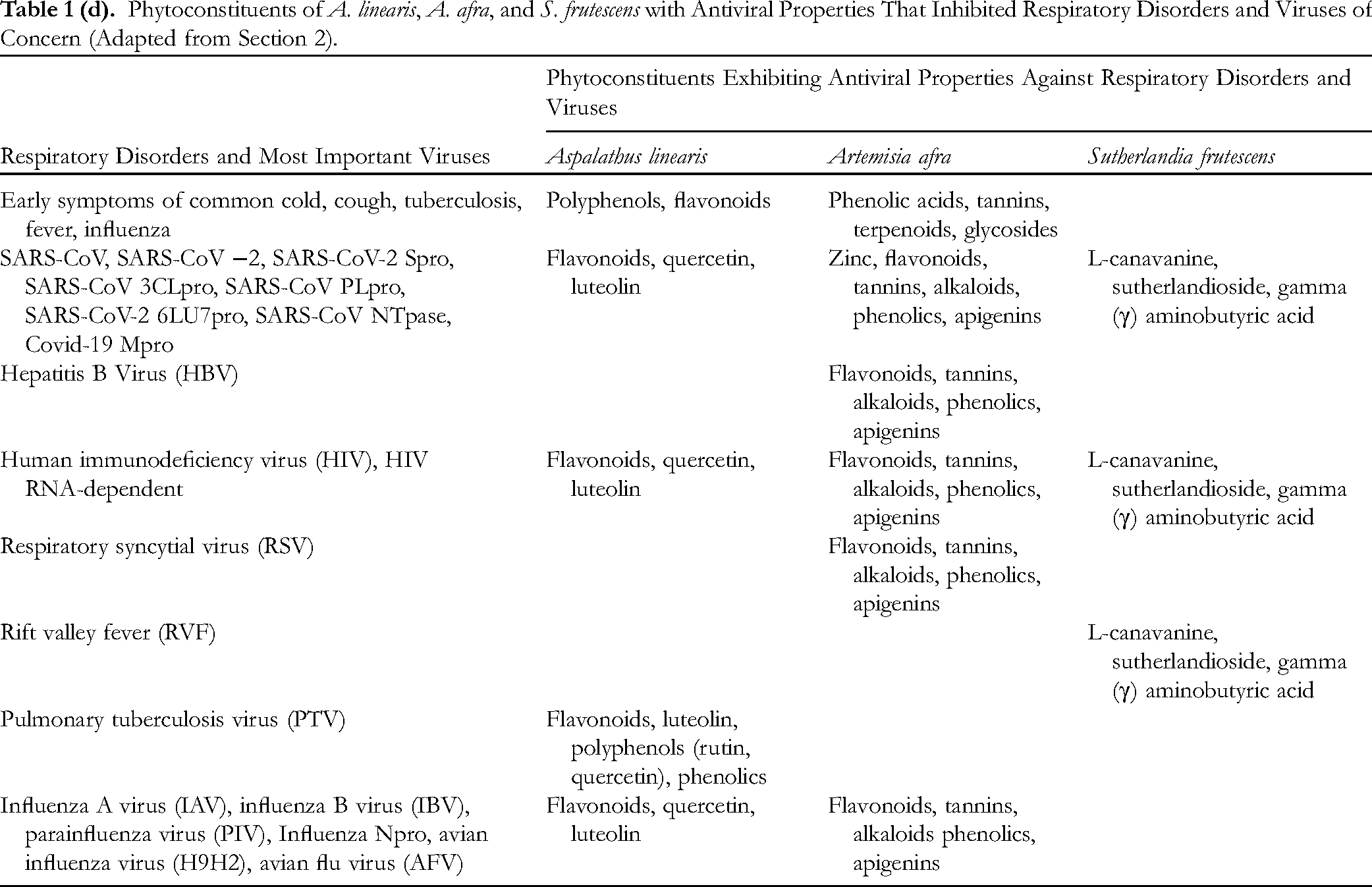
Aspalathus linearis
(rooibos tea) of the Fabaceae family treats chest ailments, influenza, asthma, and sore throat. Its bioactive compounds comprised chrysoeriol, polyphenols (rutin, quercetin), phenolics, isoorientin, orientin, vitexin, isovitexin, flavonoids (C-glucoside dihydrochal-cones: aspalathin, nothofagin, and aspalathin), orientin, and luteolin.11,12,31,51,52,68,86–88 Polyphenols and flavonoids of this plant have potential to provide some relief of early symptoms of common cold, cough, and fever.
41
Flavonoids, quercetin, luteolin, and other compounds were found to be active against HIV (with IC50 of 38.9 μg/ml), influenza A and B viruses, pulmonary tuberculosis virus (PTV), and human coronavirus (Covid-19, SARS-CoV). Those compounds blocked viral binding (SARS-Cov 2 Spro) to and viral entry into the host cell. Aspalathin and nothofagin compounds also exhibited good antioxidant, immunomodulating, chemopreventive, and antiaging properties. Additionally, plant extracts had acute cytotoxicity.
Artemisia afra
(African wormwood) of the Asteraceae family traditionally treats and manages coughs, fevers, colds, influenza, chest ailments, asthma, bronchitis, inflammation, and Covid-19. Extracts possess vitamin C, phosphorus, calcium, potassium, iron, zinc, and copper (89). Zinc stimulates and boosts adaptive immune system against coronavirus, increases CD4 level and type 1T-helper cells, inhibits the activity of SARS-CoV-2 PLpro, improves the production of interferon-α involved in innate immunity, acts as an antioxidant, involves in the metabolism of proline by inhibiting its intracellular transport, inhibits nitric acid production (92). Its extracts also possess bioactive compounds such as artemisinin, phenolics, tannins, terpenoids, alkaloids, flavonoids, β-thujone, glycoside, α-thujone, 1,8 cineole, camphor, apigenin, chrysoeriol, tamarixetin, acacetin, chrysanthenone, verbenone, eucalyptol, chrysanthenone, cischrysanthenyl acetate, myrtenylacetate, and heptadienal.21,24,25,52,68,70,87,89–93 The presence of phenolic acids, tannins, terpenoids, and glycosides in this plant has potential to provide some relief of early symptoms of common cold, cough, and fever as shown in another study.
41
Crude extracts inhibited SARS-CoV-2 nucleoprotein, influenza virus neuraminidase, SARS-CoV-2 (IC50 of 0.01–10 mg/mL), HIV-1, and HIV-2 (IC50 of >123.5 mg/mL) by blocking viral replication and transcription (93). A. afra extracts were also tested in vitro against severe acute respiratory syndrome type 2 (SARS-CoV-2). A. afra extracts showed noteworthy antiviral activities against SARS-CoV-2 (IC50 of 2.4 mg/mL) at concentrations that did not cause cytotoxicity.
16
In another study (91), extracts reduced the production of cytokines (IL-10, IL-6), which helped with lowering inflammation and treating asthma. At higher concentrations, extracts also reduced auto-immune conditions including non-communicable diseases. A reported strong antiviral activity of A. afra extracts could be attributed to the presence of flavonoids, tannins, alkaloids phenolics and apigenins. This is because the same compounds from other plants reported in this review and other studies have shown to inhibit proteins associated with the replication of viruses such as SARS-CoV, SARS-CoV-2, IAV, HBV, HIV, and RSV.
Sutherlandia frutescens
(cancerbush) of the Fabaceae family is traditionally used to treat influenza, fever, inflammation, coughs, bronchitis, and tuberculosis. Its extracts possess several bioactive compounds that included L-canavanine, sutherlandioside, gamma (γ) aminobutyric acid, which exhibited good antiviral activities.51,68,91 Those compounds were found to be active against SARS-CoV-2 (by blocking viral replication and transcription through the inhibition of SARS-CoV-2 3CLpro and RNA polymerase), RVF virus with DPPH IC50 of 32.2 μg/ml and ABTS IC50 of 42.3 μg/ml), and HIV RNA-dependent, DNA polymerase (RDDP) IC50 2000 μg/ml, and RNase H IC50 > 100 μg/ml (by blocking viral replication and transcription). Similar compounds also exhibited a good antioxidant activity with DPPH EC50 and ABTS IC50 of 32.2 μg/ml and 42.3 μg/ml, respectively.