



Abstract
Background
Insecticide resistance is a prevailing global concern mandating the search for alternative control intervention and adopting innovative approaches such as insecticide coated curtains, insecticide-incorporated paints and the possibility of adulticidal trials using the ready-to-use humidifier.
Objectives
This study critically tested the larvicidal, pupicidal and adulticidal validity of the two plant essential oils, African basil (Ocimum gratissimum) and pignut leave (Mesosphaerum suaveolens) on Cx. quinquefasciatus
Methodology
Twenty, third instar larvae and pupae of Cx. quinquefasciatus were introduced into vials containing 1 ml and 0.5 ml of the essential oil in100 ml, 250 ml and 500 ml of water to form 0.01%, 0.001%, 0.002% 0.004% and 0.005% concentrations respectively. The exposure was done in triplicates. Mortality readings were taken at intervals of 10, 15, 20, 30, 40, 50, and 60 min adhering strictly to the WHO standard protocols. The highest concentrations, 0.01% (1 ml:100 ml) and 0.005% (0.5 ml:100 ml), were tried on adult mosquitoes in a 200 cm squared cage using ready-to-use humidifier.
Results
Mean mortality was highest in larvae exposed to O. gratissimum. Pupicidal activities of O. gratissimum oil was higher than M. suaveolens. Adult mosquitoes exposed to 0.005% of both plant oils caused highest mortality. The differences between the mean mortalities were significant (p < .05). Lethal Concentration (LC50 and LC95) of O. gratissimum and M. suaveolens exposed to larvae were 0.011 and 0.021%, and 0.024 and 0.042% respectively. Similarly, for pupicidal exposure, LC50 and LC95 were 0.019 and 0.041%, and 0.041 and 0.072% respectively. O. gratissimum oil was more efficacious especially for larval control.
Conclusion
Adulticidal efficacy of the essential oils can be enhanced through anticipated efforts towards emulsifying and synergizing them with other plant oils.
Introduction
Mosquitoes are arguably the deadliest animal on Earth, transmitting a multitude of devastating diseases like malaria, dengue fever, chikungunya, yellow fever, and Zika virus. 1 Culex mosquitoes are highly abundant in Nigeria and acting as vectors of pathogens causing lymphatic filariasis and many arboviruses.2,3 The diseases they cause immensely affect humans causing suffering in millions of individuals and hundred thousands of deaths annually, disproportionately impacting especially low- and middle-income countries. 4 Traditional control of Culex mosquitoes and many other mosquito species have relied heavily on synthetic insecticides. While initially successful, the widespread use of these insecticides has resulted in the emergence of insecticide resistance in mosquito populations, rendering them less effective.5,6 Insecticide resistance is a growing concern, jeopardizing the affinity of successful interventions and control of mosquito-borne diseases. Additionally, synthetic insecticides often have negative environmental impacts, harming non-target organisms and potentially contaminating water sources. 7
Plant material components such as essential oils, powders, dusts, ashes or biochars, volatile bio-insecticidal compounds have potential as bio-insecticidal alternatives in mitigating the ravaging insecticide resistance.8‐10 Adopting bio-insecticides can prevent adverse effects of chemical insecticides on humans, improve quality of life in vulnerable population and negative impact of insecticide resistance spread. Field application of crude extracts of plants in mosquito breeding sites will be of great benefits to rural communities considering that these effective plants are localized, and not mandating industrial extraction processes to promote health security. Plant powder or dusts, ashes or bio-chars, essential oils have been tried on several stages of insects especially the immature stages of mosquitoes with different mortalities recorded.11‐13 However, cost effective conversion of plant essential oils into valuable biocontrol agents against adults of mosquitoes is highly challenging because of the tedious chemical processes involved in oil extraction, lack of standard protocols for oil testing in adult mosquitoes, and complex processes in determining the gas chromatographic content in plant essential oil. O. gratissimum, often known as African basil, and M. suaveolens (pignut) are common plants in Nigeria.
Valorization of plant material components for production of alternative mosquito control is becoming one of the most important field of study.14,15 The economic value of vector control can be maximized by converting plant products into useful bio-insecticidal materials and/or bio-insecticidal carriers in integrated vector control which can divert the attention of chemical insecticide use and curtail the spread of insecticide resistance.16‐18 The focus of studies should be geared toward bio-extracting the volatile active components in plants into high valued liquid bio-insecticide not only for the prevention of insecticide resistance but also for sustainable development. The successful adoption of plants as newer bio-insecticide will involve the three pillars of sustainability: people, planet and profit, that is social, environmental and economic elements. 19 For the development of global bio-insecticide, three major components of plant materials which include; ashes, dusts or powders for preliminary testing, oil extraction of plants for further determining gas chromatographic components, and liquid crystallization of volatile active components are suggestively the promising strategies under the bio-extraction regime of plants. There are no applied studies integrating essential oils into mosquito control programme in Nigeria. The overarching goal of this study is to assess the combined laboratory efficacy with adulticidal trials using humidifier technology of O. gratissimum and M. suaveolens on the mortality and knockdown of essential oils in Cx. quinquefasciatus mosquitoes. The findings of this research can contribute significantly to the development of eco-friendly strategies for combating mosquito population in the wild and the resulting borne diseases.
Result and Discussion
Mortality of Cx. quinquefasciatus Mosquitoes
The mean acute mortality of Culex mosquito exposure to scent leave at various levels is shown in Table 1. The mean acute mortality data indicated that both O. gratissimum and M. suaveolens essential oils exhibited larvicidal and pupicidal properties against Cx quinquefasciatus. The larval and pupal mortalities recorded in 0.01% O. gratissimum was notably the highest in this study across all stages of mosquitoes tested. The larval and pupal mortalities increased with concentration and time. Specifically, larvae exposed to 0.01% O. gratissimum showed a mean mortality of 9.00 ± 0.95, whereas pupae exposed to the same concentration recorded a mean mortality of 5.50 ± 0.95. There was no complete mortality in the several stages of mosquitoes exposed to the treatments. The mortality recorded in 0.004% O. gratissimum of pupae equated that recorded in larvae exposed to 0.01% M. suaveolens and adults exposed to 0.01% O. gratissimum. Mortality of mosquitoes were observably low in 0.001% of M. suaveolens. The differences between the mean mortality were significant (p < .05). The mortality of larvae may be linked to the blocking of the siphon by oil film created by the essential oils. Likewise, the spread of the oil film on the surface of the water may have interrupted the dissolution of atmospheric oxygen into water for the sustenance of submerged larvae. The mortality may be ascribed to the active compounds in these plants as reported by some notable studies to have insecticidal properties.20,21 The findings of this present study is consistent with a previous study conducted using this plant in other mosquito species. 22 A previous study by Enwemiwe et al 23 showed that stigmastanes including gamma-sitosterol in M. suaveolens, and 4,22-stigmastadiene-3-one in O. gratissimum were chemical constituent causing mortality in Anopheles coluzzii. These active compounds in the essential oils may have changed the suitability of the water for the mosquitoes, probably serving as anti-feedant and causing physiological disorders. It could also be probable that the activities of cytochrome P450s is expressed leading to the resistance of larvae and pupae to the essential oils 24 (Vivekanandhan et al, 2021). The study by 25 observed that mosquito toxicity to O. gratissimum extracted using the solvent petroleum decreased with increased metamorphosis. This probably may be the cause of reduced toxicity in this study. Hexane adopted in this study would have influenced the differences in efficacy. Enwemiwe et al 23 in the exposure of these plants to Anopheles gambiae mosquito adults observed similar trends of mortality with differences in concentration. The high mortality observed in the study of 26 did not corroborate with this present study whereby mortality with the plant essential oils were low. There are possibilities that the plants under study could affect the natural enemies of mosquitoes in their natural breeding habitats as observed by. 26
Mean Acute Mortality of Cx Quinquefasciatus Mosquitoes Exposure to O. gratissimum and M. suaveolens at various Levels.

Note: N = 60, Mean mortality with different superscript differ significantly at p < .05.
The plants under investigation may demonstrate greater repellency owing to their aromatic characteristics, than causing high mortality. This might explain why the essential oils from these plants demonstrated reduced mortality throughout several life stages. Previous studies by27‐29 have reported the mosquito repellency of essential oils of O. gratissimum. It was discovered that the essential oils exhibited significant repellency against Cx. quinquefasciatus as well as inhibition of egg hatching. The study of 30 found out that the essential oil of Hyptis suaveolens a synonymous plant to M. suaveolens exhibited larvicidal activities against Cx. quinquefasciatus. O. gratissimum was efficacious in a previous study when exposed to termites. 28 Though, a study by 31 confirmed that the variations in mortality from a substance tested due to differences in mosquito species are insignificant and may probably not form a separate study. This study was conducted to reassess the larvicidal efficacy of these plant essential oils and to know the best concentration to try in adult species using humidifier. The low mortalities recorded in the laboratory efficacies may be ascribed to the variations in the environment. This may be the reason M. suaveolens at 0.01% concentration resulted in lower larval mortality (4.00 ± 0.67) and pupae at 1.00 ± 0.67. It is most likely that Culex mosquitoes are highly adaptive and virulent species when exposed to toxicants. It is suggestive that the bioactive compounds in these essential oils, such as eugenol and thymol disrupted the nervous system of the mosquitoes as reported by 15 probably not enough to cause complete knockdown and mortalities as recorded in this present study. Some notable factors that could influence the variability in the chemical composition of essential oils may be due to plant origin, extraction methods, and seasonality, environment, trial space and thus, standardization for their commercial applications. 32
The present study assessed the best concentrations with highest mortality on adults to ascertain the mortality using commercial humidifier. The minimum concentration of oil (0.5 ml in 100 ml of water) introduced into the humidifier caused higher mortality than (1 ml of oil in 100 ml of water). The trial using 0.005% in the humidifier was the most suitable for adult mortality. This minimal concentration could be synergized with low dosage of other potent plant essential oils to increase mortality. This concentration of essential oils can be integrated into mosquito control. The fragrance from the insecticidal plant may have acted as repellent against adult mosquitoes than as toxic substance to the larval mosquitoes. The essential oils could have acted as a synergist both in laboratory and adult trials as earlier reported by. 33 The possible reason for the higher mortality in lower ml of the oil used may be as a result of the oil passing through the cotton film of the humidifier with ease compared to higher quantities, which has the tendency to block the cotton film thus, withholding the nano-vapour of immiscible liquids. The essential oils demonstrated significant adult mortality suggesting their potential as eco-friendly alternatives to synthetic insecticides. The essential oils of plants with high insecticidal activities can be introduce as novel control approach into prevalent scent humidifier used in most homes or better still durable humidifier could be deployed and used specifically indoors at night especially when the biting activities of mosquitoes are intense. For instance, a baseline survey done by 34 in Delta State showed that malaria vectors bite more from the hours of 10pm to 4am. With the provision of entomological indices, future study can dive deeply into assessing the household acceptance and efficiency of adopted bio-insecticides with high potency and low human toxicity against larval of mosquitoes in their natural breeding sites and adult mosquitoes that bite indoors. Likewise, their use outdoor on the skin could act as repellents to the adults of these mosquitoes. The influence of environment cannot be underestimated in such study. In addition, this study assessed the time mortality and knockdown rate of exposed mosquitoes for each concentration tested and equally projected the lethal dose that can cause 50% and 95% mortality in the population. Finally, the adult emergence of mosquitoes exposed to the treatment suggests that the treatments could not penetrate the pupal case or shield of the mosquitoes to cause pupicidal potentials.
Time Records
The time mortality records of Cx quinquefasciatus mosquitoes exposed to the various plant essential oils is shown in Figures 1–3. O. gratissimum of 0.01% concentration showed mortality from 20 min and highest mortality (45%) at 80 min. Mortality was lowest in 0.0004% M. suaveolens. There was no mortality record in the exposure from 0 to 20 min in 0.01% O. gratissimum as well from 0 to 30 min for other treatment exposures. The differences between the mortality times were significant (p < .05). Likewise, 0.01% of O. gratissimum oil showed the highest mortality in pupal exposure. Pupal mortality was steady from 0 to 30 min in all treatment concentrations. The lowest pupal mortality was equally recorded in 0.0004% M. suaveolens. Among the four treatment concentrations exposed to adult mosquitoes using the humidifier technology, O. gratissimum of 0.005% caused mortality from 15 min till 30 min. Mortality in adult mosquitoes increased likewise. The lowest concentration caused higher mosquitoes in adult species because oils were able to pass through the film when in lower concentration than when in large quantity. The difference between adult mortality was significant (p = .04). Increase in time favoured mortality of species as observed in most study adopting bioinsecticides and irrespective of the species.10,25,34 The time mortality corresponds to previous studies whereby O. gratissimum was exposed to termites 35 and to mosquitoes exposed neem. 18 Prolonged time of exposure could have benefited higher mortality in the best concentrations.

Time mortality of Cx quinquefasciatus larvae exposed to essential oil of O. gratissimum and M. suaveolens (FANOVA = 5.72, p < .0001).

Time mortality of Cx quinquefasciatus pupae exposed to essential oil of O. gratissimum and M. suaveolens (FANOVA = 16.72, p < .0001). Legend: SL represent O. gratissimum and LB, M. suaveolens.

Time mortality of Cx quinquefasciatus adult exposed to essential oil of O. gratissimum and M. suaveolens (FANOVA = 3.25, p = .04).
Toxicity Model
The toxicity model of Cx quinquefasciatus larvae and pupae mortality exposed to O. gratissimum and M. suaveolens is shown in Table 2. Irrespective of the stage of mosquitoes exposed, the LC for 50% and 95% ranged from 0.011 to 0.041 and 0.024 to 0.072% respectively. The concentration that will cause higher larval mortality of 50% and 95% was lowest in O. gratissimum. The model of concentration in this study corresponded to previous study by 35 and a study by 18 whereby neem was exposed to mosquitoes.
Probit Model of Cx Quinquefasciatus larvae and Pupae Mortality Exposed to O. gratissimum and M. suaveolens.
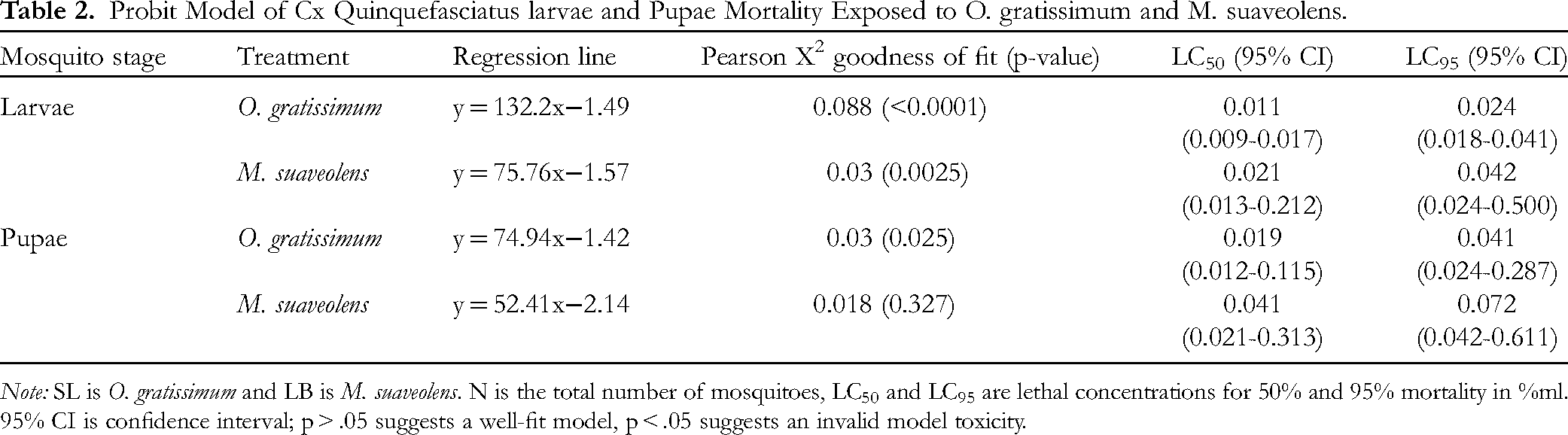
Note: SL is O. gratissimum and LB is M. suaveolens. N is the total number of mosquitoes, LC50 and LC95 are lethal concentrations for 50% and 95% mortality in %ml. 95% CI is confidence interval; p > .05 suggests a well-fit model, p < .05 suggests an invalid model toxicity.
Adult Emergence Ratio
Adult emergence was observed in the pupal exposure as shown in Figure 4. After 24 h of exposure, the lowest emergence was recorded in 0.01 M. suaveolens (2.5% emergence) and the highest in 0.001 M. suaveolens (27.5% emergence). More so, after 48 h of exposure, the lowest emergence was recorded in O. gratissimum (20% emergence) and the highest in 0.01 M. suaveolens (47.5% emergence). Plant essential oils offer several advantages compared to synthetic insecticides. They are biodegradable, pose less risk to non-target organisms, and are less likely to lead to the development of resistance in mosquito populations. More so, their pleasant scent can be an added benefit. 14 One issues that may surface in the use of essential oils either in humidifier or wall screens is the shelf-life. This needs to be addressed. The use of humidifier helps to overcome the limitations associated with traditional spraying techniques, such as uneven distribution and the need for frequent reapplication of chemical insecticides. Humidifiers can further maintain the continuous release of volatile compounds in the essential oils into the air for extended periods, increasing their efficacy.
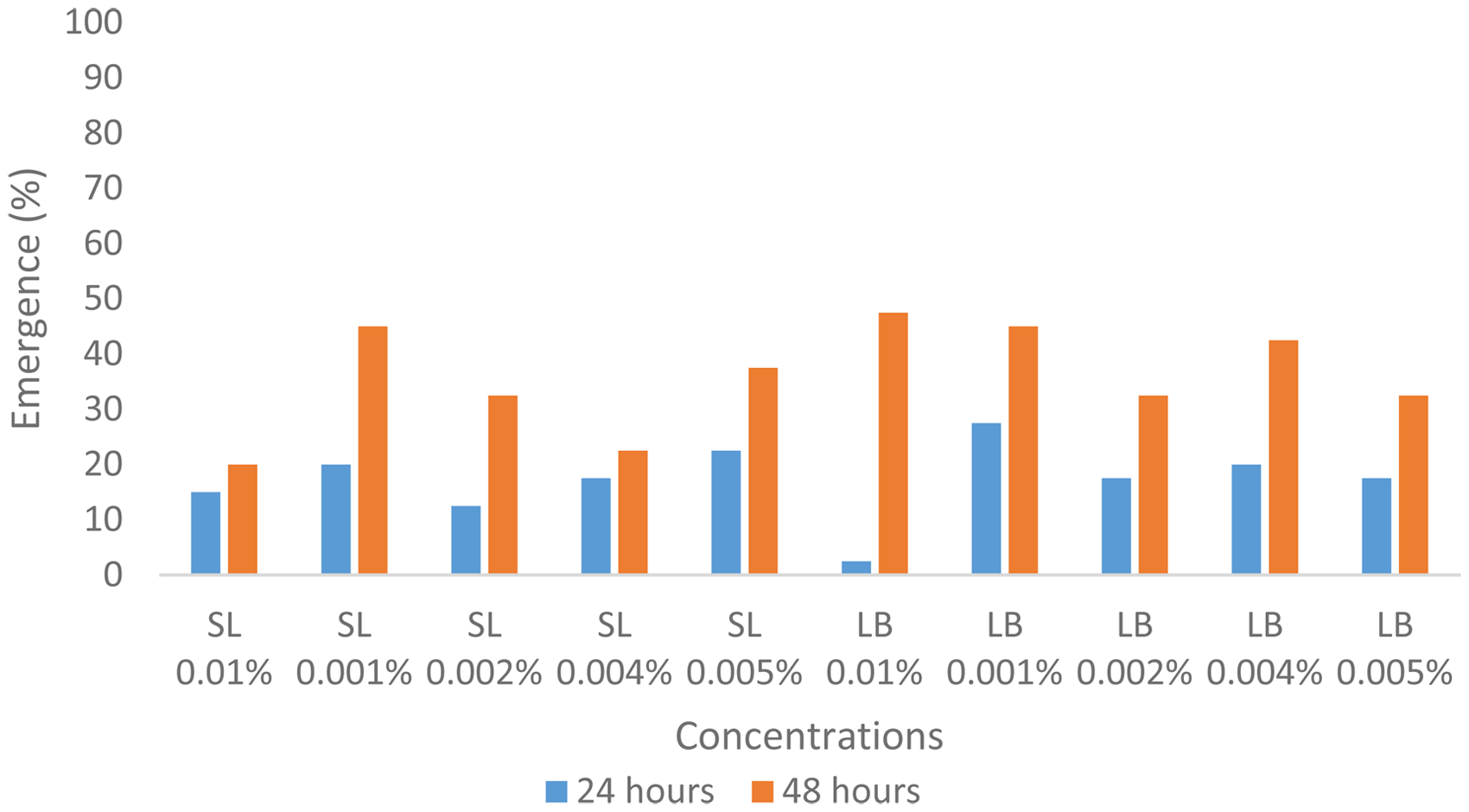
Adult emergence of Cx. quinquefasciatus mosquitoes exposed to two insecticidal plants. Legend: SL is O. gratissimum and LB is M. suaveolens
Negative effects accentuated by chemical insecticides can be overcome through safe environment, minimum pollution release to the environment, zero effect on human health caused by the use of these natural oils. Mosquito endemic areas would immensely benefit from this innovation as it will reduce the reliance on chemical insecticides and minimizing associated health risks. The efficacy of essential oil of plant may differ with respect to the solvent used. The study of 36 examined the insecticidal properties of O. gratissimum extracted with acetone, hexane, and chloroform against all stages of development of the filarial mosquito vector, Culex quinquefasciatus. It was discovered that after 24 h of exposure, oil extracted using chloroform exhibited decreased mortality rate compared to the other extracts. Furthermore, mosquitoes subjected to same extract for 24-h showed increased pupicidal activity. Future research should focus on field trials to validate these laboratory results in real-life settings. Additionally, exploring the synergistic effects of combining these essential oils with other natural or synthetic agents could enhance their efficacy. Investigating the long-term effects on mosquito populations and non-target organisms will also be essential to ensure environmental safety.
Chemical Composition of Plant Essential Oils
The chemical composition of essential oils of O. gratissimum and M. suaveolens is shown in Tables 3 and 4. In the EO of O. gratissimum, Octadecane, 1-chloro-, an Octadecane compound had the highest retention time (38.46 min). Likewise, a Stigmastanes, 4,22-Stigmastadiene-3-one had the highest area (45.88%). Other chemical constituents especially terpenoids including naphthalene, thymodihydroquinone, thymol and methylbicyclo [4.2.0] oct-1-ene were encompassing and could have the tendency of causing mortality of the insect. The study of30,37 has confirmed the insecticidal role of terpenoids in insecticidal plant and this corroborated the findings of this study proposing their role as determining factors of mortality. In the EO of M. suaveolens, 4-Campestene-3-one, a 3-oxo steroid compound had the highest retention time (38.6 min). Similarly, gamma-Sitosterol monohydrate, a Stigmastanes, had the highest area (16.02%). Some monotepernoid and diterpenoids including Citronellal, phytol, and 1-Phenanthrenemethanol were equally present in the plant and may have contributed to a lesser extent to the mortality of mosquitoes considering their low area on Table 4. The importance of terpens especially monoterpenoids in causing notable mortalities in mosquitoes has been reported. 38 The major mode of action of the active ingredients of the essential oils is interrupting the normal physiology of the species. 39 This study is limited to assessing the potency of the essential oils of M. suaveolens and O. gratissimum against all life stages of Culex mosquitoes, the time mortality as well as the chemistry of the plants. The limitation of this study extends to that the mode of action of the essential oils on mosquitoes especially adults exposed to the essential oils using the humidifier was not assessed. Likewise, the possibilities of molecular resistance due to gene expressions was not assessed due to financial constraints instead chemical composition of plant oils was used as a requirement to suggest the mode of action on species. The synergistic effect of these plants was not assessed. More so, trial of the essential oils on adults in the house
Chemical Composition of Essential Oils (EO) of O. gratissimum.

Source: Adapted from Enwemiwe et al 23
Chemical Composition of Essential oil of M. suaveolens.
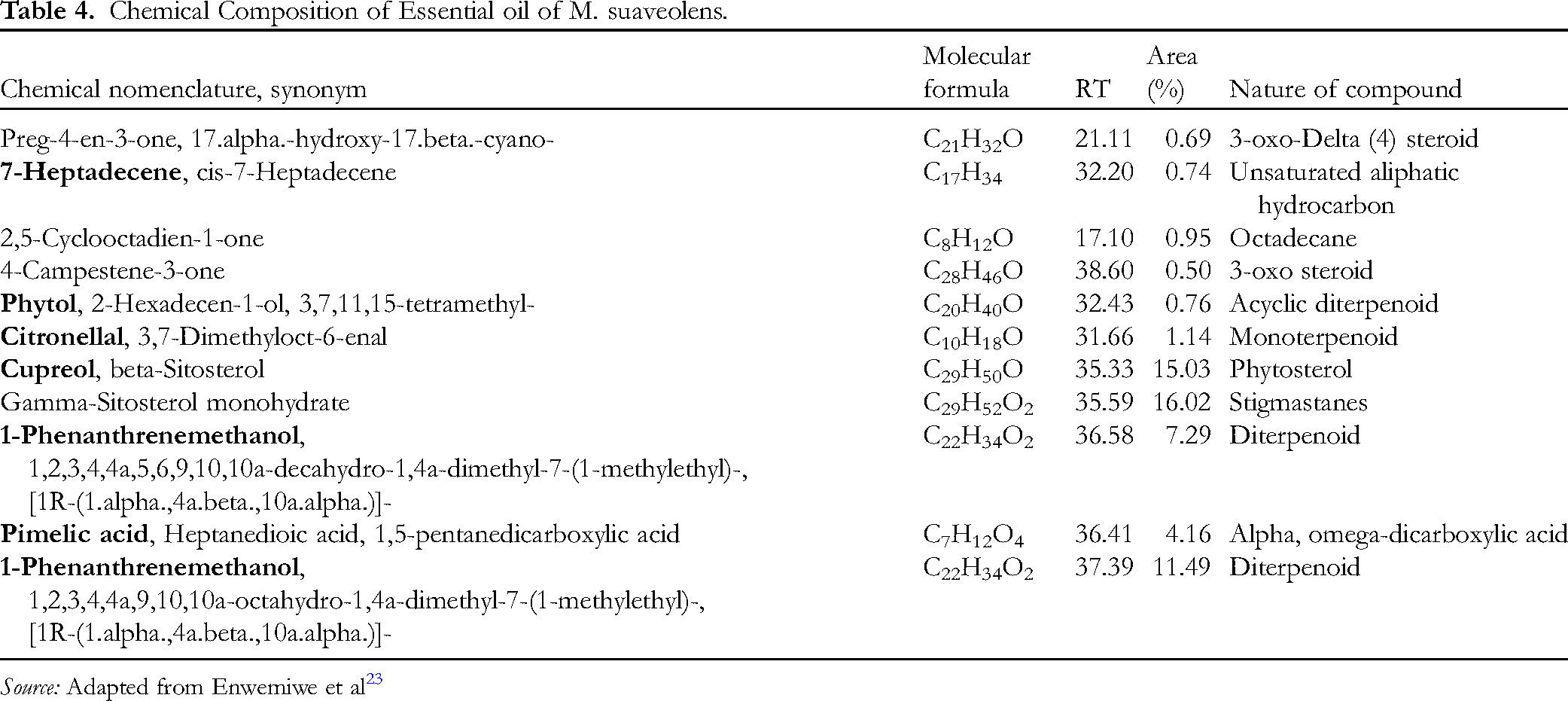
Source: Adapted from Enwemiwe et al 23
Materials and Methods
Study Area
The study was carried out in the Insectary of the Department of Animal and Environmental Biology, Delta State University, Abraka, Nigeria. The exposure was carried out in a laboratory monitored with temperature and relative humidity variation of 27 ± 3 °C and 80 ± 5%.
Mosquito Collection and Identification
Larvae and pupae of Cx. quinquefasciatus mosquitoes for the experiment was collected from Abraka (latitude of 5.455207 and longitude of 6.050611) and Oria (latitude of 5.764997 and longitude of 6.068257), Ethiope East Local Government Area, Delta State. This was done using scooping spoons and ladles in the early hours of the morning 6.00–10.00am. Mosquitoes obtained from the natural breeding sites were reared in the Insectary maintained at room temperature and optimum humidity. Mosquitoes were identified at larval stages using the siphon and the orientation of larvae on the water surface. Further identification was done molecularly using 10 adult mosquitoes and following the steps outlined in.3,40
Plant Preparation and Design
Leaves of the insecticidal plants for this study was collected from Obiaruku (latitude of 5.844058 and longitude of 6.160153). The botanicals sourced from the location were identified and confirmed at the Botany Department, Delta State University, Abraka, Nigeria, with obtained voucher numbers: DELSUH196 (O. gratissimum) and DELSUH102 (M. suaveolens). The plants were processed by air drying on laboratory benches at room temperature. The plants were then blended into powders before they were soaked in hexane. Three hundred (300) grams of blended powders of the plants were soaked into 1 litre of hexane and left to stand for 3 days with occasional stirring. A muslin bag was used to filter the mixture. The crude extract obtained was further processed on a rotary evaporator under reduced pressure at a temperature of 38 °C and at a speed of 130 rpm. Essential oils from the leaves of O gratissimum and M. suaveolens were extracted from Soxhlet extractor as outlined in previous study. 41 The essential oils of plants were measured, 1 ml and 0.5 ml using plastic pipette into 100 ml, 250 ml and 500 ml of water in glass vials. This 0.5 ml and 1 ml of essential oils in the water formed 0.01%, 0.001%, 0.002% 0.004% and 0.005% respectively of the concentration. Third instar larvae and pupae of Cx. quinquefasciatus were used for this experiment. Twenty, third instar larvae and pupae were introduced separately into vials containing the various concentrations in triplicates. Readings of mortality were taken from 10, 15, 20, 30, 40, 50, and 60 min adhering strictly to the WHO standard protocols. The adult mosquitoes were exposed only to the highest concentrations, 0.01% (1 ml:100 ml) and 0.005% (0.5 ml:100 ml), in 200 cm squared cage using ready-to-use humidifier.
Determination of Chemical Composition in Essential Oils
Essential oils of M. suaveolens and O. gratissimum were analyzed using Agilent Technologies 7890A GC and 5977B MSD. The GC-MS system was experimentally conditioned as follows: Hp 5-MS capillary standard non-polar column, which is dimensioned 30 M, ID is 0.25 mm and film thickness is 0.25 µm. The flow rate of mobile phase was set at 1.0 ml/minutes using Helium as the carrier gas. The temperature of the gas chromatography was set at an initial of 40 °C which was later raised to 250 °C at 5 °C/ min and injection volume was 1 µl. The samples were dissolved in methanol and fully scanned at a range of 40–650 m/z and the results were compared using NIST mass spectral library search programme.
Data Analysis
Mortality data of mosquitoes exposed to the different treatments were tested for significance using single factor ANOVA. Mortality time records were computed for the respective mosquitoes. Probit analysis model was done to project the lethal concentrations capable of causing 50% and 95% mortality. Adult emergence statistics was conducted following the steps and formula in the study of. 33 All analysis was done using XL Stat Version 2023.
Conclusion
The mortality and knockdown of the various life stages of mosquitoes in this study suggest the potentials of essential oils of O. gratissimum as potential control agent at optimum concentrations in Cx. quinquefasciatus. Mortality observed in the essential oil of M. suaveolens expose to Cx. quinquefasciatus was considerably low. Increase in concentration and prolonged time of exposure favoured increase in mortality and knockdown in the various stages. The concentration (0.005%) in the humidifier was the most suitable for adult mortality. The humidifier guaranteed continuous supply of nano-steam of the essential oils in the water into the cage containing mosquitoes, thus causing mortality. In addition, it is important to synergize the essential oils understudy to maximize the mortality and knockdown. Future studies should concentrate on community-based assessment of the efficacy of immature stages of mosquitoes to essential oils in semi-field conditions and adult mosquitoes in houses. Finally, discovering a perfect miscible solvent for essential oils that will help break the setback of blocking of the cotton film of the humidifier is recommended.
Abbreviation
SL is O. gratissimum, LB is M. suaveolens
Footnotes
Acknowledgements
Not applicable
Authors’ Contributions
CC, and VN conceptualize the study. All authors collected the field data and experimented. VN analyzed the data. CC supervised the work. All authors interpreted the analyzed data, wrote and reviewed the manuscript. All authors read and approved the final manuscript.
Availability of Data and Material
All the data are analyzed and presented in the article
Declaration of Conflicting Interests
The authors declared no potential conflicts of interest with respect to the research, authorship, and/or publication of this article.
Ethics Approval
The Ethical and Research Committee of the Faculty of Science, Delta State University, Abraka, Nigeria approved the protocol for this study (REL/FOS/2023/12).
Funding
The authors received no financial support for the research, authorship, and/or publication of this article.
Statement of Human and Animal Right
The botanicals used are bio-insecticides and have no toxicological reports on human and associating non-target species.
Statement of Informed Consent
Not Applicable
