



Abstract
Anthocyanins are bioflavonoids soluble in water. Delphinidin, an active monomer within anthocyanidins, possesses anti-inflammatory, antioxidant, and anti-tumor properties, among others. In recent years, substantial advancements have been achieved in delphinidin research. However, to date, no scholarly work has employed bibliometric analyses on delphinidin studies. This study aims to assess the progress of delphinidin research through bibliometric methods. The Web of Science (WoS) database was utilized to retrieve delphinidin-related literature from 1993 to 2023. Bibliometric analysis was conducted using VOSviewer, CiteSpace, and R Studio. A total of 1586 articles were selected. China leads in the number of publications; the University of Porto is the most prolific institution; Food Chemistry is the journal with the greatest number of published articles; the most cited local literature is by TANAKA Y. The three most frequently occurring keywords are “anthocyanins” “identification” and “expression”. This study conducts a thorough bibliometric analysis of literature pertaining to delphinidin, serving as a foundational reference for future research into delphinidin.
Introduction
Anthocyanins, naturally occurring water-soluble flavonoid compounds, are prevalent in fruits and vegetables. 1 Anthocyanins are commonly found in plants such as cherries, strawberries, eggplants, onions and grains. 2 Anthocyanins are known for their health-promoting benefits, which include protection against cardiovascular and neurodegenerative diseases, 3 as well as the prevention and treatment of obesity, inflammation, and related chronic illnesses. 4 Additionally, they exhibit anti-tumor properties. 5 To date, over twenty types of anthocyanidins have been identified, with six being the most frequently encountered: cyanidin, delphinidin, pelargonidin, peonidin, malvidin, and petunidin. 6 Delphinidin, a primary active monomer within the anthocyanidins family, is abundant in various berries and red wine. 7 Delphinidin, with its unique three hydroxyl groups on the B ring, has superior antioxidant biological activity over other flavonoids such as cyanidin and malvidin. 8 Therefore, in anthocyanidins, delphinidin exhibits a strong antioxidant effect, which can protect the human body from free radical damage. In addition to its antioxidant properties, delphinidin also exhibits anti-cancer, antibacterial, anti-inflammatory, anti-angiogenic, as well as retinal protection and other biological activities.9–13 Additionally, delphinidin plays a role in determining the color of certain plants. At present, delphinidin has gained widespread application across diverse research domains. Within the medical sector, extensive explorations have been conducted, with both in vivo and in vitro experiments confirming its impact on an array of diseases. Numerous scholarly reports have indicated that delphinidin can influence disease mechanisms by modulating gene expression. In the study by Harish Chandra Pal et al, 14 it was found that delphinidin can reduce cell proliferation and induce apoptosis of non-small cell lung cancer cells by targeting EGFR/VEGFR2 signaling pathways. Despite the progress made in delphinidin research and the increasing availability of literature, there are still numerous issues that require further exploration.
Bibliometrics is a multi-system discipline that integrates mathematics, statistics, philology, and other disciplines, which can be used to analyze certain characteristics of the literature. 15 It enables researchers to extract essential literature information to capture research hotspots and frontiers. 16 At present, this discipline is widely used to study the characteristics of academic publications. It can determine the distribution of countries/regions, authors, and journals within a research field. 17 It can also quantitatively measure the profile distribution, relationships, and clustering within the field of research. 18 After decades of development, bibliometric analysis has been widely applied in medical fields, such as hematology, oncology, neurology.19–22 Although bibliometrics has been widely used in the medical field in recent years, to our knowledge, there have been no scholars conducting bibliometric analysis on the research progress of delphinidin. For researchers who have just started researching delphinidin, they can quickly understand the industry landscape through knowledge graphs. Moreover, bibliometrics are not subjective and are completely objective. Finally, bibliometrics can accurately identify subtopics through clustering, obtaining a collection of literature under each subtopic, providing beginners with in-depth understanding of the research domain. Therefore, this study aims to compile research data using bibliometric methods and provide a comprehensive overview of delphinidin's research progress, thereby bridging the existing knowledge gap.
Methodology
Search Strategies
Web of Science is a multidisciplinary and comprehensive database, which exerts significant influence in the biomedical sector. 23 For this study, we utilized the database to retrieve pertinent literature. To prevent potential biases due to database updates, the literature search was executed on December 31, 2023. To ensure data accuracy, we added synonyms and related terms in the keyword search and formulated the following search formula: TS = (delphinidin) OR TS = (delphinidin chloride). The search covered the period from January 1, 1993, to December 31, 2023. We included only literature types such as reviews and articles, and limited the publication language to English, facilitating further content analysis. Ultimately, we identified 1586 articles that satisfied our search strategies (Figure 1).

The flow chart of literature screening.
Data Analysis
The Web of Science (WoS) is a database frequently utilized for bibliometric analysis,24–26 where the literature is derived from plain text format to save for subsequent analysis. The main software used for analysis includes VOSviewer, CiteSpace, and the R software package “bibliometrix”. VOSviewer is a specialized bibliometric analysis software that possesses robust graphical capabilities, making it suitable for processing large-scale data and extracting pertinent information from a multitude of publications. 27 It is widely employed for the construction of collaboration, co-citation, and co-occurrence networks.28–30 In the visualizations generated by VOSviewer, each node signifies an entity such as a country, institution, journal, or author. The size of the node denotes the number of entities, whereas the color indicates the category of the entities. The thickness of the lines connecting nodes indicates the extent of collaboration or shared references within the project. 31 CiteSpace is a Java-based application developed by Professor Chen Chaomei, which can perform bibliometric analysis and visualize data.32–34 The visualization in CiteSpace consists of nodes and links/edges. Nodes represent references, journals, articles, keywords, institutions, countries/regions, categories/fields, and links, and represent co-citation links or co-occurrences of projects. The node size determines the frequency of citations, the number of papers from the country analysis, and centrality (degree or intermediation) based on the degree of association between two or more groups. 35 R Studio is a command-based software that requires input of relevant code for literature analysis. 36 This study used R Studio's “bibliometrix” package.
Results
Annual Trend of Paper Publication Volume
The volume of publications within a given period can serve as an indicator of the pace and direction of research trends within a specific field. 37 According to our search strategies, on December 31, 2023, we retrieved 1586 literature in the WoS database, including 1520 articles and 66 reviews. As depicted in Figure 2, the field has been the subject of scholarly publications since 1993, suggesting a sustained interest among researchers. Prior to 2008, the annual number of articles published was minimal, with a total of 52 articles over 16 years, translating to an average of approximately 3.25 articles per annum, signifying that research in this area was still nascent. Post-2008, there has been a notable surge in the number of publications concerning delphinidin, with tens to hundreds of articles being released yearly. The year with the least number of publications was marked by 51 articles, whereas the most prolific year was 2022, which saw the release of 171 articles.

Annual trend of paper publication volume from 1993 to 2023.
Analysis of Countries/Regions
This study examines the research on delphinidin across various countries. Table 1 presents the top 10 countries/regions in terms of the number of publications, which collectively represent 81.34% of the total research output, indicating a substantial interest in delphinidin. We employed VOSviewer and R Studio software to visualize the global distribution of literature contributions in this research area. Figure 3A illustrates the volume of literature on delphinidin research in different countries, with China leading in terms of the quantity of literature. Additionally, the connecting lines in the figure depict the international collaboration network, revealing close partnerships between China and several other countries. Figure 3B showcases the weight of each country's publication volume in the field through density mapping, underscoring the significant contributions of China, the United States, and Japan. Figure 3C reveals the global distribution and regional differences of delphinidin research, while also showcasing the cooperation pattern among countries, which facilitates the advancement of delphinidin research.
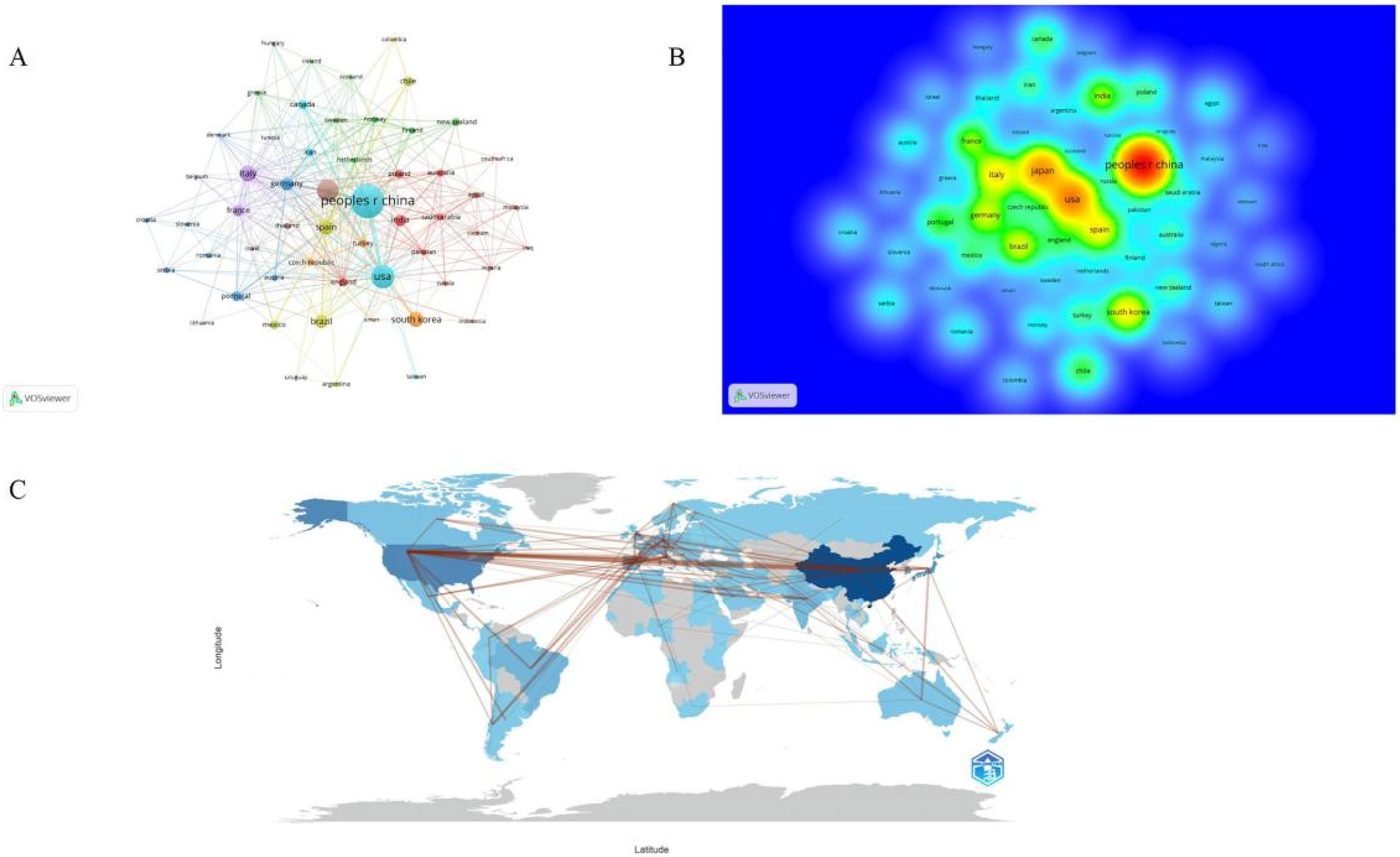
The distribution of countries/regions on delphinidin research. (A) Co-authorship network visualization map of countries. (B) Countries’ density map. (C) Country collaboration map.
Ten Most Productive Countries and Regions.

Analysis of Institutions
Figure 4 illustrates a co-occurrence graph, generated using the VOSviewer tool, which represents delphinidin research across 1930 institutions. The size of each node in the graph is proportional to the volume of research output from each institution, with University Porto generating the most significant paper output. The connecting lines between nodes indicate collaborative relationships between institutions. While overall collaboration is robust, certain institutional partnerships could benefit from increased strength. Table 2 enumerates the top 10 institutions by publication volume, we found that the University of Porto had the highest number of publications and citations (n = 25, citations = 758). Among the 25 articles, the article by Mattioli, Roberto et al 3 had the highest number of citations, with 355 citations, which indicates that the University of Porto may not have the highest number of citations per article, but it has the greatest collective contribution in this field.

The institution co-authorship network of research on delphinidin.
The top 10 Most Productive Institutions in Delphinidin Research.

Analysis of Journals
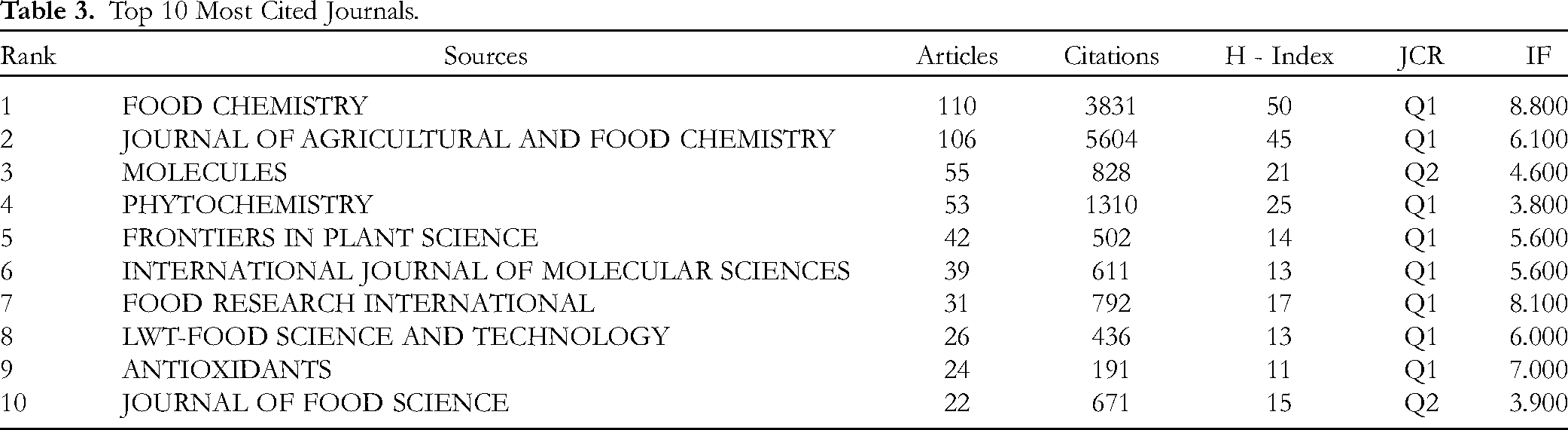
Publications pertaining to delphinidin have been featured in 470 journals. Figure 5 displays the top 10 journals that have published the greatest number of related research articles. Among these, “FOOD CHEMISTRY” leads with the highest number of publications on delphinidin-related research, totaling 110 publications. Table 3 provides a list of the top 10 journals, detailing their publication numbers and key information. Notably, “JOURNAL OF AGRICULTURAL AND FOOD CHEMISTRY” has garnered a significant number of citations, totaling 5,604, a figure that underscores the journal's popularity within the academic community. However, “FOOD CHEMISTRY” boasts the highest h-index value of 50, suggesting that the journal holds considerable influence and recognition within the academic community.

The scientific publication sources of the top 10 journals and the number of articles related to delphinidin published.
Top 10 Most Cited Journals.
Analysis of References
Highly cited papers indicate that they have a significant impact on a certain field, 38 reflecting the heat and depth of research in this field. 39 In the past 31 years, there have been 44 534 co-citations on delphinidin research. Table 4 shows the top 15 most cited references. Figure 6 is constructed using CiteSpace and is a reference co-occurrence diagram. According to the time period from 1993 to 2023, with a time slice of 1, the software selected the top 15 items based on their citation count and centrality during this period. The clustering labels on the right represent the topics in the field. The circle represents highly cited papers, and the larger the circle, the higher the frequency of citation in the literature. The timeline view of co-cited references can reflect the temporal characteristics of research hotspots in relevant research fields. To name these clusters, we extract nominal terms from the keywords using Latent Semantic Index (LSI). Of the 15 clusters extracted, delphinidin-related #9 gallium complexe was the earliest study conducted. In the #4 eggplant peel cluster, the work of Hock Eng Khoo et al 40 was frequently cited, with a total of 89 citations, which indicates that Hock Eng Khoo is the most authoritative scholar in this field. Conversely, in the #0 1-derived macrophage cluster, the article by Araceli Castaneda-Ovando et al 41 was cited the most, with a total of 105 citations, which highlights their professional status in this field.

The cluster analysis of highly co-cited references in the field of delphinidin.
The top 15 Most Cited References.

Analysis of Authors
An author's contribution is evaluated based on the number of publications. 42 A total of 7696 authors participated in the study on delphinidin. Figure 7A is a visualization of co-cited authors made by VOSviewer. Authors in the same cluster often conduct research in similar fields and collaborate with each other. The figure shows four clusters, indicating a close relationship between the authors. Table 5 illustrates the top 10 lead authors in the research field. Figure 7B illustrates the top 10 authors who have produced the highest number of articles from 1993 to 2023. The circles represent production, and the colors represent citations. A larger circle indicates a higher yield, a darker shade corresponds to greater significance, and an increased number of citations. When we analyzed the research trend of delphinidin, we found that the article by TANAKA Y had a high number of citations in 2013, with a total of 28.33 citations per year. This may suggest that the articles by TANAKA Y in 2013 may have revealed the research focus or emerging trends in the field at that time, and attracted the attention and citation of many researchers. The figure also shows the sequence and stages of the author's research. Some authors started their research early, which provided the direction and basis for the subsequent research. Some studies started late but produced high yields. They have all made research contributions to this field.
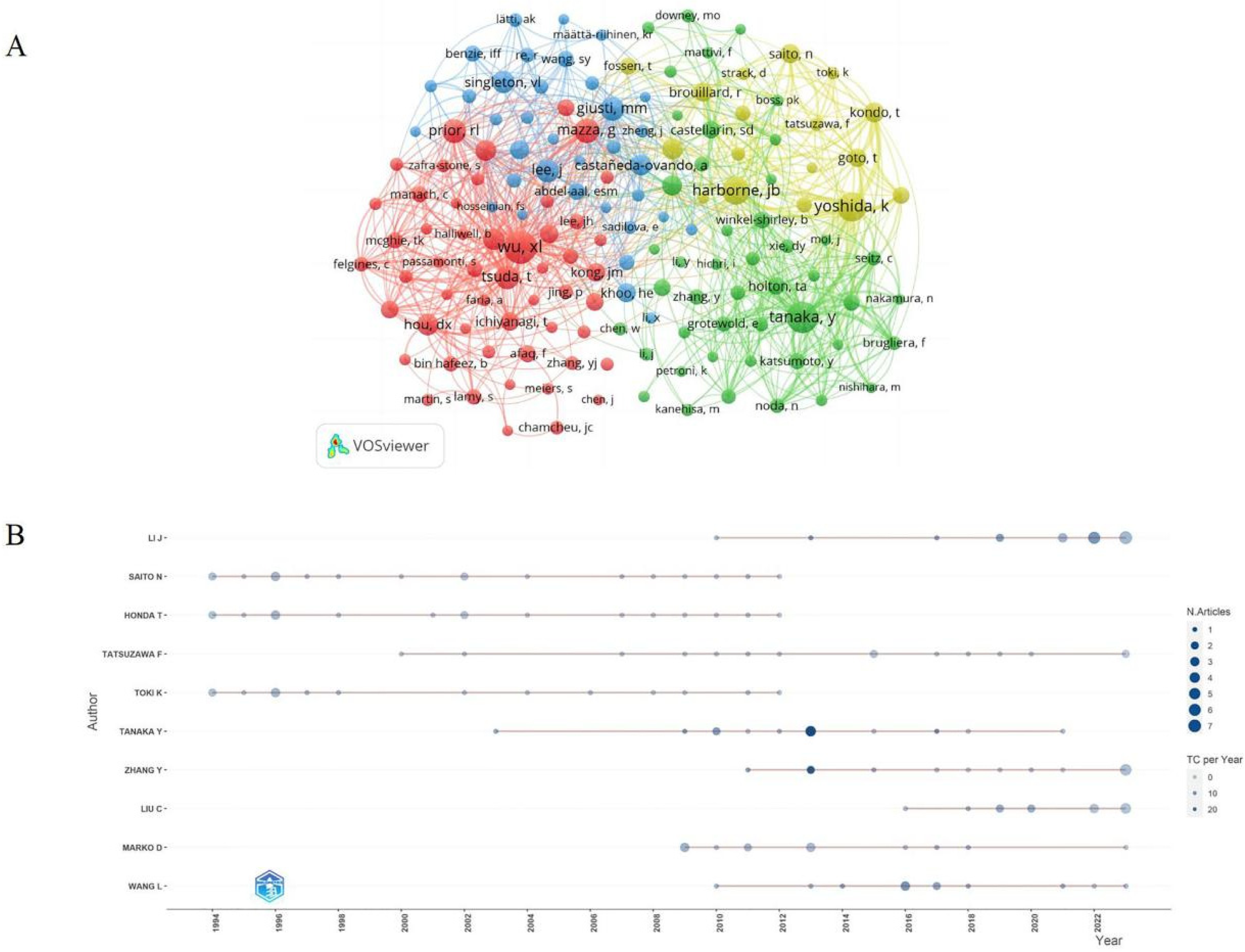
Authors related to the research on delphinidin. (A) The visualization map of co-cited authors. (B) The top 10 authors with the highest volume of article production from 1993 to 2023.
Top 10 Lead Authors in the Field of Research.

Analysis of Keywords
Upon analyzing the co-occurrence of keywords, we can swiftly identify research hotspots within a specific field. Table 6 illustrates the top 15 high-frequency keywords in delphinidin research. Among these keywords, anthocyanins, identification, expression, phenolic components, antioxidant activity, color, flavonoids, biosynthesis, delphinidin, antioxidant, polyphenols have appeared 100 or more times, representing the hot topics in delphinidin research. Figure 8A is a keyword treemap that directly reflects keyword information. Figure 8B is a Sankey diagram that illustrates relationships among keywords, authors, and associations. Figure 8C shows Factory Analysis, where method selects multiple response analysis, field selects keywords plus, and number of terms is set to 50, number of clusters set to 2, then get two relational structures with Dimension 1 of 35.71% and Dimension 2 of 33.57%. The larger one is the red structure, which contains 43 keywords, while the smaller one is the blue structure with only 7 keywords. In this figure, keywords closely related to delphinidin include anthocyanins, identification, expression, etc.
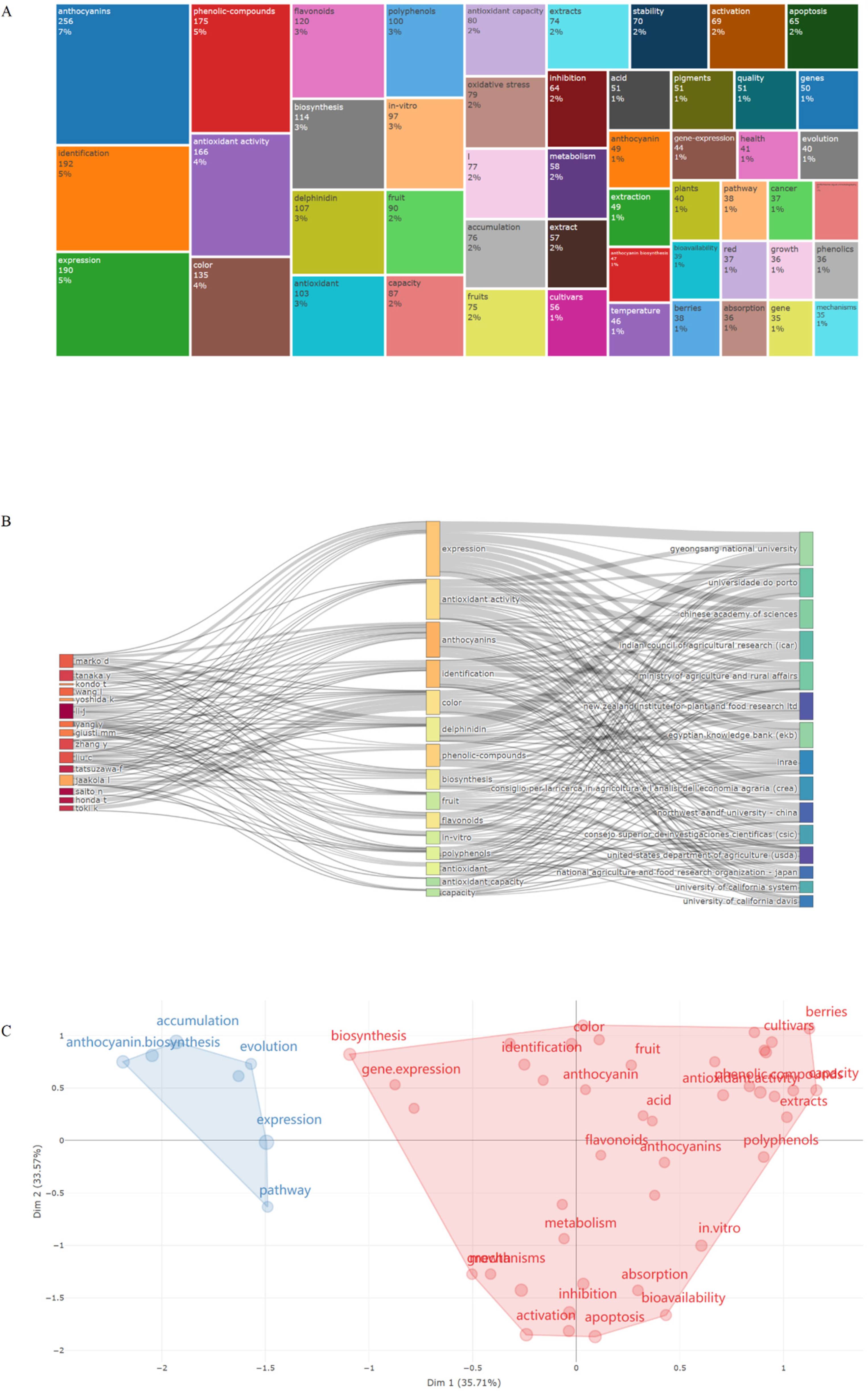
Analysis of keywords. (A) Most significant keys focus and tree map from abstract. (B) Sankey diagram that illustrates the relationship between keywords plus, authors, and associations. (C) Factory analysis of keywords.
Top 15 High-Frequency Keywords.

Analysis of Keyword Burst
Generally speaking, the analysis of keyword burst maps enables the identification of research hotspots in a particular field over a specified timeframe. Figure 9 illustrates the top 15 keywords with the strongest citation bursts. The year represents when each keyword first emerged, while strength indicates the prominence of each keyword. The greater the numerical value, the more pronounced is the emergence strength of the keyword, indicating its increased popularity. The “begin” and “end” points indicate the time range during which the keywords were popular. Of these keywords, acylated anthocyanin has the longest burst, pigmentation has the highest strength, molecular docking, gene, and mechanism are all in explosive stage at present, become the research frontiers in this field.
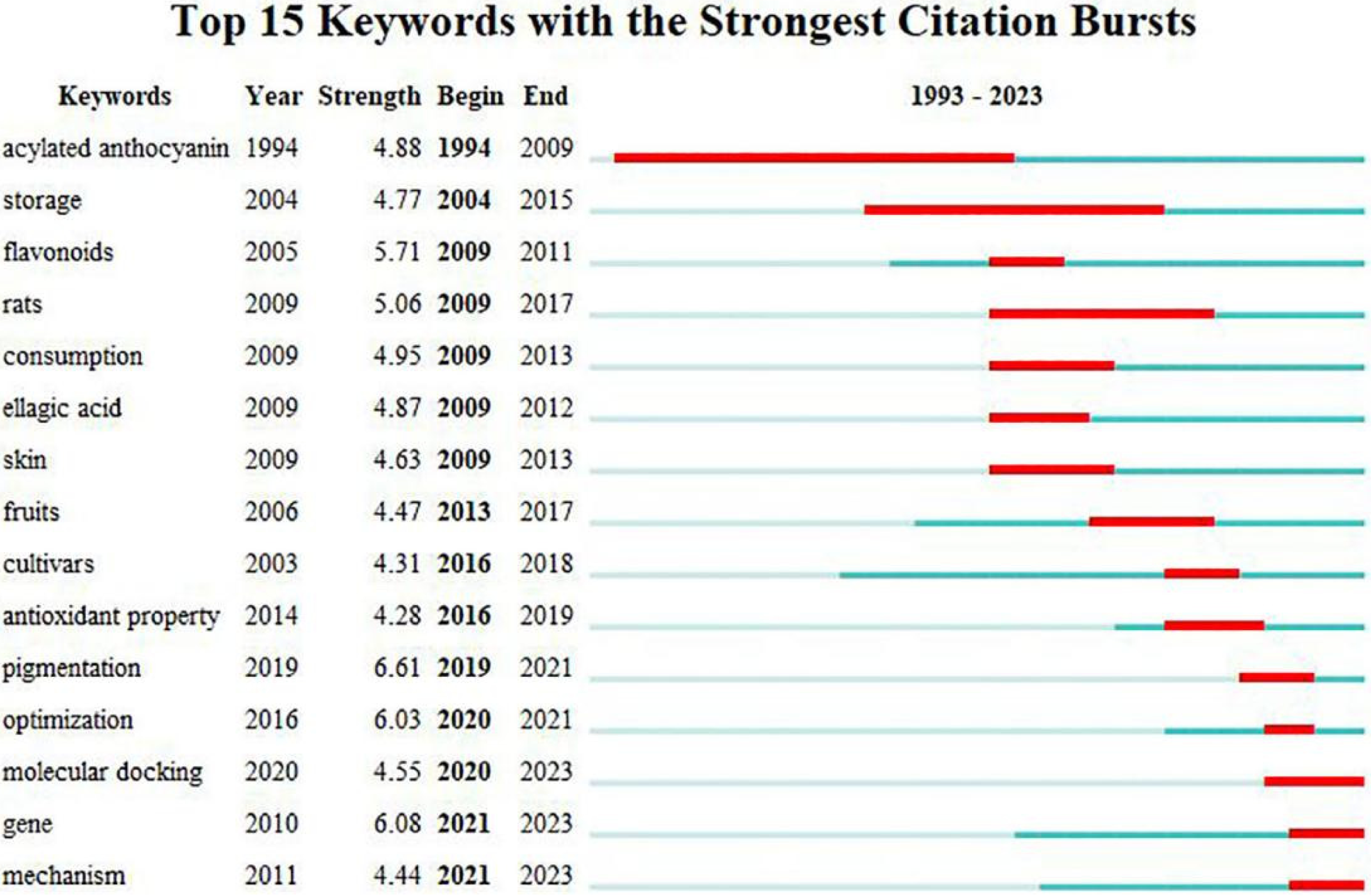
Top 15 keywords with the strongest citation bursts.
Discussion
General Information
A total of 1586 publications were retrieved from the Web of Science (WoS). Those that met the criteria were visualized and analyzed using VOSviewer, CiteSpace, and the “bibliometrix” tool in the R package. The quantitative analysis allowed us to obtain basic information about the field such as annual publications, countries, institutions, journals, references, authors, and keywords.
Through data analysis, we found that from 1993 to 2023, the annual growth rate of publications in the delphinidin research field was 18.13%, with an average annual publication volume of 51.16 articles. This significant growth trend indicates that delphinidin, a phytochemical substance, is garnering widespread attention and strong interest among scholars globally.
As research continues to deepen, the application potential of delphinidin in fields such as medicine, food, and cosmetics is gradually being explored, further driving an increase in the number of related publications. Researchers are actively exploring new roles, extraction methods, and biological activities of delphinidin, injecting new vitality into the field's development.
In our study, we discovered that the top 10 countries published a total of 1290 articles, accounting for 81.34% of all publications. Notably, China led in terms of the number of publications in these countries and also excelled in international collaboration. This fully proves China's significant contribution and leading position in the field of delphinidin research. It is worth noting that China published the first literature on delphinidin in 2009. 43 Since then, China has maintained stable annual literature output, with a growing trend overall. This phenomenon may be related to China's growing economic strength, continuous investment in research, and good international cooperative relationships since the Beijing Olympics in 2008. Widespread international cooperation is expected to further promote the development of this field and enhance global research levels. By establishing cooperative relationships with research institutions in other countries, China's influence in this field is expected to expand, driving the development of delphinidin research.
The University of Porto's advantage in the number of published papers reflects the university's active and high-quality academic research, which has potential implications for advancing the study of delphinidin. First, as the university with the highest number of publications, it may indicate a leading position in delphinidin research. Second, the high of publications suggests that the University of Porto has abundant knowledge output in delphinidin research, which is crucial for the accumulation and dissemination of scientific knowledge. These papers may contain new discoveries, extraction methods, biological activities, and clinical applications related to delphinidin. These references can be valuable for researchers in this field. Third, the numerous publications may have facilitated knowledge integration among different studies, helping to address complex issues in delphinidin research, such as mechanisms of action and drug interactions.
By analyzing the number of journal publications, we can not only identify top journals in the field of delphinidin research but also provide valuable information to help researchers select appropriate journals for submission. Among the top 10 journals with the most articles on related research, FOOD CHEMISTRY and JOURNAL OF AGRICULTURAL AND FOOD CHEMISTRY lead in terms of publication volume and citation counts, demonstrating their extensive influence and high recognition in the academic community. Moreover, these top journals typically have rigorous peer-review processes, ensuring the high reliability and innovation of published research results. Therefore, these journals are ideal choices for researchers hoping to make breakthroughs in the field of delphinidin.
In analyzing the author, we found that LI J et al 44 have made a series of important discoveries in the study of anthocyanins in the purple sweet potato variety Jihei No. 1. They not only identified 13 types of anthocyanins containing cyanidin and peonidin, but also discovered a unique anthocyanin in this variety – delphinidin-3,5-diglucoside. This result enriches our understanding of the types of anthocyanins. Subsequent experiments further confirmed that anthocyanins show significant stability advantages under specific conditions. When the pH value of the aqueous solution is between 3 and 4, the stability of anthocyanins is greatly improved, providing new insights for the preservation and application of anthocyanins. In addition, anthocyanins also exhibit high stability in common juices such as apple juice and pear juice, opening up new possibilities for their application in the food industry.
Hotspots and Frontiers
Highly Cited Papers and Delphinidin
The frequency of a paper's citation is directly proportional to its impact and quality within the field. In this study, we identified and analyzed the top 15 articles with the highest number of co-citations to ascertain the research foundation of delphinidin. Araceli Castaneda-Ovando et al 41 published Chemical studies of anthocyanins: A review, in the FOOD CHEMISTRY journal in 2009, with the highest number of citations, reached 105. This article reviewed the latest progress of anthocyanin chemistry research at that time, focusing on the effects of pH, co-pigment, metal ion complexation and antioxidant activity on its stability. It lays a foundation for the research on delphinidin and provides a valuable reference for future scholars studying this compound, highlighting its significant research value. The second most cited article was Hock Eng Khoo et al 40 published in the journal FOOD NUTR RES in 2017, titled Anthocyanidins and anthocyanins: Colored pigments as food, pharmaceutical ingredients, and the potential health benefits, cited 89 times, this article reviews the role of anthocyanins as natural food colorants and their nutritional effects on health. From the point of view of health, the effects of anthocyanidins and anthocyanins were clarified, which provided the thought and basis for the scholars who study the effects of anthocyanidins and anthocyanins later. The article “Analysis and biological activities of anthocyanins” published by Jin Ming Kong et al 45 in PHYTOCHEMISTRY in 2003 was cited 80 times, ranking third. This article reviews the biological functions and preclinical studies of anthocyanins, as well as analytical techniques for isolation and identification of anthocyanins. These three articles are cited the most times, which means that they are of high quality and also represent a great influence in the field.
Acylated Anthocyanin and Delphinidin
The isolation and property determination of anthocyanins have been a research focus from 1994 to 2009. Kenjiro Toki et al 46 isolated novel acylated delphinidin glycosides from Crocus sativus and revealed their three-dimensional structures. Keizo Hosokawa et al 47 identified new anthocyanins in Hyacinthus orientalis. Norio Saito et al 48 and Norihiko Terahara et al 49 isolated new anthocyanins and determined their structures in Consolida armeniaca and Ajuga reptans flowers, respectively. These results have not only enriched the research on anthocyanins but also promoted academic progress in related fields.
Storage and Delphinidin
Storage was a research frontier between 2004 and 2015. During this period, researchers explored the storage conditions and processes of phenolic compounds. Andreas Bimpilas et al 50 mentioned in their article that the content of phenolic compounds changes during alcohol fermentation and storage, with a decrease in the content of monomeric anthocyanins. Hossein Mirsaeedghazi et al 51 mentioned that the frozen storage of pomegranate juice would affect its anthocyanins and phenolic components, the total anthocyanin content would be reduced, and the antioxidant activity would be weakened. Salud Vegara 52 noted that heat treatment reduces the percentage of polymer anthocyanin forms and instead increases the percentage of monomer forms. In addition, carbon dioxide and oxygen also have an impact on the content and properties of anthocyanins. 53 During storage, packaging materials can also have an impact on anthocyanins. 54 Therefore, reasonable selection of storage conditions can help reduce the degradation of anthocyanins and maintain their specific biological activity.
Flavonoids and Delphinidin
Delphinidin, one of the six most common anthocyanidins, is a flavonoid substance. When the nature of delphinidin was determined, scholars began to analyze its function. Delphinidin inhibits vascular endothelial growth factor receptor-2 phosphorylation, helps prevent and treat cancer. 55 Inhibition of tumor cell growth, 56 inhibition of proliferation and induction of apoptosis in human gastric adenocarcinoma cells, 57 induction of apoptosis in hepatoma cells, 58 and induction of human leukemia cell apoptosis. 59 In addition, delphinidin also has enhanced memory, increased insulin secretion and other effects.60,61 During the period of flavonoids as a research hotspot, researchers paid attention to explore the anti-cancer effect of delphinidin, and achieved good results.
Rats and Delphinidin
When “rats” emerged as an outbreak keyword, it indicated that researchers were getting closer to studying delphinidin. Consequently, experiments were conducted on rats to further explore delphinidin. The main conclusions from these experiments, which relate to both rats and delphinidin, are as follows. Delphinidin is a novel lymphangiogenesis inhibitor that promotes the growth and metastasis of breast tumors in syngeneic experimental rats. 62 Delphinidin can reduce intramedullary pressure in rats with spinal cord injury and thus play an anti-inflammatory role. 63 Anthocyanidins have inhibitory effects on certain enzymes in rat and human livers. 64 In addition, anthocyanins are rapidly taken up in the kidney and liver of rats and can also be metabolized rapidly. 65
Consumption and Delphinidin
From 2009 to 2013, several studies demonstrated that consuming delphinidin-rich fruits and vegetables benefits human health. Consumption of flavonoids can prevent endothelial cell apoptosis and thus play a vascular protective role. 66 Delphinidin can effectively protect human umbilical vein endothelial cells against oxidative stress induced by oxidized low-density lipoprotein, which may be important for preventing both plaque development and stability in atherosclerosis. 67 Anthocyanin mixtures reduce inflammation in patients with hypercholesterolemia. 68 In addition to the cardiovascular protective effect, the consumption of berries may have some protective effect against breast cancer. 69 In conclusion, consuming vegetables and fruits containing delphinidin can bring certain benefits to the human body.
Ellagic Acid and Delphinidin
Ellagic acid is a natural polyphenol, 70 which exists widely in various fruits and has many biological functions. The substance is also often mentioned in the study of delphinidin. Ellagic acid and delphinidin were both detected in the fruits of Jaboticaba. 71 Both anthocyanins and ellagic acid extracted from the Indian Blackberry have antioxidant and antiproliferative activity. 72 Furthermore, both have some significance for the treatment of chronic obstructive pulmonary disease. 73
Skin and Delphinidin
Based on the word delphinidin, skin became an explosive keyword from 2009 to 2013. Studies during this period primarily focused on two main areas: the extraction of delphinidin from plant peels and the subsequent analysis, and the exploration of the relationship between delphinidin and skin diseases. Guo-Ling Liu et al 74 extracted anthocyanins from freeze-dried skin of Rhodomyrtus tomentosa and analyzed them, identified delphinidin-3-glucoside in the components. Pasquale Crupi et al 75 identified flavonoids extracted from grape skins, including delphinidin-3-O-glucoside and other substances. Studies by Jung Yeon Kwon et al 76 have shown that delphinidin has a potential protective effect against ultraviolet B-mediated skin carcinogenesis. In addition, delphinidin has some value in the treatment of psoriasis. 77
Fruits and Delphinidin
Delphinidin possesses a variety of biological functions and exerts numerous health benefits on the human body. It is widely present in various fruits. Consequently, increasing the consumption of fruits or fruit juices can enhance delphinidin intake. Maqui berry is the richest natural source of delphinidin, 78 and its consumption is particularly beneficial for health.
Cultivars and Delphinidin
In general, different varieties of the same plant can exhibit different colors, primarily due to variations in the anthocyanins they contain. The three Grape hyacinth cultivars displayed different colors due to different anthocyanin types, violet-blue varieties contain delphinidin, white and pink varieties contain pelargonidin and cyanidin. 79 In addition, Susana Espin et al 80 analyzed the phenolic components of different tomato varieties, found in the purple cultivars main anthocyanins were pelargonidin 3-O-rutinoside and delphinidin 3-O-rutinoside. Therefore, anthocyanins can determine the color of plant flowers, so that the same plant forms different varieties.
Antioxidant Property and Delphinidin
Because of its strong antioxidant properties, delphinidin has been used in the study of certain diseases. Delphinidin has a certain value in the research of osteosarcoma, prostate cancer, colorectal cancer and other tumors.81–83 In addition, researchers have studied the pharmacological effects of delphinidin, clarified that this substance can be used as a new drug to treat diseases such as endometriosis. 84
Pigmentation and Delphinidin
From 2019 to 2021, pigmentation was a key term in the research field of delphinidin. At this stage, the main study of delphinidin color regulation. Pigments such as petunidin were present in the blue flowers of Primula vulgaris, while the pink flowers contained pigments such as delphinidin. 85 Phalaenopsis has rich color, but in the flower no true-blue color and no delphinidin was detected. 86 This suggests that delphinidin is a key factor in the blue color of some flowers. Therefore, relevant personnel can use the anthocyanin color characteristics to produce some ornamental plants.
Optimization and Delphinidin
The anthocyanin monomers isolated by previous techniques have some defects. Therefore, in 2020-2021, the researchers optimized the anthocyanin extraction process. Yuanjing Zhou et al 87 optimized the HPLC chromatographic conditions for the separation of anthocyanins, and improved the purity and yield of six anthocyanins, including delphinidin. Chen Fan et al 88 systematically optimized the conditions for the separation of anthocyanins, established a two-phase solvent system, and obtained delphinidin-3-rutinoside with a purity of more than 99%. The optimization of anthocyanin extraction technology can make up for some shortcomings of traditional extraction methods.
Molecular Docking and Delphinidin
From 2020 to 2023, delphinidin related research mainly used molecular docking to verify experimental results, clarify the role of delphinidin in certain diseases, so as to identify potential candidate drugs and develop therapeutic drugs. Molecular docking technology could be used to explore the pharmacological effects of delphinidin in liver diseases, 89 breast cancer 90 and other diseases, and provided a certain basis for the development of follow-up drugs. However, during this period, compared with other diseases, researchers focused on using molecular docking technology to explore the application of delphinidin in COVID-19, and achieved certain results. Research by Chian Ying Chun et al 91 confirmed that Clitoria ternatea possess potential therapeutic properties against COVID-19. María Antonela Zígolo et al 92 confirmed the key hydrogen bonding and hydrophobic interactions between natural compounds and corresponding viral proteins, suggesting that natural compounds can be experimentally evaluated as drugs against COVID-19 disease. Experiments by Precious Ayorinde Akinnusi et al 93 have also reached similar conclusions, the anthocyanins exhibited robust binding affinities and strong inhibitory molecular interactions with the target proteins and could be well exploited as potential drug candidates with potent multiple antiviral effects against COVID-19. In addition, many researchers have conducted research in this aspect, and they have contributed to the fight against the epidemic.
Gene and Delphinidin
From 2021 to 2023, research on delphinidin has delved into the molecular level. The researchers found a number of genes in the plants that were linked to delphinidin. One of these genes is the MYB gene, which is highly correlated with plant color phenotypes and is involved in anthocyanin biosynthesis. Feiyi Huang et al 94 studied the genetic mechanism of anthocyanins from tea plants and performed targeted metabolism and transcriptome analysis. The results showed that delphinidin-3-O-galactoside was one of the main types of anthocyanins, which could change the color of plants. Transcriptomic analysis showed that MYB family genes were significantly up-regulated in tea plants rich in anthocyanins. In addition, studies by other researchers have also demonstrated the important role of MYB in plants.95–98 In general, in the field of delphinidin, a comprehensive metabolomic and transcriptomic analysis of plants, revealing the mechanisms of color formation and biosynthesis, and identifying the key genes that play a role in their processes, this has been one of the research focuses in the past three years.
Mechanism and Delphinidin
From 2021 to 2023, in addition to the coloring mechanism and biosynthesis mechanism of anthocyanidins, the disease resistance mechanism of anthocyanidins has also become one of the research hotspots. Delphinidin has strong anti-tumor effects, inhibiting cell proliferation and inducing apoptosis, 99 inducing tumour cell autophagic flux blockage, 100 and anticancer effects through signal transduction pathway. Delphinidin modulates JAK/STAT3 and MAPKinase signaling to induce apoptosis in colon cancer cells, 101 delphinidin regulates autophagy in gliomas via the Akt/Creb/miR-20b-5p/Atg7 axis. 102 In addition, delphinidin also regulates the signaling pathway mediated by TNF and IL-17 and NF-κB to exert anticancer effects.103,104 In addition to being anti-tumor, delphinidin has been shown to play a role in the fight against neurological disorders such as Alzheimer's disease and Parkinson's disease.105,106
Advantages and Shortcomings
The study has several advantages. It simultaneously used three bibliometric tools, VOSviewer, CiteSpace, and R language, for analysis. This is the first time that these tools have been used to analyze literature in this field. A large amount of information is provided from different perspectives, showing current and future research trends in the field. Overall, our study offers foundational insights into the prevailing themes and evolutionary trajectories within delphinidin research.
There are several shortcomings in this study. First, the delphinidin-related literature was only retrieved from WoS database, ignoring other databases, which limited the comprehensiveness of the study. Second, this study limited the language to English and ignored non-English literature, which may have left out some relevant literature. Third, the literature included in this study covers the period from 1993 to 2023. Due to time constraints, the literature published before 1993 and after 2023 was not included in the research results. In addition, only review and article were selected for the document types, ignoring some other relevant documents. Finally, VOSviewer and CiteSpace, while valuable tools for analysis, possess inherent limitations that must be acknowledged. They cannot analyze the full text of publications, and their primary suitability lies in analyzing English literature. The selection of literature exhibits a distinct bias, so some information may be ignored, resulting in some recently published articles may be ignored.
Conclusions
Delphinidin holds significant research value and potential applications in the medical field and beyond. In the past decade or so, researchers have done a lot of research on delphinidin, and have made some achievements. The strong collaboration between institutions and authors in China, the United States and Japan has made significant contributions to this research field, which has inspired other countries to cooperate. In the field of delphinidin research, molecular docking, gene and mechanism are all at an explosive stage at present and are the research frontiers in this field. It can be predicted that the research in these three aspects will have a certain duration and produce a lot of scientific research results. It is essential to recognize that alongside fundamental research, due consideration should be given to the practical translation of research outcomes, specifically the application of delphinidin in medical, horticultural, and various other domains.
Footnotes
Declaration of Conflicting Interests
The authors declared no potential conflicts of interest with respect to the research, authorship, and/or publication of this article.
Funding
The authors disclosed receipt of the following financial support for the research, authorship, and/or publication of this article: This research was supported by the National Natural Science Foundation of China (82073539).
