



Abstract
In the process of cancer transformation, arachidonic acid (AA) serves as an important metabolic pathway, contributing to the production of carcinogens by participating in the enzyme metabolic processes, like phospholipase A2, cyclooxygenases, cytochrome P450, and lipoxygenases. Chemopreventive drugs for various cancers have been developed from natural products that inhibit the AA pathway. Moreover, different monomers and components of traditional Chinese medicine (TCM) are widely suggested to be effective on preventing and treating cancer chemically. The present work focused on analyzed different therapeutic methods for natural ingredients from TCM, targeting the metabolic pathways of three enzymes within the AA pathway. Additionally, we summarized the substantial effect of TCM in effectively inhibiting tumors by regulating this pathway.
Introduction
The World Health Organization defines cancer as a group of diseases with the potential to affect any body part. 1 Carcinogenesis, a determinant cancer characteristic, involves rapid production of aberrant cells extending out of the corresponding typical boundaries, infiltrate neighboring regions, and metastasize to other organs.2–4 Cancer cells exhibit characteristics such as infinite replication, propensity for metastasis, and a tendency to induce inflammation, thereby aggravating disease progression and posing a threat to human life. 5 Consequently, researchers worldwide are investigating different methods to inhibit cancer cell development. 6 The most commonly used therapeutic strategies are surgical treatment, radiotherapy, biotherapy and chemotherapy. However, these therapeutic strategies are limited by high surgical risks, substantial side effects from radiotherapy equipment, difficulty in achieving complete radical treatment, and resistance to certain drug treatments, respectively.7,8
As the understanding of cancer continues to deepen and expand, more efficient and safer treatment programs have been studied and discussed. For instance, numerous studies have highlighted the activities of antitumor and anti-inflammation of traditional Chinese medicine (TCM), demonstrating that various TCM monomers, extracts, and compounds effectively inhibit cancer development and yield positive therapeutic effects.9,10
Given the known effect of arachidonic acid (AA) metabolites on regulating inflammation, 11 that on tumor development and progression has also been examined. The results showed that many AA metabolites have been closely related to tumor genesis and progression. 12 The tumor regulatory process of AA is manifested in the following sequence: when phospholipase A2 (PLA2) acts on cell membranes, it converts into AA after binding to phospholipids. 13 Upon activation of the AA pathway, AA in the phospholipid glycerol molecules of cell membrane undergoes hydrolysis by PLA2, 14 with metabolites being released in free form into the cell fluid. AA subsequently regulates cell proliferation, metastasis, reproduction, and invasion, as well as other cellular processes, by regulating the lipoxygenase (LOX), cytochrome P450 (CYP450), and cyclooxygenase (COX) enzyme pathways and various bioactive metabolites produced by these pathways,15–17 resulting in tumor development. 18
Consequently, the present work explored natural ingredients from TCM substances, 19 summarizing their influence on the AA pathway, determining the relationship between natural ingredients from TCM, AA, and cancer, and further investigating their influence on cancer suppression. 20 Through comprehensive research on the mechanism of action of natural ingredients from TCM and its specific effects on various metabolic pathways, this review summarizes the existing experiments and conclusions and discusses the effectiveness of natural ingredients from TCM in inhibiting cancer by regulating the AA pathway.21,22 The overarching aim is to validate the potent efficacy of Chinese medicine monomers and compounds, providing novel insights into addressing cancer-related problems and presenting promising therapeutic drugs targeting AA for cancer treatment.
Enzymes That Regulate the AA Metabolic Pathway
PLA2 s and Their Metabolites
Phospholipase (PL) hydrolyzes phospholipids into fatty acids and lipophilic substances.23–25 Categorized based on the target of its catalytic reactions, PL is mainly divided into four types: PLA, PLB, PLC, and PLD. AA often exists as phospholipids in cell membrane, and cell membrane exposure to various stimuli can result in ligand and membrane receptor binding, triggering PLA activation.12,26,27 PLA is further subdivided into A1 and A2 subtypes. PLA2 can be divided into cytosolic and secretory phospholipase A2 ((cPLA2 and sPLA2 separately), which depend on calcium ion activation, and calcium-independent phospholipase A2 (iPLA2) with no requirement of calcium ion activation.28,29 Studies have demonstrated that PLA2 is capable of catalyzing phosphatidylglycerol molecule hydrolysis in cell membrane, yielding lysophospholipids and free fatty acids, such as AA and lysophosphatidylcholine.30,31 Furthermore, this enzyme is responsible for catalyzing fatty acyl bond hydrolysis in phospholipids. Present in most cells, PLA2 is involved in several physiological functions. When cells are stimulated by specific substances, AA undergoes hydrolysis under the action of PLA2, subsequently metabolizing into various bioactive substances through different enzyme reactions.32,33 Investigating the inhibitory effect of TCM on PLA2 s is essential for elucidating its anti-cancer mechanism.
COXs and Their Metabolites
AA is metabolized by cyclic oxidase, which converts AA into prostaglandin G2 (PGG2) and prostaglandin H2 (PGH2). Subsequently, key enzymes, such as prostaglandin synthetase and hemocycline synthetase, act on PGH2 and PGG2, yielding two classes of biologically active compounds: thromboxins, such as thromboxane A2, and prostaglandins, like PGD2, PGE2, PGF2, and PGI2.34–36 COX exhibits two structural subtypes in the COX pathway, namely, structural COX-1 and inducible COX-2. 37 The metabolites produced after the action of both AAs differ. COX-1 can be mostly detected within normal tissues and is responsible for catalyzing PG generation for maintaining physiological functions, whereas COX-2 serves as the membrane-binding protein. 38 COX-2 is expressed within fibroblasts, macrophages, monocytes and endothelial cells. In the physiological situations, most tissues do not express COX-2; however, its expression exhibits an increasing trend after induction by carcinogenic mediators in the pathological state of tumors.38–40 In cardiovascular system regulation, PGD2 can induce vasodilation and contraction effect, PGE can reduce blood pressure, PGF2 can cause strong contraction of the pulmonary artery and vein, and PGI2 can regulate vasodilation.41,42
LOXs and Their Metabolites
LOXs represent enzymes for catalyzing free polyunsaturated fatty acid deoxidation to produce multiple lipid hydroperoxides.43–45 Currently, various LOXs have been identified, including 5-LOX, LOX-8, 12-LOX, and 15-LOX.46–48 5-LOX synthesizes 5-hydroperoxide eicosatetraenoic acid (5-HPETE) by oxidizing the fifth carbon of AA, whereas 12-LOX and 15-LOX synthesize 12-PETE and 15-HPETE, separately, by oxidizing AA. 49 5-LOX serves as the key enzyme for catalyzing AA conversion into leukotrienes (LTs) and 5-HPETE. In the LOX pathway, membrane phospholipids release AA under the action of PLA2, and AA is presented to 5-LOX via 5-LOX-activated proteins. LTs, including LTA, LTB, LTC, LTD, LTE, and LTF, are the most important metabolites in the LOX metabolic pathway. They are important for controlling inflammatory responses and regulating AA expression.27,50 Furthermore, 12-LOX up-regulation promotes human prostatic cancer cell metastasis. 51
CYP450 s and Their Metabolites
CYP enzymes constitute an important pathway in AA metabolism. 12 This pathway can be divided into CYP surface oxidase and CYP ω-hydroxylase pathways. CYP superoxidase produces the AA epoxide, epoxyeicosatrienoic acid (EET), whereas CYP ω-hydroxylase produces 20-hydroxyeicosatetraenoic acid.52,53 CYP450 represents an important enzyme in CYP450 pathway for cancer treatment. 54 CYP450 has a critical effect on the onset and progression of prostate and breast cancers.55–57 Moreover, it can mediate metabolic activation of many precancerous substances by regulating internal and external factors, thus participating in inactivating and activating anti-tumor drugs. 58
Arachidonic Acid Superfamily in Cancer
AA and the four enzymes regulating its metabolism are essential for immunity, which can effectively suppress tumor genesis and progression. Among three PLA2 types, sPLA2 exhibits the dual-regulatory effect on tumor, with its expression associated with increased triple-negative breast cancer cell apoptosis caused by secretory phospholipase responsive liposomes-encapsulated IPA-3. 59 A subtype of cPLA2, CPLA2α, regulates the AA cascade signaling pathway and participates in tumor transformation and inflammation. 60 iPLA2 enhances tumor cell growth and migration. 13 COX shows an important effect on controlling cancers like breast, skin, and oral cancers; particularly, COX-2 can be detected within several cancers. 61 For example, COX-2 suppresses breast cancer cell proliferation through promoting lymphangiogenesis and lymphatic metastasis, specifically through endogenous PGE2 activating the prostaglandin receptor PE4.61,62 Conversely, COX-2 also promotes the formation of tumor blood vessels and co-regulates tumorigenesis along with inducible nitric oxide synthase.63–65 LOX regulates tumor cell growth, metastasis, and formation, while inhibiting gastric cancer, melanoma, and liver cancer, among others. 66 LOX regulates cancer by stimulating pro-inflammatory pathways, adhesion factors, as well as pro-angiogenic proteins, such as vascular endothelial growth factor (VEGF) and nuclear factor-kappa B (NF-кB), in vascular endothelial cells. 43 In addition, LOX promotes cell migration and affects cancer cells by catalyzing collagen crosslinking. 67 CYP450 enzymes existing within cancer cells may be part of the pleiotropic response in cancer development while simultaneously reducing tumor cell proliferation and migration. 68
Natural Ingredients from TCM Regulates the Mechanism of AA Within Cancer
As revealed by epidemiological studies, approximately 20% of cancer-associated mortality cases are associated with chronic infection and inflammation 13 ; for instance, inflammatory bowel disease can result in bronchitis and colorectal cancer, finally inducing lung cancer. 69 The inflammation hallmarks, like chemokines, cytokines and innate immune cells, have been discovered in a variety of pre cancerous and cancerous tissues. 63 Mounting evidence showed that the stimulation of tumor progression could be promoted by cancer-related inflammation. Colon and cervical cancers represent the optimal examples for inflammation related cancers. 70 Coussens et al constructed the genetically-engineered mouse model in a groundbreaking publication, which suggests that inflammation is crucial for carcinogenesis. 71 Anti-inflammatory agents, like COX-2 inhibitors and PPAR ligands, are suggested to suppress tumor development through inhibiting inflammation. 48
While the understanding of the inhibitory effect of TCM on cancer remains somewhat superficial, previous research has shed valuable lights on the mechanism of certain natural ingredients from TCM and compounds with anti-cancer and anti-inflammatory effects. These insights contribute to elucidating the material basis of its effects.
72
In the treatment of cancer, natural ingredients from TCM can exert the multiple and multi-effect properties of various drug ingredients through drug combinations, optimizing the use of TCM resources and reducing potential side effects.
73
It has been documented that a variety of natural ingredients from TCM could exhibit anti-cancer activity through inhibiting inflammation. A recent study has reported that TCM Pien Tze Huang suppresses colorectal tumorigenesis through blocking pro-inflammatory pathways.
74
Another well-known ingredient from TCM, curcumin, may be an effective natural drug to prevent inflammation via regulating multiple pathways, thereby facilitating to prevent and treat CRC.
75
It has been reported that curcumin (mCur) administered within drinking water significantly reduced colorectal inflammation caused by azoxymethane/dextran sodium sulfate in both DNA repair enzyme O6-methylguanine-DNA methyltransferase (MGMT)-deficient and wild-type mice.
76
Curcumin's anti-inflammatory activity has been validated in animal model of pre-cancerous lesion of CRC, further supporting that curcumin exhibits an-cancer activities by functioning as an anti-inflammatory agent.77,78 Berberine (BBR), the isoquinoline alkaloid isolated in Coptidis Rhizoma, is also found to decrease NF-κB signal transduction, and promote pro-inflammatory factor generation (IL-1, IL-6, and TNF-α), hence inhibiting cancer progression.
79
Further exploration is required for investigating how AA affected cancer in its interaction with
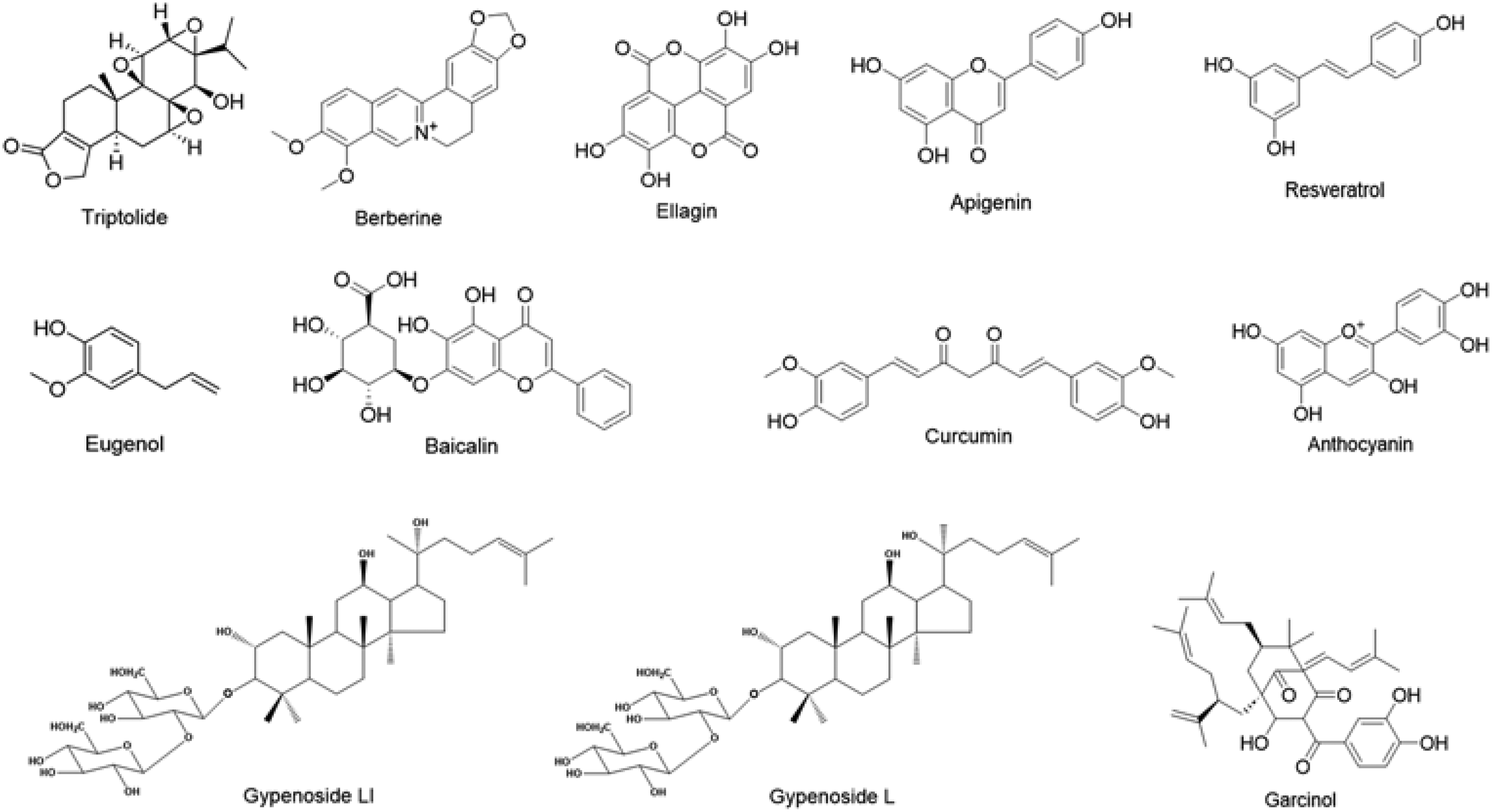
Several AA cascade inhibitory TCM with cancer therapeutic potentials.

Targeting arachidonic acid pathway using traditional Chinese medicine for cancer prevention and therapy
Mechanism of Natural Ingredients from TCM in Regulating Phospholipase A
In a study by Liu Tao Shi et al, Shaoyao Gancao Decoction, a compound recipe of various Chinese herbs, strongly inhibited phosphatidylcholine hydrolytic activity of PLA2, and its effect surpassed that of peony and licorice alone.
Tripterygiolide (TPL), the natural product obtained in Chinese medicine Tripterygium wilfordii, demonstrates certain anti-cancer effects. 80 For instance, Kang et al found that TPL significantly inhibited NF-κB signaling, thereby affecting phospholipase D (PLD)-1 and PLD2 expression in breast cancer cells to inhibit their proliferation. 81
In addition, ellagic acid (EA) exerts inhibitory effects against cPLA and demonstrates therapeutic and preventive effects against various cancers. 18 Zhao et al conducted in vivo experiments and discovered that EA suppressed tumor tissue angiogenesis (VEGF, VEGFR, COX-2, interleukin-6 [IL-6], and IL-8) and metastasis biomarkers (matrix metalloproteinase-2 [MMP-2] and MMP-9) by regulating cPLA2, consequently impeding tumor growth in PANC-1 xenografts. 82 In addition, ellagic acid is reported to prevent colon cancer development in rats treated with chemical carcinogen 1,2 dimethylhydrazine via NF-κB/COX-2 pathway. 83 Hui Liu et al suggested that gypenoside LI reduced AA levels by inhibiting cPLA2, thereby impeding the proliferation of renal clear cell carcinoma. 72
Mechanism of Natural Ingredients from TCM in Regulating Cyclooxygenases
Apigenin, a flavonoid widely present in TCM, exhibits various biological effects, including anticancer, cardiovascular and cerebrovascular protection, anti-viral, and antibacterial activities..84,85 Apigenin inhibits skin cancer caused by ultraviolet-B (UVB) radiation through primarily impeding the COX-2 pathway. By investigating the mechanism of apigenin inhibition of COX-2, Van Dross et al discovered the role of apigenin in inhibiting COX-2 mRNA and protein up-regulation within UVB-induced mouse keratinocytes. 86 Byun et al further established apigenin as an effective chemoprophylactic agent to suppress UVB-mediated skin cancers through regulating COX-2 and Src. 87 Using bioinformatics analysis to predict tumor cell sensitivity and resistance to apigenin, Adham et al found that among the 55 tumor cells, 29 showed sensitivity to apigenin. 88 Apigenin also inhibited IL-4 production. As revealed by Bin et al, apigenin enhanced proliferation inhibition of aspirin on COX-2-expressing colon cancer cells, with the mechanism linked to suppressing COX-2 and NF-кB expression. Furthermore, Ai et al found that apigenin inhibits inflammation-induced cancers by reducing NF-кB, COX-2 and signal transducer and activator of transcription 3 activity. 89 Meanwhile, apigenin suppressed cell proliferation, inflammation, angiogenesis and apoptosis in DMBA-mediated hamster buccal pouch tumorigenesis via inhibiting NF-кB and COX-2 signaling. 90
Resveratrol, a non-flavonoid polyphenol compound recognized as a plant antitoxin, 91 is synthesized by plants in response to pathogenic attacks. Extracted mainly from common Chinese medicines, such as Polygonum multiflorum, rhubarb, and knotweed, 92 resveratrol non-competitively and dose-dependently inhibits cyclooxygenase activity of COX-1. It also demonstrates slightly weaker inhibition against catalase activity of COX-1. 93 Cheng et al explored the mechanisms of resveratrol-inducible COX-2 in promoting the p53-mediated anti-proliferative effect on prostatic cancer LNCaP cells. Resveratrol administration resulted in nuclear deposition and complexation of phosphorylated Ser15-p53, extracellular signal-regulated kinase 1 and 2, and COX-2. 94 These results confirmed that inhibiting COX-2 activity and expression could dramatically suppress resveratrol's role in promoting apoptosis. Moreover, Park et al highlighted that resveratrol administration inhibited 4-OHE2-mediated IκBα phosphorylation and IκB kinaseβ activation, thereby down-regulating COX-2 and inhibiting NF-κB DNA binding capacity. 95
Anthocyanins are water-soluble natural flavonoid pigments extensively found in plants, and Chinese medicines such as wolfberry, saffron, and mulberry. 96 They demonstrate inhibitory effects on different cancer types, including stomach and breast cancers. Cyanidin-3-glucoside, an anthocyanin, inhibits skin cancer by suppressing UVB radiation-induced activation of the COX-2 pathway by inhibiting caspase-3 pathway activity and reducing pro-apoptotic Bax protein expression. 97
Berberine, the quaternary ammonium alkaloid separated in Coptis chinensis, exhibits anti-tumor activity against various tumor types. 98 Its anti-cancer properties are evident in inhibiting COX-2 and PGE2 levels. 9 Notably, an investigation by Pazhang et al involving the treatment of a human breast ductal epithelial tumor cell line (T47D) with berberine at varying doses (25-100 μM/ml) revealed that 50 μM/ml of berberine most significantly induced cell apoptosis and reduced cell viability. Berberine may exert its apoptotic effect through reducing COX-2 expression within T47D cells. 99 Kuo et al reported that berberine regulates cell activity through suppressing myeloid leukemia 1 and COX-2, thereby inhibiting oral cancer development. 100 Wang et al also confirmed that berberine can suppress endometrial cancer cell proliferation, migration, and invasion both in vivo and in vitro. This inhibitory effect is attributed to regulating COX-2 or PGE2 signaling pathway, particularly by activating protein 1 to upregulate miR-101 transcription within EC cells, thereby regulating COX-2 transcription. 101 In colorectal cancer cells and xenograft animal model, berberine has showed to be able to inhibit colorectal cancer cell migration and invasion through the COX-2/PGE2-dependent JAK2/STAT3 pathway. 9
Eugenol is a clove-scented liquid that exhibits potent bactericidal activities and serves as a local analgesic and anesthetic.102,103 Studies have demonstrated that eugenol can interact with COX-2. 104 Through model experiments, Zhai et al demonstrated that eugenol can impede the expansion of abdominal aortic aneurysm by downregulating COX-2 and NF-κB expression. 105 This substantiates the notion that eugenol exerts anticancer effects by inhibiting COX-2 or other inflammatory factors.
Mechanism of Natural Ingredients from TCM in Regulating Lipoxygenases
TCM contains abundant natural LOX inhibitors,106,107 mainly flavonoids or polyphenols, alkaloids, and organic acids. Organic acids such as phenols are an effective class of LOX inhibitors. For instance, phenylethyl ferulic acid, identified in the anti-rheumatic Chinese medicine Qianghuo, inhibits 5-LOX. However, these compounds exhibit poor selectivity for 5-LOX, suggesting challenges in their standalone use owing to high purification.
Compound Danshen tablets comprise fat-soluble tanshinones and water-soluble protocatechu phenolic and catechol derivatives. 108 Cao et al proved that 5-LOX, 12-LOX, 15-LOX, and IL-1 in compound Danshen dripping pills β Protein expression and NF-κB p65 phosphorylation significantly decreased. Noteworthily, baicalin is crucial for compound Danshen dripping pills, which helps to observe the therapeutic effect. Reduce NF by inhibiting key enzyme expression of LOX pathway- κB p65 and IL-1β The phosphorylation level of inhibits cancer response in myocardial tissue through expression. The treatment methods of traditional Chinese medicine mainly rely on drug combinations, utilizing the pleiotropy and pleiotropy characteristics of various drug components. Tanshinone IIA has been identified as an active compound of Danshen, which can significantly decrease NF-kB and 5-LOX production in Helicobacter pylori cells. This reduction exerts an important effect on inhibiting tumor cell proliferation. 109
Baicalein accounts for a key active component obtained from Scutellaria baicalensis root, a TCM. 18 Baicalein exhibits certain inhibitory effects on pancreatic cancer, melanoma, and gastric cancer.110–112 Agarwal et al analyzed AA metabolic enzyme expression within the human epidermoid cancer cell line A431, 113 where baicalein and celecoxib were used as 12-R-LOX and COX-2 inhibitors, respectively Based on these results, 12-R-LOX and COX-2 played important regulatory roles in epidermoid carcinoma growth, suggesting that baicalein and celecoxib are probably crucial for cancer inhibition. Leung et al carried out relevant experiments on baicalin's inhibition against 12-LOX gene and protein expression within human non-small cell lung cancer cell line H460. Therefore, baicalin suppresses H460 cell growth through blocking S phase and induces cell apoptosis by regulating molecules and apoptosis related proteins in the cell cycle. 114 In addition, Zhou et al used electron spin resonance technology to study the effect of baicalin. They induced the formation of hydroxyl radicals within B16F10 melanoma cells dose-dependently, demonstrating that baicalin inhibits melanoma cell growth by acting on 12-LOX, thereby catalyzing reactive oxygen species. 115 As suggested by Wong et al, baicalein-regulated suppression on 12-LOX pathway promoted gastric cancer cell apoptosis. 116
Curcumin, the yellow pigment isolated from turmeric plant rhizome, 117 accounts for the acidic polyphenolic compounds renowned for its anti-inflammatory and antioxidant effects. 118 Al-Wabli et al successfully synthesized a novel curcumin derivative, revealing its potential to tumor cells by targeting P-12-LOX. 119 Curcumin can also induce caspase 3 for inhibiting Wnt/β-catenin pathway, thereby reducing adenoma cell growth. 120
Garcinol is a polyisoprenyl benzophenone extracted from Garcinia cambogia. 121 Garcinol impedes cancer cell production by inhibiting 5-LOX activity, substantiating the notion that garcinol can effectively arrest cell cycle and cause SCC15 cell apoptosis. 122 This is important for its antitumor activities. Chen et al analyzed the relation of 5-LOX pathway with oral cancer, evaluating five inhibitors of 5-LOX, among which garcinol could inhibit the production of leukotriene B4 when applied topically. This specific application exhibited certain chemical effects in preventing hamster buccal pocket cancer. Additionally, garcinol displayed the capacity to inhibit inflammation and proliferation of oral epithelial cells. 123
Mechanism of Natural Ingredients from TCM in Regulating the CYP450 Enzyme
As reported, 123 Sausville et al analyzed how genetic polymorphisms in epoxide enzyme of CYP450 affected cancer risk. Their findings revealed an association between genetic polymorphisms in CYP450 and susceptibility to tumors. This enzyme relies on COX and hydroxylase to produce EET acid from AA, which in turn plays a pro-tumor role. 18
Resveratrol is also effective in controlling this pathway. 124 In a study by Potter, it was observed that resveratrol was metabolized by the CYP450 enzyme (CYP1B1) to produce a metabolite known as the anti-leukemia agent picetanol. This observation underscores the potential of converting natural dietary preventive cancer drugs into compounds with anti-tumor activity through the CYP450 enzyme. 125 Another study revealed that resveratrol selectively inhibits the transcriptional activation of CYP-450 1A1 and the formation of carcinogenic tumors. 126 More details on TCM effects on arachidonic acid metabolism can be observed from the Table 1.
TCM and its Bioactive Compounds Inhibits the Progression of Cancer by Targeting the Arachidonic Acid Pathway.

Conclusions and Future Directions
As AA pathway is important in various tumors, many efforts have been made for discovering and developing AA pathway inhibitors to be cancer prevention and treatment agents. Non steroidal anti-inflammatory drugs are analyzed as chemopreventive drugs for different types of cancer. Nonetheless, some adverse events related to the use of nonsteroidal anti-inflammatory drugs hinder their clinical application. TCM and associated natural products are safer than synthetic molecules. Therefore, studies regarding natural products that inhibit the AA pathway have gained momentum to develop them to be new chemopreventive and therapeutic drugs.
As indicated by research results, pathway transfer accounts for an important issue for targeting AA pathway. For example, inhibiting COX-2 pathway may result in transfer of AA metabolism to LOX or CYP pathway. Similarly, 5-LOX suppression leads to the metabolism of maleic acid to COX-2 or CYP pathway. Additionally, recently discovered HK pathways related to 5-LOX and COX-2. Therefore, inhibiting the two main pathways related to cancer development, including 5-LOX and COX-2 pathways, are the feasible way for inhibiting tumor development. Simultaneously, PLA2 triggers AA cascade reaction, inhibiting the release of AA and LPL by PLA2. Therefore, researchers have always believed that PLA2 is the superior therapeutic target to downstream enzymes (ie COX-2 and 5-LOX). Nonetheless, an important issue during drug discovery is the diversity and redundancy of PLA2 subtypes. Furthermore, the integrative physiological role of the PLA2 subtype remains unclear. Nonetheless, according to relevant research results, inhibiting AA-specific GIVA-cPLA2 is important, due to its location upstream of COX-2 and 5-LOX, and inhibition of AA and LPL release. On the whole, the multi-targeting of the AA pathway benefits to effective prevent and treat some types of cancer.
Curcumin and berberine block multiple COX-2, LOX, and cPLA2 pathways, demonstrating their potential for chemoprevention and treatment of several types of cancer. Resveratrol exerts chemoprevention through suppressing the COX-2, CYP and LOX pathways. Baicalin has chemopreventive and anticancer activities against various tumors by inhibiting 12-LOX. Celery extract, cyanidin-3-glucoside, curcumin, resveratrol and baicalin pre alleviate UVB radiation-mediated skin cancer through suppressing the COX-2 pathway. Berberine and tannic acid inhibit the expression of cPLA2, while glycine inhibits its activation by inhibiting cPLA2 phosphorylation. Curcumin inhibits the expression of cPLA2 and prevents cPLA2 activity through inhibiting MAPK-regulated phosphorylation. Rosmarinic acid has the activity of inhibiting sPLA2 and COX-2. Some PLA2 inhibitors of natural products are discovered, yet the anticancer effects are not comprehensively tested. The differentiation of metabolic pathways is an important issue in developing AA pathway inhibitors. In seven articles, neither COX-2 nor LOX inhibitors can effectively combat inflammation, thereby inhibiting inflammation induced carcinogenic effects. Although these natural ingredients from TCM showed great potency in pre-clinical stage, clinical development requires further in vivo anti-cancer, toxicity, and pharmacological research.
However, the use of individual Chinese medicine or extracts has certain limitations regarding their therapeutic effects. Furthermore, employing TCM prescriptions to regulate tumors also poses certain difficulties and uncertainties. The bioavailability of Chinese medicine or extracts accounts for the main issue in clinical development. In order to improve the natural product bioavailability, several nanoparticle-based drug delivery approaches are explored. Several analogues of natural products were also synthesized, improving their bioavailability and enhancing their therapeutic potential. Several natural product analogues have been synthesized to improve their bioavailability. A cause of low TCM or extract (such as curcumin and resveratrol) bioavailability is their in vivo metabolism. Piperine promotes curcumin and resveratrol bioavailability through suppressing the internal metabolism of such plant chemicals. The combination treatment with natural products inhibiting AA pathway can benefit the improvement of chemoprevention, and help overcome several issues, including bioavailability and drug resistance.
As is well known, natural products are safer based on toxicity studies, which exhibit neither mutagenic nor genotoxic properties. Curcumin has been recognized by US Food and Drug Administration (FDA) as non-toxic and “generally safe” (GRAS). However, because of insufficient evidence of safety or efficacy, a recent committee of the US FDA voted to ban its intravenous use. The decision has not become law in the United States and is still questioned. The recent studies regarding gingerol's genotoxic activity remain a source of controversy, which require more research. Anthocyanins have low toxicity and potential for antioxidant and anti-genotoxic properties. Existing results are insufficient for drawing a conclusion that anthocyanins have lower or no toxicity. In addition, further long-time toxicity research of anthocyanins is also needed. Eugenol is the tumor chemopreventive drug with genetic toxicity and carcinogenic activities. Aspirin eugenol ester is the mixed molecule that exhibits anti-inflammatory effect comparable to eugenol and aspirin, but it has lower or no toxicity. Therefore, a full examination of the safety profile of respective compound is necessary.
Drug resistance has been the main issue in cancer chemotherapy. Given the effects of COX-2 and PGs on tumor resistance, inhibitors of these signaling can be used to reverse resistance and perceive chemotherapy drugs. The COX-2 selective inhibitor that can inhibit MDR1-regulated resistance of HepG2 cells, which is because of the COX-2 inhibitory effect and inhibition of ROS production. Likewise, celecoxib and gugulstrom are found to solve the problem of imatinib resistance and induce apoptosis of imatinib-resistant leukemia cells through suppressing P-glycoprotein and COX-2. Therefore, further research can be conducted to analyze natural products that inhibit COX-2 as drug sensitizers and/or drug resistance inhibitors.
The research progress regarding AA pathway inhibitory natural ingredients from TCM and associated natural products for preventing and treating cancer has been made. In toxicity research, natural products inhibiting AA pathway are safe, which contributes to the clinical application. Nonetheless, the low bioavailability of natural ingredients from TCM and associated natural products that inhibit the AA pathway is the main issue in clinical application to prevent and treat cancer. Simultaneously, some researchers formulated multiple alternative strategies for improving bioavailability of certain natural ingredients from TCM and associated natural products. In this case, it is necessary to discover new AA pathway inhibitors from natural sources and conduct detailed studies regarding existing natural products inhibiting AA pathway, including clinical evaluation, for the development into effective and safe cancer prevention and treatment drugs.
Footnotes
Abbreviations
Author Contributions
Hui Liu and Jiahui Yu performed the main analyses and wrote the manuscript. Yajie Dong and Caidan Rezeng collected and prepared the related papers. Xiuming Li conceived and designed the study. Hui Liu approved the final manuscript.
Consent for Publication
All authors are cognizant of and in concurrence with the content of the paper and consent to being listed as co-authors of the paper.
Declaration of Conflicting Interests
The authors declared no potential conflicts of interest with respect to the research, authorship, and/or publication of this article.
Funding
The authors disclosed receipt of the following financial support for the research, authorship, and/or publication of this article: This work was supported by the Science and Technology Research Program of the Hebei Provincial Department of Education, Natural Science Foundation of Hebei Province, National Natural Science Foundation of China, (grant number Grant No. QN2022114 and Grant No. 202209, (Grant No. H2021406054 and H2023406033), Grant No. 82060648).
