



Abstract
Introduction
Cancer, also known as a malignant tumor, is a significant global health issue that poses a serious threat to human life, with increasing rates of both occurrence and death following a consistent pattern. Research indicates that the number of new cancer cases in individuals aged 75 and above is expected to rise by 3 to 4.5 times globally, compared to the statistics from 1990 1 ; Approximately 19.3 million new cancer cases occur in 2020, resulting in nearly 10 million cancer-related deaths 2 ; Around the globe, there are approximately 20 million new cases of cancer and 9.7 million cancer-related deaths in 2022 3 ; In 2040, it is projected that there will be approximately 28.4 million new cancer cases. 4 According to the “Report on the Operation Pattern and Investment Strategy of China's Anti-tumor Drugs Industry 2020-2026,” malignant tumors are the leading cause of death in China. Therefore, it is crucial to effectively address malignant tumors. The primary anti-tumor treatments commonly employed in clinical settings include surgery, radiotherapy, chemotherapy, and targeted therapy. These treatments are all effective in reducing the growth of tumor cells. However, chemotherapy has several dangerous side effects, such as long-term damage to the liver, kidneys, and central nervous system. It is also associated with a significant risk of cancer spreading after surgery. Therefore, it is crucial to discover anti-tumor medications that are highly effective, safe, and have low toxicity in current pharmacological research. Traditional Chinese medicine has long utilized natural ingredients to mitigate negative effects and minimize side effects. Moreover, specific elements and principles related to Chinese medicine can synergistically enhance its anti-tumor effectiveness. From 1981 to 2014, the FDA granted approval for the sale of 67% of cancer-fighting drugs derived from natural sources. 5 The Alangium species are reported to have traditional medicinal value in treating diarrhea, dysentery, inflammation, hypertension, and eczema, while the pharmacological investigations have also revealed that the extracts and phytochemicals of Alangium species possess other therapeutic properties, such as antitumor effects. Researchers in the field of natural pharmacology are currently exploring more potent active ingredients found in herbal products, as they have the potential to be effective modern anticancer medications. Our team has a long-standing interest in identifying naturally components that have anti-tumor properties. Currently, we are conducting research on the antitumor effects of plants belonging to the Alangium genus. Previous studies suggest that the crude extracts of Alangium chinense (Lour.) Harms subsp may contain compounds that can inhibit the growth of tumor cells. However, there is limited detailed research or extensive documentation on the anticancer properties of other plants within this genus. In order to enhance our comprehension and utilization of the antitumor properties of plants belonging to the Alangium genus, as well as to advance the development of anticancer medications, this study aims to conclude the components and mechanisms of action of the Alangium genus.
The Alangium species is a monotypic plant of the Alangiaceae family, named after its leaves that are shaped like an octagon, but in reality, five-lobed or five-cornered leaves are more common. 6 Most plants in this category have a pungent and bitter taste, a slightly warm nature, and a slight toxicity. They belong to the liver meridian, heart meridian, and kidney meridian. They have the effects of clearing heat and detoxifying, relaxing tendons and activating collaterals, and dispersing stasis and relieving pain. 7 There is therapeutic potential in various parts of the Alangium genus, including the roots, root bark, leaves, flowers, bark, seeds, and fruits, which can be used for medicinal purposes. Moreover, these herbs have traditional uses as expectorants, for treating diarrhea, dysentery, inflammation, hypertension, and eczema. The plants in the genus Alangium not only have a wide range of traditional uses, but modern pharmacological research has also discovered a new antitumor activity. These types of herbs overcome the resistance of cancer cells by suppressing their growth. But there is no review of the anti-tumor properties of the Alangium genus, and the subsequent information on the chemical components of this genus is not comprehensive enough. In order to conduct an in-depth study on the chemical composition and mechanism of action of anti-tumor components in plants of the genus Alangium, this article provides an overview of the species, resource distribution, anti-tumor components, and mechanisms of action of plants in the Alangium genus.
Methodology
Several search terms, such as Alangiaceae, cancer statistics, chemical composition, and antitumor, have been entered in consecutive order into various databases, including CNKI, PubMed, Google Scholar, Connected Paper, and chemical abstracts service (CAS). A total of more than 200 relevant references were found, out of which 96 references specifically focused on phytochemical and pharmacological studies of the genus Alangium. In addition to these references, several books were consulted to gather information on the traditional uses and botanical data of the genus Alangium. These include the Chinese Pharmacopoeia (2020 edition), the Chinese 119 Drug Dictionary (2006 edition), Quality standard of Chinese medicinal materials and ethnic medicinal materials in Guizhou Province (2003 edition) and the Chinese Flora.
Botany
Typically, plants belonging to Alangium Lam. are deciduous trees or shrubs, with occasional climbing varieties and very few spiny ones. The branches are cylindrical in shape, sometimes with a slight “zigzag” appearance. The leaves are arranged alternately on the stem, have a stalk, lack stipules, and are either completely smooth or divided into palm-like sections. They are usually asymmetrical on both sides of the base, with veins arranged in a feather-like pattern or having 3-7 main veins originating from the base in a palmate arrangement. The inflorescences of this plant are found in the axils of the leaves and arranged in a cymose pattern. They are usually sparsely clustered or solitary. The pedicels, or stalks of the flowers, are often segmented, and the bracts, which are small leaf-like structures, can be linear, subulate, or triangular in shape. The bracts fall off after a certain period of time. The flowers are bisexual and can be light white or yellowish in color. They are typically fragrant. The calyx, which is the outermost part of the flower, is small and has a bell-shaped tube that is fuzed with the ovary. It has 4-10 lobes with toothed or rounded ends. The petals, which are the innermost part of the flower, are also numbered between 4 and 10 and have a linear shape. In the bud stage, they are tightly connected to one another. They are arranged in a valvate manner, meaning they are regularly attached to each other at the base, although occasionally they may not be. After flowering, the upper part of the petals often curls outward. The stamens, which are the male reproductive parts of the flower, are as numerous as the petals or 2-4 times more. They alternate with the petals. The filaments, which are the stalks of the stamens, are flat and linear. The petals’ bases may be either detached or barely linked to them. The filaments’ inner surface is frequently slightly hairy. The anthers, which are the structures that produce pollen, are long and composed of two cells. They are divided longitudinally into lobes. The disc, which is a fleshy, is present. The ovary, the female reproductive organ of the flower, is situated beneath the receptacle and typically holds one or two carpels. The style, which is the stalk-like structure on top of the ovary, is positioned in the center of the disc. The stigma, which is the receptive surface for pollen, can be rounded or rod-shaped and may be undivided or divided into 2-4 lobes. The ovule, which contains the female gamete, is solitary and hangs down. It has two layers of protective covering. The fruits, called drupes, are elliptical, oval, or nearly spherical in shape. They have a prominent calyx, enamel, and disc at the top. The seeds are singular and have a large embryo and abundant endosperm. The shape of the cotyledons, which are the embryonic leaves, can vary from rectangular to nearly circular. 8
There are approximately 30 species in this genus, which are found in Asia, Oceania, and Africa. These species can be categorized into two main groups: Alangium and Marlea (Roxb.) Baill. Among these species, 9 can be found in China, and the research discussed in this context specifically focuses on these 9 species (refer to Table 1, Figure 1).

The geographical distribution of the genus Alangium in China.
The Genus Alangium and Its Botanical Classification in China.

Traditional Use
This group of plants has been used for medicinal purposes for a long time. Various parts of the plant, including leaves, roots, flowers, and the entire plant itself, are known to have a wide range of healing properties. Alangium salviifolium, Alangium chinense, Alangium faberi, and Alangium platanifolium have been historically used for treating rheumatism and injuries. Alangium salviifolium can serve as an emetic and detoxifying agent, Alangium chinense is effective in stopping bleeding from external wounds, Alangium platanifolium can act as a pesticide, and Alangium faberi is known for its properties in clearing heat, aiding digestion, and detoxification. 8
Phytochemistry
The chemical composition of Alangium Lam. is diverse. These compounds were isolated and purified using some conventional separation methods such as organic solvent gradient extraction, multistep Silica gel, macroporous resin, ODS, Sephadex LH-20 column chromatography, preparative thin-layer chromatography, preparative high-performance liquid chromatography, recrystallization. Until now, more than 300 chemical compounds have been detected from the genus Alangium. The classification of compounds is based on factors such as chemical structure, biological activity, origin, and synthesis pathways. It is worth noting that any classification system may have limitations, especially when dealing with the extensive structural diversity of natural products. However, reviews on natural products are usually organized by classification to ensure a logical and coherent presentation. In this review, we mainly summarized the three categories of components with anti-tumor activities, namely alkaloids, glycosides, and terpenoids. In addition, we have also attached the structure of these compounds. Some compounds with undetermined stereochemistry in literature, such as compounds
Alkaloids
Alkaloids are a group of natural drugs that were first developed from plants in the Alangium. Over 100 alkaloids have been extracted and identified from the genus Alangium, with 37 of them possessing anticancer properties. These alkaloids consist of 25 tetrahydroisoquinoline alkaloids (
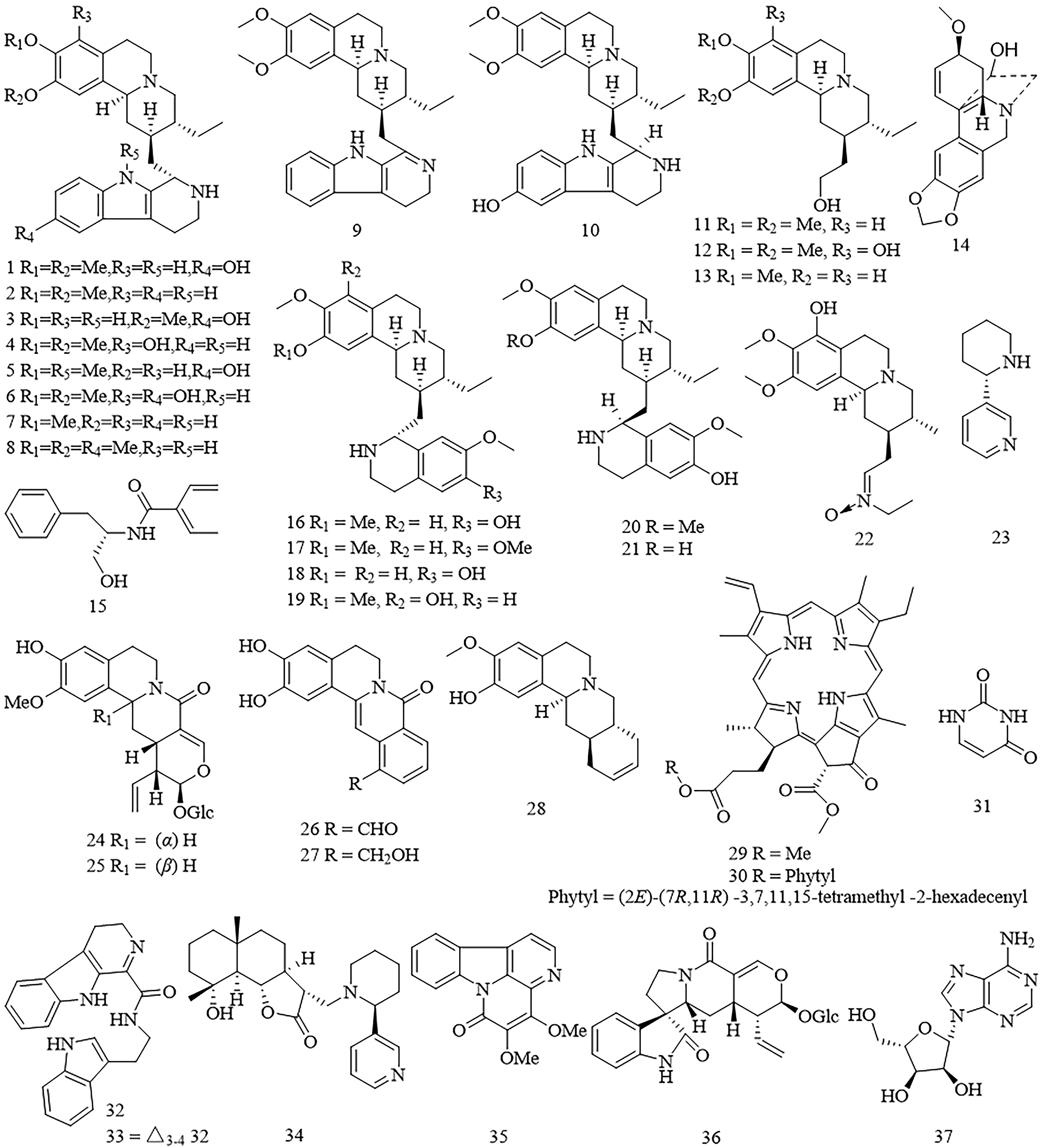
Structure of alkaloids
Antitumor Components of Alkaloidal in the Genus Alangium.

Glycosides
Up to this point, glycosides obtained from the genus Alangium account for the largest proportion. Researchers have found that 11 glycosides from this genus have anti-tumor effects. These consist of one lignan glycoside (

Structure of glycosides
Antitumor Components of Glycosides in the Genus Alangium.

In their study, Itoh and colleagues
30
discovered rutin (
Researchers have identified a chemical compound known as salicin (
Terpenoids
The genus Alangium has 20 terpenoids with antitumor properties, including 11 sesquiterpenes (
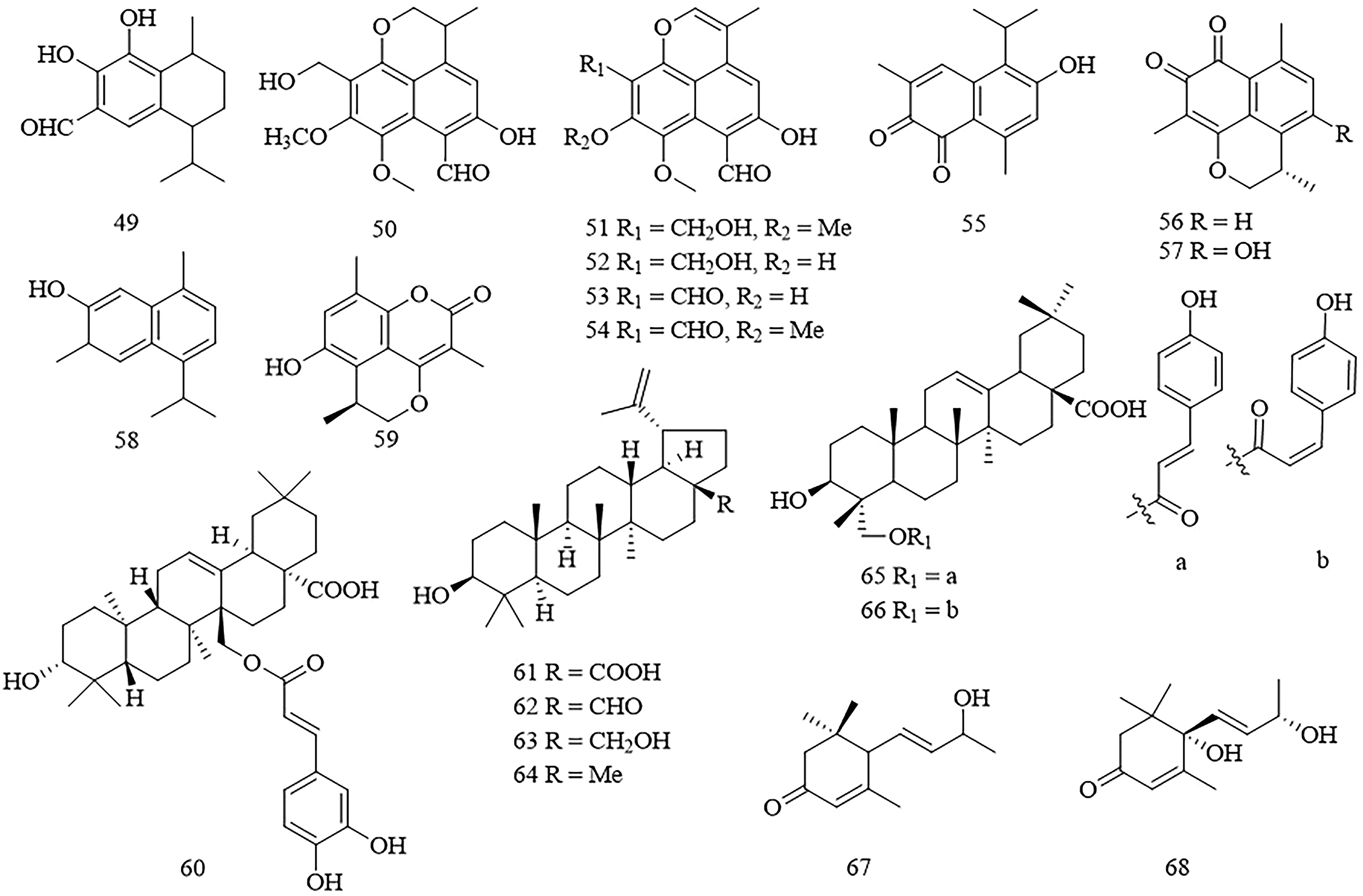
Structure of terpenoids
Antitumor Components of Terpenoids in the Genus Alangium.
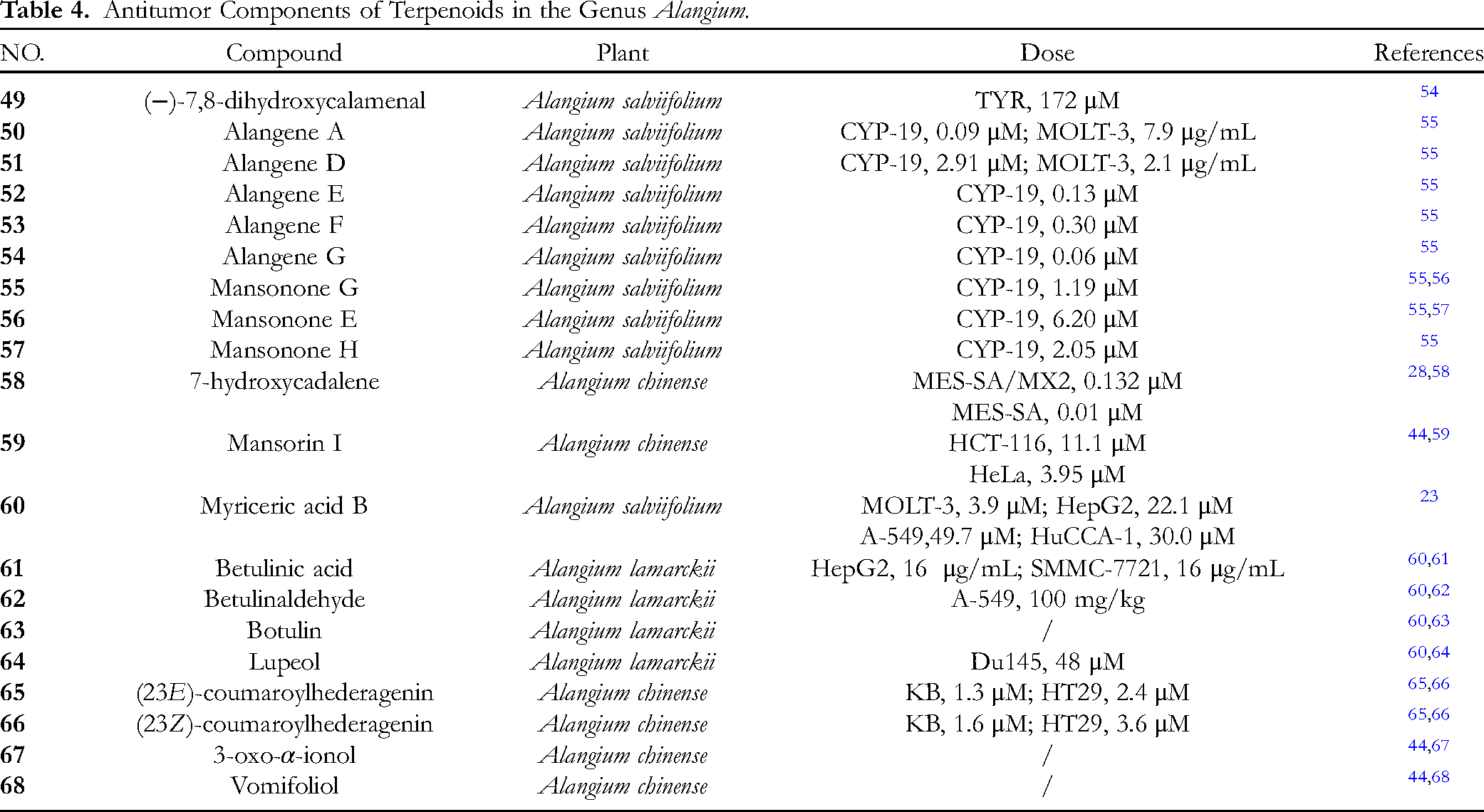
Through searching an extensive literature indicates that the sesquiterpenes with antitumor activity in Alangium are mainly concentrated in Alangium salviifolium and Alangium chinense. Yagi et al
54
discovered a new type of cadinane-type sesquiterpenoid compound, (−)-7,8-dihydroxycalamenal (
Other Compounds
Seventeen substances with antitumor properties have been identified in the Alangium, primarily from Alangium chinense. These substances include four flavonoids (

Structure of other compounds
Antitumor Components of Other Compounds in the Genus Alangium.

Kaempferol (
Mechanism of Action Against Tumor
With a deeper understanding of the anti-tumor effects and mechanisms of natural medicines, researchers have discovered that these medicines have regulatory effects on multiple signaling pathways. At present, the mechanisms through which anti-tumor effects are achieved include regulating the immune system, inhibiting tumor cell growth, inducing tumor cell differentiation, impeding tumor cell metastasis, initiating tumor cell apoptosis, inhibiting tumor angiogenesis, overcoming multidrug resistance in tumor cells, and suppressing telomerase activity.88,89 Through extensive literature research, it has been found that the main chemical components of the Alangium primarily achieve anti-tumor effects by inhibiting tumor cell proliferation, suppressing tumor cell growth, promoting tumor cell apoptosis, and blocking the cell cycle (Figure 6).

The mechanism of the genus Alangium (by Figdraw).
Inhibits the Growth and Proliferation of Tumor Cells
The most prominent characteristic of tumor cells is their abnormal proliferation, which continuously disrupts the normal cellular environment and ultimately leads to the death of healthy cells. Inhibiting the proliferation and growth of tumor cells is a commonly used method for treating cancer in clinical practice.
A substance known as 3-O-demethyl-2-O-methylalangisid (
Betulinic acid (
Quercetin (
Pinoresinol (
Promotes Apoptosis of Tumor Cells
Apoptosis, which refers to programed cell death, occurs when the body actively adapts to a new environment. Regulating itself is a natural process employed by cells. This method is considered a more effective treatment, because it involves multiple signaling pathways, intricate mechanisms, and can target tumor development at any stage.
A compound called 4,5-dimethoxycanthin-6-one (
Studies have shown that mansonones have a significant anti-tumor effect, with mansonone G (
Blocking the Cell Cycle
The activity of tumor cell cycle proteins is abnormally activated, leading to uncontrolled proliferation. Inhibiting the activity of cell cycle proteins can halt the cell cycle and generate anti-tumor effects.
The tetrahydroisoquinoline alkaloid 8-hydroxytubulosine (
Gallic acid (
Other Mechanisms of Action
In addition, literature research has revealed that the chemical composition of the Alangium contains other mechanisms that exhibit anti-tumor effects, such as inhibiting tumor angiogenesis and regulating the immune system.
In 2019, the COVID-19 pandemic ravaged the entire country. Research has found that patients with lung adenocarcinoma (LUAD) are more susceptible to COVID-19. In light of this, researchers conducted in-depth studies and discovered that Emetine (
Furthermore, salicin (
Conclusion and Outlook
This article presents a thorough examination of different aspects of Alangium Lam. plants, including their physical characteristics, geographical distribution, anti-tumor compounds, and mechanisms of action. There are approximately 30 species in this plant genus, with 9 main species found in China. These species are distributed throughout the country, except in Heilongjiang, Inner Mongolia, Xinjiang, Ningxia, and Qinghai. Various substances with significant anti-tumor effects, including alkaloids, glycosides, terpenoids, flavonoids, lignans, and steroids, have been extracted from plants within the Alangium. There are a total of 85 anti-tumor active ingredients, with alkaloids being the most abundant category. Out of these compounds, 37 anti-tumor active ingredients have been identified in Alangium, and many of them contain a central structure known as tetrahydroisoquinoline. This core structure can be further investigated as a potential focal point for studying anti-tumor activity. There are over 160 different types of glycoside compounds found in plants belonging to the Alangium genus. However, only 11 compounds with anti-tumor activity have been discovered so far. The next group of compounds is terpenoids. Among the Alangium genus, 20 compounds with anti-tumor activity have been isolated, including sesquiterpenoids and triterpenoids. Sesquiterpenoids are primarily isolated from Alangium salviifolium and Alangium chinense, while triterpenoids are mainly obtained from Alangium salviifolium, Alangium lamarckii, and Alangium chinense. These compounds primarily exert anti-tumor effects by inhibiting the growth and proliferation of tumor cells. Furthermore, there are 17 compounds with anti-tumor properties, which consist of 4 flavonoids, 4 lignans, 2 sterols, 5 phenolic acids, and 2 straight-chain alkanes. Some compounds, such as Rutin (
Recently, researchers have been focusing on traditional cancer therapy as a potential new treatment option. The Alangium genus, which is distributed globally, has a history of being used for medicinal purposes in various traditional medicine practices to treat cancer. The development of cancer is varied and intricate. The Alangium plant species contains numerous potent compounds and diverse extracts that can inhibit the growth of various types of tumors through immune system regulation, inhibition of tumor growth, promotion of tumor cell differentiation, prevention of tumor metastasis, initiation of tumor cell death, hindrance of tumor blood vessel formation, overcoming drug resistance in tumors, and suppression of telomerase activity. However, there is relatively little research on the mechanisms of new anti-tumor effects, such as the microenvironment, copper-induced cell death, and iron-induced cell death.
In summary, the Alangium genus is rich in chemical constituents and demonstrates significant anti-cancer properties that have the potential to reduce both mortality and morbidity through various mechanisms. This is in contrast to other plant genus such as Catharanthus roseus, which is mainly known for its anti-tumor effects associated with alkaloids. The main mechanism of the anti-tumor effect of these alkaloids is primarily through their action on the tumor microenvironment. Given the significant medical potential of this plant species, it is imperative to conduct comprehensive separation studies on its chemical compounds using bioactivity-guided methods. Future research should focus on investigating the pharmacological effects of these compounds in organisms, delving into the broader and deeper mechanisms underlying their biological activity. This will lay the groundwork for identifying potential lead compounds against tumors and for facilitating drug development.
Footnotes
Abbreviations
Acknowledgements
The authors express their gratitude to the editor and the anonymous reviewers for their t expert guidance and constructive feedback to enhancing our manuscript.
Author Contributions
Conception and design of the manuscript: C.S.; conducting literature search and analysis of the information: R.L., Q.D. and Y.K.; draft and revision of the manuscript: R.L. and Z.Z.; editing the manuscript: H.W. and H.Z.; finalization and approval of the revised manuscript for submission: C.S. and Z.Z. All authors have read and agreed to the published version of the manuscript.
Declaration of Conflicting Interests
The authors declared no potential conflicts of interest with respect to the research, authorship, and/or publication of this article.
Funding
This research was funded by Natural Science Foundation of Shandong Province (No ZR2023MC009), Lin He's Academician Workstation of New Medicine and Clinical Translation in Jining Medical University (No JYHL2022ZD03), College Students’ Innovation and Entrepreneurship Program of Jining Medical University (cx2023069z).
