



Abstract
Clove is important herb because of their high phytochemical content, dietary fiber level, and nutritional value. Clove have a wide range of nutritional and physiological benefits and its value added products have been provided in this study.
Introduction
The generic name for the clove plant, Syzygium aromaticum Evergreen tree up to 20 m tall with a pyramidal top. They are leathery. 1 Three-part paniculate corymbs are used to organize the terminal blooms. With four thick sepals, four petals that range in color from light pink to carmine-red, two scale-like prophylls, a tubular calyx that is 1 to 1.5 cm long, two scale-like prophylls, and an inferior ovary that is joined and partially enclosed by a tubular hypanthium, flowers are 10 to 14 mm long. The fruit is a dark red berry with a diameter of 1.3 to 1.5 cm, length of 2.5 to 3 cm, and a cap of 4 curled sepals. 2 Cloves are mostly used in cooking for flavoring, seasoning, and other purposes. Numerous disorders have historically been treated with essential oils that contain mostly eugenol. The antibacterial and preserving properties of oils have also played an important role in traditional medicine and food preservation. 3
Although eugenol is still a key constituent, the volatile compounds in the leaves and stem may have different compositions. Because of its toxicity, even eugenol must be used with caution, and traditional medicine mostly uses the essential oil from clove flower buds. 4 Terpenoids, phenolic compounds, simple aromatic acids, and complex tannins are all abundant in clove tree buds. Several methods can be used to extract these compounds. 5
Nutritional Composition of Clove
Numerous studies have used proximate and phytochemical research to report the nutritional value of clove. Hossen et al found that clove bud powder contained (%) moisture (100.006), ash (5.20.01), crude fiber (200.1), crude fat (12.10.45), carbohydrate (51.50.02), and crude protein (1.20.02) content. 6
Additionally, according to Cheikhyoussef et al, clove buds contain (%) moisture (23.350.02), carbohydrates (30.950.17), crude fat (18.900.04), crude fiber (10.650.03), ash (9.100.05), and crude protein (7.000.01), as well as (mg/kg) amounts of magnesium (1259.8610.65), calcium (782.540.62), iron (71,012.45), and potassium (2.690.0). 7 An analysis of the phytochemical makeup of the dichloromethane extract of clove bud oil by Kaur et al revealed the presence of phenolic compounds, terpenoids, glycosides, steroids, sterols, and carbohydrates. 8 Soni et al claim that the essential oil of clove includes steroids, alkaloids, flavanoids, cardiac glycosides, and saponins.
Limitation of Study
During research for my dissertation, we were bound to encounter certain limitations in the process. Therefore, I knew limitations of a study to include or exclude them. Mild to moderate hyperlipidemic patients were included. Hyperlipidemic patients who can speak and understand Urdu and English were selected. Hyperlipidemic patients of age group 25-60 years and same gender were included. Patients who were already taking any supplement or medication of hyperlipidemia. Currently participated in any other intervention. Patients with borderline high blood lipid profile were not included in study. Patients who had any known allergies to clove consumption. Non willing hyperlipidemic patients. Pregnant or nursing women. Patients suffering from other health disorders were not included.
Because of their antioxidant and antihyperlipidemic qualities, chemical preservatives are often substituted for cloves, a common spice used to keep food fresh, in the manufacture of meat in particular. 9 The clove, among other spices, has drawn a lot of interest due to its strong antihyperlipidemic and antioxidant properties. 10 More than 18% of the volatile oil found in clove flower buds is composed of eugenol and cariofilenoeugenol acetate, which has been demonstrated to work as a powerful antioxidant in vitro because it fixes the radical phenoxil by allowing the hydrogen atom to be donated, leading to the formation of stable molecules that do not cause or promote oxidation. 11
One must comprehend the immediate, mineral, and chemical contents additionally to these's overall mechanism of action, medical plants in order to comprehend the importance of many medicinal herbs in food production for humans and animals. By taking into account the aforementioned factors, the study intends to estimate the regional minerals, chemical compositions, and antioxidant determination of clove bud powder often found in our area.
Novelty of Study
Innovation of product development utilization in the baking industry.
Explore nutritional benefits.
Materials and Methods
Procurement of Raw Material
Cloves were purchased from the local market of Lahore. Merck and Sigma-Aldrich were used for the acquisition of chemicals and reagents. The University Institute of Diet and Nutritional Sciences, The University of Lahore, Pakistan, was the site of the study.
Preparation of Clove Extract and Muffins:
The buds of Syzygium aromaticum were properly scrubbed under running clean water, sliced into more modest pieces and subjected to drying for a period of seven (7) days at room temperature. The sample after drying was then pulverized to coarse powder and afterward kept for subsequent. 12
Muffins Preparation
The muffin recipe calls for 500 g of refined wheat flour, 420 g of sugar powder, 420 g of margarine, 420 g of eggs, 8.5 g of baking powder, and 7.5 mL of vanilla extract. The batter (50 g) was completely combined with all the ingredients in a spar mixer before being placed into a muffin pan and baked in an oven at 200 °C for 25 min. In order to preserve them for further study, the muffins were placed in polypropylene bags after cooling to room temperature. After the muffins had cooled, they were separated into three batches. The first batch is used as a control or uncoated batch. The second batch was coated with a non-emulsion of clove extract (150 mg). The second batch was coated with a non-emulsion of clove extract (250 mg). The NE-coated muffins were then allowed to dry for 5 min at room temperature. All of the muffins were wrapped in polypropylene sheets and sealed with a heat sealer after cooling and drying.
We have analyzed on the muffins of the treatment and there was no effect of heat because not give heat for a longer period at high temperature. So we should have no ingredients were effected by heat.
Chemical Composition
The proximal analysis of clove powders was performed. Association of Official Analytical Chemists procedures for moisture, ash, crude fat, crude protein, carbohydrate, and crude fiber. By using a different approach, the nitrogen-free extract (NFE) was computed. 13
Mineral Profile
Iron, sodium, copper, zinc, magnesium, potassium and calcium are usually determined by two methods that are flame photometer and atomic absorption spectrophotometer. 14
Wet Digestion of the Sample
One gram of the material was combined with 12 mL of HNO3 and digested wet in a glass digestion tube over the course of an entire night at room temperature. The mixture was added to 4-mL of perchloric acid (HClO4) the following day and put through digestion in a fume chamber. The temperature of the block increased gradually, the temperature was increased from 50 °C to between 250 and 300 °C. By producing white gas within 70-85 min, complete digestion was demonstrated. The liquid was then transferred to plastic bottles, labeled properly, and allowed to cool before being by adjusting 100 mL with distilled water and adding to a 100 mL volumetric flask.
Determination of Minerals by AAS
Zinc, calcium, iron, magnesium, and manganese were some of the minerals that were measured using atomic absorption spectrophotometry (Unicam Model 929) by utilizing distinct electrodes for each mineral component (Mn). Before and after the experiment, proper equipment operation was evaluated using standard solutions of each mineral. With the exception of P and Mg, every mineral has a 100-fold dilution factor. 100 mL of distilled water and 0.5 mL of the original solution, the original solution was diluted to achieve the Mg level required to separate Ca from Mg. The initial solution was then given a 1 mL addition of lithium oxide solution.
15
Mineral concentrations were calculated in parts per million (ppm) and converted to milligrams by multiplying by the dilution factor, dividing by 1000, and then as follows:

Evaluation of Phosphorus (P) by Spectrophotometry
In a volumetric flask, 250 mL of distilled water and 12 g of ammonium molybdate were mixed (solution A). H2SO4 (5N) solution was dissolved in 0.2908 g of potassium tartrate of antimony in a different volumetric flask. There was just added enough distilled water to make a one-liter solution (solution B). Two solutions were blended in a 2-L volumetric flask with the addition of distilled water to create mixed reagents. The color reagent was made by dissolving 0.739 g of ascorbic acid in a beaker with 140 mL of the combination reagent. Wet-digested duplicate food sample (1 mL) in a plastic container with the right label was combined with distilled up to 5 mL to create the diluted sample. The total volume was increased to 25 mL by adding 5 mL of color reagent to create the final solution. The dilution factor for this solution was 2500. (100 25). The finished solution finally took on a blue hue. Examination of phosphorus For spectrophotometric analysis, phosphorus solution dyed blue was placed in a cuvette. Following the method specified by Nielsen, phosphorus levels were measured in ppm, and total mineral consumption was also computed.
15
ppm (parts per million) and mg (milligram),

Phytochemical Screening Assays
For phytochemical screening and antioxidant testing, powdered extracts of clove buds were dissolved in their respective solvents (water, ethanol 80%, and acetone 80%).
Determination of Total Phenolic Content (TPC)
The total phenolic content was calculated using the Folin-Ciocalteu reagent. 16 A calibration curve was created using a UV-vis spectrophotometer and a standard gallic acid solution with a 0.01 to 0.05 g/mL concentration, as determined at 760 nm. Gallic acid served as the calibration reference, and the results were represented in milligrammes of equivalent gallic acid dry extract (mg GAE/g).
Determination of Total Flavonoid Content (TFC)
As a reference in phytochemical analysis, To determine the concentration of all flavonoids, quercetin was utilized. 17 At 415 nm, a spectrophotometer was used to measure the absorption. The results were presented as milligrammes of quercetin equivalents per gramme of extract (mg QE/g extract). Quercetin was used to create the standard curve at various concentrations.
Antioxidant Activity Assays
DPPH Radical Scavenging Activity
Immobilized free-radical molecules make up the crystalline powder known as DPPH. Ascorbic acid levels were average. The control solution was made with methanol instead of extract. Using a DPPH violet illumination solution, substances and various extracts were tested for their ability to atomize hydrogen or electrons. 3.9 mL of DPPH Stokes were made for this technique, 100 l of concentrations were added for each sample, and it was then left in the dark for 30 min. In order to quantify the absorbance at 516 nm, a UV-Vis spectrophotometer was used. Then, the results were shown as IC50. The concentration of substrate that results in a 50% reduction in the DPPH activity is referred to as the factor IC50, which is used to define the results from the DPPH test.
18
The formula below was used to calculate the antioxidant activity of the sample:

Ferrous-Reducing Antioxidant Power Assay (FRAP)
The ferrous-reducing antioxidant power (FRAP) test was used to evaluate the reducing power of clove powder using the method outlined by Idowu et al. 19 “Onemilliliter extract was mixed with 1 mL of 1% potassium ferricyanide and 1 mL of 200 mM sodium phosphate, having buffer (pH 6.6). After that, this mixture was incubated at 50 °C for 20 min. One milliliter of Trichloroacetic acid (TCA) (10%) was added to this mixture, followed by centrifugation (Hettich, model# 0008017-10) at 13,400 g for 5 min. Furthermore, 1-mL supernatant was mixed with 1-mL distilled water and 0.1-mL ferric chloride (0.1%). The absorbance of the mixture was measured at 700 nm. Aqueous solutions of FeSO4.7H2O (100-1000 μM) were used for calibration”; values were expressed as micromoles Fe(II) per gram.
Hyperlipidemic Effect
After that the participants were advised to use Muffins containing 10 g extract clove for 8 weeks. Participants were also advised to follow the given diet plan over the course of study.
Statistical Analysis
The results of every experiment are expressed using the mean standard deviation. One-way analysis of variance (ANOVA) was used to analyse statistical differences using the SPSS (25.0) program at the significance level of P .05.
Result and Discussion
Chemical Composition
Food samples are chemically analysed to determine their nutritional status. Moisture content, protein content, crude fiber, crude fat, ash content, for example, are quality parameters of cloves that directly or indirectly affect quality, as assessed by various chemical tests. The chemical characteristics of cloves were investigated, and the results are presented below.
Tables 1 and 2 showed that clove contained moisture 28.76 ± 0.05, ash 6.12 ± 0.06, fiber 13.57 ± 0.06, fat 4.61 ± 0.07, protein 7.01 ± 0.09. An approximate examination of clove powder revealed that it contained moisture (28.76 0.05). In order to properly store and preserve food goods, it is important to know their moisture level. 20 This is because food products are more likely to become ruined by microorganisms if their moisture content is greater than 12%.. 21 Crude fiber was mentioned after that (13.57 0.05). The unprocessed fibers increase the digestion and absorption of lipids and carbohydrates. 22 The amount of crude protein was discovered to be 7.010.09. The fundamental structural elements and cellular building blocks are proteins. They give the body the necessary amino acids, and when combined with animal proteins, they provide a balanced nutritional value. 23 Crude fat (4.610.07) and ash (6.12 0.06) content came next. For plants to be used medicinally, they need to have a high concentration of fiber and low levels of fat because consuming too much fat leads to cardiovascular diseases including atherosclerosis, cancer, and aging. 24 Ash content describes the material that is still present after all organic matter and complete oxidation or ignition have been completely consumed (Tables 1 and 2). Cloves are therefore regarded as having good dietary and crude fibers. Our proximate analysis results are consistent with those published in the literature by, 8 who found that the crude protein content in clove bud powder was (%) 5.60-1.00, crude fiber content was (12.00-10.00), ash was (%) 5.00-1.00, and dry matter was (%) 72.0-10.00. Another study on the close investigation of clove revealed that it had ash (5.20.01), fiber (200.1), moisture (100.006), fat (12.10.45), and protein (1.20.02) in addition to moisture. 8
Treatment Plan.

Chemical Composition of Clove Bud Powder (%).

Note: Data are provided as Mean SD (n = 3). Means with various superscript letters are significantly different at P ≤ .05.
Mineral Determination of Clove bud Powder
Clove powder underwent mineral analysis, which identified a number of macro and micronutrients. Table 3 showed clove had a huge amount of minerals like potassium, calcium, and others.
Mineral Determination of Clove Bud Powder (mg/100 g).

Note: Data are shown as Mean SD (n = 3). At P < .05., means with distinct superscript letters are statistically different.
Clove powder's mineral makeup revealed the presence of a number of macro and micro nutrients (Table 3). Potassium (K) has the largest amount of any macronutrient (11,600 mg/100 g), and it aids in preserving the body's acid-base, electrolyte, and hydration balance. It is also required for the healthy operation of the nerves and muscles. 25 The next substance was calcium (5080 mg/100 g). Calcium (Ca) is crucial for controlling a variety of biological processes, including hormone action, cell death, muscular contraction, and blood coagulation. 26 It also aids in the production of teeth and bones, as well as the absorption of dietary vitamin B. Magnesium concentration came in second (2544 mg/kg), and it is necessary for the proper operation of enzymes involved in glucose metabolism. 27 It was discovered that phosphorus (P) was (1544.5 mg/ 100 g). It is crucial for the ossification of bones, blood sugar maintenance, regular heartbeat, and cell proliferation. The amount of the macronutrients sodium (Na, 284 mg/100 g) and sulfur (S, 1411 mg/100 g) came next. Because it is found in amino acids and is necessary for photosynthesis in plants, sulfur aids in detoxification. To keep the osmotic balance in the cells, sodium is required. Low prevalence of cardiovascular illnesses is associated with high K and low Na content. 8 Manganese (Mn) was discovered to have the highest concentration (571 mg/100 g), followed by iron (275 mg/100 g), boron (26.9 mg/100 g), and zinc (19.3 mg/100 g) in the micronutrient group. Insufficient amounts of these trace elements have harmful effects on the human body since they are required to keep the body's balance. So, using clove powder as a suitable dietary supply of Mg, Na, K, Ca, P, S, Fe, and Zn is possible. Numerous macro and micronutrients have also been found in clove bud powder, according to earlier reports in the literature. The macronutrients’ highest concentration of sodium (Na) was found in calcium (117.5 mg/100 g), followed by potassium (111.6 mg/100 g), magnesium (196.8 mg/100 g), and phosphorus (P) (1.6 mg/100 g), while trace amounts of zinc (1.4 mg/100 g), copper (0.4 mg/100 g), and iron (8.3 mg/100 g) were also present. 28 Hussein et al found that Zn (17.41 mg/100 g), Fe (93.82 mg/100 g) were all present in Syzygium densiflorum and Syzygium caryophyllatum leaves.
Quantitative Analysis of Phytochemicals
Phytochemicals have positive effects on human health and strong antioxidant capability.29,30 Using three solvents (distilled water, 80% acetone and 80% ethanol,), the TPC of clove extracts is shown in Figure 1. Acetone clove extract had the highest phenolic acid concentration (85.03 6.93 mgGAE/g), while clove water extract had a total phenolic acid value of 70.04 0.80 mgGAE/g. According to Adaramola et al, 31 the TPC values of water and acetone were determined to be 71.7 and 78.4 mg GAE/g, respectively, and El-Maati et al 32 noted that water extract has a low TPC value in comparison to methanol.

Total phenolic content.
The total flavonoid concentration of clove extract in three solvents distilled water, 80% ethanol, and 80% acetone is shown in Figure 2. Clove water extract displayed overall flavonoid content (2.4 0.78 mg QE/g), however clove acetone extract displayed the highest flavonoid level (4.11 0.90 mg QE/g). Ereifej et al 33 reported identical results and stated that total flavonoid concentrations were higher in acetone and lower in water, but El-Matti 32 reported different findings and stated that the TFC of water extract clove was 92.00 2.34 mg/g. According to Mladenovic et al, who also discovered the same results, ethanolic extract had the highest total flavonoid concentration whereas water extract had the lowest. 34
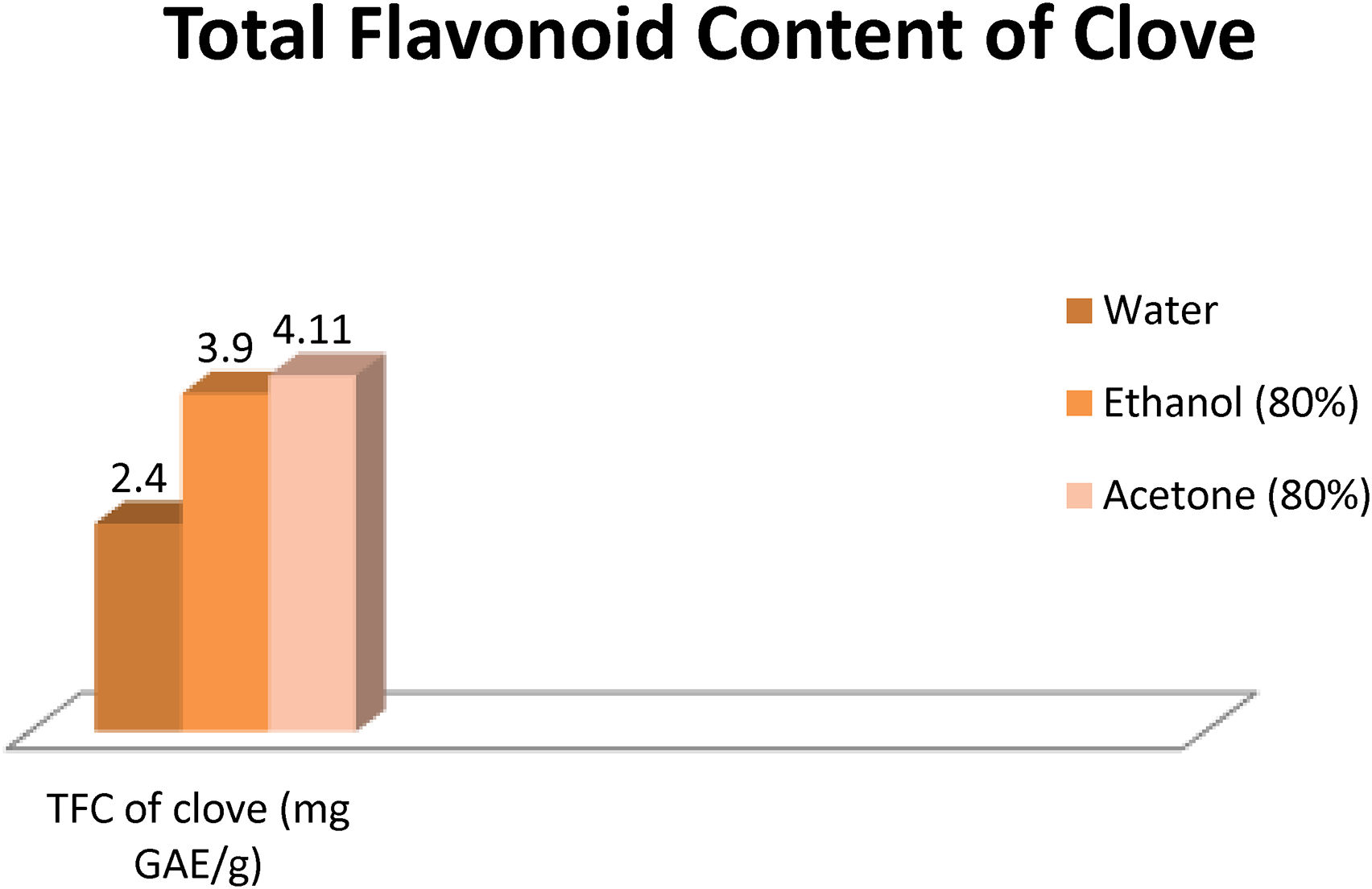
Total flavonoid content.
The clove water extract was shown to include Ellagic acid, benzoic acid, catechol, vanillic acid, gallic acid, rutin, quercetin, myricetin, apigenin, and kaempferol have a strong antioxidant capacity and are beneficial to human health.29,30,35,36
Antioxidant Activity of Clove bud Powder
Antioxidant capabilities of plants, they include hydroxyl groups as part of their structural formulae and are an excellent source of antioxidants.30,37 In this work, DPPH and FRAP of clove extracts in ethanol, acetone, and water at 80%, 80%, and a maximum absorption band of 515-517 nm, respectively, were used to determine their antioxidant activity (Figure 3). It is widely used to evaluate a ability of chemical to function as an antioxidant. 38 Clove's DPPH range was 34.92%–68.09%. Acetone extract had the highest level of radical scavenging activity against DPPH. Mashkor, found comparable outcomes. 39 Hemalatha et al 40 revealed different findings, demonstrating that clove extract in ethanol was more potent than extract in water.

Antioxidant activity of clove.
Clove extract has antioxidant properties and is a persistent the FRAP test was used to quantify an organic free radical with a maximal absorption band of roughly 700 nm, as shown in Figure 3. Clove extracts have antioxidant activity ranging from 599.06 to 4034 M Fe2+/g. Compared to water extract, clove acetone extract had the highest FRAP value. Hemalatha et al 40 found the same outcomes.
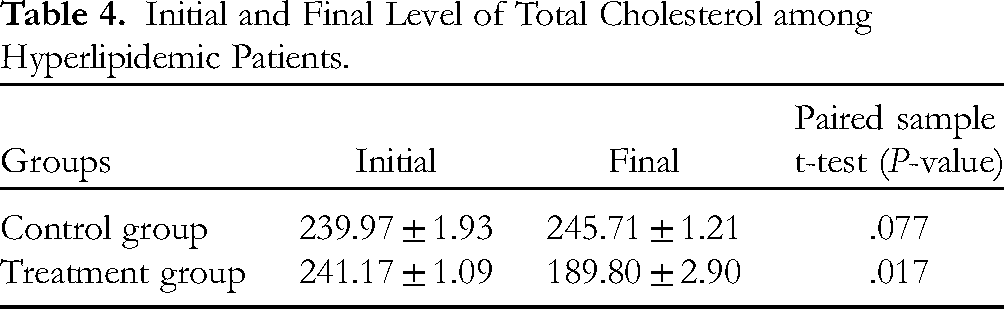
The mean Cholesterol level of Hyperlipidemic patients before and after treatment enrolled in study are presented in the Table 4. The mean cholesterol level of participants in control group before was 239.97 ± 1.93 mg/dL and mean cholesterol level of participants after was 245.71 ± 1.21. The mean cholesterol level of participants in Treatment group before treatment was 241.17 ± 1.09 mg/dL and mean cholesterol level of participants after treatment was 189.80 ± 2.90. The findings showed statistically a non-significant difference in control group with P-value .077 and findings showed statistically a significant difference in treatment group with P-value .017.
Initial and Final Level of Total Cholesterol among Hyperlipidemic Patients.
The mean Cholesterol level of Hyperlipidemic patients before and after treatment enrolled in study are presented in the Table 4. The mean cholesterol level of participants in control group before was 239.97 ± 1.93 mg/dL and mean cholesterol level of participants after was 245.71 ± 1.21. The mean cholesterol level of participants in Treatment group before treatment was 241.17 ± 1.09 mg/dL and mean cholesterol level of participants after treatment was 189.80 ± 2.90. Before adding spices, the mean total cholesterol levels of the hyperlipidemic adults were 241.17 1.09 mg/dL in the cloves group and 239.97 1.93 mg/dL in the control group. These values were significantly higher than the typical ideal range of 200 mg/dL. The cloves group's mean difference in total cholesterol level was found to be 41.47 mg/dL. The total cholesterol level in the Treatment group decreased to the normal range, which was determined to be significant at the 1% level (P .01). The variations in the control group's values were hardly noticeable. Results showed that throughout a two-month supplementation period, spices were more effective in lowering total cholesterol levels. The risk of Coronary Heart Disease is reduced by 1% for every 1% decrease in blood cholesterol. 41
The mean triglyceride levels of Hyperlipidemic patients before and after treatment enrolled in study are presented in the Table 5. The mean triglyceride level of participants in control group before treatment was 193.97 ± 1.93 mg/dL and mean triglyceride level of participants after treatment was 194.00 ± 1.21 and the mean triglyceride level of participants in Treatment group before treatment was 185.6 ± 21.61 mg/dL and mean triglyceride level of participants after treatment was 140.93 ± 14.71. The findings showed statistically a non-significant difference in control group with P-value .061 and findings showed statistically a significant difference in treatment group with P-value .02.
Initial and Final Level of Triglyceride among Hyperlipidemic Patients.

The mean triglyceride levels of Hyperlipidemic patients before and after treatment enrolled in study are presented in the Table 5. The mean triglyceride level of participants in control group before treatment was 193.97 ± 1.93 mg/dL and mean triglyceride level of participants after treatment was 194.00 ± 1.21 and the mean triglyceride level of participants in Treatment group before treatment was 185.6 ± 21.61 mg/dL and mean triglyceride level of participants after treatment was 140.93 ± 14.71. The mean triglyceride levels of the hyperlipidemic patients before and after spice supplementation are shown in table 4.7. According to NCEP, the initial blood triglyceride levels of the hyperlipidemic individuals in the clove, turmeric, and control groups were discovered to be between 150 and 199 mg/dL, which is considered to be borderline high (2001). After two months of consuming spiced muffins, the cloves group's triglycerides achieved a level of 140.93 mg/dL, which was significantly below the ideal range of 150 mg/dL. There was a significant difference between the Treatment group and the control group at the 1% level, according to the comparison. When the final triglyceride levels were compared to the starting values, the cloves group showed a reduction ranging from 43.33 mg/dL to 47.73 mg/dL, which was deemed to be statistically significant at the 1% level.
According to Tarkergari et al, 42 a dried clove bud which was similar to herb powder and is used in South India as a food adjunct. The new product developed was used for supplementation studies for 90 days (3 months) among hyper triglyceridemic subjects after receiving a written informed consent. Biochemical parameters like lipid profile, ie, total cholesterol, low density lipoprotein cholesterol, triglycerides, high density lipoprotein cholesterol, very low density lipoprotein cholesterol, kidney function test, liver function test were assessed. Baseline information, their medical history and 24 h dietary recall was elicited from the subjects through a pretested schedule. The results have shown that the triglyceride levels were significantly P < .05 decreased. 42
The mean Low-Density Lipoprotein (LDL) level of Hyperlipidemic patients before and after treatment enrolled in study are presented in the Table 6. The mean LDL level of participants in control group 172.42 ± 1.20 mg/dL and mean LDL level of participants after treatment was 178.95 ± 1.34 mg/dL. The mean LDL level of participants in Treatment group 174.2 ± 1.96 mg/dL and mean LDL level of participants after treatment was 132.00 ± 1.18 mg/dL. The findings showed statistically a non-significant difference in control group with P-value .08 and findings showed statistically a significant difference in treatment group with P-value .01.
Initial and Final Level of Low-Density Lipoprotein (LDL) among Hyperlipidemic Patients.

The mean LDL level of Hyperlipidemic patients before and after treatment enrolled in study are presented in the Table 6. The mean LDL level of participants in control group 172.42 ± 1.20 mg/dL and mean LDL level of participants after treatment was 178.95 ± 1.34 mg/dL. The mean LDL level of participants in Treatment group 174.2 ± 1.96 mg/dL and mean LDL level of participants after treatment was 132.00 ± 1.18 mg/dL. Table 5.8 shows the variations in the hyperlipidemics’ LDL cholesterol levels before and after spice supplementation. Prior to supplementing with cloves, the LDL cholesterol levels of hyperlipidemic adults were 177.2 mg/dL and were later found to be in the higher range of 160 to 189 mg/dL. After two months of supplementation, it revealed a reduction of 46.36 mg/dL in the groups that received cloves. In the group receiving clove supplements, these values were discovered to be within the nearly ideal range of 100 to 129 mg/dL (NCEP 2001). All of the supplemented groups had statistically significant differences in LDL cholesterol levels at the 1% level. The LDL cholesterol level in the control group increased significantly at a 5% level. The changes in LDL cholesterol levels between the groups and the control group were also found to be statistically significant at the 1% level (P .01), with the clove supplemented group experiencing a greater decline. Cinnamon half a teaspoon daily can reduce LDL cholesterol.
According to pervious study, the purpose of this study was to investigate the effects of clove buds on serum lipids of mice fed with a hypercholesterolemia diet. 60 male albino mice were divided into ten groups six rat each group for 6 weeks: control group, hypercholesterolemia mice group (fed the basal diet containing 1%cholesterol and 16% fat) the other groups of mice fed the same previous hypercholesterolemia diet supplemented with clove (10%, 20%). The present study showed that 1% cholesterol and 16% fat administration caused hypercholesterolemia. Induced hypercholesterolemia caused significantly increases in body weight, TG, TC (in serum and liver), LDL, compared to the control group. The results revealed that significantly increase P < .05 in liver glutathione of hypercholesterolemic mice fed with clove (powder and buds) when compared to the HC group. Our results suggest that the supplementation diet with clove to reduced LDL level 135.09 and showed significant result P < .05 in a hypercholesterolemia disease to prevent from the development the cardiovascular diseases. 43
The mean High-Density Lipoprotein (HDL) level of Hyperlipidemic patients before and after treatment enrolled in study are presented in the figure 4. The mean HDL level of participants in control group before treatment was 40.97 ± 1.9 mg/dL and mean HDL level of participants after treatment was 35.00 ± 1.1. The mean HDL level of participants before treatment was 37.6 ± 1.1 mg/dL and mean HDL level of participants after treatment was 42.93 ± 1.7.

Initial and final level of high-density lipoprotein (HDL) among hyperlipidemic patients.
The mean HDL level of Hyperlipidemic patients before and after treatment enrolled in study are presented in the figure 4. The mean HDL level of participants in control group before treatment was 40.97 ± 1.9 mg/dL and mean HDL level of participants after treatment was 35.00 ± 1.1. The mean HDL level of participants before treatment was 37.6 ± 1.1 mg/dL and mean HDL level of participants after treatment was 42.93 ± 1.7. Figure 4. shows the hyperlipidemics’ mean HDL cholesterol levels both before and after supplementation. HDL cholesterol levels should be between 40 and 60 mg/dL (NCEP 2001). According to another study All groups of hyperlipidemic adults in the current investigation had initial HDL cholesterol levels that were in the desirable range. However, after two months of supplementation, the HDL cholesterol levels in the cloves Treatment groups gradually increased from their baseline levels; the rise was found to range from 0.83 to 3.83, with the group receiving cloves having the largest increase (3.83 mg/dL). For the groups of cloves and turmeric, the differences between the initial and end results were determined to be significant at the 1% level (P .01). The initial and end values of the control group showed no discernible change. Cloves group had a greater increase in HDL compared to the control group, which was statistically significant at the 1% level. Greater than or equal to 60 mg/dL HDL cholesterol levels are regarded as a negative risk factor for HDL since they actually reduce the likelihood of HDL. 44
Conclusion
Enjoying a range of herbs and spices may also help us live a healthier life. Variety is the spice of life. The findings of baking clove-flavored muffins for hyperlipidemic patients suggested that spices may be useful in treating hyperlipidemia and its symptoms. Clove muffins showed a beneficial trend in the hyperlipidemics’ lipid profile control, and extended periods of spice intake may aid to keep lipid levels stable. The findings corroborated the findings of various studies on cardiovascular conditions from other nations by clearly demonstrating the beneficial impact of spices in maintaining the lipid profile and relieving people of uncomfortable sensations in ideal condition. The results showed Clove had higher values of proximate testing and other nutrients like minerals. The results showed Clove had higher antioxidants. Acetone is the state-of the art extractions and applications of Syzygium aromaticum powder. Furthermore, when hyperlipidemic patients were fed muffins of clove, in Treatment group the level of cholesterol 189 mg/dL, LDL 140 mg/dL, triglycerides 132 mg/dL was reduced but the level of HDL 42 mg/dL was increased. This favorable effect on individuals with hyperlipidemia is encouraging, and as it is a dietary intervention, it has no other potential negative effects, demonstrating that adding spices to a diet is a practical and affordable method of managing hyperlipidemia. Let's make it common practice to use spices as a source of nutrients in our diets.
Footnotes
Acknowledgments
I am thankful for the university of Lahore specially diet and nutritional sciences for supporting in terms of facilitation of labs and hospital for conducting this research.
Declaration of Conflicting Interests
The authors declared no potential conflicts of interest with respect to the research, authorship, and/or publication of this article.
Funding
The authors received no financial support for the research, authorship, and/or publication of this article.
Statement of Human and Animal Rights
All procedures in this study were conducted in accordance with the *supervisory committee, research committee of university of Lahore in nutritional and dietetics department* approved protocols.
Statement of Informed Consent
Description of the Research and Your Participation.
You are invited to participate in a research study conducted by Madiha Khan Niazi.
The purpose of this research is to identify the CHARACTERIZATION OF MUFFINS PREPARED WITH CLOVE EXTRACT AND ITS EFFECT ON HYPERLIPIDEMIC ADULT PATIENTS.
There will be no risks associated with this research.
This study will help to identify the therapeutic effect of Syzygium aromaticum. muffins on blood lipid profile among mild to moderate hyperlipidemic patients.
We will do everything we can to protect your privacy. Your identity will not be revealed in any publication resulting from this study.
Your participation in this research study is voluntary. You may choose not to participate and you may withdraw your consent to participate any time. You will not be penalized in any way should you decide not you participate or to withdraw from this study.
Participant's Signature __________________ Date: ____________________
A copy of this consent form should be given to the participant.
Informed Consent
All the patients were informed and permission were taken.
Trial Registration Number
This trial has been registered in the library of university of Lahore.
