



Abstract
This paper explores a diverse field of medicinal plants as potential antiviral agents, and delves into utilization of plant medicine for combating viral infections, emphasizing recent surge in research on natural products from plants as antiviral agents. Specific plant-derived compounds, like phyllanthin and iscador, have been proven to exhibit antiviral properties with great potential for pharmaceutical development. Mechanisms of antiviral action by phytochemicals that are present in medicinal plants, including direct viral inhibition, degradation of viral capsid, and immunomodulation were identified, and a combination therapy of medicinal plants with conventional antiviral drugs were explored. Efficacy of medicinal plants as antiviral agents was critically assessed and revealed that the complexity and variability of herbal formulations, and safety concerns regarding toxicity levels, pose challenges in drug development. However, research on medicinal plants is often hindered by limited understanding of phytochemical mechanisms, the complexity and variability of herbal formulations, and safety concerns regarding toxicity and interactions with other medications. The way forward in harnessing full potential of medicinal plants as antiviral agents underscores the need for further research into developing models that seek to enhance the selectivity of plant extracts in order to minimize toxicity levels.
Keywords
Introduction
The persistent and ubiquitous threat that viral infections pose to global health highlights the urgent need for resourceful approaches to mitigate effects of viruses. Viral infections continue to be a major cause of morbidity and mortality even though conventional antiviral drugs like interferon and ribavirin exhibit some level of effectiveness against some viruses in testing environments. 1 However, numerous viral infections have no effective therapies due to limitations in number of effective commercial antiviral medications, and the emergence of drug-resistant virus strains creating a genetically varied environment. 2
The significant effects posed by viral diseases cannot be overstated. For instance, influenza, characterized by fever, cough and sore throat, results in more than 3 million severe cases and 500,000 fatalities each year, with limitations in the currently available influenza vaccines causing a reduction in their efficiency. 3 Also, human noroviruses are estimated to affect about 19 to 21 million people, with roughly 570 to 800 deaths in the United States annually. 4 A quick spread of Zika virus has led to a greater emphasis on the safety of pregnant women, as the virus, with no known treatment, can pass from a pregnant mother to her fetus and cause fetal microcephaly. 5 With a case-fatality ranging from 25% to 90%, the Ebola virus illness has posed an increasing danger to global health. Ebola virus is resilient and requires high doses of gamma irradiation and UV light for total eradication, and there is currently no known cure or prophylactic medication for infected patients. 6 Emergence and recurrence of viral infections continue to pose a threat because humans or animals tend to exhibit very low levels of immune activity at initial exposures due to the complex behavior associated with viral particles.
Historically, medicinal plants have played a significant role in cultural practices and traditional treatment systems by utilizing the pharmacological diversity of nature to treat a variety of illnesses, including infectious diseases. 7 The varied nature of these compounds and their relatively small molecular sizes allow them to function through many pathways, making them interesting candidates for therapeutic development. 8 Thousands of substances with antiviral activity have been discovered, and recent studies have shown that plant-based medicines can treat virus strains that are resistant to antiviral medications, 9 underscoring the urgent need to research natural antiviral remedies.
Several studies have shown that medicinal plants have antiviral properties. For example, the extract of the plant Andrographis paniculata has been shown to have antiviral activity against several viruses, including influenza, herpes simplex virus, and human immunodeficiency virus (HIV). 10 Similarly, the extract of the plant Echinacea purpurea has been shown to have antiviral activity against several viruses, including influenza, herpes simplex virus, and respiratory syncytial virus. 11 In addition to their antiviral properties, medicinal plants have other potential benefits including immunomodulatory and anti-inflammatory effects, 12 and are generally considered to have fewer side effects than conventional antiviral drugs. 13 Nonetheless, there are common challenges that are encountered in researching plants for antiviral potentials including lack of proper understanding of their mechanisms of action.
This study was designed to thoroughly evaluate and synthesize the existing scientific literature on the use of medicinal plant as potential antiviral agents by systematically reviewing various medicinal plants, their active compounds, preparation methods, mechanisms of antiviral action, combination therapies, and their efficacies using in vitro, in vivo, and clinical studies. The study also assesses the effectiveness and safety, as well as other potential benefits of antiviral agents compared to conventional antiviral treatments.
Method
Study Design
This study was designed to thoroughly evaluate and synthesize the existing scientific literature on the medicinal plants that possessed phytochemicals that were characterized by antiviral properties. Pertinent research publications and clinical trials from reliable databases were part of the review, as well as a comprehensive review of the use of medicinal plants as antiviral agents.
Eligibility Criteria
Peer-reviewed research papers that focused on the use of medicinal plant extracts or phytochemicals as antiviral agents, considering that the articles were published in English, with no restrictions on the date of publication, were eligible for inclusion in this study. This ensured that the study reflects the most relevant findings in the field of medicinal plants as antiviral agents. Papers that were included clearly described the types of medicinal plants, preparation techniques used, active ingredients, dosages, mechanisms of antiviral activity, and the assessment of antiviral efficacy through in vitro, in vivo assays, or clinical trials. Studies that were missing an appropriate antiviral evaluation, without sufficiently rigorous methodologies, and were concentrating only on non-medicinal plant treatments, were excluded from the study. Figure 1 shows the PRISMA flow diagram illustrating the study selection process which resulted in 121 high-quality and pertinent research articles for this review.

PRISMA flow diagram illustrating the study selection process.
Data Sources and Search Strategy
PubMed, Scopus, Springer Link, and Google Scholar were searched for studies on medicinal plant preparations as potential antiviral agents, as well as their efficacy and safety. Key terms used in the search were “medicinal plants”, “mechanisms of antiviral action”, “antiviral agents”, and “phytochemicals”. A manual search was also done by checking reference lists of eligible studies, as illustrated in Figure 1 of the PRISMA flow diagram.
Results and Discussion
Medicinal Plants as Antiviral Agents
Antiviral drugs are a category of medications used for treating viral diseases. 14 Most antivirals target specific viruses, while a broad-spectrum antiviral is effective against a wide range of viruses. 15 There are synthetic and natural antiviral agents. While the synthetic agents are synthesized as conventional drugs, the natural ones are obtained from natural sources. Various parts of plants, including leaves, roots, bark, flowers, seeds, and fruits, can be used for medicinal purposes due to their rich content of bioactive compounds with therapeutic properties. 16 Understanding the strengths and limitations of both synthetic and natural antiviral agents is vital for overcoming the challenges in antiviral drug development and advancing towards more effective treatments for viral diseases.
Population studies have revealed that about 80% of developing countries rely on herbal medicines as the main form of healthcare. 17 Medicinal plants have been used in the form of powders, decoctions, pastes, and tablets. 18 The history of medicinal plants dates back to ancient times and has been an important part of various cultures and civilizations. 19 Table 1 highlights a list of drugs with their phytochemical sources and biological activities.
Phytochemical Drugs and Their Activities.

SARS-CoV-2 – severe acute respiratory syndrome coronavirus 2; HSV- Herpes simplex virus.
The relationship between humans and the use of medicinal plants is well documented through written records, extant monuments, and original plant remedies. In the Middle Ages, techniques of healing, growing medicinal plants, and preparing medicines were widespread in monasteries, and treatment was based on the use of various herbal remedies. 38 The ancient Chinese, Egyptians, Indians, Greeks, Romans, and other civilized people had extensive knowledge of medicinal plants, which was passed down through generations and ultimately contributed to modern drug therapy. 39 The use of native plants for medicinal purposes is common in all continents, with evidence of use during prehistoric times. 40 The historical use of medicinal plants is also supported by archaeological excavations that have uncovered remnants of medicinal plants such as opium poppy, ephedra, and cannabis dating back 60,000 years. 41 The contribution of traditional medicine, including the use of medicinal plants, to modern science and medicine is important as, today, around 40% of medicines are based on natural and traditional knowledge. 42
Recent advances in medicinal plant research have focused on the search for new drugs and active ingredients. A bibliographic study analyzing over 100,000 publications indexed in the Scopus database up to 2019 reveals that global research trends are focused on identifying the active ingredients of medicinal plants. 43 This is further supported by the increasing interest in the use of herbal-based natural products due to the limitations of synthetic medicines and their increasing contraindications. 44 Despite their potential, research on plant-derived antiviral agents has yielded limited success. Compounds such as alkaloids, flavonoids, polyphenols, and tannins from vascular plants have been studied for their potential antiviral properties, specifically in the context of COVID-19 treatment. Notably, drugs like emetine, hernandezine, hydroquinidine, isoliensinine, and others sourced from plants have shown remarkable effectiveness in completely inhibiting the SARS-CoV-2 virus. 45 In the quest to identify potential targets within the SARS-CoV-2 virus using such plant-based drugs, various candidates have emerged, including the spike protein (S), ACE2 receptor, TMPRSS2 protease, cathepsins B and L, PLpro and Mpro proteases, RdRp enzyme, NSP14 exonuclease, lipid regulatory pathways, endocytic pathway, lysosomal trafficking pathway, and immune response modulators. These targets hold promise for inhibiting viral entry, replication, and disease progression. 45
The rising threat presented by Dengue virus (DV), which continues to spread to newer regions globally and causing almost 100 million symptomatic cases each year, 46 has prompted researchers to explore for remedies. Tahir et al employed virtual ligand screening techniques in their study to identify phytochemicals from medicinal plants that are capable of blocking all four serotypes of DV. 47 The study focused primarily on non-structural DV proteins as potential targets for inhibiting viral infection, replication, and host interactions. Molecular docking techniques played a pivotal role in identifying antiviral agents that were derived from plant extracts and enabling the evaluation of drug potential, binding behavior, and stability. This approach led to the discovery of three noteworthy compounds: Canthin-6-one 9-O-beta-glucopyranoside, Kushenol W, and Kushenol K. 47 Patil et al conducted a study that evaluated the antiviral activities of commercially available Carica papaya leaves extract (CPLE) products and various CPLE formulations to further support the efficacy of phytochemicals against DV by using chikungunya virus (CHIKV) and Dengue virus type 2 (DENV-2). 48 The results showed increased anti-Dengue efficacy by combining nanoparticle studies with the CPLE products.
Porcine reproductive and respiratory syndrome (PRRS) is one of the major viral diseases in pigs, and it is characterized by reproductive failure in sows and respiratory difficulties in piglets and growing pigs. 49 A study conducted in Thailand investigated seven medicinal plants for their potential antiviral properties against PRRS. 50 Among the plant extracts, Tiliacora triandra demonstrated strong inhibition for PRRSV infectivity in vivo, with a minimum inhibitory concentration (MIC) of 1250 µg/mL. In contrast, Caesalpinia sappan extract exhibited potent inhibition for PRRSV replication, with an MIC of 625 µg/mL in MARC-145 cells. 50 Phytochemical analysis was later performed to reveal higher phenolic content in these plants and was associated with the observed antiviral activity. The high phenolic content contributed to the extracts’ antiviral properties by acting as reducing agents and hydrogen donors, facilitating the complete destruction of the viruses. 51 Glycyrrhizal polysaccharide (GCP), a natural plant-active polysaccharide derived from the traditional Chinese medicine licorice root, was studied for potential antiviral activity against PRRSV. In another study, GCP was shown to inhibit PRRSV replication in a dose-dependent manner, as well as inhibit mRNA expression of the receptor genes CD163 and NF-κB p65. The GCP, however, elevated mRNA expression of SLA-7 gene. 52 These results suggest that GCP has potential as a preventive and therapeutic agent for PRRSV. Ke et al explored sanguinarine, a benzophenanthridine alkaloid that is found in various plants such as Macleya cordata, and observed that the alkaloid can effectively inhibit PRRSV proliferation by targeting multiple stages of the virus life cycle, including internalization, replication, and release. 53 The results highlight a promising potential of sanguinarine as a novel candidate for anti-PRRSV drug development. All put together, there is a continuously growing untapped potential of many plants with antiviral properties in the areas of therapeutics and viral research.
Diverse compounds or phytochemicals, including flavonoids, alkaloids, terpenoids, polyphenols, and polysaccharides with antiviral potentials, have been discovered to be present in medicinal plants like Andrographis paniculata and Dioscorea bulbifera. Reverse transcriptase and protease inhibitors that are naturally occurring in various medicinal plants also provide unexplored reserves of antiviral compounds. 54 According to a survey, 25% of commonly used medicines contain compounds that were isolated from plants. 54 Notable examples of specific phytochemicals with demonstrated antiviral activity include quercetin, resveratrol, curcumin, berberine, and echinacea polysaccharides. 55
Mechanisms of Action of Plant Antivirals
Plant antivirals are diverse and can target different stages of the viral life cycle. Several studies have highlighted possible mechanisms of action that plant antivirals exhibit including inhibition of viral attachment to host cell, inhibition of viral replication within the host cell, and direct viricidal effect against the virus. 56 Table 2 summarizes suggested mechanisms of action of some antiviral plants against different viruses based on in vitro studies.
Mechanistic Activities of Some Medicinal Plants with Antiviral Properties.
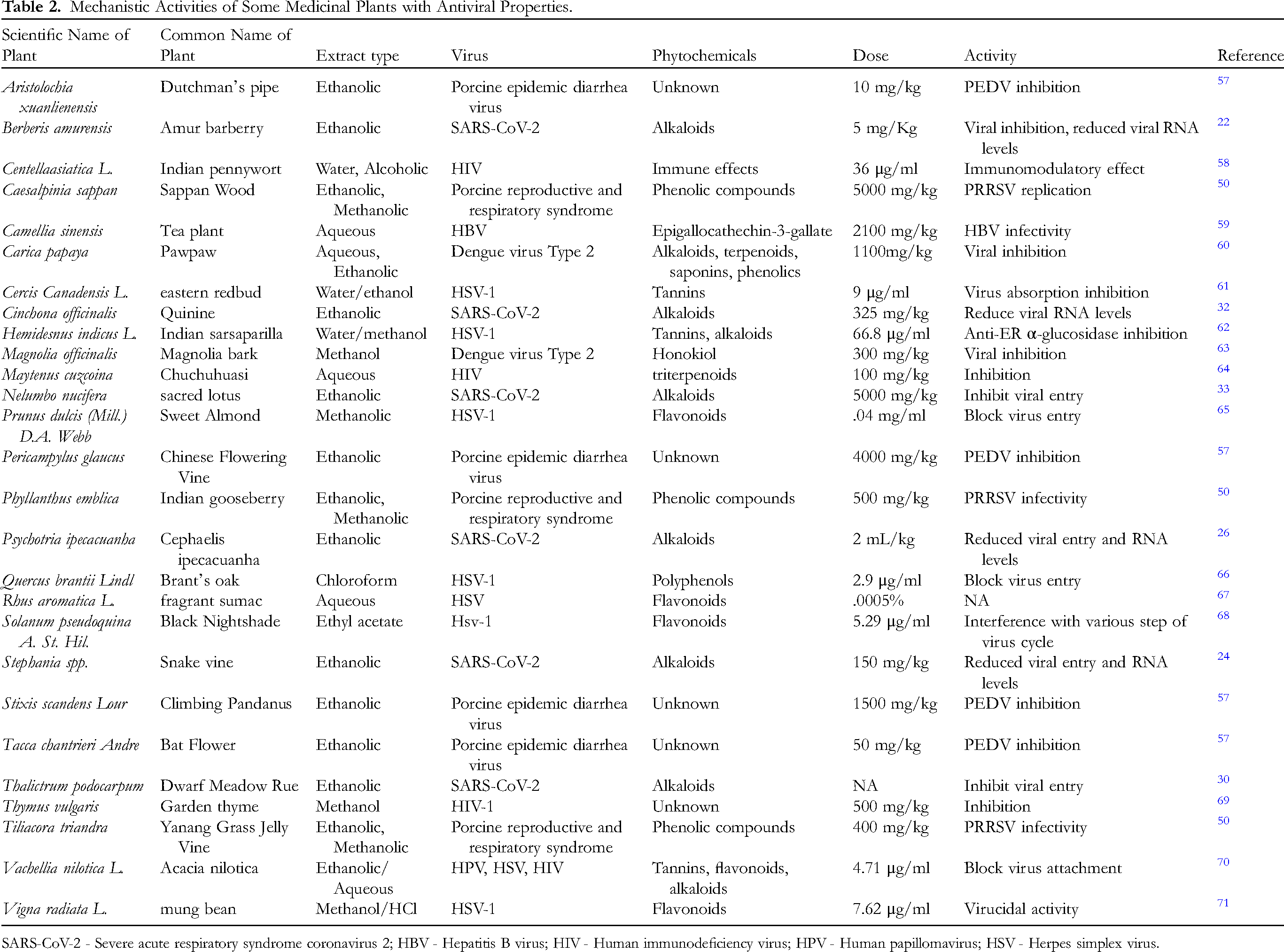
SARS-CoV-2 - Severe acute respiratory syndrome coronavirus 2; HBV - Hepatitis B virus; HIV - Human immunodeficiency virus; HPV - Human papillomavirus; HSV - Herpes simplex virus.
Understanding the mechanisms of action of phytochemicals would provide a wider range of relevance within the context of antiviral research. 72 Thus, knowledge of mechanisms informs drug development, enabling production of new pharmaceuticals and health products. Additionally, the knowledge of mechanisms aids in disease management by highlighting therapeutic targets and guiding optimal usage of plant antivirals through dosage determinations, and formulation and combination decisions. Furthermore, the knowledge also supports personalized nutrition recommendations that are geared towards individual health, and enhances safety assessments by predicting potential interactions and adverse effects. 73 Below are major mechanisms through which some plants exert antiviral activity.
Degradation of Viral Capsid
Viral capsid is one of the targets of medicinal plants in the area of antiviral activity. Plant antimicrobials have been shown to target the viral capsid, leading to the inactivation of non-enveloped viruses and the degradation of viral RNA. 74 A study by Damian et al investigated the antiviral properties of allspice oil, lemongrass oil, and citral against nonenveloped murine norovirus (MNV), with allspice oil having the highest antiviral activity. 74 To understand allspice oil's mechanism of action, the researchers used RNase I assay to measure the integrity of viral capsids and RNA, which revealed that the allspice oil exerts its antiviral effects by directly disrupting the capsid and inhibiting viral replication. 74 Abdul et al investigated the antiviral properties of different essential oils and confirmed that the primary mechanism underlying the antiviral activity of most essential oils was the disruption of viral capsids and inhibition of viral replication. 75 Disruption of viral capsid prevents viral attachment and entry into host cells by stopping capsid-mediated adsorption and subsequent viral replication. 75 The study provided further support for direct mode of action of essential oils as promising antiviral agents by degrading the viral capsid.
Direct Viral Inhibition
Another mechanism of antiviral plants involves the direct interference of phytochemicals at various stages of the virus replication cycle, effectively preventing virus infection and replication. Some plant compounds target viral attachment proteins or receptors on host cells and prevent the virus from initial binding to its cellular targets. 76 For example, certain flavonoids and lectins, that are found in medicinal plants, have been shown to inhibit virus attachment to host cell surfaces by binding to viral envelope proteins or cell receptors. 76 After attachment, viruses often fuse with the host's cell membrane and release their genetic material into the cell. A study by Egor et al demonstrated that plant compounds can interfere with viral fusion by interacting with viral fusion proteins or changing the lipid composition of the cell membrane, and thereby inhibiting viral entry. 77 A calcein release assay, which measures cell viability and membrane integrity was used, and compounds like piperine, tabersonine, hordenine, lupinine, and quinine were reported to demonstrate potent viral inhibitory effects. 77 A team of researchers also explored the anti-RSV activity of a compound called 3,4- DCAME that was isolated from different plants of traditional Chinese medicine. 3,4- DCAME was found to inhibit RSV entry and infection by directly blocking the binding activity of the ectodomain of RSV fusion (F) protein to host cell membrane. 78 Molecular docking techniques in a study that employed 110 phytochemicals from six different plants, identified 5 compounds; racemoside A, ashwagandhanolide, withanoside VI, withanoside IV, and racemoside C, that have great antiviral potentials based on their binding affinities. 79 Further investigations into the essential pharmacophore features and ADMET profiles of the compounds, followed by Molecular Dynamics (MD) simulations, proved that these compounds could inhibit membrane fusion between the virus and the host cell membrane. 79 After a virus fuses and invades the host cell, they hijack the cellular machinery to replicate their genetic material and produce new viral progeny. 80 Several studies have shown that certain plant compounds can affect stages of the viral replication cycle such as viral genome replication, transcription, and protein synthesis. For example, a molecular docking study of epigallocatechin gallate (EGCG), a unique plant polyphenolic compound, has been shown to inhibit viral RNA or DNA polymerase. 81 Additionally, alkaloids like cherylline, anisomycin, chloroquine, emetin, were found to interfere with viral protein synthesis in viruses like Dengue virus, Zika virus and SARS-CoV-2. 82 Following replication, newly synthesized viral components must assemble into complete viral particles and be released from infected cells to initiate new infection cycles. 83 Some natural compounds can disrupt these late stages of the viral replication cycle by interfering with viral assembly or by inhibiting viral release from host cells. Compounds such as homoharringtonine (HHT), a natural product first discovered in Cephalotaxus harringtonii, showed evidence of targeting the late stage of viral replication in vesicular stomatitis virus (VSV) according to a study conducted by Hui-Jun et al. 84 Time-of-addition studies were performed to determine the moment in the VSV replication cycle at which HHT exerts its antiviral effects, and was observed that pretreatment of cells with HHT for 2 h before VSV infection produced a minimal inhibitory effect and suggesting that HHT does not inhibit the viral entry process but rather the late stage. 84
Induction of Apoptosis
A virus manipulates a cell's machinery to evade immune response in order to facilitate viral replication. Certain plant compounds, however, have the ability to induce apoptosis in infected cells and thereby reduce the spread of the virus and limiting disease progression. These compounds not only limit viral replication by promoting the removal of infected cells, but also help resolve inflammation and repair tissue. 85 Plant compounds such as flavonoids can induce apoptosis in infected cells through various mechanisms such as activation of proapoptotic signaling pathways, inhibition of antiapoptotic proteins, and modulation of mitochondrial function. 86 A study on the apoptosis-inducing effects of extracts from desert plants demonstrated the potential of plant extracts to induce apoptosis in human cells. 87 In this study, semi-quantitative reverse transcription-polymerase chain reaction was used to later measure the expression levels of various apoptosis-related genes after treatment with each plant extract. Results showed that aqueous extracts of Origanum dayi and Ochradenus baccatus were capable of inducing apoptosis in HepG2 cells through modulation of mitochondrial pathway. 87
Immunomodulation
Medicinal plants can be used to enhance the host's immune response by serving as a source of bioactive compounds to combat viral infections through modulation of immune function. These compounds can stimulate innate and adaptive immune responses, providing the host with a potent defense against viral invaders. 88 A study conducted by Safa et al focused on the comprehensive metabolic profiling of the roots and herbs of three commonly used Echinacea species: E. angustifolia, E. purpurea, and E. pallida. 89 The study identified 56 metabolites; notably, E. angustifolia root exhibited unique chemical constituents with cynarin and 2-undecene-8, 10-diynoic acid isobutylamide shown to possess similar immunomodulatory responses including the upregulation of inflammatory pathways and cytokine production. 89 A review was conducted by Meseret et al on the efficacy of natural and synthetic immunomodulators to treat immunomodulatory diseases which include viral infections. 90 Key bioactive molecules like polyphenols, terpenoids and alkaloids, showed properties of immunosuppressants and immunostimulants through the induction of cytokines and phagocyte cells while inhibiting iNOS, PGE, and COX-2 synthesis. 90
Antioxidant Effects
Free radicals can increase the risk of inflammation and various disease conditions. In living organisms, reactive oxygen species (ROS) and reactive nitrogen species (RNS) have the potential to harm DNA and cause lipid and protein oxidation within cells.91,92 Plants have developed sophisticated defense mechanisms to counteract the harmful effects of free radicals, which involve enzymes like catalase and glutathione reductase, as well as compounds such as ascorbic acid and tannins. 93 Antioxidants play a crucial role in slowing down or stopping the oxidation of vulnerable substances, even at concentrations lower than those of the substrates. 92 During viral infections, oxidative stress induced by ROS can cause tissue damage and contribute to disease severity. Medicinal plants rich in antioxidants therefore play vital roles in combating viral infections by scavenging ROS and mitigating oxidative stress.94–96
Synergistic Interactions Between Medicinal Plants and Conventional Antiviral Drugs
Pharmacological studies of combination effects can be examined at the level of molecular targets, disease pathways, cellular processes, and patient responses, 97 and can produce 4 different types of outcomes: synergy, additivity, indifference and antagonism. Different combinations of plants can cause variations in therapeutic effects, 98 and has led to an increased interest in exploring the therapeutic potential of combining medicinal plant extracts with existing antiviral treatments.
An in vivo study sought to determine the type of interaction that would result from the combination of andrographolide, the active compound in Andrographis paniculata, and an influenza virus entry inhibitor CL-385319 in mice infected with a lethal dose of H1N1 influenza virus. 99 Mice that were treated with the combined test compounds had the highest survival rate relative to those that were administered only a single type of test compound. Mechanistic analysis suggested the involvement of the NF-κB and JAK-STAT signaling pathways in andrographolide activity. The findings indicated that combining a virus entry inhibitor with an immunomodulator like andrographolide could be a promising therapeutic strategy against influenza. 99 Also, Kara et al conducted a study aimed at exploring potential antiviral agents against measles virus (MeV) by examining a polyphenol-rich extract (PP) from a seaweed native to Mexico. 100 PPs from Ecklonia arborea and Solieria filiformis showed the highest selectivity index (SI) and low cytotoxicity levels. Further testing of these extracts in a combination therapy with sulfated polysaccharides (SP) and ribavirin showed a synergistic effect, especially when combined with low concentrations of Solieria filiformis SP. 100 The study highlighted the potential of polyphenol-rich seaweed extracts as antiviral agents, especially in combination therapy. Another in vitro study by Sidra et al explored the potential effects of Nymphaea alba extracts against hepatitis C virus (HCV) demonstrated anti-HCV activity via HCV NS3 gene suppression. 68 Combination of the extract with boceprevir, a standard NS3 protease inhibitor, gave an increased effect implying a synergism between the plant extract and the conventional antiviral drug.
Efficacy and Safety of Medicinal Plants as Antiviral Agents
Efficacy is an essential aspect of medicinal plants research that is evaluated through rigorous clinical trials by comparing the herbal remedies with placebos or established treatments. 69 However, herbal medicines introduce unique challenges to this evaluation due to their complex mixtures of active compounds that often interact in nuanced ways, and therefore making it difficult to decipher their overall antiviral properties. 101
Phyllanthus amarus is a leafy plant belonging to the Euphorbiaceae family that is known for its diverse therapeutic potential and has a long history of use due to its wide range of secondary metabolites that confer important medicinal properties. 102 In vitro studies by Yeh et al explored the effects of aqueous extract of P. amarus against hepatoma cell line (HepA2) transfected with HBV DNA. 103 It was observed that the extract inhibited cellular proliferation and suppressed Hepatitis B surface antigen (HBsAg) production and its gene expression. 103 Anti-hepatitis B activities were also observed by another in vitro study conducted by Venkateswaran et al using aqueous extract of P. niruri, which could inhibit the activity of DNA polymerase of HBV. 104 Despite the proven antiviral activity of this plant through in vitro studies, it is crucial to confirm efficacy via in vivo or clinical studies. A preliminary study conducted by Thyagarajan et al explored the effects of P. amarus on 37 human HBV carriers for a 30-day duration and observed no toxic effects throughout the treatment period. 105 In another study, Blumberg et al treated woodchuck hepatitis virus (WHV) animal carriers with P. amarus extracts and observed that approximately 60% of the carriers had the virus cleared during the study period. 106 Thus, P. amarus has demonstrated great efficacy in its ability to fight viruses, and has been proven to be safe.
Iscador, a fermented mistletoe extract, has been a focus of research and was reported to have shown anticancer and antiviral effects, making it a crucial option in drug development. A clinical trial by Chernyshov et al assessed the effects of iscador on recurrent respiratory infections (RRIs) and observed a significant decrease in the frequency of RRI relapse. 107 Despite the efficacy of iscador in causing significant antiviral activity, side effects were reported in different clinical trials which must be considered in utilizing this plant extract for therapeutic purposes. 108
Balm mint or lemon balm, scientifically known as Melissa officinalis, is a perennial plant in the Lamiaceae family. It has a long history of being used as a drug, especially in traditional European medicine. 109 It is well known for its calming effects and use in aromatherapy and herbal teas, 110 but recent research has revealed its potential antiviral properties by exploring the inhibition of the aqueous extract on HIV-1 activity and was found to exhibit a high efficiency even at low concentrations in T cell lines and macrophages. 108 Dubois et al also observed that Rosmarinic acid extracted from M. officinalis, inhibited HIV-1 integrase activity and viral replication, 111 and was also shown to be effective for the treatment of herpes simplex labialis (HSL). 112
Andrographis paniculata, commonly known as green chiretta, is an annual herbaceous plant in the family Acanthaceae and native to India and Sri Lanka. 113 Several studies have explored the antiviral potential of extracts from A. paniculata against viruses, an example of which was conducted in vivo to investigate the anti-influenza activity of andrographolide, an active compound in the plant extract. It was observed that andrographolide treatment improved survival rates with a reduction in lung pathology and viral loads and suppressed inflammatory cytokine expression. 99 During the 2020 coronavirus disease (COVID-19) outbreak, Thailand's Ministry of Health approved the use of extracts from A. paniculata in alternative treatment programs. 114 In the following year, COVID-infected prison inmates were administered with green chiretta in a clinical trial which presented promising results, leading to a decision by the Cabinet of Thailand to legalize the administration of this extract to asymptomatic COVID patients. 115
Several other studies have also shed light on the potential of specific plant extracts to inhibit viral infections, particularly SARS-CoV-2 virus responsible for COVID-19. For instance, extracts from plants like Nelumbo nucifera and Thalictrum podocarpum have demonstrated promising results by effectively preventing the entry of the SARS-CoV-2 virus into host cells. This inhibition of viral entry is a critical step in combatting viral invasion and its subsequent destruction.30,32 The plants have been found to contain elevated levels of alkaloids, which play a key role in their antiviral activities. Additionally, research has highlighted the antiviral properties of Camellia sinensis, commonly known as the “Tea plant”. Specifically, it has shown potential in inhibiting the hepatitis B virus (HBV) and thus has gained popularity as an herbal drink with potential therapeutic benefits. 59 Phytochemical studies of Camellia sinensis have revealed the presence of compounds like epigallocatechin-3-gallate, which are thought to be responsible for the ability of the plant to inhibit HBV infectivity. The herpes simplex virus (HSV-1 and HSV-2), known for its ability to persist in the body by entering a latent state within neurons, has been the focus of research seeking effective antiviral solutions. In this quest, harmane, a phytochemical falling under the β-carboline indole alkaloids class, has emerged as a promising candidate. 29 Harmane has shown remarkable potential in combating herpes simplex virus infections and has been found to downregulate the production of reactive oxygen species (ROS) induced by HSV infection through the NF-κB and MAPK pathways. 29 These findings emphasize the promising potential of medicinal plants in antiviral therapy and shed light on specific compounds like harmane with potential as antiviral agents.
The efficacy of medicinal plants in combating viral infections in pigs, particularly porcine reproductive and respiratory syndrome virus (PRRSV), has garnered attention due to the substantial impact of this infection on commercial pig farming in many countries. Notably, PRRSV infection often leads to high mortality rates among pig populations. 116 In the pursuit of effective antiviral solutions, Arjin et al conducted in vitro studies that revealed the promising antiviral activity of ethanolic plant extracts from Phyllanthus emblica, commonly known as the Indian gooseberry plant. 50 The extract demonstrated significant efficacy against PRRSV, among six other extracts tested. 50 Similarly, Trinh et al conducted a study in Vietnam, assessing the antiviral potential of 17 traditional medicinal plants in vitro of which 14 exhibited significant activity against the porcine epidemic diarrhea virus. 57 These studies highlight the potential of medicinal plants as a valuable resource in the quest to mitigate viral infections in pigs, offering hope for more effective strategies to combat diseases like PRRSV and porcine epidemic diarrhea virus within the swine industry.
When delving into the promising field of medicinal plants as potential antivirals, it is important to consider aspects of safety for human use. Many research studies have relied on in vitro screening and animal models for experimentation, yet the divergence between animal and human systems raises questions about the direct applicability of such findings. In evaluating the safety of potential antiviral agents derived from medicinal plants, a cytotoxicity study is an important technique to consider in order to understand toxicity levels a plant extract would pose on the human system. For instance, Chen et al conducted cytotoxicity studies on the antiviral phytochemical harmane and found a low CC50 value of 70 µM in HeLa cells, indicating a selectivity index of about 10. 29 This relatively low selectivity index suggests possible toxicity and raises concerns about its safety in humans. 29 Similarly, Arjin et al conducted cytotoxicity studies on Phyllanthus emblica, revealing a CC50 value of 78.1 ug/mL and low selectivity for PRRSV in vitro, indicating higher toxicity levels. 50 This observation implies that the plant extract might impact both the virus and host cells when administered in vivo, particularly in pigs. 50 Furthermore, Trinh et al conducted cytotoxicity assays on ethanolic extracts of the 14 antivirally active medicinal plants, and their findings indicated that such extracts tend to exhibit higher cell toxicity, as evidenced by lower maximum nontoxic concentrations (MNTC) compared to aqueous extracts. 57 This suggests that despite their greater antiviral potential, ethanolic extracts from such plants may pose more risk for in vivo administration. These studies collectively underscore the need for comprehensive safety assessments when considering the use of medicinal plant extracts as antiviral agents in humans, taking into account factors such as selectivity, toxicity levels, and the choice of extraction method.
This paper contributes significantly to the field by reviewing the antiviral properties of various medicinal plants and identifying specific compounds with potential for pharmaceutical development. It also provides valuable insights in exploring synergistic effects when combining plant extracts with conventional antiviral drugs. However, due to the exclusion of non-open-access research papers, the study does not cover all medicinal plants that have been investigated for antiviral properties.
Conclusion
The effectiveness of many medicinal plant extracts in preventing replication of viruses including SARS-CoV-2, herpes simplex, PRRSV and porcine epidemic diarrhea virus has demonstrated and highlighted their potential as natural and effective remedies. However, as we project forward and contemplate the future of medicinal plants as potential antiviral agents, it becomes evident that this endeavor is multifaceted. While efficacy stands as a critical aspect, it is just one facet of the equation. Safety concerns loom large on this path, necessitating thorough research and clinical trials to evaluate potential risks and toxicity levels associated with medicinal plant extracts. It is thus imperative to strike a balance between harnessing the proven efficacies of medicinal plants and addressing safety concerns comprehensively.
Footnotes
Acknowledgements
We acknowledge the support of the West African Centre for Cell Biology of Infectious Pathogens (WACCBIP), the Department of Biochemistry, Cell and Molecular Biology and the Department of Plant and Environmental Biology, School of Biological Sciences, University of Ghana.
Authors’ Contributions
G.A; Manuscript draft, O.Q and E.E.E.A; Critical review and editing. All authors read and approved the final version of the manuscript.
Declaration of Conflicting Interests
The authors declared no potential conflicts of interest with respect to the research, authorship, and/or publication of this article.
Funding
The authors received no financial support for the research, authorship, and/or publication of this article.

