



Abstract
Keywords
Highlights
The potential mechanism of topical use of HXZQOL in the treatment of MBD was explored for the first time.
HXZQOL contains active components like quercetin, apigenin, ursolic acid and luteolin, etc, which demonstrate anti-inflammatory properties by modulating key targets such as JUN, IL-6, TNF, and VEGFA within the IL-17, AGE-RAGE, and TNF signaling pathways.
The fact that these primary components are derived from Patchouli and Perillae folium provides a basis for refining the formulation of HXZQOL for MBD.
Introduction
In spring and summer, the human body is easily bitten by mosquitoes. Mosquito saliva is injected into the body skin, which contains allergens, antigenic proteins, adenosine deaminase, and other allergy-related proteins. 1 These substances can cause local or systemic allergies to the human skin, such as papules, wheal, edematous erythema, blisters, papules, etc After being bitten by mosquitoes and insects, there are also symptoms such as stinging and itching, 2 which bring trouble to people's lives. This type of dermatitis is called mosquito bite dermatitis (MBD) and is a common summer disease in dermatology. 3 Currently, there are three main methods for preventing and controlling MBD: useing blocking and repelling mosquitoes, such as using mosquito nets, spraying mosquito repellent on exposed skin, such as DEET 4 and catnip essential oil, 5 etc; anti-inflammatory, antipruritic, analgesic and antimicrobial drugs are applied to damaged skin to alleviate symptoms, such as menthol, 6 topical antihistamines, 7 dyclonine, 8 glucocorticoids, 9 etc; oral antihistamines 10 such as paracetamol and loratadine can reduce the irritancy of inflammatory reactions.
Xie 11 studied antipruritic and anti-inflammatory drugs used for mosquito bites and found that glucocorticoids (such as dexamethasone, mometasone furoate), antihistamines (such as diphenhydramine, chlorpheniramine maleate), and local anesthetics (such as dyclonine) all have inhibitory effects on MBD. However, long-term use of glucocorticoids has the risk of inhibiting growth and bone development in children. 12 Traditional Chinese Medicine (TCM) has played a role in preventing and treating skin diseases for hundreds of years.13,14 In folk medicine, natural herbs containing flavonoids, iridoids, terpenes, and alkaloids are used as inhibitors for contact dermatitis. 15 A large number of experiments have demonstrated16,17 that mint leaf extracts (mainly including mint oil, flavonoids, phenolic acids, quinones, triterpenoids, etc) have significant biological activities such as antibacterial, anti-inflammatory, anti-swelling, antioxidant properties. Clinical studies 18 have shown that Peppermint leaf juice has a unique therapeutic effect on MBD in children. Peppermint cream containing mint leaf extract can be applied to mosquito bitten skin to alleviate itching and swelling. Liu 19 prepared an anti MBD tincture useing ethanol extracts of Phellodendri chinensis cortex, Lycii cortex, Artemisiae argyi folium, Rubiae radix rhizoma, and Root of cattle tail.
Huoxiang Zhengqi is a famous prescription in TCM, which was first recorded in the Song Dynasty. It is mainly used to treat diseases such as colds and diarrhea. 20 Huoxiang Zhengqi Oral Liquid (HXZQOL) is mainly made of ten kinds of herbs, including Atractylodis rhizoma, Citri reticulatae pericarpium, Magnoliae officinalis cortex, Angelica, Poria, Arecae pericarpium, Pinelliae rhizoma, Licorice, Patchouli and Perillae folium. Among them, Magnoliae officinalis cortex, 21 Patchouli 22 and Perillae folium 23 have been proven to the effects of repelling mosquitoes. A large number of studies24–26 have proved that these herbs have antibacterial, anti-inflammatory and antipruritic effects. In recent years, HXZQOL has been sprayed or applied on the skin to treat MBD of children in clinical medical practice, 27 but there have been no relevant mechanism research reports. Due to the multiple herbs in the original formula of HXZQOL, if it is developed as a treatment for MBD, what are the main effective herbs?
Network pharmacology has been proven to help elucidate the multi-target mechanisms of TCM in treating diseases. This study combines network pharmacology and molecular docking with in vitro cell experiments to explore the active compounds, targets and potential mechanisms of HXZQOL against MBD. At the same time, it provides a theoretical basis for the redevelopment of HXZQOL prescriptions as local treatment formulations for MBD. The Technology road was shown in Figure 1.
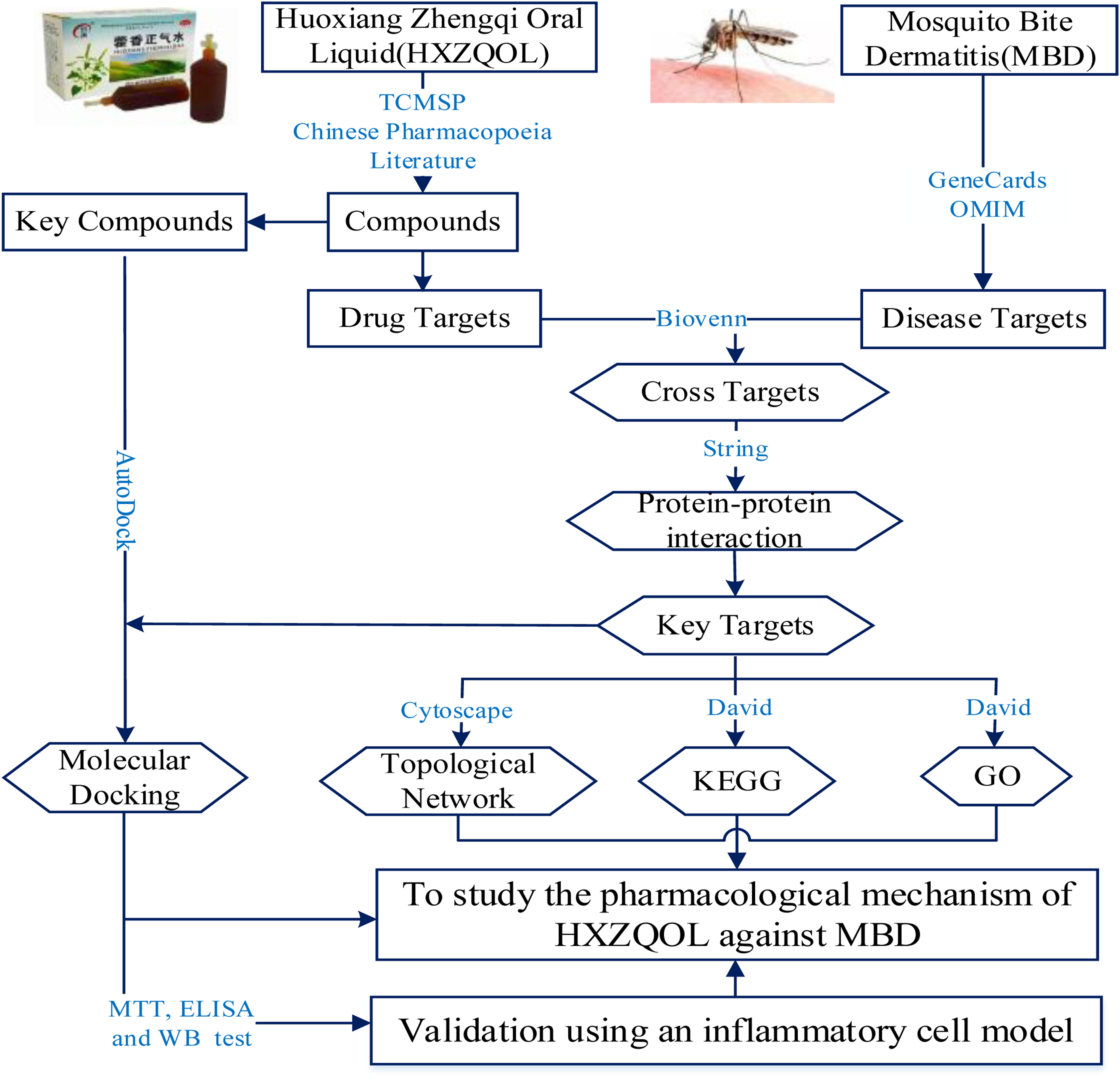
Technology diagram of the research.
Materials and Methods
Collection of Active Compounds and Targets of HXZQOL
By referring to the Chinese Pharmacopoeia (2020 edition, Ⅱpart), 28 the formula of HXZQOL contains 10 kinds of medicinal herbs, including Atractylodis rhizoma, Citri reticulatae pericarpium, Magnoliae officinalis cortex, Angelica, Poria, Arecae pericarpium, Pinelliae rhizoma, Licorice, Patchouli and Perillae folium. With these 10 kinds of herbs as keywords respectively and the Drug Likeness (DL) ≥ 0.18 as the limiting condition, the active compounds and corresponding targets were screened in the Traditional Chinese Medicine Systems Pharmacology Database and Analysis Platform (TCMSP). 29 We selected 18 kinds of compounds with anti-pruritic, anti-inflammatory and anti-allergic functions in Licorice, such as glycyrrhetinic acid, 30 licorice flavonoids, 31 glycyrrhizic acid, 32 glycyrrhizin 33 and glycyrrhizin chalcone, 33 in addition, compounds in Patchouli oil and Perillae folium oil were supplemented by literatures.34,35
Collection of MBD - Targets and Cross Targets of HXZQOL-MBD
The targets associated with MBD were queried in GeneCards (https://www. genecards.org/) and OMIM (https://omim.org/) database using the keyword “mosquito bite dermatitis”, and duplicate targets were eliminated. By importing target information of HXZQOL and MBD into Biovenn platform and drawing Venn diagrams, the cross targets between HXZQOL and MBD were obtained.
Construction of “HXZQOL - Compounds - Cross Targets” Network
The “HXZQOL - compounds - cross targets” network diagram was constructed using Cytoscape software. In the network, nodes represent targets or active compounds, and they are connected to each other by lines. The strength of nodes and connections in a network is measured by the degree value. The higher the degree value, the more targets are connected, and they are more important in the network, thus screening out the main compounds of HXZQOL against MBD.
Construction of Protein - Protein Interaction (PPI) Network
The potential targets obtained were input into String database(https://string-db.org/), and the PPI network was obtained after setting the confidence level > 0.4, hiding free nodes, setting the species to human (Homo sapiens) and confidence level > 0.4 (medium confidence). The obtained network files were imported into Cytoscape for topology analysis, and the degree of target was analyzed by the “Network Analysis” module. Based on the degree values, key targets for HXZQOL to act on anti MBD were identified.
Enrichment of GO Function and KEGG Pathway
Using David's online tool (https://david.ncifcrf.gov/) and related software packages, Gene Ontology (GO) functional annotation and Kyoto Encyclopedia of Genes and Genomes (KEGG) signaling pathway analyses were performed on cross targets of HXZQOL-MBD, and results with P < .05 were considered statistically significant.
Molecular Docking Between Key Compound and Core Target
The Mol2 file of the molecule structure of the compound was downloaded from the PubChem database (https://pubchem.ncbi.nlm.nih.gov). The PDB structure of the protein was obtained from RCSB PDB database (http://www1.rcsb.org). The water molecules and small molecule ligands of the protein were removed by PyMoL software, and the protein was hydrogenated by AutoDock Tools software. The structures of compounds and proteins were converted into Pdbqt file format for preservation. The molecular docking between the compound and the protein target was performed by AutoDock software, and the best binding position was obtained to calculate the corresponding binding energy. The final docking results were imported into PyMoL software for visual analysis.
Cell Experiment
Materials and Instruments
Human immortalized epidermal cell (HaCaT; No. 339817; BeNa company); Dulbecco's modified Eagle's medium (DMEM; No. C3113-0500; Viva Cell Bioteochnology); Fetal bovine serum (FBS; No. 2011 B; Bovogen); Recombinant human TNF-α, Recombinant human IFN-γ (No. 96-300-01A-10, 96-300-02-20; PeproTech Company); Dimethyl sulfoxide (DMSO; No. D8171; Beijing Solarbio); Thiazolyl blue tetrazolium (MTT; No. M8180; Beijing Solarbio); Human IL-6 enzyme-linked immunosorbent assay (ELISA) kit, TNF-a ELISA kit (No. E-SOEL-H0001, E-EL-H0109c; Wuhan Elabscience); Micro NO content assay Kit (No. BC1475; Beijing Solarbio); Quercetin, Apigenin, Luteolin, and Ursolic acid (No. Q817162, A828124, L812409, U820363; Shanghai Mclean); Anti-JUN rabbit polyclonal antibody, Anti-ACTB rabbit polyclonal antibody, HRP-conjugated goat anti-rabbit IgG (No. D155181, D110001, D110058; Shanghai Sangon Biotech); Enhanced Chemiluminescent Ultra (NO. P10100/P10200/P10300; NCM biotech). Forma Steri-Cycle i250 CO2 incubator (Thermo); 5417R high-speed freezing centrifuge (Eppendorf); Multiskan FC microplate reader (Thermo); Sw-cj-1fsuper clean workbench (Shanghai Hujing).
Cell Culture
HaCaT cells were cultured with DMEM medium containing 10% FBS in 5% CO2 incubator at 37°C. The logarithmic phase was taken as the generation standby.
Cell Viability Assay
A 100 μL of the logarithmic phase cells suspension (about 1 × 10⁴) were transferred to a 96-well plate, after 12 h of culture, the drug group was added 100 μL DMEM (with drug concentrations of 1.56, 3.13, 6.25, 12.5, 25, 50, and 100 μg/mL, respectively), the control group was added DMEM with 0.04% DMSO, and the blank group was added pure culture medium, with six multiple wells in each group. After all cell groups were cultured for 24 h, 20 μL MTT solution was added to each well and incubated at 37°C for 2 h. The supernatant in 96 well plates was removed, and an additional 120 μL of DMSO was added to dissolve purple crystals, and the absorbance value of each cell well was measured at 490 as.
Determination of TNF-α, IL-6 and NO Cytokines and JUN Protein Levels
HaCaT cells at logarithmic phase were added to 6-well plates with 2 mL of cell suspension (about 1 × 10⁶) and cultured for 12 h. They were divided into control, model, and drug groups. Except for the control group, the other groups were induced with 10 ng/mL of TNF-a/IFN-γ induced for 6 h, and then the cells were washed three times with phosphate buffered solution. The control, model and drug groups were added 2 mL DMEM, and the drug groups were treated with ursolic acid and luteolin(1.56, 3.13 and 6.25 µg/mL) or quercetin and apigenin (1.56, 12.5, and 25 µg/mL) respectively. After the above cells were cultured for 24 f, the cell supernatant was collected to determine the TNF-α, IL-6, and NO factor levels according to the instructions; The cells were used for WB experiments to determine the JUN protein content, after protein separation by SDS–PAGE and subsequent transfer onto polyvinylidene fluoride (0.22 μM) membrane, the latter was blocked being incubated overnight at 4°C with primary antibodies against JUN (1:1000) and β-actin (1:4000). This was followed by a 40 min incubation with the secondary antibody (1:5000). After being washed, the membranes were eventually developed with Enhanced Chemiluminescent Ultra for visualization using the ImageJ software, with greyscale values being also calculated using the same software to determine protein expression.
Statistical Analysis
The experimental results were expressed as means ± standard deviations. The graphs of test data were drawn by GraphPad Prism, and oneway analysis of variance was used to compare data groups. P value <.5 was accepted as statistically significant.
Results
The Active Compounds and Targets of HXZQOL
We obtained the following active compounds of HXZQOL: 13 active compounds in Atractylodis rhizoma, 10 in Citri reticulatae pericarpium, 3 in Magnoliae officinalis cortex, 30 in Angelica, 11 in Poria, 6 in Arecae pericarpium, 19 in Pinelliae rhizoma, 18 in Licorice, 25 in Patchouli and 32 in Perillae folium (screening conditions by DL ≥ 0.18). 154 active compounds correspond to 440 targets.
Protein-Protein Interaction Diagram of Crosstargets Between HXZQOL and MBD
532 and 73 targets related to MBD were obtained from the GeneCards and OMIM database, respectively. By merging and deleting duplicate targets, a total of 599 targets related to MBD disease were obtained. 599 MBD disease targets and 440 HXZQOL targets were imported into Biovenn platform to get 88 cross targets (Figure 2-A). The protein-protein interaction (PPI) network constructed with 88 cross targets was shown in Figure 2-B. There were a total of 86 nodes and 1445 edges, with an average degree value of 33.6. The top 5 nodes in the ranking are IL6, TNF, IL1B, VEGFA, and JUN proteins, which may be important proteins involved in regulating MBD.

Venn diagram(A) and PPI diagram(B) of cross targets between HXZQOL and MBD.
Network Diagram of “HXZQOL - Compounds -Cross Targets”
There are a total of 104 active compounds related to 88 cross targets, including 4 from Atractylodis rhizoma, 8 from Citri reticulatae pericarpium, 3 from Magnoliae officinalis cortex, 7 from Angelica, 3 from Poria, 5 from Arecae pericarpium, 13 from Pinelliae rhizoma, 17 from Licorice, 19 from Patchouli and 24 from Perillae folium. The network of “HXZQOL - compounds - cross targets” was shown in Figure 3.

The network topology of “HXZQOL - compounds - cross targets”.
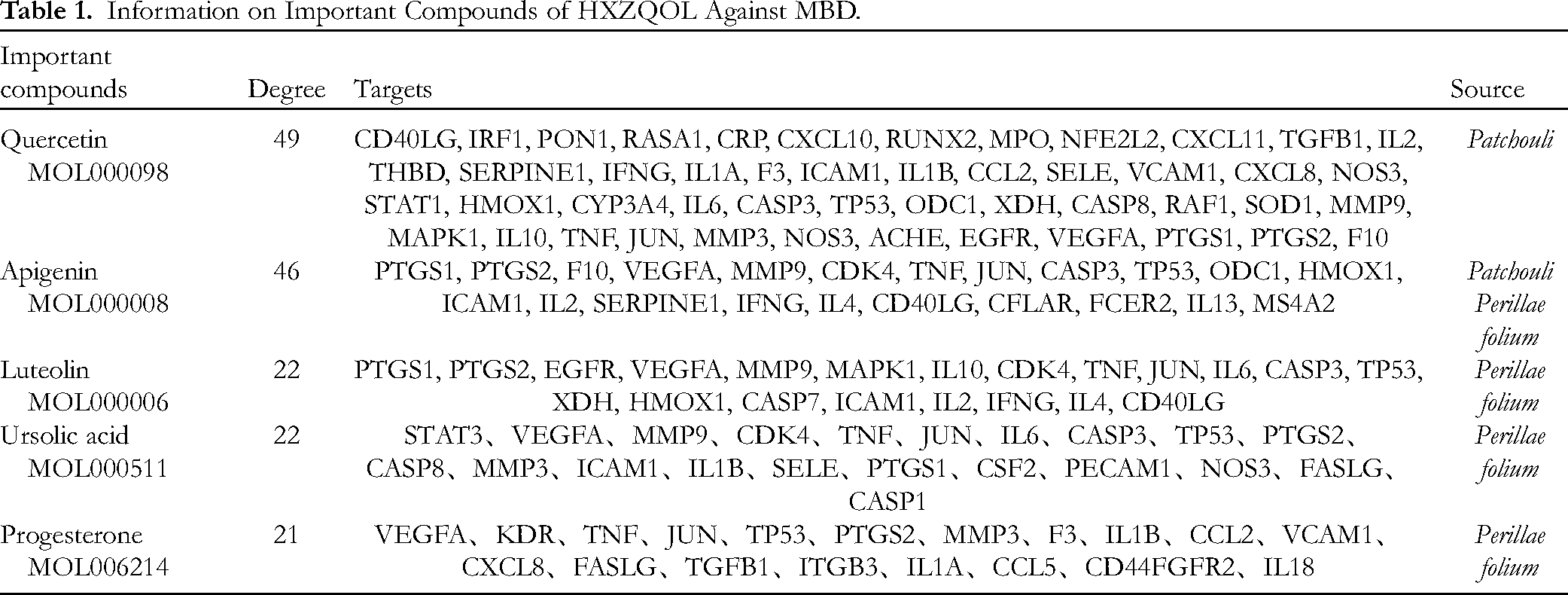
There are 191 nodes and 557 lines in Figure 3. The nodes represent the active compounds and potential targets of herbs, while lines represent interactions between active compounds and targets. The degree value represents the strength of the interaction. The average degree value of the active compounds of HXZQOL is 5.77, with 23 kinds of compounds having degree values higher than the average. Among them, five active compounds, including quercetin, apigenin, luteolin, ursolic acid, and progesterone, may be key compounds for HXZQOL to treat MBD (Table 1).
Information on Important Compounds of HXZQOL Against MBD.
Results of GO Function and KEGG Pathway
A total of 462 terms in the identified enriched GO were statistically significant (P < .5) through David tool, including 396 terms from biological process (BP), 19 terms from cellular component (CC) and 47 terms from molecular function (MF). The top 10 enriched terms are shown in Figure 4-A. The key targets were mainly involved the cytokine - mediated signaling pathway, inflammatory response, cellular response to lipopolysaccharide and positive regulation of smooth muscle cell proliferation, etc. They were located in the extracellular space, extracellular zone, and membrane rafts, and involved in cytokine activity, growth factor activity, protein binding and other functions.
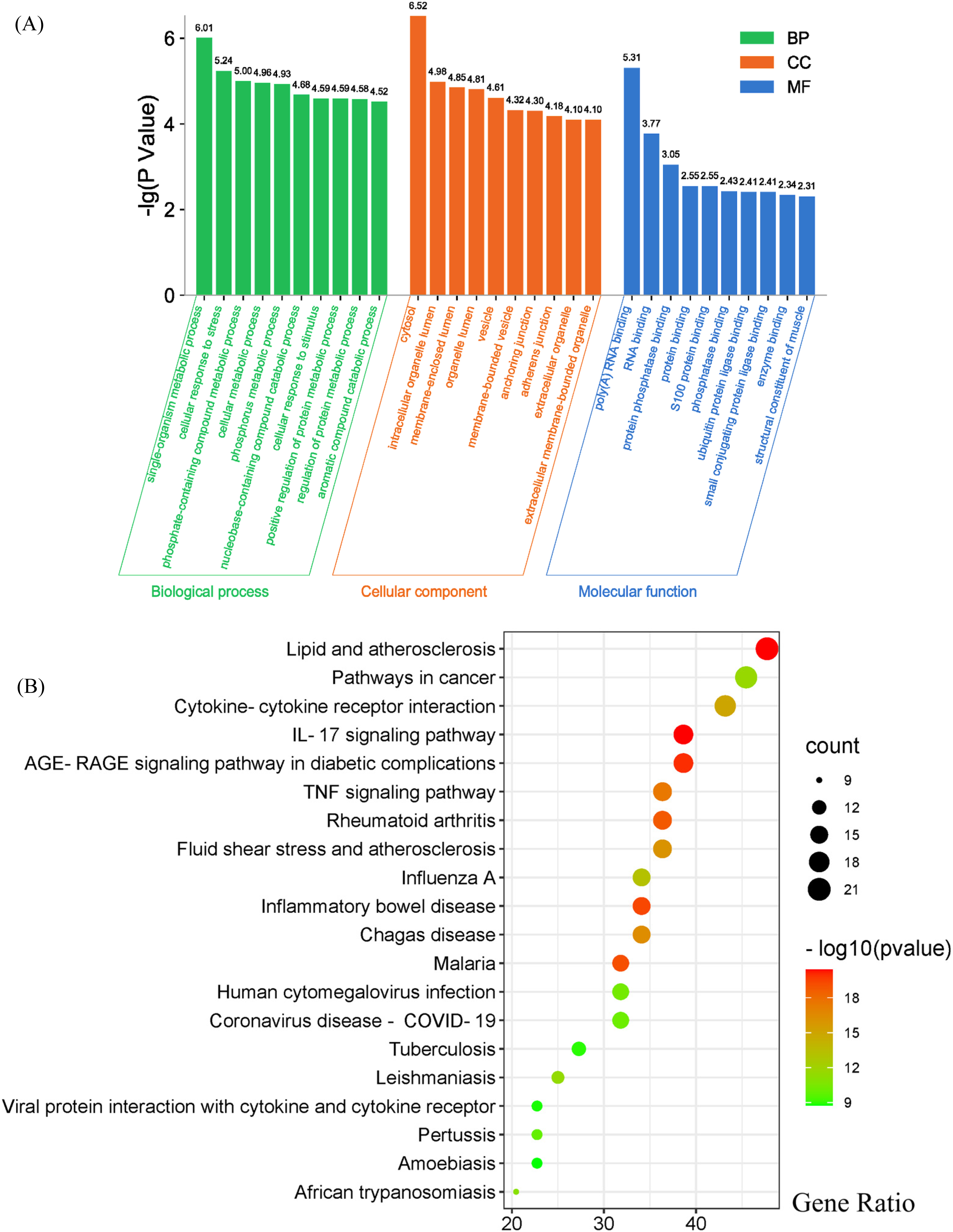
The top GO (A) and KEGG(B) of key targets involved in HXZQOL against MBD.
A total of 102 terms statistically significant KEGG pathways related to HXZQOL-MBD were obtained (P < .05), among which the top 20 pathways involved 90.9% of cross targets, as shown in Figure 4-B. There were 3 pathways related to signal transduction, including AGE-RAGE, IL-17 and TNF signaling pathway. There were 7 pathways related to the immune system, including cytokine-cytokine receptor interaction, viral protein interaction with cytokine and cytokine receptor, etc. There were seven pathways related to infectious diseases, including chagas disease, malaria, pertussis, tuberculosis, African trypanosomiasis, etc. There were three pathways associated with viral infections, including influenza A, human cytomegalovirus infection, etc. These results indicated that HXZQOL could treat MBD via different mechanisms, among which AGE-RAGE signaling pathway, IL-17 signaling pathway, and cytokine-cytokine receptor interaction which were well enriched targets, may be the main pathways of HXZQOL in treating MBD.
Results of Molecular Docking
According to Figures 2, 3 and Table 1, quercetin, apigenin, ursolic acid and luteolin were selected as key compounds of HXZQOL, with JUN and IL-6 as core targets for molecular docking. The clinical commonly used antibacterial drugs benzoyl peroxide, antipruritic drugs thymol and antiinflammatory drugs halomethasone were selected as positive controls. The results were shown in Table 2.
Binding Energy Between Key Compounds and Targets (kcal/mol).

In general, the minimum binding energy for docking is less than 0 kcol/mol, indicating that docking between molecules can be carried in their natural state. If the energy is less than −5 kcol/mol, it indicates a good docking result. According to the docking energies in Table 2, the docking energies of quercetin, apigenin, luteolin and ursolic acid with JUN and IL-6 were all less than −5 kcol/mol, indicating that the four key compounds in HXZQOL can spontaneously act on JUN and IL-6 targets. The docking energies between the four key compounds and the core targets were not significantly different from those of the positive control antibiotics and antipruritics, but the binding energies were weaker than that of the anti-inflammatory drug halometasone. The docking result files were imported into PyMol to obtain a visualization of the docking, as shown in Figure 5.

Visualization of the molecular docking model between key compounds and key proteins.
Molecular docking model showed that the binding bonds of ursolic acid, luteolin, quercetin and apigenin with JUN and IL-6 were mainly hydrogen bonds, but also salt bonds, disulfide bonds and covalent bond.
Effect of Key Compounds on Cell Viability
The results of cytotoxicity test showed that 1.56∼6.25 μg/mL of ursolic acid and luteolin, and 1.56∼25 μg/mL of quercetin and apigenin were non-toxic to HaCaT for 24 h (shown in Figure 6).
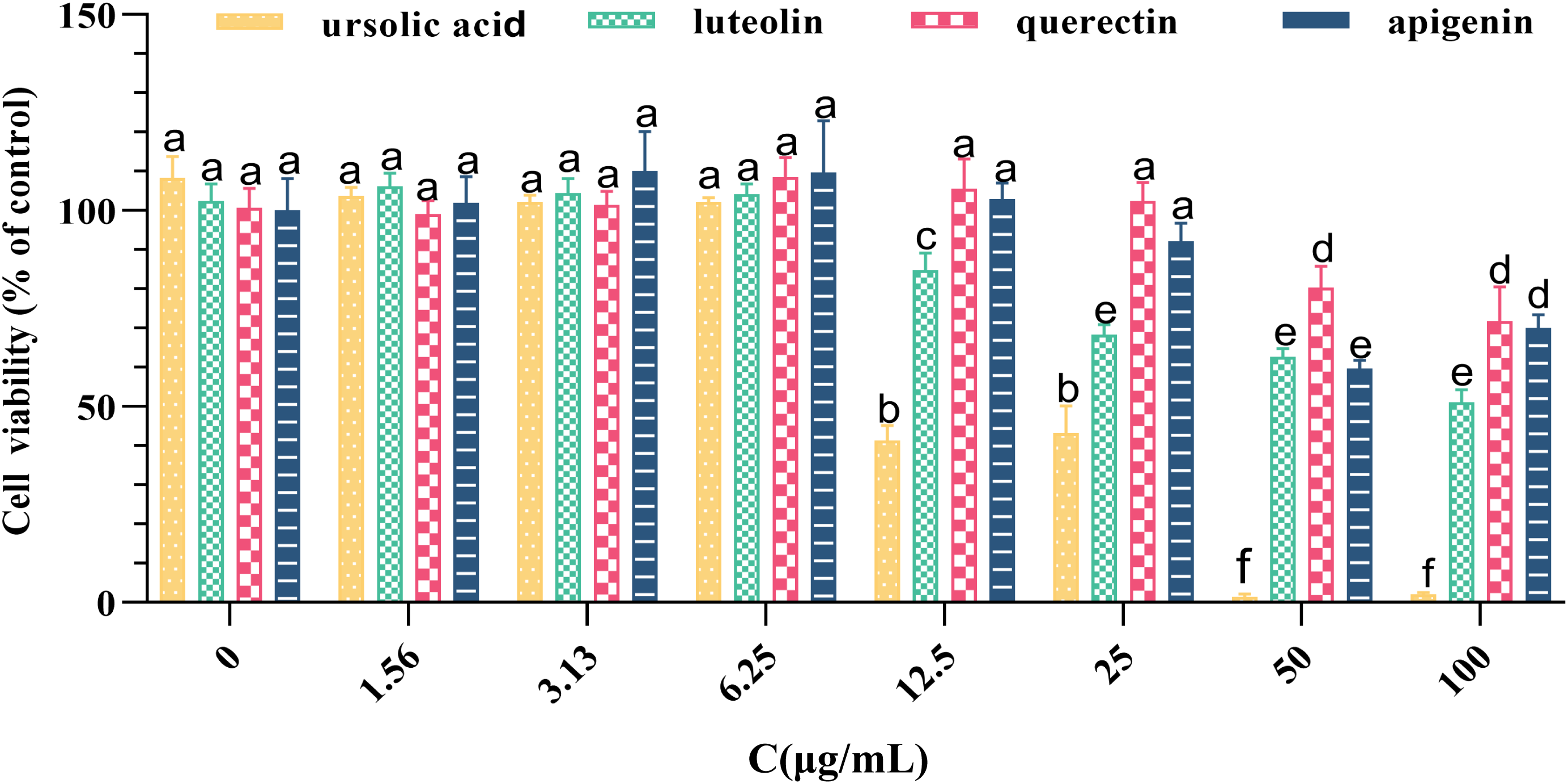
The effects of different concentrations of ursolic acid, luteolin, quercetin and apigenin on the activity of HaCaT (n = 5).
Effects of Key Compounds on TNF-α, IL-6 and NO Levels
The results of cytokines TNF-α, IL-6 and NO were shown in Figure 7. The levels of TNF-α, IL-6 and NO in HaCaT model group were significantly greater than those in control group, indicating that the cellular inflammation was induced successfully. Compared with the model group, the levels of IL-6, TNF-a and NO in HaCaT cells treated with ursolic acid, luteolin, quercetin, and apigenin decreased to varying degrees in a dose-dependent relationship.
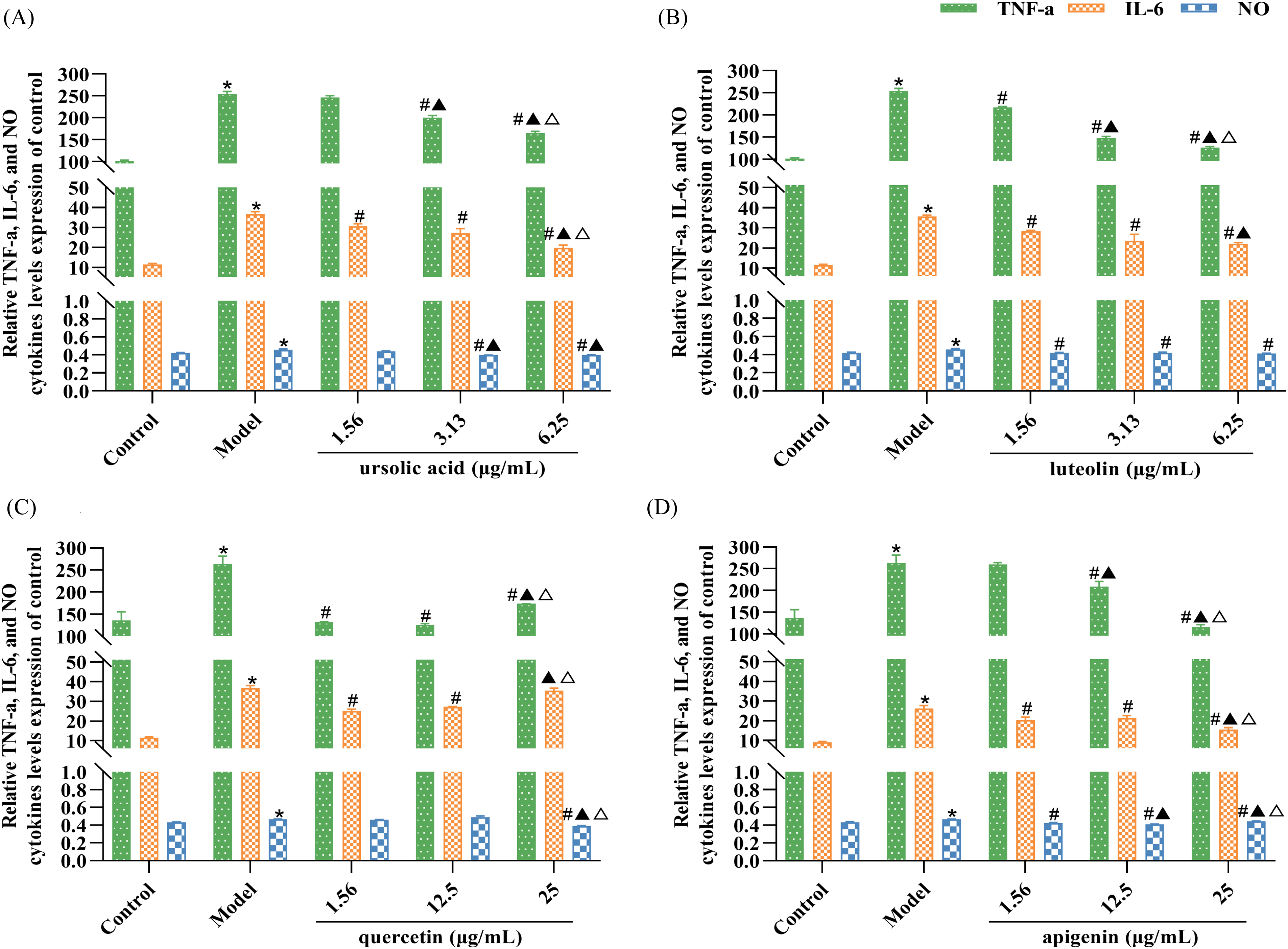
TNF-a, IL-6 and NO levels in cells of each group.
Effects of Key Compounds on JUN Protein Expression
The expression result of JUN protein was shown in Figure 8. The JUN protein level in the model group was significantly higher than that in the control group after stimulating HaCaT cell with 10 ng/mL of TNF-a/IFN-γ for 6 h, indicating successful induction of the cellular inflammation. Compared with the model group, the JUN protein in HaCaT cells treated with the four drugs (ursolic acid, luteolin, quercetin, and apigenin) decreased to varying degrees in a dose-dependent manner.
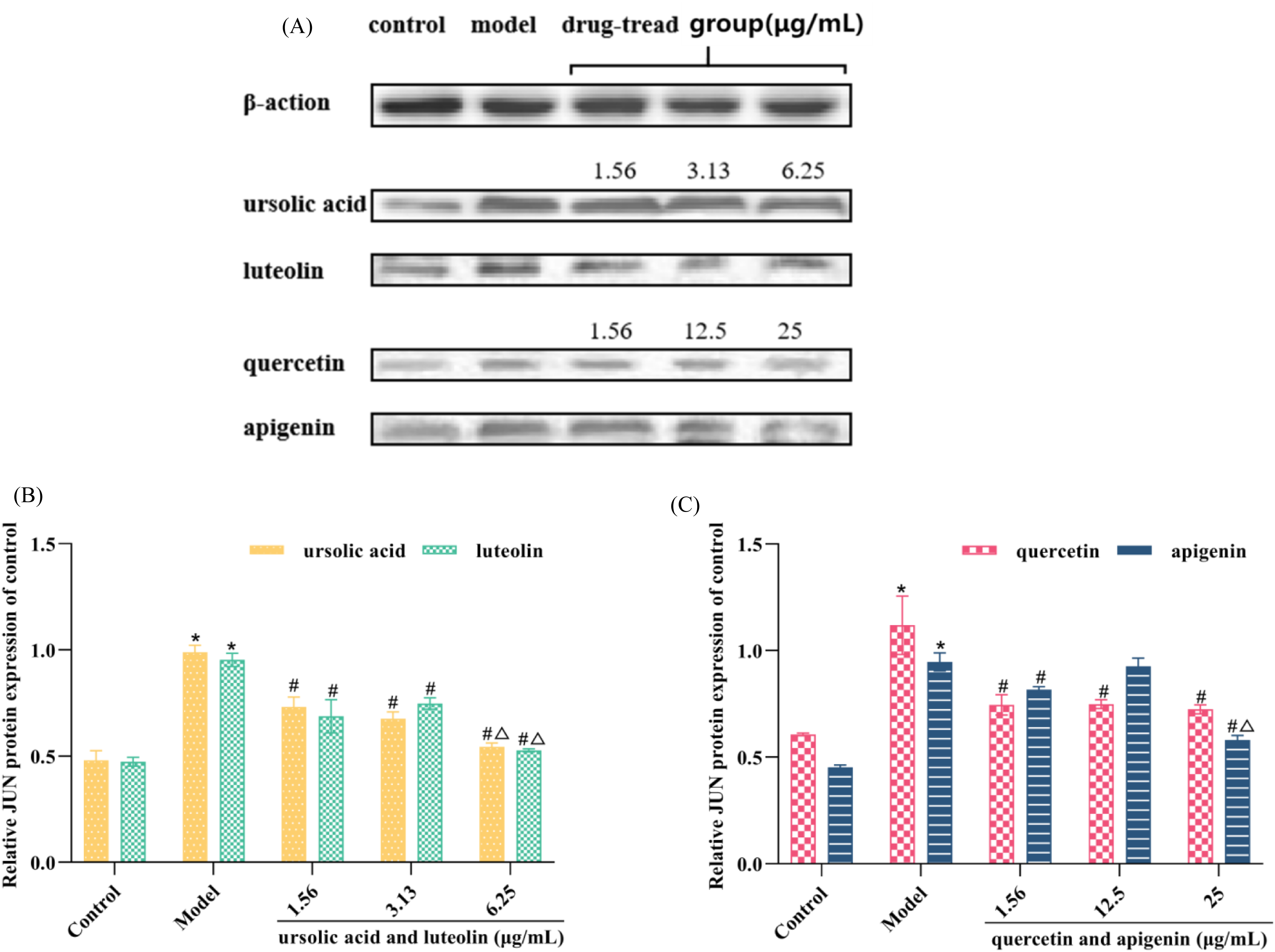
Protein expression levels of JUN in cells of each group.
Discussion
154 active compounds and 440 targets in HXZQOL were screened through the network pharmacology. The interaction between HXZQOL and MBD revealed 88 potential targets. Enrichment analysis of GO and KEGG pathways for these 88 targets led to the construction of a network diagram of “HXZQOL - important compounds - key targets - KEGG pathway - MBD”. It was concluded that the key compounds of HXZQOL against MBD may be quercetin, ursolic acid, luteolin, apigenin, progesterone, etc the key targets for regulation may be PTGS2, TNF, IL1B, IL-6 and JUN, etc, which play roles in cytokine-cytokine receptor interaction, IL-17 signaling pathway and TNF signaling pathway, etc.
Research has found that quercetin has anti-inflammatory effects by down-regulating the PI3K/AKT signaling pathway and reducing the production of TNF-α, IL-6 and IL-1B in RAW264.7 macrophages induced by LPS. 36 It may also inhibit TNF-α induced inflammation by down-regulating the NF-кB and AP-1 signaling pathways. 37 Ursolic acid could alleviate inflammation symptoms by regulating Mir-34C-5P /TLR5 to reduce the expression of TNF-α, IL-1B, IL-6 and other cytokines. 38 It can also exert anti-inflammatory effects by reducing the release of histamine, blocking the activation of signaling pathways and down-regulating the expression of inflammatory factors. 39 Luteolin significantly reduces the expression levels of IL-33, IL1B, IL-6 and IL-8 in CPEK cells treated with lipopolysaccharide, showing promise in the treatment of dermatitis. 40 Apigenin has been shown to down-regulates the expression of PTGS2, and inhibits activation of NF-кB, as well as the production of NO and PGE2 by inducing ho-1 expression, thus exhibits anti-inflammatory properties. 41 Progesterone inhibits the expression of TLR4, NF-кB and IL-6 and promotes the expression of LIF, EGF and VEGF by participating in NF-кB signaling pathway, ultimately improving the inflammatory symptoms of cells. 42
The IL-17 signaling pathway contains 17 key genes, accounting for 38.64% of the total key targets, as shown in Figure 9. Transcription factor AP-1 is an activated protein composed of FOS, FOSB, FOSL1, JUN, JUND and others. IL-17A/E cytokines bind with IL-17RA and IL-17RC receptors on the cell membrane, and transmitting the signal to Act1, which activates TRAF6 and indirectly influences MAPK. MAPK then directly activates AP-1, leading to the expression of genes like CXCL8, IL-6, MMP3 and others in the nucleus, contributing to autoimmune and other diseases. Compounds such as luteolin, ursolic acid, β-carotene, progesterone and apigenin in Perillae folium, baicalein in Atractylodis rhizoma, nobiletin in Citri reticulatae pericarpium, iridone, apigenin and quercetin in Patchouli, and β-sitosterol in Angelica and Pinelliae rhizoma, have been found to regulate JUN to down-regulate AP-1, thereby reduceing levels of inflammatory chemokines (CXCL8, CXCL10, CCL2), cytokines [IL-6, TNF-α, COX2 (PTGS2), GM-CSF (CSF2)] and tissue recombinant genes(MMP3, MMP9).

Regulation of active compounds of HXZQOL on IL-17 signaling pathway.
The molecular docking results also revealed that ursolic acid, luteolin, quercetin, and apigenin have the ability to effectively bind with JUN and IL-6 target proteins. The results of the cell experiment demonstrated that these compounds could inhibit the expression of JUN protein in inflammatory HaCaT cells, leading to significantly reduced the levels of TNF-α、IL-6 and NO cytokines. Previous studies have highlighted JUN as a promising target for anti-inflammatory therapies. 43 Moreover, ursolic acid, luteolin, quercetin and apigenin were found to inhibit JUN binding to the cyclic AMP response element of the COX-2 promoter, or attenuate JUN phosphorylated, and reduce JUN protein expression.44,45 These compounds also exhibited inhibitory effects on the secretion of inflammatory factors such as IL-6, TNF-α and IL-β in cells, as well as suppressed inflammatory symptoms such as ear swelling in mice. 46 Therefore, ursolic acid, luteolin, quercetin and apigenin contained in HXZQOL may be candidate molecules for JUN-mediated anti MBD with inflammation response as the main symptom.
This study is based on network pharmacology analysis and supplemented by preliminary validation of cell experiments, but the results obtained have certain limitations. To ensure the reliability of the research results, it is necessary to conduct mosquito bite experiments in the future to further validate the results of this study.
Conclusions
Based on network pharmacology, this article analyzes and speculates on the material basis, regulatory targets, and possible molecular mechanisms of HXZQOL in treating MBD. The results indicate that quercetin, apigenin, luteolin, and ursolic acid contained in HXZQOL are key compounds for its treatment of MBD. PTGS2, TNF, JUN, and IL-6 are key target genes regulated by HXZQOL, while IL-17, AGE-RAGE, TNF signaling pathway, and cytokine - cytokine receptor interaction are potential important pathways of action. Molecular docking and the cell experiments have preliminarily verified the results of network pharmacology speculation.There are 10 kinds of herbs in HXZQOL, among which the main herbs anti-MBD are Patchouli and Perillae folium. This provides a certain reference for HXZQOL to further develop anti-MBD preparations.
Footnotes
Author Contributions
Liping Liu, Kunqin Ma and Xu Xu designed the study and drafted the manuscript. Xu Xu performed the network pharmacology, Kunqin Ma performed the experiments, Shengdong Wang performed the molecular docking. Kunqin Ma and Chang Liu analysed the data. All authors read and approved the final manuscript.
Authors’ Notes
Kunqin Ma and Xu Xu are cofirst authors, these authors contributed equally to this work.
Declaration of Conflicting Interests
The authors declared no potential conflicts of interest with respect to the research, authorship, and/or publication of this article.
Funding
The authors disclosed receipt of the following financial support for the research, authorship, and/or publication of this article: The key R&D plan project in Ningbo City (No. 2023Z158) and Ningbo public welfare science and technology plan project (No. 2022S186).
