



Abstract
Processing is one of the important and crucial parts that has been applied in traditional oriental medicine for a long time. The traditional ingredients were processed on the basis of the Yin Yang theory, Five Elements theory, and folk experiences. Among many processing techniques, honey-frying is a process enhancing the effects of traditional herbs on the Spleen and Stomach organs. This report provides an overview of the differences between chemical constituents and pharmacological activities of some traditional ingredients before and after roasting with honey.
Introduction
Processing is a complicated but essential stage and greatly affects the effectiveness of traditional treatment. There are several traditional ingredients that can only be used in treatment after being processed, including Crinis Carbonisatus (burning human hair), Mu Li (Concha Ostreae), and Haliotis diversicolor. Moreover, the processing also contains numerous other purposes such as increasing the therapeutical effects, changing the properties of raw herbs, eliminating side effects, removing mechanical impurities, and storing. 1 Processing can use heat (Fire), water (Water) or both (Fire-water combination), with or without excipients to achieve these purposes.
Among these techniques, roasting is the most commonly used. Several excipients are used for processing traditional ingredients such as ginger extract, wine, honey, vinegar, bran, licorice extract, catjang, of which honey is an excipient increasing the effect on the Spleen organ and delivering drug to the internal organs. 1
The processing techniques and processed medicinal herbs were regulated by the Vietnamese Ministry of Health in Circular 30/2017/TT-BYT on “Direction's guide to processing methods of traditional ingredients”. Among the 103 herbal medicines that exist in both raw and processed forms, 10 medicinal herbs have been identified as suitable for processing with honey. There has been many comparative research on the chemical constituents and pharmacological effects of traditional ingredients before and after honey-frying. The process of honey-frying was believed to alter the content of phytochemicals in the medicinal herbs and additionally supplement them with other bioactive compounds present in honey, enriching the chemical profile and thereby modifying the pharmacological effects. To provide an overview of these differences and make it easier to practice, we have summarized the studies of ten honey-frying medicinal herbs in Circular 30/2017/TT-BYT (Table 1). 2
List of Honey-Frying Traditional Herbs from Vietnamese Ministry of Health. 2

Radix Stemonae Tuberosae: Bai Bu (Chinese: 百部), Bách bộ (Vietnamese)
Processing
Honey (ratio 1:10 to herb ingredient, w/w) is stirred with water (ratio 1:1 to honey) and mixed with Bai Bu. The mixture is incubated for about 12 h and roasted with low heat until light brown surface. 2
Chemical Constituents
Phytochemical analysis of Radix Stemonae tuberosae led to the extraction, isolation, and chemical structure determination of nearly 300 secondary metabolites, including alkaloids, stilbenoids, tocopherols, phenolic compounds, phenanthrene derivatives, and other. 3 The alkaloids group, especially tuberstemonine, was the chemical group whose content was different between Bai Bu and honey-fried Bai Bu. 4 In particular, the content of tuberstemonine in honey-roasted Radix Stemonae tuberosae was the highest when processed under the optimal conditions of honey–water ratio of 1:1, frying temperature below 120 °C, and frying time of 10 min.4,5

Pharmacological Activities
Bai Bu has been used in traditional medicine for cough treatment. Besides, there were several investigated bioactivities of Radix Stemonae tuberosae which were anti-inflammatory, antitumor, antibacterial, antifungal, antiviral, and others. 3 Among these pharmacological effects, the primary one of Bai Bu, antitussive, was significantly enhanced after honey-roasting on in vivo experiment. 4
Bulbus Lilii Brownie: Bai He (Chinese: 百合), Bách Hợp (Vietnamese)
Processing
Honey (ratio 1:10 to herb ingredient, w/w) is stirred with water (ratio 2:1 to honey) and mixed with Bai He. The mixture is incubated for about 1 h and roasted with low heat until hand unsticky. 2
Chemical Constituents
The major chemical compositions in Bai He as well as species of the genus Lilium were saponins, sterols, alkaloids, polysaccharides, flavonoids, organic acids, and others. 6 In addition, in Bai He, there were many volatile compounds that contributed to the flavor and were influenced by processing. In 2018, a study by Chiang et al 7 showed that the content of several volatile compounds in honey-fried Bai He dramatically diminished compared to unprocessed Bai He such as (E)-hex-3-enal, oct-1-en-3-one, and eucalyptol.
Pharmacological Activities
Pharmacological studies indicated that Bai He and other species of the genus Lilium had extensive effects, including anti-tumor, anti-inflammatory, antioxidant, immunology enhancing, antibacterial, antifungal, anti-depressant, and other. 6 Unfortunately, there have not been any evaluation studies about the change of bioactivities between Bai He and honey-roasted Bai He yet.
Radix et Rhizoma Glycyrrhizae: Licorice, Gan Cao (Chinese: 甘草), Cam Thảo (Vietnamese)
Processing
Refined honey (ratio 1:5 to traditional ingredient, w/w) is stirred with an equal amount of boiled water and mixed with Licorice. The mixture is incubated for about 1–2 h and roasted with low heat until dark yellow surface, brown outer edge, and hand unsticky. 2
Chemical Constituents
The major chemical compositions of Radix et Rhizoma Glycyrrhizae included saponins, flavonoids, phenolic compounds, carbohydrates, alkaloids, and other. Glycyrrhizic acid, a triterpenoid in saponin group, was one marker of Licorice. 8 During the processing of Licorice, glycyrrhizic acid was broken down to glycyrrhetinic 3-O-glucuronide acid and glucuronic acid. 9 At a higher temperature and longer duration, glycyrrhizic acid was completely decomposed and glycyrrhetinic 3-O-glucuronide acid was further degraded to 18β-glycyrrhetinic acid. In addition, honey contributed to a significant increase in the content of these decomposition products. 10


Licorice processing was responsible for the degradation of numerous flavonoids as well such as liquiritin apioside, isoliquiritin apioside, and glucoisoliquiritin apioside into liquiritin, isoliquiritin, and glucoisoliquiritin, respectively. 11 Under thermal effect, glucoisoliquiritin was further broken down to isoliquiritin and could be reversibly converted into liquiritin. The presence of honey caused the deglycosylation of liquiritin and isoliquiritin to its aglycone form (liquiritigenin and isoliquiritigenin, respectively). These two aglycone flavonoids could also be reversibly converted. Other flavonoid compounds in Licorice such as 6′’-O-acetylisoliquiritin apioside and 6′’-O-acetylisoliquiritin were also modified by a similar mechanism. 9
From the understanding of the influence of processing on the chemical constituents of Licorice, Chen et al proposed honey-fried Licorice processing with the least effect on the active ingredients. Particularly, the content of liquiritin apioside and licorice-saponin G2 was little changed when roasting with the optimal conditions of honey incubation time of 40 min, frying temperature of 100 °C, and roasting time of 20 min. 12
In 2022, Jiatong et al 13 developed quality standards for Licorice after processing. With the roasting temperature of 150 °C in 25 min and the machine's spreading speed of 20 r/min, the loss of drying and total ash of Licorice were not exceeding 5.0%. The content of liquiritin and glycyrrhizic acid were not less than 0.45% and 1.8%, respectively calculated on the dried basis.
Pharmacological Activities
The pharmacokinetics of bioactive ingredients in Licorice are affected by processing. One study indicated that after honey-frying, the maximum concentration of isoliquiritin decreased considerably, while the maximum concentration and the area under the curve of isoliquiritigenin climbed. Glycyrrhizic acid had very poor oral bioavailability after processing and transformed into glycyrrhetinic acid thanks to intestinal bacteria. 14
Similarly, many studies showed that honey-fried Licorice enhanced the immunological effect through a significant elimination coefficient compared with unprocessed Licorice in the immunosuppression model caused by Pi deficiency. 15 Honey-roasting Licorice also induced a more substantial granulocyte colony-stimulating factor (G-CSF) than Licorice. 16 However, the honey processing steeply reduced the antitussive, expectorant, and detoxifying activities of Licorice. The reason for these declines was thought to be due to a fall in the content of some bioactive ingredients such as glycyrrhizic acid, and liquiritin apioside. 15
Other biological effects of Licorice including anti-inflammation and hepatoprotection were considerably improved after honey-roasting by the research of Kong et al 17 This paper also proposed the enhancement of these activities mainly due to the change in the content of liquiritin, liquiritigenin, isoliquiritin, isoliquiritigenin, glycyrrhizic acid, and glycyrrhetinic acid in honey-fried Licorice.
Recently, Lin et al 18 investigated that roasting Licorice could perform glioma cell inhibition in vitro. This report's outcomes indicated that honey-roasting Licorice stimulated the apoptosis process and activated the enzyme caspase-3 more than Licorice, following the cytotoxicity and inhibition of glioma cells’ motility. The proposed mechanism of apoptosis induction was that the roasting Licorice activated the DNA error checking and cell cycle regulation system.
Radix Platycodi grandiflora: Platycodon, Balloon Flower, Jie Geng (Chinese: 桔梗), Cát cánh (Vietnamese)
Processing
Honey (ratio 1:10 to herb ingredient, w/w) is stirred with equal amount of water, filtered through gauze, boiled on low heat, removed white foam, and mixed with Platycodon. The mixture is incubated and roasted quickly until separation and hand unsticky. 2
Chemical Constituents
Jie Geng contained various chemical component groups, including saponins, flavonoids, phenolic compounds, amino acids, polyacetylenes, and sterols. 19 Platycodon honey-roasting process certainly affected the amino acids content, especially the essential amino acids subgroup. Among 8 essentials, the content of arginine gradually dropped and completely vanished after 4 min of frying. On the opposite side, the content of phenylalanine went up significantly. There was a fluctuation in the content of threonine, which increased at the beginning of the process and decreased after 5 min of roasting. For nonessential amino acids, the content of glutamic acid rose over time while aspartic acid and cysteine had a fructuated change. The content of aspartic acid fell at the beginning and slightly increased. In contrast, there was a growth of cysteine content when frying in 2 min before decreasing gradually. 20
Moreover, the phenolic compounds were also influenced by the honey-frying process. There were more than 10 polyphenols and organic acids isolated in Platycodon grandiflorus such as caffeic acid, ferulic acid, isoferulic acid, and m-coumaric acid, and these total content climbed significantly after roasting in 4 min and slightly went down. 20
Pharmacological Activities
Platycodon was proved to perform numerous biological activities such as expectorant, antitussive, anti-inflammatory, antioxidant, antitumor, and other, 19 in which the antioxidant effect of Platycodon was affected by the roasting process. Lee et al 20 investigated the extract of honey-fried Platycodon increased the ABTS free radical scavenging in vitro through the lower IC50 value when compared to unprocessed Platycodon.
Radix Astragali Membranacei: Huang Qi (Chinese: 黄芪), Hoàng kỳ (Vietnamese)
Processing
Honey (ratio 1.5:10 to herb ingredient, w/w) is diluted with boiled water (ratio 1:10 to herb ingredient, v/w) and mixed with Huang Qi. The mixture is incubated until absorbed and then roasted with low heat until yellow-brownish surface and hand unsticky. 2
Chemical Constituents
Many researches discovered more than 100 phytochemical compounds including saponins, flavonoids, polysaccharides, amino acids, phenolic acids, and others in Hoang Qi. 21 Among these chemical compound groups, there were many differences in the content of flavonoids and phenolic compounds between sliced Huang Qi and honey-fried Huang Qi. After processing, the content of calycosin-7-O-β-D-glucoside and formononetin-7-O-β-D-glucoside diminished in honey-roasted Hoang Qi while these aglycon forms, calycosin, and formononetin, had an increase in content. 22

In addition to flavonoids and polyphenols, the processing of Huang Qi also increased the content of amino acid compounds and carotenoids. However, the lipid content in this traditional ingredient had a slight decrease (from 2.8% to 1.5%) after processing with honey. Astragaloside compounds, especially astragaloside IV, were also affected by roasting. Specifically, the content of astragaloside IV decreased gradually in the order of Huang Qi (0.0219%), honey-dried Huang Qi for 6 min (0.0094%), honey-dried Huang Qi for 10 min (0.0088%), and honey-roasted Huang Qi (0.0082%). 23

Pharmacological Activities
Several biological activities of Radix Astragali membranacei could be mentioned such as antioxidant, immunomodulatory, antibacterial, anti-inflammatory, antiviral, hypoglycemic, and others. 21 The honey-roasted Huang Qi had a better antioxidant effect compared to unprocessed Huang Qi, shown by the diminishment of the IC50 values in DPPH and ABTS free radical scavenging in vitro experiments. 22 Sha et al 24 reported that the polysaccharide substances of honey-fried Huang Qi had also shown the growth inhibition of tumor cells through the apoptosis-inducing mechanism. In in vivo test, the polysaccharide components of roasting Huang Qi reduced the mass and volume of the tumor and stimulate the production of lymphocytes.
Moreover, the differences in mice metabolism were also studied before and after roasting Huang Qi. Huang et al 25 investigated that there was an increase in the content of numerous metabolites in the honey-fried Huang Qi treatment group such as demethylated 7,2′-dihydroxy-3′-4′-dimethoxyisoflavane and equole while others reduced such as calycosin-7-O-glucuronide, daidzein, daidzein-7-O-sulfate, daidzein-4′-O-sulfate, demethylated 7,2′-dihydroxy-3′, 4′-dimethoxyisoflavane sulfate, calycosin-7-O-sulfate, calycosin-4′-O-sulfate, and 3′-monomethylated-calycosin. In addition, the metabolite of 2′,3′,4′,7-tetrahydroxyflavane glucuronide was detected only in the mice group treated with honey-roasted Huang Qi.
Liu et al 26 identified 12 chemical compositions (betaine, L-homoserine, cis-aconitic acid, indoleacetic acid, succinic acid, 5-hydroxyindoleacetate, creatinine, kynurenic acid, xanthurenic acid, hypoxanthine, xanthine, and orotic acid) in honey-roasted Huang Qi exhibiting Qi tonifying effect and they were called as biomarkers. In this study, the honey-fried Huang Qi treatment group had a statistically better recovery than the sliced one.
Flos Tussilaginis Farfarae: Kuan Dong Hua (Chinese: 款冬花), Khoản Đông hoa (Vietnamese)
Processing
Honey (ratio 2:10 to herb ingredient, w/w) with boiled water is mixed with Kuan Dong Hua. The mixture is incubated until absorbed evenly and then roasted with low heat until yellow-brownish surface and hand unsticky. 2
Chemical Constituents
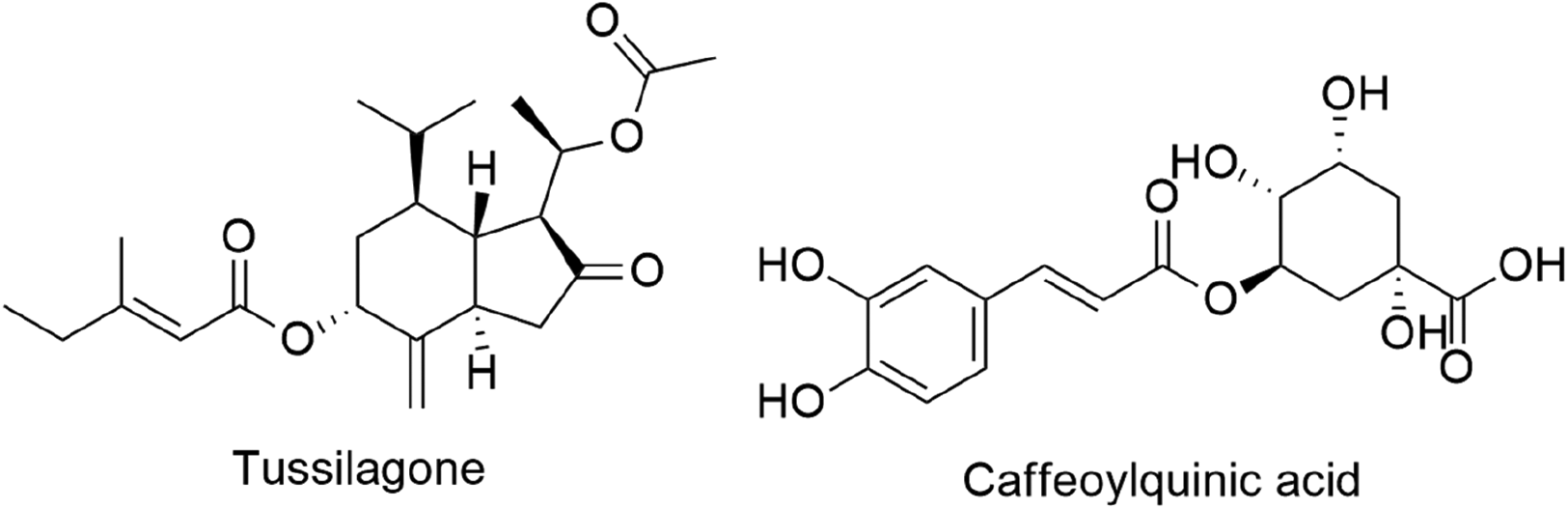
Nearly 150 chemical substances that have been extracted and isolated in Kuan Dong Hua are sesquiterpenes, triterpenoids, flavonoids, phenolic compounds, alkaloids, and others. Among them, tussilagone (a sesquiterpene compound) and caffeoylquinic acid (a phenolic acid) were potential components that exhibited the drug's biological activities. 27 The honey-roasting process changed the chemical compounds of this plant, especially caffeoylquinic acid. 28 Many researches showed the content of caffeoylquinic acid, chlorogenic acid, isochlorogenic B acid, rutin, and isoquercitrin in Kuan Dong Hoa drecreased dramatically after frying while the content of quercetin and caffeic acid increased. 29 In addition, there were 8 chemical compounds discovered from honey-roasted Kuan Dong Hua, mainly from honey which were dihydrokaempferol, scopoletin, lycopsamine, heliotrine, jacobine, 4-hydroxybenzoic acid, and 2 tyrosine isomers. 28
Pharmacological Activities
Flos Tussilaginis has been known for many valuable biological effects including antitussive, expectorant, anti-asthmatic, antidiarrheal, antioxidant, and others. 30 The honey-roasting technique has been studied to influence the pharmacokinetics of several bioactive ingredients such as flavonoid and phenolic compounds. Yang et al 31 investigated that after using honey-fried Kuan Dong Hua, there was a growth in the elimination half-life and the mean residence time of isochlorogenic B acid, isochlorogenic C acid, and rutin in rat plasma. In addition, the area under the curve value of 8 compounds statistically increased (isochlorogenic B acid, isochlorogenic C acid, rutin, ferulic acid, caffeic acid, chlorogenic acid, neochlorogenic acid, and cryptochlorogenic acid). These findings showed Kuan Dong Hua honey-roasting process slowed down the elimination stage of the drug's bioactive ingredients, thereby increasing the effectiveness of this plant.
Herba Ephedrae: Ma Huang (Chinese: 麻黄), Ma Hoàng (Vietnamese)
Processing
Honey (ratio 1:10 to herb ingredient, w/w) is diluted with a sufficient amount of water and mixed with Ma Huang. The mixture is incubated from 30 min to 1 h and then roasted until hand-unsticky. 2
Chemical Constituents
Phytochemical analysis of Herba Ephedrae parts led to the successful isolation and structure determination of more than 240 chemical compounds including alkaloids, flavonoids, organic acids, polysaccharides, essential oil, and others. 32 Among them, alkaloids such as ephedrine, methylephedrine, and demethylephedrine were known to be components exhibiting biological effects of Ma Huang. The content of these alkaloid compounds in Ma Huang dropped dramatically after honey-frying, especially norephedrine, norpseudoephedrine, and methylephedrine. 33 Moreover, the extraction process of this compounds’ group was slower and longer. 23 Therefore, a report by Xiang-yu et al 34 proposed the least influence processing specifications on the alkaloid content of honey-roasted Ma Huang. The optimal roasting conditions were a honey – herb ingredient ratio of 2:10 w/w, a water–honey ratio of 1:1 w/w, a roasting temperature of 80 °C, and a roasting time of 2 h.

Similar to alkaloids, the composition of essential oils in Ma Huang after honey-roasting also decreased significantly up to 52% of the content compared to Ma Huang (from 0.115% to 0.055%). 23 In contrast, the content of many flavonoids and phenolic acids such as vitexin, isovitexin-2′’-O-L-rhamnoside, kaempferol-3-O-rhamnoside, and ferulic acid increased significantly. 35
Pharmacological Activities
There were some pharmacokinetics differences between sliced Ma Huang and honey-fried Ma Huang. Specifically, after oral administration of honey-roasted Ma Huang's extract, the area under the curve value of ephedrine hydrochloride and pseudoephedrine hydrochloride reduced statistically compared to unprocessed Ma Huang's extract. This results showed that the roasting process diminished the absorption of active ingredients in Ma Huang. 36
Ma Huang is currently used in both traditional medicine and modern medicine with many effects such as antipyretic, sweating, antitussive, diuretic, sedative, anti-inflammatory, and antioxidant. 32 The honey-roasting process enhanced the sedative effect of Ma Huang demonstrated by a considerable increase in sleep time in rat model. In addition, honey-fried Ma Huang was proven to reduce the activities of the automatic nervous system in mice. 37
Fructus Schisandrae: Schisandra, Wu Wei Zi (Chinese: 五味子), Ngũ vị tử (Vietnamese)
Processing
Honey (ratio 1:10 to herb ingredient, w/w) is diluted with an equal amount of water, mixed well with halved Schisandra, and incubated for 3 h. The mixture is then roasted until blistered fruits and hand unsticky. 2
Chemical Constituents
Several compounds in Schisandra were discovered recently such as lignans, triterpenoids, sesquiterpenes, phenolic compounds, flavonoids, polysaccharides, and organic acids. 38 The honey-roasting process greatly affected the chemical constituents of this herb, especially the lignan group. Schisandrin and gomisin A had a rise in the content after processing. The content of schisandrin reached the highest when roasting at 150 °C for 10 min while the content of gomisin A also peaked at the same temperature in 5 min. However, when the heat was above 150 °C, the content of lignans in honey-fried Schisandra decreased. 39

Besides, flavonoids, phenolic, and volatile compounds in Schisandra were also influenced by honey-roasting. The total content of polyphenols and flavonoids in medicinal herbs climbed significantly when roasting at a high temperature. Particularly, the total content of volatile compounds grew with the increasing temperature but began falling when the temperature was above 180 °C. 39
Pharmacological Activities
Several pieces of in vitro and in vivo researches of Schisandra showed its ingredient exhibited many biological activities such as hepatoprotective, anti-inflammatory, antioxidant, detoxifying, anti-tumor, and others. 38 The honey-fried Schisandra was proven to increase statistically the antioxidant and anti-inflammatory effects on the RAW 264.7 cell line by inhibiting the nitric oxide (NO) and reactive oxygen substances production. In addition, honey-roasted Schisandra had better hepatoprotective activity compared to Schisandra demonstrated in a rat model of alcohol-induced liver injury. 40
Radix Peucedani: Zi Hua Qian Hu (Chinese: 前胡), Tiền hồ (Vietnamese)
Processing
Honey (ratio 2:10 to herb ingredient, w/w) is diluted with boiled water (ratio 3:2 to honey, v/w) and mixed well with Zi Hua Qian Hu. The mixture is incubated for 30 min and then roasted with low heat until hand unsticky. 2
Chemical Constituents
Peucedanum decursivum contained coumarins, flavonoids, saponins, polysaccharides, steroids, and volatile oils. Among these compounds, coumarins, especially pyranocoumarins, were bioactive components. 41 Unfortunately, there have not been any evaluation studies about the change of chemical compositions between Zi Hua Qian Hu and honey-roasted Zi Hua Qian Hu yet.
Pharmacological Activities
There have been several papers about pharmacological activities of phytochemical compounds in Peucedanum spices such as anti-inflammatory, antipyretic, antioxidant, tyrosinase inhibiting, neuroprotective, and antiplatelet aggregating. 42 Moreover, Zi Hua Qian Hu was known for antitussive and expectorant effects, which were enhanced after honey-frying and had been demonstrated in in vivo test. 43
Radix et Rhizoma Asteris: Tatarinow's aster, Zi Wan (Chinese: 紫菀), Tử uyển (Vietnamese)
Processing
Refined honey (ratio 1:4 to herb ingredient, w/w) is diluted with water (ratio 4:1 to honey) and then mixed well with sliced Zi Wan. The mixture is incubated until evenly absorbed and then roasted with low heat until hand unsticky. 2
Chemical Constituents
There were more than 130 chemical compositions that have been isolated from Aster tataricus including terpenes, flavonoids, peptides, coumarins, anthraquinones, and organic acids. 44 However, the honey-roasting process changed the content of 22 nonvolatile compounds and 12 volatile compounds. 45 There was a rise in the content of only 3 compounds, which were protocatechuic acid, isoquercitrin, and kaempferol-7-O-β-D-glucopyranoside. The content of the remaining, such as chlorogenic acid, caffeic acid, 7-hydroxycoumarin, ferulic acid, kaempferol, shionon, and epifriedelinol, reduced dramatically in honey-fried Zi Wan. Other compounds with negligible changes in content included scopoletin, quercetin, luteolin, and isorhamnetin. 46
For the total content, a report by Liu et al 47 showed that the honey-roasted Zi Wan had a higher content of total flavonoids and total triterpenoids than the sliced Zi Wan.
Pharmacological Activities
The pharmacological activities of Radix et Rhizoma Asteris have also been studied quite a lot with the proposed outstanding effects such as anti-inflammatory, antibacterial, antiviral, antitumor, antioxidant, antidepressant, and others. 44 The honey-roasting process of Zi Wan influenced the anti-inflammatory effect of this plant, mainly due to the change in the composition of volatile compounds. Although there was a reduction in the content of 16 chemical constituents, the content of 12 other phytochemical compounds rose significantly, especially methyleugenol, β-elemene, and furfural. Furthermore, there was the formation of methyleugenol, β-elemene và furfural in honey-fried Zi Wan, which had a potential anti-inflammatory effect. In addition, the better anti-inflammatory activity of honey-fried Zi Wan was thought to affect 2 other inflammatory targets, EIF6, and PKIA. 48
Protocatechuic acid, shionon, ferulic acid, chlorogenic acid, and scopoletin were studied before and after processing. The group of mice that received honey-roasted Zi Wan had a decrease in time to maximum concentration, half-life, and area under the curve values of protocatechuic acid. For shionon and ferulic acid, the parameters of maximum concentration and area under the curve statistically decreased compared with the group of mice using Zi Wan. Finally, the pharmacokinetics of chlorogenic acid and scopoletin were less affected by processing. The results showed that the honey-roasting reduced the bioavailability of these herb ingredients. 49
Discussion
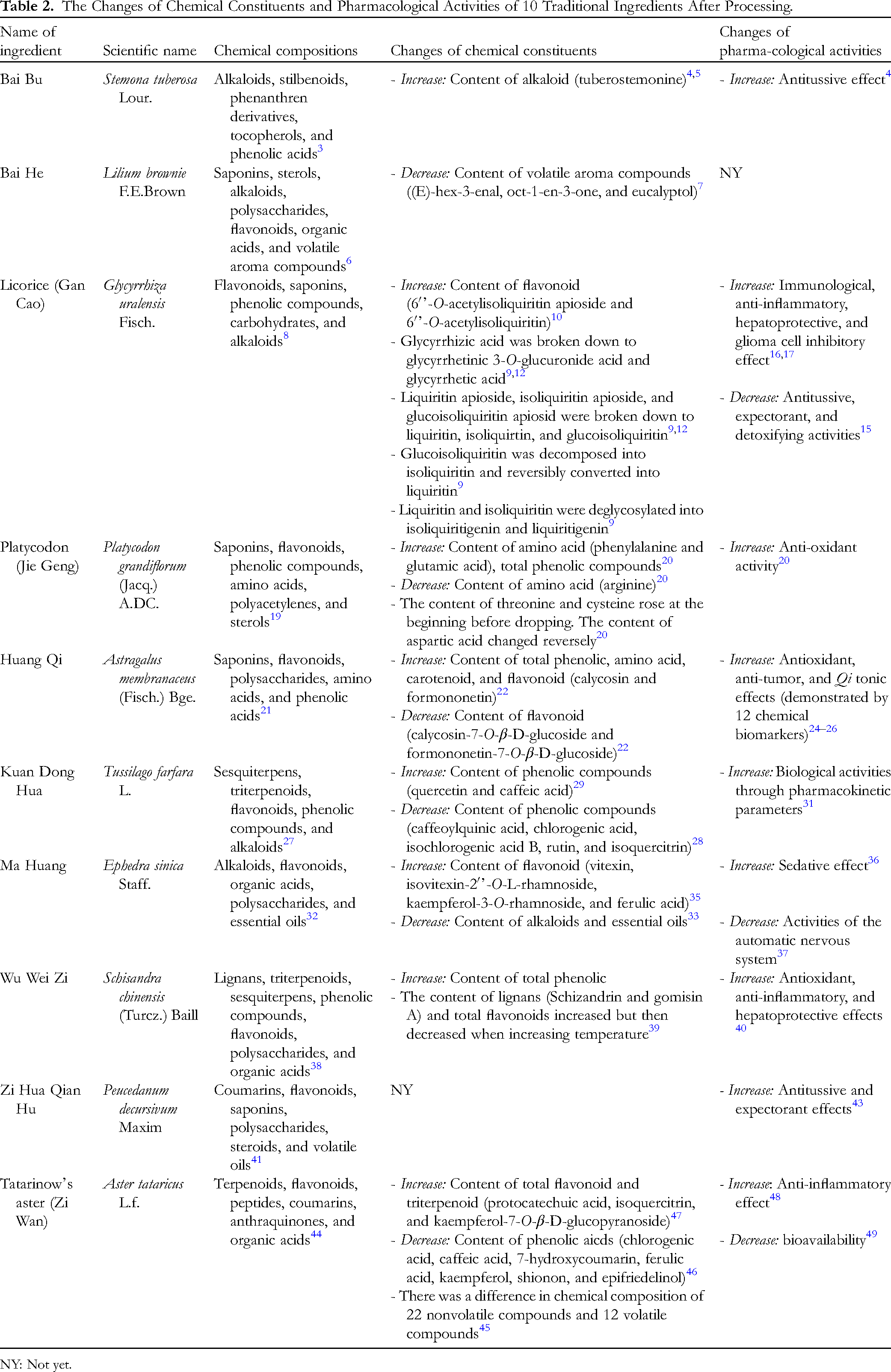
Honey is one of the common excipients used in medicinal material processing. The chemical compositions of honey include water, sugar, amino acids, vitamins, and enzymes, creating the nutritional value of honey. In addition, honey also contains a large number of polyphenols, phenolic acids, and flavonoids, the components exhibiting the biological effects of honey such as anti-inflammatory, antioxidant, and others (Table 2). 50
The Changes of Chemical Constituents and Pharmacological Activities of 10 Traditional Ingredients After Processing.
NY: Not yet.
In Traditional Medicine, honey has a sweet taste, enters the Heart, Lung, Spleen, Stomach, and Large intestine meridians, and has the effect of Qi tonic, laxatives, and detoxifying. According to Five Elements theory in Traditional Medicine, sweetness and yellow color, and Spleen organ all belong to the Earth Element, therefore all sweet and yellow drugs tend to enter the Spleen organ. The process of honey-frying helps to yellow and increase the sweetness of the traditional ingredients, thereby increasing the yang, increasing the delivery of the medicine to the Spleen organ, and enhancing the effect of Qi. 1
Most medicinal materials changed in composition and content of active ingredients after honey-frying. Most of the groups of active ingredients were decomposed when exposed to high temperatures and long-term such as saponins, polyphenols, flavonoids, and volatile compounds. Under the effect of temperature, saponins and flavonoid glycoside compounds were deglycosylated to form aglycon products, leading to an increase in the content of these substances.9–11,22 Some phenolic acids such as chlorogenic acid, isochlorogenic acid B, and caffeoylquinic acid had been removed from the quinic radical during processing to form caffeic acid.20,28,29,46 In addition to being decomposed into other products, volatile compounds had low boiling points and were easily lost under the influence of high temperatures.34,35,39 Changes in other groups of compounds such as lignans, and alkaloids were not fully understood and required further researches.
In addition to the roasting temperature, the ratio of honey to medicinal materials and roasting time also affected the chemical composition and pharmacological effects of the medicine. Among the 10 medicinal materials processed with honey, 3, which were Bai Bu, Gan Cao, and Ma Huang, had been studied for optimizing the processing method, in which the ratio of honey to medicinal materials and roasting time were two dependent variables of the process.4,5,12,34 Moreover, the effect of frying time had been investigated in the preparation process of Jie Geng and Huang Qi.
Some medicinal herbs had a change in pharmacological effects after honey-frying, which is correlated with the change in their chemical compositions. For instance, the antitussive effect of Bai Bu increased proportionally to the increase in the content of alkaloids, especially tuberstemonin. 4 The expectorant, antitussive, and detoxifying effects of Licorice decreased related to the decrease in active ingredients such as glycyrrhizic acid, liquiritin apioside, and liquiritin. 15 The alkaloid compounds in Ma Huang have been shown to stimulate the adrenergic nervous system, thereby affecting the central nervous system. 32 The reduction in the content and degradation of these alkaloid compounds was one of the many reasons leading to a decrease in pharmacological effects on the central nervous system. The dibenzocyclooctadiene lignans found in Schisandra sinensis, such as schisandrin and gomisin A, have been shown to possess antioxidant, hepatoprotective, and anti-inflammatory effects in previous studies. 38 Therefore, the increase in the content of these bioactive compounds observed in the study by Park et al 39 after processing with honey may be associated with the pharmacological effects. Several herbs such as Gan Cao, Huang Qi, Kuan Dong Hua, Ma Huang, and Zi Wan were also studied for the change in the pharmacokinetics of biologically active compounds before and after honey frying.14,25,31,36,49 In particular, Huang Qi had also been researched to confirm increasing in Qi tonifying effect (which is vital energy-enhancing effect in terms of modern medicine) after processing. 26
Conclusion
Medicinal material processing is an indispensable part of the foundation of traditional medicine, greatly influencing the effectiveness of tradtional ingredients in theurapetic. This review provides a general overview of the differences in chemical constituents and pharmacological activities of 10 honey-roasted traditional ingredients in Vietnam. The pharmacological effects of a medicinal herb can be influenced by one or more groups of compounds. Currently, studies on the changes in chemical compositions and pharmacological effects of medicine before and after processing are being conducted independently by many research groups. There have been fewer researches on which changes in the content of chemical components lead to changes in the pharmacological effects of the medicinal herb. Moreover, 2 herbs (Bai He and Zi Hua Qian Wu) have not found comparative studies before and after processing, so further studies are needed to clarify these differences.
Footnotes
Declaration of Conflicting Interests
The author(s) declared no potential conflicts of interest with respect to the research, authorship, and/or publication of this article.
Funding
The author(s) received no financial support for the research, authorship, and/or publication of this article.
