



Abstract
Gallic acid is a trihydroxybenzoic acid of plant metabolites widely spread throughout the plant kingdom. It has characteristics of the strong antioxidant and free radical scavenging activities, and can protect biological cells, tissues, and organs from damages caused by oxidative stress. This review aims to summarize the protective roles of gallic acid and the underlying pharmacological mechanisms in the pathophysiological process of the oxidative damage diseases, such as cancer, cardiovascular, degenerative, and metabolic diseases. The studies reviewed herein showed that the main therapeutic effects of gallic acid were attributed to its antioxidant properties. It modulated various signaling pathways through a wide range of inflammatory cytokines, and enzymic and nonenzymic antioxidants. However, the available data were limited to few studies assessing the treatment effects of gallic acid in human subjects to confirm its therapeutic outcomes. Therefore, the clinical trials were urgently needed to investigate the safety and efficacy of gallic acid treatment on human beings. The scientific data summarized in this review highlighted the therapeutic potentials of gallic acid for oxidative damage diseases. It could be developed as versatile adjuvant or therapeutically lead compound in future.
Keywords
Oxygen- and nitrogen-based radicals are 2 types of free radicals, characterizing unstable and highly reactive in biology system. 1 Excessively high levels of free radicals could initiate lipid peroxidation; cause damage of cellular proteins, membrane lipids, and nucleic acids; and eventually result in injury. 2 Imbalance between the production and the elimination of reactive oxygen species (ROS) and reactive nitrogen species (RNS), leading to a situation when steady-state ROS concentration is transiently or chronically enhanced with certain consequences of cell physiology, has been defined as oxidative stress. 3,4 Reactive oxygen species are oxygen-containing oxidants including hydrogen peroxide, hydroxyl radicals, superoxide, peroxyl radicals, hypochlorous acid, ozone, and singlet oxygen, while RNS include nitric oxide radicals, peoxynitrite, and nitrogen dioxide. 4,5 Oxidative stresses are categorized into acute and chronic oxidative stress, based on the ability of ROS/RNS to be rebalanced to a certain degree within a certain period of time. More or less specific physiological even pathological consequences may be induced under acute and chronic oxidative stress. 6 Currently, the chronic oxidative stress has been exemplified to form atherosclerotic plaques and increase the risk of type 2 diabetes mellitus, cancer, atherosclerosis, and neurodegenerative diseases. 5,6
Gallic acid and its derivatives such as lauryl gallate, propyl gallate, octyl gallate, tetradecyl gallate, and hexadecyl gallate are phenolic acids of plant metabolites widely spread throughout the plant kingdom. 7 As shown in Figure 1, gallic acid is a trihydroxybenzoic acid in which the hydroxy groups are at positions 3, 4, and 5. Its derivatives have various length of carbochains linked to the carboxyl group. 8 Gallic acid and its derivatives have demonstrated a large number of applications in pharmaceutical, cosmetic, food, printing, and dyeing industries. 9,10 When used as an additive, gallic acid could prevent the rancidity and spoilage of fats and oils in various eatable goods such as condiment, candy, beverage, and baked and fried food. 11 Also, it was found that gallic acid could inhibit melanogenesis to overcome pigmentation and protect the cells from UV-B or ionizing irradiation, which is the reason for using it as an importance gradient in many cosmetics. 12,13 Besides those, there are diverse reports with regard to gallic acid on medicinal uses, such as antibacterial, anti-allergy, anti-inflammatory, and antioxidant stress. The gallic acid displayed antibacterial effects against a wide range of pathogens including Escherichia coli, Staphylococcus aureus, Pseudomonas aeruginosa, Klebsiella pneumonia, Streptococcus mutans, Chromobacterium violaceum, Campylobacter jejuni, and Listeria monocytogenes. 14 -16 It was reported that gallic acid, together with other phenolic compounds, is an effective ingredient for the treatment of allergic contact dermatitis. 17 The release of the pro-inflammatory and inflammatory mediators, such as interleukin (IL)-2, IL-4, IL-5, IL-13, IL-33, tumor necrosis factor-α (TNF-α), interferon-γ (IFN-γ), cyclooxygenase-2 (COX-2), and nuclear factor κB (NF-κB), could be downregulated by gallic acid to prevent excessive inflammatory responses. 18 -20 Most importantly, gallic acid should be used as the strong antioxidants for the protection of human cells under acute and chronic oxidative stress, which make them significant options to be used as therapeutic agents or dietary supplements. 21
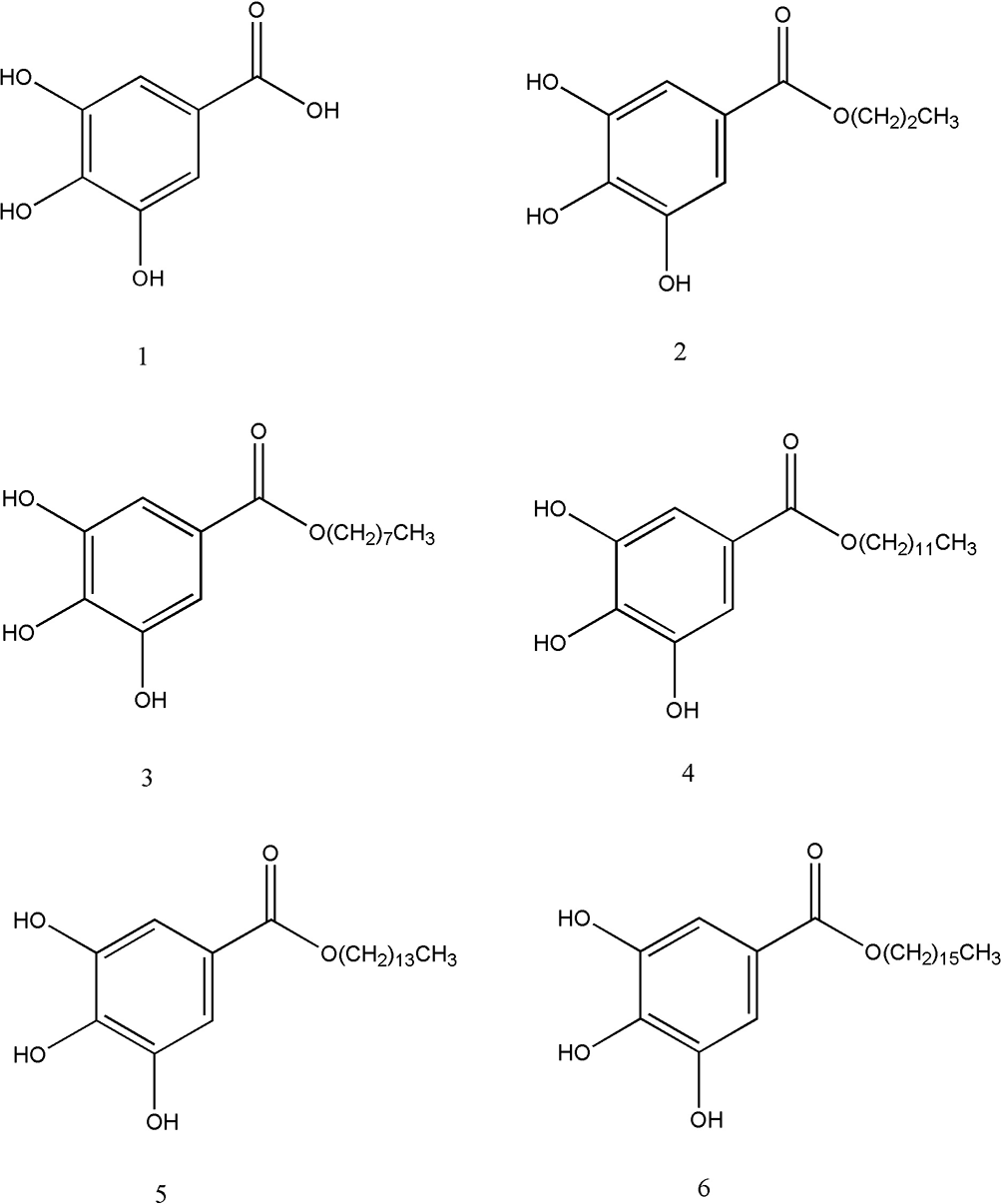
Chemical structure of gallic acid and its derivatives. 1: Gallic acid; 2: propyl gallate; 3: octyl gallate; 4: lauryl gallate; 5: tetradecyl gallate; and 6: hexadecyl gallate.
As the results of its antioxidant and free radical scavenging characteristics, the protective role of gallic acid in preventing various oxidative damage diseases has attracted great interests of the scientific community toward various application potentials in recent years. 22 This work summarizes the pharmacological activities and important uses of gallic acid in oxidative damage interventions which have extensively been disclosed in various research studies. This work also gives the evidences for the construction of scientific foundations toward the developments and ability of using compounds based on gallic acid in the future.
Gallic Acid in Treating Oxidative Damage Diseases
It is well-known that the oxidative damage of biomolecules, accumulated under acute and chronic oxidative stress, is involved in the pathogenesis of wide spectrum diseases, such as cancer, cardiovascular diseases, degenerative diseases, and metabolic diseases. 23 Therefore, it is important to understand the role of medicines, gallic acid in this case, in the prevention of oxidative stress and treatment of oxidative damage diseases.
Cancer
The anticancer properties of gallic acid have been related to their ability to regulate the oxidative stress and modify the oxidoreductive status of cancer cells. 24 -26 Herein, the relative studies published recently were reviewed and summarized in Table 1.
Anticancer Mechanisms of Gallic Acid in Different Experimental Models.

AFP, alphafetoprotein; CAT, catalase; DMBA, 7,12-dimethylbenz[a]anthracene; DMH, 1,2-dimethylhydrazine; GPC-3, glypican-3; GPx, glutathione peroxidase; GR, glutothione reductase; GSH, reduced glutothione; LDH, lactate dehydrogenase; ROS, reactive oxygen species; SOD, superoxide dismutase; STAT3, signal transducer and activator of transcription 3.
↑: Increased level of expression; ↓: decreased level of expression.
Gallic acid could exhibit both prooxidant as well as antioxidant characteristics, and its prooxidant action is responsible for its potent anticancer and apoptosis inducing properties in most of the literature reports as follows. For human promyelocytic leukemia HL60 and its resistant sublines HL60/VINC and HL60/MX2 cells, gallic acid modulated the cellular level of ROS in a dose-dependent and time-dependent manner. 27 Similarly, Russell et al reported that gallic acid could autoxidate to produce significant levels of H2O2 and O2 in malignant cells. These increased ROS levels could cause mitochondrial potential loss, cytochrome c release, and activation of caspases 3, 8, and 9. Therefore, the treatment of gallic acid could effectively kill cancer cells through apoptosis. 28 Moreover, Sánchez-Carranza et al found that gallic acid sensitized paclitaxel-resistant ovarian carcinoma cells via ROS-mediated inactivation of Extracellular Signal-Regulated Kinase (ERK), therefore, it could be used as a useful co-adjuvant in ovarian carcinoma treatment. 29 Moreover, gallic acid could activate casein kinase II to induce the BIK-BAX/BAK-mediated endoplasmic reticulum (ER) Ca2+-ROS-dependent apoptosis of human oral cancer (OC) SCC-4 cells. 30 Gallic acid increased ROS levels including O2− in Hela cells, which was accompanied by mitochondrial potential loss and reduced glutothione (GSH) depletion. 31 In DBTRG-05MG human glioblastoma cells, gallic acid induced the enrichment of intracellular Ca2+ level ([Ca2+]i) by causing Ca2+ entry, and phospholipase C-dependent release from ER, and subsequently activate mitochondrial apoptotic pathways through ROS production. 32 Gallic acid induced time-dependent generation of ROS and then apoptotic death in HCT-15 colon cancer cells. 33 The Ca2+ release, ROS generation, and Mitochondrial membrane potential (MMP) loss were also demonstrated in apoptosis of human OC cells under the treatment of gallic acid. 34 Compared to normal human HL-7702 hepatocytes, gallic acid was also reported to present a selective cytotoxic effect on human hepatocellular carcinoma SMMC-7721 cells. This effect was related to the ability of gallic acid to induce caspase-3, caspase-9, and ROS activities, elevate the expression of apoptosis regulator Bcl-2-like protein 4, and reduce MMP in SMMC-7721 cells. 35 Wang et al reported that gallic acid combined with cisplatin exhibited synergistic effects on apoptosis of human SCLC H446 cells. It induced the generation of ROS, disruption of MMP, downregulation of X-linked inhibitor of apoptosis protein (XIAP) expression, and upregulation of Bax, apoptotic protease activating factor-1 (Apaf-1), DIABLO, and p53 expression. 36 Also, combination of gallic acid and another phenolic compound curcumin could lead to the apoptotic death of breast cancer cells through GSH reduction, ROS generation, and mitochondrial dysfunction. 37 In hepatocellular carcinoma bearing rats induced by N-nitrosodiethylamine, gallic acid could significantly decline the serum levels of alphafetoprotein, glypican-3, signal transducer and activator of transcription 3, gene expression levels of hepatic gamma glutamyl transferase and heat shock protein gp96, and elevate serum suppressors of cytokine signaling 3 level. 38
Moreover, their studies reported that the antioxidant action of gallic acid was also involved in the cancer elimination. In 1,2-dimethyl hydydrazine-treated colon carcinogenesis rats, gallic acid administration restored the lipid peroxidation levels, significantly normalized the superoxide dismutase (SOD) and catalase (CAT) activities, and increased the levels of GSH and the activities of glutathione peroxidase (GPx) and glutathione reductase (GR). Those effects played a key role in the prevention of malignant transformation and cancer development. 39 Topical application of gallic acid also reverted back the altered levels of lactate dehydrogenase (LDH)-isoenzymes, antioxidants, collagen, and MMP-2/MMP-9 activities. It was able to exhibit a significant protection for skin carcinogenesis mice induced by 7,12-dimethylbenz[a]anthracene/Croton oil. 40
Taken together, gallic acid presented extensive inhibitory effects on various cancerous models in vitro or in vivo through a dual edge sword behavior. Both of the prooxidant and antioxidant actions are responsible for the potent anticancer properties of gallic acid. As shown in Figure 2, its anticancer effects functioned through 3 key processes including causing Ca2+ entry, autoxidating to produce significant levels of intracellular ROS, and subsequently activating mitochondrial apoptosis on cancer cells. Reactive oxygen species generated by gallic acid have been evidenced to be responsible for the apoptotic death of cancer cell. Therefore, gallic acid behaves with the potential to be developed as a novel adjuvant or even a therapeutic agent for future use in the cancer treatment.

The regulation of biomolecules by gallic acid in cancer.
Cardiovascular Disease
The antioxidant potency of gallic acid was described, which is reflected in protection of the cardiovascular system. 41,42 The relative studies published recently were reviewed and summarized in Table 2.
Protective Activities of Gallic Acid in Cardiovascular Diseases.

AGEs, advanced glycation end products; ALT, alanine transaminase; AST, aspartate transaminase; CAT, catalase; CK-MB, creatine kinase-MB; CYP, cyclophosphamide; GPx, glutathione peroxidase; GSH, reduced glutothione; GST, glutathione-S-transferase; HO-1, heme oxygenase-1; ISO, isoproterenol; LDH, lactate dehydrogenase; LV, left ventricular; MDA, malondialdehyde;
↑: Increased level of expression; ↓: decreased level of expression.
Gallic acid could protect advanced glycation end products (AGEs)-induced cardiac H9C2 (2-1) cells from the release of ROS. It prevented the cardiovascular complications through altering the antioxidant status, collagen content, and MMP of cardiac cells. 43 In rat models of ischemic heart, LDH, SOD, CAT, and GPx activities increased and malondialdehyde (MDA) activity decreased under the treatment of gallic acid. It provided a therapeutic approach to reduce the ischemia/reperfusion injury. 44 For male Wistar rats with isoproterenol-induced myocardial infarction, treatment of gallic acid could protect the heart. The mechanisms involve reduced activities of creatine kinase (CK), creatine kinase-MB (CK-MB), aspartate transaminase, alanine transaminase, and LDH in serum, enhanced activities of enzymic antioxidants such as SOD, CAT, GPx, glutathione reductase (GRx), and glutathione-S-transferase (GST) in the heart, and the increased levels of the nonenzymic antioxidants GSH, vitamin C and E in plasma and the heart. 45 Prince et al used the same animal model and obtained similar results. Gallic acid treatment led to decreased activities of CK-MB, LDH, β-glucuronidase, β-N-acetyl glucosaminidase, β-galactosidase, cathepsin-B and -D in serum, decreased levels of thiobarbituric acid reactive substances and lipid hydroperoxides, and increased levels of GSH in the plasma and heart. 46 Gallic acid could maintain levels of endogenous antioxidant enzymes and membrane-bound ATPase activity, inhibit the lipid peroxidation, and eventually offer the protection for male albino Wistar rats against lindane-induced myocardial damage. 47 Oral administration of gallic acid resulted in the significant induction of cardiac antioxidant enzymes SOD, GPx, and CAT in the heart of male Sprague-Dawley (SD) rats. Moreover, these enzyme expressions were accompanied by upregulating the expression of heme oxygenase-1. 48 Gallic acid presented the protective effect on the cardiac fibrosis of male Wistar rats induced by AGEs. Gallic acid treatment could effectively attenuate collagen accumulation and decrease the expression of fibrotic markers such as TNF-α, transforming growth factor b (TGF-b), and MMP-2 and -9. In addition, the increased expression of NADPH oxidase, Receptor for Advanced Glycation End Products (RAGE), NF-κB, and ERK 1/2 under AGEs infusion was normalized by gallic acid treatment. 49 Treatment with gallic acid was able to ameliorate myocardial injury of male SD rats induced by aluminum oxide (Al2O3) nanoparticles. The cardiac enzymes (creatine phosphokinase (CPK), CK-MB, and LDH) and myocardial oxidative stress markers (GSH, SOD, CAT, and MDA) were identified as the targets regulated by gallic acid. 50 In N-nitro-l-arginine methyl ester-induced mice, the administration of gallic acid showed a dual preventive and therapeutic effect on the left ventricular remodeling and cardiac fibrosis through the inhibition of gene expression of hypertrophy markers, GATA-binding factor 6 (GATA6) transcription factor, as well as high density lipoprotein (HDL) 1 and 2. 51 Moreover, Ogunsanwo et al reported that gallic acid could decrease cardiac and renal MDA contents and H2O2 generation, and increase the activities of CAT, GPx, GST, and GSH through free radical scavenging activity. Therefore, gallic acid could attenuate the chronic cardiotoxicity associated with cyclophosphamide treatment. 52
Overall, gallic acid is able to provide the protection for cardiovascular system under oxidative stress. It can restore the series of enzymic and nonenzymic antioxidants, such as SOD, CAT, GPx, GRx, GST, and GSH, vitamin C and E, and attenuate cardiotoxic MDA contents and ROS generation through free radical scavenging activity. Therefore, gallic acid could be developed as a versatile antioxidant with promising therapeutic and industrial applications.
Degenerative Disease
The antioxidant properties of gallic acid have been exploited in the solution of neurodegenerative disorders, such as Alzheimer’s and Parkinson’s diseases. 53 -55 As shown in Table 3, a number of studies have demonstrated the protective effects of gallic acid on brain damage in different animal models.
Protective Activities of Gallic Acid in Neurodegenerative Diseases.

Aβ, beta-amyloid; CAT, catalase; GPx, glutathione peroxidase; GSH, reduced glutothione; MDA, malondialdehyde; 6-OHDA, 6-hydroxydopamine; ROS, reactive oxygen species; SC, scopolamine; SD, Sprague-Dawley; SOD, superoxide dismutase; STZ, streptozotocin; TBARS, thiobarbituric acid reactive substances; VD, vascular dementia.
↑: Increased level of expression; ↓: decreased level of expression.
In SD rats, gallic acid prevented beta-amyloid (Aβ)-induced apoptotic neuronal death by inhibiting the cytosolic Ca2+ entry, glutamate release, and generation of ROS. 56 The gallic acid could significantly reduce the thiobarbituric acid reactive substances level, retrieve the level of GSH, SOD, and CAT activities, and then protect the rat brain under sodium fluoride induced oxidative stress. 57 Mansouri et al reported that oral administration of gallic acid could significantly increase the passive avoidance memory, total thiol and GPx contents and also decreased MDA levels in the hippocampus and striatum of 6-hydroxydopamine-treated Wistar rats (animal model of Parkinson’s disease). The results suggested that the cerebral antioxidant defense could be enhanced by gallic acid stimulation, which is an effective approach in the treatment of Parkinson’s disease. 58 The same group also found that gallic acid could prevent streptozotocin (STZ)-induced learning and memory impairment in sporadic Alzheimer’s Wistar rats. Moreover, oral administration of gallic acid singnificantly reduced MDA levels in the brain tissues and restored the activities of antioxidant enzymes (SOD, GPx, and CAT) in the hippocampus and cerebral cortex. 59,60 In scopolamine-induced amnesic models, gallic acid was found to possess anti-amnesic activity which may be attributed to its antioxidant properties and anticholinesterase activity. 61 Gallic acid also reduced the lead accumulation in brain tissue. It reversed the locomotor and exploratory activities damages, enhanced blood Aminolevulinic acid dehydratase (ALA-D) activity, and decreased brain CAT. Therefore, gallic acid played a role against the brain oxidative stress resulting from lead poisoning. 62 In the intrahippocampal infusion of Aβ-induced rat model of Alzheimer’s disease, gallic acid treatment could improve the brain electrical activity and histological damage (removed the Alzheimer’s disease plaques in CA1 region of hippocampus) in a dose-dependent manner. 63 Gallic acid was also reported to inhibit NF-κB acetylation and then suppress Aβ-induced neuroinflammation and Aβ-mediated neurotoxicity on BV-2 and Neuro-2A cells in vitro. For in vivo models of Alzheimer’s disease induced by Aβ peptide, gallic acid inhibited the increase of nuclear NF-κB and IL-1β as well. 64 In animal models of vascular dementia, gallic acid treatment significantly restored the spatial memory, total thiol and GPx contents and decreased MDA levels in the hippocampus and frontal cortex. Therefore, it significantly enhanced the cerebral antioxidant defense against cognitive deficits. 65
Overall, gallic acid has exhibited great neuroprotective effects in various cellular or animal models in vitro and in vivo. As a result of regulation of antioxidant enzyme activities, neuroinflammatory cytokines, cytosolic Ca2+ concentration, and ROS generation, gallic acid could prevent neuronal death, and increase the learning and passive avoidance memory. Therefore, gallic acid could be introduced as a promising pharmacological agent for preventing and treating neurodegenerative diseases in future.
Metabolic Disease
It is well-known that metabolic diseases, such as diabetes mellitus and obesity, could reduce the antioxidant capacity by decreasing the level of antioxidant enzymes, leading to a progressive time-dependent cellular dysfunction, organism damage, and an increased risk of the age-related diseases and death. 23,66,67 With the great antioxidant and free radical scavenging abilities, gallic acid could reverse the metabolism to its normal condition. Therefore, it could function as an effective agent in the treatment of metabolic diseases.
In the clinic trial, it was found that gallic acid could maintain the stability of genetic materials, protect LDL against oxidative damage, and reduce the levels of C-reactive protein in the diabetic patients. 68 Similarly, gallic acid protected STZ-induced type I diabetes models from oxidative stress-induced damage. Its treatment could effectively decrease ROS levels and lipid peroxidation, and elevate activities of the antioxidant enzymes SOD, Δ-aminolevulinic acid dehydratase, CAT, and GST levels in the liver of diabetic rats 69 . Moreover, several studies reported that gallic acid could significantly decrease the levels of blood glucose, lipid peroxidation products, glycoprotein components, and lipids and significantly enhance the activities of enzymic antioxidants in STZ-induced diabetic animal models. 70 -72 It was also reported that gallic acid presented great protective effects in various experimental models of the obese state. Setayesh et al reported that gallic acid could significantly reduce the levels of glucose, insulin, and triglycerides in plasma, and oxidation of DNA bases in most organs of the obese animals. 73 Similarly, Hsu and Yen reported that the body and adipose tissue weights could be controlled by gallic acid in high-fat diet treated Wistar rats. The consumption of gallic acid promoted serum parameters (tumor-associated glycoprotein (TAG), phospholipid, total cholesterol, LDL-cholesterol, insulin, and leptin) and reduced oxidative stress (reduced Glutathione (GSSG) and enhanced GSH, GPx, glutathione reductase (GRd), and GST) in the obese rats. 74
Taken together, gallic acid has increasingly demonstrated ameliorative effects against various metabolic disorders in experimental models. In addition to reducing raised blood glucose and/or excessive lipid storage, gallic acid could ameliorate inflammation and oxidative stress at a cellular level through modulating the expression of relative cytokines and enzymes, mainly including SOD, Δ-aminolevulinic acid dehydratase, CAT, GST, GSH, GPx, and GRd. The available evidence would certainly create a great interest of either research or clinical community toward the therapeutic potentials of gallic acid on metabolite diseases.
Conclusive Remarks
Oxidant stress is of significant scientific interest, due to their involvement in the progressive genesis of noncommunicable diseases, such as cancer, myocardial infarction, Alzheimer’s dementia, diabetes mellitus, and obesity. The current review is an attempt to summarize the protective roles of gallic acid and the underlying pharmacological mechanisms in the pathophysiological process of these oxidative damage diseases. Studies presented herein indicate that the prooxidant as well as antioxidant actions of gallic acid are responsible for its potent anticancer and apoptosis inducing properties, while its antioxidant action is mainly responsible for the other pharmacological effects. It affects relative signaling pathways through regulation of a wide range of inflammatory cytokines, and enzymic and nonenzymic antioxidants. Therefore, gallic acid has the potentials to be developed as versatile adjuvant or even pharmaceutical agent with promising therapeutic and industrial applications. However, the major shortfalls of this development were limited to few studies assessing the treatment effects of gallic acid against oxidative damage diseases and drug metabolism in human subjects to confirm its therapeutic outcomes. This should be further complemented with properly designed clinical trials to provide meaningful data in determining the efficacy and safety of a given gallic acid treatment.
Footnotes
Declaration of Conflicting Interests
The author(s) declared no potential conflicts of interest with respect to the research, authorship, and/or publication of this article.
Funding
The author(s) received no financial support for the research, authorship, and/or publication of this article.