



Abstract
Background:
Diabetes care for older adults is complex and must consider geriatric syndromes, disability, and elder abuse and neglect. Health care providers would benefit from professional training programs that emphasize these risks. One new educational approach is cinematic virtual reality (cine-VR). We conducted a pilot study to evaluate a cine-VR training program based on an older patient with type 2 diabetes and multiple geriatric syndromes who is at risk for elder abuse and neglect.
Methods:
We employed a single-arm, pre-post-test study to assess changes in attitudes to disability and self-efficacy in identifying and managing elder abuse and neglect.
Results:
Thirty health care providers completed the pilot study (83.3% women, 86.7% white, 56.7% physicians, 43.4% practiced in outpatient clinics). We observed change in attitudes toward discrimination (Z = −2.628, P = .009, Cohen’s d = .62). In addition, we observed changes in six of the eight self-efficacy items, including how participants would ask questions about abuse (Z = −3.221, P = .001, Cohen’s d = .59) and helping an older patient make a report to the police or social services (Z = −2.087, P = .037, Cohen’s d = .52). In addition, we observed positive changes in understanding the documentation needed to complete whether a patient reports abuse (Z = −3.598, P < .001) as well as the legal knowledge for how to report elder abuse and neglect (Z = −2.556, P = .011).
Conclusion:
Findings from this pilot study suggest that cine-VR training may increase health care providers’ awareness of discrimination and improve self-efficacy toward identifying and managing elder abuse and neglect. Research with a proper control condition is needed to confirm its effectiveness.
Diabetes care for older adults necessitates special attention to the clinical and functional heterogeneity of this population. Approximately 88% of people with diabetes have one chronic condition, and 51% have three or more. 1 Among older adults with type 2 diabetes, the median number of comorbid conditions is five. 2 Furthermore, older adults with diabetes are at increased risk for numerous geriatric syndromes, including cognitive impairment, hearing loss, visual impairment, depression, polypharmacy, urinary incontinence, disability, injurious falls, and fractures. 3 Both geriatric syndromes and other comorbid conditions negatively impact older adults’ diabetes self-care behaviors4 -6 and quality of life7,8 by posing competing demands that require substantial time, effort, and money to manage effectively.9,10
In addition, physical and psychosocial changes associated with aging negatively impact diabetes self-care. 11 Physical decreases in muscle mass, bone strength, joint flexibility, aerobic capacity, and visual and auditory acuity contribute to physical, functional, and cognitive decline. 11 These declines can lead to disability, 12 impairment of activities of daily living, 13 and lower quality of life, 14 which in turn may contribute to fewer self-care behaviors. 15 Psychosocial changes, such as loss of family members and friends, fears about mortality, loneliness, isolation, and retirement also negatively impact diabetes self-care. These psychosocial changes contribute to increased rates of depression and diabetes distress, which may also interfere with following a healthy diet, physical activity, and medication-taking.16,17 Last, older adults with disabilities, including type 2 diabetes, are at increased risk for elder abuse and neglect.18 -20 Unfortunately, elder abuse and neglect are underrecognized and underreported, especially when an older individual has an impaired ability to communicate or is dependent on the abuser for their care. 21 For these reasons, health care provider education that emphasizes the unique needs of older adults with diabetes is critical to improving quality of care.
A unique educational approach with the ability to capture the clinical and functional complexities of older adults with diabetes is cine-VR.
Cinematic virtual reality combines 360-video with the techniques of cinema to create engaging and educational content using narrative storytelling in a virtual environment. Research has shown that immersive technologies, like cine-VR, enhance educational experiences by allowing multiple perspectives, situated learning, and improved knowledge transfer to real-world settings.22,23 We created a cine-VR training program based on an older patient with type 2 diabetes and multiple geriatric syndromes who is at risk for elder abuse and neglect. The cine-VR simulation follows this patient, John Chen, an 80-year-old man with a history of type 2 diabetes, a mobility disability, hearing loss, urinary incontinence, and potential dementia. Over the course of six episodes, participants learn about Mr Chen’s health, view interactions with his family and health care providers, and figure out why he is having so many accidents. The objectives of this cine-VR training program were as follows: (1) Discuss disability and elder abuse and neglect, (2) Identify risk factors for elder abuse and neglect, (3) Explain the association between disability and elder abuse and neglect, and (4) List approaches to intervene in cases of suspected elder abuse and neglect. We conducted a pilot study with health care providers to evaluate attitudes toward disability and self-efficacy to identify and manage elder abuse and neglect. We also included a brief evaluation of the cine-VR training program.
Methods
Research Design
We employed a single-arm, pre-post-test study to assess health care providers’ attitudes to disability, self-efficacy to identify and manage elder abuse and neglect, and cine-VR evaluation questions. We utilized a pilot study design to evaluate the feasibility of our methods and procedures to determine whether our methods and procedures are appropriate for a large-scale randomized controlled trial. Pilot studies play a critical role in improving the conduct and quality of randomized controlled trials by evaluating preliminary outcomes, identifying areas for improvement, and addressing uncertainties in the methodology. 24
Ethics Approval
Ethics approval for the study was obtained from the Ohio University Office of Research Compliance Institutional Review Board (approval number: #22-X-153). In complying with federal, state, and local laws and regulations for human subjects, we ensured our research met the requirements set forth in the regulations on public welfare in Part 46 of Title 45 of the Code of Federal Regulations (45 CFR 46); the principles set forth in “The Belmont Report,” and the Helsinki Declaration of 1975. All participants provided informed consent to participate in the study.
Cinematic Virtual Reality Content
John Chen is an 80-year-old man with a 14-year history of type 2 diabetes and comorbid hypertension. He is 5’8” 152 pounds, with a body mass index of 23.1 kg/m2. His current hemoglobin A1c level is 9.7%. He has been prescribed metformin and glyburide to manage his diabetes and lisinopril to manage his hypertension. He also has osteoarthritis, decreased renal function (estimated glomerular filtration rate (eGFR) = 58 mL/min/1.73 m2), and elevated triglycerides due to his glucose levels (299 mg/dL). He has not been advised on glucose monitoring or specifics of self-care management. He is enrolled in both Medicare and Medicaid.
Mr Chen recently moved in with his son’s family. According to his family, he needs assistance with bathing but can dress himself and uses the bathroom on his own. He moves around on his own, but his ambulation is unsteady and his family reports that he falls often. He does not drive himself or do any shopping or cooking. The episodes capture three separate patient-provider interactions, including visits with a primary care physician, urgent care physician, and emergency department physician. Participants were asked to observe subtle details across the six episodes that explain why Mr Chen is experiencing so many accidents and health emergencies.
Cinematic Virtual Reality Technology
Participants viewed the cine-VR simulations using Pico G2 4K head-mounted displays. These head-mounted displays allowed participants to turn their head and body in any direction so that they could choose which details to pay attention to, thereby facilitating an active learning experience. We synchronized all cine-VR episodes from a central computer using VR Sync software (Utrecht, Netherlands) so that all participants were viewing the same content at the exact same time.
Cinematic Virtual Reality Curriculum
We developed a curriculum taught synchronously with the cine-VR simulations. The curriculum included six brief debriefs that addressed the following content: (1) Diabetes, Disability, and Older Adults; (2) Bias toward Disability; (3) Association between Disability and Elder Abuse and Neglect; (4) Recognizing Elder Abuse and Neglect; (5) Identifying Risk Factors for Elder Abuse and Neglect; and (6) Reporting Abuse. An experienced behavioral diabetes researcher (EAB) delivered both trainings. The simulations and curriculum were designed to reduce bias toward disability and increase recognition of the signs and symptoms of elder abuse and neglect. We ensured integrity of the training program via a written curriculum, preapproved materials, and team member observation of the trainings.
Power Analysis
For the purposes of this pilot study, we did not conduct an a priori power analysis. We followed the recommendation given by Lancaster et al, 25 for an overall sample size of 30 participants.
Recruitment
Health care providers were recruited from two regional continuing medical education/continuing education conferences in 2022 that included screenings of the cine-VR training program as a session. Eligibility criteria for participating in the pilot study included English speaking and reading adults aged 18 years and older who were health care providers (eg, physicians, nurse practitioners, nurses, physician assistants, exercise physiologists, physical therapists, dietitians, pharmacists, certified diabetes educators, psychologists, and social workers) with an active licensure in Ohio. There were no other exclusion criteria.
Measures
In addition to sociodemographic factors (age, gender, race, ethnicity, type of provider, years in practice, health care sector, serving Medicaid patients), participants completed the following measures:
Attitudes to Disability Scale 26 is a 16-item scale that assesses personal attitudes toward disability and people with disability. The items are answered on a five-point Likert scale ranging from 1 (strongly disagree) to 5 (strongly agree). The scale includes four domains: Inclusion (Cronbach’s α = 0.76), Discrimination (Cronbach’s α = 0.74), Gains (Cronbach’s α = 0.75), and Prospects (Cronbach’s α = 0.72).
Responding to Elder Abuse in GERiAtric care—Provider 27 is a 25-item scale that measures health care providers’ self-efficacy to identify and manage elder abuse and neglect. The scale demonstrates good internal consistency for asking questions about elder abuse and neglect (Cronbach’s α = 0.75) and for managing elder abuse and neglect (Cronbach’s α = 0.87).
Cinematic Virtual Reality Evaluation Questions: a four-item assessment created for the purposes of this pilot study. The items assessed the participants’ perceptions of the content learned and the quality of the training.
Data Collection
All measures were completed online using the electronic questionnaire service Qualtrics (Provo, UT: Qualtrics). To access the measures, participants scanned a QR code from a PowerPoint slide that directed them to the Qualtrics site. The Web site included a description of the study, the online informed consent form, and pre-assessment measures. All participants provided online informed consent prior to completing the measures. At the end of the cine-VR training, participants scanned a different QR code that directed them to the postassessment measures. Data were collected anonymously. To link attendees’ pre-assessment and postassessment responses, we included three questions at the beginning of the assessment which served as a unique identifier (ie, model of first car, high school mascot, and the number day of the month they were born). Total time to complete the pre- and postmeasures took approximately 15 to 20 minutes. For human subject compensation, participants received a US$25.00 gift card. To maintain anonymity, participants clicked on a new Qualtrics link that was not connected to their pre- or postmeasures.
Statistical Analysis
We assessed demographic factors using descriptive statistics and presented them as means and standard deviations or sample size and percentages. Next, we calculated frequencies for each measure, means for the Attitudes to Disability Scale domains, and medians for the evaluation questions. To assess changes in measures pre- and post–cine-VR training, we conducted Wilcoxon signed rank tests. In addition, we determined effect sizes using Cohen’s d by calculating the mean difference between the pre-assessment and postassessment responses divided by the pooled standard deviation. We defined statistical significance as a P value less than .05 and conducted analyses in SPSS statistical software version 28.0 (Chicago, IL: SPSS Inc.).
Results
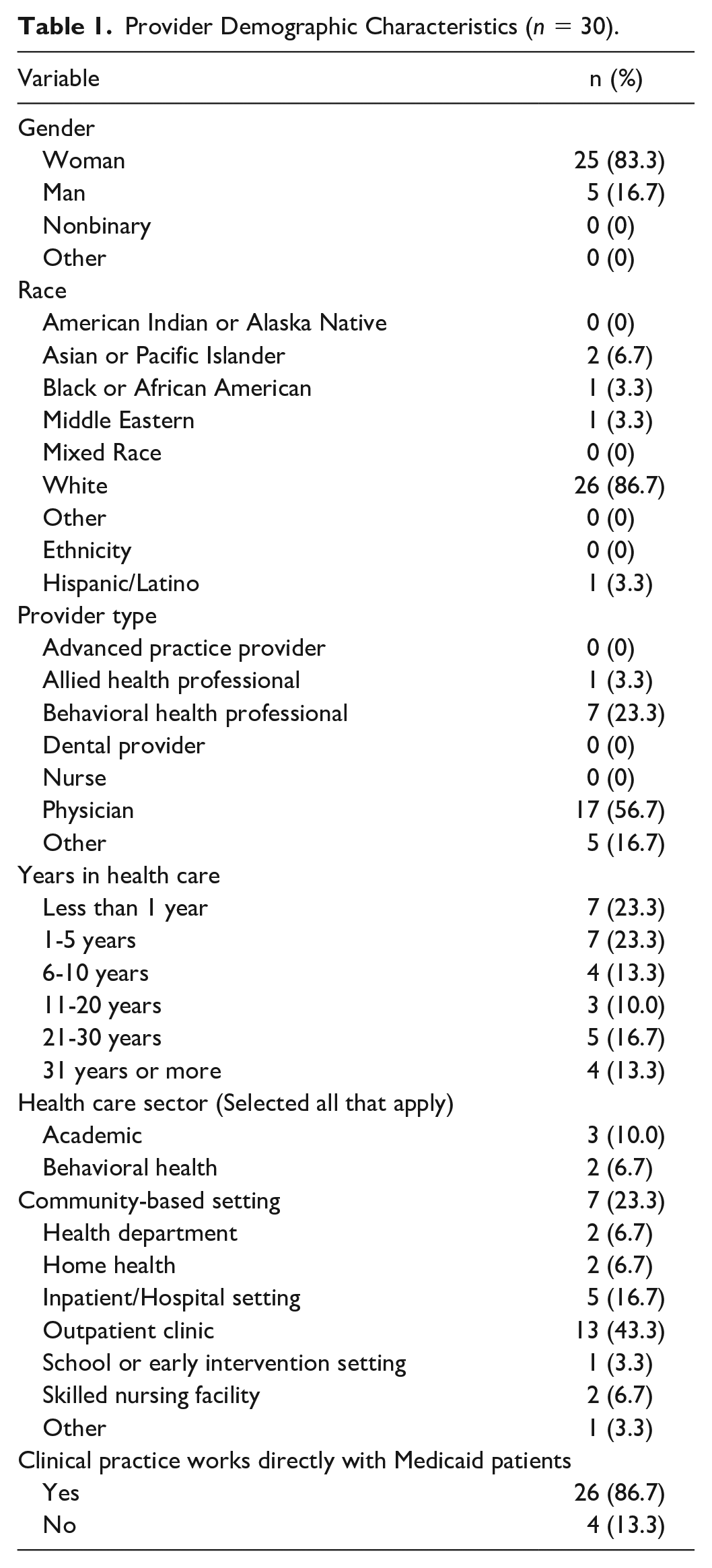
Thirty health care providers consented to participate in the pilot study and completed all pre- and postassessments. In the sample, 83.3% (n = 25; see Table 1) of participants self-identified as women and 16.7% (n = 5) self-identified as men. The participants self-identified their race as follows: 6.7% (n = 2) Asian or Pacific Islander, 3.3% (n = 1) black or African American, 3.3% (n = 1) Middle Eastern, and 86.7% (n = 26) white; 3.3% (n = 1) of participants self-identified as Hispanic/Latino. The majority of participants, 56.7% (n = 17), identified as physicians, with 3.3% (n = 1) identifying as an allied health professional, 23.3% (n = 7) as behavioral health professionals, and 16.7% (n = 5) as other health care providers. Among these participants, 53.3% (n = 16) reported six or more years of clinical experienced, and 43.4% (n = 13) practiced in outpatient clinics. Last, 86.7% (n = 26) provided care to Medicaid patients; Medicaid is a public health insurance program for people with limited income in the United States.
Provider Demographic Characteristics (n = 30).
Attitudes to Disability Scale
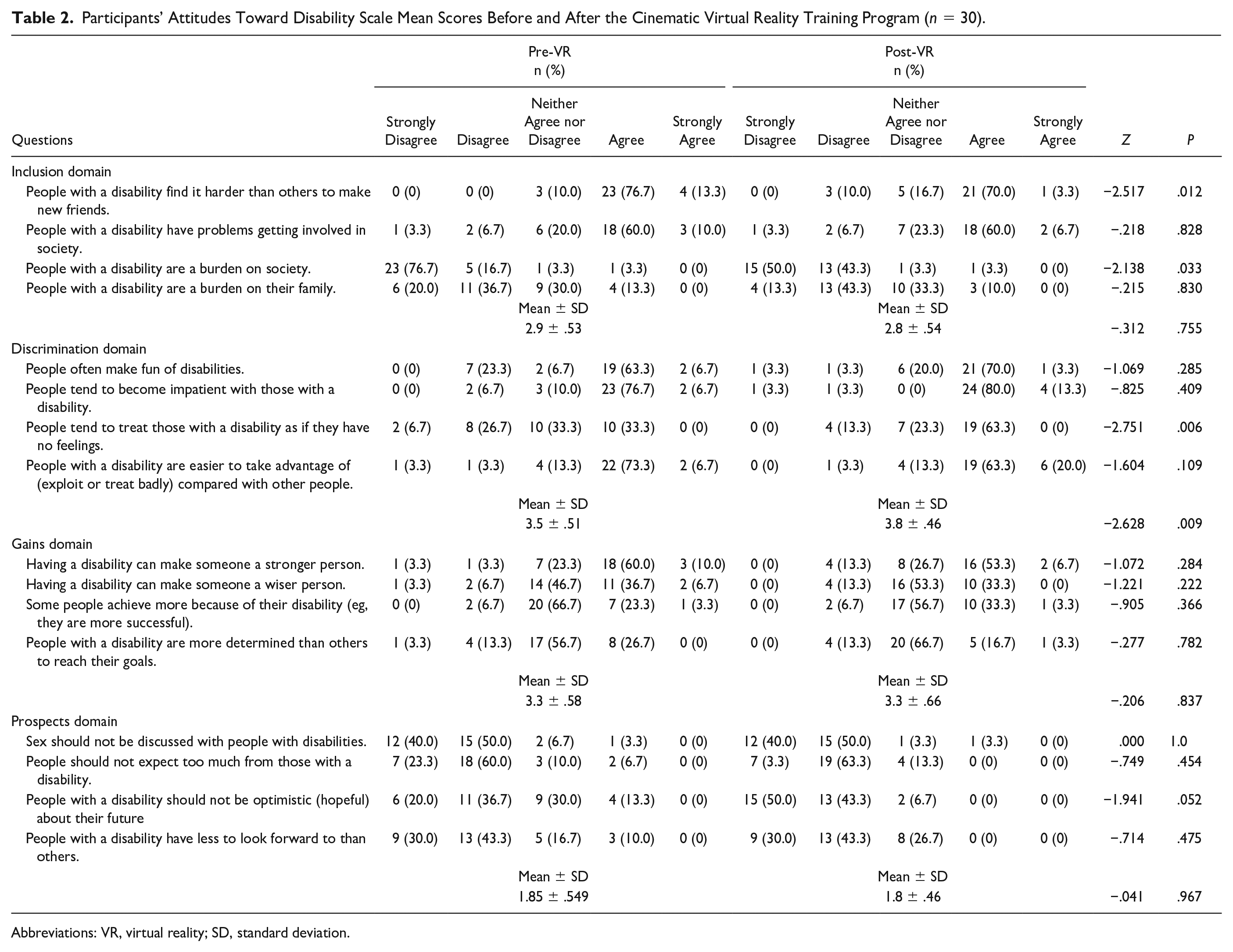
Post–cine-VR training, we observed changes in one of the four Attitudes to Disability Subscales: Discrimination Domain (Z = −2.628, P = .009, see Table 2). This change had a Cohen’s d of .62, indicating a medium effect. This finding may suggest that the cine-VR training increased participants’ awareness of discrimination toward people with disability. Single item changes in the scale included a change in participants’ attitudes toward people with a disability making friends (Z = −2.517, P = .012), such that fewer participants “Agreed” and “Strongly Agreed” that “people with a disability found it harder than others to make a new friend.” Also, participants’ attitudes toward people with a disability “being a burden to society” changed post-training (Z = −2.138, P = .033), with more participants “Disagreeing” than “Strongly Disagreeing” after the cine-VR simulation. Additional follow-up research is needed to understand why more participants selected “Disagree” rather than “Strongly Disagree” post–cine-VR training.
Participants’ Attitudes Toward Disability Scale Mean Scores Before and After the Cinematic Virtual Reality Training Program (n = 30).
Abbreviations: VR, virtual reality; SD, standard deviation.
Responding to Elder Abuse in GERiAtric Care—Provider
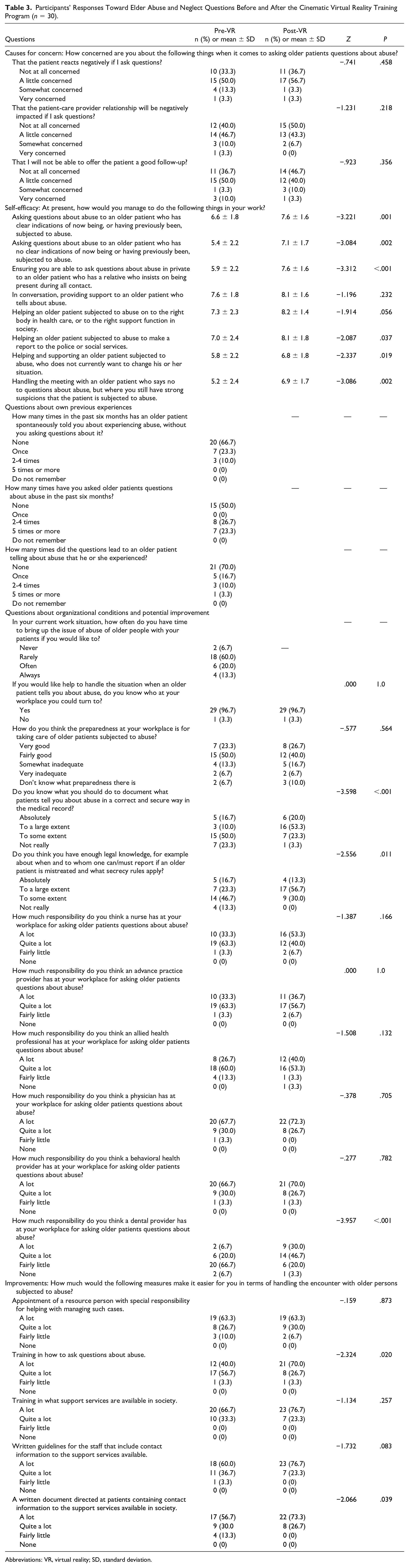
Post–cine-VR training, we observed changes in six of the eight items measuring participants’ self-efficacy in identifying and managing elder abuse and neglect (see Table 3). Participants’ self-efficacy increased in regard to how they would ask questions about abuse: to an older patient who has clear indications of being abused (Z = −3.221, P = .001, Cohen’s d = .59), to an older patient who has no clear indications of abuse (Z = −3.084, P = .002, Cohen’s d = .86), and to ensure questions were asked in private (Z = −3.312, P < .001, Cohen’s d = .88). In addition, participants demonstrated increases in self-efficacy for helping an older patient subjected to abuse make a report to the police or social services (Z = −2.087, P = .037, Cohen’s d = .52) and helping and supporting an older patient subjected to abuse who does not want to change their situation (Z = −2.337, P = .019, Cohen’s d = .50). Last, participants’ self-efficacy increased in their ability to manage an older patient who says no to questions about abuse when they still suspect that their patient is being abused (Z = −3.086, P = .002, Cohen’s d = .82).
Participants’ Responses Toward Elder Abuse and Neglect Questions Before and After the Cinematic Virtual Reality Training Program (n = 30).
Abbreviations: VR, virtual reality; SD, standard deviation.
Another important change post–cine-VR training included participants’ understanding of what documentation to complete in the medical record if a patient tells them about abuse. Specifically, more participants changed their response from “To some extent” pretraining to “To a large extent” post-training (Z = −3.598, P < .001; see Table 3). Similarly, more participants indicated that they had enough legal knowledge for when and to whom they should report elder abuse and neglect; more participants also changed their response from “To some extent” pretraining to “To a large extent” post-training (Z = −2.556, P = .011). Participants also recognized that all providers had the responsibility to report elder abuse and neglect, including dental providers (Z = 3.957, P < .001). Last, participants noted that training in how to ask questions about abuse (Z = −2.324, P = .020) and written documents for patients with contact information for support services (Z = −2.066, P = .039) would be helpful resources.
Cinematic Virtual Reality Evaluation Questions
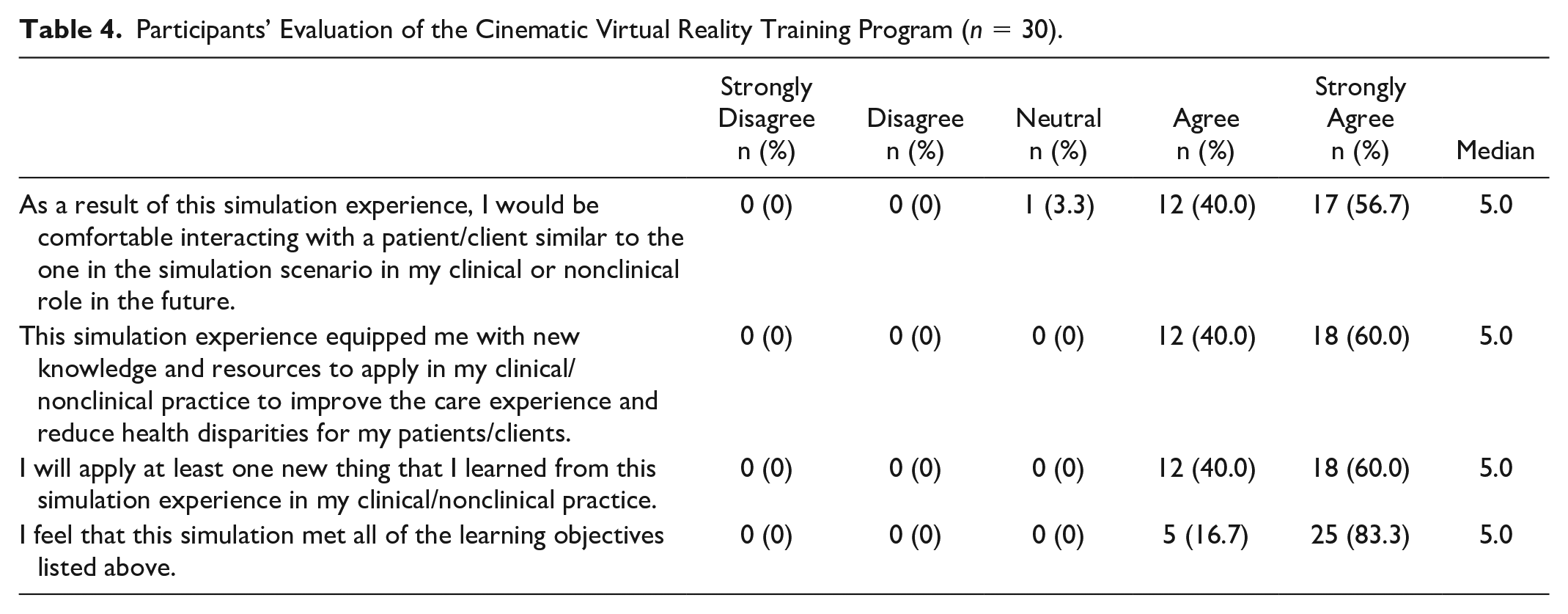
On a Likert scale of 1 (strongly disagree) to 5 (strongly agree), the majority of participants responded 4 (agree) or 5 (strongly agree) to the four evaluation questions (see Table 4). First, 40.0% (n = 12) of participants “Agreed” and 56.7% (n = 17) “Strongly Agreed” that they would be comfortable interacting with a patient similar to the one in the cine-VR simulation. Second, 40.0% (n = 12) of participants “Agreed” and 60.0% (n = 18) “Strongly Agreed” that the cine-VR simulation experience equipped them with new knowledge and resources to apply in their clinical practice to improve the care experience and reduce health disparities for their patients. Third, 40.0% (n = 12) of participants “Agreed” and 60.0% (n = 18) “Strongly Agreed” that they would apply at least one new thing that they learned from this simulation experience in their clinical practice. Finally, 16.7% (n = 5) of participants “Agreed” and 83.3% (n = 25) “Strongly Agreed” that the cine-VR simulation met all of the learning objectives stated at the beginning of the training.
Participants’ Evaluation of the Cinematic Virtual Reality Training Program (n = 30).
Discussion
In this pilot study, we assessed health care providers’ attitudes toward disability and self-efficacy in identifying and managing elder abuse and neglect. Post–cine-VR training, we observed a change in participants’ attitudes toward discrimination, such that participants were more likely to agree with statements that people with disabilities experience discrimination. This finding suggests that the cine-VR training program may increase health care providers’ awareness about discrimination toward people with disabilities; additional research with a proper control condition is needed to confirm this finding. Next, we observed positive increases in participants’ self-efficacy specific to asking older patients questions about abuse, helping older patients report abuse, and managing situations where an older patient denies abuse despite strong suspicions the patient is being subjected to it. In addition, we observed positive changes in participants understanding of the documentation they need to complete whether a patient reports abuse as well as the legal knowledge for how to report elder abuse and neglect. Participants also identified training in how to ask questions about abuse and written documents for patients with contact information for support services as beneficial. Finally, all participants evaluated the cine-VR training positively and indicated that it provided them with new knowledge and resources that they could use in their clinical practice.
As the US population ages, more Americans will be living with type 2 diabetes, geriatric syndromes, and disability. This also means more older adults will be at risk for elder abuse and neglect. The signs of abuse and neglect in older adults with disabilities may be intentionally hidden out of fear for escalating consequences. 20 Injuries to look for include lacerations, bruises, burns, head injuries, and fractures.28,29 Signs and symptoms of neglect may manifest as malnutrition, infections, bed sores, social isolation, and depression.28,29 Furthermore, older adults with type 2 diabetes and disabilities may not be able to independently access health care and social services. 20 They may miss appointments or receive no health care at all. Signs of abuse and neglect in patients with type 2 diabetes include a sudden elevation in A1C levels, not refilling diabetes medications, missed clinic appointments, and urinary tract infections. In our patient case, Mr Chen’s A1C was elevated (ie, 9.7%); he had not refilled his diabetes medications in a year; he missed several appointments with his primary care physician; and he developed a urinary tract infection due to severe dehydration. His dehydration was caused by family members withholding water to prevent his urinary incontinence.
Those in contact with older adults with disabilities—social services, pharmacists, clinic staff, nurses, primary care and emergency department physicians, diabetes care and education specialists, and home health providers—may be in a position to identify subtle signs of abuse and neglect. However, these opportunities may be missed if subtle signs go unrecognized or ignored. Missed opportunities lead to increased morbidity and mortality.30,31 Identifying older adults with disabilities at risk for and with signs of abuse and neglect can prevent harm and save lives. Factors contributing to missed opportunities include lack of knowledge, lack of inter-professional communication skills, perceived lack of time, lack of empathy, insight, or resources. 29 Professional training programs that provide education on signs and symptoms of elder abuse and neglect as well as the management of suspected cases have the potential to detect elder abuse at an early stage. 32 Our cine-VR training program adds to existing professional training programs by offering a glimpse into the life of an older adult with type 2 diabetes and multiple geriatric syndromes.
Finally, lessons learned from this pilot study include recommendations for group size, orientation to the technology, and use of directive probes throughout the virtual reality simulation. First, we recommend a group size of 15 to 30 participants. A smaller group builds a sense of intimacy that opens the door to meaningful and candid discussions about the cine-VR content. We believe if the group size exceeds 30 participants, fewer participants will engage in the conversation. The debrief is essential to identify key points, improve communication skills, and provide emotional support for triggering content. Second, we recommend that the presenter provides a brief overview of the technology prior to starting the training. While VR headsets have become more mainstream, not everyone is familiar with the technology. We have found participants appreciate a brief tutorial on the VR headset, its buttons, and adjustable straps. Last, the presenter should be familiar with the cine-VR content and know which episode reveals what clinical pearls. This is important to guide the conversation after each cine-VR episode so that pertinent content is discussed with every training.
Limitations
Limitations of this pilot study include the small, homogenous sample, selection bias, social desirability bias, lack of a control group, and no long-term follow-up. A final sample of 30 health care providers was small, and the majority were Caucasian (lacked diversity); however, it was sufficient for piloting the cine-VR training program to evaluate the feasibility of our methods and procedures. While we cannot generalize the findings from this pilot study to other health care providers, the findings suggest that the methods and procedures can be replicated in a large-scale randomized controlled trial. A future trial will require a more diverse sample of health care providers to reflect the current workforce from multiple geographic regions, which will help reduce selection bias. To address social desirability bias, we will include a brief social desirability scale in the assessment. Finally, while our pilot study did not include a long-term follow-up, the future randomized controlled trial should include long-term follow-up to determine whether any observed changes are sustained over time.
Conclusion
We created a cine-VR training program that captured the complexities of diabetes care in an older adult with multiple geriatric syndromes who was at risk for elder abuse and neglect. We conducted a pilot study to assess health care providers’ attitudes toward disability and increases in self-efficacy to identify and manage elder abuse and neglect before and after the cine-VR training program. Our findings suggest that the cine-VR training program may increase health care providers’ awareness of discrimination toward people with disabilities as well as improve providers’ ability to identify and manage elder abuse and neglect. Future research comparing the cine-VR training program to a proper control condition is necessary to determine the effectiveness of the training.
Footnotes
Abbreviations
Cine-VR, Cinematic virtual reality; dL, Deciliter; eGFR, estimated glomerular filtration rate; kg, kilogram, m, meter; mg, milligram; mL, milliliter; US, United States; VR, virtual reality.
Declaration of Conflicting Interests
The author(s) declared no potential conflicts of interest with respect to the research, authorship, and/or publication of this article.
Funding
The author(s) disclosed receipt of the following financial support for the research, authorship, and/or publication of this article: This study was part of the Medicaid Care Experience Simulation (MCarES) Project funded by the Ohio Department of Medicaid and administered by the Ohio Colleges of Medicine Government Resource Center. The views expressed in the cine-VR simulations and this manuscript are solely those of the creators and do not represent the views of the state of Ohio or federal Medicaid programs. The participant compensation was supported by the Osteopathic Heritage Foundation Ralph S. Licklider, D.O. Endowed Professorship in Behavioral Diabetes awarded to Elizabeth A. Beverly, PhD.
