




Abstract
Background:
Digital health solutions targeting diabetes self-care are popular and promising, but important questions remain about how these tools can most effectively help patients. Consistent with evidence of the salutary effects of note-taking in education, features that enable annotation of structured data entry might enhance the meaningfulness of the interaction, thereby promoting persistent use and benefits of a digital health solution.
Method:
To examine the potential benefits of note-taking, we explored how patients with type 2 diabetes used annotation features of a digital health solution and assessed the relationship between annotation and persistence in engagement as well as improvements in glycated hemoglobin (A1C). Secondary data from 3142 users of the BlueStar digital health solution collected between December 2013 and June 2017 were analyzed, with a subgroup of 372 reporting A1C lab values.
Results:
About a third of patients recorded annotations while using the platform. Annotation themes largely reflected self-management behaviors (diet, physical activity, medication adherence) and well-being (mood, health status). Early use of contextual annotations was associated with greater engagement over time and with greater improvements in A1C.
Conclusions:
Our research provides preliminary evidence of the benefits of annotation features in a digital health solution. Future research is needed to assess the causal impact of note-taking and the moderating role of thematic content reflected in notes.
Introduction
Interest in digital health solutions, evidence-based behavioral treatments with online or mobile delivery,1,2 for chronic disease management has soared in recent years. 3 The COVID-19 pandemic has further accelerated interest in methods of treating patients remotely, and the surge toward virtual care is expected to persist as the new normal. 4 Products targeting diabetes self-care are particularly popular and promising,5,6 but important questions remain about how these tools can most effectively help patients.7,8 One critical question pertains to identifying methods of helping patients actively engage with and learn from data being collected by digital health tools. 9 In this study, we investigate the engagement and outcomes associated with patient-generated contextual annotations, a novel approach to facilitating sensemaking from self-monitoring.
While self-monitoring is considered a cornerstone of successful diabetes self-management, simply tracking data is not sufficient. Data need to be analyzed for patterns and shared with patients in a meaningful way.10,11 Many approaches to enhancing the usefulness of health data have centered around visualization and rapid personalized feedback.12-14 Empirical evidence largely supports the benefits of such approaches,6,15 but other strategies of promoting active reflection and sensemaking by users themselves might confer unique benefits.
Annotation of self-management data with contextual information might offer one means of making patients’ self-monitoring more meaningful by enhancing their learning and problem-solving. These mechanisms have previously been identified as useful behavioral change techniques, 16 falling under the categories of problem-solving and shaping knowledge (eg, gathering information about antecedents of that lead to self-management behavior or setbacks). Despite being identified as behavioral change techniques of interest, digital health research has not typically examined the impact of engagement with features that promote problem-solving and understanding of contextual factors that shape individual health behavior. 17 Our research seeks to address this gap in the literature with a focus on the contextual annotation feature of a digital health solution for self-management of type 2 diabetes.
Evidence that note-taking could be a means of effectively promoting learning and problem-solving can be found in educational settings. 18 This is particularly true when the notes not only reflect the recording of information but active cognitive processing. 19 In the context of diabetes management, providing the opportunity for users to make notes as they record blood sugar levels may prompt them to think about specific factors that contributed to a particular reading. In turn, recording notes may help patients understand associations between certain contextual conditions (eg, feeling stressed and activity level) and blood sugar levels. As a result, digital health solutions that provide users with the opportunity to reflect on their health status, behavior, and environmental context may promote better diabetes outcomes. 12
Features that enable note-taking may also promote better outcomes in part by sustaining engagement with technology. Specifically, annotation features might increase the sense of active and meaningful interactions, which is considered critical to promoting persistent use and learning in technology-mediated contexts. 20 To examine the potential benefits of note-taking, we explored how patients with type 2 diabetes used annotation features of a digital health solution and assessed the relationship between annotation and persistent engagement as well as disease outcomes.
Objectives
To understand engagement with contextual annotation features and their impact on diabetes self-management by:
Identifying common themes in structured and free-text annotations.
Exploring the relationship between use of contextual annotations and persistence in the use of a digital health solution as well as glycated hemoglobin (A1C).
Methods
Sample and Digital Health Solution
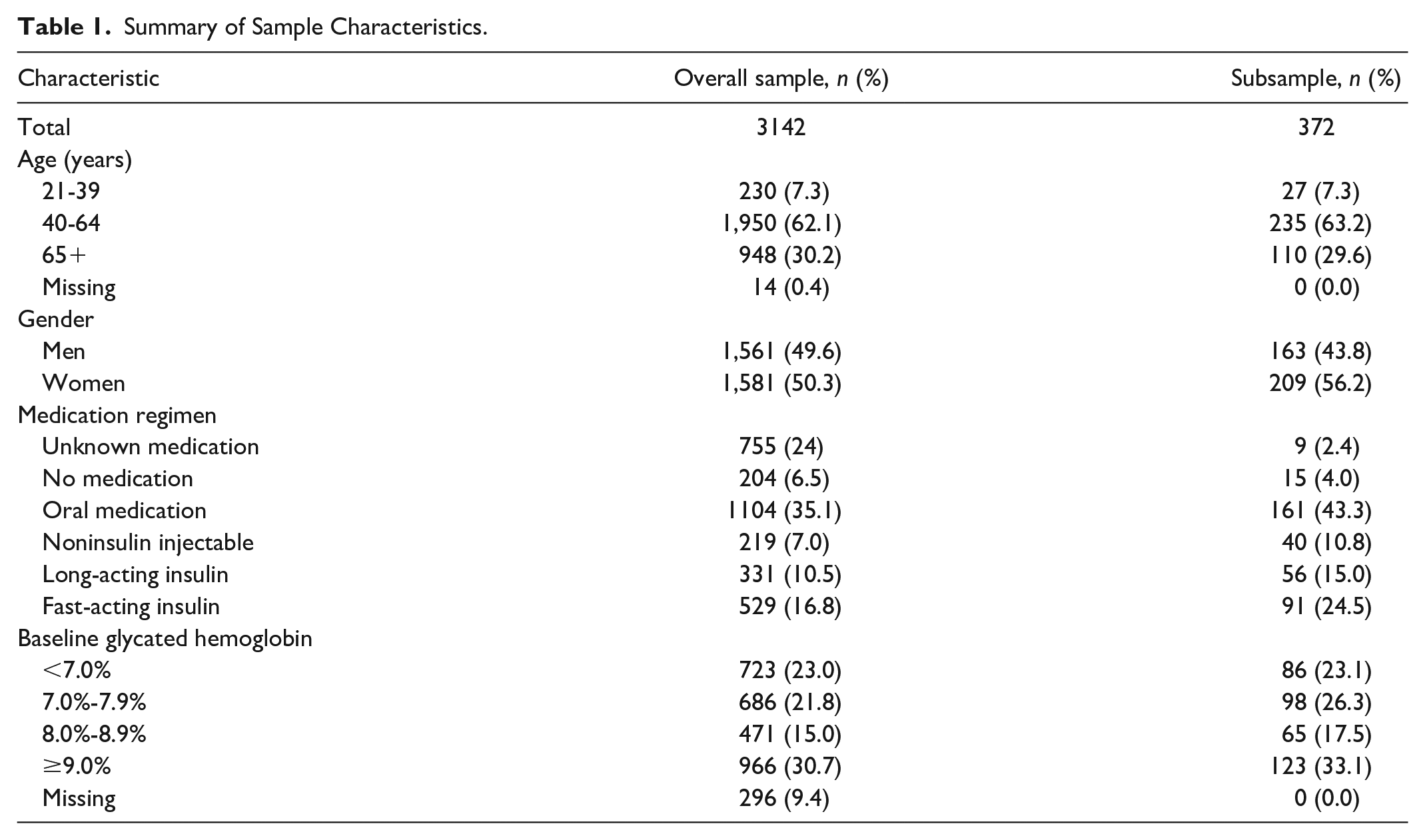
Secondary, deidentified data from 3142 users of the BlueStar digital health solution collected between December 2013 and June 2017 were analyzed (see Table 1 for sample characteristics). The University of Maryland Institutional Review Board determined that our project qualified as nonhuman subjects’ research. The sample consisted of users whose physicians recommended the use of the platform. The digital health solution is a primarily mobile platform that facilitates self-monitoring of diabetes management and provides automated coaching. The onboarding process requested that users provide information about their demographics, medication regimens, and current A1C.
Summary of Sample Characteristics.
The platform enabled users to track their blood glucose measures, medication adherence, diet, and physical activity using structured data entry formats. When entering structured data, users could also choose to record contextual annotations in structured or free-text formats. Specifically, users could select one of 42 comments. The platform’s automated coaching messages are tailored to the data entered by users.
Analytic Approach
Objective 1
Emergent themes of free-text annotations were identified using natural language processing (NLP) techniques. First, free-text comments were preprocessed, which involved tokenization whereby comment entries are split up into individual words, normalization whereby words were processed to be all lower case, and removal of common articles. This preprocessing yielded a list of words for each comment, which then served as input in the second step of the NLP analysis. In the second step, the frequency of words in the corpus of notes was tabulated.
Based on common words identified in our NLP analyses and diabetes self-management frameworks, 21 we developed lexicons of keywords for each emergent theme. The lexicons were developed in an iterative process in which frequent words were assigned to an initial category by one researcher, discussed among multiple researchers, and assigned to a final category after convergence among researchers. Some categories of structured annotations were changed to match the emergent themes seen in free-text annotations to facilitate comparisons between the two. Free-text annotations were then tagged with themes based on a keyword-matching procedure. With free-text annotation and structured annotations categorized, we then summarize engagement with both types of annotations.
Objective 2
We then explored the relationship between annotation usage and outcomes. Specifically, we tested for a relationship between use of annotations made by a user within the first 14 days using the platform and their persistence in usage, assessed as days between first and last use of the platform. In addition, we examined whether the number of annotations was associated with a change in A1C in a subgroup of patients who self-reported at least two A1C values (n = 372).
Results
Annotation Themes
One thousand and forty-five (33.3%) study participants recorded at least one structured annotation and a total of 91,551 structured annotations were made. Nine hundred and forty-one (29.9%) recorded at least one free-text annotation with a total of 31,443 free-text notes made. The NLP analysis yielded a list of commonly used words in the free-text annotations recorded by users that were then matched to different themes. A list of keywords for each theme is presented in the Supplementary Materials.
Table 2 summarizes the themes that were present in the structured and free-text annotations. Each structured comment reflected a single theme; however, free-text annotations often reflected more than one theme. For example, one participant reported “up very late, lots of orange juice, new meds, sick”. Our NLP-based approach classified this comment as reflecting multiple themes, including diet (“orange juice”), medication (“new meds”), and health-related characteristics (“sick”).
Summary of Annotation Themes.
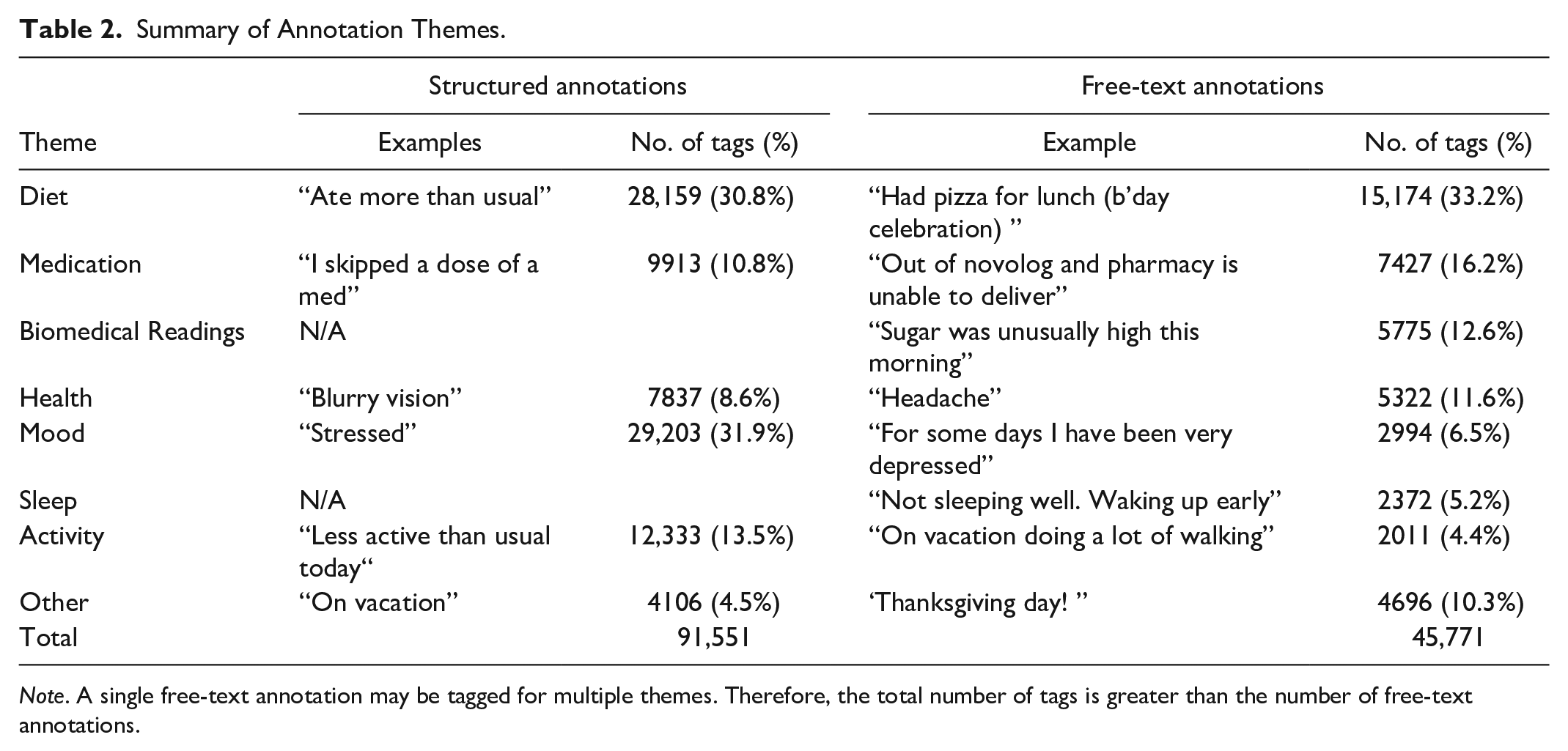
Note. A single free-text annotation may be tagged for multiple themes. Therefore, the total number of tags is greater than the number of free-text annotations.
In some cases, the prevalence of a given theme was similar in both structure and free-text annotations, as was the case with diet-related notes, which consisted of nearly a third of all annotations. In other cases, some themes were more prevalent in one type of annotation, such as recording of mood in the structured annotations and mention of medication in free-text notes. Overall, most annotations reflected core concerns of diabetes self-management including diet, medication, and physical activity. However, our results also highlight the importance of psychosocial outcomes to persons with diabetes, with mood-related messages representing a substantial proportion of annotations.
Relationship Between Early Annotation Use and Persistence in Engagement
Next, we examined the relationship between annotation usage in the first 14 days of engagement with the platform and persistence in engagement, operationalized as the number of days that the user engaged with the digital health solution. With most users having recorded zero or very few annotations, we expected a nonlinear relationship between the number of annotations and outcomes. Therefore, we classified users into two categories of annotation usage in the first 14 days of engagement: No Notes or at least one Note. We considered both free-text annotation and structured annotation in this variable as there was a strong overlap in usage of both types of annotation.
Our outcome variable of engagement consisted of count data; therefore, we estimated a negative binomial regression model, which can accommodate counted outcomes that exhibit high levels of dispersion. 22 Demographic characteristics, other engagement data, and baseline A1C were included in the model as covariates. Twenty-eight users were excluded from analysis due to missing data about their demographic characteristics. Results of the regression analysis are presented in Table 3.
Results of Negative Binomial Regression Model of Days of Engagement (N = 3114).
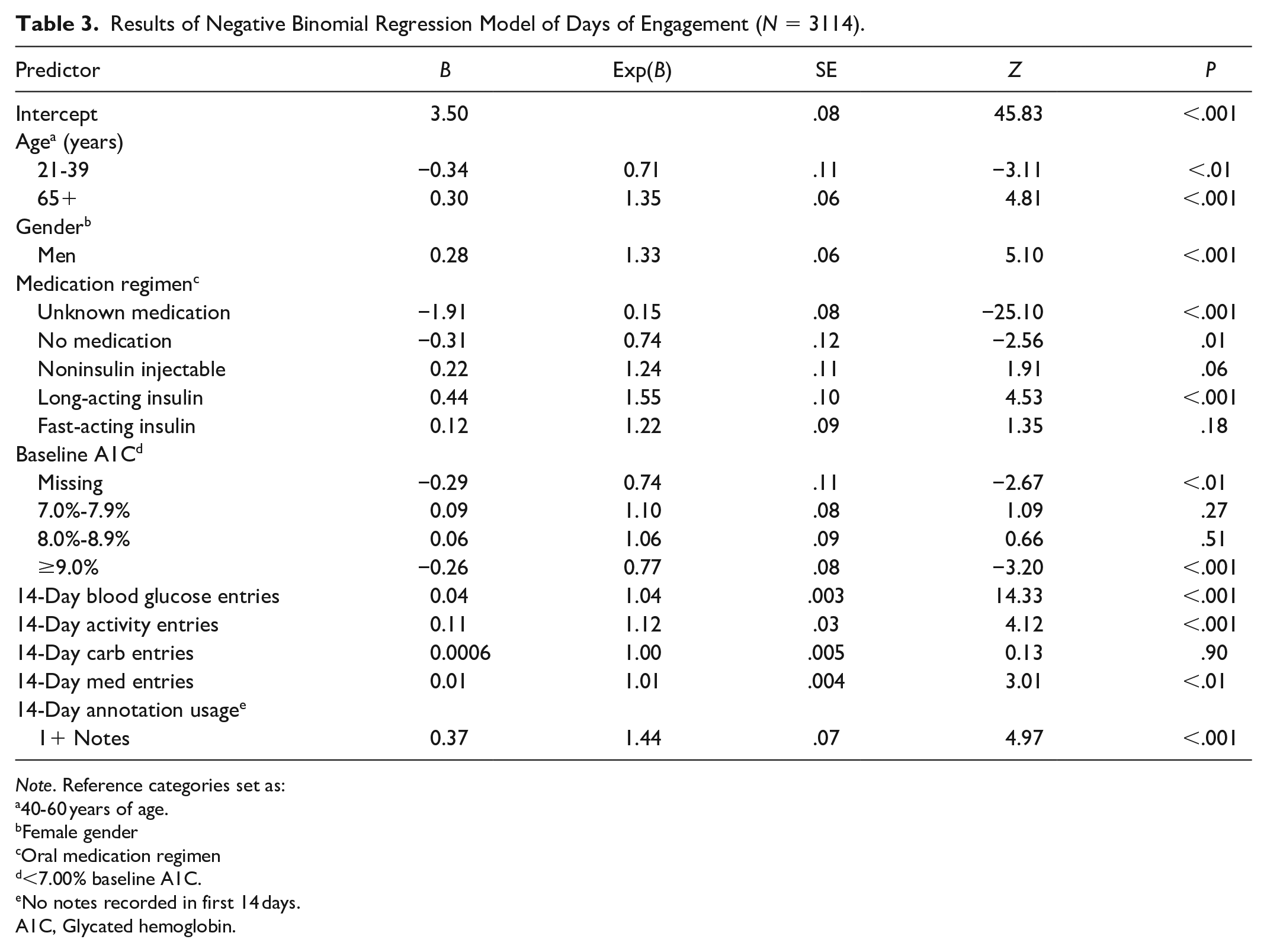
Note. Reference categories set as:
40-60 years of age.
Female gender
Oral medication regimen
<7.00% baseline A1C.
No notes recorded in first 14 days.
A1C, Glycated hemoglobin.
Notably, participants who recorded notes in the first 14 days of using the platform used the digital health solution significantly more often over the long run compared with those who recorded no notes (B = 0.37, P < .001). Adjusting for other characteristics, users who recorded notes engaged with the platform an estimated 60.62 days (95% CI: 52.73-69.69), whereas users who recorded no notes in the first 14 days, engaged with the digital health solution an estimated 41.97 days (95% CI: 38.10-46.24).
Similar analyses revealed that participants who used annotation features also had a longer duration of usage, defined as days between first and last engagement, than those who did not take notes (B = 0.29, P < .001; see Table S1 in supplementary materials for full regression results). Adjusting for covariates including demographic characteristics, other engagement data, and baseline A1C were included in the model as covariates, note-takers persisted for an estimated 174.98 days (95% CI: 152.07-201.33). In contrast, users recording no notes in the first 14 days of engagement used the digital health solution over the course of an estimated 131.30 days (95% CI: 119.15-144.69).
Overall, findings support the notion that early engagement with the annotation feature was associated with greater persistence in using a digital health solution—in terms of both number of days of engagement and duration of engagement—which may have implications for effectiveness. To investigate this possibility, we next examined the relationship between annotation and improvement in A1C over time.
Relationship Between Annotations and Clinical Outcomes
Users with at least two A1C measures (n = 372) were included in our analysis to test the relationship between annotation and improvement in A1C over time. Users were classified into different categories of annotation usage in their first 90 days of engagement with the digital health solution: None (n = 93), moderate (1-9 notes; n = 120), and high (10+ notes; n = 159) for analysis. We considered it reasonable to assume that 90-day engagement data preceded the last A1C measure reported by users, though data did not include exact dates associated with each A1C measure. Table 4 summarizes descriptive statistics of change in A1C by each group.
Descriptive Summary of A1C Change by User Characteristics (N = 372).
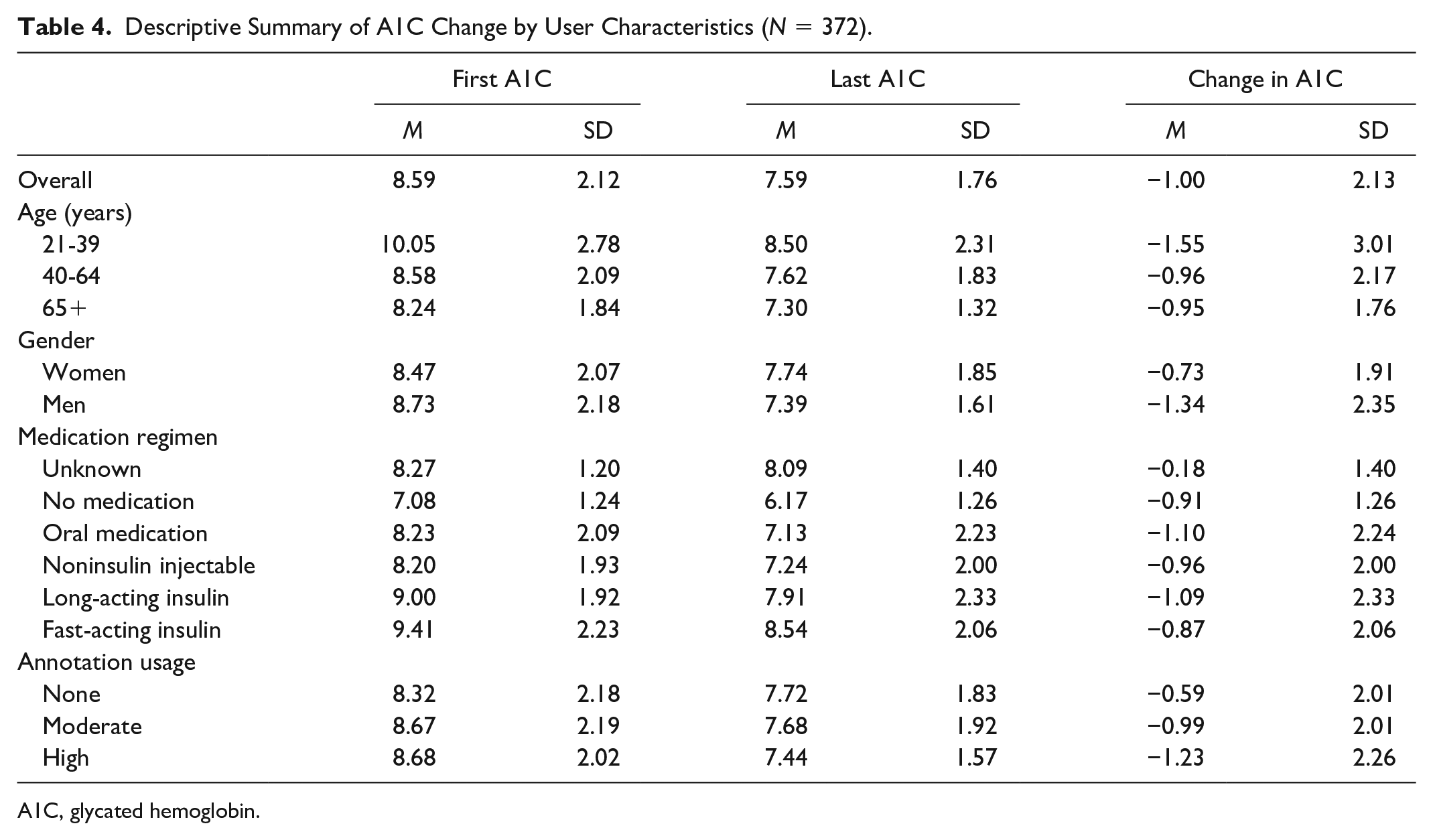
A1C, glycated hemoglobin.
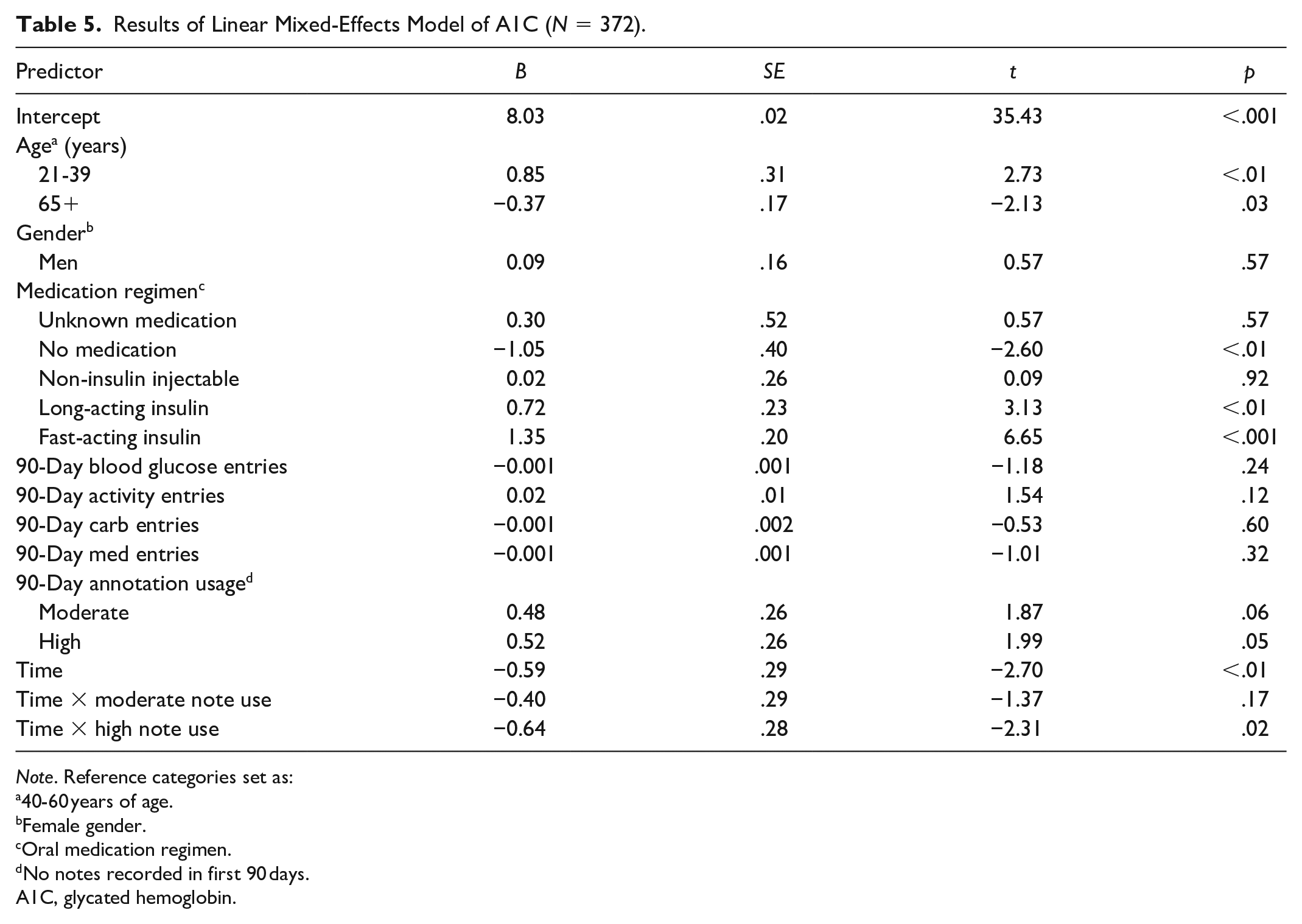
To account for the repeated measures of A1C within individuals, a random-intercept linear mixed effect model was estimated. Predictor variables included time (First AIC = 0, Last A1C = 1), demographic characteristics, and engagement data from the first 90 days of usage. In this model, a negative coefficient associated with time indicates a decrease in A1C from the first to last measure. The key effect of interest is the interaction of time and dummy-coded annotation variables, which indicate whether the rate of change in A1C depends on a user’s level of engagement with annotation features.
Table 5 summarizes the fixed-effect results of the longitudinal analysis, and Figure 1 depicts the change in A1C over time by different levels of annotation engagement, adjusting for other covariates. There was no significant interaction effect of Time × Moderate note usage (B = −0.40, P = .17), though both groups saw significant declines in A1C over time (P < .001). The regression analysis did reveal a significant interaction effect of Time x High note usage (B = −0.64, P = .02) indicating that the decrease in A1C was significantly greater for those with a high level of note usage. This pattern of A1C change was confirmed in robustness checks excluding outliers in A1C change.
Results of Linear Mixed-Effects Model of A1C (N = 372).
Note. Reference categories set as:
40-60 years of age.
Female gender.
Oral medication regimen.
No notes recorded in first 90 days.
A1C, glycated hemoglobin.
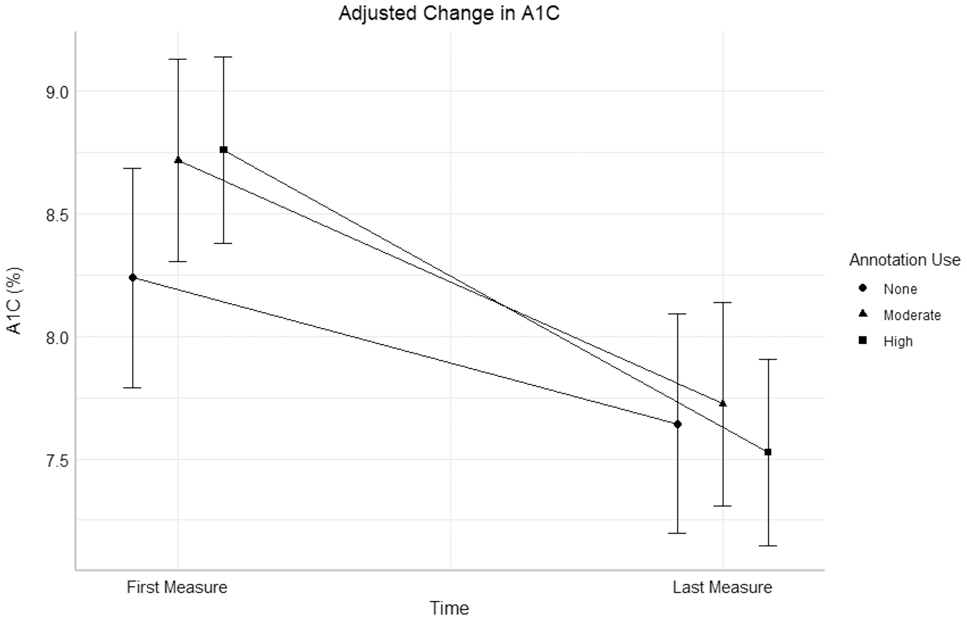
Average change in A1C by annotation usage, after controlling for covariates.
Discussion
A substantial proportion of users engaged with annotation features of a digital health solution despite the additional data entry burden. Annotations made in free-text format reflected similar themes as those made in a structured format including notes related to self-management (eg, diet, mood, and sleep) and well-being (mood, health symptoms). Early engagement with the annotation features was associated with greater persistence in use of a digital health solution suggesting its utility as an early indicator of success. Moreover, a high level of annotation usage was also associated with greater improvement in glucose control among a subsample of users who reported A1C levels. Together, these findings highlight the potential of moving beyond basic self-management tracking for improved outcomes with digital health solutions.
Reducing the burden of data entry is a major aim of digital health solutions, as high levels of manual data entry can discourage users over time.23,24 Nonetheless, our findings suggest benefits of encouraging certain forms of manual data entry, particularly when offering an opportunity for additional processing of information rather than rote recording. Furthermore, our findings highlight patients’ willingness to invest additional effort into data entry to the extent that the process offers greater insight into their diabetes self-management journey.
Our findings were also generally consistent with evidence that note-taking can improve engagement and outcomes in educational settings.18,19 While the mechanisms driving our findings are not entirely clear, contextual annotations may promote greater reflection on the links between environment, behavior, and blood glucose. In doing so, annotation features may address some of the shortcomings of typical strategies self-monitoring and tracking, which some have argued do not provide useful information for all patients.14,25
Limitations and Future Directions
There are several limitations to this research worth noting. Critically, our findings should be interpreted with the correlational nature of our research in mind. It is difficult to disentangle the causal influence of notes with such a design, though our research provides encouraging evidence of their promise as a feature in digital health solutions. Future research is needed to support the causal impact of annotations and directly measure underlying mechanisms of influence on self-management behavior and outcomes.
Another limitation of our study was reliance on self-reported A1C values for which we did not have exact dates. Relatedly, a relatively small proportion of study participants reported two A1C values. As such, our finding that high levels of annotation use were associated with larger drops in A1C must be interpreted cautiously. Despite these limitations with the A1C data, our preliminary results offer encouraging directions for future research. Moreover, relatively consistent patterns in the relationship between annotation use and multiple outcomes (ie, objective engagement measures as well as self-reported clinical outcomes) offer additional confidence in our conclusions.
Future research could also explore the relationship between different thematic content and health outcomes more closely. While our research found that greater note usage was associated with better outcomes, this may not be the case if the content of the notes reflects a negative mood, stress, or struggles with comorbidities, which are often associated with negative diabetes outcomes. 26 If thematic content of notes can provide additional information about a user’s future health behavior and outcomes, they may be a useful foundation for personalized messaging that form the basis of just-in-time-adaptive interventions.27,28
Conclusion
Although structured and free-text annotations impose additional burden to users, preliminary evidence indicates that a substantial number of users will take advantage of such features. We found that early engagement with annotation features within the first 14 days of using a digital health solution was associated with greater persistence. In addition, the high use of annotations within 90 days was associated with improved clinical outcomes. Together, these results suggest that annotation features are a promising direction for digital health solutions worthy of future research.
Supplemental Material
sj-docx-1-dst-10.1177_1932296820976409 – Supplemental material for Engagement and Outcomes Associated with Contextual Annotation Features of a Digital Health Solution
Supplemental material, sj-docx-1-dst-10.1177_1932296820976409 for Engagement and Outcomes Associated with Contextual Annotation Features of a Digital Health Solution by Michelle Dugas, Weiguang Wang, Kenyon Crowley, Anand K. Iyer, Malinda Peeples, Mansur Shomali and Guodong (Gordon) Gao in Journal of Diabetes Science and Technology
Footnotes
Abbreviations
A1C, Glycated hemoglobin; BG, blood glucose.
Declaration of Conflicting Interests
The author(s) declared the following potential conflicts of interest with respect to the research, authorship, and/or publication of this article: AKI, MMP, and MS are employees of Welldoc Inc. The Center for Health Information and Decision Systems has received funding from Welldoc Inc.
Funding
The author(s) received no financial support for the research, authorship, and/or publication of this article.

Supplemental Material
Supplemental material for this article is available online.
References
Supplementary Material
Please find the following supplemental material available below.
For Open Access articles published under a Creative Commons License, all supplemental material carries the same license as the article it is associated with.
For non-Open Access articles published, all supplemental material carries a non-exclusive license, and permission requests for re-use of supplemental material or any part of supplemental material shall be sent directly to the copyright owner as specified in the copyright notice associated with the article.
