




Abstract
People with diabetes (PWD) who need to take mealtime insulin to help control their blood sugar often have difficulty correctly calculating their dose due to consideration of many factors such as current blood glucose, carbohydrate consumption, active insulin duration, insulin-to-carb ratio, and insulin sensitivity. The Insulin Mentor, a bolus calculator tool in the OneTouch Reveal diabetes management app, uses an algorithm to automate many of these calculations and contains a link to a food diary to help estimate carbohydrate intake. In the current study, healthcare professionals and PWD from United States and Germany responded favorably to simulations of this calculator tool and compared it positively with other apps on the market. The Insulin Mentor may simplify the difficult process of correctly calculating mealtime insulin doses for PWD.
Introduction
People with type 1 diabetes (T1D) and some people who have type 2 diabetes (T2D) need to take insulin to help keep their blood sugar levels in a normal range. Correctly calculating a bolus insulin dose requires consideration of many factors, some of which are measurable, like current blood glucose, and others require experience to estimate, like carbohydrate consumption, active insulin duration, insulin-to-carb ratio, and insulin sensitivity. Paper-and-pencil calculations to derive the appropriate bolus amount is challenging and time consuming for people with diabetes (PWD) and often prone to error. 1 An automated method that delivers the same solution as a paper-and-pencil calculation could be helpful in eliminating or reducing the challenges and limitations associated with calculating an insulin bolus by hand.
The OneTouch Reveal mobile app (Figure 1a) includes several features to help patients manage their diabetes. The Insulin Mentor (Figure 1b) is a tool within Reveal that uses an algorithm to automate widely accepted calculations to recommend a bolus insulin dose for carbs and/or to correct a blood glucose for a given point in time.2,3 This algorithm incorporates factors including current blood glucose, target blood glucose, correction factor, carbohydrate intake, and insulin-to-carb ratio. The algorithm also approximates insulin from previous bolus dose(s) that has not yet affected an individual’s blood glucose (known as insulin on board), a challenging calculation to conduct by hand. The app also includes a link to a food diary to assist with carbohydrate estimation. Though the algorithm of the Insulin Mentor accounts for many of the factors required to determine an insulin bolus dose, other metabolic pathway influencers are not considered since their impact is far more complex and variable. These include variables such as stress, exercise, illness, and relative proportion of carbohydrates, protein, and fat in consumed foods. Before use, a physician or healthcare professional (HCP) must activate the Insulin Mentor functionality and set up patient-specific parameters such as blood glucose target, insulin-to-carbohydrate ratio, duration of insulin action, and insulin sensitivity.
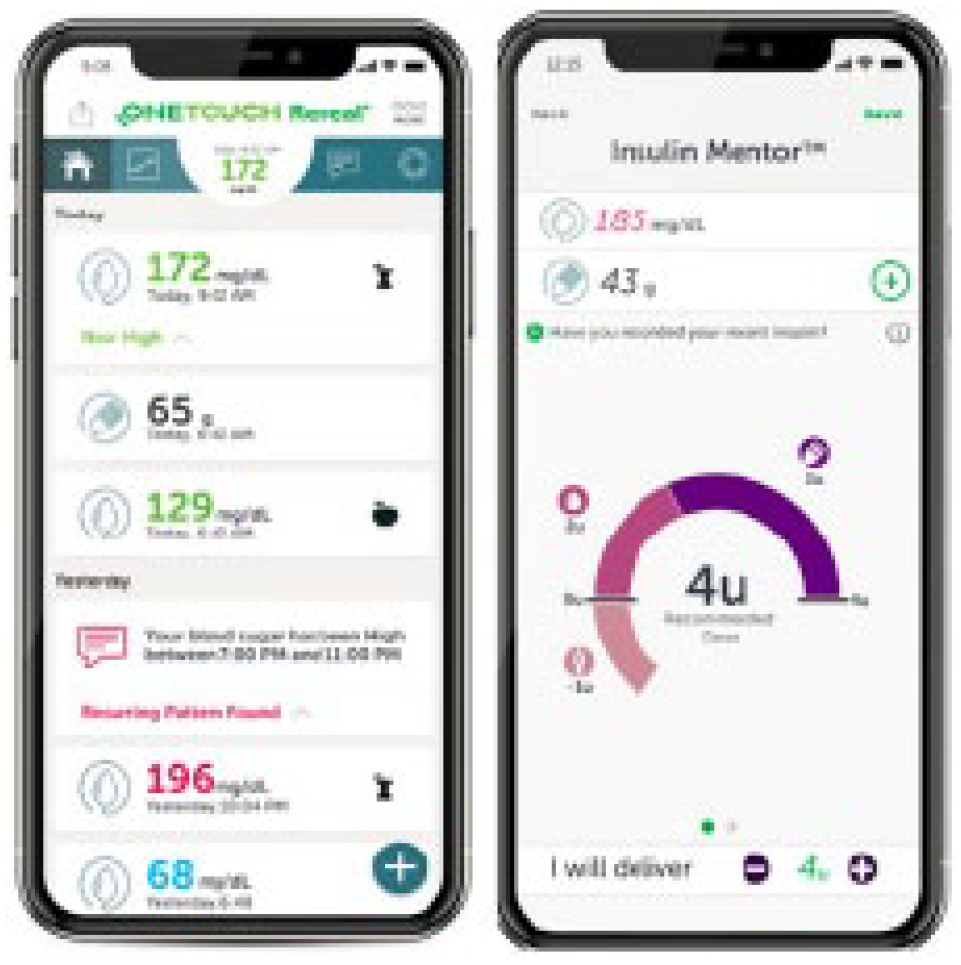
OneTouch Reveal Mobile App and Insulin Mentor Screens.
In this study, HCPs and people with diabetes (PWD) provided qualitative feedback on the Insulin Mentor feature after observing short animations and/or screen shots demonstrating the feature. In addition, they compared the Insulin Mentor app with other marketed bolus calculator apps.
Methods
Study Population
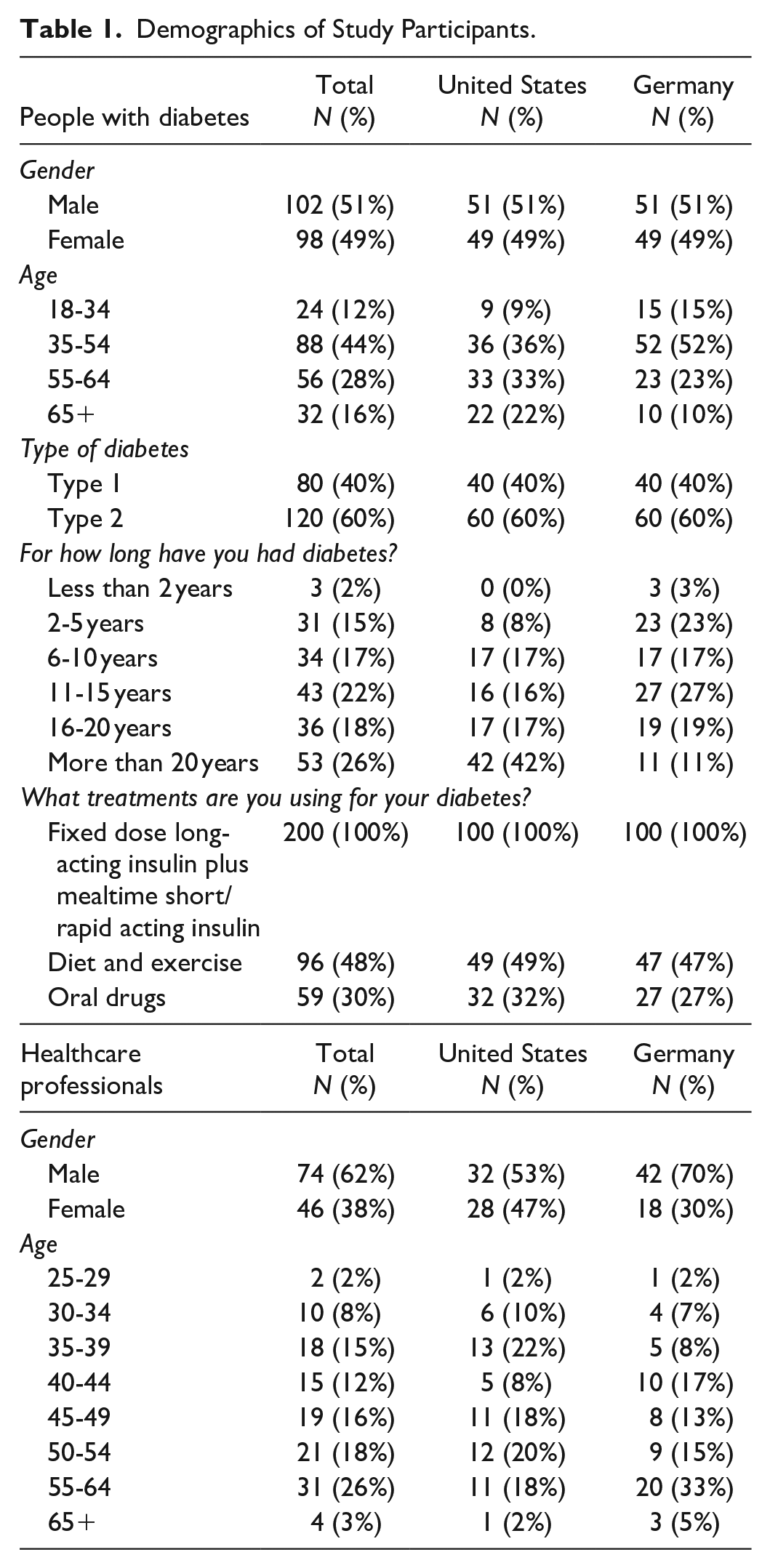
The study population consisted of 60 HCPs (20 endocrinologists, 20 primary care physicians [PCPs], and 20 diabetes nurses/educators [DE]) and 100 PWD from the United States and a similar breakdown of 60 HCPs and 100 PWD from Germany (Table 1). PWD routinely took multiple daily or mealtime insulin injections. PWD had some experience using apps, but not necessarily diabetes management apps, on a smartphone or other smart device. PWD were at least 18 years old; use blood glucose monitoring; and were not employed in advertising, market research, or marketing of pharmaceutical products or medical devices. HCPs had to treat or advise patients routinely taking multiple daily or mealtime insulin doses and see at least 10 patients a week and be in practice two years. No participant could be a current or past employee of LifeScan or an employee of a company that manufactures or markets blood glucose monitoring or insulin pump products.
Demographics of Study Participants.
Study Design
HCPs and PWD evaluated the Insulin Mentor feature online using a personal computer. HCPs and PWD viewed and/or interacted with webpages and animations that demonstrated similar functionality to the intended feature. An external vendor (Ipsos, Parsippany, NJ) managed the study start-up and execution and provided the survey data to Sponsor. HCPs and PWD were provided with instructions how to navigate the online experience and complete the user acceptance survey. Study information was translated into German and shown in mmol/L or mg/dL where appropriate. Subjects were recruited by Ipsos using a diabetes database. A standard token honorarium was given to participants by Ipsos to compensate them for their time.
Study Conduct
At the beginning of the study HCPs were asked to describe the confidence they have that their patients with T1 or T2D using rapid mealtime insulin can calculate a correct insulin dose. HCP and PWD participants then viewed unbranded screen shots of Insulin Mentor, MySugr Bolus Calculator (MySugr), and Accu-Chek Connect Bolus Advisor (Accu-Chek) (Figure 2) and answered Question 1 (Tables 2 and 3). HCP and PWD participants then reviewed branded online informational material regarding Insulin Mentor and answered Questions 2 to 4 (Tables 2 and 3). If participants were aware of MySugr or Accu-Chek apps, they responded to additional statements related specifically to those products (Question 5, Tables 2 and 3). Lastly, HCPs were asked “having seen the LifeScan Insulin Mentor how confident are you that your patients with T2 or T1D using rapid acting mealtime insulin would be able to calculate a correct dose using this tool?” Participants provided their responses to all statements using the 5-point Likert scale.
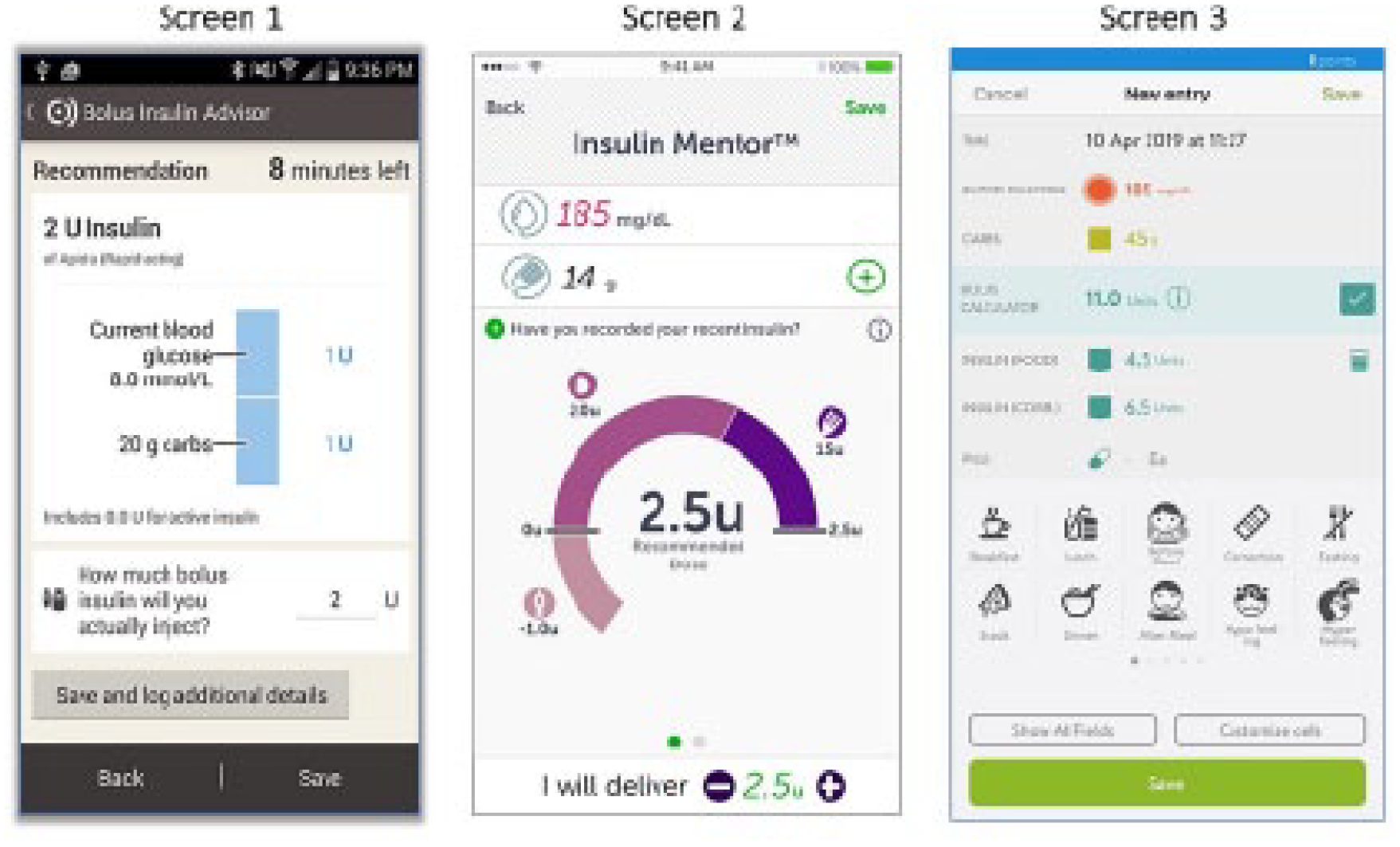
Three unbranded bolus insulin calculator summary screens from three different apps showing the calculation of a recommended mealtime insulin dose for patients based on their current blood glucose value and user entered carb value.
HCP Survey Statements.
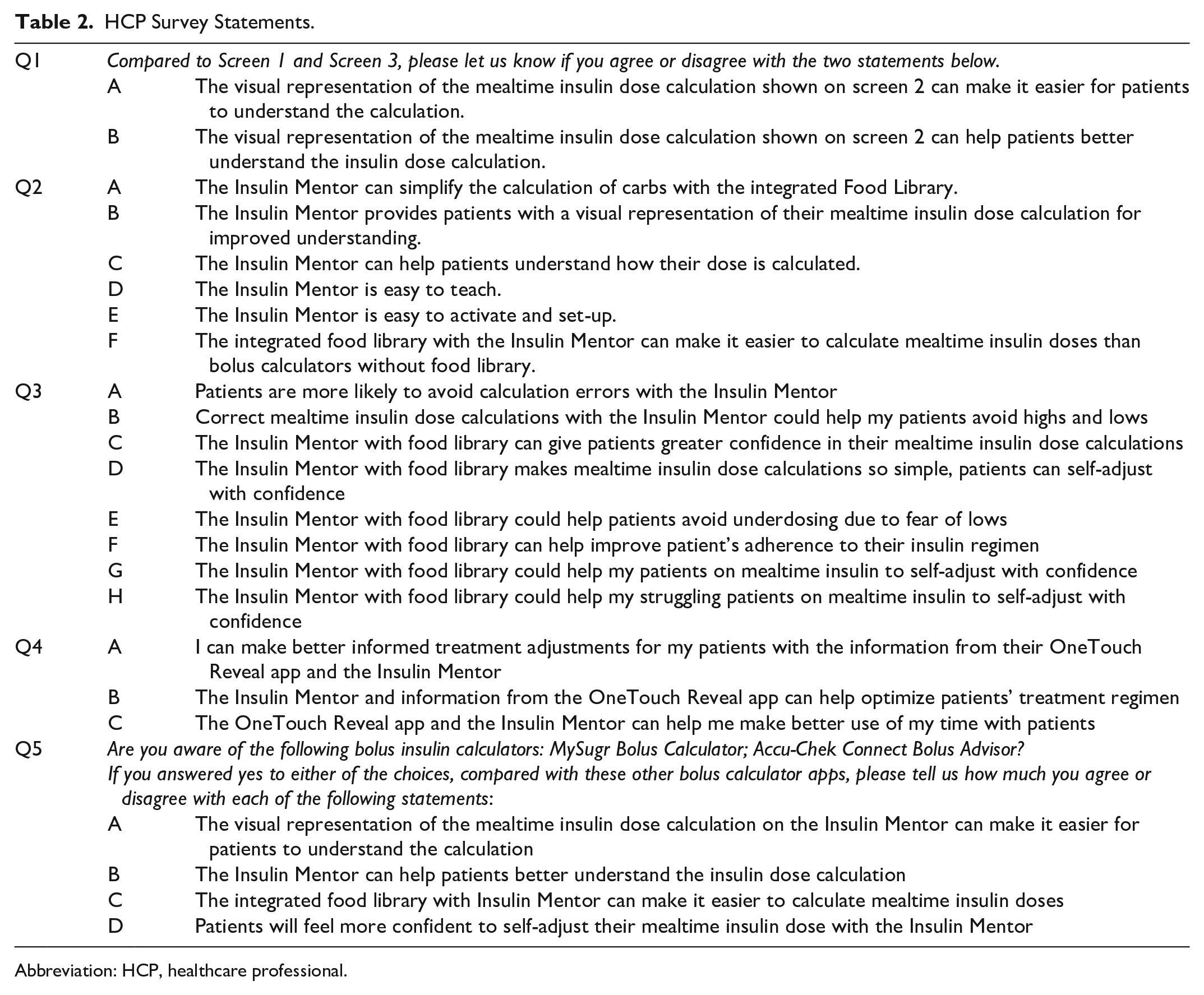
Abbreviation: HCP, healthcare professional.
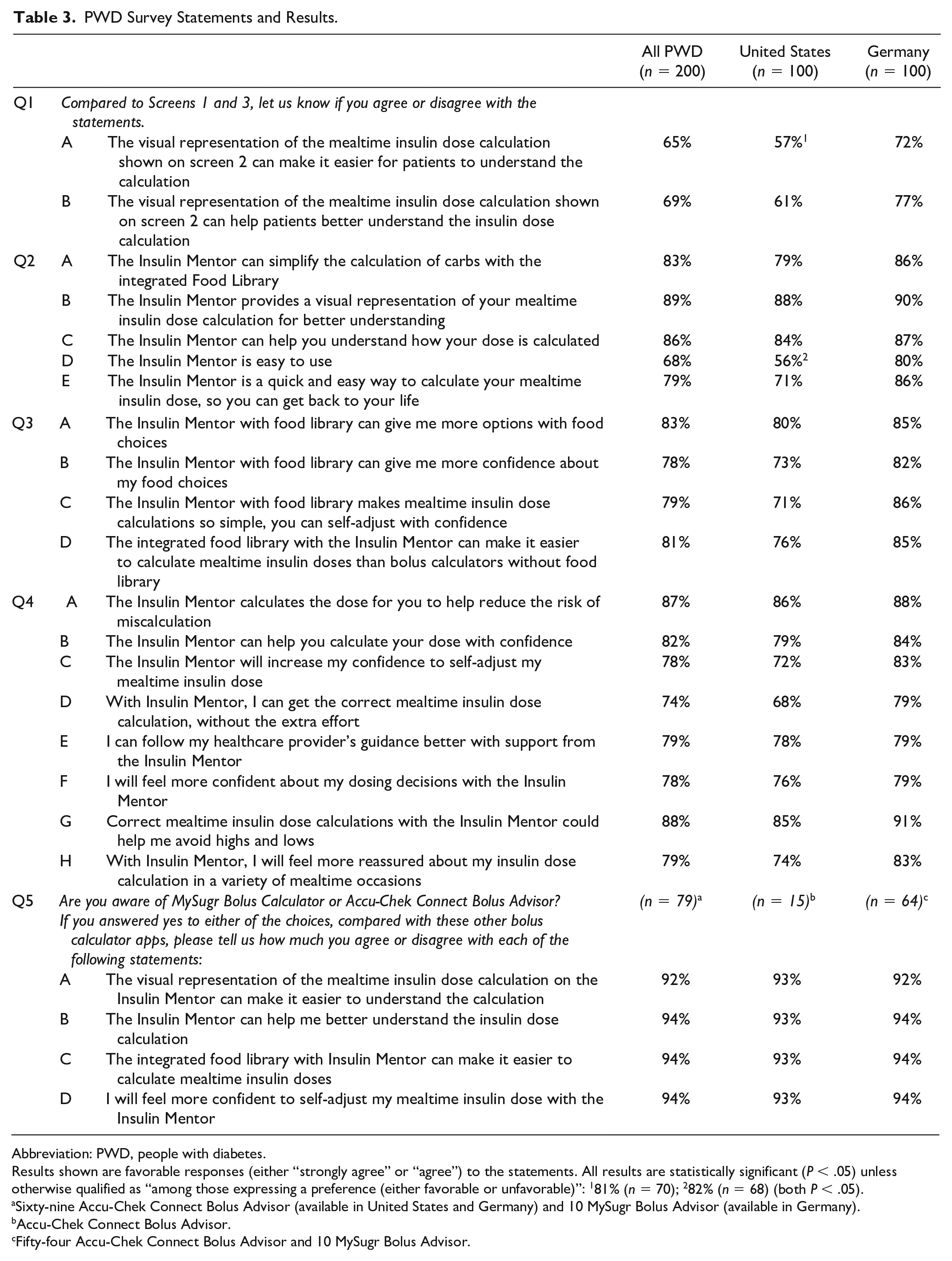
PWD Survey Statements and Results.
Abbreviation: PWD, people with diabetes.
Results shown are favorable responses (either “strongly agree” or “agree”) to the statements. All results are statistically significant (P < .05) unless otherwise qualified as “among those expressing a preference (either favorable or unfavorable)”: 181% (n = 70); 282% (n = 68) (both P < .05).
Sixty-nine Accu-Chek Connect Bolus Advisor (available in United States and Germany) and 10 MySugr Bolus Advisor (available in Germany).
Accu-Chek Connect Bolus Advisor.
Fifty-four Accu-Chek Connect Bolus Advisor and 10 MySugr Bolus Advisor.
Data Analysis
Acceptance criteria for statistical significance was when the 95% lower confidence limit for the percentage of participants who provided a favorable response (strongly agree or agree) for a question was >50%. For questions whose favorable response did not meet statistical significance, analysis was also conducted with neutral responses removed (neither agree nor disagree), and the result annotated to state based on “those who expressed a preference.”
Results
Clinical Practice Questions
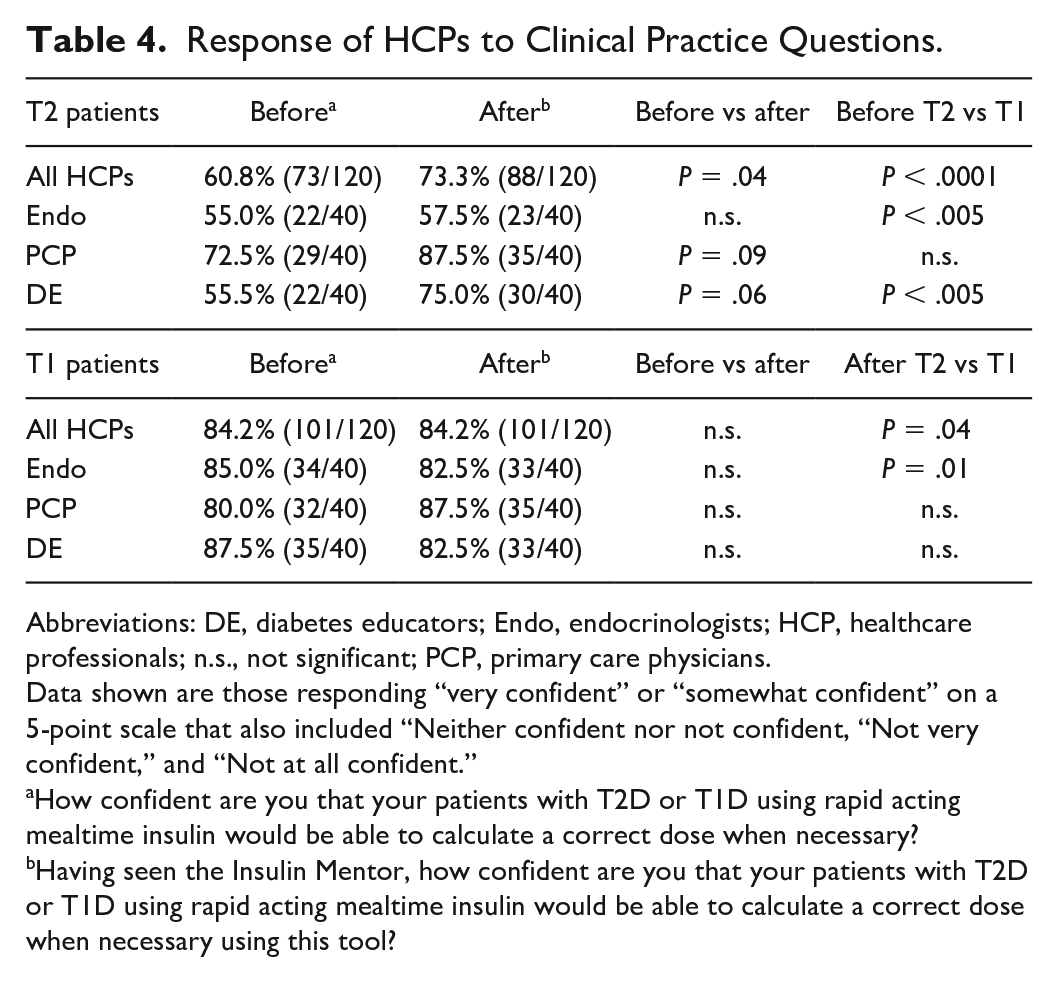
Only 22% of HCPs were “very confident” that their patients with T2D and 26% of their patients with T1D can calculate their correct mealtime insulin dose. When including “somewhat confident” as a response, numbers rose to 61% regarding their patients with T2D and 84% for their patients with T1D (Table 4). The difference in confidence in their T1 compared with T2D patients to correctly calculate the dose was highly significant (P < .0001). Responses were similar across HCP type in response to their patients with T1D. PCPs were most confident regarding their patients with T2D. After viewing the features of the Insulin Mentor bolus calculator tool, a significantly greater number of HCPs (P < .05) were at least somewhat confident that their patients with T2D would be able to correctly calculate their mealtime insulin dose using the Insulin Mentor (Table 4).
Response of HCPs to Clinical Practice Questions.
Abbreviations: DE, diabetes educators; Endo, endocrinologists; HCP, healthcare professionals; n.s., not significant; PCP, primary care physicians.
Data shown are those responding “very confident” or “somewhat confident” on a 5-point scale that also included “Neither confident nor not confident, “Not very confident,” and “Not at all confident.”
How confident are you that your patients with T2D or T1D using rapid acting mealtime insulin would be able to calculate a correct dose when necessary?
Having seen the Insulin Mentor, how confident are you that your patients with T2D or T1D using rapid acting mealtime insulin would be able to calculate a correct dose when necessary using this tool?
Unbranded Screen Shot Comparisons
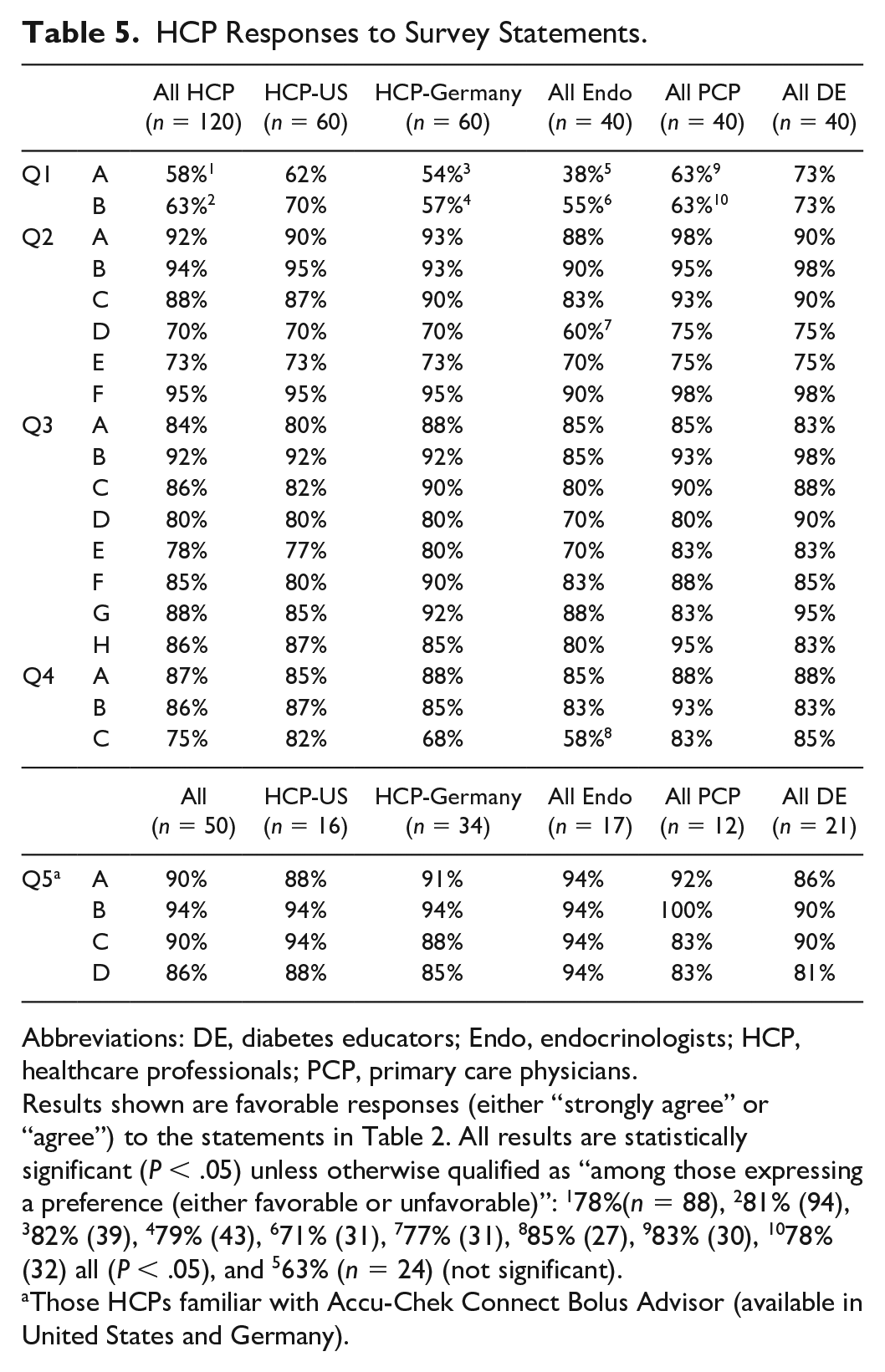
PWD expressed significant favorable responses when comparing unbranded screen 2 (Insulin Mentor) with unbranded screen shots of either of the other bolus calculator apps (Q1, Table 3). This was true for both statements in Q1 for PWD in Germany and for statement 2 for PWD in the United States. HCPs in the United States expressed significant favorable responses when comparing the screens and HCPs in Germany expressed favorable responses when including participants that had non-neutral opinions (Q1, Table 5). In general, DEs responded more favorably to the unbranded Insulin Mentor screen than Endocrinologists or PCPs.
HCP Responses to Survey Statements.
Abbreviations: DE, diabetes educators; Endo, endocrinologists; HCP, healthcare professionals; PCP, primary care physicians.
Results shown are favorable responses (either “strongly agree” or “agree”) to the statements in Table 2. All results are statistically significant (P < .05) unless otherwise qualified as “among those expressing a preference (either favorable or unfavorable)”: 178%(n = 88), 281% (94), 382% (39), 479% (43), 671% (31), 777% (31), 885% (27), 983% (30), 1078% (32) all (P < .05), and 563% (n = 24) (not significant).
Those HCPs familiar with Accu-Chek Connect Bolus Advisor (available in United States and Germany).
Branded LifeScan Insulin Mentor Simulations
Statistically significant favorable responses were seen for all PWD for statements in Q2-Q4 after viewing the branded Insulin Mentor simulations (Table 3). In general, favorable responses were greater in PWD from Germany than the United States, but these differences were not significant. Of the 79 PWD who were familiar with Accu-Chek (available in United States and Germany) or MySugr (available in Germany), 92%-94% of the PWD in both United States and Germany viewed Insulin Mentor favorably compared with the other products (Q5, Table 3).
Statistically significant favorable responses were expressed by all HCPs for statements in Q2-Q4 after viewing the branded Insulin Mentor simulations (Table 5). Responses were similar for HCPs in Germany and United States. In general, responses were similar across the HCP type. Of the 50 HCPs in Germany and United States familiar with Accu-Chek, 87%-93% viewed the Insulin Mentor favorably compared with the other product (Q5, Table 5).
Discussion
It is important to help patients that require mealtime insulin to calculate their correct dose. As reported here, HCPs do not have a high confidence that their patients, especially patients with T2D, can successfully accomplish this task. After viewing simulations of Insulin Mentor, HCPs expressed a higher degree of confidence that their patients could accomplish correct dosing if they used this app and both HCPs and PWD had favorable responses to the features of the app. When viewing unbranded screen shots, both HCPs and PWD had greater favorable responses to Insulin Mentor than Accu-Chek and MySugr bolus calculator tools. It is important to note that no clinical trial was conducted to demonstrate the superiority (or correctness) of the actual bolus dose recommendation, or if the calculation of the bolus dose is identical among tools.
Insulin Mentor is part of the OneTouch Reveal mobile app, which is intended for use by PWD to support diabetes management by automatically transferring as well as viewing, tracking, trending, and sharing blood glucose data. The Insulin Mentor assists with the management of diabetes by calculating a bolus insulin dose using synched or user-selected blood glucose values, carbohydrate intake, and active insulin.
In summary, significant favorable responses were expressed by HCPs and PWD regarding Insulin Mentor and it was preferred compared with other available bolus calculator apps. The Insulin Mentor may simplify the difficult process of correctly calculating mealtime insulin doses for PWD.
Footnotes
Acknowledgements
The authors thank Ipsos, Parsippany, NJ, for the creation of webpages and HCP and PWD recruitment.
Declaration of Conflicting Interests
The author(s) declared the following potential conflicts of interest with respect to the research, authorship, and/or publication of this article: LBK, GH, UV, HC, and DMS are full-time employees of LifeScan companies.
Funding
The author(s) disclosed receipt of the following financial support for the research, authorship, and/or publication of this article: This work was funded by LifeScan Global Corporation.
