




Abstract

Innovation in technology to support diabetes self-management is a rapidly evolving field. The use of health services technologies may be seen as an opportunity to implement new strategies to improve diabetes care. 1 mHealth—the use of mobile devices to deliver ehealth information and/or care—is beginning to show promise as a facilitator of type 2 diabetes (T2DM) self-management and of patient-provider communication to support optimizing self-care behaviors and individualized blood glucose (BG) control. Home self-BG telemonitoring is a technology approach that offers promise as a tool to improve diabetes care and outcomes. One such tool is the Telcare Blood Glucose Monitoring (Telcare BGM™) system, an FDA cleared, cellular-enabled BG monitor which allows real-time patient-provider communication of BG results.
We have assessed the user experience and the preliminary impact of a deployment of this BGM system in an intervention targeting improved BG control among high risk adults with T2DM and hemoglobin A1C (HbA1C) ≥ 9%. Patients from 5 primary care practices in a regional healthcare system consented to a 12 week intervention consisting of 3 key components: (1) intensive, algorithm-based diabetes medications management based on continuous review of BG values; (2) survival skills (concise, focused) diabetes self-management education; and (3) enhanced patient-provider communication, all provided by endocrinologist-supervised certified diabetes educators (CDEs), as previously described.2,3 Patients were provided with, registered for, and instructed on the use of the BGM system. Subsequently, each BG performed was auto-transmitted to a cloud-based data repository and from there to patient and provider portal dashboards for viewing (Figure 1). A CDE reviewed time-stamped BG results, weekly BG averages and trends, and contacted participants every 1-7 days for 8-12 weeks to review BGs and adjust DM medications and/or lifestyle based upon BG results.
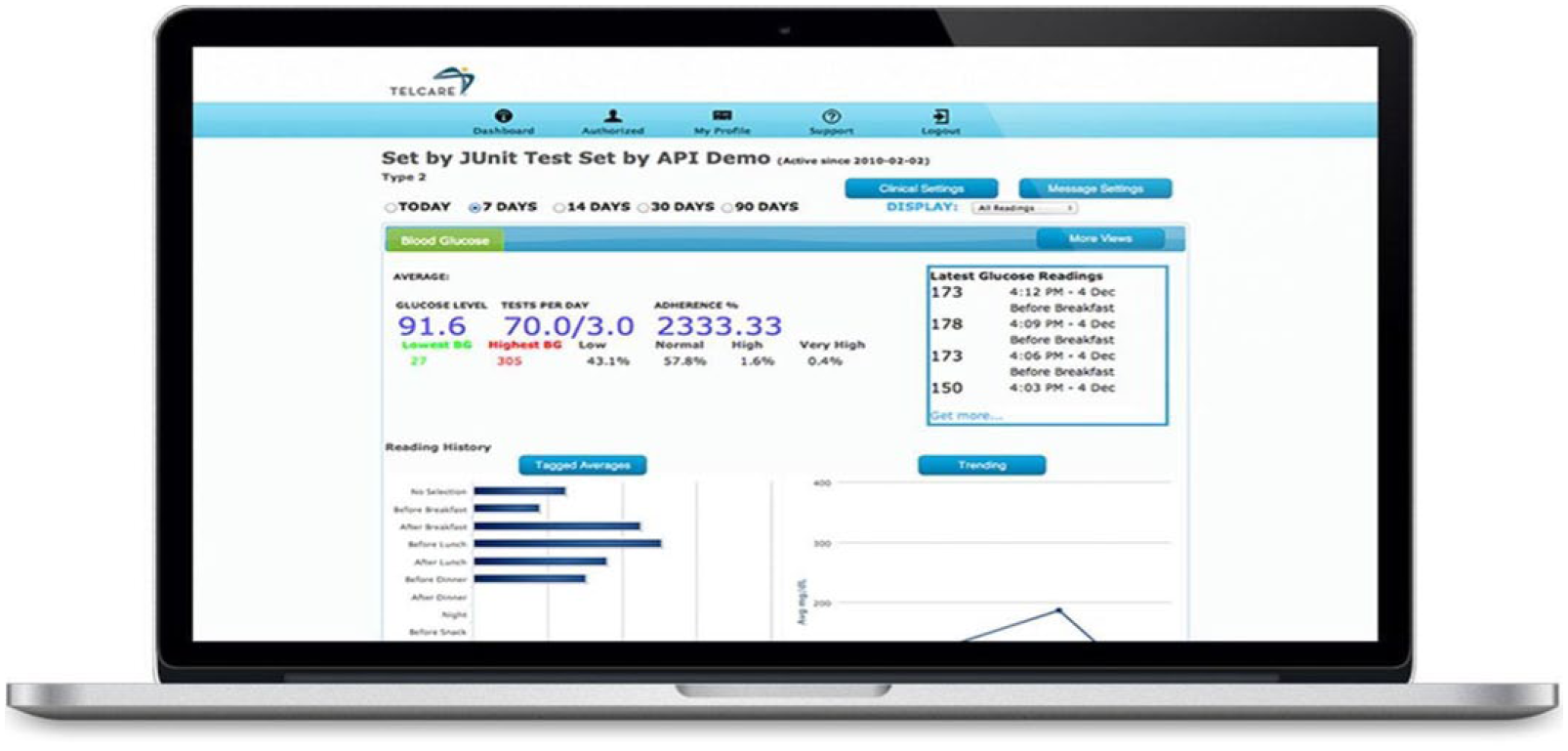
Telcare BGM® system patient/provider views. Reports presenting graphs of glucose values as seen by patients/providers on their computer and/or smartphone.
Preliminary data based on the first 89 participants completing the 3-month intervention have been analyzed. All used the mHealth system successfully and reported increased adherence with BG testing, knowing that results were monitored, and satisfaction with the technology. CDEs report that smart meter use facilitated timely BG management, including immediate intervention for significant hyper- and hypoglycemia. In terms of glycemic control outcomes, mean HbA1C was 11.3% at baseline (9.0 to 19.6%) and 8.3% (5.1 to 12.6%) at 3 months (P < .0001). Over 10,680 patient days, there were 110 BGs < 70 mg/dl and 4 BGs < 40 mg/dl recorded. Thirty-three patients (37%) had at least 1 hypoglycemic event. Of those, 8 accrued 72% of all hypoglycemic events. For these patients, the BGM system dashboard was particularly helpful in quickly identifying hypoglycemia and its causes, enabling the CDE to intervene in timely fashion with the patient and make necessary medication and dietary adjustments to ensure safety.
Real-time monitoring of BG appears to show promise as a tool to support transforming glycemic management among patients with uncontrolled type 2 diabetes.
Footnotes
Abbreviations
BG, blood glucose; CDE, certified diabetes educator; DM, diabetes mellitus; T2DM, type 2 diabetes; Telcare BGM®, Telcare Blood Glucose Monitoring System.
Declaration of Conflicting Interests
The author(s) declared no potential conflicts of interest with respect to the research, authorship, and/or publication of this article.
Funding
The author(s) received no financial support for the research, authorship, and/or publication of this article.