



Abstract
Background:
This article describes a new fiber-coupled, percutaneous fluorescent continuous glucose monitoring (CGM) system that has shown 14 days of functionality in a human clinical trial.
Method:
The new optical CGM system (FiberSense) consists of a transdermal polymer optical fiber containing a biochemical glucose sensor and a small fluorescence photometer optically coupled to the fiber. The glucose-sensitive optical fiber was implanted in abdominal and upper-arm subcutaneous tissue of six diabetes patients and remained there for up to 14 days. The performance of the system was monitored during six visits to the study center during the trial. Blood glucose changes were induced by oral carbohydrate intake and insulin injections, and capillary blood glucose samples were obtained from the finger tip. The data were analyzed using linear regression and the consensus error grid analysis.
Results:
The FiberSense worn at the upper arm exhibited excellent results during 14 wearing days, with an overall mean absolute relative difference (MARD) of 8.3% and 94.6% of the data in zone A of the consensus error grid. At the abdominal application site, FiberSense resulted in a MARD of 11.4 %, with 93.8% of the data in zone A.
Conclusions:
The FiberSense CGM system provided consistent, reliable measurements of subcutaneous glucose levels in human clinical trial patients with diabetes for up to 14 days.
Introduction
Optimal glycemic control by intensive diabetes management provides substantial advantages in preventing diabetes-associated long-term complications but requires frequent glucose measurements. 1 Continuous glucose monitoring (CGM) has also been shown to improve diabetes therapy, especially hypoglycemia and hemoglobin A1c levels.2–3 Therefore, continuous monitoring would be beneficial for optimizing diabetes therapy and for future development of an “artificial pancreas” (i.e, closed-loop system for automatic insulin delivery). Currently, there are three CGM systems on the market and they employ electrochemical, enzyme-based sensors.4–10 These CGM systems are approved as adjunctive devices used to identify trends and provide alarms. However, they are not accurate enough to be relied upon for insulin therapy decisions and are too error prone to be an integral part of the artificial pancreas. 11
Our team has developed a new optical CGM system, the FiberSense CGM system. The measurement principle is based on the well-known competitive binding assay utilizing fluorescently labeled glucose-binding lectin concanavalin A (Con A) and dextran.12–25 The fluorescence signal is generated by fluorescence resonance energy transfer (FRET) between Con A and dextran labeled with a donor and acceptor dye. Displacing the glucose competitor dextran from the binding site of Con A reduces FRET efficiency and causes a glucose-dependent increase of fluorescence intensity.
Use of a fluorescent competitive binding assay for continuous glucose detection can overcome some of the drawbacks of enzymatic glucose sensors, which include dependence on oxygen, glucose diffusion to the sensor site as the rate-limiting step, generation of tissue-destructive byproducts (e.g., hydrogen peroxide), and potential disturbance by electrode-interfering compounds in plasma (e.g., drugs).
This article reports in vivo results of a first human clinical of the optical FiberSense CGM system over a period of 14 days.
Methods
Production of the FiberSense Glucose-Sensitive Optical Fiber
Glucose detection by the FiberSense glucose-sensitive optical fiber utilizes the FRET of the glucose-specific biosensor chemistry embedded in cavities drilled at the tip of a 1.3 cm × 500 μm polymer optical fiber (Mitsubishi Rayon Co. Ltd., Tokyo, Japan).
The preparation of the biosensor material is described in detail elsewhere. 26 Briefly, Con A labeled with a fluorescent dye emitting in the red spectral region (Zedira GmbH, Darmstadt, Germany) and dextran labeled with another red emitting fluorescent dye (Life Technologies GmbH, Darmstadt, Germany) were loaded to previously formed alginate (Sigma Aldrich GmbH, Taufkirchen, Germany) beads by incubation of the beads in a solution of 4 mg/ml Con A and 7 mg/ml dextran. The exact nature of the fluorescent dyes used cannot be disclosed because of a patent in preparation.
Alginate beads containing the sensor chemistry were mixed with Nelfilcon™ A polymer (kindly provided by CIBA Vision GmbH, Grosswallstadt, Germany), an ultraviolet-polymerizable, derivatized poly(vinyl alcohol).
The highly viscous solution was dosed into the cavities of the optical fibers and cured under ultraviolet light.
The fibers were sterilized by a validated beta radiation process at a contractor (BGS Beta-Gamma-Service GmbH, Bruchsal, Germany).
Fluorescence Read-Out of the FiberSense Continuous Glucose Monitoring System
The small fluorescence photometer developed for the long-term subconjunctival glucose measurement system by EyeSense 26 was adapted to the fiber-optic application. The excitatory light from the light-emitting diode source is focused by a lens system into an optical fiber (Mitsubishi Rayon Co. Ltd., Tokyo, Japan) attached to the photometer. The other end of this fiber is optically coupled to the glucose-sensitive optical fiber. The photometer is connected to a personal computer used for data acquisition and storage.
In Vitro Experiments
For equilibrium in vitro measurements of the fluorescence response to glucose, the FiberSense glucose-sensitive fiber was subsequently submerged in solutions of 0, 50, 100, 250, and 500 mg/dl of glucose. Fluorescence readings were taken after equilibration.
In vitro stability was determined with samples stored at 37 °C in artificial interstitial fluid buffer, 26 and the response to glucose was measured for up to 45 days of storage. The response between 50 and 250 mg/dl glucose concentration was calculated using linear least squares regression analysis.
For in vitro measurements of the response kinetics, the glucose-sensitive fiber was submerged in solutions of rising and falling glucose concentrations with gradients up to ±4 mg/dl/min in the concentration range of 50 to 450 mg/dl. Glucose concentrations were varied using a gradient former (Büchi Labortechnik AG, Flawil, Switzerland). Fluorescence readings were taken every 10 s.
Drift and calibration parameters were obtained from an equilibrium-based step change glucose response measurement as described earlier. The fluorescence signals showed a glucose-dependent drift over time that was empirically corrected with a linear function. The signal measured in the response kinetics experiment was drift corrected with the resulting parameters.
Calibration parameters were obtained by fitting a second-order polynomial function to the paired fluorescence–glucose concentration data of the step change experiment. These calibration parameters were used to predict glucose concentrations in the response kinetic experiment.
Clinical Experiments
A study to show the performance and safety of the FiberSense CGM system in humans was performed. The study was approved by the local ethics committee and was conducted in accordance with the Declaration of Helsinki and International Organization for Standardization (ISO 14155). All patients provided written informed consent.
The patients were male (four) and female (two) type 1 and type 2 diabetes patients aged 54 ± 12 years. Each patient received two FiberSense CGM systems, one at the abdomen and one at the upper arm. For comparison, a commercially available CGM system (Abbott Freestyle Navigator®, Abbott Laboratories, IL, or Dexcom™ Seven Plus®, Dexcom Inc., San Diego, CA) was worn at the contralateral abdominal body area. The Abbott Freestyle Navigator was calibrated 10, 12, 24, and 72 h after sensor insertion; the Dexcom Seven Plus was calibrated 2 h after sensor insertion and every 12 h from there on, according to the corresponding instruction manuals. For application of the FiberSense CGM system, a specially designed holder was affixed to the skin, then the glucose-sensitive optical fiber was inserted transcutaneously in a 90° angle by means of a 21 G cannula. The cannula was retracted and the fiber resided in the skin at a depth of 5 mm, the depth being predefined by the maximum insertion depth of the cannula through the holder on the skin.
Patients were appointed to the study center for glucose correlation measurement sessions. For the measurements, the photometer was optically coupled to the holder on the skin. For data acquisition and storage, the photometers were connected to a personal computer. Patients wore the photometer attached to the abdomen or upper arm and remained seated throughout the measurement session.
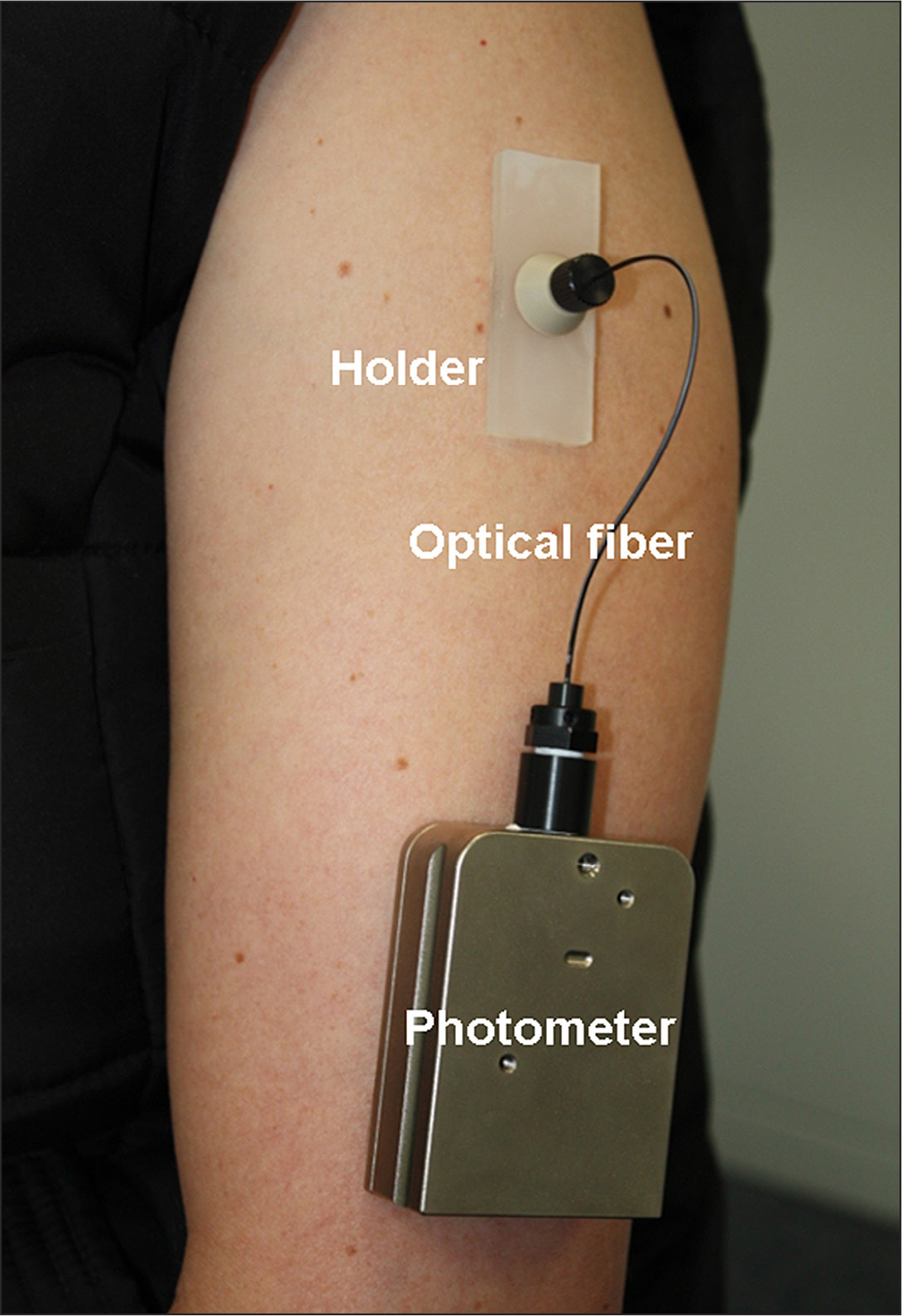
FiberSense CGM system worn on the upper arm.
Between the measurement sessions, patients wore the FiberSense CGM system with no photometer attached. The FiberSense CGM system was removed after up to 14 days of wearing time, and a follow-up visit was performed 1 week after removal.
The FiberSense CGM system was blinded to the patients and did not calculate glucose values in real time. For subsequent data analysis a single calibration was performed daily. The calibration used two blood glucose readings at different blood glucose concentrations to determine the slope of the glucose response function. Calibration points were excluded from data analysis. The remaining data set was analyzed with the obtained calibration.
Results
In Vitro Results
The response kinetics of the FiberSense CGM system was evaluated by measuring the fluorescence of the system in response to linear glucose concentration gradients in the physiological range for 26 h. Rising and falling glucose gradients were applied with up to ±4 mg/dl/min concentration change. The fluorescence signal of the FiberSense CGM system was highly correlated to the glucose concentration.
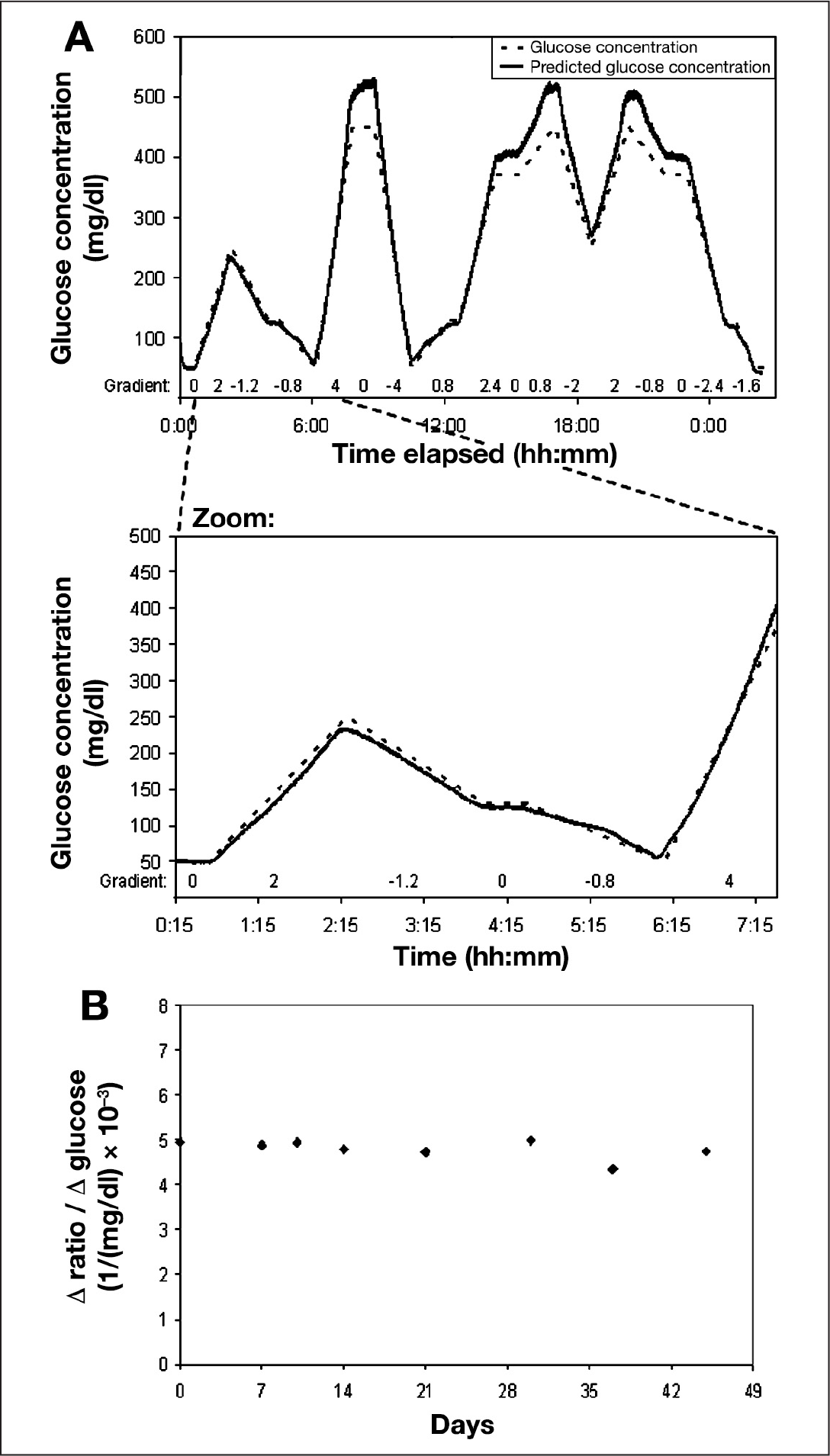
In vitro
The in vitro stability of the FiberSense CGM sensor at physiological conditions is shown in
Fourteen-Day Clinical Trial Results
The FiberSense CGM systems were inserted by clinical professionals 1 h before the start of the first measurement session. FiberSense was well tolerated by all patients during the wearing phase of 14 days. After removal of the FiberSense sensor, 4 out of 12 insertion sites showed no signs of skin erythema or inflammation, and 8 showed only very mild signs. However, none of the patients needed medical treatment, and all signs of inflammation were healed at the follow-up visit 1 week after removal of the sensor. The subjective patient evaluation of the insertion and wearing comfort showed no statistical difference (p = .31) between the FiberSense CGM system and the comparator devices (Abbott Freestyle Navigator or Dexcom Seven Plus). The patients rated the overall comfort of all systems very positively.
From the data acquired at the measurement sessions, the correlation between capillary glucose measured by a standard laboratory method and interstitial glucose measured by the abdominal and upper arm FiberSense CGM was investigated.
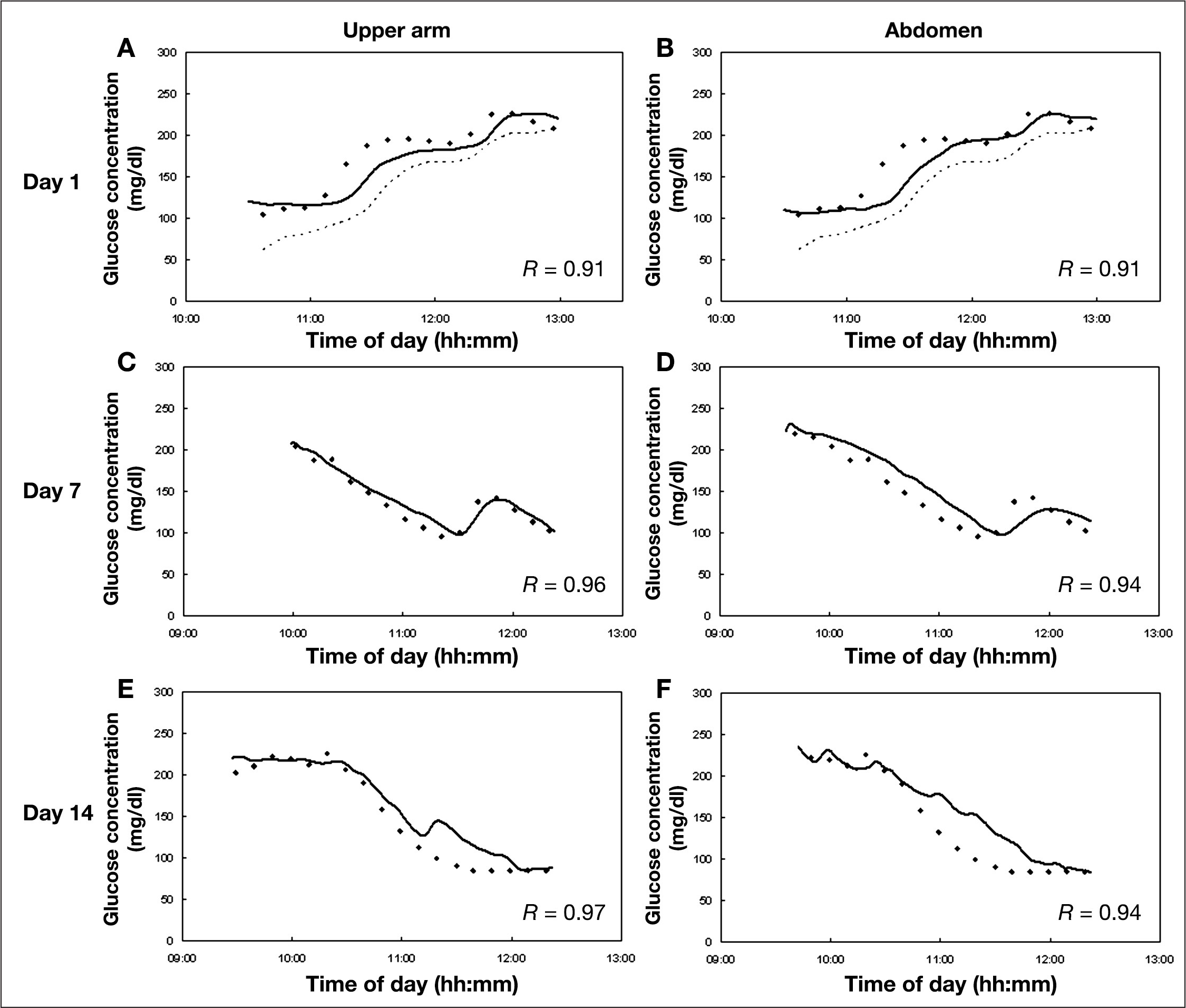
In vivo performance of the implanted FiberSense CGM systems (black curve) versus blood glucose (solid squares) and commercial CGM (dotted curve) in one patient for the study period of 14 days.
With a daily calibration of the FiberSense sensors, no decrease in sensor accuracy was detectable during the wearing period of 14 days. The observed lag times were shorter than 20 min and were even shorter than the lag times of the commercial CGM systems used for comparison (see
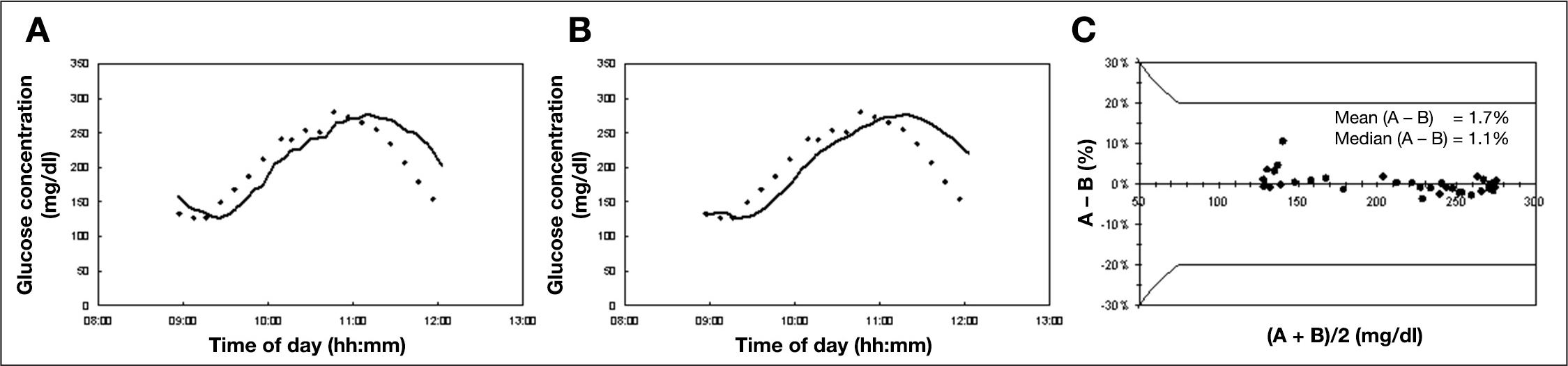
Within-patient comparison of
In
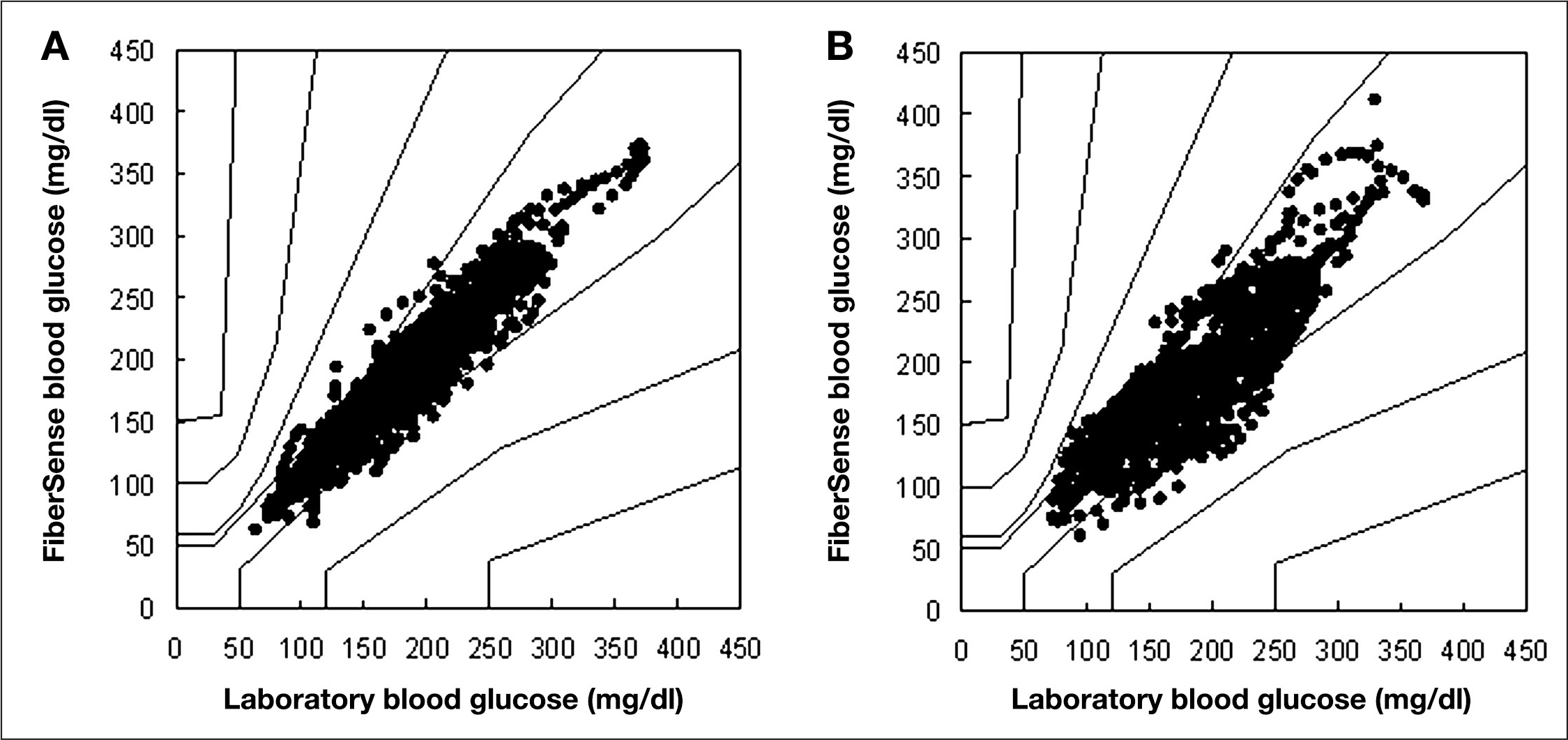
Consensus error grid analysis of the pooled FiberSense data pairs from the (A) upper arm and (B) abdomen of six patients over 14 days.
Consensus Error Grid Analysis and Statistical Parameters of the Pooled Data Pairs of Six Patients with Abdominal and Upper Arm Placement of the FiberSense a
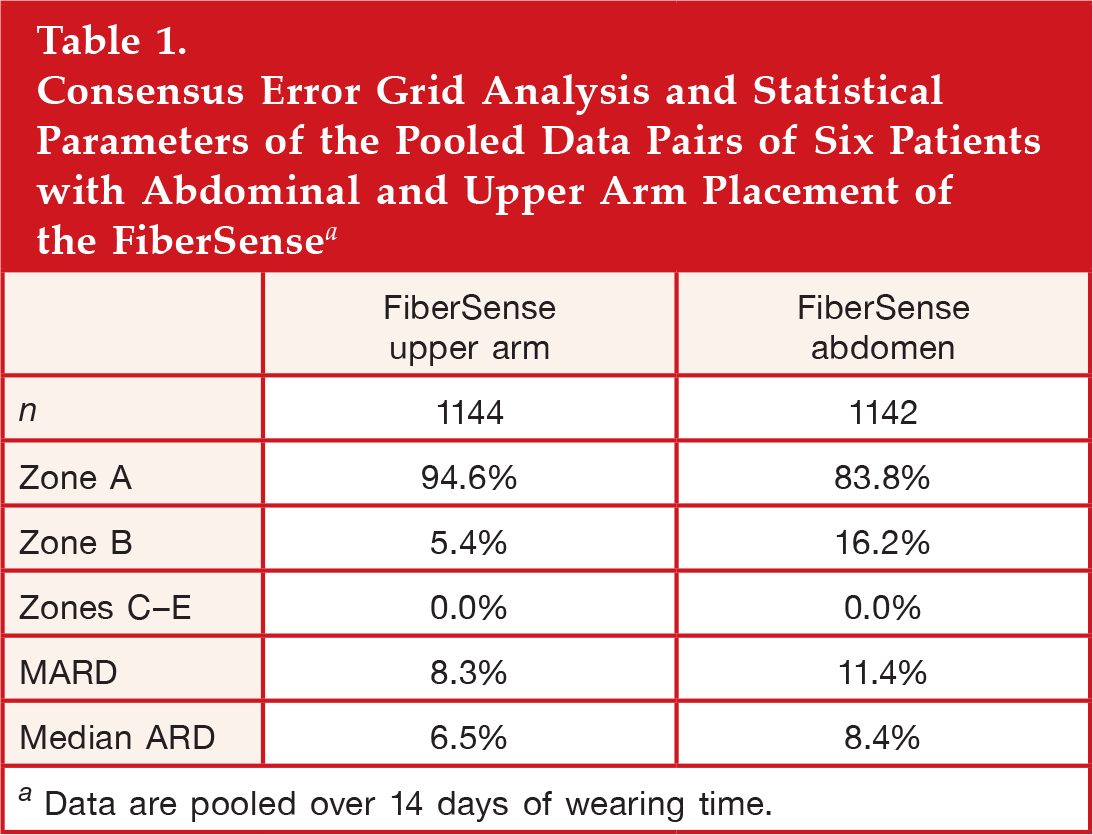
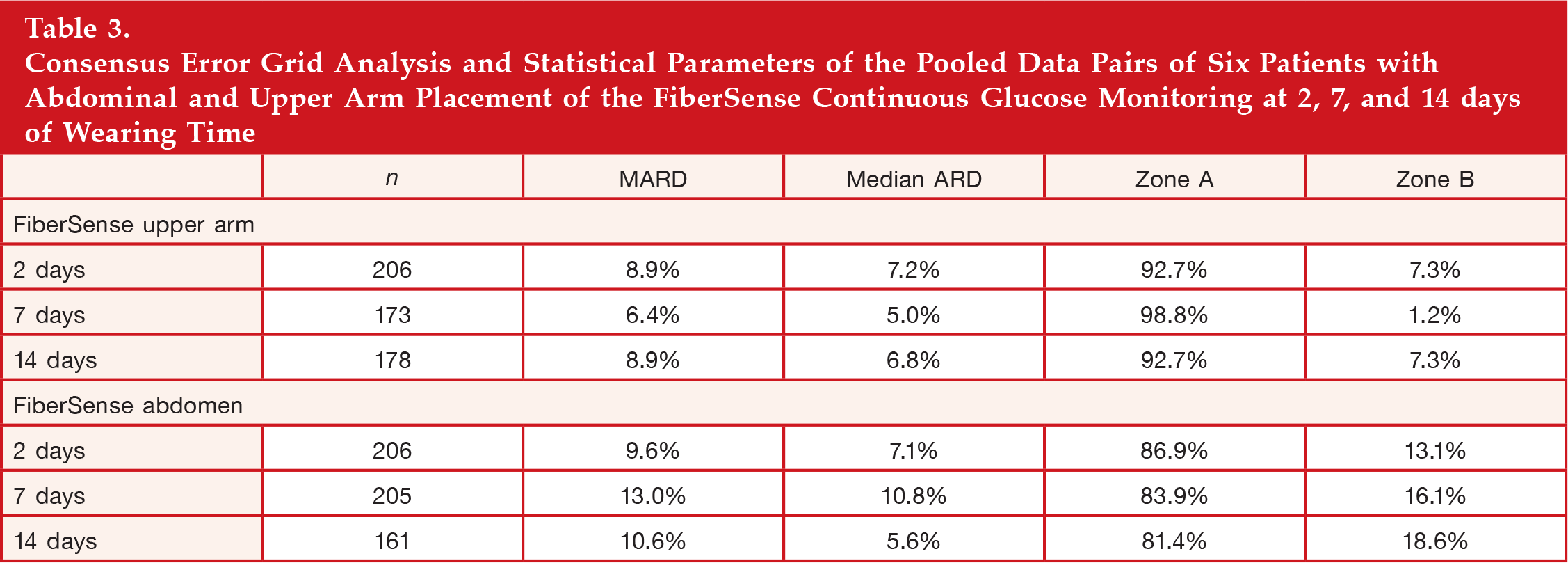
Data are pooled over 14 days of wearing time.
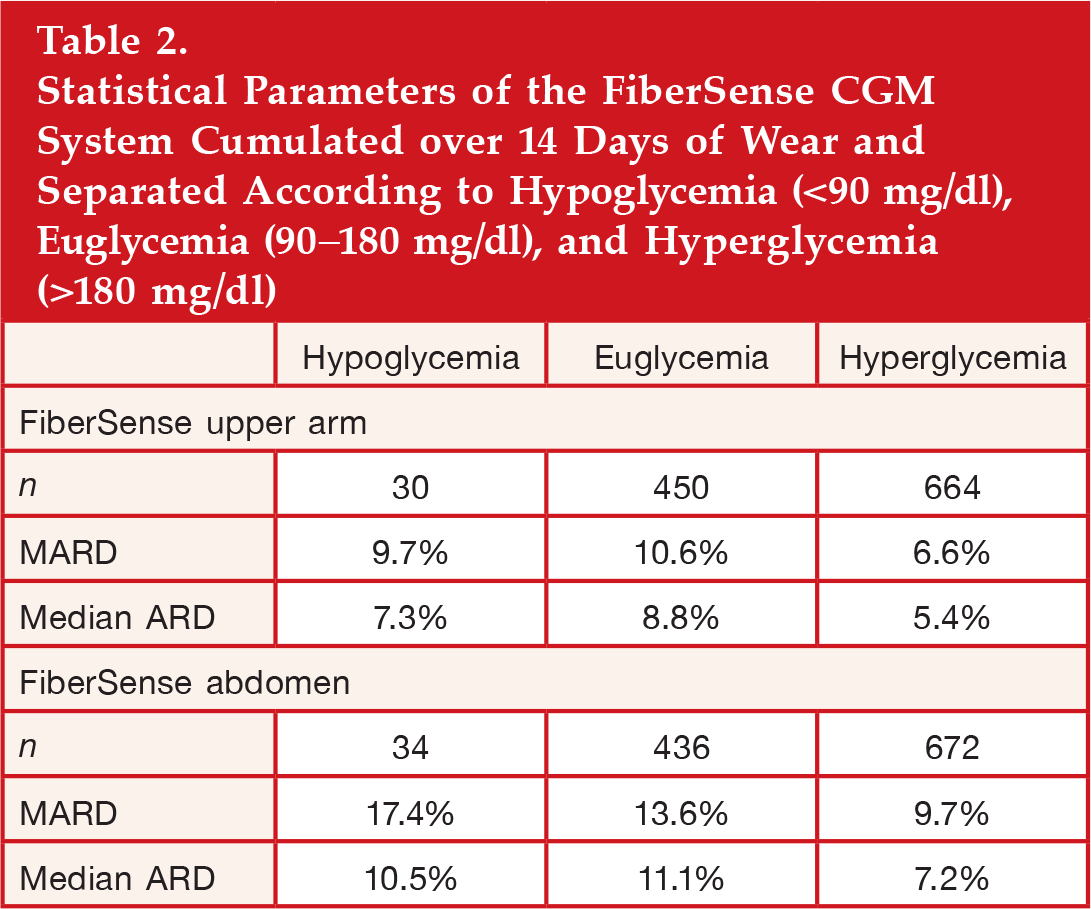
Statistical Parameters of the FiberSense CGM System Cumulated over 14 Days of Wear and Separated According to Hypoglycemia (<90 mg/dl), Euglycemia (90–180 mg/dl), and Hyperglycemia (>180 mg/dl)
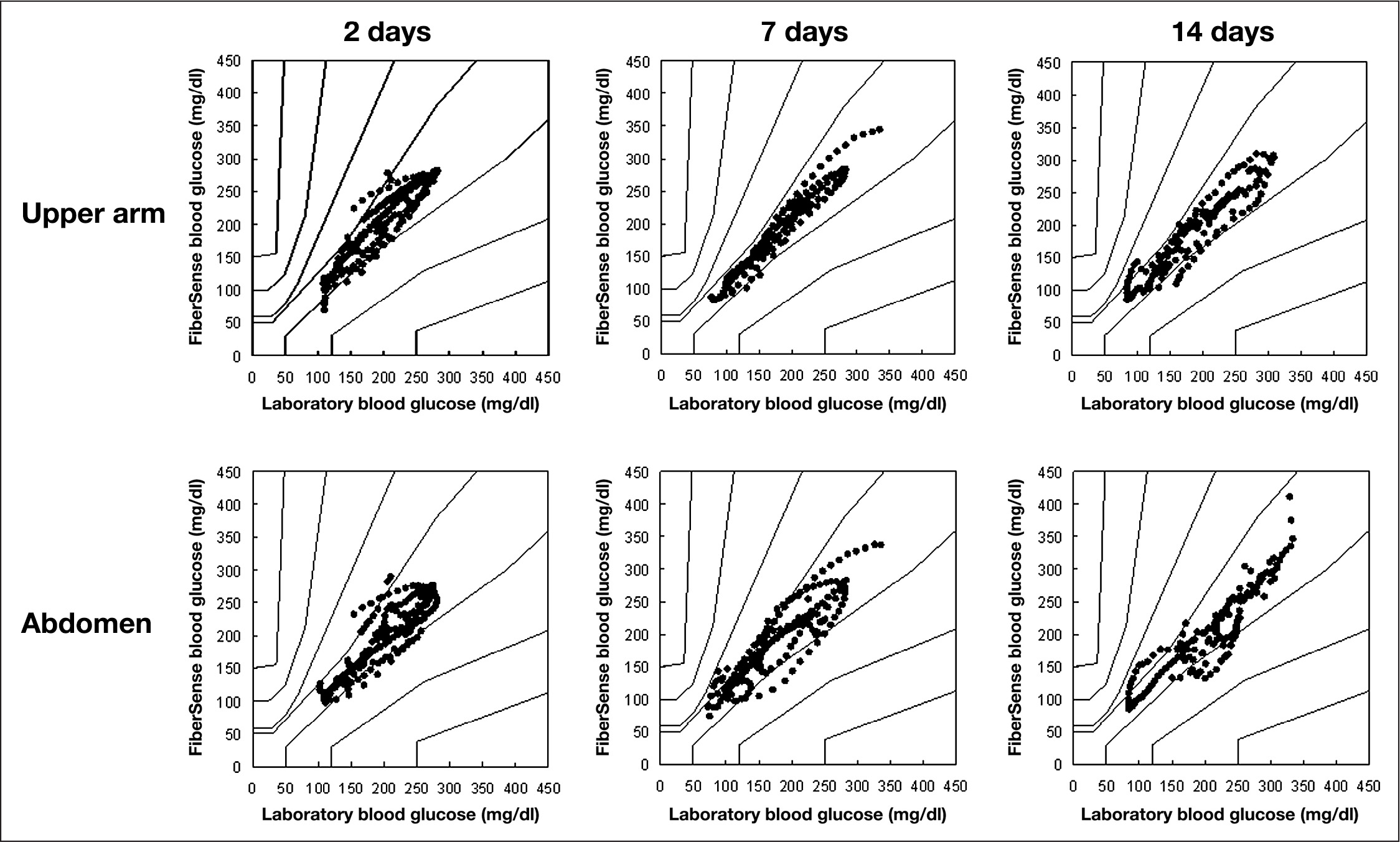
Consensus error grid analysis of the pooled data pairs of six patients after 2 (left), 7 (middle), and 14 (right) days of wearing time from upper arm (upper row) and abdominal (lower row) FiberSense sensors.
Consensus Error Grid Analysis and Statistical Parameters of the Pooled Data Pairs of Six Patients with Abdominal and Upper Arm Placement of the FiberSense Continuous Glucose Monitoring at 2, 7, and 14 days of Wearing Time
Discussion
Development of an accurate and reliable continuous blood glucose monitoring device is a prerequisite for a future implementation of an artificial pancreas. Longevity of the CGM sensor will provide additional comfort of use and cost reduction to the patient.
The FiberSense CGM system is based on a very stable biochemical fluorescence sensor system. In vitro stability tests showed the longevity and stability of the FiberSense sensor for up to 45 days (
The in vitro kinetics shown in
The performance of the FiberSense system was investigated in a first clinical trial with six patients for 14 days of wearing time. Objectives of the trial were overall wearing comfort, correlation of interstitial glucose to capillary blood glucose values during measurement visits at the study center, and longevity of the system.
Overall insertion and wearing comfort was rated very positively and comparable to the commercial CGM systems worn in parallel by the patients. It has to be noted that the photometer used for detection of the fluorescence signal from the sensor was only connected to the sensor during the measurement visits at the study center because of its size of approximately 8 × 5 × 2.5 cm. Hence, the wearing comfort rating does not include the photometer. The photometer was not specially designed for the FiberSense application but was rather adapted from the long-term subconjunctival glucose measurement system developed by our group. 26 The optical coupling of the photometer to the fiber sensor was achieved by use of a polymer optical transfer fiber. However, this transfer fiber has shown to be prone to movements of the patient. Therefore, measurements were only possible with patients being seated. After having shown the feasibility of the FiberSense system for continuous glucose measurement, the photometer will be miniaturized to be directly and permanently attached to the sensor fiber in the future development of the FiberSense CGM system. This will very likely overcome the movement restrictions of the current system.
One key objective for CGM systems is the warm-up time of the sensor after implantation. At wearing day 1, the measurement started approximately 1 h after insertion of the sensors. The absence of a warm-up effect in the measured results indicates a quick physiological calibration time of the FiberSense sensors of less than 1 h. For comparison, currently marketed CGM devices have warm-up times of 2 to 10 h.5,7
Data analysis of the 14-day clinical trial depicts a close correlation of the FiberSense CGM data to capillary blood glucose data. The overall MARD of the FiberSense system was evaluated to be 8.3% at upper arm placement and 11.4% at the abdomen. As
A direct comparison of the correlation data of the FiberSense CGM system to commercially available systems at this phase is not reasonable, because the calibration parameters of the systems are too different. The commercial systems were calibrated according to their manufacturers' protocols schemes with blood glucose self-monitoring values. In contrast, the FiberSense data were calibrated once per measurement day by a single calibration using two blood glucose readings against capillary blood glucose values measured with a standard laboratory glucose measurement device. Calibration with a home use blood glucose meter will presumably lead to a higher error if not properly used.10,30 The daily calibration used for the FiberSense data was mandatory at this development phase of the investigational FiberSense system. The renewed connection to the photometer at each measurement day leads to a varying coupling efficiency between the measurement days, which, in turn, requires each time a new determination of the slope of the glucose response function. While the used calibration method is not practicable for a commercial device, it was selected to generally prove the suitability of the fluorescence-based FiberSense CGM system for CGM. After having shown that, in the current trial, prospective and seldom calibration with blood glucose self-monitoring device data will be another important step in the near-future FiberSense development. Therefore, we focus our development on a reliable production process of the sensor fibers with low tolerances. This will eventually lead to lot-based in vitro sensitivity data ensuring prospective one-point calibration of the FiberSense system. Moreover, our future work will focus on development of a miniaturized photometer and a robust coupling to the sensor fiber to allow for 24 h per day wear of the FiberSense system.
The FiberSense clinical trial was designed with a wearing period of 14 days, doubling the longest wearing period of a currently marketed CGM device. However, all 12 sensors were still functional after 14 days, not showing any loss of sensitivity. Moreover, the same sensor chemistry was used in the long-term subconjunctival glucose monitoring system that we developed. In this application, the sensor chemistry exhibited a duration of action of more than 4 months.31,32 Therefore, a lifetime of the FiberSense CGM system of even longer than 14 days seems possible.
Conclusions
With the present clinical trial, the fiber-optic FiberSense CGM system with its fluorescence-based sensor technology has shown to be a promising developmental candidate toward a precise, reliable system for CGM in diabetes patients. The obtained overall results with a MARD of 8.3% at the upper arm and 11.4% at the abdomen are promising. The operating life of the FiberSense CGM system was doubled in the clinical trial compared with the longest duration of action of the currently marketed CGM systems. Even after 14 days of action, no aging of the fluorescence-based sensor was notable. Therefore, the FiberSense system has the potential for a CGM system with longevity of even more than 14 days.
Footnotes
Abbreviations:
This work was funded by EyeSense GmbH, Grossostheim, Germany.
Achim J. Müller, Monika Knuth, Katharina S. Nikolaus, Frank Küster, and Roland Krivánek are employees of EyeSense GmbH. Achim J. Müller, Monika Knuth, and Katharina S. Nikolaus own stock from EyeSense AG.
Acknowledgments:
The authors gratefully acknowledge the kind cooperation and conscientious work of all those who participated in this study.