




Abstract
In this study, we used an extreme case approach to examine the facilitators and barriers of cognitive engagement among freshmen in Advanced Placement (AP) or Pre-International Baccalaureate (IB) courses. Twelve ninth-grade AP/IB students participated in semistructured interviews focused on cognitive engagement. After analyzing the data using a generic approach with an emphasis on constant-comparative methods, we identified five themes related to facilitators (i.e., students’ role, teachers’ role, parents’ role, school connectedness, and technology's role) and three themes related to barriers (i.e., student perceptions, negative academic experiences, and distractions). Most themes aligned with a priori themes derived from the literature. The findings can help educators understand what accelerated students perceive as helpful or harmful in promoting their level of cognitive engagement, which, in turn, may influence their academic achievement.
Keywords
Student engagement has gained an increasing amount of interest over the last few decades as research supports this construct as a potentially malleable factor that predicts school success (Bond, 2020; Reschly & Christenson, 2022; Schnitzler et al., 2021). This construct is also of interest to a wide range of educational stakeholders because it is linked with positive outcomes and is relevant to all students (Wang & Hofkens, 2020). Engaged students adhere to the school's behavioral norms and expectations, feel a sense of belonging to school, and attend to cognitive demands of coursework. Considering the benefits of promoting student engagement, this study explored the facilitators and barriers of cognitive engagement through the lens of freshmen in accelerated high school curricula.
Review of the Literature
This literature review provides an overview of student engagement as a construct, explores facilitators and barriers to evoke cognitive engagement, discusses the importance of student voice, and showcases the need to include accelerated students’ voices in the study of cognitive engagement. Student engagement is conceptualized as a multidimensional construct that includes three types: behavioral, emotional, and cognitive engagement (Fredricks et al., 2004; Groccia, 2018). In 2015, Greene summarized the different ways in which researchers have measured cognitive engagement over the past 20 years and concluded that the use of both cognitive and motivation theory is required to capture the construct. Reschly and Christenson (2022) agree with this viewpoint in the second edition of their Handbook of Research on Student Engagement. Although there are varying definitions of cognitive engagement in the literature, they share some common features, namely motivation/self-regulation (ability to initiate and sustain behaviors and cognitive focus to reach goals), relevance/value (perceived significance of classroom learning to help achieve future aspirations), and goal setting (tendency to set learning-related goals; Appleton et al., 2006; Archambault et al., 2009; Blumenfeld et al., 2006; Fredricks et al., 2004; Griffiths et al., 2012). In the context of this study, we synthesized these features to define cognitive engagement as one's willingness to self-motivate and use self-regulation skills to master school-related goals (e.g., comprehend complex ideas) that are relevant to one's future aspirations.
Researchers have found consistent links between cognitive engagement and increased well-being and adaptive coping (Reschly & Christenson, 2022; Suldo & Parker, 2022). Cognitive engagement also serves as a protective factor against boredom, disaffection, school dropout, poverty, and unemployment (Archambault et al., 2022; Fredricks et al., 2019). The current body of research reveals that student engagement tends to decrease as students move from elementary to high school, which predicts declines in Grade Point Average (GPA) over time (Lam et al., 2015; Wang & Eccles, 2012a). In contrast, when level of cognitive engagement is high, it predicts higher academic achievement (Lei et al., 2018; Li & Lerner, 2013).
Regarding the relationship between motivation, engagement, and achievement, Siegle and McCoach's (2005) Achievement-Orientation Model suggests that gifted students who find school learning meaningful (i.e., goal valuation), perceive their school environment as supportive (i.e., environmental perception), and believe they have the necessary skills to succeed at school (i.e., self-efficacy) will develop motivation that leads to greater self-regulation and higher engagement, which in turn positively affect their achievements in school. In contrast, students whose attitudes are low on any of the three constructs will have lower motivation, poorer self-regulation, more disengagement, and likely underachievement in school.
Facilitators of Cognitive Engagement
Students, teachers, and parents play a role in influencing students’ level of cognitive engagement in the classroom. Regarding student-level facilitators, survey research indicates that adolescents’ level of positive affect and use of coping strategies are related to greater cognitive engagement (Reschly et al., 2008). Students who reported stronger sense of belonging to school and better peer relationships also tend to be more engaged (Allen et al., 2016; Davis et al., 2022). Patall et al. (2019) reported that students who believed effort, as compared to innate ability, played a bigger role in academic success had higher level of cognitive engagement. Taken together, existing studies suggest that students who report higher positive affect, use more adaptive coping strategies, and adopt a mastery approach in learning tend to report higher levels of cognitive engagement.
Teachers have also been found to play a critical role in facilitating cognitive engagement. Positive teacher–student relationship has been shown to associate with higher level of cognitive engagement (Quin, 2017). Students are also more likely to be cognitively engaged when their teachers offer choices and promote self-regulation (Wang & Holcombe, 2010). Fredricks et al. (2019) identified classroom practices that facilitate cognitive engagement, including posing questions that are relevant to the real world and offering meaningful challenges. Moreover, increases in social support from teachers are associated with a slower decline, relative to the typical developmental progression, in adolescents’ cognitive engagement (Wang & Eccles, 2012b). In sum, prior research indicates that aspects of a teacher's instructional style and relationships with students are relevant to students’ cognitive engagement in the classroom.
The current literature shows that higher quality of parent–child relationships is linked to higher engagement, more positive attitudes toward school, and academic performance (Bempechat & Shernoff, 2012). Parents who are more involved in school tend to have children who are more academically engaged (Wang & Sheikh-Khalil, 2014). Parents’ educational values and the way in which they communicate those values to their children also impact cognitive engagement in youth (Bempechat, 2019). In addition to parent involvement, other cognitive engagement facilitators that emerged from prior studies include parental autonomy support (i.e., encouragement of independent problem-solving skills and adoption of the child's perspectives; Lerner & Grolnick, 2020) and having a structured learning environment at home (i.e., clear and consistent guidelines and expectations, predictability of consequences, and authority; Raftery et al., 2012).
Barriers to Cognitive Engagement
Compared to facilitators of cognitive engagement, less is known about barriers to cognitive engagement. The Achievement-Orientation Model (Siegle & McCoach, 2005) theorized that perceived irrelevance of schoolwork, lack of support from others, and low self-efficacy can contribute to lower level of engagement. This theory is partly confirmed in studies where students who believe that innate ability, such as talent in Math, plays a bigger role in academic success compared to effort (i.e., low self-efficacy) tend to report lower level of cognitive engagement (Hufton et al., 2002; Patall et al., 2019). Rotgans and Schmidt (2011) also found that when students have less background knowledge on a topic, they perceived less relevance and independence in learning, and thus reported a lower level of cognitive engagement.
Importance of Student Voice
Student voice matters because it encourages student agency—genuine student voice work allows students to provide input on issues related to their learning and use their voices to inform action and practice at school (Fielding & Bragg, 2003). There are several avenues to involve student voices in research (Cook-Sather, 2020). For example, researchers can invite students to participate in interviews to analyze pedagogical practices and provide relevant recommendations to inform changes in their school experiences. It is especially important to include voices of traditionally marginalized students.
The majority of cognitive engagement research to date has been correlational in nature, conducted through quantitative studies (e.g., Patall et al., 2019; Lerner & Grolnick, 2020; Allen et al., 2016), with some notable qualitative exceptions (e.g., Fredricks et al., 2019; Hufton et al., 2002). Deeper exploration of cognitive engagement via qualitative studies, especially through gathering minority student voice, can be beneficial to understand how cognitive engagement can be promoted among students and to identify the range of barriers and facilitators to adolescents’ cognitive engagement.
Cognitive Engagement Through the Lens of High School Students in Accelerated Curricula
Combining the need for more qualitative studies in examining cognitive engagement and the importance of incorporating student voice, there is a need to include students’ perspectives in exploring the facilitators and barriers of cognitive engagement. In addition to representation of youth from various developmental stages, it is also important to include the voices of students with varying levels of academic achievement to diversify the participant population (Pearce & Wood, 2019). For instance, it is equally important to study the two extremes of the academic spectrum: youth struggling academically (e.g., high school dropouts, students failing classes) and youth who are doing particularly well academically (e.g., students with high GPA or enrolled in accelerated coursework) since these groups will likely differ in their level of cognitive engagement. With the exception of a couple of quantitative studies that identified significant associations between student engagement and their mental health (DiLeo et al., 2022) and course grades (Shaunessy-Dedrick et al., 2015; Suldo et al., 2018), few published studies on cognitive engagement have focused on accelerated high school students. One potential population representative of youth who are doing well and who are likely to be cognitively engaged are those enrolled in accelerated high school curricula, namely Advanced Placement (AP) and International Baccalaureate (IB) coursework.
Purpose of the Current Study
Studies of students who are cognitively engaged in school show subsequent beneficial outcomes, including academic achievement, though level of cognitive engagement tends to decrease during adolescence (Wang & Eccles, 2012a). Thus, it is particularly important to discover ways to facilitate long-term cognitive engagement among older students (i.e., middle and high school students). Moreover, as most studies focus on facilitators of cognitive engagement (e.g., Allen et al., 2016; Bempechat & Shernoff, 2012; Davis et al., 2022; Fredricks et al., 2019), there is a clear gap in the literature to further investigate potential barriers to feeling cognitively engaged. Emphasizing the need to focus on student voice, the purpose of the current study was to investigate the facilitators of and barriers to cognitive engagement among high school students in accelerated curricula (i.e., AP classes or pre-IB coursework). Through interviews with AP and IB students with diverse levels of cognitive engagement, we aimed to explore factors that helped and prevented this population of students from being cognitively engaged in the classroom.
Method
This exploratory study utilized two data sources. The first source was survey data, which were collected as part of a larger research project (described below in Recruitment and Selection of Participants) to identify and select participants representing extreme cases (Patton, 2002), or those at the highest and lowest ends of level of cognitive engagement. The second source of data was narrative case study collected through individual interviews with high school students about dimensions of cognitive engagement. Operating from an interpretivist paradigm (O'Donoghue, 2006), we acknowledged that there are multiple realities shaped by individual's subjectivity and communicated with participants in a reciprocal manner.
Recruitment and Selection of Participants
We recruited participants from a larger intervention development project that included ninth-grade students enrolled in either AP Human Geography (N = 167) or IB Inquiry Skills (N = 153) at two high schools located in one large district in a Southeastern state (Shaunessy-Dedrick et al., 2022). The larger study aimed to investigate the acceptability of a new intervention designed to teach and motivate AP/IB students to cope with academic stress effectively. That study involved initial delivery of a universal intervention intended to build students’ skills in coping and increase connections in order to maximize likelihood of success in AP and IB; the intervention included a series of 10–12 weekly lessons provided during students’ class time. Students in the participating classrooms were invited to complete a series of self-report measures before (baseline; August 2016) and after (post-intervention; May 2017). The battery of self-report instruments included surveys to assess student engagement (described in next section) as well as constructs not relevant to the current study but pertinent to the intervention (e.g., student stress and coping). Prior to baseline data collection, the research team obtained both written parental consent and student assent from 93.3% of recruited students.
Measure
To assess student engagement, the larger study utilized the School Attitude Assessment Survey-Revised (SAAS-R; McCoach & Siegle, 2003b). Cognitive engagement was measured through the SAAS-R, which has 35 items divided into five scales: perceived academic competence (Academic Self-Perception), and two types of student engagement: emotional engagement (Attitude Toward Teachers; Attitude Toward School) or cognitive engagement (Goal Valuation [GV]; Motivation/Self-Regulation [M/SR]). For the purposes of this study, only the GV and M/SR scales were examined. The GV scale measures students’ perceived relevance of school learning to their future aspirations and goals (e.g., “Doing well in school is important for my future career goals” McCoach & Siegle, 2003b, p. 424), and M/SR measures students’ willingness to invest effort in initiating and maintaining academic-related behavior through the use of cognitive strategies (e.g., “I spend a lot of time on my schoolwork” McCoach & Siegle, 2003b, p. 424). Participants rated how strongly they agree or disagree with the items on a scale from 1 (strongly disagree) to 7 (strongly agree). Prior use of the SAAS-R with AP and IB students has provided support for construct validity and reliability, for instance α = .89 and .90 for GV and M/SR, respectively (Dedrick et al., 2015). Other researchers have also utilized the GV and M/SR scales from the SAAS-R to measure cognitive engagement (Chong et al., 2018).
Identifying Prospective Participant Pool
We sought participation from AP and pre-IB students through purposeful sampling known as extreme cases (Patton, 2002). Using secondary data collected for the larger intervention study, we reviewed the distribution of average scores on the GV and M/SR composites of the SAAS-R (McCoach & Siegle, 2003b) at baseline to find mean score cut-points that corresponded to ≤10th percentile and ≥90th percentile of scores for GV and M/SR. On the 1 (lowest) to 7 (highest) range of scores for SAAS-R scale averages, cut scores for the low cognitive engagement group were M ≤ 6.0 and ≤ 4.3 for GV and M/SR, respectively. For the high cognitive engagement group M = 7.0 and ≥ 6.8 for GV and M/SR, respectively, were used as cut scores. These cut scores are similar to those reported in other studies with a similar population (McCoach & Siegle, 2003a; Miñano Pérez et al., 2017; Suldo et al., 2008), and it is noteworthy that students with lower GV and M/SR scores tend to have lower academic achievements compared to students with higher scores. With regard to high cognitive engagement, 32 students had mean scores above the cut-points on both scales; for relatively low cognitive engagement, 15 students had mean scores below cut-points on both scales. From this pool of 47 students, we used a maximal variation sampling strategy (Creswell, 2005) to select a balanced number of students from the high and low engagement groups and, to the extent possible, diversity in representation of gender and ethnic groups. Of note, there was only one female among the low engagement group and only three minority (i.e., Asian American) students among the pool of potential participants.
Thirteen students were deemed eligible and fit the criteria for an ethnically diverse and gender balanced pool. To recruit the eligible students, Kai Zhuang Shum (KZS) spoke with prospective participants and indicated that agreement to participate would entail attending one to two individual interviews during school hours in spring 2017, interviews which would be recorded and last approximately 30 min. Students who agreed to participate received a $10 gift card following each interview. Of the 13 students recruited, 12 agreed to participate (92.3% participation rate). KZS interviewed all the students (Table 1).
Student Participants’ Demographic Features and Baseline SAAS-R Scores.
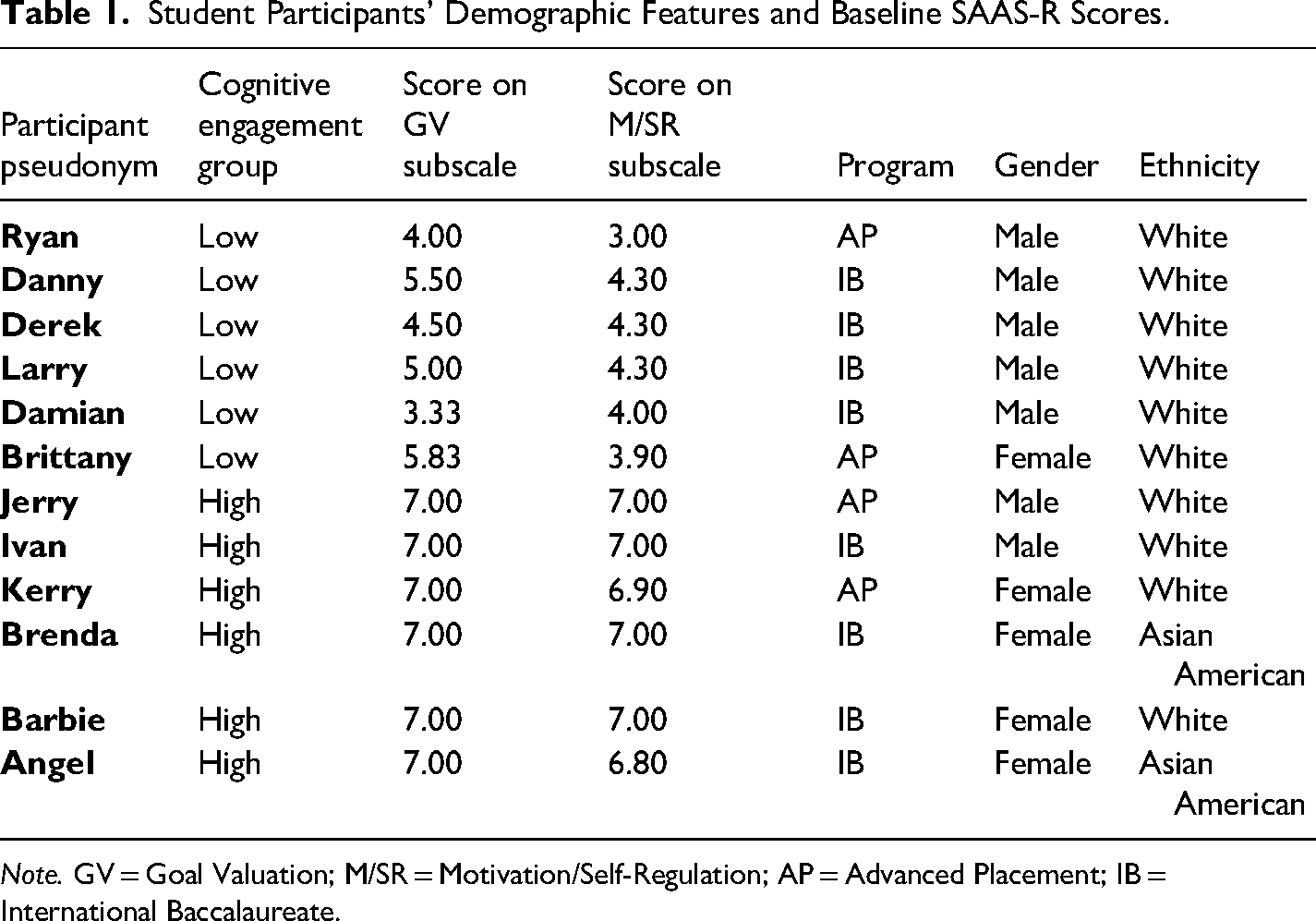
Note. GV = Goal Valuation; M/SR = Motivation/Self-Regulation; AP = Advanced Placement; IB = International Baccalaureate.
Interview Protocol Development and Pilot
We developed a semistructured interview protocol for the first interview to gather student perceptions of barriers and facilitators to student cognitive engagement in their AP/IB classroom. The interview protocol began with an ice-breaker question (i.e., What led you to take AP classes or join the IB program?). The next part of the interview required the student to respond to a scenario about a high school student. First, we explained a scenario and the challenges the high school student is facing related to a cognitive engagement issue (i.e., willingness to self-motivate, use self-regulation skills to achieve self-determined academic goal, and perceptions of schoolwork as important to future aspirations). Next, we asked an initial question about how the interviewee would advise the student in the scenario to manage the cognitive engagement challenge (See the Full Interview Protocol in Appendix A).
After the student responds to the scenario, we ask a series of four probing questions related to ways others might support the student in the scenario, including the classroom teacher, a family member, the student, and a community member. The protocol continues with two more scenarios that include a different cognitive engagement issue, a question, and four probes each.
The scenarios serve as prompts that provide interviewees a realistic situation with cognitive engagement embedded, allowing the student the opportunity to grasp what may otherwise be an abstract concept if presented in more direct, formal language. The scenarios and subsequent questions and probes allow interviewees to discuss initial reactions to a prompt before further examination of more personal experiences relating to cognitive engagement. We also chose to use scenarios with the hope that they would foster rich responses from participants. Specifically, the interview questions that follow the scenarios are based on narrative inquiry to evoke stories from participants (Connelly & Clandinin, 1990). Stories collected from participants were compiled and used to answer the research questions. In this study, “story” is defined as any narrative information that provides insight into the lives of the participants, including their perspectives, experiences, worldviews, feelings, and opinions.
Prior to collection of interview data, we conducted a pilot study to gain feedback on the clarity and usability of the questions and to estimate the duration of the interview. Specifically, two undergraduate students in an honors college program at a university in the Southeast who had been enrolled in a high school IB program agreed to participate in a pilot test of the interview protocol with KZS, who audio recorded the interview. Pilot participants affirmed that the scenarios were relevant, easy to understand, and appropriate. Shannon M. Suldo listened to the interview audio files and provided feedback on interviewing techniques and protocol flow. Based on this feedback, we modified the interview design for the study involving high school students. Given the pilot students’ positive reactions to the interview experience and the quality of the information gleaned, no substantive changes to the interview protocol were made. Following the first round of interviews with high school participants, we also developed protocols to guide follow-up interviews (see Appendix B) with select participants. The purpose of the second round of interviews was to conduct member checking and further explore some of the themes generated from the first round of interviews. Individualized follow-up interview questions were generated by KZS following a review of transcripts and audio files from the first round of interviews.
Data Collection Procedures
KZS conducted all initial interviews in April 2017 and follow-up interviews in May 2017 during school hours at the school sites. The first round of interview sessions (N = 12) lasted, on average, 27 min, 33 s (SD = 4 min, 54 s), with the shortest interview at 23 min, 9 s and the longest at 39 min, 23 s. The second round of interview sessions (N = 4) lasted 21 min, 39 s on average (SD = 2 min, 15 s), with the shortest interview at 18 min, 31 s and the longest at 23 min, 25 s. All interviews were audio recorded and transcribed.
Directly after the first round of interviews, KZS listened to the audio recordings and identified statements or passages that could be explored more fully to elicit greater depth, clarity of thought, or specificity from selected participants through a follow-up interview. In May 2017, four of the 12 students (representing two low and two high cognitive engagement) were invited to participate in a second round of interviews because they were the only students who provided statements that warranted additional exploration. Recruitment of additional students for participation in interviews ceased when we observed that saturation was reached (Guest et al., 2006), which was after 12 initial interviews and 4 follow-up interviews.
Overview of Analyses
To analyze the interview data, this study adopted the interpretivist paradigm (O’Donoghue, 2006) and took a generic approach (Lichtman, 2013). A generic approach means integrating various qualitative analysis techniques to best answer the research questions. In this study, we incorporated the various techniques recommended by Ryan and Bernard (2003), including identifying repetitions, metaphors, theory-related material, creating key word lists, identifying similarities and differences, and sorting data into themes. KZS transcribed audio recordings and then read transcriptions line-by-line several times, underlining key words. As she immersed herself in the data, she incorporated the constant-comparative method. Themes and patterns were identified through systematic comparison of key words (Strauss & Corbin, 1990) and by the frequency that particular responses occurred across participants. The higher frequency responses are reported as themes and were noted by two or more participants.
Codebook Development
After the first round of data analysis, KZS created an initial codebook that detailed each theme with a definition and examples from transcripts. The initial codebook was used to begin the process of intercoder agreement. Four independent coders (school psychology doctoral students) were oriented to the codebook by KZS and shown how the codes were organized and the meanings. The independent coders then coded the transcripts separately and discussed any inconsistencies in coding with KZS. They also helped merge, rename, or rearrange the codes. As a result, a final list of codes was formed. The themes are organized by main and secondary themes (see Table 2).
Themes, Secondary Themes, and Codes.
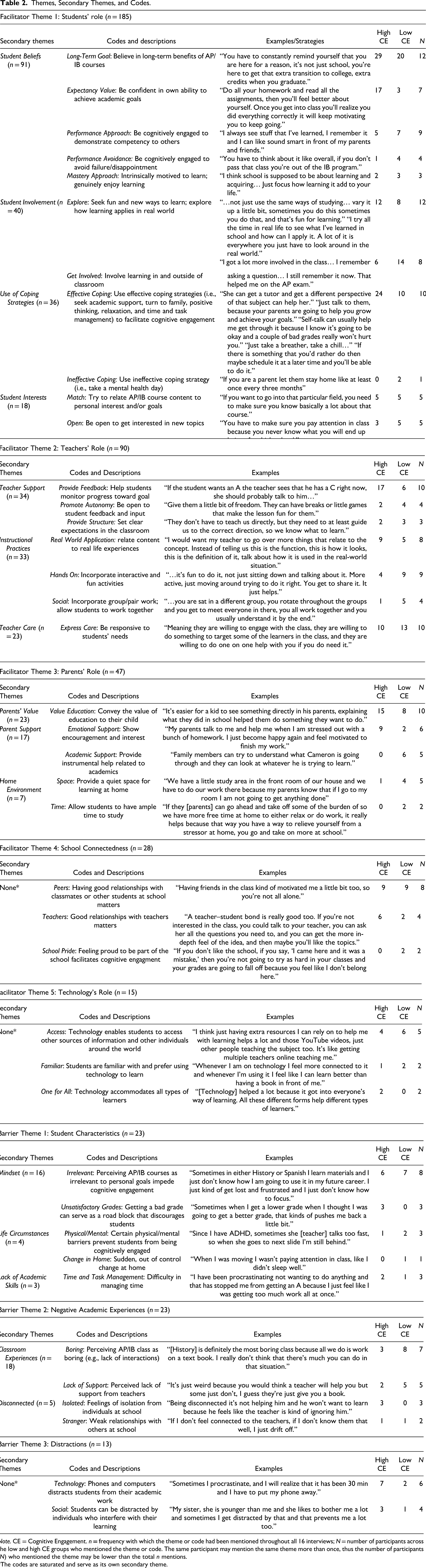
Note. CE = Cognitive Engagement. n = frequency with which the theme or code had been mentioned throughout all 16 interviews; N = number of participants across the low and high CE groups who mentioned the theme or code. The same participant may mention the same theme more than once, thus the number of participants (N) who mentioned the theme may be lower than the total n mentions.
*The codes are saturated and serve as its own secondary theme.
Reflexivity Statement
Education is one of the most important values of KZS, which is similar to the beliefs held by many students in accelerated curricula. Combining this factor with KZS's age at the time of study and outer appearances that resembles someone substantially younger than the adults the participants usually encounter at school, the participants may have found it easier to open up and speak freely during interviews. However, as an individual who genuinely enjoys learning in the classroom, KZS might possess assumptions on what might help the participants stay focused and interested in class. These preconceptions may affect the way she filters and interprets the participants’ responses. Thus, she kept a reflexive journal (e.g., recorded reflections on interactions with participants, data collection processes, decisions made during data analysis) to minimize the potential for personal biases to negatively impact the rigor of the study.
Trustworthiness
Trustworthiness refers to the extent to which a qualitative study is credible, dependable, transferable, and confirmable (Sandelowski, 1993). Several steps were taken to attain trustworthiness, including engaging in self-reflective practices (e.g., keeping a reflexive journal, getting feedback from peers on data interpretation process, and examining how personal values may impact the research process) during planning, interviews, and data analysis (Tracy, 2010). The study also uses crystallization, multivocality, and member checking. First, independent researchers were involved in data analysis to encourage crystallization (i.e., to reach a deeper understanding of the data; Tracy, 2010). KZS coded all the transcripts whereas four independent coders each coded a random selection of the transcripts. She then compared the codes and resolved any inconsistencies with other coders. Space for a variety of opinions (i.e., multivocality) was provided by including students who reported both low and high levels of cognitive engagement (Tracy, 2010). Participants were purposefully selected to ensure representation from different school settings as well as gender and ethnic backgrounds. In the member checking process, 4 out of the 12 participants completed a second round of interviews to seek their input on the credibility of the initial themes. Specifically, the four students were asked to clarify or expand upon some of their statements in the first round of interview.
Data Reduction
To determine frequency, we summed the number of times each code in the codebook was mentioned across participants and within two subgroups (i.e., participants with high vs. low level of cognitive engagement; Lichtman, 2013). These frequencies are listed in Table 2. When a quote was long and focused on the same topic, the quotation was counted only once for the relevant code, even if a follow-up question fell in between. A code was only applied more than once if another quotation pertinent to the topic appeared in another part of the interview to ensure that the number of instances a specific code occurred across interviews was not inflated. Guided by conceptual understandings from existing literature (Fredricks et al., 2004; Reschly & Christenson, 2022), themes were generated based on a holistic examination of frequency, intensity (i.e., the extent to which the code was mentioned across participants), and the relationship of ideas within and across participants’ sentiments. In the results sections, we represent themes by bolded text. Secondary themes and codes are shown by italicized text.
Findings
Overall, thematic analyses revealed five themes related to facilitators of cognitive engagement: students’ role, teachers’ role, parents’ role, school connectedness, and technology's role, and three themes related to barriers of cognitive engagement: student perceptions, negative academic experiences, and distractions. However, it is noteworthy that when students were asked about cognitive engagement, they spoke about other types of engagement (e.g., emotional/behavioral). This finding supports claims in the literature that student engagement is multifaceted and interrelated (e.g., Reschly & Christenson, 2022). The following sections provide more details on each theme through descriptions of secondary themes. Table 3 lists the frequency that each theme is mentioned within subgroups (low vs. high cognitive engagement group) and across participants. The secondary themes and codes, accompanied by descriptions, selected quotes, as well as frequency counts are illustrated in Table 2.
Frequency Count of All Themes by High vs. Low CE Group and Total Across Groups.
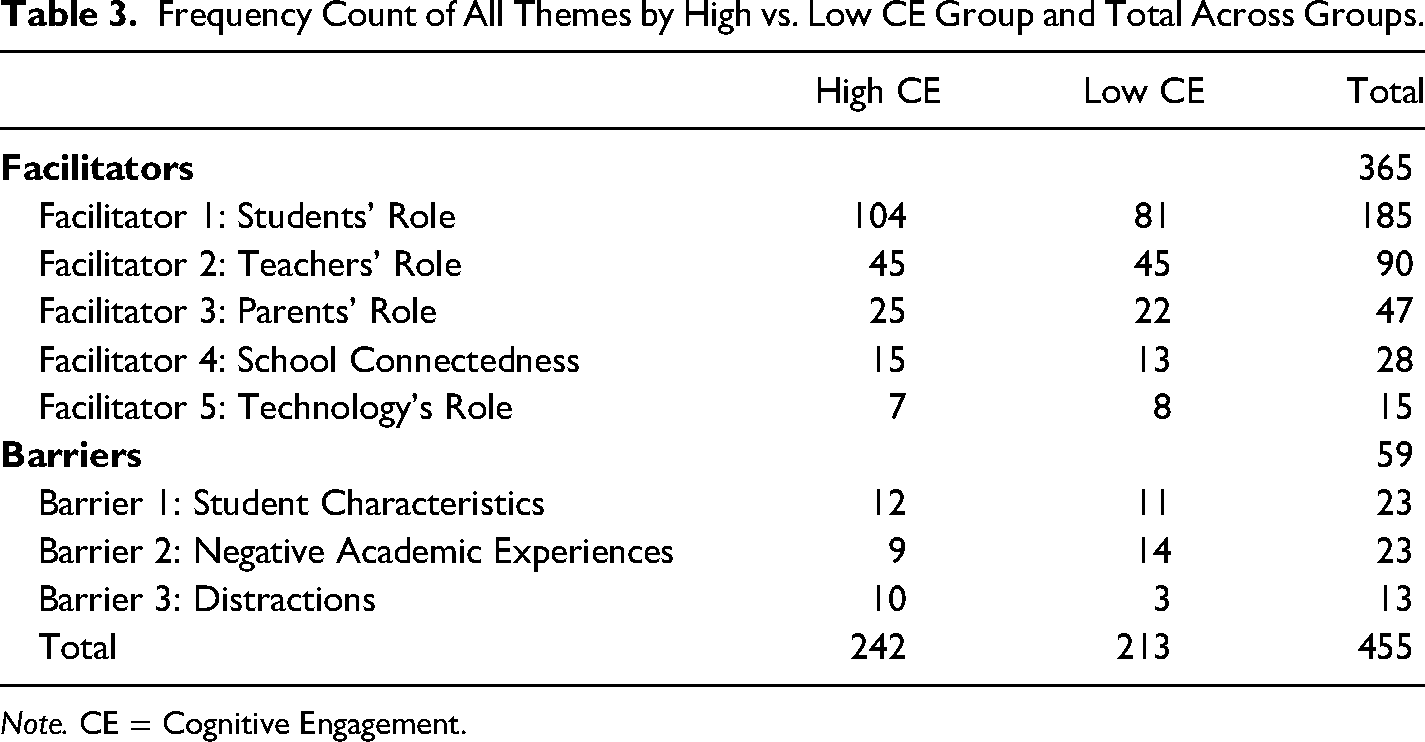
Note. CE = Cognitive Engagement.
Facilitators to Cognitive Engagement
Students’ Role
Participants shared that student beliefs play a big role in keeping students cognitively engaged in accelerated courses. They conveyed that it is important to keep long-term goals in mind and find purpose in learning, as well as bolster confidence in one's ability to reach those goals, to sustain one's level of cognitive engagement. This sentiment can be illustrated with Brenda's (IB, High CE) words, “You have to constantly remind yourself that you are here for a reason, it's not just school, you’re here to get that extra transition to college, extra credits when you graduate.” In addition, participants affirmed that students can (a) explore new and fun ways to learn, as well as (b) get more involved in and out of the classroom to facilitate cognitive engagement (i.e., student involvement). Ryan (AP, Low CE) described how to get involved in class, I asked my teacher a lot of questions on the stuff we were learning and try to answer questions in class… I remember asking a question about the organization of Eastern Europe like Yugoslavia and Russia and that kind of helped. I still remember it now. That actually helped me on the AP exam.
Teachers’ Role
Participants shared that teacher support (i.e., providing feedback, promoting autonomy, and having clear classroom structure) helps facilitate their level of cognitive engagement. Damian (IB, Low CE) described how this type of support looks like in the classroom, It seems that if their [teachers] presence is not felt in the classroom then there's no order or organization to what the classroom is supposed to be. We are supposed to be self-taught in IB but without a guiding hand we don’t know where we are supposed to be going or what we are supposed to be learning at all. They don’t have to teach us directly but they need to at least guide us to the correct direction so we know what to learn.
Lastly, they suggested that some teacher behaviors, such as being caring, enhance students’ level of cognitive engagement. Damian (IB, Low CE) explained what constitutes being responsive, “Meaning they are willing to engage with the class, willing to do something to target some of the learners in the class, and they are willing to do one on one help with you if you need it rather than just giving you busy work and letting you learn on your own.”
Parents’ Role
Participants affirmed that parents can help students be more cognitively engaged in their AP/IB coursework by conveying the importance and relevance of education (i.e., parents’ value) to their students. Danny (IB, Low CE) shared, “It's easier for a kid to see something directly in his parents, explaining what they did in school helped them do something they want to do.” Parents can also provide emotional and academic support to aid in facilitation of cognitive engagement. Barbie (IB, High CE) appreciated her parents’ emotional support during time of stress, “My parents let me take breaks from my homework and talk to me and help me when I am stressed out with a bunch of homework. I just become happy again and feel motivated to finish my work.” Moreover, parents can arrange the home environment (i.e., providing a quiet space and allotting time for learning at home) to support students’ cognitive engagement in learning. As described by Brittany (AP, Low CE), “Some parents just take away distractions, like my parents take my phone for like a certain amount of time after school so I can just focus on my work and not anything else.”
School Connectedness
In general, participants shared that peers provide emotional and academic support that is helpful to enhance one's level of cognitive engagement. For example, Barbie (IB, High CE) shared, To help stay interested, students can set up a study group and have other people there to provide support. If they are going through the same thing they can connect and feel supported and feel like they can help me through this and we are all learning the same thing. That helps a lot.
Technology's Role
Participants mentioned that technology acts as a gateway for them to access other resources to enrich their learning experiences. For example, they shared that the ability to connect with other people around the world through technology enhanced their engagement in studying as they can find all kinds of teachers online to educate them on various topics. For example, Ryan (AP, Low CE) described, “I think just having extra resources I can rely on to help me with learning helps a lot and those YouTube videos, just other people teaching the subject too. It's like getting multiple teachers online teaching me.”
Some participants asserted that technology helps students be more cognitively engaged in their accelerated coursework because it feels familiar to students. There are also some who expressed that technology is helpful in facilitating students’ level of cognitive engagement because it accommodates all learning preferences (i.e., One for all).
Barriers to Cognitive Engagement
Student Characteristics
Participants shared that students’ mindset (i.e., perceive accelerated courses as irrelevant to future career or current interests) can hinder with one's attempt to be cognitively engaged. As described by Brenda (IB, High CE), “When we were learning World History. I am not into history, so it was a lot of extra work to try to retain some of the information since I wasn’t interested in it.” Others suggested that earning lower than desired grades prevented them from being cognitively engaged in their AP/IB coursework as it acts as a bump in the road discouraging students from persisting toward academic goal. Moreover, participants shared that there are sometimes physical or mental barriers that they have difficulty overcoming, which pose barriers to cognitive engagement (i.e., life circumstances). For example, Jerry (AP, High CE) explained, “Since I have ADHD, sometimes she [teacher] talks too fast, so when she goes to next slide I’m still behind. It's hard to write down and remember what she says because she goes so fast.” Lastly, some participants mentioned that lack of academic skills (e.g., time and task management) prevented them from pursuing their academic goals in their accelerated courses.
Negative Academic Experiences
Participants mentioned that classroom experiences matter and have a great role in subsequent cognitive engagement. Students shared that AP/IB classrooms that students considered boring and lacking in teacher support were spaces where students had difficulty being cognitively engaged. Brenda (IB, High CE) shared an example when she felt unsupported in her learning, “[The teacher] kind of just gives you the text book and go here it is, do work. That is very hard for me because it's not one of my strongest subjects. Hard for me to not understand the subject in the first place and not having a teacher.” Moreover, feeling disconnected from teachers, peers, and course content prevented some participants from being cognitively engaged in their AP/IB coursework. Ivan (IB, High CE) described, “He won’t want to learn because he feels like the teacher is kind of ignoring him.”
Distractions
Participants shared that technology, such as phones and computers, sometimes distract them from their academic work. Jerry (AP, High CE) explained, “Because when you look at your phone you are attracted to it. The work gets boring, and you just go on your phone and text your friends.” They also mentioned social distractors (i.e., individuals who interfere with their learning) as another classroom barrier to cognitive engagement.
Summary of Findings
Collectively, all 12 participants contributed rich information that formed the abovementioned themes. Through thorough analyses and member checking, we believe that their voices are appropriately represented. The discussion section considers the significance of these findings, including how these themes align with or expanded upon the findings from past studies on cognitive engagement.
Discussion
This study adopted a generic approach (Lichtman, 2013) with a focus on the constant-comparative method in analyzing qualitative data generated from narrative case study interviews. The goal of this study was to generate themes that reflect the collective voices of participants. During the interviews, participants shared strategies to (a) increase AP/IB students’ interest in accelerated coursework, (b) persist toward a self-determined goal in AP/IB courses, and (c) relate what students learn in their AP/IB courses to future aspirations. Participants also discussed the barriers that prevented them from performing the abovementioned tasks. It is noteworthy that all the barrier themes derived from this study contribute to the literature. As existing research on cognitive engagement often focuses on facilitators, there is scant information on what prevents students from being cognitively engaged in the classroom. A visual comparison of the frequency with which codes were mentioned by group reveals that there were minor differences between the thoughts shared by high and low cognitive engagement groups. Perhaps this unique population of students (i.e., high school freshmen in accelerated curricula) share similar views on the topic regardless of their personal level of cognitive engagement. Nonetheless, some of the small differences are telling and may warrant further exploration.
Thematic analyses illustrated that students (through beliefs, involvement, use of coping strategies, and interests), teachers (through support, instructional practices, and care), parents (through value, support, and home environment), school (through feeling of connectedness), and technology each facilitate cognitive engagement. Specifically, some of the students’, teachers’, and parents’ role, as well as the use of technology corresponded to the facilitator themes derived from current literature on cognitive engagement. For instance, consistent with the findings of Reschly et al. (2008), nearly all participants (N = 11) recommended using coping strategies during time of stress (students’ role) to increase one's level of cognitive engagement. Interestingly, students recommended coping strategies beyond seeking support and problem solving, such as positive thinking, relaxation, and time and task management. This might be because participants were exposed to these coping strategies through a class-wide intervention in which they participated as part of the larger project. The targets of this class-wide intervention include effective and ineffective strategies as deemed by research conducted by Suldo and colleagues (2018). Examples of effective coping strategies mentioned by several participants in the sample include (a) seeking academic support, (b) turning to family, (c) thinking positively, (d) relaxing, and (e) managing time and tasks. Only one participant who attended a pre-IB program and who was among the low cognitive engagement group suggested taking a day off from school (taking a “mental health day”) as an effective coping strategy because it helps them refocus on schoolwork. In prior studies, researchers classified a mental health day as a type of ineffective coping strategy due to its associations with lower academic outcomes—due to the cumulative effect of missing school and getting further behind in coursework—and greater social–emotional risks than other, more effective strategies (Shaunessy-Dedrick et al., 2015; Suldo et al., 2018).
School connectedness (feeling connected to school, teachers, and peers) was also a theme consistent with past studies (Allen et al., 2016; Davis et al., 2022). A majority (N = 8) of participants shared that feeling connected to school, teachers, and peers can increase students’ level of cognitive engagement. They stressed that friends are important for emotional and academic support, whereas having a good relationship with their teachers made them feel more comfortable in the classroom. They also emphasized that feeling a sense of belonging and feeling proud of their school facilitates cognitive engagement.
In terms of teachers’ role, the sentiments from the current study's participants align with Wang and Eccles's (2012b) findings—teachers’ social support was associated with a slower decline in cognitive engagement compared to the typical developmental trend. Participants (N = 5) shared that teachers who show care (i.e., genuine interest in students’ learning) help promote students’ level of cognitive engagement in accelerated courses, which is consistent with the summary derived from Quin's (2017) meta-analysis. With respect to parents’ role, most participants (N = 10) mentioned that having parents who communicate the importance of education helped them be more cognitively engaged in learning, which is consistent with Bempechat's (2019) finding that parents who value education and share their values with their children often have children who report being more cognitively engaged in school.
Lastly, for technology's role, participants (N = 6) in this study stressed the positive impacts of technology use on their level of cognitive engagement in the classroom. Interestingly, participants also viewed technology as a distractor that prevents them from being cognitively engaged in their learning. It seems like participants view technology as a double-edged sword, stressing that technology can be helpful in increasing cognitive engagement only when used appropriately (e.g., use YouTube to learn more about class topics).
A thematic analysis indicated that participants view the three types of engagement (emotional, behavioral, and cognitive) as highly related to each other and strategies that apply to one type of engagement could also apply to others. Specifically, participants reported that both emotional and behavioral engagement can facilitate cognitive engagement. Emotional engagement presented itself when participants shared the importance of feeling connected to peers, teachers, and school. For instance, Barbie (IB, High CE) affirmed the importance of emotional support from peers as she recommended holding study groups to get emotional support. Knowing that she is not the only one going through the accelerated courses helped her be more cognitively engaged in class. Regarding behavioral engagement, participants described that engaging in behaviors that lead to learning is a strategy for becoming more cognitively engaged in accelerated coursework. Some of the ways that students suggested to become more behaviorally engaged include paying attention in class, asking questions, and participating in extracurricular activities. There were also instances in which behavioral engagement facilitated emotional engagement, which ultimately led to cognitive engagement and increases in grades. This was demonstrated in Damian's (IB, Low CE) description of how joining a club led to forming relationships at school and liking school, which prevented him from leaving the IB program and, thus, enabled him to be physically present for classes where he could engage cognitively and experience academic success. Taken together, these findings suggest a complex relationship between cognitive, emotional, and behavioral engagement. Although it is difficult to draw conclusions about which type of engagement precedes or is more important than the others, it appears that all three types of student engagement are indeed related and may influence each other.
Implications for Educators
As cognitive engagement has been found to be associated with positive academic outcomes, such as higher GPA, further education, increased well-being and coping (Chase et al., 2015; Pietarinen et al., 2014
Limitations and Directions for Future Research
Study participants were limited to ninth-grade students. During interviews, some students had fewer experiences to share as they had only taken one AP class during their freshmen year. Other participants are in multiple accelerated courses and likely have preferences for content or teachers that may affect their cognitive engagement. Without a ranking of the participants’ favorite accelerated courses, it was unclear whether their preference or dislike for the AP Human Geography class or the IB Inquiry Skills course impacted their cognitive engagement. Future studies should consider adding a ranking of accelerated courses. It is also noteworthy that this study was part of a larger project wherein participants were exposed to a universal intervention that aims to develop effective coping and engagement skills to respond to academic stressors. Thus, some mentions of coping strategies and school connectedness by participants of this study may have been inspired by the larger project.
Although this study added to the existing literature body on cognitive engagement, there is still much left to be explored. For example, the new themes generated from this study may be facilitators or barriers that are unique to students enrolled in accelerated curricula, but they may also be new themes that had yet to be discovered by other studies of multiple samples of youth. Future studies could include participants with a range of curricular experiences to investigate this matter. If the new themes are confirmed, perhaps they are transferable to students with a range of learning experiences. Moreover, it was out of the scope of this study to investigate how other constructs (e.g., open-ended learning tasks, application of problem solving, creative thinking) affect cognitive engagement, but future larger studies can benefit from this exploration. There is also a potential for sampling bias in this study. In regard to measure selection, future studies should consider expanding beyond solely using student self-report measures, such as getting input from teachers and caregivers or using direct behavioral measures.
Finally, future research should focus on exploring barriers to cognitive engagement. There are relatively few extant studies that mention barriers to cognitive engagement, and the current study discovered fewer barriers than facilitators of cognitive engagement. Understanding what factors can prevent students from being cognitively engaged in learning may be as important as understanding how to promote cognitive engagement. After all, it can be difficult to facilitate cognitive engagement if barriers are not addressed. Future studies should also assess the extent to which students’ cognitive engagement changes as a function of teachers and other school staff implementing strategies suggested by youth in the current study. A qualitative or mixed methods approach might be especially appropriate to explore these future directions.
Conclusion
This study explored the facilitators and barriers of cognitive engagement among ninth-grade students in accelerated curricula, specifically those taking AP and pre-IB coursework. Based on the 16 interviews conducted with AP/IB students (12 initial and 4 follow ups; interviews were divided equally between high and low cognitive engagement subgroups), qualitative analyses revealed eight themes; five themes concerned facilitators of cognitive engagement. Participants shared various actions or thoughts that students, parents, and teachers might adopt to facilitate cognitive engagement. They also mentioned the importance of being connected to school, teachers, and peers, as well as using technology to enhance learning experiences. The last three themes focused on barriers to being cognitively engaged. Participants discussed the impacts of student perceptions (e.g., mindset and life circumstances), negative academic experiences, and distractions on full cognitive engagement. Most of the facilitator themes overlap with the current literature, which has examined cognitive engagement among students who are not taking accelerated courses. Future research should focus on verifying the findings from this study with a larger and more diverse sample. Other researchers should also consider further exploring barriers that prevent students from being cognitively engaged to augment the scant literature in that area.
Footnotes
Appendix A: Research Questions and Interview I Protocol Alignment.
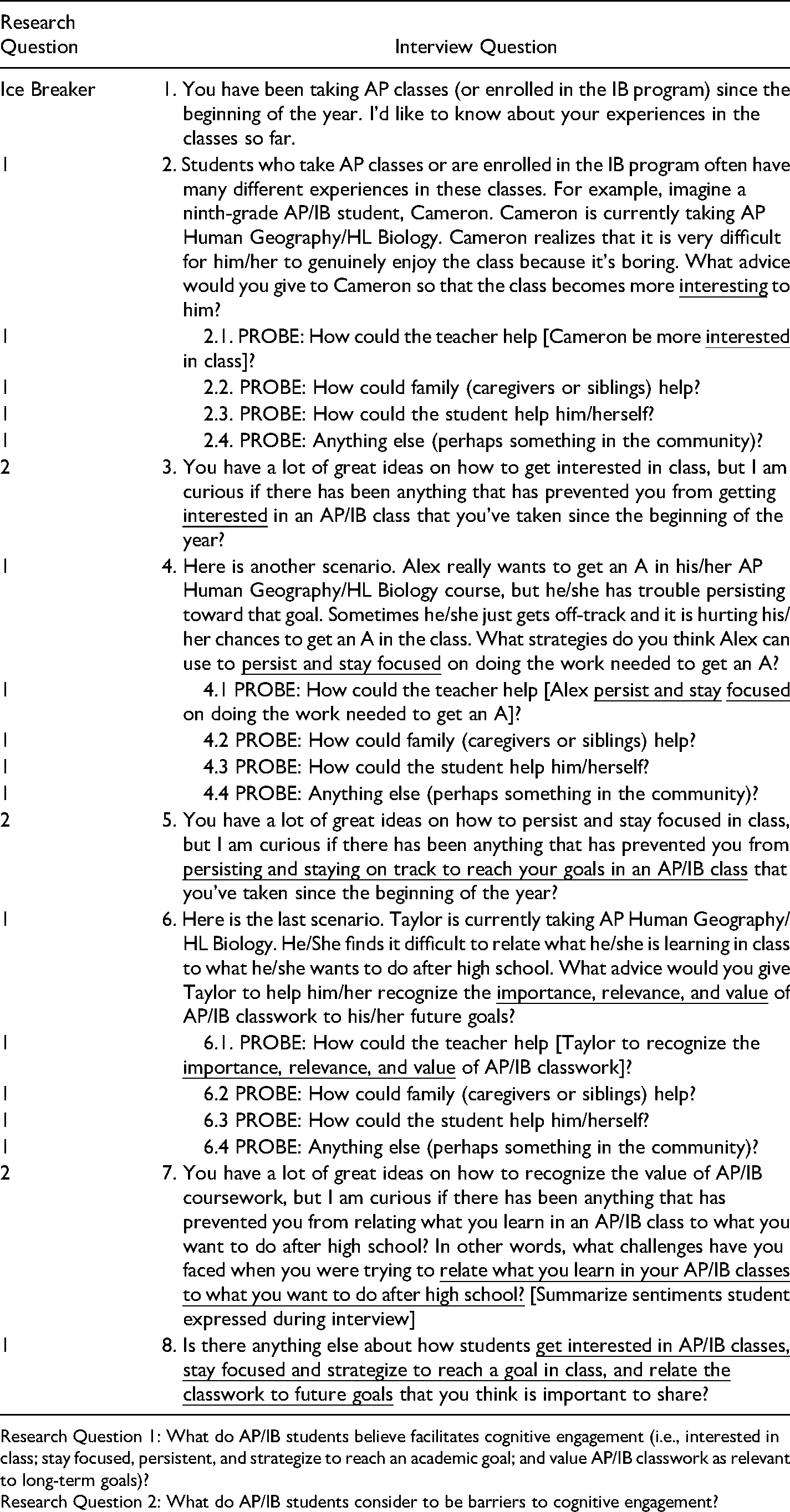
| Research Question | Interview Question |
|---|---|
| Ice Breaker | 1. You have been taking AP classes (or enrolled in the IB program) since the beginning of the year. I’d like to know about your experiences in the classes so far. |
| 1 | 2. Students who take AP classes or are enrolled in the IB program often have many different experiences in these classes. For example, imagine a ninth-grade AP/IB student, Cameron. Cameron is currently taking AP Human Geography/HL Biology. Cameron realizes that it is very difficult for him/her to genuinely enjoy the class because it's boring. What advice would you give to Cameron so that the class becomes more |
| 1 | 2.1. PROBE: How could the teacher help [Cameron be more |
| 1 | 2.2. PROBE: How could family (caregivers or siblings) help? |
| 1 | 2.3. PROBE: How could the student help him/herself? |
| 1 | 2.4. PROBE: Anything else (perhaps something in the community)? |
| 2 | 3. You have a lot of great ideas on how to get interested in class, but I am curious if there has been anything that has prevented you from getting |
| 1 | 4. Here is another scenario. Alex really wants to get an A in his/her AP Human Geography/HL Biology course, but he/she has trouble persisting toward that goal. Sometimes he/she just gets off-track and it is hurting his/her chances to get an A in the class. What strategies do you think Alex can use to |
| 1 | 4.1 PROBE: How could the teacher help [Alex |
| 1 | 4.2 PROBE: How could family (caregivers or siblings) help? |
| 1 | 4.3 PROBE: How could the student help him/herself? |
| 1 | 4.4 PROBE: Anything else (perhaps something in the community)? |
| 2 | 5. You have a lot of great ideas on how to persist and stay focused in class, but I am curious if there has been anything that has prevented you from |
| 1 | 6. Here is the last scenario. Taylor is currently taking AP Human Geography/HL Biology. He/She finds it difficult to relate what he/she is learning in class to what he/she wants to do after high school. What advice would you give Taylor to help him/her recognize the |
| 1 | 6.1. PROBE: How could the teacher help [Taylor to recognize the |
| 1 | 6.2 PROBE: How could family (caregivers or siblings) help? |
| 1 | 6.3 PROBE: How could the student help him/herself? |
| 1 | 6.4 PROBE: Anything else (perhaps something in the community)? |
| 2 | 7. You have a lot of great ideas on how to recognize the value of AP/IB coursework, but I am curious if there has been anything that has prevented you from relating what you learn in an AP/IB class to what you want to do after high school? In other words, what challenges have you faced when you were trying to |
| 1 | 8. Is there anything else about how students |
Research Question 1: What do AP/IB students believe facilitates cognitive engagement (i.e., interested in class; stay focused, persistent, and strategize to reach an academic goal; and value AP/IB classwork as relevant to long-term goals)?
Research Question 2: What do AP/IB students consider to be barriers to cognitive engagement?
Appendix B: Follow Up Interview Protocol.
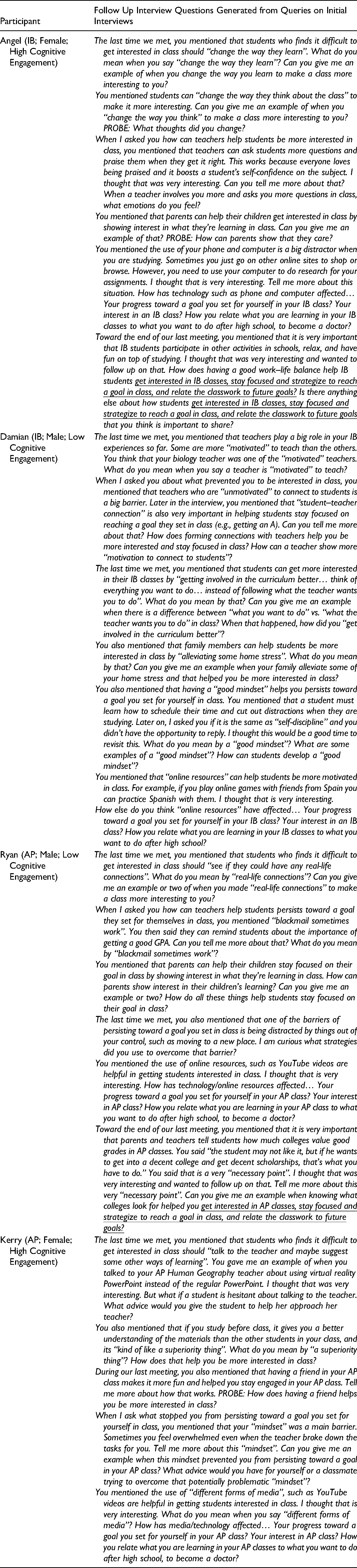
| Participant | Follow Up Interview Questions Generated from Queries on Initial Interviews |
|---|---|
| Angel (IB; Female; High Cognitive Engagement) |
The last time we met, you mentioned that students who finds it difficult to get interested in class should “change the way they learn”. What do you mean when you say “change the way they learn”? Can you give me an example of when you change the way you learn to make a class more interesting to you?
You mentioned students can “change the way they think about the class” to make it more interesting. Can you give me an example of when you “change the way you think” to make a class more interesting to you? PROBE: What thoughts did you change? When I asked you how can teachers help students be more interested in class, you mentioned that teachers can ask students more questions and praise them when they get it right. This works because everyone loves being praised and it boosts a student's self-confidence on the subject. I thought that was very interesting. Can you tell me more about that? When a teacher involves you more and asks you more questions in class, what emotions do you feel? You mentioned that parents can help their children get interested in class by showing interest in what they’re learning in class. Can you give me an example of that? PROBE: How can parents show that they care? You mentioned the use of your phone and computer is a big distractor when you are studying. Sometimes you just go on other online sites to shop or browse. However, you need to use your computer to do research for your assignments. I thought that is very interesting. Tell me more about this situation. How has technology such as phone and computer affected… Your progress toward a goal you set for yourself in your IB class? Your interest in an IB class? How you relate what you are learning in your IB classes to what you want to do after high school, to become a doctor? Toward the end of our last meeting, you mentioned that it is very important that IB students participate in other activities in schools, relax, and have fun on top of studying. I thought that was very interesting and wanted to follow up on that. How does having a good work–life balance help IB students |
| Damian (IB; Male; Low Cognitive Engagement) |
The last time we met, you mentioned that teachers play a big role in your IB experiences so far. Some are more “motivated” to teach than the others. You think that your biology teacher was one of the “motivated” teachers. What do you mean when you say a teacher is “motivated” to teach?
When I asked you about what prevented you to be interested in class, you mentioned that teachers who are “unmotivated” to connect to students is a big barrier. Later in the interview, you mentioned that “student–teacher connection” is also very important in helping students stay focused on reaching a goal they set in class (e.g., getting an A). Can you tell me more about that? How does forming connections with teachers help you be more interested and stay focused in class? How can a teacher show more “motivation to connect to students”? The last time we met, you mentioned that students can get more interested in their IB classes by “getting involved in the curriculum better… think of everything you want to do… instead of following what the teacher wants you to do”. What do you mean by that? Can you give me an example when there is a difference between “what you want to do” vs. “what the teacher wants you to do” in class? When that happened, how did you “get involved in the curriculum better”? You also mentioned that family members can help students be more interested in class by “alleviating some home stress”. What do you mean by that? Can you give me an example when your family alleviate some of your home stress and that helped you be more interested in class? You also mentioned that having a “good mindset” helps you persists toward a goal you set for yourself in class. You mentioned that a student must learn how to schedule their time and cut out distractions when they are studying. Later on, I asked you if it is the same as “self-discipline” and you didn’t have the opportunity to reply. I thought this would be a good time to revisit this. What do you mean by a “good mindset”? What are some examples of a “good mindset”? How can students develop a “good mindset”? You mentioned that “online resources” can help students be more motivated in class. For example, if you play online games with friends from Spain you can practice Spanish with them. I thought that is very interesting. How else do you think “online resources” have affected… Your progress toward a goal you set for yourself in your IB class? Your interest in an IB class? How you relate what you are learning in your IB classes to what you want to do after high school? |
| Ryan (AP; Male; Low Cognitive Engagement) |
The last time we met, you mentioned that students who finds it difficult to get interested in class should “see if they could have any real-life connections”. What do you mean by “real-life connections”? Can you give me an example or two of when you made “real-life connections” to make a class more interesting to you?
When I asked you how can teachers help students persists toward a goal they set for themselves in class, you mentioned “blackmail sometimes work”. You then said they can remind students about the importance of getting a good GPA. Can you tell me more about that? What do you mean by “blackmail sometimes work”? You mentioned that parents can help their children stay focused on their goal in class by showing interest in what they’re learning in class. How can parents show interest in their children's learning? Can you give me an example or two? How do all these things help students stay focused on their goal in class? The last time we met, you also mentioned that one of the barriers of persisting toward a goal you set in class is being distracted by things out of your control, such as moving to a new place. I am curious what strategies did you use to overcome that barrier? You mentioned the use of online resources, such as YouTube videos are helpful in getting students interested in class. I thought that is very interesting. How has technology/online resources affected… Your progress toward a goal you set for yourself in your AP class? Your interest in AP class? How you relate what you are learning in your AP class to what you want to do after high school, to become a doctor? Toward the end of our last meeting, you mentioned that it is very important that parents and teachers tell students how much colleges value good grades in AP classes. You said “the student may not like it, but if he wants to get into a decent college and get decent scholarships, that's what you have to do.” You said that is a very “necessary point”. I thought that was very interesting and wanted to follow up on that. Tell me more about this very “necessary point”. Can you give me an example when knowing what colleges look for helped you |
| Kerry (AP; Female; High Cognitive Engagement) |
The last time we met, you mentioned that students who finds it difficult to get interested in class should “talk to the teacher and maybe suggest some other ways of learning”. You gave me an example of when you talked to your AP Human Geography teacher about using virtual reality PowerPoint instead of the regular PowerPoint. I thought that was very interesting. But what if a student is hesitant about talking to the teacher. What advice would you give the student to help her approach her teacher?
You also mentioned that if you study before class, it gives you a better understanding of the materials than the other students in your class, and its “kind of like a superiority thing”. What do you mean by “a superiority thing”? How does that help you be more interested in class? During our last meeting, you also mentioned that having a friend in your AP class makes it more fun and helped you stay engaged in your AP class. Tell me more about how that works. PROBE: How does having a friend helps you be more interested in class? When I ask what stopped you from persisting toward a goal you set for yourself in class, you mentioned that your “mindset” was a main barrier. Sometimes you feel overwhelmed even when the teacher broke down the tasks for you. Tell me more about this “mindset”. Can you give me an example when this mindset prevented you from persisting toward a goal in your AP class? What advice would you have for yourself or a classmate trying to overcome that potentially problematic “mindset”? You mentioned the use of “different forms of media”, such as YouTube videos are helpful in getting students interested in class. I thought that is very interesting. What do you mean when you say “different forms of media”? How has media/technology affected… Your progress toward a goal you set for yourself in your AP class? Your interest in AP class? How you relate what you are learning in your AP classes to what you want to do after high school, to become a doctor? |
Acknowledgements
The authors of this manuscript would like to acknowledge the assistance of the following members of their university research team: Robert Dedrick, John Ferron, Lauren Braunstein, Elizabeth Storey, Camille Hanks, Amanda Moseley, Janise Parker, Emily Wingate, and Andrew Jenkins.
Author's Note
Kai Zhuang is also affiliated with University of Tennessee-Knoxville, Knoxville, TN, USA.
Declaration of Conflicting Interests
The authors declared no potential conflicts of interest with respect to the research, authorship, and/or publication of this article.
Funding
The authors disclosed receipt of the following financial support for the research, authorship, and/or publication of this article: The research reported here was supported by the Institute of Education Sciences, U.S. Department of Education, through Grant R305A150543 to the University of South Florida. The opinions expressed are those of the authors and do not represent views of the Institute or the U.S. Department of Education.
