




Abstract
Research was and still is involved in the controversial issue about innate talent or extensive practice as the determinants of excellent performance in a range of domains. This study aims to contribute by presenting an analysis of practice activities in a domain that appears to be particularly suitable—orchestral conducting. Most conductors usually attain expertise in instrument playing prior to commencing conducting studies. Twenty-seven students of German study programs of orchestral conducting (approximately 18.7% of the population) responded to a questionnaire about their practice activities in conducting programs and their instrumental experiences. Descriptive results show the wealth of prestudy experiences conducting students have. A clear influence on practice activities cannot be stated. During study, students rated conducting-specific practice activities as more demanding and devoted more time to them than to general music practice activities. Therefore, conducting-specific practice activities might have been practiced more deliberately than general music practice activities.
Keywords
Conductors of renowned orchestras are a source of fascination to many people, with the term “genius” often being used in reference to conducting. The prominent debate about innate talent dispositions or attained performance ability through the long-standing acquisition of expertise is pursued in many domains. Indeed, this issue might be especially salient in music, respectively conducting. Conductors often enjoy an excellent reputation and are idolized as individuals with innate magic (or even divine) power and charisma. However, such attributions can impede attempts to understand the role of learning activities and of instructional support during the acquisition of expertise in this domain. Detailed descriptions exist of the prerequisites of expertise development in conducting, and curricula of study programs have been developed based on these conclusions (Farberman, 2003). Nevertheless, studies have yet to investigate how students who aim to enroll in study programs of conducting acquire these prerequisites and prestudy experiences. Given the tremendous role of prior professional musical practice in the study of orchestral conducting, the notions of talent development (Subotnik et al., 2018) and of expert performance (Ericsson & Harwell, 2019) are remarkably applicable to this domain. Both notions support the claim that the emergence of superior reproducible performance inevitably results from in-depth domain experiences (Dai & Chen, 2013) and vast amounts of deliberate practice over a long time (Ericsson, 2018; Miller et al., 2020). Deliberate practice strongly refers to effort, the amount of time spent, and the quality of practice activities in a certain domain (Ericsson et al., 1993; Sloboda et al., 1996), as conducting in this study.
Extensive qualifying procedures and low acceptance rates of study programs contribute to the consideration of orchestra conductors as part of an elite association. To be accepted into these programs, candidates need to pass an elaborate selection process. Requirements for the entry examination stipulate the presentation of at least one piece on piano and other instruments—either a prepared performance or sight-reading. In addition, some examinations require candidates to give a conducting demonstration. Therefore, candidates’ professional aspirations are usually considerably high even before they commence their studies. To our knowledge, research has not yet analyzed the practice patterns and professional learning of music university students enrolled in study programs (e.g., bachelor’s, master’s, diploma, and master classes) for orchestral conducting from the perspective of deliberate practice. Such an analysis is particularly thrilling because the students taking these courses had already purposefully practiced to achieve an expert level in a different musical domain, such as playing a particular instrument (Hammerschmidt, 2009). Consequently, a reasonable and immanent insight into the necessity of deliberate practice activities has already been cultivated through students’ prestudy experiences and subsequent experiences during their study. Therefore, it is valuable to investigate students’ prestudy experiences (instrumental experience and conducting experience) before entering a study program and to determine the extent to which their prestudy and study experiences influence the practice activities in the conducting programs. The results contribute to the understanding of development of talent and expertise in the domain of conducting.
Theoretical Framework
The Development of Talent and Performance
Wöllner (2007) claimed that many conductors believe that while practice helps to improve baton technique, reading of the score, and working on the organization of rehearsals, a high innate ability that accounts for transmission and body language either exists or does not before professional education starts and cannot be improved by training. According to Ericsson et al. (2007), much training needs to be devoted to these exact components to ensure that one’s own performance is continually improving and is measurably superior to the performance of peers.
According to the mega-model of talent development, malleable domain-specific abilities are accountable for superior performance, which might be identifiable as key potential at a very young age in some domains, for instance music (Subotnik et al., 2011, 2019). To acquire and cultivate such abilities, multiple opportunities for engagement (e.g., practice, training, education) have to be embraced and utilized over many years for shaping talent development trajectories to the accomplishment of expertise. Expert teachers, coaches, and mentors support the process of talent development well adjusted to the demands of the corresponding trajectory stage. The attribution of being gifted can only be acquired and become manifest through attained levels of achievement and expert performance. Here, giftedness is not a state of “being” but a state of “doing” (Olszewski-Kubilius & Thomson, 2015). Aligning to this, Ziegler’s (2005) Actiotope Model of Giftedness emphasizes the potential development of efficient individual actions depending on endogenous and exogenous resources embedded in a domain-specific environmental system (Ziegler et al., 2017). Ziegler et al. (2019) compared individuals’ learning resources in three different domains (academics, science, technology, engineering, and mathematics [STEM], long-distance running), strengthening the validity of endogenous and exogenous resources for successful learning and practice. Obviously, both models seem to match the acquisition of expertise through cumulated deliberate practice. While both models also address the societal dispositions, deliberate practice highlights the effortful individual contribution to achieving excellence with support by a teacher or mentor (Ericsson & Harwell, 2019).
Previous research has addressed factors of practice determining the development of talent and, by extension, individual development of performance skills in various domains. Studies about expertise in chess have been conducted for many decades. Gruber and Ziegler (1997) confirmed expert chess players to have started their careers with exposing themselves to higher-quality learning activities more intensively than average chess players. They also indicated a higher performance orientation for expert chess players by decidedly showing more interest in chess earlier in life. For research in the domain of sport, an outline from Ericsson (2020) addressed physiological adaptions, cognitive involvement, and concentration for purposeful and deliberate practice activities and also genetic limits regarding the effects of practice for performance improvement. Lehtinen et al. (2017) outlined the concept of deliberate practice in the domain of mathematics and proposed to replace the traditional drill-and-practice concept in educational contexts. Routine skills should be replaced by adaptive skills to enable a more flexible mathematical knowledge beyond automatized basic skills. The cultivation of deliberate practice activities in the education of mathematics is opposed to simple repetition activities. It showed to have improved students’ adaptive number knowledge and arithmetical fluency (Brezovszky et al., 2019). Lehtinen et al. (2020) investigated intensive and high-quality learning in the development of visual expertise in the professional domain of medicine. In the diagnosis of medical images, conceptual change is required for consistently adapting acquired knowledge to developing professional demands.
Research on Expertise in the Domain of Music
The acquisition of expertise is a process of continuous cognitive adaptation of individual characteristics to task requirements within a specific domain (Ericsson, 2014; Ward et al., 2018). Such acquisition requires vast amounts of effortful training and practice of domain-relevant content over several years (Ericsson, 2018; Lehmann et al., 2018). Boshuizen et al. (2020) explained that knowledge can be restructured and that it becomes more elaborate, more accurate, and more coherently organized through practice, which enables an individual to perform on an expert level.
Especially in the domain of music, attributional narrations about child prodigies are prevalent in society, with Mozart being probably the most famous example. Rather unknown is that biographical research has unveiled the multifarious and intense learning opportunities that Mozart had, which exceeded those of other contemporary musicians (Lehmann et al., 2002). Expertise research in music has shed light on the enormous and imprinting early and lifelong practice experiences made by those who later on became an expert in music, although professional musicians’ ages at beginning to learn an instrument and the dedicated amount of practice vastly differ between instruments and genres played (Ericsson et al., 1993; Jørgensen, 2001; Kopiez, 1997). In fact, music was the first talent domain in which deliberate practice activities were labeled as such and were isolated from work and play activities (Ericsson et al., 1993). In contrast to work activities, in which acquired skills are executed (e.g., performing in concerts, public performance, competitions, and services rendered for pay), there is no immediate reward for effort and time spent on deliberate practice. Work activities often inherently provide an extrinsic motivation.
Platz et al. (2014) conducted a meta-analysis confirming deliberate practice as an essential contribution to expert performance in music. Deliberate practice strongly depends on explicit practice goals and is designed to improve the current level of performance and to contribute to an improvement in domain-relevant skills (Ericsson et al., 1993; Ericsson & Harwell, 2019). Therefore, practice needs to be structured and adjusted to the current skill level to offer a sequenced constructive learning opportunity for advancement in subsequent and higher skill levels (Ziegler & Baker, 2013). Ideally, this practice process is guided and immediate feedback on that practice process is provided by “persons in the shadow,” such as teachers (Gruber et al., 2008; Längler et al., 2020; Längler et al., 2018). Deliberate practice, requiring time, energy, and effort, therefore, is not an inherently enjoyable activity. Hence, amount of time spent and effort are a core concept of deliberate practice (Sloboda et al., 1996). Both can represent indicators for the measurement of deliberate practice (Ericsson et al., 1993; Ward et al., 2007), which highlights an individual’s contribution to their own expertise development.
Practice Activities That Lead to Professional Performance in Conducting
In a comprehensive handbook on conducting (Bowen, 2003), more than a dozen relevant practice activities are distinguished based on statements by professional conductors, conducting textbooks, and study program curricula. According to study curricula, practice during study can be organized in three forms: individual practice (often instructed by teacher), group practice (in seminars or workshops), and practicing with an orchestra. Besides these practice forms, Holden (2003) described fundamental conducting-specific skills like the baton technique and conducting patterns as crucial. In addition, conductors’ sense of hearing is important, and they need to be well-grounded in harmonics and counterpoint to facilitate an orchestral performance. Furthermore, intensive score working is necessary so that the conductor is familiarized with every note and phrase contained within the work (Biasutti, 2013; Holden, 2003; Ripley, 2003). Conductors need to master these skills and must, therefore, have practiced them effortfully.
General music practice addresses activities in a broader musical context, which still are important for and related to conducting activities. A part of these activities built the basis to gain access to study programs, and conducting students are expected to exhibit considerable amount of time and effort to these musical and instrumental prestudy experiences. Playing the piano skillfully has been identified as a predominant and viable method of preparation because it allows one to play the score in a manner resembling the sound of an orchestra. Since the strings are the biggest instrument group within an orchestra, some conductors consider it a handicap not being able to play a string instrument (Roelcke, 2000). Hammerschmidt (2009) postulated that playing other instruments represented in the orchestra facilitates understanding a score. Videotaping is a frequently used method to analyze one’s own behavior, particularly in master classes, for example, those organized by the German Music Council. These master classes provide opportunities for professional conversations and observation of experts at work (Roelcke, 2000). According to Ericsson et al. (1993), motivational and pleasurable activities, such as listening to music, visiting concerts, playing music for fun, and conducting for fun, are also important for a conductor’s development. Finally, an essential activity for conductors is to give concerts, which requires considerable prior effort and practice (Bowen, 2003).
There remains a lack of thorough empirical analyses of conducting students’ prestudy and study experiences, as well as the relevance of these experiences. Furthermore, the conducting-specific and general music practice activities during these study experiences have not yet been explored with regard to the amount of time and effort spent, which strongly relates to deliberate practice. This study aims to address these issues.
Research Questions
This study investigates (a) prestudy experiences, (b) time dedicated to specific practice formats, (c) the amount and effort of conducting-specific and general music practice activities, and (d) the relevance of prestudy experience and study experience for conducting-specific and general music practice activities students during study. We therefore aim to answer the following research questions:
Aim (a) Prestudy experiences: (1) Which prestudy experiences do conducting students have before entering a study program?
Aim (b) Practice formats: (2) How much time do conducting students devote to practice formats during study?
Aim (c) Practice activities: (3) What amount and effort do students attach to general music practice activities during study? (4) What amount and effort do students attach to conducting-specific practice activities during study? (5) How do conducting-specific and general music practice activities differ in amount and effort? (6) How does the amount of conducting-specific practice activities develop during study?
Aim (d) Relation between prestudy experience, study experience, and practice activities: (7) How do prestudy experience and study experience influence the amount and effort of conducting-specific and general music practice activities during study?
Method
Design
We conducted an exploratory cross-sectional study using a questionnaire to examine the prestudy experiences, conducting-specific and general music practice activities, and study experiences of conducting students. Amount and effort of practice activities were used as indicators for deliberate practice.
Sample
The sample comprised 27 students from the orchestral conducting diploma program (13 students), the bachelor’s program (10 students), the master’s program (2 students), and a master class (2 students) from 13 German music universities. The curriculum and teaching of these programs were widely identical and all students were analyzed together. The sample constituted approximately 18.7% of the total number of orchestral conducting students. Compared to all music-related subjects, orchestral conducting students represent less than 1%. The standard period for conducting studies in Germany is eight semesters for the bachelor’s program, four semesters for the master’s program, eight to 10 semesters for the diploma program, and four semesters for the master class.
The participants’ ages ranged from 20 to 32 years (M = 24.56 years, SD = 3.02 years). Of the participants, 24 were male (88.9%) and three were female (11.1%). The distribution is representative of the population within the orchestral conducting programs, as a large majority of students enrolling in conducting programs at German music universities are male. Twenty-three students were from Germany (85%), two were from the United States (7.4%), and one each were from Brazil and the Netherlands (3.7% each).
Instrument
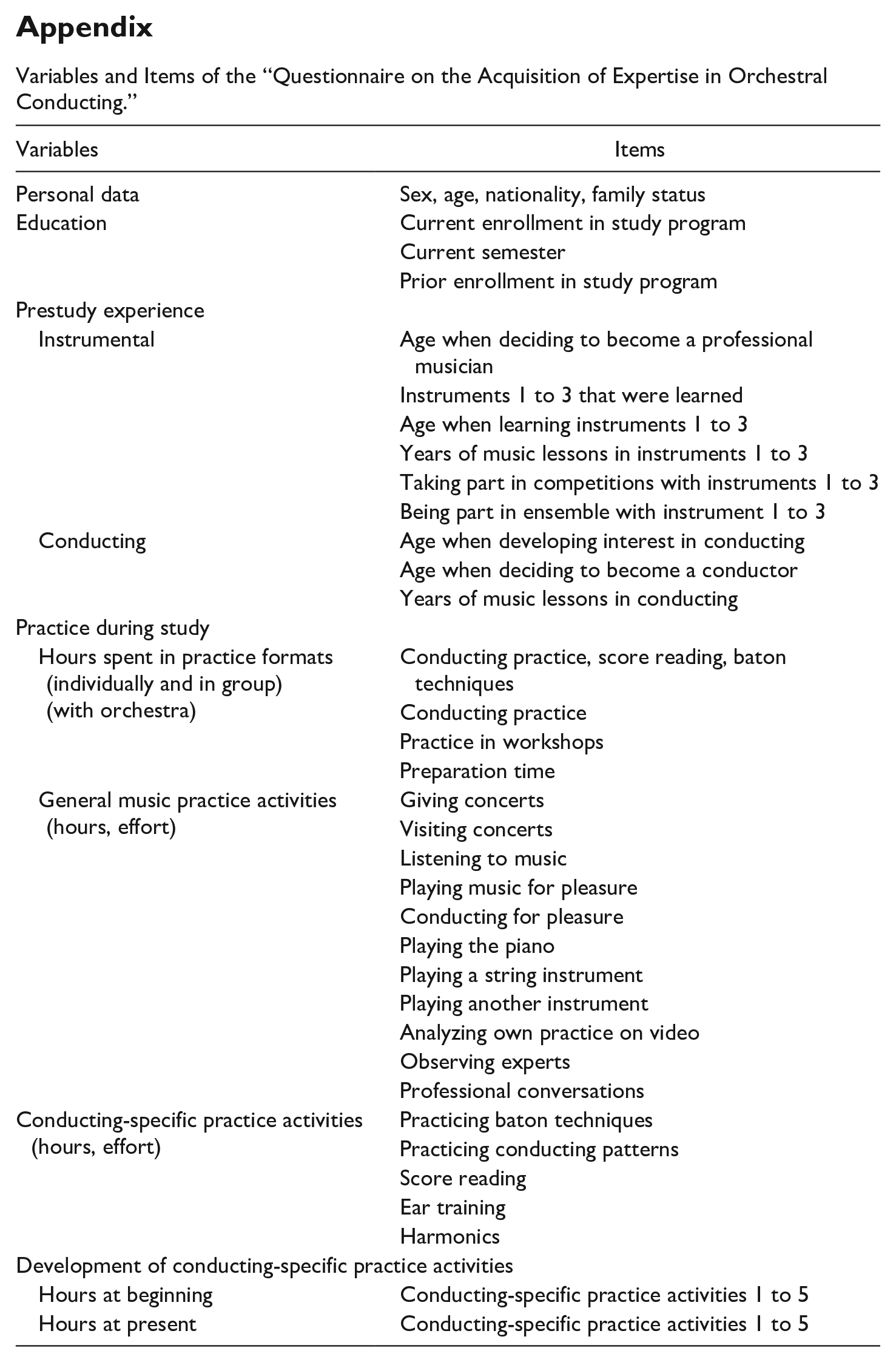
Based on theoretical considerations, a “Questionnaire on the Acquisition of Expertise in Orchestral Conducting” was constructed to assess biographical data about the musical career and quantitative estimates of the amount and effort (as indicators for deliberate practice) of 16 specific practice activities in conducting. Effort was rated on a Likert scale ranging from 1 (“no effort at all”) to 6 (“a lot of effort”). Details about variables and items are presented in the Appendix.
To ensure content validity, the questions were compared with study curricula. Three external experts from the domain of music commented on the questionnaire. A conducting master class by the “Dirigentenforum” of the German Music Council tested the revised version in a pilot. The questions were discussed with a mentor from the master class and presented to a workshop audience and to the alumni of former master classes. All participants completed the questionnaire and commented on the relevance, validity, and comprehensibility of all questions. The responses and comments were used to compile the final version of the questionnaire.
Procedure
All rectors and all conducting professors at each music university in Germany received a cover letter. The letter described the purpose of the study, offered non-technical information about possible implications, and requested the contact data of students enrolled in the study programs on orchestral conducting. After receiving the contact data, we distributed an email containing information about the research project and a link to the online questionnaire. All students enrolled in orchestral conducting programs at German music universities received the questionnaire. The adherence to confidentiality rights of the participants at any time and in all reports and publications was guaranteed.
Analysis
Descriptive analyses (means, standard deviations, minimum, maximum, median) were conducted to analyze prestudy experiences, study experience, practice formats, conducting-specific practice activities, and general music practice activities of conducting students. In addition, medians were calculated to avoid outlier contortions.
To explore the relevance of prestudy experiences in conducting and instrumenting, hierarchical cluster analyses (Ward method, squared Euclidian distance) were conducted. The cluster analyses distinguished two groups (“Experienced” and “Highly experienced”) and built profiles on both instrumental and conducting prestudy experiences. Tables 1 and 2 present items used in the cluster analyses and descriptive analyses of the resulting groups. Instrumental and conducting prestudy experience served as dichotomous independent variables in a subsequent exploratory analysis.
Means (Standard Deviations) in Years of Early Instrumental Experience, Comparison of Two Groups (Experienced, Highly Experienced) Resulting From Hierarchical Cluster Analyses Based on Listed Items.
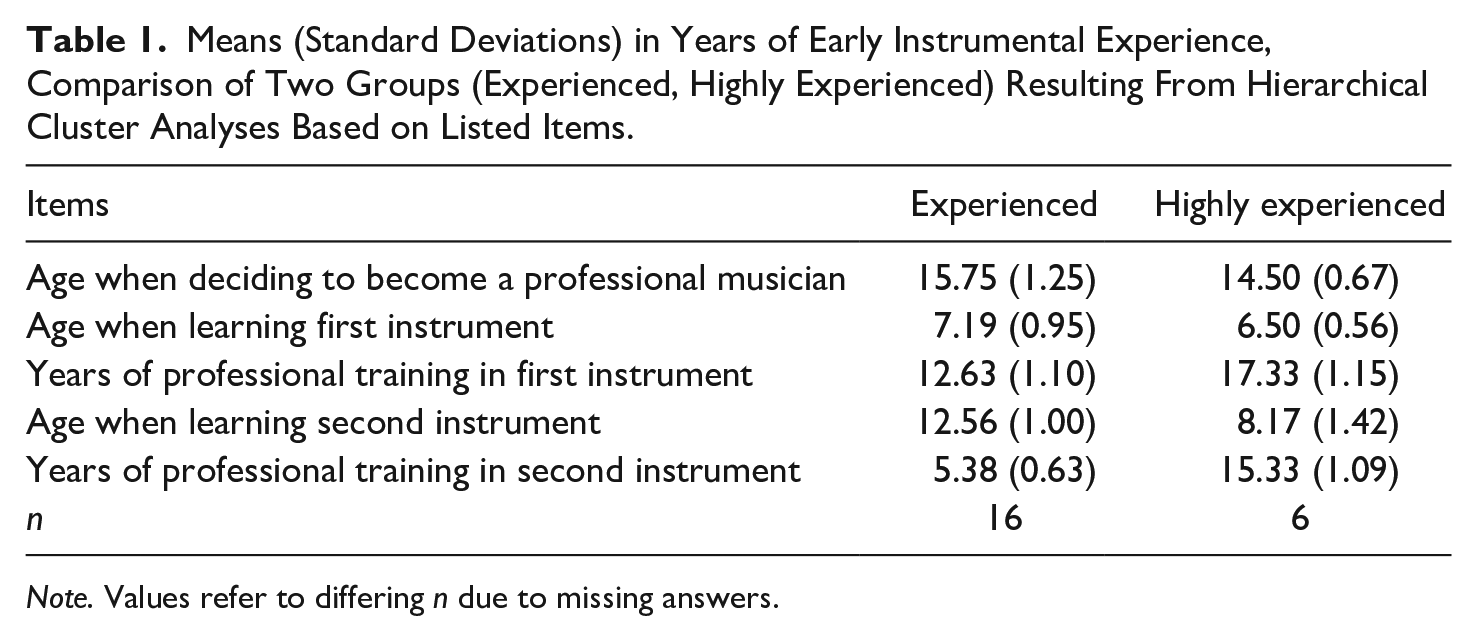
Note. Values refer to differing n due to missing answers.
Means (Standard Deviations) in Years of Early Experience in Conducting, Comparison of Two Groups (Experienced, Highly Experienced) Resulting From Hierarchical Cluster Analyses Based on Listed Items.
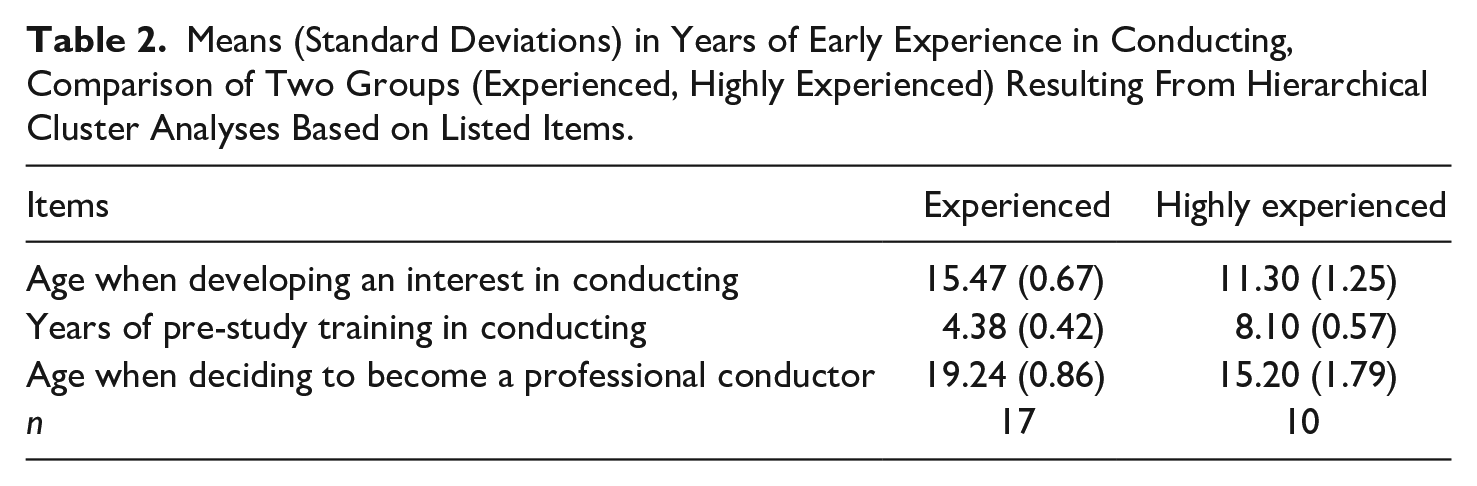
To examine the relevance of study experience, conducting students were grouped by their number of semesters in relation to their study program. Bachelor’s and diploma students in semesters 1 to 8 represented the experienced class. Master’s, master class, and diploma students in semesters 9 to 13 represented the highly experienced class. Study experience served as third dichotomous independent variable in subsequent exploratory analyses.
Results
Aim (a): Conducting Students’ Prestudy Experience Before Entering a Study Program
Piano was the only instrument every student learned to play between the ages of 1 and 17 years (M = 7.70, SD = 3.84). Twelve students (44.4%) learned to play wind instruments between the ages of 5 and 20 years (M = 13.25, SD = 3.79), and 11 students (40.7%) learned to play string instruments when they were 4 to 19 years old (M = 9.27, SD = 5.27). Table 3 presents an overview of the participants’ prestudy experiences. For comparison, Table 4 presents the participants’ ages at the start of formal instruction, the amount of practice in conducting, and the findings of former research relating to specific instruments (Ericsson et al., 1993; Jørgensen, 2001; Kopiez, 1997).
Experience in Years of Conducting Students Before Entering a Study Program.
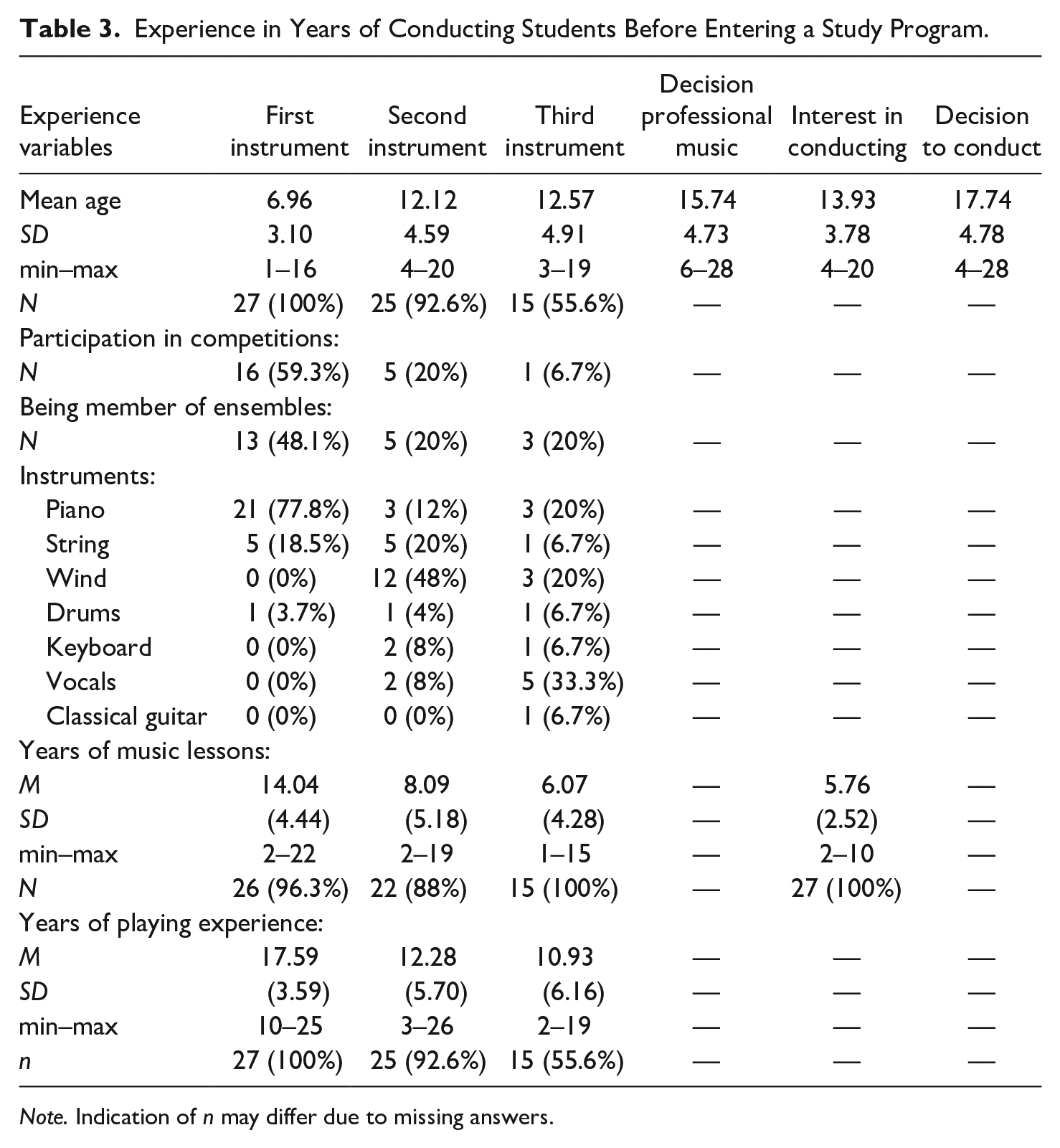
Note. Indication of n may differ due to missing answers.
Start of Formal Instruction and Amount of Practice in Hours Per Week, Comparing Different Instruments and Music Domains.
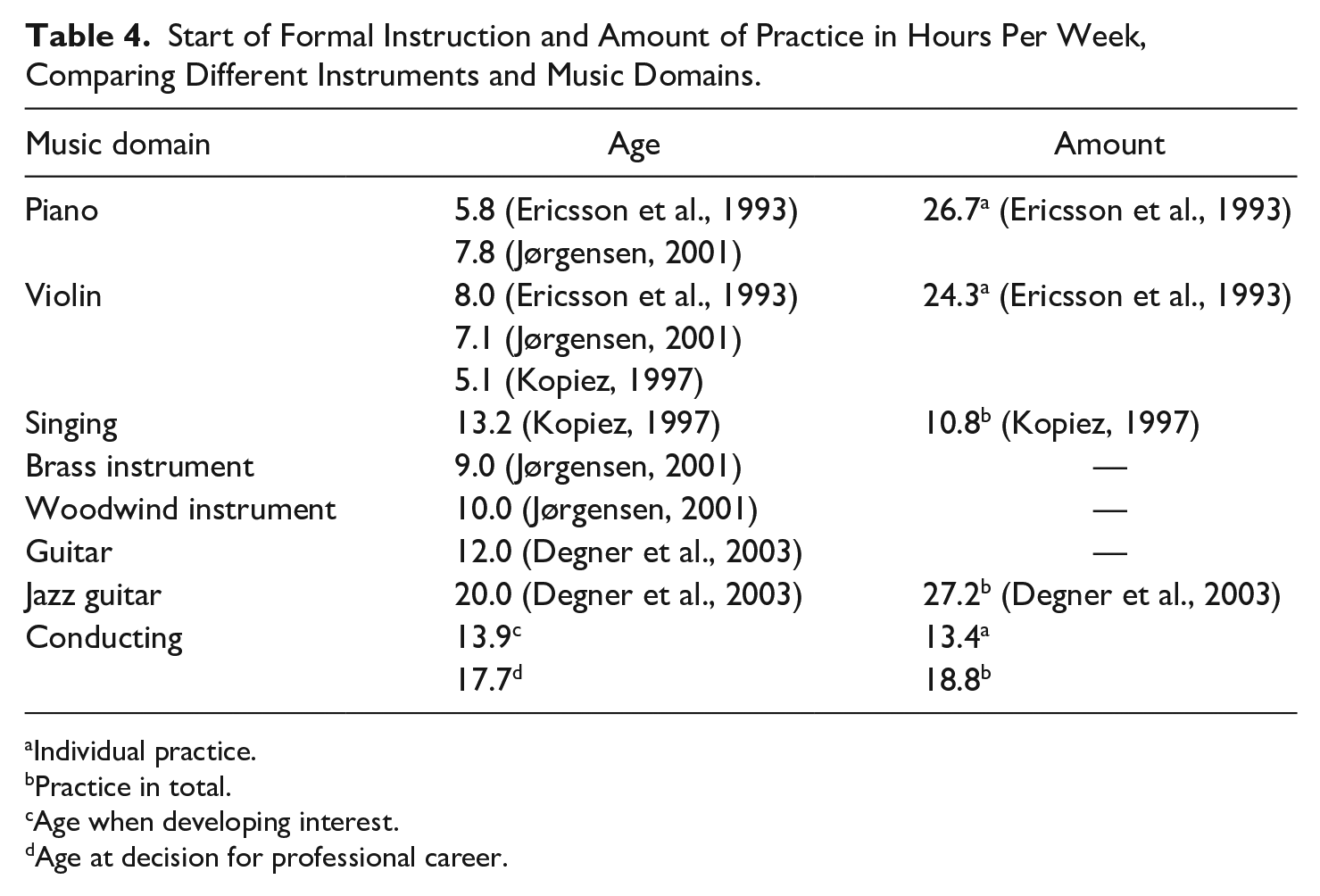
Individual practice.
Practice in total.
Age when developing interest.
Age at decision for professional career.
Aim (b): Practice Activities During the Study of Conducting
Selection of practice formats
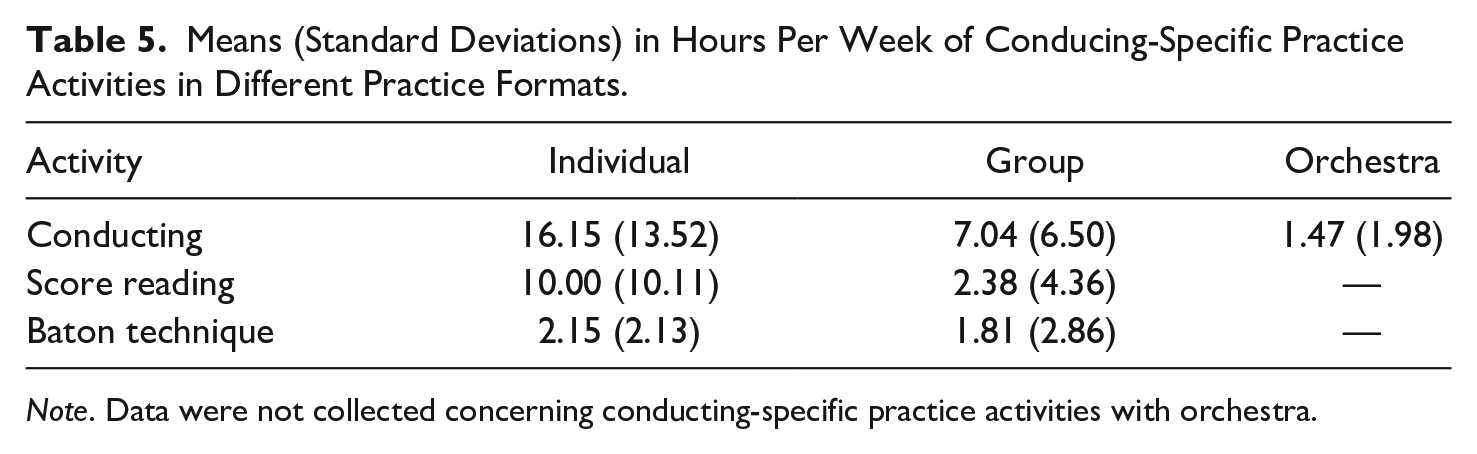
Practice during studies is split into individual practice, practicing in groups, and practicing with an orchestra. The largest amount of time, ranging from 1 to 50 hours per week (M = 16.15, SD = 13.52), was invested in individual practice. For conducting in groups, 0 to 23 hours per week (M = 7.04, SD = 6.50) were invested, and 0 to 8 hours per week were spent practicing with an orchestra (M = 1.47, SD = 1.98). Practicing with an orchestra while participating in workshops was indicated as 0 to 6 hours per week (M = 2.00, SD = 1.88).
The time conducting students spent on individually practicing conducting-specific skills, such as score reading, ranged from 0 to 48 hours per week (M = 10.00, SD = 10.11), and time spent practicing automation of baton technique ranged from 0 to 8 hours per week (M = 2.15, SD = 2.13). For practicing conducting-specific skills in groups, 0 to 18 hours per week (M = 2.38, SD = 4.36) were spent on score reading and 0 to 13 hours per week (M = 1.81, SD = 2.86) on baton techniques. See Table 5 for an overview.
Means (Standard Deviations) in Hours Per Week of Conducing-Specific Practice Activities in Different Practice Formats.
Note. Data were not collected concerning conducting-specific practice activities with orchestra.
Amount and effort of general music practice activities (Table 6)
In hours per week, listening to music (M = 11.30, SD = 31.56) was the most frequently executed general music practice activity, followed by playing the piano (M = 9.19, SD = 6.36) and having professional conversations (M = 2.36, SD = 2.10).
Means (Standard Deviations) of the Activity Ratings.
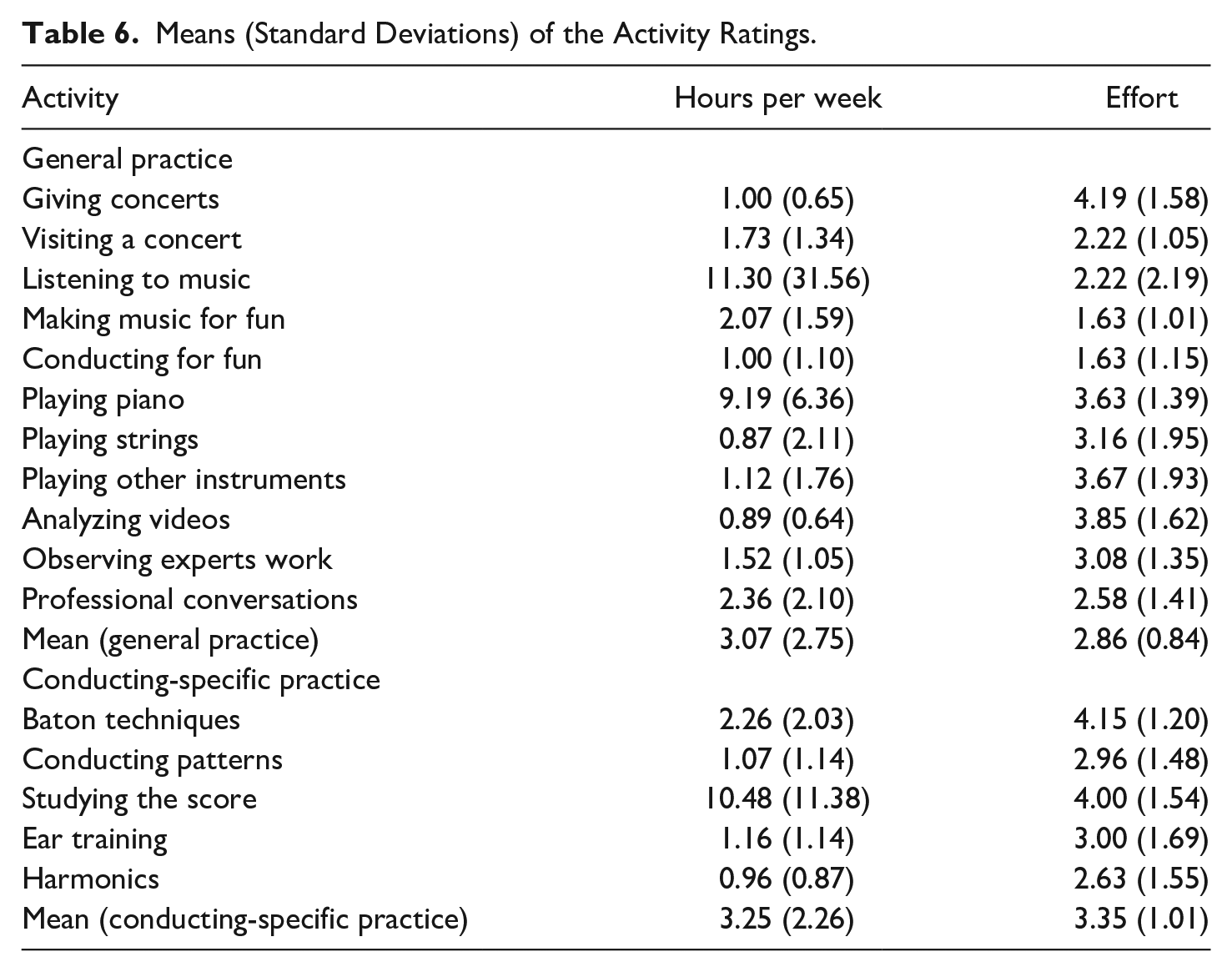
General music practice activities that require the most effort to practice are giving concerts (M = 4.19, SD = 1.58), analyzing videos (M = 3.85, SD = 1.62), and playing other instruments (M = 3.67, SD = 1.93).
Amount and effort of conducting-specific practice activities (Table 6)
In hours per week, the largest amount of time was invested in studying the score (M = 10.48, SD = 11.38), followed by baton techniques (M = 2.26, SD = 2.03), ear training (M = 1.16, SD = 1.14), conducting patterns (M = 1.07, SD = 1.14), and harmonics (M = 0.96, SD = 0.87).
The participants rated baton techniques (M = 4.15, SD = 1.20), studying the score (M = 4.00, SD = 1.54), ear training (M = 3.00, SD = 1.69), conducting patterns (M = 2.96, SD = 1.48), and harmonics (M = 2.63, SD = 1.55) as the most effortful.
Differences in amount and effort of conducting-specific practice activities and general music practice activities
On average, the participants invested more hours per week in conducting-specific practice activities (M = 3.25, SD = 2.26) than in general music practice activities (M = 3.07, SD = 2.75). Moreover, effort (M = 3.35, SD = 1.01) of conducting-specific practice activities was rated higher than effort (M = 2.86, SD = 0.84) of general music practice activities.
Development in the amount of conducting-specific practice activities during study
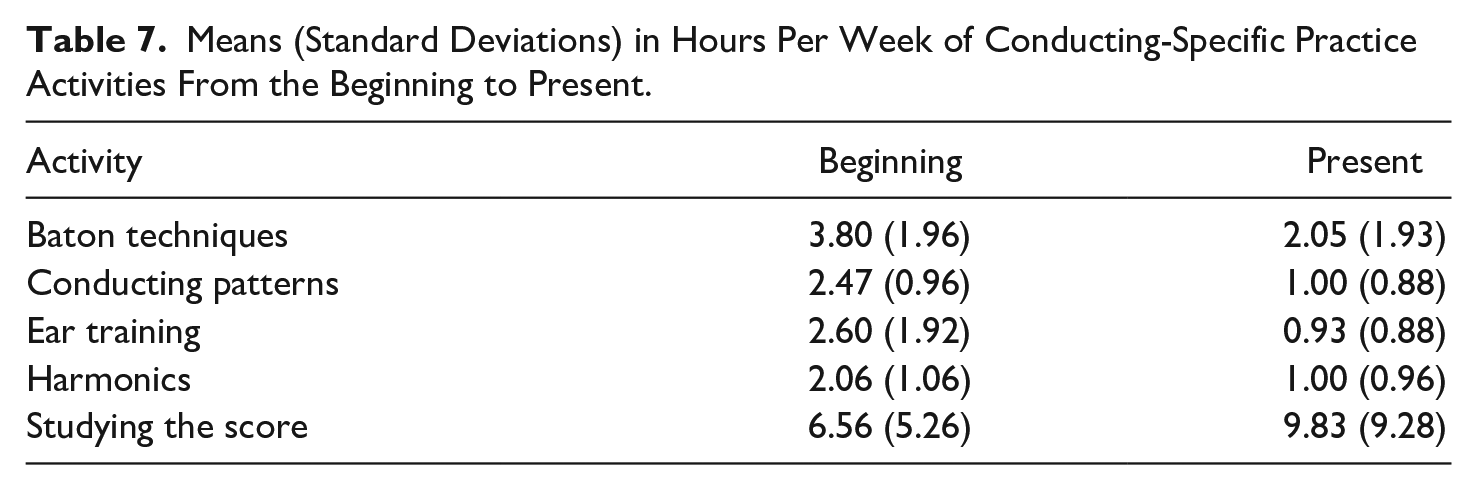
A comparison of conducting-specific practice activities executed at the beginning of study and the present use of conducting-specific practice activities revealed that studying the score was the only activity that increased over time, showing an increase from M = 6.56 (SD = 5.26) to M = 9.83 (SD = 9.28) hours per week. The amount of time spent practicing baton techniques, ear training, harmonics, and conducting patterns decreased (see Table 7).
Means (Standard Deviations) in Hours Per Week of Conducting-Specific Practice Activities From the Beginning to Present.
Aim (c): Relations Between Prestudy Experience, Study Experience, and Practice Activities
Table 8 outlines indices for hours per week and effort of conducting-specific practice activities and general practice activities according to groups of prestudy experience (instrumental experience, conducting experience) and study experience. Tables 9 and 10 illustrate hours per week and effort of the single practice activities according to these groups.
Values of General Music Practice Activities and Conducting-Specific Practice Activities (Mean Hours Per Week, Mean Effort) According to Groups of Prestudy Experiences and Study Experience.
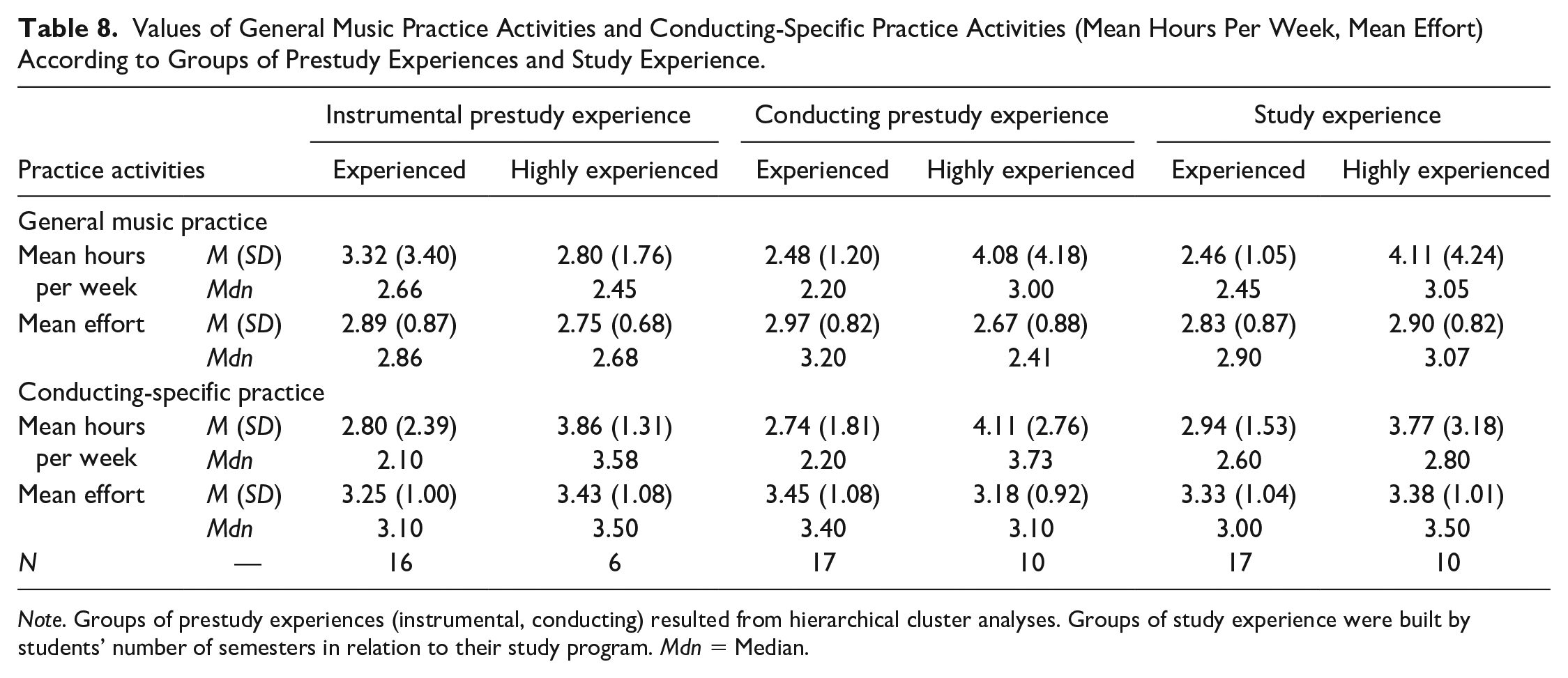
Note. Groups of prestudy experiences (instrumental, conducting) resulted from hierarchical cluster analyses. Groups of study experience were built by students’ number of semesters in relation to their study program. Mdn = Median.
Hours Per Week of General Music Practice Activities and Conducting-Specific Practice Activities According to Groups of Prestudy Experiences and Study Experience.
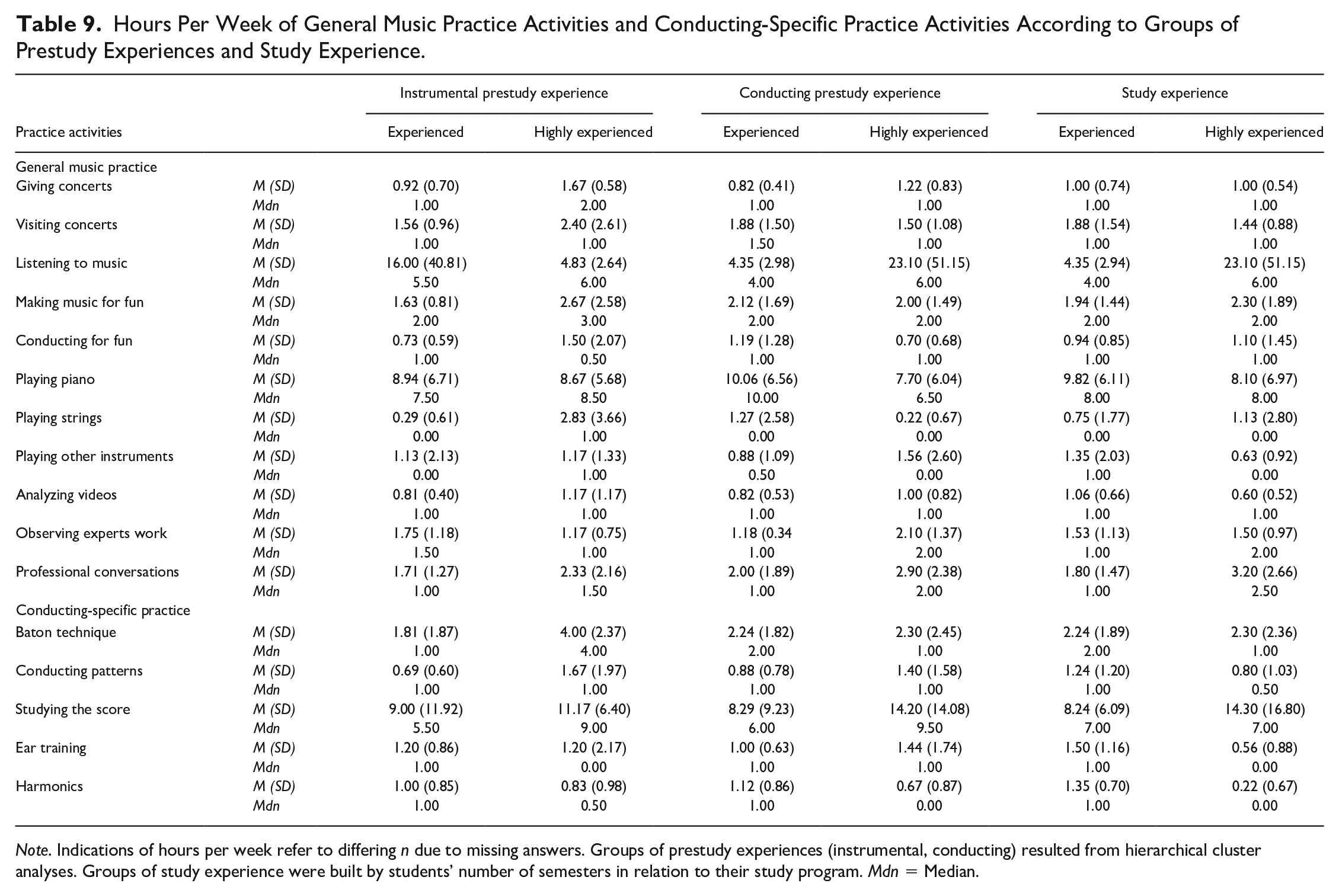
Note. Indications of hours per week refer to differing n due to missing answers. Groups of prestudy experiences (instrumental, conducting) resulted from hierarchical cluster analyses. Groups of study experience were built by students’ number of semesters in relation to their study program. Mdn = Median.
Effort of General Music Practice Activities and Conducting-Specific Practice Activities According to Groups of Prestudy Experiences and Study Experience.
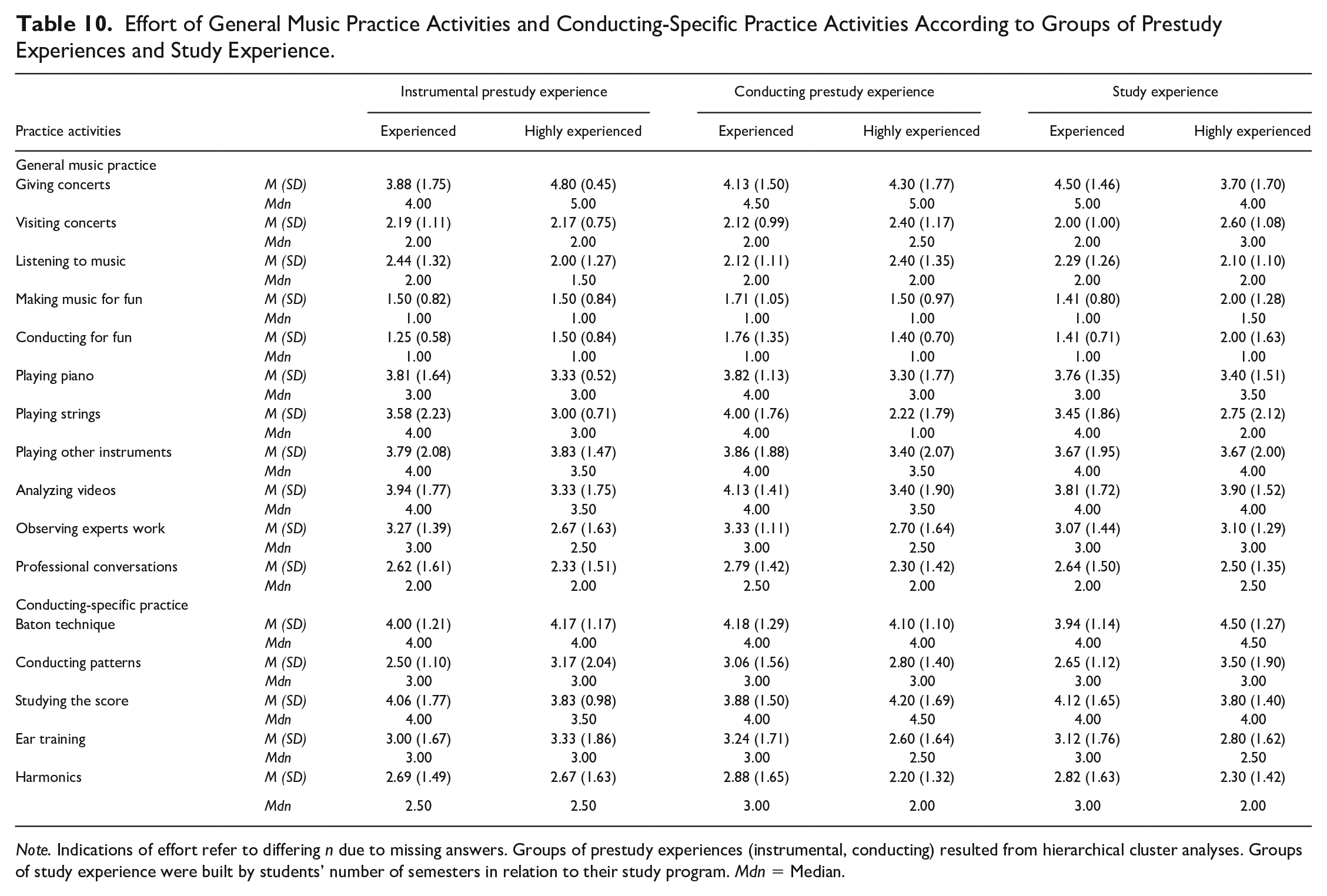
Note. Indications of effort refer to differing n due to missing answers. Groups of prestudy experiences (instrumental, conducting) resulted from hierarchical cluster analyses. Groups of study experience were built by students’ number of semesters in relation to their study program. Mdn = Median.
Discussion
Research highlights the importance of deploying one’s learning opportunities to gradually cultivate and elaborate specific abilities and, thus, expedite the development of talent in various domains. Effort and long-standing practice experiences can be accounted for continuously improving domain-specific superior performance (Platz et al., 2014). As conducting students usually acquire profound musical experience before commencing their study of orchestral conducting, the question remained regarding what kind of prestudy experiences conducting students acquire. Furthermore, this study sheds light on conducting students’ practice activities, characterized these practice activities in perspective of deliberate practice, and investigated their prestudy experiences with regard to instrumental and conducting-specific experiences. The results show that the conducting students had a wealth of experience in playing different musical instruments and varying years of conducting training before enrolling at music universities. Each participant had more than 10 years of experience playing their first instrument. Piano playing was predominant because all participants learned to play piano as their first, second, or third instrument, while the playing of string and wind instruments seem to be of secondary importance to the participants. The relevance of playing piano is underscored in the practice activities during study. According to Hammerschmidt (2009), the piano is considered an excellent instrument for preparation because it may help to imitate orchestral instruments, as it offers melodic and harmonic options compared to other instruments (Hallam et al., 2020). Also, the historical development of conducting may explain the enormous importance attached to piano playing by German music universities. The conducting students began learning the piano at a young age; compared to previous music research, the conducting students in this study were younger than the professional piano players examined by Ericsson et al. (1993) and older than the professional piano players examined by Jørgensen (2001). The conducting students in this study who learned to play string and wind instruments were older than the professional violinists examined by Ericsson et al. (1993), Jørgensen (2001), and Kopiez (1997), and older than the professional wind instrumentalists examined by Jørgensen (2001) when they began to learn their instruments. The age of the conducting students when they decided to become a professional musician indicates that they started their professional music training later than the musicians examined by Ericsson et al. (1993), Jørgensen (2001), and Kopiez (1997). Nevertheless, the years of instrument playing experience and time spent in music lessons with different instruments guided by teachers suggested that the conducting students were highly experienced musicians before they enrolled in conducting programs, which is in line with Bailey’s (2009) recommendation to become the best possible musician before starting a career as a conductor. Such deep musicianship contributes to the depth of musical understanding required by a conductor. The results confirmed that the participants had a robust body of experience in conducting before enrolling in conducting programs, suggesting that they developed an interest in conducting years before deciding to strive for a professional career as a conductor. These years were filled with extracurricular conducting classes and workshops.
After commencing their study program, the students performed in individual, group, and orchestra conducting-specific practice activities, with individual practice being the most common format to practice conducting and other conducting-specific practice activities (score reading and baton techniques). The use of these practice formats further expedites conducting skills to implement them in the actual performance situation with an orchestra. Besides the transmission of skills, practiced individually or in a group, orchestra practice is also used for concert preparation. Furthermore, a prerequisite for orchestra practice is that the conducting students master conducting-specific skills. Orchestra practice offers more learning opportunities which were not addressed in this study, for example, concerning communication with the orchestra members and groups of instrumentalists. Nevertheless, an exceptional relevance of individual practice can be stated because it accounts for the largest amount of time spent during the study of conducting. Individual conducting-specific practice activities, therefore, seem to be of vital importance for the development of conducting skills during study because they are easily accessible and feasible.
For further analyses, general music practice and conducting-specific practice activities were examined. On average, conducting students rated amount and effort of conducting-specific practice strategies higher than general music practice activities. This could indicate a deeper deliberate practice of conducting-specific activities than of general music practice activities. However, single general practice music activities exceeded amount and effort ratings of conducting-specific activities. As a general music practice activity, giving concerts was rated the most effortful practice activity, whereas listening to music demanded the greatest amount of time (but with considerable dispersion of scores), followed by playing the piano. This illustrates the challenges of giving concerts and supports the importance given to the piano as an instrument. Playing string instruments or other instruments indeed were perceived as rather effortful, but only a small number of hours per week were devoted to them. Rather joyful activities (visiting concerts, making music for fun, conducting for fun, and listening to music) were perceived as less effortful. Nevertheless, conducting students selected these activities for playful engagement, which can be useful to enhance musical fluency of acquired skills (Meissner et al., 2020). Other activities considered effortful or involving great amounts of time were analyzing videos, observing experts’ work, and having professional conversations. These findings support existing research, showing that music experts implement self-regulated activities as elaborated practice opportunities to monitor their learning progress, to compare themselves with others, and to match the level of good role model examples (Boucher et al., 2021; Nielsen et al., 2018). All conducting-specific practice activities scored rather high in effort ratings, with baton techniques gaining the highest value. Studying the score was rated as the second most effortful and as needing the greatest investment of time. This is an indicator that deliberate practice during these activities might be prevalent. Less time and effort were devoted to harmonics and ear training. For those activities, it could have been especially profitable to have extensive musical experience. Studying the score is the only conducting-specific practice activity for which the amount of time increased between entering the conducting program and the present use. Despite being the most practiced activity at the beginning of the conducting program, studying the score became more time-consuming the further the students were through the program, showing its relevance for preparing for orchestra practice and for public performances at any time. All other activities decreased in amount over time. Practicing baton techniques and conducting patterns were especially important at the beginning of the professional career, but they required less attention once the conducting patterns were mastered, freeing up more time to invest in refining other activities, such as score reading. This finding concurs with previous research about gestural skills of choral conductors, who classify them as not very important (Jansson et al., 2021). An alternative explanation might be the rising effectivity of practice processes that allows students to invest less time in these activities (Miksza, 2007). In addition, experts are shown to be more eclectic in their choice of appropriate practice activities with regard to the contextual demands they are exposed to (Dresel et al., 2015). With growing experience conducting students might therefore attach more weight to score reading when being confronted with orchestra practice or public performances. In summary, the results indicate an increased relevance of conducting-specific practice activities compared to general music practice activities.
Comparing practice activities of experienced and highly experienced conducting students in terms of their instrumental and conducting prestudy experience, as well as their study experience did not reveal a clear, consistent, and systematic image. In general, more instrumental prestudy experience seemed to have led to less amount of time and less effort invested in general practice activities and to more amount of time and more effort invested in conducting-specific practice activities. The most notable difference occurred on amount of conducting-specific practice activities. Highly conducting preexperienced students showed higher values for amount and lower values for effort of general music practice activities. They also invested a higher amount and less effort in conducting-specific practice activities. The most notable differences occurred on amount of general music practice and amount of conducting-specific practice activities. Highly study experienced students considerably showed higher amounts for general music practice and specific-conducting practice activities. Only vanishingly small differences occurred for effort of general music practice and conducting-specific practice activities. In most cases, only small differences were detectable when comparing single practice activities. The most notable differences for amount of time occurred in baton technique with higher amounts for more instrumentally experienced students and in studying the score with higher values for all highly experienced groups. Effort of studying the score was lower for more instrumentally experienced and more study experienced students. It was higher for more conducting experienced students. This coincides with the ascending importance that is given to score work during the study of conducting.
Taken together, both instrumental and conducting prestudy experience as well as study experience seem to have influences on amounts and efforts of general music practice and conducting-specific practice activities. Prestudy experiences and study experience might be very potent for conducting students to select and emphasize amount and effort of important conducting-specific practice activities. On the contrary, conducting students could also have profited from prestudy and study experience in terms of a reduced necessity of distinct practice activities. The potential of deliberate practice for subsequent talent development, compiled within early learning experiences, might be implied by showing influences on later practice activities in conducting. However, size and direction of and reasons for encountered disparities remain highly speculative and should thus be the focus of future research.
In reference to the mega-model of talent development (Subotnik et al., 2011, 2019), conducting students invested more time to shape and refine their domain-specific abilities to further transform them into achievement. The composition of practice activities seems to have changed across study time. Domain-specific abilities may have changed due to increased domain expertise. Although most practice was exhibited in an individual setting, group or orchestra settings also provide conducting students valuable learning opportunities to set their skills in performance together with an orchestra. Conducting, as a specialization in the domain of music, may benefit from but also require varieties of practice experiences and performance in this distinct domain in advance. The talent domain of conducting, therefore, seems to be dependent on certain levels of musical maturity. On that note, conducting students may have built upon their skills they made during their whole musical career. This study supplies another indication for the potency of multiple opportunities for engagement. High-quality learning activities seem to benefit from substantial learning experiences and to be consecutively induced by them. This implies the retrospective dependence of excellence and expert performance with regard to accumulated and successively elaborated high-quality practice activities. Therefore, a career in conducting typically seems to begin rather late compared to different instrumentalists and may also have a later peak of performance. Thus, talent development as a continual state of “doing” and an ongoing multiyear process of sophistication becomes manifest (see Figure 1). Innate dispositions, therefore, cannot be the only explanatory variable for the achievement of excellence and expert performance.
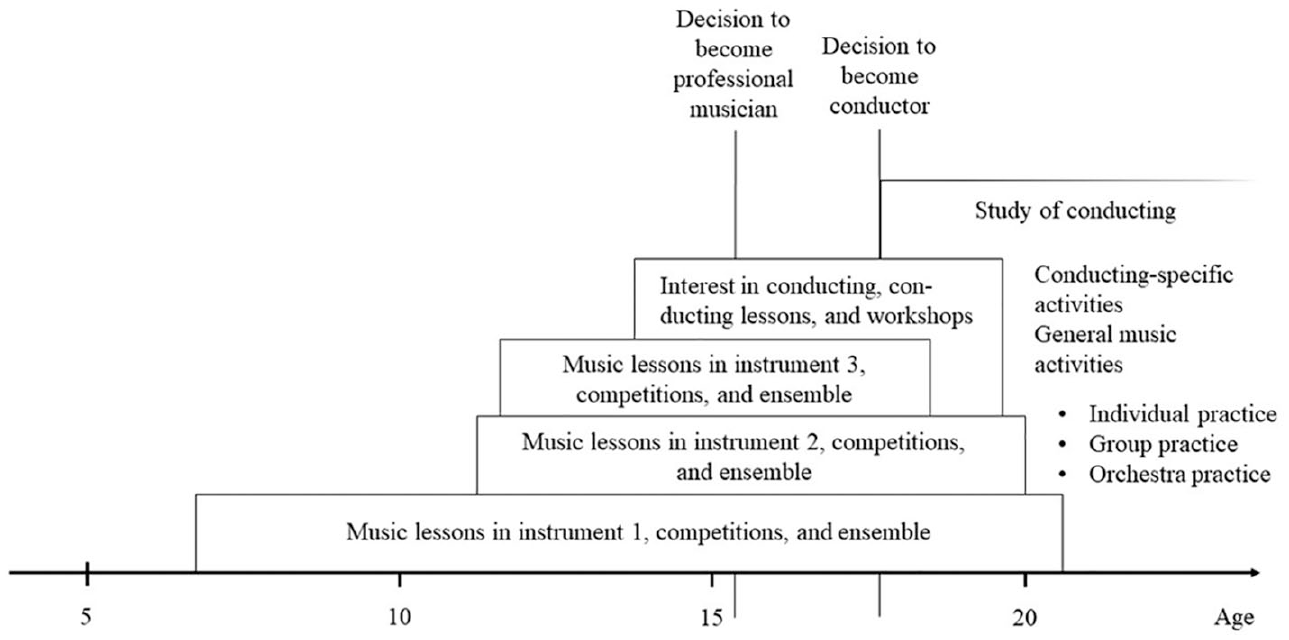
Prototypical prestudy experiences and practice activities of conducting students across their career trajectories related to age statements.
Limitations and Directions for Future Research
This exploratory study has some limitations that future research might consider. The sample was rather small and consisted solely of conducting students who were enrolled at German music universities. Furthermore, some outliers skewed mean values, for example, an indication of listening to music for general practice activities. Retrospective questions for conducting-specific practice activities executed at the beginning of the conducting study might have afforded much mental effort, which challenged the reliability of the participants’ statements. Hence, the results cannot be generalized to the population of conducting students in Germany and also not to other countries and to their culture-specific music traditions. Future studies could empirically investigate the importance attached to the piano as is observed in Germany but not in other countries with a major tradition in conducting, such as Finland or Russia (Hammerschmidt, 2009; Siréns, 2010). Taking this idea further, future research could examine how different instrumental experiences impact later learning activities and the professional development of conductors. The measurement of amount of time and effort constitutes just a first step toward estimating deliberate practice of conducting students. Moreover, the extensive instrumental experiences the students gain through professional musicianship before enrolling at a music university to study conducting might be beneficial for submitting themselves again in a deliberate practice of conducting-specific practice activities and classifying them as purposeful by choosing to devote more time to them. A proposed potency of early musical experience on learning adaptions aligns with research by Reutlinger et al. (2019), who point out the potential of early musical experience for general cognitive development. These early experiences might enrich future conductors with insights in meta-cognitive knowledge about practice strategies and ways to improve their skills, although in another, but related domain. Therefore, future research should further investigate the impact of conducting students’ early experiences on relevant practice activities that occur during study.
In the end, the results support the literature about relevant practice activities and conducting educators can use these results to strengthen the curricula and study programs of orchestral conducting. They could utilize these first insights into practice activities of conducting students to extend the composition and provide a variety of practice occasions for their students. Conducting educators could emphasize those practice activities that are essential in the preparation of working with an orchestra, as score work in particular, peaking in occupational professionalism, for which conducting students strive.
Footnotes
Appendix
Variables and Items of the “Questionnaire on the Acquisition of Expertise in Orchestral Conducting.”
| Variables | Items |
|---|---|
| Personal data | Sex, age, nationality, family status |
| Education | Current enrollment in study program |
| Current semester | |
| Prior enrollment in study program | |
| Prestudy experience | |
| Instrumental | Age when deciding to become a professional musician |
| Instruments 1 to 3 that were learned | |
| Age when learning instruments 1 to 3 | |
| Years of music lessons in instruments 1 to 3 | |
| Taking part in competitions with instruments 1 to 3 | |
| Being part in ensemble with instrument 1 to 3 | |
| Conducting | Age when developing interest in conducting |
| Age when deciding to become a conductor | |
| Years of music lessons in conducting | |
| Practice during study | |
| Hours spent in practice formats (individually and in group) (with orchestra) | Conducting practice, score reading, baton techniques |
| Conducting practice | |
| Practice in workshops | |
| Preparation time | |
| General music practice activities (hours, effort) | Giving concerts |
| Visiting concerts | |
| Listening to music | |
| Playing music for pleasure | |
| Conducting for pleasure | |
| Playing the piano | |
| Playing a string instrument | |
| Playing another instrument | |
| Analyzing own practice on video | |
| Observing experts | |
| Professional conversations | |
| Conducting-specific practice activities (hours, effort) | Practicing baton techniques |
| Practicing conducting patterns | |
| Score reading | |
| Ear training | |
| Harmonics | |
| Development of conducting-specific practice activities | |
| Hours at beginning | Conducting-specific practice activities 1 to 5 |
| Hours at present | Conducting-specific practice activities 1 to 5 |
Acknowledgements
The authors thank Professor Dr. Martin Ullrich (Hochschule für Musik Nürnberg) and Professor Dr. Bernhard Hofmann (Universität Augsburg). Professor Ullrich, formerly Chairman of the Rectors’ Conference of German Universities of Music helped to obtain access to the sample. Professor Hofmann helped to validate the questionnaire. Extraordinary thanks to Maestro Andris Nelsons, who helped us better understand the art of conducting. The authors also thank the two reviewers and the editors for their constructive and valuable comments to improve the article. This article is based on the master theses of the third and fourth authors.
Declaration of Conflicting Interests
The authors declared no potential conflicts of interest with respect to the research, authorship, and/or publication of this article.
Funding
The authors received no financial support for the research, authorship, and/or publication of this article.
