




Abstract
The major aim of local government is to maintain a well-established system where councils use their official power, roles, and responsibilities to work together for good order and good governance of their municipal districts. As part of their duties, local governments are expected to work toward improving social, economic, and environmental sustainability for the well-being of their citizens. In this respect, effective local governments provide overall quality standards of life for the people who live in their districts. Citizen participation in local government is significant for the governance efficiency and social welfare. In this paper, participation of citizen in local governments in Kyrgyzstan is investigated. Kyrgyzstan is a post-Soviet country where local government bodies appeared after the dissolution of the USSR in 1991. The role of local governments is enormous in increasing social welfare add democracy. Along with this, citizens’ perception of the efficiency of public services, local governance, and trust in local governance institutions is analyzed based on the survey “Life in Kyrgyzstan (LIK)” consisting of more than 7,000 individuals in Kyrgyzstan, conducted in 2019. The results of the logit model revealed that general trust in the community, employment status of citizens, and accessibility of the information about local government positively affect trust in local government. At the same time, unemployment being more informed about the activities of local government, trying to influence the local budget process, and participation in local voting decreases trust in local government in Kyrgyzstan.
Keywords
Introduction
When we look at the strategic priorities of developed and developing countries in the world, it can be stated that the common point is the goal of increasing the welfare of society by improving the service quality of local governments (Government Business Council, 2018). In this context, analyzing the opinions and perceptions of citizens correctly and following their participation level in local government closely is necessary in order to understand what needs to be done correctly to make the right decisions and initiate the relevant practices. In this study, the case of Kyrgyzstan is analyzed based on this approach.
The development of local government in the Kyrgyz Republic began on 19 April 1991, when the Supreme Council of the Kyrgyz Republic adopted the Act “On Local Government in the Kyrgyz Republic.” At the beginning of the transition process, the economies of the former Soviet Union countries experienced a severe recession in the 1990s. The transition recession in the countries of the former Soviet Union was deeper than the global recession of the Great Depression of 1929 and lasted throughout the 1990s. In the first decade of transition, the average decline in GDP in the countries of the former Soviet Union was 65%. During the transition recession, Kyrgyzstan’s output fell by 50% (Sakınç, 2004). As a result, the government faced a serious shortfall in state revenues and a budget deficit. According to the Ministry of Finance of the Kyrgyz Republic, local taxes accounted for only 9% of local budget revenues in 2000th. A significant portion of revenues came from republican taxes, which are divided between local and general budgets (Koichuev, 2007).
Low revenue mobilizing capacity is still current problem of local government, as more than 90% of local governments budget are depending on general budget transfers. Main reasons for this are: significant regional imbalance in economic development (Dobretsova et al., 2011), low management capacity of government officials in local government bodies (Kasymova, 2017; Kenjeeva, 2016), and the mismatch between the material and financial resources of local self-government and its powers, established and transferred by legislative acts regulating the sphere of local government (Asanakunov & Bekbasarova, 2004).
The general presentation flow and research structure of the study can be summarized as follows. First, the literature on local governments is presented. Here, the critical thinking approach is used to analyze and evaluate the functions of local governments and to determine basic indicators concerning the governance efficiency and social welfare of local government in Kyrgyzstan. Then, key information on data and methodology is presented. The empirical findings obtained in the logistic regression model estimations are explained by using the marginal effects. The interpretation of the empirical findings is presented in the discussion section. Then, in the general evaluation and conclusion section, an attempt is made to contribute to the literature by making policy recommendations within the framework of the importance of the issue and prospects.
According to the results general trust, employment and accessibility of information significantly positively influence trust in local government. At the same time, inactivity or unemployment effect negatively trust level of citizens in local government. Contradictory, results were obtained related voting, being informed about the work of local government, and trying to influence the budget of local government.
Literature Review
To base the study on the right foundations and to determine the basic hypothesis correctly, a systematic literature review was conducted, and the works obtained were evaluated with a critical thinking and review approach. For this purpose, the bibliometric analysis technique was utilized. Between 1990 and 2022, the development of studies on local governments has been analyzed.
Accordingly, as seen in Figures 1 and 2, it is understood that there have been many indexed publications (Web of Science and Scopus) dealing with local governments from different perspectives in the recent period. This situation expresses the topic to be valid and up to date. Articles about Local Government in Web of Science and Scopus Indexes (1990–2022). Source: Obtained by the Authors Through Bibliometric Analysis. Country Information of Corresponding Authors of Articles on Local Governments and Public Service Effectiveness. Source: Obtained by the Authors Through Bibliometric Analysis.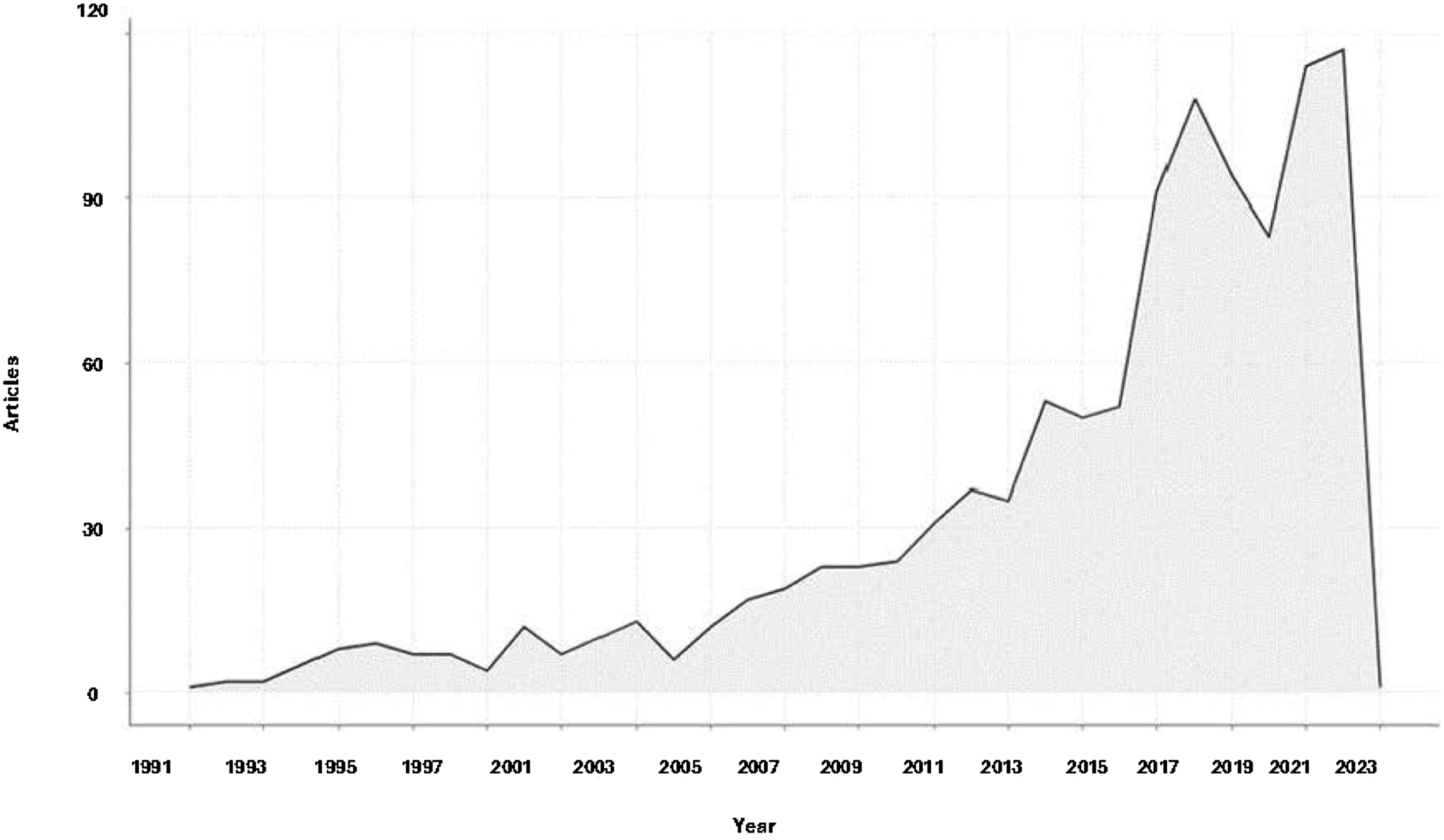
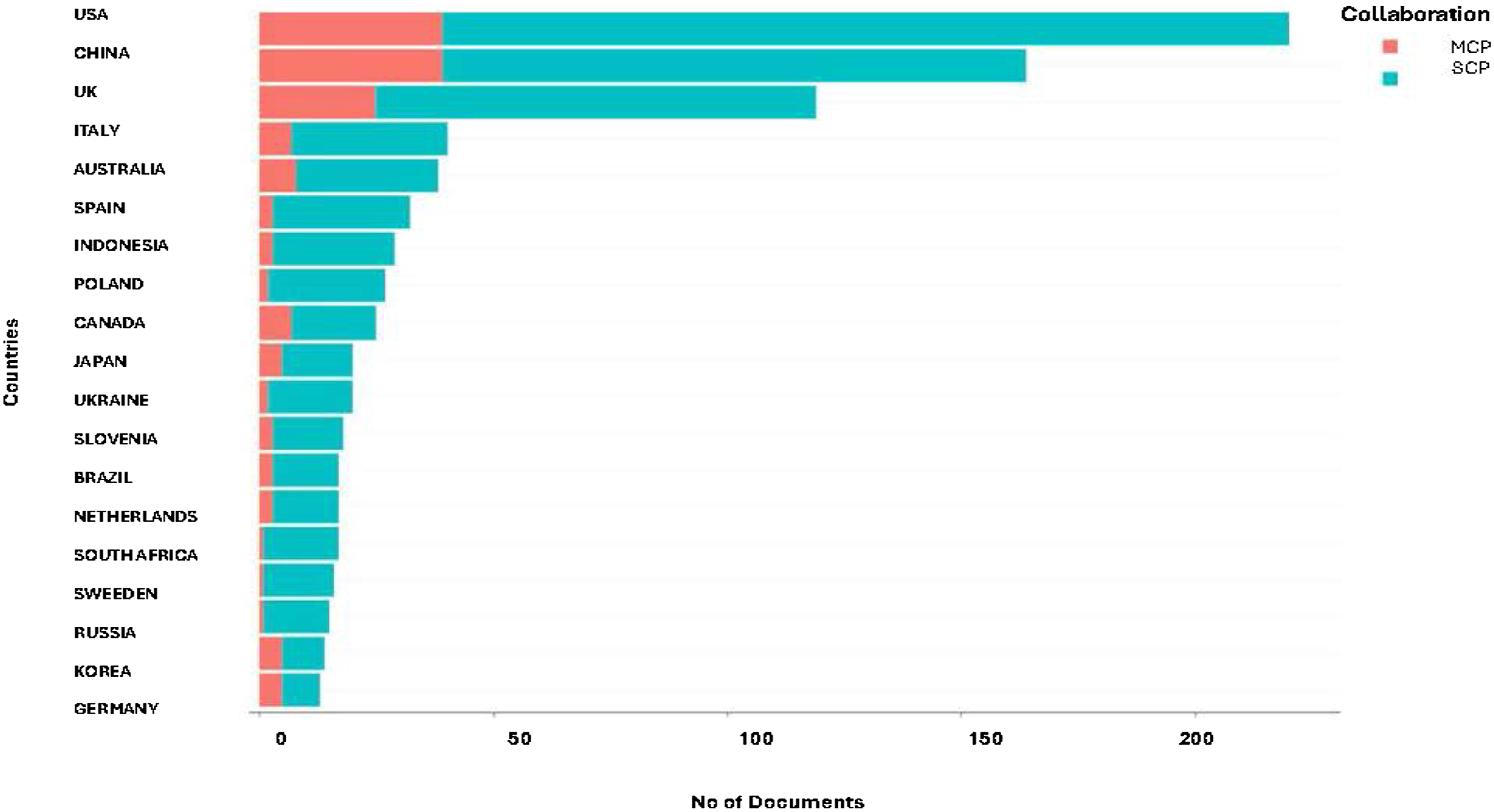
The top three countries where the authors of the works in which local governments are the subject of the most research are the United States, China, and the United Kingdom, as is the case in many other subjects. There is growing interest in the efficiency of local governments (Balaguer-Coll et al., 2018; Distor & Khaltar, 2022; Essential Services Commission, 2018; Pacheco et al., 2021; Paschoalotto et al., 2020; Piña & Avellaneda, 2017; Rambe et al., 2020). However, few of them studied citizens’ perceptions and participation in local government.
It was plausible for local authorities to claim that they were improving their performance and accountability, but citizens may have a different perspective and evaluation and may express their grievances regarding communication, quality of public services, and allocation of investments. To enhance transparency and trust in government, efforts have been made to adopt citizen participation programs and practices like participatory budgeting (Kim et al., 2018). Participatory budgeting has increased transparency, accountability, and trust in government through citizen engagement in budget-related procedures. In addition to that, democratization depends on participation, so collaboration between communities and local government is essential (Bejtja, 2018).
Bejtja (2018) found that citizens have clear perception of the performance of local government and are able to participate in the decision-making process through committees. Bejtja expounded upon the involvement of citizens in the decision-making process of budget allocation within the context of local self-governance. This particularly pertains to the phase of priority selection, which holds great significance in the budgeting process, as it forms a crucial component of the local budget, and is achieved through collaborative decision-making.
Mohammadi et al. (2018) identified discordant perspectives amongst citizens and local government members concerning the degree and scope of citizen participation. This article endeavors to delineate the conflicts that ensue from citizen involvement in local government in Torbat-Heydarieh, Iran. The article elucidates two divergent outlooks on citizen participation, namely, the people-centric and authority-centric perspectives. The power dynamic between citizens and local government engenders differences in perception and contributes to the emergence of conflict.
Alibegović and Slijepčević (2018) have discovered that citizen engagement is a crucial factor in local government decision-making. They have found that voting is the most favored approach to participation, whereas citizen juries are the least desirable technique for citizen engagement. This study aims to compare the attitudes of local councilors in 16 countries that are categorized according to the extended Hesse and Sharpe (1991) typology. Furthermore, it aims to scrutinize various mechanisms of citizen participation in the decision-making process from a comparative perspective.
Ruvalcaba-Gomez (2019) scholarly research delved into the topic of open government and citizen participation in the state of Jalisco, Mexico. The study primarily focused on the perspectives of civil society organizations (CSOs) and the government, which are recognized as key sectors. It was found that there was a notable discrepancy between the perspectives of government officials and CSOs. The author contends that this discord in the relationship between these two sectors may hinder the successful implementation of policies.
Shayo (2021) exploration of citizen participation in local government elections through crowdsourcing revealed challenges that hinder citizen participation. The authors explored the challenges that impede citizen participation in local government elections through digital tools and identified trust, cost, poor preparation and crowdsourcing planning, the digital divide, and poor infrastructure as critical challenges facing local crowd sourced monitoring.
Verf (2021) notes that citizen participation is increasingly being used in society as a more deliberate and democratic form of policymaking with citizens. The author attempted to fill this gap by surveying 110 respondents and conducting five interviews with participation professionals for additional context and found that underrepresented groups prefer alternative methods to traditional ones.
According to the study of Hue (2019), the qualitative approach of in-depth interviews revealed that citizen participation in local government is influenced by various factors, including objective factors like political institutions, policy environment, and social networks, and subjective factors like faith, household conditions, age, education, and gender. In Vietnam, women tend to be more active in local government than men, and the factors influencing gender differences in civic participation include socio-economic characteristics and political attitudes.
In contrast, Kim and Lee (2017) find that citizen participation in public participation programs surprisingly has no significant relationship with perceptions of government transparency, and citizen participation in online programs has a slightly negative relationship with ratings of government transparency.
Trust significantly affects the perception of individuals. A comparative study by Brewer and Sigelman (2002) analyzed the perspectives of federal government employees, their relatives, friends, and local government employees and state, in comparison with those held by other American citizens. The study found that government employees at all levels have more confidence in the federal government than those who have no connection to government. The involvement of the family and friends of government employees in trust in the government was considered insignificant.
Trust in government employment is shaped by various factors. According to Hansen (2021), these factors include the warmth and competence of public servants. As noted by Choi and Jeon (2019) trust in the government is determined by a number of factors. In addition to government-related factors like expertise and fairness, individual values and trust tendencies are also significant determinants of trust. These factors include age, political inclination, happiness, prospects, and corporate trust levels.
van Engen, van Loon, and Tummers (2014) assert that the factors governing trust in government employment are primarily related to personal perception of government policies and their impact on work. The trust of public professionals is primarily influenced by the perceived meaningfulness of government policies, with personal characteristics and professional position carrying less weight.
Within the literature on Kyrgyzstan, there are several studies conducted by Kasımova. One particular research (Kasymova & Schachter, 2014) attempts to examine the implementation of participation tools by local governments in Kyrgyzstan. It shows that the amalgamation of such tools contributed to the improvement of participation outcomes, as well as to changes in government service delivery. Another related paper (Kasymova et al., 2016) presents a comparative analysis of open budget portals in the context of budget transparency, using portal datas, interviews with public managers, and archival information. This paper finds that both countries suffer from analogous difficulties in promoting online disclosure, including insufficient infrastructure development and limited public use of portals. While centralized online budget disclosures have failed to cultivate a sense of transparency among the general public, the media have skillfully used these disclosures, resulting in a broader public discourse on budgeting in both countries. The writers emphasize the distinct function of the Open Budget Index and global stakeholders in advancing and preserving fiscal transparency within these nations.
In another article, Kasymova (2017) sheds light on the challenges and factors influencing the sustainability of citizen engagement in budgeting processes in developing countries, using Kyrgyzstan as a case study. The author identifies several barriers that hinder the implementation of local budget meetings, ranging from simple organizational issues to complex problems such as lack of trust and insufficient professional management skills.
As it mentioned above, there are few studies investigated trust in local governments with a focus on citizens’ perceptions and participation in local governance. Citizen participation is especially important in post-Soviet countries, where democratic principles started to implement since 1991. To the best of our knowledge, it is the first empirical study that analyzes the efficiency and the trust of citizens in local government based on the level of employment and welfare in Kyrgyzstan. Logistic regression was examined to reveal the factors that affect the trust level of citizens.
The structure of the paper is as follows: The first section is the introduction, the second section is the literature review, the third section is about local government administration in Kyrgyzstan, the fourth section describes the data and methodology and the empirical findings, the fifth section is devoted to the discussion of marginal effects, and the sixth section is the conclusion and recommendations.
Local Government Administration in Kyrgyzstan
With the collapse of the Soviet Union, all its member states gained political and economic autonomy. The first stage of decentralizing began to take place and power was devolved to the local level. The process of establishing a system of local self-government in the republics has been underway since 1991 and has been accompanied primarily by development and adoption of a number of normative-legal documents (Dil, 2002).
Local self-government in the Kyrgyz Republic began on April 19, 1991, when the Supreme Council of the Republic of Kyrgyzstan adopted the Law “On Local Self-Government in the Republic of Kyrgyzstan.” On March 4, 1992, amendments and additions were made to this Law. In the new edition of the Law “On Local Self-Government and Local State Administration in the Republic of Kyrgyzstan,” a distinction was made between the functions of representative and executive bodies. Local state administrations were formed, to which local executive power was transferred. The development of local self-government in the country has been carried out since 1995, when the capital, Bishkek, was transferred to the principles of local self-government (Asanakunov & Bekbasarova, 2004).
The Constitution of the Kyrgyz Republic of 5 May 1993 enshrines the people’s right to local self-government and devotes a chapter to it. In the latest Constitution, which was adopted by referendum on 11 April 2021, the fourth section and at the article 111 states that local self-government is a right guaranteed by the Constitution and a real opportunity for local communities to resolve issues of local importance independently, in their own interests and under their own responsibility (Constitution of the Kyrgyz Republic, 2021).
Local self-government in the Kyrgyz Republic is carried out by local communities on the territory of the corresponding administrative-territorial unit. Local self-government is carried out by local communities of citizens directly or through local government bodies. Financing of local self-government is provided from the relevant local budget, as well as from the republican budget. The state guarantees the independence of local governments in matters of formation and execution of local budgets. The formation and execution of the local budget is carried out in accordance with the principles of transparency, public participation and accountability of local governments to the local community (Constitution of the Kyrgyz Republic, 2021).
Local governance is implemented in Kyrgyzstan through two government body: local government/local state administration and local self-government. Local government is a state executive body subordinate to the President of the Kyrgyz Republic and the Cabinet of Ministers of the Kyrgyz Republic, which ensures coordinated activities of territorial divisions of state executive bodies in the relevant territory, their interaction with local self-government bodies and carries out state control over the execution of delegated powers. Local government is accountable to the President and the Cabinet of Ministers (Law “On Local Government Administration and Bodies of Local Self-Government” No. 123 of 20 October 2021: Article 1).
The local government shall carry out its activities in cooperation with the local self-governing bodies of the respective territory, creating conditions for citizens to exercise their constitutional right to participate in managing issues of national and local importance. If local self-government bodies make decisions that are inconsistent with laws, acts of the President and the Cabinet of Ministers, the head of the local government shall submit to the local self-government body that made such a decision a proposal for eliminating the violations, which shall be considered and decided upon within one month. If the representation of the head of the local state administration is not satisfied, the head of the local state administration will appeal this decision of the local government body in court (Law “On Local Government Administration and Bodies of Local Self-Government” No. 123 of 20 October 2021: Article 5).
According to article 7 of the Law “On Local Government Administration and Bodies of Local Self-Government” No. 123 of 20 October 2021, the competences of the local state administration include exercising executive power; ensure the implementation of budgetary, financial, price, tariff, investment, foreign economic, and tax and customs policies; attract investments and grants for the development of the territory; and conclude relevant agreements within the competence established by law.
The activities of the local state administration are managed on the principles of unity of command by the head of the local state administration (hereinafter referred to as the Akim). The Akim is appointed and dismissed by the President on the proposal of the Chairman of the Cabinet of Ministers in consultation with the President’s authorized representative in the region for five years. Akim is personally responsible to the President and the Cabinet of Ministers for the socio-economic development of the territory. In Article 9, a clause has been added to the requirements and restrictions for becoming an Akim, stating that a person who is a native of the district concerned cannot become an Akim (Law “On Local Government Administration and Local Self-Government Bodies” dated October 20, 2021 No. 123, Article 8–9). The main purpose of this law is to fight corruption, tribalism, and localism (Nurmatova, 2023).
Local self-government is an independent activity of the local community in its own interests and under its own responsibility, aimed at resolving issues of local relevance. Local self-governance is carried out by local communities through representative and executive bodies, as well as through the direct participation of citizens.
Local keneshes/councils are responsible for the representative participation of the local community in the implementation of local self-government. Direct participation of the local community in implementing local self-government is carried out through the following: (1) Discussion of issues of public and state life and issues of local importance at gatherings (meetings), kurultais of members of the local community. (2) Elections of deputies of local keneshes/council. (3) Manifestations of a rule-making initiative and/or participation in direct voting on especially important issues of local importance (Law “On Local Government Administration and Local Self-Government Bodies” dated October 20, 2021 No. 123, Article 19).
Local keneshes/council are representative bodies of local self-government elected by local communities in Aiyl Aimaks and cities. The numerical composition of local keneshes is established taking into account the population of the corresponding administrative-territorial unit except for the keneshes of the cities of Bishkek and Osh (Law “On Local Government Administration and Local Self-Government Bodies” dated October 20, 2021 No. 123, Article 30).
The executive body of local self-government in a city is a mayor’s office headed by a mayor. There are 14 competence of the mayor that includes organizing the functioning and development of the city’s life support system, providing citizens with social and cultural services; development of the draft budget of the city and executes it after approval by the city kenesh; participation in the development and submission for approval to the kenesh of draft programs for socio-economic development, social protection of the population and ensures their implementation after approval by the kenesh, publishes information on the implementation of the program of socio-economic development, and also publishes it on the official Web site and (or) places in special viewing places (boards and stands) determined by the local kenesh; attract investments and grants for the development of the city; to carry out measures for the protection of monuments of history, architecture, and culture; and develop and implement measures to create new jobs (Law “On Local Government Administration and Local Self-Government Bodies” dated October 20, 2021 No. 123, Article 45).
The aiyl okmotu/municipal government is the executive body of local self-government in rural areas. This body assists the deputies of the aiyl kenesh/local council in exercising their powers, preparing and conducting reports to voters. Aiyl okmotu in its activities is accountable to the aiyl kenesh, and on delegated state powers - to the relevant state bodies (Law “On Local Government Administration and Local Self-Government Bodies” dated October 20, 2021 No. 123, Article, 43, 50).
In local governance, Akim is coordinator as he is authorized to organize the activities of the local state administration and is responsible for its results and coordinate the activities of territorial divisions of state executive bodies, as well as appoint and dismiss the heads of executive bodies of local self-government of Aiyl Aimaks and cities of regional significance.
Local self-government bodies may be vested with separate state powers. The delegation of certain state powers to local self-governing entities is executed through a legal framework or a contractual arrangement, concomitantly with the establishment of a mechanism for the state to provide the requisite material and financial resources to enable the successful execution of the devolved powers (Law “On Local Government Administration and Local Self-Government Bodies” dated October 20, 2021 No. 123, Article, 29).
Generally, interaction between state authorities and local authorities is regulated by law in the following areas such as delegation of state powers, state control over the legality of the activities of local government bodies, and appointment of heads of local government bodies by higher officials (Nurmatova, 2023).
Local government implements the policies of the President and the Government of the Kyrgyz Republic. Their activities are supported by the allocation of funds from the state budget, while local self-governments are delegated only those powers that are not supported by appropriate budgetary policies. There are a number of objective reasons for this situation, the most important of which is the difficult socio-economic situation in the country. There is also a certain amount of inertia on the part of the local authorities themselves, which seems to be linked to their relatively low level of professionalism and the lack of an effective and adequate structure of local self-government (Dil, 2002).
Today, local governments operate under the Seventh Law on Local Self-Government. However, their appointment and funding remain under the control of the state authorities. Under the new law, state authorities have been given greater powers to control local government bodies. Under the previous Law on Local Self-Government, adopted in 2011, local government heads were elected by local council deputies and were thus accountable to the representative government. At the same time, there are many problems in the independent resolution of local government issues of local importance. The main one is the lack of funds in the local budget (Nurmatova, 2023). The main principle of creating a legal and regulatory framework in the sphere of local self-governance is delegation of powers to local self-governments. In addition, the need to create their own financial and material base for the realization of delegated powers. We can already speak with confidence about the delegation of powers, but not about the financial and material basis (Dil, 2002). Thus, in rural areas, Akim and aiyl okmotu/municipal government are responsible for solving social-economic problems and ensuring economic development.
Data and Methodology
The explanation of the data constituting the subject of this study and brief information about the method used are given below.
Data
In this paper, participation of citizen in local government in Kyrgyzstan is investigated. Along with this, citizens’ perception about efficiency of public services, local governance, and trust on local governance institution analyzed based on the survey “Life in Kyrgyzstan” (LIK) that conducted in 2019 to more than 7000 individuals in Kyrgyzstan. There are many topics and questions included in the LIK research report.
The data used in this study includes the responses given to questions in the LIK survey set that can be tested for hypotheses concerning our research question. It should be noted that we have identified key questions that are directly relevant to our study. The list of these questions is given in the Appendix 1.
There are 7,043 participants in the LIK Survey and out of 7,043; 2,059 participants selected “trust” and 4,984 participants selected “no trust.”
Data Classification Based on Machine Learning Approach—True Classified Sample Size
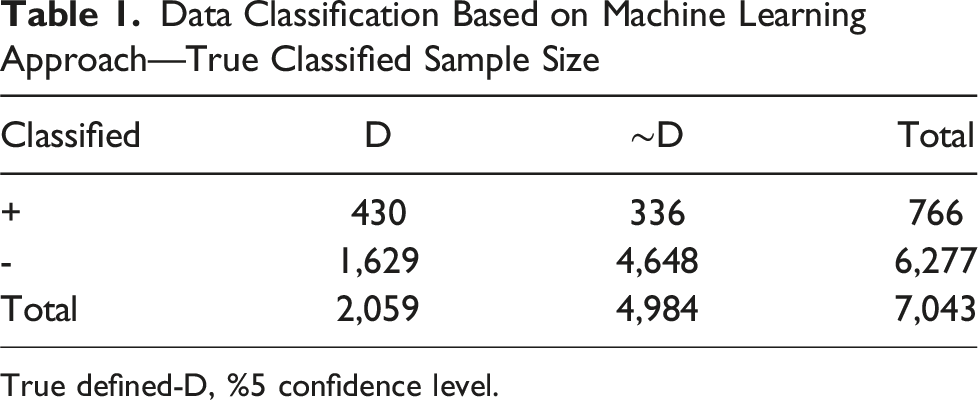
True defined-D, %5 confidence level.
Data Classification Based on Machine Learning Approach—Sensitivity
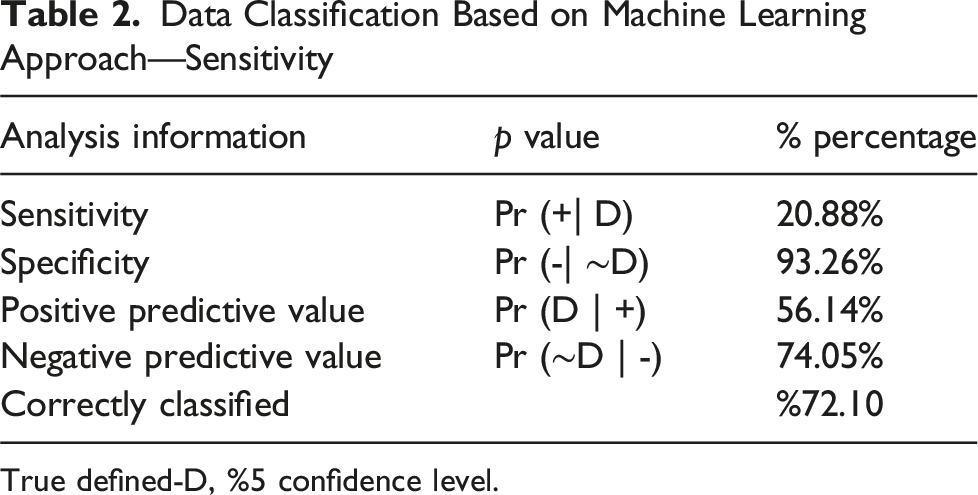
True defined-D, %5 confidence level.
Methodology
Binary Logit model will be applied to identify the factors affecting on the participation of citizen in local governance such as gender, education, social status, and trust in government (Data Science Institute, 2022). Based on the empirical findings, policy recommendations are made to contribute to the relevant literature. The “logit” command in Stata is used to estimate binary logistic regression models (equation (1)).
The binary logistic regression model explains the relationship between a “binary dependent variable” and one or more “independent variables.” It should be noted that the dependent variable takes on only two values, typically defined as 0 and 1. The “logit function” is known as the “log of odds.” In logistic models, it is generally preferred to interpret odds ratios rather than coefficients (Data Science Institute, 2022).
The odds ratio is treated as a measure of the relationship between dependent and independent variables in logistic modeling. Hence, the odds ratios greater than 1 indicate the existence of a “positive effect” because they increase the odds. The odds ratio between 0 and 1 indicates the existence of a “negative effect” because they decrease the odds. On the other hand, when the odds ratio is exactly equal to 1, this means that there is “no association.” It should be note that an odds ratio cannot be less than 0 (Data Science Institute, 2022).
Empirical Findings
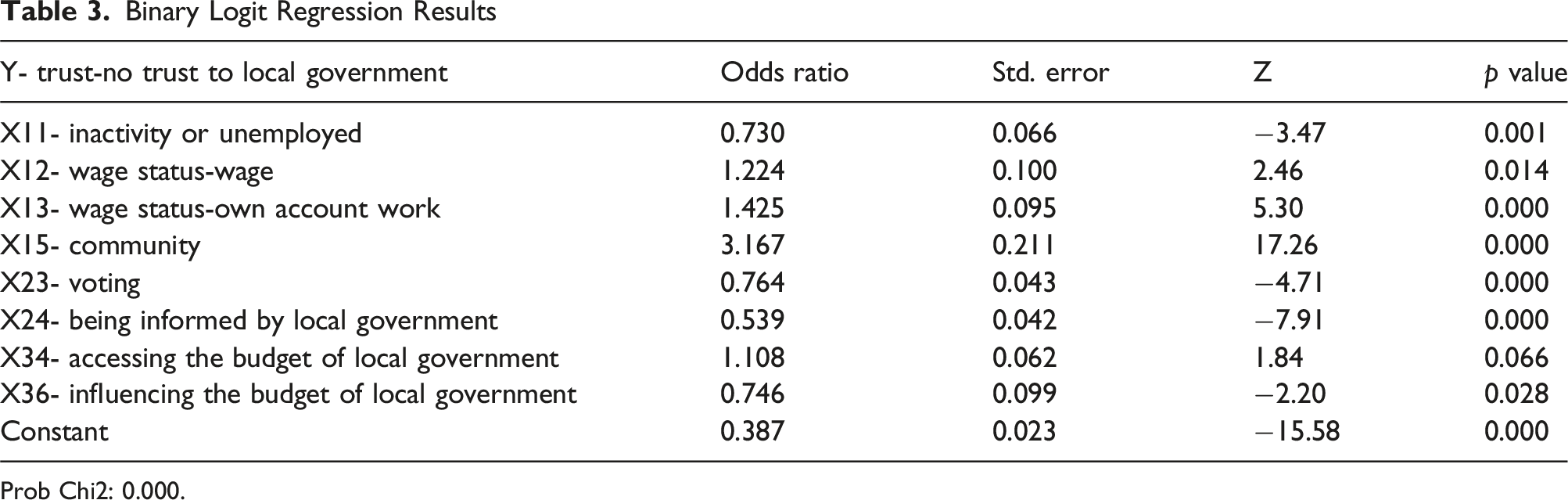
Binary logistic regression estimation results are given as follows:
Binary Logit Regression Results
Prob Chi2: 0.000.
According to results of odds ratio wage employees’, accessing the budget of Local Government, own account workers’, wage employers’, and trust in community have positive effect on trust in local government. At the same time, being unemployed, participation in elections of local government, being more informed about the work of Aiyl Aimak or municipal government and trying to influence on budget process of local government has negative impact on the probability to trust in local government.
Discussion on the Marginal Effects
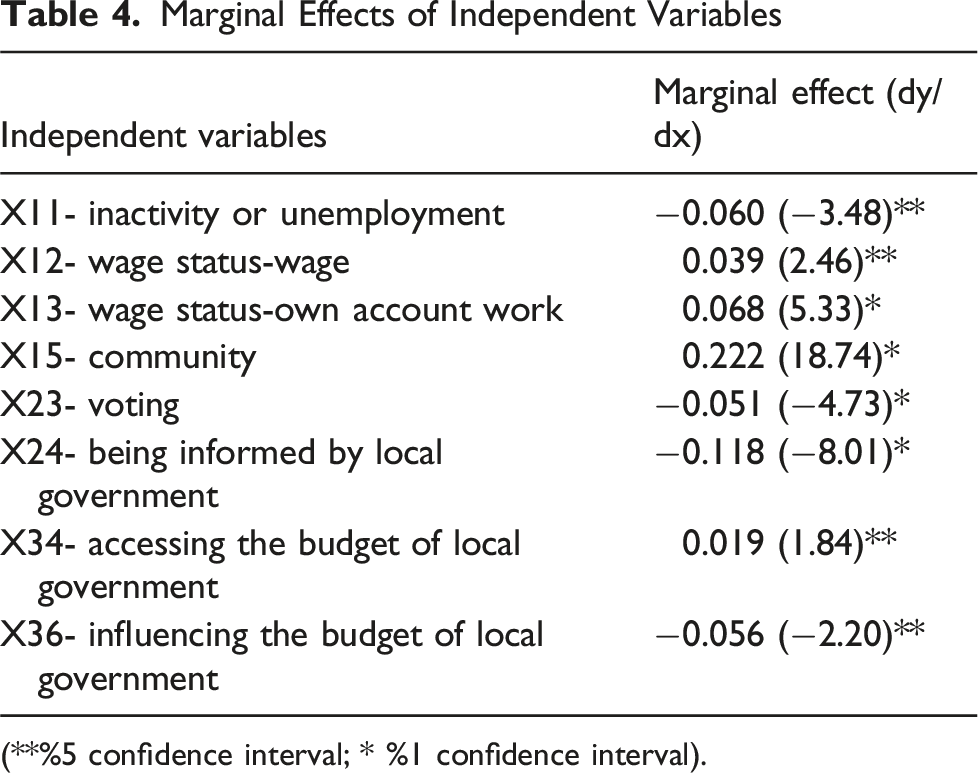
Marginal Effects of Independent Variables
(**%5 confidence interval; * %1 confidence interval).
In the interpretation of the statistically significant marginal effects in Table 2, an evaluation based on the comparison of their probabilities is made. At the same time, the direction of these effects expresses positive (increasing) or negative (decreasing) effects depending on the sign of the result.
In our example, it has been determined that the factors that are likely to increase citizens’ trust in local government are “X12-Wage Status-Wage-%3.9. X13-Wage Status-Own account work-%6.8; X15-Community-%22.2; and X34-Accessing the budget of Local Government-%1.9,” respectively.
However, it was found that the factors affecting trust negatively are “X11-Inactivity or Unemployment-%-6.0; X23-Voting-%-5.1; X24-Being informed by Local Government-%-11.8; and X36-Influencing the budget of Local Government-%-5.6,” respectively.
Thus, according to the results of logit model, wage employees’ and own account workers’ trust in local government is higher. Along with this, trust level of people who were inactive or unemployed last 7 days is lower, in spite of that they have a permanent job, own business, other income-generating activity, or work as an unpaid family worker to which they will return. This shows employment status significantly affect trust level of citizens in government, while high trust level of employed people, inactivity or unemployment negatively affect trust in local government.
The most economical factor is trust in the community of people to each other or general trust. General trust increases the probability to trust of citizens in local government to 22.2%. Along with this, accessibility of information about the Aiyl Aimak/municipal government budget too has positive effect on the level of trust. Perception that information about the “Aiyl Aimak/municipal government budget is accessible” increases the probability of trust to 1.9%.
Contradictory results were obtained related to factors with negative impacts. Thus, participation in elections of local government, being more informed about the work of Aiyl Aimak or municipal government and trying to influence on budget process of local government decreases the probability to trust in this government body.
The results point to some problems with the electoral process. Trust, cost, poor preparation and crowdsourcing planning, and poor infrastructure can impede citizen participation in local governments (Shayo, 2021). The phenomenon of vote-buying seriously undermines public confidence. In Kyrgyzstan, vote-buying became widespread during the local elections in 2016. Vote-buying has always been carried out in our republic, in its informal and indirect form. In Kyrgyz working conditions in local governments, indirect bribery has recently been carried out through “infrastructure projects” and patronage: By providing entire neighborhoods with trays, transformers, free medical care and cheap rentals of tractors. However, a new negative round in the development of national parliamentarism is the transition to direct monetary bribery. Finally, large-scale vote-buying was another feature of the local elections. Today, a wall of mistrust has been built between political elites and voters. This wall is difficult to break through: programs, ideas, thoughts no longer have an impact and are not perceived by voters (Doolotkeldieva, 2016).
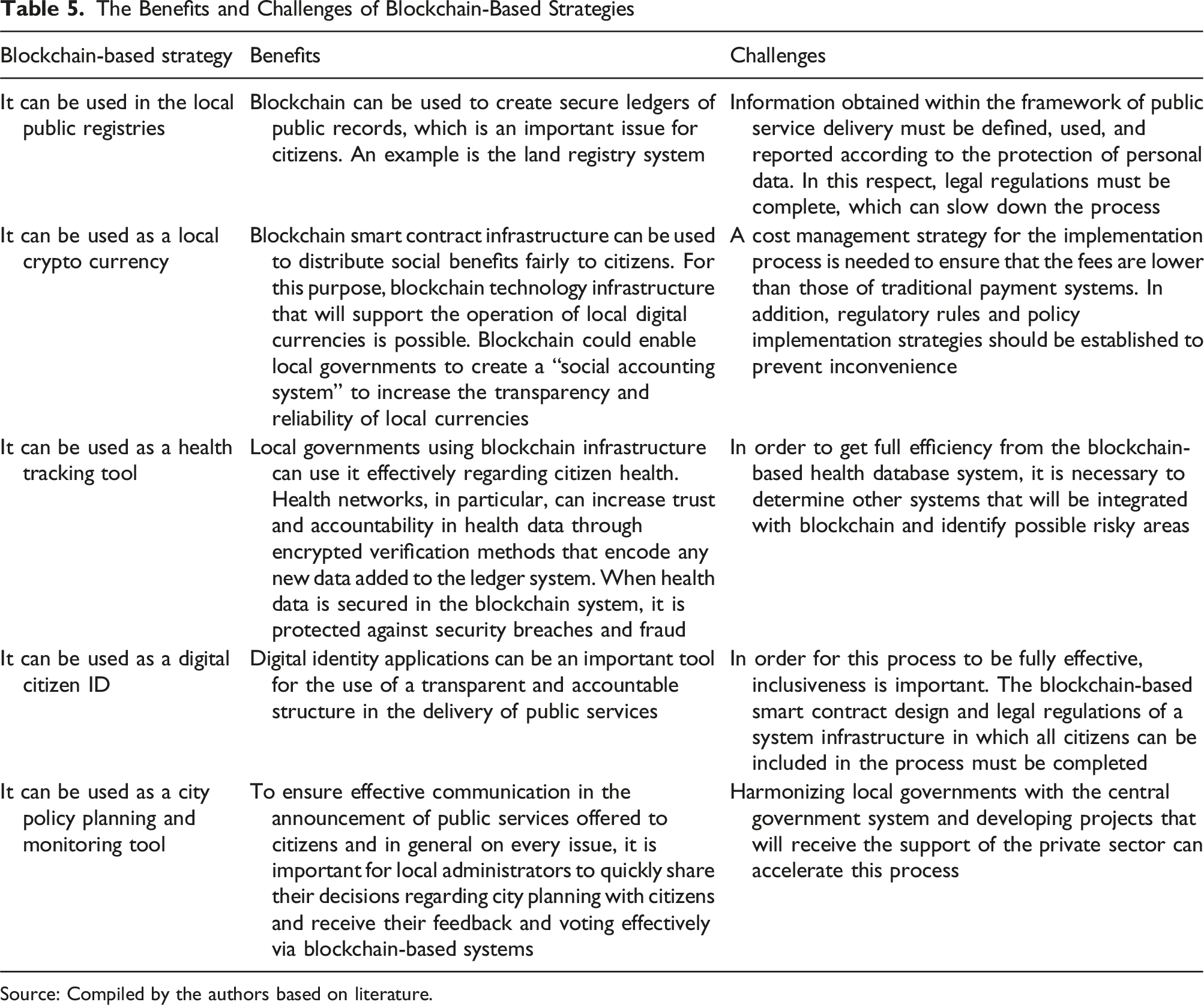
Thus, main problem in elections is vote-buying and distrust of citizens in the procedure of election. New technologies can be used to resolve these problems too, such as blockchain technology. In local elections on April 9, 2023 pilot electronic voting is carried out, that is, voting outside the polling station using an electronic ballot and automatic data collection in an electronic system in 3 Aiyl Aimaks of the Batken region (Uraimov, 2023). However, electronic voting cannot guarantee reliable voting in Kyrgyzstan and hence, there is only one secure solution. Blockchain technology can ensure transparency and efficiency of voting (Rura et al., 2016). Using blockchain technology in local elections can increase trust of citizens in local government. This technology provides reliable and secure information and contributes to transparent elections. Because blockchain technology does not exist in a single, centralized location, no party can corrupt or influence the network (Abdieva & Baigonushova, 2024). In South Korea, for example, the use of blockchain in the selection of projects among local communities has provided an opportunity for the implementation of direct democracy (Ojo, Adebayo & OjoMillard, 2017).
The Benefits and Challenges of Blockchain-Based Strategies
Source: Compiled by the authors based on literature.
The budget system of the government of the Kyrgyzstan includes the following budgets: republican budget, the budget of the Social Fund, the budget of the Compulsory Medical Insurance Fund and local budgets. Local budget—the budget of the local community of an Aiyl Aimak and city, the formation, approval, execution, and control of that is carried out by local governments. Local budgets are approved by the regulatory legal acts of local keneshes/council.
According to the Budget Code of the Kyrgyz Republic (Article 78), the competence of local keneshes in the field of regulation of budgetary relations is as follows: adoption of programs of socio-economic development of territories and control over their implementation, determination of the main directions and priorities of the local budget, approval of the local budget, including the maximum amount of the municipal debt and its changes, hearing of information on the course of implementation of the local budget and approval of reports on its implementation, making decisions on issuing municipal securities, granting/taking out budget loans and targeted transfers in accordance with the provisions of this Code and the legislation of the Kyrgyz Republic, and organizing and holding public hearings on draft local budgets together with the executive bodies of local self-governments and exercising other powers provided for by the provisions of the Budgetary Code.
In accordance with the requirements of the Budgetary Code and taking into account the calendar plan for the preparation of the draft republican budget approved by the Cabinet of Ministers, draft local budgets for the next fiscal year and planning period shall be prepared in accordance with the procedure and terms established by the respective local keneshes. The draft local budgets prepared by the executive organs of local self-government and approved by the local keneshes are submitted to the authorized state body not later than September 1 of the year preceding the next fiscal year. The revised drafts of local budgets are submitted by the executive bodies of local self-government for consideration and approval by the local keneshes not later than 1 November of the year preceding the next budget year (Article 95 of the Budget Code of the Kyrgyz Republic).
Local keneshes consider draft local budgets for the next budget year and planning period, the conclusions of budget commissions and approve local budgets no later than one month after the approval of the republican budget, the following parameters: revenues, expenses, the amount of equalization grants allocated from the republican budget (Article 102, Budget Code of the Kyrgyz Republic).
Publicity and transparency regarding the budget and the budget process are ensured by publishing the budgets and the Budget Execution Report by the authorized state body (Ministry of Finance) that obliged to post the following documents on its official Web site within 15 days after their approval in the prescribed manner: main directions of fiscal policy, the draft republican budget, the civil budget, the law on the republican budget, the semi-annual report on the execution of the republican budget, the report of the Chamber of Accounts on the audit of the execution of the republican budget, the approved annual report on the execution of the republican budget, the monthly reports on the execution of the budget (Article 125, Budget Code of the Kyrgyz Republic).
One of the main instruments that contribute to development of direct democracy is budget hearings. Public budget hearings are an event held on the initiative of executive authorities and local governments for the purpose of studying public opinion, receiving suggestions, recommendations and making decisions taking into account the interests of the population, in the form of an open discussion on the formation and execution of budgets of the budgetary system of the Kyrgyz Republic (Article 125, Budget Code of the Kyrgyz Republic).
The budget indices are an assessment of the level of budget transparency and public access to budget information of state administration and the bodies of local self-government in the Kyrgyz Republic. The municipal budget transparency index is assessed by non-profit organizations (initiative groups of citizens) in accordance with the methodology adopted by the Cabinet of Ministers. The results of the public assessment are taken into account by local governments to ensure the growth of transparency of local budgets (Article 129, Budget Code of the Kyrgyz Republic). In addition to monitoring the availability and openness of budget information, the index also considers the level of citizen participation in the budget process. The index of budget transparency in Kyrgyzstan has increased from 55 in 2017 to 63 out of 100 in 2019. However, public participation score was 33.
However local residents often do not have access to information about local government decisions. The lack of awareness among local community members about the resources, capabilities and work of local governments leads to the formation of inflated expectations, which potentially carries the risk of social dissatisfaction among the population with the actions of local governments and public authorities in general (akipress.kg, 2023).
There are no incentives for compliance with the principles of openness, transparency and accountability in relation to government bodies in general and local government officials personally, and there are no sanctions for violations of these principles. There are no formats and procedures for reporting on local government bodies to the local community, and the existing practice of assessing the activities of local government bodies by the community is subjective and not based on clear criteria and specific indicators, which creates a potential risk of manipulation of public opinion. The local kenesh is deprived of the opportunity to react directly to the actions or inactions of the head of the executive body of local self-government (akipress.kg, 2023).
Budget transparency, accessibility of information and public participation is important in improving efficiency of local government. Government transparency has positive effect on citizen participation for instance in online programs (Kim & Lee, 2017).
Trust of the citizens is the main indicator of efficiency of local government. Kyrgyzstan obtained independency after 1991 and examining elements of direct democracy as local self-government. Our analysis revealed that there are some issues related with accessibility of information, budget process and voting. Effective solving these issues using new technologies can improve efficiency of local governments and social welfare. To enhance transparency and trust in government in Kyrgyzstan efforts should be made to adopt citizen participation programs and practices like participatory budgeting (Kim et al., 2018). Participatory budget will increase transparency, accountability, and trust in government through citizen engagement in budget-related procedures (Bejtja, 2018).
Poverty and government corruption can lead to social conflicts. However, it is possible to avert social conflicts if local authorities demonstrate a desire to do so. Local self-government is able and should become a catalyst for local economic development, able to influence the growth of both its tax base and the growth of the well-being of its members. Local self-government can influence the local economy not so much through the creation of any special conditions for business, but through the creation and implementation of supporting programs. For example, festivals, training, information, etc. The development of the economy provides an opportunity to reduce poverty and thereby reduce the possibility of instability (Dobretsova et al., 2011).
Local government has a huge impact on the environment for human development. The basic prerequisites for the level of human development in the Kyrgyz Republic are formed at the level of local government. It is here that primary and secondary education is provided, primary health care is provided, cultural and social skills are formed. It is here that children are brought up, the young generation develops. Local self-government is able to fight corruption, since it is closest to the population, and this population is able to create an atmosphere of intolerance, an environment for all kinds of corruption phenomena (Dobretsova et al., 2011).
Civil servants and experts noted that, first of all, the financial and administrative independence of LSG bodies should be ensured in order to improve the quality of life of the population through the provision of high-level municipal services through the availability of financial resources and qualified personnel.
Thus, as mentioned above, local governance is functioned by two kind of government bodies, local state administration, which represents the Government and President and local self-government. Local self-government consists of local keneshes/council which are representative bodies of local self-government elected by local communities in Aiyl Aimaks and cities. The executive body of local self-government in the city is the mayor’s office headed by the mayor and the aiyl okmotu/municipal government in rural areas. But the Akim authorized appoint and dismiss the heads of executive bodies of local self-government of Aiyl Aimaks and cities of regional significance. Therefore, both mayor and aiyl okmotu are dependent on Akim and cannot be completely independent even according to the new Law adopted on October 20, 2021.
The vision of civil servants and experts of local self-government of the Kyrgyz Republic in the long term, that is, in 2030, is a stable system of financially and administratively independent LSG bodies that enjoy the absolute trust of the population due to their transparency and accountability to citizens. The system of Local self-government bodies is aimed at improving the quality of life in the territory under its jurisdiction and solves the problems of local economic development. The success of local self-government relies on qualified personnel, financial independence, effective management and administrative autonomy (Dobretsova et al., 2011). In order to achieve the well-being of the population, the competence of the officials of the special management level is very important, as well as their ability to skilfully manage the territorial property, the rational use of labor through the introduction of new management methods, technologies and other mechanisms of income generation at the local level (Kenjeeva, 2016).
Achieving mentioned above aim will ensure the Kyrgyzstan sustainable economic and social development, social welfare and prosperity. Adoption of new technologies as blockchain in government budget process could be improve and fasten to reach these aims, as this technology increases the accessibility of citizens to reliable information about the work of local government and local budget process, the efficiency of usage of government expenditure and revenue.
Conclusion
Trust of the citizens is the main indicator of efficiency of a local government. Kyrgyzstan obtained independency after 1991 and examining elements of direct democracy as local self-government. Based on the survey data that forms the basis of our analysis, it is concluded that the expectation of citizens from local governments in Kyrgyzstan is basically the wage status that provides employment and welfare. The level of employment and welfare can be expressed as determining indicators of trust in local government. Therefore, practices that support direct work and welfare-enhancing activities of the local government in Kyrgyzstan can be expressed as a confidence-building factor.
Our analysis revealed that there are some issues related with accessibility of information, budget process and voting. Improvement of general trust and accessibility of information about Aiyl Aimak/municipal government budget will lead to higher trust in local government. But the main issues that must be revealed and solved are the ones related with the election procedure and budget process. Effective solving of these problems may significantly increase trust in local government. Budget transparency and public participation must be improved to increase trust and welfare of citizens. Application of new technologies as blockchain could significantly increase transparency and trust of people in local government.
As a society, trust in each other (community as whole) comes to the fore. Culturally, this situation carries our theoretical expectations and social characteristics of Kyrgyzstan. In this respect, it is recommended to develop stronger relations with family units as social issues in order to improve the communication of the society and increase the effectiveness and trust of local governments. Existing cultural characteristics and small country with less than 10 million citizens profile are reflected in the survey findings. Budget transparency, accessibility of information, and public participation are important to improve efficiency in local governments.
Supplemental Material
Supplemental Material - Citizen perception and participation in local government in post-soviet countries: Case of Kyrgyzstan
Supplemental Material for Citizen perception and participation in local government in post-soviet countries: Case of Kyrgyzstan Sezer Bozkuş Kahyaoğlu, Razia Abdieva and Damira Baigonushova in Journal of Eurasian Studies
Footnotes
Declaration of Conflicting Interests
The author(s) declared no potential conflicts of interest with respect to the research, authorship, and/or publication of this article.
Funding
The author(s) received no financial support for the research, authorship, and/or publication of this article.
Supplemental Material
Supplemental material for this article is available online.
Author Biographies
 )
)
References
Supplementary Material
Please find the following supplemental material available below.
For Open Access articles published under a Creative Commons License, all supplemental material carries the same license as the article it is associated with.
For non-Open Access articles published, all supplemental material carries a non-exclusive license, and permission requests for re-use of supplemental material or any part of supplemental material shall be sent directly to the copyright owner as specified in the copyright notice associated with the article.
