




Abstract
Marriage is a central event in all Central Asian societies and is particularly important for the lives of individuals, kinship groups, and society more broadly. Within the regional scholarship, it serves as an entry point for the study of a wide range of topics and the exploration of social, political, economic, and religious dynamics. This article aims to shift the perspective on Central Asian marriages from questions of political economy and identity to the circulation of care by scrutinising its role in social reproduction across the scales of the individual body, family, community, and the state. Drawing on the ethnographic material collected by the authors during extensive fieldwork in two localities in Tajikistan, this article analyzes care practices in several domains: organising the daughter’s dowry, assembling the bride’s fashions, preparing food and serving the guests, maintaining family’s reputation and status, caring for the reproduction of tradition, and the state’s care for families. We argue that feminist and anthropological studies that draw attention to care’s productive as well as disruptive sides are helpful for understanding how these practices contribute to reproducing old and forging new types of relatedness and maintaining complex social worlds. Working with care practices visually, alongside textual representations, allows us to convey people’s enormous affective, material, and labour investments in marriages and to draw attention to the visible and invisible aspects of these practices.
Introduction
Following a few months of negotiations with the groom’s family and intense preparations for the main event of her life, Madina was standing in the middle of the living room nervously waiting for the groom to arrive. The freshly painted walls, a new carpet with white and red balloons scattered on it, and trendy curtains signalled the bride’s family’s preparedness to present themselves to the piercing gaze of the community. Although Madina was only eighteen, in full bridal attire and heavy make-up she looked several years older. Wearing a massive ivory bridal dress embroidered with fake Swarovski crystals, high heels, huge sparkling earrings, and an elaborate updo that integrated a large crown, she resembled a Disney princess. Two young men with professional cameras (videochi) – one recording videos and the other taking photos – ordered her to move towards the window, open the curtain, and look outside in an attempt to stage a popular wedding shot. Yet, moving in all these wedding paraphernalia was not an easy task for a fragile girl like Madina. Every time she needed to move, someone had to help her lift her massive dress and tuck it back in. A few days after the wedding, her uncle remarked that her wedding look had weighed 45 kilos – a fact they learned when they put Madina on the weighing scales that afternoon. An exaggeration, perhaps, but it gave an indication of the hidden cost or, to be more precise, the visceral weight of bridal beauty. Its imprint on a disciplined body can only be imagined.
Finally, the groom arrived. His entrance into Madina’s courtyard was preceded by the sound of karnai (a metal trumpet, a ceremonial musical instrument) and drums, signalling to the whole neighbourhood that the wedding had begun. The groom’s walk from the courtyard gate to Madina’s room on the red runner rug laid carefully outside by her family was meticulously documented by two new cameramen he brought with him. They took their time taking photos and videos as Madina greeted her groom, bowing a few times (salom kardan). They gave instructions to the groom to stretch his hand to pass her a wedding bouquet, to take her hand, to wrap his arm around her waist, and to look into her eyes with a half-smile. Attentively listening to the instructions, the couple posed, slightly embarrassed by this new-found proximity. The bride’s relatives, waiting for the couple outside, were growing impatient, and older women who found it difficult to stand voiced their opinions about the excessiveness of filming that contemporary youth enjoyed so much. As the couple finally showed up on the doorstep, sweets were thrown at them, and Madina’s oldest aunt gave a prayer (duo) for their marriage to be long and happy. After the prayer, they slowly started walking towards the wedding cortège, made up of two shiny black BMW cars. Madina had to attend to the movements of the (now four) cameras to present her best self, simultaneously trying to keep her balance walking on high heels, which she never did in her everyday life. The passing of the cortège through the town to the wedding hall (tūikhona) was also not left undocumented – the cameramen sat in a convertible car at the head of the procession.
In the meantime, the groom’s and the bride’s parents formed two orderly lines in front of the tūikhona to cordially greet the guests who would be making their way through this improvised ‘corridor of hospitality’ to reach the entrance. Young kelins (daughters-in-law) in their full sparkling attire; married women and their small children wearing more modest hairstyles, make-up, and outfits; young men dressed in classical suits and ties; older women in scarves and men in traditional skull caps sorted themselves into two rooms inside. The majority of guests were accommodated in the main hall which was lavishly decorated with faux flowers, bright fabrics, chandeliers, and fruit on the neatly arranged round tables. A smaller, more intimate room with a separate entrance was reserved for highly respected older men. The groom’s father would move between the two rooms during the celebration, showing careful attention and respect to everyone. As the couple arrived and proceeded to their seats, followed by karnai and dancing relatives, the celebration took off. Over the next 3 hours, food, drinks, dancing bodies, evaluative looks, and local gossip were flowing in abundance. The tireless cameras captured all of these, which would later be extended transnationally to the absent family and community members through meticulously arranged wedding recordings and photo albums.
It is rare to meet an anthropologist of Central Asia who has not produced (or thought of doing so at some point) a similar account of weddings they had attended during fieldwork. In Central Asian societies, weddings are a fundamental event in the life course of individuals. They are crucial for the reproduction of kinship groups and social relations within local communities, and they are embedded within state ideologies and practices. As a ‘membership fee for the community’s acknowledgement’ (Ilkhamov, 2013, p. 280), weddings mark a family’s new status, structure social relations with the others, and form the basis for the perception of a person’s self-worth (Abashin, 2003). Part of everyday sociality in communities, these events are powerful sources of moral experience: it is through the ‘project to marry and settle their children and participate fully within their community’ that individuals develop an understanding of a moral self (Rasanayagam, 2011, p. 48). In this respect, weddings are also crucial sites for the production of gendered persons. They provide people with a ‘stage’ upon which they perform their roles as dutiful and caring fathers, husbands, sons, and uncles, as well as good mothers, wives, daughters, and aunts, and (re)position themselves vis-à-vis each other (see Ibañez-Tirado, 2013). It is therefore not surprising that marriage has served as an entry point for the study of a wide range of topics in Central Asian scholarship. These include the entanglement of local ritual economies with broader economic and political change in the region (Abashin, 2015; Trevisani, 2016; Werner, 2000), kinship networks, group solidarity and social security (Ismailbekova, 2016), changing ideas about modernity and tradition (Borisova, 2021; Edgar, 2007; Roche & Hohmann, 2011), religious change (McBrien, 2006), and shifting gender relations (Cleuziou, 2021; Thibault, 2017).
The ethnographic account we have presented above reveals just a small but most visible portion of an enormous concerted caring effort to ensure the social reproduction of families and Tajikistani society. As part of this effort, care constantly circulates between various actors and at different scales, mostly resting on the shoulders of women. 1 However, as care is often naturalised and taken for granted, it is also made invisible. Therefore, our goal in this article is twofold. Ethnographically, we take the reader behind the scenes of spectacular wedding performances staged by our interlocutors for the community’s (and researcher’s) gaze. We show how it is ultimately the relations of care and care practices that underlie such events, make families, and (re)produce the social order. Theoretically, we argue that care is an illuminating lens through which to understand marriages and the complexities, limitations, and contradictions of the social worlds they are part of.
In their recent edited collection of articles ‘Marriage Quandaries in Central Asia’ (2021), Juliette Cleuziou and Julie McBrien suggest that rather than focussing on marriage as an institution with a predefined content, taking a relational approach can illuminate how marriage as practice comes into being through various sets of (often contested) relationships. Following their call, in this article we show how marriages come into being through various relations of care and care practices performed in preparation for, during, and after weddings in two regions of Tajikistan. To this relational approach we add a sensitivity to the visible and invisible dimensions of social life, and here in particular to care as a practice that can be vital, easily overlooked, as well as detrimental. This move draws inspiration from Barbara Pieta’s (2023) discussion of positive and negative dementia portrayals in public media, scholarship, and local communities, and the relationship between looking at, seeing, and care.
While every ethnographer of Central Asia understands the importance of the circulation of care for the lives of local communities, foregrounding the relations of care and interdependence analytically is a very recent trend in Central Asian studies (see e.g. Borisova, 2023; Cleuziou, 2023; Liu, 2023; Torno, forthcoming; Zhou, 2023). Our article is an attempt to bring an analytical understanding of care to the fore and to show how it can play out in addressing such ‘classic’ themes as marriage in regional scholarship. This is the reason why we prioritise ‘breadth’ over ‘depth’ in engaging with our material. Each of the aspects we consider in the ethnographic sections could be developed into a separate argument deserving its own article. However, we deliberately keep it broad to highlight the versatility of our chosen analytical tool.
Our ethnographic material pushes us to engage with two aspects of care prominent in social science scholarship. First, we pay attention to care as the physical and affective labour that women invest in sustaining the wellbeing of their families and communities. Second, we view care as ambivalent: nourishing and controlling, providing continuity and rupture, creating, maintaining, and equally dissolving social relations. Following Tatjana Thelen (2015), we employ care as an expansive notion that allows for analysis across the intersecting scales of body, family, community, and the state (rather than a fragmented topical discussion). Finally, we recognise that care is a fundamental ethical value for our interlocutors, and caring in its various forms is a foundation for the formation of socially recognised personhood in Tajikistan. With this, we take seriously recent calls to move beyond ‘the suffering subject’ in the regional scholarship (Féaux de la Croix & Reeves, 2023) without downplaying state violence, rampant inequalities, and oppressive gender regimes.
Understanding Care
Our understanding of care is informed by feminist and anthropological scholarship on the topic which has, over the years, produced complex and multilayered perspectives on caring and the multitude of relations it is enmeshed in. Early feminist writers such as Hilary Graham (1983) point to the affective and physical dimensions of care and the centrality of the wellbeing of others in caring relationships and practices. To disentangle these dimensions, some authors use the terms caring for (e.g. tending to a child, cleaning the house, and earning money to feed one’s family) and caring about (more intangible activities such as being there for someone, running a charity institution, or paying respect to the elderly). Alongside other scholars, Graham criticised the common association of care with women and domestic work that often remains unseen, unpaid, and taken for granted (see Cancian & Oliker, 2000; England, 2005; Wærness, 1978). One of the results of this discussion, which is relevant for our article, is the idea that care often involves time-consuming emotional and physical labour that is not necessarily bound to family and household but can also be found in the public and private service sectors (e.g. Hochschild, 2012[1983]; Lidola, 2015; Thelen, 2007).
At a more general level, we follow Jean Tronto’s much-cited definition of care, in which caring is understood as a species activity that includes everything that we do to maintain, continue, and repair our ‘world’ so that we can live in it as well as possible. That world includes our bodies, our selves, and our environment, all of which we seek to interweave in a complex, life-sustaining web (Tronto, 1993, p. 103).
This definition is broad and does not fix the meaning of care to interpersonal relations and particular social and cultural settings. Instead, it foregrounds the vital dimensions of care practices and the interdependency of human and more-than-human actors. Tronto delineates four phases of caring, that is, caring about, taking care of, care-giving, and care-receiving. She understands these phases as an interlocking process, which allows us to grasp care’s complex, multi-layered, and, oftentimes, conflicting dimensions (Tronto, 1993, pp. 105–108).
Despite the significance of care for maintaining social worlds, many scholars warn against idealising caring and the simplistic oppositions of ‘good’ versus ‘bad’ care that circulate in public imaginations (Puig de la Bellacasa, 2017; Thelen, 2015). Care is embedded in social hierarchies, gender ideologies, and power relations. On the one hand, this ensures the satisfaction of care needs which, on the other hand, may become controlling and exploitative, and may neglect the interests of individuals situated at the lower end of social hierarchies (Cancian & Oliker, 2000; Stevenson, 2014; Tronto, 1993). Consequently, care scholarship urges us to look beyond simplistic generalisations and to pay attention to intersecting social inequalities and ambivalences that are inherent to all care relations and practices (Garcia, 2010; Kowalski, 2016). These understandings of care guide our analysis of marriages across different scales (body, family, community, and state) and shed light on the vital and creative aspects of care relations, as well as their disruptive and contested capacities.
This article draws on our experiences of extended ethnographic fieldwork in Tajikistan. Over the past decade, we have spent significant amounts of time in two different regions of Tajikistan – Sughd Province in the north (Borisova) and in Kulob region in the south (Torno). 2 Our research focused on women’s life courses, public and private care arrangements, labour migration, lived citizenship, and family practices (Borisova, 2024; Torno, 2015, 2020, 2023). Marriage as a key social event played into and significantly contributed to our understanding and analysis of these spheres of life. During fieldwork, we lived with host families who accepted us as their own family members, and we had the opportunity to take part in and closely observe many weddings. Equipped with a camera and permission from the wedding hosts to document many parts of the marriage process alongside the professional camera team, we learned the rules of local visual wedding cultures. However, we also took advantage of our position as researchers and directed our gaze towards less visible aspects of wedding preparations. This article brings together these two types of ‘politics’ of visual representation (Pieta, 2023, p. 2): one that is aligned with local understandings of good wedding photography depicting the beauty of the bride and groom, the guests, and the decorated wedding hall; and another one that is informed by scholarly understanding of the hidden costs of weddings and the underlying care labour.
In what follows, the reader will not find lengthy ethnographic descriptions with an abundance of detail. Instead, we use visual images as our prompts in bridging the ethnographic and the analytical. Although we did not consciously apply visual methods during our fieldwork, we believe that the visual material we collected offers a good glimpse into the enormous affective and material investments of care labour in making marriages in Tajikistan happen. In this article, we treat the photographs not as mere representations of the text but as capable of speaking with the same authority as written words. Hence, we encourage readers to experiment with reading and interpretation of the visual from their own point of view. The article is organised in a way that propels the reader’s gaze gently from the most visible and celebrated parts of wedding performances that our interlocutors gladly showcased to the community, to the most mundane and intimate moments before and after the main event that usually involve only close family and friends. We hope that visual representations of this care labour will help readers to better understand the efficacy of care in (re)producing gendered relations, persons, and communities.
Weddings in Tajikistan
Marriage in Tajikistan is a complex process consisting of a sequence of formal and informal visits, ceremonies, banquets, and gift exchanges that can last several weeks or months. It consists of a sequence of smaller ritual events in which different parts of the community participate and involves the constant movement and circulation of people, items, gifts, and food. At its core lies the three-part ritual comprising the religious marriage ceremony nikoh, the state registration of marriage known as ZAGS 3 , and the wedding feast called tūi.
Each aspect of the marriage process has seen significant changes over the past century regarding their order, size, duration, and financial investments. These changes reflect political, economic, religious, and social shifts, which points to the flexibility of this event in accommodating various societal transformations. For example, the state registration of marriage in civil registry organs (ZAGS) was introduced by the Soviet authorities in the 1920s. Since 2011, in Tajikistan, the state marriage registration must take place before the Islamic ceremony (nikoh)
4
(Figure 1). A Bride (Arūs) and Groom (Domod) on a Photoshoot in Somoni Park, Kulob, Accompanied by Guests. Kulob Region, 2014, Photo by S. Torno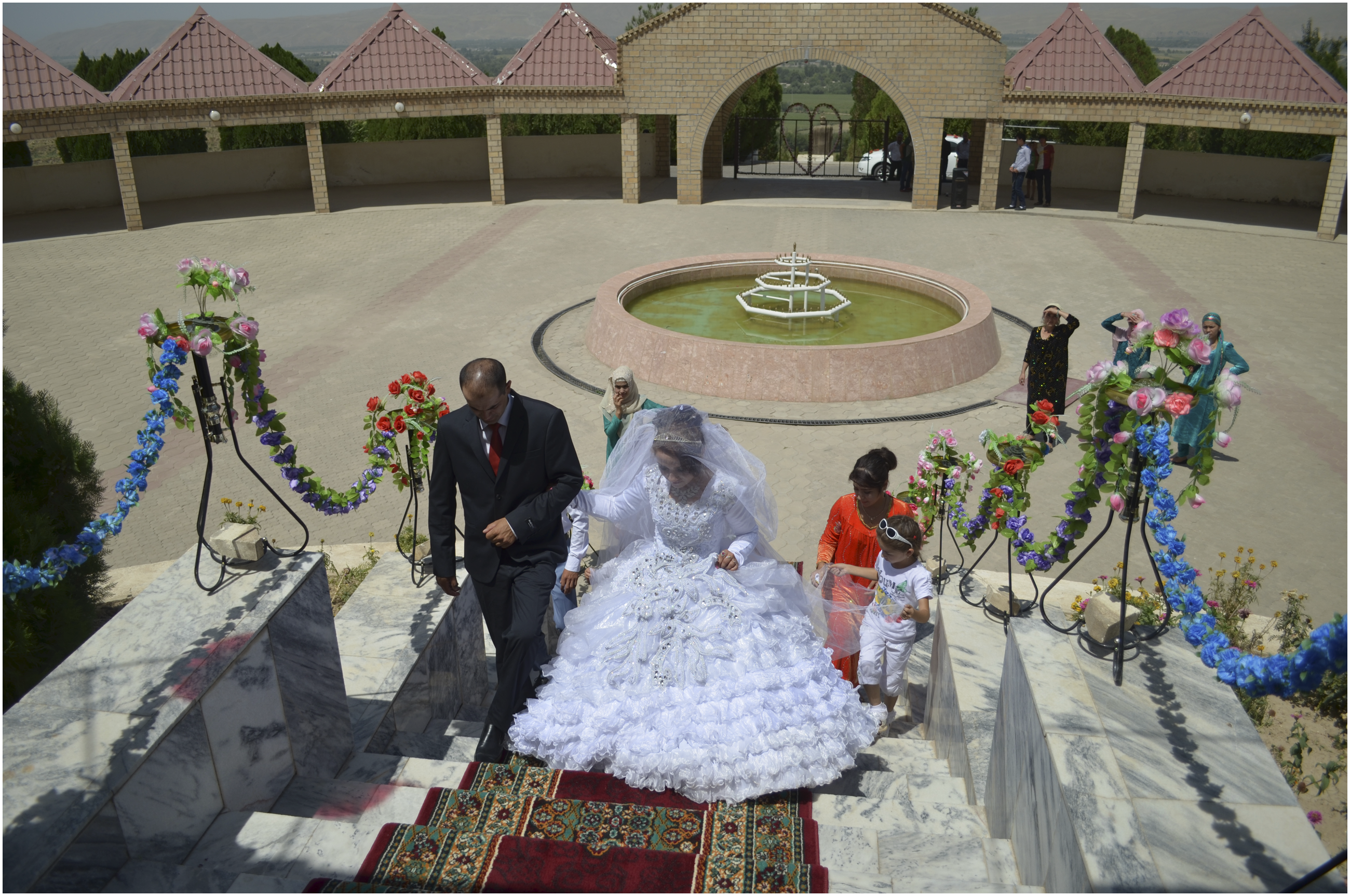
However, the largest variation across time and regions can be observed with regards to practices surrounding the wedding feast tūi, alongside its preparatory and concluding events.
5
People across Central Asia vividly recall wedding parties in the second half of the 20th century that lasted several days and could host the ‘whole village’ (Abashin, 2015, p. 558). In contrast, Tajikistan’s present-day legal regulation of customs and traditions restricts the duration of the wedding party to 3 hours and the number of guests to 150 persons for the tūi itself and 200 for a preceding party thrown by the bride’s family (Borisova, 2021). The Tajik civil war (1992–1997) left an imprint on the marriage process by reducing the activities surrounding weddings to a minimum, and by lowering the marital age of young men and (more significantly) women – an effect that could still be observed several years after the end of fighting (Roche et al., 2020). However, in the past few decades, the commercialisation of wedding ceremonies and levels of conspicuous consumption to mark social status experienced a stark increase, with the development of an elaborate ritual economy sustained mainly through labour migration to Russian cities (see Reeves, 2012). High-speed transnational movement of people and objects, coupled with growing Tajikistanis’ participation in social media networks, also means that globalised wedding practices and images are circulating between Russia and Tajikistan (Figure 2). Bride, Groom, and Wedding Guests Heading to the State Registry Office (ZAGS). Dushanbe, 2012, Photo by S. Torno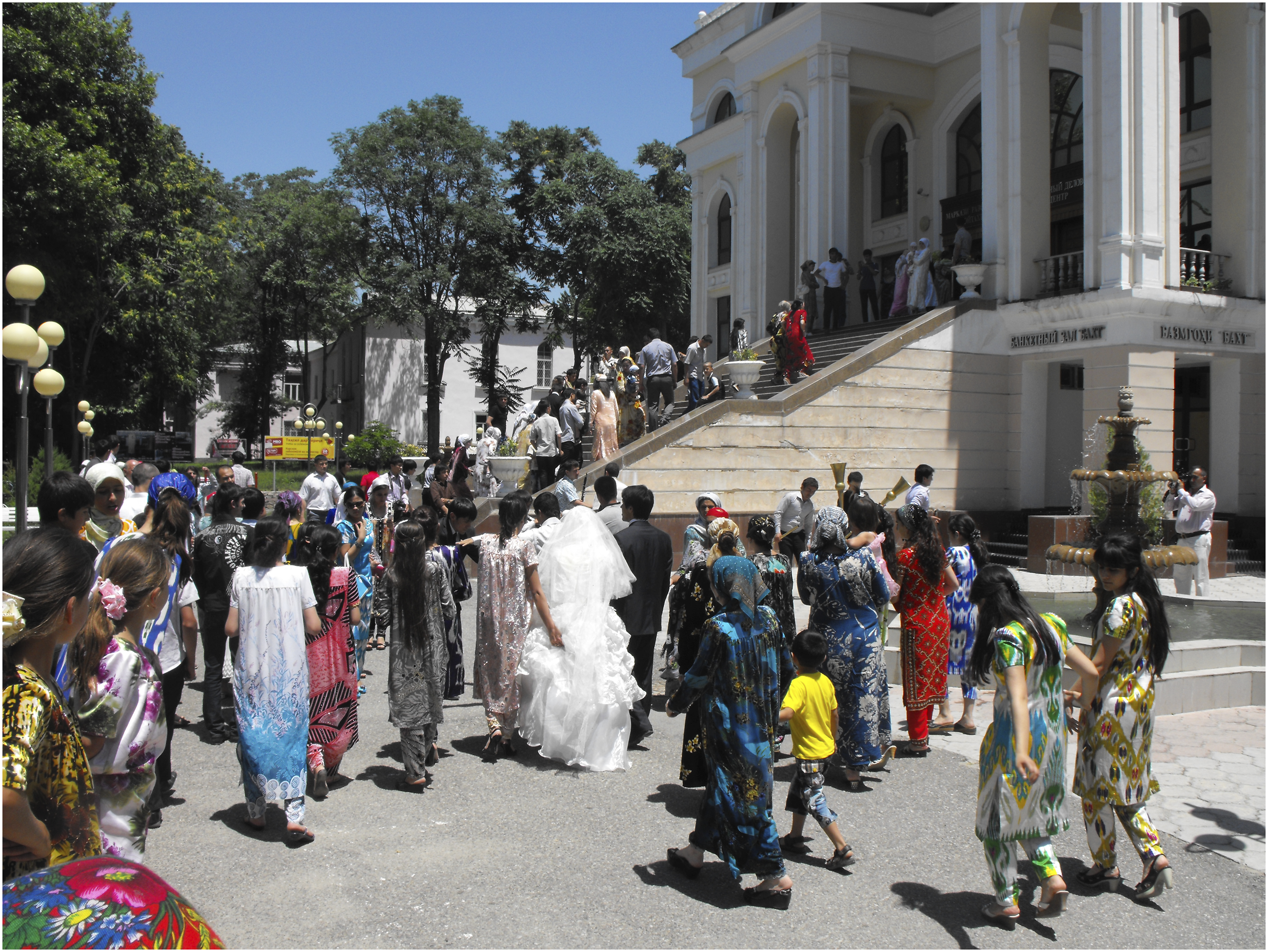
The political economy of weddings in Central Asia and its enmeshment with relations of mutual indebtedness have so far been the most studied aspect of ritual economies in the region. Almost every author mentions the obscene costs that people bear against average salaries in the region.
6
However, the physical and emotional costs of care labour that fall on women’s shoulders have barely received attention. Our goal in this article is to approach precisely these aspects of wedding rituals, as they are certainly entangled with – but not completely determined by – the political economy. Our examination will start with preparation of the daughter’s dowry – a material manifestation of care relations between the bride and her parental family, who collaborate to finance and put together all of the things a bride and the future family unit might need. In section ‘Caring for the body’, we will zoom in on the self-disciplining bodily work of styled brides and the care services of wedding parlours that help fulfil young women’s dreams to impress the wedding onlookers. The following sections shift the focus to the physical and affective care work of feeding, serving, and respecting the guests which is crucial for the (re)production of social ties; and the enormous financial, corporeal, and aesthetic investments that people make to reaffirm their social status and moral personhood during weddings. The final sections will address women’s roles as carriers of and carers for local traditions and the state’s interventions into marriage with its performative and controlling aspects (Figure 3). A Bride and Groom Feed Each Other Wedding Cake During the Concluding Part of Their Tūi. Sughd region, 2019, Photo by E. Borisova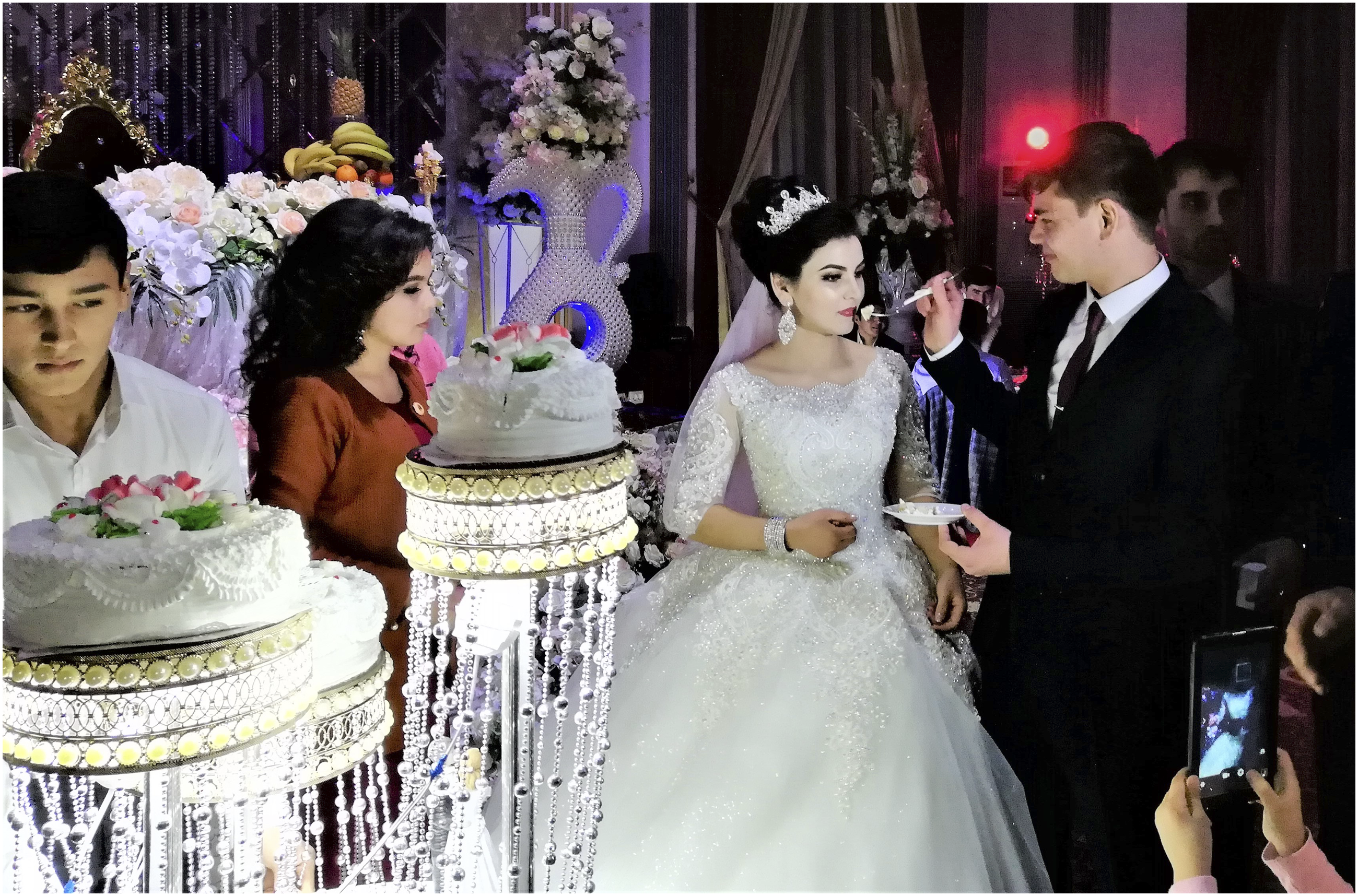
Caring for the Future Family Unit: Preparing a Daughter’s Dowry
Dowry (jivez, ruzghor) is an important part of marriage payments that developed historically in the region (alongside brideprice: qalin and mahr). However, in recent decades it has evolved into an elaborate practice that outgrew other payments in amount and significance, which can partly be explained by economic growth, access to cheap Chinese goods, labour migration, and women investing in sustaining their reputation among their communities (Cleuziou, 2019). In this article, we consider the ever-inflating dowry as a material manifestation of relations of care that imply collaboration among women.
In contemporary Tajikistan, many families start their search for dowry items from the birth of a daughter in the family and intensify it as she grows up. The most intense and expensive stage is usually a few months before the wedding itself. Most items like furniture, carpets, white goods, kitchen utensils, clothes, and jewellery are bought, but some are hand-made, such as kūrpacha (traditional cotton mattresses), kūrpa (duvets), and tailored dresses (Figure 4). Shopping for Dowry – A Dreaded Experience for Parents and Good Fun for Girls. Local Bazaars Are Packed with Wedding Goods of All Sorts. Sughd Region, 2017, Photo by E. Borisova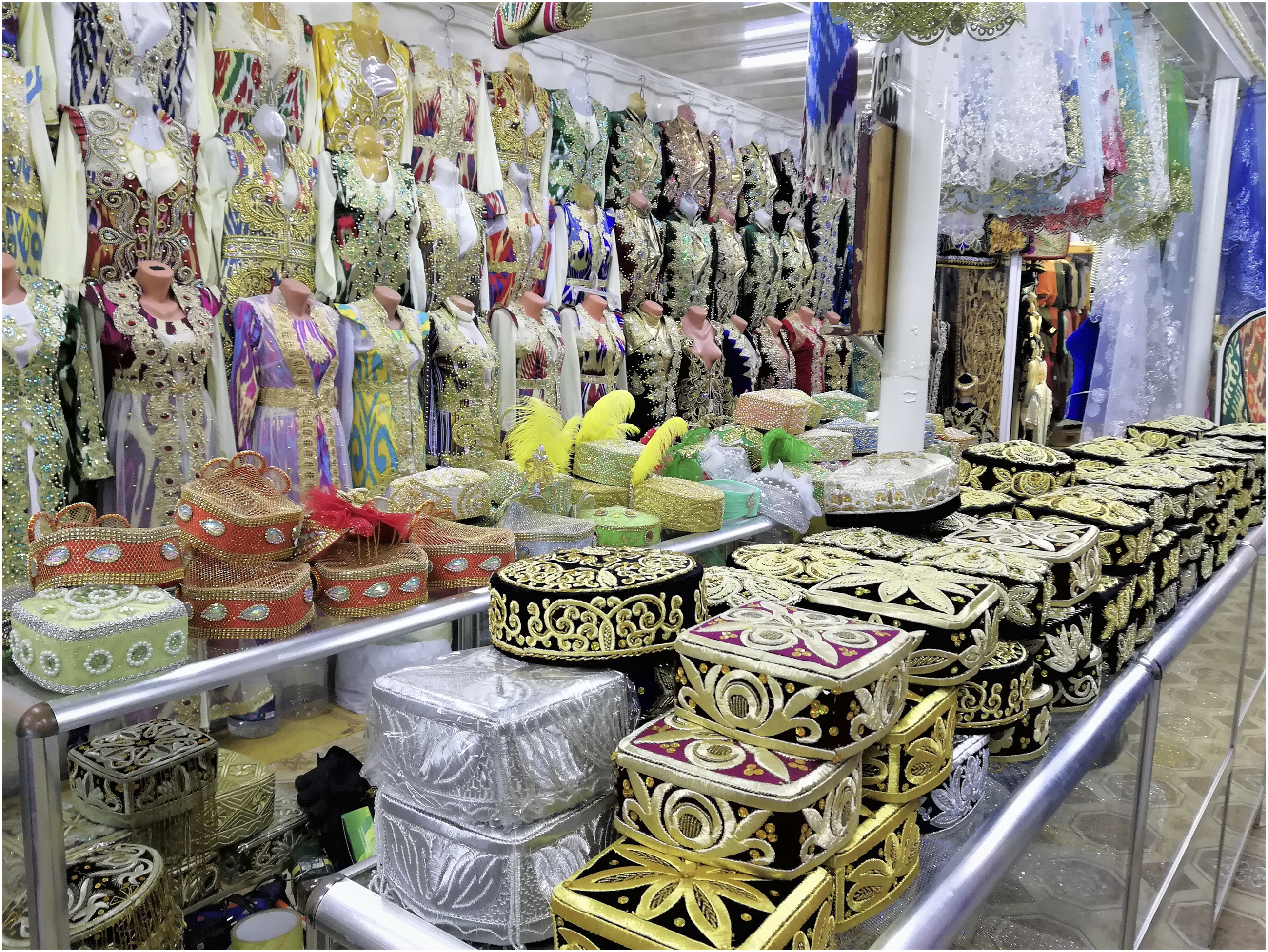
A newly married woman will wear traditional patterns (adras, atlas), an embroidered cap (tūppī, toqi), and a light veil (sari) or scarf (rūimol) after the wedding. Despite her extensive workload within a new household, a new daughter-in-law (kelin) is expected to always look stunning. Displaying the kelin’s beauty, householding skills, and her agreeable character to the community adds to the status and respectability of the groom’s family (Harris, 2004). The brides’ parents are responsible for providing her with a good amount of casual and festive clothes, headscarves, and shoes, as well as underwear, socks, tights, and other clothing items that she might need. All of these go into the girl’s saru po (‘from head-to-toe’) that is transferred to the groom’s house in one or two wooden chests (sanduk). Alongside clothes, a sanduk may contain shampoo, soap, perfume, jewellery, some presents for guests (sweets and headscarves), and a piece of white fabric to wipe away drops of blood after the first intercourse (Figure 5). Sanduk (Wooden Chest) Carefully Packed with Saru po by the Bride’s Mother and Other Senior Women. Dushanbe, 2012, Photo by S. Torno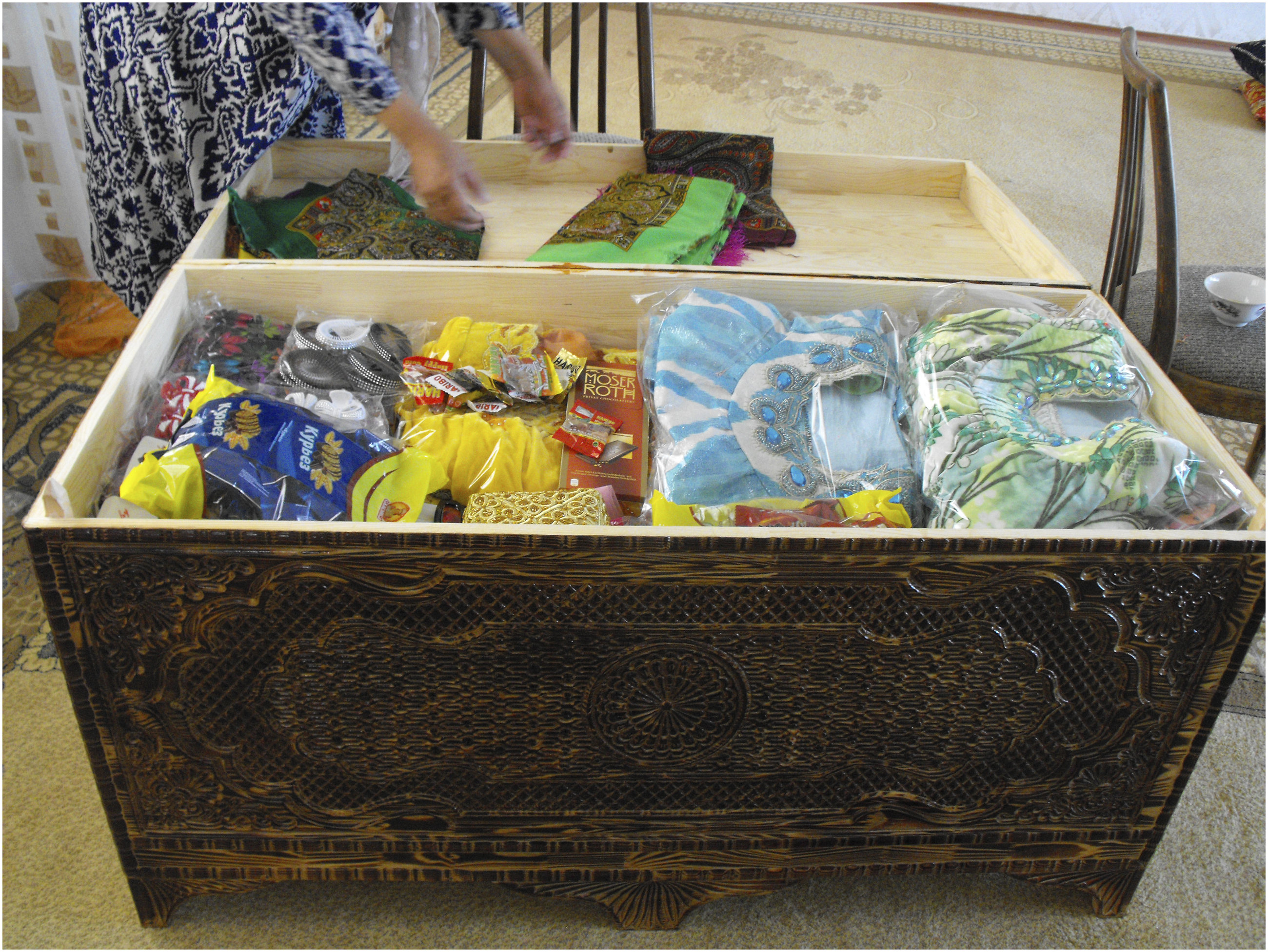
Every woman has a sanduk in her house which she brought with her as a part of her dowry. This item is a material manifestation of a woman’s connection with the extended family and community throughout her whole life. As one of the older women in the Sughd region mentioned, ‘When I open my sanduk and see all the scarves, kerchiefs, and fabrics that were given to me, I immediately remember what tūi I went to and to whom I owe a visit, a gift, or an invitation to the next event in my house’.
Another essential part of the dowry is cotton mattresses (kūrpacha), duvets (kūrpa), and pillows (tagsarī, bolisht) that remain the bride’s property throughout her whole life. Like sanduk, they are a material manifestation of caring relations with her mother, her family, and her neighbours, and represent a source of a woman’s pride. Nowadays, the bride is expected to bring between 8–10 mattresses, 10–12 duvets, and 16–20 pillows, which will be carefully piled up after the wedding and displayed in the newlyweds’ bedroom. These items are used for seating the guests around the dastarkhon (low-legged table) during the day and as beds during the night, and they play an important role in local hospitality practices (Figure 6). Women Filling a Kūrpa Cover with Cotton, a Labour that Requires Strength and Skill. Kulob Region, 2014, Photo by S. Torno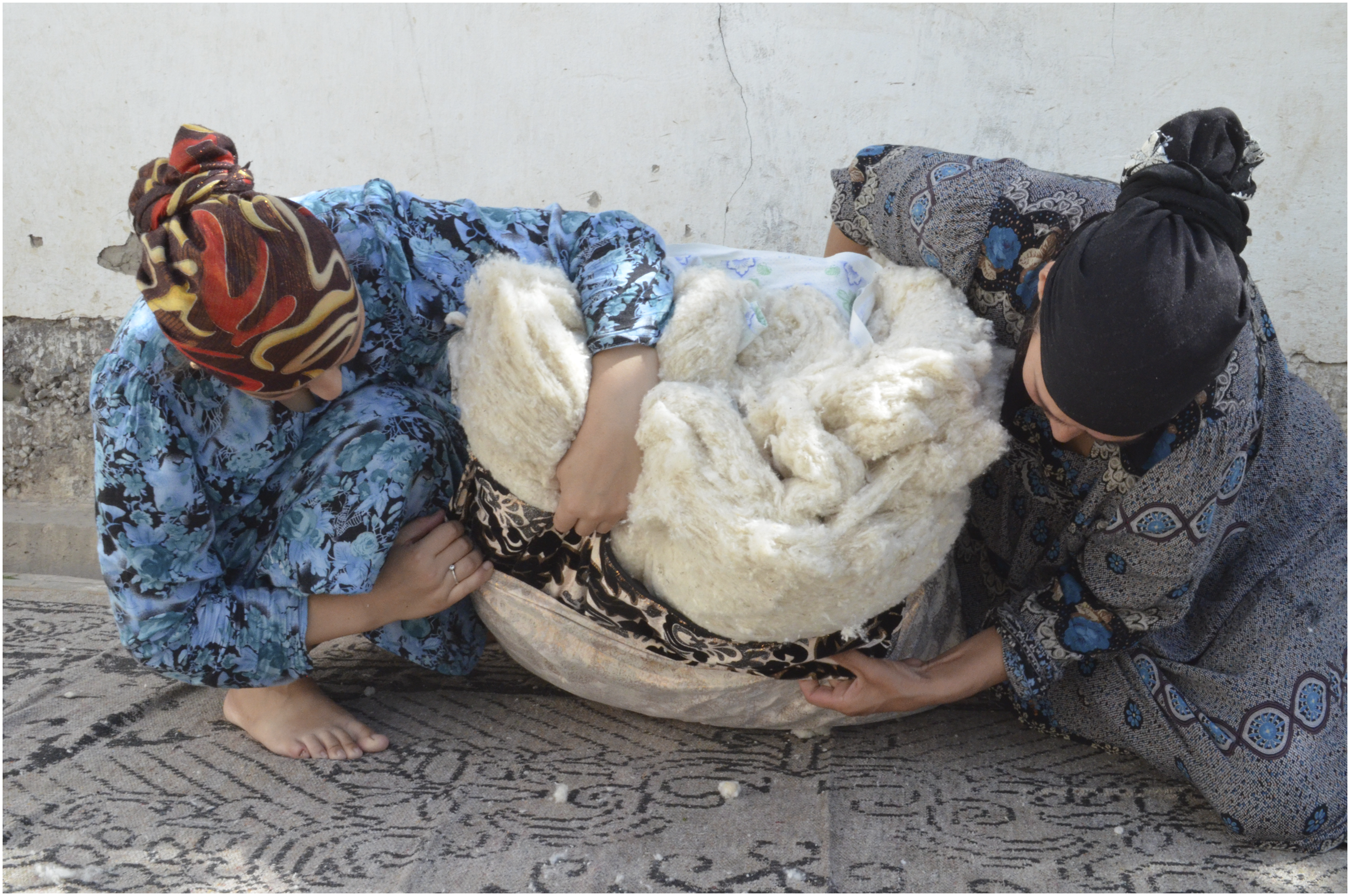
Sets of dowry mattresses, duvets, and pillows can be ordered from a professional manufacturer. However, the bride’s mother (accompanied by a knowledgeable senior woman) eventually purchases the fabrics and appropriate amounts of cotton (minimum 20 kg, around $300 in the Kulob region in 2014) herself to reduce the costs. She can also buy ready-made covers at the market, asking someone with the appropriate skills to fill them up, or make everything herself. Whatever the option chosen, the bride’s mother needs to pay attention to the thickness of each item, the quality of textiles, and the skilfulness of craftswomen to ensure the long life of each product.
The making of kūrpas and kūrpachas requires strength and skill, and may be done by neighbours, as shown in Figure 7 (above). During a manufacturing process Torno witnessed in 2014, the bride’s mother asked talented women from her neighbourhood to sew the mattress and duvet covers, which they filled at a neighbour’s courtyard during two consecutive days. The courtyard, paved with cement, allowed them to keep the items free from dust. Their work was overseen by senior women from the neighbourhood (among them the bride’s extended kin), who commented on the process and exchanged news. In the evening, the women received a meal and a small amount of money from the bride’s mother in return. Thus, putting together a daughter’s dowry not only helps to establish a new family and future household but also reproduces good relations among neighbours and other kin (Figure 8). Communal Making of Kūrpas and Kūrpachas by the Bride’s Neighbours. Kulob Region, 2014, Photo by S. Torno A Bride’s Mother Showing Her Daughter’s Dowry to Her Female Kin. Sughd Region, 2019, Photo by E. Borisova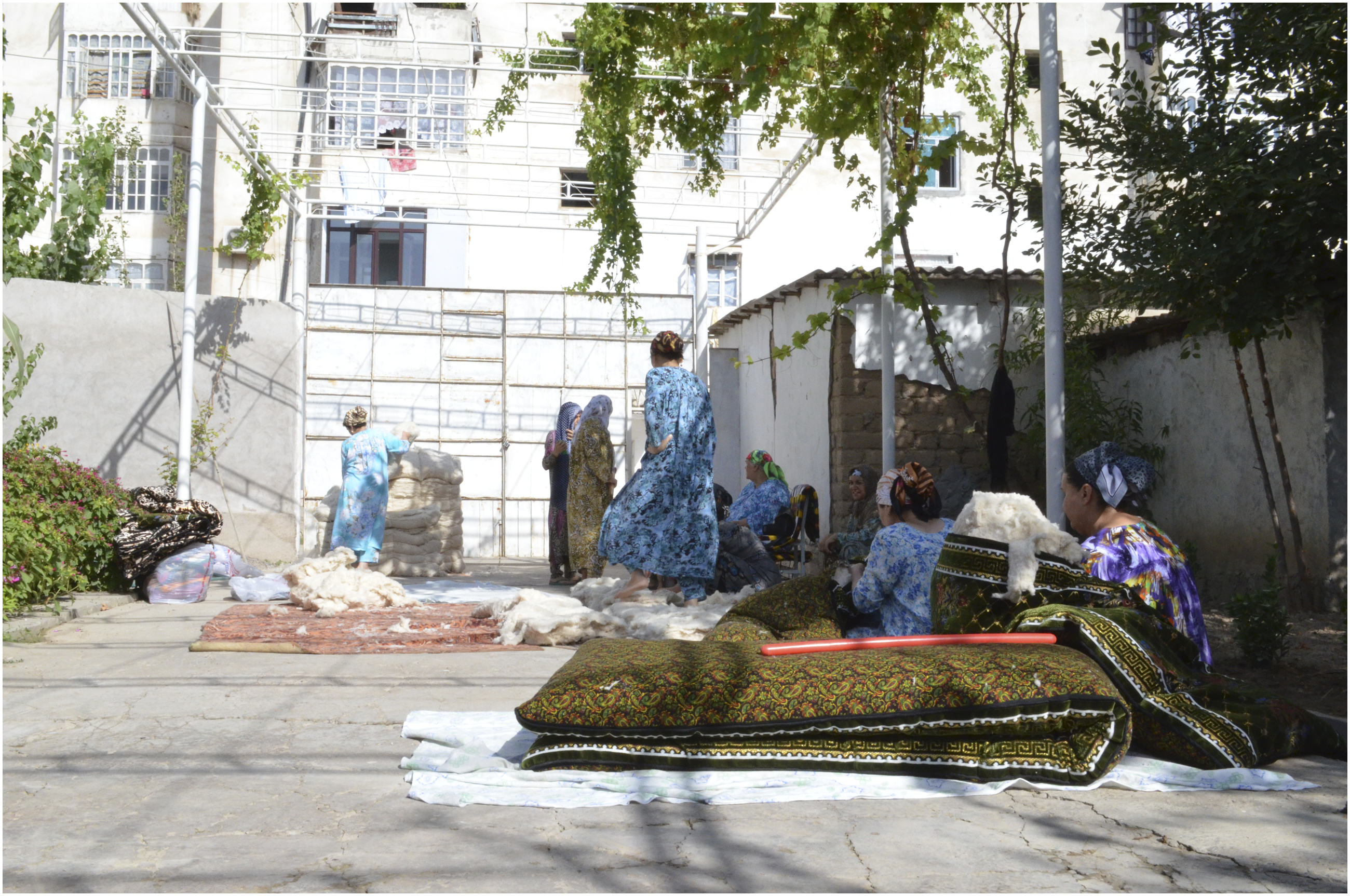
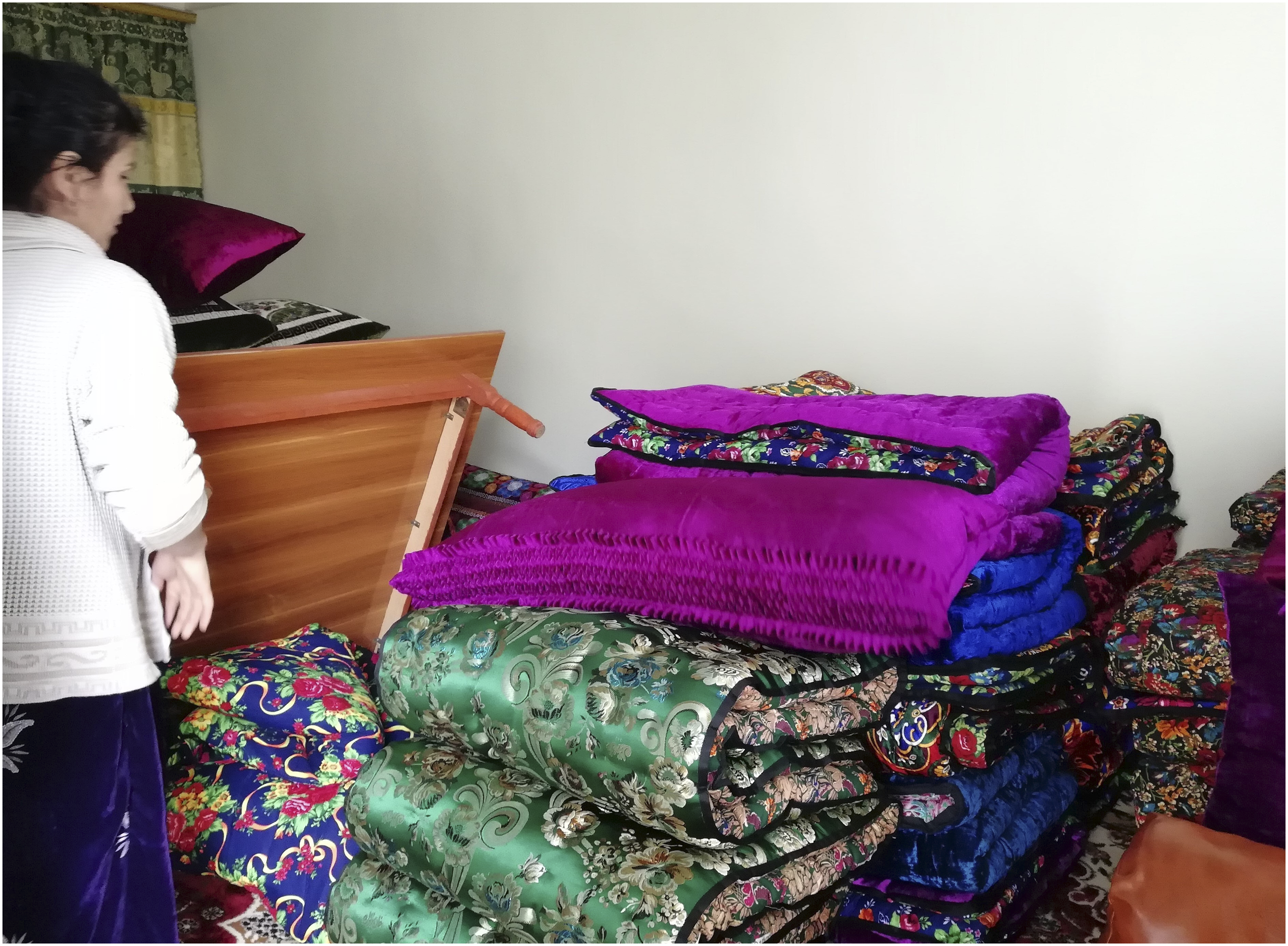
Women usually rely on female kin when preparing the dowry. They inspect it carefully and give advice based on their authoritative knowledge if something is missing. Their authority is rooted in their superiority in terms of age and position in generational hierarchies, and in their personal experience of marrying off their own daughters. Such practices facilitate the transfer of knowledge about tradition and allow the family to avoid incurring shame by not meeting public expectations.
Contemporary dowries include several pieces of furniture for the bedroom and living room, carpet(s), curtains, kūrpachas, cushions, beddings, crockery and cutlery sets, pots and pans, and small household appliances (vacuum cleaner, kettle, microwave, mixer, etc.). The content varies, but there is a tendency towards the constant expansion of dowry with parents trying to pre-empt every need their daughter might experience in her new home. Thus, parental care is projected into the future. It is believed that a young woman should not need anything for the first two years of her life in her new status. One older woman in Sughd bragged that she did not ask for anything from her in-laws for almost ten years after her wedding (Figure 9). Part of the Dowry Transferred to the Groom’s House Before the Tūi. Sughd Region, 2018, Photo by E. Borisova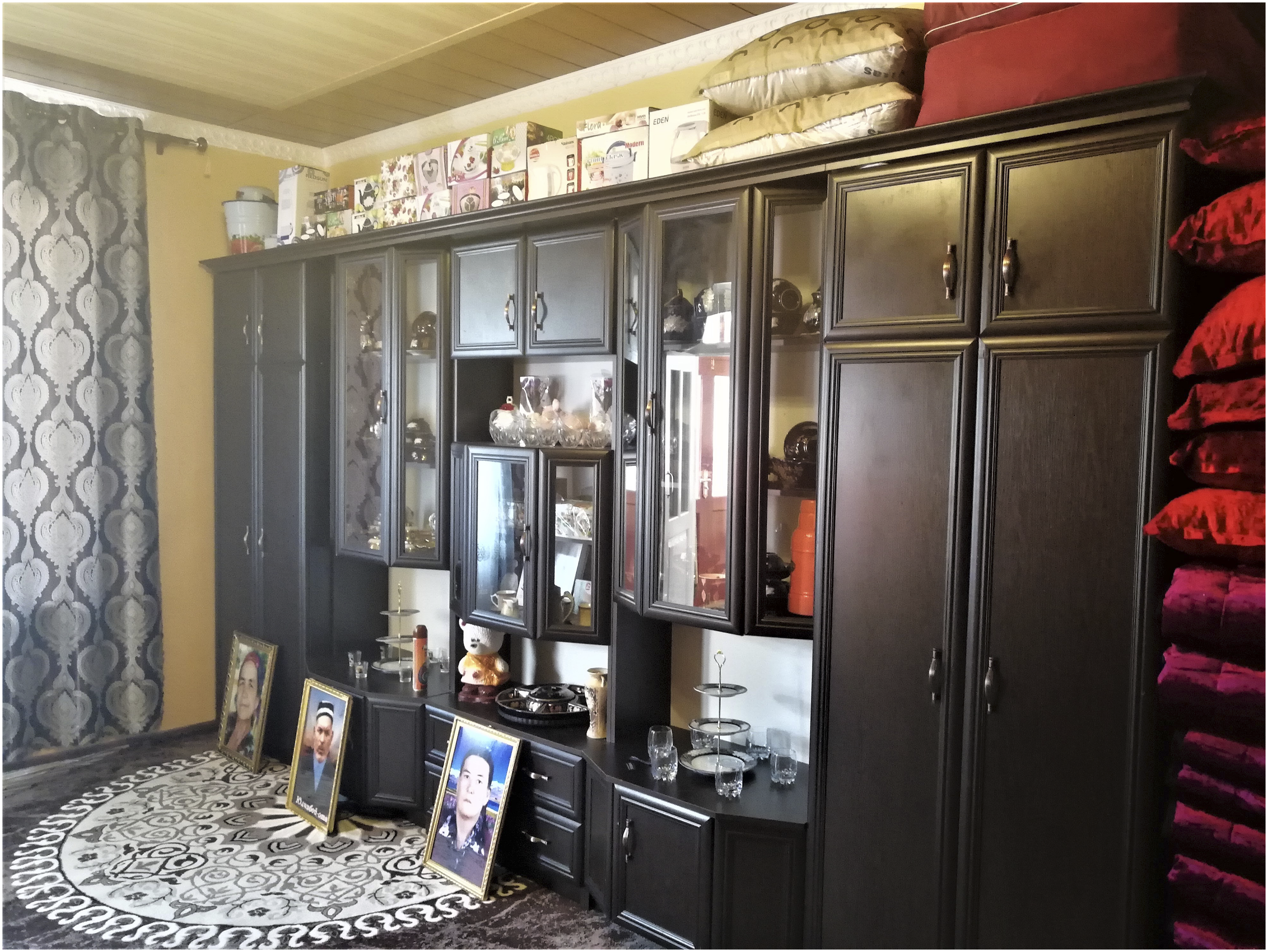
Caring for the Body: Young Women’s Grooming and Fashioning
There are few young women in Tajikistan who do not dream of slipping into a white wedding dress and becoming the centre of public admiration for a day. A bride is the personification of beauty and perfection that are performed in front of guests and onlookers on the wedding day (sometimes two days in a row, for the bride’s tūi and the wedding proper), and video-recorded on DVDs for later display to friends, neighbours, and kin (see section 7). Therefore, brides (and their families) sacrifice a significant amount of time, energy, and money to helping her look impeccable.
In recent decades, a beauty industry catering to the needs of brides and wedding guests has developed in Tajikistan’s bigger cities and now extends into small towns all over the country. The wedding parlours (tolori arūsī) are usually run by women who might have started their careers as apprentices at other salons (or some as migrant workers in Russia) and later established an independent business. The rise of this care industry and the mechanics of its physical and affective care labour on brides’ bodies deserves a study of its own. Here, we keep it brief by noting that wedding parlours usually offer a wide range of services from hairdressing, make-up, and nail design, up to renting one or several wedding dresses
7
(Figure 10). Wedding Parlour (Tolori Arūsī) and Beauty Salon (Koshonai Husn) Side by Side. Dushanbe, 2016, Photo by S. Torno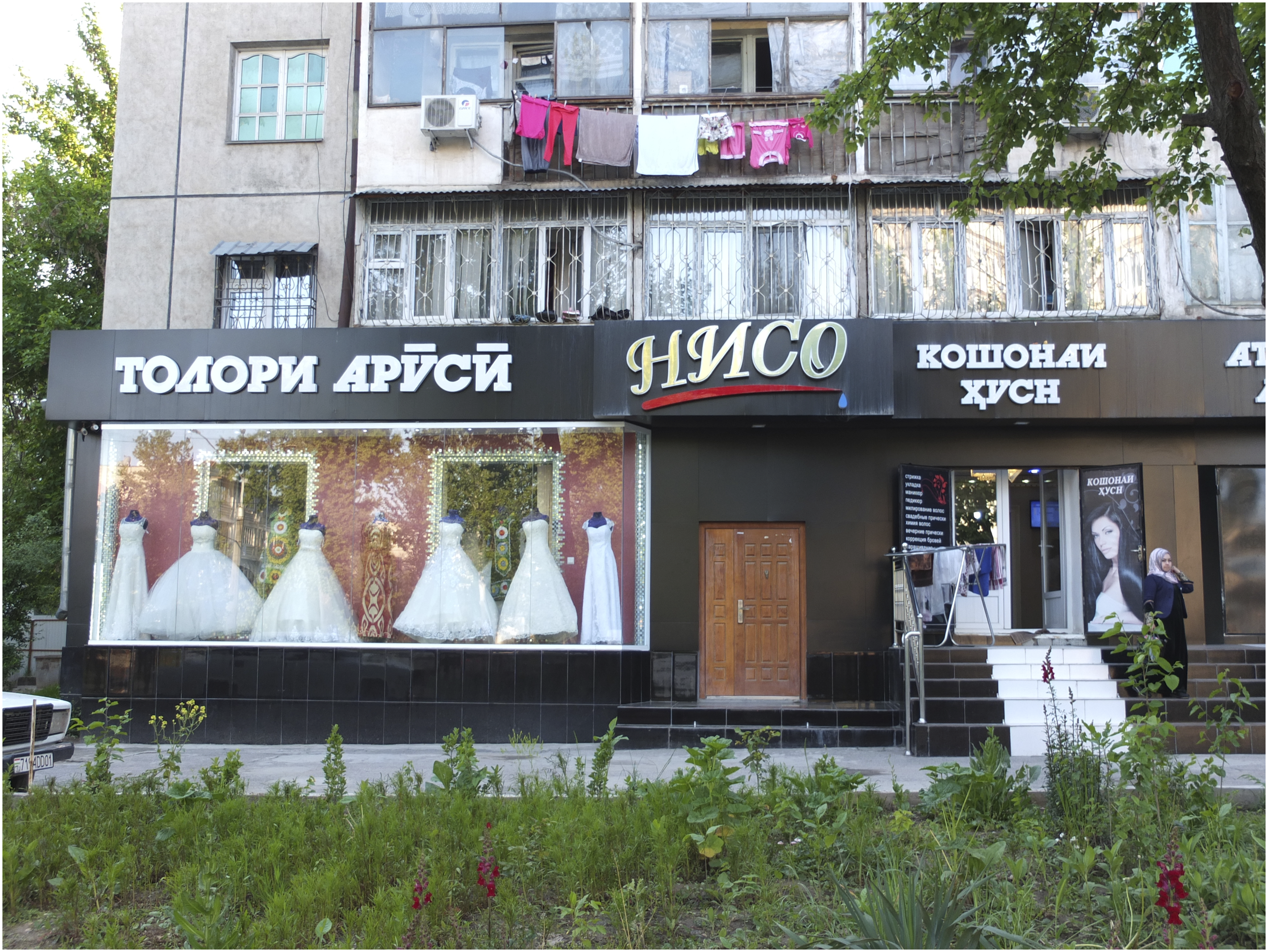
The grooming and fashioning of the bride according to local understanding of beauty includes bodily manipulations that might be fun for young women, but which also require a lot of discipline and endurance. On their wedding day, women spend hours in beauty salons to put on heavy make-up, have a fashionable design painted on their nails, and an elaborate updo hairstyle. Wearing a long, poofy white dress alongside splendid jewellery and a shiny crown, brides certainly resemble a queen and impress everyone with their beauty. However, they must also be prepared to move around in high heels on bumpy roads, bear Tajikistan’s summer heat under a veil or sometimes a white wedding hijab (satr), and eat only a little or nothing at all during the celebration. Caring for one’s appearance goes hand-in-hand with disciplining the body and enduring visceral sensations.
It is customary in Tajikistan to pluck the eyebrows (abrū, qosh) of a young woman on the eve of her wedding for the first time, as a sign of her transitioning into the role of a married woman. This care service is not only offered in beauty salons but can also be done by a skilled woman for a lower price at home. On the eve of the wedding, many brides also get their facial, pubic, and leg hair (mūi badan, mūi rūi) removed. While requiring the bride to bear up against pain, this hair removal is also seen as a good deed (savob) from a religious perspective and might have been done before the marriage if the young woman prayed (namoz khondan) regularly (Figure 11). Plucking the Eyebrows of a Bride in a Beauty Salon. Kulob Region, 2014, Photo by S. Torno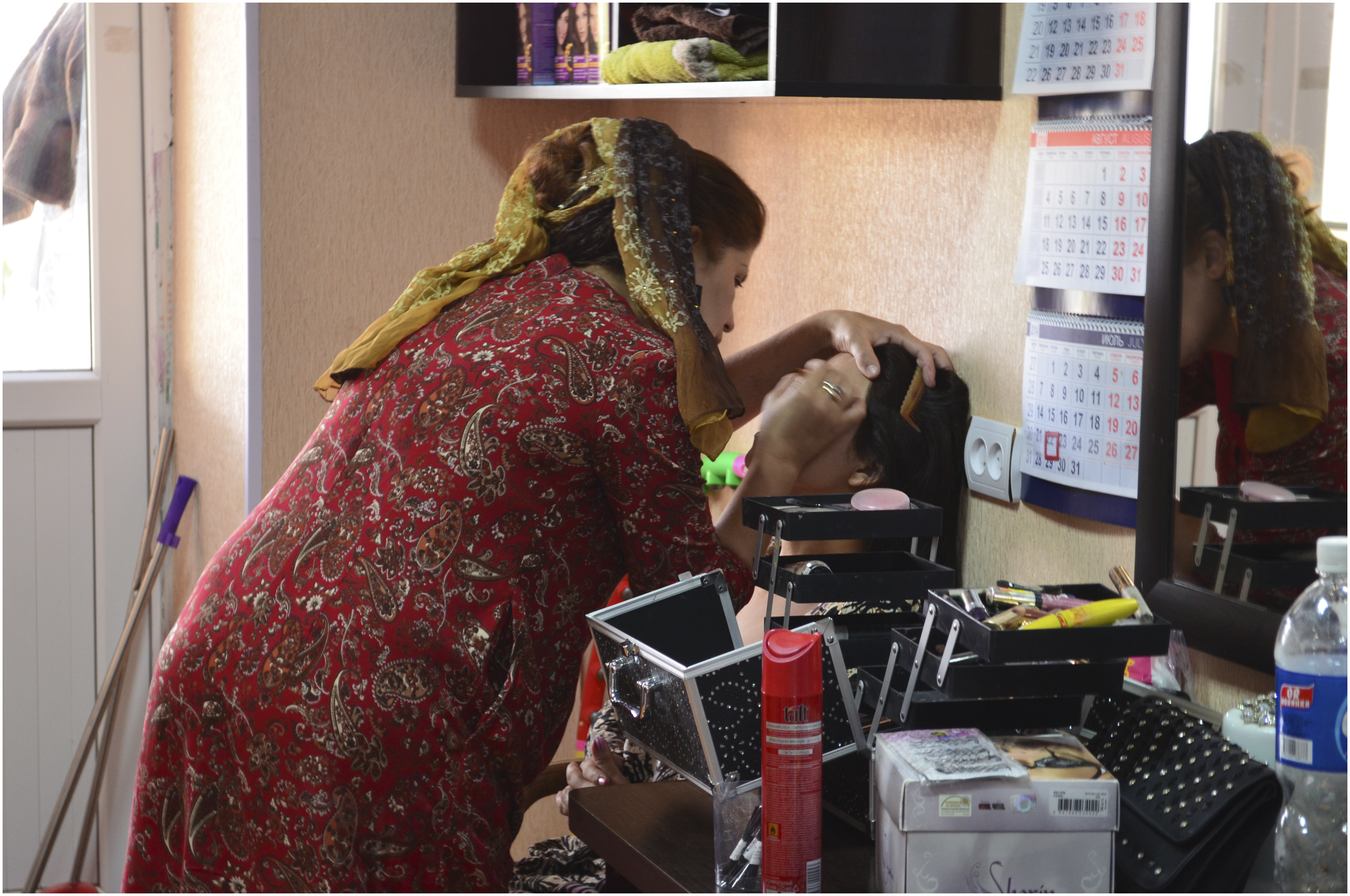
In addition to the bride, the beauty salons also cater to the needs of bridesmaids and other female guests, who equally strive to look marvellous. Weddings gather a high level of interest that may cross national borders when photos are shared among family members and friends via social media. Having a new dress tailored (usually by a local female tailor) as well as having their hair and nails styled professionally creates good memories for them. For young unmarried women, weddings are also events where they could be spotted by their future husbands. Thus, with their fashioning practices, young women not only contribute to the flourishing of the local beauty industry but also compete on the marriage market (Figure 12). Bridesmaids Dressed Up and Styled on the Wedding day. Sughd Region, 2018, Photo by E. Borisova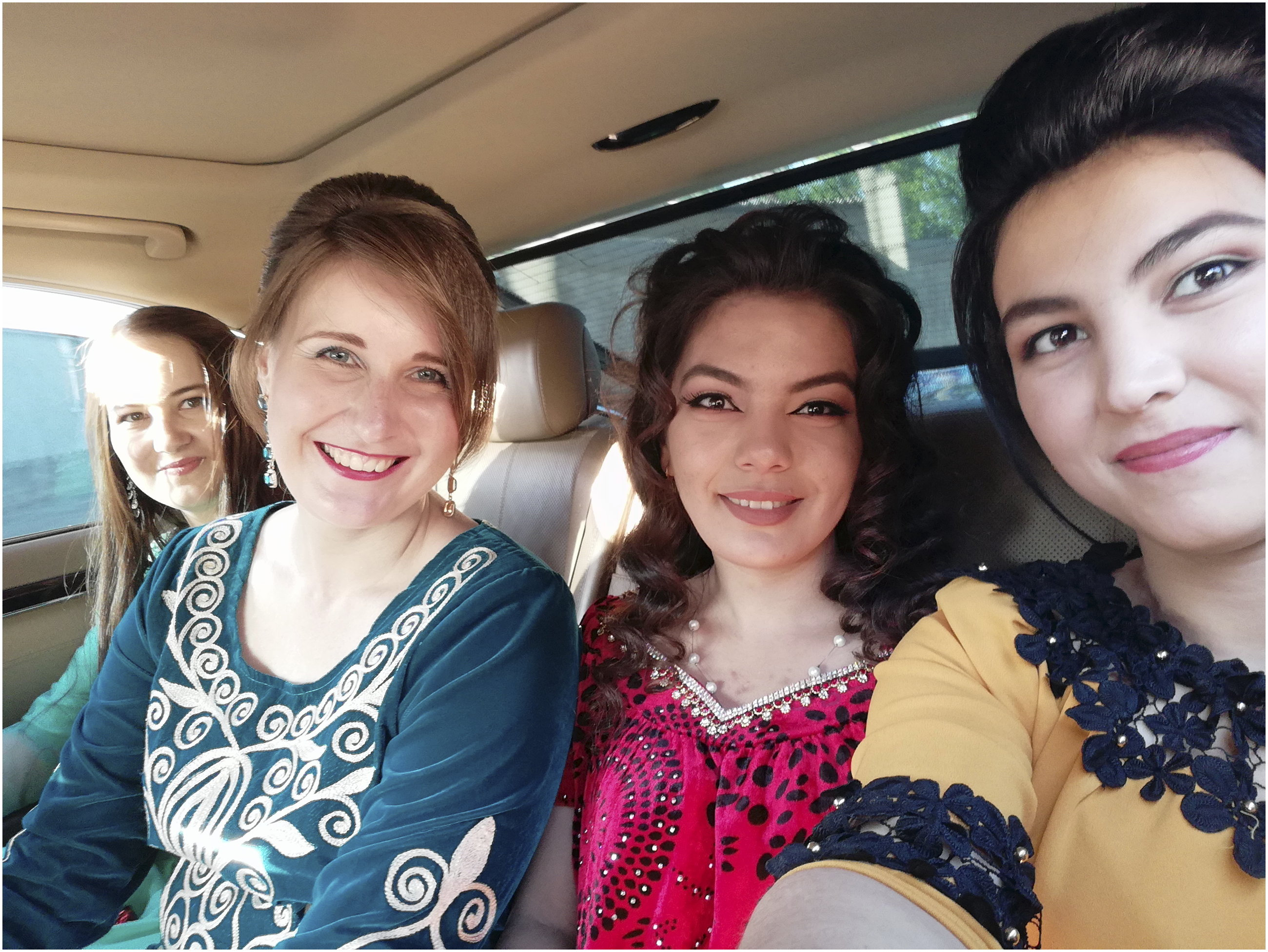
Care Labour and Social Ties: Serving, Feeding, and Respecting the Guests
Through marriages, social relations between kinship groups are being produced and reproduced. While much research has examined the gift-giving that creates relatedness (e.g. Abashin, 2015; Werner, 2000), our focus here is on caring for the guests as a central part of establishing kinship ties with the in-laws. Central Asian societies are known for their hospitality (mehmonnavozī), which is an important marker of regional identities. Weddings are events at which these practices can best be observed. During the marriage process, the families of the bride and groom share numerous visits, from small gatherings among women to large feasts involving men and women from the larger kinship group. They compete in their abilities to set a lavish table, prepare several warm dishes, and impress the guests with the abundance, variety, and sophistication of the foods served (Figure 13). A Bride’s Aunt Serving Tea to the In-Laws During Her First Return Visit to Her Parents’ Home (Jegh Zanak). Sughd Region, 2018, Photo by E. Borisova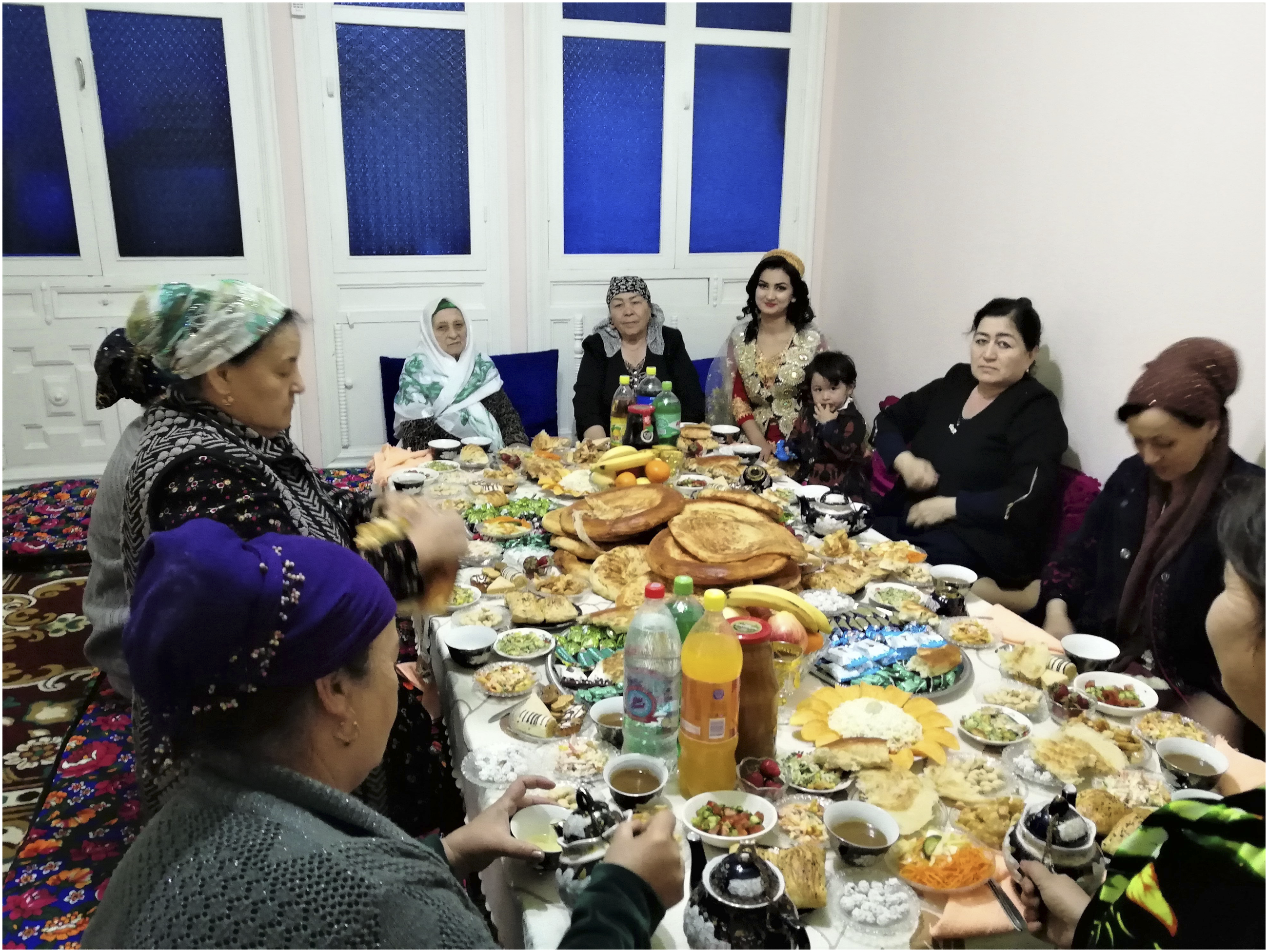
The table at a marriage celebration usually contains several kinds of bread (in the Kulob region these are mostly home-made), a variety of fruit, biscuits, and chocolates (preferably flamboyantly wrapped), sambusas (pastry stuffed with minced meat, herbs, or squash), different kinds of soft drinks, dried fruits and nuts, and home-made cakes and salads. Served on small and big plates and filling the table to the edges, these foodstuffs need to be arranged on the dastarkhon in an aesthetic way to please the observer’s eye (Figure 14). A Corner of the Dastarkhon on the Occasion of Idonabarī (Bringing the Dowry). Dushanbe, 2012, Photo by S. Torno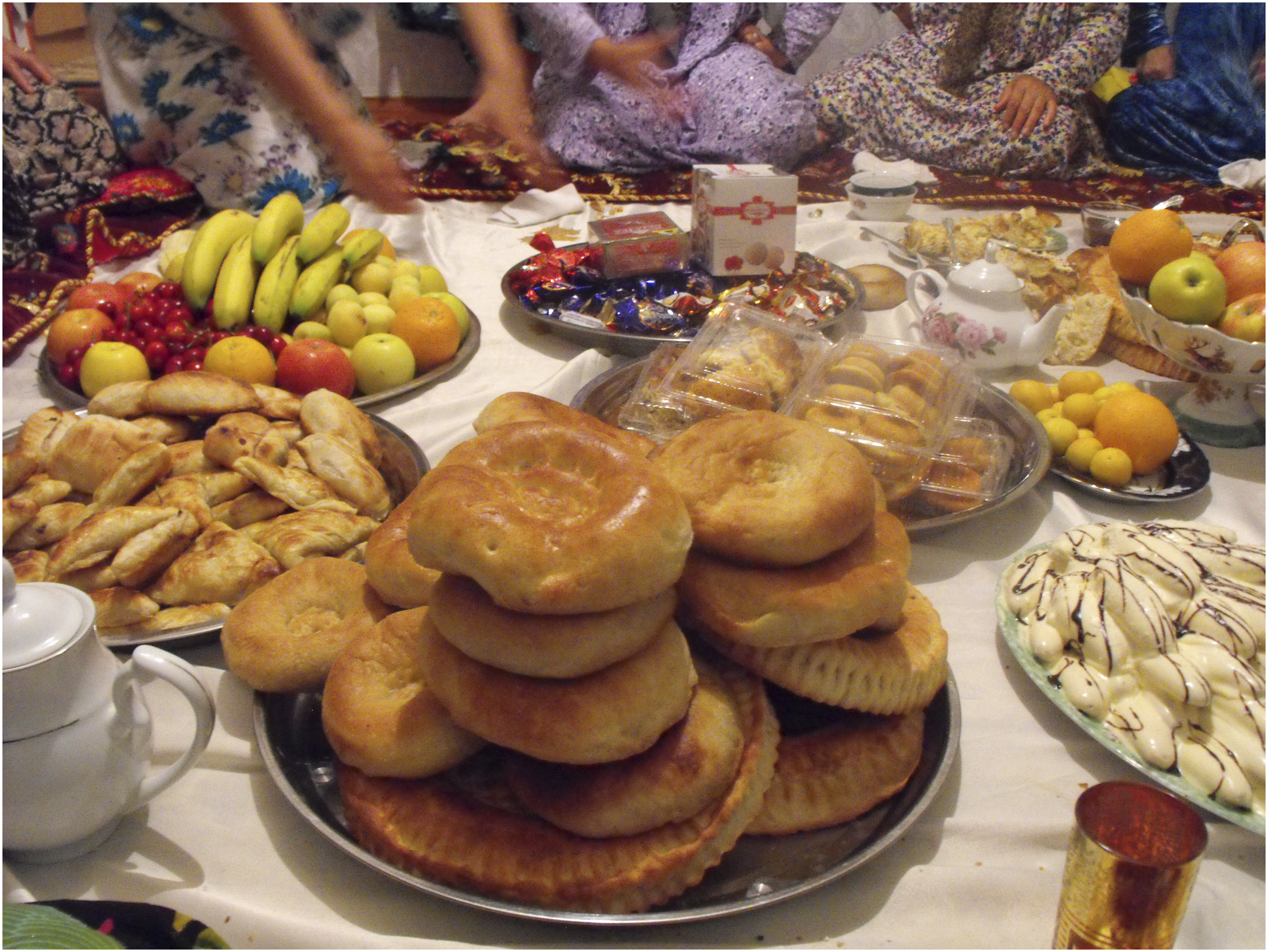
In addition to starters, the host serves between three and five warm, freshly prepared dishes. The courses vary depending on the season and region, but as a rule each celebration contains a number of traditional foods (such as shūrbo – meat broth with vegetables, mastava – sorghum and chickpea soup, and manty – meat dumplings) and ends with osh (traditional rice and carrot dish with meat) (Figure 15). A Groom’s Aunt Rolling Out Dough for Manty, with Neighbours Forming the Dumplings. Kulob Region, 2014, Photo by S. Torno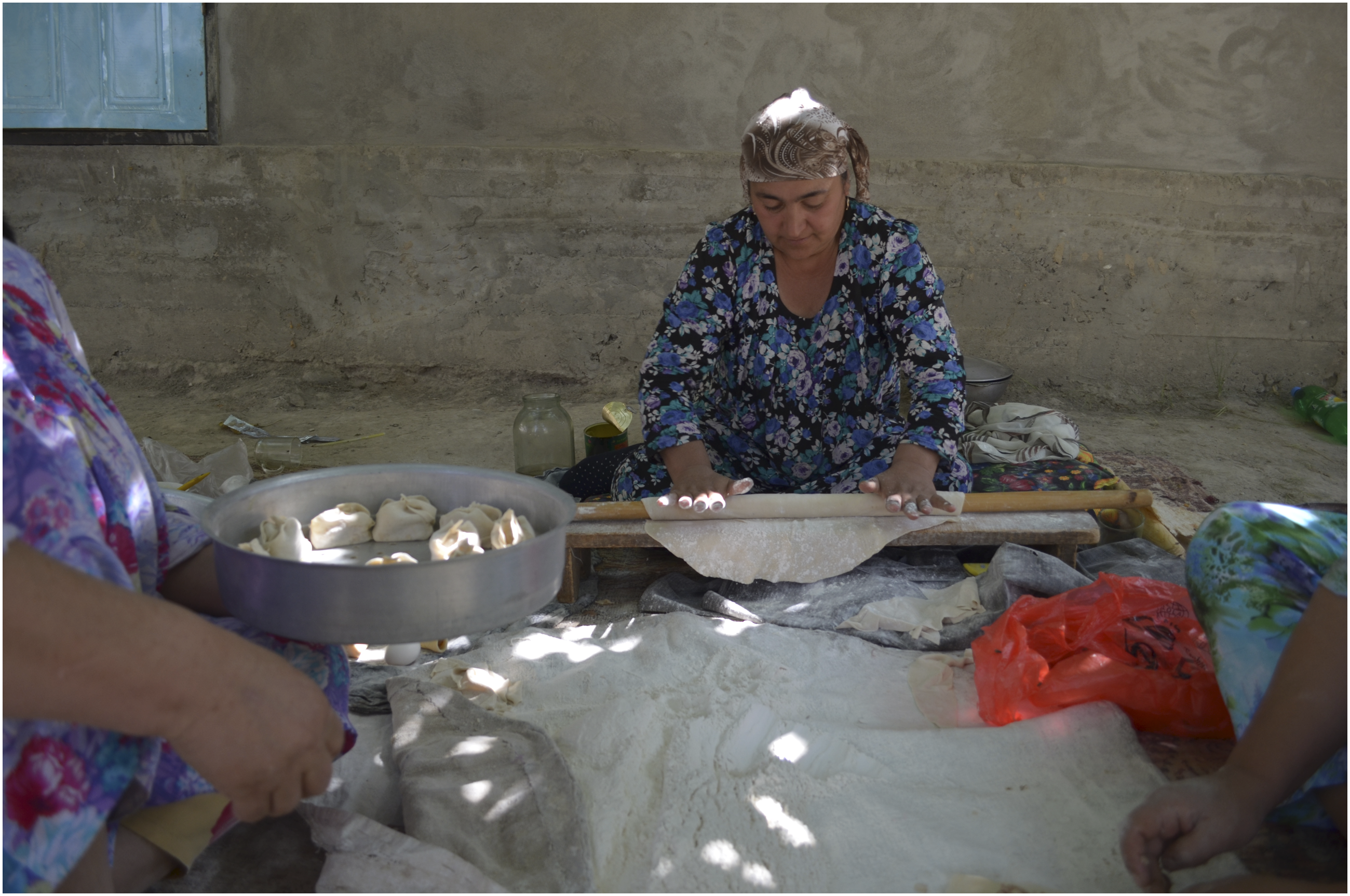
In addition to feeding them, caring for the in-laws implies hospitality practices of ‘showing respect’ (hurmat kardan) in a way that pre-empts any negative sentiment towards the host. In practice, this means welcoming guests wholeheartedly and repeatedly during their visit and seating them in the most beautiful room in their house (that at times must be hastily renovated before the tūi). Age hierarchies must be respected: senior people are seated by the warm back wall of a room, with the oldest and most revered individuals at the head of the table. As the gathering progresses, hosts frequently call on the guests to eat more and are ready to respond to any wishes related to food, room temperature, and comfortable seating. Showing respect to their guests thus demands tremendous affective care labour throughout the marriage process (Figure 16). A Bride’s Aunt Making Sambusa. Sughd Region, 2019, Photo by E. Borisova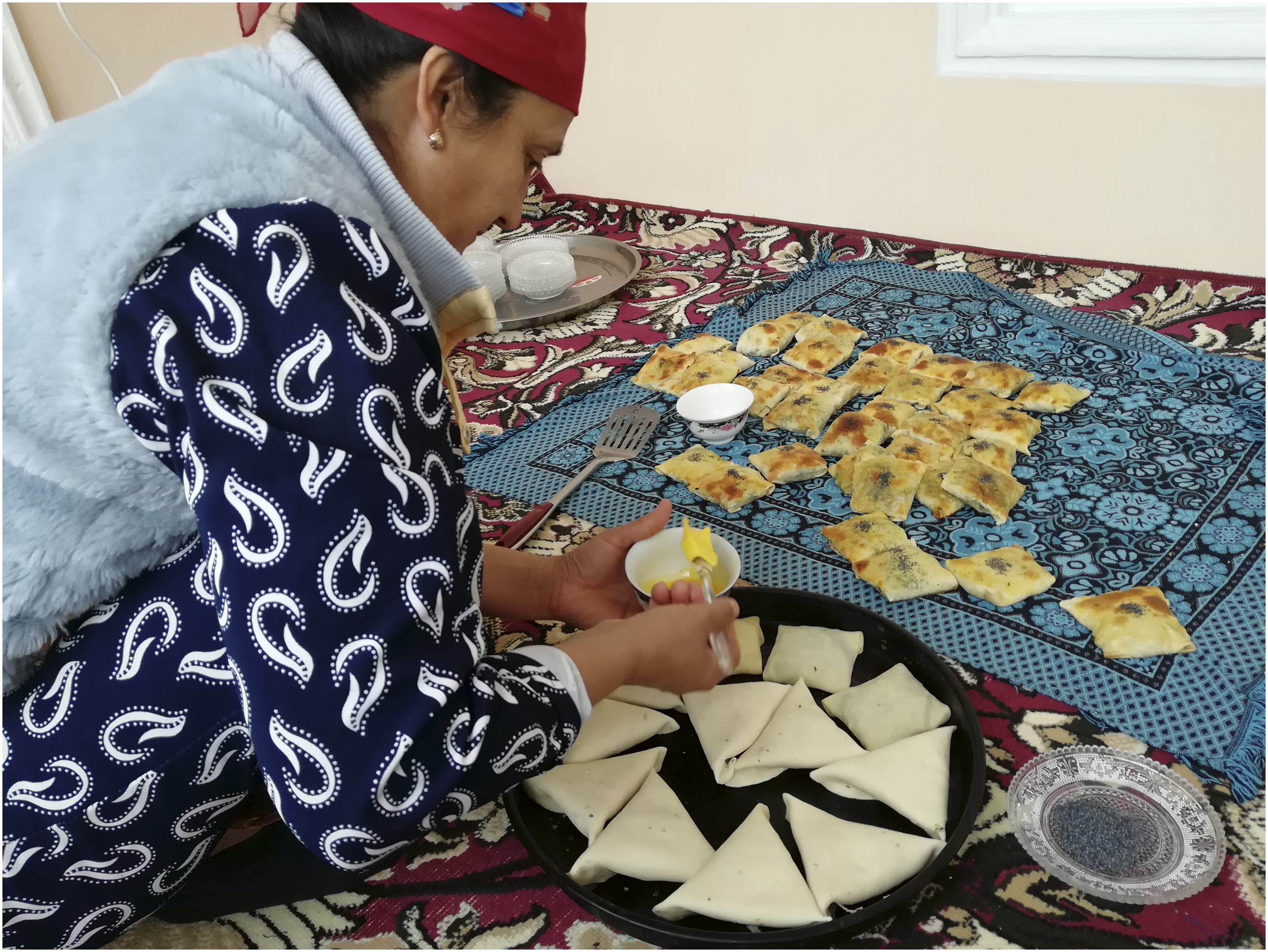
Needless to say, a mother alone cannot shoulder the amount of physical and affective care labour needed to take care of the guests. Women rely on close relatives (sisters and daughters) and larger kinship networks, and at times ask neighbours for help. For example, easily transportable foodstuffs (sambusas, bread, and wedding cake) may be prepared by family members and brought to the celebration, whereas warm dishes are cooked on the spot. During a celebration, the host usually delegates the task of carrying food plates and teapots to the dining rooms to younger generations, while senior women and men are entrusted with cooking, serving, and entertaining the guests. Whole families often get only a couple of hours of sleep at the peak of the wedding process, devoting tremendous amounts of energy to feeding, serving, and honouring the guests. This physical and affective care labour helps to reinstate existing kinship relations and to create new ones with in-laws, a practice also known as kinning in anthropology (Thelen, 2015).
Caring for Obrū: Weddings and Family’s Reputation
Weddings are occasions during which the families of the bride and groom collaborate so that everything runs smoothly. However, they are also highly performative events that involve competition in displaying wealth and hospitality to impress in-laws and the community. These performances are further transformed into opportunities for heightening a family’s reputation and prestige (obrūi qimmat)
8
by means of gossip (gaibat) (Cleuziou, 2019). However, such performances are also moments of uncertainty because one never knows how they will be evaluated by different audiences (in-laws, guests, and random onlookers) and what people will say. Families hosting the weddings are very sensitive to gapi bad (nasty talk) that may harm their social standing. They usually try to pre-empt all possible negative comments, whether about the appearance and demeanour of the couple or family members, the quantity and quality of dishes served, the choice of a wedding hall, or the range of entertainment offered (Figure 17). One of the Fanciest Wedding Halls in Town. Sughd Region, 2019, Photo by E. Borisova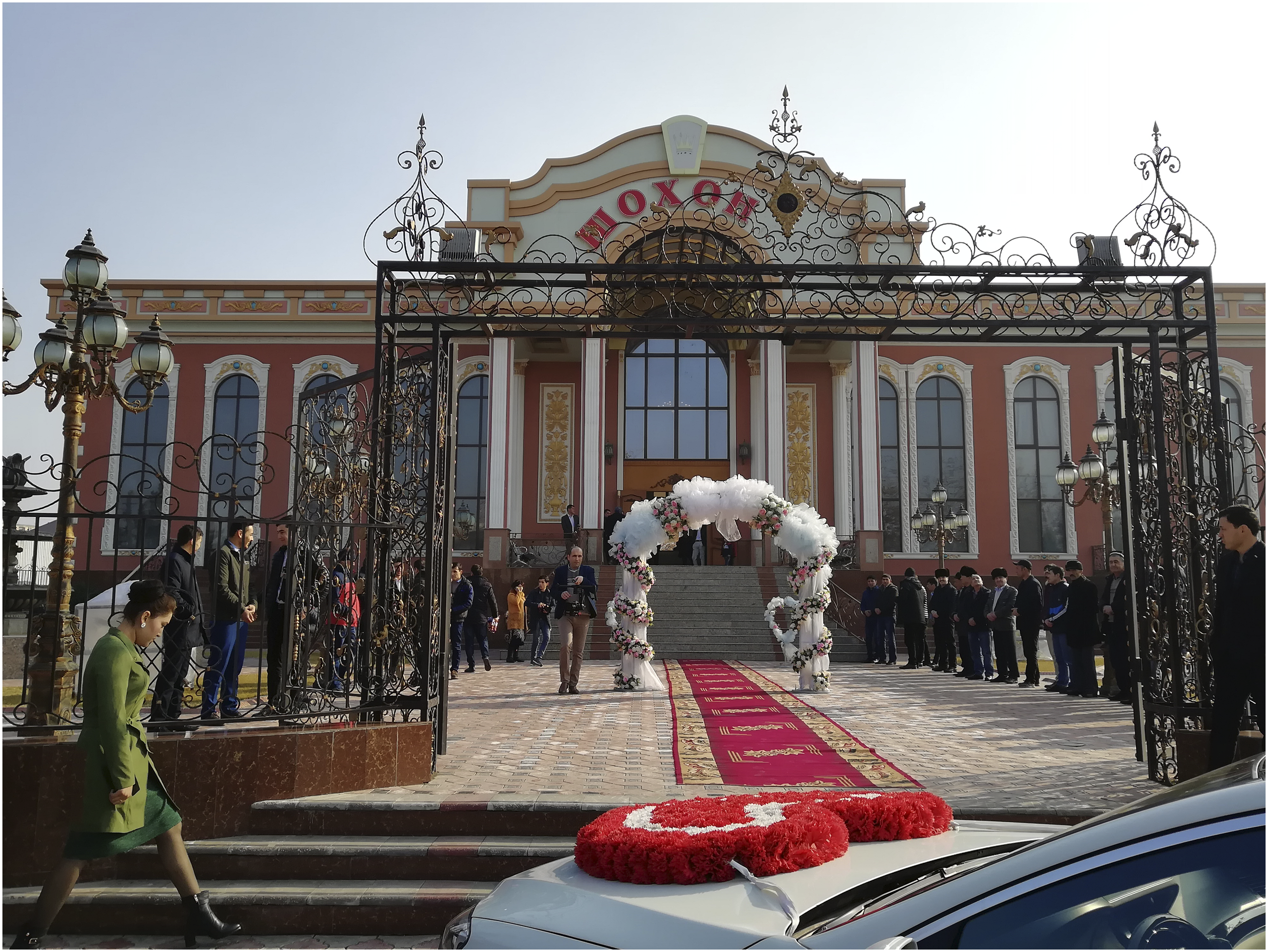
Renting a wedding hall (tūikhona) to celebrate tūi rather than throwing a wedding party at home is becoming a normalised practice in contemporary Tajikistan, and a part of what is considered having a ‘modern’ wedding.
9
This allows families to outsource some of the labour of care for the guests to the staff, so they can focus on other parts of the wedding. Owning a tūikhona is a profitable business as weddings take place all through the year, although the summer–autumn period is especially busy because young men return from Russia to start their families. In the area where Borisova conducted her research, there were eight wedding halls catering to different audiences in 2019 (by 2023 this number had increased to 25): from small and modest ones to huge and ostentatious halls (Figure 18). Inside Tūikhona. Sughd Region, 2023, Photo by E. Borisova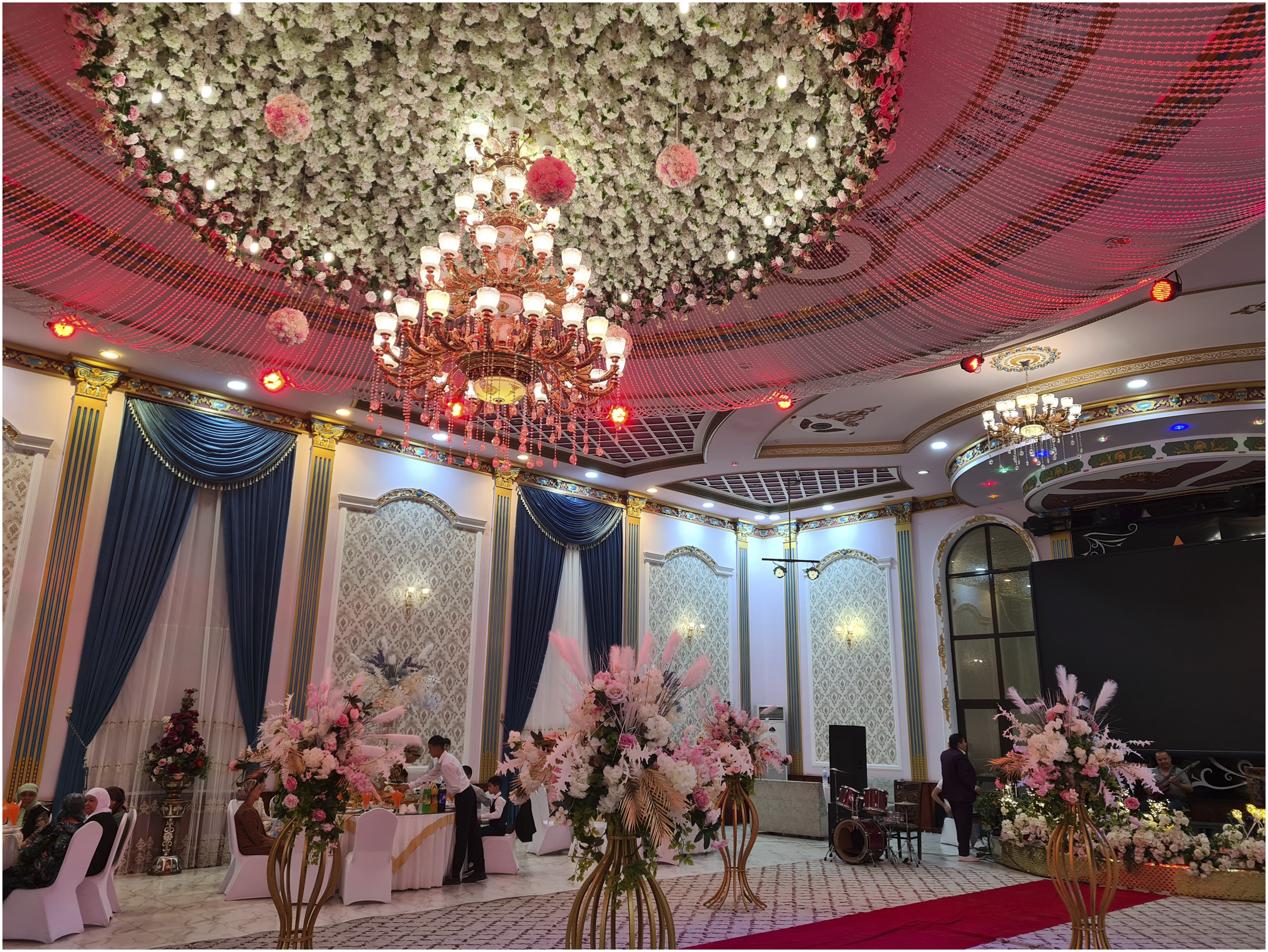
Wedding halls compete with each other in lavishness. In recent years, a certain wedding aesthetic has spread: an abundance of faux flowers, chandeliers, and glittery decorations convey the image of a beautiful and ‘modern’ wedding. Many elements of such an aesthetic are purely performative: fruit on the couple’s table is not for eating but for decorative purposes, and the bride and groom usually do not eat or drink anything but water during tūi; bottles of champagne are not for drinking but for filling the glasses to take pictures for the photo album (Figure 19). Documenting Weddings: Dancing in Front of the Camera. Dushanbe, 2012, Photo by an Interlocutor of S. Torno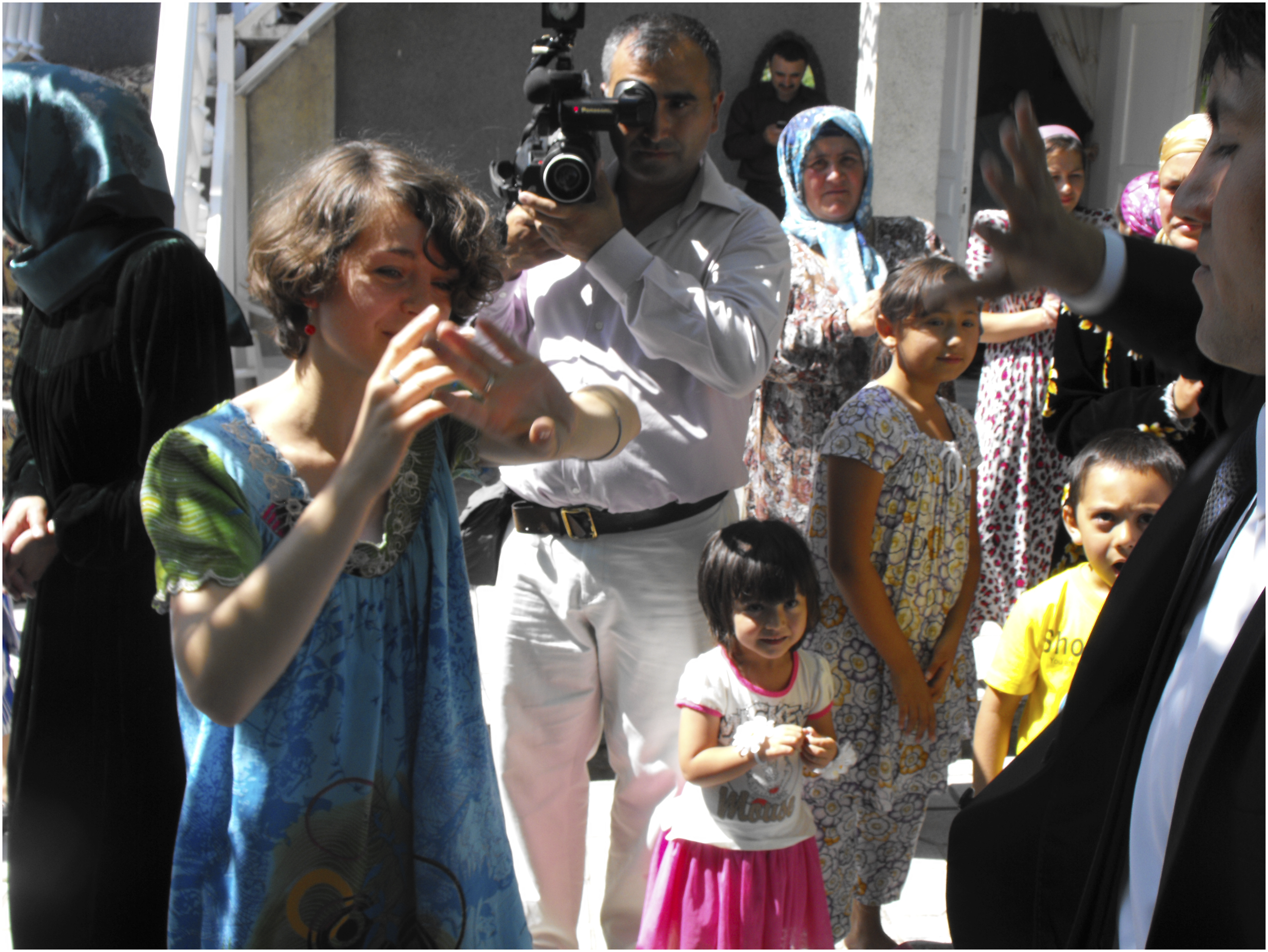
If a family decides to celebrate some parts of tūi at home, such as a preceding party, they must still display their hospitality and try to impress the guests with novel dishes and aesthetically pleasing table layouts. With increased access to the internet and thousands of recipes available online, serving ‘modern’ salads and nibbles in addition to traditional warm dishes has become an established practice. This not only entails a lot of repetitive labour for women but also demands some creativity and inventiveness. The weddings must adhere to a particular cultural model to be recognisable as rituals, yet some creative variation is expected, praised, and can potentially become part of tradition if appreciated by the audience (see section 8).
The spread of new technologies and access to new skills among young people have led to the expansion of the whole industry documenting weddings in great detail. Many young men are well trained in operating video cameras: strikingly, at some weddings there can be five to seven cameras involved and even drones. Photos and videos are taken at every step and later converted into beautifully crafted photo albums and DVD recordings. These DVD recordings are a material manifestation of the scope and lavishness of the event and are proudly shown to extended kin and visitors for many years after the event itself. Such DVDs also circulate between Tajikistan and Russia: this way, absent kin have the chance to see their loved ones, and young male migrant workers can spot a potentially interesting future match for themselves. People are highly aware of the camera gaze that extends (transnationally) to the observing and evaluating gaze of the wider community. Therefore, during weddings, they try to present the best versions of themselves. This results in a visceral feeling that weddings are performances of highly (self)regulated bodies, which can be tiring, especially for younger women.
Exploring multimodal ways of doing research, anthropologists have recently begun to pay attention to the relationships between care and image. For instance, Barbara Pieta argues that one must consider local understandings concerning what type of gaze constitutes an act of ‘good care’ (Pieta, 2023). In Tajikistan, care needs to be performed and presented to the ‘observing eyes’ of the social audience to be fully recognised as care (Borisova, 2023). In this respect, images of lavish weddings are an important tool for making care visible for the community dispersed across Tajikistan and Russia (the most popular destination for migration). Being material signifiers of a family’s dedication, they convey the sense that people care about their children, the future family unit, their guests and neighbours, and ultimately the reproduction of Tajik identity and community.
Women as Carriers of and Carers for Tradition
Feminist scholars have shown how Tajik women in rural communities were ‘appointed’ to the role of ‘guardians of faith’ and tasked with the transmission of tradition in the face of the Soviet state’s attacks on religion and traditional ways of life (Behzadi & Direnberger, 2020; Tett, 1994). While the Tajik state promotes conservative gender roles, it continues to fashion women as ‘traditional’ (Irby, 2018). This discourse sometimes includes ideas about ‘backwardness’ and lack of progress. 10 Here, we suggest that tradition is sustained and changed through women’s practices of care, a fact that has not been emphasised in the literature so far. In the Tajikistani context, ‘caring about’ tradition entails ‘caring for’ the newlyweds, the guests, and for the wider relations of interdependence in the community (extended family, neighbours, and ritual specialists).
Following tradition (or qoida – the rules) is an important element of a proper wedding as it allows people to enact their cultural, regional, and religious identities. Tajik weddings follow a generic cultural template; however, there is space for a certain degree of flexibility. During weddings, ‘women collectively reproduce, negotiate and alter the rules of traditional marriage performance’ (Cleuziou, 2019, p. 349). By demonstrating willingness to become involved in the relations of reciprocity, they gain approval from the community. Flexibility as a key feature of tradition means that new elements can travel in and out of tradition (Beyer & Finke, 2019). However, this also means that different understandings of what belongs to the realm of tradition can be promoted by different actors (the state, religious leaders, and figures of authority in the community), and these can clash, breeding confusion and conflict (see Borisova, 2021). An expansive notion of care allows us to capture the relationship between tradition and care as it highlights caring as physical and affective labour, care as productive force forging relations of reciprocity, and the contested character of some care practices that underpin the reproduction of tradition (Figure 20). Sarshūion. Ritual Washing of a Bride’s Hair with Milk and Braiding Cotton into It. Kulob Region 2014, Photo by S. Torno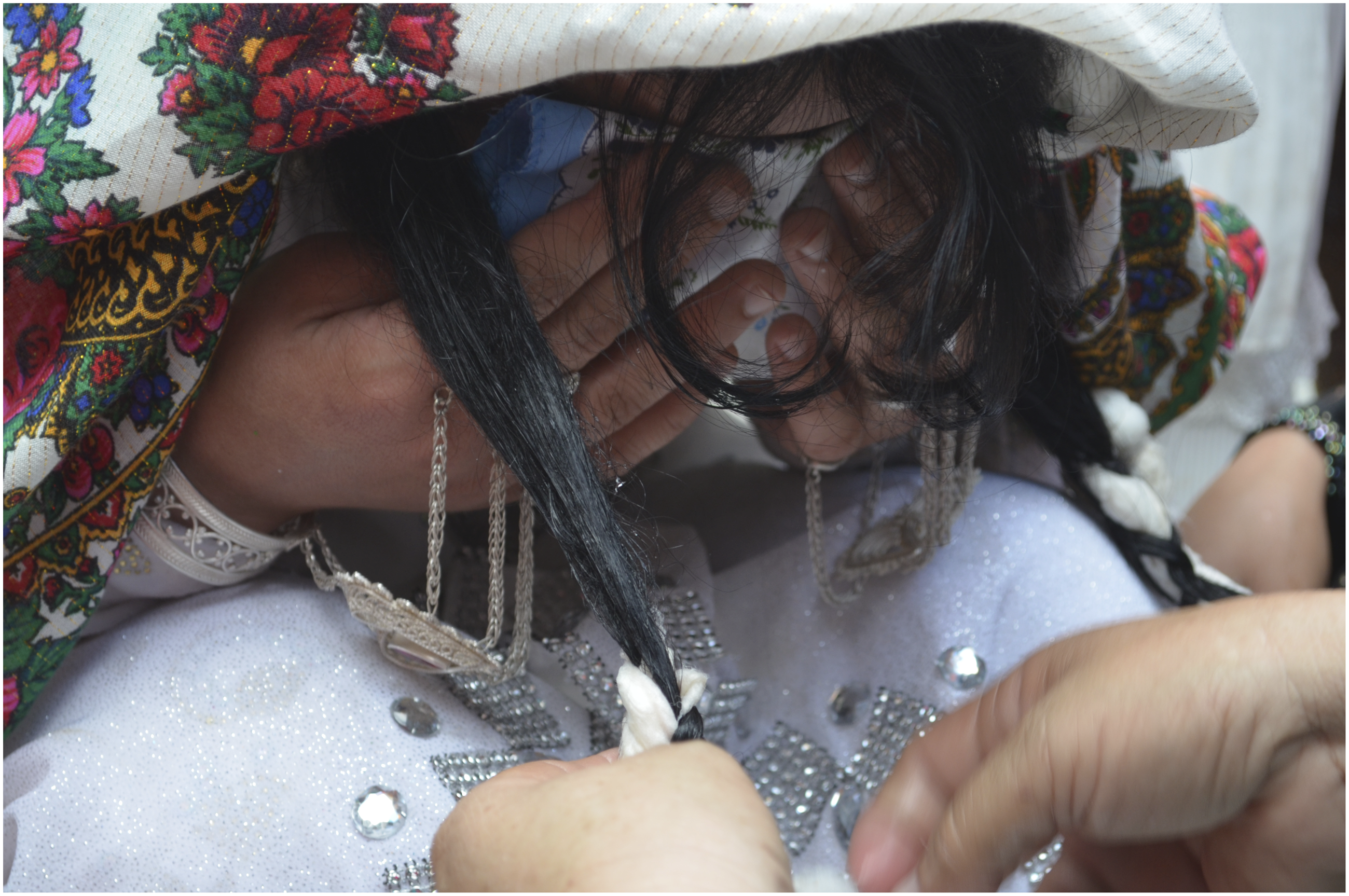
In the Kulob region, certain rituals instantiate the transition of the bride and groom into their new social roles as husband and wife – a good housekeeper and an accomplished daughter-in-law. One of these rituals, sarshūion, takes place in the bride’s house before leaving for the groom’s house.
11
The ritual involves the manipulation of the bride’s hair with white substances such as milk and cotton, intended to bring her a bright future and happiness (bakhti safed). The symbolic hair washing is accompanied by a specific song (sung by invited musicians) that describes a young woman leaving the house of her parents with the hope of finding happiness in her new home. Many young women reported how they burst into tears hearing the song on their wedding day, thinking about leaving behind their beloved father and mother, who raised and educated them despite all hardships. On the one hand, the ritual condenses parental care and benevolence for their daughter’s future into one symbolic act – weaving white cotton and milk into the bride’s hair. On the other hand, investing time and effort in traditional performances during weddings constitutes the ritual as integral part of local culture (Figure 21). Women Spreading the Poiandoz (Carpet, Cloth) in Front of the Bride and Groom. Kulob Region 2014, Photo by S. Torno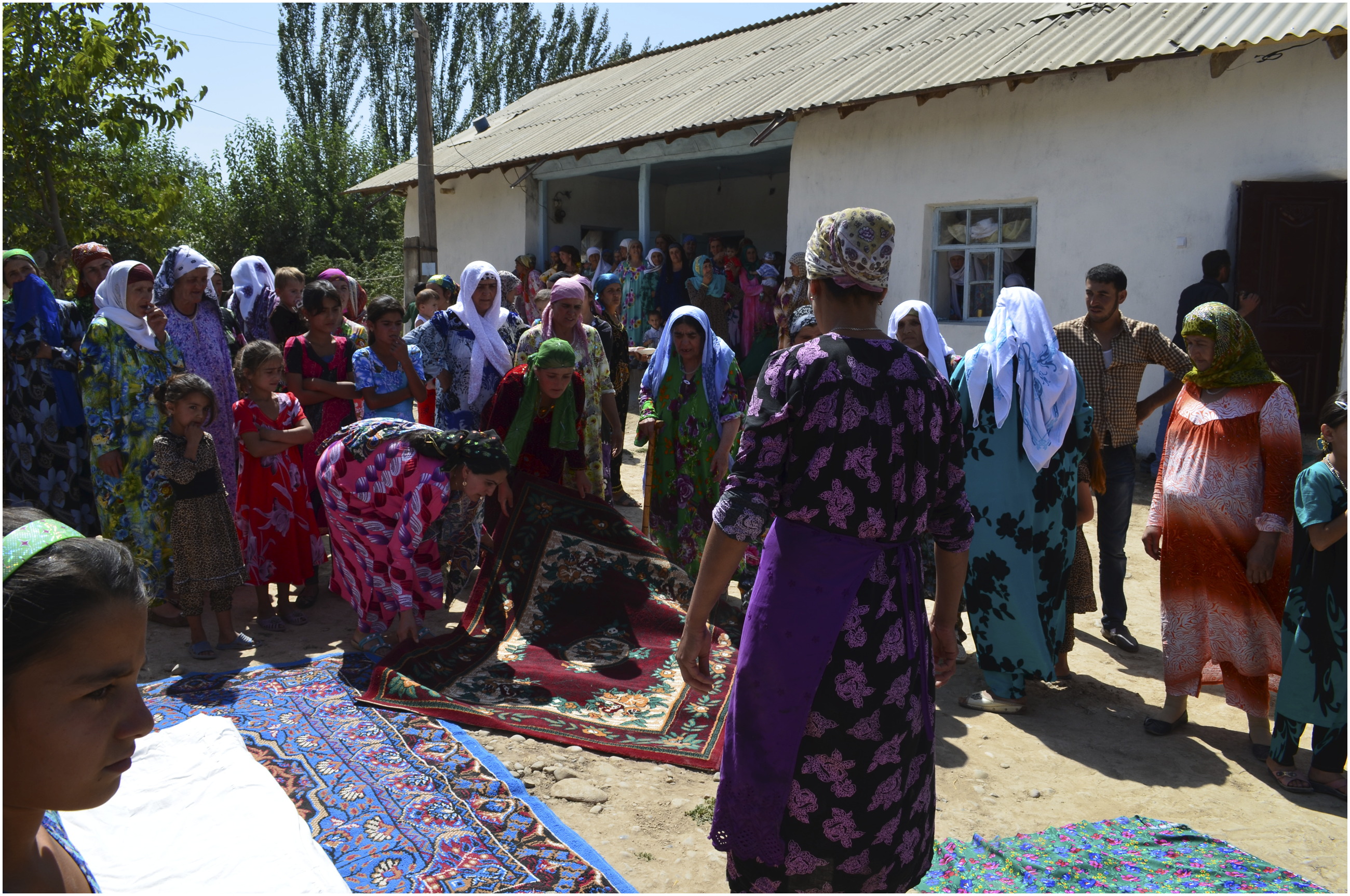
After the bride and groom arrive at the groom’s house, their first steps lead them over several carpets and pieces of cloth spread on the floor (poiandoz). These items are immediately removed by guests from the groom’s side (it is agreed beforehand who gets which), who keep them as remuneration for their physical or financial care contributions to the wedding. Bringing a daughter-in-law into the house and staging a successful wedding signify accomplishment and good fortune (khushbakht) which are distributed among the family and community in this way.
People from Kulob are particularly proud of their ritual and music traditions, which serve as a marker of regional identity and in their eyes distinguish them from the northern provinces. Nearly every wedding Torno attended in 2014 featured the sarshūion ritual that was carefully curated by senior women following what they heard from their relatives or had seen at other weddings. The ritual became a stronger marker of Kulobi identity after local singers such as Farzonai Khurshed and Zulaykho Mahmadshoeva published music videos with these songs that have been viewed several million times on YouTube.
12
Already during the Soviet period, people from Kulob and Sughd regions found themselves constantly being compared in terms of their level of economic development, ‘modern’ attitudes (e.g. women’s dress and employment), and ‘cultured’ behaviours (e.g. linguistic expression and table manners). These ideas perpetuate into the present and find their expression in carefully crafted ritual performances, with weddings serving as an important platform for re-creating local identities and traditions (Figure 22). Chiroq. A Local Pre-Wedding Ritual in the North, Conducted at the Bride’s House to Protect Her From Evil Eye (Qiina) and to Make Sure That Her Marital Life Will Be Smooth. Sughd Region 2018, Photo by E. Borisova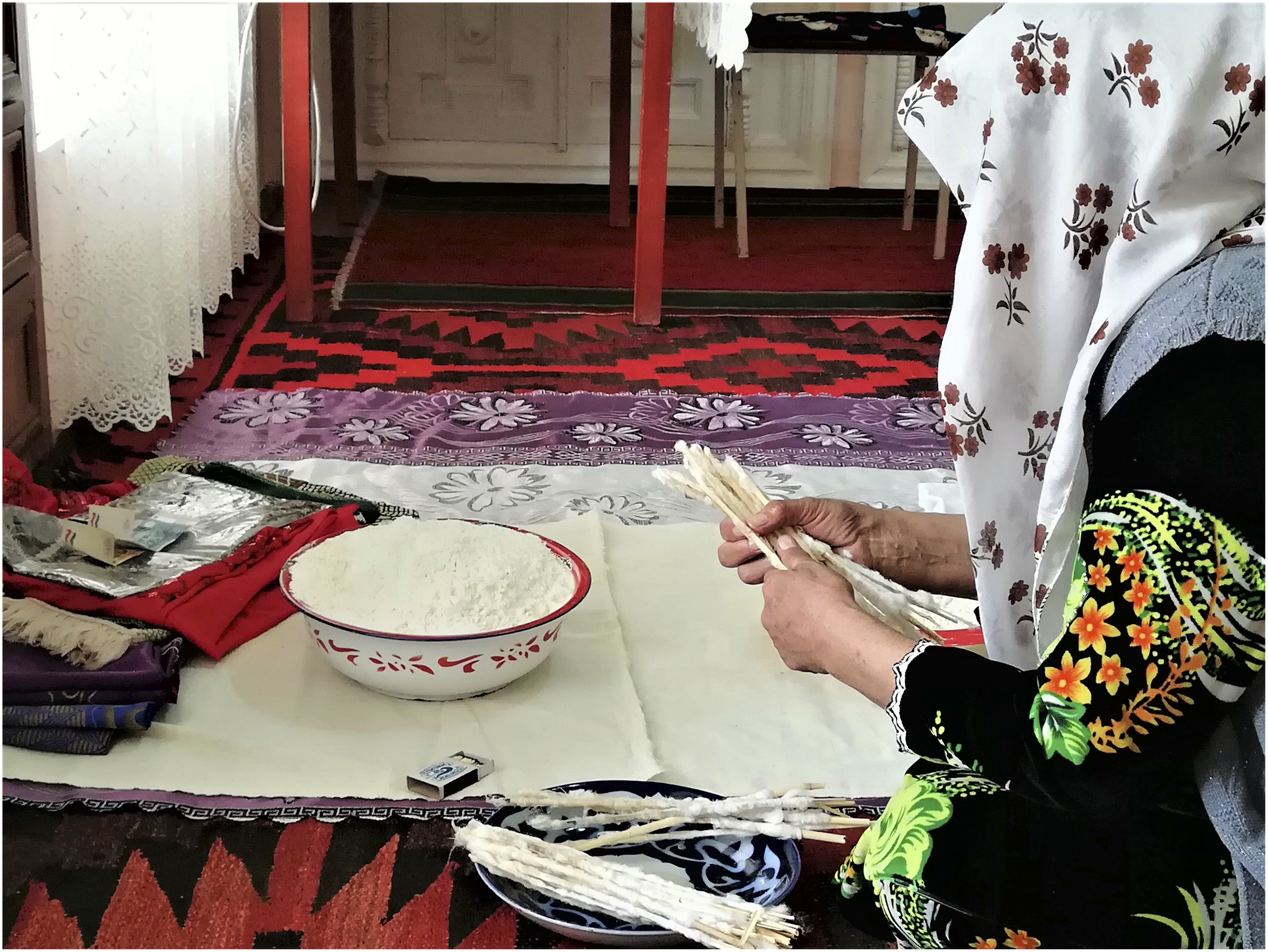
For the chiroq ritual, women invite a female ritual specialist who burns hand-made cotton candles in different corners of the house associated with the women’s sphere (in the kitchen, next to the clay oven, and in a bowl of flour and rice) and reads the Quran. The word ‘chiroq’ means ‘candle’ in the Uzbek language. A few days prior to this, the bride’s family kills a sheep, and the women cook the head and hooves and make sausage out of intestines – these are served during the ritual. The ritual specialist is usually given her share of food, monetary payment, and a small gift after the ritual. Here again, ‘caring for’ the bride’s future goes hand-in-hand with ‘taking-care-of’ ritual practices being performed in an appropriate way (Figure 23). Preparing the Bed for the First Marital Night in the Groom’s House. Sughd Region 2018, Photo by E. Borisova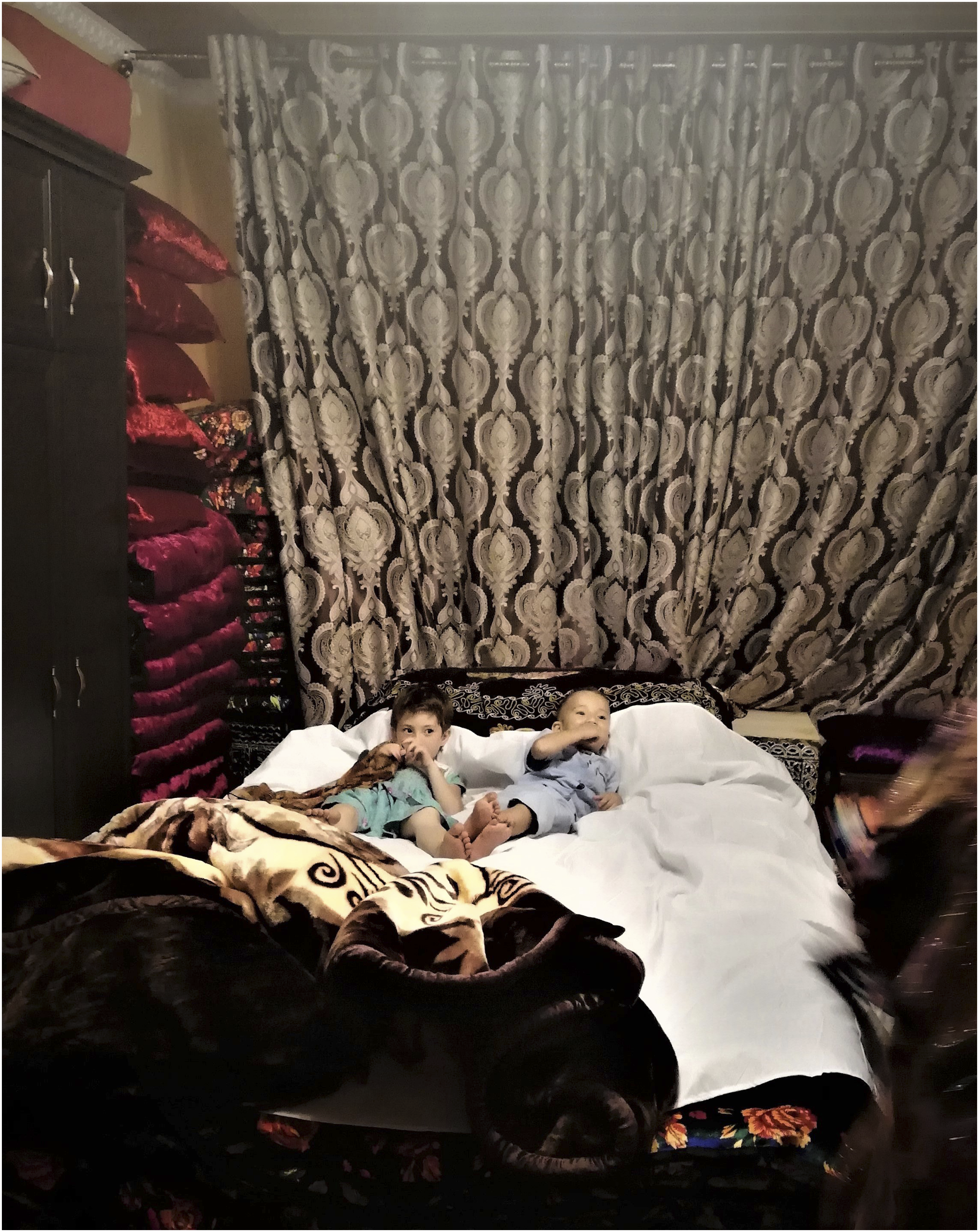
Preparing the bed for the newly married couple is usually done by older women who ‘know the tradition’. As they are piling cotton mattresses transferred as a part of dowry, they read the Quranic verses. Once the bed is ready, they throw rice and beans on it and let some children lie down on it before it is taken by the newlyweds. This is done to attract good luck in the successful and abundant procreation of the young family. The young couple spends three days in a row in their bedroom without leaving the house while the bride’s kin cares for them – bringing certain foods (e.g. cuts of lamb breast) and making sure that everything is going well. One of the bride’s aunts (ianga) stays in the groom’s house during this time to assist the bride with all her possible requests and to make sure that she is not scared.
Marriages and Care of the State
Family and family formation have received significant attention from the Tajik state in the past two decades. From governmental discourses to schoolbooks, one often hears the phrases ‘family is a building block of society’ (oila iacheikai jomea) and ‘state starts from the family’ (see also Mostowlansky, 2013; Roche, 2016). In his annual speeches on Mother’s Day, President Rahmon regularly points out that Tajikistan’s flourishing as a nation state depends on the good functioning of the family institution (Torno, 2015). It is therefore not surprising that the state authorities are concerned with the stability of young families and the material and spiritual wellbeing of family members that they see as being threatened by economic shortages, labour migration, rising divorce rates, and the spread of smartphones and ‘harmful’ foreign ideologies. The government has approached these perceived problems by, among other acts, introducing the Day of the Family (rūzi oila) and by issuing a law on the regulation of traditions (tanzim). The state officials frame these initiatives as support for families and citizens. In this article, we are inclined to take these statements at face value and understand them as manifestations of the state ‘caring about’ its citizens. Here, we follow the critique voiced in studies on care after socialism regarding the idea of ‘state withdrawal’ from welfare funding (Read & Thelen, 2007; other articles in this special issue). We argue that the Tajik state continues to engage in some of the affective and regulatory dimensions of Soviet state care (such as distinguishing exemplary workers and ‘heroine mothers’) with which older generations are very familiar (see Torno, 2020). We discuss how the state’s performances of care can be perceived by citizens as both genuine displays of concern and care, and as controlling and intrusive acts (Figure 24). A District Mayor Delivering a Speech During the Day of the Family. Kulob Region, 2014, Photo by S. Torno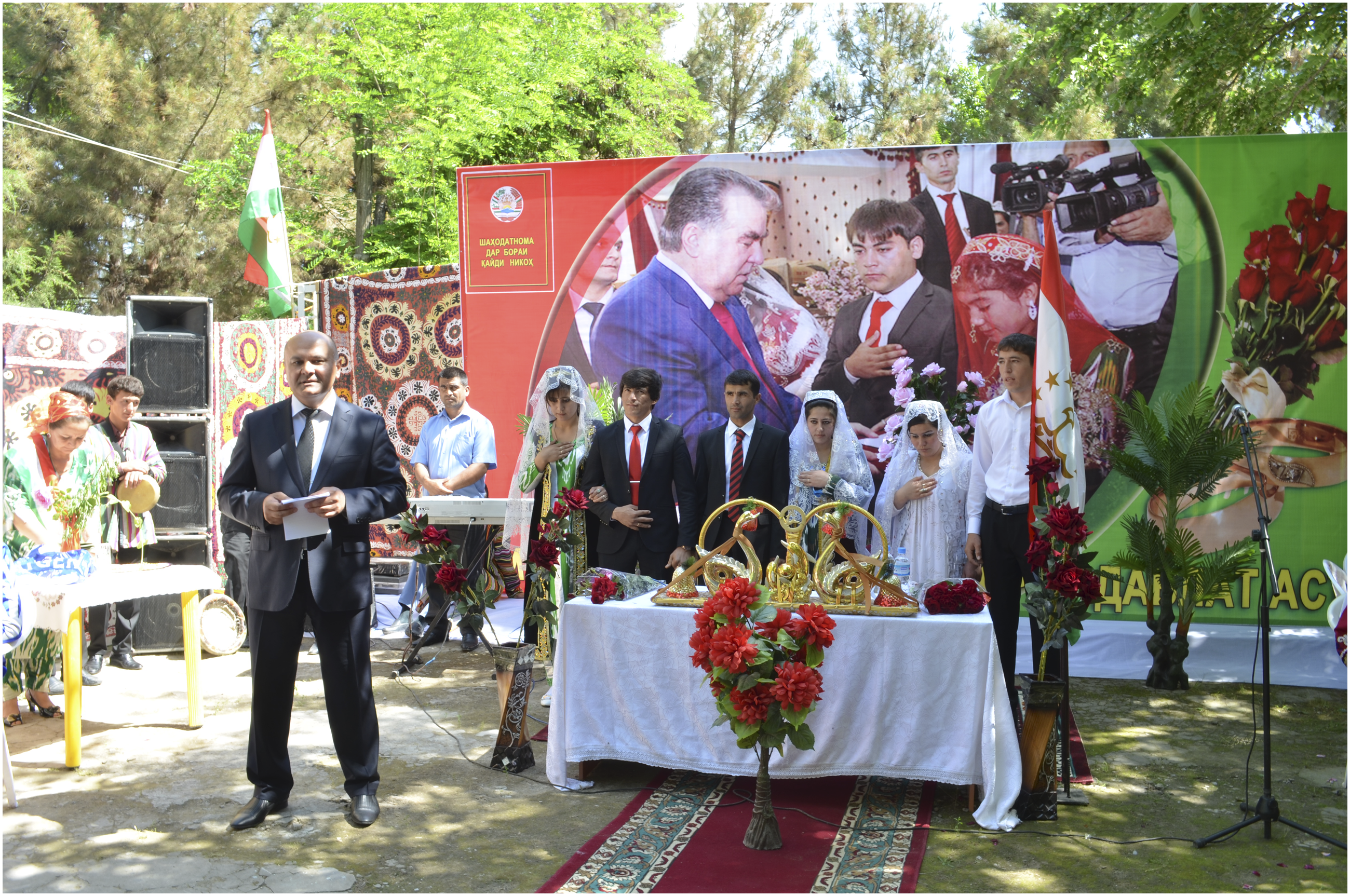
The Day of the Family is an international day of observance established by the UN in 1993 and celebrated annually on 15 May. Around 2010, Tajik authorities started to organise celebrations of the International Day of the Family across the country weaving in governmental ideas of a good family, its internal mechanics, and appropriate ways of getting married. In May 2014, Torno attended several events dedicated to the Day of the Family in the Kulob region. Central to each event was the public recognition of ‘exemplary families’ (oilai namunavī) and the solemn presentation of marriage and birth certificates to newlyweds and mothers of newborns. The celebrations were organised by district authorities in cooperation with the local registry offices (ZAGS) and the heads of the committee for women and family affairs (kumitai kor bo zanon va oila). They selected families for the recognition from the local community and, during the celebration, gave them presents, alongside their marriage and births certificates. The events displayed banners showing the President of Tajikistan handing over marriage certificates to newlyweds and slogans proclaiming that the government pays special attention to family issues. With the use of modern wedding decorations alongside local chakan designs, there is also an interesting parallel to private wedding parties on an aesthetic level, as well as an attention to local traditions. During the celebrations, the Tajik authorities not only showcase their vision of an ideal family (educated, cultured, employed, accomplished children, no divorce, or criminal activities) but also disseminate the image of a caring state (Figure 25). A District Mayor and the Head of the Local ZAGS Present Marriage and Birth Certificates to Newlyweds and Mothers of Newborns. Kulob Region, 2014, Photo by S. Torno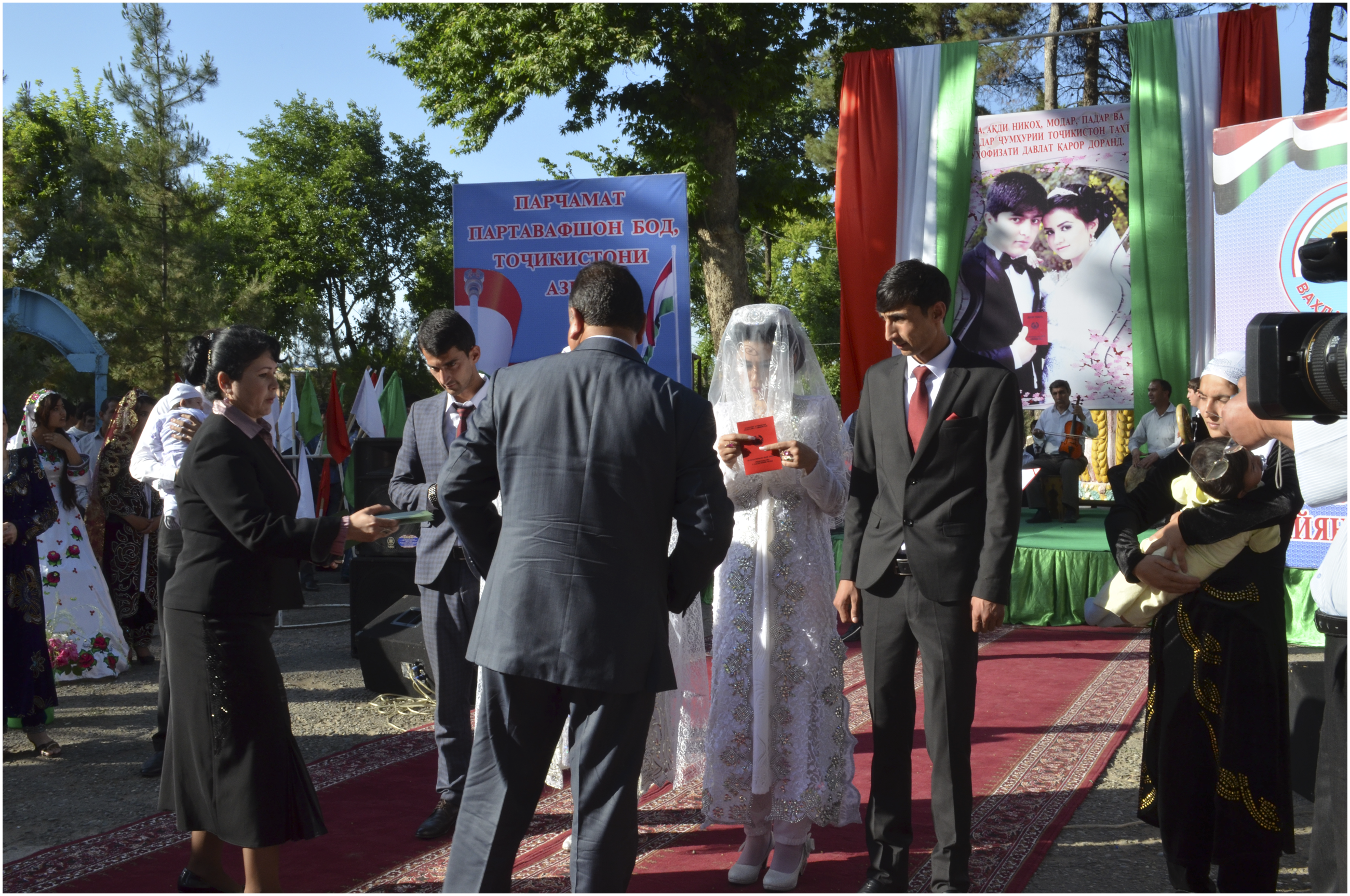
Unlike its Soviet predecessor, remembered by the older generations for its generous social support (free education and healthcare, child allowances, and old-age pensions), the welfare system in present-day Tajikistan is seriously underfunded. However, if it were to bow out of the former ‘social contract’ (Buckley, 1998), the Tajik state would risk losing its legitimacy. It therefore engages in what we call here the performances of state care, such as organising celebrations, holding speeches, displaying banners, and handing over certificates and gifts, thereby (re)producing the image of a caring state.
Another example of what the state intends as an act of care is the latest version of the law ‘On Regulating Traditions, Celebrations and Customs in the Republic of Tajikistan’ passed on 28 August 2017, known simply as tanzim (‘regulation’). 13 Introduced ‘with consideration to the demands of the development of the society’, it aims ‘to increase the social and economic standard of living of citizens of the Republic of Tajikistan’ (Qonuni Jumhurii Tojikiston az 28 avgusti soli 2017, no. 1461) by limiting ritual expenses and fighting ‘immoderacy’ (excess) (ziëdaravī). In practice, the law limited the duration of wedding feasts (to 3 hours), the number of guests allowed (to 150), and the number of cars in the wedding cortege (to four) and reduced many pre- and post-wedding rituals to small family gatherings without invited guests, musicians, or the exchange of gifts.
Special tanzim committees were created to monitor people’s ritual lives at the regional, town, village, and neighbourhood levels, and to define who should be fined for breaching the law. The printed version of the law was distributed among religious figures, social scientists, representatives of civil society, local administrations, schoolteachers, and state workers who have been allocated the task of propagating the benefits of the law among the wider public. People’s valuations of the law vary: there is not only praise for state care but also fears of the abuse of power, low-level corruption, the repression of religious expression, and loss of livelihoods of ritual specialists (such as singers and cooks). Although there is clearly a demand to reduce ritual expenses among ordinary citizens, the law opens up a vast field of ambiguity regarding ritual practice and complicates wedding negotiations between two families (Borisova, 2021). Thus, this legal initiative exemplifies how the ambivalent character of care borders on control and oppression.
Conclusion
Whether it is seen as a one-off life-cycle event that forms a new family unit, a collective activity to heighten a family’s prestige and strengthen social bonds across the community, or an old tradition going off course, marriages in Tajikistan are events that our interlocutors and state officials cared deeply about. Taking their words and actions seriously, we aimed to move beyond portrayals of the oppressed and ‘suffering subject’ (Robbins, 2013) in regional scholarship and to point to the moments of joy, allure, and pride that accompany marriage celebrations. This move is not intended to undermine earlier accounts of repressive gender regimes, rampant inequalities, community pressure, and state violence. Quite the contrary: using care as an analytical lens allowed us to address social injustices alongside people’s mutual commitments and care towards each other. What emerged is the complex, multilayered, and often contradictory nature of social worlds in which families, communities, and the social fabric come into being through caring relations and practices performed in preparation for, during, and after weddings. Drawing on feminist and anthropological scholarship, we have shown that care takes the form of people’s material, financial, and emotional investments into marriage feasts, outfits, and dowry; affective and physical labour performed during weddings; and bureaucratic manifestations of care akin more to performances and top-down regulation of behaviour. Tracing the workings of care across the scales of the individual body, the family, community, and the state, we have outlined how caring relations and practices nourish and ultimately contribute to the reproduction of families and the social order. However, what also emerged in this article is that under particular circumstances, the very same relations and practices of care can threaten the existence of some cultural activities and distinct actors. Allegedly well-meant laws, communal sharing of care labour, and the desire to provide well for daughters (and young families) can inflate dowry costs, deprive some of their livelihoods, and run others into overwhelming debt.
In the past two decades, we have seen a proliferation of care literature across many disciplines. Scholars have critiqued care as being a ‘fuzzy’ notion with blurred boundaries in relation to neighbouring concepts such as social reproduction, philanthropy, and welfare. Grounding our analysis in Tronto’s definition and drawing from other scholars, we aimed to use the tension of the expansive notion of care productively. We consider care, welfare, and social reproduction as closely linked, since caring relationships help sustain individuals, families, societies, and lived environments. However, social worlds are never perfect, and caring can entail the control, exploitation, and coercion of others. The concept of care allowed us to analytically grasp this tension of social worlds. As Maria Louw (2022, p. 69) put it: ‘We exist (socially) through acts of care—but we may also be destroyed through acts of care, and sometimes the distinction between what makes us exist and what destroys us is not very clear’. The concept of care also allowed us to do justice to our ethnographic material, which has revealed that regardless of the risks of being harmed, engagement in the relations of dependence and care is highly desired by our interlocutors (see Zhou, 2023).
The visual engagement with care in this article was prompted by the visual and performative culture of marriages in Tajikistan that we witnessed and participated in during fieldwork. However, we also aimed to do justice to feminist critiques of social structures that tend to downplay the importance of (women’s) care labour, and at times conceal it completely. Thus, some of the images in this paper exposed the less visible aspects of weddings that we as researchers were able to observe and photograph given our privileged position in the community and the relations of trust that we built up during an extended research stay. While our photographs are a good illustration of care as a life-sustaining activity and as hard labour essential for making marriages happen, what is perhaps less visible is its ambivalent, contradictory, and contested character. The imperative to provide care and the societal pressure to receive it in appropriate ways might be felt as oppressive, controlling, and distressing. We showed that state officials try to maintain the image of a caring state through such practices as public celebrations of new families and legally regulating ritual expenses in the name of economic and social development. While the former effort, presented as caring, is generally well-received, the latter is contested and experienced as intrusive and controlling.
Footnotes
Declaration of Conflicting Interests
The author(s) declared no potential conflicts of interest with respect to the research, authorship, and/or publication of this article.
Funding
The author(s) disclosed receipt of the following financial support for the research, authorship, and/or publication of this article: This work was supported by the Economic and Social Research Council of the United Kingdom (ES/W005336/1) and Cluster of Excellence ‘Asia and Europe in a Global Context’, Heidelberg University (Doctoral Scholarship and funds of the project ‘Demographic Turn at the Junction of Culture’).
