



Abstract
The global environmental crisis exacerbates Indonesia's ecological vulnerability, marked by deforestation, pollution, and agrarian conflicts, with marginalized groups—particularly Indigenous communities—bearing a disproportionate burden. This study aims to integrate the evolution of utilitarianism with environmental justice principles (distributive, recognition, procedural) within Indonesia's socio-cultural context. Using a theoretical framework analysis and case-based policy review, the research identifies the limitations of pure utilitarianism, which often neglects minority rights. A hybrid approach combining Amartya Sen's Capability Approach, John Rawls's Justice as Fairness, and sustainable utilitarianism demonstrates potential to balance collective benefits, individual capabilities, and ecosystem integrity. Analysis of resource access, agrarian conflicts, and law enforcement reveals structural inequities impeding environmental justice. The study concludes that this integrative conceptual framework offers a normative foundation for inclusive, transparent, and sustainable policy-making. Its novelty lies in synthesizing classical ethics and contemporary justice theories for a developing country context, a perspective rarely explored. The urgency calls for governance reforms ensuring that economic growth does not compromise rights and ecological sustainability. Practical implications include mainstreaming meaningful participation, strengthening cross-sectoral coordination, and enforcing environmental law through the polluter pays principle.
Keywords
Introduction
The global environmental crisis—marked by climate change, biodiversity loss, and ecosystem degradation—demands an urgent and coordinated response to achieve environmental justice. Indonesia, endowed with exceptional biodiversity and occupying a strategic role in maintaining global ecological balance, faces mounting pressures from deforestation, pollution, and habitat destruction driven primarily by industrial activities. 1 The sharp decline in air and water quality over the past decade has further exacerbated the country's vulnerability, particularly among marginalized communities. 2 Weak law enforcement, limited public participation, and suboptimal inter-agency coordination continue to undermine policy effectiveness, thereby rendering the integration of environmental considerations into all facets of policymaking imperative for achieving the Sustainable Development Goals (SDGs). 3 Within this context, holistic and inclusive environmental governance has become an urgent necessity to reconcile development objectives with the preservation of natural resources, ensuring sustainability for future generations. 4
Utilitarianism, as an ethical framework prioritizing the maximization of overall benefits for the greatest number, encounters profound challenges when applied to environmental access issues in developing countries such as Indonesia. While theoretically supportive of equitable access, the reality of socio-economic disparities, historical legacies, and complex socio-political dynamics often results in an inequitable distribution of environmental goods and services. 5 This inequity is particularly evident in public policies that tend to prioritize macroeconomic interests over the protection of vulnerable groups, thereby marginalizing their voices in decision-making processes. 6 Such conditions underscore the necessity of reformulating the utilitarian approach so that it can adequately incorporate principles of equity and environmental sustainability. 7
Top-down approaches in large-scale infrastructure initiatives—such as the food estate programs in Kalimantan and Sumatra and the development of the green industrial zone in North Kalimantan—frequently neglect to engage in meaningful consultation with Indigenous communities. 8 As a result, numerous local populations have been deprived of access to vital resources, subjected to ecosystem degradation, and faced with the erosion of cultural heritage deeply interwoven with their ancestral lands. 9 These challenges underscore the necessity of a multilevel environmental justice framework that integrates the dimensions of recognition, distributive, and procedural justice. 10 Leveraging traditional ecological knowledge is crucial to ensuring that environmental benefits are distributed equitably without compromising the rights of vulnerable communities. 11
This situation demonstrates that the challenges of environmental justice in Indonesia are not merely practical but also conceptual. It calls for an inquiry that links utilitarian theory with a comprehensive environmental justice framework that is responsive to Indonesia's social, cultural, and political contexts. Although utilitarianism has evolved from the foundational ideas of Bentham and Mill to contemporary adaptations, scholarly engagement connecting its evolution to environmental justice in developing countries—particularly Indonesia—remains scarce. The majority of studies examine utilitarianism in the context of developed nations, overlooking Indonesia's distinctive challenges, including cultural pluralism, socio-economic disparities, and inequitable distribution of environmental resources. Conversely, research on environmental justice in Indonesia has tended to focus narrowly on the distribution of benefits and ecological impacts, without integrating the utilitarian framework with the principles of recognition and procedural justice—particularly in relation to environmental access for vulnerable groups and Indigenous peoples. This gap generates three critical issues: the relevance of utilitarianism's intellectual evolution to the Indonesian context, the specific manifestations of environmental justice issues in the country, and the potential for integrating utilitarian principles to strengthen equitable environmental access. The urgency of this research lies in developing a utilitarian approach that is contextually grounded in Indonesia's socio-cultural and ecological realities, thereby enriching theoretical discourse while informing inclusive and equitable environmental policymaking.
To address this lacuna, the present study offers a novel analytical framework that integrates the evolution of utilitarian thought with the principles of environmental justice, applying it to a case study on environmental access in Indonesia. This approach not only evaluates collective benefits but also incorporates local cultural values, traditional ecological knowledge, and the protection of marginalized communities’ rights. Theoretically, the research contributes to the enrichment of environmental ethics discourse by proposing an adaptive conceptual model for developing countries. Practically, its findings hold significance for policymakers, environmental advocates, and cross-sectoral stakeholders in designing interventions that are sustainable, inclusive, and aligned with the Sustainable Development Goals (SDGs).
Philosophical and Theoretical Framework
Evolution of Utilitarian Thought
Utilitarianism, pioneered by Jeremy Bentham and John Stuart Mill under the principle of the greatest happiness for the greatest number, evaluates actions as morally right when they promote collective happiness and wrong when they result in the opposite outcome. Bentham emphasized moral judgment based on contributions to overall societal welfare, whereas Mill distinguished between the quality of pleasures, prioritizing intellectual and moral satisfaction over mere sensory gratification. 12 This ethical framework holds significant implications for public policy, as it encourages decision-makers to consider broad social impacts and to prioritize resource allocation in ways that yield the greatest benefit for society at large. 13
In the environmental context, utilitarianism can serve as a normative driver for sustainable practices, such as environmental protection policies or the advancement of green energy initiatives that generate long-term societal benefits. 14 Nevertheless, an exclusive focus on the interests of the majority risks neglecting minority rights and overlooking issues of environmental justice, where vulnerable communities are often marginalized in sustainability processes. 15 Accordingly, the application of utilitarianism necessitates the integration of equity and justice principles to ensure that the well-being of the majority is not achieved at the expense of particular groups or the integrity of ecological systems. 16
Public participation emerges as a critical component in addressing the limitations of utilitarianism within the sphere of environmental justice. Active engagement of local communities in decision-making processes can lead to more equitable policies, reflect the diversity of values and priorities, and enhance the legitimacy and effectiveness of sustainability measures. 17 Such participatory approaches align with the utilitarian aim of maximizing collective welfare while ensuring that all stakeholders—particularly vulnerable groups—have a voice in shaping policy directions. 18 However, to genuinely guarantee substantive justice, this approach must be integrated with complementary theoretical frameworks that emphasize the empowerment and protection of the most vulnerable, as articulated in the works of Amartya Sen and John Rawls.
Sen's capability approach underscores the importance of enabling individuals to achieve valued functionings, thereby shifting the focus from the mere distribution of resources to the fundamental freedoms required for human flourishing. 19 In parallel, Rawls's theory of justice as fairness posits that a just society is one that guarantees equal access to fundamental rights and opportunities for all, with priority accorded to those who are least advantaged. 20 The relevance of these two theories is particularly evident in the context of environmental justice, where environmental degradation frequently constrains the capabilities of marginalized communities to lead healthy and meaningful lives. 21 For instance, individuals residing in polluted areas are deprived of access to clean air and safe water, thereby impeding the fulfilment of basic capabilities essential for survival and well-being. 22 Integrating the perspectives of Sen and Rawls with utilitarianism offers policymakers a conceptual basis for redressing inequities, ensuring the fair distribution of environmental resources and burdens, and securing equal voice for all members of society in environmental governance. 23
The application of Sen's and Rawls's theories to environmental policymaking holds the potential to catalyze transformative shifts in both public discourse and practical responses to environmental challenges. An inclusive model of participatory governance—one that amplifies the voices of marginalized groups in decision-making processes—resonates with the normative underpinnings of both the capability approach and justice as fairness, while simultaneously reinforcing transparency and equity. 24 Equally critical is ensuring adequate access to information, which enables communities to effectively advocate for their rights. 25 In this regard, synthesizing the insights of Sen and Rawls provides a holistic environmental justice framework that prioritizes both individual empowerment and the equitable distribution of resources and responsibilities, thereby fostering healthier communities and a sustainable environment for all. 26
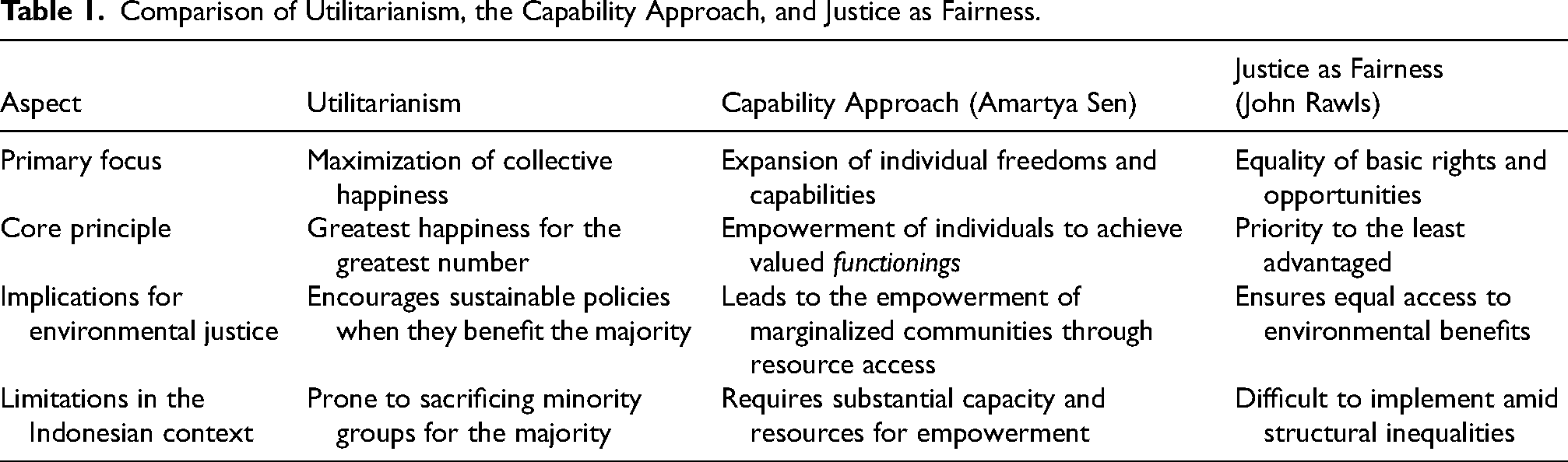
A comparative analysis of utilitarianism, Sen's Capability Approach, and Rawls's Justice as Fairness reveals that each offers a distinct yet inherently limited lens when considered in isolation. Utilitarianism emphasizes collective welfare but risks sacrificing the interests of minorities; the Capability Approach centers on individual freedoms yet demands substantial resources for its realization; whereas Justice as Fairness ensures the protection of disadvantaged groups but faces challenges in implementation amid entrenched structural inequalities. A hybrid approach that synthesizes these three perspectives could harness their respective strengths—prioritizing collective well-being without compromising minority rights, expanding societal capabilities, and upholding procedural equity. Such a conceptual framework is arguably the most pertinent for addressing Indonesia's complex and multi-layered environmental justice challenges.
To clarify the divergent emphases and contributions of these three theoretical frameworks—Utilitarianism, Amartya Sen's Capability Approach, and John Rawls's Justice as Fairness—the following table presents a concise comparison of their core principles, implications for environmental justice, and context-specific limitations. The frameworks are systematically juxtaposed to illustrate how each offers a unique perspective for understanding and responding to environmental issues (Table 1).
Comparison of Utilitarianism, the Capability Approach, and Justice as Fairness.
The application of Sen's and Rawls's theories in environmental policymaking has the potential to catalyze transformative shifts in both public discourse and concrete actions addressing environmental issues. An inclusive model of participatory governance—one that amplifies the voices of marginalized groups within decision-making processes—aligns with the normative foundations of both the Capability Approach and Justice as Fairness, while simultaneously strengthening transparency and equity. 27 Adequate access to information likewise constitutes a crucial enabling factor, empowering communities to advocate effectively for their rights. 28 In this regard, the synthesis of utilitarian principles, community participation, and Sen–Rawlsian justice theory produces a holistic conceptual framework that not only prioritizes the equitable distribution of environmental benefits but also reinforces the capacity of individuals and communities to shape their ecological futures. This integrated approach provides a robust normative foundation for fostering environmental governance that is sustainable, inclusive, and grounded in social justice.
Criticism and developments
While pure utilitarianism seeks to maximize overall happiness, it possesses inherent limitations in safeguarding minority rights and preventing distributive injustice. A principal critique lies in its consequentialist orientation, wherein the sacrifice of individual rights can be justified in pursuit of majority welfare. Consequently, the needs and voices of marginalized groups are often overlooked, as utilitarian calculations may legitimize actions detrimental to them if deemed to enhance aggregate happiness. 29 In urban planning and environmental policy, for example, decision-making frequently privileges economic gains and the broader public good while disregarding the needs of vulnerable communities. This is particularly evident in environmental justice contexts, where low-income populations and minority groups disproportionately bear the burdens of pollution and environmental degradation, rendering their experiences and rights secondary to majority interests. 30
The potential for distributive injustice is further exacerbated by the one-size-fits-all nature of utilitarianism, which fails to adequately account for the diverse conditions and needs of those affected by policy measures. This shortcoming becomes especially pronounced when environmental resources are unevenly distributed, exacerbating social inequalities and heightening socio-political tensions. 31 For instance, the development of urban parks that predominantly benefit affluent neighborhoods may come at the expense of clean air and water access for lower-income communities, thereby reinforcing cycles of inequality. Recognizing these weaknesses, scholars advocate for decision-making frameworks that integrate recognition and procedural justice, ensuring that minority perspectives are meaningfully incorporated into governance processes. 32 Thus, although utilitarianism aspires to achieve the greatest good, its neglect of individual rights and susceptibility to distributive injustice necessitate supplementation with egalitarian or rights-based approaches to ensure fairer and more equitable outcomes. 33
These limitations underscore the need for an approach that moves beyond the mere calculation of aggregate happiness, notably through the adoption of a capability-based quality-of-life paradigm. This shift has gained increasing prominence in discussions of social equity and environmental justice, as it prioritizes the enhancement of individuals’ capabilities to lead meaningful lives, rather than solely aiming to increase economic output or aggregate well-being. 34 By emphasizing the distribution of social goods—including access to green spaces, clean air, and safe drinking water—this approach seeks to ensure that marginalized communities are not sidelined in development processes. 35 For instance, inclusive urban greening initiatives that take into account the needs of all residents can foster healthier environments while simultaneously improving the socio-economic conditions of vulnerable groups.
Equitable distribution of benefits within a quality-of-life framework also serves as a corrective to persistent structural inequalities in urban areas. Access to public parks and open green spaces is a critical factor, as such amenities contribute substantially to both physical and mental health. 36 Disparities in access to green spaces often correlate with heightened social vulnerability and pronounced health inequalities. Empirical studies indicate that areas with higher levels of social vulnerability tend to have limited access to green spaces while facing greater exposure to urban heat and air pollution. 37 However, equitable benefit distribution cannot be sustained without ensuring active community engagement in planning and decision-making processes. Designing policies that intentionally expand access to, and improve the quality of, green spaces in alignment with local needs can strengthen community resilience and ensure that environmental benefits are shared fairly. 38
The integration of local knowledge and community participation into environmental policy planning and implementation constitutes a critical strategy for maintaining a focus on quality of life and equitable benefit distribution. Research demonstrates that community-based initiatives, including participatory urban planning models, tend to yield policies that more accurately reflect the diverse needs of local populations. 39 Such engagement not only enhances the legitimacy and effectiveness of environmental justice efforts but also promotes social cohesion and long-term sustainability. 40 Accordingly, a capability-based quality-of-life approach, when integrated with robust community participation, offers an inclusive and resilient conceptual framework—one that not only fosters a more equitable distribution of environmental benefits but also empowers residents to play an active role in shaping the ecosystems they inhabit, thereby contributing to the creation of communities that are fairer, healthier, and more sustainable. 41
The inherent shortcomings of utilitarianism in safeguarding minority rights and ensuring an equitable distribution of benefits necessitate the adoption of a more comprehensive paradigm. A capability-based quality-of-life approach offers a strategic alternative by positioning equitable access to environmental resources as a central pillar, while simultaneously acknowledging the diverse conditions and needs of individual communities. The integration of distributive justice principles with active community participation and the utilization of local knowledge not only addresses majority biases in policy formulation but also reinforces long-term socio-ecological resilience. Consequently, this conceptual shift represents not merely a theoretical refinement but a critical step toward the realization of environmental justice that is inclusive, sustainable, and responsive to the needs of the most vulnerable groups.
Integration with ecocentrism
Anthropocentric and ecocentric orientations embody two fundamentally distinct perspectives on environmental access and justice. The anthropocentric view prioritizes human interests and well-being, focusing on the utilization of environmental resources to enhance human quality of life. 42 This orientation tends to support policies that secure access to natural resources and green spaces for human benefit, at times at the expense of ecological health and biodiversity. In urban planning, an anthropocentric lens may overlook the needs of non-human entities, placing greater emphasis on efficiency and outcomes for human populations. Such an approach risks perpetuating inequities, particularly when marginalized communities become further excluded from environmental benefits conceived solely in terms of human utility.
By contrast, an ecocentric orientation emphasizes the intrinsic value of all living organisms and ecosystems, advocating a holistic approach that recognizes the interconnectedness of humans and nature. From this perspective, access to environmental resources is understood not merely as a means of enhancing human well-being, but as a fundamental right of all entities within the ecosystem. 43 For example, ecocentrism supports policies that guarantee equitable access to green spaces for all residents while simultaneously safeguarding ecological integrity and biodiversity. Within this framework, community engagement becomes essential, as it entails acknowledging the rights of nature and incorporating diverse voices into environmental governance—thereby fostering outcomes that are fairer and that distribute benefits across both species and human communities. 44 Ultimately, an ecocentric approach seeks to reconcile human needs with ecosystem health, cultivating a balance that sustains both humanity and the environment for future generations.
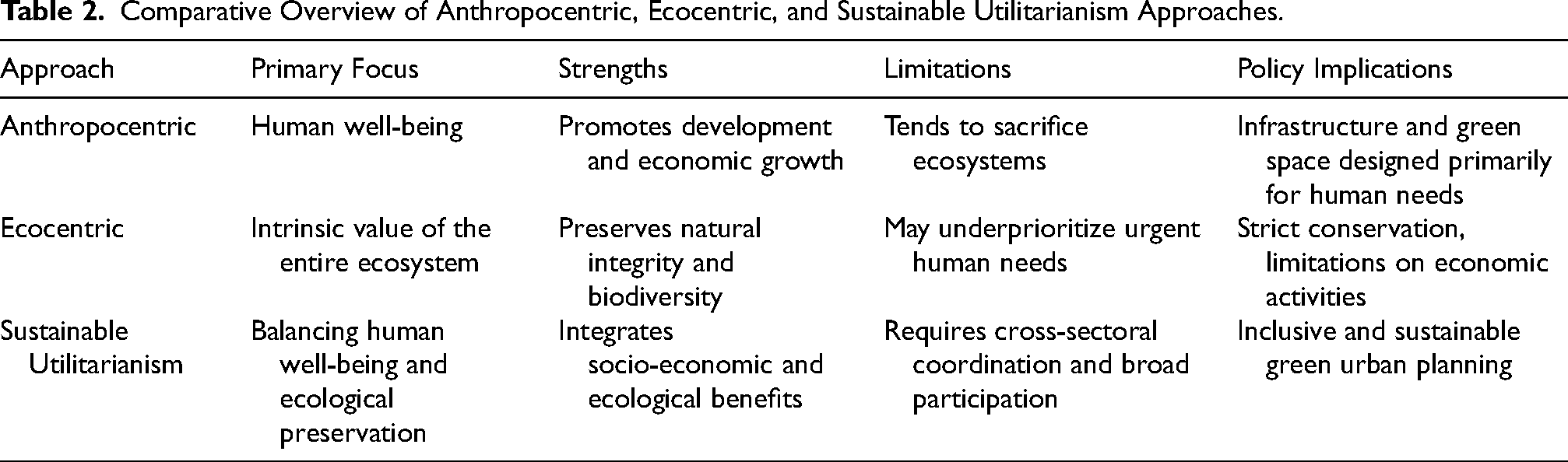
The pronounced divergence between anthropocentric and ecocentric orientations underscores the need for a hybrid approach capable of balancing human well-being with ecological preservation. One framework that bridges these perspectives is sustainable utilitarianism, a philosophical paradigm that seeks to maximize collective welfare while respecting the intrinsic values of both humanity and nature. This concept holds particular relevance in discussions of equitable environmental access, as it promotes policies that simultaneously deliver direct benefits to human populations and safeguard ecosystem health. Through this lens, urban planning can address disparities in access to green open spaces—inequities that disproportionately disadvantage marginalized communities. 45 Empirical evidence indicates that urban green spaces, which play a vital role in enhancing environmental quality and improving quality of life, are often inequitably distributed, with low-income groups bearing the greatest disadvantage. 46 To operationalize the principles of sustainable utilitarianism, policy measures must proactively guarantee equitable access to these resources in order to advance societal well-being while maintaining ecological integrity. 47
The application of sustainable utilitarianism within environmental policymaking also requires explicit recognition of the relational values communities hold toward their surrounding environments. 48 Understanding how diverse socio-economic and cultural groups perceive and engage with natural spaces can enhance public participation in environmental decision-making processes. 49 For example, acknowledging that the value of urban green spaces extends beyond their physical aesthetics to encompass cultural and spiritual significance can foster governance models that are both more inclusive and more responsive to the needs of heterogeneous populations. When these relational dimensions are consistently integrated, the potential of sustainable utilitarianism to shape responsive and enduring environmental policies is greatly amplified. 50 Incorporating educational programs that cultivate ecological awareness further operationalizes the utilitarian framework by fostering a shared sense of responsibility for environmental stewardship. 51 Such measures not only enhance community well-being but also strengthen long-term ecological resilience by ensuring that human activities remain aligned with sustainability principles.
The comparative table below highlights the divergent emphases, strengths, and limitations of anthropocentric, ecocentric, and sustainable utilitarianism approaches within the context of environmental access justice. This presentation illustrates how each framework conceptualizes the human–environment relationship and the extent to which priority is accorded to social, ecological, or balanced considerations. Accordingly, the table serves as an analytical tool for revealing both the relevance and the practical challenges associated with implementing each approach in the pursuit of sustainable environmental access justice (Table 2).
Comparative Overview of Anthropocentric, Ecocentric, and Sustainable Utilitarianism Approaches.
Beyond these distinctions, sustainable utilitarianism underscores that addressing environmental justice through a holistic approach can simultaneously foster resource conservation and equitable distribution of social outcomes. 52 Discourse on environmental governance highlights that the participation of vulnerable communities in decision-making processes can directly shape land and resource management policies. 53 For instance, strategies that integrate local knowledge and community preferences into ecosystem service management can facilitate more equitable access to resources. 54 Consequently, embedding ecocentric perspectives within the framework of sustainable utilitarianism not only prioritizes the enhancement of human well-being but also affirms interspecies justice, promotes active engagement and empowerment of local communities, and ensures that today's policy decisions do not compromise ecological and social sustainability for future generations.
Environmental Justice Issues in Indonesia
Access to Natural Resources (Water, Land, Forests, Mining)
Deforestation in Indonesia has escalated into a profound environmental crisis, driven by large-scale forest conversion to agricultural land—most notably for oil palm and acacia plantations—as well as by both legal and illegal logging activities that accelerate forest degradation. 55 Between 2015 and 2020, annual deforestation rates reached approximately 10 million hectares, resulting in the loss of critical habitats, heightened greenhouse gas emissions, and the endangerment of biodiversity that has evolved over millennia. 56 Socio-economic drivers, including poverty and the pursuit of rapid economic growth, have prompted local communities as well as corporations to prioritize short-term financial gains over environmental sustainability, thereby exacerbating ecosystem degradation. The loss of forest cover has further disrupted regional climatic patterns, intensifying the risk of natural disasters such as floods and droughts due to the destabilization of hydrological cycles. 57 The repercussions extend to the global scale, given that Indonesia's forests function as a critical carbon sink, playing a pivotal role in mitigating global climate change. 58
Multiple policy measures have been introduced to address these challenges, although their effectiveness remains limited. The Indonesian government has adopted the Forest Law Enforcement, Governance, and Trade (FLEGT) Action Plan to curb illegal logging and improve forest governance. 59 Regulatory instruments such as the Environmental Impact Assessment (AMDAL) have also been implemented to ensure that development projects comply with environmental standards. Nevertheless, the efficacy of these measures is frequently undermined by weak law enforcement and pervasive corruption within governmental institutions. 60 Critics argue that economic interests often override ecological considerations, perpetuating governance patterns that favor industrial expansion over environmental preservation. 61 Accordingly, an integrated approach is imperative—one that harmonizes economic development with environmental justice through consistent regulatory enforcement, active community participation, and the recognition of Indigenous peoples’ rights in forest management. 62
In addition to deforestation, other extractive sectors—most notably mining—constitute a major source of environmental pressure and exacerbate inequities in access to natural resources in Indonesia. Mining activities generate profound environmental and social challenges, particularly through water and air pollution that degrade ecosystems and threaten the well-being of local communities. 63 Although mineral and coal extraction contributes to economic development, weak regulatory oversight and inadequate environmental management have enabled practices that diminish water and air quality, thereby endangering biodiversity and public health in areas surrounding mining sites. 64 Water contamination not only triggers severe health issues, such as gastrointestinal disorders and developmental problems in children, but also reduces agricultural productivity, with direct consequences for local economic stability. 65 Simultaneously, air pollution from dust and mining emissions has been linked to increased incidences of respiratory diseases, imposing additional burdens on public health systems. 66 These impacts disproportionately affect marginalized groups, who face heightened exposure to pollutants without adequate protective measures, underscoring a form of environmental injustice that demands urgent policy intervention. 67
Addressing these challenges requires a more stringent and inclusive policy approach. The imposition of robust sanctions for environmental violations is regarded as a critical deterrent against harmful practices, ensuring that mining companies are held accountable for the damage they cause. 68 Equally important is the active involvement of communities in environmental decision-making processes, which serves to empower residents in advocating for their health and welfare. 69 Furthermore, the implementation of post-mining land rehabilitation and reclamation programs constitutes a strategic measure for restoring degraded ecosystems, reinforcing the necessity of an integrated approach that aligns socio-economic development with environmental sustainability. 70
The impacts of deforestation and mining in Indonesia can be mapped across three interrelated dimensions—ecological, social, and health—which collectively shape the quality of life of affected communities. The table below provides a summary illustrating how ecosystem degradation, shifts in social structures, and heightened health risks emerge as interconnected consequences of these activities. This mapping underscores the intricate linkages among these dimensions and highlights the urgency of addressing the issues through an integrated response (Table 3).
Potential Risks Arising from Deforestation and Mining.

Both deforestation and mining reveal a similar underlying pattern: the exploitation of natural resources driven by economic interests often comes at the expense of ecosystem health and the rights of vulnerable communities. In the absence of transparent governance, consistent law enforcement, and active community participation, inequitable access and environmental degradation are likely to persist. Consequently, reforming natural resource governance in Indonesia is an essential prerequisite for achieving sustainable environmental justice.
Agrarian Conflicts and Vulnerable Communities
Land disputes between the state, corporations, and Indigenous communities in Indonesia are deeply rooted in historical injustices and socio-political dynamics, wherein state policies have frequently prioritized corporate interests in land acquisition for mining, agriculture, and industrial development, thereby marginalizing the customary land rights (hak ulayat) of Indigenous peoples. 71 The legal framework, which places land ownership under state authority, has weakened the legal standing of these communities, while the lack of meaningful participation in land-use decision-making processes has exacerbated protracted conflicts over territories that have been sustainably managed for generations. 72 The dispossession of customary territories—often carried out without adequate consultation or respect for traditional practices—has resulted in alienation from ancestral lands, the loss of livelihoods, the erosion of local knowledge systems, and the weakening of food sovereignty. Large-scale natural resource exploitation through mining and plantation activities has further intensified environmental degradation, threatening both the survival and cultural identity of Indigenous communities. This reflects a historical pattern in which state recognition of land tenure has disproportionately benefited multinational corporations rather than protecting the rights and welfare of Indigenous peoples. 73
In confronting the complexity and deeply entrenched roots of these conflicts, multiple actors have begun to develop dispute resolution initiatives aimed at restoring Indigenous land rights. Dialogue-based initiatives that integrate Indigenous perspectives into land management policies have emerged as a pathway toward reconciliation and sustainable development. 74 However, the effectiveness of such initiatives is highly contingent upon genuine commitments from both the state and corporations to align their practices with the principles of respecting hak ulayat and establishing equitable partnerships. Successful dispute resolution mechanisms must ensure adequate representation and protection of Indigenous voices, enabling them to assert their rights and interests effectively. 75 Striking a balance between economic development and justice for Indigenous communities is essential to achieving long-term sustainability and social equity in Indonesia.
Despite various efforts undertaken, limitations in policy implementation and weak protection of hak ulayat have exacerbated the social, psychological, and cultural impacts on Indigenous communities. The loss of customary territories erodes their social, psychological, and cultural identity, as forced displacement—driven by state or corporate interests—severs the profound connection to ancestral lands that forms the core of cultural continuity and community cohesion. 76 The rupture of the centuries-old symbiotic relationship between Indigenous peoples and their environment, including traditional land management practices, not only undermines livelihoods but also accelerates the disintegration of social structures and the disappearance of communal activities.
Furthermore, the psychological stress experienced in the aftermath of displacement worsens mental health conditions, while the loss of ancestral lands results in a significant decline in traditional knowledge, language, and cultural practices. Diminished access to sacred sites and natural resources jeopardizes the survival of land-based cultural expressions. 77 The intensification of environmental injustice deepens marginalization, fosters assimilation into dominant cultural norms—often characterized by consumerism and detachment from nature—and threatens the survival of traditional ecological knowledge, which remains vital for sustainable environmental practices. 78
Thus, agrarian conflicts in Indonesia are not merely a matter of land ownership, but also of safeguarding cultural identity, ensuring ecological sustainability, and advancing social justice. Resolving these conflicts necessitates transparent reforms in natural resource governance, the full recognition of hak ulayat, and the systematic integration of traditional knowledge into public policy. Such measures are essential to ensure that economic development no longer comes at the expense of the existence and future of Indigenous communities.
State Accountability and Environmental Law Enforcement
The gap between national policies and their implementation at the local level constitutes a significant impediment to effective environmental governance in Indonesia. Although legal instruments such as the Environmental Impact Assessment (EIA) and the Forest Law Enforcement, Governance, and Trade (FLEGT) Action Plan are in place, their execution is frequently suboptimal due to weak law enforcement, regulatory inconsistencies, limited resources, and insufficient political support at the regional level. 79 The central government's emphasis on economic growth often sidelines environmental protection, a tendency exacerbated by corruption, which enables environmentally destructive activities to persist with minimal accountability. 80 Moreover, decentralization—intended to empower local authorities—has, in practice, often resulted in sporadic and poorly coordinated policies, while the involvement of Indigenous peoples and local stakeholders remains minimal. 81 These conditions underscore the necessity for an integrated governance framework capable of harmonizing national policy directives with local socio-economic realities.
The enforcement of criminal environmental law faces acute challenges, most notably the high prevalence of corruption, which undermines law enforcement agencies and fosters a culture of impunity for environmental offenders. Reports of bribery involving government officials to overlook illegal activities—such as deforestation, pollution, and unlicensed mining—are widespread. 82 Such practices not only erode public trust in legal institutions but also diminish the state's credibility in addressing environmental issues. Compounding the problem, limited funding and insufficient human resource capacity constrain the ability of enforcement bodies to monitor and prosecute violations effectively. 83
In addition to barriers at the implementation level, weaknesses in the legislative framework constitute a major impediment to effective environmental governance. Although Indonesia has enacted a range of environmental regulations, enforcement mechanisms are often inadequate or poorly coordinated. Many legal provisions lack clear technical guidelines, while disharmony between national regulations and their interpretation at the local level leads to inconsistencies in application. 84 The criminal justice system frequently imposes lenient penalties on violators, thereby failing to create a sufficient deterrent effect. 85 The gap between legal norms and their implementation provides opportunities for offenders to evade accountability, accelerates environmental degradation, and fuels conflicts of interest among actors ostensibly committed to sustainable resource management.
Weaknesses in oversight mechanisms further exacerbate the situation, particularly due to institutional fragmentation in which multiple ministries and regional governments exercise overlapping authority. 86 A lack of coordination and clarity in the allocation of responsibilities renders law enforcement procedures ineffective. Moreover, political interests prioritizing short-term economic gains create space for powerful actors to influence policy in line with their own agendas. 87 Without an integrated approach to law enforcement—supported by robust oversight mechanisms that are insulated from political interference—efforts to combat environmental crimes will remain constrained, posing serious threats to both ecological sustainability and community well-being. 88
Addressing the weaknesses in state accountability and environmental law enforcement in Indonesia necessitates comprehensive institutional reform. Law enforcement must be insulated from corruption and political interference, supported by adequate resources to ensure full compliance with environmental regulations. The integration of environmental justice principles—including distributive, recognition, and procedural justice—should serve as the foundation of all policy and enforcement practices. Through such measures, Indonesia can establish an environmental governance system that is effective, equitable, and sustainable for both present and future generations.
Integrating Utilitarianism into Environmental Access Justice in Indonesia
Application of Cost–Benefit Analysis
Cost–Benefit Analysis (CBA) plays a strategic role in advancing sustainable development in Indonesia. This method offers a systematic framework for evaluating the economic feasibility and environmental impacts of various projects. 89 By quantifying both costs and benefits, CBA assists policymakers in making informed decisions on resource allocation, balancing economic gains with ecological costs in sectors such as forestry and aquaculture, and addressing illegal practices such as logging and land clearing. Beyond functioning as a purely technical instrument, the effectiveness of CBA can be significantly enhanced through community participation and the incorporation of local wisdom. 90 The active engagement of local communities and the utilization of traditional ecological knowledge not only improve the quality and contextual accuracy of evaluations but also ensure a more equitable distribution of natural resource benefits. This, in turn, strengthens CBA's relevance to environmental justice and contributes to the achievement of the Sustainable Development Goals (SDGs). 91
Enhancing Cost–Benefit Analysis (CBA) by incorporating ecosystem and social values enables a more comprehensive assessment of the benefits derived from natural resources, encompassing ecosystem services that support human well-being and the conservation of biodiversity. 92 This approach can serve as a strategic guide for sustainable land use and resource management, fostering long-term economic growth while safeguarding ecosystem integrity for future generations. 93 The successful implementation of this strategy requires a robust regulatory framework, transparent decision-making processes, and cross-sectoral collaboration among government, industry, and civil society. Within this context, the active participation of local communities and Indigenous peoples—particularly in critical areas such as mangrove and coastal rehabilitation—ensures that policies reflect local knowledge while fostering a sense of ownership and environmental stewardship. 94
Strengthening the regulatory framework must also be accompanied by the application of the Polluter Pays Principle through stringent and transparent environmental law enforcement. This principle mandates that those responsible for environmental harm bear the costs of remediation, thereby deterring excessive exploitation. By embedding this mechanism within economic practices, development can be steered toward greater sustainability. Within a utilitarian framework, such measures ensure that environmental damage is minimized while the net benefits to society as a whole are maximized. 95
The application of Cost–Benefit Analysis (CBA) and environmental justice principles is relevant not only in rural natural resource sectors but also within urban contexts. One strategy that can be implemented is the development of green infrastructure in urban and peri-urban areas to ensure equitable access to green open spaces. 96 Such infrastructure not only provides ecosystem services that contribute to public health and well-being but also strengthens social cohesion. 97 Urban greening policies should prioritize affordability and accessibility, particularly for marginalized communities, while accommodating the diverse needs of different population groups. The use of evaluative frameworks to measure socio-economic disparities in green space access can further support more equitable and inclusive urban planning. 98
Ultimately, whether in rural or urban settings, policies that integrate ecological protection with community benefits establish a resilient framework for sustainable development. Such an approach balances conservation objectives with the fulfillment of societal needs. In line with utilitarian principles, these policies seek to maximize collective benefits while minimizing harm, resulting in both enhanced environmental preservation and a more equitable distribution of societal well-being.
The Dilemma of Collective Benefits vs. Minority Rights
Indonesia's economic policies, which prioritize accelerated growth and large-scale infrastructure development, have frequently come at the expense of Indigenous rights and territories. The legal framework, which accords primacy to state ownership of land, systematically marginalizes Indigenous communities and disregards their traditional land management practices. Intensified pressures from the mining and agricultural sectors have triggered widespread land dispossession, environmental degradation, and social tensions. 99 Land-use changes driven by economic imperatives have further contributed to deforestation and biodiversity loss, undermining the livelihoods of communities whose survival depends on healthy ecosystems. 100 These dynamics reflect entrenched structural imbalances that weaken the position of Indigenous peoples in natural resource governance.
An ethical dilemma emerges when national development is pursued without adequate safeguards for vulnerable groups. Large-scale projects—such as oil palm plantations and mining operations—frequently result in the dispossession of customary lands, the erosion of cultural heritage, and the disruption of community well-being. 101 When political, economic, and corporate interests override environmental justice considerations, the legitimacy of development itself is called into question. Given that Indigenous communities serve as stewards of biodiversity-rich territories, their marginalization is not only a moral concern but also a direct threat to ecological resilience and adaptive capacity in the face of climate change. 102 Consequently, there is an urgent need for policy realignment that balances economic growth with the protection of Indigenous rights as an integral component of sustainable development strategies.
Reform efforts require a critical evaluation of prevailing development frameworks. The incorporation of Indigenous perspectives into environmental policymaking is widely recognized by scholars as a key determinant of sustainable development success. 103 Integrating traditional knowledge with modern resource management practices can enhance ecological resilience while ensuring that Indigenous communities derive direct benefits from their lands and natural resources. 104 Such a transition necessitates the creation of equitable dialogue platforms, in which the voices and rights of Indigenous peoples are embedded in economic planning processes, thereby fostering a development model that both respects cultural heritage and safeguards environmental integrity.
The tension between economic incentives and the protection of vulnerable groups reflects a broader global trend, wherein marginalized communities disproportionately bear the adverse impacts of industrial expansion and environmental degradation while receiving minimal benefits. 105 Exposure to pollution and health risks from industrial activities further entrenches their marginalization, eroding socio-ecological resilience. Neglecting these injustices serves only to perpetuate inequality and undermine the foundations of long-term sustainability. Conversely, integrating Indigenous rights and knowledge into national development strategies offers a pathway toward policies that are not only just and inclusive but also mutually reinforcing in advancing both economic prosperity and environmental conservation.
Hybrid Approach: Utilitarianism Plus Social Justice
Integrating utilitarian analysis with social justice principles in environmental policymaking offers a strategic pathway toward achieving equitable and sustainable development. Utilitarianism, with its focus on maximizing the well-being of the greatest number, can be aligned with social justice values to ensure that economic growth does not come at the expense of vulnerable groups. A tangible example can be found in urban greening strategies, which not only enhance ecological sustainability but also reduce social disparities by providing equitable access to green open spaces. 106 This approach necessitates a nuanced understanding of the unequal environmental burdens borne by marginalized populations, enabling policymakers to maximize collective benefits while addressing historical injustices.
The application of utilitarian principles within environmental assessment requires a comprehensive evaluation of long-term impacts, particularly for communities that are often overlooked in conventional cost–benefit frameworks. By adopting a justice-oriented analytical model, policymakers can identify and mitigate the adverse effects of projects on marginalized groups, such as exposure to pollution and heightened health risks in industrial zones. 107 This integrative approach enhances the legitimacy of environmental policies and fosters broader social consensus. Crucially, the active participation of affected communities is essential, in line with the environmental justice movement's emphasis on recognizing and incorporating local perspectives into decision-making processes. 108
Public consultation and equitable deliberation constitute essential mechanisms for ensuring that environmental policies reflect the needs and aspirations of all stakeholders. Participatory governance—facilitated through public forums, workshops, and focus group discussions—enables citizens to voice their concerns, share local knowledge, and influence policy trajectories. 109 The strategic use of digital platforms broadens the scope of engagement, particularly for groups facing geographic or economic constraints, thereby enhancing transparency and fostering a sense of ownership over policy outcomes. 110 Transitioning toward more equitable participation further necessitates addressing power asymmetries through tools such as Environmental Justice Mapping, which identifies spatial inequalities in environmental impacts and informs targeted interventions. 111
Collaboration among government institutions, civil society organizations, and Indigenous communities strengthens both the substantive quality and the legitimacy of policy frameworks. Instruments such as the Aarhus Convention affirm the public's rights to access environmental information, participate in decision-making, and seek legal redress. 112 Equitable access to information—facilitated through public data repositories and environmental knowledge centers—empowers citizens to act as advocates for their rights. 113 Transparency, accountability, and the active engagement of all stakeholders emerge as prerequisites for achieving environmental justice. 114 By institutionalizing informed and equitable participation, this hybrid approach has the potential to align economic, ecological, and social objectives within a single, inclusive, and sustainable policy framework.
Conclusion
Based on the findings, this study presents three principal conclusions that directly address the research problem.
Theoretically, this study enriches the environmental justice literature by proposing an integrative conceptual model that adapts utilitarian principles, incorporates procedural justice, and strengthens individual capabilities. This model holds potential as a reference for interdisciplinary research combining ethical, legal, and public policy perspectives. Practically, the findings emphasize the need for policy reforms that place social justice and ecological sustainability at the core, prioritizing the protection of vulnerable communities, strengthening inter-agency coordination, and mainstreaming environmental considerations throughout all stages of policy formulation. The implementation of these recommendations is expected not only to accelerate the achievement of the Sustainable Development Goals (SDGs) but also to ensure a balanced alignment of economic growth, social equity, and ecosystem integrity. Consequently, this research offers both conceptual and practical contributions that may serve as a strategic reference for advancing environmental justice in Indonesia.
Footnotes

Funding
The authors received no financial support for the research, authorship, and/or publication of this article.
Declaration of Conflicting Interests
The authors declared no potential conflicts of interest with respect to the research, authorship, and/or publication of this article.