



Abstract
Background
Children's media both reflects and shapes societal attitudes toward physical disability. Despite its potential impact on self-concept and stigma, longitudinal, data-driven analysis of these portrayals remains scarce. This study aimed to quantify longitudinal trends in the tone and framing of physical disability representation in children's media and to explore implications for pediatric rehabilitation.
Methods
A quantitative content analysis was conducted on 68 children's media productions (1933–2025) sourced from the Vanderbilt Peabody database. Content was filtered to age-appropriate ratings (G, PG, PG-13, TV-14). Three trained reviewers classified depictions of physical disability by clinical category (e.g., spinal cord injury, limb difference) and tone (Positive, Neutral, Negative) and coded for the presence of rehabilitation themes. Inter-rater reliability (κ = 0.83) was achieved. Statistical testing included Mann-Kendall trend analysis and Fisher's exact tests to compare pre-2000 vs post-2000 portrayals.
Results
Positive portrayals increased significantly from pre-2000 (63%) to post-2000 (90%) (p = 0.01). A consistent upward trend across decades was confirmed (Z = 3.47, p < 0.01). Spinal cord injury was the most frequently depicted disability (40%); rehabilitation themes appeared in 24% of productions, more commonly post-2000. Productions with rehabilitation content were more likely to feature positive portrayals (94% vs 89%).
Conclusions
Over nine decades, children's media has shifted toward more affirming representations of physical disability, particularly after 2000. Findings suggest that pediatric rehabilitation providers can use positive media examples to reinforce therapeutic engagement, normalize assistive devices, and address stigma in age-appropriate ways.
Plain language summary
Stories in children's movies and television can shape how young people see disability. To understand how these portrayals have changed over time, nearly a century of children's media was reviewed. Characters with physical disabilities were identified, including how they were presented and whether rehabilitation or recovery was part of their story. Portrayals of disabilities have become much more positive in more recent decades. Specifically, positive portrayals increased significantly from 63% pre-2000 to 90% post-2000. More recent productions also include more scenes that highlight rehabilitation and recovery. These shifts are important because positive images can help reduce stigma, encourage inclusion, and support the goals of pediatric rehabilitation.
Keywords
Introduction
Children's media serves as a powerful cultural barometer for societal attitudes toward disability, influencing perceptions during critical development periods. A 2024 report found that 40% of U.S. children aged 0–8 watch movies or TV shows daily
Media influences self-concept through mechanisms that vary by developmental stage, with implications for shaping how children may engage in rehabilitation across age groups. In early childhood (ages 3–7), exposure primarily shapes foundational schemas around capability and belonging through observation and symbolic play.4,5 During this period, positive media representation may reduce caregiver anxiety and facilitate treatment adherence. 6 In adolescence (ages 12–18), media engagement more strongly involves social comparison, identity formation, and internalized expectations regarding independence and peer relationships. 7 For adolescent patients, exposure to diverse disability portrayals may influence goal-setting in rehabilitation, willingness to use assistive devices in social contexts, and expectations regarding functional outcomes.8,9 These developmental differences underscore the importance of age-appropriate media literacy as a component of family-centered rehabilitation care. 10
The evolution of disability portrayal in children's media reflects broader societal shifts in disability rights, medical understanding, and cultural acceptance. Historical analysis reveals that early depictions often relied on stereotypical tropes: the “tragic victim,” the “inspirational overcomer,” or the morally corrupt character whose physical difference symbolized inner corruption.11,12 These representations not only misrepresented the lived experiences of individuals with disabilities but also reinforced stigmatizing attitudes toward physical difference. 13 Such stigma, if left unaddressed by individuals, parents, advocates, and medical professionals, can contribute to social isolation and reduced self-worth among young patients. 13
A growing body of research has focused on how media representations of visible medical conditions can perpetuate harmful cultural biases that shape societal attitudes and patient experiences. Croley et al. conducted a seminal analysis of dermatologic features in classic movie villains, finding that visible skin conditions were disproportionately assigned to antagonistic characters, thereby reinforcing negative moral associations between physical appearance and character traits. 14 Such work establishes precedent for systematic content analysis of physical differences in media. This approach can be particularly helpful for understanding how physical disability representation has evolved in pediatric-focused content, where media literacy and positive role models can significantly impact treatment outcomes and psychosocial adjustment. Recent analyses have examined disability representation within specific franchises like Disney and Pixar films. 15 However, comprehensive longitudinal studies spanning multiple decades and distributors remain limited. Further, the relationship between evolving media portrayals and broader societal attitudes toward childhood disability remains largely unexplored.
This longitudinal study aimed to quantify and characterize temporal trends in physical disability representation across nine decades of children's media to better understand its role in shaping societal attitudes and informing pediatric rehabilitation practice
Methods
This study analyzed media productions catalogued in the Vanderbilt Peabody database that featured physical disability and were intended for child or family audiences. 17 The Vanderbilt Peabody database is a curated longitudinal archive developed for disability-focused research that systematically catalogs narrative media across multiple disability domains using standardized indexing, enabling reproducible classification of disability portrayals; the present analysis focused on productions indexed under physical disability. Predominantly films and select scripted television titles were included.
To focus on age-appropriate content for a pediatric population (0–17y), the dataset was filtered to include only productions rated G, PG, PG-13, or TV-14, excluding NR, R, or X-rated content. This methodology yielded a final dataset of 68 productions spanning 93 years (1933–2025) (Figure 1).
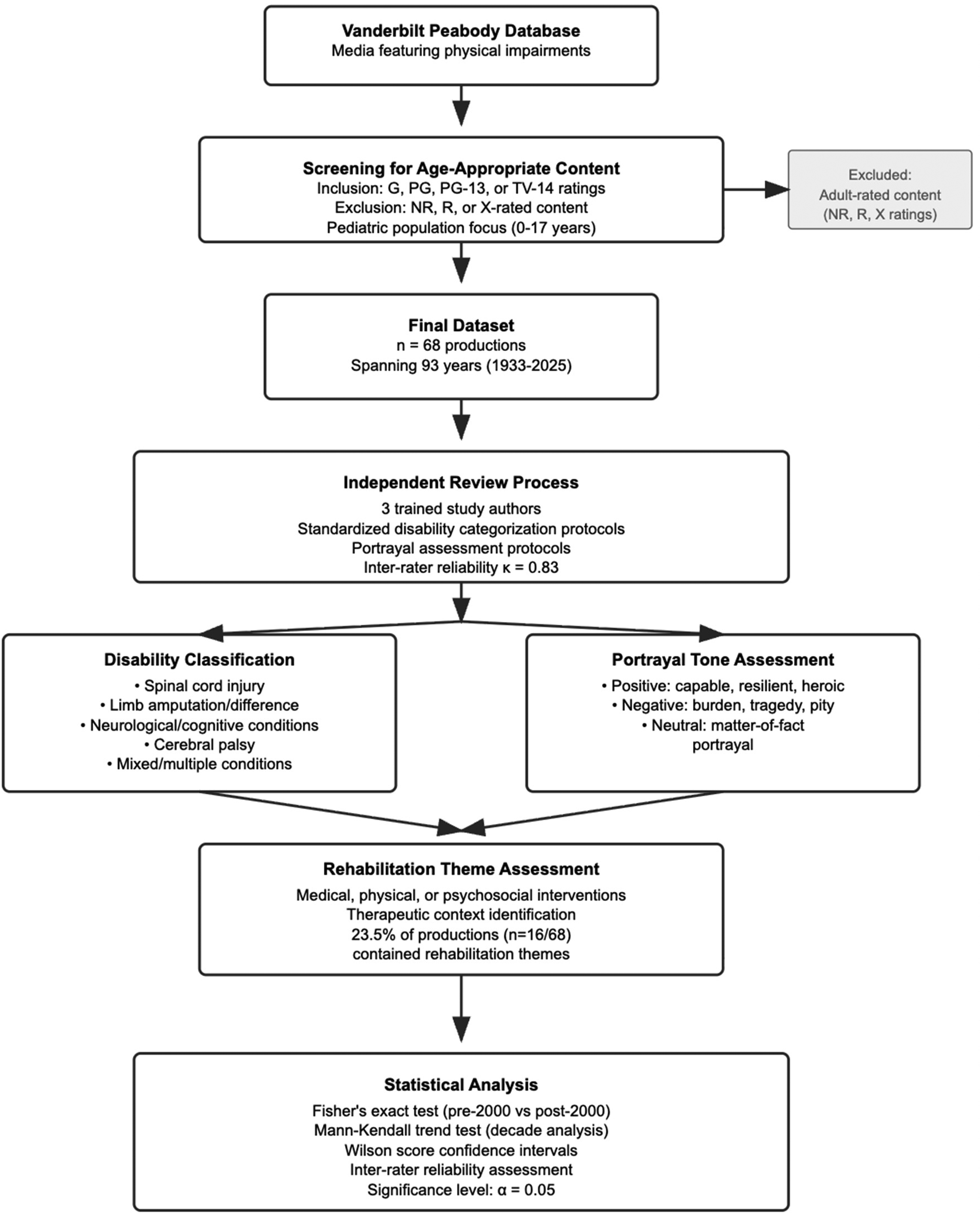
Study selection and analysis flow diagram. Flow chart depicting the systematic selection of age-appropriate media productions from the Vanderbilt Peabody database, classification methodology for disability portrayal assessment, and statistical analysis approach for the 68 productions included in the final analysis (1933-2025).
Each production underwent independent review by three trained study authors using standardized disability categorization and portrayal assessment protocols. Physical disabilities were classified according to clinical categories commonly encountered in pediatric rehabilitation: spinal cord injury (SCI), limb amputation/difference, neurological/cognitive conditions, cerebral palsy, mixed/multiple conditions, and other specific conditions. Portrayal tone was assessed using three categories: Positive (characters portrayed as capable, resilient, heroic, or integral to empowering storylines), Negative (disabilities portrayed as burdens, tragedy devices, objects of pity, sources of comic relief, or associated with moral failings), and Neutral (disability present but not central focus, portrayed matter-of-factly without particular emphasis).
To assess the presence of rehabilitation or therapeutic themes, operational criteria grounded in rehabilitation practice were developed. Productions were coded as containing therapeutic intervention content (Yes) or not containing therapeutic intervention content (No). Productions were coded “Yes” if they depicted explicit medical, physical, or psychosocial interventions aimed at improving or adapting to physical disability. These included scenes involving physical or occupational therapy, assistive device use, interaction with rehabilitation professionals, or participation in adaptive sports within a therapeutic context. For example, Dolphin Tale portrays prosthetic integration and aquatic therapy, whereas Walk. Ride. Rodeo. follows intensive multidisciplinary rehabilitation after SCI. Productions were coded “No” if they depicted general adaptation or resilience without clearly identified therapeutic intervention. For instance, The Mighty (peer bonding) and The Secret Garden (self-guided activity) were coded “No” due to the absence of formal rehabilitation contexts.
Statistical analysis included Fisher's exact test to evaluate differences in portrayal tone between pre-2000 and post-2000 productions, with significance set at α = 0.05. Inter-rater reliability for portrayal tone coding was strong (κ = 0.83). Wilson score confidence intervals were calculated for proportional estimates to improve accuracy over normal approximations. A Mann-Kendall trend test was used to assess monotonic changes in positive portrayals across decades. Additionally, an exploratory comparison of pre-2000 versus post-2000 periods was conducted, selecting the year 2000 a priori as an analytic boundary based on the ∼10-year cultural lag following Americans with Disabilities Act (ADA) implementation. Productions from the year 2000 itself (n = 2) were classified as post-2000.
Results
There was an overall upward trend in positive portrayals of disability across the study period (Figure 2). A Mann-Kendall trend test confirmed a significant increase across decades (Z = 3.47, p < 0.01). Examining patterns by decade, positive portrayal rates evolved from 50% in the 1930s–1950s (n = 2/4) to 67% in the 1960s–1970s (n = 4/6), peaking at 86% in the 1980s (n = 6/7). The 1990s temporarily declined to 50% (n = 5/10), with recovery evident in the 2000s (88%; n = 7/8), further rising to 91% in the 2010s (n = 21/23) and 100% in the 2020s (n = 11/11).
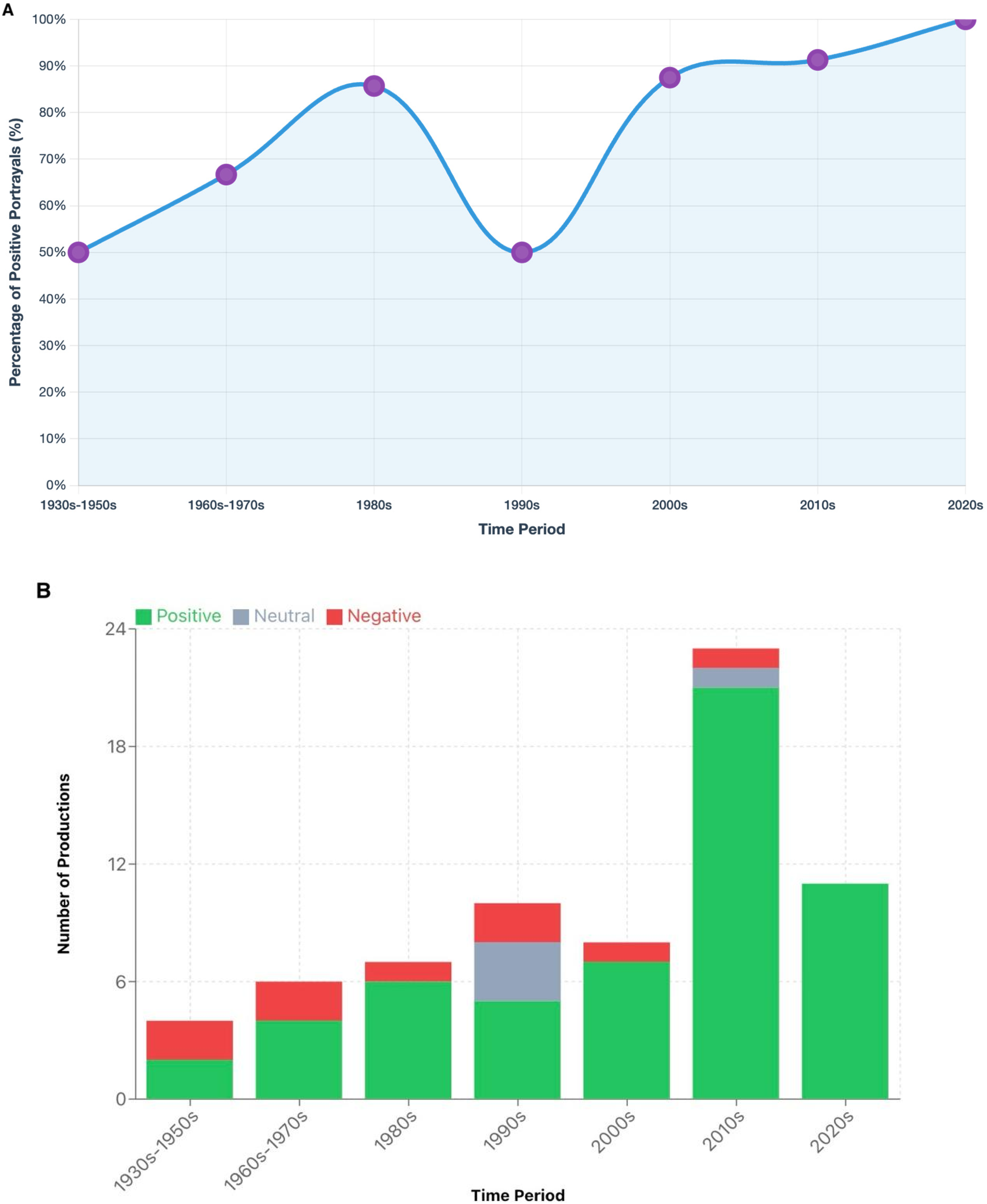
(A) Temporal trends in disability portrayal quality across 68 children's film and television productions (1933-2025). Positive portrayals increased from 63% pre-2000 to 90% post-2000 overall (pooled proportions). The 2020s showed 100% positive portrayals. (B) Number of qualifying productions by time period along with distribution of positive, neutral, and negative portrayals constituting each time period.
A pattern emerged when comparing pre-2000 and post-2000 eras in aggregate. A Fisher's exact test revealed that productions released post-2000 were 5.4 times more likely to depict disability positively overall compared to those released before 2000 (p = 0.01). The pre-2000 group had a pooled positive portrayal proportion of 63% (n = 17/27; 95% CI: 43.9%–78.8%), compared to 90% post-2000 (n = 37/41; 95% CI: 77.4%–96.3%), representing a 27.2 percentage point improvement with a large effect size (Cohen's h = 0.691).
SCI emerged as the most frequently depicted physical disability, representing 40% (n = 27) of all portrayals across the 93-year study period (Figure 3, Supplemental Table 1). This was followed by limb amputation/difference (21%; n = 14), mixed/unspecified (10%; n = 7), mobility impairment (10%; n = 7), and cerebral palsy (4%; n = 3). All other conditions appeared in < 3% of portrayals.
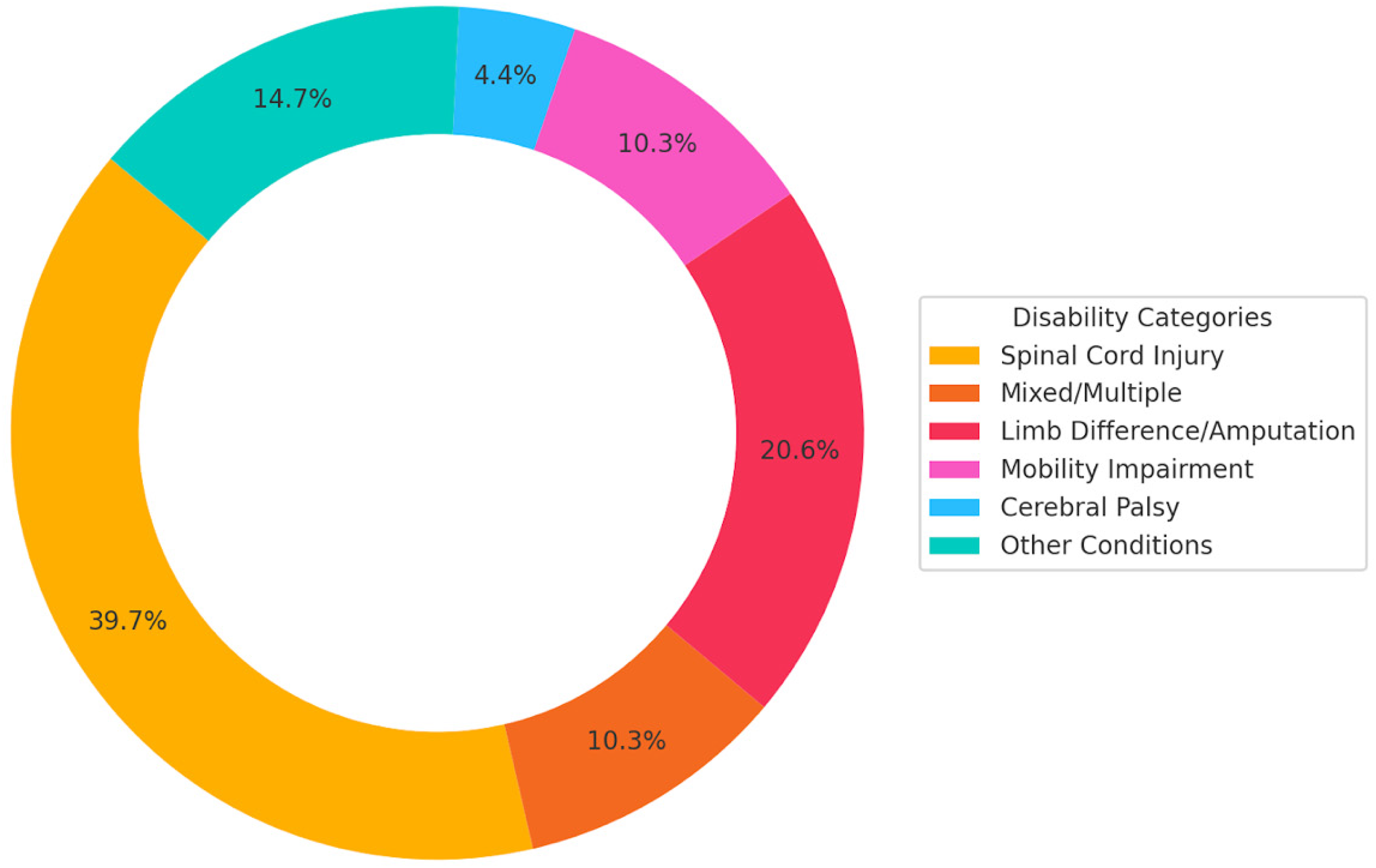
Distribution of physical disability categories across 68 children's media productions (1933–2025). Spinal cord injury was the most common category, comprising 40% (n = 27), followed by limb difference/amputation at 21% (n = 14). Mobility impairment and mixed/multiple conditions each represented 10% (n = 7). Cerebral palsy accounted for 4% (n = 3). All other conditions with individual representation of less than 3% each were combined into an “Other Conditions” category at 15% (n = 10).
Rehabilitation or therapeutic intervention themes appeared in 24% of productions (n = 16/68) (Supplemental Table 1). Of the 16 productions clearly depicting medical, physical, or psychosocial interventions aimed at improving or adapting to physical disability, 10 were released post-2000 (63%) compared to six pre-2000 (38%). Productions containing rehabilitation themes had a higher rate of positive portrayals (94%, n = 15/16) compared to those without (89%, n = 46/52).
Discussion
Temporal trends and cultural context
The documented shift toward positive disability portrayal after 2000 may reflect the cultural impact of landmark disability rights legislation and evolving medical paradigms in pediatric rehabilitation. The ADA in 1990 and subsequent policy developments coincided with changing cinematic narratives, suggesting that legal and social progress may influence media representation. 18 This temporal correlation may have clinical implications. Children with disabilities today are likely to encounter more affirming media messages than previous generations, potentially supporting improved self-concept and social integration during rehabilitation. 19
Of note, the apparent temporary decline in positive portrayals from the 1980s (86%, n = 6/7) to the 1990s (50%, n = 5/10) may either represent proportional variability or real-world cultural phenomena. Given the historical context, one speculative interpretation is that this pattern reflects initial cultural tensions following ADA implementation, as media coverage during this period increasingly emphasized litigation concerns and questioned the legitimacy of certain disability accommodations, particularly for less visible disabilities.20,21 However, the modest absolute difference in positive portrayals (5 versus 6) and small sample sizes limit definitive interpretation. More broadly, if meaningful, this pattern would suggest that cultural shifts following major policy changes may not be immediately reflected in media representation, but rather emerge after a lag period as new narratives become established.
Future research should investigate how emerging disability rights legislation (e.g., Section 504 updates, ADA amendments, expanded accessibility mandates) parallels changes in media representation, and how these shifts together influence population-level perceptions of disability. Additionally, prospective studies connecting media consumption patterns with specific rehabilitation outcomes—such as treatment adherence, assistive device acceptance, goal attainment, and psychosocial adjustment measures—would strengthen evidence-based media guidance.
Representation patterns and clinical implications
While SCI is relatively rare among pediatric patients (∼2 per 100,000 children annually) compared to conditions like cerebral palsy (2–3 per 1000 children) or developmental disabilities overall (∼1 in 6 children),22–24 SCI comprises 40% of portrayals in the dataset, suggesting substantial overrepresentation relative to its population-level epidemiology. This pattern may reflect both SCI's visual accessibility for audiences and its central role in rehabilitation medicine narratives; the clear onset and visible adaptive challenges tied to SCI may lend themselves to cinematic storytelling. 22
Notably, many of these portrayals feature adults with SCI in youth-targeted films, which may further limit the depiction of childhood-onset disability or otherwise skew children's perceptions of which disabilities are most common among their peers. Beyond the question of prevalence, prior content analyses have characterized the quality of SCI representations, finding an overemphasis on cure-focused narratives and miraculous recovery rather than realistic rehabilitation trajectories. These portrayals may shape unrealistic expectations about functional outcomes among patients and families, while also narrowing public understanding of disability diversity and reducing awareness of less visible conditions commonly treated in pediatric rehabilitation settings.25,26
Although many portrayals involved adult-onset conditions such as SCI or amputation, children with congenital or neurodevelopmental disabilities may still identify with broader themes of adaptation and social inclusion. However, the predominance of adult-onset narratives limits opportunities for children with lifelong disabilities to see experiences that mirror their own developmental trajectories, potentially constraining identity formation and self-esteem development.10,27,28 Future audience reception studies are needed to empirically assess whether children with congenital disabilities derive similar psychosocial benefits from adult-onset disability narratives as they do from age- and etiology-concordant representations.
Evolution of narrative complexity
Contemporary productions increasingly feature characters with disabilities in diverse narrative roles beyond traditional medical or inspirational frameworks. Modern portrayals show individuals with disabilities as action heroes (the X-Men series), comedic leads (The Peanut Butter Falcon), and complex protagonists in various genres.11,12 This diversification moves beyond the “supercrip” and “tragic victim” stereotypes that have historically dominated disability representation, offering pediatric patients more varied and realistic role models.29,30 However, the small sample sizes for newer distributors require cautious interpretation.
The superior performance of streaming platforms and contemporary studios in positive portrayals suggests ongoing momentum toward inclusive representation. Netflix's 100% positive portrayal rate, though based on a limited sample size, indicates that newer media distribution models may prioritize authentic disability representation. 31 This trend has practical implications for providers caring for children with medical disabilities who can recommend age-appropriate content that helps reinforce therapeutic goals and positive identity formation.
The emergence of rehabilitation medicine themes in 24% of analyzed productions demonstrates the media's growing sophistication in depicting medical interventions. Early productions often portrayed medical treatment as passive and often futile, while contemporary content increasingly features multidisciplinary teams, adaptive technology, and patient agency in rehabilitation processes (see Supplemental Table 1). This evolution appears to parallel advances in pediatric rehabilitation practice and may help families develop more realistic expectations about outcomes and quality of life.
Generational attitudes and media influence
From a generational lens, given that media portrayals can shape attitudes about disability, 2 perhaps improvements in representation post-2000 may have contributed modestly to generational shifts in explicit attitudes. Research consistently shows that younger cohorts express more favorable attitudes toward intellectual disability compared to older adults, likely reflecting increased exposure through inclusive education policies.32,33 Adults socialized during the post-ADA era (including many Gen X and early-Millennial individuals) are therefore more inclined to report positive explicit opinions toward disability than older cohorts educated prior to widespread inclusion. Research with undergraduate students shows that younger adults who have sustained contact with people with disabilities demonstrate significantly more positive attitudes and reduced social distance across multiple disability types. 34 Large-scale studies comparing temporal trends show that while explicit bias toward disability has declined over time (most notably among younger age groups), implicit bias remains relatively unchanged across generations.35–37 Taken together, these findings suggest that structural inclusion (e.g., integrated schooling) and increasing media visibility may be associated with more positive explicit attitudes among younger cohorts. However, deep-seated implicit attitudes appear more resistant to change.
Clinical implications
Integration into rehabilitation practice
Pediatric rehabilitation providers can, where appropriate, integrate media literacy into psychosocial assessment and treatment planning through several concrete approaches. During initial evaluations, providers may incorporate media literacy screening questions (e.g., “What TV shows or movies do you watch?” “Do you have a favorite character?” “Are there characters who use wheelchairs or other equipment?”) to reveal internalized narratives that may influence treatment engagement. These initial conversations can provide insight into patients’ existing disability schemas and identify opportunities for therapeutic reframing.
Providers can recommend specific positive portrayals (see Supplemental Table 1) to caregivers to help reinforce motivation and belonging, while acknowledging that media examples function best as conversation starters within structured clinical contexts rather than stand-alone educational resources. These media recommendations may be supplemented with guidance on co-viewing practices that maximize psychosocial benefit. 38 For example, after viewing Finding Nemo (which features a protagonist with a limb difference), parents might discuss how the character's “lucky fin” helps him solve problems uniquely, normalizing adaptive approaches. Such applications bridge psychosocial rehabilitation with contemporary cultural touchpoints, helping patients see themselves as capable and valued within their peer context. 9
Therapists working with adolescents may consider integrating media references as adjunctive tools alongside clinical counseling to explore self-concept, peer relationships, and future aspirations. For instance, a therapist might reference Dolphin Tale when introducing prosthetic devices, using the narrative of Winter the dolphin's prosthetic tail to reframe assistive technology as empowering rather than limiting. Similarly, Walk. Ride. Rodeo. provides a contemporary narrative of intensive rehabilitation after SCI that can help set realistic expectations while modeling perseverance and identity reconstruction.
Family engagement and age-appropriate applications
Parents and advocates can leverage the growing availability of authentic disability representation by co-viewing content with children and contextualizing age-appropriate portrayals within broader discussions of diversity, inclusion, and personal identity formation. 38 For younger children, media engagement may help normalize disability and reduce anxiety through observational learning.6,9,39 For adolescents, however, it may influence motivation, self-concept, goal-setting, and expectations regarding independence and peer relationships.7,9
Co-viewing and discussing positive media portrayals in early childhood has been linked to positive psychosocial outcomes, 40 and in this context may yield opportunities to address identity formation, challenge stigma, and set realistic rehabilitation expectations. In this analysis, the documented improvement in disability representation over time provides new opportunities for therapeutic media engagement, where providers can recommend content that reinforces rehabilitation goals and positive identity development.9,40 Conversely, awareness of potentially harmful historical portrayals can inform discussions about stigma and social barriers that patients may encounter.
Addressing representational biases
Biases in available media should be recognized during counseling. The overrepresentation of certain disability types in popular media may create unrealistic expectations or limited understanding among patients and families. Rehabilitation teams should address potential misconceptions arising from skewed media representation, particularly regarding prevalence, prognosis, and functional outcomes. 41 This is especially relevant for conditions less frequently depicted in mainstream content.
While media portrayals may depict some aspects of disability faithfully, these are tools primarily of storytelling and are not high-fidelity educational material. As such, they suffer from biases and oversimplification for narrative purposes. Providers should take the opportunity to familiarize themselves with children's media as it offers both a window into popular perceptions and a way to connect with their patients by recontextualizing media as an accessible resource within the larger therapeutic journey.
Limitations
Study scope and methodology
The design of this study focused on characterizing trends within media that explicitly features physical disability using a specialized disability research archive. This approach enabled systematic longitudinal analysis, but did not aim to estimate what proportion of all children's productions include disability content. The age-appropriate content filter (G, PG, PG-13, TV-14) may have excluded relevant content, as children frequently consume media beyond recommended age ratings, including R-rated films and mature content.
Media format restrictions
Further, this study did not examine other influential media formats such as video games, social media content, or web-based series that increasingly shape children's media consumption patterns. While they were excluded due to the absence of standardized longitudinal archives and the difficulty of applying reproducible disability classification across heterogeneous formats, this focus likely underestimates children's total exposure to disability portrayals across contemporary multi-platform media environments.42,43
Methodological considerations
Additionally, portrayal assessment retained inherent subjectivity despite strong inter-rater reliability, and the analysis did not examine whether actors portraying disabled characters were themselves disabled, an increasingly important authenticity consideration. 44 This study was limited to English-language content, which may not reflect global diversity in disability representation. 45
Conclusion
Nine decades of children's media reveal a statistically significant cultural shift toward positive disability representation, with profound implications for pediatric rehabilitation practice. The documented improvement from 63% to 90% positive portrayals after 2000 reflects broader societal progress in disability rights and medical understanding.30,45 However, continued underrepresentation of certain disability types and ongoing reliance on limited narrative frameworks suggest room for further improvement.
Regarding clinical opportunities, contemporary pediatric rehabilitation providers operate in an unprecedented era of positive media representation for childhood disability. This cultural shift provides new opportunities for therapeutic engagement with popular media while requiring continued advocacy for authentic, diverse portrayals that reflect the full spectrum of conditions encountered in clinical practice.42,46 As streaming platforms and global content production continue expanding, the potential for further improvement in disability representation offers hope for future generations of children with disabilities who will see themselves reflected more accurately and positively in the stories that shape our collective imagination.42,46
From a systems-level standpoint, this temporal shift in media representation may contribute to generational differences in disability attitudes among caregivers, educators, and the public more broadly. 47 Parents whose formative media exposure occurred predominantly pre-2000 may harbor residual implicit biases from earlier stigmatizing portrayals, potentially influencing treatment expectations and therapeutic engagement.3,27,28 Health providers may consider age-adjusted counseling approaches that acknowledge and address these media-influenced preconceptions about childhood disability outcomes.
Clinicians, educators, and advocates can use these insights to select media that promotes acceptance, inclusion, and realistic expectations of rehabilitation outcomes while remaining mindful of residual biases and underrepresentation.
Supplemental Material
sj-docx-1-prm-10.1177_18758894261441393 - Supplemental material for Growing stronger: Nine decades of physical disability representation in children's media and implications for pediatric rehabilitation
Supplemental material, sj-docx-1-prm-10.1177_18758894261441393 for Growing stronger: Nine decades of physical disability representation in children's media and implications for pediatric rehabilitation by Danyal Tahseen, Amanda Saenz, Rhoda Hijazi, Jasmine Wu and Taron Davis in Journal of Pediatric Rehabilitation Medicine
Footnotes
Acknowledgments
We thank the Vanderbilt Peabody College for access to the media database.

Ethical approval and informed consent
Ethical review and informed consent were not required, as the study is a content analysis of publicly available media. No human or animal participants were involved.
Author contributions
Conceptualization: Danyal Tahseen, Taron Davis
Data curation: Danyal Tahseen, Amanda Saenz, Rhoda Hijazi
Formal analysis: Danyal Tahseen, Amanda Saenz, Jasmine Wu
Methodology: Danyal Tahseen, Taron Davis
Visualization: Danyal Tahseen, Amanda Saenz, Jasmine Wu
Writing – original draft: Danyal Tahseen, Amanda Saenz
Writing – review & editing: Rhoda Hijazi, Jasmine Wu, Taron Davis
Funding
The authors received no financial support for the research, authorship, and/or publication of this article.
Declaration of conflicting interests
The authors declared no potential conflicts of interest with respect to the research, authorship, and/or publication of this article.
Data availability statement
The datasets generated and analyzed during the study are included within this manuscript. Any additional information is available from the corresponding author upon reasonable request.
Supplemental material
Supplemental material for this article is available online.