



Abstract
Purpose
The growing interest among children in digital play provides new rehabilitation opportunities in hospital settings. There are, however, no published reviews on digital play interventions for the functional rehabilitation of children and adolescents across diagnoses and outcomes in hospital and rehabilitation settings. This scoping review aimed to identify and map the characteristics of digital play for functional rehabilitation in hospital and rehabilitation settings for children and adolescents to inform researchers and clinicians.
Methods
Studies including participants aged ≤18 years investigating digital play and functional rehabilitation in hospital and rehabilitation settings were included. Reviews, text and opinion papers, conference papers, case studies, and studies with fewer than five participants were excluded. Five scientific databases were searched. The final search was conducted in October 2022. Four authors performed the study selection and data extraction.
Results
Of 13,663 references, 90 studies met the inclusion criteria. Digital play for rehabilitation was used in clinical settings, including hospitals, outpatient departments, and rehabilitation centres. Some interventions were conducted in human movement laboratories or at home. The relevant studies involved a wide range of disease categories, primarily neurological. A conceptual framework comprising five categories for gaming technologies utilizing digital play and rehabilitation was proposed: (1) traditional gaming platforms, (2) extended reality, (3) robotics and assistive technology, (4) sensors, and (5) rehabilitation systems. One hundred eighty different outcome measures used to evaluate the interventions were identified, almost one-third of which were unvalidated. The studies generally failed to report limitations and barriers to implementation.
Conclusion
This scoping review gives a practical overview to assist and inspire healthcare professionals and researchers in digital play and rehabilitation, elucidating technology for rehabilitation within specific clinical contexts. In addition, this scoping review facilitates the exploration of implementation prospects associated with various technologies. Digital play and rehabilitation are primarily initiated in outpatient departments targeting children with neurological diseases. Future studies should investigate the potential of using digital play for the early rehabilitation of hospitalized children with various diseases.
Introduction
Digital play is an emerging field within healthcare and of increasing relevance with more children of all ages using technologies in daily life.1,2 Concerns about screen time and its impact on child development and well-being are widespread. Several studies have linked sedentary screen time with myopia, increased body mass index, poorer development, and mental health issues.3,4 Consequently, the World Health Organization (WHO) recommends minimal sedentary screen time for children and youth (<1 h). 5
However, active screen time has been shown to promote healthy behaviour changes6,7 and may have therapeutic potential in rehabilitating children and adolescents, as combining digital play with rehabilitation can benefit those at risk of suppressed play due to disabilities or illness.8–10 Digital play does not have a clear scholarly definition but involves actively engagement in playful activities using various digital technologies. 11 For the above reasons, a scoping review of the types of digital play interventions that are applied in the rehabilitation of children and adolescents in outpatient departments, rehabilitation centres, and inpatient care (in-hospital) is relevant. From this point on, these settings will collectively be referred to as ‘hospital and rehabilitation settings.’
A preliminary literature search did not identify any existing systematic reviews of peer-reviewed literature on digital play interventions for the functional rehabilitation of children and adolescents in hospital and rehabilitation settings. Previous studies have investigated play in hospitals, 2 but the search for the current study was limited to digital play. Other systematic or scoping reviews on digital play were limited to specific clinical settings 12 or diagnoses (e.g., neurological disorders,13,14 cancer, 15 and asthma 16 ).
The aim of this scoping review was to inform and inspire future approaches of digital play interventions for rehabilitation of children and adolescents in hospital and rehabilitation settings. The primary objective was to identify and map the characteristics of digital play interventions for rehabilitation. Secondary objectives were to investigate how they were applied, to which patient categories, and which outcome measures had been used.
Materials and methods
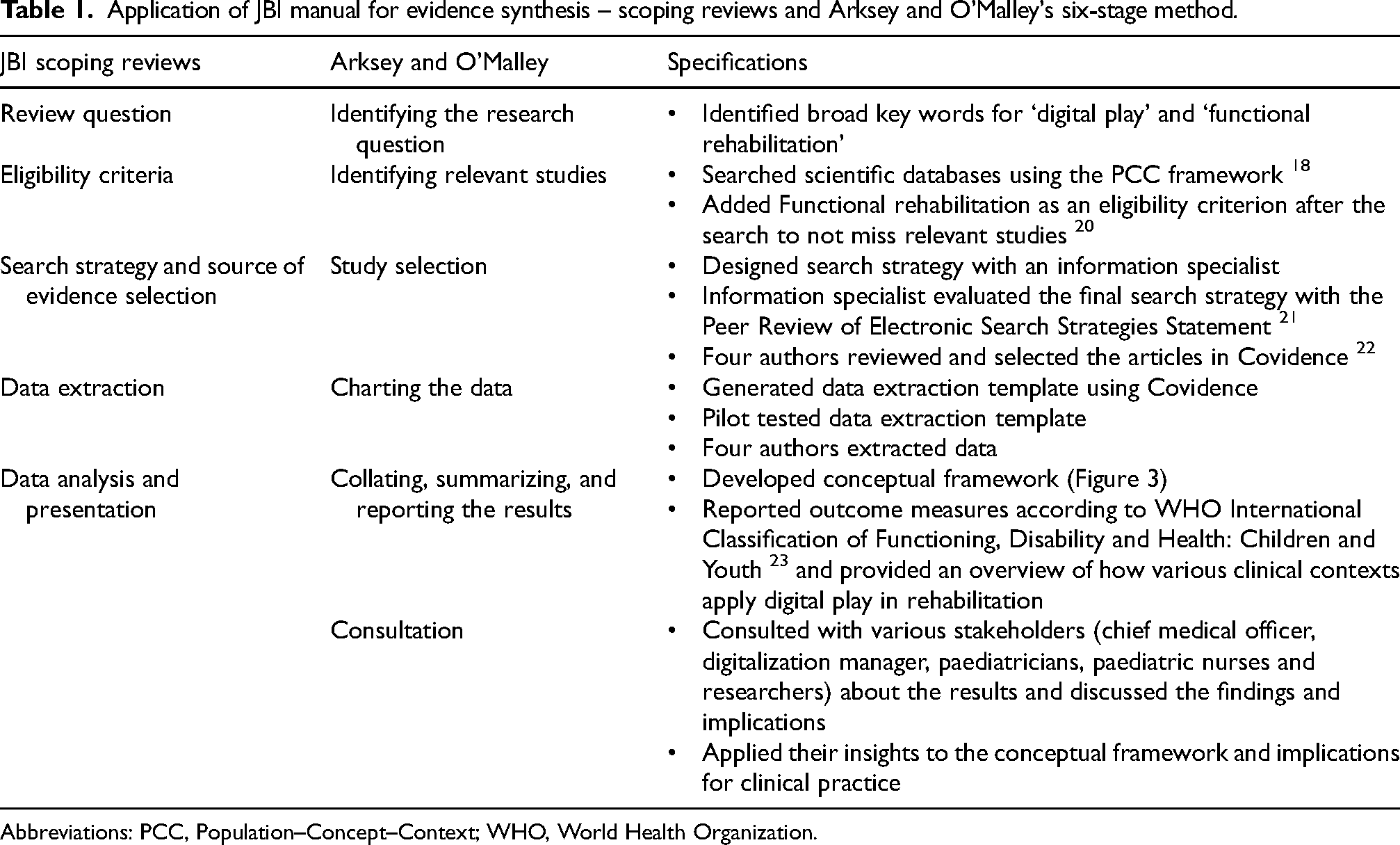
This scoping review was conducted in accordance with Arksey and O’Malley 17 and the JBI Manual for Evidence Synthesis – Scoping Review18,19 (Table 1). The protocol is available in Supplementary Material 1. Logistical and administrative delays, including the need to determine participants for article screening and secure funding for the process, delayed the formal registration of the protocol until March 2023. No deviations were made between the initial protocol and the scoping review process.
Application of JBI manual for evidence synthesis – scoping reviews and Arksey and O’Malley's six-stage method.
Abbreviations: PCC, Population–Concept–Context; WHO, World Health Organization.
Literature search and study selection
The search strategy was developed with an information specialist and evaluated with the PRESS statement. 21 The index terms were adapted to the indexing system of each database. Free text words were searched either alone or combined with Boolean or proximity operators. Limitations on date or language were not imposed. Literature in foreign languages was translated with Google Translate. Additional information is available in Supplementary Material 2(a).
Participants: Studies including children and adolescents (mean/median age of study participants ≤18 years) were considered. Those with patients across all diagnoses were included and studies on children without functional loss due to disease or injury were excluded.
Concept: The concept of digital play in relation to functional rehabilitation was explored; the types of technologies applied, and outcome measures were investigated. Digital play was defined as active playful engagement in any digital technology.24,25 Watching a video or listening to music was not considered digital play. In this review, functional rehabilitation covered interventions aimed at ameliorating functional limitations caused by diseases or injuries. Digital play had to be included in the aims of the studies, and there had to be at least one functional outcome measure for studies to be included. There were no limitations on type of technology or study outcomes.
Context: Studies involving children in somatic hospital and rehabilitation settings were included. This was defined as in- and outpatient settings, including rehabilitation centres and treatment in private homes, preceded by and/or followed up in an in- or outpatient setting. 2
All types of qualitative and quantitative study designs were considered, except reviews, text and opinion papers, conference papers, case reports, case series, and studies with <5 participants. The studies had to provide empirical data derived from systematic observation or experimentation, regardless of whether it was quantitative (i.e., numerical data) or qualitative (i.e., themes or patterns identified through interviews or focus groups). The exclusion of reviews, opinion papers, conference papers, case reports, case series, and studies with fewer than five participants was due to resource constraints and the overwhelming volume of literature. This focused approach was necessary to manage the review's scope and complexity. Empirical studies were prioritized to ensure the synthesis of verifiable data, which are crucial for developing a robust conceptual framework. These databases were searched: MEDLINE, Embase, Cochrane Library, CINAHL, and ACM Digital Library. Additional information is available in Supplementary Material 2(a) and (b). Citations were imported into Covidence. 22 A pilot test of 30 articles clarified inclusion and exclusion criteria, and four authors (LW, CM, ETN, SMS) independently screened the remaining titles/abstracts and full texts. Disagreements were resolved by consensus or an additional author (JLS, MS) (Figure 1). The articles were presented using the Preferred Reporting Items for Systematic Reviews and Meta-Analyses extension for Scoping Reviews (PRISMA-ScR) 26 (Supplementary Material 2(c)).
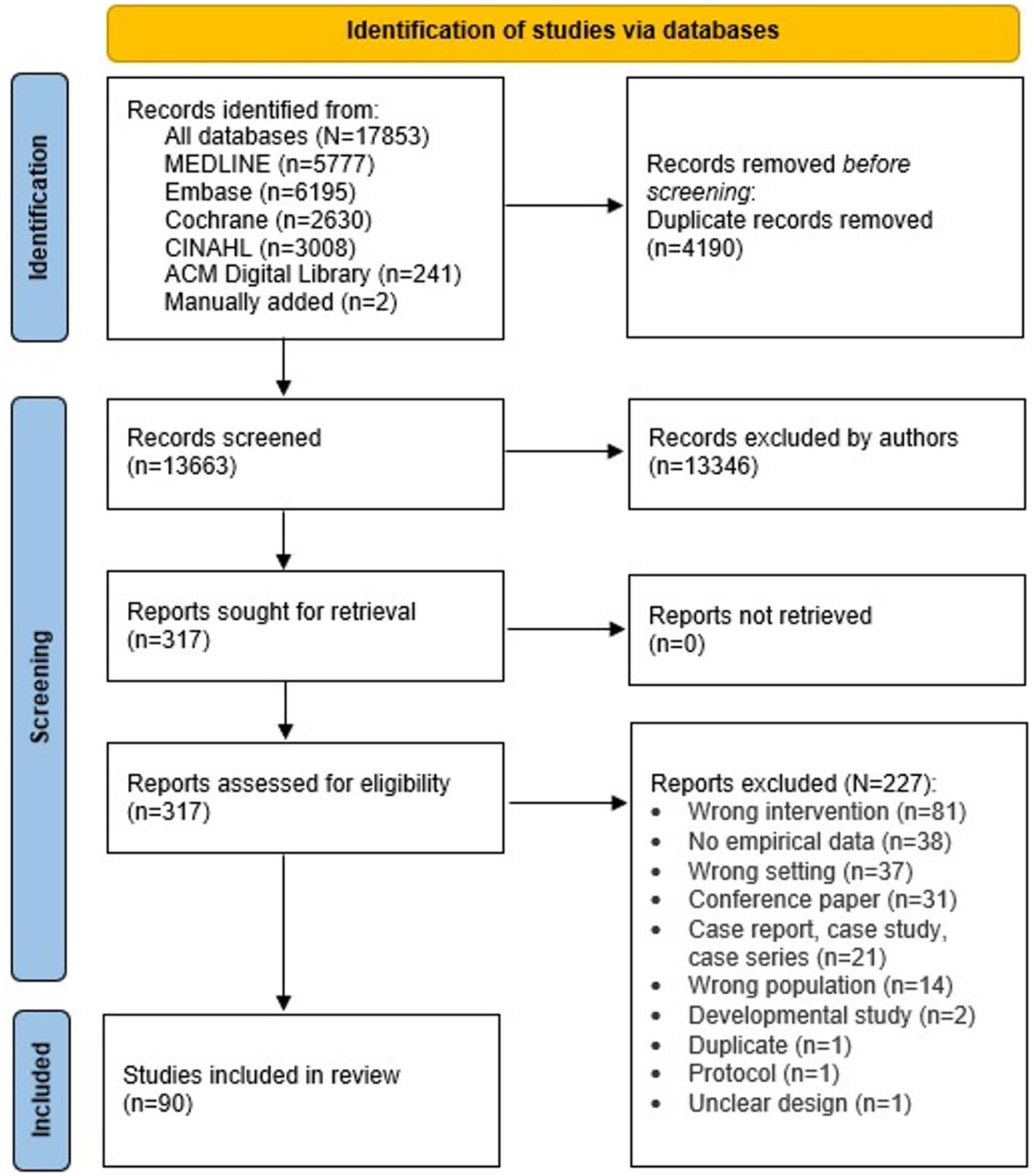
Preferred reporting items for systematic reviews and meta-analyses (PRISMA) flowchart.
Data charting
The Covidence Data Extraction feature was used, and a data-charting template was developed based on data extraction from 10 of the included articles (Table 1, Supplementary Material 2(d)). Disagreements were resolved by consensus or by an additional author. Data analysis was conducted using Microsoft Excel (Microsoft 365 MSO Version 2202), and descriptive statistics were conducted using IBM SPSS Statistics 25. The WHO International Classification of Functioning, Disability and Health: Children and Youth (ICF-CY) 23 was used to catalogue rehabilitation outcomes. Based on Arntz et al., 27 a conceptual framework was created through an iterative thematic process with stakeholders comprising clinicians, researchers, and technicians with a special interest in and knowledge in the field of digital play in hospital and rehabilitation settings (Table 1). The authors identified prominent defining features of the gaming technologies, which were categorized thematically and presented to the stakeholders, leading to iterative revisions until consensus on the conceptual framework was reached. The clinical applicability of the conceptual framework was evaluated through a qualitative deductive approach. 28
Results
Study characteristics
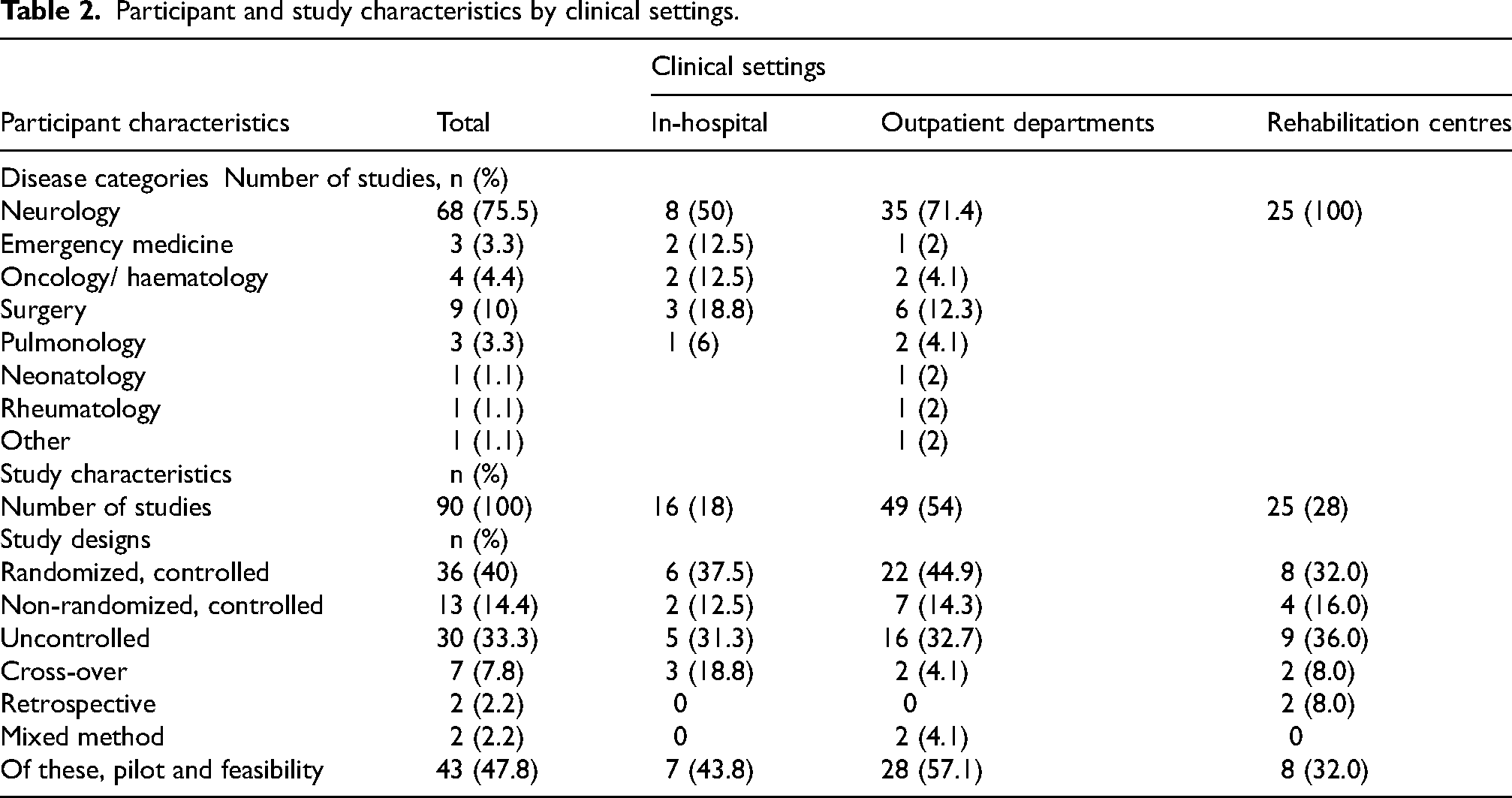
Ninety studies were included (Figure 1, Supplementary Material 3). Figure 2(a) presents the publications by country. All studies were published in English, except for one study in Spanish. The field of digital play and rehabilitation has progressed since 2008, the earliest year of publication of the included studies (Figure 2(b)). Approximately one-third of the studies were randomized controlled trials (11 of which were feasibility/pilot trials). The remaining were either non-randomized, crossover, uncontrolled, retrospective, or mixed method (Table 2). Almost half of the studies were feasibility trials. The sample sizes were generally small, with <34 participants in 75% of the studies (Figure 2(c)). The children were recruited from hospitals (mean population size, n = 21), outpatient departments (mean population size, n = 30), or rehabilitation centres (mean population size, n = 26). The interventions were conducted in hospitals, in outpatient departments, in rehabilitation centres, at home, or in human movement laboratories (Table 2). The disease categories varied within the clinical settings, with five different disease categories in-hospital, eight in outpatient departments, and one in rehabilitation centres (neurological diseases) (Table 2). The children were diagnosed with 21 different diseases, the majority of which (76%) were neurological (60% cerebral palsy) (Table 2). Participants were recruited from the following hospital departments: Neurology (e.g., cerebral palsy), Emergency (e.g., fractures), Oncology/Haematology, Surgery (e.g., burn injuries, congenital abnormalities), Pulmonology (e.g., cardiorespiratory rehabilitation for cystic fibrosis), Neonatology, and Rheumatology (e.g., idiopathic juvenile arthritis) (Table 2). Additional information is available in Supplementary Material 4.
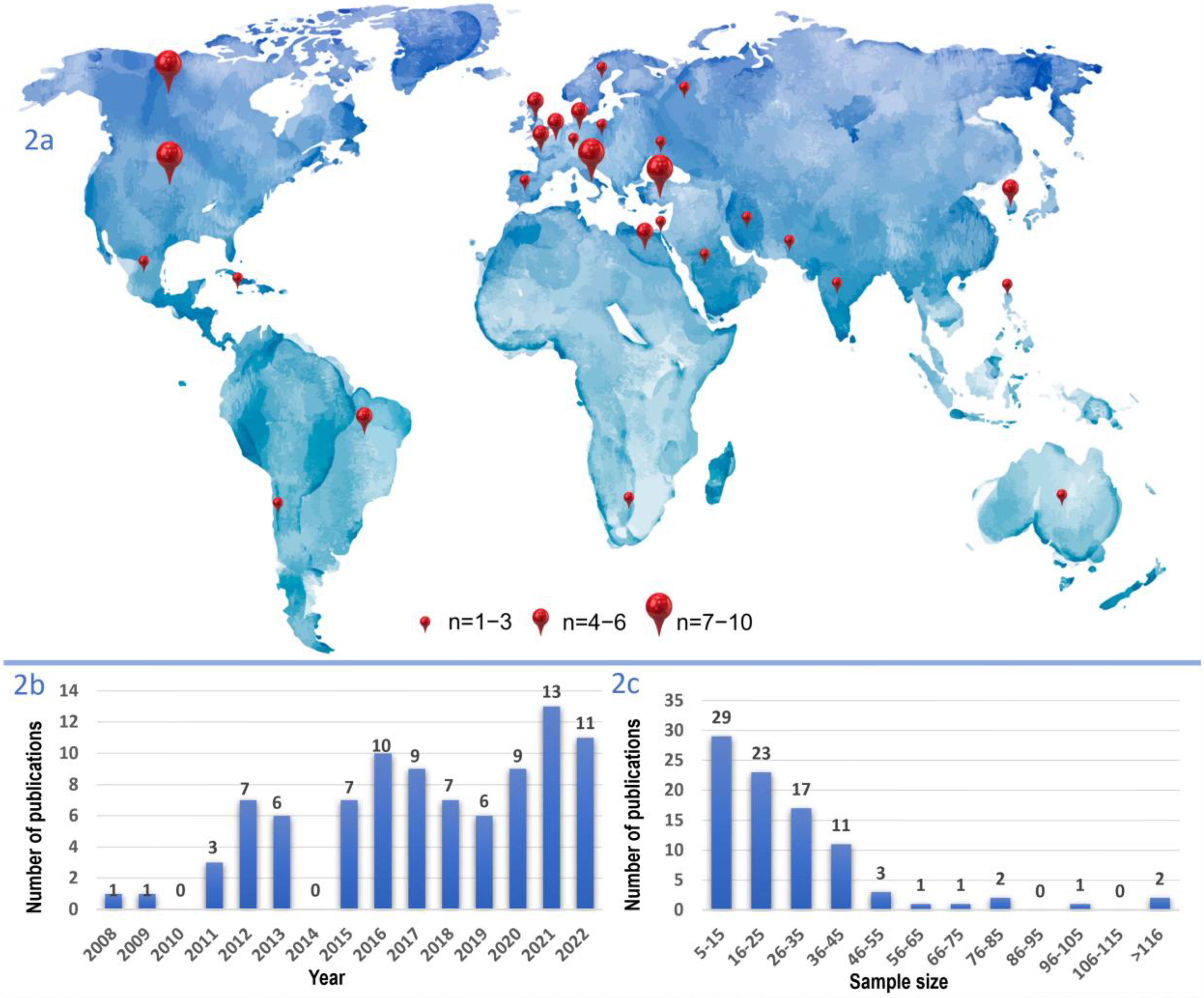
Number of publications by country (a), number of publications per year (b), and number of publications by sample size (c). Open source illustration of world map from: https://img.freepik.com/free-vector/blue-watercolor-map-world_125540-1561.jpg
Participant and study characteristics by clinical settings.
Four general rehabilitation aims were identified: neuromusculoskeletal, cardiorespiratory, functional, and sensory rehabilitation. Neuromusculoskeletal rehabilitation aims focus on the recovery of muscles, bones, and joints (based on Body functions, chapter 7 in the WHO's ICF-CY: Neuromusculoskeletal and movement-related functions). 23 Cardiorespiratory rehabilitation aims to improve heart and lung function to enhance endurance, oxygenation, and overall cardiovascular health (Body structures, chapter 4, WHO ICF-CY: Functions of the cardiovascular, haematological, immunological and respiratory systems). 23 Functional rehabilitation (Activities and participation, chapter 2, WHO ICF-CY: General tasks and demands) 23 focuses on enabling individuals to perform daily activities and regain independence. Sensory rehabilitation (Body functions, chapter 2, WHO ICF-CY: Sensory functions and pain) 23 aims to adapt or improve sensory processing of pain and fatigue.
Digital play
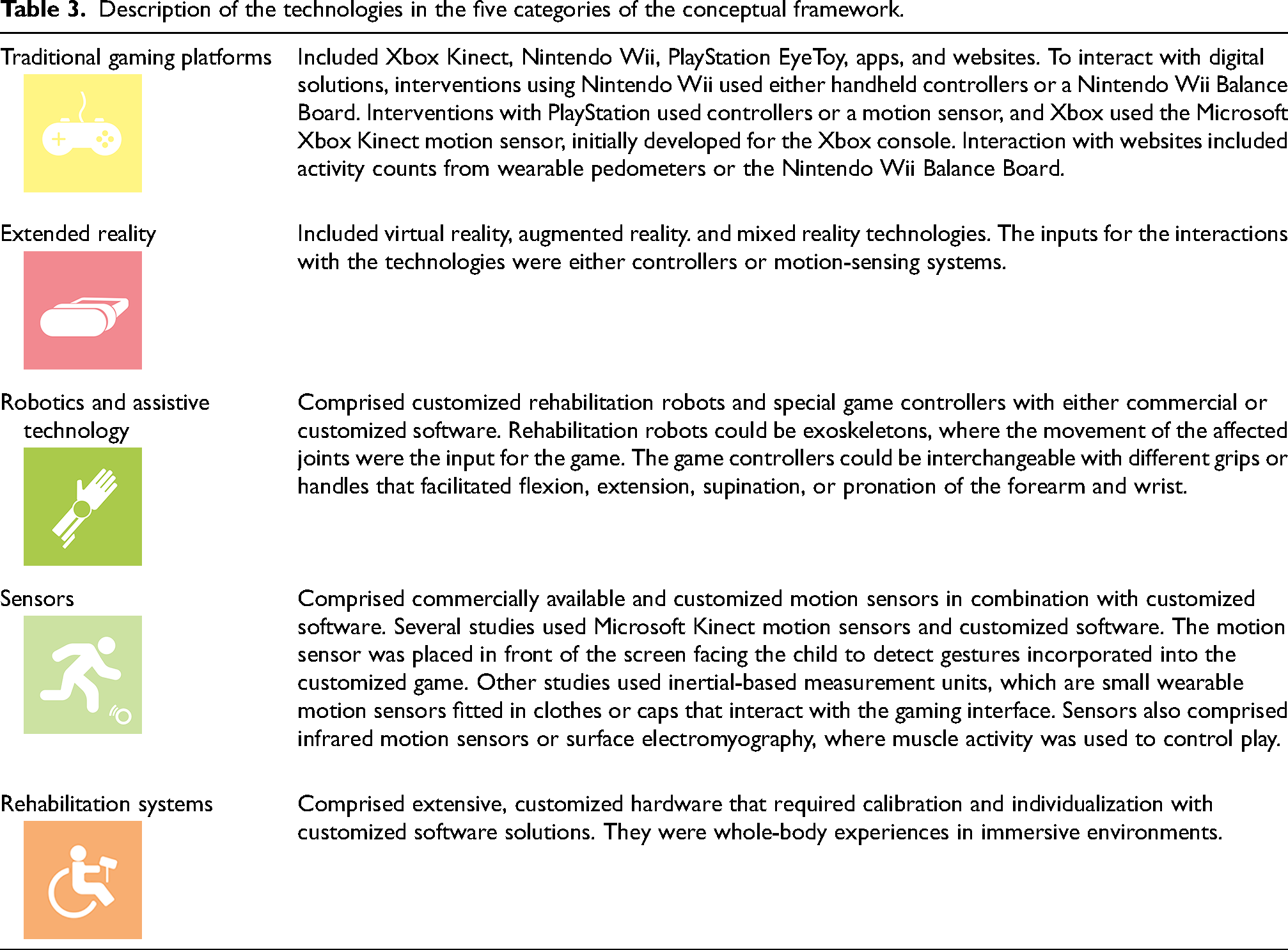
Digital play was divided into five categories (Figure 3, Table 3): traditional gaming platforms (n = 51); extended reality (n = 5); robotics and assistive technology (n = 13); sensors (n = 12); and rehabilitation systems (n = 9).
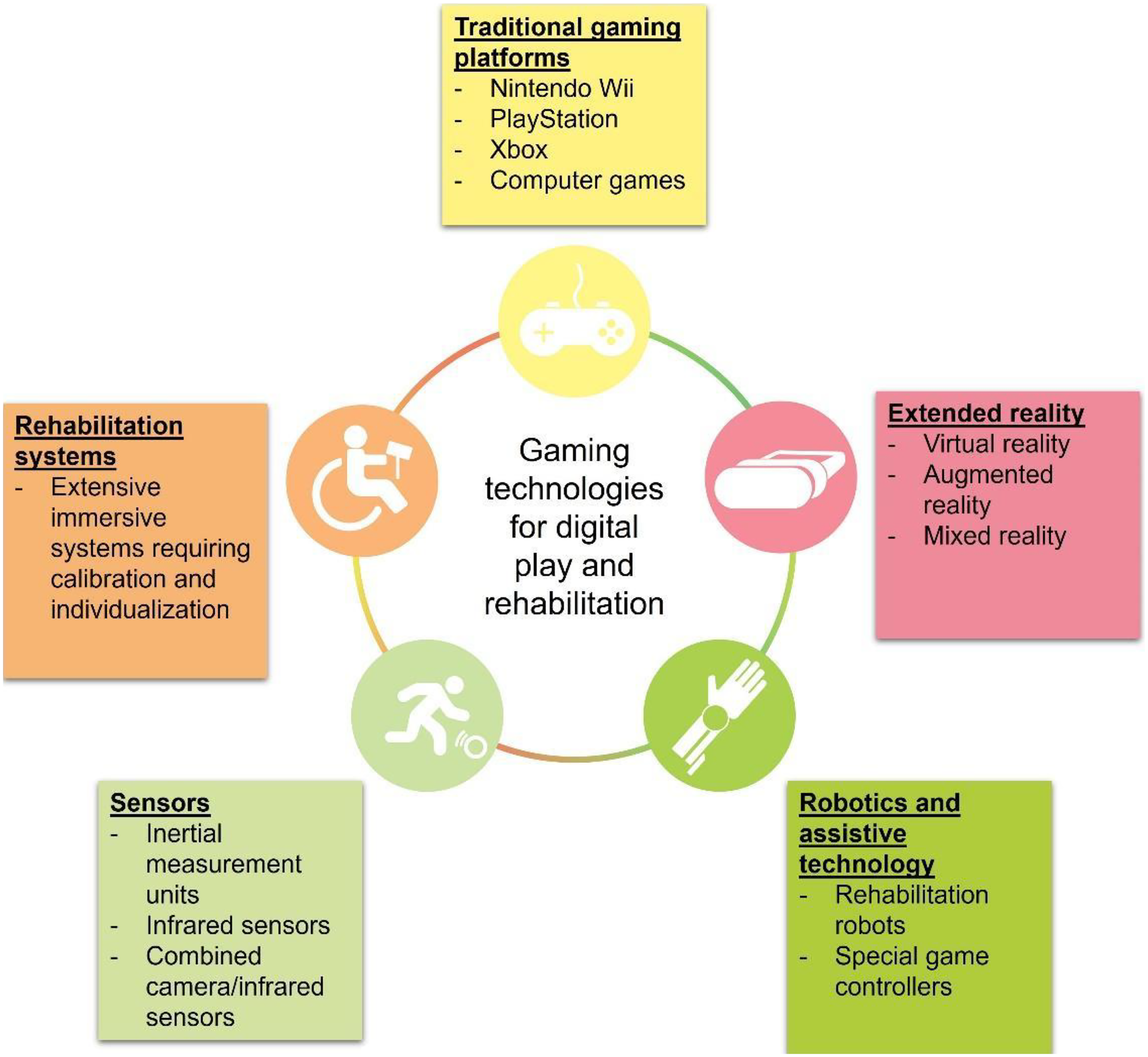
Conceptual framework of gaming technologies utilizing digital play and rehabilitation.
Description of the technologies in the five categories of the conceptual framework.
Traditional gaming platforms
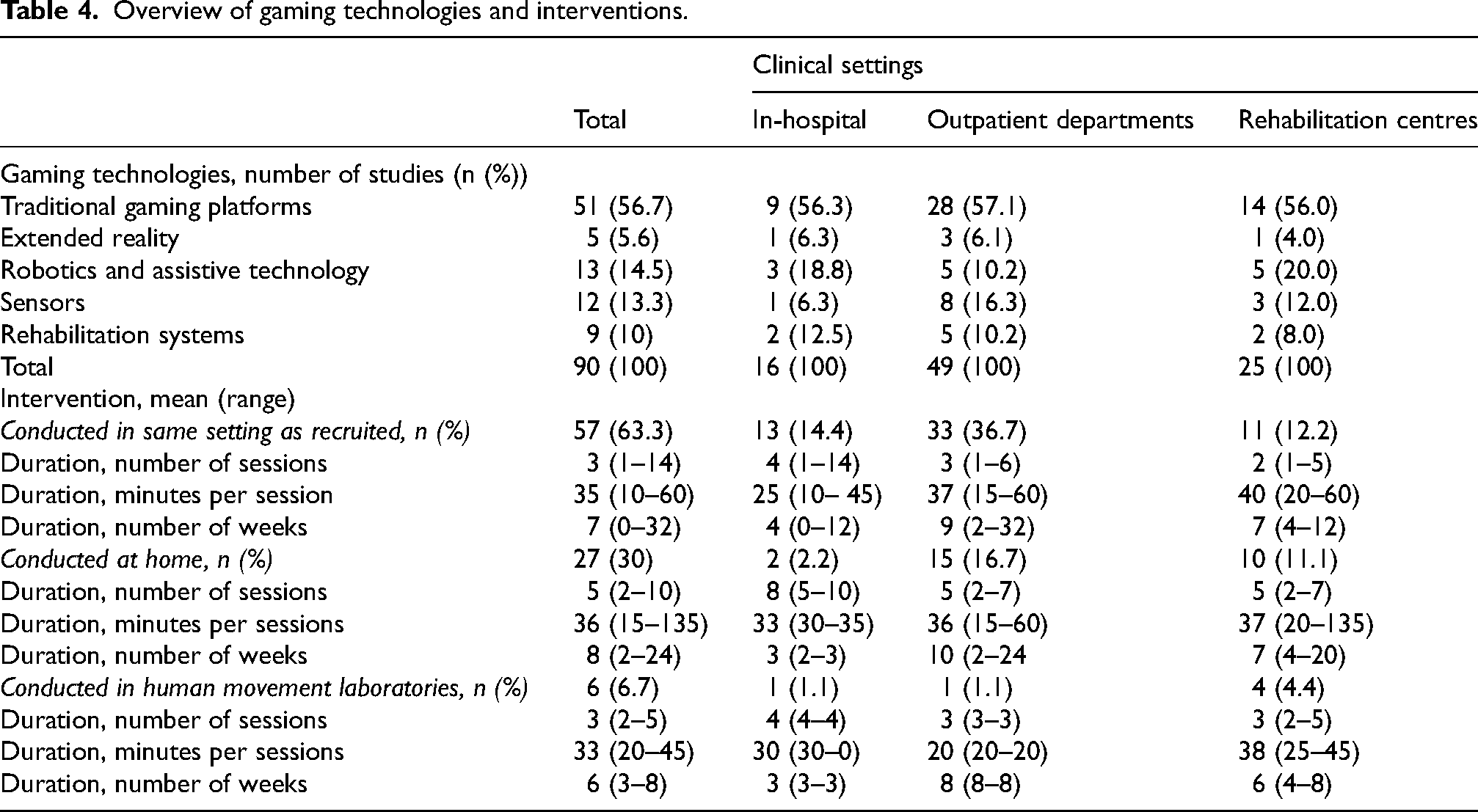
Over half of the studies (51/90 studies) were in the category of traditional gaming platforms, which were used most frequently across clinical settings (Table 4) and primarily aimed at neuromusculoskeletal and functional outcomes (Figure 4). They were used for children with neurological, oncological/haematological, surgical, pulmonary, and rheumatological diseases, as well as in emergency medicine.
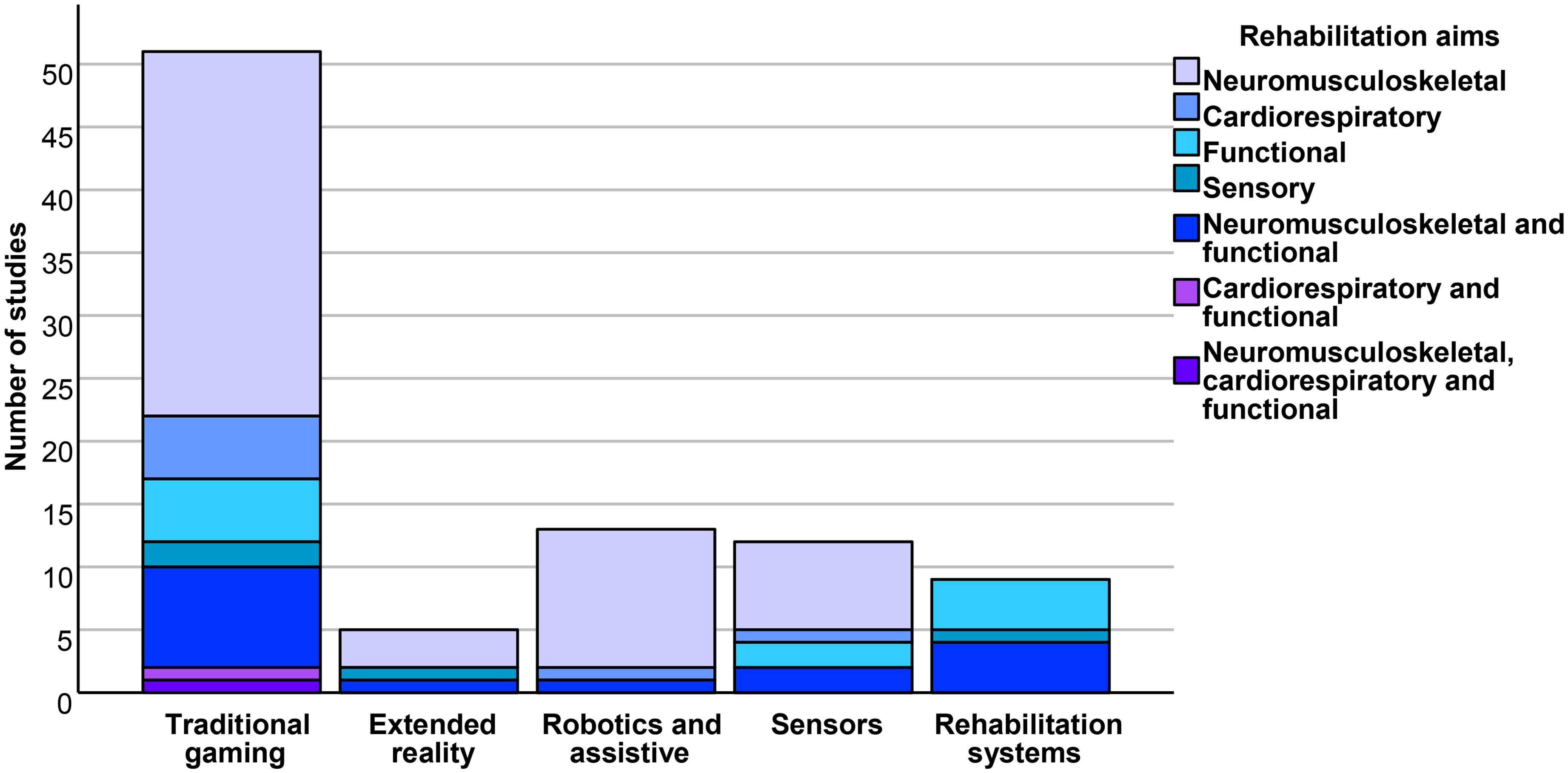
Rehabilitation aims and the gaming technologies applied.
Overview of gaming technologies and interventions.
Extended reality
Five of the 90 studies used extended reality as an intervention for rehabilitation across clinical settings (Table 4). For example, virtual reality with a head-mounted display or augmented reality was used in rehabilitation for children with neurological and surgical diseases. Extended reality was primarily used for assessing neuromusculoskeletal outcomes (Figure 4).
Robotics and assistive technology
In 13 of the 90 studies, robotics and assistive technologies were used as rehabilitation interventions, primarily in outpatient departments and rehabilitation centres (Table 4) for children with neurological and surgical diseases, primarily to assess neuromusculoskeletal outcomes (Figure 4).
Sensors
Twelve of the 90 studies reported interventions using sensors, which were primarily used in outpatient departments (Table 4) for children with neurological diseases and oncological/haematological diseases. They were mainly used for assessing functional and neuromusculoskeletal outcomes (Figure 4).
Rehabilitation systems
In nine of the 90 studies, the interventions comprised rehabilitation systems, which were primarily used in outpatient departments (Table 4) for children with neurological diseases or in neonatology. They were mainly used to assess functional outcomes (Figure 4).
Digital play varied within the clinical settings (Table 4). The intervention durations varied as well, where in-hospital interventions were shorter yet had sessions more frequently than outpatient departments and rehabilitation centres (Table 4). Interventions conducted at home lasted notably longer, spanning more weeks and featuring more sessions than any other setting. The most frequent rehabilitation aim across clinical settings was neuromusculoskeletal, followed by functional rehabilitation. Only a few studies assessed cardiorespiratory rehabilitation aims.
Outcome measures
For the 90 studies, 180 different outcome measures were identified, of which 27% (n = 48) were unvalidated methods. The composition of outcome measures was generally unique in each study.
Rehabilitation outcomes were divided into three categories based on ICF-CY domains 23 (Table 5). Supplementary Material 4 contains a list of the 180 applied outcome measures, which varied considerably within each domain. Among the 180 reported outcome measures, 143 were functional outcomes, with the remaining assessing sensory outcomes, quality of life, and motivation. Some outcome measures were also used for populations other than the intended one, were validated for populations other than the one in which they were applied, or were used to assess more than the digital interventions ideally could impact (such as Gross Motor Function Measure, Movement Assessment Battery for Children-2, Infant Motor Profile, and Peabody Developmental Motor Scale).
Overview of the 180 different outcome measures applied based on ICF-CY.
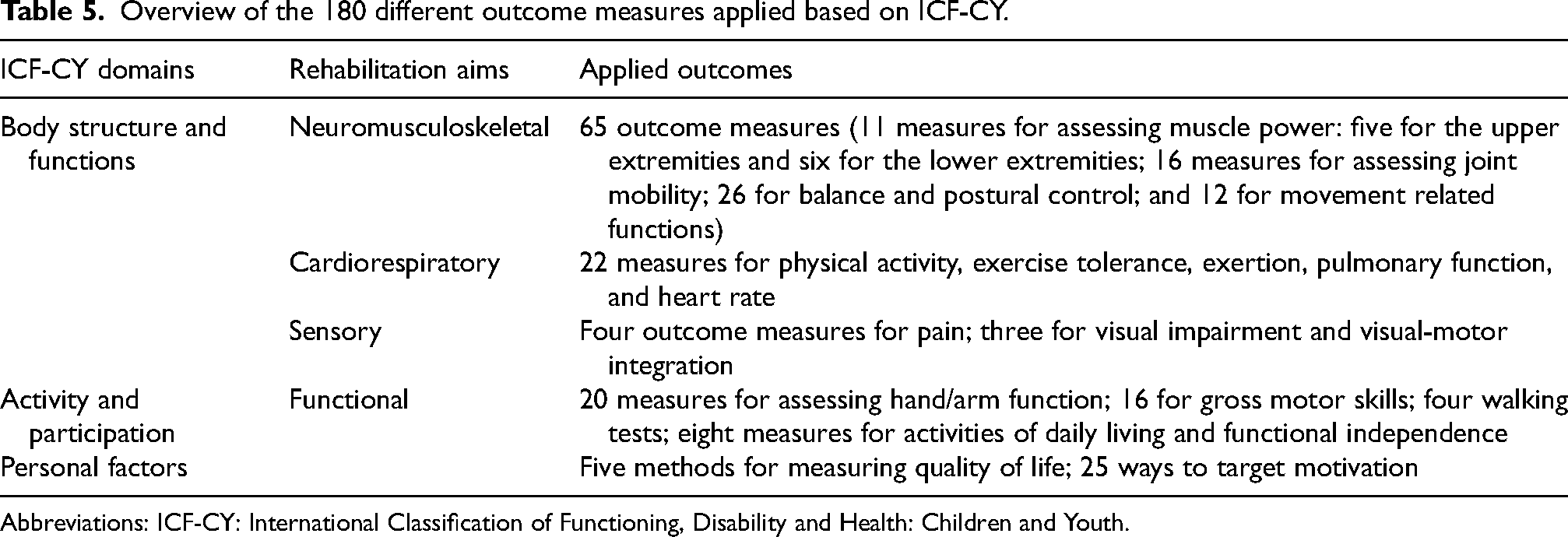
Abbreviations: ICF-CY: International Classification of Functioning, Disability and Health: Children and Youth.
Of the 90 studies, 76 mentioned digital play as a motivating factor. Only 24 measured motivation, referred to as either satisfaction, adherence, fun, enjoyment, or engagement. Only four studies used validated questionnaires to measure motivation (PedsQL-Health Satisfaction, Parenting Stress Index-Short Form, Children's Assessment of Participation and Enjoyment, and the Dimensions of Mastery Motivation Questionnaire), while the remaining 20 studies used unvalidated approaches, such as modified questionnaires, customized pain scores, Likert-type scales, or semi-structured interviews.
No implementation strategies were described in any of the studies. Only a few mentioned costs, specifically highlighting traditional gaming platforms as low-cost technologies.
Discussion
This review, which comprised 90 studies, found that digital play in the rehabilitation of children and adolescents is an emerging field of research that examines a diverse range of gaming technologies, their uses, and rehabilitation aims. A framework of five categories for gaming technologies was developed: traditional gaming platforms, extended reality, robotics and assistive technology, sensors, and rehabilitation systems. The purpose of the framework was to identify the key technological features of digital play and rehabilitation to provide researchers and clinicians with an overview of existing technologies in paediatric rehabilitation. Digital play in rehabilitation interventions was used in-hospital, in outpatient departments, and in rehabilitation centres for 0–32 weeks, targeting a wide array of disease categories, primarily neurological. The studies encompassed a comprehensive range of outcome measures, of which almost one-third were unvalidated.
Digital play was primarily used for the rehabilitation of children with neurological conditions, for example, cerebral palsy, one of the most common causes of motor disability in childhood. 29 Unsurprisingly, since neurological conditions often require lifelong rehabilitation, many of the studies involved children with neurological disabilities. Early onset of rehabilitation during hospitalization for other conditions, however, has been reported to result in a higher level of function at discharge and shorter hospital stays, which may foster a quicker recovery and return to everyday life.30–33 Therefore, the limited attention given to digital play as a component for in-hospital paediatric rehabilitation was intriguing.
Traditional gaming platforms are the most frequently used technology for rehabilitation across clinical settings, likely due to easy acquisition, low cost, and commercial availability, making them easy to implement. Though they can potentially be upscaled, they are not designed for rehabilitation and may not sufficiently accommodate children's rehabilitation needs. 34
Extended reality was used to an unexpectedly limited degree as it has gained momentum in other aspects of healthcare as an affordable, emerging initiative to distract children before and during medical procedures.2,35 The low to medium cost, availability, scalability, and small size offer a vast potential for implementation across clinical settings. 34
Robotics and assistive technology are highly specialized, of medium to high cost, 34 and require specialized equipment, space, software and trained staff, making them difficult to implement as home-based rehabilitation. Although availability and scalability may be an issue, they are customized to accommodate children's rehabilitation needs. 34
Sensors are seemingly easy to implement across clinical settings due to ease of acquisition, scalability and low to medium cost. They occupy no more space than traditional gaming platforms and use customized software to accommodate children's rehabilitation needs. 34
Rehabilitation systems are costly, occupy a significant amount of space, and require advanced technical skills, but can potentially target children's rehabilitation needs. Possibly challenging to acquire and upscale, 34 their application will depend on the resources available in clinical settings.
The 90 studies encompassed 180 different outcome measures. Other scoping reviews have similarly highlighted substantial heterogeneity in reported outcomes,2,36 which in combination with unvalidated measures is concerning since it undermines the reliability of findings, complicating their generalization across scientific literature. Several studies applied extensive measurements to assess gross motor function skills. It is doubtful that a relatively short intervention can impact a child's gross motor skills. Measurement methods should be validated and appropriate and target what the interventions may impact. Although critical appraisal is not an aspect of scoping reviews, 19 the studies were generally poorly designed and described, e.g., small sample sizes, non-randomized designs, and uncontrolled trials. Not to mention that half were feasibility studies, making it difficult to demonstrate that changes in outcomes were attributable to the interventions.
Most of the studies acknowledged digital play as a source of motivation; however, only a few studies measured motivation, indicating that it was mostly a theoretical assumption. Motivation to engage in digital play is multifaceted. 37 According to Staiano et al., the external motivation to use digital play is the multitude of stimuli and behavioural contingencies (reward/feedback, game play advancement) in immersive digital experiences. 37 Providing players with a sense of autonomy and competence can lead to internal motivation.37,38 Children and adolescents quickly lose interest in digital play, 37 which means the intervention design is considerably important. Internal and external motivation are contingent upon the setting and the game's design. 37 As the field of digital play is versatile and rapidly evolving, care must be taken in generalising about the underlying motivation, which is why digital interventions should be assessed individually.
Strengths and limitations
Relevant standards and guidelines for scoping reviews17–19 and ICF-CY 23 were followed to report the results. However, a deviation from standard scoping review methods occurred as not all available information on the topic was collated and synthesized; reviews, opinion papers, conference papers, case reports, case series, and studies with fewer than five participants were excluded to limit the overwhelming volume of literature. Since digital play is an emerging field, the digital play landscape may be broader than this review reflects. Many studies with less than five participants were excluded, which may have included studies testing new technologies not otherwise covered in this review. The evolving nature of digital play may have affected the search strategy, as some synonyms for digital play may not have been included. The substantial heterogeneity of definitions and outcome measures makes generalizability difficult. In the studies in this review, there were inconsistencies in whether gaming technologies were categorized based on hardware, software, or functionality of the device, which may be due to the overlapping nature of the technological features, e.g., several technologies use motion sensors. Some of the technologies in this review were designed specifically for rehabilitation and are thus not featured in common descriptions of gaming technologies, which reflects the inadequacy of current definitions. Thus, to ameliorate the lack of consensus, a conceptual framework was proposed.
Gaps and future research
The conceptual framework for digital play and rehabilitation provides a possible common language for future research, though further study is advisable. Future studies should incorporate randomized controlled trials with larger sample sizes, translational research, and validated and targeted outcome measures. Validated outcome measures ensure reliable assessment of treatment outcomes and improve comparability across studies, strengthening evidence within digital play and rehabilitation. Implementing digital health interventions into clinical practice is complex, and therefore standardized guidelines should be followed, 39 e.g., the WHO Monitoring and Evaluating Digital Health Interventions guide. 28 Future studies should address the potential of early rehabilitation in hospital settings utilizing digital play, and motivation should be evaluated according to the specific game and testing environment. In addition, future studies should prioritize rigorous methodologies to examine feasibility, efficacy and negative effects, to provide robust evidence and elucidate safety, benefits and risks regarding the impacts of digital play in rehabilitation settings.
Conclusion
This scoping review gives a practical overview to inform and inspire healthcare professionals and researchers about digital play and rehabilitation. They can use this framework to reflect about which digital interventions would be suitable for their specific clinical setting, considering factors such as the settings in which the technologies are applied, the cost and complexity of the devices, and the level of customization required. This can support informed decision-making when integrating digital play into rehabilitation programs. The review also facilitates exploration of implementing and scalability regarding various technologies. Digital play and rehabilitation are primarily initiated in outpatient departments targeting children with neurological diseases. Future studies should investigate the potential of using digital play for early rehabilitation in hospital for various diseases.
Supplemental Material
sj-pdf-1-prm-10.1177_18758894251341153 - Supplemental material for Digital play and rehabilitation for children and adolescents in hospitals, outpatient departments and rehabilitation centres: A scoping review
Supplemental material, sj-pdf-1-prm-10.1177_18758894251341153 for Digital play and rehabilitation for children and adolescents in hospitals, outpatient departments and rehabilitation centres: A scoping review by Lærke Winther, Camilla Milther, Sanne Miri Schroll, Emilie Tange Nielsen, Line Klingen Gjærde, Derek John Curtis, Jette Led Sørensen and Michelle Stahlhut in Journal of Pediatric Rehabilitation Medicine
Supplemental Material
sj-pdf-2-prm-10.1177_18758894251341153 - Supplemental material for Digital play and rehabilitation for children and adolescents in hospitals, outpatient departments and rehabilitation centres: A scoping review
Supplemental material, sj-pdf-2-prm-10.1177_18758894251341153 for Digital play and rehabilitation for children and adolescents in hospitals, outpatient departments and rehabilitation centres: A scoping review by Lærke Winther, Camilla Milther, Sanne Miri Schroll, Emilie Tange Nielsen, Line Klingen Gjærde, Derek John Curtis, Jette Led Sørensen and Michelle Stahlhut in Journal of Pediatric Rehabilitation Medicine
Supplemental Material
sj-pdf-3-prm-10.1177_18758894251341153 - Supplemental material for Digital play and rehabilitation for children and adolescents in hospitals, outpatient departments and rehabilitation centres: A scoping review
Supplemental material, sj-pdf-3-prm-10.1177_18758894251341153 for Digital play and rehabilitation for children and adolescents in hospitals, outpatient departments and rehabilitation centres: A scoping review by Lærke Winther, Camilla Milther, Sanne Miri Schroll, Emilie Tange Nielsen, Line Klingen Gjærde, Derek John Curtis, Jette Led Sørensen and Michelle Stahlhut in Journal of Pediatric Rehabilitation Medicine
Supplemental Material
sj-pdf-4-prm-10.1177_18758894251341153 - Supplemental material for Digital play and rehabilitation for children and adolescents in hospitals, outpatient departments and rehabilitation centres: A scoping review
Supplemental material, sj-pdf-4-prm-10.1177_18758894251341153 for Digital play and rehabilitation for children and adolescents in hospitals, outpatient departments and rehabilitation centres: A scoping review by Lærke Winther, Camilla Milther, Sanne Miri Schroll, Emilie Tange Nielsen, Line Klingen Gjærde, Derek John Curtis, Jette Led Sørensen and Michelle Stahlhut in Journal of Pediatric Rehabilitation Medicine
Footnotes
Acknowledgements
The authors thank information specialist Trine Lacoppidan Kæstel, the Medical Library at Copenhagen University Hospital – Rigshospitalet, Copenhagen, Denmark, who assisted in generating the search strategies for the databases and evaluated the final search using the Peer Review of Electronic Search Strategies Statement. We also wish to thank the chief medical officer at Mary Elizabeth's Hospital, Dr Thomas Leth Frandsen; the digitalization manager at Copenhagen University Hospital – Rigshospitalet, Department of Innovation, Christian Kørner; and PhD candidates Amalie Middelboe Andersen and Jakob Thestrup Hansen at Mary Elizabeth's Hospital for their contributions in developing the conceptual framework. Thank you to play designer and illustrator Esben Dyrholm Hansen, the User Experience team at Mary Elizabeth's Hospital, for his assistance with producing illustrations.
Funding
The authors disclosed receipt of the following financial support for the research, authorship, and/or publication of this article: This scoping review was supported by the Research Fund of Rigshospitalet, Copenhagen University Hospital, and Novo Nordisk Foundation. The funding partners did not engage in any stages of the design, conduction, or presentation of the scoping review. The authors declare that no other funding was received during the preparation of the manuscript.
Declaration of conflicting interests
The authors declared no potential conflicts of interest with respect to the research, authorship, and/or publication of this article.
Supplemental material
Supplemental material for this article is available online.
References
Supplementary Material
Please find the following supplemental material available below.
For Open Access articles published under a Creative Commons License, all supplemental material carries the same license as the article it is associated with.
For non-Open Access articles published, all supplemental material carries a non-exclusive license, and permission requests for re-use of supplemental material or any part of supplemental material shall be sent directly to the copyright owner as specified in the copyright notice associated with the article.

