




Abstract
Contributing family workers, predominantly women, are an under-researched segment of the global labour force. The 2023 revision of international statistical standards on informal employment marks a significant shift by acknowledging the potential for formality within this group, contingent on specific criteria. This change highlights the importance of the questions used to classify contributing family workers in labour force surveys. It also represents an opportunity to develop better informed policies and programs that support decent work for contributing family workers seeking a pathway out of vulnerable employment. This paper examines the gendered dimensions of contributing family work and the evolution of its classification. It explores efforts being made to formalize contributing family work in some countries, demonstrating the need for the statistical standards to support classifying contributing family work as formal. The paper also explores the implications of the revised standards for accurate measurement, analysis, and policy development. By adopting and applying these new standards in labour force surveys, official statisticians can generate accurate, disaggregated data that is crucial for understanding contributing family work and informing effective interventions to promote decent work and women's economic empowerment.
Keywords
Introduction
Contributing family workers have been largely on the sidelines of debates around decent work. Little attention is paid to their working conditions or their pathways out of vulnerable employment. Their situation is rarely examined in any detail, typically conflated with own-account workers in analysis of vulnerable employment, hiding their situation from view. Policy shifts in various countries, such as extending social protection coverage and recognizing contributing family workers in labour laws, coupled with the revised standards for measuring informality, are beginning to reshape this narrative.
The International Labour Organization (ILO)-led project on Engendering Informality Statistics 1 was established to integrate a gender lens into the new statistical standards for measuring informality. This included desk research on the changing nature of contributing family work, a female-dominated group at risk of misclassification due to gender stereotypes, questionnaire design, and blurred lines between their roles and those of own-account workers. The revision of standards afforded an opportunity to reconsider the “informal by default” approach to contributing family workers, to look at how this status in employment has evolved over time and to consider how it is likely to evolve in future.
While most remain in informal employment, policymakers in some countries have been taking action to support their formalization. As a result, the newly adopted global standards for measuring informal employment recognize, for the first time, contributing family workers can hold formal jobs. The change encourages a focus of attention on this group, most of which are women.
This paper draws on research and analysis done by the author to support and inform discussions at the 21st International Conference of Labour Statisticians 2 on the gendered dimensions of informal employment. It summarizes recent policy interventions aimed at formalizing and improving working conditions for contributing family workers, which provided the evidence base for the change in informality standards. The paper aims to inform the work of official statisticians and policymakers in promoting a more inclusive and equitable future for all workers, regardless of their employment status, through accurate data collection, analysis and dissemination of statistics on the prevalence and nature of contributing family work.
Gender dimensions of contributing family work
The important gender dimensions of informal and formal work are well known. 3 In low and lower-middle income countries, where women's economic empowerment is a critical pathway to poverty reduction, women are disproportionately represented in informal employment. This is evident in particular areas of the work force. For example, the concentration of women as domestic workers and in home-based employment, jobs characterized by invisibility and isolation, which leaves them exposed to unique forms of exploitation and precarious working conditions. There are other gendered outcomes for women in informal employment beyond industry and occupational segregation. Even when women and men are engaged in similar types of work, whether informal or formal, a gender gap in earnings persists, placing women at a further disadvantage.
Contributing family workers are a specific status in employment, being people who assist family members in running a business or fulfilling their employment duties. They do not receive regular pay for this work nor have decision-making authority within the enterprise. These are the essential criteria that determine their classification in this group of workers. Contributing family work has always been a highly gendered form of employment. The concept was first introduced in 1937 to recognize the economic contribution made by women and children working unpaid in family-run businesses. The definition has not changed much since then, with the main update occurring in the 2018 revision of the International Classification of Status in Employment (ICSE-18), clarifying the boundaries to differentiate them from employees and independent workers. 3
Definition of contributing family work:
Paragraph 57, International Classification of Status in Employment, 2018
4
As economies shift towards more employment in the services sector, the proportion of contributing family workers in total employment has been steadily declining. In 2022, they made up 10 per cent of total global employment, down from 18 per cent in 1991. The notable average decline is due mainly to a decrease in agricultural activities. Changes in measurement may also have had an impact. Improvements in the number and nature of questions asked in labour force surveys to accurately identify contributing family workers will play a role in more accurate classification. 3
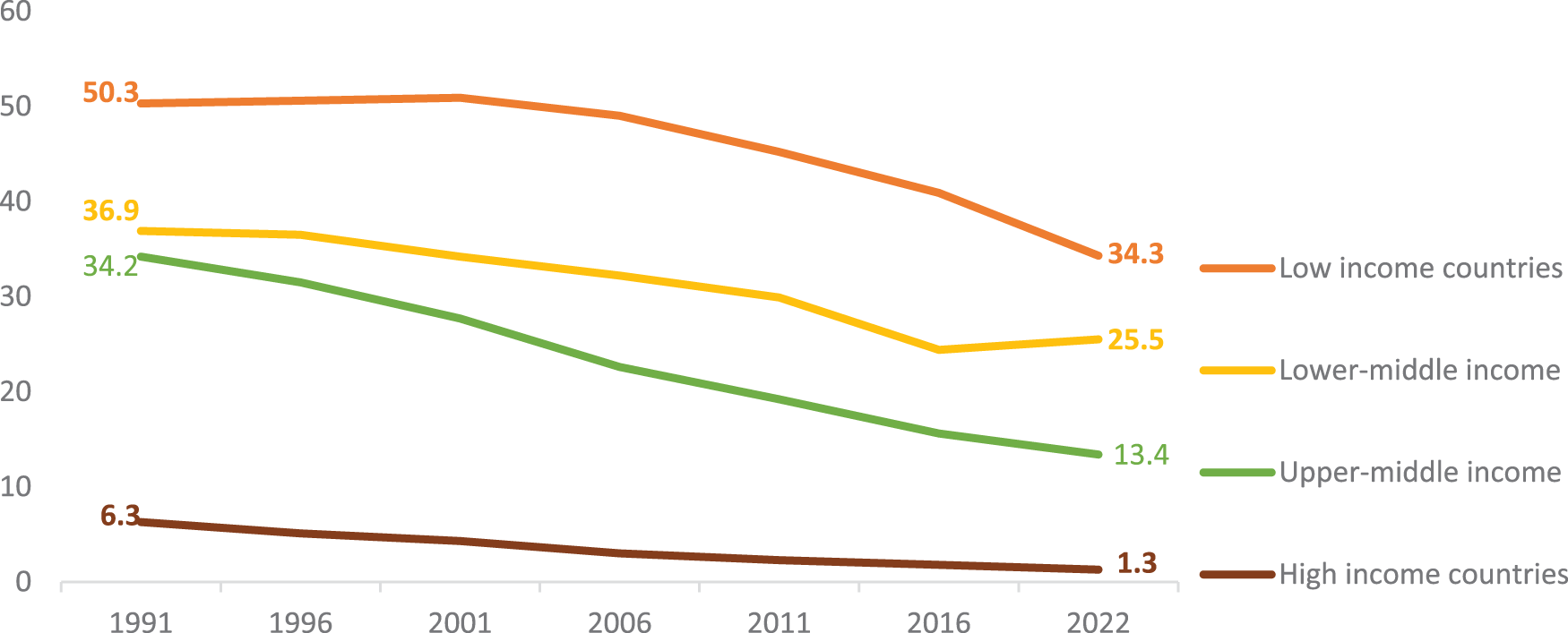
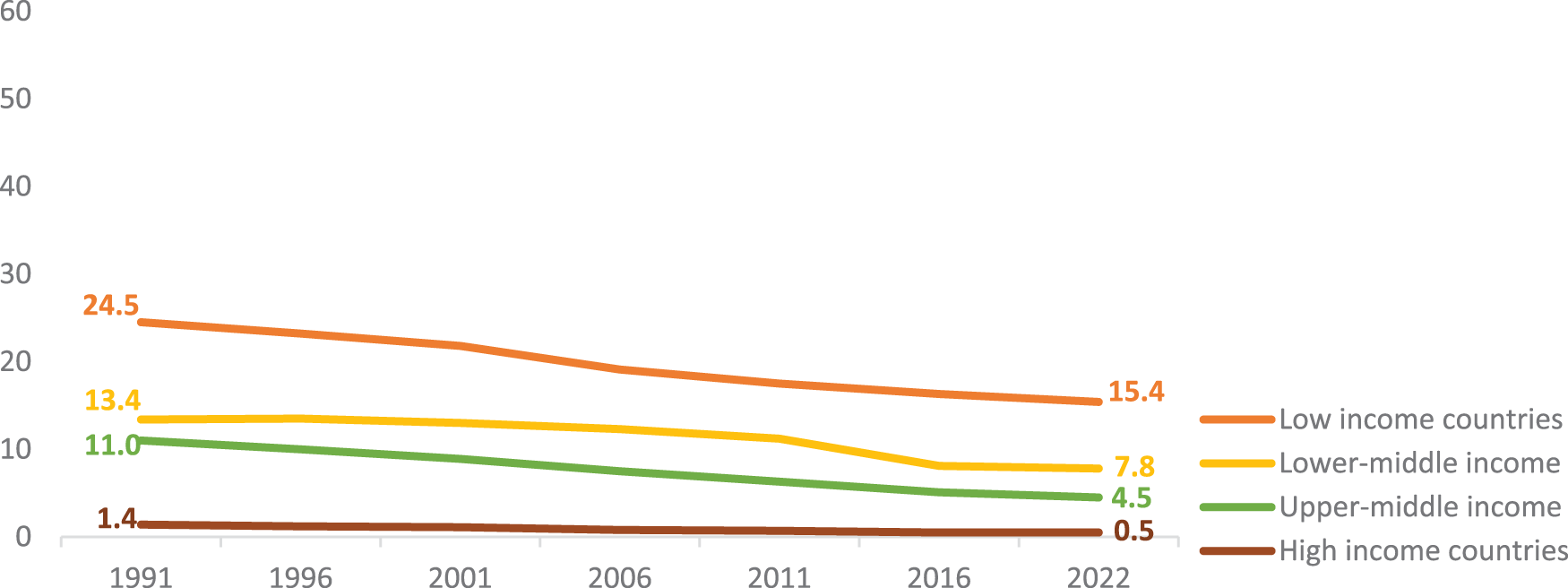
While this overall decline is a positive trend, it is important to make visible the disparities that lie beneath the surface. Global averages mask not only the stark gender differences, but also those between high- and low-income countries, as data available through the International Labour Organization (ILO) ILOSTAT database clearly illustrates. For example, in 2022, almost a quarter (24%) of the workforce in low-income countries were contributing family workers, compared to only one per cent of those employed in high-income countries. 5 Figure 1 shows the proportion of women working as contributing family workers, as a percentage of total employment, and Figure 2 provides the same for men. They clearly illustrate that women are far more likely to be in this form of employment than men, and economies in low and low-middle income countries are more likely to be relying on contributing family work than in higher income countries.
Contributing family workers share of total
Contributing family workers share of total
While the overall prevalence of contributing family work may appear low in certain contexts, it remains a persistent and significant phenomenon that demands the attention of policymakers. Even in developed economies, contributing family work constitutes a substantial portion of the workforce. A 2009 report to the European Parliament revealed that across the 27 EU countries, 3.75 million individuals were classified as assisting spouses or relatives, representing 11.5% of all self-employed workers. Notably, the majority of these individuals were women, highlighting the gendered nature of this type of work. 8
Furthermore, the COVID-19 pandemic underscored the relevance of contributing family work, even in unexpected circumstances. A study conducted in Indonesia during the pandemic examined its impact on small businesses and found that a significant proportion of owners, 20% of men and 16% of women, turned to family and friends for assistance. This increased reliance on unpaid family labor within small businesses ultimately led to higher revenue generation. 9 This example demonstrates the flexibility and resilience of contributing family work, particularly in times of crisis, as well as its potential to bolster economic activity. However, it also raises important questions about the nature of this work, its impact on those involved, and the need for adequate recognition and support.
Accurately measuring and classifying contributing family work presents several challenges. Social norms can influence how labour surveys are conducted and responses are given, potentially leading to women self-reporting or being classified as contributing family workers and men as own-account workers, even when both genders may be engaged in similar levels of work within the family business. The potential for gender bias in data collection may lead to an overrepresentation of women as contributing family workers and men as own-account workers. This misclassification has significant implications. It can obscure the true economic contributions of women within family businesses, hindering efforts to design effective policies that support and empower them. Moreover, it can perpetuate harmful gender stereotypes and reinforce existing inequalities in access to resources and opportunities. To address this issue, it is crucial to develop more nuanced and gender-sensitive survey instruments and data collection methods that challenge traditional assumptions about work and gender roles.
One significant hurdle to overcome is the potential for these workers to be entirely missed during data collection if the initial questions used to identify employment are not carefully designed. A study conducted in Sri Lanka jointly with the World Bank and the ILO 6 highlighted this issue. The study compared the results of two different survey - the Labour Force Survey (LFS) and the Living Standards Measurement Survey (LSMS) - and found that the LSMS identified over 20 per cent fewer employed women than the LFS. This discrepancy was attributed to the design of the employment questions. The LFS had a dedicated question targeting contributing family work, as well as wordings designed to ensure people with casual or part-time jobs would report their activities. In the LSMS, this category was embedded within other questions. The inclusion of more dedicated questions and specific wording in the second round of data collection helped narrow this gap, emphasizing the importance of clear and targeted questions in identifying contributing family workers.
Even when contributing family workers are identified, their accurate classification according to the ICSE-18 framework can be challenging. A significant proportion of individuals who self-report as contributing family workers are often reclassified as own-account workers after further investigation into their roles and responsibilities. This misclassification is more pronounced for women than men, highlighting the influence of gender stereotypes and social norms on data collection and interpretation. Evidence from the ILO pilot studies in Uganda and Peru 10 supports this observation. In Uganda, for example, half of the women who initially self-classified as contributing family workers were reclassified as own-account workers or employers after being asked more detailed questions about their decision-making authority and earnings. This finding underscores the importance of not relying solely on self-reported data and the need for more detailed questioning to ensure accurate classification.
It is crucial to recognize the interconnectedness between statistical standards and their practical application in surveys. Firstly, comprehensive measurement of employment based on the 19th ICLS standards is essential, with careful attention to the wording and structure of questions to avoid overlooking contributing family workers. Secondly, even when identified, self-perceptions and social norms can influence the accurate classification of individuals according to ICSE-18, necessitating detailed questioning that goes beyond initial self-reporting. Addressing these two aspects is fundamental for the accurate measurement and classification of contributing family workers, which in turn is crucial for the correct application of informality standards, as these are built upon the foundations laid by the 19th and 20th ICLS resolutions.
However, applying the standards alone is not sufficient. The complexity of accurately capturing data on contributing family workers requires ensuring that the survey instruments and data collection processes are robust and free from bias. Only then is it possible to generate reliable data that can inform effective policies to support and empower contributing family workers. To better understand this workforce, labour force surveys should be expanded to include questions about why individuals engage in contributing family work and what support would enable them to access decent work opportunities.
Motivated by choice or lack of opportunity?
Aisha, a married woman in a bustling city, spends her afternoons helping at her parents’ small corner shop. The decisions about inventory and pricing are made by her parents and Aisha does not receive any regular cash payment, although her parents help her with caring for and educating her children. At first glance, it might appear as a traditional arrangement, a daughter fulfilling familial duties. However, a closer look at Aisha's situation paints a more intricate reality. Her presence at the shop allows her parents to take a much-needed break, while her customer service skills help attract and retain loyal patrons. Her contribution is an investment in the family's shared future, ensuring the shop's success and providing a safety net for her parents in their later years. Aisha also appreciates the flexible hours, enabling her to balance her responsibilities at home with her desire to remain connected to her family and contribute to their shared livelihood.
Aisha's experience may reflect the lives of countless individuals who engage in unpaid family work within businesses. Their motivations are interwoven with economic realities, cultural norms, and personal aspirations. Yet, their stories often remain untold. Labour force surveys are not designed to capture the details of such arrangements, leaving a significant blind spot in our understanding of a substantial segment of the workforce. To develop policies that truly address the needs and challenges of contributing family workers, their motivations must be explored and understood. Do they feel valued and empowered in their roles, or do they yearn for alternative opportunities? The answers to these questions are valuable for ensuring that policies fit the unique circumstances and aspirations of contributing family workers.
Through the Engendering Informality Statistics Project, the ILO tested several questions to explore gender bias in classification of contributing family work and the agency of workers in this category. 10 The results confirmed the critical importance of having good questions on decision-making, particularly for women. In Uganda, the testing found that half the women who had self-classified as contributing family workers, once asked about decision-making and earnings, were reclassified as independent workers without employees (own account workers), or as employers. A significant reduction in classification as a contributing family worker was also seen amongst men (37% were reclassified). Overall, the testing revealed the questions about involvement in decision-making were more important than earnings in getting an accurate classification of contributing family work and status in employment.
Expanding and refining questions about contributing family work in labour force surveys is crucial. This would enable the collection of more comprehensive and nuanced data on the motivations, challenges, and aspirations of individuals engaged in this type of work. By understanding the diverse reasons behind their participation - whether it is driven by economic necessity, a sense of familial obligation, a desire for skills development, or a combination of factors - policymakers can develop more targeted and effective interventions. These could include facilitating pathways to formal employment, extending social protection coverage, and recognizing the economic value of their contributions. Armed with this knowledge, policymakers can design policies that not only acknowledge the significant contributions of unpaid family workers but also empower them to make informed choices about their work and future, ultimately fostering a more inclusive and equitable labour market.
Evolving definitions and policy interventions
Prior to adoption of the latest standards for measuring informality, contributing family workers have always been classified in the informal sector by default. This is logical, given that most are in the informal sector and that formal protections for this group of workers are non-existent in most countries. As the new informality standards stipulate that formal jobs can only exist in the formal sector, 11 and around 11 per cent of contributing family workers were employed in the formal sector, 12 a solution was needed to for classifying them in the new conceptual framework for measuring informality.
Drawing on the opportunity the development of new standards presents, desk research
3
on national policies and interventions found that some countries have introduced formal arrangements for contributing family workers, summarized below by region. Europe: Europe's approach towards integrating contributing family workers into the formal economy has been characterized by incremental progress and legal recognition. Early legislation in France acknowledged the unpaid labour of spouses within family businesses, setting a precedent for other European countries. By 2009, a number of EU nations had established measures to provide social protection and benefits to assisting spouses, either through mandatory registration or recognizing them as co-owners. The pivotal 2010 EU Directive (2010/41/EU) further solidified these rights, requiring member states to extend social security benefits to spouses and partners of self-employed individuals. Moreover, countries like Poland and Denmark have implemented registration mechanisms, facilitating contributing family workers’ access to social insurance and benefits. This trend demonstrates a growing commitment to recognizing and protecting the valuable contributions of family members within businesses, offering a pathway to formalization and greater financial security. Latin America: Latin America has made significant strides in expanding social protection coverage to encompass informal workers, including contributing family members. A prime example is Ecuador's innovative Peasants’ Social Insurance scheme, which provides comprehensive benefits to self-employed agricultural workers and their families. This initiative not only ensures access to healthcare and pensions but also encourages a transition to formality through simplified registration processes. This model highlights a successful approach to integrating informal workers into the social security system while acknowledging their unique needs and challenges. Africa: Several African nations have also taken steps to establish social protection schemes specifically designed for informal workers. Tunisia's Ahmini program, for instance, focuses on women engaged in low-paid informal work, providing affordable contributions and utilizing mobile technology to streamline access. While such programs have demonstrated success in expanding coverage, challenges persist in attracting informal workers to voluntary schemes. Ghana's National Health Insurance Scheme serves as an example, where affordability and complex registration procedures hinder participation, particularly among contributing family workers. These experiences underscore the importance of designing accessible and user-friendly schemes that address the specific barriers faced by informal workers in the region. Asia: The Asia-Pacific region grapples with high rates of informality, presenting significant obstacles to formalizing contributing family workers. However, positive examples exist. Thailand's universal coverage scheme, funded through general tax revenue, has effectively achieved near-universal health protection, including for those in the informal economy. In Vietnam, while a voluntary social insurance regime is in place, participation remains low, particularly among contributing family workers. This situation underscores the need to expand contributory schemes and actively promote social protection among those engaged in informal work.
To ensure the statistical definition of informal employment for contributing family workers is contextually relevant, the 21st ICLS resolution has removed the “informal by default” approach and introduces several criteria that statisticians should apply to determine their informality. Firstly, if no formal arrangements exist within a country, the default classification of contributing family work as informal would remain unchanged. Secondly, in countries where formalization is possible, the family business where they work must be formal, similar to other employed individuals whose job is considered formal only if the economic unit is formal. Thirdly, contributing family workers need to be officially registered within the country's administrative or legal system. Lastly, they must be covered by formal arrangements, such as job-related social insurance (as opposed to universal voluntary social protection schemes).
Implications for data collection and analysis
Contributing family work remains the most vulnerable form of employment and women's economic empowerment interventions should be specific about how contributing family workers are supported to transition to decent work. However, gender analysis and policy often group contributing family workers and own-account workers together as “vulnerable employment.” While increasing wage employment is a common strategy to reduce vulnerability, its impact may be limited, especially in the short-term and in contexts where such employment is informal.
It is anticipated that while it is now possible under the standards for a contributing family worker to have a formal job, this will be the case for relatively few. Pilot studies in Uganda and Peru showed that this is unlikely to significantly impact the formal/informal classification of most contributing family workers, as few had access to formal arrangements like social insurance. 13 Regardless, the new standards for measuring informality support a clearer focus on this group and represent a significant shift, recognizing the potential for formality among contributing family workers. The standards support a more nuanced understanding and the emphasis on job-related social protection underscores the importance of extending other forms of social protection to all workers, including contributing family workers.
For statisticians and analysts, these standards offer an opportunity to provide for more robust data collection and analysis specific to contributing family work. The previous practice of automatically classifying this type of work as informal has stifled investigation and hindered the development of evidence-based policies. By recognizing the heterogeneity within this category, we can generate insights crucial for designing effective interventions to empower contributing family workers, especially women. For example, highlighting geographical areas or sectors where contributing family work is more concentrated can point to the need for interventions that provide alternatives. Improving question sequences that are used to identify status in employment, reducing proxy interviews and adding a question on the motivations for contributing family work and aspiration to change would support tailoring policies to the specific needs of contributing family workers, which is imperative for advancing gender equality and promoting inclusive economic growth. This approach recognizes the complex reality of work and paves the way for more effective strategies to reach those engaged in contributing family work.
While the shift away from the “informal by default” approach is promising, it is crucial to acknowledge that the existence of formal arrangements does not guarantee adequate protection or decent work for contributing family workers. In many cases, these arrangements may be limited in scope or fail to address the underlying structural inequalities that contribute to their vulnerability. Therefore, the new standards should be seen as a starting point for further research, advocacy, and policy action. They should be used to support policies and programs that aim to improve their working conditions, such as transitioning to wage employment or gaining recognition as co-owners of family businesses.
Conclusion
Contributing family work, historically marginalized and often overlooked, is a crucial component of the global economy, particularly in developing countries. The gendered nature of this work, with women disproportionately represented, emphasizes the need for a clearer understanding of the challenges and opportunities they face.
The revised standards for measuring informality, with their recognition of the potential for formal employment among contributing family workers, mark a significant step forward. However, the path to ensuring decent work and economic empowerment for this group relies not only on revised standards but also on their effective implementation within national statistical systems. It is imperative that these standards are adopted and applied in labour force surveys to accurately measure the prevalence of contributing family work, disaggregated by gender and formality status. This data is essential for informing targeted policy interventions that address the unique challenges faced by women in these jobs.
The 19th, 20th, and 21st ICLS standards are interconnected, forming a framework for measuring and classifying contributing family workers. These standards are linked by design and measurement, ensuring accurate identification, classification, and informality assessment. By consistently applying these standards, national statistical systems will gain a cohesive approach to data collection, analysis, and policy development, supporting efforts to achieve decent work and gender equality for all workers, regardless of employment status.
This paper has highlighted the progress made in some regions towards formalizing contributing family work and extending social protections. However, significant gaps remain, particularly in low-income countries where most of these workers reside. Addressing these gaps will require a multi-faceted approach, including policy interventions to improve working conditions, data collection efforts to better understand the diverse experiences of contributing family workers, and advocacy to challenge discriminatory social norms and promote gender equality in the world of work.
A collaborative effort is required to fully harness the potential of the revised statistical standards and ensure better analysis and use of data on contributing family workers. National statistical offices should prioritize the implementation of the new standards in their labour force surveys, ensuring that data collection tools are adapted to accurately classify contributing family work and additional questions are considered to gather evidence on the nature of their situation. International organizations, like the ILO, should continue to provide technical assistance and capacity building to support countries in this endeavor. Agencies working to improve gender statistics can also play a crucial role in promoting better data collection and analysis on the gender dimensions of contributing family work, advocating for the inclusion of gender-sensitive questions in surveys, and supporting the analysis and dissemination of data on contributing family work and the use of relevant indicators that track progress towards gender equality. Finally, governments and civil society organizations should work together to advocate for policies and programmes that recognize the contributions of contributing family workers and ensure their social protection.
By recognizing the complexity and diversity of contributing family work and applying the revised standards for measuring informality, official statisticians can play a crucial role in these efforts, generating accurate and comprehensive data that informs effective interventions. Ultimately, this will contribute to a more inclusive and equitable labour market for all workers, regardless of their employment status.
Footnotes
Acknowledgements
This research was conducted as part of the Engendering Informality Statistics Project, an initiative led by the International Labour Organization (ILO) and generously funded by the Bill and Melinda Gates Foundation. The author extends their gratitude to Michael Frosch and Kieran Walsh, Senior Labour Statisticians in the Standards and Methodology Unit at the ILO Department of Statistics, for their invaluable collaboration on this research. The author also appreciates the members of the technical advisory group for their guidance and insights. The author would like to thank the national statistical offices of Peru and Uganda for their partnership in conducting pilot studies. Finally, the author acknowledges Antonio Discenza for their contributions to the analysis and presentation of the pilot study findings.

The author received no financial support for the research, authorship, and/or publication of this article.
The author declared no potential conflicts of interest with respect to the research, authorship, and/or publication of this article.