



Abstract
China's overseas investments are often characterised as top-down initiatives driven by strong political motives to exert influence over host countries. This view – commonly referred to as Chinese exceptionalism – tends to overlook the tactical, ground-level strategies that Chinese actors adopt to navigate local contexts. Using Indonesia as a case study, this article argues that the success of Chinese investments is best explained through a combination of commercial rationale, strategic collaboration and adaptive political tactics. This study examines the political strategies employed by Chinese state-owned enterprises (SOEs) and private firms to manage the complexities of investing in Indonesia – a country marked by rapid economic growth as well as persistent challenges such as resource nationalism, corruption and regulatory uncertainty. Despite these obstacles, Chinese entities have achieved considerable success through distinct approaches. SOEs generally rely on political support from both the Chinese and Indonesian governments to secure financial backing and guarantees, especially for large-scale infrastructure projects like the Jakarta–Bandung high-speed rail. In contrast, private firms frequently partner with Indonesian conglomerates to overcome regulatory and permitting barriers, with local partners playing a critical role in securing political access.
Keywords
Prologue
Xi Jinping's first visit to Southeast Asia as president of China was to Indonesia in October 2013 (ASEAN-China Center 2013). During his speech to the Indonesian parliament, President Xi declared, ‘To support the process of interconnection and integration of economic development in the region, China has proposed to build the Asia Infrastructure Investment Bank and provide financial support to infrastructure development in developing countries in the region’ (BBC 2013). This statement marked the formal launch of Xi Jinping's campaign to promote the Belt and Road Initiative (BRI).
Many developing countries, eager to accelerate economic growth, have viewed the BRI as an opportunity to access China's extensive financial and technological resources (Ohashi 2018). Indonesia is one such country, having sought alternative financing for its infrastructure projects, with the BRI presenting an appealing solution.
Following Xi Jinping's speech in Jakarta, Chinese investors significantly expanded their presence in Indonesia. Between 2020 and 2022, China invested USD 16.2 billion, making it Indonesia's second-largest investor after Singapore and ahead of Hong Kong (BPS 2023). Notably, both Singapore and Hong Kong may serve as financial intermediaries for Chinese private sector investments entering Jakarta.
A substantial portion of Chinese investment in Indonesia is concentrated in two sectors: infrastructure and mineral processing. A key example in infrastructure is the high-speed railway (HSR) connecting Jakarta and Bandung – the two most densely populated cities on Java, Indonesia's most populous island. Chinese state-owned enterprises (SOEs) have taken a leading role in financing and constructing the HSR project. Meanwhile, Chinese private companies have partnered with Indonesian conglomerates to develop nickel and bauxite processing facilities that support the production of electric vehicle (EV) batteries and other materials critical to the energy transition (Wijaya and Sinclair 2024).
Indonesia's infrastructure and natural resource sectors are heavily shaped by political dynamics, including regulatory instability, protectionist policies such as export bans and foreign ownership restrictions, and pervasive corruption (Warburton 2023). These challenges have led many non-Chinese investors – particularly those from the United States and Japan – to regard these sectors as high-risk due to their complex policy and political environments.
This article addresses two key questions: first, what political strategies have Chinese investors – both SOEs and private firms – employed to succeed in high-risk sectors, and second, what are the similarities and differences in the strategies adopted by Chinese SOEs and private firms?
The article is organised into four sections. The first introduces the main hypothesis and identifies the research gap this study seeks to address.
The second section reviews the academic discourse on Chinese overseas investment and host-country responses, with a focus on critiques of Chinese exceptionalism. It also highlights the role of the Chinese diaspora as active, rather than passive, intermediaries for mainland Chinese investors.
The third section presents empirical findings on how Chinese SOEs and private firms navigate Indonesia's complex market environment. Data were collected through interviews conducted between spring and fall 2023, and from December 2023 to January 2024. Participants included nickel and bauxite investors, officials from Chinese SOEs, and Indonesian government and business leaders. The analysis is supported by secondary sources, including news articles and financial reports. Using process tracing and comparative methods, the section examines key factors influencing investment strategies through two case studies: the HSR project and mineral processing.
The final section summarises the findings and offers recommendations for future research.
The Article's Argument on Chinese Investment in Indonesia
In Chinese overseas investments, asymmetrical power dynamics often exist between China and developing recipient countries. However, China's political and economic influence is not uniform; it varies depending on the host country's political landscape, the strategic interests of Chinese actors and the nature of the projects involved.
The global expansion of Chinese SOEs and private firms emerged as a significant phenomenon in the early 2000s. While both benefit from substantial fiscal support from the Chinese government, the extent and institutional nature of that support differ. SOEs are often more susceptible to state direction, whereas private firms tend to maintain a degree of operational independence from the state.
This article examines the political strategies employed by Chinese SOEs and private firms in Indonesia, with a focus on how these strategies align with the host nation's interests. In this context, political strategy refers to corporate actions – whether direct or indirect – that involve engagement with the state or its affiliates to secure permits, approvals and other necessary support for the success of their investments and securing their assets.
Despite the support that Chinese SOEs and private firms have received through China's BRI and incentives provided by the Indonesian government as the host country, such backing is unlikely to fully shield them from Indonesia's policy and regulatory challenges. High-level political support does not necessarily resolve bureaucratic hurdles, political obstacles or economic risks such as cost overrun once a project is underway. More detailed and nuanced political strategies are required to overcome these challenges.
This article further hypothesises that Chinese SOEs are more likely to address these challenges by leveraging their relationships with both the Chinese and Indonesian governments, using state backing to mitigate investment risks. In contrast, Chinese private firms are expected to distance themselves from direct ties to the Chinese state and instead rely on strategic partnerships with Indonesian conglomerates – many of which are led by members of the Chinese diaspora. Nevertheless, it is anticipated that these private firms may still indirectly benefit from Chinese state financing, particularly through banks affiliated with Chinese SOEs.
Chinese overseas investments should be understood as those of latecomer global investors, who often lack the robust institutional frameworks that characterise their Western counterparts. Institutions such as the OECD, World Bank and IMF have long promoted a shared narrative among Western investors – emphasizing institutional reform, anti-corruption measures, and the sanctity of contracts.
China does have institutions such as the China Development Bank (CDB) and the Asian Infrastructure Investment Bank (AIIB), but their structural influence remains significantly less extensive than that of the OECD, World Bank or IMF (Gutner 2025).
Chinese strategies are shaped by the tools available to them and by the adaptability of Chinese SOEs and private firms to the specific local contexts of host countries.
For Chinese SOEs, adaptability in the HSR project lies in their ability to identify economic challenges and propose win–win solutions that align with the host country's political and economic priorities, rather than advancing solely their own interests. For Chinese private firms, adaptability involves building trust through informal relationships with the Chinese Indonesian diaspora to effectively secure and manage their investments.
This adaptability aligns with what Kellee Tsai (2006) describes as adaptive informal institutions – creative responses by actors to manage risks and navigate challenges posed by formal institutions they find too constraining (p. 118).
Despite China's growing economic influence in Indonesia and Southeast Asia, existing research predominantly focuses on geopolitics and economic partnerships (Qi et al. 2019; Zhao 2019), or on specific projects such as the HSR (Wu and Chong 2018). Comparative studies on the political strategies of Chinese SOEs and private firms remain limited, and this research seeks to address that gap.
This study selects Indonesia as a case study not only because of its policy and political risks but also due to its strategic significance in two key areas: the HSR project led by the Chinese government, and the critical mineral sectors – particularly nickel and bauxite – dominated by Chinese private firms. These specific conditions are not present in countries like Malaysia, Vietnam, or the Philippines. While those countries also host Chinese state-led investments, they lack projects as large and complex as Indonesia's HSR initiative.
Therefore, Chinese investment in Indonesia provides fertile ground for a comparative study of the political strategies employed by Chinese SOEs and private firms.
Chinese Exceptionalism and Its Problems
In 2020, the White House released a briefing titled United States Strategic Approach to the People's Republic of China, stating, ‘The CCP's expanding use of economic, political, and military power to compel acquiescence from nation-states harms vital American interests and undermines the sovereignty and dignity of countries and individuals around the world’ (White House 2020, 1).
The United States’ primary concern regarding China's economic expansion has contributed to the dominance – or at least the reinforcement – of the Chinese exceptionalism perspective among policymakers and academics (Cha 2023). This view supports the perception that Chinese investments are driven not primarily by commercial interests, but by a desire to exert political influence (Allen 2023; Piekos 2023).
The concept of Chinese exceptionalism in foreign investment suggests that China employs a distinctive approach to its overseas investments, differentiating it from other leading global economies, particularly Western nations such as the United States.
The literature surrounding ‘Chinese exceptionalism’ argues that Chinese SOEs and private firms diverge from conventional investment patterns, instead selecting locations characterised by weak governance and pervasive rent-seeking (Buckley et al. 2007).
This approach demonstrates that Chinese investors actively seek out and exploit market imperfections, especially in developing countries. Their strategies involve identifying and leveraging gaps – such as regulatory weaknesses, lack of competition or inefficient resource allocation – to gain a competitive advantage (Blumenthal, Purdy and Basetti 2022). These tactics not only create investment opportunities and potential profits but also enable Chinese firms to exert substantial influence over critical economic sectors in host nations (Ye 2015). Thus, market imperfections and political risk are not viewed as barriers, but as opportunities for expansion.
Zhu and Shi (2019) offer a critical perspective on Chinese exceptionalism, particularly in relation to investment behaviour. They note that Chinese firms may exhibit a higher tolerance for risk in countries with predictable corruption – where bribery may be expected but ensures project stability after payment (p. 1325). However, they also argue that Chinese firms, like their Western counterparts, are deterred by high levels of political risk, policy uncertainty and certain types of market failure. This challenges the idea of a uniquely high-risk tolerance among Chinese firms and aligns their behaviour more closely with that of mature, Western-led investors.
Chalmers and Mocker (2017) contribute to this debate by focusing on Chinese National Oil Companies (NOCs). They argue that a key factor shaping investment behaviour is the issue of risk-bearing. Their research highlights a shift before and after 2006: prior to 2006, NOCs operated with limited independence, and the Chinese state absorbed a larger share of risk. After 2006, these firms gained greater operational autonomy and assumed more of the investment risk themselves. This shift, they argue, explains why Chinese firms appeared more risk-tolerant in earlier years and more risk-averse thereafter (p.137).
The strategy of Chinese NOCs appears to involve redistributing risk from the SOE itself to the Chinese state. This tactic allows large-scale investments to proceed with the backing of state resources, rather than relying solely on the firm's own capacity to absorb risk.
This reallocation of risk is reflected in this article's findings on the HSR project in Indonesia. In that case, the consortium of Chinese and Indonesian SOEs sought financial support from their respective governments to reduce exposure to project risks. By requesting state funds, they aimed to ensure the project's viability – even in the face of uncertainty and setbacks. This case will be examined in greater detail in the following section.
Other perspectives, such as those of Tan-Mullins, Mohan and Power (2010), challenge the notion that China's overseas investments and aid constitute territorial expansion or what critics call ‘rogue aid’ (p. 857). These scholars argue that China's international economic activity does not amount to a claim on sovereignty. Their research also highlights the agency of African countries – an often overlooked dimension of the aid and investment relationship (p. 873). While this perspective is valid, it is important to note that Chinese aid, like most forms of international assistance, is not free from political and ideological considerations. Even when not explicitly tied to conditionalities, the case studies of Ghana and Angola show that such aid has contributed to their alignment as key economic and political partners of China in Africa (Adamu 2023; Yoshikawa 2024).
As a relatively new global actor, China may not yet possess a clearly defined grand strategy. In fact, there is evidence that its overseas investments often lack a coherent strategic framework. The absence of an official roadmap for the BRI has resulted in what Narins and Agnew (2020) describe as a ‘useful fuzziness’. They argue that this ambiguity may be intentional, enabling flexibility in how China engages with BRI partner countries over time (p. 810). This ambiguity gives Chinese firms the space to adapt, refine their approach and deepen engagement as local conditions evolve.
As a result, Chinese SOEs and private firms are developing their own investment strategies, while leveraging the BRI's overarching narrative to secure financial and political support from Beijing and to meet the financing needs of host countries.
The ability of Chinese companies to craft such strategies underscores their commercial and political acumen. Commercially, they excel at assessing project viability, minimising risk and maximising returns. Politically, they are adept at identifying and engaging key stakeholders in host countries to obtain the necessary approvals and support. This dual capability reflects a sophisticated blend of business expertise and political strategy among Chinese SOEs and private firms.
Chinese Diaspora and Its Economic Influence
A central theme of this article is the role of the Chinese diaspora as a mediator between mainland Chinese investors and host countries in Southeast Asia. The rise of China as a global power has reshaped the identity and strategic positioning of ethnic Chinese communities in the region, creating new opportunities to reconnect with China and establish economic partnerships (Liu 2016). For Chinese private firms – particularly in Indonesia – the local Chinese Indonesian community serves as a valuable ally, offering cultural affinity, facilitating communication and assisting in navigating institutional complexities.
In contemporary East Asia, ‘overseas Chinese capitalism’ has become one of the most prominent and pervasive business systems outside Japan (Yeung 2009, 210). Ethnic Chinese capitalism is recognised not only for its substantial economic contributions to host nations but also for its complex social structures and informal systems of authority. Yeung highlights how these transnational networks – often referred to as the ‘Bamboo Network’ (Ciorîia 2018; Weidenbaum and Hughes 1996) – facilitate private-sector linkages, build resilient business networks, and support the development of regional supply chains across East and Southeast Asia.
Wang (2000) emphasises the crucial intermediary role played by ethnic Chinese residing abroad, noting that they provide a vital ‘linkage between China and the rest of the world’ by facilitating access to guanxi – informal, relationship-based networks that are essential in the Chinese business environment. She writes: ‘Without the agency of ethnic Chinese, it would have been much more difficult for foreign companies to use informal personal networks to complement and compensate for the weak formal legal institutions in China’ (Wang 2000, 161).
Similarly, Gomez (1999) demonstrates that the success of Chinese businesses in Malaysia is not solely the result of cultural affinity, but rather stems from a long history of adaptation to shifting political and economic environments. Despite facing racial discrimination, these businesses have succeeded by cultivating political networks and forming strategic alliances with other business groups. It is this ability to accumulate economic power – through sustained domestic political engagement and cross-group alliances – that distinguishes their success (Gomez 1999, 132).
Camba (2022) further adds that major Chinese firms tend to invest in countries where they perceive the leadership as ‘strong’. This perception is shaped by a combination of subjective and relational factors, including the investor's party school background, the Chinese state's preferences, the host government's projection of authority, and the influence of Chinese think tanks (Camba 2022). Expanding on this view, one can argue that the Chinese diaspora's local knowledge and informal networks help shape these perceptions of leadership strength. While such perceptions may not always align with political reality, it is the domestic Chinese business community's ability to navigate uncertainty and adapt to shifting power dynamics that makes them essential partners for mainland Chinese investors.
The dominant myth surrounding the Chinese economic diaspora that must be challenged is the misleading narrative that the Chinese Communist Party (CCP) simply co-opts diaspora communities to serve the interests of the state. It is true that the CCP manages its diaspora engagement through at least five key institutions: the Overseas Chinese Affairs Office (OCAO), the China Zhigong Party, the Overseas Chinese Affairs Committee of the National People's Congress (NPC), the CPPCC Committee for Overseas Chinese Affairs, and the All-China Federation of Returned Overseas Chinese (ACFROC). However, focusing exclusively on the CCP's co-optation strategy – and portraying the diaspora as passive instruments of China's global economic expansion – obscures a critical reality: members of the Chinese diaspora are independent actors with their own interests and motivations, which often diverge from those of the CCP (Liu and van Dongen 2016, 807).
High-Speed Rail Project, Securing Asset With State Budget
The Jakarta–Bandung HSR project, a flagship infrastructure initiative in Indonesia, was initially developed with Japanese support during the presidency of Susilo Bambang Yudhoyono (SBY) (2004–2014). During this period, Japan conducted feasibility studies for the project. However, the dynamics shifted with the election of President Joko Widodo (Jokowi) in 2014. By April 2015, China submitted a competing proposal.
China's proposal promised faster completion by 2019 – coinciding with the end of Jokowi's first term – potentially boosting his re-election prospects. In contrast, Japan's projected timeline extended to 2021. Financially, China estimated the project cost at $5.5 billion, compared to Japan's $6.2 billion. However, China's loan carried a higher interest rate of 2.0%, while Japan offered a significantly lower rate of 0.1%. A key advantage of China's proposal was its avoidance of state budget involvement, funding the project entirely through loans managed by a consortium of Indonesian and Chinese SOEs. In contrast, Japan's proposal required state budget financing for its SOEs.
President Jokowi was concerned that the HSR project would place an excessive burden on the state budget, particularly as he prioritised funding for other infrastructure initiatives. The Chinese proposal appeared more appealing because it did not require the use of state funds. In contrast, Japan's approach to high-risk infrastructure projects like the HSR typically involves state budget support to mitigate financial risks (Tiezzi 2015).
In 2015, Indonesia selected China's proposal, leading to the formation of PT Kereta Cepat Indonesia-China (KCIC), a consortium of SOEs from both countries, to oversee the project. The 142 km railway connecting Jakarta and Bandung is designed to operate at 350 km/h using electric power, aiming for zero direct carbon emissions. Once operational, it will represent a landmark infrastructure project in Southeast Asia.
The consortium comprises major SOEs from both Indonesia and China. On the Indonesian side, PT Pilar Sinergi BUMN Indonesia (PSBI) leads the group, with shares distributed among the following SOEs: PT Kereta Api Indonesia (25%), Wijaya Karya (38%), Perkebunan Nusantara VII (25%) and Jasa Marga (12%). The Chinese side is represented by Beijing Yawan HSR Co., Ltd, which includes SOEs such as China Railway International Co. Ltd, China Railway Group Limited, CRRC Corporation Limited, Sinohydro Corporation Limited, and China Railway Signal & Communication Corporation Limited. KCIC ownership is divided, with PSBI holding 60% and Beijing Yawan 40% (CNBC Indonesia 2023a, 2023b; Reuters 2023).
To avoid relying on Indonesia's state budget, KCIC initially secured a $4.55 billion loan from the China Development Bank (CDB) (Reuters 2017). However, the project soon encountered significant challenges, including a $1.2 billion cost overrun and operational expenses that exceeded initial estimates, further straining its financial framework (Jakarta Post 2023).
One major deviation from the original plan was the placement of the stations. Rather than being centrally located, the Jakarta station was built on the city's outskirts, while the Bandung station is situated in the suburbs – approximately an hour's drive from the city centre (Kompas.com 2021). Although this decision reduced land acquisition costs, it compromised passenger convenience, as additional travel is required to access central urban areas.
The suburban station locations also face competition from existing transportation options such as conventional rail services and toll roads, which operate from more central locations. These alternatives challenge the HSR's competitive edge, potentially affecting passenger volumes and long-term sustainability.
Amid escalating challenges, including substantial cost overruns, the consortium held multiple meetings to address the issues (Berger 2023). China Railway Signal & Communication, an experienced SOE in HSR operations, proposed two primary solutions. The first was to extend the HSR's operational rights from 50 to 80 years, allowing costs to be spread over a longer period to ease financial pressure (CNBC Indonesia 2023a). The second, more controversial proposal suggested using Indonesia's state budget to cover cost overruns and future project risks (CNBC Indonesia 2023b). This proposal conflicted with President Jokowi's longstanding commitment to avoid the use of state funds for the project, raising concerns about potential political backlash and public sensitivity.
Faced with mounting financial pressure, President Jokowi ultimately made the strategic decision to approve the use of the state budget – marking a significant departure from his original stance. This injection of public capital proved critical to sustaining the project and ensuring its eventual completion.
The completion of the HSR project marked a historic milestone as Southeast Asia's first HSR system. It demonstrated Indonesia's capacity to execute large-scale, technologically advanced infrastructure initiatives and significantly strengthened economic ties between Indonesia and China.
Key figures, such as Coordinating Minister for Maritime Affairs and Investment Luhut Binsar Panjaitan, played a pivotal role in the negotiation process. A staff member of Luhut remarked: ‘Luhut's role is essential since he knows Wang Yi (China's Foreign Minister) personally. This connection reduced administrative layers required to reach President Xi. Luhut also communicated directly with President Jokowi. The working teams from China and Indonesia provided technical information, but both President Xi and President Jokowi were clearly committed to the project's success’. 1
On 16 November 2022, during the G20 Summit in Bali, President Jokowi and President Xi Jinping witnessed the operational trial of the HSR. In September 2023, Chinese Premier Li Qiang rode the railway alongside Minister Luhut Binsar Panjaitan.
While Luhut's role was critical, the project's success ultimately depended on the ability of SOEs and technical teams to present actionable plans to key decision-makers, such as Luhut and Chinese Foreign Minister Wang Yi. Constrained by fiscal limitations, President Jokowi aimed to ensure the project's success by managing risks carefully, rather than pursuing it at any cost.
Chinese Private Sectors, a Coalition With Local Conglomerates
Before examining the partnerships between Chinese investors and domestic conglomerates in Indonesia, it is essential to understand the oligarchic tendencies of the country's political economy. Historically, Indonesian business groups have actively worked to preserve generational wealth within their families and allied networks (Hadiz and Robison 2004; Winters 2011).
Both Chinese and non-Chinese Indonesian business groups have safeguarded their wealth and commercial interests by skilfully navigating the country's complex permitting and regulatory systems. These oligarchs have developed considerable expertise in managing opaque and intricate processes, particularly those related to permits, licensing, and regulatory compliance.
According to Forbes’ list of the 50 richest Indonesians in 2023, 84% are Chinese Indonesians, with a combined total wealth of $230 billion (Forbes 2024). Conglomerates with Chinese roots gained prominence during General Suharto's New Order era (Robison 2009).
Despite enduring racial discrimination at both social and bureaucratic levels (Lindsey and Pausacker 2005; Tanasaldy 2022), Chinese Indonesians have achieved significant success in the mining and natural resources sectors – industries that are both highly competitive and politically sensitive. Their success highlights their ability to navigate complex political environments and engage effectively with key officials to manage the political dimensions of their business operations (Mackie 1991; Wijaya 2019).
As noted by Setijadi (2016), ‘In many overseas Chinese communities, including in Indonesia, Chinese associations – often led by influential and well-connected ethnic Chinese businessmen – function as unofficial chambers of commerce, facilitating a substantial portion of trade and investment with China’ (p. 823).
This economic connection within the Chinese diaspora has played a key role in channelling capital into China (Ye 2014) and in managing transnational networks of Chinese businesspeople across the region. Min Ye's research offers a compelling example: an Indonesian diaspora entrepreneur, Li Ping, brought two machines to Fujian in 1980, and within a year, his company had expanded from 30 workers to over 200 (Ye 2014, 58).
In 1991, a year after Indonesia and China restored diplomatic relations, Xi Jinping – who would later become China's President in 2013 – led a delegation to Jakarta. During this visit, Xi met with Liem Sioe Liong, a prominent Indonesian-Chinese conglomerate leader, to build business connections. At the time, Xi held various positions in Fujian, Liem's home province, and later served as its governor from 2000 to 2002 (Borsuk and Chng 2014; Figure 1).
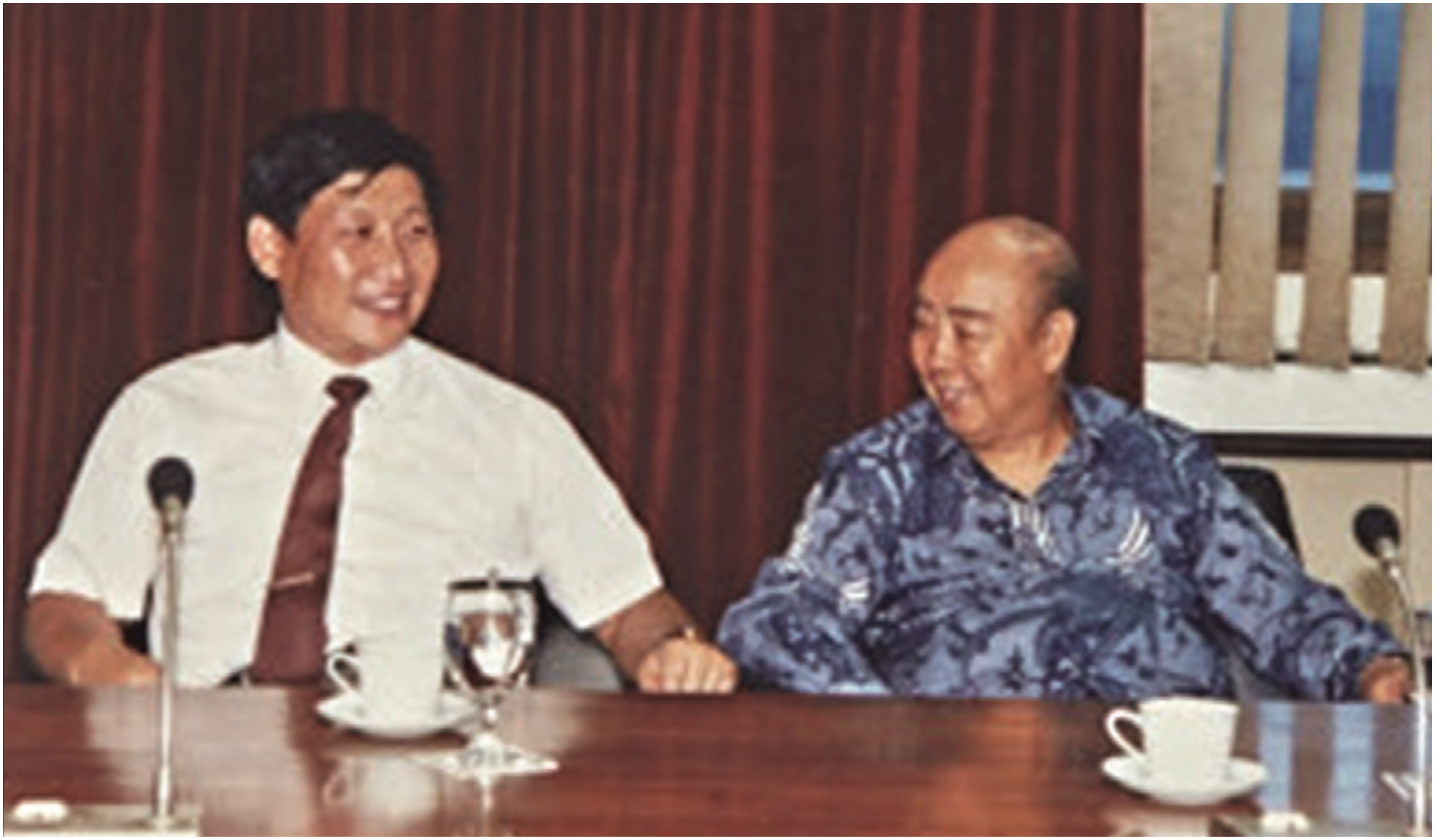
Picture of Xi Jin Ping and Liem Sioe Liong from Richard Borsuk and Nancy Chng, Liem Sioe Liong's Salim Group: the Business Pillar of Suharto's Indonesia (Singapore: ISEAS–Yusof Ishak Institute, 2014).
However, the primary motivation for Chinese investors to partner with local conglomerates is not shared ethnic background, but rather the local partners’ ability to navigate challenges such as permitting, regulatory compliance and political access. While cultural similarities may help overcome language barriers, long-term partnerships and trust are ultimately built through effective project execution and sound investment management.
Among the major Chinese investments in mineral processing, two companies stand out: Tsingshan Holdings Group, a private enterprise from Zhejiang Province specialising in stainless steel and nickel processing; and China Hongqiao Group Limited, founded in 1994 in Shandong Province, which focuses on industrial aluminium production.
These companies viewed President Xi Jinping's 2013 visit to Indonesia as a pivotal moment to accelerate their investments in the country's mineral sector. Their strategy leveraged funding opportunities from Chinese SOE banks. Tsingshan, China Hongqiao and other Chinese private firms adopted what Muyang Chen describes as a ‘state-supported, market-based’ approach (Chen 2020), utilising state-backed favourable interest rates while generally avoiding excessive state intervention.
Following President Xi Jinping's 2013 speech in Jakarta, both China Hongqiao (Jakarta Post 2013) and Tsingshan Group (Reuters 2014) rapidly scaled up their investments in Indonesia.
During President Joko Widodo's administration (2014–2024), a policy known as Hilirisasi – or downstreaming – emerged as Indonesia's core industrial strategy (Tritto 2023). This approach emphasises the domestic processing of raw minerals into higher-value products, such as EV batteries and other components critical to the energy transition (Wijaya and Sinclair 2024). To attract private sector investment in these processing industries, the government introduced a range of incentives, including tax holidays of 10 to 15 years, the elimination of import tariffs on construction materials, and improved access to land. These measures were designed to increase private sector participation in Indonesia's mineral processing sector (Camba and Tritto 2022).
The natural resources and infrastructure sectors in Indonesia are notoriously politicized – characterised by corruption, restrictions on foreign ownership, regulatory unpredictability and intense competition with domestic entities (McBeth 2023; Warburton 2023; Warwick 2022). These conditions have led several non-Chinese investors, including those from the United States and Japan, to view Indonesia's natural resources and infrastructure sectors as high-risk due to persistent policy and political challenges (McCawley 2015; Watanabe 2014; Yep 2018).
Foreign investors such as the Brazilian-Canadian mining company Vale and the American firm Freeport-McMoRan are required to divest shares and partner with Indonesian SOEs (S&P 2020; Reuters 2017). Chinese investors face similar challenges, though under different policy frameworks.
For Chinese private enterprises, partnering with Indonesian conglomerates offers two key advantages. First, it enables them to navigate Indonesia's complex permitting and regulatory landscape, particularly in mining and mineral processing. Second, these conglomerates possess significant political capital, facilitating negotiations and providing access to national and local politicians and bureaucrats – an essential factor for success in such a highly regulated and politically sensitive environment.
To understand how this strategy operates, this article examines the local partners chosen by Tsingshan and China Hongqiao to safeguard their investments in Indonesia, as well as the level of influence these partners exert.
Tsingshan, the world's leading stainless-steel producer, has been a key driver behind the expansive development of the Indonesia Morowali Industrial Park (IMIP) in Central Sulawesi and the Indonesia Weda Bay Industrial Park (IWIP) in North Maluku. These industrial parks have emerged as hubs for joint ventures, significantly boosting Indonesia's exports of nickel-based iron and steel products. In addition, Tsingshan has played a pivotal role in integrating other Chinese firms into Indonesia's EV battery ecosystem, including major players such as CATL and Huayou Cobalt (Castillo et al. 2022; Euronews 2023).
Tsingshan's early partner in Indonesia was PT Bintang Delapan, a company well known for its strong connections to influential military and political figures (Tirto 2018). This partnership was instrumental in helping Tsingshan navigate initial permitting processes and government relations. PT Bintang Delapan – owned by Halim Mina, a Chinese-Indonesian businessman – held key nickel mining concessions in Morowali, now part of the IMIP. The company appointed Sintong Panjaitan, a former army general, as its commissioner; Sintong had previously served as Minister Luhut's superior during their time in the military.
Building on years of operational experience in Indonesia since 2016, Tsingshan strategically partnered in 2021 with Merdeka Copper Gold (MDKA), a company owned by prominent Indonesian conglomerates. Among its key stakeholders are Sandiaga Uno, Indonesia's Minister of Tourism and Garibaldi “Boy” Thohir, a coal industry magnate and the brother of Erick Thohir, the Minister of State-Owned Enterprises (Indonesia Business Post 2022).
Boy Thohir, an influential shareholder in the Adaro Group – Indonesia's second-largest coal producer – also serves as Chair of the China Committee at the Indonesian Chamber of Commerce and Industry (KADIN) (Dorimulu 2022). His appointment reflects strong ties with both Chinese investors and the Chinese-Indonesian diaspora. With an extensive political and business network, Boy is a central figure in Indonesia's emerging elite conglomerate landscape (Asia Sentinel 2022).
Boy Thohir's father, Muhammad Thohir, was the primary business partner of William Soeryadjaya, founder of the Astra Group – a dominant enterprise during General Suharto's era (Robison 2009). William's son, Edwin Soeryadjaya, is currently Boy's business partner and a shareholder in the Adaro Group.
In the February 2024 elections, Boy and Erick Thohir emerged as prominent supporters of president-elect Prabowo Subianto (Independent Observer 2004). Boy Thohir is widely recognised as a highly skilled businessman with deep connections across Indonesia's business and political networks.
Tsingshan initially partnered with PT Bintang Delapan to establish a foothold in the Indonesian market, strategically leveraging shared Chinese heritage and connections. Once its presence was secured, Tsingshan broadened its approach by forming additional partnerships, signalling deeper engagement with Indonesia's wider business community.
Another prominent investor in Indonesia's mineral processing sector is the China Hongqiao Group. Its investment gained momentum during President Xi Jinping's 2013 visit to Jakarta, when the company partnered with Winning Investment (HK) Co. Ltd and PT Cita Mineral Investindo Tbk, an Indonesian firm, to establish PT Well Harvest Winning Alumina Refinery. This joint venture led to the creation of an alumina processing facility in Ketapang District, West Kalimantan Province (Zhihua 2021).
As China's largest aluminium producer by capacity, China Hongqiao Group launched a production line in West Kalimantan with an annual output of one million tonnes of alumina. This initiative marked a significant milestone: it was both Hongqiao's and China's first overseas alumina refining facility, and also Indonesia's first such operation. At the opening ceremony, Zhang Shiping, president of Hongqiao, emphasised the venture's role in fostering production capacity cooperation between China and Indonesia (Xinhua 2016; Tang & Somwashi 2023).
The Harita Group, a key partner in the joint venture, was founded by Lim Tju King in 1915 and has since grown into a major Indonesian business conglomerate. Now led by Lim Hariyanto Wijaya Sarwono – one of the country's wealthiest individuals, ranked fifth by Forbes – and his son, CEO Lim Gunawan Hariyanto, the group remains a dominant force in Indonesia's business landscape (Forbes 2023).
The Lim family has cultivated strong ties within the Chinese Indonesian business community. This community has not only thrived economically but also established influential connections with political figures and government officials (Chong 2015). In addition to its ventures in mineral processing, the Lim family also owns Bumitama Agri, a Singapore-listed palm oil producer with extensive plantations in Indonesia.
A capital market manager in Jakarta said, ‘The Lim family has significant connections in Singapore and China. But the key to their longstanding business success is having strong people on the ground who can manage complexity. In the mining and plantation sectors, you contend with the police, NGOs, local communities, and preman (thugs). It is essential to have people who can handle these matters’. 2 The ‘strong people’ referred to are field managers who oversee daily operations at mining and plantation sites. They are typically members of the local community or security personnel stationed within the operational area.
For China Hongqiao, the Lim family's strategic advantage lies in their strong connections within Indonesia's bureaucratic and political spheres. With Hongqiao's backing, the Harita Group has become Southeast Asia's leading producer of smelter-grade alumina (SGA), demonstrating the effectiveness of such alliances in achieving commercial success (Tang and Somwashi 2023).
By leveraging their relationships with influential domestic business groups, Chinese private companies have effectively secured and safeguarded their investments in Indonesia. These collaborations offer mutual benefits: Chinese firms gain from their Indonesian partners’ local expertise – particularly in navigating bureaucratic hurdles that might otherwise delay or derail projects – while local partners gain access to capital and technology that might be otherwise out of reach. Together, they form robust alliances capable of overcoming the challenges of Indonesia's complex business environment.
Interestingly, unlike Chinese SOEs, Chinese private firms appear reluctant to seek assistance from their own government when navigating permitting and licensing processes in Indonesia. While this paper does not explore the underlying reasons for this hesitance, it focuses on identifying the successful strategies these firms employ to manage their investments. The goal is to highlight how Chinese private companies operate effectively within the political and institutional complexities of Indonesia's business landscape.
However, Chinese private sector companies do not entirely reject support or involvement from the Chinese state. They often benefit from low-interest loans provided by Chinese SOE banks. For example, Tsingshan's flagship project – the Morowali Industrial Park, the largest nickel processing facility in Asia – is financed by Chinese SOE banks such as the China Development Bank, the Export–Import Bank of China, the Bank of China, and the Industrial and Commercial Bank of China (ICBC) (Ginting and Moore 2021). While these private firms leverage the BRI framework to access capital, they generally prefer to manage their investments independently.
Corporate behaviour varies depending on several factors, including a firm's provincial origin in China, its relationships with CCP officials, and the nature of the project. For instance, Chinese private firms involved in state-sponsored initiatives – such as dam or road construction – are more likely to seek state support when facing policy or political challenges. In contrast, in business-to-business ventures, as seen with the two major Chinese mineral investors in Indonesia, these firms typically avoid relying on state intervention to navigate policy and regulatory risks.
Conclusion and Recommendation
The investment strategies of Chinese SOEs and private firms are diverse, demonstrating that no single, uniform approach guarantees the success of Chinese investments abroad. Both SOEs and private firms employ a sophisticated blend of commercial expertise and political strategy to navigate complex and high-risk markets in host countries effectively.
The absence of a cohesive global strategy for China's economic expansion has allowed SOEs and private firms to develop their own commercial and political tactics. These strategies are shaped by the source of demand—whether driven by political figures such as President Xi or President Jokowi, or by market forces. While their approaches vary depending on context, economic logic consistently underpins their decisions, ensuring the sustainability of even politically motivated projects. This challenges the common perception that Chinese-led projects lack economic rationale or serve purely political interests.
The interplay between commercial and political acumen – combined with the lack of centralised directives – enables Chinese entities to tailor their strategies to align with host country priorities. In Indonesia, the government's focus on large-scale infrastructure projects, such as the HSR, and its emphasis on strengthening domestic SOEs have created opportunities for Chinese consortia to secure collateral and mitigate project risks.
Indonesian conglomerates play a vital role in fostering mutually beneficial relationships with Chinese private firms. Aware of potential political resistance, Chinese companies strategically form alliances with influential local partners to navigate Indonesia's socio-political environment. These partnerships are crucial not only for operational efficiency but also for aligning with the government's Hilirisasi initiative, which prioritises domestic ore processing over raw material exports. This alignment effectively harmonises private sector interests with Indonesia's broader strategic goals.
Political support remains a cornerstone of Chinese investments in Indonesia, whether it comes from the government or influential domestic business groups. Given the evolving nature of political power, future research could explore how shifts in Indonesia's political landscape may impact HSR development and the overall flow of Chinese investment. Additionally, examining the competition among Indonesian conglomerates for Chinese capital could offer valuable insights into domestic investment dynamics.
Comparative studies could investigate whether the patterns observed in Indonesia are mirrored in other regions, such as Southeast Asia, Latin America, or Africa. Such analysis would help identify commonalities and differences in Chinese investment strategies across diverse and challenging markets, enhancing our understanding of their adaptability to varying political and economic environments.
Finally, future research should broaden its scope to include non-state actors such as the Chinese diaspora, private firms and expatriate professionals. These entities significantly shape the complexity and dynamics of China's global economic presence, offering a more comprehensive understanding of Chinese global influence.
Footnotes
Declaration of Conflicting Interests
The author declared no potential conflicts of interest with respect to the research, authorship, and/or publication of this article.
Funding
The author disclosed receipt of the following financial support for the research, authorship, and/or publication of this article: This work was supported by the Lembaga Pengelola Dana Pendidikan.
