



Abstract
This study evaluates the impact of education on democratic values across Mexico's diverse subnational regimes. The findings reveal that the influence of education on democratic support, tolerance of diversity, and civic engagement is notably strong, yet context-dependent. Education significantly bolsters democratic support in less democratic states, while in more democratic contexts, it enhances tolerance across a broad range of social dimensions, including different political and religious ideologies, social identities, lifestyle choices, health conditions, and age and disability groups. In contrast, education's positive influence on civic engagement, reflected in membership in social organisations, is not conditional on the level of subnational democracy, indicating that this relationship is less shaped by political context. These findings refine democratic learning theory by illustrating how education interacts with political environments, fostering the integration of democratic norms into social values and highlighting the need for targeted educational policies to strengthen democratic principles.
Keywords
Introduction
Education is pivotal in shaping a citizenry capable of understanding and contributing to the vibrancy of a democratic society. It broadens individuals’ perspectives beyond their immediate surroundings, empowering them to address complex social challenges. While scholars in democratisation literature often view education as a catalyst for democratic values (Almond and Verba, 1963; Gaasholt and Togeby, 1995; Golebiowska, 1995; Inglehart, 2005; Karp et al., 2017; Lipset, 1959; McCartney, 2020 ), democratic learning theory posits that its impact varies with the political regime that encompasses, socialises, and educates individuals (Marquart-Pyatt and Paxton, 2007; Österman and Robinson, 2023). According to this theory, education in democracies encourages tolerance and participation; conversely, in authoritarian settings, it may reinforce undemocratic norms (Ceobanu and Escandell, 2010; Coenders and Scheepers, 2003; Hello et al., 2002; Peffley and Rohrschneider, 2003; Scheepers et al., 2002; Weil, 1982, 1985).
This research investigates the relationship between education and democratic values across Mexico's diverse political landscape. Utilising the 2008 National Survey on Political Culture and Citizen Practices (ENCUP) and Gervasoni's Subnational Democracy Index (SDI) from 2012, it examines the relationship between education and a spectrum of democratic values within different subnational regime types. The findings suggest that education is a considerable force in promoting democratic values. However, this effect is varied, and conditional on the regime types at the subnational level. In less democratic states, education bolsters democratic support; however, this positive effect is not statistically significant in more democratic states, which contradicts the democratic learning theory. In states with established democratic norms, education plays a stronger role in fostering tolerance towards a broad range of social dimensions, including different political and religious ideologies, social identities, lifestyle choices, health conditions, and age and disability groups. These findings underscore how the democratic maturity of a regime shapes the outcomes of education on democratic values, such as tolerance of diversity. Nevertheless, education's positive effect on memberships in social organisations does not vary significantly across different levels of subnational democracy. This challenges the common assumption that education universally promotes democratic support, tolerance, and participation, highlighting the nuanced role education plays depending on the political context.
This study contributes to the existing body of knowledge in three significant ways. Firstly, it explores the underexamined realm of democratic learning theory, an aspect that has been overlooked in the prevailing research on the democratising effects of education. By applying this theory within the context of Mexico, a country where democratic values are in a stage of active development and democratic and non-democratic regimes coexist at the subnational level, the research offers a detailed examination of how different regime types can modulate education's universal influence on democratic values. Secondly, by scrutinising the influence of education on a comprehensive set of democratic values, such as support for democracy, tolerance towards different groups of people and ideas, as well as civic engagement, this study provides a detailed understanding of how education shapes differing dimensions of democratic ethos. It confronts and challenges the reductive view that education universally fosters democratic values by demonstrating the spectrum of educational impacts on a wide range of democratic values. Lastly, the case study of Mexico is particularly instructive for the literature on democratisation. It represents a critical examination of a country advancing democratic development, marked by a mosaic of democratic processes at the subnational level. Through cross-state comparisons, this study maps the intersection of education with diverse democratic landscapes, offering insights into how shared political culture, history, and economic development influence individuals’ democratic values. These cross-state comparisons reveal the complexity and nuances in the relationship between education and democratic values, which are not discernible when examining states in isolation or in a homogenised national context.
The following sections will delve into the relationship between education and democratic values across regime types, highlight the importance of examining Mexico in this research, describe the methodological framework and measures used, and ultimately present the results. The discussion and conclusion will then explore the broader implications of the findings.
Democratising Effects of Education
The democratisation literature robustly supports the proposition that individual democratic values are instrumental in fostering democratic development across diverse regimes, both authoritarian and democratic (Almond and Verba, 1963; Applebaum, 2020; Foa and Mounk, 2016; Gibson et al., 1992; Inglehart, 1997, 2005; Levitsky and Ziblatt, 2018; Mounk, 2018; Norris and Inglehart, 2019; Przeworski, 2019; Putnam, 2000). These values, which include support for democracy, political equality, and freedom, endorsement of democratic institutions, and political tolerance, are vital for promoting inclusive participation, open debate, transparency, checks and balances, and constructive dialogue. They serve as bulwarks against authoritarian pressures and bolster the endurance of democratic regimes.
For over a century, political behaviour and democratisation scholars have identified education as a crucial determinant of individuals’ democratic values. Education cultivates beliefs and attitudes that are conducive to democracy (Almond and Verba, 1963; Barro, 1999; Dalton, 2017 ; Gaasholt and Togeby, 1995; Golebiowska, 1995; Inglehart, 2005; Inglehart and Welzel, 2005; Lipset, 1959; Sanborn and Thyne, 2014). It contributes to democratic values through enlightenment, exposure to diverse perspectives, and engendering motivation for political engagement. Education enlightens individuals, equipping them with the ability to critically understand and analyse political phenomena and revise their convictions (Nie et al., 1996; Österman and Robinson, 2023). It also socialises individuals within educational settings, introducing them to a range of perspectives and behaviours, which enhances political tolerance (Alemán and Kim, 2015; Gibson and Duch, 1993; Golebiowska, 1995; Hillygus, 2005; Putnam, 2000). Further, additional years of education often result in higher social and economic statuses, which incentivise political participation and reinforce democratic commitments (Campbell, 2013; Kim, 2023; Nie et al., 1996; Persson, 2015).
However, some studies challenge the previously prevailing perspectives on the role of education in democratisation. Kam and Palmer (2008) contend that education does not directly engender an increase in democratic values or political engagement. They suggest it acts more as an intermediary, reflecting pre-adult characteristics, personality traits, and familial influences that prefigure one's political orientation. In the context of the US, research has had difficulty in conclusively linking education to political tolerance; the effect of education on political tolerance is minimal, noting that more educated individuals are prone to perceive right-wing groups as more threatening, while less educated individuals tend to view left-wing groups as threats (Sullivan et al., 1982). More recent research also finds that schooling may guide voters towards more conservative stances (Marshall, 2018).
Other researchers assert that the interplay between education and democratic values may differ depending on the nature of the regimes where individuals are nurtured, educated, and socialised – this is the essence of the democratic learning theory. This implies that education's influence on democratic values may be ‘weaker, nonexistent, or even reversed in non-liberal democracies’ (Ceobanu and Escandell, 2010; Coenders and Scheepers, 2003; Hello et al., 2002; Peffley and Rohrschneider, 2003; Scheepers et al., 2002; Weil, 1982, 1985). The democratic learning hypothesis asserts that while education in non-democratic regimes might indoctrinate individuals with illiberal norms, in democratic settings, it is likely to promote political tolerance and activism (Gibson and Duch, 1993; Marquart-Pyatt and Paxton, 2007; Peffley and Rohrschneider, 2003).
While extensive discourse has centred on how education influences democratic values at the national level, the varied dynamics within a country's regions have received less attention. Although countries like Argentina, Brazil, India, Mexico, and Russia have undergone national democratisation, they continue to exhibit a wide range of democratic practices at the local level (Behrend and Whitehead, 2016; Gervasoni, 2012; Giraudy, 2015; McMann, 2018). This variability is often a result of factors, such as power decentralisation, unique local political trajectories, the vitality of civil society and media independence, the administrative capacity of local governments, and the prevalence of political elite dominance and clientelism. These determinants intricately weave the democratic texture of regions, thereby affecting the role education plays in shaping democratic values at these levels. The complex interplay between education and democracy presents a multifaceted area of study that requires further exploration, especially at the subnational level, to dissect and understand the nuances of this interaction fully.
Variations in Democratic Learning in Different Regime Types
Education not only prepares individuals for economic and professional challenges but also plays a crucial role in cultivating democratic values. By promoting both democratic support and tolerance, education helps individuals appreciate the importance of plurality and inclusivity. Tolerance towards diverse groups and support for democratic principles reinforce each other. A democracy thrives on diverse participation, where varied voices are heard and respected. Educating individuals to accept and engage with people from different political, religious, and social backgrounds is essential for a stable and inclusive democracy. This ability is fundamental to supporting democratic norms and practices. The interdependence of democratic governance, tolerance, and civic participation as outcomes of education enables active participation in social development and governance, reinforcing democracy through an informed and engaged citizenry. 1
Democratic learning theory further illustrates that an individual's grasp and support of democratic values are significantly influenced by their political environment. In well-established liberal democracies, education is a vital conduit for inculcating democratic norms, promoting critical thinking, and stimulating open discourse – all essential for sustaining a vigorous democratic ethos. In contrast, authoritarian regimes may orient education toward fostering allegiance to the state, potentially undermining liberal democratic norms. This dichotomy can become particularly pronounced in transitional regimes, where educational reforms play a crucial role in shifting toward democratic values following authoritarian periods, thereby underscoring the significance of education in political evolution.
Delving deeper into democratic learning theory reveals the importance of examining education's impact on democratic engagement in newer and less institutionalised democracies that exhibit subnational variations in democratic fidelity. Even though these countries may collectively embrace democratic values, the depth of these commitments can differ locally. Education's role at this juncture can be twofold: it can either nurture a democratic ethos or reflect and exacerbate pre-existing disparities in democratic practices at the subnational level.
In locales with nascent democratic structures or limited political competition and participation, education may serve as a pivotal force for democratic renewal. Here, higher education levels may correlate with a robust endorsement of democracy, despite possibly rudimentary comprehension of democratic principles compared to areas with a long democratic heritage. Education, therefore, has the potential to narrow the democratic divide between national and subnational levels, promoting a cohesive democratic identity.
Conversely, in regions with entrenched democratic traditions, the purpose of education extends beyond merely cultivating support for democracy – a trait already assumed to be widespread – and instead focuses on enhancing individuals’ tolerance for diversity and their political participation. In such areas, education is instrumental in deepening respect for democratic principles and critical thinking abilities, as well as in fostering an understanding of diverse viewpoints. This educational approach develops a citizenry that is not only receptive to an array of political perspectives but is also actively involved in meaningful political discourse. Nonetheless, within these well-established democratic contexts, where democratic values are the norm, education's role is more about fine-tuning the quality of democratic engagement than initiating it.
A different mechanism is plausible to explain this linkage. The levels of individuals’ political knowledge might determine the democratising effect of education in various regime types. Democratic values are more likely to be found among those who are more informed about politics (Brewer, 2003) because they are better able to understand and support democratic principles and practices. However, the environment for gaining political knowledge can vary due to subnational differences in democratic development, leading to different effects of education based on where individuals live, are nurtured, and are educated. Political information, gained through formal education, media consumption, civic engagement, and direct experience of democracy, plays a crucial role in shaping democratic values (Mattes and Bratton, 2007). In more authoritarian regimes, political information may be scarcer or controlled due to censored media content and less active civic engagement, leading to more pronounced effects of education combined with higher levels of political sophistication in promoting democratic values. In contrast, in more democratic regimes, where political information is more freely available, the role of education might focus more on deepening already prevailing democratic norms and fostering critical engagement, resulting in a more modest democratising effect of education.
Furthermore, educational disparities across different regime types have the potential to exacerbate subnational democratic divergences. Inequities in the educational landscape, particularly in access to quality education that instills democratic values and fosters critical thinking, can create a patchwork of political awareness and engagement. Such imbalances threaten to entrench regional differences and perpetuate a skewed distribution of political representation and power. If no action is taken to resolve or mitigate the issue at hand, these educational inequalities could not only solidify existing disparities but also hinder the emergence of a cohesive and equitable democratic society at both the local and national levels.
Accordingly, the contribution of education to countries with uniform national democratic standards yet diverse subnational democratic realities hinges on the mode of educational delivery, the content of the curriculum, and the overall caliber of education provided. Education has the capacity to either diminish or magnify subnational democratic disparities, shape local political cultures, and foster civic participation across both national and subnational domains. Comprehending the relationship between education and subnational democracy is essential for decoding the complex dynamics of democratisation within varied political contexts. Building on these theoretical frameworks, this study advances the following refined hypotheses:
Hypothesis 1: As individuals attain higher levels of education, they are more likely to exhibit stronger democratic support, increased political tolerance, and greater civic engagement. Hypothesis 2: In less democratic regimes, education is likely to have a greater positive influence on individuals’ support for democracy than in more democratic regimes. Hypothesis 3: In more democratic regimes, education is likely to have a greater positive influence on individuals’ tolerance than in less democratic regimes. Hypothesis 4: In less democratic regimes, education is likely to have a greater positive influence on individuals’ participation in social organisations than in more democratic regimes.
The Case of Mexico
This study examines the influence of education on democratic values in Mexico, a country with a complex path to democracy marked by historical turbulence and political evolution. Mexico's journey from a post-independence period fraught with instability and authoritarianism to the Institutional Revolutionary Party's (PRI) 71-year rule was tumultuous. The democratic transition in 2000, with the election of the National Action Party's (PAN) Vicente Fox, was a turning point towards political pluralism, initiating a series of reforms to strengthen democratic institutions and address issues like corruption and social inequality.
The democratisation process in Mexico, however, has been uneven, with persistent authoritarian pockets at the state level. Diverse subnational regimes exist, exhibiting varying degrees of democracy in Mexico. Behrend and Whitehead (2016) highlight the challenge of subnational authoritarianism and illiberal practices that persist within countries that are democratically governed at the national level, a phenomenon clearly observable in Mexico. This disparity presents a unique context to explore how education impacts democratic attitudes across different subnational regimes.
Perspectives on Mexico's political culture vary. Some researchers argue for a democratic inclination even under authoritarian rule (Booth and Seligson, 1984), whereas others suggest persistent authoritarian tendencies (Craig and Cornelius, 1980). While Mexico has shown a gradual increase in democratic values, these advancements coexist with conservative social attitudes, particularly during the early 2010s (Basáñez and Moreno, 2008; Emmerich, 2010; Hiskey and Bowler, 2005). This period was marked by the enduring influence of the Catholic Church, which actively opposed progressive policies, such as the legalisation of same-sex marriage in Mexico City in 2010. At the same time, evangelical movements expanded, particularly in rural and southern states, amplifying socially conservative stances. These dynamics reveal Mexico's complex sociopolitical landscape, where democratic commitments coexist with resistance to progressive social changes. Such coexistence underscores the importance of considering local cultural and religious factors when assessing the influence of education on democratic values. Moreno and Méndez (2002) noted challenges in assessing the trajectory of democratic values, citing fluctuating support for democracy in Mexico. Recent studies indicate a consistent increase in democratic values, although political tolerance remains below the South American average (Romero and Parás, 2020). This research, thus, aims to dissect these patterns, providing a nuanced view of Mexico's evolving political culture and the role of education in shaping democratic values.
This study employs a cross-state comparative approach to uncover the subtle influences of education within Mexico's diverse political settings. Each state's unique democratic mechanisms and institutional arrangements provide a rich backdrop for assessing how educational initiatives influence democratic ethos. This analysis transcends conventional generalisations and enhances our understanding of democratic development at finer geographical scales. Understanding Mexico's internal variations is crucial, applying democratic learning theory across different local governments to reveal deeper insights into the educational foundations of democratic principles. Such an investigation is essential for appreciating the complex ties between educational progress and democratic maturation within Mexico's multifaceted contexts.
Data and Method
The primary aim of this study is to investigate the impact of educational attainment on individuals’ democratic values, with a particular focus on how this impact may vary depending on subnational regime types. This study utilises data from the 2008 National Survey on Political Culture and Citizen Practices (ENCUP), 2 conducted by the National Institute of Statistics and Geography in Mexico (INEGI), which provides comprehensive insights into the political values and attitudes of individuals throughout Mexico's varied landscape, making it an ideal source for rigorously testing the theoretical hypotheses in this study.
The 2008 ENCUP dataset includes questions designed to assess individuals’ democratic values, notably their degree of political tolerance. In democratisation literature, political tolerance is defined as the willingness to extend fundamental rights and civil liberties to groups and individuals with differing viewpoints (Finkel et al., 1999). Previous research often queried respondents about their least-liked groups or their willingness to permit disliked groups to participate in the political arena (Gibson, 2013; Peffley and Rohrschneider, 2003). However, in Mexico, respondents may hesitate to specify disliked groups, rendering tolerance levels indeterminate (Seligson, 2004). The ENCUP dataset circumvents this by asking indirect questions, enabling the measurement of tolerance towards individuals with varying attributes, such as political opinions, religious beliefs, and social class. This approach provides a robust measure of tolerance from a democratic perspective, as these attributes are frequently associated with marginalised groups and are crucial to democratic values (Adman and Strömblad, 2018: 7). The following model has been adopted for the study:

To encompass the broad array of democratic values, this study employs three sets of dependent variables to measure individuals’ democratic values. The primary dependent variable is the level of support for democracy among individuals, measured as a dichotomous outcome that indicates a preference for a democratic or authoritarian regime. The secondary set of dependent variables constitutes a ‘tolerance index’, derived through factor analysis, to provide a comprehensive measure of tolerance across different groups. This index facilitates a broad understanding of tolerance and simplifies the interpretation of results by grouping related variables into latent dimensions. The index captures tolerance based on the willingness to rent a room to various groups: (a) people with different political opinions, (b) people with different religious beliefs, (c) foreigners, (d) people from a different social class, (e) people with tattoos, (f) indigenous people, (g) people with disabilities, (h) people with AIDS, (i) LGBTQ+ people, (j) people with addictions, and (k) elderly people.
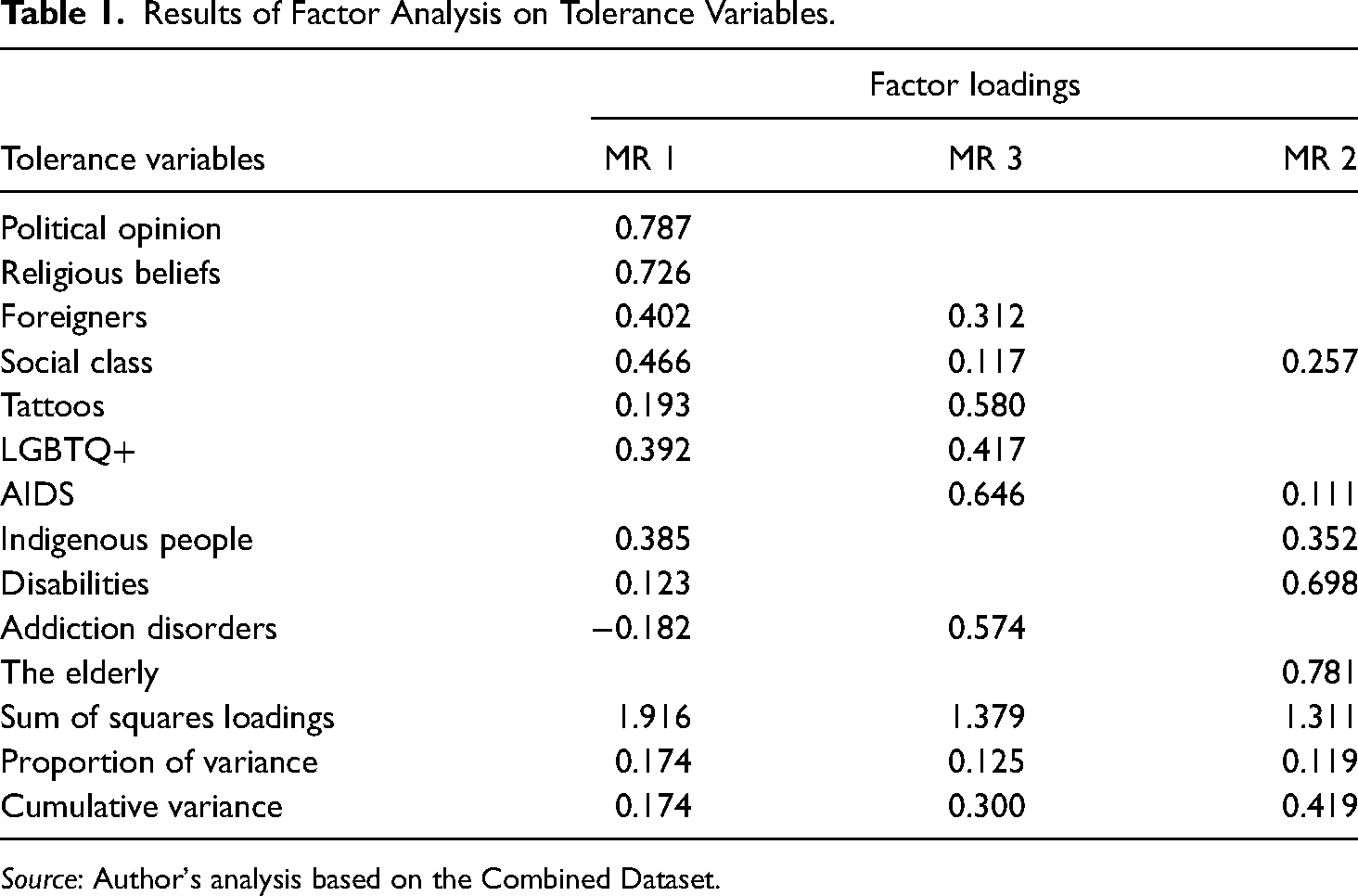
The factor analysis reveals three latent dimensions of tolerance: (1) tolerance towards ideologies, (2) tolerance towards social identities, personal lifestyle choices, and health conditions, and (3) tolerance towards age and disability groups. These dimensions provide an aggregated measure of tolerance, enabling a more systematic interpretation of variations in democratic values across different groups. Table 1 presents the detailed results of this factor analysis, highlighting the factor loadings and variance explained for each dimension.
Results of Factor Analysis on Tolerance Variables.
Source: Author's analysis based on the Combined Dataset.
The factor analysis of the eleven tolerance variables reveals a three-factor solution explaining 41.9 per cent of the cumulative variance. Factor 1 (MR1), accounting for 17.4 per cent of the variance (SS loading = 1.916), represents general tolerance towards diverse ideologies and is primarily associated with political views (loading = 0.787) and religious beliefs (loading = 0.726). Factor 2 (MR3), explaining 12.5 per cent of the variance (cumulative variance = 30.0 per cent, SS loading = 1.379), reflects attitudes towards social identities, personal lifestyle choices, and health conditions, with high loadings for LGBTQ+ communities (loading = 0.417), tattoos (loading = 0.580), AIDS (loading = 0.646), and addiction disorders (loading = 0.574). Factor 3 (MR2) contributes 11.9 per cent of the variance (cumulative variance = 41.9 per cent, SS loading = 1.311) and focuses on age and disability groups, including the elderly (loading = 0.781) and disabilities (loading = 0.698). 3
Lastly, the study examines individuals’ level of civic engagement by assessing whether an individual is a member of any of the following organisations: (a) a trade union, (b) political parties, (c) professional groups (e.g. Bar of lawyers, Association of doctors), (d) a cooperative, (e) political organisations, (f) charitable institutions, (g) religious groups, (h) citizen organisations, (i) social assistance groups (e.g. organisations advocating for indigenous people, street children, or the environment), (j) neighbourhood associations, (k) organisations for pensioners and retirees, (l) groups focused on art and culture, (m) agricultural associations, (n) associations of parents of school students, and (o) assemblies of members of savings banks or mutual aid societies. 4
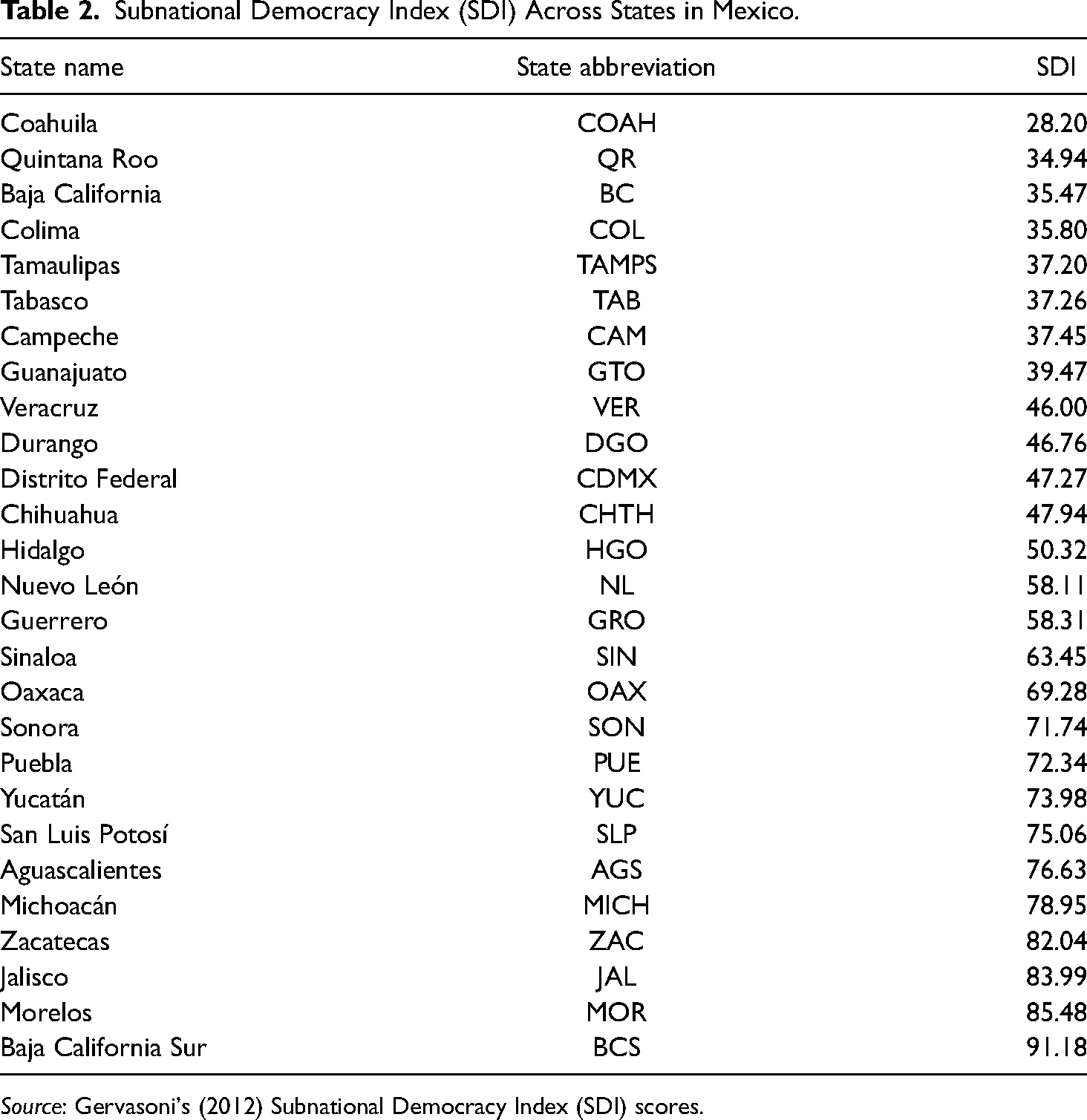
The main independent variable is educational attainment, categorised as none, elementary school, middle school, high school, college, and graduate degrees. 5 The second independent variable, subnational regime types, is measured using Gervasoni's Subnational Democracy Index (SDI), which aggregates institutional and electoral data from 2000 to 2012. The SDI scores are created by evaluating the degree of electoral competition for legislative and executive positions across Mexico's thirty-one states and one federal district, considering factors such as the proportion of the vote won by incumbents, control over political succession, distribution of legislative seats, and the allowance of consecutive re-elections to reflect the contestation dimension of democracy within each unit. 6 Table 2 presents the SDI scores across states in Mexico, ranging from the least democratic state, Coahuila, to the most democratic state, Baja California Sur. To scrutinise the conditional effect of regime types on the relationship between education and democratic values, this study introduces an interaction term between education and the SDI scores.
Subnational Democracy Index (SDI) Across States in Mexico.
Source: Gervasoni's (2012) Subnational Democracy Index (SDI) scores.
Furthermore, the research considers several control variables
Results
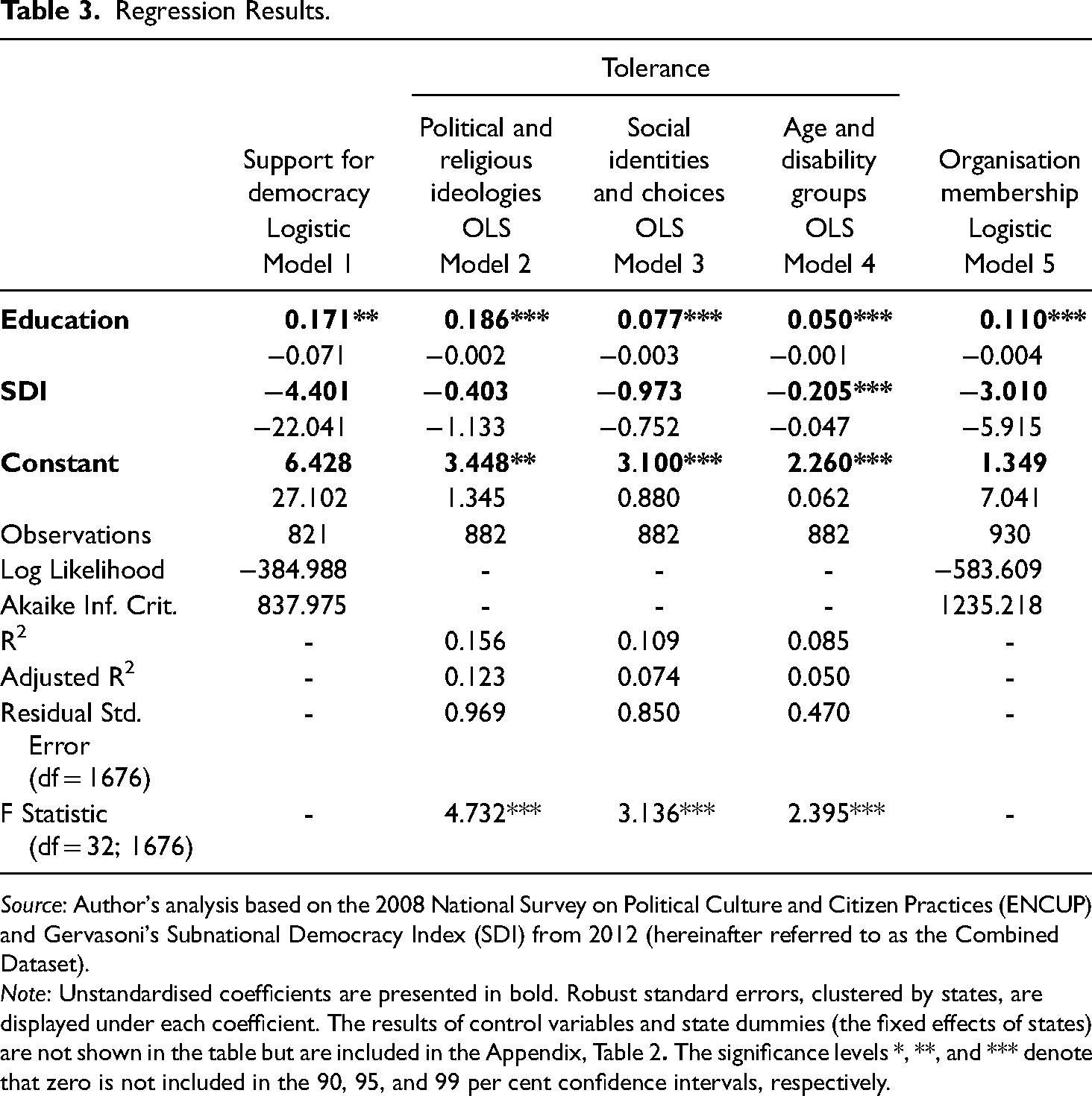
The results presented in Table 3 demonstrate the significant role of education in shaping individuals’ support for democracy, tolerance, and social participation, thereby supporting Hypothesis 1. 14 Education's positive correlation with democratic values persists across a variety of indicators, when controlling for individuals’ retrospective assessments of national and personal economic conditions, log-transformed income, gender, age, political knowledge, and ideology. Higher educational attainment is notably correlated with greater endorsement of democratic principles and a diversity of social identities and beliefs. The association between education and participation in social organisations is also positive and significant, evidenced by a 99 per cent confidence level.
Regression Results.
Source: Author's analysis based on the 2008 National Survey on Political Culture and Citizen Practices (ENCUP) and Gervasoni's Subnational Democracy Index (SDI) from 2012 (hereinafter referred to as the Combined Dataset).
Note: Unstandardised coefficients are presented in bold. Robust standard errors, clustered by states, are displayed under each coefficient. The results of control variables and state dummies (the fixed effects of states) are not shown in the table but are included in the Appendix, Table 2
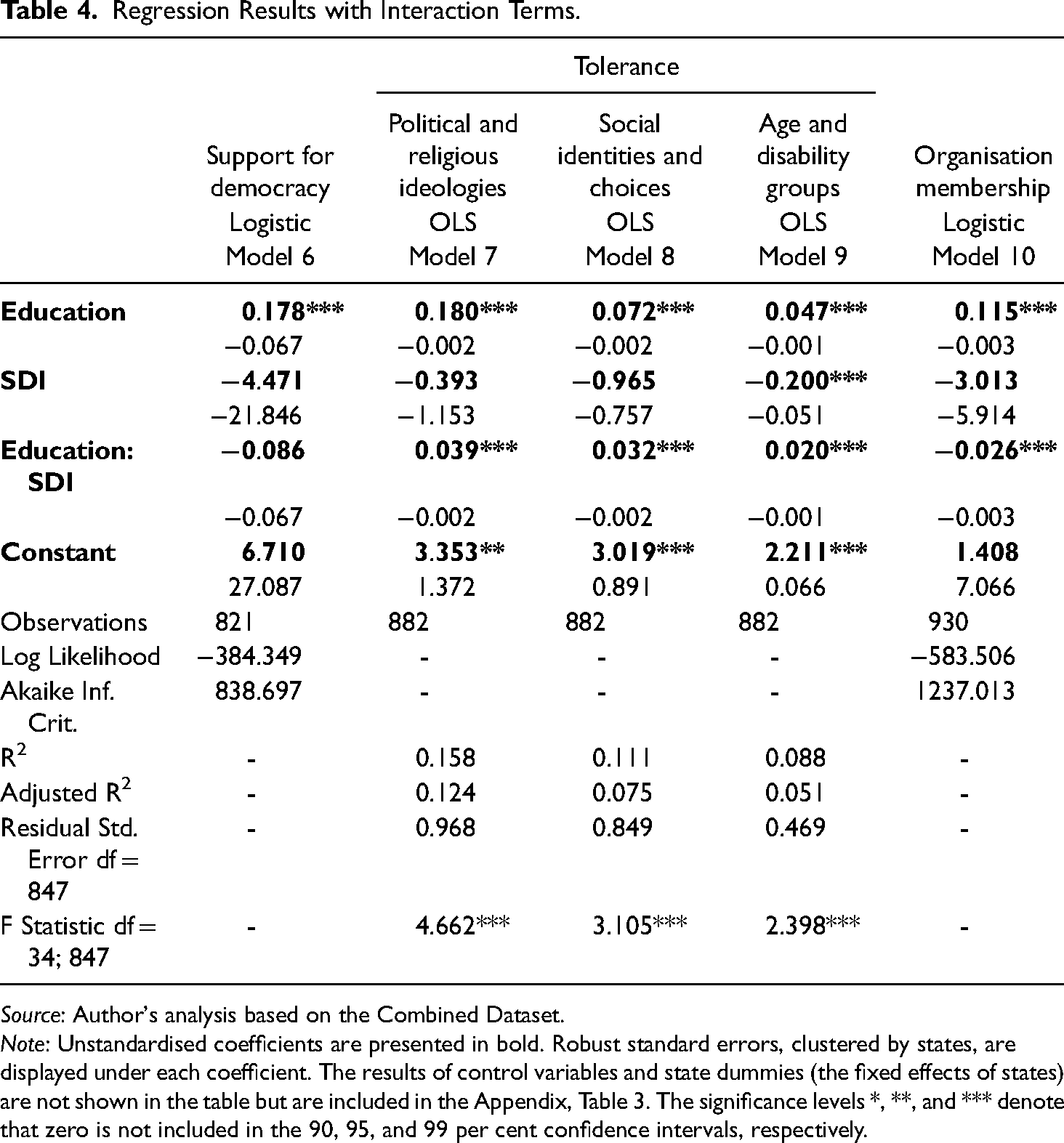
Subsequent analyses explore the impact of education on democratic values in relation to the democratic nature of subnational regimes (Hypotheses 2 to 4). The regression models presented in Table 4 include interaction terms between educational attainment and the Subnational Democracy Index (SDI), illuminating how the type of subnational regime influences the relationship between education and democratic values. To intuitively display the results of the regression models with interaction terms, Figures 1 to 3 depict the marginal effects of education on democratic values across varying levels of subnational democracy. 15
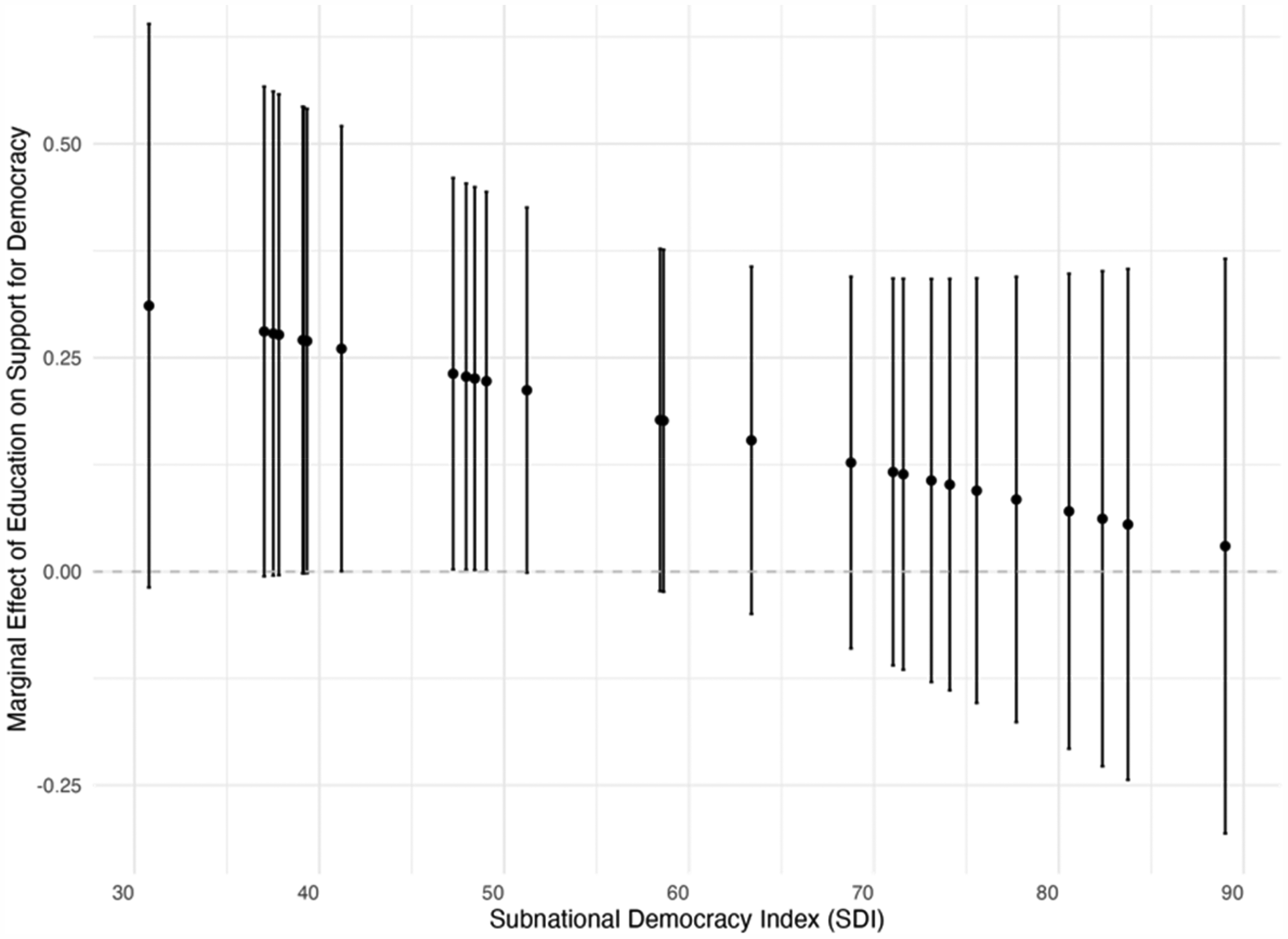
The Effect of Education on Individauls' Support for Democracy Across the Subnational Democracy Index.
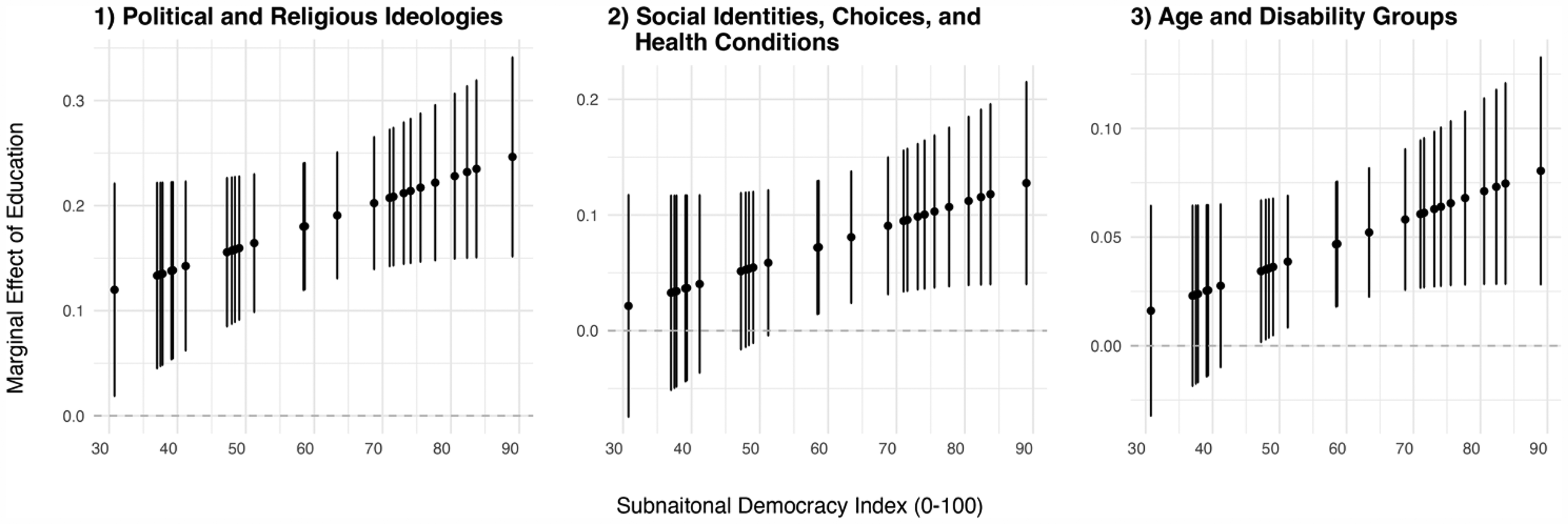
The Effect of Education on Tolerance Across the Subnational Democracy Index.
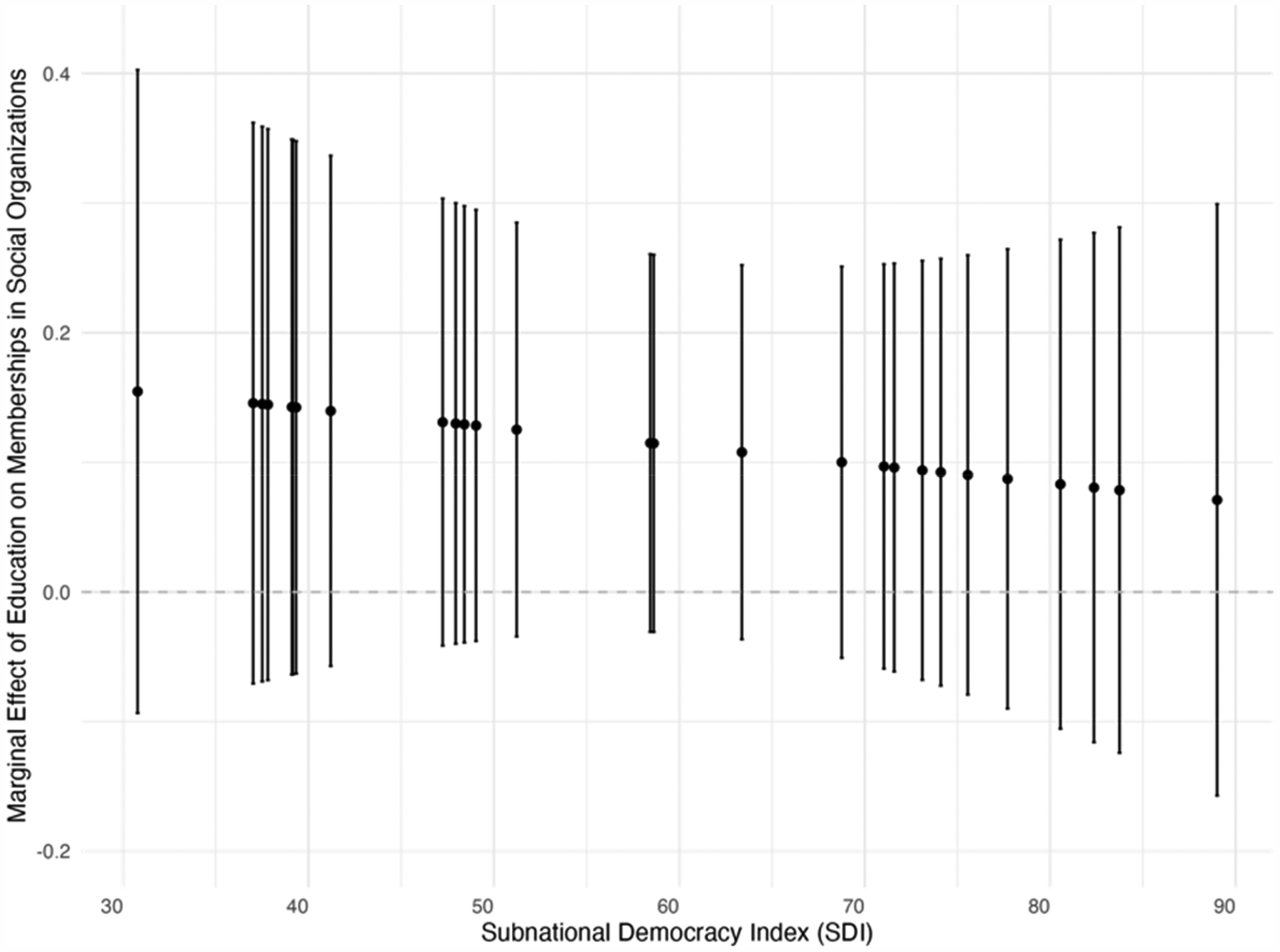
The Effect of Education on Memberships in Social Organisations Across the Subnational Democracy Index.
Regression Results with Interaction Terms.
Source: Author's analysis based on the Combined Dataset.
Note: Unstandardised coefficients are presented in bold. Robust standard errors, clustered by states, are displayed under each coefficient. The results of control variables and state dummies (the fixed effects of states) are not shown in the table but are included in the Appendix, Table 3. The significance levels *, **, and *** denote that zero is not included in the 90, 95, and 99 per cent confidence intervals, respectively.
Figure 1, derived from Model 6 in Table 4, provides strong support for Hypothesis 2 by demonstrating that the positive impact of education on individuals’ support for democracy is statistically significant in less democratic regimes across Mexico's subnational regions. 16 Education's impact on bolstering democratic support is more pronounced in less democratic states, such as Guanajuato (SDI 39.47), Veracruz (SDI 46.00), Durango (SDI 46.76), Distrito Federal (SDI 47.27), and Chihuahua (SDI 47.94), whose SDI scores ranged from 39.47 to 47.94. The results indicate that the positive effect of education on democratic support is statistically significant at lower levels of state-level democracy. Conversely, in states with SDI scores outside this range – both those with the lowest levels of democratic development, such as Coahuila (SDI 28.20), Quintana Roo (SDI 34.94), and Baja California (SDI 35.47), and those with higher levels of democratic development, such as Hidalgo (SDI 50.32), Nuevo León (SDI 58.11), Jalisco (SDI 83.99), Morelos (SDI 85.48), and Baja California Sur (SDI 91.18) – the influence of education on enhancing democratic support is not statistically significant. This pattern underscores the complex interaction between regime types at the subnational level and education in shaping democratic principles. Education in regions with non-democratic traditions might cultivate greater support for democracy, as it is not already a widely attained value. 17
In line with Hypothesis 3, Figure 2, based on Models 7–9 from Table 4, explores the impact of education on tolerance toward various social groups across Mexican states. The analysis demonstrates that education significantly influences tolerance across the three dimensions identified through factor analysis – political and religious ideologies, social identities choices, and health conditions, and age and disability groups. However, the extent and consistency of this effect vary depending on the democratic context of Mexican states.
Education fosters a consistent and positive impact on tolerance toward political opinions and religious diversity, regardless of the democratic nature of the subnational regimes. This universal effect highlights education's role in enhancing individuals’ capacity to understand, accept, and respect diverse ideological perspectives, independent of the political environment in which they are socialised. Furthermore, a clear trend emerges, showing that the effect of education on tolerance towards various political ad religious ideologies strengthens as the SDI rises, suggesting that more democratic environments amplify education's influence.
In contrast, the effects of education on tolerance toward social identities, personal choices, and marginalised groups – such as LGBTQ communities, individuals with tattoos, those living with HIV/AIDS, the elderly, and those with disabilities – are more context-dependent. In less democratic states, such as Coahuila (SDI 28.20), these effects are weak or statistically insignificant. However, as states become more democratic, education's influence strengthens considerably. For example, the positive effects of education on tolerance toward social identities, health conditions, and age and disability groups increase markedly in states with higher Subnational Democracy Index (SDI) scores, such as Baja California Sur (SDI 91.18). This illustrates how democratic contexts expand education's role in fostering inclusivity. In less democratic environments, the impact of education on these dimensions is muted, but as states embrace more democratic governance, education emerges as a key driver of greater acceptance and inclusivity. This finding thus strongly supports Hypothesis 3.
Finally, this study examines the influence of education on civic engagement across various subnational regime types, addressing Hypothesis 4. Figure 3 illustrates that the effect of education on individuals’ membership in social organisations is not statistically significant across all levels of democracy. This suggests that the relationship between education and civic engagement is not conditional on subnational democracy levels. Consequently, this finding does not support Hypothesis 4 and highlights the need for further investigation into how political context influences the relationship between education and civic engagement. 18
In conclusion, this study validates Hypothesis 1, confirming that higher education is linked to stronger democratic support, increased political tolerance, and enhanced civic engagement. Hypothesis 2 is supported, showing that education's impact on democratic support is heightened in less democratic subnational contexts. Hypothesis 3 receives strong support: education has a greater positive influence on tolerance in more democratic regimes, as expected. In less democratic regimes, the effects are weaker or statistically insignificant, further confirming that democratic contexts strengthening education's role in fostering tolerance. Hypothesis 4 finds no support, as education does not have a statistically significant positive effect on civic participation across subnational regime types. Overall, the results highlight the complex interplay between education and subnational democratic structures, indicating that the benefits of education on democratic values and civic behaviours are context-dependent and vary by subnational regime type. 19
Discussion and Conclusion
This study's findings illuminate the intricate dynamics of democratic learning theory within Mexico's varied political landscape, offering new insights into how education shapes the uptake of democratic values. Notably, the results challenge the assumption that education universally promotes tolerance and participation in democracies while reinforcing undemocratic norms in authoritarian regimes. Instead, the findings reveal that the impact of education on democratic values is nuanced and varies significantly across political regimes.
One key finding is that education plays a more pronounced role in fostering democratic support in less democratic states. In such contexts, education acts as a catalyst for democratic ideals, equipping individuals with skills essential for civic participation and democratic change. This transformative potential highlights the critical role of education in initiating broader democratic reforms in less democratic settings.
Another significant finding is the consistent and positive impact of education on tolerance for differing political and religious views across all regime types. This universal effect underscores the potential of education to cultivate political tolerance, contributing to the establishment of a democratic culture. In an era of extreme political polarisation, this finding highlights the power of education to bridge divides and foster mutual understanding and respect among citizens.
In contrast, education's impact on tolerance toward diverse social identities – including LGBTQ+ communities, people with tattoos, those living with HIV/AIDS, individuals with addiction disorders, the elderly, and people with disabilities – is stronger in more democratic states. These findings suggest that, in regions where democratic norms are deeply embedded in the social fabric, education reinforces these values, fostering a culture of inclusivity. In such progressive contexts, education solidifies democratic principles and tolerance as foundational pillars of society.
The broader cultural and social context within which education operates is critical. In societies with pre-existing liberal attitudes toward minority groups, education builds upon and strengthens these values. Conversely, in societies where prejudices are entrenched, education alone may have limited influence, underscoring the need for broader social shifts. These findings highlight the importance of cultural receptiveness and openness in determining the success of educational initiatives aimed at promoting tolerance.
Issues like support for democracy and tolerance toward differing political ideas are more visible in educational settings, especially in less democratic regimes, potentially leading to a greater impact. In contrast, areas such as tolerance for sexual orientations, addiction disorders, aging, and disabilities may receive less attention, limiting their impact within educational contexts. Increasing the visibility of these topics in educational curricula could foster a more inclusive environment that actively challenges social prejudices.
The study also highlights the complex interplay of other socialising agents – family, media, and peer groups – which often reinforce or overshadow the influence of education. Together with schools, these agents create a multifaceted network of influences that shape individual worldviews and democratic values. This interplay can either strengthen democratic engagement or hinder the development of civic-minded citizens.
Interestingly, the findings reveal that the impact of education on civic engagement is not significantly affected by the democratic nature of subnational regimes. This suggests that civic participation in social organisations in Mexico may be driven by factors beyond the immediate political environment, reflecting a universal valuation of civic engagement. While education remains vital, the intrinsic value placed on civic engagement appears to maintain its consistency across different contexts.
These findings underscore the importance of nuanced educational policies that acknowledge the variable impact of education across political and social contexts. For policymakers, this means developing strategies rooted in democratic principles while tailoring them to the unique needs of Mexico's diverse subnational entities. Educational programs must be designed with sensitivity to local cultures and political climates to ensure their effectiveness and relevance.
This study reinforces the main argument of democratic learning theory: that education promotes democratic values but in ways shaped by the political context. In less democratic regimes, education serves as a catalyst for democratic ideals, fostering support for democracy and tolerance for diverse perspectives. Conversely, in more democratic contexts, education builds on pre-existing norms, deepening inclusivity and reinforcing democratic principles. These findings emphasise the importance of tailoring educational policies to account for the interplay between political and cultural contexts to maximise education's potential for strengthening democratic values.
Supplemental Material
sj-docx-1-pla-10.1177_1866802X251344318 - Supplemental material for The Effect of Education on Democratic Values Under Different Regime Types in Mexico
Supplemental material, sj-docx-1-pla-10.1177_1866802X251344318 for The Effect of Education on Democratic Values Under Different Regime Types in Mexico by Yeaji Kim in Journal of Politics in Latin America
Footnotes
Acknowledgements
I am deeply grateful to Eduardo Alemán, Justin H. Kirkland, Pablo M. Pinto, and David E. Campbell for their invaluable guidance and support throughout the development of this research. I also thank the anonymous reviewers and the editors of Journal of Politics in Latin America for their thoughtful feedback and constructive suggestions. I am especially thankful to Carlos Gervasoni for generously providing access to his subnational democracy index data.
Declaration of Conflicting Interests
The author declared no potential conflicts of interest with respect to the research, authorship, and/or publication of this article.
Funding
The author received no financial support for the research, authorship, and/or publication of this article.

Supplemental material
Supplemental material for this article is available online.
Notes
Author Biography
References
Supplementary Material
Please find the following supplemental material available below.
For Open Access articles published under a Creative Commons License, all supplemental material carries the same license as the article it is associated with.
For non-Open Access articles published, all supplemental material carries a non-exclusive license, and permission requests for re-use of supplemental material or any part of supplemental material shall be sent directly to the copyright owner as specified in the copyright notice associated with the article.
