




Abstract
To understand the relevance of the new media in the formation of the indignation nets, this text, of exploratory stamp, debates the digital activism in contemporary Brazil . Methodologically, we will make a discussion on cyberactivism, digital media, and national pressure groups starting from two examples, Movimento Brasil Livre (The Free Brazil Movement) and Vem pra Rua (Come to The Street movement) – these are key movements in the organisation of the big anti-government mobilisation that took place in 2015–2016 in Brazil. The theme is important because it embraces current and future challenges of the digital activism, once that this field faced significant changes in the last decades, with the development of interactive media and the technological convergence.
Introduction
The digital media 1 are part of people’s everyday life, giving them the chance to communicate with each other for a lower cost, more speed of information, sharing of news, and reduction of physical distance. They definitely changed the shape of relationships and, more importantly in this discussion, the way people articulate with each other.
In this digital time, the search for social transformation occurs online and offline. Often, simultaneously, this activism is organised now by traditional ideological groups (social movements, NGOs (Non-governmental organizations), unions, and political parties) and by activists from the virtual space. These actors of the political games cannot be understood separately, because usually they are related, and it complete each other.
Examples of those cyber activists groups that shape the indignation nets are all over the globe in mobilisations as the “Arab Spring” (occurred in Middle East and Africa), “The Angry Ones” (Los indignados – Spain), and the “Occupy Wall Street” (OWS). All these movements as they were happening on the streets were also happening online. By that time, the virtual nets were greatly used by individuals to share information about the mobilisations, especially aiming to protect themselves against police repression.
On the protests mentioned earlier, each social network had a specific function. Twitter was thoroughly used to spread real-time information; Facebook was used to promote debates related to the themes, future summons and also shared videos and images; YouTube and other streaming services were used for the popularisation of shocking videos like police abuse and even small documentaries about each protest; and WhatsApp was used in the instantaneous exchange of messages.
However, to study the political activism and the pressure groups just like they work today put us in front of some theoretical and methodological dilemmas that goes since classic “problems” from the collective action (costs with mobilisations, groups resources, etc.), passing through the most recent perspectives and “new facts,” to the example of the function carried out by the new media in the mobilisation and its own transnationalisation of the movements, due to a world more and more connected thru the nets (Castells, 2013).
With the means of the digital technology, the current manifestations dialogues more and share strategies as in the case of the tactics of occupation of the space used in the movements called “Occupy” throughout the whole globe, or it is in the internal operation and forms delegations like in the movement Indignados and OWS. These two last ones, considering them-self without leadership, have adopted the model of Spokes Council (nominated and alternated individuals to represent the positions in the work groups), in the search for promoting a more democratic communication between participants and committees, exempting this way the illustration of a single leader.
In this text, it is worth to stress, which we will focus, above all, in the relevance of the digital media in the articulation of pressure groups, approaching the cases of the Movimento Brasil Livre (MBL – Free Brazil movement) and Vem pra Rua (VPR – Come to the Street Movement). The option for studying them happened due to the reach and importance that these groups possess in the Brazilian national political scenery and cyberspace, holding millions of followers (Table 1).
Comparison between “Free Brazil Movement” and “Come to Street.”
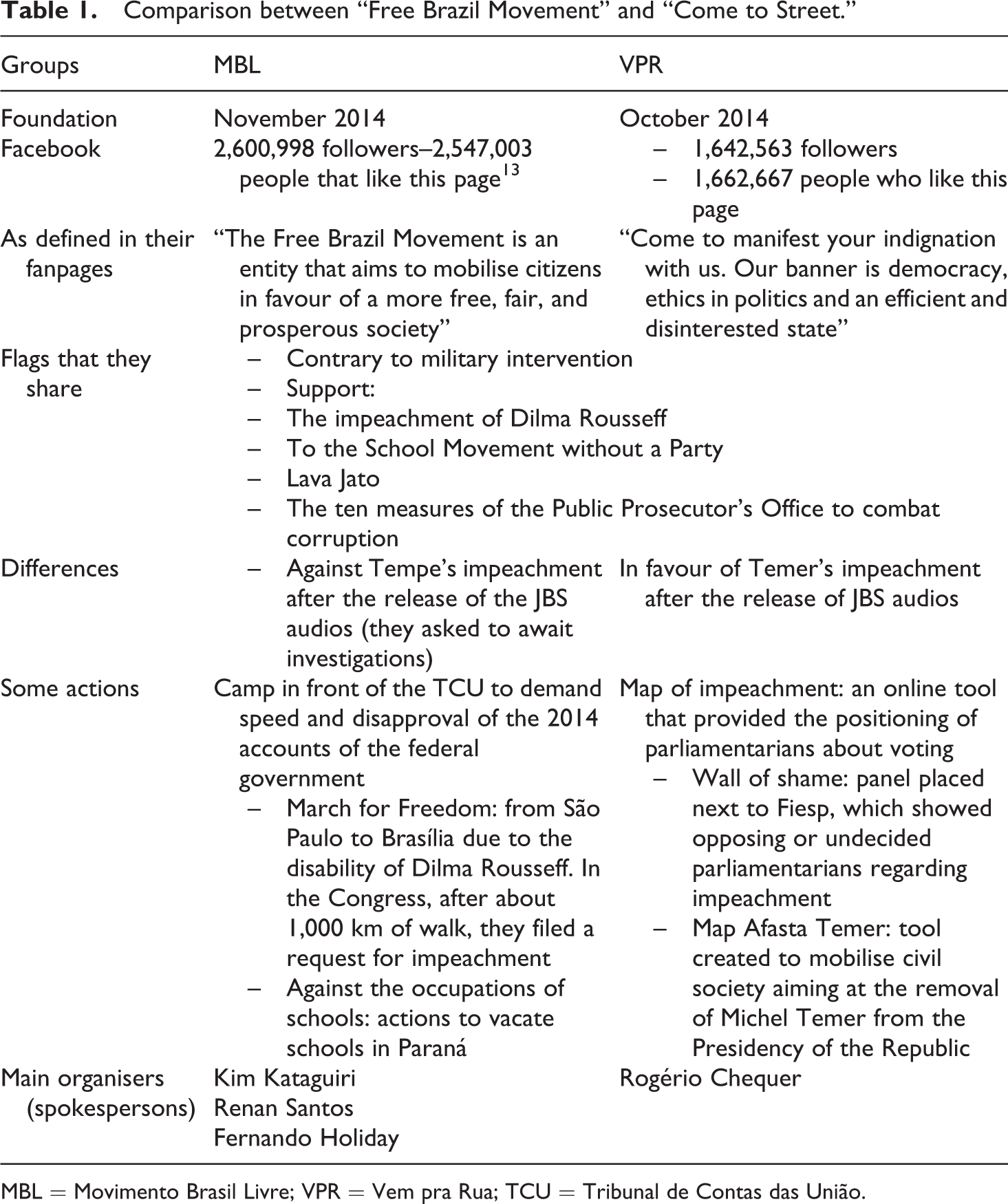
MBL = Movimento Brasil Livre; VPR = Vem pra Rua; TCU = Tribunal de Contas das União.
Nowadays, the digital media can be seen under two antagonistic perspectives. In the first one, optimist, it has emphasised characteristics mentioned already, as the decrease of the cost to communicate, the speed that information goes, the elimination of the physical distance, and the culture convergence. In the second one, pessimistic, standing out the impoverishment of the political debate with emptier (prevailing the simplification) discussions, the use of fake news as strategy to restating ideologies, and the loss of privacy in the cyberspace. Maybe one of the largest challenges for specialists of the activism is how to overcome such different visions.
After all, although, the new media possess new ingredients, as the virtual nets online (Online Virtual Networks 2 ), consultation platforms to the citizen, petitions online, among others, also maintain the same characters of the world offline and they share net characteristics with individuals/organisations that control the information flow (Barabási, 2009; Christakis, 2009).
Looking to explore the way that they hold the indignation nets nowadays, this text is organised in the following way: the second section deals with methodological questions, the third section with literature review, the fourth section on discoveries and final considerations, and the fifth section provides bibliographical references.
Methodological Questions
King, Keohane and Verba (KKV) (King et al., 1994) defended that the largest science’s discovery is the method and because of this the logic of a good quantitative research doesn’t differ from the logic of a good quantitative research. Although KKV highlight that qualitative research is better for studies of one or few cases, while quantitative research is better fit for studies with larger number of cases, in any of the modalities it is important to respect some points: (a) to have as objective to accomplish an interference starting from the data; (b) to use public procedures, the worth, and corrects ones; (c) to consider the initial uncertainty of the results; and (d) to have in mind that the body of the research is the method.
An appropriate research will look to describe in detail a phenomenon entering in a relevant discussion: Does the researcher interpret or does he/she infers? In agreement with KKV, the interference has methodological rigidity as the basic element, which cannot happen in the studies that accomplish the interpretation.
In fact, the methodological rigidity can be the most difficult part of a research, once it is what grants credibility to the obtained results. This way, the choice on the used tools and the configuration of the measures that will be used in the work are all parts of the methodological rigidity.
Brady and Collier (2004) did not disagree with the idea spread by KKV that quantitative methods have much importance than the qualitative ones. However, Brady and Collier are not convinced with the fact how KKV look into the quantitative methods for qualitative research, that is, according to them, instead of recognising the relevance of the quantitative tools, KKV were just transposing qualitative data to the other study type. Brady and Collier criticised KKV that these would spread a supposedly “statistical monoculture,” which would in turn base the idea of quantitative superiority, and for that, they would stop the progress of the debates on methodology in political science.
Similarly, the methodological pluralism would be left aside, despite being said present. In another words, one advocates for a plurality of methods, but everything is made based on a quantitative pattern. Besides, Brady and Collier argue that the quantitative methods can present flaws not perceptible, especially to researchers with little training. It is the mistakes on measurement and viability on the use of casual inferences that costs. These authors defend that the research is the one who should say which is the best technique to be used.
For that reason, there is space for typology creation as well as for the descriptions based on statistics and inferences originating from regression techniques. The biggest problem for the researchers is to define the target and identify the subject from the beginning of the project. Only by starting with a good mapping, a study can choose the use of one or another technique and reach a relevant result.
Approaching to academic studies, KKV defend the necessity for asking an important question to the real world and to add to that writings on the subjects that have already been out there and specific academic field, increasing the capacity to give scientific explanations to aspects of the world. Considering these two points, this work seeks to reconcile a revision of the cyberactivism literature with data collected in ways that we can study the formation of the indignation nets nowadays.
Method Applied in the Research: Description
For many years, political science has produced research studies that originated from questions pointing out causalities between phenomena. This way, “merely descriptive” research became “obsolete” (apologies for using this word). Although causalities and descriptions are interlinked, one cannot be understood without the other (Gerring, 2012: 722). For an exploratory study like this one, description details better the object to be studied and to formulate deeper questions.
The difference begins in the questions of research of descriptive works. According to Gerring: A descriptive argument describes some aspect of the world. In doing so, it aims to answer what questions (e.g., when, whom, out of what, in what manner) about a phenomenon or a set of phenomena. Descriptive arguments are about what is/was. For example: “Over the course of the past two centuries there have been three major waves of democratization.” (2012: 722) Descriptive arguments […] assume five archetypal forms: accounts, indicators, associations, syntheses and typologies […]. This is how social science carves up nature at the descriptive level. These are the patterns that we look for when attempting to describe events in the social world.
Literature Review
Cyberactivism and Digital Media
The intensity and the reach of the digital activism took the contemporary world by surprise, where the nations are suffering serious internal problems, just like political parties and their vulnerability, procedures that reshape the possibilities of action by the State around the world, social inequality and distrust in relation to the politicians (Sorj, 2016). These obstacles are decisive points for helping the traditional politics to lose support and popular participation, following the example of the fidelity one have to their political party, decreasing especially among the young (Donk et al., 2004).
The importance to study cyberactivism happens before a phenomenon that goes beyond the territorial limits of several nations. In Europe and the Middle East, there is extensive literature about how the movements “Paneladas” (Iceland), Arab Spring (Middle East and Africa) and “Indignados” (The Angry Ones – Espanha) originated and their growth (Harvey et al., 2012; Castells, 2013). In North America, the cases of OWS and Slut Walk are all over the planet and became transnational movements (Gomes and Sorj, 2014).
The paper of the digital media now interferes so much in the political and social world that authoritarian governments intervene directly in the virtual world (Sorj and Sergio, 2016). A well-known case happened in Egypt, when during the Arab Spring manifestation, the government of Mubarak cut the Internet access in an attempt to cure the crisis, leaving Facebook and Twitter inaccessible to the whole country.
Nevertheless, it is not only in authoritarian government that the State acts up in the virtual world. Democratic governments also try to make their own way inside the cyberactivism, by giving money to traditional vehicles like newspaper and “friendly” bloggers. All done in order to discredit virtual articulations or even to sell unpopular actions of the government.
Another way to interfere is to use bots to increase the number of followers on Twitter and fanpages (on Facebook), giving them more credit than they actually have. In another words, this creates pages that are relevant thru a communicative point of view because of the high numbers of followers and likes.
This way, the digital media make possible the interaction among people, the sharing of news and more speed, and put the information at a better reach. However, it is also important to have in mind that those media also help political groups reach private benefits, before collective goals (Banda et al., 2009).
Pressure Groups, the Internet Growth, and Political Crisis
We chose the MBL and VPR as subject of our study because they are the main articulators in the virtual world from the anti-government manifestations in 2015 and 2016 in Brazil. Because of both, millions of people went to the streets, a historical record according to research. 3 These protests, inflamed by the low rates of the government, created an air of general dissatisfaction against the, by then, weak administration of President Dilma Rousseff, playing an important part from beginning to end of the impeachment process.
To understand how pressure groups like MBL and VPR appeared, it is very meaningful to keep in mind the following: (1) the increase the access of Internet and digital media in Brazil and (2) the recent Brazilian political conjecture, whose executive power was, from January of 2003 to August of 2016, under the “Partido dos Trabalhadores” (Worker’s Party, PT). Castells (2013), for example, embraced those same categories when thought that Turkey and Iceland gave the initial kick in the group protests after 2008 4 in Europe and Africa. The analyses to proceed will be first theoretical and later we will reveal the evolution of interest for the MBL and VPR as time went by (see “Cyberactivism and Digital Media” section), looking at them into context with their respective origins.
Now in Brazil, year after year, the number of people with Internet access increases, together with the importance of the virtual nets in the mobilisation of people and from a digital culture that settles down. Different searches point that since 2015 more than half of the Brazilian population have access to the Internet: 55 per cent of the population (in 2016, according to TIC (Tecnologia da Informação e Comunicação (Communication and Information Technology Research)) homes 5 ), 57.8 per cent (in 2015, according to the IBGE (Instituto Brasileiro de Geografia e Estatística (Brazilian Institute of Statistic and Geography)) 6 ), and 65 per cent (Datafolha, 7 2015).
Before the huge mobilisation of 2015, the “Datafolha” research (2015) also put into consideration the collective action theme, showing that 45 million Brazilians had already participated in social movements, and about 13.7 million participated only thru the Internet, 18.2 million only personally, and 13.1 million both ways. The study also identified the virtual social nets as being meaningful sources of information and knowledge: seven in each ten Internet users found out thru the nets about social movements.
In Brazil, the articulation for mobilisation in the virtual networks, following other nations step, grew around two main tools, Facebook and Twitter. Here, we will discuss the first one, by considering it more important than the other one when the matter is about articulation and collective action.
Founded in 2004, Facebook is an important tool to inform and build social relationships. At this time, Brazil is the second largest nation in user numbers with 111 million active users monthly (they visit the network at least once a month) and 82 million users are active daily 8 (with at least one visit a day).
Research with Facebook groups in Chile (Ortiz et al., 2011) concluded that the tool (i.e. important to say that the site it is not a social network on its own, but yes, a support for the integration to exist) is mainly the enlargement of our closer social circle, strengthening existent social bows, more than creating new ones.
Another research (Nansu Park et al., 2009) with 1,715 university students looked into identifying the reasons that move people to signing to Facebook groups, pointing four main needs: sociability, entertainment, search of social status, and looking for information. The other studies (Recuero, 2014) suggest that Facebook is good at keeping relationships that otherwise would deteriorate with time.
As the years go by, the ways people use Facebook have changed and, which was earlier used mainly to keep in touch with “friends,” it is now seen by its own users as a tool for accusations, political accusation, and information. This big virtual public playground of discussions and convocations became essential for any type of mobilisation in Brazil that aims to bring millions of people to the streets.
However, in addition to the greater access to virtual networks and the Internet, what has caused the emergence of pressure groups in Brazil in recent years? The following are two possible ways of understanding this issue: the Brazilian political–economic crisis and the loss of support from the PT, which historically stopped the votes of the middle class.
According to Singer (2012), during the Lula administration, there is a turnaround in the profile of the electorate of the former president, whose significant milestone was the removal of the traditional middle class after the “Mensalão” scandal (Pereira, 2011). With weak reformism (going against what economic elites wanted) and Dilma’s failure to emerge from the crisis (Singer, 2012), in addition to successive attacks on the PT in traditional media, the lower classes also abandoned Dilma of losing recent achievements.
As the traditional middle class had already jumped out of the boat, Dilma lost what she had left, with strong rejection in all social strata. Thus, MBL and VPR had a fertile ground at a time when the national left political forces were disunited and the PT suffered the greatest political crisis in its history.
The June 2013 Days (Sousa and Arão, 2013) were possibly the starting point for the articulation of those citizens who felt excluded from the political decisions of the period in which the PT was at the head of the national executive. After the fierce election race between Dilma Rousseff (PT) and Aécio Neves (PSDB), in 2014, MBL and VPR gained strength and began to promote demonstrations in Brazil.
There is controversy, however, about what caused the sudden growth of MBL, which went on to lead other street movements even more strongly than VPR. Amaral et al. (2016) states that international groups have sponsored MBL since its formation through a network of right-wing foundations based in the United States, the Atlas Network, which encompasses eleven other organisations linked to the Koch brothers 9 (possibly interested in destabilising the PT government). In addition to this theory, audience 10 in which MBL leaders affirmed that parties such as MDB (Movimento Democrático Brasileiro), PSDB (Partido da Social Democracia Brasileira), DEM (Democratas), and Solidariedade had financed pamphlets, caravans, and snacks in demonstrations requested by the group.
It is important to emphasise, however, that regardless of how these groups were maintained from an economic standpoint, they arose because of a need to unite a portion of the society that was no longer represented by the PT government.
Among other actions, MBL and VPR began to act by pressing public and political institutions, holding meetings for their occupations and organising live virtual chats in a quest for a direct channel with the population. The strategy followed with videos and photos of their self-proclaimed leaders (encouraging a sense of identity), requests for donations from the sale of their own products – mugs, shorts, t-shirts, and so on – and the search for new members in the virtual environment and physical, with the creation of specific nuclei in strategic cities.
In terms of building leadership, MBL was more effective than VPR by launching two leaders of the movement: (1) Kim Kataguiri, a nineteen-year-old economics student (at the time), who represented the youth leaving the virtual world and going to the streets, and (2) Fernando Holiday, a black representative, but against quotas for blacks in the colleges (an initiative from the PT government to increase the participation of the black people on the public Federal University), also raising the liberal flag. As such, the MBL team took on a leading role by overcoming the VPR, whose leader, Rogério Checker, had difficulties in unlinking a possible party image linked to the PSDB (Amaral et al., 2016).
Due to the growth, MBL and VPR became more studied. Moura and Yamamoto (2016) analysed MBL’s discourse on YouTube taking into account the ideals of freedom and country expressed by the group. The conclusion was that there is a production of meaning whose effect is an imagined yellow–green community, from the constitution/articulation of three semantic fields: one that deals with the (a) ideals of change; another of the movement having the figure of a saviour, (b) field of the messiah, and finally, (c) field of freedom, which encompasses the ideals of the group.
Firmino (2016), in turn, explored the points of contact that the MBL and VPR establish with the “middle middle class” and the “middle middle class,” concluding that the widespread criticism of petism, 11 corruption, and governments serves as the driving force for these movements. Omena and Rosa (2015) and Cavalcanti (2017) also reached similar conclusions.
Cavalcanti (2017), in an analysis of thousands of MBL and VPR fanpages postings in two distinct time cuts, one in 2017 and another in April 2016 (a crucial time for Dilma Rousseff’s impeachment), found that postings with greater engagement 12 criticise the PT and the corruption of PT governments, indicating that the members of these groups, among them the leaders, feel a greater interest/identification by guidelines in this sense.
Descriptive Analysis of Interest in MBL and VPR Over Time
To better understand the trajectory of MBL and VPR, we decided to use a widely used tool in digital marketing, Google Trends, which provides information on the popularity of keywords on the Internet and therefore accompanies the interest in a subject throughout the time. We do not use other methods for analysis, such as the follow-up of fanpages, since we already address research that does this. In summary, we explore the terms “Movimento Brasil Livre” and “Movimento Vem pra Rua” in Google Trends, with a five-year time cut from 6 January 2013 to 31 December 2017. In relation to VPR, we analysed it with the term “Movement Comes to the Street” rather than just “Come to the Street.” This is because the expression “Come to the Street” was used by several recent mobilisations in Brazil, including those that had no relation with the group treated here.
The horizontal axis of Chart 1 represents the time line, with the total time of analysis being 260 weeks. The vertical axis, ranging from 0, 25, 50, 75, and 100, shows the frequency with which “Movimento Brasil Livre” was searched on Google, with 100 representing the maximum popularity of the term between the analysed period and zero the minimum.
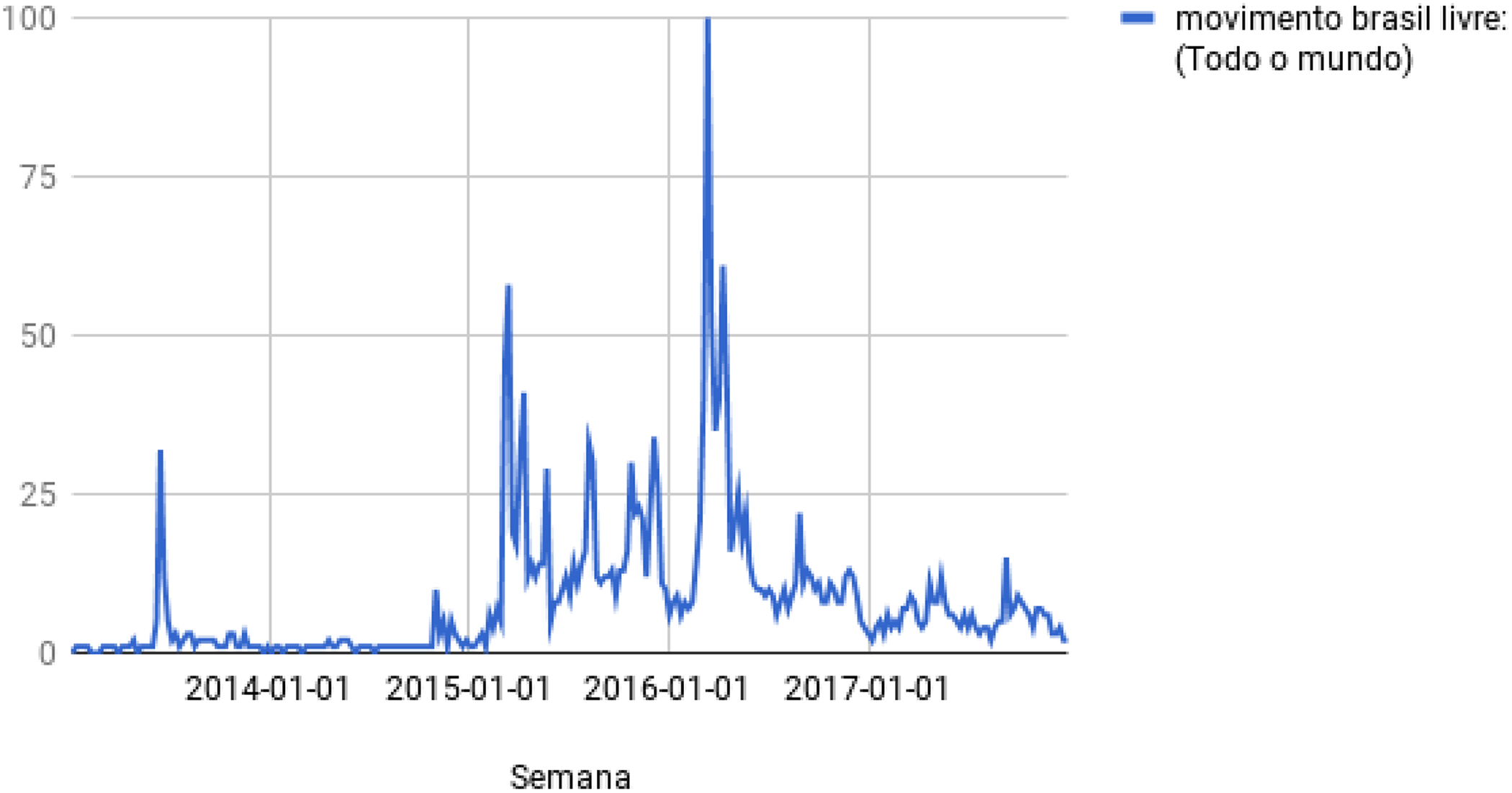
Searches on Google for the term “Movimento Brasil Livre.”
For our discussion, it is interesting to highlight the three main peaks of search for the term. The first peak, from 16 June 2013 to 22 June 2013, was 32; the second, of 58, occurred between 15 March 2015 and 21 March 2015; and the third of 100, was between 13 March 2016 and 19 March 2016. These numbers (32, 58, and 100) represent the research interest related to the theme (metrics created by Google).
But what does this information about MBL tell us? Two main observations can be made. The first is that the name “Movimento Brasil Livre” seems to have appeared before the birth of the group on Facebook, even during the Days of June 2013 – it is not known whether already with the current leaders or with other people. This doubt exists because the birth date of the MBL fanpage is November 2014.
The second observation is related to the interest in MBL over time by Internet users, which increased mainly during the main anti-government demonstrations of 2015 and 2016 (the peak of 100 was reached exactly the largest pro-impeachment mobilisation of Dilma Rousseff, in the week of 13 March 2016). After that, the search by MBL fell on Google. This information serves to identify a possible drop in the strength of the group in recent times. In addition, other evidence indicates that MBL actually lost influence after impeachment, considering that the last calls made did not attract large numbers of people.
Google Trends also shows queries related to the term being browsed. For “Free Brazilian Movement,” the main consultations were “come to the street,” “movement comes to the street,” “movement Brazil free Facebook,” “revoltados online,” and “MBL movement free Brazil.” This indicates that people who enjoy MBL are also interested in other more liberal movements and right on the political spectrum, such as VPR itself and Revoltados Online.
The peak moments of VPR (Chart 2) are similar to those of MBL. The three largest were in the same period, only varying the degree of interest related to the theme. The week of 16 June 2013 to 22 June 2013 scored 46; the second peak, 49, occurred between 15 March 2015 and 21 March 2015; and the third, 100, was between 13 March 2016 and 19 March 2016.
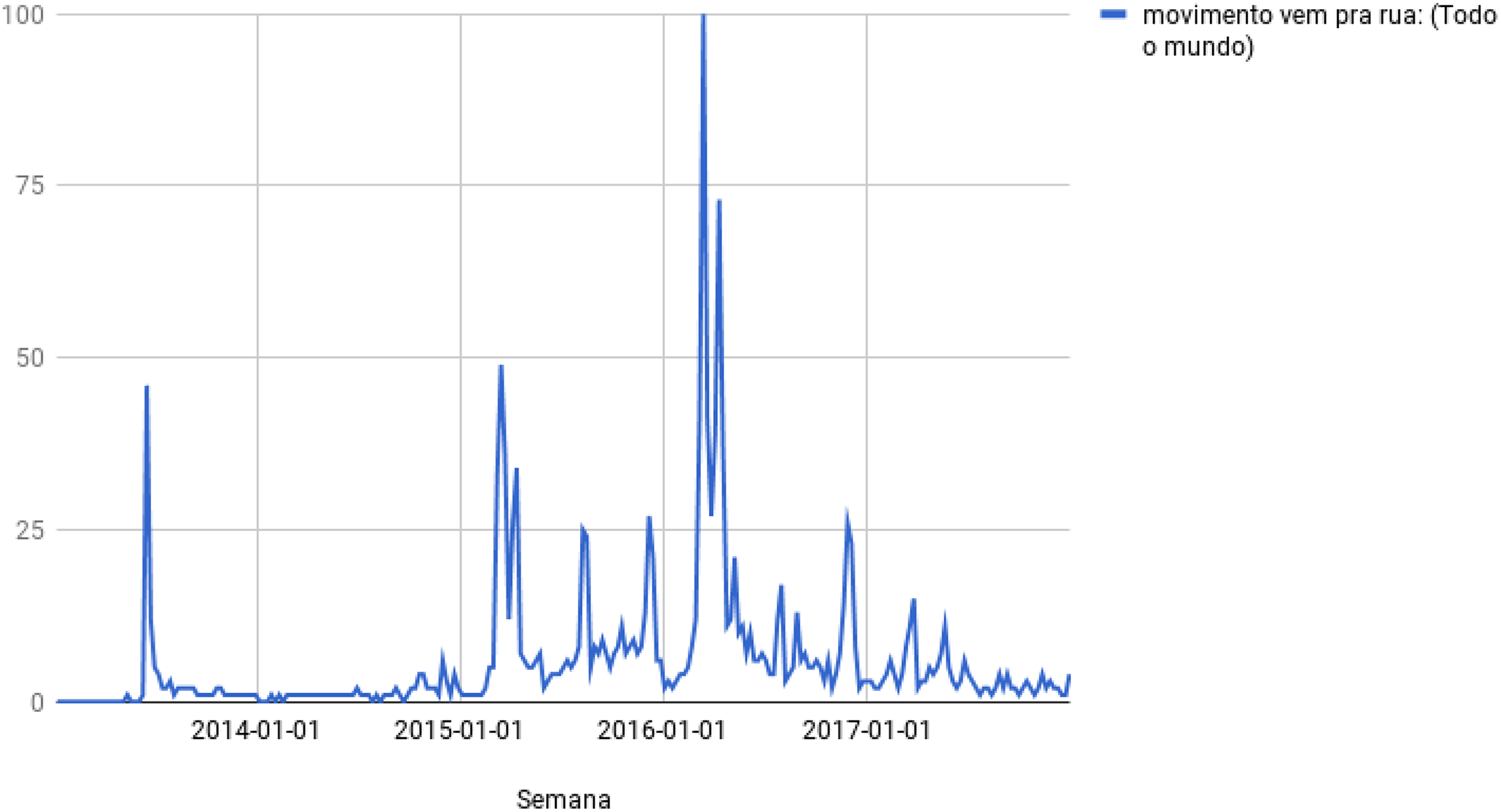
Searchs on Google for the term “Movimento Vem Pra Rua.”
In relation to these moments of higher search spikes, the same comment made about the term “Free Brazil Movement” can be made here: that the keyword “Movement Comes to the Street” gained notoriety in the June Days and, later, in the main demonstrations against the Dilma government – indicating that the flag of the group that most unites people, as well as that of the MBL, is the anti-PT agenda.
In relation to the five queries related to the term “Movement Comes to Street” in Google, they were “Movement Comes to Brazil Street,” “Brazil free,” “Brazil free movement,” “revolted online,” and “movement revolted online.” Finally, Chart 3 brings a comparison between the terms “Brazil Free Movement” and “Movement Comes to the Street.”
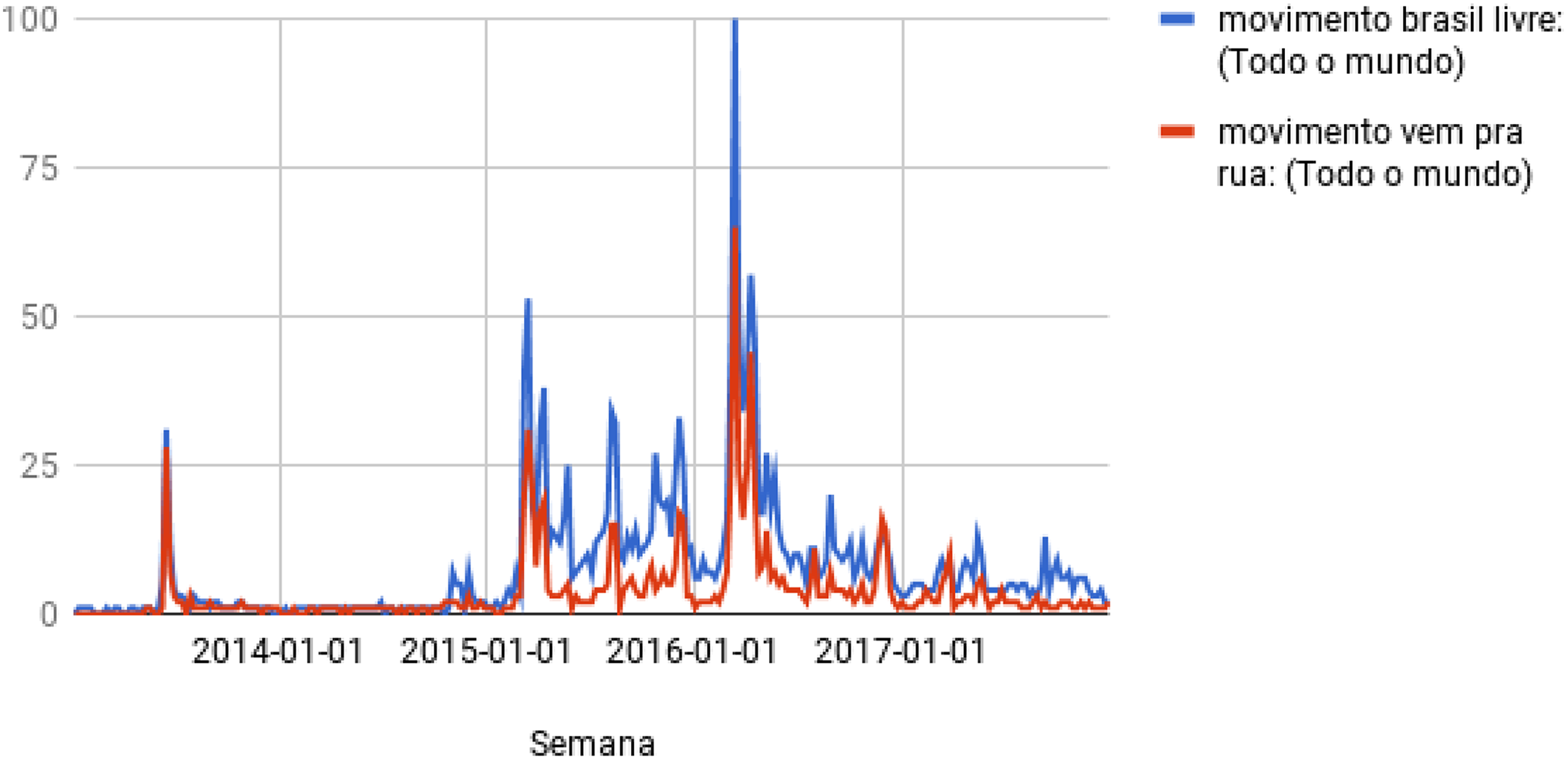
Searches on Google for the terms “Movimento Brasil Livre” and “Movimento Vem Pra Rua.”
Guidelines and Speeches in Different Temporal Cutouts
As mentioned, the analysed posts of the groups were two distinct time cuts, one of this year, to capture the current moment of MBL and VPR, especially with the aggravation of the political crisis involving President Michel Temer, and another of April of 2016, when the Federal Chamber authorised the opening of the impeachment process of Dilma Rousseff. Therefore, the choice of these cuts was intentional, trying to contemplate how these groups behaved in disparate political moments: the first in a centre-left government (Dilma) and the second in a liberal reformist (Temer). The software used to collect the material was Netvizz v1.6., a tool that extracts data from different sections of Facebook (groups, pages, surveys) for research purposes.
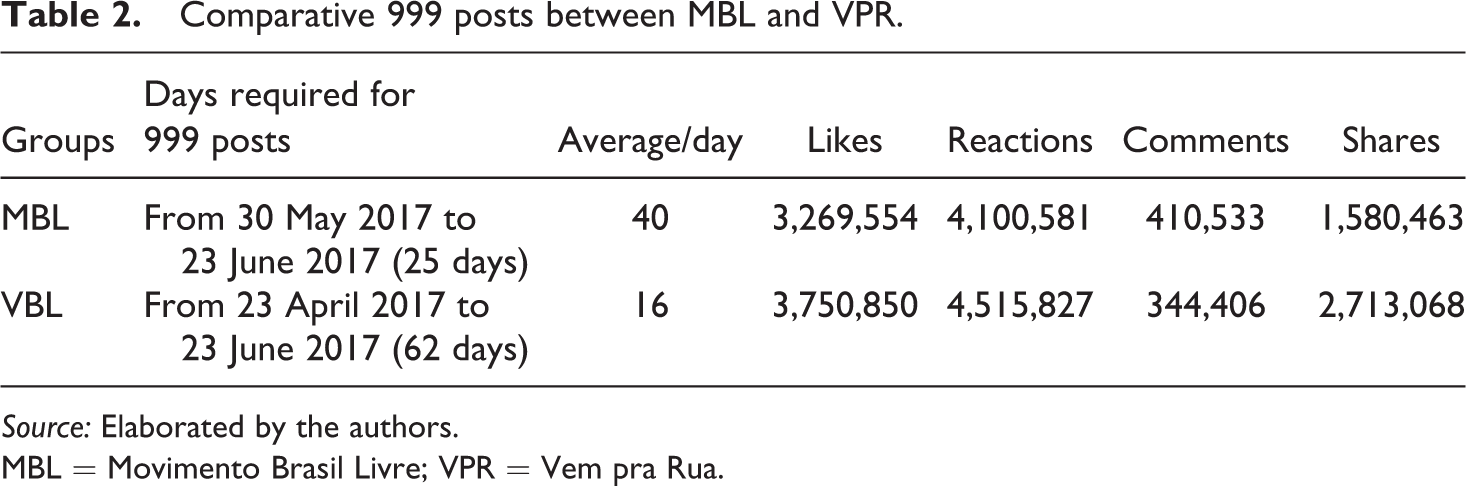
In the first time cut, the last 999 MBL and VPR posts (Table 2) were collected as of June 23, The MBL had 999 posts in 25 days, averaging 40 posts/day, while VPR took 62 days to reach that number, an average of 16 posts/day. Comparing the 999 posts, MBL had more comments and VPR more likes, reactions, and shares – which is surprising, since MBL had more followers in the accompanying period.
Comparative 999 posts between MBL and VPR.
Source: Elaborated by the authors.
MBL = Movimento Brasil Livre; VPR = Vem pra Rua.
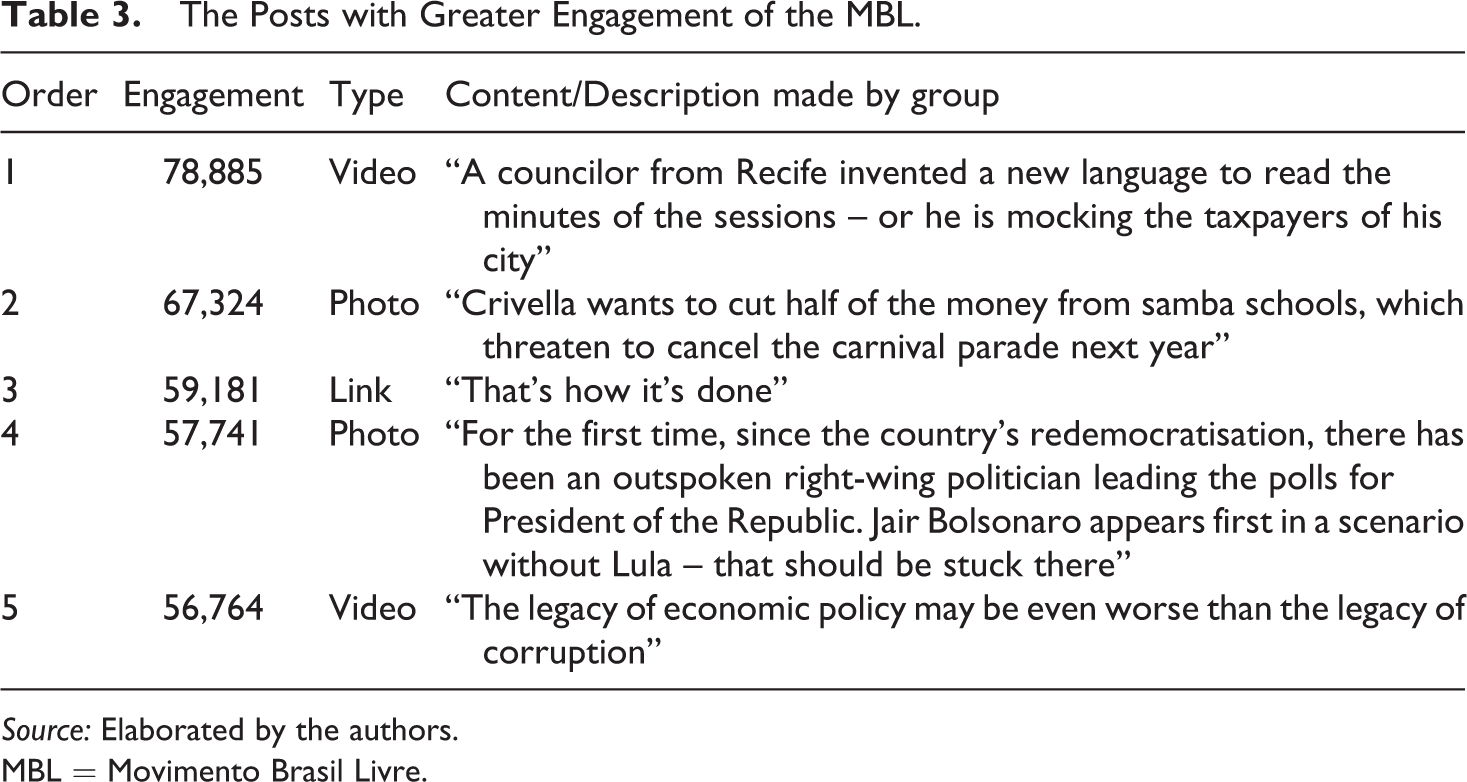
The next step of the survey was to check posts with greater engagement, metrics that measure audience interaction with posts on the page, through clicks, likes, comments and shares, each with different weight. Table 3 also displays the first few lines of the description of the posts exactly as they were in the fanpage.
The Posts with Greater Engagement of the MBL.
Source: Elaborated by the authors.
MBL = Movimento Brasil Livre.
Among the five posts with greater engagement of MBL, we analysed one by one with an emphasis on how they related to the group’s flags. The most engaging post was a video of an elderly man reading the minutes of a Chamber session in an incomprehensible way, “inventing” a language of his own. This video was widely shared in Brazilian virtual networks and the MBL posted it to criticise the council member who would be mocking the people by not taking public office seriously.
The second post, in turn, dealt with public funding cuts for the Carnival of Rio de Janeiro, which generated a discussion in the group about whether the state has to finance parties, such as Carnival, or should be left for the private initiative. This pattern relates to the flag of the group of contesting the size of the Brazilian State, which should be less interventionist according to videos that are usually shared in the fanpages of MBL and VPR. The third post with more engagement was about a discussion between a right-wing TV presenter on the political spectrum and a leftist federal deputy (PT), noting that the former gave a “citizenship lesson” to the MP.
The fourth post shared a dubious news 14 that for the first time since redemocratisation there would have been a right-wing politician leading the polls for the presidency: Jair Bolsonaro. A federal deputy, Bolsonaro, is a reserve military man known for defending the military dictatorship and for having considered torture a legitimate practice, with political positions aligned with far-right discourses.
Finally, the fifth post condemned the legacy of the PT’s economic policy, suggesting that it would have been “even worse than the party’s legacy of corruption.” At this point, it is valid to think about reflections already made in this article, for instance, that the MBL seems to be a liberal group whose one of its main flags is the criticism of PT governments.
Come to Street (VPR) Posts Analysis
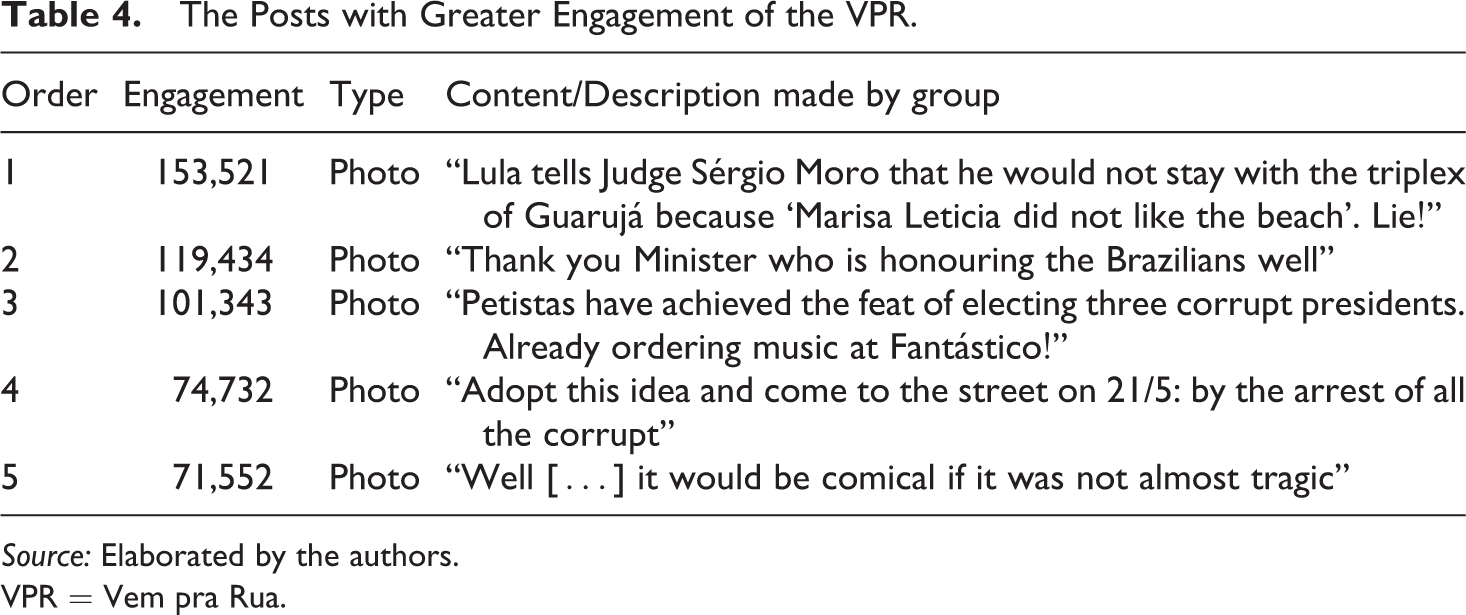
From the VPR, the first post (Table 4) was a corruption investigation against the former President Lula, mentioning that he lied when he stated that he would not own an apartment in Guarujá, off the coast of São Paulo. Therefore, the PT appeared already in the post with more engagement of the group. The second post praised a minister (Herman Benjamin) who judged the accounts of Dilma and Temer, saying that he did an excellent job in calling for the coalition to be phased out for allegedly using illicit resources from companies such as the Odebrecht contractor. 15
The Posts with Greater Engagement of the VPR.
Source: Elaborated by the authors.
VPR = Vem pra Rua.
The third post brought the PT back to the discussion, with a joke about the party having elected three corrupt presidents: Lula, Dilma, and Temer. The fourth post has spanned a banner that the VPR has been trying to diffuse, albeit sometimes without so much success, that it requires the arrest of all corrupt, not just party politicians on the left. Finally, the fifth post covered that part of the Brazilian population “admires corrupt,” since politicians like Lula still have high popular approval.
As general comments about the posts with greater engagement of MBL and VPR, it can be seen that they confirm that the movements hold strong criticism of the PT and the anti-corruption flags, which will be discussed at the end of the next section.
Period of the Impeachment
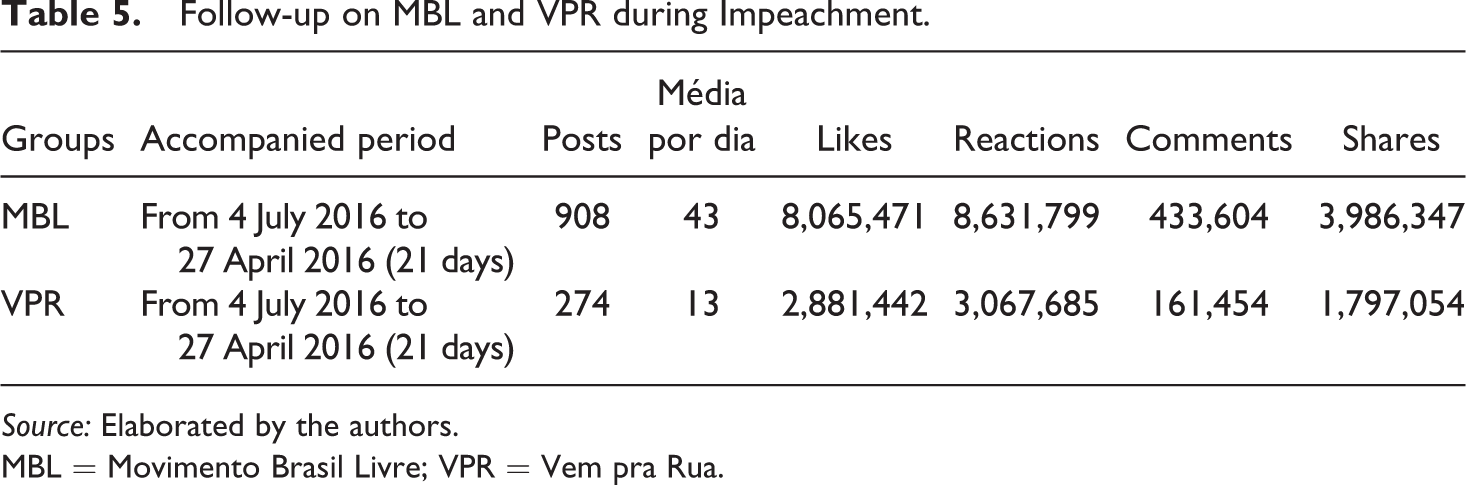
The other time cut analysed (Table 5) was the impeachment approval period in the Chamber of Deputies, the most determining factor for Dilma Rousseff’s downfall. This time was chosen to verify the similarities and differences between MBL and VPR of that period and the current one. Group postings were followed ten days before the day of trial in the House (17 April 2017) and ten days later. Comparing them, MBL was much more active in number of posts, resulting in much more likes, reactions, comments, and shares.
Follow-up on MBL and VPR during Impeachment.
Source: Elaborated by the authors.
MBL = Movimento Brasil Livre; VPR = Vem pra Rua.
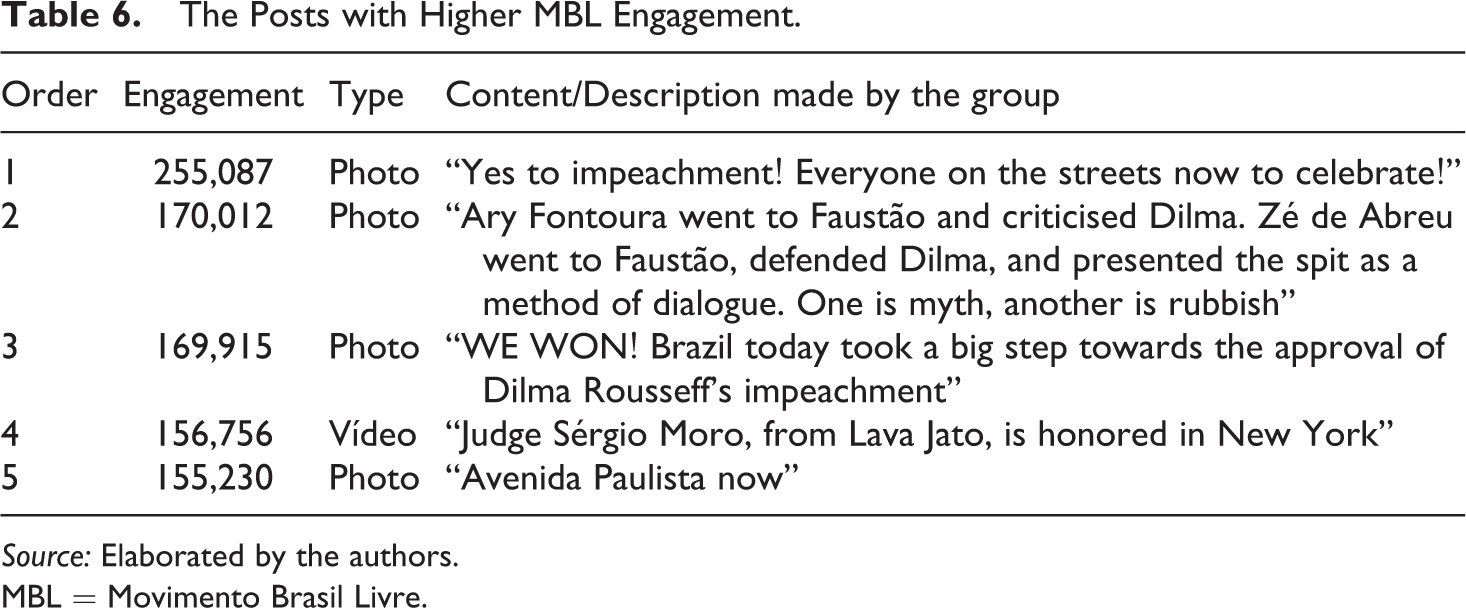
Then, we analysed the posts with greater engagement in the period. Of the five posts with the highest MBL engagement (Table 6), three referred to impeachment as a “win” (posts 1, 3, and 5). The second post, in turn, touched on anti-pro-Dilma actors, stressing that critics of the former president would be more focused, and conscious people. The fourth post referred to Sérgio Moro, a judge idolised by the MBL/VPR and criticised by the left for allegedly pursuing the left-wing politics.
The Posts with Higher MBL Engagement.
Source: Elaborated by the authors.
MBL = Movimento Brasil Livre.
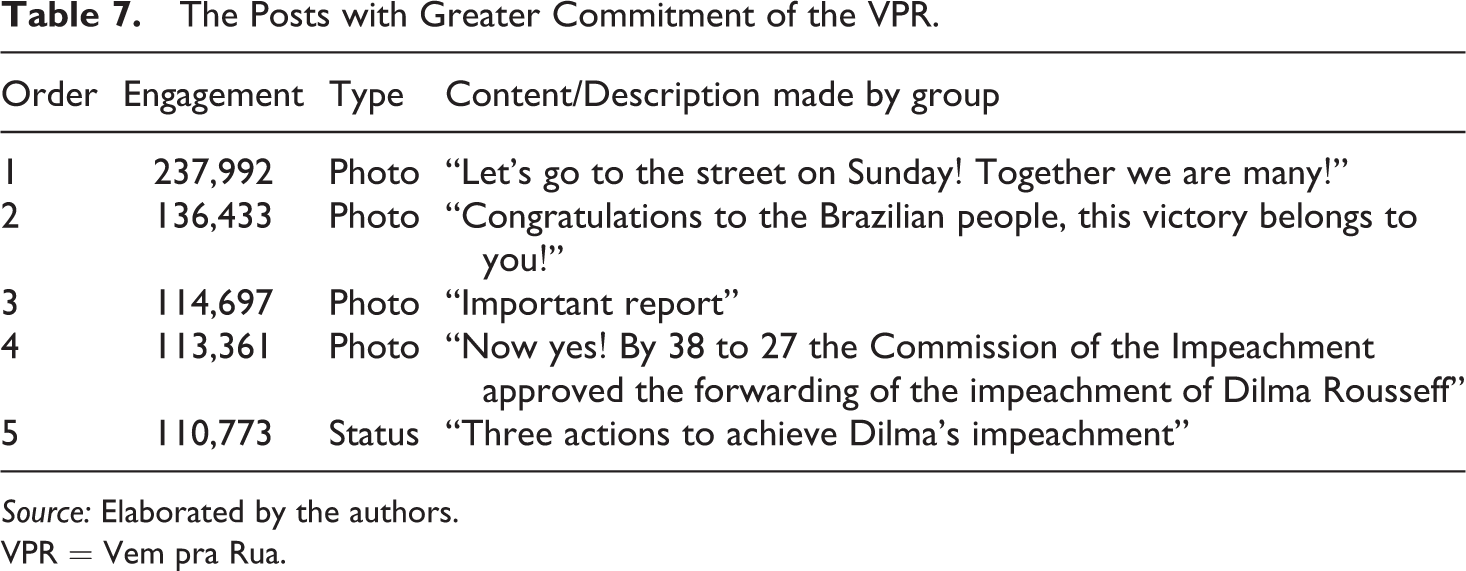
The VPR posts (Table 7) also dealt with impeachment, but most were made before the process was approved in the Chamber of Deputies, with links on the call to the streets on April 17 (posting with greater engagement), the impediment being a “victory” (second and fourth) and step by step to impeachment (fifth), showing how the population should press federal deputies through links and emails, for example. The third post, concerning invitations to an event, criticised a possible censorship of Facebook to the group.
The Posts with Greater Commitment of the VPR.
Source: Elaborated by the authors.
VPR = Vem pra Rua.
Comparing the two temporal cutouts, some observations can be made in relation to (I) the posts and (II) the groups’ guidelines. As for the first point, the average posting in the two periods followed was similar. In impeachment, the MBL averaged forty-three posts/day, when it currently has an average of forty; the VPR, in turn, was thirteen and today makes sixteen. It was also verified that most of the twenty posts with greater engagement were photos (fifteen), followed by video (three), link (one), and status (one).
In terms of performance, MBL was much more active in the impeachment period than VPR, performing about four times more postings (908 vs. 274) and therefore having more likes, reactions, comments, and shares. Currently, although MBL post more than VPR (reaching 999 posts in 25 days while VPR took 62 days), the latter had more likes, reactions, and sharing in the period, and lost only in number of comments.
Regarding the guidelines, what this work was more concerned to address, always in an exploratory way, it is worth remembering, it was seen that they are similar and that the fight against the PT and corruption dominated. In the five posts of the MBL with greater engagement among the 999 analysed this year, three directly addressed the PT already in the statement; in the VPR were four.
In the time cut of impeachment (April 2016), in turn, three posts of the five with greater engagement of the MBL mentioned the “victory” of impeachment and another criticised Dilma. In VPR, all five dealt with impeachment. Thus, this information leads us to some reflections. The first is that the criticisms of the PT and corruption that are present in the two analysed periods indicate that the posts with greater interaction and reach of these groups are those that approach/approached perhaps the greatest enemy of these movements: the PT. Second, it is worth questioning why this year, after several denunciations of corruption against Temer and allies, like the former presidential candidate Aécio Neves, these issues were not observed among the posts with greater engagement.
Analysis of Pages on Facebook Throughout the Existence of Groups
Data were also extracted concerning the postings of both social movements throughout their existence, which was done to follow minimally the development of each one. First, information was collected from the date of creation of the movements until 17 June 2017, for the MBL and 18 August 2017, for the VPR.
MBL has an average of 4,177 likes per post on your page. Of the ten MBL posts with the most tanned throughout its existence, seven occurred within the two-month decision-making process of the Clearinghouse on the admissibility of the impeachment process.
The historical analysis of MBL and VPR, corroborated by Graph 1, allows the history of these groups to be divided into three distinct moments: (1) their period of consolidation, from page creation to the beginning of the impeachment process of former president Dilma Rousseff 2 December 2015); (2) impeachment period, from the opening of the proceedings to the cassation (from 2 December 2015 to 31 August 2016); and (3) the post-impeachment period, from Dilma’s departure to the present moment.
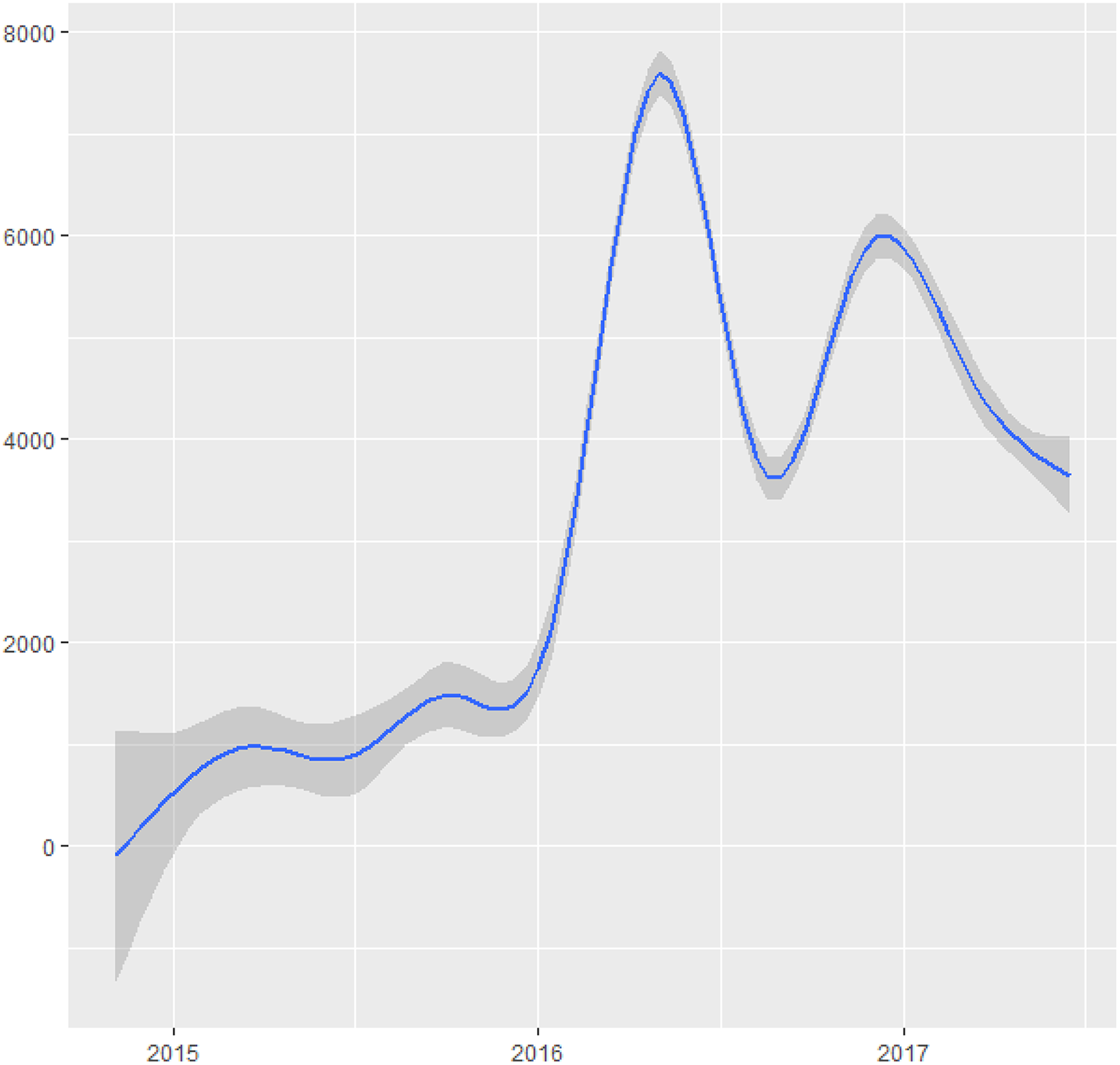
Number of Likes Received per MBL Posting Throughout the Lifetime (smoothed graph).
With the prospect of briefly reviewing how fanpage posts behaved, clouds of words from these three different moments were created. Regarding the clouds of the MBL, two facts caught the attention. The first (I) is that the words “movement,” “Brazil,” and “free” were widely used in the period of consolidation of the group; then, with the expression “MBL” possibly becoming known among the members and the press, it became more used. The second fact concerns the events subsequent to the impeachment of Dilma Rousseff, when the movement directed most of the criticisms to Lula, politician who assumed the position of enemy number 1 of the MBL (Figure 1).
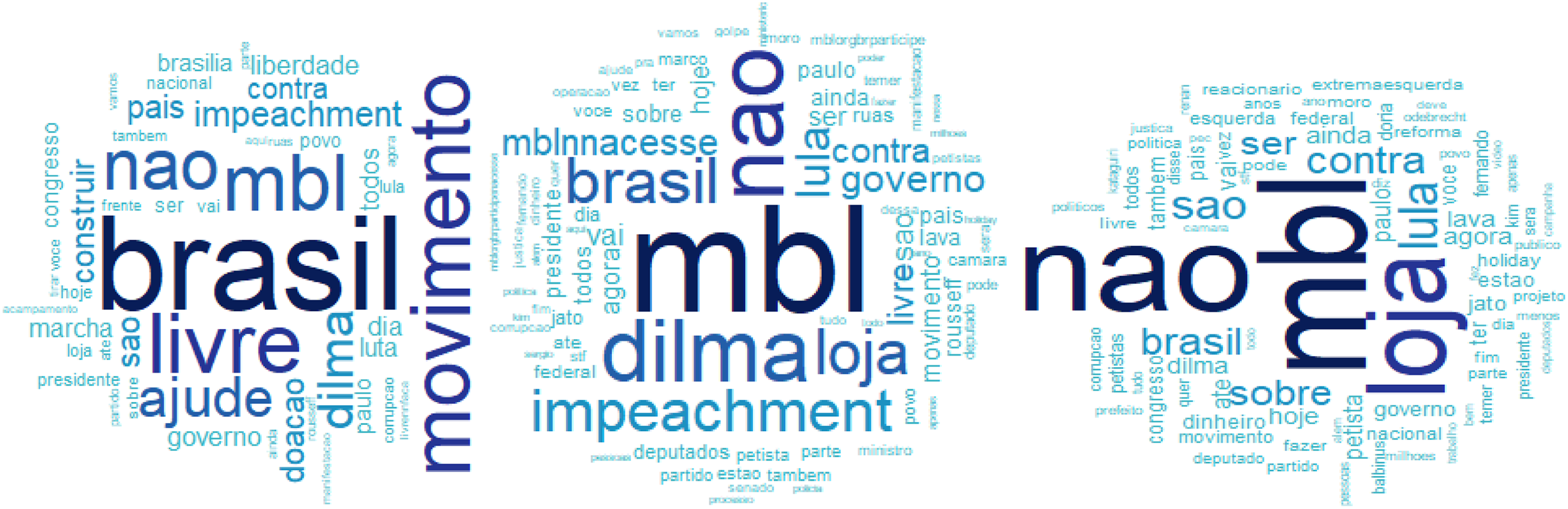
Word Clouds of the MBL Fanpage: (a) Consolidation Period, (b) Impeachment Period and (c) Post-Impeachment Period.
Analysing the data of the VPR movement in a similar way, it is observed that in the periods of consolidation and impeachment there was an increasing increase in the amount of tanned, especially in the moments of admissibility of the impediment process. Graph 2 illustrates this.
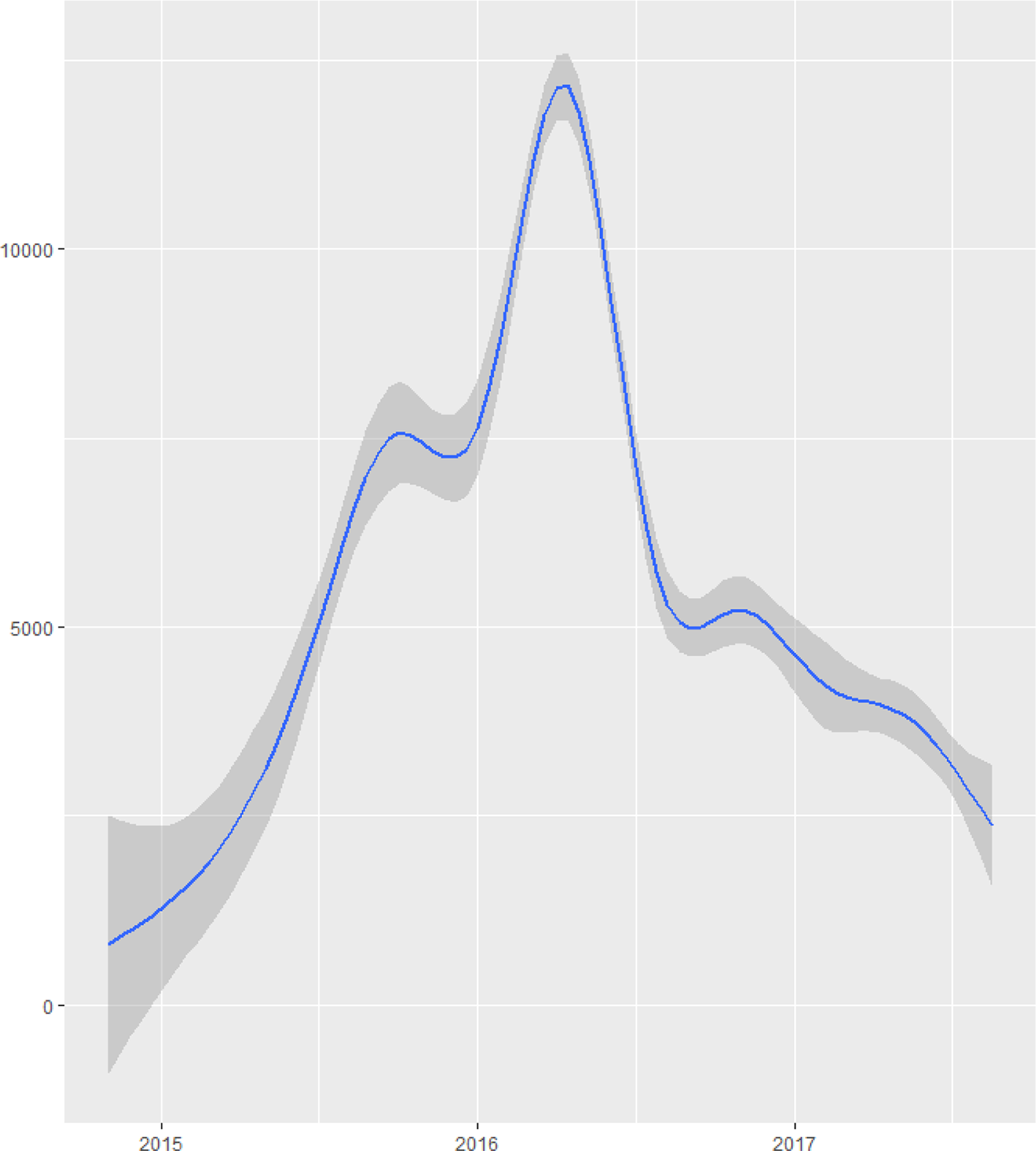
Number of Likes Received per Post of VPR in the Entire Period of Existence.
Differently from what happened to the MBL in the third analysis period, the VPR lost in tanned numbers substantially over the months. In relation to the clouds of words, one perceives an exacerbated use of “square” (Figure 2).
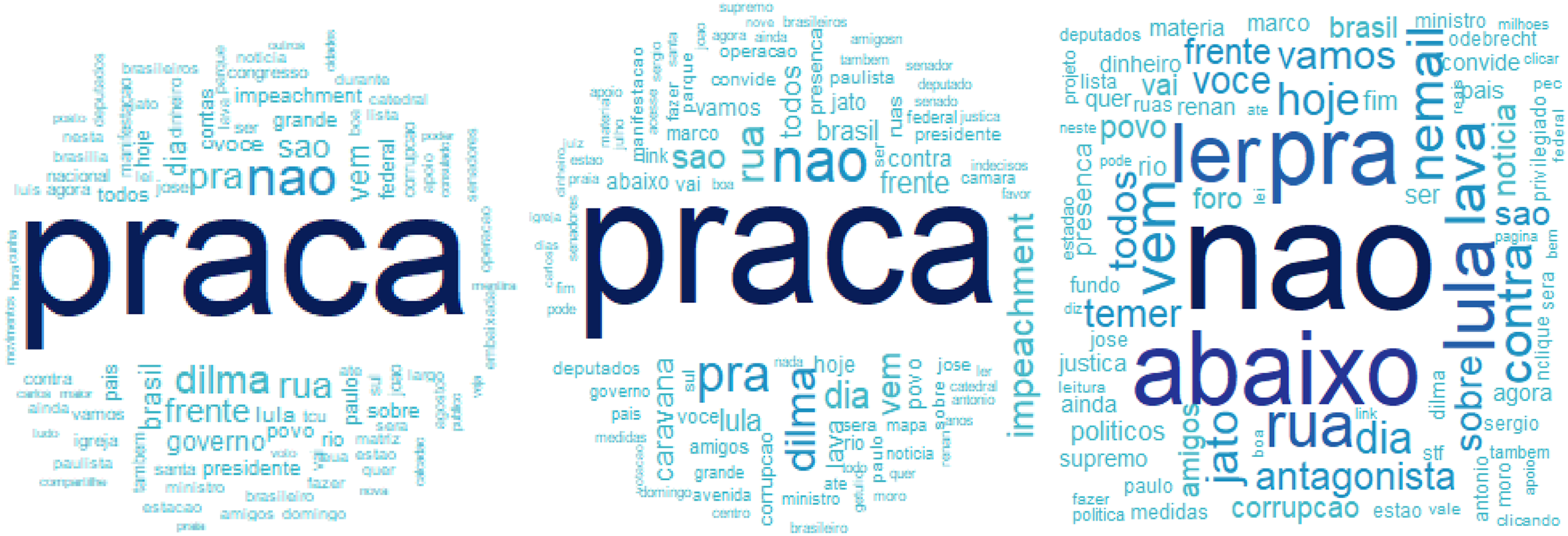
Clouds of Words from the Vem Pra Rua Fanpage: (a) Consolidation Period, (b) Impeachment Period, and (c) Post-Impeachment Period.
The word “square” was heavily used throughout the period from the beginning of the movement to the inability of Dilma to summon pro-impeachment movements. After the appointment of Michel Temer as president, there was no greater use of the term “square.” It is also worth mentioning that, after the presidential exchange, the VPR movement reduced the posts focused on Dilma and redoubled criticism of Lula –- the same as happened with MBL.
Findings and Final Considerations
This research sought to understand the role of new media in the formation of networks of indignation. For this, we discussed cyberactivism, digital media, and national pressure groups, such as MBL and VPR. Seeking to explore how networks of indignation behave in contemporary times, we highlight that pressure groups and cases of cyber attachment can be better understood through a contextualisation of the local reality, thinking about access to digital media in the region and the sociopolitical conjuncture, as they have also suggested Castells (2013) and Sorj and Sergio (2016).
In relation to the studied movements, MBL and VPR, we saw that their formation and growth have much to do with the growth of the use of virtual networks in Brazil (mainly Facebook), which occurred in parallel with the economic and political crisis of the country, thus generating an agenda of common interest: criticism of the PT.
The relationship between both groups is also significant. Both MBL and VPR were used as unifying tools for ideas that already existed in society, but they could not be effectively united. In other words, they not only gave a voice to those who did not but also gave a face to a group/thought that lacked leadership.
It is noteworthy, also, that the groups lost political strength after the goal achieved (the impeachment of Dilma). However, they are still mobilised following the confrontation (mainly in the virtual environment) with the lefts. It is worth mentioning that we have chosen national liberal groups for two reasons. The first is that MBL and VPR are relatively recent and large, requiring studies to understand them, and the second is that movements to the left are already widely researched in Brazil.
Leaving aside the ideological profile of MBL and VPR, we believe that what is important for this and future research is to think about the use these political activists make of the new media, directly modifying the modus operandi of doing politics, mobilising militants and of the political confrontation (Mcadam et al., 2009).
Finally, we emphasise that the current moment is promising for research in the virtual universe, still little studied. This text is therefore not conclusive. After all, given the age of rapid information and numerous tools for data collection and analysis, there are several possible ways to understand the so-called pressure groups.
To the researcher of the digital age, there is the advantage of having several tools for collecting data in digital media available, such as R and Netvizz for Facebook, Remid for Twitter, and NodeXL for Flickr, YouTube, and Twitter (Recuero, 2014). Once the data are in hand, we have to choose a means to analyse them and seek methodological rigour.
Footnotes
Declaration of Conflicting Interests
The author(s) declared no potential conflicts of interest with respect to the research, authorship, and/or publication of this article.
Funding
The author(s) received no financial support for the research, authorship, and/or publication of this article.