



Abstract
Objective:
This review provides guidance and ideas for researchers through a comprehensive and comparative analysis of the present state, trends, and hotspots in the pediatric fracture literature over the past 6 years.
Methods:
We used Citespace 6.1.R6 software to explore the country/region distribution, institutions, journals, keyword analysis, and co-cited references of the literature from Web of Science core database.
Results:
There are 6472 pieces of pediatric fracture–related literature, including 2962 from 2017 to 2019 and 3510 from 2020 to 2022. The country with the most papers is the United States, and US institutions and journals also have a pivotal position in this field. Research hotspots for pediatric fractures in 2017–2019: The topic with the most attention is bone mineral density leading to related bone diseases. Treatment for pediatric fractures, including supracondylar humeral fractures, Monteggia fractures, forearm fractures, knee fractures, and ankle fractures in children, is another topic of greater interest. Brain injuries and dental injuries in children due to abuse and trauma are also concerning issues. Research hotspots for pediatric fractures in 2020–2022: comparison with 2017–2019 revealed a relative decrease regarding ankle-related epiphyseal injuries, but there is a higher focus on the epidemiology of fractures in children, risk factors, and reasons for childhood trauma. We have confirmed through literature co-citations that the literature of high interest is also in these aspects.
Conclusion:
Researchers and clinicians can quickly learn about topics of interest through authoritative journals and highly cited literature and rapidly master the current status and frontiers of the field through study, providing ideas for future work.
Introduction
With the novel coronavirus pneumonia (COVID-19) pandemic, 1 the government has taken steps to control the outbreak through home isolation, teleconsultation, and vaccination.2 –4 The rapid spread of COVID-19 has changed people’s lifestyles to some extent, and people are spending more time at home, leading to changes in trauma from various causes,5,6 which has attracted extensive attention from researchers. A statistical and mathematical method named bibliometrics is designed to quantify the influence and features of the literature.7,8 A bibliometric approach has been broadly used in the orthopedic field, for example, in proximal femur fractures, 9 scoliosis, 10 developmental dysplasia of the hip, 11 and osteoporosis. 12 This study analyzed the overall literature data related to pediatric fractures for the 2017–2022 period by bibliometric analysis using software, such as Citespace 6.1.R6, comparing and analyzing pediatric fracture data for the first and last 3 years. Through our review, we provide accurate references and guidance for researchers related to pediatric fractures by summarizing the present status, hotspots, and frontier topics in the field.
Materials and methods
This review retrieves data on pediatric fractures from 2017 to 2022 through the Web of Science (WOS) core database. The purpose of this study was twofold: (1) to provide information about the pediatric fracture literature in the last 6 years and (2) to compare and analyze the pediatric fracture literature in the first and last 3 years. (1) Search parameters: #1. TS = “Children” or “Child” or “Pediatric” or “Teenager” or “Adolescent” or “Juvenile”; #2. TS = “Fracture.” (2) Document types: Article and Review Article. (3) Time span: January 1, 2017–December 31, 2022. (4) Languages: English. Retrieve all pediatric fracture data from 2017 to 2022 by #1 and #2 and publication date; retrieve all pediatric fracture data from 2017 to 2019 by #1 and #2 and publication date; retrieve all pediatric fracture data from 2020 to 2022 by #1 and #2 and publication date. The first author completed the data search within one day on January 30, 2023, to prevent data changes caused by database updates. We processed and analyzed the data using Citespace 6.1.R6 software and the bibliometric online analysis platform.
Inclusion and exclusion criteria
Inclusion criteria
(1) Search parameters: #1. TS = “Children” or “Child” or “Pediatric” or “Teenager” or “Adolescent” or “Juvenile”; #2. TS = “Fracture.” (2) Document types: Article and Review Article. (3) Time span: January 1, 2017–December 31, 2022. (4) Languages: English.
Exclusion criteria
(1) Document types: Letter and Meeting Abstract, etc. (2) The literature has not studied fractures in children. (3) Languages: non-English. (4) Removal of duplicate literature.
Results
A total of 6472 eligible articles related to pediatric fractures between 2017 and 2022 were searched through the WOS, with 2962 from 2017 to 2019 and 3510 from 2020 to 2022. The number of articles on pediatric fractures over these 6 years showed an increasing form with 915, 990, 1057, 1124, 1179, and 1207 articles published from 2017 to 2022, respectively.
Country/region distribution
The WOS contains articles on pediatric fractures from no less than 121 countries and territories. The United States is the most published article country with the highest H-index at 48. Table 1 lists the top 20 countries based on publications, H-index, and average citations per item. Figure 1 finds a higher number of articles from Europe and the United States, while the contribution of China in this field is prominent by a visual analysis of cooperative relationships between countries.
WOS core database 2017–2022 country publication volume top 20 on pediatric fracture.
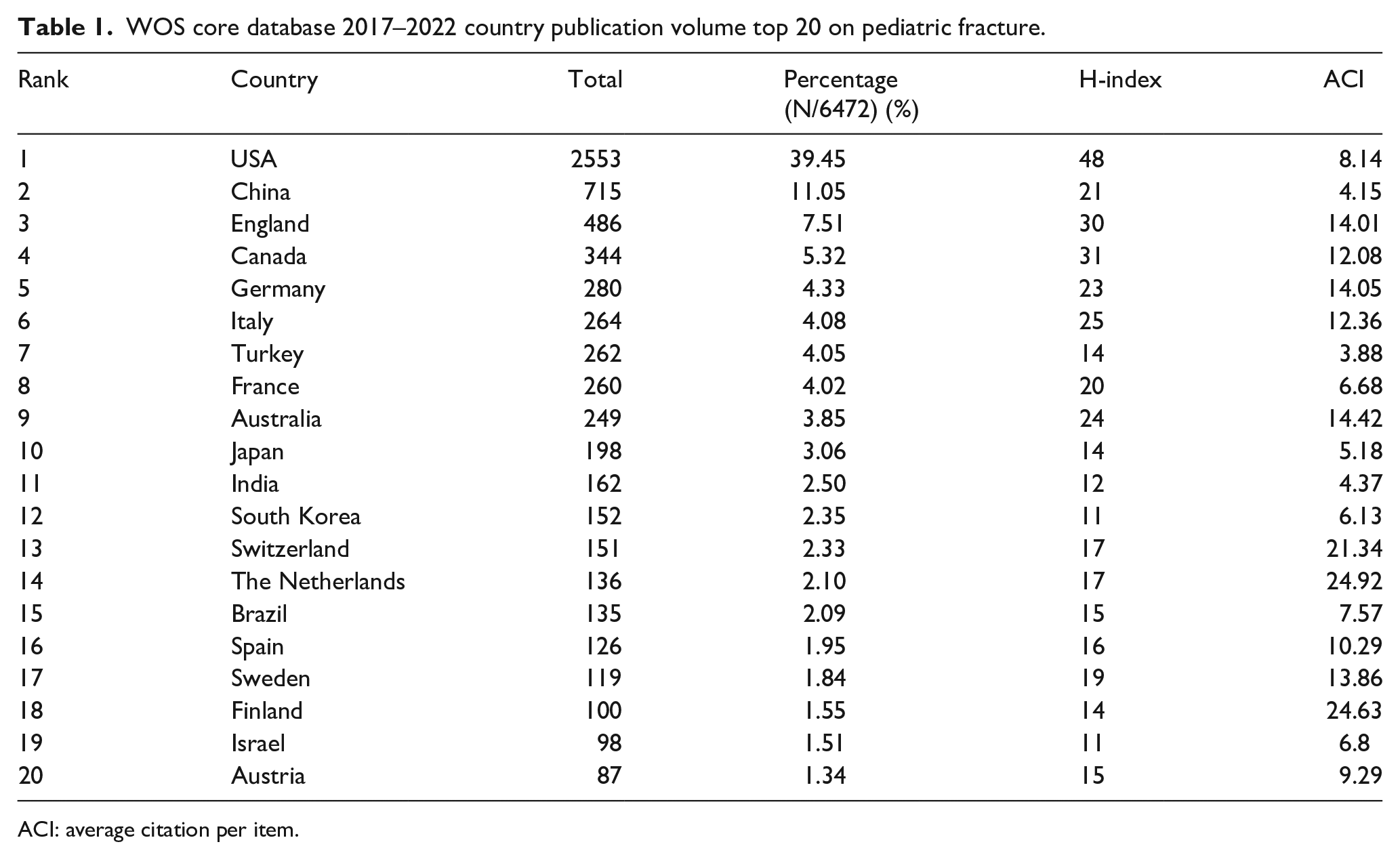
ACI: average citation per item.
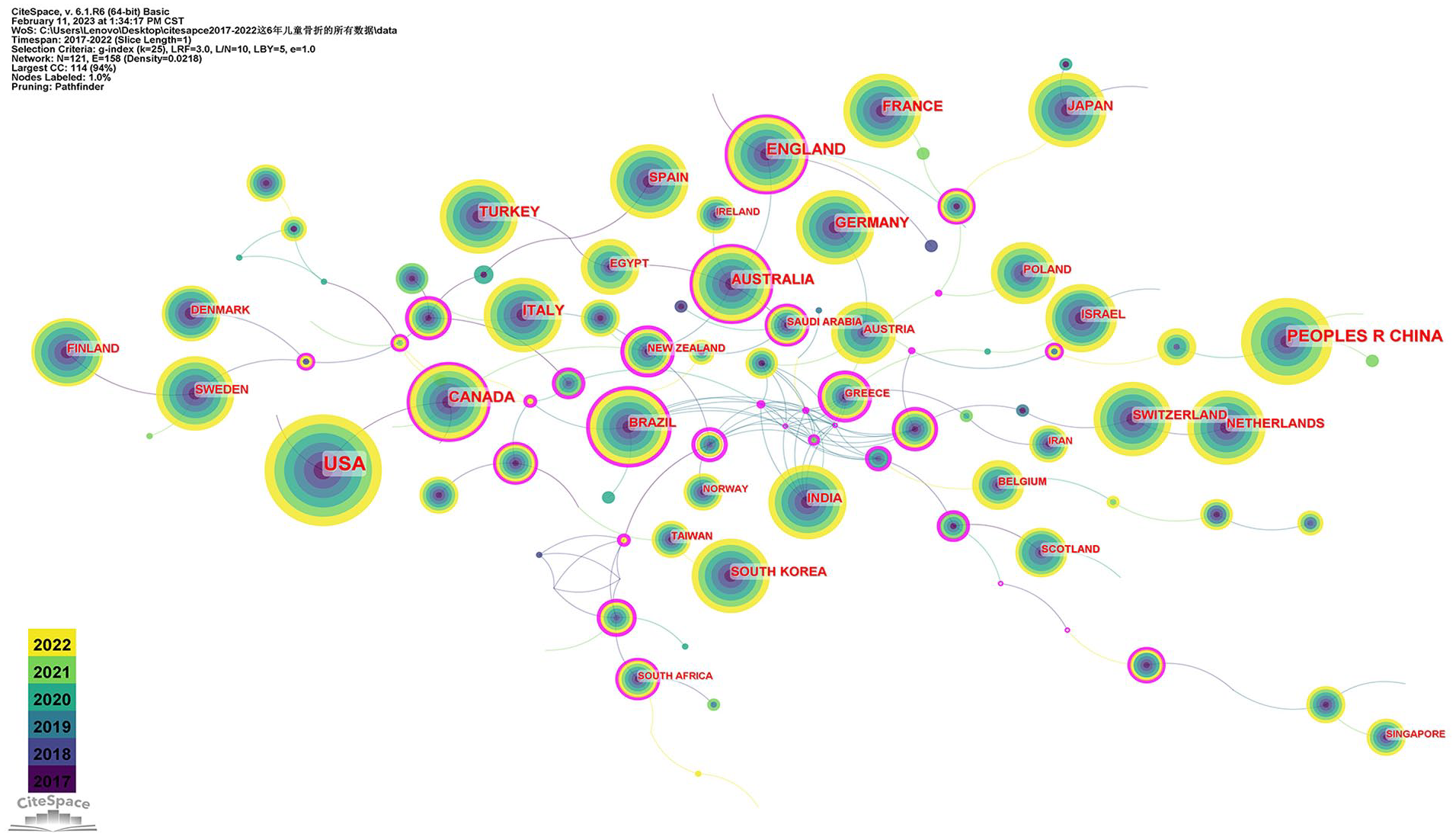
WOS core database 2017–2022 map of collaborative relationships between countries in the literature on pediatric fractures. The purple outer circle represents a high level of centrality.
Institutional distribution
A total of 415 organizations participated in this study on pediatric fractures during these 6 years, plotting the inter-institutional collaborative relationships (Figure 2), with the labels in Figure 2 giving those that published more than 40 articles. Many top-ranked organizations are from the United States; for example, the Children’s Hospital of Philadelphia, Harvard Medical School, and the University of Pennsylvania in the United States have more studies in this field.
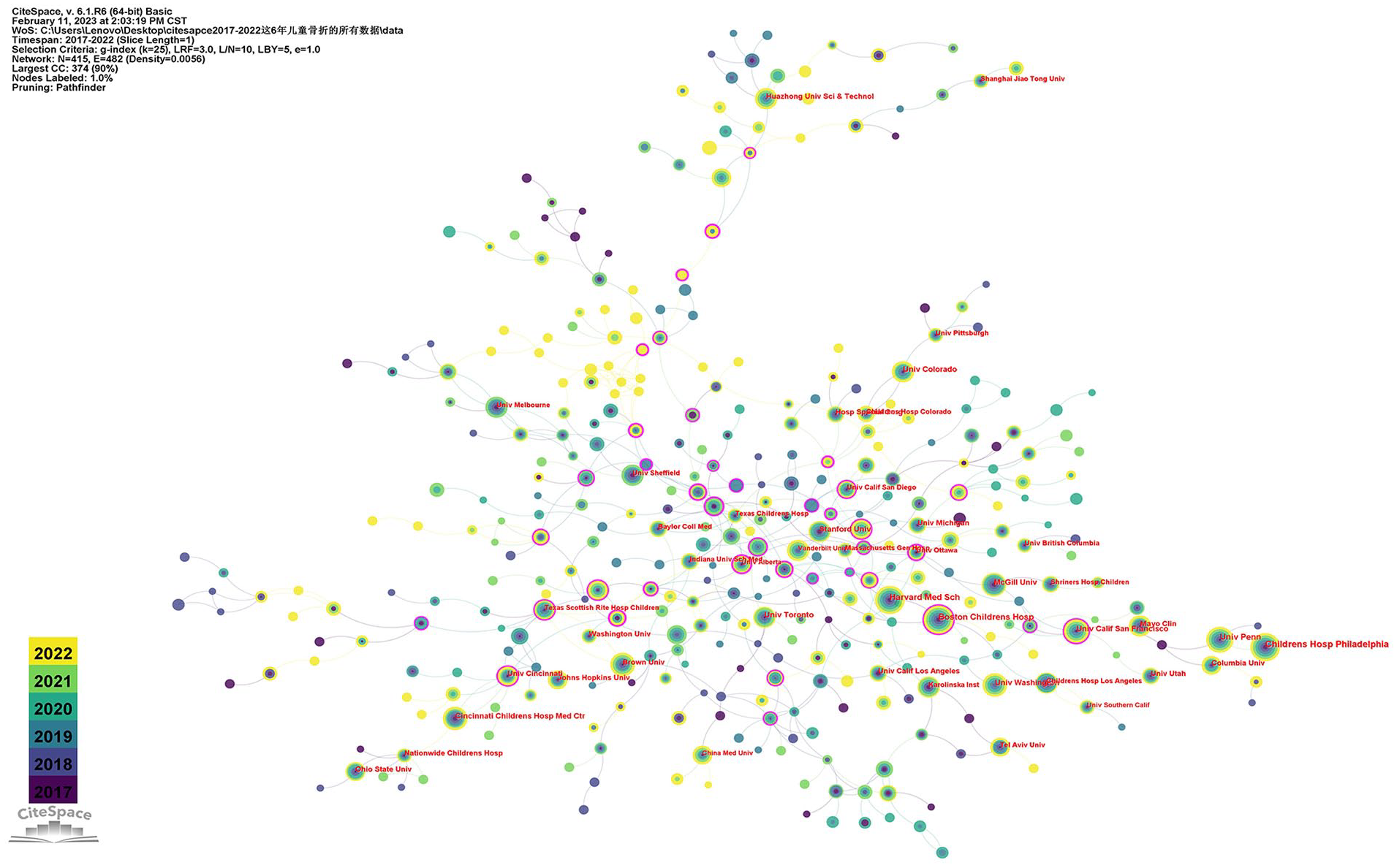
WOS core database 2017–2022 map of inter-institutional collaborations in the literature on pediatric fractures.
Journal influence
Using the bibliometric online analysis platform, we analyzed the journal impact of the published literature regarding pediatric fractures during these 6 years. This literature was published in a total of 1232 journals, listing the 10 journals with the highest overall citation counts, with seven of these publishers located in United States and three others in the United Kingdom (Table 2). The top-ranked journal was the Journal of Pediatric Orthopedics. The journal had an H-index of 84 and the highest overall citation count.
Top 10 most-cited journals about pediatric fracture patients overall in the WOS from 2017 to 2022.
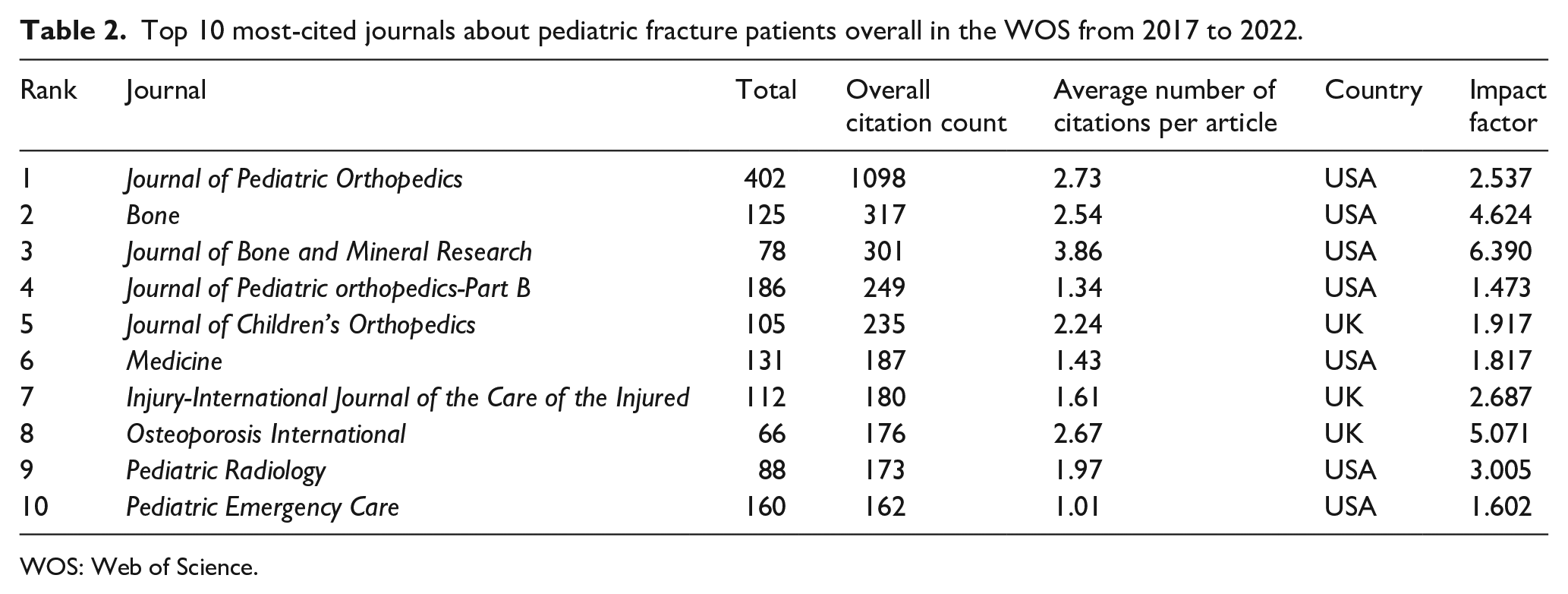
WOS: Web of Science.
Keyword analysis
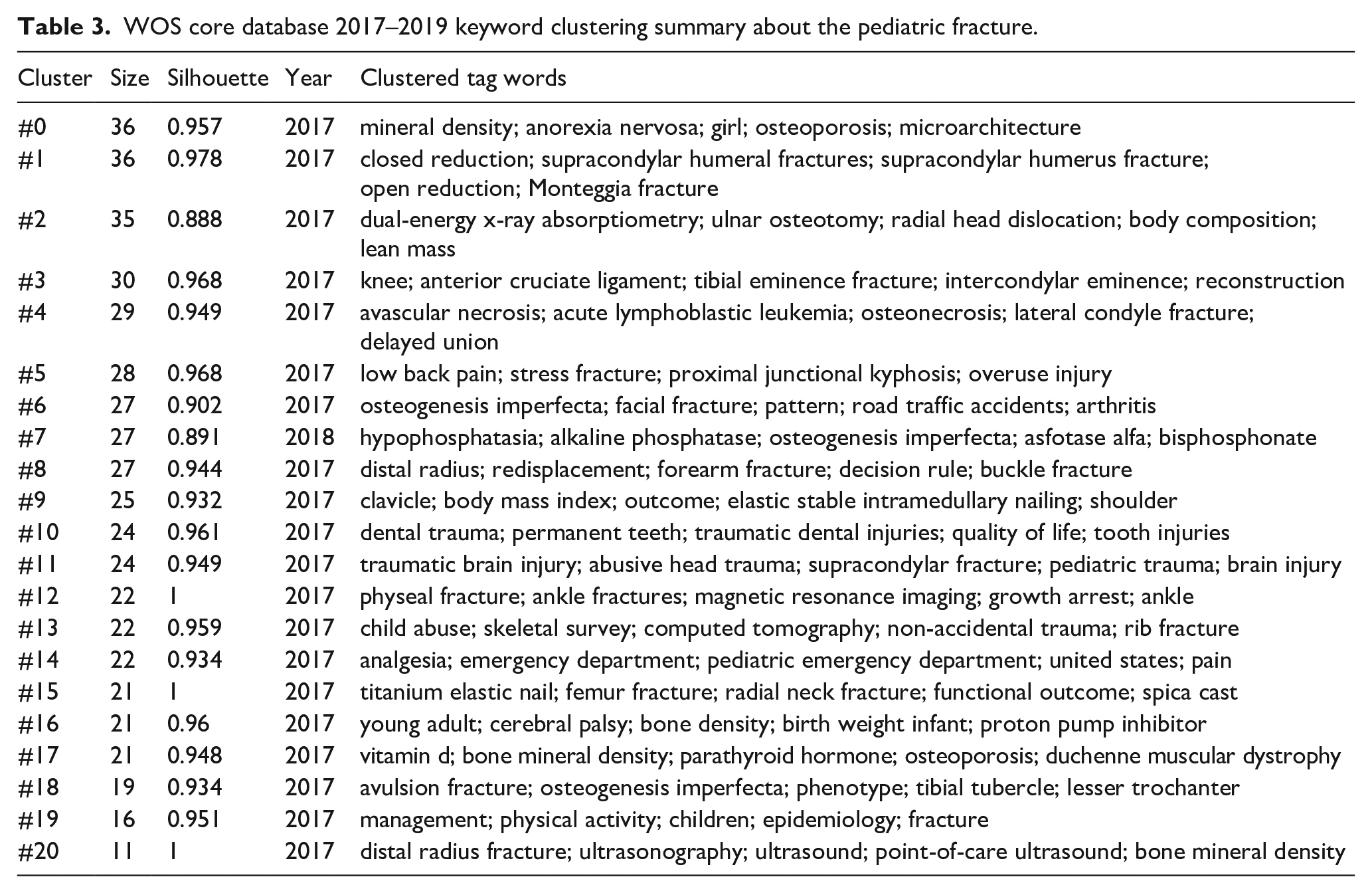
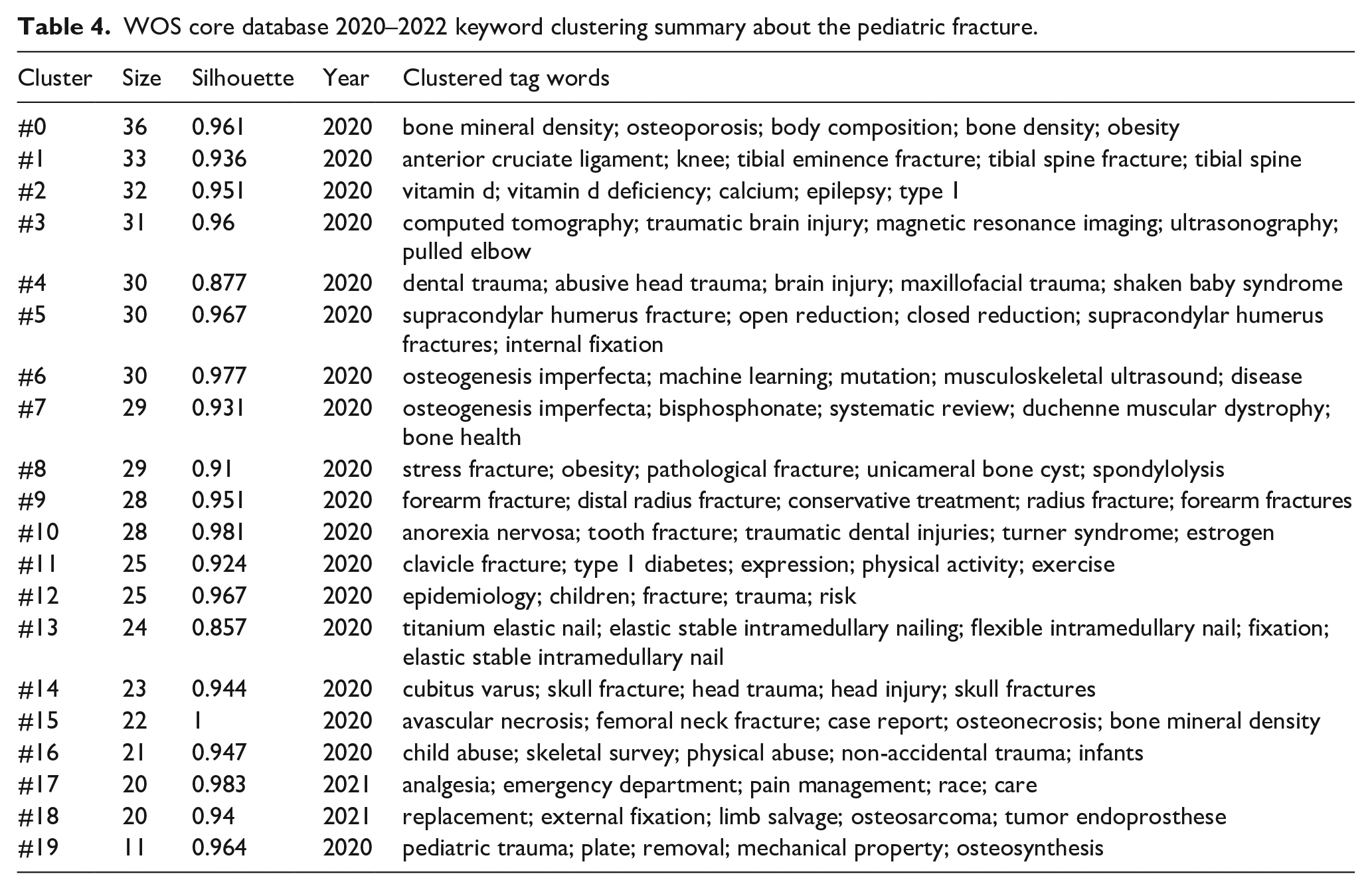
Keywords can, to a certain extent, represent the main study content of a piece of literature. The keywords were clustered using the log-likelihood ratio test method (LLR) in the Citespace 6.1.R6 software. The whole keyword network is divided into several different clusters by cluster analysis, where keywords within the same cluster set have similarities. Specifically, the modularity value (Q-value) and the weighted mean silhouette (S-value) are two crucial indicators for determining the relevance of the cluster. A Q-value above 0.3 and an S-value above 0.7 indicate a significant cluster. Keyword analysis related to pediatric fracture data from 2017 to 2019: the top 10 keywords after removing keywords with search terms are risk, injury, management, bone mineral density, epidemiology, fixation, complication, osteoporosis, osteogenesis imperfecta, and diagnosis. The keywords were further clustered and analyzed, and there were 21 clusters (Table 3), with the top 10 clusters as shown in Figure 3. The results showed an S-value of 0.8945, reflecting that the network was reasonable. The results showed an S-value of 0.9487, indicating good homogeneity of clusters. Keyword analysis related to pediatric fracture data from 2020 to 2022: the top 10 keywords after removing keywords with search terms are management, injury, risk, bone mineral density, epidemiology, fixation, complication, diagnosis, outcome, and prevalence. The keywords were further clustered and analyzed, and there were 20 clusters (Table 4), with the top 10 clusters shown in Figure 4. The results showed an S-value of 0.8807, reflecting that the network was reasonable. The results showed an S-value of 0.9376, indicating good homogeneity of clusters.
WOS core database 2017–2019 keyword clustering summary about the pediatric fracture.
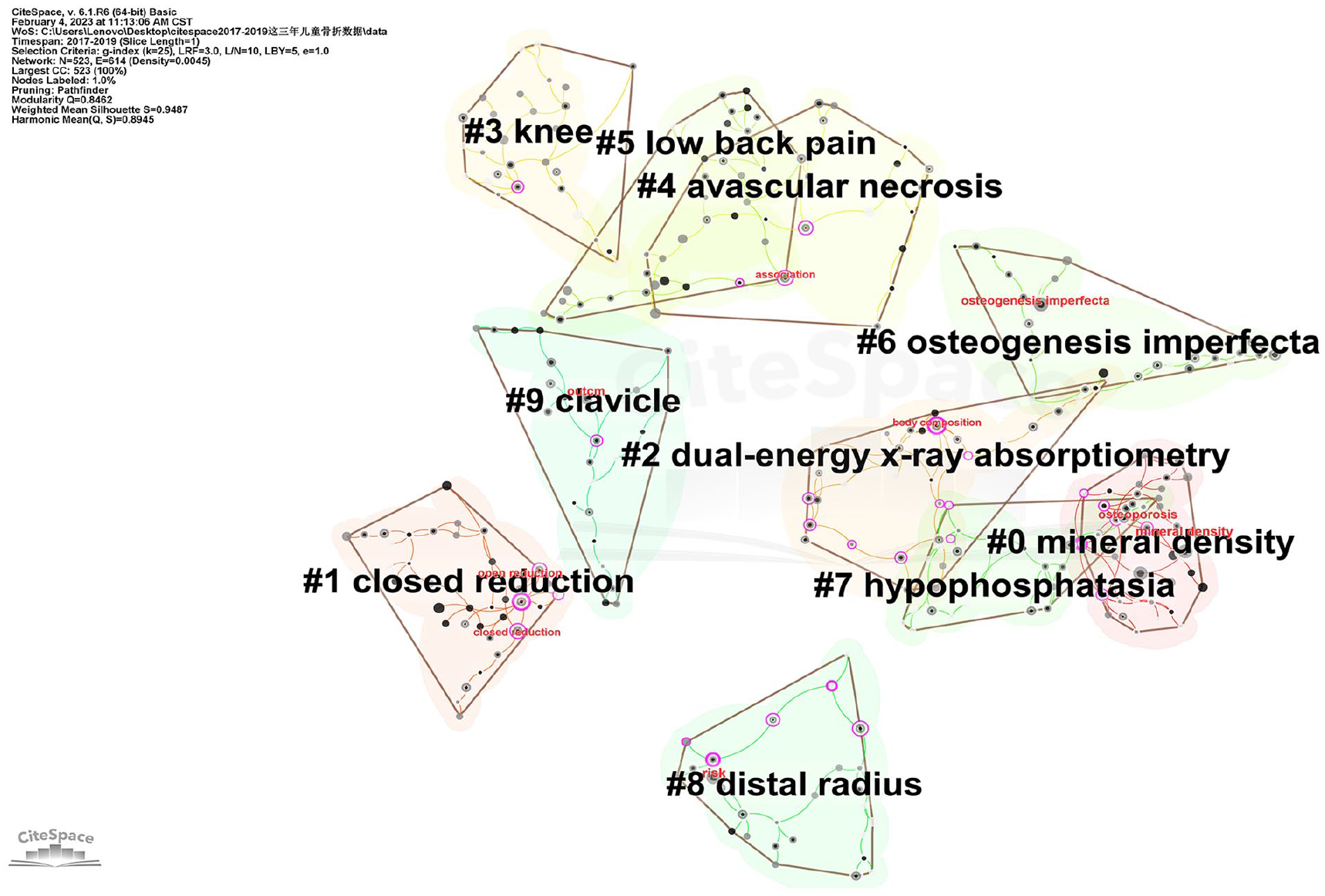
WOS core database for keyword clustering of relevant literature on pediatric fractures from 2017 to 2019.
WOS core database 2020–2022 keyword clustering summary about the pediatric fracture.
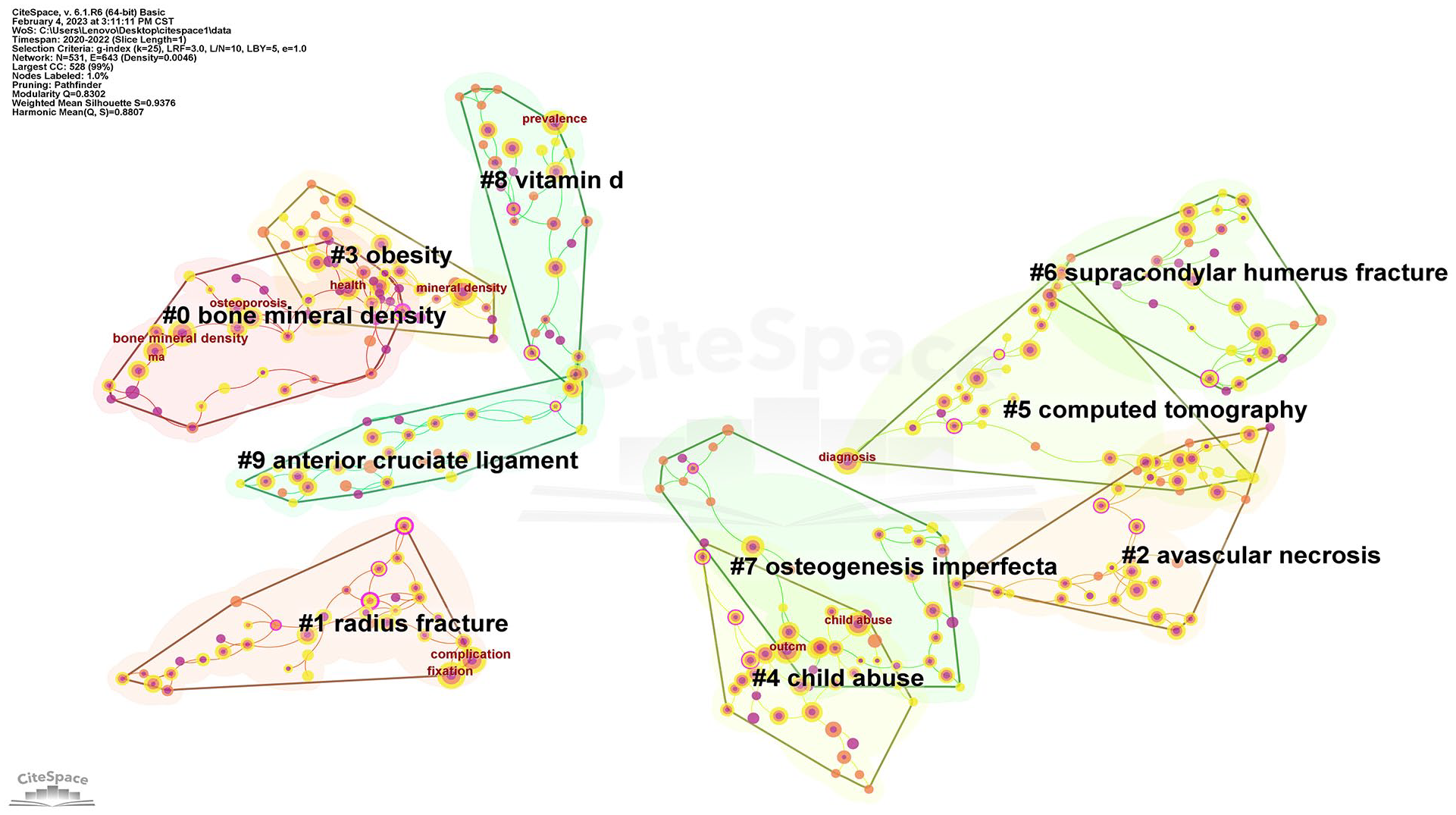
WOS core database for keyword clustering of relevant literature on pediatric fractures from 2020 to 2022.
Co-citation of references
Analysis of references and co-citations is an effective way to guide any research field and track the frontiers of development. 13 We used this feature to list the top 30 references with the strongest citation bursts (Figure 5). This is another way to identify research trends by analyzing co-citations in the references. We can visually observe the focus and evolution of interest in the pediatric fracture field. This high-interest literature will give a rapid understanding of this field and attract attention, which will dramatically help future research.
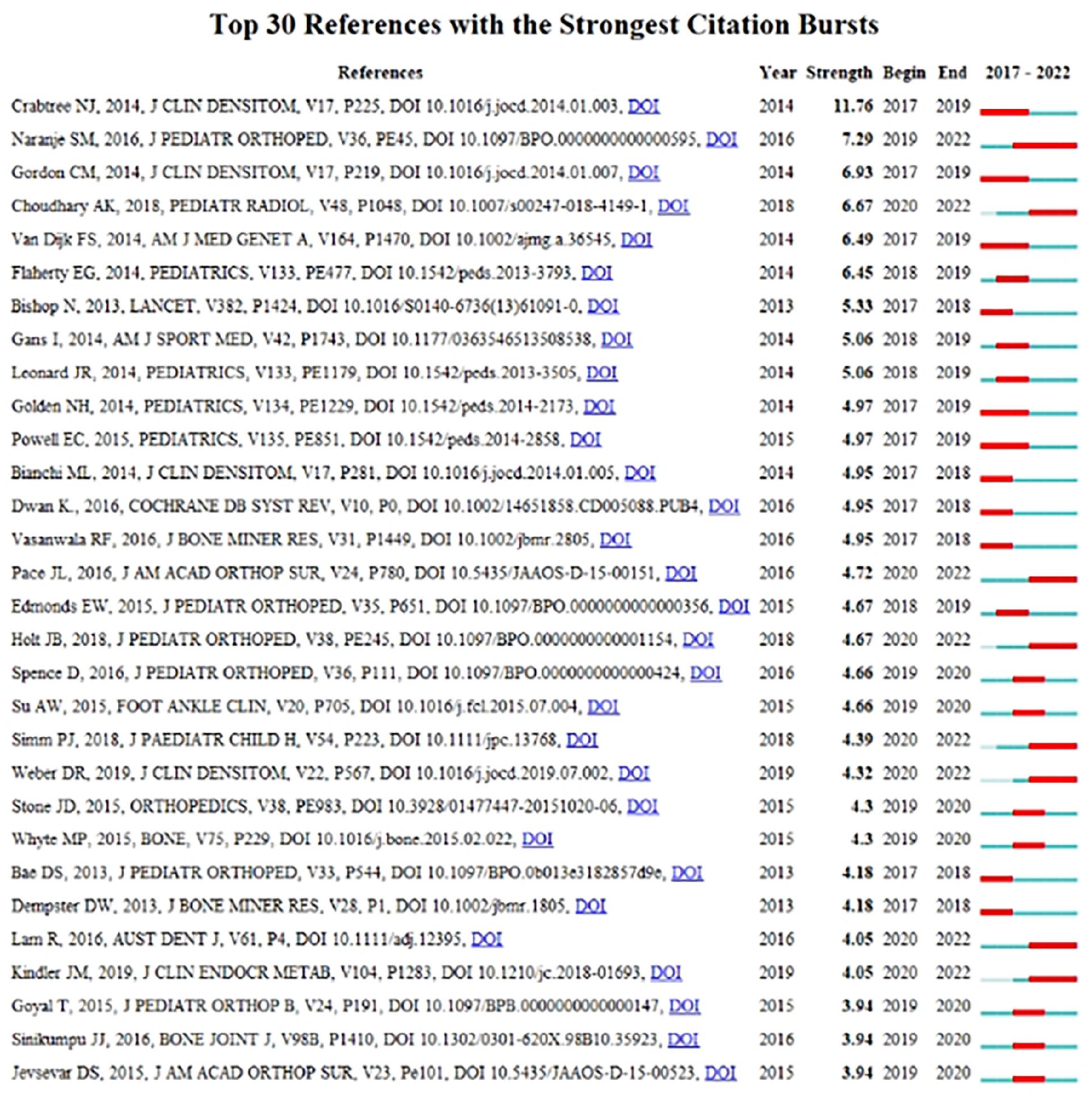
WOS database top 30 in terms of total citation burst strength of references on pediatric fractures from 2017 to 2022.
Discussion
We analyze mainly country, institution, keyword, keyword clustering, and co-citation references using Citespace 6.1.R6 software. The analysis of journal impact used the literature online analysis platform. We searched the literature regarding pediatric fracture studies in WOS and presented it in the context of visualization and a network knowledge graph.
The United States ranked first in published papers with the highest H-index at 48. The H-index is an important indicator for assessing the publications of a country, institution, or journal. 14 In general, the average citation per item (ACI) is another important parameter to evaluate the quality of a piece of literature. The Netherlands and Finland have a few publications but a relatively high ACI. The top-ranked scientific institutions are situated predominately in the United States, and the journals that have been the focus of attention in this field are predominantly from the United States and the United Kingdom and provide some direction for those who want to learn more about this field.
Keyword network maps are drawn up to determine the focus and hot topics in this field. 15 Comparative analysis of the changes in the 3 years before and after by keywords shows that people mainly focused on risk factors, trauma mechanisms, epidemiology, diagnosis, fixation, complications, and management of fractures in children. Musculoskeletal disorders caused by bone density have been of interest. With the COVID-19 pandemic, there has been a rising concern about the prevalence of COVID-19 among pediatrics. Keyword clustering demonstrates the structure of knowledge in the field and the dynamic change process. The smaller the cluster code, the larger the number of nodes contained in that cluster. 16 Furthermore, summarize and sort out the research hotspots in this field from 2017 to 2019. The topic of bone density leading to skeletal disorders has received much attention. 17 The role of some microscopic molecules in bone formation such as disorders of calcium and phosphorus secreted by parathyroid glands, vitamin D, and alkaline phosphatase causing bone diseases and bisphosphonates for bone diseases. Bone diseases such as osteoporosis and osteogenesis imperfecta are a popular category of concern. Another category of greater interest is pediatric fractures:18,19 management of supracondylar humerus fractures in children; management of Monteggia fractures in children; diagnosis and therapy of forearm fractures, and which the diagnosis and treatment of distal radius fractures using ultrasound in children are likely to be a hot issue for future research; reconstruction of fractures and ligament injuries within the knee joint; and management of ankle fractures including epiphyseal injuries in children. Head injuries and dental injuries in children caused by abuse and trauma are also a category that needs attention.20,21 Summarize and sort out the research hotspots in this field from 2020 to 2022. The attention is still highest on the topic of bone diseases associated with bone density: 22 disorders of microscopic molecules in the formation of bones, such as vitamin D, calcium-causing bone diseases, and the treatment of bisphosphonates in bone diseases; osteoporosis, osteogenesis imperfecta, and pathological fractures due to skeletal diseases. There is increased interest in the epidemiology of children,5,23 risk factors, and causes of childhood trauma, especially brain injuries 24 and dental injuries. 25 Possible reasons for this phenomenon are the pandemic of COVID-19, the restricted range of people’s activities, the increased time children spend at home, and the increased chance of injury due to prolonged stays in small spaces making people more anxious. Children’s forearm fractures, supracondylar humerus fractures, and the reconstruction of ligament damage and fractures in the knee joint are the current hotspots for pediatric fractures.
When a third article simultaneously cites two other papers, this is called a co-citation relationship. Co-citation analysis of references is the highlight of Citespace 6.1.R6 software. The 10 articles that attracted the most attention were about measuring quality, data collection, and evaluation in the field of bone densitometry, and interpretation and reporting of bone densitometry results;26 –28 new clinical classification of osteogenesis imperfecta and related treatment;29,30 epidemiological characteristics of fractures in children, 31 causes, and diagnosis of abusive head injuries,20,32 and treatment of forearm fractures and tibial eminence fractures in children.18,19 These high co-citations references provide a guide for scholars who understand this field.
Conclusion
Skeletal diseases due to bone mineral density in children have been a hotspot topic. Treatment for pediatric fractures, including supracondylar humeral fractures, forearm fractures, and knee fractures, is another topic of greater interest. Head injuries and dental injuries in children due to abuse and trauma are also concerning issues. Researchers and clinicians can quickly learn about topics of interest through authoritative journals and highly cited literature and rapidly master the current status and frontiers of the field through study, providing ideas for future work. With the COVID-19 pandemic, researchers have progressively raised concerns about the epidemiology, risk factors, and causes of childhood trauma. These characteristics are used as a guide for dealing with public health incidents and provide valuable recommendations for dealing with some public health emergencies.
Supplemental Material
sj-pdf-1-cho-10.1177_18632521231217333 – Supplemental material for Research hotspots for pediatric fractures from 2017 to 2022: A bibliometric and visual analysis via Citespace
Supplemental material, sj-pdf-1-cho-10.1177_18632521231217333 for Research hotspots for pediatric fractures from 2017 to 2022: A bibliometric and visual analysis via Citespace by Huan Wang, Ya-ting Yang, Qing-da Lu, Chen-xin Liu, Huan-an Bai, Jia-ju Wang and Qiang Jie in Journal of Children’s Orthopaedics
Footnotes
Author contributions
H.W. participated in protocol design and article writing in the study. Y.T.Y. participated in the data analysis, review, and editing of the study. Q.D.L. and C.X.L. further revised the article. H.A.B. collected data and provided technical support. J.J.W. provided support for software and methods. Q.J. proposed the study protocol, supervised its implementation, and revised the article. All authors contributed to the article and approved the submitted version.
Declaration of conflicting interests
The author(s) declared no potential conflicts of interest with respect to the research, authorship, and/or publication of this article.
Ethical approval
Ethical committee approval was not required for this study. The study program was approved by the Institutional Review Board of the executive agency.
Funding
The author(s) disclosed receipt of the following financial support for the research, authorship, and/or publication of this article: This study was supported by innovation Team Projects—Innovation Capability Support Program of Shaanxi Province (grant no. 2020TD-036), and Clinical Medical Research Center Projects—Innovation Capability Support Program of Shaanxi Province (grant no. 2020LCZX-03).
Supplemental material
Supplemental material for this article is available online.
References
Supplementary Material
Please find the following supplemental material available below.
For Open Access articles published under a Creative Commons License, all supplemental material carries the same license as the article it is associated with.
For non-Open Access articles published, all supplemental material carries a non-exclusive license, and permission requests for re-use of supplemental material or any part of supplemental material shall be sent directly to the copyright owner as specified in the copyright notice associated with the article.
