



Abstract
This study explores the entrepreneurial intentions of university students from different educational, economic, and social backgrounds by comparing four European Union (EU) countries (Italy, Austria, Sweden, Greece) to an EU-candidate country (Bosnia and Herzegovina). Data were collected through surveys on a convenience sample of 301 students. The hierarchical regression and formal statistical hypothesis testing assess and compare the role of individual factors and contextual activating factors. In doing so, the paper adopts and adapts the EPIC tool, making it suitable for cross-country comparison. The results indicate a lack of significance of the risk-taking dimension, and a striking similarity in the influence of resources as a contextual activating factor, despite the differences of the investigated countries. In addition, the results indicate the individual mindset dimensions that significantly contribute to the entrepreneurial intentions of EU students (innovation-oriented, persistence, and peculiarity), and the different predictors for students from Bosnia and Herzegovina (innovation-oriented and action-oriented). The paper contributes to the stream of research on entrepreneurial intentions in higher education by assessing the individual and contextual factors within a fine-grained cross-cultural comparison. Insights for institutions and policymakers to enhance support and resources for aspiring entrepreneurs can ultimately be derived.
Keywords
Introduction
Entrepreneurship is widely recognized as a key driver of economic growth and social change, and a variety of educational programs have been developed to foster entrepreneurial activities among university students, underlining their crucial role1,2. However, both individual factors and mindset 3 and contextual factors4,5 strongly shape individual intentions to engage in entrepreneurial activities. Despite extensive research in the field,6,7 few studies adequately integrate both individual and contextual factors in the application of intention-based models, comparing distinct socio-economic and cultural contexts. Significant gaps also remain in the analysis of Central and Eastern European (CEE) countries and those aspiring to join the European Union, 8 as much of the empirical research focuses predominantly on Western Europe. This limited attention restricts a comprehensive understanding of how contextual specificities influence entrepreneurial intentions of university students 9 in different national contexts2,8, especially in the case of transitional economies, where it is essential to assess the impact of the broader institutional environment.9,10
In an attempt to fill in these gaps, this study seeks to identify key predictors of entrepreneurial intentions of university students in a convenience sample of EU countries (Italy, Austria, Sweden, and Greece) compared to Bosnia and Herzegovina, an EU-candidate country. The study then examines the impact of different individual factors of the entrepreneurial mindset on the entrepreneurial intention, along with contextual activating factors that may indeed significantly influence the entrepreneurial intention of young people11,12 and their job pursuit 13 . The study specifically assesses differences in contextual activating factors by exploring the role of institutional resources, support and national context.14,15
For the purpose of this study, the focus is on Bosnia and Herzegovina (BIH) as a transitional economy that exhibits cultural and institutional characteristics that differ from those of the selected EU members. For example, while EU countries—particularly in Western and Northern Europe—tend to display higher levels of individualism, BIH is marked by stronger collectivist orientations, where group goals are valued over individual autonomy. BIH also emphasizes relational and quality-of-life aspects to a greater extent, compared to EU societies that are generally more driven by achievement and success as markers of status. To account for these differences, a modified entrepreneurial mindset assessment tool based on the EPIC, developed by HEInnovate and integrated with validated scales, has been tested and modified to fully capture the unique nuances of the targeted countries.
The study highlights two key outcomes that challenge long-held beliefs in entrepreneurial literature. First, with regard to the influence of EM dimensions on EI, risk acceptance does not emerge as a significant predictor of entrepreneurial intention in either the EU or EU candidate countries. This calls into question the assumption that risk-taking is a core and universal component of the entrepreneurial mindset. Secondly, in terms of contextual activating factors, resources significantly affect entrepreneurial intentions in both BIH and EU students, and there are no statistically significant differences in this effect between the two groups. In addition, the results reveal the specific dimensions of the entrepreneurial mindset that characterise students from the EU and BIH, as well as the role of contextual activating factors. While innovation-oriented entrepreneurial mindset significantly predicts entrepreneurial intention in both EU and EU-candidate country contexts, the remaining significant predictors differ across contexts. In EU countries, peculiarity and persistence emerge as significant predictors, whereas in the EU-candidate country, action-oriented entrepreneurial mindset and age play a significant role.
Based on these key findings, the study presents a threefold contribution. From a theoretical perspective, it makes a valuable addition to the literature on entrepreneurship. First, results may reflect broader changes in how younger, university-educated individuals perceive and approach entrepreneurial risk. Second, students’ perceptions of the resources available in their local environment, shaped by subjective interpretations, local norms and institutional signals, appear to influence entrepreneurial intentions more than objective measures. In addition, by including university students from selected EU countries (Italy, Austria, Sweden, and Greece) and Bosnia and Herzegovina, an EU-candidate country, the study expands the geographical scope of the debate by exploring a relatively under-investigated geographical area and specific factors that influence entrepreneurial intentions. Finally, from a methodological perspective, the study validates an assessment tool for entrepreneurial intentions and mindset in order to address contextual differences among EU and CEE countries. While entrepreneurial intention is usually measured using standardised scales that assume cross-cultural equivalence; conversely, this study complements previous calls emphasising the need to validate such tools across countries12,13. Unlike prior research, this approach captures national and institutional specificities and their role within intention-based models.14,15
In terms of implications, the findings provide a framework for educational policy development, as the differentiated predictive power of specific mindset dimensions across socio-economic settings offers a basis for targeted interventions. 3 The paper is structured as follows: the next section outlines the theoretical framework, the third section presents the methodology, the fourth section presents and discusses the results, and the final concluding section discusses the research’s contributions and limitations, as well as future research directions.
Literature framework
Entrepreneurial intention: The role of individual and contextual factors
The assessment of entrepreneurial intention (EI) has become increasingly important since the use of intention-based models helps to better understand what factors lead to the entrepreneurial activity.15,16 Starting from the 1990s, it has emerged as a well-established area of research, 17 but it is only in the last decade that studies of intention as an antecedent of entrepreneurial behavior have flourished.12,15 Several theoretical models have consistently demonstrated that behaviors are preceded and influenced by intentions, with stronger intentions exerting a greater impact on the direction and enactment of individual actions. However, traditional models like Ajzen’s TPB 14 focus on attitudes, norms, and perceived behavioral control; conversely, by extending the TPB, other dimensions such as self-efficacy, identity and more nuanced components related to personal intrinsic motivations have been identified as key determinants of EI.9,15 Since individual intention is considered to account for one-third of the actual behavior of being an entrepreneur, much emphasis has been - and still needs to be - placed on more broader factors that could impact entrepreneurial activity4,9 and in assessing EI.17,18 The dimensions identified within the TPB itself are indeed the aggregation of numerous background factors,14,16 which can be ultimately classified into individual (e.g., attitudes and personality traits, motivations) and contextual (e.g., socio-economic context, access to information and resources). Whether background factors or TPB’s direct measures are employed depends on the objectives; the former are more appropriate for comparison and assessment than prediction of behaviour.14,16 To understand EI, it is necessary to consider both individual attitudes, since EI is rooted in deep cognitive structures, 19 and the factors that can further shape it. These factors include differences in socio-economic and national contexts,4,20 as well as institutional support.9,21 Complementary predictors are therefore worth considering.12,17
An entrepreneurial mindset (EM) is defined as the set of personal skills and assets that sustain the intention to become an entrepreneur,3,22 a way of thinking, or the ability to capture entrepreneurial opportunities.23,24 Its dimensions indeed encapsulate those elements of an individual’s background that shape EI and behavior. Socio-demographic and psychographic characteristics define the individual EM. For example, previous research has focused on autonomy, competitive aggressiveness, innovativeness, and proactiveness, 25 or on the personal attitude and inclination to start a new business and the perceived behavioral control. 26 In addition, mindsets are conceived as subject to experience and education, 24 therefore they can be influenced by learning experiences. The role of university educational programs in influencing students’ EM remains a major debate, 10 and so does voluntary participation in entrepreneurship education programs.12,27 Specifically, creative and innovative thinking, problem-solving techniques, and autonomy of thought and judgment, 27 self-efficacy and role models 9 have been explored with respect to EM of students in higher education.
Conversely, contextual background factors are identified as a function of cultural, national, and institutional variables.3,15,23 As Welter (2011) 28 pointed out, “there is growing recognition in entrepreneurship research that economic behavior can be better understood within its historical, temporal, institutional, spatial, and social context” (p. 165), evidencing a growing interest in contextual factors. The complexity, dynamism, or uncertainty of the context in which entrepreneurs would operate can then be considered as activating factors for EI. 3 Furthermore, these factors can vary considerably from one country to another, which could result in differences in the extent to which they influence EI. While previous studies have predominantly examined entrepreneurial intention at the national level, the nuanced role of contextual variables has largely been overlooked. In addition, much of the existing empirical research on EI has focused on developed regions. In contrast, our study explores the contextual activating factors in greater detail, highlighting the impact of activating elements within institutional resources and support. The comparative analysis proposed will then add a fine-grained, cross-cultural perspective to the existing empirical research on EI.
The role of institutional resources and support
It is widely recognized that institutional resources and support can either boost or limit the opportunity to start a new business,12,29,30 similarly to policies at the regional level. 31 Previous research has shown that institutional resources and support influence individuals in the early stages of the entrepreneurial process, 32 and that university culture and policies play a central role in influencing university personnel and students’ EI.32,33 However, those factors need to be further explored12,17, as individual perceptions of these elements may deeply influence whether or not to start a new business. 17 Overall, universities can create a nurturing environment for the entrepreneurial attitudes of faculty members and students,10,32 for example through positive recognition and encouragement of individual entrepreneurial activities. A key role is also played by the strong presence of structures that support entrepreneurship, such as a technology transfer office, 32 both at central and departmental levels, together with the availability of specific financial resources and non-financial rewards. 34 In addition, the support generated within the university context is not only direct but also indirect, conveyed through an entrepreneurial culture that normalizes failure and fosters personal attitudes and self-efficacy. 35 This support operates through “sub-dimensions” 29 , such as management imprinting, training programs, and related services. Moreover, it must be said that teaching staff can play a central role in shaping the EM of university students. 27 The university environment for students in higher education can deeply encourage entrepreneurial action, positively influencing EI. 10
Universities are then embedded in a regional context, with their own specificities, and characterised by spread and efficacy of infrastructure, such as communication networks, easy access to financial resources, and the presence of incubators. All these elements can enhance EI and facilitate the actual establishment of a new business. The presence of incubators or acceleration programs provides aspiring entrepreneurs with facilities, but also crucial networks and skills needed to start their entrepreneurial ventures, 12 while an institutional context richer in infrastructure and resources, including financial resources, is more conducive to entrepreneurship. 33 However, these elements may have a different weight and role depending on the national context under investigation. Despite being based on previous empirical studies, we can assume a positive impact on EI. This paper explores their impacts within a cross-country study to tackle any differences. EU countries may access venture capital and financial networks easily as funding programs are more widely spread; conversely, EU-candidate countries may have limited access to private funding for new ventures, while funding programs have started including CEE. These differences in institutional resources and support, based on the national context, can influence EI and the ease with which university students initiate entrepreneurial processes.
The national context and EI
Regulatory, normative, and cultural-cognitive elements5,20 directly and indirectly influence the perceptions that individuals may have about the desirability and feasibility of becoming an entrepreneur.13,34 Moreover, social norms influence the combined impact of students’ attitudes and mindset, 3 and the perceived behavioral control and barriers towards EI.15,27 Overall, cultural values and practices have also shown to deeply affect EI.4,36 However, these culture-related factors, deeply anchored in a national context, require more investigation within intention-based models, such as TPB.15,17 Past studies have indeed shown that, while common antecedents to students’ EI exist, their magnitude varies across cultural contexts.37–39 The national context is the expression of specific values, historical particularism, and heritage that may present the entrepreneurial activity as more (or less) desirable.35,36 For example, business failure is perceived quite differently in the U.S., where it is accepted as a learning experience, while in Europe it is highly stigmatized. 37 National culture plays a role in translating entrepreneurial intentions into specific actions, and some cultures are seen as more compatible with individual entrepreneurial involvement than others.4,36 Aspiring entrepreneurs are less likely to take action in countries where resources are concentrated among a select few groups of individuals, where inequality is prevalent, or where uncertainty is avoided in favor of more structured actions. 4
Hofstede’s cultural dimensions.
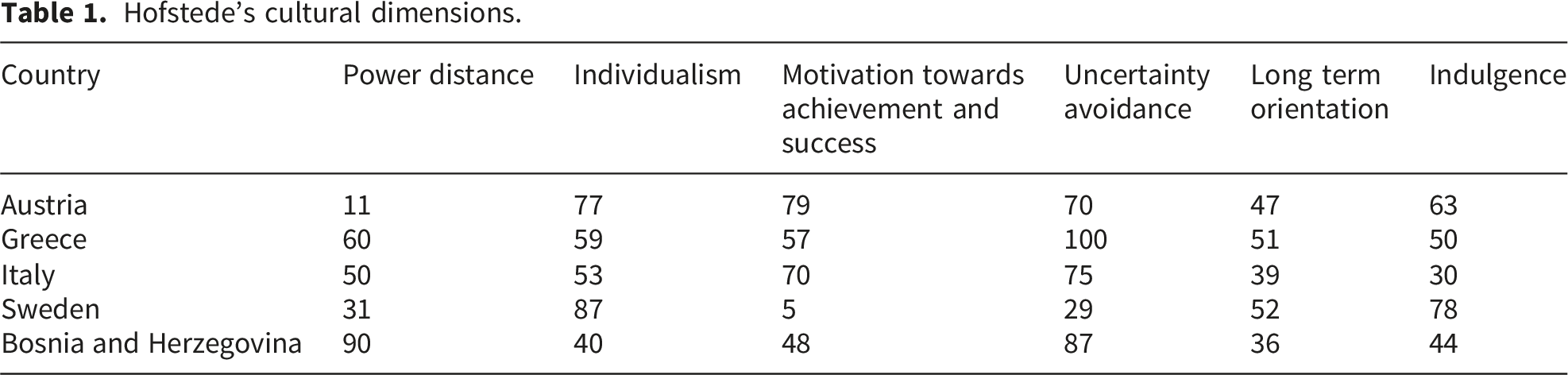
As can be seen from Table 1, there are differences between BIH and EU countries according to Hofstede’s cultural dimensions scores. These differences are particularly pronounced in terms of power distance, individualism, and motivation towards achievement and success. Power distance indicates the extent to which unequal power distribution is accepted; high values reflect strong hierarchies, while low values emphasise equality. Individualism reflects whether members of society prioritise themselves and their immediate family or the collective. ‘Motivation towards achievement and success’ reflects a society’s drive for competition and achievement versus valuing quality of life. Among the other dimensions, uncertainty avoidance shows substantial variation across societies, reflecting differing comfort levels with ambiguity. Long-Term Orientation contrasts societies that are focused on the past with those that are focused on the future, while Indulgence measures the degree to which people control their desires versus seeking enjoyment. 42
As for broad economic characteristics, the selected countries present remarkable differences in economic and innovation indicators1,43–47. The GDP per capita in 2023 in Italy, Greece, Austria and Sweden was € 30320, € 18470, € 41350, and € 48880, respectively, while GDP per capita in Bosnia and Herzegovina was € 6781 in 2022. The average annual net wage in 2023 in Italy, Greece, Austria, and Sweden was € 23616.55, € 18248.62, € 32611.43, and € 28589.02, respectively. The average annual net wage in Bosnia and Herzegovina was € 7750 in 2023. Unemployment rates by age from 20 to 64 years in 2023 were 7.6% in Italy, 11% in Greece, 4.8% in Austria, 6.5% in Sweden, and 13% in Bosnia and Herzegovina. According to the European Innovation Scoreboard for 2024, 1 which shows the state of innovation performance in Europe, Sweden is classified as an innovation leader and ranks as the 3rd best country out of 39 countries, with the innovation index equal to 132.9% of the EU average. Finally, EU countries tend to have strong innovation ecosystems, while EU-candidate countries may experience weak systemic support for entrepreneurial and innovation activities. Austria is classified as a strong innovator, ranking 8th out of 39 countries with an innovation index equal to 116.3% of the EU average. Italy and Greece are classified as moderate innovators and rank as 20th and 24th countries with innovation index equal to 89.6% and 77.5%, respectively. Bosnia and Herzegovina is classified as an emerging innovator, and ranks 37th with an innovation index equal to 33.1% of the EU average. Progress in ESI innovation performance is crucial for advancing cutting-edge technologies and promoting a dynamic environment for both start-ups and established businesses. 1
Methodology
Conceptual model
Figure 1 presents the conceptual model of this study. Overall, the indirect dimensions based on14,16 have been used to capture personality traits, and intrinsic motivation, the perceived desirability, and the institutional support for starting an entrepreneurial activity in a given national context. The purpose is indeed not to predict any actual behavior, but to explore the intention to become an entrepreneur among university students in different national and institutional contexts. Conceptual model.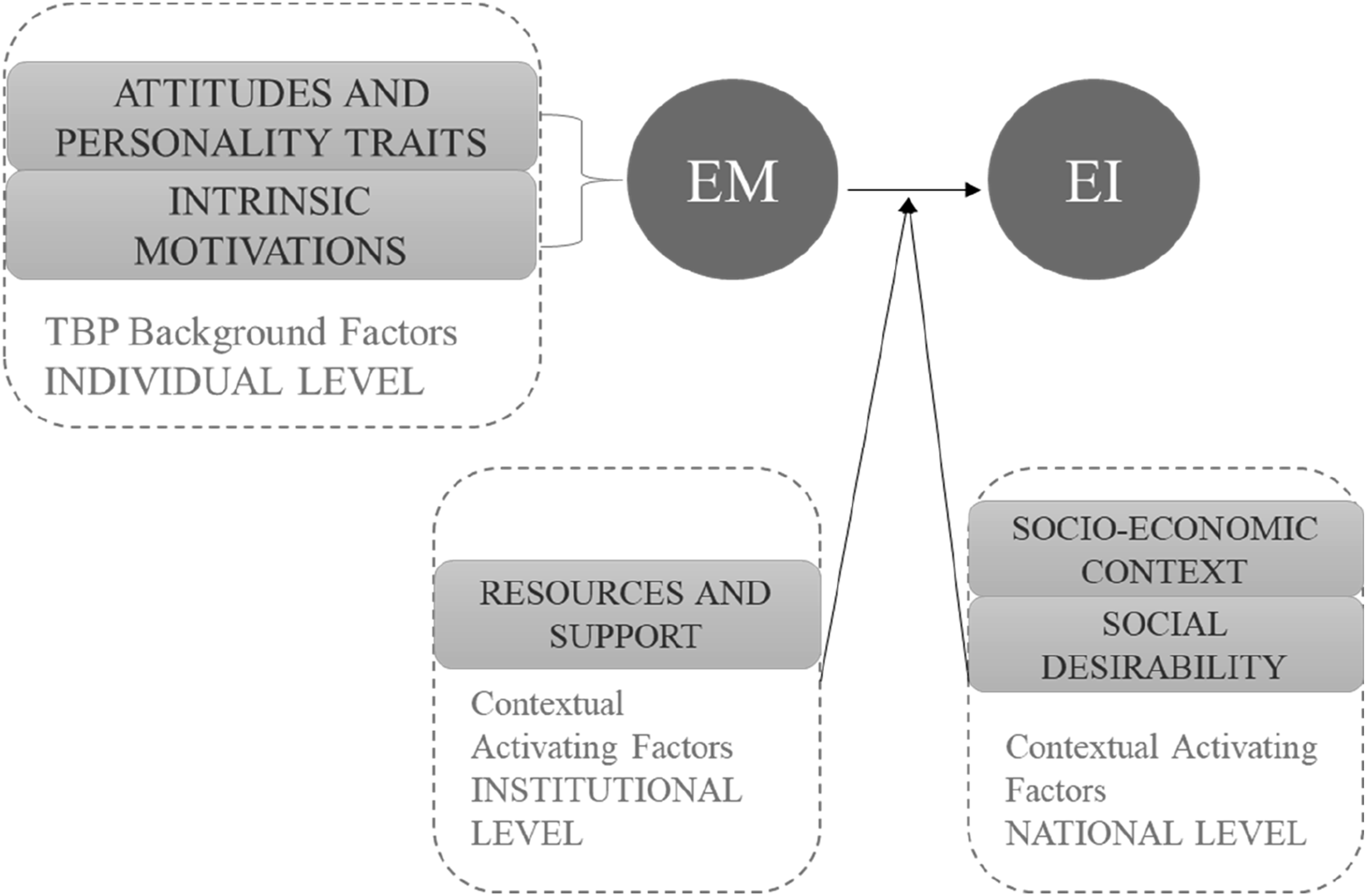
For the sake of this study, we considered the following dimensions as individual mindset and background factors, and contextual activating factors. Individual factors are captured by dimensions of the entrepreneurial mindset. Innovation-oriented, peculiarity, innopreneurship, need to achieve, and persistence specifically reflect attitudes and personal valuations towards entrepreneurial intention. Confidence, experience, and action-oriented reflect the belief in own ability to perform entrepreneurial tasks and intrinsic motivation. These elements somehow reflect the individual, subjective judgment of the desirability of the behavior, based on background factors that may lead within the TBP to the attitude toward the behavior dimension.
As for contextual activating factors, we rely on two levels, the institutional and the national level. The resources dimension represents the burden or lever of institutional support and economic national context. The risk-acceptance dimension captures the influence shaped by social desirability and social dimensions in the national context. These elements cannot be fully linked to the social pressure as defined in TBP,14,16 as the subjective norm dimension specifically refers to peers who are important to the individual—family, friends, colleagues. Instead, these elements inform on the background factors that in TBP define the perception of ease or difficulty in performing a specific behavior. However, they are here defined as activating factors pertaining to a broader context within which the individual built his/her own willingness to be an entrepreneur.
Questionnaire development
Various tools (e.g., Refs. 24, 25 and 36) have been developed over time to investigate EI or EM. The EPIC (Entrepreneurial Potential and Innovation Competences) instrument, developed by HEInnovate, an initiative of the European Commission’s DG Education and Culture in partnership with the OECD, was used as the starting point for measuring entrepreneurial mindset dimensions. Exploratory factor analysis was applied to the EPIC items, and factor loadings were used to guide item selection and grouping, resulting in five EPIC-derived dimensions suitable for cross-context application. In addition, four entrepreneurial mindset dimensions were added to the modified EPIC instrument based on the framework proposed by Davis et al. 22 . A resources dimension was also introduced to capture perceived availability of institutional and contextual support for entrepreneurial activity, as suggested during the initial testing phase. The final instrument therefore integrates nine entrepreneurial mindset dimensions, a resources construct, and entrepreneurial intention items measured using validated scales.
Questionnaire development and data collection relied on specific project partner universities, which may shape how far the findings generalise. Data were collected through project partner institutions: University of Modena and Reggio Emilia (Italy), FH Joanneum University of Applied Sciences (Austria), Harokopio University of Athens (Greece), Mid Sweden University (Sweden), and the University of Sarajevo (Bosnia and Herzegovina). All these universities are public and present formal technology transfer offices or activities to support entrepreneurship, despite being immersed in entrepreneurial ecosystems with varying levels of maturity. The University of Modena and Reggio Emilia is one of the best universities in Italy and it is ranked among the top 10 large sized Italian universities. It features a mature technology transfer office, as most Italian universities, within a well-consolidated entrepreneurial ecosystem. FH Joanneum University of Applied Sciences is one of the Austria’s largest and best applied sciences institutions; it aligns with national average in terms of entrepreneurship support systems and operates within a well-consolidated entrepreneurial ecosystem. Harokopio University of Athens is ranked second in Greece, it has more limited formal structures in support of entrepreneurship in line with the national average. Mid Sweden University is one of the ten largest universities in Sweden, it reflects the high baseline of Swedish entrepreneurial ecosystems. University of Sarajevo is the highest-ranked and the largest university in Bosnia and Herzegovina, it is nationally leading in supporting entrepreneurship, but embedded in an emerging ecosystem.
Assessment tool.

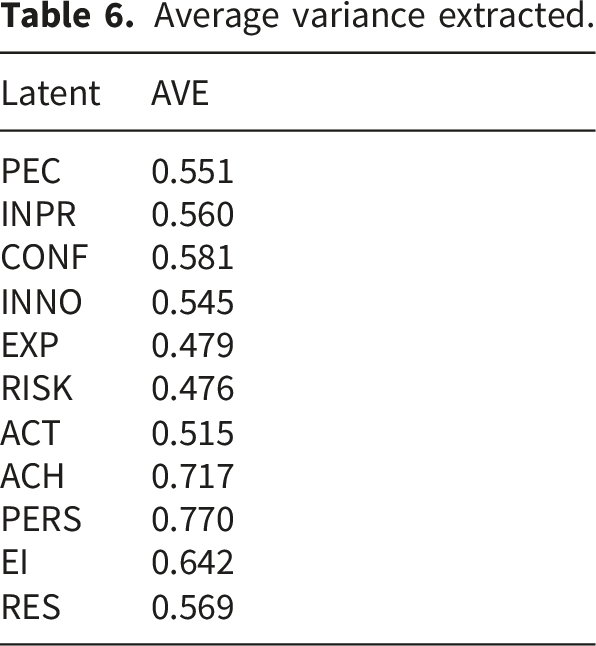
After the instrument was adapted, its psychometric properties were systematically assessed. Internal consistency reliability was evaluated using Cronbach’s alpha, item-to-total correlations, and inter-item correlations. Confirmatory factor analysis (CFA) was conducted to verify that items loaded on their intended constructs. To ensure that the adapted instrument performs equally well across groups, multi-group confirmatory factor analysis (CFA) was used to test measurement invariance at the configural, metric, and scalar levels. Discriminant validity was assessed using the heterotrait–monotrait (HTMT) ratio, while convergent validity was evaluated using Average Variance Extracted (AVE) and standardized factor loadings.
Internal consistency reliability
Cronbach’s alpha values.

Corrected item-to-total correlations range from 0.424 to 0.698, and all values exceed the recommended value of 0.4, indicating the reliability of high internal consistency54,55 and that the items are appropriately related to the overall construct of interest and contribute meaningfully to scale reliability. Calculated coefficients of correlation range from 0.354 to 0.698 and are all within the acceptable range of 0.15 and 0.85.56,57
Confirmatory factor analysis
Factor loadings.

Measurement invariance
To assess whether the adapted instrument performs equally well across groups, a multi-group confirmatory factor analysis (
Heterotrait-monotrait ratio (HTMT)
Heterotrait-monotrait ratio.

Average Variance Extracted (AVE)
Average variance extracted.
Data collection and hierarchical regression analysis
Data collection involved sending the questionnaire link and QR code to students from the partner universities, inviting them to complete the survey. The response scale ranges from 1 to 7, with equal distances between all numbers. Students were asked to respond according to their level of agreement or disagreement with the statements in the questionnaire, where 1 stands for ‘I completely disagree’ and 7 stands for ‘I completely agree’. The labelling choice is based on Harpe 67 , considering ratings with five or more categories as continuous data, while Evans 68 claims that, without labels, many users treat such ratings as interval data. Filling out the questionnaire was completely anonymous, and participation was entirely voluntary. The questionnaire was completed by 301 students.
Demographic and academic characteristics of students.

We employed hierarchical regression analysis and a stepwise approach to effectively isolate the effects of control variables, and to assess the unique contributions of each EM dimension in explaining EI, in terms of additional variance. The regression models developed for this research are presented in Equation (1).
A Harman single-factor test was performed on all control and independent variables to test for common method variance. Seven factors were identified, accounting for 60.6% of the variance, with no evidence of common method bias.
Hypothesis test of differences in the regression coefficients
In order to evaluate the significant differences between two independent samples of EU and BIH students, we conducted a formal hypothesis test. For each pair of regression coefficients corresponding to the same independent variables, derived for EU and BIH students, the null hypothesis 

The numerator of the test statistic of the hypothesis test is the estimated difference between the two coefficients of two different groups of students, while the denominator is the estimated standard error of this difference, providing a measure of the variability or uncertainty associated with the estimate of the difference. Test statistics are calculated using equation (4)48,69,70:
The decision whether to reject the null hypothesis or not is made by comparing the test statistics
Results
Multiple hierarchical regression models for BIH and EU.
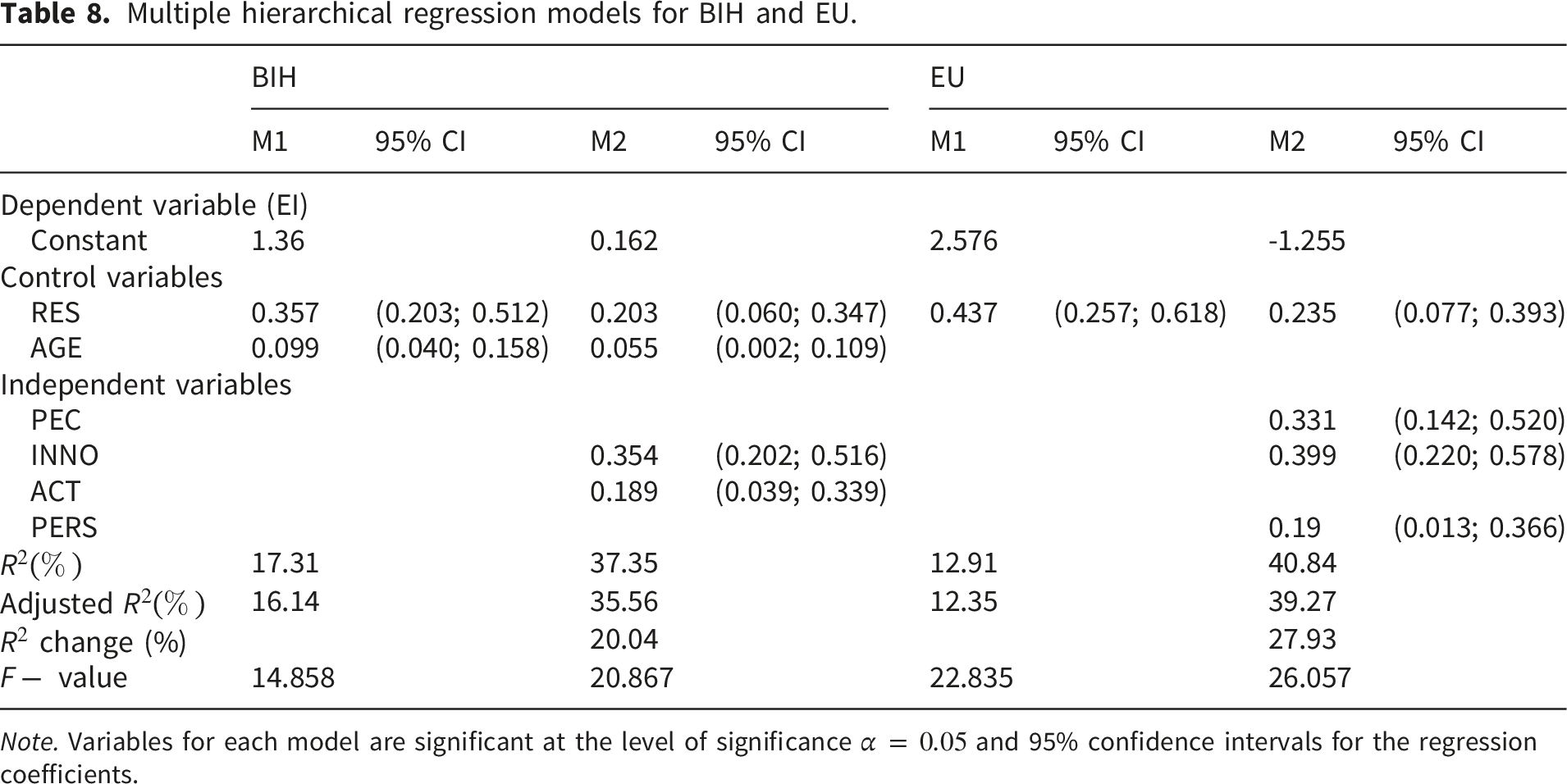
Note. Variables for each model are significant at the level of significance
Post hoc power analysis.
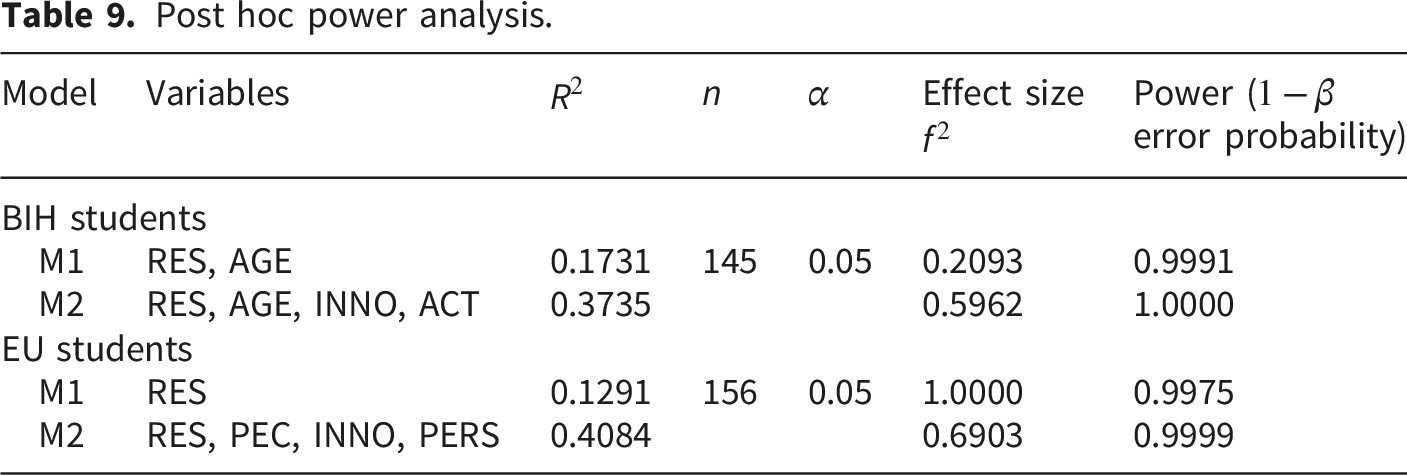
From calculated post hoc power values, it can be concluded that for BIH students there were 99.91% and 100% chances of correctly rejecting a false null hypothesis for the baseline and final models, respectively, while for EU students there were 99.75% and 99.99% chances of correctly rejecting a false null hypothesis for the baseline and final models, respectively. Calculated high power values, which are 80% or 90% greater than common values 70 , prove that the sample sizes used in this research were large enough.
Post hoc power analysis – increase of
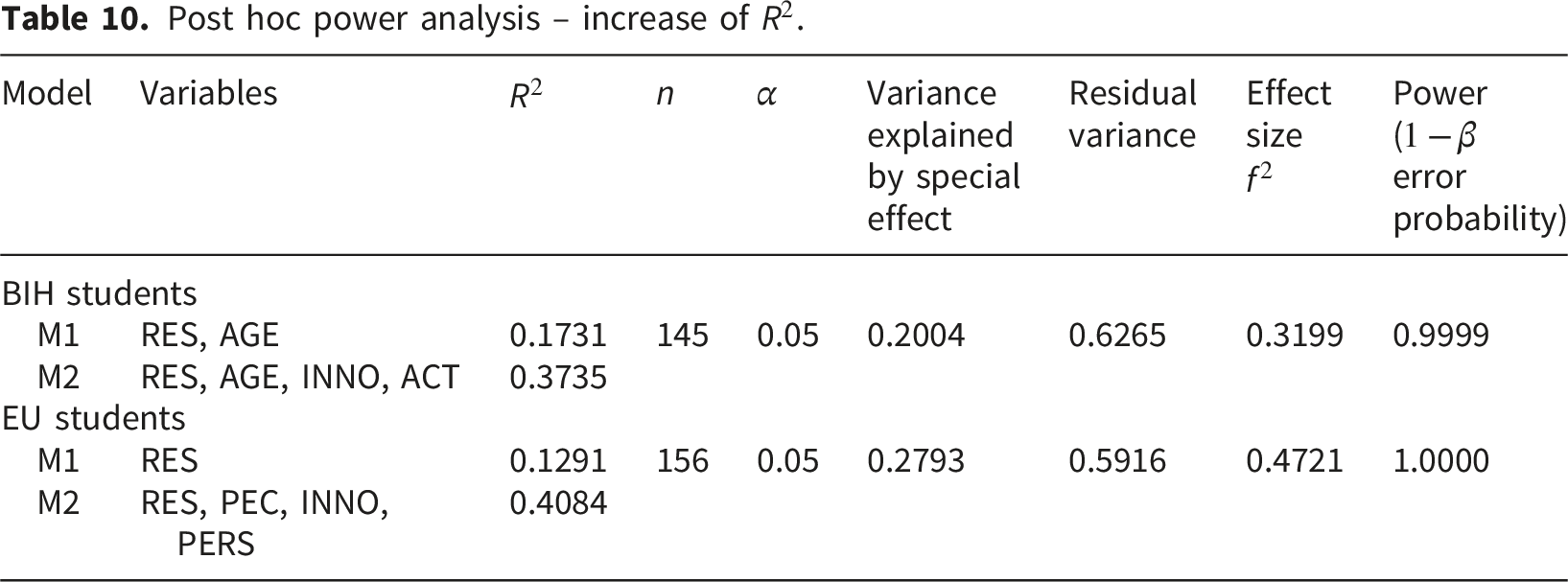
Table 10 shows that the power of these tests is very high. For BIH students there was a 99.99% chance of correctly rejecting a false null hypothesis, while this chance for EU students was 100%.
Although the sample sizes between the two groups were slightly uneven (
All baseline models were statistically significant and able to predict EI. After applying backward regression with control variables, the final baseline Model 1 for BIH retained RES and age as significant predictors. Conversely, RES remained the only significant predictor in the final baseline Model 1 for EU.
Independent variables were then added to the baseline models. Applying backward regression to achieve the final models with statistically significant variables, Model 2 for BIH retained resources and age as significant control variables, innovation-oriented and action-oriented as significant EM dimensions, explaining 37.35% of the variance in EI. Similarly, Model 2 for EU included resources as a significant control variable, peculiarity, innovation-oriented and persistence as significant EM dimensions, accounting for 40.84% of the variance in EI. The significant EM dimensions in these final models explained an additional 20.04% of the variance in EI for BIH students, and 27.93% of the variance in EI for EU students.
Hypothesis test of the difference in regression coefficients of the final baseline models.

Hypothesis test of the difference of regression coefficients of the final models.

The only common variable in the final baseline models for both EU and BIH students was RES. The null 

Using equation (4), calculated test statistics were
In the final models 2, two variables were common to both EU and BIH, namely resources and innovation-oriented, as shown in Table 12. The null 

Using equation (4), the calculated test statistics were
The second common variable to both final models 2 was INNO as shown in Table 12.
The null 

Using equation (4), the calculated test statistics were
Discussion
The study explores differential activating factors 17 and provides a comparative lens through which to examine the individual and contextual influences on the EI of university students. In doing so, it validates an assessment tool that addresses differences across countries, specifically comparing selected EU countries (University of Modena and Reggio Emilia from Italy, FH Joanneum University of Applied Sciences from Austria, Harokopio University of Athens from Greece, and Mid Sweden University from Sweden) with one EU candidate country (University of Sarajevo from Bosnia and Herzegovina). The modified assessment tool has been developed to account for differences in EM dimensions—namely peculiarity, innopreneurship, confidence, innovation-oriented, experience, risk acceptance, action-oriented, need to achieve, and persistence—on university students’ EI, over and above control variables such as gender, age, educational level across countries.
With regard to the influence of EM dimensions on EI, some were found to be significant for both the BIH and EU student groups, while others did not demonstrate a consistent pattern. The innovation-oriented dimension has been shown to emerge as a common predictor, in accordance with the findings of previous studies, thus reinforcing its relevance in fostering EI.3,15,17 Conversely, specific EM dimensions emerge as being significantly relevant in one group, thereby challenging the assumption that a universal mindset universally drives EI.5,17,22 Action-oriented and age are significant predictors for BIH students, whereas peculiarity and persistence are significant predictors for EU students. This is in line with previous studies, which highlight that the drivers of students’ EI have specificities and constraints that vary across cultural and national contexts.26,36 Based on the Hofstede’s cultural dimensions scores, where BIH and EU countries have differences in scores in Power Distance, Individualism, and Motivation Towards Achievement and Success, it is shown as expected that some EM dimensions are the same for both BIH and EU countries, while some EM dimensions are not. Overall, cultural contextual factors shape behavioral pathways.3,36 The divergence in significant EM dimensions between BIH and EU students aligns with Hofstede’s cultural dimension scores, indicating that local cultural values may shape which entrepreneurial mindset dimensions become significant. This supports the idea that entrepreneurial intention among university students must account for culturally specific contexts.
It is particularly noteworthy that risk acceptance does not emerge as a significant predictor in either group, despite the prevailing belief that risk tolerance is an essential trait of entrepreneurs 22 . This challenges the basis of entrepreneurial studies, which emphasise risk-taking as a core trait, and suggests the greater value of other EM dimensions, such as persistence or action-oriented. The foundational view of risk-taking in entrepreneurship traces back to Ref. 71 and is closely linked to the certainty effect described in prospect theory 72 . This effect implies that individuals tend to avoid risk when facing potential gains, but may accept higher levels of risk when decisions are framed in terms of potential losses. Despite its prominence in entrepreneurship theory, only a limited number of empirical studies have examined risk-taking as a trait of the EM among university students or adult learners. 3 The lack of a significant relationship between students’ responses to risk-related items and entrepreneurial intentions suggests that risk-related decision-making may be shaped by cognitive biases that operate in more nuanced ways than is generally assumed. Similar results emerge in the empirical study by Van Trang et al. 35 , which questions the widely held assumption that portrays risk-taking as a defining entrepreneurial characteristic.15,17
The non-significance of the risk acceptance dimension may also reflect broader changes in how younger, university-educated individuals perceive and approach entrepreneurial risk. Rather than exhibiting traditional risk-taking behaviors, students may interpret entrepreneurial choice differently to established models, possibly due to generational shifts and educational environments. These results are consistent with Knight’s distinction between measurable risk and unmeasurable uncertainty 71 , as early-stage entrepreneurial intention among students is more likely to involve the latter. In line with prospect theory 72 , students may evaluate entrepreneurship based on their subjective perception of potential gains and losses rather than through objective risk assessments. This helps to explain why dimensions of the EM other than risk acceptance emerge as stronger. The non-significance of risk acceptance observed also suggests that future empirical research may reconceptualize risk-related constructs.
Resource dimension: Items scores and t-test.

Note. t-tests performed for the differences for two population means for each item of resource dimension RES1 to RES5 for EU and BIH at the level of significance α=0.05.
Ultimately, perceptions of resource availability are deeply rooted in local contexts and are shaped by subjective interpretations17,33 rather than by objective measures. The availability of resources is not sufficient to stimulate EI; what matters is how individuals perceive those resources within their social and institutional context 33 . There is indeed a massive difference in GDP per capita between EU countries, with a minimum value of € 18470 in Greece and a maximum value of € 41351 in Sweden, and BIH that has a GDP per capita value of € 6781; yet the RES scores for the EU and BIH are almost the same. This suggests that students in resource-constrained environments may develop expectations about institutional and national support that are specific to their context 33 , which could lead to similar perceptions despite objective disparities. From an opportunity structure perspective, resources function as activating factors only insofar as they are cognitively accessible, interpretable, and institutionally legitimate to individuals 33 . In addition, in the early stages of EI, perceptions act as an interpretative filter that mediates the impact of objective resources on possible entrepreneurial action: subjective evaluation therefore becomes a more important element than the objective measurement of that resource17,33. These patterns may also reflect the normalization of expectations among students from countries with different levels of resource availability and economic development, which may be also linked to institutional trust 33 . As a result, perceived support and resources may exert a stronger influence on EI than objective measures and actual availability.
Conclusion
Through a comparison between selected EU countries and one EU candidate country, the present study offers novel insights into the EM dimensions that influence EI for university students, and how such influences vary across different socio-economic and institutional contexts. The main contribution is threefold.
First, at a theoretical level, the study contributes to the entrepreneurial literature by challenging established assumptions regarding the drivers of EI. Specifically, the results challenge the prevailing assumption that objective measures of resources and innovation-orientation EM dimension are the primary driver of entrepreneurial initiatives, demonstrating instead that mindset-related variables - shaped by national and institutional activating factors - are more decisive. It shows that EI is shaped by the interplay between perceived resource availability and the particular EM dimensions relevant for students in each country. This emphasises the importance of contextually embedded perceptions 33 and cognitive EM dimensions in the decision-making of prospective entrepreneurs, especially in the early stages of their careers. In addition, the study also calls into question the centrality of risk-taking as a core and universal entrepreneurial trait. The non-significance of the risk acceptance dimension led the room to a new interpretation of this dimension, as university students’ evaluation of entrepreneurial choices may be different to established models, for example due to generational shifts and educational environments. Second, the study contributes to comparative research on EI by providing empirical evidence from a relatively under-investigated geographical area, by including BIH as an EU candidate country. The study reveals how specific dimensions of the EM vary according to socio-economic development, educational systems, and historical-cultural contexts. It addresses a significant gap in entrepreneurship research, which has been predominantly concentrated in Western Europe. Third, at a methodological level, the study validates an assessment tool for EI and EM in order to address contextual differences. EI is indeed typically measured through standardized scales that assume cross-cultural equivalence12,13; conversely, this study validates a culturally sensitive measurement approach, by employing a modified version of the EPIC tool developed by HEInnovate, integrated with validated scales.
This study offers implications for policymakers and universities in the design of targeted, evidence-based educational policies aligned with national and institutional contexts. By identifying which EM dimensions most strongly predict students’ EI in different socio-economic settings, guidance for more effective educational design and resource allocation is provided, addressing ongoing concerns about the actual impact of university-level entrepreneurship initiatives2,9,10. Importantly, the results suggest that entrepreneurship education should prioritize the development of specific mindset dimensions over the mere provision of resources, fostering support mechanisms that are context-sensitive and actionable31,33. From a policy perspective, these results further imply that merely increasing resources may not translate into higher perceived support unless the visibility and communication of available support mechanisms are substantially improved.
In the EU context, where persistence and peculiarity emerge as key predictors of EI, entrepreneurship education could emphasise semester-long, iterative projects incorporating multiple feedback cycles, deliberate practice in originality assessment, and evaluation frameworks that reward resilience across iterations. In contrast, in the BIH context, where an action-oriented mindset and age play a more prominent role, educational interventions may benefit from shorter, intensive formats focused on rapid prototyping, immediate stakeholder engagement, and community- or SME-based challenges. Across both contexts, fostering innovation remains essential, encouraging creative problem-solving and the development of novel solutions while supporting the effective use of available resources to translate entrepreneurial ideas into practice. Entrepreneurship education should then retain innovation-oriented modules that scaffold ideation, problem framing, and early solution testing, and integrate them as credit-bearing components to encourage participation. Embedding such initiatives within supranational or exchange-based programmes could enhance students’ exposure to diverse institutional settings and support the development of international entrepreneurial competencies, while refining students’ subjective evaluation of the contextual activating factors.
The contribution is not without limitations, which provide avenues for future research. First, countries were selected based on a convenience sample. Therefore, the results should be interpreted taking into account the constraints imposed by the convenience sampling approach. For example, the universities in our sample exhibit differences in the presence and development of entrepreneurial support programs: broader sampling within the same countries could estimate effects of the overall entrepreneurial ecosystem. Future studies could also employ stratified sampling techniques to corroborate these findings and further explore contextual differences across countries. Second, the here considered activating factors could be explored as mediating or moderating variables, formal hypothesis testing can then be built to assess actual behavior. While intentions are indeed recognized as important antecedents of action 15 , the intention-action gap could also be addressed. Longitudinal monitoring of the same group of participants could investigate intention-action discrepancies across various cultural and economic contexts. Third, while measurement invariance was assessed, non-significant group differences may still reflect differences in how constructs are interpreted across groups rather than true equivalence. This highlights the need for future research to further investigate measurement equivalence across diverse groups.
Future research could also build upon the most salient findings of this study. Future research could more systematically investigate how distinct EM dimensions inform or interact with the main dimensions of the TPB across different national contexts, thereby clarifying the mechanisms through which broader orientations translate into individual intention-related antecedents. In addition, experimental studies could manipulate both objective and subjective measures of resources to examine whether students’ entrepreneurial intentions respond more strongly to perceived resource availability than to actual resource indicators. The risk-taking dimension also warrants focused attention in future research, given the above-mentioned considerations on generational shifts, educational influences, and measurement limitations. Rather than focusing exclusively on general risk acceptance, future studies could examine alternative constructs, such as tolerance for uncertainty or ambiguity, sensitivity to potential losses, or protective orientations toward downside risk. Risk-related constructs may also require different operationalisation when applied to student populations. Respondents may indeed interpret risk-related issues in heterogeneous ways, for example as uncertainty rather than calculable risk, and risk-taking may manifest in forms not fully captured by the measures employed in this study. Qualitative follow-up research could help clarify how students interpret and frame risk in different entrepreneurial contexts, while future studies may also test specific learning models and educational programs, drawing on social cognitive career theories.
Footnotes
Acknowledgement
Instrument development and data collection were part of project Universities for hUMAN-centered Entrepreneurship (UMANE) supported by the European Institute of Innovation and Technology (EIT) within EIT HEI Initiative, Innovation Capacity Building for Higher Education. Project partners are thanked for their support in data collection.

Funding
The authors disclosed receipt of the following financial support for the research, authorship, and/or publication of this article: This work was supported by the EIT HEI Initiative, Innovation Capacity Building for Higher Education, Funded by European Union. Grant Number 10054.
Declaration of conflicting interests
The authors declared no potential conflicts of interest with respect to the research, authorship, and/or publication of this article.
Data Availability Statement
The data supporting the findings of this study are not publicly available. Requests for data access may be directed to the first author.