




Abstract
Rapid digital technology adoption is reshaping manufacturing worldwide, yet Pakistan’s textile industry faces challenges – outdated practices, high innovation costs, and limited lean operations – that constrain competitiveness and sustainability. Addressing this gap, the study adapts the Unified Theory of Acceptance and Use of Technology (UTAUT2) framework, extending it with lean thinking and sustainability concerns to identify drivers of digital transformation. Data were gathered via a cross-sectional survey of 124 stakeholders from small, medium, and large textile industries in Punjab, Pakistan, and analyzed using Partial Least Squares Structural Equation Modeling (PLS-SEM). Findings indicate that effort expectancy, performance expectancy, facilitating conditions, innovation cost, lean thinking, and social influence significantly predict behavioural intention toward adopting digital technologies. Moderation analysis reveals that firm size amplifies the effects of performance expectancy, lean thinking, facilitating conditions, innovation cost, and social influence on adoption intention, while sustainability concern does not show a significant impact. Moreover, behavioural intention robustly forecasts actual adoption behaviour. These results underscore the need for robust digital infrastructure and integrated lean management practices, together with cost-effective strategies, to drive digital transformation in Pakistan’s textile sector. Policy recommendations urge targeted interventions that enhance digital competencies and provide tailored support for small- and medium-sized enterprises, thereby boosting industrial competitiveness and sustainable growth.
Keywords
Introduction
The terms Industrial Digital Transformation (IDT) and Industry 4.0 are frequently employed interchangeably. 1 The increasing speed of digitalization is propelling a new phase of scientific and technological revolution alongside notable shifts in industrial practices and growth. This evolution is primarily spearheaded by the progress of essential digital technologies like 5G, big data, cloud computing, the industrial internet, Artificial Intelligence (AI), and various other digital tools. 2 Digital transformation (DT) implies the productive and ethical aspects of an organization’s use of digital technologies. It represents a strategic adjustment used by enterprises to improve the performance of their businesses and industrial frameworks, as well as their operational processes, consequently establishing a new system. 3 IDT represents a distinct form of DT that merges cyber-physical systems across the production value chain. 4 It facilitates the flow of information between physical and virtual systems within the production networks, improving information transparency. It also improves organizational capabilities, such as productivity. 5 It enables the organization to adapt to uncertainty and fulfill social and environmental responsibilities.
Manufacturing is a major contributor to Gross Domestic Product (GDP), drives economic expansion, and provides resistance against economic instability. 6 DT presents opportunities for manufacturing firms to accelerate growth and competitiveness. 7 The effects of DT in industries include higher manufacturing productivity, 8 better product quality, favorable working conditions, and safer decision-making in industrial production, 9 which contributes to economic growth through the development of smart cities. 10 Sustainable Development Goals (SDGs) laid out a plan for sustainable development that emphasizes social integration, economic prosperity, and environmental conservation in all countries. 11 In manufacturing, pursuing social, economic, and environmental sustainability goals is feasible, with DT offering solutions to traditional industrial challenges, fostering a pathway towards a more sustainable future. 12 In line with this development, the concept of “sustainable manufacturing” 13 is gaining significance and attracting increasing interest as IDT paves the way for sustainable manufacturing in industries. 14
Various factors impact the adoption of digital technologies in industries, including consumer and stakeholder demands that influence a business’s decision to embrace digital technologies.15,16 Increased competition among industries prompts a heightened awareness of the necessity for adopting sustainable industrial practices to remain competitive on a global scale. 17 Environmental pressure necessitates the adoption of DT. Environmental factors encompass the economy, society, and culture, while environmental pressure arises from competitors, business partners, suppliers, customers, and sales expectations. 18 Furthermore, at an individual level, the adoption of technologies depends on individual attitudes and organizational policies, tactics, and actions. Organizational factors contributing to technology adoption include training, managerial support, and incentives. 19
Among various manufacturing sectors, the textile sector has emerged as an essential element of everyday living and the worldwide economic landscape. 20 Some of the most commonly used digital technologies deployed in the textile sector are Internet of Things (IoT) and robotics for automation and data gathering, AI for analysis, 3D vision for enhanced perception, digital platforms for data interpretation and identifying efficiencies, big data for personalized experiences, cloud infrastructure for robust data management, mobile technologies for accessibility, and social networks for improved engagement.
For a developing country like Pakistan, this sector is of prime importance as Pakistan is positioned fourth globally in apparel production, contributing 52% to total trade valued at US$12.36 billion. This sector accounts for 8.5% of the country’s GDP, 46% of total production, and employs 40% of the workforce. 21 Pakistan’s garment industry is export-oriented and serves as the country’s primary source of foreign exchange earnings. 22 Hence, it is essential for the textile sector to shift its business operations on the path towards Industry 4.0 to remain competitive in the world. 23 Pakistan’s textile exports have been witnessing a sharp decline. 24 Some of the reasons behind this decline are outdated technologies and production methods. 25 It is necessary to bring out the complete transformation of industrial production for necessary and positive changes; otherwise, our hopes regarding the advancement of exports would remain unaccomplished. So, it is necessary to identify various crucial factors for the successful adoption of digital transformation.
Many studies have shed light on the adoption of technologies by manufacturing industries.26,27 Many studies focused on identifying factors that were responsible for adoption at the organizational level, like research carried out by28,29, which identified factors using the Technology, Organization, and Environment (TOE) framework. Similarly, many studies focused on adoption at the individual level in Pakistan, but these did not consider the industrial or manufacturing sector, i.e.,30,31, and targeted only the banking sector. Most of the existing literature focused on the supplier selection and order allocation problem by considering important dimensions like agility, resilience, and sustainability. Only a few studies focused on adoption factors at the individual level in industries, such as the study by, 32 , which combined the technology acceptance model (TAM) and unified theory of acceptance and use of technology (UTAUT). However, all the above-mentioned studies were found to be lacking in several aspects. Firstly, it is important to note that firm size impacts the adoption of technologies, as there are variations in the adoption behavior of stakeholders among small, medium, and large enterprises.33–35 The adoption of IT innovation in small and medium-sized enterprises tends to be comparatively lower than in large industries. 36 Thus, there is a need to study the impact of firm size as a moderating variable on adoption intention. Additionally, none of the previous studies have explored the interaction between lean thinking and adoption behavior toward digital technologies. Furthermore, the textile industry is the most important manufacturing sector in Pakistan, but research on this sector is scarce on these aspects, thus highlighting a significant research gap in the literature. The present study aims to investigate the factors affecting the adoption of digital technologies based on the UTAUT2 framework. Secondly, the study also aims to investigate the moderating effect of firms’ size between the UTAUT determinants and the adoption of digital technologies. Lastly, the study outcomes will suggest suitable recommendations for textile stakeholders and policymakers.
The paper is structured logically to guide the reader from contextual foundations to practical implications. It opens with an Introduction that outlines the urgency of digital transformation in Pakistan’s textile sector and establishes the research gap. The Theoretical Framework section follows, where the authors modify the UTAUT2 model by incorporating lean thinking and sustainability concerns. This is succeeded by a clearly detailed Methodology, outlining the survey design, data collection, and analytical techniques, specifically using PLS-SEM. In the Results and Analysis section, the study presents both measurement and structural model findings, including the moderation effects of firm size. The Discussion contextualizes these findings against existing literature and provides interpretive insights. The paper concludes with Policy Implications, offering targeted recommendations and a reflection on the study’s limitations and future research directions, enhancing its practical value and academic contribution.
Theoretical framework and hypothesis development
Theoretical framework
Numerous theories have been developed aiming to pinpoint the elements influencing the adoption and integration of technologies. In his study 37 Rogers introduced the Innovation Diffusion Theory, and the UTAUT theory was formulated by 38 in their research work. Researchers often modify the established theories by adding or removing variables based on the research context. Others choose to integrate existing theories into comprehensive models that recognize both their shared aspects and unique differences. 39 TAM was originally developed as a pioneer model to forecast individual stance and behavior in accepting new technologies. It is centered on two fundamental constructs: perceived ease of use and perceived usefulness; since its inception, TAM has undergone evolution into various new iterations. He 38 combined various constructs and introduced the UTAUT theory. He performed a comparative analysis of eight adoption models and formulated UTAUT by incorporating various constructs, namely effort expectancy, performance expectancy, social influence, and facilitating conditions, significantly influencing the user’s intention to utilize technology. After that, UTAUT2 emerged as the latest version of the theory tailored to individual consumers, and it has the capability of reflecting around 74% of the variation in technology adoption. 39
The reason for not choosing other models is that this model predicts behavioral intention at an individual level, while others explain it at a collective level. 39 The target population of the present study is the stakeholders of the textile industry, so the UTAUT2 model is the most appropriate in this regard.
Various success factors for DT have been identified in the literature. Seven key factors for achieving success in DT: identifying the digital trigger, fostering a digital culture, crafting a digital vision, identifying digital drivers, structuring a digital organization, pinpointing areas for transformation, and assessing impacts. Each of these factors is broken down into sub-factors, providing detailed guidance on their implementation within organizations. It is evident from previous studies that research on DT in the manufacturing industry suggests that to generate value through DT, companies must integrate different cultures, processes, resource structures, and business strategies oriented toward digital technologies. For a successful DT, an organization should incorporate all aspects of its strategy, ranging from previous business activities, development, and production to quality control and delivery. 40 Organizations should not replace the legacy system. Instead, they should explore opportunities and challenges in the already established system because DT occurs in pre-existing investments in technologies and capacities into which new technologies are integrated; it should not be a complete overhaul. 41
Successful DT can reap many benefits for firms, such as significant economic benefits for companies in terms of increased revenue and profit. This is achieved by leveraging multiple advantages, including substantial cost reductions and faster turnaround times. 42 DT enables automatic data collection and centralization, replacing traditional paper-based systems. This data can be analyzed in real-time to generate new insights into a company’s performance, costs, and risks. Real-time analysis allows managers to address potential problems proactively before they escalate and become critical issues. 43
Studies have revealed that DT in industries contributes to environmental sustainability through its impact on natural resources, which leads to efficient utilization of water and land and the recycling of waste. 44 It has been evident from previous studies that leveraging DT in industries can significantly reduce carbon emissions, promoting sustainable manufacturing in industries. 45 DT also impacts macroeconomic indicators, resulting in improved growth rates. Studies have revealed that spending on ICT has a long-term impact on GDP per capita. 46
Lean production is of paramount importance in the industrial sector. 47 Lean manufacturing is a principle designed to eradicate inefficiencies, enhance productivity and quality, achieve higher output in less time, use fewer resources, and minimize inventories and capital investment. 48 It is also evident from previous studies that the lean manufacturing approach serves as a facilitator for implementing and integrating Industry 4.0 technologies within the manufacturing environment. 49 Industries that have employed lean production in their organization are more likely to initiate DT in their organization. 50
Despite the enormous benefits of DT, it is not fully adopted in the industrial sector, especially in small industries, because large industries possess greater management expertise, huge capital, a larger pool of human resources, enhanced digital competencies, and comparatively robust capabilities for advancing DT, in contrast to smaller organizations.
Proposed conceptual model and hypotheses formulation
In the original UTAUT model, emphasis is primarily placed on extrinsically motivating factors, particularly on the utility of the technology. This is evident from the concept behind the performance expectancy construct, which highlights the benefits of the technology and serves as the major influential factor in determining intention to use, followed by facilitating condition, effort expectancy, and social influence
38
The UTAUT model was further modified into UTAUT2 because the original model was unable to explain the most variation. More constructs were added to it, such as innovation cost, habit, and hedonic motivation.
39
For the present study, the UTAUT2 model was used with the addition of some new constructs like lean thinking and sustainability concern by replacing hedonic motivation and habit value. Hedonic motivation and habit value did not seem relevant in technology acceptance by stakeholders at the industrial level. The motive behind digital transformation in the industrial sector is to increase its competitiveness globally,
8
and it is not for fun or pleasure purposes. Hence, these two constructs were not added to our model. Figure 1 depicts the proposed research model. Proposed conceptual model (adapted from
39
).
Effort expectancy (EE)
Effort expectancy indicates the simplicity of operating a system. 38 TAM has a similar ease-of-use concept in its framework51,52, and describes that as the necessary effort to utilize a technology diminishes, it improves work performance capacity. Various studies have demonstrated that effort expectancy plays a pivotal role in the adoption of technology52–54 characterized EE as a technological attribute in the usage of AI in their review. They discovered that EE has a significant influence on attitude, which in turn influences technology use. 28 Any technology that is perceived as complicated will be resisted by employers to adopt in industries because of a lack of skills. 55 Technology that can minimize the effort necessary to complete a task is more likely to be deployed. On these bases, the following hypothesis is proposed:
Effort expectancy positively influences the Behavioral intention.
Facilitating condition (FC)
Facilitating condition refers to an individual’s belief that there is availability of necessary infrastructure and support for the adoption of their desired technology, which includes substantial infrastructure and necessary technical guidance for the utilization of the technology, as it has an impact on both behavioral intention (BI) and actual behavior. 38 It is crucial to develop appropriate infrastructure and provide training, like technical expertise and IT skills, that will help users to understand the usage of resources. Studies like 56–58 have uncovered that facilitating conditions have a positive effect on behavioral intention. Furthermore, the facilitating condition is perceived as the most influential factor in an individual’s intention to utilize digital technologies in their organization, and same is evident from various studies54,59. As a result, the following hypothesis is proposed:
FC is positively related to BI.
Innovation cost (IC)
Another important determinant in UTAUT2 theory is the innovation cost, which highlights that the adoption of a technology is dependent heavily on its cost. 60 Furthermore, when a new technology is considered to be more advantageous than costly, innovation cost leads to positive consequences and increases the user’s intention regarding its adoption. 39 Studies regarding textile sectors have revealed that technologies whose benefits are expected to outweigh their cost are more likely to be accepted. 61 Therefore, the proposed hypothesis is:
IC exerts a positive influence on BI.
Lean thinking (LT)
Lean thinking is a management philosophy that aims at creating value for customers while minimizing waste. Lean thinking aims to improve quality, reduce cost, and increase customer satisfaction by creating a culture of continuous improvement. 62 From various papers, it has been discovered that lean operations and DT in industries share a common goal of efficiency improvement. Industries that have adopted lean principles have a strong aim for DT, as evident from the literature. 49 Lean management has long been considered a sociotechnical system. The fourth industrial revolution brought machines and humans closer than ever before. 63 One of the major barriers to the effective implementation of these technologies is the lack of understanding of the interplay between technologies and human beings. 64 Lean management relies heavily on people, and there is a risk that the solutions that have not integrated lean philosophy will lead to implementation failures in terms of both productivity and job satisfaction. 65
Autonomy is also one of the principles of lean management that fits well with unmanned vehicles. Traditionally managed centralized IT systems are gradually being replaced by decentralized technologies such as the IOT. 65 It is widely accepted that lean thinking can tackle complex management problems effectively and efficiently. 66 The ultimate goal of these technologies is to connect people and machines, and in this context, lean-digital synergies can address complexity and improve performance. 67 So, we have adopted this as a determinant of behavioral intention. As a result, the following hypothesis is proposed:
LT positively impacts the BI.
Performance expectancy (PE)
Performance expectancy refers to the individual’s belief that by using a system or technology, their work performance will be improved. 68 Performance expectancy is another important predictor of behavior intention, as claimed by69–71. Digital technologies are effective in completing tasks and achieving desired outcomes within industrial settings. Based on this, we have developed the following hypothesis:
The higher the PE of digital technologies, the higher the BI.
Sustainability concern (SC)
Sustainability concern is another psychological factor used in the study of behavior. Scholars usually agree on a positive relationship between SC and behavior regarding technological products. 72 The SC includes attitudes toward addressing climate change issues and promoting ecological health and social development without endangering life on Earth or leaving anyone behind. 73 People tend to adopt technology with consideration for its sustainability aspect. Sustainability in the global textile and apparel industry is becoming ever more vital. This industry, characterized by long, complex, and global value chains and embracing a wide range of stakeholders and interest groups, is confronted with sustainability challenges due to prevalent linear production and consumption patterns. 74 It is evident from previous studies that outcomes from using digital technologies are in line with sustainable dimensions. 75
Research has established that people’s environmental worries and perception do not always transform into pro-environmental or sustainable BI60,76 developed a strategic framework to guide the adoption of Industry 4.0 technologies. 77 analyzed the importance of critical success factors for the adoption of advanced manufacturing technologies. Consequently, marketers need a clear understanding of this gap between concerns and actions. Increasing environmental destruction and its effects, such as global warming, have led to rising awareness of the importance of sustainability. This has developed SC about consumption and the impact of everyday buying decisions, prompting abundant studies. 78 So, keeping this in mind, there is a need to explore the relationship between sustainability concerns and BI. As a result, the proposed hypothesis is:
SC exerts a positive impact on BI.
Social influence (SI)
Reference 38 described social influence as the impact of other people’s opinions and recommendations on an individual’s intention to use technology. SI describes the process through which others persuade individuals to use a technology. SI integrates three equivalent constructs: personal beliefs, social variables, and perception. In the case of technology adoption, individuals are more likely to adopt it after collecting information about it from various resources. 79 These are important predictors of behavioral intention in UTAUT2. As a result, the following hypotheses are proposed in this study:
The greater the SI when using digital technologies, the stronger the BI.
Behavioral intention
Both psychologists and social scientists have reached a consensus that the intention regarding its adoption largely impacts actual adoption behavior. It is difficult to directly predict the actual behavior; many studies used BI as a proxy for AB. 53 The degree to which a person has planned intention to indulge or refrain from specific future actions is represented by BI. It exerts a positive impact on AB. 39 On this basis, the proposed hypothesis is:
BI exerts a positive influence on AB.
Firm size (FS)
Organization size significantly affects the intention of individuals regarding its adoption. Large organizations are more likely to have diverse facilities and modern infrastructure; hence, they are better positioned to adopt technological advancements. 80 This is also evident from previous studies, but some studies also suggest that small firms are more likely to adopt innovation because they are more flexible and adaptable than larger ones, as evidenced by the Schumpeterian hypothesis. 81 The literature shows that FS impacts adoption behavior and the intention to adopt digital technologies. Firm size also impacts the adoption relation between various variables. It has been used as a moderator in various studies. 82 Hence, we conclude with the following hypotheses:
FS positively impacts the BI of digital technologies.
FS positively impacts AB.
FS moderates the relationship between EE and BI.
FS moderates the relationship between PE and BI.
FS moderates the relationship between SC and BI.
FS moderates the relationship between BI and AB.
FS moderates the relationship between LT and BI.
FS moderates the relationship between FC and BI.
FS moderates the relationship between IC and BI.
FS moderates the relationship between SI and BI.
Explanation of these hypotheses is given in the Appendix 1.
Research methodology
Research instrument
The initial step in formulating the research framework was to develop the questionnaire. This was done to validate the hypothesis and conceptual model that we used in our study. Studies performed by conducting surveys were used for this purpose. Constructs were identified by the literature review. The questionnaire was developed by including items that represent the constructs in the proposed framework. Later on, the questionnaire underwent the pretesting phase by the industrial experts who were stakeholders in the textile sector. Then, it was again followed by pilot testing by industrial managers. It was conducted to ensure that respondents would not suffer from ambiguity and uncertainty while responding to the questionnaire and that they would be able to understand the measures. The questionnaire was composed of 36 items of all relevant constructs, and the response was captured on a five-point Likert scale ranging from 1 to 5, indicating strongly disagree to strongly agree.
Data collection strategy
A convenience sampling technique was used as a data collection strategy. Directors and different management levels were targeted from the textile industries in the Punjab province of Pakistan. Practically, we targeted small, medium, and large industries through telephone calls and personal interviews by collecting their contact information through the chamber of commerce. Initially, we targeted 150 industries that were interested in adopting or were more likely to adopt digital technologies. A total of 139 responses out of 150 industries were collected. Potential participants were informed that the study’s purpose was purely academic, and further, they were also assured of the strict preservation of their anonymity and confidentiality. Additionally, to boost the response rate, a guideline was also provided. 83 The problem of non-response bias was also addressed, and the results proved that the data was free from this issue. This was performed by conducting Chi-square and independent sample tests on the initial and final 50 responses. 84 All 139 responses were examined. Out of the 139 replies, 15 were found to be invalid and, hence, were eliminated from the dataset for further analysis. We started the analysis with 124 usable and reasonable responses.
Demographic profile of respondents.

Data analysis technique
The partial least squares (PLS) structural equation modeling (SEM) technique was utilized to analyze the data. This technique yields more favorable results when analyzing this type of exploratory research. 86 Data that does not follow a normal distribution can also be analyzed by this technique. 87 Several recent regional-level relevant studies, like88–91, have employed the same model. It helps to test theoretical models by analyzing observed as well as latent variables at the same time. SEM also allows for the estimation of indirect effects and mediation routes, and hence, it provides a comprehensive understanding of complex systems. SEM also allows for conducting surveys without sample constraints by evaluating responses on a specific scale. 92
Study area
The study was conducted in Pakistan, and Punjab province was chosen as the study area. Pakistan holds a significant position in textile production globally, as it has been the 9th largest exporter of textile products and the 5th largest producer of cotton in the world. It is an important manufacturing sector in Pakistan, with a 60% share of total exports. Punjab holds the utmost significance regarding textile production because most of the textile production is concentrated in this province. Two major cities of Punjab province were chosen to collect data: Lahore and Faisalabad. The reason behind the selection of these cities is that a large number of textile industries are located in these two cities of Punjab, and they have dominance in textile production in Pakistan.
93
Figure 2 depicts the map of the study area. Study area.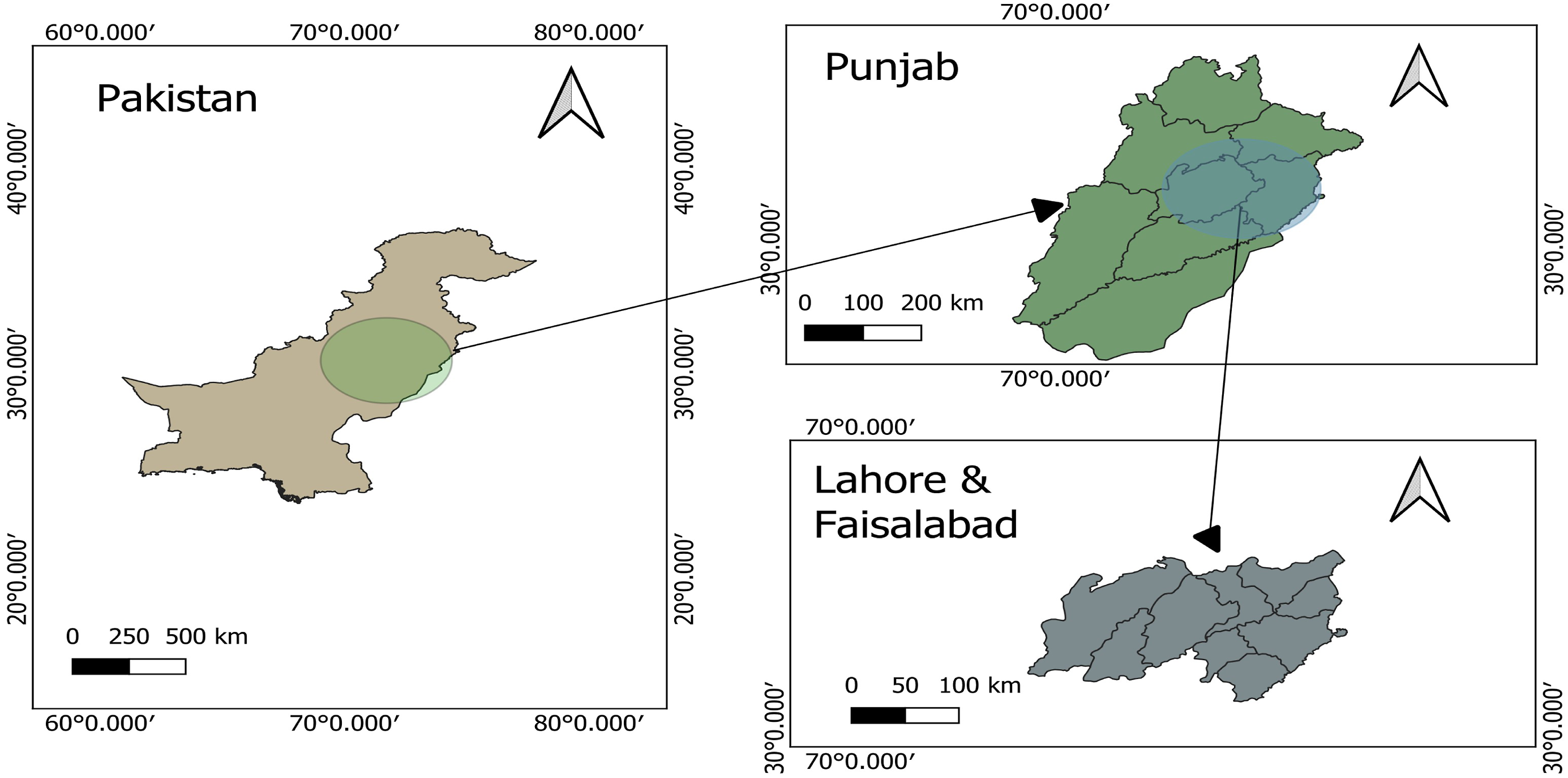
Data analysis and results
Constructs reliability
Constructs reliability.

Multicollinearity statistics.

Discriminant validity
Discriminant validity test results.


Predictive relevance and coefficient of determination
Predictive relevance and coefficient of determination.

The output of the measurement model generated from smart PLS4 is depicted in Figure 3. Measurement model results.
Goodness of fit
Goodness of Fit results.

Hypothesis testing
The procedure of bootstrapping was employed for hypothesis testing in PLS-SEM analysis using Smart PLS4. In this procedure, for 124 cases, 5000 resamples were generated. 101 This technique is efficient because it allows for hypothesis testing without the need to conduct parametric tests. 103
Direct relationship results.

Notes: ***p < 0.01, **p < 0.05, *p < 0.10.
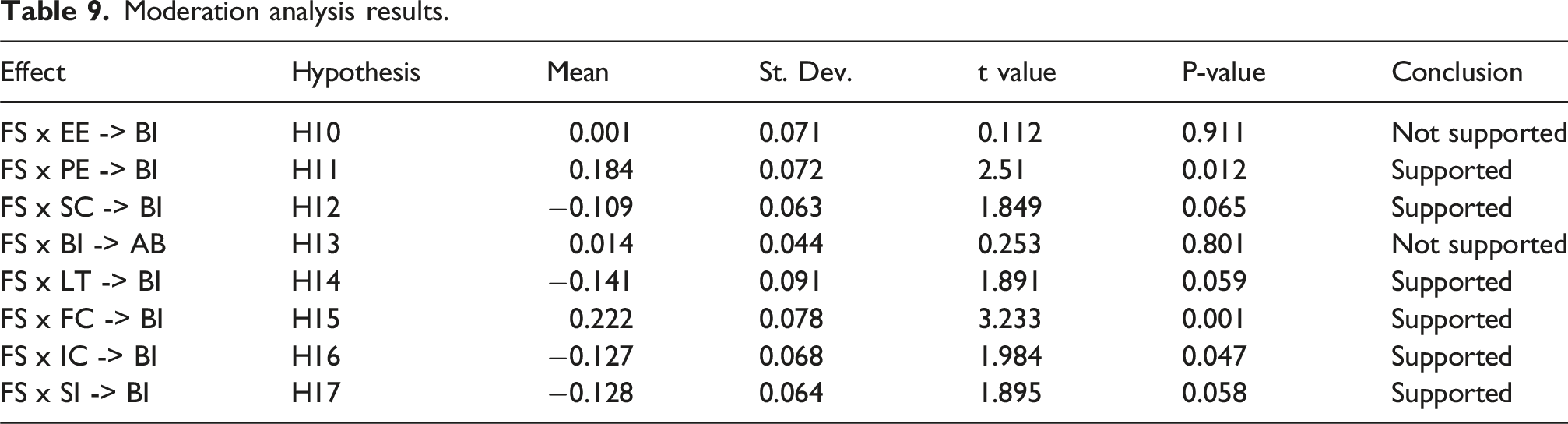
Moderation analysis results.
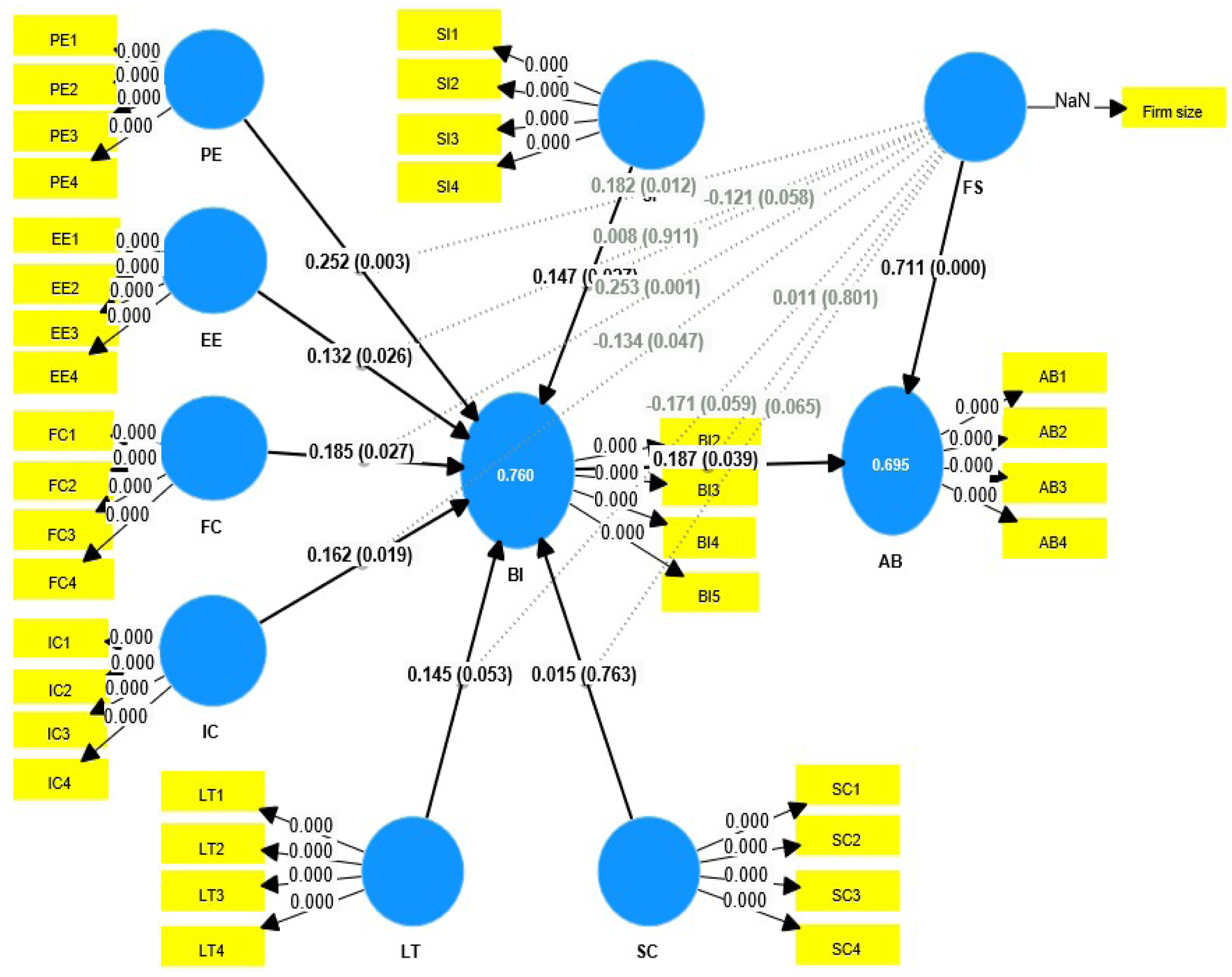
Structural model results.
Discussion
The study investigated factors affecting the intention to adopt digital transformation in textile industries based on UTAUT2 by moderating the effect of firm size. The results showed that effort expectancy has a positive influence on behavioral intention regarding the adoption of digital technologies, and hence, the results are in line with previous studies.104,105
It was hypothesized that performance expectancy has a positive impact on behavioral intention of adoption regarding digital technologies, 71 thereby supporting previous studies. Hence, it has reiterated the previous studies that performance expectancy has a significant positive influence on behavioral intention. It is the second most important determinant in the model, as evidenced by its coefficient. It conveys that the higher the performance expectancy or perceived benefit of using technology, the greater the chance of accepting it, 105 contradicting previous studies that asserted that performance expectancy does not impact behavioral intention regarding the adoption of technology. 106 As expected from H2, facilitating conditions positively impact behavioral intention. The outcomes are consistent with previous findings of 104 and contradict the findings of 105 , in which it was found that the facilitating condition does not impact behavioral intention. Digital transformation in industries requires infrastructure, which is difficult to access; therefore, the more facilitating conditions are available, the stronger the behavioral intention regarding the adoption of technologies will be.
External influences, such as social influence by individuals or other firms, influence the intention to adopt digital technologies, and it is also reflected in the present outcome, reaffirming the previous research. 79 These results assert that individuals are influenced by the recommendations, behaviors, and expectations of those in their vicinity.
Another important factor in the intention to adopt digital technologies is innovation cost or price value, as emphasized in the literature, and the present work justifies the previous studies.80,107 It means that individuals outweigh the perceived costs of adopting a new technology against the anticipated benefits. If the perceived costs outweigh the perceived benefits, individuals may be less inclined to accept and use the technology.
Out of the two extensions that we introduced in the UTAUT2 model, one is lean thinking, and the other is sustainability concern. The primary objective of lean practices is to reduce waste and minimize costs, which has a significant impact on industry in the digital era. It was proposed that sustainability concern positively impacts the behavioral intention of individuals, as evident in previous studies,72,73,81 but our results are in contradiction with the proposed hypothesis, and hence, H6 is not accepted. There may be several reasons for this. This hypothesis was developed based on studies conducted in developed countries. The prioritization of sustainability among individuals varies in developing countries compared to developed countries. Developing economies often struggle to prioritize sustainable environmental practices due to pressing economic needs, leading to a lack of long-term commitment to environmental conservation. Limited resources, rapid industrialization, and competing priorities often overshadow sustainable initiatives. 108 Hence, our results varied from the proposed hypothesis. It was hypothesized that lean thinking positively influences the adoption intention of digital transformation in industries, which was proposed based on literature highlighting that lean and digital transformation share a common goal of efficiency improvement. 62 Our results are in line with the proposed hypothesis. In addition, they show that they have a common aim of optimizing processes, reducing waste, and enhancing efficiency through the integration of technology and continuous improvement methodologies.
The study has proposed that behavioral intention has a positive impact on actual adoption, and our results confirm this assumption. It supports previous studies emphasizing that behavioral intention positively influences adoption53,109 and similarly, other studies 110 demonstrated that self-efficacy is an essential component of pro-environmental attitude, behavioral intentions, and an individual’s ability to act in a way that may affect how they can feel, think, and act. We have introduced firm size as a moderator in our model. The study has proposed that firm size significantly influences behavioral intention and actual behavior. The results revealed that firm size has a major influence on actual behavior, and its impact on behavioral intention is found to be insignificant. The contradiction in the result with the proposed hypothesis of firm size impact on behavioral intention may be because, since our sample size is small, if we had collected from a larger sample, then such a contradiction would not have occurred.
The outcome of the moderation analysis reveals that the impact of firm size is significant in all relationships except for the relationship of effort expectancy on behavioral intention and behavioral intention on actual behavior. Hence, it is revealed that firm size is an important factor influencing the impacts of performance expectancy, facilitating conditions, lean thinking, innovation cost, social influence, and sustainability concern on behavioral intention. In large organizations, stakeholders typically possess greater control over resources and have access to better budget allocations, facilitating the adoption of digital technologies. This advantage allows them to invest in cutting-edge tools, software, and infrastructure to streamline operations and enhance efficiency, as evidenced by existing literature. 80 Large firms, being export-oriented, face greater scrutiny regarding the sustainability impacts of their operations compared to smaller businesses. Because of their extensive reach and scale, they must carefully consider environmental and social implications to meet international standards and consumer expectations. For this purpose, they have to invest more resources in implementing sustainable practices, and hence, they have to follow the standards to maintain their market position and reputation. 111
Conclusions and policy implications
The study explored digital transformation adoption factors within the textile sector of Pakistan by using the UTAUT2 model as a guiding framework. The study aimed to unravel the influential determinants in shaping the digital transformation adoption behavior of stakeholders in the textile industries of Pakistan. Following the outcomes of the study, it is evident that factors such as effort expectancy, availability of facilitating conditions, innovation cost, social influence, performance expectancy, and company size all exert significant influence over the willingness of individuals to adopt new technology in industries, except for the sustainability concern, which was found to be insignificant. Additionally, the industry’s size was found to be a potent moderator by impacting various aspects of technology adoption.
From individual expectations related to the performance of technologies, sustainability considerations, lean practices, facilitating conditions, and social influence, industry size played a pivotal role in shaping adoption behavior. Politicians, advocacy groups, and entrepreneurs should focus on improving the attitudes of farmers towards sustainable land use systems as well as towards surrounding conditions, by supporting their intrinsic motivation with the necessary equipment and knowledge. 112 Facilitating conditions could be improved by empowering and subsidizing new and existing collaborative structures in textiles, such as machinery cooperatives, as sources of equipment. Moreover, the study has introduced a novel concept of lean thinking by hypothesizing that lean thinking positively influences behavioral intention. The outcomes of the study support this assumption. Consequently, the study has formed a modified theoretical framework specifically for developing economies to assess the essential factors responsible for the adoption of digital technologies in their industries. This framework has integrated factors from existing theories while incorporating insights gained from our empirical investigations.
Theoretical contribution, limitations, and future policy suggestions
The study has provided notable theoretical contributions to the understanding of technology adoption within Pakistan’s textile sector. By integrating the UTAUT2 framework, the research has enriched the existing literature on technology adoption theories. Through this integration, the study provides an understanding of the mutual relationship between individuals’ attitudes, as well as organizational and external factors. It also explores how these factors interact with each other and affect the willingness to adopt digital transformation initiatives within Pakistan’s textile sector. Furthermore, the study extends traditional models by incorporating lean thinking and sustainability concerns as determinants in the model. This integration highlights the growing importance of sustainability and lean production in technology adoption processes and guides the industrial stakeholders aiming to align digital initiatives with lean principles and environmental sustainability goals. The developed theoretical framework is particularly suitable for developing economies, and hence, it will assist them in strategic decision-making for organizations.
The outcomes of the study suggest various policy implications. Firstly, it is evident from the findings that facilitating conditions significantly impact behavioral intention to adopt technology. Organizations should ensure that adequate technological infrastructure is in place to support the adoption and utilization of technologies. By providing access to necessary hardware, software, and internet connectivity, this purpose can be achieved. Effort expectancy was found to be significant in adoption intention. This outcome suggests that offering comprehensive training programs and ongoing support can help users feel more comfortable and competent in using new technologies. This might involve workshops, tutorials, online resources, and dedicated IT support teams. Through this study, stakeholders would be able to determine which factor is more important compared to others while implementing these lean practices. Employees generally remain unaware of the benefits achieved by the adoption of these practices; practitioners and policymakers should raise awareness about their sustainable performance benefits. The results revealed that people compare the costs and benefits of using digital technologies as reflected in the outcomes of the innovation cost construct, and policymakers should provide R&D tax incentives, foster public-private partnerships, offer grants and subsidies for pilot projects, and develop supportive regulatory frameworks to support digital transformation in industry.
The results support that lean production serves as a base for digital transformation. Hence, offering incentives for innovation and experimentation through grants and public-private partnerships can drive continuous improvement and showcase the tangible benefits of integrating lean principles with digital advancements. Additionally, supporting small and medium enterprises (SMEs) by providing financial incentives and technical assistance may help overcome barriers to digital adoption, fostering inclusive economic growth 113 .
Here are some of the limitations of this study that warrant its generalization. Firstly, using a convenient sampling technique restricted the sample size, potentially limiting the generalization of findings. A broader and more diverse sample could enhance the applicability and generalization of the study’s conclusions. Another limitation is the cross-sectional nature of the research, which captured a static snapshot of perceptions regarding technology adoption at a specific moment, thereby overlooking potential changes in attitudes over time. Since technology continuously evolves, future longitudinal studies could offer a deeper understanding of the dynamics of technology adoption behaviors. Thirdly, the study’s exclusive focus on the textile industry limits its scope of generalization to other industrial sectors. Exploring technology adoption factors across a broader range of industries can provide a more in-depth understanding of adoption behavior and its determinants.
Hence, several areas for future research have emerged from these limitations. Improving sampling strategies, such as employing random sampling techniques, can yield a more representative sample, thereby strengthening the robustness of findings. Additionally, longitudinal studies can track technology adoption behaviors over time, offering a clearer understanding of the evolving nature of technology perceptions and behaviors. Furthermore, expanding the scope beyond the textile sector to include various industries would enable comparative analyses and reveal unique differences in technology adoption across different sectors.
Footnotes

Funding
The author(s) received no financial support for the research, authorship, and/or publication of this article.
Declaration of conflicting interests
The author(s) declared no potential conflicts of interest with respect to the research, authorship, and/or publication of this article.
Data Availability Statement
Data is available upon reasonable request.
Appendix