




Abstract
Despite the importance of supply chain visibility, there is a limited understanding of the mechanisms through which supply chain visibility is developed and how it influences supply chain risk management. This study conceptualizes and empirically investigates the role of emotional intelligence in enhancing supply chain visibility and risk management. While drawing on Goleman’s emotional intelligence model, this study utilizes structural equation modeling to test the proposed model by collecting data from manufacturing firms in Pakistan. The findings indicate that relationship management significantly improves all three dimensions of supply chain visibility (i.e.-supplier, customer, and internal visibility) whereas self-awareness, self-management, and social-awareness exhibit no significant relationship with various dimensions of supply chain visibility. Additionally, we also find that supplier visibility and internal visibility exhibit positive relationships with both the dimensions of risk management (reactive and proactive risk management) whereas customer visibility does not exhibit any significant relationship with any of its dimension. The findings contribute to the existing body of knowledge on supply chain management and offer actionable insights for supply chain professionals and human resource managers seeking to enhance visibility and risk management through emotional intelligence development.
Introduction
In the modern business environment, supply chain managers face unprecedented challenges and disruptions.
1
Recent significant global events such as the 9/11 terrorist attack, the COVID-19 pandemic, the geopolitical tensions including the Russia-Ukraine conflict, the Israel-Palestine crises in the Middle East, and rising tensions around Taiwan have significantly disrupted SC ecosystems.2,3 These challenges are further compounded by natural disasters, ranging from hurricanes and tsunamis to earthquakes and wildfires, which frequently damage infrastructure and interrupt transportation networks, causing severe production delays.
4
We define supply chain visibility as “the capability of a focal firm to acquire, integrate, and leverage supply chain information and knowledge from its suppliers, customers, and internal functions to enhance decision-making, coordination, and responsiveness across the supply chain”. Existing literature predominantly discusses the theoretical benefits of Supply Chain Visibility (SCV) for all three types of supply chain systems: lean, agile, and resilient; while emphasizing its role in enhancing collaboration, trust, integration, operational transparency, responsiveness, and resilience.5,6 Yet, there is a notable gap in rigorous quantitative studies that empirically verify these propositions and quantify the specific contributions of SCV in mitigating supply chain risks.7,8 This leads to our first research question.
While technological aspects and other logistical factors are considered important in Supply Chain Management (SCM), much research effort has been directed toward these domains. However, the growing complexity of global Supply Chains (SC) calls for a more holistic approach. This approach should integrate interpersonal and emotional skills into SCM practices. These skills have not yet been explored much in the SCM domain.9,10 Prentice
11
posits that managers with high Emotional Intelligence (EI) are better equipped to build trustful relationships with key SC stakeholders, such as suppliers and customers, and foster collaboration, which is considered critical for the acquisition, integration and leveraging of real time SC information. For example, after the 9/11 terrorist attacks, several organizations like Dell, FedEx, and P&G demonstrated behaviors consistent with EI dimensions such as empathy, social awareness, and relationship management, which played a critical role in enhancing SCV.12,13 Similarly, during trade tensions between the U.S. and China, Apple’s leadership used EI to maintain close communication and collaboration with its key stakeholders to find mutually acceptable solutions.
9
Recent studies also suggest that Human Resource (HR) capabilities, particularly EI, could play a critical role in enhancing SCV.10,14 Despite the increasing recognition of EI’s value, its specific impact on SC dynamics, particularly in terms of SCV remains underexplored.
11
Therefore, the situation calls for conceptual advancement and empirical investigation of the relationships between EI and SCV.
11
This leads to our second research question.
The paper is structured as follows: In the first section, we explain the theoretical background and develop hypotheses. Thereafter, we delineate our methodology and accordingly present results. Finally, we discuss our empirical findings and draw pertinent conclusions along with theoretical and managerial implications.
Theoretical background
Emotional intelligence
Emotional intelligence characterized by competencies in self-awareness, self-management, social awareness, and relationship management, is posited as a critical factor influencing managerial decisions-making and interpersonal dynamics crucial for effective SCV leading to improved Supply Chain Risk Management (SCRM) performance. 9 Promoting a culture that equally values EI and technical competencies significantly enhances an organization’s responsiveness, efficiency, and overall effectiveness within the ever-evolving field of SCM.11,15 Francis 16 argues that the EI framework is informed by a range of theoretical perspectives, with significant contributions from Bar-On in 1988, Mayer and Salovey in 1990, and Goleman in 1995. These foundational theories collectively underscore the importance of integrating EI with technical skills to foster a more responsive and effective SCM environment. 16 In addition, EI is associated with positive outcomes such as pro-social behavior and positive relationships with family and peers. Kalaiarasan et al., 17 find that EI being an important HRM capability has shown very promising and significant positive effects on overall organizational performance and competitiveness. However, this construct has been neglected in the previous research to determine its impact on SCV.18,19
Goleman’s EI model
Goleman’s contributions to the field of EI have been exceptionally transformative, particularly in terms of broadening the concept’s appeal and achieving substantial public recognition, as evidenced by his feature on the cover of Time Magazine. 20 Building upon the foundational theories of Salovey and Mayer, Goleman proposed a comprehensive four-branch model of EI, which he further delineated into 20 specific emotional competencies. His four-branch model encompassing various clusters of EI competencies includes: self-awareness, self-management, social awareness, and relationship management. 21
Self-awareness pertains to the capability to recognize and comprehend one’s own emotions, preferences, resources, and intuitions. 15 This cluster encompasses two fundamental competencies: accurate self-assessment and self-confidence. These competencies enable individuals to evaluate their alignment with a given issue and to possess the requisite self-confidence to assess their decision-making abilities in comparison to others. 15 On the other hand, self-management refers to the capacity to regulate one’s own emotions and impulses effectively. 15 This dimension of EI encompasses several key competencies, including emotional self-control, transparency, adaptability, achievement, initiative, optimism, and trustworthiness. These behavioral components of self-management are crucial for supervisors and decision-makers, as they play a significant role in effective emotional regulation. 15 Similarly, Social awareness refers to the extent of understanding one possesses regarding the needs and concerns of others. 22 This cluster of competencies comprising empathy, organizational awareness, service orientation, cultural awareness, and social skills is pivotal in this context as these equip supervisors and decision-makers to assess not only the repercussions of their decisions but also the methods through which these decisions are communicated and implemented. 23 Conversely, the relationship management cluster of competencies is vital for effectively interacting with others and building strong, productive relationships. 15 This capability entails the adept skill to evoke positive responses from others through inspiration, influence, and nurturing, while effectively managing conflicts. It encompasses leadership attributes such as influencing others, fostering development, catalyzing change, communicating effectively, resolving conflicts, building relationships, and promoting teamwork and collaboration. 15
Supply chain visibility
We define supply chain visibility as “the capability of a focal firm to acquire, integrate, and leverage SC information and knowledge from its suppliers, customers, and internal functions to enhance decision-making, coordination, and responsiveness across the supply chain”. Barratt and Oke 24 conceptualize SCV as “the degree to which SC participants have access to the most current and precise information deemed necessary or advantageous for their operational activities”. In terms of operation management, the supply chain could be centralized and decentralized. For example, for the type of supply chain in the construction and Engineering, Procurement, and Construction (EPC) industry, the SC may show some centralized operation management style. 25 A centralized structure offers tighter control over processes and enables better internal visibility of resources, timelines, and risks. On the other hand, in a decentralized SC structure, decision-making authority, resources, and operational control are distributed across multiple units or nodes rather than centralized in a single entity. This structure can enhance responsiveness, flexibility, and local adaptability, especially in certain industries or business models. 25 Effective visibility can help improve risk management by enabling timely responses to disruptions in both centralized as well as decentralized SC structures. 26 On the other hand, low SCV is widely recognized as a significant issue across manufacturing firms worldwide. 27 Moreover, existing literature lacks a clear delineation of the dimensions of SCV.28–30 Through an extensive review of the relevant literature, we propose that SCV can be categorized into three types: supplier visibility, internal visibility and customer visibility.
Supplier visibility
Suppliers are outside individuals/bodies that offer varying levels of visibility into their business practices and policies. 31 Without visibility and industry standards, it is quite difficult to evaluate the level of risk that suppliers may inflict on one’s organization. 32 The inability of suppliers to deliver a product or material on time for any reason is one of the reasons for major production declines and shutdowns. 33
Internal visibility
The visibility of the internal supply chain is everything that logistics teams handle internally, e.g. procedures for the delivery of goods, transport costs, prices, and carrier data. 34 Internal visibility creates a smart and flexible supply chain that can anticipate disruptions and react quickly, thus improving planning and maximizing plant productivity. 35 This type of visibility enables the organization to respond in an intelligent way to dynamic changes in supply and demand with granular analysis using aggregated real-time data from data providers, partners, customers, and suppliers. 36
Customer visibility
Customer visibility refers to how well an organization can observe and understand its customers’ activities, demands, and expectations across the supply chain. 37 It encompasses gathering and analyzing data on customer interactions, purchasing behaviors, and feedback to improve decision-making, elevate service levels, and synchronize supply chain activities with customer needs. 36 By achieving this visibility, organizations can better predict customer requirements, optimize inventory management, and boost overall customer satisfaction
Supply chain risk management
“A supply chain risk is characterized by specific and credible information indicating that a component, system, or service within the supply chain could be targeted by adversaries, geopolitical situation or be susceptible to natural disasters, such as the COVID-19 pandemic”. 38 Supply chain resilience which can be defined as “the ability of a supply chain to return to normal operating performance, within an acceptable period after being disturbed” 12 has got much attention in the recent literature on SCM. “Resilience is a property of the system on how the system can still function to a desired level when the system suffers from partial damage”. 39 Resilience is a system's property that has been less known in system design, manufacturing, and operation management. The significance of SC resilience has been amply underscored by the 9/11 terrorist attacks and the COVID-19 pandemic, which have exposed and exacerbated vulnerabilities within global supply chains. 40 Accompanying these disturbances are significant economic, operational, and relative ionic costs. 41 The imperative for research in SCRM is evident from the increasing complexity of global supply chains, the evolving nature of risk environments, and the strategic significance of effective risk management practices. 42
Hypotheses
Impact of self-awareness of a supply chain manager on supply chain visibility dimensions
Self-awareness is the ability of a SC manager to recognize and understand one’s emotions, triggers, and behavioral tendencies which serve as a foundational element that enables cognitive control by fostering introspection and self-monitoring.
15
This capability also aligns with
The self-awareness in supply chain managers positively influences supplier visibility through enhanced emotional regulation and deliberate upstream communication.
Self-awareness ability enables supply chain managers to critically evaluate their decision-making processes and recognize internal cognitive biases that might distort the interpretation of operational data. This contributes to improved internal visibility, as managers become more reflective and proactive in identifying internal inefficiencies and performance bottlenecks. 45 Self-aware managers, with refined cognitive control, can recognize how their behavior influences team collaboration, data sharing, and process coordination. By monitoring and adjusting their interpersonal conduct, they reduce internal friction, enhance communication flow, and create psychological safety; all of which improve visibility across departments and functions. Hence we propose:
The self-awareness in supply chain managers positively influences internal visibility, through enhanced cognitive control, transparent intra-organizational communication, and emotionally intelligent coordination.
Goleman 22 and Mayer, Roberts, and Barsade 46 note that self-awareness improves emotional responsiveness to customer feedback. Through heightened emotional introspection and cognitive regulation, self-aware managers can better understand how their biases might distort customer perceptions or interactions. They become more adept at interpreting customer signals, feedback, and behavioral cues while adjusting their responses in alignment with customer expectations. This facilitates the accurate collection and use of downstream demand information, thus enhancing customer visibility. Therefore, we propose:
The self-awareness in supply chain managers positively influences customer visibility by enabling adaptive interpretation and strategic response to customer feedback.
Impact of self-management of a supply chain manager on supply chain visibility
Self-management, according to Goleman 15 , is the ability to regulate one’s emotions, maintain integrity, and act with adaptability and initiative in changing environments. This ability also aligns with Social Exchange Theory (SET) as in organizational contexts, particularly within supply chains, exchanges are not purely transactional; they are also governed by trust, reciprocity, commitment, and emotional regulation. Self-management therefore, strengthens the quality of interpersonal and inter-organizational exchanges, which in turn fosters higher supply chain visibility through improved communication, trust-building, and cooperative behavior.
Supply chain managers with strong self-management skills can control emotional reactivity, remain composed under stress, and act consistently toward suppliers. This emotional stability fosters reliability and trust, encouraging suppliers to reciprocate with open information sharing and timely updates. As SET suggests, when the focal firm consistently invests in the relationship through emotional regulation and reliability, suppliers perceive high relational value and reciprocate by increasing information transparency, enhancing supplier visibility. Emotional regulation underpins trust-building behaviors, which are foundational to effective supplier communication.21,22 Hence we propose:
The self-management ability of supply chain managers positively influences supplier visibility by fostering consistent and emotionally stable interactions that promote reciprocal information sharing.
Self-managed managers are emotionally disciplined and demonstrate transparency, initiative, and optimism in their internal roles. Such individuals foster a psychologically safe environment where cross-functional teams are more likely to share operational data without fear of judgment. As per SET, emotionally intelligent behavior (e.g., fairness, predictability) initiates a cycle of reciprocal communication and collaboration, resulting in greater internal visibility across departments. Internal visibility thrives in emotionally safe and collaborative cultures. 34 Hence, we propose:
The self-management capability in supply chain managers positively influences internal visibility by promoting cross-functional collaboration.
Customer relationships require sensitivity to dynamic market demands and consistent service behavior. Self-managed managers can suppress negative emotional impulses (e.g., frustration, defensiveness) and maintain responsiveness and professionalism, even in conflicting situations. According to SET, this emotional consistency builds customer trust and satisfaction, encouraging customers to share accurate demand forecasts, feedback, and promotional plans, thus enhancing customer visibility. Emotionally consistent managers maintain customer loyalty and receive richer market information. 11 Therefore, we propose:
The self-management ability of supply chain managers positively influences customer visibility by encouraging the open sharing of downstream market data.
Impact of social awareness of a supply chain manager on supply chain visibility
Prentice
11
asserts that self-awareness is a critical aspect of EI that refers to an individual’s ability to perceive and respond to the needs and concerns of others. For managers and leaders, essential attributes associated with social awareness include empathy, proficient interpersonal skills, active listening, the capability to attract, develop, and retain talent, accessibility to team members, and the respectful treatment of others.
47
This EI dimension is also complemented by the
Supply chain managers with high social awareness are better at recognizing supplier constraints, cultural contexts, and emotional dynamics in inter-firm relationships. According to OCT, these managers decode nonverbal cues, power structures, and implicit messages during supplier interactions, enabling transparent, adaptive, and culturally sensitive communication. This facilitates higher trust and more frequent and accurate information exchange with suppliers, enhancing supplier visibility. Empathy and cultural awareness foster supplier trust and openness11,48. A study by Jin, Vonderembse 49 also found that empathy-based communication and supplier integration significantly increased supplier information sharing and responsiveness. Hence, we propose:
Social awareness in supply chain managers positively influences supplier visibility by fostering empathetic and context-sensitive upstream communication.
Internally, socially aware managers perceive emotional undercurrents, departmental conflicts, and the unspoken needs of colleagues. Through the lens of OCT, such managers act as communication bridges across functional silos by practicing empathetic listening, cultural fluency, and inclusive messaging. These practices increase psychological safety and cross-departmental trust, encouraging the sharing of internal performance data, forecasts, and planning documents thus enhancing the internal visibility of the focal firm. 50 Flynn et al. 50 find that internal visibility is strengthened by emotionally attuned internal leaders. Hence, we propose:
Social awareness in supply chain managers positively influences internal visibility by facilitating open and empathetic cross-functional information exchange.
Similarly, socially aware managers excel at reading customer sentiment, preferences, and unmet needs, even when not explicitly stated. Leveraging OCT, such managers enhance two-way communication by attuning to emotional cues, discourse patterns, and service expectations. This creates customer confidence and encourages voluntary sharing of market insights, demand forecasts, and feedback, thereby increasing customer visibility. Service orientation and empathy support emotionally responsive communication with customers.22,44 Therefore, we propose:
Social awareness in supply chain managers positively influences customer visibility by enabling demand-sensitive and responsive downstream information flow.
Impact of relationship management of supply chain manager on supply chain visibility
Relationship management, as conceptualized by Goleman,
22
encompasses emotional competencies such as influence, teamwork, leadership, conflict management, collaboration, and communication. It reflects a person’s ability to build and maintain healthy relationships, resolve conflicts constructively, and inspire cooperation among stakeholders. This critical EI dimension is also supplemented by
Relationship management enables supply chain managers to build strong interpersonal ties with suppliers through empathy, trust-building, and consistent communication. As SCT posits, these ties form relational capital, which fosters supplier willingness to share sensitive, timely, and accurate data. Managers skilled in managing relationships reduce relational risk and increase transparency, leading to improved supplier visibility. Managers with strong relationship management skills create climates of openness and mutual respect.11,48 Kazançoglu, Ozturkoglu 32 argue that supplier visibility improves when suppliers perceive relational value and trust the focal firm. Therefore we propose:
The relationship management ability in supply chain managers positively influences supplier visibility by fostering trust-based collaboration and reciprocal information sharing.
Internally, relationship-oriented managers foster a collaborative, emotionally safe culture by resolving conflicts, aligning team goals, and promoting open dialogue. SCT asserts that high levels of internal social capital (i.e., shared norms and trust among employees) improve communication quality and willingness to share information. This environment enables effective cross-departmental visibility of operations, forecasts, and inventory leading to enhanced internal visibility. Flynn et al. 50 Busse 51 assert that internal visibility depends on cross-functional collaboration and interpersonal trust. Therefore, we propose:
The relationship management ability of supply chain managers positively influences internal visibility by enhancing cross-functional trust, alignment, and information exchange.
Accordingly, emotionally intelligent managers with strong relationship-building skills enhance customer loyalty and commitment by engaging in transparent, consistent, and emotionally attuned communication. Through SCT, this interaction builds structural and cognitive capital (e.g. shared language, goals, and trust) encouraging customers to share market forecasts, behavioral insights, and promotional plans, which enhances customer visibility. Prentice 11 argues that customer relationships built on emotional intelligence lead to greater engagement and information disclosure. Hence, we propose:
The relationship management ability of supply chain managers positively influences customer visibility by fostering collaborative and reciprocal communication with downstream partners.
Influence of supply chain visibility on supply chain risk management
Supply Chain Visibility has increasingly been recognized as a strategic capability that enables organizations to effectively detect, assess, and manage risks in turbulent and uncertain supply chain environments. From a combined theoretical perspective of Goleman’s EI model and Information Processing Theory, 52 SCV contributes not only through technical and procedural means but also through emotionally intelligent leadership and decision-making competencies. While IPT addresses the structural and cognitive dimensions of information processing, Goleman’s EI model emphasizes the emotional and relational competencies necessary for leveraging visibility as a strategic capability. Further, the effectiveness of SCV in enhancing SCRM depends not only on technological infrastructure or data access but also on the behavioral competencies of managers who interpret and operationalize this visibility. In this regard, Goleman’s EI model provides a powerful lens for understanding how SCV becomes a relational and cognitive asset for improving risk management performance.
Supplier visibility offers insights into upstream lead times, inventory levels, and production capabilities. However, the value of this visibility depends on the focal firm’s ability to interpret supplier data empathetically, regulate expectations, and foster collaboration, which are emotional intelligence-driven processes. In this regard social awareness helps managers understand supplier limitations and anticipate potential risks through empathetic engagement. Similarly, relationship management facilitates trust-based, open communication that enhances the accuracy and completeness of supplier-shared information. These emotional competencies allow the focal firm to translate visibility into early risk detection and rapid upstream coordination during crises. Therefore, we propose:
Supplier visibility positively influences supply chain risk management by enhancing early risk detection and improving collaboration with upstream partners during disruptions.
Internal visibility involves real-time data sharing across departments (procurement, operations, logistics). Its effectiveness in risk management is enhanced when emotionally intelligent leaders can coordinate, align, and motivate cross-functional teams under uncertainty. In this regard, self-management helps leaders maintain emotional stability and clear communication in disruption scenarios. Similarly, through relationship management managers promote collaboration, conflict resolution, and information openness within the firm. This creates a psychologically safe and responsive culture, enabling effective risk scenario planning and swift crisis coordination within the focal firm. Hence, we propose:
Internal visibility positively influences supply chain risk management by improving coordination and collaboration within the organization, supporting both proactive planning and reactive response to disruptions.
Similarly, customer visibility provides access to downstream demand signals, behavior trends, and service expectations. Yet, the usefulness of this data relies on managers’ emotional ability to decode customer signals, empathize with needs, and build responsive customer relationships. Social awareness of SC managers improves their ability to interpret explicit and implicit customer communication, reducing forecasting errors. Accordingly, self-awareness and self-management allow managers to remain composed and adaptive when facing demand volatility or customer dissatisfaction. On the other hand, relationship management builds trust, encouraging customers to share accurate and timely data thus enhancing both risk anticipation and post-disruption responsiveness. Hence, we propose:
Customer visibility positively influences supply chain risk management by improving demand forecasting and enhancing collaboration with downstream partners during disruptions.
A hypothetical model depicting various hypotheses is presented in Figure 1 below Conceptual model.
Methodology
Questionnaire design
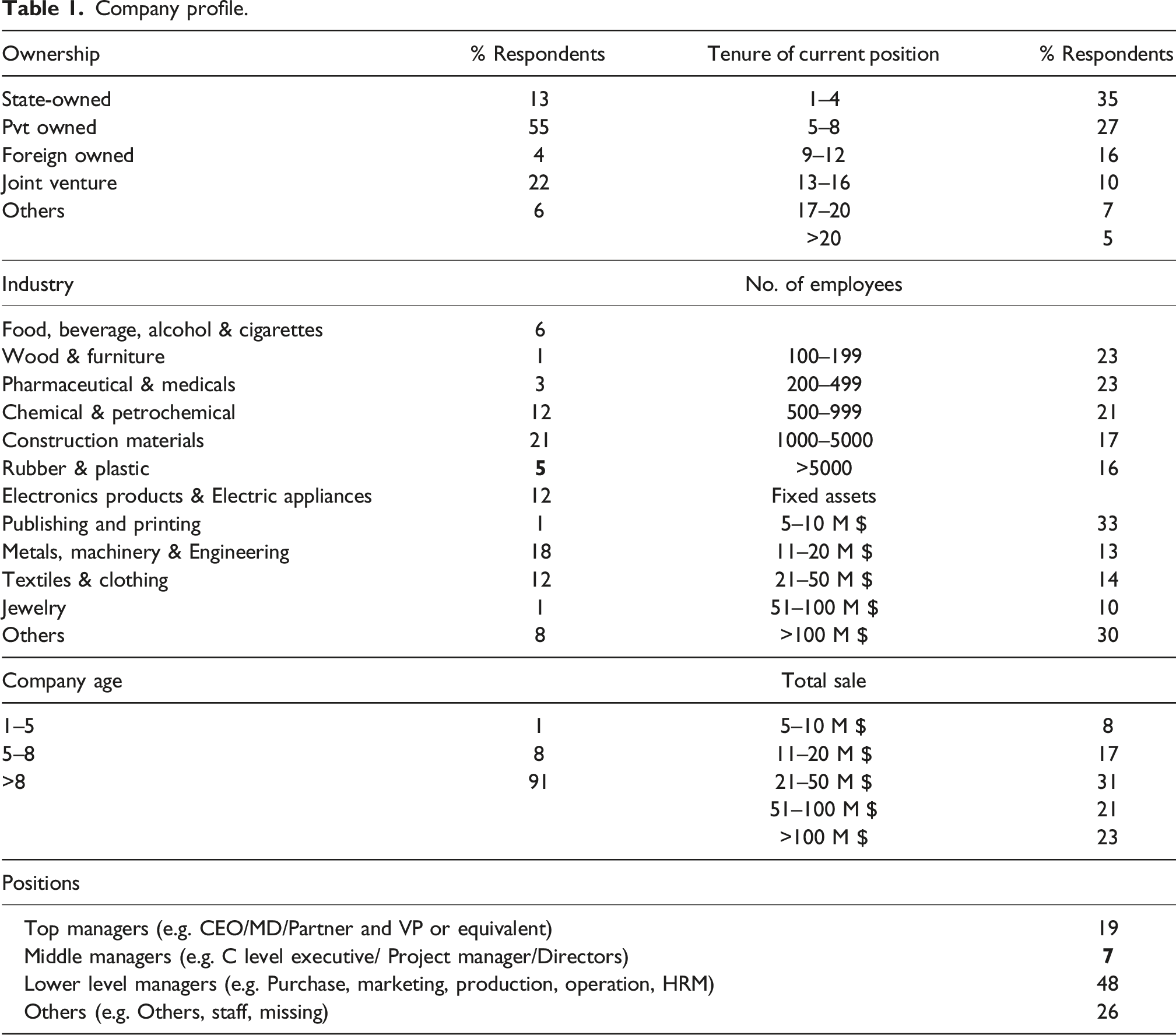
Company profile.
Sampling and data collection
Data was collected from manufacturing firms situated across all five provinces of Pakistan. Random sampling technique was utilized to randomly select firms registered with the Securities and Exchange Commission of Pakistan (SECP), while ensuring that these firms had a minimum of 100 employees and annual sales exceeding US $5 million. Within each selected firm, key informants who were well-versed in both internal and external SCM activities were identified through purposive sampling. Initially, potential participants were contacted by telephone to outline the research objectives and assess their willingness to engage in the survey. Following this initial contact, 800 questionnaires, accompanied by invitation letters, were distributed.
To improve the response rate, follow-up telephone calls were made bi-weekly after the initial distribution. A total of 294 responses were collected in 82 days, of which 38 were excluded due to identified deficiencies upon detailed examination. Consequently, 256 valid questionnaires were retained for subsequent analysis, resulting in a valid response rate of 32.0%. Detailed profiles of the respondent firms and informants can be found in Table 1 below.
Analyses and results
Non-response and common method bias
We addressed potential biases such as non-response and common method biases in our research survey data. As part of the analysis, we initially compared initial and final responses across several variables, including annual sales, number of employees, ownership structure, and total assets.63,64 The results of a t-test indicated no significant differences across these variables, suggesting that non-response bias was not a significant issue in the study. To further investigate potential common method biases, two distinct approaches were employed. First, Harman’s single-factor test was conducted as described by Podsakoff et al. 65 and Swaminathan & Tayur. 66 The analysis revealed 12 factors with eigenvalues exceeding 1.0, which together accounted for 76.370% of the total variance, with the first factor alone explaining 48.665% of this variance. These results were deemed acceptable for addressing common method bias. Second, we performed CFA for Harman’s single-factor test, following the procedures outlined by Sanchez & Brock. 67 The CFA model yielded the following fit indices: χ2 = 10003.612, degrees of freedom = 1481, RMSEA = 0.150, GFI = 0.0359, SRMR = 0.156, NNFI = 0.561, CFI = 0.598. These indices did not meet the satisfactory fit thresholds and were notably inferior to those of the measurement model, indicating that the single-factor model was not appropriate for this data. Based on these analyses, it can be concluded that the data were not significantly affected by common method biases.
Reliability and validity
Reliability and validity results.

CFA results
Descriptive statistics and inter-construct correlation matrix.

CFA Result displaying validity matrices.

Note. The square root of AVE is shown on the diagonal of the matrix in bold.
Hypothesis results
To evaluate the hypotheses depicted in Figure 1, we employed structural equation modeling as outlined by Khaddam and Irtaimeh.
75
The analysis was conducted using SPSS, AMOS software, and the Stat Wiki tools, with the resulting fit indices being χ2 = 4127.205 with degrees of freedom 2035, RMSEA = 0.063, GFI = 0.885, CFI = 0.903, TLI = 0.898 and RMR = 0.087, which are within the acceptable range as per established criteria.76,77 Thus, the model was considered suitable for hypothesis testing.
77
The significant paths, with standardized solutions meeting the 0.05 level of significance, are presented in Figure 2. The analysis reveals that self-awareness, self-management, and social awareness do not significantly relate to the various dimensions of SCV. Therefore, H1a-c, H2a-c, and H3a-c are not supported. On the other hand, relationship management, a key dimension of EI, is found to be significantly related to all three dimensions of SCV. Hence, H4a, H4b and H4c are supported. In addition, from Table 5, we can find that supplier visibility and internal visibility have a significant correlation with SCRM whereas customer visibility has no signification relation with SCRM. Hence, H5 and H6 are supported whereas H-7 is not supported. Overall hypothesis results are presented in Table 5 below. Model with results. *p < 0.05, **p < 0.01, ***p < 0.001. Hypothesis results. Note. Significant relationships indicated by the level of significance. *p < 0.05, **p < 0.01, ***p < 0.001

Path coefficients with significant p-values are also shown in Figure 2 below.
Discussion
Improving supply chain visibility through emotional intelligence is an important HR capability
Our study empirically confirmed that EI being an important aspect of HRM is one of the important enablers of SCV. Specifically, the relationship management dimension of EI improves all SCV dimensions and there exists a significant relationship of this dimension with SCV dimensions. It may be highlighted that the relationship management dimension of EI is a cluster of the majority of EI competencies (10 out of 20 competencies). This dimension of EI mainly covers the interpersonal relations with various stakeholders thus encouraging positive interactions leading to the building of an environment of trust and confidence among the SC partners. This in turn positively influences the exchange of vital information resulting in enhanced SCV. These findings are also aligned with those recorded by earlier studies, such as Dubey et al., 34 and Al Ariss Cascio 78 who reported a positive link between emotionally intelligent managers and SCM outcomes. Our results are also in consonance with previous studies of Germain, Claycomb 79 and Cheung, Myers 80 who confirmed that EI being one of the sought-after managerial competency along with other HRM competencies is essential for achieving superior performance in SCM. However, it has been observed that self-awareness, self-management, and social awareness dimensions of EI are not significantly related to various dimensions of SCV.
Although, self-awareness, self-management, and social awareness are considered very essential components of Goleman’s EI Model, however, it is viewed that these competencies focus more on the individual’s understanding and management of one’s own emotions. These aspects also enhance one’s awareness of the surrounding environment and the individual remains alive to the market conditions. 81 Hence, it is opined that these aspects are more internally oriented and help in making an individual a very important asset and very productive for any organization. However, from an interpersonal dealing and relations perspective, it is opined that all four dimensions of EI are considered very effective. 82
From a theoretical perspective, managers having higher EI are considered very promising and effective while dealing with the SC stakeholders of an organization. 83 Additionally, SCM traditionally places a strong emphasis on technical skills such as data analysis, logistics, and operations management. 9 As a result, there may be less attention given to the development of EI skills among professionals working in the field especially keeping in view Pakistan’s manufacturing sector culture. Similarly, the extent to which EI is valued and nurtured within an organization’s culture can vary significantly. 84 Another aspect that also needs to be considered in this context is that unlike technical aspects of the SCM field that can be conveniently quantitatively measured and tracked, EI is more subjective and challenging to measure accurately.48,85 As a result, the association between EI and SCV may be less apparent due to the lack of robust measurement metrics.
Moreover, in a centralized EPC setting, leadership’s ability to manage supplier relationships and coordinate internal teams is crucial. EI thus supports centralized management by improving collaboration and trust among internal departments. It also facilitates timely and transparent communication with suppliers as well as customers thus enabling proactive risk identification and resolution.
Improving risk management through enhanced visibility
The findings of this study indicate that supplier and internal visibility significantly and positively impact SCRM capabilities whereas, customer visibility has no significant influence on SCRM. Overall, these findings underscore the importance of SCV in enhancing risk management strategies within supply chains, highlighting strategic implications both for theory and practitioners in terms of optimizing supplier and internal visibility to bolster operational flexibility and responsiveness to disruptions.
The findings of this study underscore that while SCV enhances overall organizational performance and flexibility, distinct impacts are observed for supplier, customer, and internal visibility dimensions on SCRM performance. The positive relationship between suppliers and internal visibility on SCRM aligns with findings by Fang, Li, 86 who suggest that information sharing between SC partners and mutual learning contribute to enhanced performance in SCRM. However, it is noted that there were no significant associations between customer visibility and SCRM dimensions. One plausible explanation for this lack of correlation may be that customers often provide raw or impractical ideas due to their limited knowledge of the SC domain and inadequate production and technological insights. This raw information from the customer side may mismatch with the market demand and forecasting. Therefore, focusing solely on customer visibility may restrict overall SCV for manufacturers. Another plausible explanation could be that the manufacturing activities and production goals of the focal firm heavily rely on the timely and uninterrupted provision of raw materials and essential supplies from suppliers. Thus, supplier visibility exerts a substantial influence on the manufacturing process and production objectives of the firm, directly impacting its SCRM performance. Consequently, supplier visibility appears more effective in enhancing SCRM compared to customer visibility. Hence, the absence of a significant correlation between customer visibility and SCRM may stem from various organizational factors, including strategic priorities, data utilization practices, functional integration, and the complex dynamics within the supply chain.
Further, our study identifies that internal visibility and supplier visibility are key drivers of effective risk management (both reactive and proactive). It is worth mentioning that in a centralized supply chain like EPC, internal visibility is easier to establish because most functions are controlled centrally. Similarly, supplier visibility becomes critical, as the EPC contractor coordinates with a large number of subcontractors and suppliers. Moreover, our finding that customer visibility has a limited effect on risk mitigation aligns with EPC, where the end client (customer) is often distant from day-to-day operations. Therefore, the focus on internal and supplier visibility aligns perfectly with the needs of centralized EPC supply chains, where these two dimensions are the core drivers of performance and risk mitigation. On the other hand, the limited role of customer visibility in risk management also mirrors EPC settings, where client interaction is often more strategic than operational.
Theoretical and practical implications
This study offers several important contributions to theory, practice, and context-specific understanding within the field of supply chain management.
Theoretical implications
Theoretically, it extends the concept of SCV by decomposing it into three distinct dimensions: supplier, internal, and customer visibility; demonstrating that these components exert differential impacts on SCRM. This challenges the conventional treatment of SCV as a monolithic construct and refines theoretical models of supply chain resilience. This is the novel contribution of this study.
This research endeavor contributes significantly to the theory and scholarly discourse by investigating the determinants of SCV through the perspectives of HRM, thereby extending the current understanding of factors enabling SCV.
By employing Goleman’s EI model as a theoretical lens, the study introduces a novel perspective to SCM literature, illustrating that the relationship management dimension of EI plays a significant role in enhancing all three dimensions of SCV. This positions EI not merely as a soft skill but as a strategic behavioral capability within operational environments.20,81
It also underscores the necessity of holistic approaches that harmonize the technical and social dimensions to optimize focal firm performance in the face of escalating business complexities, disruptions, and uncertainties.
Finally, this study fills a significant void in the current literature by empirically investigating the contributions of EI-enabled HR in enhancing SCV. By applying the EI perspective, this research theoretically elucidates how the interaction between human factors (specifically EI-trained managers and workforce) influences SCV dimensions and subsequent SCRM outcomes. It also underscores the necessity of holistic approaches that harmonize the technical and social dimensions to optimize focal firm performance in the face of escalating business complexities, disruptions, and uncertainties.
Practical and contextual implications
Practically, the findings provide actionable insights for HR professionals and SC leaders by highlighting the importance of developing interpersonal competencies; particularly relationship management as part of talent management and leadership development strategies. The results also inform SC managers about the relative importance of visibility types, revealing that supplier and internal visibility contribute more effectively to SCRM than customer visibility.
This study underscores the imperative of fostering EI among SC managers and professionals. EI, characterized by clusters of competencies such as self-awareness, self-management, social awareness, and relationship management, plays a pivotal role in enhancing effective communication, collaboration, and decision-making within supply chain teams. 9 Empirical findings from this study validate EI as a critical facet of HRM that facilitates SCV. Particularly, the relationship management dimension of EI substantially enhances all the dimensions of SCV by fostering positive interpersonal relationships with stakeholders, thereby promoting trust and confidence. Consequently, this environment of mutual trust and transparency facilitates the unhindered exchange of crucial information, which enhances outcomes related to SCV and SCRM.
Further, this study for the first ever delineates supplier, customer, and internal visibility as distinct dimensions within the framework of SCV. This can help managers achieve the performance objectives by leveraging the unique advantages associated with each dimension of SCV. For example, managers can enhance internal visibility by integrating insights gleaned from supplier and customer visibility data.
Contextually, the study makes a valuable contribution by addressing a gap in existing literature related to the application of emotional intelligence within supply chains in emerging economies, particularly within the Pakistani manufacturing sector. By doing so, it calls attention to the need for cultural and organizational shifts toward more human-centric supply chain practices. (Appendix 1)
Finally, by empirically validating the role of EI in enhancing SCV and linking it to risk management outcomes, this research strengthens the integration of psychological constructs into operations management scholarship.
Conclusion, limitations and future research
This paper explores the human side of SCM in a domain that’s traditionally been all about tech, logistics, and operations. The study empirically explores how EI, as a human-centric capability, can enhance SCV and, in turn, strengthen SC risk management performance. Drawing upon Goleman’s EI framework and employing a multidimensional perspective of SCV comprising supplier, internal, and customer visibility; the research offers both theoretical and empirical insights into the behavioral foundations of resilient supply chains. The findings confirm that the relationship management dimension of EI significantly contributes to all the dimensions of SCV, underscoring the importance of interpersonal competencies in fostering transparency, trust, and collaboration across supply chain partners. In contrast, other EI dimensions such as self-awareness, self-management, and social awareness did not exhibit a significant relationship with SCV, suggesting their impact may be more internal or indirect. Furthermore, the study highlights that supplier and internal visibility have a positive and significant influence on SC risk management performance, while customer visibility does not demonstrate a meaningful effect. This differentiation provides important strategic implications, particularly for manufacturing firms, where upstream and internal operations are critical to mitigating supply chain disruptions. By integrating emotional intelligence theory into the domain of SCM, this study advances the emerging discourse around the role of behavioral and psychological competencies in operational performance; an area that has traditionally emphasized technical and analytical skills.
Although this study offers key contributions both for practitioners and academicians, it also has certain limitations. Firstly, all hypotheses were empirically tested using data exclusively collected from manufacturing firms in Pakistan. To enhance the generalizability of these findings, future studies should incorporate data from a broader range of industries, regions, and countries. Secondly, we selected only various dimensions of emotional intelligence. They do not fully cover various aspects of HR. Other HR traits and capabilities, such as courage, character, sociability, and motivation may also influence SCV and deserve future research attention. Thirdly, the reliance on cross-sectional data limits the exploration of dynamic relationships among HR factors related to EI, SCV, and SCRM dimensions. Future longitudinal studies could provide a more nuanced understanding of these dynamics over time.
Footnotes

Funding
The author(s) disclosed receipt of the following financial support for the research, authorship, and/or publication of this article: This research was supported by Ajman University award number Project Code RESDRGS-004.
Declaration of conflicting interests
The authors declared no potential conflicts of interest with respect to the research, authorship, and/or publication of this article.