




Abstract
The transformative potential of Industry 5.0 (I5.0) to enhance supply chain performance (SCP) has become a compelling focus for numerous supply chain (SC) managers. This research explores the profound impact of I5.0 on SCP, highlighting three key dimensions: Efficiency, Visibility, and Responsiveness. It illuminates the dynamic interplay among these dimensions, demonstrating that improved visibility leads to heightened responsiveness and efficiency. While the enabling technologies of I5.0 hold significant potential for diverse applications, this study zeroes in on seven I5.0 technologies identified as highly impactful within the SC context. A closed-ended questionnaire was employed to collect 105 valid responses from managers, experts, and practitioners who are well-versed in I5.0 within the SC domain. Data analysis was performed using Partial Least Squares-Structural Equation Modeling (PLS-SEM) with SmartPLS 4. The findings reveal both positive direct and indirect relationships between I5.0 and SCP, emphasizing how I5.0 reshapes performance dynamics and can expedite the adoption of I5.0.
Keywords
Introduction
With a steadfast focus on sustainability, resilience, and human-centricity, I5.0 is poised to revolutionize industrial practices. It harnesses cutting-edge technologies to achieve a harmonious balance between ecological preservation, operational robustness, and individual empowerment within the production ecosystem (Narkhede et al., 2024). The transition from Industry 4.0 (I4.0) to I5.0 marks a significant advancement in manufacturing and SCM, introducing innovations that far exceed the capabilities of its predecessors. Technological enablers play diverse across various contexts. To strengthen the theoretical foundation of this study, it is essential to recognize that the concepts central to Industry 5.0 – particularly human-centeredness, resilience, and sustainability- have their origins in earlier industrial frameworks. As proposed in previous works,1–3 the concept of resilience, originally applied to engineered and social systems have evolved into a core characteristic of modern supply chain networks. These early contributions laid the groundwork for understanding how systems can recover from disruptions and maintain functionality, closely aligning with the principles of Industry 5.0. By acknowledging this historical evolution, the transformative potential of I5.0 on supply chain performance, particularly its ability to enhance resilience through advanced human-machine collaboration, becomes more contextually grounded.
Drawing from the literature on supply chain management (SCM), the profound significance of seven I5.0 technologies within this context is evident. These technologies – Artificial Intelligence (AI), the Internet of Everything (IoE), BC, Big Data Analytics (BDA), 6th Generation Wireless Technology (6G), Collaborative Robots (Cobots), and Digital Twins (DT) 4 – have practical implications for supply chain managers, experts, and practitioners, as our research findings will demonstrate. Recognizing the pivotal role of efficient SCM in gaining a competitive edge, companies are increasingly turning to digitalization for improvement. Despite the extensive literature on the role of digitalization in improving SCP, uncertainty persists regarding the impact of I5.0 due to its nascent nature. Given the substantial resources required for the implementation of Industry 5.0, managers need a comprehensive understanding of its benefits to ensure a worthwhile investment.5,6 As Industry 5.0 is relatively new, SC managers must measure its practical achievements in companies that have adopted these technologies.
This study explores the impact of I5.0 on Supply Chain Performance (SCP), with a focus on efficiency, visibility, and responsiveness. It aims to provide a comprehensive review of these dimensions, assess the influence of I5.0 on each, and analyze their interrelationships within the I5.0 framework. In alignment with the foundational work on mass personalization, as first defined in, 7 we define mass personalization as “the capability to deliver tailored products or services on a large scale, leveraging advanced technologies to meet individual customer preferences while maintaining the efficiency and cost-effectiveness of mass production.” Recognizing this concept is essential to understanding I5.0’s role in enhancing supply chain performance through personalized, yet scalable, solutions.
Through the exploration of key enabling technologies such as the IoE, BC, BDA, 6G, Cobots, and DT, the study seeks to provide insights into how I5.0 can enhance overall SCP. This research addresses four key questions to explore the impact of I5.0 on SCP: (1) Identifying the dimensions of SCP, (2) Examining the influence of I5.0 on these dimensions, (3) Assessing I5.0’s contribution to overall SCP, and (4) Analyzing the interrelationships between different dimensions of SCP within the context of I5.0. Through these inquiries, the study aims to offer insights into how I5.0 transforms SC operations and contributes to performance optimization.
Literature review
This literature review examines various aspects of SCM and its performance metrics. The sections below explore the foundational concepts, performance measurement techniques, and the dimensions critical to achieving efficiency and responsiveness in SCM. It provides an overview of SCM, focusing on the processes involved in optimizing the flow of goods, information, and finances from origin to consumption. Additionally, it discusses the methods used to measure and evaluate the effectiveness of supply chain operations, considering various performance indicators. This comprehensive approach ensures that the supply chain operates efficiently, cost-effectively, and meets customer satisfaction goals. It breaks down the dimensions of SCP, highlighting critical areas such as Supply Chain Efficiency (SCE), which emphasizes strategies to streamline processes and optimize resource utilization to minimize costs and maximize productivity. The importance of Supply Chain Visibility (SCV) is addressed, underlining the necessity of accurate and timely information for informed decision-making and operational efficiency. Additionally, it explores the ability of the supply chain to quickly adapt to changes in demand or external factors under Supply Chain Responsiveness (SCR). It examines the integration of digital technologies within SCM, showcasing how these advancements enhance efficiency, visibility, and collaboration. Finally, it introduces the concept of Industry 5.0, focusing on its emphasis on human-machine collaboration to improve productivity, flexibility, and sustainability within SCM. This section also discusses the key technologies driving Industry 5.0, such as Internet of Everything (IoE), Big Data Analytics (BDA), Artificial Intelligence (AI), Blockchain (BC), 6G wireless technology, Collaborative Robots (Cobots), and Digital Twins (DT), and their significance in shaping the future of SCM.
Supply chain management and supply chain performance
SCM is a comprehensive process that involves the supervision and enhancement of the movement of goods, information, and financial resources from their initial point of origin to their final destination at the point of consumption. This intricate process requires the careful coordination of multiple entities, including suppliers who provide raw materials, manufacturers who produce goods, distributors who handle the logistics, and retailers who sell the products, and customers who purchase them. The ultimate goals of SCM are to achieve high levels of efficiency, cost-effectiveness, and customer satisfaction. By managing these interconnected components effectively, businesses can streamline operations, reduce costs, and ensure that customers receive their products promptly and in good condition. 8
SCP refers to the systematic measurement and evaluation of how efficiently and effectively a supply chain operates. This evaluation covers various critical aspects such as cost management, product quality, operational efficiency, responsiveness to market demands, and sustainability practices. SCP involves a detailed assessment of the performance of different elements within the supply chain, such as procurement, production, distribution, and customer service. By analyzing these components, businesses can determine whether they are meeting their overall objectives and identify areas where improvements are needed. This ongoing process of performance evaluation helps organizations to continuously refine their supply chain strategies, enhance their operations, and maintain a competitive edge in the market.9,10
Dimensions of supply chain performance
Supply chain efficiency (SCE)
SCE refers to an enterprise’s ability to streamline its processes and workflows to minimize costs, maximize productivity, and optimize resource utilization throughout the SC. It involves effectively managing resources, including raw materials, labour, and transportation, to ensure that products are delivered to the right place at the right time with minimal waste. Efficient SCs focus on continuous improvement and lean principles to achieve higher levels of productivity and profitability, ultimately enhancing customer satisfaction and competitiveness in the market. 11
Supply chain visibility (SCV)
SCV refers to the degree of access and sharing of accurate and timely information on supply and demand within an SC, which is crucial for informed decision-making and operational efficiency. It encompasses the sharing of operational, precise, and timely data across SC partners, including suppliers, internal processes, and customers, to enhance transparency and integration throughout the SC. SCV aims to improve capabilities and performance indicators such as quality, cost, delivery, and flexibility by ensuring the availability of relevant and high-quality data, which is essential for achieving sustainability objectives and addressing challenges such as budget constraints and information quality issues.12–14
Supply chain responsiveness (SCR)
SCR refers to the ability of a SC to adapt to changes in demand or other external factors quickly. This includes the capacity to rapidly respond to alterations in market conditions, consumer demand, or other factors that may impact the SC. A responsive SC is characterized by agility, flexibility, and adaptability, allowing it to adjust operations swiftly to meet evolving requirements and customer needs. 15
Digital technologies and digital SCM
Digital technologies refer to tools, systems, and platforms that leverage digitalization to transform traditional processes and operations. They enable organizations to streamline workflows, enhance decision-making, improve customer experiences, and drive innovation across various domains. Digital SCM integrates digital technologies throughout the SC to enhance efficiency, visibility, and collaboration. It encompasses using cutting-edge technologies to optimize sourcing, production, logistics, and distribution. 16
Industry 5.0
The European Commission has introduced Industry 5.0 to integrate societal and environmental objectives, urging businesses to prioritize sustainability, resilience, and a human-centric approach. 17 I5.0 represents the latest evolution in industrial practice, building upon the foundations established by Industry 4.0 (I4.0). It emphasizes human-machine collaboration to enhance productivity and efficiency across various sectors, including supple chain management (SCM). By integrating advanced technologies with human expertise, I5.0 aims to revolutionize SC operations, improving flexibility, responsiveness, and sustainability while ensuring seamless interaction between humans and machines.4,15,17–19 I5.0 introduces the concept of hyper-customization, going beyond I4.0’s emphasis on intelligent SCs to enable mass customization with precision and cost-effectiveness. This capability is essential for developing tailored products that meet diverse customer preferences and ensure SCE in today’s dynamic market. 20 Furthermore, I5.0 adopts a human-centred approach, integrating humans and machines to nurture innovation, creativity, and adaptability within supply chain by integrating human and machine capabilities. Unlike I4.0, which tended to separate human labour from automation, I5.0 promotes collaboration, enhancing responsiveness to market needs.17,18,21 A notable feature of I5.0 is the utilization of robots to reduce risks. These robots are designed to understand, observe, and perceive human operators, enabling them to anticipate and comprehend the rationale behind specific actions and tasks.15,22 Their primary objective is to assist individual operators in completing tasks by understanding and mimicking human performance. I5.0 technologies are continuously employed to support human laborers and enhance their welfare.23,24
Enabling technologies of I5.0
Industries are experiencing a rapid transformation due to the integration of disruptive technologies, which constitute the foundation of Industry 5.0 (I5.0). This emerging paradigm represents a significant shift from traditional manufacturing practices, enabling the delivery of tailored and personalized products at an unprecedented pace. The fusion of mass customization with advanced production systems enables the efficient fulfillment of specific consumer demands. Within this dynamic environment, SCM becomes increasingly pivotal. SCM emphasizes the synergistic interaction between human labor and intelligent machines. The collaborative efforts of these advanced technologies, in conjunction with human expertise, result in streamlined processes that enhance overall operational efficiency.
Enabling technologies of I5.0 in the context of SC

Hypothesis development
This section will critically examine significant scholarly works utilized in this study. Following this analysis, research hypotheses were developed based on existing literature to guide the empirical investigation.
I5.0 and SCE
The implementation of Industry 5.0 (I5.0) has the potential to enhance productivity and product quality while simultaneously reducingproduction costs, therefore improving the performance of SC operations.
4
According to,17,42 manufacturers can improve operational efficiency and minimize waste through the integration of automation, artificial intelligence (AI), and big data analytics (BDA).. I5.0 could improve SCE by integrating data via the powerful capability of data analysis.
32
This helps businesses establish and hold a commanding market position, which leads to improved performance in a fast-paced, competitive landscape. Productivity and efficiency in I5.0 make the most of increased lead time and capacity utilization.
22
I5.0 can also improve SCE by promoting decentralized manufacturing with smaller production facilities near end markets. This shift could result in shorter SCs, decreased transportation expenses, and potentially more eco-friendly practices.
43
Moreover, the adoption of collaborative robots (Cobots) can further decrease the overall cost of ownership within supply chains.4,44 Blockchain-based solutions could enhance SC’s dependability, quality, speed, cost, and flexibility.
45
According to the above arguments, hypothesis 1a is proposed. H1a: I5.0 positively impacts SCE
I5.0 and SCV
A definite requirement for attaining visibility across the SC is the technological integration of the SC components.46–48 The visibility of the supply chain has been significantly influenced by the compatibility of corporate information technology infrastructures among supply chain partners.
49
I5.0 can boost visibility by encouraging immediate data exchange throughout the SC, promoting cooperation, decreasing wait times, and enhancing overall SCP.
15
Research studies 4,17,26 have concluded that through the integration of disruptive technologies, I5.0 could optimize energy usage, cut down on waste, mitigate environmental effects, and proactively adopt sustainability initiatives. Additionally, other Industry 5.0 technologies, such as blockchain (BC), have proven effective in enhancing supply chain visibility.
45
Findings indicate that the application of blockchain-based solutions can significantly improve the visibility of supply chains.
50
Furthermore, research has examined the technologies and deployment challenges associated with digital transformation (DT) to assess its potential for enhancing the visibility of logistics supply networks. Additionally, I5.0 could facilitate the adoption of eco-friendly approaches across the SC, promoting sustainability and environmentally conscious practices. According to the above arguments, hypothesis 1c is presented. H1b: I5.0 positively impacts SCV
I5.0 and SCR
The importance of I5.0 and viable SCs will continue to develop, given the growing supply shortages due to workforce variability, semiconductor shortages, energy blackouts, and inflation. 22 I4.0 has struggled to effectively address the surging demand and the necessity for customization, whereas I5.0 achieves this through hyper-customization. Hyper-customization refers to a tailored marketing strategy that leverages advanced technologies, such as artificial intelligence (AI) and computer vision, in conjunction with actual data and cognitive systems, to deliver more specific services, products, and content to individual consumers. Manufacturers are able to realize large-scale product personalization by integrating human intelligence with robotics. To facilitate this, several variants of the functional material are shared with other personnel to customize products according to diverse customer preferences. 4 Industries are encouraged to adapt their manufacturing process to fluctuating customer demands through cooperation between robots and manpower together with cognitive systems. Transitioning to an agile manufacturing process and SC can be considered the initial step in hyper-personalization. This also requires the intervention of humans, customer preferences and production staff. The usefulness of hyper-customization also relies heavily on the cost-effectiveness of the products developed.4,51
Digital platforms that allow end-to-end connectivity among SC partners can speed up the transformation of both downstream and upstream resources within the supply chain,
52
thereby enhancing its resilience.16,53 Furthermore, according to the modularity advantage of the digital platform network, the open interfaces of the digital platform create technical possibilities for flexible adaptation of the SC construct. This adaptability enables the integration of novel partners and expedites the incorporation of external capabilities and resources, ultimately optimizing operational performance,16,53,54 “Innovation” must be implemented by the organization’s strategy to increase SC agility.
55
I5.0 improves a firm’s innovation capabilities.
31
According to the above arguments, hypothesis 1c is presented. H1c: I5.0 positively impacts SCR
SCV and SCE
The strategic employment of SCV can facilitate the identification and mitigation of costs, thereby elevating the effectiveness of SCE. This enhancement in SCE can subsequently translate into an overall improvement in SCP.56,57 SCV is anticipated to reduce excessive expenses.
58
A specific dimension of cost is about inventory management, which is generally expected to optimize higher levels of SCV. For instance, reduced uncertainties and improved stock levels can be achieved through the effective utilization of inventory.5,59 Numerous studies have noted that more excellent competitive positions and higher profitability levels can be achieved in organizations through SCV.5,48,60 When the visibility of inter-organizational information systems is high, relevant information flows seamlessly to upstream partners, allowing all supply chain members to synchronize their operations. This, in turn, enables SC participants to diminish costly redundancies and overall SC inventory, including several participants’ predictions. Consequently, SCP improves.
61
SC visibility can augment the market value of organizations.48,60 According to the above arguments, hypothesis 2a is presented. H2a: SCV positively impacts SCE
SCV and SCR
Several studies have observed that SCV positively impacts customer service. SCR increases as supply, demand, or market visibility increases.5,48 Furthermore, delays can be mitigated in internal logistics by enhancing visibility. 5 This means that visibility can enhance SCR. I5.0 supports internal integration and improved data. 28 Internal integration has been shown to entirely regulate the effects of visibility on responsiveness as a performance metric. 62 Also, the outcomes of SCV include improved data on sales, upgraded efficacy of responses, giving data to consumers regarding their purchases, and capability to satisfy customers’ requirements. 48
Firms often look for SCV to handle the uncertainty of their business environments.6,14,46,63,64 Ivanov’s research in 2021 and 2023 indicates how end-to-end visibility can increase resilience management and aid businesses in effectively handling disruptions. Golden and Powell (1999) interviewed managers in manufacturing and retail networks. They discovered that managers referred to data sharing through information systems as a prerequisite for network flexibility. Such visibility enables enterprises to anticipate risks and identify changes in the environment prior to their occurrence, thereby allowing for more accurate market demand forecasting and facilitating proactive risk management.16,65,66 Comprehensive visibility of vulnerabilities across the entire supply chain is essential for an effective supply chain risk management process, requiring the implementation of data technologies.. It could help managers recognize probable dangers or origins of disruption; thus, they can create plans for business continuity, which might accelerate improvement in the case of disruption.
46
SCV is essential for reducing interruption risks and improving decision-making by gathering and analysing SC data.
67
It entails tracking the origin of parts and resources, which helps businesses minimize problems at supplier sites and enhances the understanding of SC partners. With a technique and granularity that humans cannot match on a big scale, AI provides enterprise-wide visibility into all areas of the SC. The integration of analytical capabilities and visibility serves to complement and reinforce one another.
46
Investment in improving corporate analytical capacities further improves visibility, thereby increasing supply chain resilience.68,69 According to the above arguments, hypothesis 2b is presented. H2b: SCV positively impacts SCR
SCE and overall SCP
The challenge facing organizations is maintaining development and growth. An organization’s growth rate is necessary for enhancing the profitability of business processes. By improving the growth rate, an organization can enhance its capacity to mitigate risks and increase the likelihood of successful business activities.
70
A successful business needs to run an efficient SC. Nowadays, enterprises must adjust rapidly and effectively to a changing market while improving efficiency and reducing costs without compromising quality. SCE can be enhanced by training staff, implementing SC-oriented software for quick and easy management, and automating key functions. Time and resource wastage is reduced via efficient SCM, which allows businesses to decrease SC costs and dramatically increase profits.
17
SC managers have a critical role in this process, overseeing the entire fulfillment network, managing inventory costs, and incorporating other expenses, such as shipping costs, into overall profit calculations. Increased efficiency of the enterprise’s SC operations by making warehouse management and inventory more efficient can decrease redundancy and reduce liabilities; consequently, SCP is improved.
4
According to the above arguments, hypothesis 3a is presented. H3a: SCE positively impacts Overall SCP
SCV and overall SCP
The existing literature has established that visibility has a crucial function in ascertaining the overall performance of a SC.15,48,71,72 Nevertheless, that is not a direct impact; instead, it arises from enhancing SCE and SCR, which result from enhanced visibility. In addition to these initial dimensions, greater visibility can also result in SC improvements in areas like sustainability. Beyond economic sustainability, SCV can result in social and environmental sustainability
73
Generally, when the environmental, social, and financial indicators are considered simultaneously, the problem changes to a sustainable one15,74,
75
emphasizes social sustainability through the implementation of safe and proper conditions of work, while.
76
focused on environmental sustainability and particularly on reducing carbon emissions. Both.75,76 stated that visibility within the SC is crucial to improve sustainability.
48
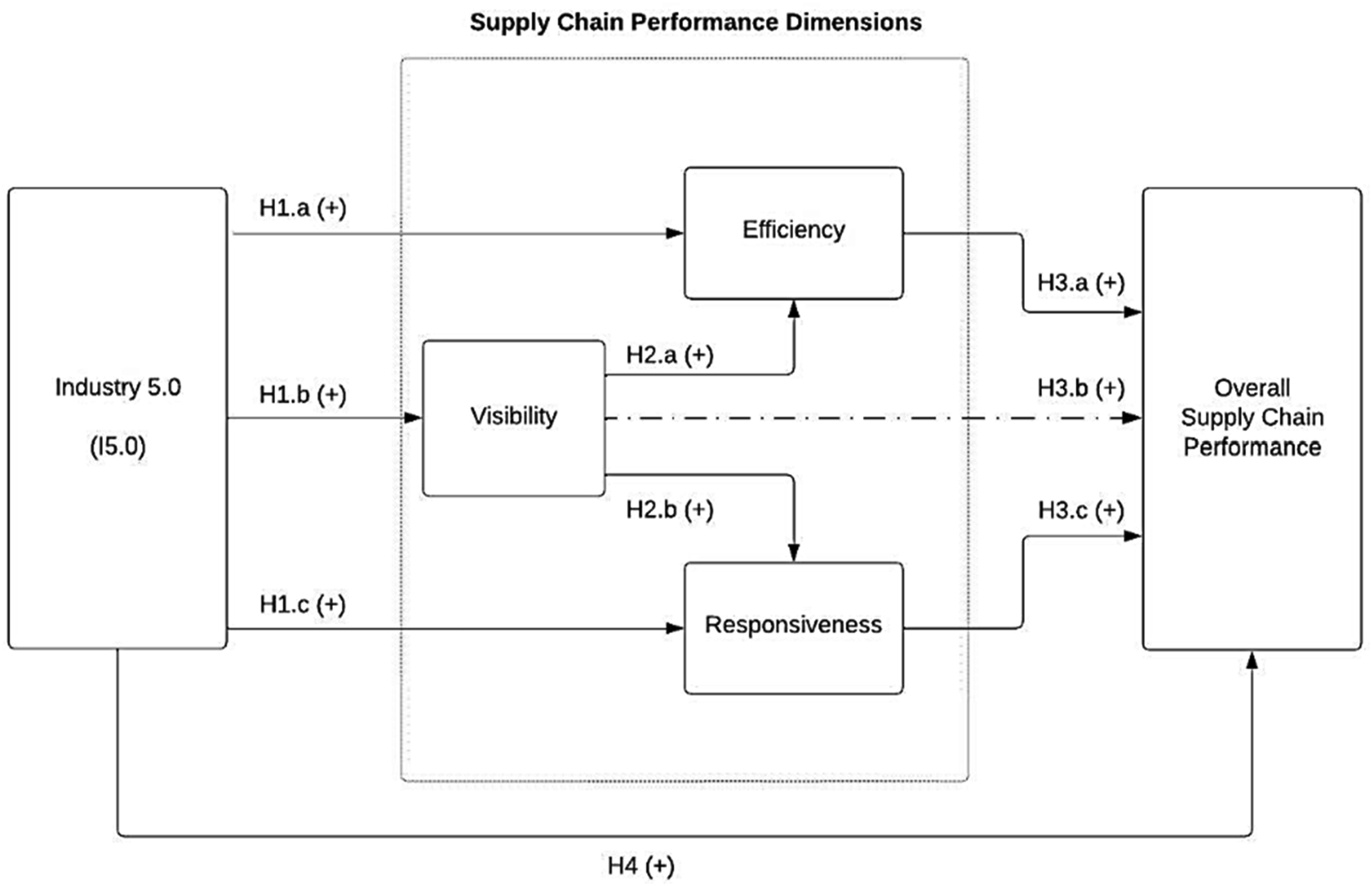
As previously mentioned, the major effect of visibility on SCP is seen through two dimensions of responsiveness and efficiency. However, hypothesis 3b has been proposed in this research to cover and investigate the impact of visibility on the SC through other features beyond responsiveness and efficiency (such as social and environmental aspects, child labour, and so on). Given that this effect is indirect, the research model (Figure 1) represents it with dotted lines. Risk management is mentioned as an eminent driver of SCV, and enterprises with a low level of visibility are improbable to satisfy sustainability demands.
22
According to the above arguments, hypothesis 3b is presented. H3b: SCV positively impacts Overall SCP Conceptual model of research.
SCR and overall SCP
A responsive SC is crucial for expanding a business rapidly when needed. A business will frequently undergo fast periods of growth. A responsive SC enables enterprises to swiftly meet increasing demand while gaining insights into customer preferences, thereby enhancing performance.
77
From a resilience viewpoint, the capability of enterprises to rapidly create the proper risk management strategies and react to market changes while disruption events happen is underlined by the capability of SC response.78,79 Research indicates that proper risk management decisions can result in flexible and agile reactions to potential disruptions, helping superior SCP.16,80 A SC with a more powerful reaction capacity allows quick appropriation of internal resources in an unpredictable environment, response capability to market demand, continual advancement in the quality of products and services, and creation of higher SCP.16,81,82 Simultaneously, enterprises with high response capability are more likely to engage in vertical and horizontal collaboration with their supply chain partners to create stronger SC collaboration networks, which can reduce SC vulnerabilities.16,83 In the meantime, SC collaboration assists SC partners in cooperatively generating operational guidelines and business continuity plans to decrease endogenous risks. Via it, internal control of the SC will be improved to cooperatively safeguard versus exogenous risks and enhance the collaborative advantage of the SC; hence, a stable advancement will maintain in levels of performance throughout the process of disruption.16,84 It can be inferred from the literature that resilience and visibility are influenced significantly by digitalization, and afterwards, they have a major impact on the efficiency of the SC.22,85,86 According to the above arguments, hypothesis 3c is presented. H3c: SCR positively impacts Overall SCP
I5.0 and overall SCP
Recently, smart technology has become a necessary element in various sector into a necessary element. Consumers utilize smart technologies for various purposes, directly affecting the performance of organizations and firms.87,88 According to these arguments, the following hypothesis is proposed. Research findings.
89
revealed that enterprises with higher levels of digital technology implementation are capable of proposing more radical innovations in services and products. It has been observed that digital technologies are utilized in the elementary sectors to generate innovations in service and product, resulting in higher performance. On the contrary, digital technologies in the advanced sectors directly influence performance and are, hence, relatively accustomed to fulfilling the efficiency gains that are not primarily utilized for innovation. According to the above arguments, hypothesis 3c is presented. H4: I5.0 positively impacts overall SCP
To better understand the impact of I5.0 on overall SCP, a framework is constructed based on the theoretical foundations previously discussed to describe the cause-and-effect relationships among I5.0, dimensions of SCP, and overall SCP (Figure 1). The reasoning supporting this research framework is stated as follows: I5.0 technologies positively affect SCP dimensions, which in turn has a positive effect on overall SCP. Also, SCV has positive effects on SCE and SCR.
Research methodology
This study aims to enhance practical understanding within a specific context, providing actionable insights to address specific challenges and streamline processes. It adopts a field study approach, utilizing questionnaires for data collection and gathering data directly from the target environment. Methodologically, it employs a quantitative approach, specifically the descriptive field methodology, as. 90 outlined. Thus, the research strategy predominantly relies on quantitative analysis to achieve its objectives.
Population and sampling
In developing the sampling strategy for this research, we had to consider the heterogeneous nature of I5.0. To ensure that we adequately captured the multifaceted aspects of I5.0, we designed a sampling framework that included a broad spectrum of industries and subsectors. However, given the emerging nature of I5.0, identifying companies that had fully integrated it into their SCs proved to be a challenge. Therefore, we focused on individuals with experience and knowledge in I5.0 and SCM across different fields, industries, and geographical locations to understand its impact on SCP. The minimum sample size was determined using the tenfold rule of thumb, ensuring that the sample size exceeded 100 to validate that the variance remained within acceptable limits.
Data collection tool and process
The data on users’ perceptions regarding the effect of I5.0 on SC’s overall performance was gathered quantitatively via a questionnaire-based survey. The constructs of this seven-point Likert scale questionnaire were adapted from prior research. A combination of convenience sampling and snowball sampling methods was employed to achieve a larger respondent pool and meet the target sample size. To do that, email accounts and personal and business social media platforms like LinkedIn, Facebook, WhatsApp were used to find and contact experts and practitioners well-versed in I5.0 and SCM to complete the questionnaire. The participants were asked to share the survey link with their relevant networks. The overall timeline for data collection was 2 weeks.
Analytical methods
The hypothesized relationships were analysed employing Partial Least Squares-Structural Equation Modelling (PLS-SEM) with SmartPLS 4 software. The primary reason for utilizing PLS is its capability to handle data that is not normally distributed.
91
Figure 2 presents a flowchart providing a general overview of the steps involved in PLS-SEM analysis. Additional steps or variations may be necessary depending on the specific context and requirements of the research. PLS-SEM analysis steps.
91

Analysis of data and research findings
A total of 105 valid questionnaires were meticulously gathered for the current research study, providing a robust dataset for comprehensive analysis. The subsequent data analysis revealed highly satisfactory results, indicating strong validity and reliability in the responses collected. Before proceeding with the analytical process using PLS-SEM, several critical considerations were carefully addressed to enhance the quality and accuracy of the findings. One of the primary concerns was the handling of missing data, which can significantly influence the results of any statistical analysis and potentially result in biased or inaccurate conclusions. To mitigate this risk, rigorous methods were employed to address any gaps in the dataset. These methods might have included imputation techniques, where missing values are estimated based on other available data, or more sophisticated approaches such as multiple imputation or the use of algorithms designed to handle incomplete datasets. In addition to addressing missing data, the research also ensured that all collected data met the necessary assumptions for PLS-SEM analysis. This included checking for issues such as multicollinearity, ensuring that the data was appropriately scaled, and verifying the distributional properties of the dataset. By thoroughly addressing these considerations, the research laid a strong foundation for employing PLS-SEM, ultimately leading to robust and reliable analytical outcomes.
Demographic characteristics
Demographic information.

Findings
The following section will present the findings of the present research, which have been meticulously extracted from the outputs generated by the SmartPLS 4 software. This advanced analytical tool has facilitated a detailed examination of the data, allowing for sophisticated modeling and validation of the research hypotheses. The use of SmartPLS 4 software enables the application of PLS-SEM, a powerful statistical technique that is particularly effective in handling complex relationships and interactions within the dataset. The research findings, derived from SmartPLS 4, provide deep insights into the underlying patterns and relationships among the studied variables. These results are instrumental in validating the theoretical framework and hypotheses proposed in the study. The precision and robustness of the outputs from SmartPLS 4 ensure that the conclusions drawn are both reliable and relevant, offering significant contributions to the field and paving the way for future research endeavors.
Model’s reliability and convergent validity
Construct reliability and validity.

Model’s discriminant validity
Discriminant validity (fornell-larcker criterion).

Note: Diagonal values are the square-rooted values of AVE.
Discriminant validity (heterotrait-monotrait Ratio-HTMT).

Explanatory power
Coefficient of determination (R2).

Structural model analysis
PLS-PM technique to conduct a path analysis to examine the structural model depicted in Figure 3.6,46 The results of this analysis, along with the hypothesis testing outcomes, are presented in Table 7. To determine the significance of the paths, the partial least squares regression method utilizes the bootstrapping resampling technique.
95
As delineated in Table 7, all hypotheses exhibiting p-values below 0.05 and t-values exceeding 1.96 garnered support with a 95% confidence level. Hypothesized model. Path weightage and hypothesis testing.

Results discussion and implications
Results discussion
Hypothesis 1a
The findings of this study indicate, with 95% confidence, that Industry 5.0 (I5.0) has a positive impact on supply chain efficiency (SCE). These findings align well with the existing literature highlighting the role of I5.0 in improving the efficiency and effectiveness of the SC.17,22 indicated that I5.0 provides avenues for optimizing resource utilization. Specifically, it has been suggested that manufacturers can achieve improved operational efficiency and reduced waste through the integration of automation, artificial intelligence (AI), and big data analytics (BDA). The findings of 35 demonstrate that I5.0 enhances SC intelligence, efficiency, and competence. According to, 96 BC technology has the potential to create supply chains that are more efficient, stable, transparent, secure, ethical, and resilient. The research of.4,34 indicated that I5.0 technologies contribute to developing supply networks and enhancing efficiency. This improvement in efficiency is because of the unique capabilities that I5.0 provides to the SC. This bolsters the conclusions of, 45 who found that blockchain-based solutions could enhance the dependability, quality, speed, cost, and flexibility of SCs.
Hypothesis 1b
The findings of this study indicate, with 95% confidence, that Industry 5.0 (I5.0) has a positive influence on supply chain visibility (SCV). It supports prior studies like,15,17,22 which found I5.0 has the potential to enhance visibility across the SC. The existing body of literature emphasizes the importance of quality information, its dissemination, and the supporting technologies in fostering visibility within SCs.48,50,97,98 Furthermore, research such as studies like.4,17,26 concluded that through the integration of disruptive technologies, I5.0 could optimize energy usage, cut down on waste, mitigate environmental effects, and proactively adopt sustainability initiatives. Additionally, 14 findings showed that BC technology can provide higher visibility across the SC, enabling its participants to trace products.
Hypothesis 1c
The findings of this study indicate, with 95% confidence, that Industry 5.0 (I5.0) positively influences Supply Chain Resilience (SCR).. This aligns with the research conducted by,4,34 which suggests that I5.0 technologies, such as cloud computing, contribute to the development of supply networks and enhance the responsiveness of SCP. Additionally, research by. 98 showed that businesses should use disruptive technologies like BC and the IOE to better understand and react to their client’s demands. As per the findings of, 35 I5.0 provides computational capabilities to the industrial sector, enabling the establishment of digital manufacturing systems capable of inter-system communication. Consequently, mass personalization fosters customer satisfaction by delivering heightened value through I5.0, enhancing SCR. This finding also reinforces the findings of, 72 which argues that I5.0 can enhance SC resilience, catering to customer demands and environmental changes. Among the enabling technologies of I5.0, 20 concluded that BC increases SCR by improving resilience. I5.0 emphasizes resilience-building strategies such as dual sourcing and scenario planning. Furthermore, human-robot collaboration is a central focus of I5.0, which has the potential to improve forecasting, risk mitigation, and agility in responding to disruptions. 15 According to, 41 DT can greatly enhance the responsiveness and quality of services as well as the value and significance of data, thereby empowering various vertical businesses with AI technology.
Hypothesis 2a
The findings of this study indicate, with 95% confidence, that Supply Chain Visibility (SCV) has a positive influence on Supply Chain Efficiency (SCE). This matches the findings of other studies like,56,59,64 which propose that enhancing SCV can enhance the SCE. Also, according to, 57 visibility improves SCP by facilitating greater cost identification and reduction. Multiple studies have demonstrated that enhanced SCV leads to improved competitive positioning and increased profitability for organizations, as evidenced by research done by.48,60 Consequently, consistent with the assertions of, 42 enhancing SCV can enhance an organization’s market value.
Hypothesis 2b
The findings indicate that, with 95% confidence, there exists a direct correlation between the two factors examined, with Supply Chain Visibility (SCV) positively impacting Supply Chain Resilience (SCR). This aligns with the outcomes of other research studies; for example, 48 results suggested that SCV can lead to various advantages, such as more effective responses, improved sales data, and the ability to fulfill customer expectations, leading to higher customer satisfaction. According to 22 resilience in Industry 5.0 is enhanced through collaboration, visibility, and adaptability.99,100 concluded that information sharing between buyers and suppliers assists in planning and meeting customers’ demands through mechanisms supported by information technology. Additionally, 62 also demonstrated that SCV positively influences customer services. Finally, 5 asserted that improving visibility can reduce delays in internal logistics operations, leading to better SCR and overall customer satisfaction.
Hypothesis 3a
The findings suggest that, with a 95% confidence level, Supply Chain Efficiency (SCE) has a positive impact on overall Supply Chain Performance (SCP). This supports the idea that efficient SCM reduces time and resource wastage, which allows businesses to decrease SC costs and dramatically increase profits. Making warehouse management and inventory more efficient can increase the enterprise’s SC operations efficiency. It reduces redundancy and liabilities and improves SCP.16,54 It also supports claims in. 101 that suggest SCs should be reactive and strategically flexible to adjust to ongoing unforeseen circumstances. It is essential for organizations to enhance their operational processes and effectively manage cash flow and liquidity challenges in order to improve operational efficiency and achieve superior performance.
Hypothesis 3b
The findings of this study indicate that, with a 95% confidence level, Supply Chain Visibility (SCV) has a positive impact on overall Supply Chain Performance (SCP This is consistent with previous research indicating that visibility is crucial in improving the overall performance of the SC.48,57 In addition to the initial dimensions of SCE and SCR, greater visibility can also result in SCP improvements in areas like sustainability. SCV can achieve social, environmental, and economic sustainability.17,73,75,76 also stressed the importance of SCV in sustainability enhancement.48,102 acknowledge that the establishment of SCV is vital for the implementation of quality control procedures, which in turn supports long-term economic sustainability and viability. When considering these perspectives collectively, it is evident that this finding is consistent with prior research, suggesting that heightened visibility, which fosters sustainability improvements, ultimately enhances the overall SCP.
Hypothesis 3c
The findings indicate that, with 95% confidence, Supply Chain Responsiveness (SCR) positively influences the overall performance of the supply chain (SC). This supports the idea that a responsive SC is crucial for rapidly expanding a business when needed. A business will frequently undergo fast periods of growth; thus, a responsive supply chain enables an enterprise to swiftly meet increasing demand and gain insights into customer preferences, ultimately enhancing performance. From a resilience viewpoint, the capability of enterprises to create the proper strategies of risk management rapidly and react to changes in the market while disruption events happen is underlined by the ability of SC to respond.16,79,88
Hypothesis 4
The findings indicate that, with 95% confidence, Industry 5.0 (I5.0) positively influences the overall performance of the supply chain (SC). This supports studies claiming SCP benefits from I5.0. These studies argue that innovative technologies have recently become necessary, and consumers use intelligent technologies to simplify various purposes that directly affect the performance of firms or organizations. 88 Moreover, the research supports the finding in. 19 which suggests that implementing I5.0 within an organization can benefit the choices and engagements of sustainability-conscious customers throughout an I5.0-based SC, thereby improving overall SCP.
Implications
This study makes significant contributions to the theoretical understanding of the impact of Industry 5.0 on supply chain performance across three critical dimensions: efficiency, visibility, and responsiveness. By evaluating insights from a diverse group of managers, experts, and practitioners in the supply chain industry, the research provides a nuanced perspective on how enabling technologies such as IoT, AI, Blockchain, Big Data Analytics, 6G, Collaborative Robots, and Digital Twins influence supply chain management and its performance metrics. These theoretical contributions deepen our understanding of the transformative potential of Industry 5.0, offering a framework for future research and practical applications.
Managerial implications
This research offers valuable insights for decision-makers, enhancing their understanding of how Industry 5.0 can improve supply chain performance. It provides a roadmap for transitioning from Industry 4.0 to Industry 5.0, emphasizing the integration of human-centric values and sustainability into supply chain operations to align with modern business practices and consumer expectations.
The research emphasizes the importance of sustainability in Industry 5.0 as a resource for managers in sustainable supply chain management. It shows how Industry 5.0 can improve sustainability initiatives, making supply chains more efficient, resilient, and responsible. Aligning with Sustainable Supply Chain Management (SSCM) is essential for businesses to meet regulations and achieve long-term sustainability goals.
Practical implications
This study provides practical guidance for adopting Industry 5.0 technologies. Managers can use these insights to develop effective digitalization strategies that align with current industry advancements, ensuring seamless integration of new technologies. The research also offers a framework for technology vendors to enhance product development by understanding customer demands in the industry 5.0 context. This proactive approach boosts technology adoption and improves customer satisfaction and loyalty.
The study analyzes the impact of enhanced supply chain visibility (SCV) on supply chain efficiency (SCE) and responsiveness (SCR). By linking improved visibility to performance metrics, it offers actionable insights for optimizing operations, which is crucial for managers seeking to enhance adaptability in a complex market. In nutshell, this study advances the theoretical and practical understanding of the transformative potential of Industry 5.0′ in supply chain management. It underscores the necessity for continued interdisciplinary collaboration and research efforts to leverage emerging technologies for innovation and competitiveness. By providing a robust framework for both decision-makers and technology vendors, this research paves the way for more effective and sustainable supply chain practices, ultimately contributing to the broader goals of economic and environmental sustainability.
Conclusion, limitations, and future research directions
Conclusion
The emergence of Industry 5.0, driven by societal and environmental concerns, signifies a transformative era in SCM, emphasizing sustainability, resilience, and human-centric approaches. This study explores the impact of Industry 5.0 on SCP, focusing on key dimensions such as efficiency, visibility, and responsiveness. Utilizing data collected from 105 respondents and analyzing through the PLS-SEM method, the research reveals a significant direct and indirect effect of Industry 5.0 on overall SCP.
The study underscores the pivotal role of enabling technologies – including the IoT, AI, (BC), BDA, 6G, Cobots, and DT – in enhancing supply chain operations. It highlights the importance of networking effects and demonstrates how Industry 5.0 surpasses previous paradigms by integrating human-centered values and sustainability. Through data analysis and stakeholder perspectives, the research reveals substantial positive direct and indirect effects of Industry 5.0 on overall supply chain performance (SCP), with a particular focus on the importance of advanced technologies. Furthermore, the research highlights the implications of enhanced SCV on SCE and SCR, indicating that improved visibility correlates with enhanced efficiency and responsiveness.
This study examines the effect of Industry 5.0 on overall supply chain performance, both directly and through key dimensions, including efficiency, visibility, and responsiveness. Additionally, it also investigates the interrelationships between these dimensions within the context of Industry 5.0. While the enabling technologies associated with Industry 5.0 present substantial potential across various industries and applications, this research specifically focuses on seven technologies that have been shown to exert a significant influence within the supply chain context. These technologies include Artificial Intelligence, the Internet of Everything, Blockchain, Big Data Analytics, Collaborative Robots, 6G, and Digital Twins. A comprehensive analysis has been conducted to elucidate and comprehend the effects of these technologies on supply chain efficiency, responsiveness, and visibility.
By collecting data from 105 respondents with experience and knowledge in both Industry 5.0 and supply chain performance, and by applying the PLS-SEM method, this study demonstrates a significant direct and indirect effect of Industry 5.0 on overall supply chain performance. Furthermore, the analysis conducted using SmartPLS version 4 revealed the implications of enhanced supply chain visibility on efficiency and responsiveness, indicating a positive correlation between improved visibility and increased efficiency and responsiveness. Relying on the corpus of knowledge, this research also suggests how Industry 5.0 affects the dimensions of supply chain performance. A review of the literature and a conceptualization of Industry 5.0 underscore its substantial networking effects, highlighting the critical importance of connectivity and interaction among the components of systems. Contrary to I4.0, I5.0 surpasses the enterprise and technological level extending to interconnected supply networks, human-centered ecosystems, and sustainability initiatives. Industry 5.0 influences the dimensions of supply chain performance in different ways.
Industry 5.0 technology encompasses both physical and network process levels. Supplier collaboration portals and digital platforms guarantee effective communication and collaboration in Industry 5.0. Intelligent products enable direct interaction with machines, while machine-to-machine tools facilitate collaboration among machines. Technologies such as BC provide comprehensive visibility throughout the process, which is crucial for making both proactive and reactive decisions. Artificial Intelligence and big data analytics are utilized for programming and managing decision-making support. The advent of 6G technology can significantly increase the efficiency, robustness, and agility of SC operations, offering quicker, more dependable, and more intelligent communication and data processing capabilities. Cobots improve manufacturing and logistical operations by increasing their flexibility and efficiency. They optimize supply chain management procedures, including methodical inventory control, stock tracking, order completion, and product returns. Cobots improve manufacturing and logistical operations by increasing flexibility and efficiency. They optimize supply chain management processes, including systematic inventory control, stock tracking, order fulfillment, and product returns, thereby assisting supply chain sectors in reducing their overall cost of ownership. Radio-frequency identification (RFID) and sensors provide visibility through an Internet of Everything (IoE)-based infrastructure. Digital Twins offer substantial value within the supply chain context by enhancing the availability of customized products through real-time insights into product demand and production processes. They optimize business activities by simulating and analyzing various scenarios, which aids in identifying and addressing supply chain inefficiencies. By detecting and mitigating deficiencies at an early stage, Digital Twins enable proactive problem-solving, resulting in smoother operations and improved customer satisfaction. Furthermore, Digital Twins facilitate the rapid exploration and implementation of innovative business ideas, ultimately driving profitability through agility and adaptability in an ever-evolving marketplace.
Limitations and prospective research directions
This study, like other research endeavors, is subject to certain limitations. A significant constraint of the present research is the limited access to managers, experts, and users who possess experience and knowledge in both Industry 5.0 and sustainable supply chain practices (SCP). Furthermore, the exclusive reliance on questionnaire-based data collection methods may have constrained the depth of insights obtained, potentially neglecting nuanced perspectives that could have been captured through alternative methodologies, such as interviews or focus groups. The study’s focus on specific dimensions or aspects of the research topic may have inadvertently led to the oversight of other relevant factors that could have contributed toward a deeper comprehension of the phenomenon under investigation. For instance, the research model did not account for potential mediating or moderating factors, such as organizational and managerial factors, that could overshadow Industry 5.0’s effect on SCP. The inclusion of these variables in the research framework could yield a more nuanced analysis and identify additional mechanisms for the implementation of Industry 5.0 within the supply chain context. Similarly, as part of our future research, we will explore the interplay between Industry 5.0 technologies and human factors, focusing on how these elements can enhance resilience and sustainability within supply chain systems. In addition, we recognize that our study does not fully address resilience as a critical attribute of I5.0, nor does it explore the broader aspects of sustainability, including social and economic dimensions; as such, future research will focus on these areas to provide a more comprehensive understanding of I5.0’s impact on supply chain performance. Moreover, future research will explore the specific contributions of 3D printing and human-machine collaborative systems to the enhancement of supply chain performance within the I5.0 framework.
The present study concentrates exclusively on the impact of Industry 5.0 (I5.0) adoption through the application of Partial Least Squares Structural Equation Modeling (PLS-SEM) methodology and data obtained from questionnaires. Future research endeavors could expand this investigation by exploring the determinants that influence I5.0 adoption and by prioritizing the enabling technologies associated with it. Additionally, examining strategies to overcome acceptance barriers and effectively manage challenges may facilitate the implementation of I5.0. Furthermore, the incorporation of advanced methodologies, such as artificial intelligence (AI) and data mining, could significantly enhance the understanding of this phenomenon. Future studies might also benefit from a more focused approach, targeting specific industries or organizations to uncover unique challenges and opportunities, employing both quantitative and qualitative research methods. Interdisciplinary collaboration is essential, as I5.0 draws upon insights from industrial engineering, supply chain management (SCM), and computer science to promote agile, transparent, and human-centric supply chains. Therefore, conducting interdisciplinary research is recommended for those interested in advancing knowledge in this field.
Footnotes
Declaration of conflicting interests
The author(s) declared no potential conflicts of interest with respect to the research, authorship, and/or publication of this article.
Funding
The author(s) disclosed receipt of the following financial support for the research, authorship, and/or publication of this article: This work was supported by the Natural Sciences and Engineering Research Council of Canada; DGECR-2024-00084.
