




Abstract
In the era of digitalization, knowledge sharing is considered crucial to understanding the environmentally sustainable performance of Small and Medium Enterprises (SMEs). Despite this, there is a notable absence of empirical evidence in the academic literature addressing this relationship. Therefore, the purpose of this study is to examine the impact of digital knowledge sharing (both internal and external) on green innovative performance. Additionally, the study seeks to determine whether these relationships are mediated by the green technology dynamism of SMEs in Malaysia. Data were collected from 294 Malaysian SME owners and managers who completed online, self-administered surveys. The study constructs, adapted from earlier research, were measured using validated measurement scales. Structural equation modelling was employed to analyse the data and test the hypotheses (utilizing AMOS 24.0). Bootstrapping of confidence intervals was conducted to identify mediating effects. The study’s results revealed a positive and significant association between digital knowledge sharing (both internal and external) and the green innovative performance of SMEs. Furthermore, the data analysis confirmed that green technology dynamism serves as a complementary mediator in the relationship between digital knowledge sharing (both internal and external) and green innovative performance. The findings of this study carry both theoretical and practical implications for academics and SME owners/managers. Green innovative performance, strengthened by green technological dynamism, can help SMEs grasp and implement the significance of digital knowledge sharing in their administrative operations. Consequently, they can transform into eco-innovative entities, contributing positively to the environment, economy, and society.
Keywords
Introduction
Contemporary researchers (such as)1,2 widely recognize the conservation of natural resources as one of the foremost goals in addressing global issues related to environmental degradation and climate change. For Small and Medium Enterprises (SMEs), striking a balance between resolving environmental concerns and reaping economic benefits poses a significant challenge in the era of globalization. 3 The emergence of digital computing, networking, monitoring, and measuring technologies has empowered SME processes with a multitude of heterogeneous tools, including cloud computing, big data, the Internet of Things (IoT), and artificial intelligence (AI), all of which are gaining widespread acceptance globally. 4
Businesses across various functional verticals increasingly acknowledge the utility of evaluating these technologies to make informed decisions and enhance operational efficiency. 5 However, according to Tamvada et al. 6 harnessing the full potential of these technologies represents a next-level challenge for SMEs, requiring them to extract meaningful information for making strategic choices and gaining a competitive edge. Despite the dynamic global landscape, SMEs continue to be a pivotal segment in the market. In Malaysia, the SME sector holds a crucial position, constituting approximately 90% of all businesses and 99.8% of non-financial businesses. 7 These SMEs contribute significantly to the economy, accounting for 38.2% of the gross domestic product (GDP) and providing employment for 7.3 million people. 8 Their active participation underscores the imperative for SMEs to embrace and leverage digital technologies to navigate and thrive in the evolving green sustainable environment. 9 Moreover, according to Xin et al., 10 limited research has focused on investigating the significant worldwide environmental effects of SMEs. This underscores the minimal attention given to encouraging the adoption of more efficient and environmentally friendly practices among SMEs, with the goal of reducing the environmental footprint associated with their products and services.
Adaptable and versatile SMEs are actively striving to develop technological capabilities that facilitate knowledge management processes within and beyond their organizations, 11 aiming to achieve their goals in environmentally sustainable performance. 12 Recognizing the importance of being well-informed for strategic decision-making, SMEs are focusing on acquiring, disseminating, and applying knowledge related to environmental conservation. 13 This knowledge empowers SMEs to assert market dominance and enhance product/service quality. 14
Scholarly evidence indicates that SMEs are leveraging cutting-edge business analytics to optimize their operations for environmental friendliness, 15 maximize supply chain productivity, 16 and identify parameters that enhance their green throughput. 17 In this context, digital knowledge sharing (DKS) emerges as a critical component for attaining a competitive advantage and represents significant strategic potential for firms that adopt green innovation. According to Tønnessen et al., 18 DKS involves the exchange of information and know-how among individuals to accomplish specific tasks within or outside organizations. It establishes connections between individuals by transferring digital knowledge pertinent to the delivery of specific products and services.
Business decision-makers are placing growing importance on the imperative of environmental sustainability through innovation. 19 Researchers in marketing (such as),20,21 environmental studies (such as),22,23 business and ethics (such as)24,25 have focused on green innovation as a means to improve environmental sustainability and enable businesses to gain a competitive edge. However, the exploration of the contribution of DKS to green innovation performance is still in its early stages. Existing research efforts are often constrained by limited scope, such as the investigation conducted by Polas et al., 3 which explored the link between green knowledge management and exploratory green innovation in the UAE SME sector. Furthermore, Tønnessen et al. 18 suggested that DKS is to expand the scope by incorporating dimensions like internal level and external level sharing.
According to Tønnessen et al., 18 the dimensions of DKS, particularly internal and external DKS, are crucial for firms to adopt. Knowledge sharing influences a firm’s adoption of green innovative practices and subsequently enhances performance. 26 This study is dedicated to exploring the factors that contribute to the improvement of green innovative performance (GIP) in SMEs. Within the SME sector, a notable challenge is the ranking and listing of firms based on their GIP, 27 with some organizations lacking a comprehensive understanding of green innovation initiatives. 28 To the best of our knowledge, no empirical study has delved into the impact of DKS and its dimensions on influencing GIP in SMEs.
On the other hand, in this study, the term green technology dynamism (GTD) is used, referring to the constant evolution and proactive nature of technologies aimed at promoting environmental sustainability. It encompasses a diverse range of innovations that seek to minimize the ecological impact of human activities, 29 fostering a more sustainable and eco-friendly future. 30 This dynamism is crucial in addressing pressing environmental challenges and adapting to emerging needs.
In the context of SMEs, the integration of GTD is pivotal for enhancing their GIP. 31 As these businesses play a significant role in the global economy, their commitment to sustainable practices is essential. 3 One key aspect of achieving this is through DKS.
The integration of GTD with DKS provides SMEs with the tools and insights needed to implement sustainable practices effectively.31,18 It empowers them to adopt cutting-edge technologies, 32 improve resource efficiency, 33 reduce waste, 34 and enhance overall environmental performance. 35 Additionally, knowledge sharing fosters a collaborative ecosystem, allowing SMEs to learn from each other’s experiences and collectively contribute to a more sustainable and green future. 36 However, based on our current knowledge, there is no existing study in the literature that specifically discusses the relationship between DKS, GTD, and GIP in the SME sector.
In some cases, despite the recognized value and opportunities associated with green innovation, the engagement of SMEs in this field has not met expectations, raising concerns. To explore the interconnection between DKS and GTD and how they contribute to enhancing SMEs’ GIP, a cross-sectional survey was conducted among 294 SME owners/managers in Malaysia. Moreover, this study adopts social capital theory (SCT) as a foundational framework to explore how relationships, trust, and shared norms within and between SMEs facilitate digital knowledge sharing and, in turn, drive green innovative performance. From a theoretical standpoint, SCT emphasizes the critical role of social networks in enabling the effective exchange of green-related knowledge and technologies, thereby enhancing firms’ capacity to address environmental challenges. The current study focuses on addressing two research questions (RQs): • •
This study advances prior research on DKS and green innovation by introducing GTD as a critical mediating mechanism that connects knowledge exchange to environmentally innovative outcomes within SMEs. While existing literature has primarily emphasized the direct relationship between knowledge sharing and GIP, there has been limited exploration of the dynamic capabilities that enable SMEs to adapt and apply shared knowledge in rapidly evolving green technology environments. By highlighting how DKS—both internal and external—fuels green technology responsiveness and adaptability, which in turn enhances GIP, this study offers a more nuanced and process-oriented understanding of how digital knowledge is transformed into sustainable innovation. The novelty and contribution of this research are threefold. First, it identifies the distinct influence of internal and external DKS on the green innovative performance of SMEs. Second, it evaluates the mediating role of GTD, offering insights into how dynamic technological capabilities bridge the knowledge–innovation gap. Third, by focusing on Malaysia—an emerging economy where SMEs are not typically seen as frontrunners in green sustainable practices—this study contributes contextual relevance and practical guidance. It supports Malaysian SMEs in leveraging digital knowledge for environmental innovation, ultimately aiming to enhance their green transformation efforts in a less technologically advanced setting.
Literature review
Social capital theory (SCT)
In this research, we investigated the relationships between SMEs’ success in green innovation and their digital information sharing using the theoretical framework of SCT. Workers refer to the resources they acquire via their social networks and interactions as social capital. 37 Nahapiet and Ghoshal 38 argue that these connections and assets influence the extent of information sharing within co-workers and across interorganizational networks. The structural component of social capital includes relationship patterns, which can be analysed through social interaction and the actors’ networks. 39 According to Tønnessen et al., 18 weak connections are the antithesis of strong ties, with few encounters and a low degree of emotional intimacy. Researchers (such as)40,41 have also studied the degree of social contact and the strength of network links in relation to promoting and impeding inventive activity.
SCT is a widely utilized framework for comprehending knowledge sharing, creativity, and innovation within organizations. 42 Shahzad et al. 43 indicates that social interactions and network connections play a crucial role in elucidating how knowledge sharing fosters green innovative practices. Similarly, van der Meulen et al. 44 emphasize the significance of interactions and ties in elucidating both internal and external digital knowledge sharing across various organizational contexts. Moreover, Zheng et al. 45 employed SCT to investigate the connections between knowledge sharing and innovative performance, while Hung et al. 46 focused specifically on environmentally sustainable business practices using SCT.
Therefore, SCT plays a critical role in supporting the research framework of this study by offering a foundational explanation of how social structures, relationships, and networks influence digital knowledge sharing and, consequently, green innovative performance within SMEs. SCT posits that the resources embedded within social relationships—such as trust, shared norms, mutual understanding, and social ties—facilitate the flow and exchange of knowledge. In the context of SMEs, which often operate with limited financial and technological resources, social capital becomes a vital intangible asset that enables firms to access external expertise, collaborate with stakeholders, and integrate green practices through shared digital knowledge. By fostering both internal cohesion and external collaboration, strong social capital enhances the willingness and ability of SMEs to share and utilize green-related digital knowledge effectively. This, in turn, contributes to the development of green technology dynamism—the firm’s capacity to respond to and adopt rapidly evolving green technologies. The theory thereby provides a robust foundation for understanding the mediating role of green technology dynamism between digital knowledge sharing and green innovation. SCT’s inclusion in the framework not only deepens the theoretical explanation of how knowledge is mobilized and transformed into innovation but also offers practical insights into how SMEs can build and leverage social networks to accelerate their green transition.
Digital knowledge sharing (DKS) in SMEs
Tønnessen et al. 18 explain that DKS refers to the process of exchanging information, expertise, insights, and best practices through digital platforms and tools. This can include various methods such as online forums, webinars, virtual conferences, collaborative documents, social media, and specialized knowledge-sharing platforms.
Troise et al. 47 contend that active involvement is crucial, stressing the importance for SMEs to adopt and utilize digital technologies effectively in order to adapt and succeed in the changing business landscape. According to Depaoli et al., 48 SMEs often have limited resources and may not have in-house experts in every field. Digital knowledge sharing allows them to tap into a global pool of expertise, connecting with professionals and specialists who can provide valuable insights and advice. 18
Furthermore, traditional methods of knowledge sharing, such as in-person training or hiring consultants, can be expensive for SMEs. 49 Digital platforms offer cost-effective alternatives, allowing SMEs to access valuable knowledge without the high associated costs. 50 Recent literature (such as)51–53 has identified that DKS is essential for SMEs to remain competitive, foster innovation, and adapt to the rapidly changing business landscape. By leveraging digital platforms and tools, SMEs can collaborate effectively and drive growth and success in today’s digital economy. 54
Green innovative performance (GIP)
Skordoulis et al. 55 explain that innovation not only provides a competitive edge but also delivers environmental and social advantages. According to Dogaru, 56 various terms such as environmental innovation, eco-innovation, green innovation, and sustainable innovation have been developed to describe innovation within different business sectors. Understanding the distinctions between these terms is crucial. Previous research (such as)57,58 has indicated that terms like environmental innovation and green innovation are often used interchangeably.
Borah et al. 59 describe that green innovation, recognized by industry and environmental experts as a key asset for corporate success, contributes to increased market demand and market success. It reflects a company’s commitment to adopting advancements in products or processes that maintain a sustainable environment. Green product innovation involves creating products/services with minimal environmental impact throughout their lifecycle, characterized by attributes like being toxin-free, recyclable, durable, and energy-efficient. 60
According to Ferreira et al., 61 innovative performance signifies a company’s ability to generate and implement novel ideas, products, processes, or services that add value to customers, enhance competitiveness, and ensure long-term success. This encompasses innovation in various domains such as technology, business models, marketing strategies, and organizational practices. Song et al. 62 explain that GIP specifically focuses on a company’s capacity to develop and implement environmentally sustainable innovations, aiming to reduce environmental footprints while addressing societal concerns related to sustainability and climate change.
In the realm of SMEs, GIP holds significant importance. 63 It is essential for SMEs to attain long-term sustainability, competitiveness, and success in today’s business landscape. By embracing green innovation, SMEs can trim costs, 64 differentiate themselves in the market, 65 comply with regulations, 66 access funding opportunities, 67 and enhance their reputation. 68 This positions them for growth and prosperity while contributing to environmental sustainability.
However, implementing GIP in SMEs can pose challenges. Overcoming these challenges necessitates a blend of targeted support measures, including technical assistance, capacity-building programs, regulatory simplification, and awareness-raising initiatives tailored to the needs and capabilities of SMEs.12,3 Collaborative efforts involving government agencies, industry associations, financial institutions, academia, and other stakeholders can aid SMEs in surmounting barriers to green innovation and unlocking opportunities for sustainable growth and competitiveness.
Green technology dynamism (GTD)
Asad et al. 31 describe GTD as the rapid pace of innovation and development within the realm of green or sustainable technologies. It encompasses the ongoing advancement, evolution, and adoption of technologies aimed at promoting environmental sustainability, enhancing resource efficiency, and mitigating the impacts of climate change. 69 According to Randhawa et al., 70 businesses need to align their capabilities and resources with evolving market conditions. Faster technological changes incentivize enterprises to seek knowledge about emerging technologies, 71 thereby encouraging the acquisition of technology, patents, and information from external sources. 72 The ability to absorb ecological knowledge becomes crucial in environments characterized by high GTD, as it facilitates the development of green operations, such as research and development, technical innovation, and leadership. 31 This dynamism significantly influences companies’ strategies, operations, and competitiveness in the global market, with those embracing green technologies gaining a competitive advantage, enhancing brand reputation, and contributing to sustainability.73,74
Enterprises prioritize knowledge sharing to enhance their capacity to assimilate new green knowledge in response to increasing levels of GTD. 75 Leveraging DKS can facilitate the development of eco-friendly technologies by enhancing knowledge absorption capabilities. 18 Consequently, these technologies enhance SMEs’ performance. In contrast, in environments where green technology adoption is lagging, businesses focusing solely on traditional environmental optimization strategies are less inclined to enhance their capacity for digital knowledge acquisition. 76 This deficiency in ecological awareness and motivation can result in subpar performance outcomes. 31
Furthermore, Ojha et al. 77 highlight that in contexts of heightened environmental turbulence, the performance of new product development improves. This occurs because turbulence reduces the reliance on dynamic capabilities for enhancing operational new product development capabilities, indicating that adaptability to external conditions may mitigate internal capability gaps.
Hypothesis development
DKS and GIP
DKS refers to the exchange of information, expertise, insights, and best practices using digital platforms and tools. 78 This process can occur internally among colleagues and supervisors, as well as externally with customers and external experts. 18 Scholars (such as)79,80 emphasize the importance of considering both internal and external dimensions when studying DKS.
According to Singh et al., 81 internal knowledge refers to the knowledge present within the boundaries of an organization, drawing from the expertise and insights of its employees. Zhou and Li 82 highlights that this internal knowledge is a valuable resource for generating ideas, according to the knowledge-based view. As noted by Ciborra and Andreu, 83 internal digital knowledge sharing (IDKS) involves digitally disseminating this internal knowledge within departments or across the entire organization.
Scholars widely recognize the pivotal role of DKS in fostering innovation.84,85 Haas et al. 86 identifies collaboration with colleagues to solve problems and generate new ideas as a primary objective of DKS. High levels of internal DKS can support the learning process of owners/managers and enhance individuals’ creative skills, which are essential for innovation. 87
IDKS plays a crucial role in enhancing the GIP of enterprises. By facilitating collaboration,
88
sharing best practices,
89
disseminating information,
90
empowering employee engagement,
91
supporting continuous learning,
92
and enabling performance monitoring,
93
DKS platforms help organizations make significant strides towards environmental sustainability and achieve their green innovation goals.
94
However, empirical research on how IDKS influences the GIP of SMEs is currently lacking. Therefore, we propose the following hypothesis: • Hypothesis H1: IDK has a significant influential relationship with GIP of SMEs.
Both individuals and organizations often require external sources of expertise to complement their own and aid in generating new knowledge. 95 Increasingly, firms are adopting an open innovation approach, integrating internal ideas with external knowledge. 96 Scholars like Zobel and Hagedoorn 97 and Gawer 98 have demonstrated that firms with connections beyond organizational boundaries tend to perform better. In the digital realm, knowledge sharing between actors with diverse expertise enables the exploration of problems or tasks from various perspectives. 99 According to Chen et al., 100 external digital knowledge sharing (EDKS) enriches enterprises’ boundary-spanning knowledge networks, providing diversified knowledge.
EDKS significantly contributes to enhancing the green innovative performance of enterprises. It offers access to specialized expertise,
101
market intelligence,
102
collaboration opportunities,
103
green technology start-ups,
104
and industry best practices.
105
By leveraging external knowledge and partnerships, enterprises can expedite their green innovation endeavours, develop sustainable products and solutions, and contribute to environmental stewardship and corporate sustainability goals.106,57 However, limited prior research has investigated the relationships between EDKS and GIP. Therefore, we propose the following hypothesis: • Hypothesis H2: EDKS has a significant influential relationship with GIP of SMEs.
IDKS and GTD
IDKS plays a crucial role in fostering GTD within an organization by facilitating knowledge exchange, capacity building, cross-functional collaboration, institutional knowledge management, and cultural transformation.107,108 Leveraging the collective intelligence of its employees and fostering a culture of innovation and sustainability enables an organization to drive meaningful progress towards environmental stewardship and sustainable development.
109
However, there has been limited prior research investigating the connections between IDKS and GTD. Therefore, the study posits the following hypothesis: • Hypothesis H3: IDKS has a significant relationship with GTD.
EDKS and GTD
EDKS platforms provide enterprises with access to a diverse array of expertise, insights, and experiences beyond their organizational boundaries. 110 By connecting with experts, researchers, and practitioners in sustainability and green technology fields, enterprises can glean valuable insights into emerging trends, innovative solutions, and best practices. This external expertise fuels creativity, sparks new ideas, and fosters dynamism in green technology within the organization. 111
Moreover, EDKS enables enterprises to stay abreast of market trends,
112
regulatory changes,
95
and consumer preferences concerning green technologies and sustainability initiatives.
113
By monitoring discussions, reports, and publications shared by industry experts and analysts, enterprises can anticipate market shifts, identify emerging opportunities, and align their innovation strategies with evolving environmental priorities. This market intelligence informs decision-making and investment in green technology initiatives, catalysing dynamism in the adoption and development of sustainable solutions.
31
Therefore, the study posits the following hypothesis: • Hypothesis H4: EDKS has a significant relationship with GTD.
GTD and GIP
GTD empowers enterprises with a diverse array of innovative solutions spanning renewable energy systems, 114 energy-efficient equipment, 115 waste reduction technologies, 116 and sustainable materials. 117 These advancements enable firms to adopt environmentally conscious practices and products, thereby enhancing their innovative performance through the development of new environmentally sustainable processes, products, and services. 31
For SMEs, embracing GTD presents an opportunity to stand out in the market by offering eco-friendly products and services.
12
Given the rising consumer awareness and demand for sustainability, SMEs prioritizing green innovation can carve out a competitive advantage and capture market share.
118
By aligning their products and brand with sustainability principles, SMEs can appeal to environmentally conscious consumers, bolster their reputation, and drive sales and market expansion.
31
Therefore, we posit the following hypothesis: • Hypothesis H5: GTD has a significant relationship with GIP of SMEs.
The mediating role of GTD
SMEs with top management exhibiting a strong environmental awareness are more inclined to take responsibility for green technologies and invest in related skills and tools. 3 However, due to resource constraints, firms primarily consider the investment income ratio when deciding to invest in projects. 28 Green innovations typically require substantial venture capital, 119 entail high competition costs, 120 and involve substantial research and development (R&D) uncertainty. 121 Consequently, green innovation tends to be strategically invested in by top management as part of corporate responsibility initiatives.
According to Alraja et al., 12 SMEs involved in green technology demonstrate a strong and proactive process to green innovation. They demonstrate proficiency in interpreting expertise into operational resources and effectively utilize internal and external digital knowledge within organizations to drive green innovation and effectively address environmental concerns.
Fernandes et al. 122 describe that technology dynamism not only helps businesses identify growth opportunities externally but also enhances internal capabilities to pursue green innovation strategically, thereby promoting environmental sustainability. Urban planners, for instance, often opt for proactive environmental strategies when opportunities arise. Moreover, according to Asad et al., 31 digitally sharing knowledge in environmental management contributes to green innovation and fosters a conducive environment for enterprises.
Abbas et al.
123
proposed that dynamic capabilities enhance new venture innovative performance by adapting knowledge to meet client needs amidst shifting market uncertainties and opportunities, thereby positively influencing the relationship. However, the mediating effect of GTD between DKS (internal and external) and the GIP of organizations has not been previously tested. Hence, we propose the following hypotheses: • Hypothesis H6: GTD mediates the relationship between IDKS and GIP of SMEs. • Hypothesis H7: GTD mediates the relationship between EDKS and GIP of SMEs.
Conceptual framework
The conceptual framework (see Figure 1) of this study is grounded in SCT and proposes that DKS, both internal and external, serves as a key driver of GIP in SMEs. However, the relationship between DKS and GIP is not purely direct; it is mediated by GTD, which reflects an SME’s ability to adapt to, adopt, and respond to rapidly evolving green technologies. SCT underpins this framework by highlighting the role of social relationships, trust, and networks in facilitating effective knowledge exchange, which in turn fosters organizational agility and innovation. Thus, the framework suggests that SMEs with strong social capital are better positioned to share digital knowledge, enhance their technological responsiveness, and ultimately achieve higher levels of green innovation. Conceptual model.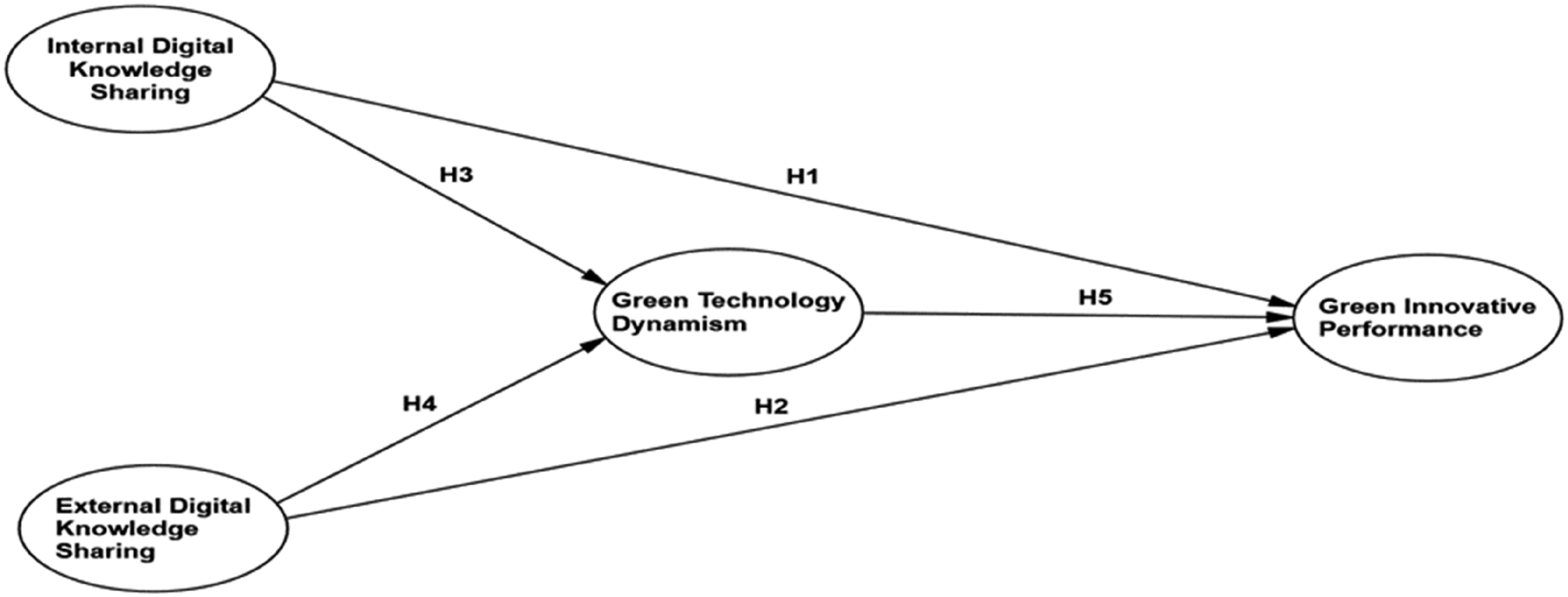
Research methodology
Research design
This study aims to explore the impact of DKS on the GIP of SMEs and to examine the mediating role of GTD in this relationship. To achieve these objectives, a quantitative survey-based approach is employed. Surveys are a well-established technique for investigating causal relationships and understanding the attitudes and behaviours of individuals (SME owner/manager) with empirical evidence. 124 This approach is chosen due to the confirmatory nature of the study, which requires real-world data to test and validate specific relationships identified through the literature review. 125
To accommodate participants who might not speak English as their first language, a rigorous translation and back-translation process was employed for the research instruments. This process involved two key stages: first, the original questionnaire was developed in English and then translated into Bahasa Malay by a qualified translator. In the second stage, another certified translator back-translated the Bahasa Malay version into English. This meticulous back-translation approach ensured the equivalency of the translation, addressing any discrepancies or inconsistencies that could have arisen during the process. Such a thorough procedure was vital for preserving the accuracy and integrity of the research instrument across different language versions, ensuring its suitability for participants with limited English proficiency. 126
Sampling technique
According to SME Corp Malaysia, there were 1,151,399 business enterprises classified as SMEs in Malaysia in 2020. The services sector (85.5%) and the manufacturing sector (5.1%) dominate the Malaysian economy, together accounting for 90.6% of SMEs and contributing 83.3% to the country’s GDP. 127 Based on Krejcie and Morgan’s 128 sample size determination table, a sample size of 384 respondents is recommended for a population of approximately 1,043,167 registered SMEs. This method is widely employed by researchers to ensure appropriate and representative sampling.
Questionnaire design
A two-part questionnaire was developed for this study, targeting SME owners/managers as survey respondents. This approach is suitable for gaining insights into the role of green innovation within SMEs. Part 1 – The first section of the questionnaire focused on collecting demographic information. This included gender, age, marital status, level of education, religion, and details of business activities. Part 2 – The second section of the questionnaire comprised items aimed at assessing respondents’ perceptions of the influence of DKS on GIP, as well as the mediating role of GTD in this relationship.
The second part of the questionnaire reflected the underlying variables proposed in the conceptual model. Respondents were asked to rate these variables using a five-point Likert scale, ranging from (1 = strongly disagree) to (5 = strongly agree).
Before administering the questionnaire, a two-step piloting procedure was conducted to ensure its appropriateness for the intended purpose. In the first step, the questionnaire was reviewed by an Academic Professors specializing in sustainable construction, who approved its content. Subsequently, in the second step, the questionnaire was piloted with 15 industry professionals from diverse backgrounds, all experienced in environmental sustainability issues. After explaining the contents of the questionnaire, all respondents agreed on its suitability. This positive feedback motivated the researchers to proceed with administering the questionnaire in its original form.
Survey procedure
The researchers distributed survey questionnaires to 384 SME owners and managers in the manufacturing and service industries using both printed and online formats. The distribution was facilitated either through in-person delivery or by designated representatives, referred to as enumerators in this study. The enumerators employed a dual approach, leveraging in-person meetings and online survey platforms such as Facebook, LinkedIn, Twitter, and email. This two-pronged strategy was designed to maximize outreach and ensure effective engagement with potential respondents.
The survey included a screening question to determine if respondents were familiar with DKS and green innovation. Only individuals who indicated familiarity were eligible to complete the questionnaire. Of the 384 surveys distributed, 294 were returned, resulting in a response rate of 76.6%. This response rate reflects the proportion of distributed questionnaires that provided meaningful and relevant responses for the study.
Measures
The study’s questionnaire was designed to measure the variables outlined in the conceptual framework through adapted items. These included the independent variables IDKS and EDKS, the dependent variable GIP, and the mediating variable GTD. A total of 24 items were employed to assess these constructs. The development of the scale items was informed by recommendations and guidelines from prior research, including studies by Deng et al., 129 Wong, 107 Song et al., 130 Chen et al., 131 Asad et al., 31 and Polas et al. 3
Statistical analysis
To test the proposed hypotheses, this study utilized Structural Equation Modelling (SEM) with the AMOS-24 software. SEM, as described by Westland, 132 is a robust statistical technique designed to analyse complex interactions between variables. Both the structural and measurement models were evaluated using the maximum likelihood estimation method, as recommended by Farooq. 133
Convergent validity and causal relationships between the refined items and constructs within the measurement model were evaluated through Confirmatory Factor Analysis (CFA), as recommended by Awang et al. 134 CFA serves as a critical tool to assess the measurement model’s goodness-of-fit, ensuring the reliability and validity of the constructs. 135 Additionally, the relationships between exogenous (independent) and endogenous (dependent) variables were explored through a structural model derived from the CFA results, following the guidelines of Schreiber et al. 136 This approach enabled an in-depth examination of the pathways and interactions among the study’s constructs. Furthermore, the mediational effects within the model were rigorously tested using the bootstrapping method, providing robust statistical validation of the indirect effects.
Results
Respondents’ demographic information
Demographic assessment.

Normality assessment
In SEM-AMOS analysis, ensuring that the data meets the assumption of normality is crucial, as it enhances the reliability and validity of the results. One effective way to assess normality is by examining the skewness and kurtosis of the data distribution, as recommended by Gao et al. 137 Skewness measures the asymmetry of the distribution, while kurtosis indicates the “tail-heaviness” or peakedness. 138
Normality assessment.

Measurement model assessment
As recommended by Byrne, 140 the measurement model was evaluated using a range of goodness-of-fit statistics to ensure it appropriately represents the data. The fit indices calculated include RMSEA = 0.032, chi-square = 593.341, df = 293, GFI = 0.922, AGFI = 0.930, CFI = 0.942, and CMIN/df = 2.116. These values fall within the acceptable thresholds for model fit, indicating a satisfactory alignment of the model with the observed data.
The factor loadings for all items were above 0.70, further supporting the measurement model’s validity, as suggested by Cheung et al.
141
The findings of the measurement model, including the fit indices and factor loadings, are presented in Figure 2, confirming the model’s robustness and appropriateness for subsequent analysis. Measurement model.
Composite Reliability (CR) and Average Variance Extracted (AVE) are essential metrics used to assess the quality of measurement models. CR evaluates internal consistency and predictive reliability based on the intercorrelations among variables within a construct. 142 A CR value greater than 0.6 generally indicates that the measurement items reliably capture the construct’s characteristics. 143
In contrast, AVE measures the amount of variance a construct captures relative to the variance due to measurement error.126,144 An AVE greater than 0.5 demonstrates that the items adequately represent the construct’s features, indicating strong convergent validity. 143 These thresholds provide benchmarks to ensure the constructs in the model are both reliable and valid for further analysis.
Measurement model assessment.

Structural model assessment
After assessing the measurement model, the hypotheses proposed in the conceptual framework were tested. Firstly, the fit indices of the structural model (RMSEA = .037, chi-square = 556.709, df = 293, GFI = .918, AGFI = .927, CFI = .939, and CMIN/df = 2.327) indicated an acceptable model fit as identified by Hair Jr et al.
143
The results are depicted in Figure 3. Structural model.
The subsequent stage of the analysis involved assessing the strength of relationships among the research variables. Variance Inflation Factor (VIF) values for all predictor constructs were below the acceptable threshold of 5, indicating the absence of multicollinearity issues and ensuring that the model estimates are stable and reliable. 145 The R2 values revealed that digital knowledge sharing and green technology dynamism jointly explained a substantial proportion of variance in green innovative performance among SMEs. Furthermore, the Q2 values, derived through blindfolding procedures, were all above zero, confirming the model’s predictive relevance for the endogenous constructs. 146 These results collectively validate the proposed relationships and demonstrate that the integration of digital knowledge sharing and green technology dynamism provides a strong and predictive framework for understanding green innovative performance in SMEs.
Hypothesized relationships assessment.

The mediation assessment
The study highlights that GTD serves as a mediator in the relationships between SMEs’ IDKS and EDKS with GIP. The acceptance of hypotheses H6 and H7 is supported by the supplementary mediation criteria established by Singh et al. 147 and Rasoolimanesh et al., 148 as all standardized path coefficients are both significant and positively aligned.
Bootstrapping assessment.

Discussion
The study’s findings highlight the significance of DKS in SMEs, demonstrating that it is not limited to larger firms but is also actively practiced in smaller enterprises. This suggests that SMEs have access to similar opportunities for knowledge sharing and innovation as their larger counterparts. Moreover, the research confirms that both IDKS and EDKS positively influence GIP in SMEs, emphasizing the importance of leveraging digital platforms and networks to drive sustainability initiatives. Furthermore, the study reveals that GTD plays a crucial role as a mediator between DKS and GIP. This underscores the importance of staying updated on technological advancements and trends in the green technology sector, as it enables SMEs to effectively harness digital knowledge for driving innovation and sustainability. Overall, these findings provide valuable insights for SMEs in Malaysia and beyond, highlighting the potential of DKS and green technology adoption to enhance GIP and contribute to sustainable development efforts.
Hypotheses H1 and H2 propose that IDKS and EDKS significantly influence the GIP of Malaysian SMEs. This study confirms that both IDKS and EDKS have a positive and significant effect on GIP, as supported by the study’s results (H1: β = .32 with p < 0.001; H2: β = .28 with p < 0.001). The results of our study offer insights for firms aiming to understand and implement the importance of DKS in SMEs’ administrative operations. By incorporating DKS practices, SMEs can enhance their eco-innovative capabilities across ecological, economic, and social dimensions. This finding aligns with the research of Tønnessen et al., 18 who demonstrated the significant effect of both IDKS and EDKS on innovation. Additionally, the findings of Polas et al. 3 indicated a positive and significant association between knowledge management and green innovation, providing partial support for our study. They suggested that knowledge management contributes significantly to green innovation, fostering a green environment.
The study’s results support hypotheses H3 and H4, indicating that both IDKS and EDKS have a significant and positive relationship with GTD (H3: β = .48 with p < 0.001; H4: β = .43 with p < 0.001). This suggests that the exchange of digital knowledge within and outside SMEs contributes to enhancing their capabilities and facilitates the adoption of green service innovation approaches. The findings align with previous research conducted by Kong et al. 108 and Syed et al., 113 which also highlighted the importance of knowledge sharing in leveraging technological resources for green service innovation. This consistency in findings underscores the role of DKS as a driver of innovation, particularly in the context of sustainability and environmental initiatives within SMEs. Therefore, these results emphasize the importance of fostering a culture of DKS within SMEs and leveraging external expertise and insights to enhance GTD and drive innovation in the development of sustainable products and services.
The study’s results support hypothesis H5, indicating that GTD significantly influences the GIP of Malaysian SMEs (H5: β = .51 with p < 0.001). This finding underscores the importance of technological dynamism in driving innovation and fostering long-term environmental sustainability within firms. By leveraging technological advancements and staying abreast of emerging trends, SMEs can position themselves for long-term success and contribute positively to environmental stewardship. The study’s findings are consistent with previous research conducted by Asad et al., 31 which also demonstrated the positive impact of green technology on promoting and enhancing green innovative behaviour. This consistency in findings highlights the pivotal role of technological advancements, particularly in the context of sustainability initiatives, in driving innovation and performance outcomes within SMEs.
The study’s results provide support for hypotheses H6 and H7, indicating that GTD acts as a complementary mediator in the relationship between DKS (both internal and external) and the GIP of Malaysian SMEs (H6: Path 1- β = .49 and Path 2 - β = .53 with p < 0.001; H7: Path 1 - β = .45 and Path 2 - β = .54 with p < 0.001). This finding suggests that in addition to the direct positive influence of DKS on GIP, there is an indirect effect mediated by GTD. By demonstrating the importance of IDKS and EDKS in fostering GIP, as well as highlighting the mediating role of GTD, the study significantly contributes to the existing literature. These findings underscore the critical role of knowledge sharing practices, particularly in the context of green industries, and shed light on how SMEs can leverage DKS to enhance their competitiveness and innovation capabilities through the adoption of green technologies. Moreover, as these relationships had not been previously tested, the study fills an important knowledge gap in the field. By examining these previously unexplored relationships, the research enriches our understanding of the mechanisms through which SMEs can harness DKS for sustainable innovation and competitive advantage in the green economy. Overall, the findings provide valuable insights for policymakers, practitioners, and researchers seeking to promote sustainability and innovation within SMEs.
While this study is contextually grounded in Malaysian SMEs—recognized for their growing importance in the national economy yet facing structural and technological limitations—the findings offer broader applicability beyond Malaysia. The proposed framework, underpinned by SCT, highlights mechanisms such as digital knowledge sharing and green technology dynamism, which are relevant to SMEs globally, especially those in other emerging and developing economies facing similar challenges in sustainability transitions. These insights can inform policymakers, industry leaders, and SME managers across different contexts on how social networks and knowledge-sharing practices can drive green innovation. Therefore, although Malaysia provides the empirical setting, the theoretical and practical implications of this study extend to broader international SME ecosystems that seek to balance economic growth with environmental sustainability.
Implications of the study
Theoretical implications
The current research explores novel and ongoing phenomena, yielding various implications. Firstly, it contributes to the existing body of knowledge by examining and validating a conceptual framework that integrates DKS to assess its influence on GIP through GTD in organizational settings. While DKS is gaining theoretical research attention, there remains a gap in understanding its link with GIP through GTD mediation in a comprehensive model. This study addresses this gap by empirically examining, through a social capital theory lens, the relationship between these constructs. The study extends and complements the growing body of research on digitalization and green innovation. The findings contribute to social capital theory by demonstrating the influential role of DKS in the implementation of green innovative activities in an organizational context. Furthermore, the findings also extend the theory by suggesting that both IDKS and EDKS have a positive and significant relationship with the GIP of SMEs in Malaysia.
Secondly, prior research on GIP has primarily focused on the direct effects of various factors and organizational strategies. However, in this study, GTD emerged as a significant mediator between DKS, both internally and externally, and GIP. Exploring the mediating role of GTD in the proposed model offers a fresh theoretical perspective, especially in the context of emerging economies. Given the limited studies investigating GTD as an intervening factor across different cultures, the findings provide valuable insights for future research endeavours in this area.
Third, the findings of this study extend green innovation research by emphasizing that increased DKS within and outside of SMEs’ boundaries can foster GIP. Moreover, the study contributes to and enriches the literature by underscoring the importance of individual motivation for GIP within the context of a developing country.
Practical implications
Indeed, a key practical implication of the study underscores the significant influence of IDKS and EDKS, on GIP within SMEs. Owners and managers can leverage this insight to address the growing necessity to reconsider green practices and promote knowledge sharing, especially in light of advancing technologies. The findings emphasize the critical role of fostering DKS among employees and colleagues, as well as with external stakeholders, in enhancing GIP within SMEs. This highlights the importance of implementing strategies to promote effective DKS practices within SME settings, thereby facilitating sustainable innovation and growth.
Furthermore, this research underscores the significance of effective management of DKS and green technologies, particularly for policymakers like SME Corp Malaysia. It is imperative for such entities to acknowledge the pivotal role of knowledge dissemination in fostering green innovation and advancing sustainable development. Initiating specialized programs aimed at educating owners and managers can prove instrumental in equipping them with the necessary knowledge and skills to drive long-term organizational sustainability. Consequently, digital knowledge emerges as a critical factor influencing green innovation, especially in emerging economies where SMEs may have limited resources compared to their counterparts in developed nations. By prioritizing initiatives that promote digital knowledge sharing and facilitate access to green technologies, policymakers can catalyse sustainable innovation and development within SMEs, thereby contributing to broader societal and environmental goals.
In conclusion, SMEs should prioritize digital knowledge and green technology as essential tools for achieving sustainability goals both within and beyond their organizational boundaries. Owners and managers play a crucial role in facilitating knowledge sharing among internal and external stakeholders, providing platforms where individuals can exchange insights and collaborate to enhance their capabilities for driving green innovation. By fostering a culture of DKS and leveraging green technologies effectively, SMEs can strengthen their commitment to sustainability and contribute to positive environmental outcomes while also enhancing their competitive position in the market.
Limitations and directions for future research
The aim of this study, to assess the influence of IDKS and EDKS on the GIP of SMEs, was achieved, albeit with some limitations. Firstly, this research relied on data from Malaysian SMEs. To generalize the findings, further research using data from other nations, particularly from larger international corporations, is necessary. Secondly, the study employed a cross-sectional research design, as the data were collected at a specific point in time. Determining whether these factors contribute to green innovation necessitates a longitudinal investigation. Thirdly, the study’s acknowledged limitations encompass its solely quantitative design, which restricted respondents from providing verbatim expressions of their opinions regarding the identified strategies, and its small sample size, attributable to respondents requiring some level of understanding of the concepts of digital knowledge sharing and green innovation. Based on the findings of this study, future research may consider collecting qualitative data to facilitate the exchange of more diverse ideas. Fourthly, certain academics have suggested that the religious beliefs of senior management could influence their approach to environmental awareness; further research could investigate this factor. Moreover, additional research is recommended to explore how environmental sustainability can be achieved in emerging nations with high levels of pollution.
Footnotes
Acknowledgements
We sincerely thank the Ministry of Higher Education (MOHE) - Malaysia for funding this research through the Fundamental Research Grant Scheme [FRGS/1/2024/SS01/UNIMAS/02/1 - NAT/F01/FRGS/86398/2024]. We also extend our deepest gratitude to Universiti Malaysia Sarawak (UNIMAS) for their invaluable support and provision of research facilities, which have been instrumental in the successful completion of this study.

Funding
This research was financially supported by the Ministry of Higher Education (MOHE) - Malaysia through the Fundamental Research Grant Scheme [FRGS/1/2024/SS01/UNIMAS/02/1 - NAT/F01/FRGS/86398/2024].
Declaration of conflicting interests
The author(s) declared no potential conflicts of interest with respect to the research, authorship, and/or publication of this article.