




Abstract
The efficiency of baggage handling greatly impacts airport operation, as delayed baggage can affect aircraft turnaround time, reduce minimum connection time, and affect gate management and airport capacity utilization. This research paper explores the application of Six Sigma methodology to improve baggage handling time at airports. The case study applied the DMAIC (Define, Measure, Analyze, Improve, and Control) methodology. The different phases of the study involve identifying the main problem in baggage handling, analyzing the data on the key performance metric, and implementing various improvements. There is a noticeable improvement in baggage handling time as quantified by sigma quality level (SQL). The SQL value increased from 1.46 to 1.96 for aircraft code C and 1.56 to 2.25 for aircraft code E. The average baggage handling time decreased by 10.5% and 19% for two aircraft codes. Through a structured Six Sigma approach, the airport identified improvement areas, implemented solutions, and increased customer satisfaction. The results of this study contribute to the growing body of knowledge on process improvement methodologies in the airline industry.
Keywords
Introduction
In the last decades, flight demand has grown steadily as the world economy develops. Between 1970 and 2019, the number of air passengers worldwide increased ten times, as stated in World Bank statistics. 1 To protect consumers and make airports and airlines more efficient, flight delay management is becoming even more important in the air transport business as a result of an increasing number of passengers. Delays of flights have caused the air transport sector millions of dollars over the past few years,2–4 and they’ve turned into a systematic problem. The flight delays result in significant additional expenditures affecting the airlines, airport terminals, and passengers globally. Airlines experience a decrease in revenue and an increase in operating expenses when flights are delayed.
There are several causes of flight delays. According to the International Air Transport Association (IATA), delay causes can be classified into passenger and baggage handling, suppliers’ handling, fueling, catering, technical maintenance or aircraft defect, operational requirements and crew duty norms, air traffic control, airport restriction, delay of the previous flight, and others.5,6 The typical literature on flight delays relates to delays during subsequent flights, economic aspects, and optimization methods. 5 The baggage handling, which is a potential bottleneck in the turnaround process, must also be given attention to address flight delays. Depending on the research objectives, statistical analysis, probabilistic models, network representation, operational research, and machine learning are various methods to analyze flight delay. 7 Six Sigma, an approach that seeks to identify and eliminate system failures, has not been applied extensively in the airport sector. 8
The efficiency of baggage handling has a significant impact on the operation of the airport, as delayed baggage may affect the turnaround time of the aircraft, reduce the minimum connection time, and affect the management of the gates and airport capacity. Airline customers expect a high service level reliability and responsiveness during the check-in, security screening, boarding, transit screening, baggage transfer, and baggage claim process. 9 Long process time in the baggage handling system could result in customer dissatisfaction, affecting airline operations and revenues. Hence, there is a need to examine how the baggage is being handled in the airport.
An initial review of the literature led to the identification of significant gaps. First, there is a need to examine the baggage handling process as it could result in flight delays. Though there is baggage handling research on its infrastructure, there needs to be more attention on this field. Second, despite the application of Six Sigma methodology in different industries, this approach is only sometimes applied in the airport sector. Considering these gaps, the paper aims to reduce the delay in baggage handling time to meet the standard time and avoid delays. The Six Sigma methodology is applied to identify problematic areas in the process, analyze the root causes of the problems, and then come up with proper solutions. More specifically, this paper applies the Six Sigma structured method for improvement known as DMAIC (define-measure-analyze-improve-control). This study contributes to the literature on Six Sigma application in the airport sector. Specifically, this case study identifies causes of delays and possible solutions in baggage handling to help decision-makers in redesigning the airport system.
The article is structured as follows: section 2 presents the baggage handling system and Six Sigma application, section 3 presents the approach of the case study, and section 4 analyzes the results. The final section concludes the article.
Literature review
Baggage handling system
A Baggage Handling System (BHS) is one of the critical airport operational systems that involves complex interrelationships between many different elements and agents. It is responsible for moving, controlling, screening, sorting, and storing passenger baggage. 10 It has three main jobs: moving bags from the check-in area to the aircraft at departure, moving bags from one aircraft to another at transfer, and moving bags from the aircraft to the baggage claim area at arrival. Passengers perceive baggage handling as a major contributor to the quality of their flight experience. Therefore, it is important for the airline industry in today’s competitive environment to continuously improve its operational systems.
Baggage handling time at arrival is the time when the aircraft arrives on block till the last baggage is put on a conveyor belt in the sorting area, which is then transferred to the baggage claim carrousels. Block time is the time when the aircraft stops at the stand in the apron, and chocks are put on to guarantee complete stoppage. The apron is the portion of the airport that accommodates aircraft for the purposes of parking, loading and unloading passengers or cargo, refueling, or maintenance. The actual positions for aircraft parking are also known as stands. The sorting area is where baggage is sorted, checked by security, and transferred to the baggage claim area through a series of conveyor belts.
The importance of baggage handling systems to a smooth airport operation led to several studies being conducted. Typical research on this baggage handling system involves simulation11–14 and RFID.15–17 Common simulation models aim to evaluate the system performances and compare alternatives, which are important for system decision makers and schedulers of baggage handling systems. While RFID technology helps decrease the amount of baggage mishandling. Though this research is relevant in increasing the efficiency of the BHS, there is also a need to identify the significant factors which cause delays in the BHS. Bottlenecks may be caused by human factors, methods, and the environment, and are not limited to infrastructures such as RFID. As mentioned in a study, there is a need to identify more influential parameters in creating the simulation models further. 11 Hence, it is necessary to examine the whole process of BHS and identify the significant causes of delays in the system. The studies reviewed earlier have concentrated on specific aspects of BHS but have overlooked the comprehensive process improvement introduced by this paper through the application of Six Sigma. This study contributes to reducing the processing time, lessening delays, and achieving greater throughput, resulting in higher productivity in an airport system.
Six Sigma
Six Sigma is a highly disciplined and data-oriented methodology used by organizations to improve product or process quality. 18 Sigma, represented by the Greek alphabet letter σ, is used to identify variability. In statistical terms, a sigma quality level (SQL) indicates how often defects are likely to occur for any given product or process. A Six Sigma quality level is equal to 3.4 defects per million opportunities (DPMO). 19 The core principle of the Six Sigma methodology revolves around the pursuit of perfection by minimizing process variations to achieve a Six Sigma quality level. Although this goal might be challenging to achieve, applying Six Sigma methodology and tools will help improve quality nonetheless. 20 One key to the success of Six Sigma projects is using a Define-Measure-Analyze-Improve-Control (DMAIC) structured approach. 21
As an emerging research direction, Six Sigma has attracted many researchers in recent years to overcome drawbacks. Six Sigma originated in manufacturing, but its principles have also been implemented in service industries in different contexts. 22 Despite the diverse application of Six Sigma, there needs to be more literature on its application in the airline industry. “Six Sigma is a disciplined method of rigorous data gathering and robust statistical analysis to pinpoint sources of error and ways of eliminating them”. 23 Delays in BHS can be addressed by identifying the sources of these errors and finding ways to eradicate them. Therefore, Six Sigma is a relevant approach in determining the significant factors to shorten the process time, avoid delays, and increase productivity.
Several studies have investigated the implementation of Six Sigma in various aspects of airline operations, including ground handling processes, 24 refueling,25,26 check-in services, 27 information systems, 28 and departure waiting time. 29 A study explored the implementation of Lean Six Sigma methodology to analyze and enhance non-value-adding processes in airline ground handling operations. 24 The study resulted in an 8% reduction in lead time and a 7% reduction in total processing time for departure flights. A study in the refueling process, which applied the Six Sigma approach, was able to reduce flight delays. 25 The Student’s t-test and statistical process control demonstrated that the proposed process reduced the average length of flight delays by 57%. The application of the Six Sigma methodology in check-in services shortened the processing time from 60 seconds to 40 seconds. 27 The study analyzed the situation of check-in service, defined the problem, measured the current quality level, constructed the cause-and-effect diagram of reasons for check-in time beyond 1 minute, and then analyzed the main reasons in six dimensions: environment, staff, materials, passengers, equipment, and methods. There were four suggestions presented. The study on information systems revealed that the Six Sigma approach improved quality control, leading to time and cost savings. 28 Furthermore, a Six Sigma method was applied in departure area operation, which led to decreased waiting time, and improved service level. 29 The research highlighted the application of Six Sigma in decision-making and streamlining the processes.
A baggage handling system, which is designed to coordinate a wide range of elements and agents in various areas of the facility, constitutes an essential element for airport operation. In view of the complexity of their interrelationship, these elements and agents need to be considered not as separate entities but as an integrated whole for a practical analysis of the impact of various operational strategies on the systems. There are articles that presented the implementation of the lean Six Sigma methodology to continuously improve the baggage flow in a BHS. The author claims that the lack of system reliability and a large number of bags being transported by automated decoding machines are key problems. 30 The proposed solutions resulted in system reliability improvement and waiting time reduction in BHS, as depicted in the simulation model. A study determines the root causes of baggage connectivity delays. 31 In this paper, the improvement strategies resulted in a 65% reduction in load connection delays. There is also research that focuses on reducing mishandled baggage using the Six Sigma methodology.32,33 While previous studies have made significant progress in tackling specific issues like reliability, connection delays, and mishandled baggage within the BHS, they often address these problems in isolation. Moreover, limited research has explored the broader system interactions that occur when different components of the BHS work together to enhance overall performance. This study addresses that gap by contributing to the literature with a case study that introduces a new application of Six Sigma in the air transport industry, utilizing the DMAIC methodology to achieve operational and service excellence in baggage handling systems.
Most research on BHS involves simulation and infrastructure improvement. It is necessary to examine the whole system to identify the significant factors in BHS in order to have a more accurate simulation and reliable infrastructure. One of the valuable techniques in improving a system is Six Sigma. Despite its wide application in manufacturing and service sectors, it is also relevant to apply Six Sigma in an aviation industry due to its complex operation. BHS is a critical process, and utilizing Six Sigma can provide the thorough analysis needed to ensure its efficiency and reliability.
Methodology
This case study applied analytical methods to evaluate the baggage handling process within the arrival area of an international airport in the Middle East Region. The importance of the air transport systems in Middle Eastern nations is increasing. 34 Between 2006 and 2015, the Middle East region had the highest growth in transit passengers worldwide, with an average of 98%. 35
This study gathered data through interviews, focus group discussions, and recorded documents. The interviews were carried out face-to-face to collect in-depth data and insights from key personnel who are involved with baggage handling procedures. Some of the interviewees include the head of the terminal operations section, the resources coordinator officer, and operational managers. Data was gathered through direct observation, and documents were provided by the airport personnel. Minitab, which is a statistical software, was utilized to analyze and present the data. 36
The Six Sigma DMAIC methodology is adopted in this research work. Figure 1 shows the methodology implementation framework. In the “Define” phase, the problem was determined by identifying the customers, establishing the Critical to Quality (CTQs), presenting the project charter, and developing the high-level process map. The CTQs were established according to aviation standards and interviews. The project charter was developed by comparing the standard time and the result of the preliminary time and motion study. The high-level process map presents the processes involved in the study. In the “Measure” phase, the key output measure and process capability analysis was examined. Process capability is a statistical measure to analyze the system. Furthermore, the process factors and root causes of the problem were identified in the “Analyze” phase. The root causes were determined using the cause-effect matrix and root cause analysis. The “Improve” phase generated and implemented alternative solutions to eliminate or reduce the relevant causes. The effectiveness of the improvement actions was validated using a process capability statistical analysis. Lastly, the “Control” phase created strategies to sustain the improvements. Methodology framework.
Six Sigma application in baggage handling
The baggage handling process is one of the critical procedures in an airport’s operations because it needs to synchronize many different elements and agents in different areas of the facility. This case study was conducted in an airport, where the apron or flight line is divided into south and north. Every area has 32 stands numbered from 1 to 32. Stands with even numbers are contact stands, which are connected to the terminal with a passenger boarding bridge (PBB). The stands with odd numbers are remote stands, which are not suitable for walking passengers. The sorting area at this airport contains six conveyor belts. Each conveyor belt is individually connected to a specific carrousel in the baggage claim area. Though an operating company manages the operation of the airport, the baggage handling services are handled by three separate ground handling companies. The operating company just guides the baggage handling services. With the complexity of the baggage handling functions, delays in the process are difficult to control.
The standard time for baggage handling on arrival is classified according to aircraft size. The aircraft type is categorized as Code C, Code D, and Code E, where Code E is the largest. Figure 2 displays the standard time for each type of aircraft. Code E, which is the largest, has the longest process time. Since achieving the standard time is very challenging, an improvement project is necessary. A Six Sigma DMAIC project, headed by a Six Sigma Black Belt (BB), was implemented. Standard time (minutes) for baggage handling at arrival.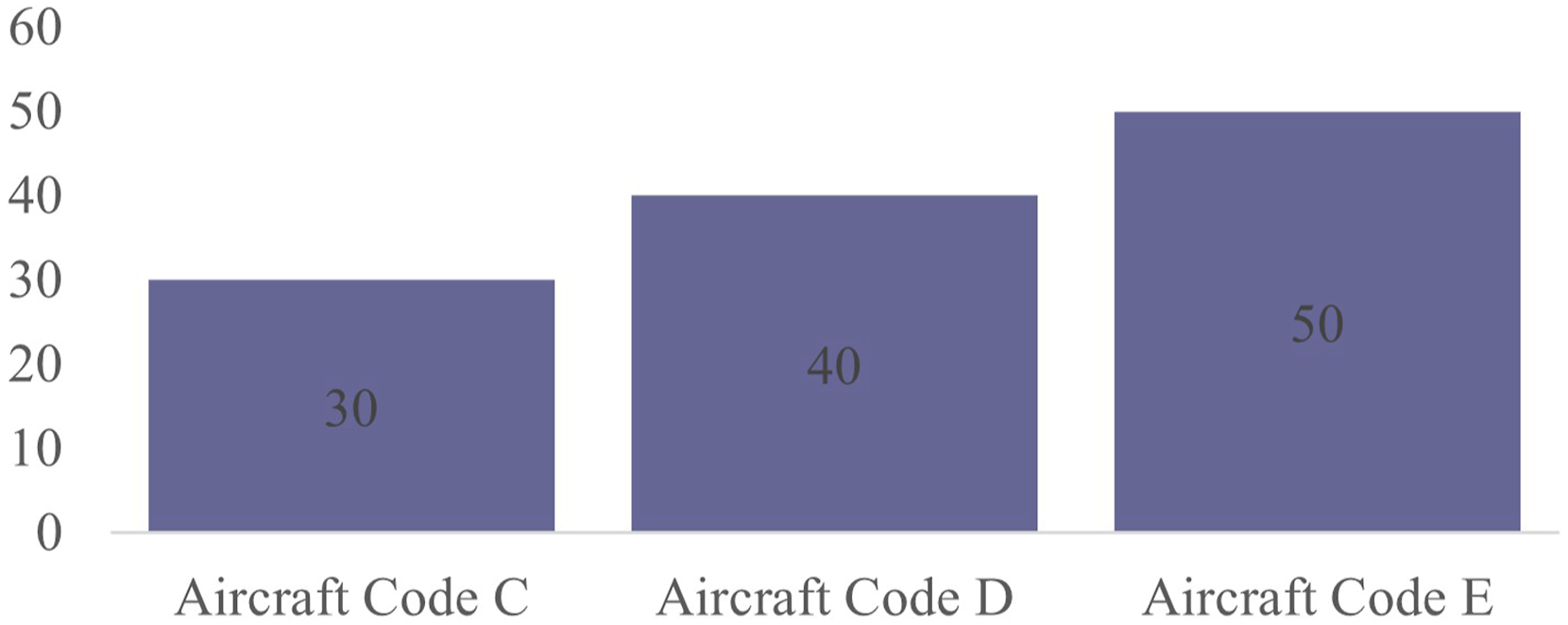
Define phase
The initial phase defines the problem and project objective based on the requirements of the customers. To understand and analyze the entire system, a high-level process map is developed to identify the key steps involved.
Define customers
Customers are classified into two main categories: internal customers and external customers. The internal customers of the BHS are the airport operating company, ground handling agents, security personnel, and airlines. On the other hand, the external customers are the airline passengers.
Critical to quality (CTQ)
CTQs for internal customers.

CTQs for external customers.

Project charter
The preliminary data analysis reveals that the average actual baggage handling time at the arrival area is longer than the target standard times, as presented in Figure 3. This means that the passengers are experiencing delays in claiming the baggage. The delays in Code C, Code D, and Code E are 10 minutes, 11 minutes, and 32 minutes, respectively. Delays in the baggage handling process have an adverse impact on passenger satisfaction and turnaround performance.37,38 Delays could affect the next flight schedules. Furthermore, the initial analysis uncovers that 41.6% of the flights have delayed baggage handling. Average actual baggage handling time.
Due to the severe impacts of delayed baggage handling, this project aims to reduce the delay in baggage handling time to comply with the standard times of each aircraft code. Achieving this target would increase passengers’ satisfaction, improve airport operating performance, and maximize airport resources.
High-level process map
A process map is constructed to understand the baggage handling process, as presented in Figure 4. The baggage handling process starts when the aircraft stops at the parking stand until the passengers collect the baggage. The steps involved in baggage handling are enumerated below: a. The aircraft stops at the parking stand in the apron, where chocks are put to guarantee a complete stoppage. b. Tugs arrive with several empty trolleys attached to them. The number of tugs and trolleys depends on the aircraft’s size. c. Baggage is offloaded from the aircraft. If the baggage is stored in containers, then the containers are offloaded from the aircraft and attached to the tug. If it is not, then baggage is offloaded by a conveyor belt and manually put on trolleys that are attached to tugs. d. Tugs depart from the apron to the sorting area. A maximum number of four containers can be attached to a tug. e. The tug driver checks unloading information from a screen at the entrance of the sorting area, which assigns each arriving flight a conveyor belt number where baggage need to be unloaded. f. The workers unload baggage from tugs and read the destination information label attached to the baggage to sort them into transit and non-transit baggage. g. Transit baggage is held in the sorting area and transferred to the aircraft heading to the next destination as shown on the destination label attached to the baggage. h. Non-transit baggage is sorted according to size into out-of-gage (OOG) and standard size. The OOG baggage includes oversized baggage, children’s trolleys, wheelchairs, and fragile baggage. i. OOG baggage is put on the conveyor belt that is connected to oversized baggage carousel in the baggage claim area. j. For standard-size baggage and based on flight number, baggage inspection requirements are decided, which are: no inspection required, 50% of baggage requires inspection, and 100% of baggage requires inspection. Baggage that requires inspection is put on the assigned conveyor belt before the X-ray scanner to be inspected before transfer to the carousel in the baggage claim area. Baggage that does not require inspection is put on the assigned conveyor belt behind the X-ray scanner and then transferred to the carousel in the baggage claim area. k. Passengers collect baggage from the carousel in the baggage claim area. High level process map.

Measure phase
This phase identifies and measures the critical output parameters. The collected and tested data are used to understand the current performance and process capability.
Measure Ys
The baggage handling time (Y) includes the five processing times from different sections, representing the y’s, as shown in equation (1). The baggage handling time covers the time from the aircraft on the block until the last bag is put on belt as illustrated in Figure 5. The apron time is the time between “On block” and “First tug arrival to sorting area”. Whereas sorting time is the time between “first tug arrival to sorting area” and “last baggage on belt”. Baggage handling time (Y) and its elements (y’s).

The airport operating company only records the data of “On block”, “First bag on belt” and “Last bag on belt”. “On block” data is recorded using Visual Guidance Docking System (VGDS). “First bag on belt” data and “Last bag on belt” data are recorded by Tugman System. To conduct the process capability analysis, real-time data was manually collected using a stopwatch for variables y1 to y5. The analysis primarily focused on aircraft with codes C and E from various airlines. Aircraft of code D is excluded from consideration due to the absence of arriving flights during the data collection period.
The actual baggage handling time was gathered to examine the current performance. To ensure statistical reliability, the sample size is calculated using equation (2) with a 95% confidence interval and a margin of error of 5 minutes.
39
The calculated sample sizes for code C and E are 15 and 54, respectively. Despite the low sample size requirement, the project gathered a comprehensive dataset comprising 500 data points for aircraft code C and 130 data points for aircraft code E. The data was gathered over 3 months. • zα/2 = 1.96 for 95% confidence interval • σ represents the standard deviation • E denotes the margin of error
The data reveal that the average baggage handling time of aircraft code C and E are 30.5 minutes and 47.7 minutes, respectively. This information validates that there are delays in the baggage handling system. Furthermore, the standard deviation of aircraft code C and aircraft code E are 9.8 minutes and 18.6 minutes, respectively.
To test the accuracy of the collected data of y1 to y5, a two-sample T-test was performed using equation (3) to compare the value of Y that is collected manually and the value of Y that is calculated from the data collected automatically by the operating company.
39
• • • • • • 

In equation (3), we set Δ₀ = 0 because our focus is solely on the difference between the means of the two groups. The p-value resulting from the test is 0.128. Since the p-value is more than 0.05, the manually collected data is accurate and can be used in statistical analysis.
Process capability
The project team further analyzed the baggage handling time (Y) data collected manually for aircraft code C and E, separately. Normality tests were performed, which resulted in a p-value of less than 0.05 for both aircraft codes. Since the data was not normally distributed, the data was transformed using Minitab 21 by applying the Johnson transformation function in equation (5) for aircraft code C and the Johnson transformation function in equation (6) for aircraft code E. Where X represents the original variable and Y denotes the transformed variable. The Johnson transformation is a statistical method used to normalize data that is not normally distributed to make it closer to a normal distribution so that statistical tests can further be performed.

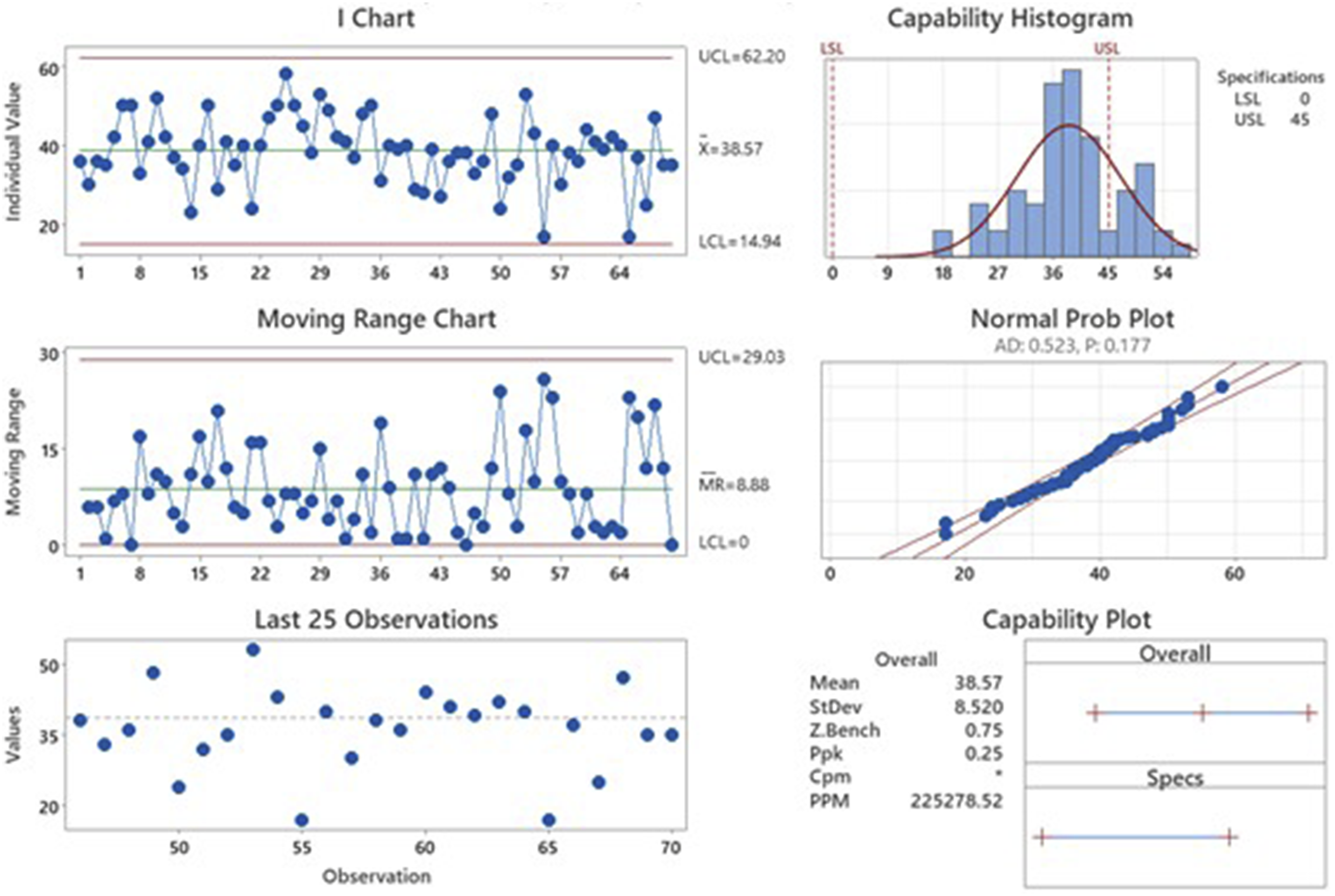
A process capability analysis was performed using Minitab 21 to assess the performance of the baggage handling process. The capability study aims to predict whether baggage handling time can meet the standard time as presented in Figure 2. Capability analysis involves the calculation of the percentage of defects and their corresponding sigma quality level (SQL). The (I-MR) control charts and the results of the process capability analysis for aircraft code C and E is illustrated in Figures 6 and 7, respectively. The Individual-moving range (I-MR) control charts depict special cause variations in baggage handling time for aircraft code C and E. Process capability report of Initial state (Aircraft code C). Process capability report of Initial state (Aircraft code E).

The SQL is computed using equation (7).
40
The resultant Z-bench of aircraft C is −0.04, resulting in an SQL of 1.46. In the case of aircraft code E, the resultant Z-bench of 0.06 leads to an SQL of 1.56. Since the values of SQL are less than 6 Sigma, it is discernable that opportunities exist to improve the Sigma level. Hence, reducing the delays in baggage handling time is necessary.
Analyze phase
The Analyze phase aims to identify the root causes of the problem. This phase looks into various factors in the process that could affect the problem. Data is then collected and analyzed to gain insight into the current processes to identify and prioritize the critical causes that have direct effects on performance. This will ensure that solutions made in the next phase are data-driven and based on a thorough understanding of the problem, resulting in long-term improvements.
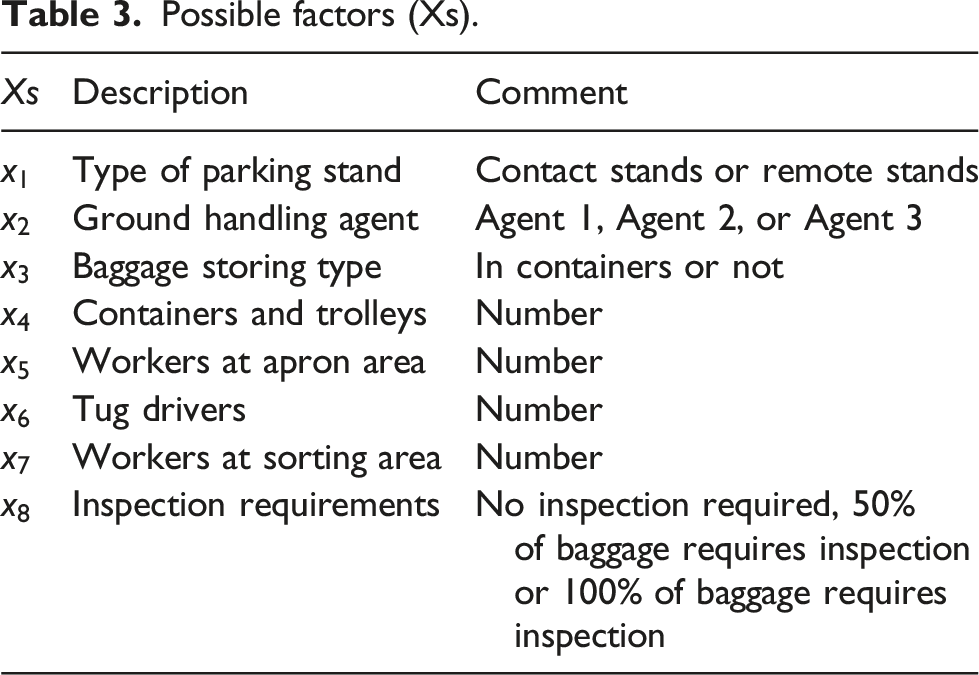
Define possible Xs
Possible factors (Xs).
Define critical Xs
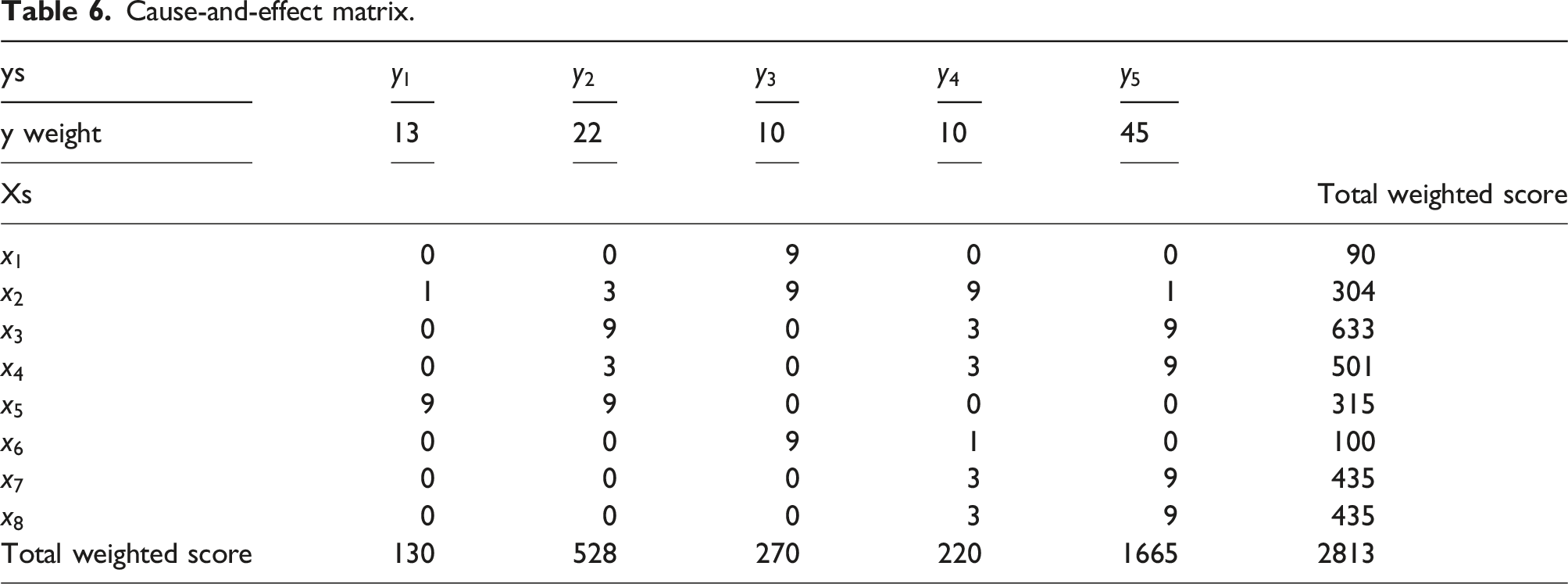
To identify the key process inputs, a Cause-and-effect matrix is developed with the following steps: a. All possible process inputs (Xs) are listed. b. Weights are assigned to all ys based on their percentages of Y. For example, c. A Likert scale is used to rate the effect of X on y, as shown in Table 4. If X has no effect on Y based on the nature of the process, then it is given a Likert scale value of zero. For instance, the time between “On block” and “Offloading start time”, does not change whether baggage is stored in containers. Therefore, the effect of d. The total weighted score equals the sum of the multiplication of Likert scale rate by the corresponding y weight. To get the total weighted score for X, the summation is done horizontally. To get the total weighted score for y, the summation is done vertically. For example: Likert scale. Example on ANOVA test results.


Total weighted score for
Total weighted score for
Cause-and-effect matrix.
Root cause analysis
A brainstorming session was conducted to further identify the root causes of the delay in baggage handling time. A cause-and-effect diagram, as illustrated in Figure 8, presents the summary of findings. The cause-and-effect diagram has five dimensions as follows: • Man: Delays due to a shortage in the number of workers. Workers include tug drivers, high-loader operators who offload containers, and workers who offload baggage in the apron and sorting areas. Delays due to late attendance of the X-ray scanner security officer and workers at apron and sorting areas. Also, delays due to workers poor performance such as being slow or misusing equipment. • Machine: Delays due to conveyor-belt stops, equipment shortage and malfunction at the apron area, and X-ray scanner malfunction. The conveyor belt may stop due to malfunction, high load due to overfilling the carousel in the baggage claim area, and baggage jam due to not leaving the standard space required between bags or an oversize bag. • Environment: Delays due to equipment blocking the way and bad weather conditions. • Method: Delays due to not monitoring violations of ground handling agent in meeting baggage handling standard time. This is due to the lack of a supervisor from the operating company to observe and record inefficient practices in the apron area. Although there is a supervisor from the operating company in the sorting area, no record of inefficient practices is there. Also, delays due to late broadcast of unloading information on the screen at the entrance of sorting area. • Others: Delays due to offloading mail or cargo, bringing or connecting the Ground power unit (GPU), and unloading transit baggage. Cause-and-effect diagram.

The frequency of occurrences of the causes identified from the cause-and-effect diagram was recorded. A Pareto chart, as illustrated in Figure 9, reveals that the workers’ poor performance, late attendance of X-ray scanner security officers, conveyor belt stoppages, and X-ray scanner malfunction are the leading causes of delay. These significant causes of delays contribute to 80% of occurrences. These factors need to be addressed to reduce the delay in baggage handling time. Occurrences of delay causes.
Improve phase
Potential solutions to eliminate or reduce baggage handling delays have been generated and implemented. The project team proposed the following improvement strategies.
Supervisory and training
Three improvement ideas were implemented to address the workers’ poor performances. First, assign separate supervisors to oversee the apron and sorting area. With this solution, dedicated personnel can monitor the performance of ground handling agents and take immediate actions on issues that may arise. Second, regular meetings should be conducted with the operating company and ground handling agents. These meetings allow the supervisors to give feedback and instructions related to ground handling processes and how to avoid delays. Lastly, train the ground handling workers on the negative impact of inefficient practices on baggage handling time, such as misusing equipment, slow performance, late attendance, trolley overload, leaving equipment in the sorting area, etc. These three improvements do not only address the workers’ poor performances but also address problems caused by
Screen at the security office
The late arrival of the security office to the assigned location by 3 minutes affects the baggage handling time. A screen is placed in their office to notify the personnel of the block time of the flight’s arrival. The information on the screen alarms the security officer to be available at the X-ray scanner once the flight arrives. Since the problem of security officer late attendance is related to the process input
Eliminating and re-sequencing steps
One of the causes of delays is the communication procedure. To eliminate the long processing time, the communication channel in fixing the conveyor belt or X-ray scanner is changed for faster decision making and actions. The old process begins with the BHS officer informing the technical supervisor about the conveyor belt or X-ray scanner malfunction, as illustrated in Figure 10. The technical supervisor then informs the duty engineer to assign a technician to fix the problem. The improvement focused on reducing the number of communication channels such that the BHS officer directly informs the technician about the problem and sends a feedback report about fixing the problem to the technical supervisor as shown in Figure 11. Communication channel (Before improvement). Communication channel (After improvement).

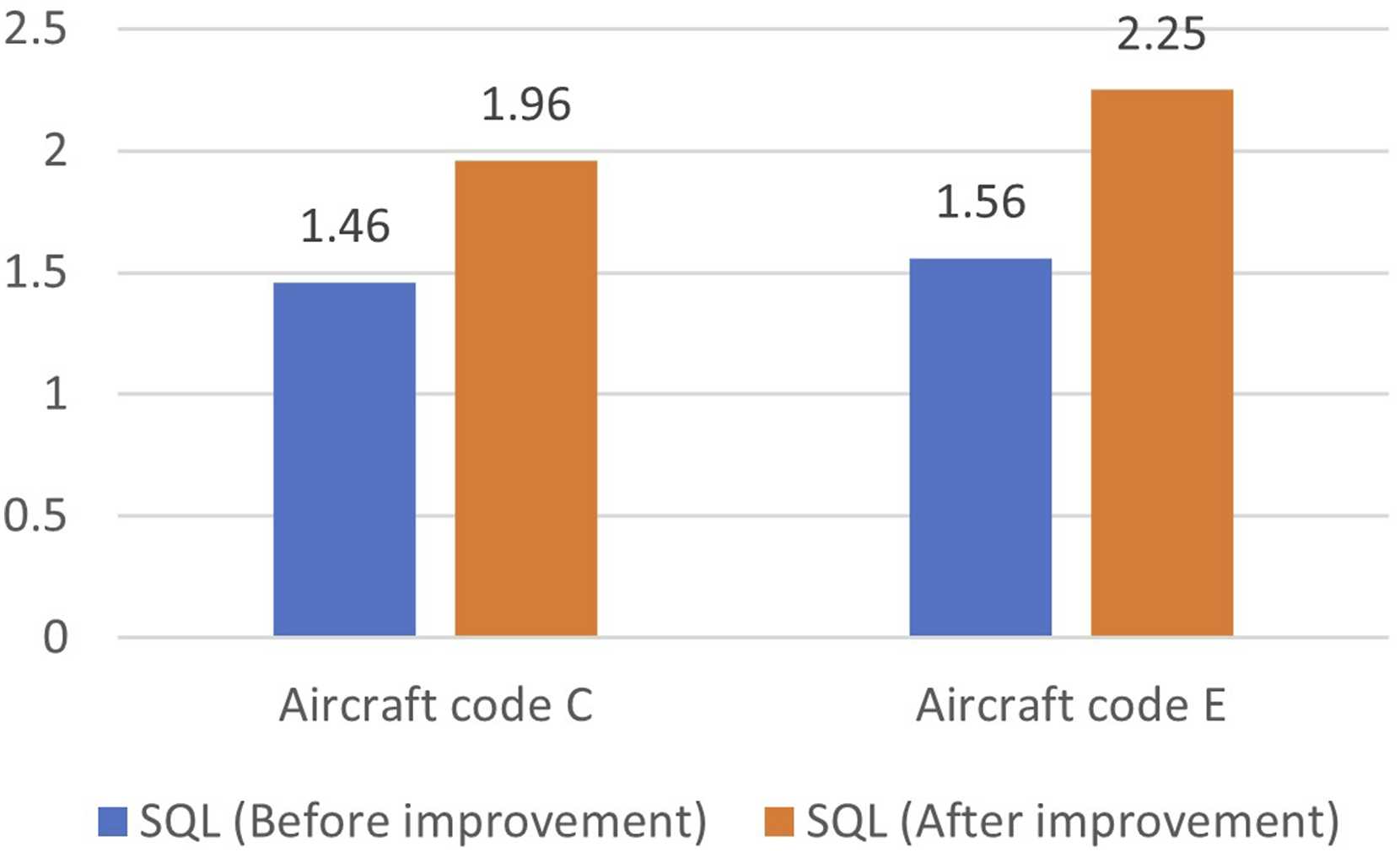
The operating company monitored the baggage handling operations to validate the impact of the proposed improvement strategies. A thorough dataset was compiled, encompassing 200 data points and 70 data points for aircraft code C and code E, respectively. The results of the process capability analysis for the improved system for both aircraft codes are presented in Figures 12 and 13. The SQL value for both aircraft codes increased, indicating the improvement strategies are proven effective. The SQL value of aircraft code C based on the initial state is 1.46, while the new system has 1.96. Regarding aircraft code E, the SQL value grew from 1.56 to 2.25. Furthermore, the effectiveness of the improvement strategies is depicted in the reduction of the baggage handling time. The average baggage handling time for aircraft code C decreased by 10.5% from 30.5 minutes to 27.3 minutes. For aircraft code E, the average baggage handling time was reduced by 19% from 47.7 minutes to 38.6 minutes. The impact results of the proposed improvement strategies on SQL and average baggage handling time for both aircraft codes are presented in Figures 14 and 15, respectively. The new system in the baggage handling process helps the operating company achieve the target standard time. Process capability report of Improved state (Aircraft code C). Process capability report of Improved state (Aircraft code E). SQL (before and after improvement). Average baggage handling time (before and after improvement).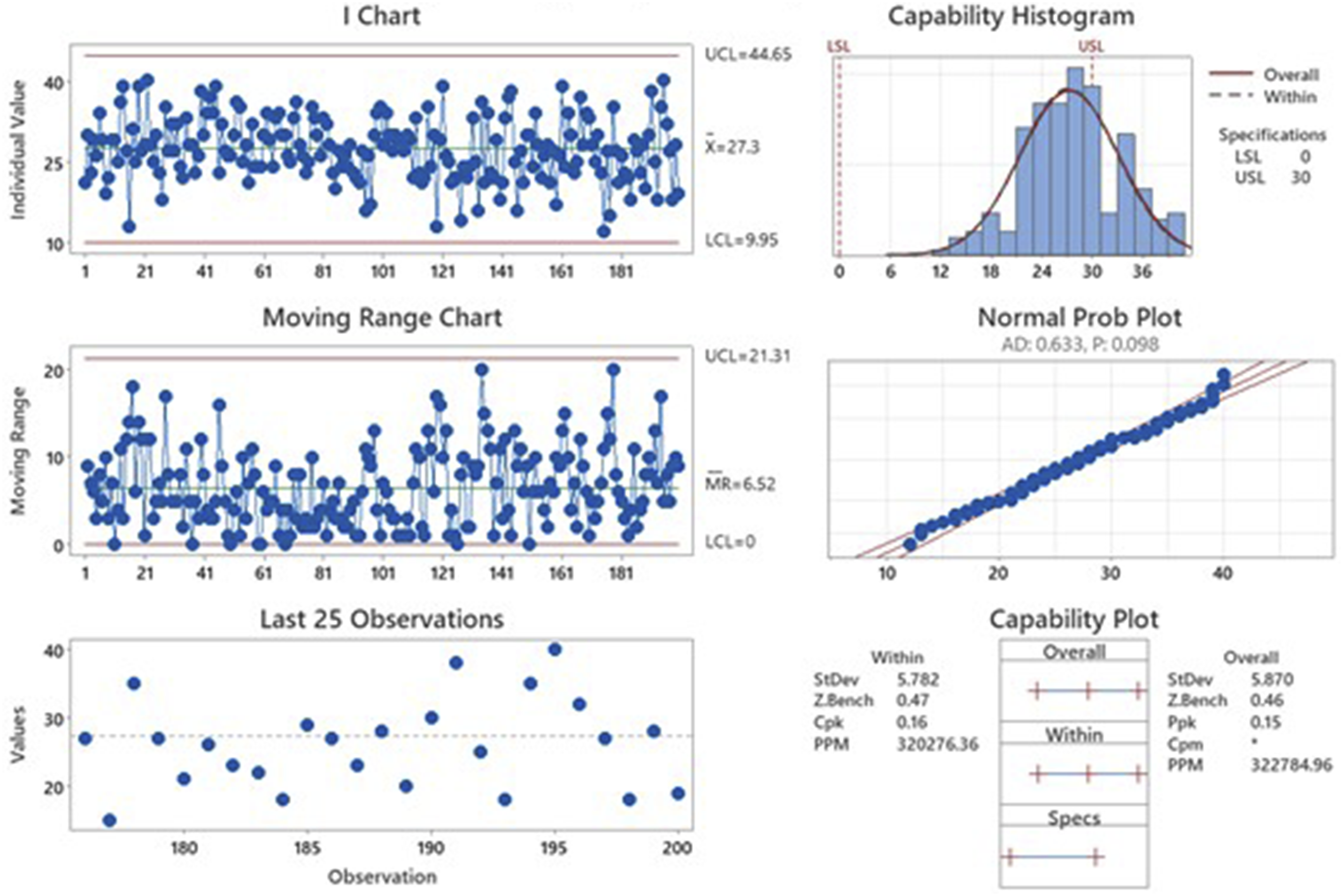

Control phase
The final phase of the process improvement cycle is the Control phase. Its purpose is to ensure that the improvements achieved through the DMAIC process are sustained and that the benefits are realized in the long term. Standard operating procedures (SOPs) were established to monitor the performance of ground handling agent workers and fix the conveyor belt and the X-ray scanner malfunctions. These documents ensure that the improved processes are consistently followed by the employees. The assigned supervisors from the operating company were also trained to monitor the performance of ground handling agent workers. Moreover, the performance of the improved process is continuously monitored and reviewed. The metrics to measure and sustain the improvements should be built into the system. 41 Control charts were created to track baggage handling time – the key process metrics- to detect deviations or unusual patterns that may indicate a potential issue. Achieving success with Six Sigma demands commitment and engagement at all levels of the organization. 42 A crucial step in this phase was establishing effective communication channels with the employees and management of the ground handling companies, sharing the project results with them, and addressing their concerns and suggestions for further improvements.
Conclusions
Baggage handling is one of the crucial operations because it could hamper flight schedules and affect passenger satisfaction. With the complexity of the baggage handling functions, delays in the process are difficult to control. The data reveals that baggage handling time is longer than the standard time hence there is a need to study the operations.
This paper applies the Six Sigma DMAIC methodology to reduce baggage handling time. In the Define phase, the specific problem of baggage handling time was identified and clearly defined based on customers’ requirements. The Measure phase enabled collecting accurate and reliable data on baggage handling time -the key performance metric. This data provided a baseline for assessing the current state and conducting process capability analysis. An in-depth analysis was conducted during the Analyze phase to identify the root causes and the underlying factors contributing to delays and inefficiencies in baggage handling. The Improvement phase involved the implementation of identified solutions to reduce the delays in baggage handling. Finally, the Control phase focused on sustaining the achieved improvements by establishing standard operating procedures, implementing statistical process control techniques, training employees, and establishing effective communication channels. In conclusion, the structured framework of DMAIC methodology has proven to be a robust and systematic approach for improving baggage handling time, resulting in shorter wait times for passengers and improved overall customer satisfaction.
This study is limited to baggage handling operations from the arrival of the aircraft to the release of the baggage of an airport company. It is recommended to conduct this study with other airlines to understand and respond to similar and different issues. Moreover, it is also advisable to widen the scope by including the baggage handling operations at the departure area.
Footnotes
Declaration of conflicting interests
The author(s) declared no potential conflicts of interest with respect to the research, authorship, and/or publication of this article.
Funding
The author(s) received no financial support for the research, authorship, and/or publication of this article.
