




Abstract
In an increasingly digitalised and interconnected world, assessing the strength of interpersonal ties in social networks is crucial for fields such as business, marketing and sociology. Traditional methods for evaluating Tie Strength (TS), which often classify relationships as either ”strong” or ”weak”, fail to capture the uncertainty and ambiguity of human interactions. This study proposes a Fuzzy-based System for Assessment of Tie Strength (FSATS). We develop and evaluate two models: FSATSM1, which utilises three input parameters Interaction Time (IT), Level of Intimacy (LoI) and Emotional Intensity (EI); and FSATSM2, where we introduce Reciprocity (Rc) as an additional parameter. Through simulations, we compare the performance of both models for the assessment of TS. The simulation results show that for FSATSM1, when IT is 0.9 and EI is 0.7 for all values of LoI, the TS values are more than 0.5. While, for FSATSM2, when IT is 0.9, for EI 0.1 (Rc more than 0.8), EI 0.5 (Rc more than 0.5) and EI 0.9 (Rc more than 0.2), all values of TS are more than 0.5, indicating a strong relationship. The results suggest that FSATSM2 provides a more accurate reflection of real-world relationships, which can be applied in contexts such as Social Customer Relationship Management (SCRM), enabling businesses to enhance customer engagement strategies.
Keywords
Introduction
In an increasingly interconnected world, understanding the interpersonal relationships in social networks is crucial. This area of study spans multiple disciplines, including sociology, economics, and business management. The concept of Tie Strength (TS) plays a key role in these analyses, as it provides insights into the quality and influence of relationships between individuals or entities within a network. 1 Traditionally, TS is classified into two categories: strong ties, characterised by frequent and intimate interactions, and weak ties, which involve less frequent and more superficial connections. 2
The binary classifications often oversimplify the complex and multifaceted nature of human relationships. In reality, relationships can vary significantly in terms of intensity and closeness. In social networks, some relationships may not fit into the categories of either strong or weak ties but instead fall somewhere in between, exhibiting characteristics of both, as illustrated in Figure 1. These ”moderate ties” can play unique roles, such as facilitating the flow of novel information while maintaining a level of trust and reliability that weaker ties might lack.
3
TS overview.
The limitations of binary classifications are particularly apparent in modern digital environments, where the boundaries between personal and professional relationships are increasingly blurred.4–6 Social media platforms facilitate a wide range of interaction types, from casual likes and comments to in-depth, private conversations, making it difficult to flexibly assess TS using traditional methods. Furthermore, the rise of remote work and globalisation has added to this complexity, highlighting the need for more sophisticated tools to evaluate the strength of relationships across geographical and cultural boundaries.
In business and management, accurately assessing TS is very important. 7 For instance, in Social Customer Relationship Management (SCRM), understanding the varying degrees of connection between customers and a brand is crucial for tailoring marketing strategies. 8 Customers with strong ties to a brand are more likely to exhibit loyalty and advocacy, whereas those with weaker ties may require different engagement strategies to maintain their interest. Similarly, within organisations, identifying the TS among employees is essential for designing effective teams, fostering collaboration and ensuring the smooth flow of information.
There are some research works related with TS. However, most of them consider some questionnaires, data sets, models and frameworks and present some analytical results. For instance, Perikos and Michael present a survey on TS estimation methods in online social networks. They analyze TS and study the dimensions of TS. Then, they carry out a comparative study of methodologies to model TS and examine the key findings. 9 Gupte and Eliassi-Rad classify existing TS measures according to the axioms that they satisfy. They show the completeness and soundness of the axioms, and present Kendall Tau Rank Correlation between various TS measures. 10 The network data related to TS was collected by survey methods with questionnaires, followed up by virtual ‘focus group’ discussion to verify the questionnaire results. The 12-question survey used nomination technique with non-specific aided recall. 11 Ureña-Carrion et al. systematically study how features of the contact time series are related to topological features usually associated with TS. They focus on a large mobile-phone dataset and measure a number of properties of the contact time series for each tie and use these to predict the so-called neighbourhood overlap, which is a feature related to TS. 12
In all these studies, there is not presented or implemented a system to measure or assess the TS. In this study, we consider the application of Fuzzy Logic (FL) as a solution. The FL with its ability to handle uncertainty and ambiguity, can offer a flexible framework for assessing relationships, enabling the representation of TS on a continuum in real-world social networks. This approach not only aligns more closely with the complex reality of human relationships but also enhances the accuracy and applicability of TS assessments in practical contexts. By considering FL for the evaluation of TS, this research aims to develop a new intelligent system applicable across various domains. In the analysis of social networks, the design of marketing strategies, or the optimisation of organisational communication, the proposed system can serve as a tool for understanding the dynamic nature of relationships.
FL has many applications across various domains. Bose and Mali emphasize evolution of fuzzy time series and their ability to address challenges associated with uncertainty in decision-making contexts, ranging from economics to climatology. Also, the integration of FL with other techniques, such as in hybrid fuzzy systems, has shown improvements in decision-making frameworks. 13 Fayek explores role of fuzzy hybrid techniques in construction engineering and management, highlighting their ability to model complex relationships and provide enhanced decision support in uncertain environments. 14
Beyond these fields, applications of FL have been extended to the healthcare industry. Wan and Chin propose an IoT-based care link system utilising Adaptive Neuro-Fuzzy Inference Systems (ANFIS) to enhance decision support functionalities in elderly care management, showcasing the versatility of FL systems in dynamic and real-world scenarios. 15 In business and supply chain management, by the combination of fuzzy methods with analytic techniques can be addressed complex decision-making problems. Okwu and Tartibu implement a hybrid model for sustainable supplier selection, demonstrating the robustness of FL in achieving sustainability-focused decisions. 16
These studies collectively illustrate the growing application of FL in diverse fields, underscoring its adaptability and relevance in solving multifaceted problems.
In this paper, we implement a Fuzzy-based System for Assessment of TS (FSATS). We developed two models: FSATSM1 and FSATSM2. FSATSM1 considers three input parameters: Interaction Time (IT), Level of Intimacy (LoI) and Emotional Intensity (EI), and the output parameter is TS. In FSATSM2, we introduce Reciprocity (Rc) as a new input parameter. We evaluated the proposed system through a series of simulations and provided a comparative analysis of both models.
The main contributions of this research work are summarized as follows. • We investigate different parameters that affect TS. • We implement a new intelligent system based on FL for decision of TS. • We implement two models and compare their performance in order to show the effects of each parameter on TS. • We present a practical use case in the domain of SCRM, showcasing the system’s utility in business contexts and providing a tangible pathway for integrating the model into real-world decision-making processes.
This research distinguishes itself from existing works by leveraging the flexibility of FL to make a better representation of TS and capturing the nuances of real-world interpersonal relationships, enabling more precise and adaptable assessments. Furthermore, unlike many studies that focus solely on theoretical modeling, this research demonstrates a practical use case in the domain of SCRM, showcasing the system’s utility in business contexts and providing a tangible pathway for integrating the model into real-world decision-making processes.
The structure of this paper is as follows. Next, we introduce the conceptual framework of TS and examines the limitations of traditional metrics. Then, we outline the principles of FL utilised for the proposed approach. After that is described the proposed FSATS. In following, we present the simulation results. Then is shown a use case for the application of FSATS in SCRM. Finally, we conclude the paper with a discussion of the findings and suggestions for future research.
Concept and metrics of TS
Definition and importance of TS
TS is a fundamental concept in social network analysis, referring to the strength of a connection between two individuals or entities within a network. The concept was first formalised by Granovetter in his seminal work, 17 ”The Strength of Weak Ties”, where he emphasised the significance of both strong and weak ties in the dissemination of information and the maintenance of social structures. Strong ties are typically characterised by frequent, close, and emotionally intense interactions, often involving family members, close friends, or trusted colleagues. In contrast, weak ties involving less frequent interaction are more casual and require a lower level of emotional investment such as with acquaintances or distant colleagues.
The importance of understanding TS lies in its ability to influence various outcomes within social networks. 18 Strong ties are essential for providing social support, facilitating trust, and ensuring the reliability of information. Weak ties, on the other hand, are crucial for introducing novel information and bridging different social groups. In professional contexts, a balance of strong and weak ties is necessary to foster innovation, collaboration, and effective communication. Therefore, accurately assessing TS is vital for both theoretical understanding and practical applications in fields such as sociology, business management and marketing.
Analysis and measurement of TS
The accurate measurement of TS is a complex but essential task in social network analysis. TS is a multifaceted concept that encompasses various dimensions of relationships, including interaction frequency, emotional intensity, and the contextual setting of the relationship. To capture the multifaceted nature of TS, researchers have developed a variety of measurement approaches, each designed to highlight different aspects of social interactions. In this subsection, we will explore several key approaches to TS measurement, focusing on their underlying principles and applicability.
Structural analysis of network nodes
Estimating TS based on node pair information is a straightforward approach. According to the ”weak tie hypothesis”, 17 the local network structure surrounding a node pair is closely correlated with TS. Established node similarity indices, such as path distance, the number of shared common neighbours and the proximity between nodes, 19 are commonly used to estimate link weight and TS, particularly in link prediction tasks. Liben-Nowell and Kleinberg provided a review on TS measurement, focusing on the local proximity of node pairs. 20 While node-based metrics are fundamental and easy to apply, incorporating additional attributes into this approach can significantly improve the accuracy of TS estimation. 21
Interaction-based analysis
Online social networks create an IT-enabled communication environment where individuals engage and form social structures like communities, societies and organisations, each with distinct interaction patterns. Communication through messages, emails, and calls can be modelled as edge attributes. Thus, analysing these communication patterns provides valuable insights into estimating TS in such contexts. Onnela et al. examined TS by considering call duration, the cumulative number of calls between individuals, and the local topology within mobile communication networks. 22 Other studies have also found a correlation between communication patterns and TS. Additionally, integrating content information from communication links can enhance the accuracy of this metric.23,24
Content and context analysis
The rapid expansion of online platforms has significantly increased the creation and sharing of content on social networks. Users generate a wide range of content, including comments on social networking sites like Facebook and Threads, as well as messages, photos, and posts. 25 This content, often referred to as linkage features or interaction content, adds a schematic dimension to the node attributes within social networks. The interaction content of individuals in online social networks has been recognised as a key factor in the analysis of TS estimation.26,27 Moreover, the application of various machine learning techniques (e.g., multivariate features and user activity) allows for the estimation of relationship strength on these attributed graphs.
Limitations of traditional approaches
While traditional approaches for measuring TS have been fundamental for understanding social networks, they are not without limitations. One of the primary challenges is the oversimplification of the complexity of human relationships in these methods. This can lead to misinterpretations, particularly in dynamic and diverse social networks where TS may fluctuate over time or vary across different contexts. 28
Moreover, these approaches tend to focus heavily on structural and interactional data, often neglecting subtleties such as emotional depth, cultural influences, and situational variations, which are crucial in shaping relationships. While content and context analysis attempts to address some of these gaps, it struggles with the inherent complexity and uncertainty of human interactions. Machine learning techniques, 29 though powerful, are often limited by the quality and quantity of available data and may require extensive computational resources to process large datasets.
Another significant limitation is the inability of traditional approaches to handle ambiguity and uncertainty in relationships. Human interactions are inherently fuzzy, with varying degrees of emotional intensity, reciprocity and commitment that cannot be easily quantified or categorised using conventional methods. The rigid frameworks of traditional approaches thus fall short in capturing the fluid and evolving nature of social ties.
Advantages of FL-based approach
Given the limitations of traditional approaches, more sophisticated methods are needed to measure TS in a way that captures the complexity and uncertainty of human relationships. FL, with its ability to handle ambiguity and represent information on a continuum, offers a powerful alternative for TS assessment.
Unlike traditional models that label relationships as simply ”strong” or ”weak”, FL allows for the representation of relationships with varying degrees of strength. This flexibility is crucial when dealing with social ties. By applying FL, we can more accurately model the nuances of these relationships by considering their inherent uncertainties and complexities.
Beyond improving TS assessment, FL also enhances decision-making processes. By providing a more nuanced understanding of relationships, FL allows for better-informed decisions in various contexts, such as customer relationship management, team composition and targeted marketing strategies.
Outline of FL
The FL is a mathematical framework introduced by Zadeh, 30 designed to extend traditional logic by accommodating the concept of partial truth. Unlike classical binary logic, which rigidly classifies statements as entirely true or entirely false (1 or 0), FL considers different degrees of truth. This flexibility makes FL particularly useful for modelling and managing uncertainty and imprecision in complex, real-world situations where dichotomous decisions are often insufficient.
Fundamental concepts of FL
The foundation of FL lies in the concept of fuzzy sets, an extension of classical set theory. In fuzzy sets, each element is assigned a membership value ranging between 0 and 1, which represents the degree to which the element belongs to the set.30,31 A membership value of 0 means no membership, while a value of 1 signifies full membership. These values are determined by a membership function, which correlates input data with the corresponding degree of membership.
For illustration, we consider the concept of ”tallness”. In traditional binary logic, an individual would be categorised as either ”tall” or ”not tall”, but there are no intermediate states. However, the FL permits a more nuanced assessment. A person’s height could have a membership value within the fuzzy set ”tall” signifying how tall they are perceived to be, as shown in Figure 2. For instance, a height of 180 cm might correspond to a membership value of 0.7, suggesting the person is moderately tall, while a height of 190 cm could have a membership value of 0.9, indicating a higher degree of tallness. Boolean logic and FL.
Membership functions
Membership functions are integral for the functioning of FL, as they determine how inputs are translated into degrees of membership within a fuzzy set. Various types of membership functions are commonly employed in fuzzy systems,
32
each suited to different scenarios: • • •
The selection of an appropriate membership function depends on the specific nature of the data and the context of the problem. Each function offers unique benefits regarding simplicity, accuracy, and interpretability, making it crucial to choose the one that best aligns with the requirements of the application.
Fuzzy rules and inference
The FL systems operate based on a set of fuzzy rules, which are essentially ”if-then” statements that describe the relationships between input variables and the output variable. These rules are designed to encapsulate expert knowledge or empirical observations in a form that can be processed by a FL system. 33 A typical fuzzy rule might take the following form: IF premise (antecedent), THEN conclusion (consequent).
For example, a rule might involve two input variables, such as Interaction Time and Emotional Intensity, to infer an output variable, like TS. The input variables are first processed through their respective membership functions to determine their degrees of membership in relevant fuzzy sets. These membership values are then combined using fuzzy operators (e.g., AND, OR, NOT) to produce a fuzzy output.
The process of deriving a fuzzy output based on a set of fuzzy rules is called fuzzy inference. Fuzzy Logic Controllers (FLC) interprets the input variable values and apply fuzzy inference to generate an output. The FLC typically consists of four main components, as shown in Figure 3. • • • • FLC structure.
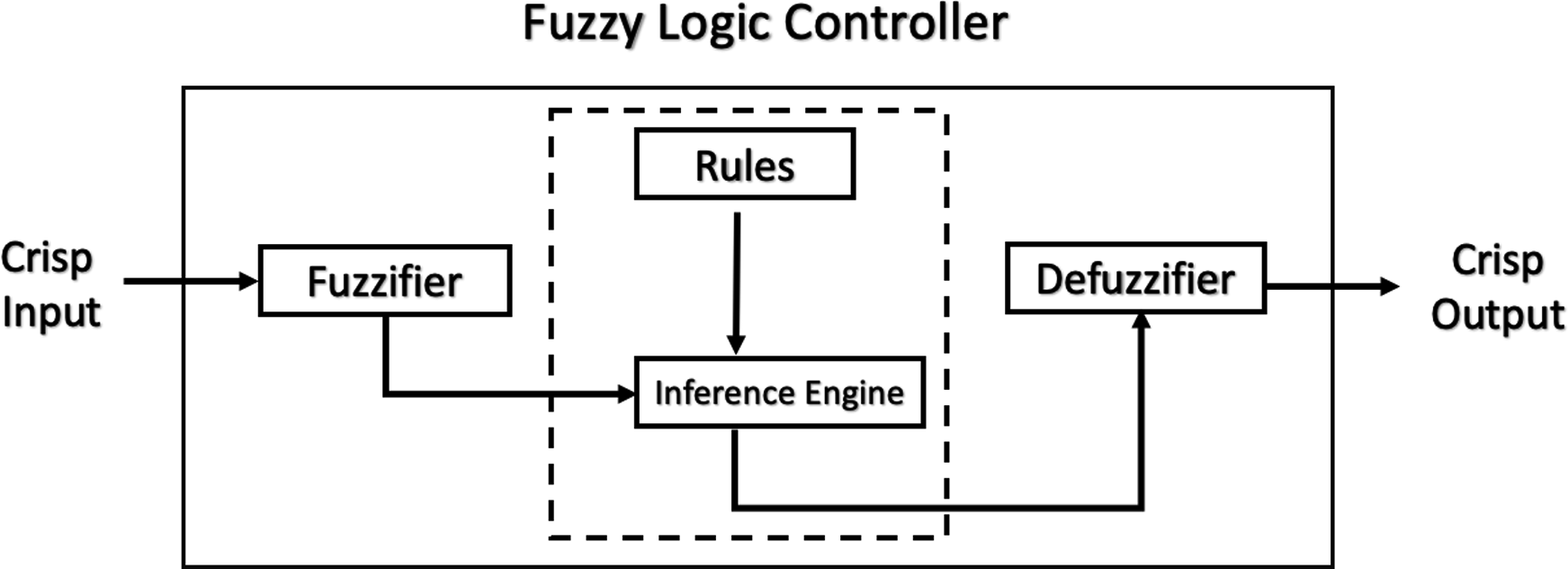
Overall, FL provides a robust framework for handling the complexity and ambiguity inherent in real-world data. In the context of TS measurement, FL allows for a more accurate and flexible assessment, paving the way for more informed decision-making in social network analysis and other domains.
Proposed fuzzy-based system
In this section, we present our proposed fuzzy-based system, referred to as the Fuzzy-based System for Assessment of TS (FSATS). The primary objective of FSATS is to provide a flexible and accurate tool for evaluating TS in various contexts, enabling more effective decision-making. The structure of FSATS is illustrated in Figure 4. We implement two models: FSATSM1 and FSATSM2. FSATSM1 considers three input parameters: Interaction Time (IT), Level of Intimacy (LoI) and Emotional Intensity (EI), and the output parameter is TS. In FSATSM2, the Reciprocity (Rc) is introduced as a new additional parameter. The IT captures interaction frequency and duration, EI reflects emotional depth, and LoI represents closeness, forming a robust baseline for assessing TS. Rc is excluded from FSATSM1 to simplify the model and focus on these core aspects. However, in FSATSM2, Rc, which represents mutual exchanges in a relationship, is included to enhance the model’s ability to provide a more comprehensive and nuanced assessment of TS, especially in scenarios where Rc plays a crucial role in strengthening interpersonal relationships.9,34 Proposed system structure.
The considered parameters are explained in following:
Interaction Time (IT)
IT refers to the total duration and frequency of interactions between two individuals or entities within a given period. It is a key factor in determining the strength of a relationship, as frequent and prolonged interactions often indicate a closer and more robust connection. Higher values of IT suggest a stronger tie, as they reflect more opportunities for relationship building and mutual understanding. 12
Level of Intimacy (LoI)
LoI measures the degree of personal closeness and emotional depth present in a relationship. It reflects how comfortable individuals are with sharing personal information, discussing sensitive topics, or providing emotional support. High levels of intimacy typically indicate a strong tie, as they suggest a deep, trust-based relationship. 35
Emotional Intensity (EI)
EI refers to the strength of emotions experienced and expressed during interactions between individuals. It captures the emotional investment in the relationship, including feelings of affection, concern, or even conflict. High EI is often associated with strong ties, as intense emotions can signify a deep connection and a high level of engagement. 36
Reciprocity (Rc)
Rc measures the balance and mutual exchange of resources, support and actions within a relationship. It reflects the extent to which both parties contribute equally to the relationship, whether through time, effort, emotional support, or other forms of exchange. High levels of reciprocity are indicative of a strong tie, as they demonstrate a commitment to maintaining a balanced and mutually beneficial relationship. 37
Tie Strength (TS)
TS is the output parameter in both FSATSM1 and FSATSM2, representing the overall strength of the relationship between two individuals or entities. TS is derived from the combination of the input parameters—IT, LoI, EI and, in the case of FSATSM2, Rc. A higher TS value indicates a stronger, more resilient connection, while a lower TS value suggests a weaker or more tenuous relationship. The assessment of TS is crucial for understanding the dynamics of social networks and their impact on information flow, collaboration and overall network cohesion.
The parameter values (IT, EI, LoI, and Rc) were determined through a comprehensive survey process of relevant literature, analysis of experimental data, and consultation with domain experts. This approach ensures an accurate and robust representation of TS in social networks.35,38–44
The membership functions of FSATS are shown in Figure 5. They are designed for both FSATSM1 and FSATSM2 models. To facilitate the fuzzification process and ensure flexibility in applying the proposed system across various scenarios, the values for IT, LoI, EI and Rc are standardised between 0 and 100%. This standardisation allows the FSATS to be easily adapted to different contexts and scenarios. For example, in a corporate communication scenario, the maximum value for IT might be set at 40 hours per week (100%). However, in more time-sensitive scenarios, such as emergency response or critical communications, the maximum value for IT might be set at 10 hours per week or less, depending on the specific requirements for responsiveness and communication frequency. Membership functions. (a) Interaction Time. (b) Level of Intimacy. (c) Emotional Intensity. (d) Reciprocity. (e) Tie Strength (FSATSM1). (f) Tie Strength (FSATSM2).
Figure 6 illustrates the triangular and trapezoidal membership functions employed for the input parameters. These functions are chosen for their simplicity and effectiveness in modelling the gradual transitions between different levels of each parameter. The specific term sets for each input parameter are summarised in Table 1. Triangular and trapezoidal membership functions. Parameters and their term sets.


The mathematical definitions of the membership functions for the input parameters are shown in the following equations.
The TS is the output parameter for both models and its term set is shown in Table 1.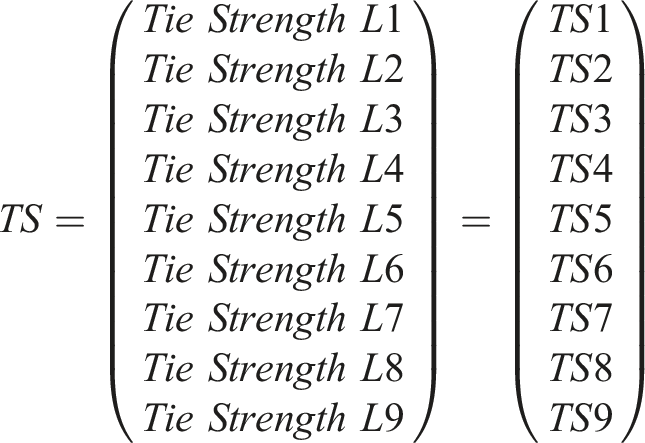
We define the membership functions for TS of FSATSM1 as follows.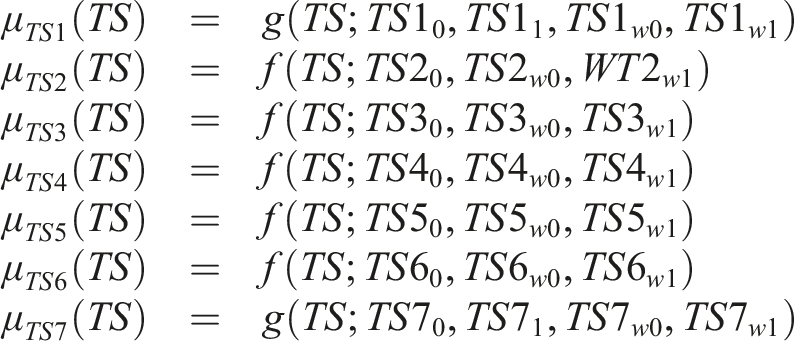
While, the membership functions for TS of FSATSM2 are defined as follows.
FRB for FSATSM1.

FRB for FSATSM2.

Simulation results
In this section, we present the simulation results. The simulations are performed on a computer running Linux Ubuntu OS with the following specifications: 8 GB of RAM, an i5 (3.2 GHz xtimes 4) processor, and an SSD (650 GB). For simulations, we used our developed FuzzyC system. 45
Simulation results for FSATSM1
The simulation results for FSATSM1 are shown in Figure 7. They show the relation between TS and EI for various LoI values while considering IT as a constant parameter. Simulation results of FSATSM1. (a) IT = 0.1. (b) IT = 0.5. (c) IT = 0.9.
In Figure 7(a), we consider the IT value 0.1. When LoI is fixed at 0.7, increasing EI from 0.1 to 0.5 results in a 13% increase in TS. Further increasing EI from 0.5 to 0.9 leads to an additional 24% increase in TS. These results indicate that as EI increases, TS also increases, demonstrating the significant impact of emotional intensity on the TS. This is particularly relevant in situations where decisions are based on the emotional engagement of the parties involved, such as in customer support scenarios, where stronger emotional connections can lead to higher customer satisfaction and loyalty.
We compare Figure 7(b) with Figure 7(a) to determine how IT has affected TS. We change the IT value from 0.1 to 0.5. The TS is increasing by 23% when the LoI value is 0.7 and the EI is 0.5. This comparison highlights the influence of IT on TS; as interaction time increases, the TS becomes stronger, even when other factors such as LoI and EI remain constant. This is critical in decision-making processes related to resource allocation in team-based projects, where increased interaction time can enhance collaboration and project outcomes.
In Figure 7(c), we increase the value of IT to 0.9. We see that the TS values have grown significantly more than the results of Figures 7(a) and (b). This significant growth in TS suggests that when interaction time is high, the effects of LoI and EI are amplified, resulting in much stronger ties. This is particularly important in strategic partnerships or long-term business relationships, where sustained interaction is essential for maintaining strong and productive ties.
Simulation results for FSATSM2
The simulation results for FSATSM2 are presented in Figures 8–10. Simulation results for FSATSM2 (IT = 01). (a) EI = 0.1. (b) EI = 0.5. (c) EI = 0.9. Simulation results for FSATSM2 (IT = 05). (a) EI = 0.1. (b) EI = 0.5. (c) EI = 0.9. Simulation results for FSATSM2 (IT = 09).(a) EI = 0.1. (b) EI = 0.5. (c) EI = 0.9.


In Figure 8, we consider IT value 0.1. In Figure 8(a), EI is 0.1. For Rc 0.5, when LoI is increased from 0.1 to 0.5, TS increases by 12%. Further increasing LoI from 0.5 to 0.9 results in an additional 10% increase of TS. If we increase Rc from 0.5 to 0.9, we see that TS is increased by 20% and 10%, respectively. This shows that as the level of intimacy grows, the TS also increases significantly, even when interaction time and emotional intensity are low. For determining how EI has affected TS, we increase the EI value from 0.1 to 0.5 and 0.5 to 0.9 (see Figures 8(b) and (c)). The TS is increasing by 10% and 15% when LoI is 0.5 and Rc is 0.7. This demonstrates that EI has a substantial impact on TS and the relationship between parties becomes stronger.
In Figure 9, we change IT value to 0.5. Comparing Figure 8(a) with Figure 9(a), when EI value is 0.1, LoI is 0.5 and Rc is 0.5, the TS is increased by 20%. This indicates that an increase in interaction time contributes significantly to the TS, even when emotional intensity remains low. But if we increase the EI value to 0.5 and 0.9 (see Figures 9(b) and (c)), we can see that the TS value is increasing much more compared with Figure 9(a). This further emphasises the effect of interaction time and emotional intensity on enhancing TS.
In Figure 10, we increase the value of IT to 0.9. By comparing with other results, we see that TS values have increased significantly. In Figure 10(a) (for Rc more than 0.8), Figure 10(b) (for Rc more than 0.5) and Figure 10(c) (for Rc more than 0.2), all values of TS are more than 0.5, indicating a strong relationship. This scenario illustrates that high interaction time, coupled with high emotional intensity and intimacy, results in very strong ties.
A use case scenario for FSATS
Use case for SCRM system
In this use case, a company aims to strengthen its relationships with customers and develop effective marketing strategies by evaluating the TS of its customers. Customer relationships are diverse and often cannot be captured through simple binary evaluations such as ”good” or ”bad”. Therefore, the company can use the FSATS and assess each customer’s TS as follows.
Data collection
The SCRM system systematically collects data that reflects the dynamics of the relationship with each customer. This data includes transaction history, frequency of customer support enquiries, survey responses and engagement metrics from social media platforms. By aggregating these diverse data points, the system forms a comprehensive view of each customer’s interaction with the brand.
Fuzzy membership functions assignment
To accommodate the nuances of customer behaviour, fuzzy membership functions are defined for each parameter, allowing the system to rate customers on a continuous scale from 0 to 100%. For example, a customer with a high purchase frequency might receive a high membership value for IT, while a customer with a low purchase frequency would receive a correspondingly lower value. This granularity enables the system to capture subtle variations in customer engagement.
Application of fuzzy rules
The system applies a set of predefined fuzzy rules to interpret the collected data. The rules are based on expert knowledge and empirical data, allowing the system to infer the overall TS for each customer based on their specific behaviours and interactions.
Overall evaluation and clustering
After evaluating the TS of each customer, the system groups customers into clusters such as ”strong ties”, ”moderate ties” and ”weak ties”. This segmentation enables the company to implement tailored marketing strategies that align with the strength of the relationship. For example, customers identified as having strong ties might receive loyalty rewards, while those with moderate or weak ties might be targeted with campaigns designed to enhance engagement.
Application of FSATS for use case scenario
Scenario
The structure of FSATS adapted for SCRM is shown in Figure 11. Application of FSATS for SCRM.
• • •
The implementation of FSATS can support the company to refine its marketing strategies by aligning them with customer relationships’ specific strengths. Thus, the customer satisfaction can be increased, repeat purchase rates can be improved and overall customer loyalty can be strengthened. The targeted nature of these marketing efforts also led to cost savings and a significant improvement in Return On Investment (ROI), as resources can be allocated more effectively towards customers with the highest potential for positive engagement.
This use case for SCRM shows the practical applicability of FSATS. It highlights the system ability to handle complex and real-world data. Also FSATS can be adapted to various scenarios and can enhance decision-making and optimise marketing strategies. The implemented system can be a valuable tool for organisations seeking to deepen their understanding of social ties and improving their customer engagement efforts.
Conclusions and future work
In this paper, we proposed FSATS and implemented two models: FSATSM1 and FSATSM2. These models were designed to evaluate the strength of relational ties by considering four parameters: IT, LoI, EI and Rc. By leveraging the flexibility of FL, the proposed system can make a better representation of TS and can capture the nuances of real-world interpersonal relationships, enabling more precise and adaptable assessments. We carried out many simulations to evaluate the implemented models. Furthermore, we presented a practical use case in the domain of SCRM, showcasing the system’s utility in business contexts and providing a tangible pathway for integrating the model into real-world decision-making processes. From the evaluation results, we conclude as follows. • FSATSM2 is more complex than FSATSM1 due to the inclusion of an additional parameter (Rc), but it provides a more accurate assessment of TS. This is because the model takes into account a broader range of factors influencing the dynamics of relationships. • The LoI parameter significantly impacts TS. As LoI increases, also the TS increases, indicating that a higher level of personal closeness and emotional depth contributes to stronger ties. • IT has a positive effect on TS. As IT increases, the frequency and duration of interactions enhance the relationship, leading to higher TS values. • For FSATSM1, when IT is 0.9 and EI is 0.7 for all values of LoI, the TS values are more than 0.5 indicating a strong relationship. This scenario illustrates that when interaction time is high, the effects of LoI and EI are increased, resulting in much stronger ties. • For FSATSM2, when IT is 0.9, for EI 0.1 (Rc more than 0.8), EI 0.5 (Rc more than 0.5) and EI 0.9 (Rc more than 0.2), all values of TS are more than 0.5, indicating a strong relationship. This scenario illustrates that high interaction time, coupled with high emotional intensity, level of intimacy and reciprocity results in very strong ties.
The use case for SCRM illustrates the potential applicability of FSATS for evaluating customer relationships. It highlights how the FSATS could be adapted to real-world scenarios, allowing businesses to tailor their marketing strategies based on the strength of customer ties.
These findings demonstrate the effectiveness of the FSATS in assessing TS across various contexts and scenarios, highlighting the importance of incorporating multiple dimensions of interpersonal relationships into the evaluation process.
In future work, we plan to refine these models by incorporating additional parameters such as trust and shared experiences, which could further enhance the accuracy of TS assessment. Additionally, we will apply FSATS to a broader range of real-world contexts, further validating its versatility and effectiveness across diverse scenarios.
Footnotes
Declaration of conflicting interests
The author(s) declared no potential conflicts of interest with respect to the research, authorship, and/or publication of this article.
Funding
The author(s) received no financial support for the research, authorship, and/or publication of this article.
