



Abstract
The fact pure strategy leads to superior performance was widely criticized. Academics have argued there has been a shift in emphasis from pure strategy to hybrid (integrating a set of strategies). This transformation is constantly increasing. Therefore, from now on, the hybrid strategy based on Miles and Snow and Porter’s strategies is a vital concept to successful performance. Researchers investigated different cases of adoption of Miles and Snow or Porter strategies. Regardless of the prevalence and value of Miles and Snow and Porter’s strategies, they often lead to disappointing performances. The disappointing results of Miles and Snow and Porter’s strategies are due to several firms adopting the hybrid strategy. A holistic view of prior research is needed to understand the importance of a hybrid strategy on performance based on Miles and Snow and Porter. Accordingly, this study provides a comprehensive review of hybrid strategies based on Miles and Snow and Porter’s strategies. The reviewed literature regarding hybrid strategy based on Miles and Snow and Porter’s strategies is categorized and discussed in two directions. Firstly, Miles and Snow’s strategies. Secondly, Porter’s strategies. We analyze the essential characteristics of the emerging field for the hybrid strategy along with the issues, challenges, advantages of a hybrid strategy, theoretical, and practical implications.
Introduction
Competitive advantage is a fundamental topic that has earned exceptional attention from scholars. 1 Based on the severe competition, researchers have concentrated on defining the most effective competitive strategies that companies chase to allow them to produce high profits. 2 Thus, the literature includes various strategies that describe how companies compete in certain businesses or industries by utilizing their competitive advantage. 3 The competitive position of companies relies on the main five forces; barriers to entry, supplier power, buyer power, the threat of substitutes, and the intensity of internal competition. 4 A business’s strategic plan aims to locate a position that assists in defending companies against these forces. 5 However, the company should be ready to achieve a competitive advantage by forming defenses against these competitive forces. 6 The companies can choose from one of three generic strategies to achieve a competitive advantage (i.e., Cost leadership, differentiation, and focus strategy). 7
Cost leadership strategy focuses on earning a competitive advantage by achieving the lowest cost in the industry. To gain a low-cost advantage, the organization should have a low-cost leadership strategy, low-cost manufacturing, and a workforce obligated to the low-cost strategy.5,8,9 Differentiation strategy is to decide what will make the company different from rivals. The market sector quality of work, the size of the company, the image, graphical reach, costumers’ participation in organizations, product, delivery system, and the marketing approach have been suggested to differentiate a company.9,10 Moreover, a differentiation strategy will set high customer loyalty. 11 In terms of focus strategy, a company targets a segment of the market by adapting the one of pure strategy. 10 The company can select to focus on a customer group, product, geographical area, and service line. Focus strategy concentrates on a rising market share by operating in a specified market neglected by other larger rivals. 12 A successful focus strategy relies on an industry segment with possible growth but not significant to other excellent competitors. 11
On the other hand, Miles and Snow in 1978 had presented four business strategies. The organizations must be established in a dynamism competitive environment. These strategic approaches were defenders, prospectors, analyzers, reactors. 13 Prospectors’ approach is to innovate, take calculated risks, pursue new possibilities, and expand. The defense approach is almost the inverse of the prospector strategy. Instead of taking chances and pursuing new opportunities, the defender approaches prioritize stability. 14 The analyst attempts to maintain a steady business while innovating on the periphery. 15 The reactor approach is a non-strategy. Instead, reactors react to respond to environmental risks and possibilities. Senior management has not established a long-term strategy in a reactor strategy. 16
The strategies mentioned have brought many benefits to organizations. However, such strategies (i.e., Pure strategies) have not proven effective (Anwar & Hasnu, 2017). Hence, a new trend of competitive strategies has emerged. 12 The literature emphasizes pure strategy may make the companies stuck in the middle during new challenges such as the COVID-19 crisis. 17 Many companies combine differentiation strategies with cost strategies to achieve superior performance. 18 Thus, companies integrate the generic strategies and successfully chasing for cost leadership and differentiation strategies jointly. Differentiation qualified the company to charge excellent prices, and cost leadership helped the company load the lowest competitive price. Furthermore, hybrid strategy will outperform the generic strategies; 19 Anwar & Hasnu, 2017.20–22
Miles et al. 23 and Porter’s (1980) strategies were validated vastly. However, many unresolved problems present a gap in such literature. Moreover, the benefits, challenges, theoretical, and practical implications of hybrid strategy based on Miles and Snow and Porter’s strategies are still unknown. However, such studies had been presented meaningful implications to organizations and scholars. Nevertheless, to the authors’ knowledge, a comprehensive review for using the hybrid strategy on the basis of Miles and Snow and Porter’s strategies has not been conducted. Therefore, this study aims to conduct an extensive and profound analysis of the hybrid strategy based on Miles and Snow and Porter’s strategies and show all current work trends to provide deep analysis for academics and industry. Taxonomy of classified the reviewed literature of hybrid strategy based on Miles and Snow and Porter’s strategies is presented. The different cases in the literature are discussed based on Miles and Snow and Porter’s strategies. Hence, the study highlights the benefits and challenges of a hybrid strategy based on Miles and Snow and Porter’s strategies. Besides, the theoretical and practical implications are discussed based on Miles and Snow and Porter’s strategies. Finally, potential future directions for the hybrid strategy are presented based on Miles and Snow and Porter’s strategies.
Foundations
The hybrid strategy on the basis of Miles and Snow and Porter’s strategies presents several successful results. Several benefits of a hybrid strategy are described in the literature. This section focuses on the review approach and illustrates the importance of a comprehensive review for the hybrid strategy.
Review approach
The design of this study consisted of a bibliometric analysis and literature review to provide an overview of the current state-of-the-art of research. This study provides a comprehensive review of hybrid strategies based on Miles and Snow and Porter’s strategies. The reviewed literature regarding hybrid strategy is based on Miles and Snow and Porter’s strategies. Data were collected using the Scopus and Web of Science (WoS) online database. The research was conducted with articles published or accepted for publication until 2021 and was published in the economics, business, accounting, management, finance, and decision-making journals. The keywords used in the research were: the hybrid strategy based on Porter, the hybrid strategy based on Miles and Snow, and the hybrid strategy. The study resulted in 92 studies. Hence, we conducted a comprehensive science mapping analysis based on the R-tool to classify and reorganize knowledge and provide an insight into the hybrid strategy for Miles and Snow and Porter’s strategies.
24
Therefore, a co-occurrence analysis was carried out based on the mentioned keywords and Figure 1 showed the WordCloud. Word Cloud.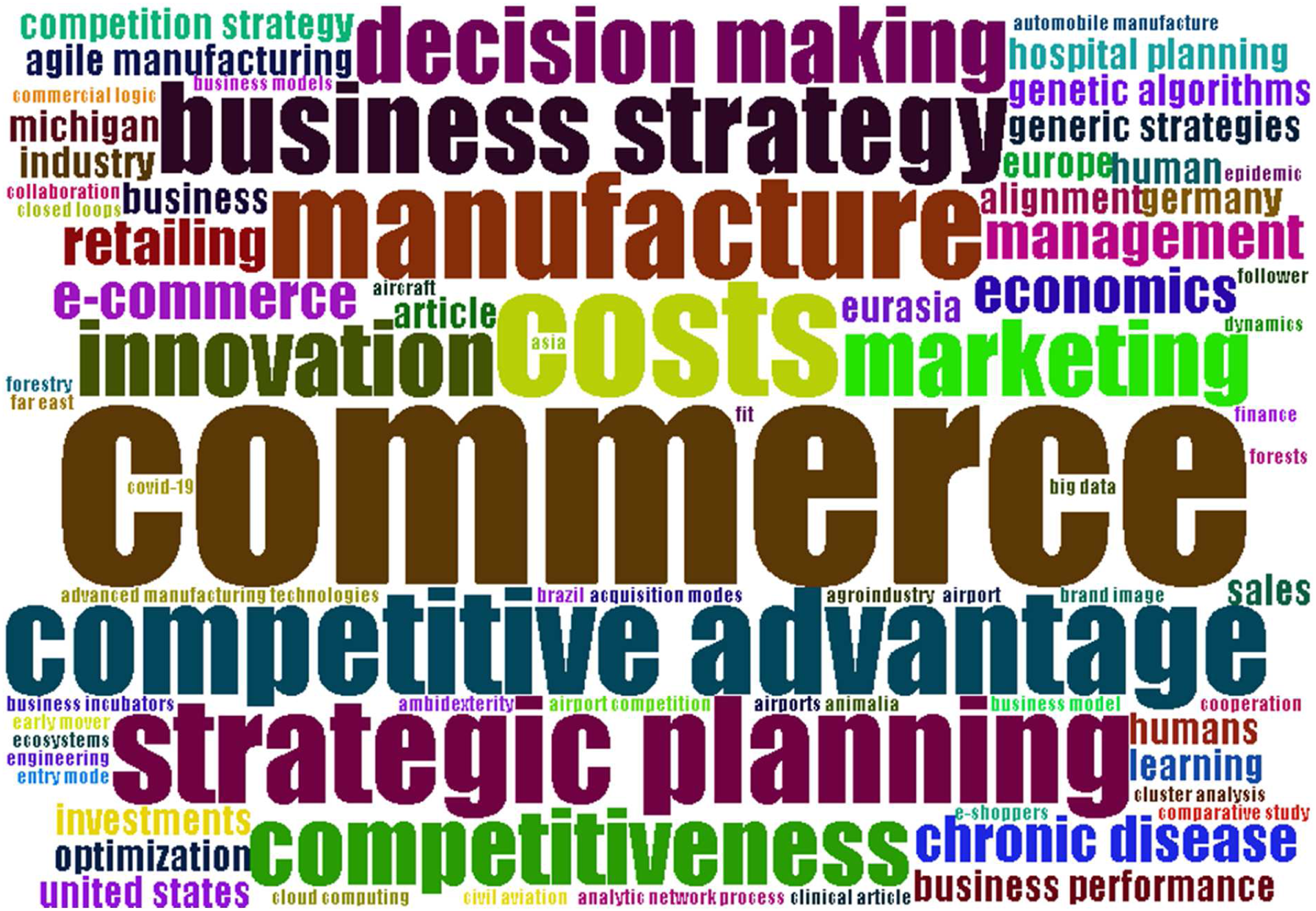
As shown in Figure 2, the most relevant aspects of the textual data were categorized into Miles and Snow strategies and Porter’s strategies. This method will assist academics and beneficiaries in comparing the various components in order to identify commonalities and variations between the more significant and bolder words. Additionally, Wordcloud has enabled academics and businesses to understand the value of a hybrid strategy by grouping words of varying sizes. On the other hand, the factorial analysis was conducted to determine the similarity index, as shown in Figure 2. Conceptual structure map.
Figure 2 illustrates the conceptual structure map analysis of hybrid strategy on the basis of Miles and Snow and Porter’s strategies. The similarity index is considered high because the literature review is divided into two clusters. Moreover, academics and practitioners can utilize this result to distinguish and classify the relevant information. It has been observed the hybrid strategy is closely related to strategic performance, including competitive advantage or sustainability, which indicates the hybrid strategy can be considered as a significant driver for realizing competitive advantage. Therefore, the annual scientific production steadily increased due to the importance of hybrid strategy to achieve strategic performance. Figure 3 presents an overview of the studies. Although Miles and Snow’s strategies appeared in 1978 and Porter’s strategies appeared in 1980, the number of published research began to rise significantly. Hence, there is an increase in scientific production for the hybrid strategy in 2020, as shown in Figure 3. Annual scientific production.
Hybrid strategy based on Miles and Snow and Porter’s strategies
Hybrid strategy definitions.
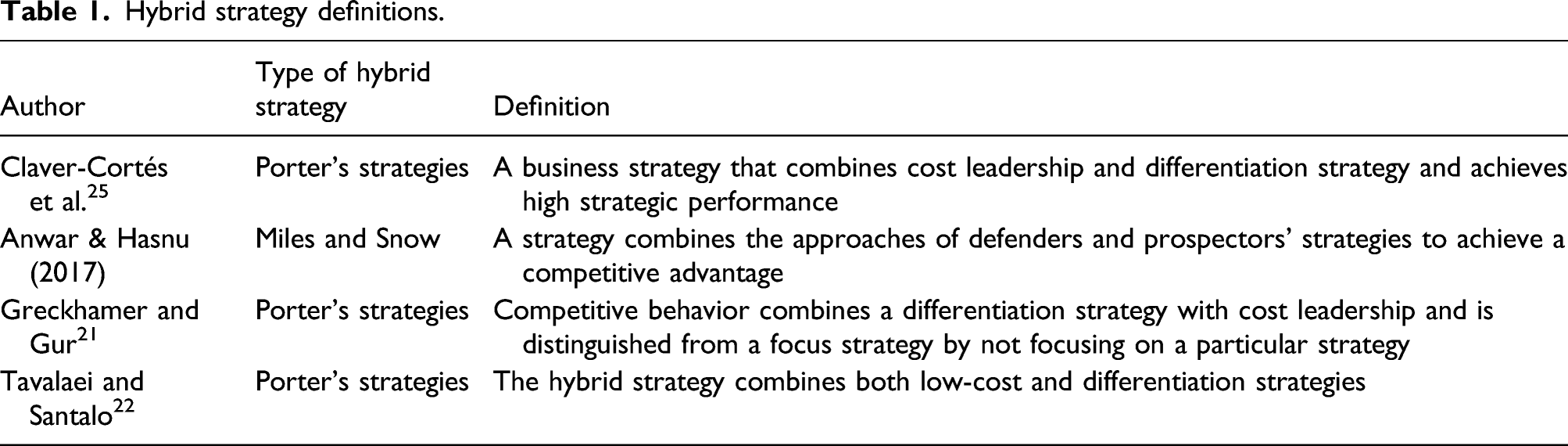
A hybrid strategy is considered an emerging and novel concept that leads to superior performance than pure strategies. 22 The need for a hybrid strategy has arisen for companies to shed more insight on the academic literature for such a strategy. Furthermore, the forthcoming discussion outlines the reviewed literature to provide an in-depth analysis of such a strategy.
Literature review on hybrid strategy
As shown in Figure 4, the final set of articles is categorized into two major categories: hybrid strategy based on Miles and Snow strategies (Hybrid strategy based on Miles and Snow strategies) and hybrid strategy based on Porter’s strategies (the Hybrid strategy based on Porter’s strategies). These categories were classified according to the common theme inspired by the reference. Taxonomy of classified the reviewed literature of hybrid strategy into “Miles and Snow based” and “Porter based.”
Hybrid strategy based on Miles and Snow strategies
This category discussed papers that dealt with Miles and Snow’s strategy. Hence, this section contains a total (n = 8). The subcategory contains the main topics of (1) Firm performance and (2) Strategy choice.
The first set of studies discussing Miles and Snow strategies with Firm performance. Hence, the pure strategy is still superior to a hybrid strategy that combines the defenders and prospectors’ strategy has been explored. The literature has found the hybrid strategy based on Miles and Snow achieves superior performance (Anwar & Hasnu, 2017). On the other hand, the literature confirms the prospector strategy achieves high performance. 26 According to Zhang, 27 the adoption of the defenders is superior to the prospectors because the economic theory enhances performance and increases competition by focusing on stability. Hence, economic theory predicts that market concentration encourages innovation movements. Economic theory asserts that product innovation is based on a prospector’s strategy. Therefore, a prospector’s strategy enhances performance in a concentrated market. Firms can use several scales and strategies to improve their performance, such as sales growth, return on assets, and sales. The previous studies indicated interesting results about prospectors. The firms that attempt to create competencies and improve advanced thinking might use the prospectors to increase their performance and achieve innovation. 28
The second set of studies discussing Miles and Snow strategies with strategy choice. Analyst strategy is widely accepted in strategic options. However, the literature emphasizes the defenders and prospectors should be relied upon when an emphasis on innovation is required.29,30 The analyst and defender are effective strategies during the uncertain environment. In contrast, the prospector strategy is considered a practical strategic choice for flexible firms. 31 The choice of reactors strategy can distinguish the firms and improve competition to develop the strategic performance. 32 The hybrid strategy based on Miles and Snow strategies is adopted in various sectors to survive in a competitive environment due to superior to pure strategy. 33
Hybrid strategy based on Porter’s strategies
This category discussed papers that dealt with Porter’s strategies. Sections contain a total of (n = 38). The subcategory contains the main topics of (1) Strategic performance, (2) Competitive Strategies, (3) Strategic decisions, (4) Organizational design, (5) Quality and innovation, (6) Earnings Management, (7) Commerce, (8) Service success, and (9) Organizational behavior.
The first set of studies discussing Porter’s strategies with strategic performance. Competitive strategies have become an essential aspect of entrepreneurship and management research. The literature review has revealed pure strategy can lead to high performance. The differentiation strategy improves performance compared to the hybrid strategy in small and medium enterprises.34,35 Such a strategy focuses on developing the product and process.19,36 The organizations consider high-performance levels by emphasizing differentiation strategy rather than cost leadership. 37 According to Claver-Cortés et al., 25 the hybrid strategy based on Porter achieves superior strategic performance better than the pure strategies. However, the differentiation strategy is used in industries that face environments with a high degree of certainty. Besides, many firms may adopt such a strategy to improve performance,38–40 The small and medium enterprises will be distinguished in financial performance using a differentiation strategy due to its impact on profitability and growth. 41 The Chinese companies adopt and develop the competitive advantage using differentiation strategy and cost leadership. 42 Therefore, the pure strategy can increase the performance risk. Hence, organizations tend to combine the two strategies (i.e., Cost leadership and differentiation) to obtain increased performance benefits compared to using a pure strategy. 43 The hybrid strategy impacts performance by reducing the organization’s failures, because strategy formulation plays a critical role in the success and failure of organizations. Moreover, adopting an unsuitable strategy increases the problems of organizations failing because the strategy followed is not compatible with the core capabilities. Failure is often found during the strategy formulation stages rather than poor execution in the final stages.44,45 The cost leadership strategy can be used in e-commerce and develops a differentiation strategy to increase strategic performance.39,46,47 According to Altuntas et al., 48 the firms may use the cost leadership strategy within efficiency structure while using differentiation strategy within learning structure. Thus, the pure strategy will improve the performance. Most after-sales service providers focus on cost leadership strategy, and most customer support providers focus on differentiation strategy. This scenario helps increase performance development. 49 Applying Porter’s competitive strategy does not lead to success, but using a hybrid strategy may lead to superior performance. 50 The market turmoil, intense competition, and decentralization play a pivotal role in determining competitive strategic priorities.51–53 Therefore, using pure strategies would significantly impact the performance.54–58
The second set of studies discussing Porter’s strategies with Competitive Strategies. The competitive advantage among companies can be enhanced by depending on competitive strategies that aim to achieve excellent performance. 59 The hybrid strategy might be used as a preventive to reduce failures. 6 Such a strategy is essential for small companies that are part of the economic system. However, several firms adopt a cost leadership or differentiation to increase the strength of competition. 60 The literature was discussed the pure strategy must be compatible with the business environment to determine the desired goal and maintain the competitive advantage. 61 Many large organizations face different challenges in combining differentiation and cost leadership strategies. 62 Adopting a pure strategy in non-industrial companies can gain a competitive advantage and achieve superior performance. 6 Combining pure strategies help firms enter the competition strongly. 63 Using the differentiation strategy may help them to increase performance (Scenivason & Talukdar, 2016). Despite the vital benefits of the hybrid strategy, the literature confirmed the cost leadership strategy leads to competitive advantage. 64 Therefore, the pure strategies improve competitive advantage.65,66
The third set of studies discussing Porter’s strategies with strategic decisions. The dominant model in strategic decisions is differentiation, cost leadership, and focus strategy. Such a strategy creates a more significant opportunity for the organization to invest in the strength and gain a competitive advantage. 67 Strategic decisions are necessary to determine the appropriate solutions for achieving competitive strategies. 68 The managers believe there is a need to redesign the beliefs and the vision of the organization to adopt a hybrid strategy or pure strategy rely on the organizational culture. Hence, adopting a cost leadership strategy improves the corporate image by using bureaucratic culture.69–71 Choosing a pure business strategy has lower costs and a lower risk of failure than hybrid strategies. 72 Although a cost leadership strategy is critical to success in the retail industry, hybrid strategy leads to more excellent performance.73,74 The hybrid strategy can achieve cost savings. Such a strategy impacts the quality and values of health care by providing high service to patients and improving performance. 75 Differentiation strategy and cost leadership positively impact the organization and be more mature and stable.76,77
The Fourth set of studies discussing organizational design. Organizational design impacts business by reaping significant benefits that support the organization. 78 Organizational structure is associated with the strategic choice, regardless of pure or hybrid. 79 The strategy has a role in organizational design by leading and executing activities and improving performance. Moreover, managers must combine pure strategy to increase performance. 80 According to Hahn et al., 81 organizations adopting a hybrid strategy use organizational design to focus on organic and mechanical factors. However, pure strategy can enhance the relationships between performance, design, cost routing, and profits. 7
The Fifth set of studies discussing quality and innovation are regrading hybrid strategy based on Porter’s strategies. Competitive strategy can create value for businesses and gain a higher position than competitors by focusing on the quality of products. 82 Pure strategies also benefit the organization and help develop competitive advantages, gain customer confidence, and reach the required quality. 83 In addition, these strategies provide high quality products and services. 84 Besides, small and medium enterprises face restrictions related to size and resources to enter foreign markets. Therefore, small and medium enterprises must adopt a competitive strategy to increase their performance.85,86 A differentiation strategy increases service excellence and innovation to enhance customer value and overcome the barriers of the external environment. 87 Porter’s competitive strategy has a significant impact on the quality of products and services. 88 The competitive strategy also directly impacts innovation and openness to processes that encourage innovation in processes or services. 89
The Sixth set of studies considering earnings management. The organizational strategy affects the content of information and profit rates. 90 Companies that use a cost leadership strategy are likely to have a higher level of earnings management. 91 However, pure strategies may affect financial conditions and lead to significant risks in the future by influencing the assessment of equity and profits. 92 While 93 discussing the competitive strategy will significantly reduce the risk of bankruptcy. Therefore, adopting a pure strategy will lead to decent financial performance and enhancing customer acquisition. 94
The Seventh set of studies deliberating the commerce activities. Managing business efficiently during environmental changes and at lower costs is the key to success for companies. A hybrid strategic model is one of the most successful models. 95 The hybrid strategy retailers and producers use emphasizes quality and increases sales. 96 A hybrid strategy is used in projects to take advantage of many advantages such as lower prices, less volatility, and ease of changing materials.97,98 In addition, the success of the project depends on the strategy adopted, which is necessary to achieve and enhance the value of the project. 99 Thus, competitive strategies interact with structural factors, project characteristics and response to external conditions improved value and reduced fragmentation associated with competition market fluctuations.100,101 Pure strategies must focus on flexibility in order to build a competitive position.102–104
The Eighth set of studies considering Porter’s strategies with service success. Providing successful service in businesses requires strategic change. The manufacturers must develop capabilities and commit to a competitive strategy to achieve service success. 105 Porter’s hybrid strategy is considered a preventive measure to reduce the cost of services. 106 In addition, pure strategies influence the organization of flows and enhance flexibility by adapting to external conditions to provide differentiated products and services. 107
The Ninth set of studies discussing Porter’s strategies with organizational behavior. Using a differentiation strategy based on customer service will achieve customer satisfaction and loyalty.108,109 Pure strategies are related to the realization of success, self-evaluation, and distinction. 110 Hence, such strategies will increase participation in social responsibility toward society.111,112 According to Gonzaler-Rodriguz et al., 50 the company’s assets and strategy influence performance. Therefore, choosing the strategy must be suitable for the development of the innovation. The tour guide’s performance is an essential feature of tourist satisfaction, and customer satisfaction can be increased by adopting a strategy of cost leadership and differentiation to match the needs and desires. 113 The literature review found that a differentiation strategy increases the strength of relationships between perceived quality, learning environment, dynamic environment, brand trust, brand loyalty, and university reputation. 114 In addition, the chosen strategy raises opportunities to add value to the organization.115,116 However, a hybrid strategy based on pure strategy can achieve innovation and manage the crisis. 117
Motivation
This section describes the benefits of adopting a hybrid strategy on the basis of Miles and Snow and Porter’s strategies in order to highlight the importance of the hybrid strategy. Moreover, this section shows the hybrid strategy achieves superior performance than the pure strategy by discussing the impact of the hybrid strategy on each sector as simplified in Figure 5. The benefits of a hybrid strategy on the basis of Miles and Snow and Porter’s strategies.
Benefits related to industrial sector
Strategies are the investment and operating decisions made by companies to gain a competitive advantage. Business strategy is unique to companies and mightily influences company performance. 90 Companies need to consider the hybrid strategy to maximize competitive advantage. Such strategies are widely known as essential strategies that companies use to improve their organizational performance. 85 The hybrid strategy refers to how a firm creates value compared to competitors based on lower costs and increased differentiation. 3 Companies are trying to gain a competitive advantage through a cost leadership strategy and focus on reducing internal processes.
On the other hand, companies with a differentiation strategy use an external focus to understand customers and competitors to develop innovation. 118 Thus, many industrial companies have sought to adopt the hybrid strategy to maximize the competitive advantage and improve organizational performance to overcome competitors’ attacks. According to de Sousa Batista et al., 119 the interaction between strategy capabilities and business strategy is the most powerful way to achieve the best organizational performance, strategy formulation quality, and financial performance. 19
The hybrid strategy has explained the effects of the marketing mix on the clothing-textile industry. Moreover, the combined amongst pure strategies achieved many benefits in the clothing export departments by building a fair market share in foreign markets and achieving a satisfactory level of profitability in exporting performance (Erdil & Özdemir, 2016). 19 The hybrid strategy describes alternative positions in the market that can give a firm a competitive edge by differentiating features to increase consumer value and achieve better margins. Besides, the firms may achieve lower costs than the competitor.34,120 The hybrid strategy helped industrial companies to develop products and processes. The innovative products can enhance efficiency and flexibility to the demand changes, achieve ease of access, grow on new markets, reduce market risks, and gain smooth access to new sales opportunities.46,100 Applying the hybrid strategy in the juice production industry increases the strategic performance. Hence, many benefits have been achieved after this industry suffered from the high costs associated with launching and re-launching new products. Adopting a hybrid strategy has minimized the risk and expense of failure in the product launch. 97
Benefits related to airline sector
The airline industry has been transformed in the US and Europe in this century due to liberalization. The airport business model has faced dramatic changes because most airports and airlines companies were owned by a local, regional, or national government.64,121 The competitiveness between airline market companies is getting increased. Furthermore, the increase in competition among airports has made airport management more profit-orientated. As a result, airport managers and airline companies must develop new strategies to gain and sustain competitive advantages. 21 Companies chase various strategies to survive with this intense competition. Many airline companies adopt a hybrid strategy. 63 The traditional airline firms used pure strategy. 84 Therefore, many firms in such sectors were a failure. A hybrid strategy affects airline prices and profits. Airline companies should preserve and strengthen the hybrid strategy among competitors. 122 The adoption of the hybrid strategy had resulted in a dramatic restructuring in airports’ competitive dynamics because the emergence of many low-cost airlines has changed the competitive landscape of airlines. The monopoly power of many previously dominant airlines has been curtailed. Therefore, dramatic restructuring in airports’ competitive dynamics increased. Most airports are feeding points or waiting points for some aircraft movement. With a hybrid strategy, these airports began to compete with the major airports. Consequently, these airports significantly increase passenger traffic and market share. 22
Benefits related to hotel sector
Hotels face stiff competition trying to attract customers. The survival and success of the hotel business will depend on adopting the hybrid strategy to meet customer expectations. 31 The hotel sector suffers due to pure strategy barriers such as lack of stock and core capacity. The hybrid strategy enables customers and employees to change the costs and quality of services provided. 68 The strategy that combines cost leadership, differentiation, prospector, and defender strategies increased customer attraction, satisfactory experiences, profits, and enhancing stakeholder well-being. Such performance excellence can be achieved using the hotel’s hybrid strategy; 61 Anwar and Hasnu, 2017.20–22 Furthermore, adopting a hybrid strategy in the hotel sector could play a significant role in structuring and implementing competitive strategy. 50 The literature explains the potential benefits of hybrid strategy in the hotel sector. Cost and quality are the main reason for the hybrid strategy because studies provide empirical evidence that the hybrid strategy had cost efficiency and innovation advantages. The hybrid strategy minimizes costs and maximizes quality. 109 Applying a hybrid strategy in the hotels’ sector had positive results. The benefits of adopting a mixed strategy in the hotel sector are cost reduction, increased productivity, improved satisfaction amongst customers, an enhancement in the operational results, improved efficiency, to improve the hotel image, gain market share, and enhance competitive position.65,123
Benefits related to financial sector
The adopting of a hybrid strategy had an impact on the financial performance of the companies. The benefits of applying a mixed strategy in the financial sector are avoiding organizational complexity, reduce confusion in decision-making, avoid trade-offs of choose strategy, and reduce competitor attacks. 101 A hybrid strategy affected the information content of the earnings information. Likewise, such a strategy may lower the cost of goods and increase the quality of products and services. Besides, the hybrid strategy increases investment in research and development in the banking sector. Therefore, a hybrid strategy influences investor reactions to disclosed information; 90 Wu et al., 2015). Furthermore, the hybrid strategy of financial companies can improve organizational cultures, organizational lean, increase empowerment, multi-skilled self-governing teams, and coordinate employees. According to Asdemir et al., 115 the hybrid strategy affects the information of analysts. Therefore, a hybrid strategy has several benefits for the financial sector by enhancing investment.
Benefits related to rest sectors
As mentioned previously, the hybrid strategy has many benefits in different sectors. Accordingly, this emerging strategy possesses wide-ranging benefits in the healthcare, retail, technology, and agriculture field. For the healthcare sector, a hybrid strategy affects organizational performance. 76 There is a trend toward a hybrid strategy. Innovative behavior should be encouraged based on the hybrid strategy because innovations are essential to the healthcare environment. Moreover, the hybrid strategy increases the flexibility of the organizational structure to stimulate exploration and exploitation. 29 For the retail sector, there have been dramatic changes in recent decades regarding this sector. The emergence of the hybrid strategy was one of the most critical developments in retail. 124 The applying of the hybrid strategy had a positive effect on corporate image and business performance. This strategy leads to added value for retail companies, increase market share, and achieving an increase in profits. 108
The technology industry is one of the most significant developments and economic growth. 125 Consequently, a hybrid strategy increases productivity, lowers costs, creates new economic opportunities, creates job creation and innovation, and increases trade in the technology industry. Applying the hybrid strategy in the technology industry increases competitive advantage, increasing market share, enhancing efficiency, and reducing costs. 99 For the agriculture sector, adopting the hybrid strategy may achieve many benefits. Implementing this strategy can help companies survive in the market, increase competitiveness, and invest. 82 Hence, adopting the hybrid strategy by the agriculture sector encourages competitive advantages by gaining market share and increasing market returns due to exceptional, low-cost products and services attracting and retaining new customers.70,116
Open challenges and issues
The hybrid strategy proposes many benefits. However, to adopt such a strategy, several issues and challenges must be considered. The reviewed literature indicates the researchers are concerned about the challenges associated with the hybrid strategy. The main challenges in adopting a hybrid strategy are listed below in Figure 6. Categories of challenges for a hybrid strategy.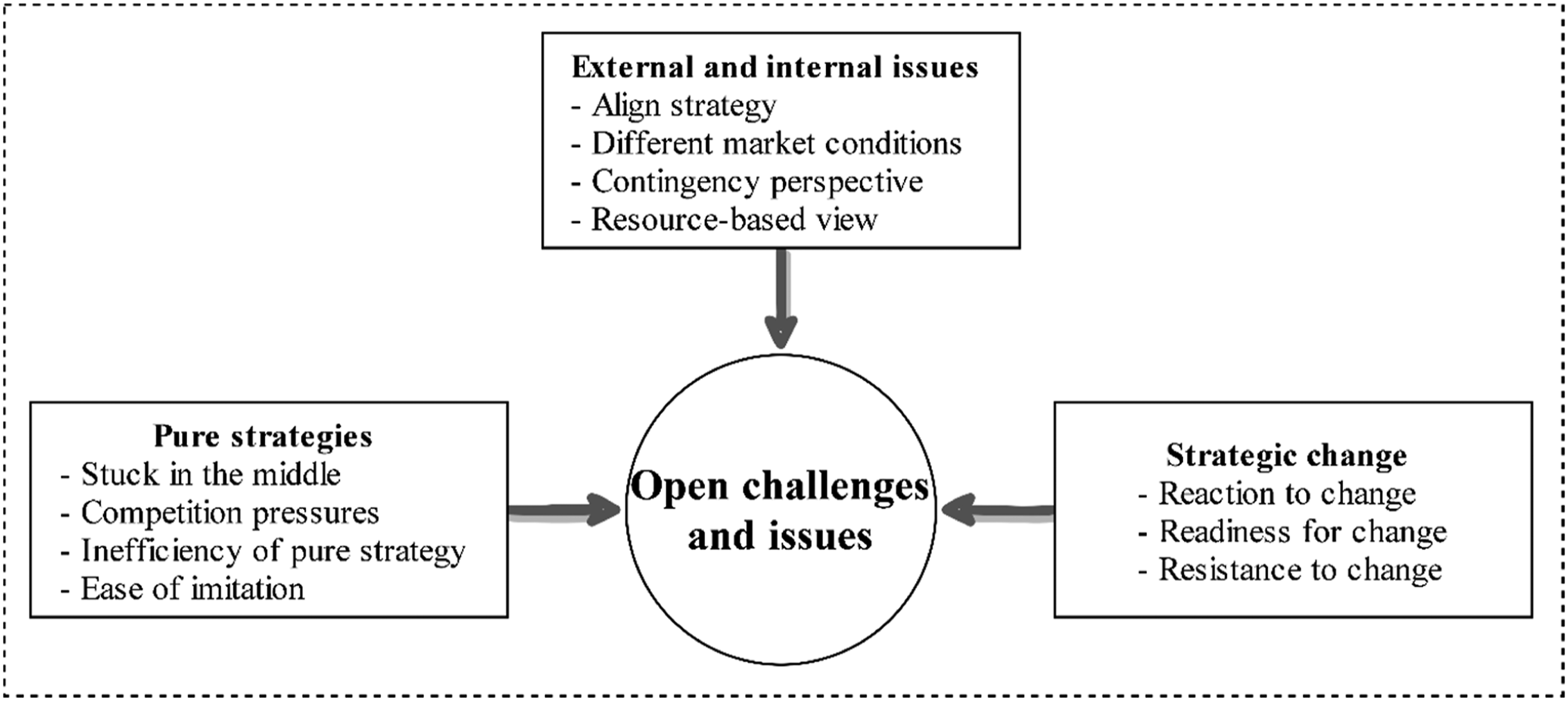
External and internal challenges
Internal and external factors force companies to adopt distinct differentiation methods by providing support in research and development or through the consistency of the strategy with the internal and external environment by providing excellent services.87,126 In addition, another challenge emerged represented in obtaining resources or reducing the use of raw materials. Firms tried to adopt more distinct strategies, including the hybrid strategy, to minimize the use of energy and resources for each production unit.73,127 Therefore, scientists suggest managers should focus on the external environment, the position-based view and the internal environment, called the resource-based view. 50 However, the previous studies claimed no approach to explaining the strategic performance by considering the internal and external environment.117,128
Hence, academics must consider the internal and external factors that constitute a fundamental challenge for firms. Such a challenge is a critical axis for the competitive strategy. 54 A hybrid strategy has become an essential element in the management and business research of contingency factors. Therefore, the main challenge is to assess the adopted strategy as a contingency factor to achieve high performance. 129 There are highly increasing environmental problems and market demands. Firms must have strategies that are more adaptive to these situations. 106 There is a significant lack of available literature that analyzes experimentally the internal and external environment characteristics related to hybrid strategies. The internal and external pressures force firms to design more flexible organizational structures. 25 However, the literature focused on achieving harmony between strategy and organizational structure and neglected the internal and external environment factors combined with the hybrid strategy.21,77 Accordingly, firms face many internal and external factors that affect the strategic performance.73,87,100,123,130,131
Pure strategies
The fact pure strategy leads to superior performance was widely criticized. Moreover, the existing research has cast doubt on the pioneering notion that pure strategy results in better performance (Anwar & Hasnu, 2017). This issue raised the vital question is pure strategy still better than hybrid strategy. There is a significant difference between previous literature on which one of these strategies is the best. 132 For example, the strategic purity assumed firms that adopt pure strategy would achieve less performance because a pure strategy increases confusion and organizational complexity and raises competition attacks. Moreover, the adoption of a pure strategy increases the organizational risks by reducing strategic options due to such a strategy focus on reducing cost or increasing quality. On the other hand, the hybrid strategy allows reducing costs and increasing quality at the same time. In addition, the blended strategy increases learning and efficiency across multiple areas of companies. However, pure strategy focuses on limited areas of the organization. 101 Likewise, the organizations that follow the hybrid strategy achieve high performance. 22 Therefore, firms differ in the competitive strategy that develops over time. 133 Hence, additional competitive strategy and decision-making theory work is needed to identify the best strategy. 31
Hybrid strategy impacts strategic management research for an outstanding role in creating a sustainable competitive advantage. 43 However, a limited number of studies have studied the relationship between the hybrid strategy and performance. 66 Implementing an environmentally responsive strategy has also attracted little attention from the literature.7,48,134 Besides, there is an evident lack of implementation of the hybrid strategy versus the pure strategy in the oil sector. 109 Competitive pressures necessitate the implementation of more innovative strategies. 6 Hence, the traditional competitive strategy is no longer effective.55,135 Consequently, the organizational dilemma is maintaining businesses, ensuring market growth, and gaining market share in the long term. 136 Therefore, there is a lack of investigation into the efficient, hybrid, or pure strategy. 21
Implementing a hybrid strategy requires the hybridization of agile and flexible systems.137,138 The hybrid strategy is a strategic choice that requires concerted efforts to implement in companies long term. 139 Thus, the hybrid strategy is beneficial to the performance of small and medium enterprises. Nevertheless, the effectiveness of the hybrid strategy in terms of strategic performance remains a challenge. 36 Preparedness to implement a hybrid strategy requires a combination of efficiency and innovation. 140 Therefore, the implementation of the hybrid strategy achieves more positive results than the pure strategy. 91 Accordingly, a significant challenge is represented in the relationship between the hybrid strategy and strategic performance.74,92,105,117
Change programs
Most of the literature focused on implementing strategic change programs to increase performance. However, human resources reactions and resistance toward adopting the hybrid strategy were not considered. 123 Thus, strategic change is a significant challenge for several firms. 129 The issues of change and organizational culture are essential elements in implementing the new strategies adopted. Nonetheless, there is a dearth of literature on the readiness of organizations to implement strategic change. 141
External factors such as competition pressure encourage organizations to implement change. 100 The dramatic change worldwide has led to new types of competitive strategies to adapt to new competition. New strategies are difficult to imitate because they reduce costs and increase product quality.93,142 On the other hand, the emergence of new strategies has increased resistance to adopting such strategies due to fear of change. 22 In addition, the openness of markets and communication technologies have led to the obsolescence of pure strategies.
However, many firms fail to adopt the hybrid strategy. 21 Such issues increase organizations’ pressure to implement more efficient and effective strategic change. 19 A limited number of studies considered adopt a hybrid strategy within readiness for change.26,38,94,124 Consequently, uncertainty has increased due to the dramatic changes. 65 The competitive hybrid strategy faced the challenge of implementation and acceptance by human resources.21,143 In conclusion, the main challenge facing the literature and organizations is readiness for strategic change toward implementing the hybrid strategy.
Theoretical implications
This section discusses the theoretical implications for adopting the hybrid strategy based on Miles and Snow and Porter strategies. Hence, we explain the essential contributions of a hybrid strategy to literature.
Theoretical implications for Miles and Snow based
The reviewed literature of the hybrid strategy based on Miles and Snow provided new ideas for managers in choosing the optimal strategy. 144 Hence, the literature has confirmed the hybrid strategy is superior to the pure strategy. The hybrid strategy enables to meet the expectations of stakeholders and academia. Such a strategy based on Miles and Snow provides high strategic and competitive performance by enhancing the context of companies to respond to various environmental changes. 145 The previous studies explain to researchers the theoretical arguments influencing the strategies of Miles and Snow. During environmental strikes, companies prefer to use a decentralized organizational structure based on defensive strategy. Conversely, companies anticipate a prospector strategy and use a centralized organizational structure.146,147 The literature extends the analysis of the hybrid strategy for Miles and Snow strategies.
The reviewed literature represents an essential knowledge for researchers on the strategic perspective. Previous studies discussed many aspects of knowledge about combining defender and prospector strategy. 16 There is a need to integrate such a strategy with administrative activities. In addition, Miles and Snow’s strategies allow academics to learn about strategic diversity. 32 A proper alignment must be created between organizational measures and the hybrid strategy. Thus, a balance is made between quality and cost to obtain better results. Prospecting or defense strategies are not fruitful in many environments. A combination of them can create a superior strategic performance (Anwar & Hasnu, 2017). Academics should explore the barriers to adopting a hybrid strategy based on Miles and Snow strategies.
Theoretical implications: Porter based
Previous studies support that the hybrid strategy based on Porter encourages competitive advantage. 103 The literature has focused on organizational design associated with a hybrid strategy. It was confirmed the organizational structure used with the hybrid strategy combines organic and mechanical advantages. 25 The literature has expanded Porter’s generic strategy analysis and provided evidence that the hybrid strategy is associated with distinct performance levels. The use of broad strategies increases the competitive advantage. Previous studies provided strong evidence about the success of applying the hybrid strategy based on Porter through improving service and profitability. The hybrid strategy based on Porter achieves better financial performance than the pure strategy. The main reason for these results is because such a strategy provides high-quality service and products at a low cost. The hybrid strategy-based Porter prevented firms from getting stuck in the middle.
The hybrid strategy based on Porter enhances information disclosure to analysts. Thus, revealing information that can be used to improve the organization’s profitability.92,115,148 In addition, a comprehensive review develops an understanding of strategic options and clarifies the profits by using a hybrid strategy which made the differences in profitability between firms.42,57,109 These studies contribute to identifying the practical strategy for choosing the best strategy that will achieve superior performance. Managers in traditional businesses are resistant to embracing the Porter-based hybrid strategy. The in-depth analysis of this study provided insight into how sustainable entrepreneurs consider using a hybrid competitive strategy. Combining cost leadership and differentiation strategy meets market demands.43,50,149
Practical implications
This section discusses the practical implications of implementing a hybrid approach based on the Miles, Snow, and Porter strategies. Accordingly, we provide to practitioners and beneficiaries the critical contributions of a mixed strategy.
Practical implications: Miles and Snow based
The hybrid strategies for Miles and Snow based provide an opportunity for several firms to gain a competitive advantage. 26 Practitioners can benefit from the results of this study by considering organizational culture and environmental barriers while formulating the hybrid strategy of Miles and Snow. The superiority of a hybrid strategy based on Miles and Snow over pure strategy supports the idea that such a strategy is an emerging and novel concept that drives strategic performance. This argument was supported by (Anwar & Hasnu, 2017). Hence, firms will be able to compete more vigorously and develop the capabilities hard to imitate. Therefore, managers must adopt a hybrid strategy to the organizational context to obtain higher organizational efficiency and effectiveness. To manage the change of the external environment, a hybrid strategy that combines the approaches of defenders and prospectors is a criticality need. On the other hand, for small and medium enterprises, adopting a hybrid strategy is a vital determinant of competitive advantage and innovation.32,33
Adopting a prospector and defender strategy gives the industry internal solid control mechanisms and enables managers to increase coordination between different tasks. Besides, the combination of Miles and Snow strategies gives organizations and managers how to manage emergencies. The aim of adopting mixed strategies is to control internal and external conditions and increase performance. For the industrial sector, the hybrid strategy based on approaches of defenders and prospectors’ strategy is most preferred because such a sector is fast growing and developing. Therefore, the strategic priorities will be directed toward attracting and retaining customers to increase success. A hybrid strategy based on Miles and Snow can be adopted in the service sector, such as hotels. Accordingly, innovation and competition in service provision increase.28,31,144,150
Practical implications: Porter based
A comprehensive review of this study provided interesting findings for managers and practitioners. The application of a pure strategy does not lead to an outstanding strategic performance. Porter’s pure strategy must be integrated to maximize performance. On the other hand, the organizational structure is linked to the adoption of the hybrid strategy. Therefore, managers should develop organizational structures that combine mechanical and organic characteristics in the organizational design. This argument is supported by Refs[22,25,151] The contingency perspective is an essential factor influencing the use of the hybrid strategy based on Porter strategies. During global crises, companies tend to combine pure strategy to achieve high performance and reduce risks. Managers can use the hybrid strategy based on Porter to guide business workflow and secure unique capabilities to drive superior performance. Hybrid competitive strategies relieve the pressures of the external environment.50,109 In this context, the differentiation strategy increases creativity, promotes market growth, and prevents business confusion, while the cost leadership strategy reduces the costs of products and services. Moreover, managers can distinguish their companies by utilizing the advantages of combining pure strategy. 152
The results of the literature analysis revealed the challenges and benefits of adopting the hybrid strategy. This study is considered a guideline for managers to shift toward the hybrid strategy because the literature confirms that such strategy achieves outstanding performance (e.g.,21,22). The development and implementation of hybrid competitive strategies are essential to maintaining a competitive position. The hybrid strategy gives managers great freedom to implement strategic change initiatives. However, most managers tend not to change and insist on using pure strategies.111,153 Managers should focus on all activities that create high value for customers. Hence, hybrid strategies lead to influential and significant investments for managers seeking to gain a competitive advantage. Thus, Porter’s hybrid competitive strategy encourages innovation. Managers should view such an emerging strategy as a solution to address failures in strategic performance in terms of cost, quality, delivery time, flexibility, and innovation.42,100
Conclusion
Although 40 years have passed since Miles and Snow and Porter’s theories, the work makes extraordinary contributions regarding improving such theories. Hence, many researchers have criticized the Miles and Snow and Porter model. The previous studies have doubted the initial theory that assumed pure strategy achieves superior performance. This argument raised concerns about using the pure strategy. The literature argued applying a hybrid strategic approach would achieve superior strategic performance. The literature has investigated the hybrid strategy from two perspectives: the hybrid strategy that combines the cost leadership and differentiation strategy, and the hybrid strategy that combines the prospector and the defender strategy. However, to our knowledge, a comprehensive review for using the hybrid strategy on the basis of Miles and Snow and Porter’s strategies has not been accomplished. A deep review aims to explore the mechanism of hybrid strategy adoption from Porter, Miles, and Snow approach. To this end, this study provided insight for academics and practitioners by conducting a comprehensive review of hybrid strategies based on Miles and Snow and Porter.
Moreover, several highlights were presented to the academics and practitioners. The bibliometric analysis discussed the number of frequent keywords, conceptual structure map analysis, and annual scientific production. The results confirmed an increase in publication between 2020 and 2021, and scientific production covered exciting topics.
This study discussed the benefits of adopting hybrid strategies, and the results showed such strategies are superior to the pure strategy. The results confirmed the use of hybrid strategies leads to an increase in market share, quality, flexibility, innovation, delivery time, and cost reduction to different sectors. On the other hand, the literature analysis revealed readiness for strategic change and reactions to strategic change constitute the most prominent challenges for adopting hybrid strategies. In addition, an overview of the current state-of-the-art of theoretical and practical implications for hybrid strategies was highlighted. Hence, the hybrid strategy based on Miles and Snow encourages academics to learn about strategic diversity. Academics should explore the barriers to adopting a hybrid strategy based on Miles and Snow. The hybrid strategy based on Porter literature revealed the organizational structure is related to the strategy that combines the strategy of cost leadership and differentiation. The practical implications were suggested for managers to adopt the hybrid strategy. Accordingly, managers should consider organizational culture and environmental barriers while formulating the hybrid strategy of Miles and Snow. The hybrid organizational structure must be included while applying the hybrid strategy based on Porter. Finally, extensive consideration has been given to the potential future direction. Therefore, we proposed investigating the barriers affecting the hybrid strategy through the application of linear and non-linear relationships and comparing the hybrid strategy for Porter and the hybrid strategy for Miles and Snow.
Footnotes
Declaration of conflicting interests
The author(s) declared no potential conflicts of interest with respect to the research, authorship, and/or publication of this article.
Funding
The author(s) disclosed receipt of the following financial support for the research, authorship, and/or publication of this article: This work is funded by Universiti Sains Malaysia, Short Term Grant (Grant Number: 304/PMGT/6315513), for the Project entitled “The Efficiency of Variable Sampling Interval Scheme for the Multivariate Coefficient of Variation in Short Production Runs.”
Data availability
The data of this paper that support analysis and results of this paper are available with the corresponding author and data can be made available on request from the authors.
