




Abstract
The phenomenon of job satisfaction generates high costs for organizations, as it impacts on the processes of selection, training, and motivation of their human resources, while affecting the productivity and quality of organizations, even impacting on the loyalty of costumers. For this reason, forecasting or controlling the behavior of the staff turnover is of great importance for a company. However, predicting the behavior of turnover is an almost impossible intention due to the number of variables that condition this behavior. The objective of this research was to try to identify, through the use of neural network analysis, which internal variables of the organization, of an objective nature, of a demographic nature and associated with their human resources, showed a relationship or incidence on the employee turnover. For this purpose, the databases were analyzed with the turnover behavior of personnel in business organizations with different characteristics. The analysis through neural networks allowed to establish a significant relationship between variables such as average income, school level, and age; likewise, no significant differences were found in other variables such as the type of sector, years of experience in the sector, years of work in the position or years of work, the hierarchical position occupied in the organization, and the number of dependents.
Introduction
Research related to human resources management (HRM) is varied and its applications are carried out in five continents 1 –4 and by the most diverse sectors. 5 –10 In this field of knowledge the research lines are diverse, from very general topics such as organizational behavior to more specific ones such as leadership, group work, culture, values or the commitment, and communication. 11 –20 Within this wide spectrum of research, several focus on the analysis of the effects of HRM on the results of the organization, mainly in relation to staff turnover, commitment, quality, and the results. 21 –24
Similarly, specifically within the investigations related to the employee turnover at work, multiple analytical approaches are also distinguished, some are focused on evaluating the impacts of employee turnover; others instead seek to determine which variables directly or indirectly influence the employee turnover. 19,21,25 –33
It is generally assumed that the causes of employee turnover may be attributable to decisions made by the worker or the administration, but it is a matter of identifying the causes that affect the decisions of the workers themselves, once they have been known to design actions that favor control of its incidence.
The investigations on the subject mainly present a descriptive conception of the behavior of the variables, resorting to the use of techniques characteristic of descriptive statistics or the evaluation of hypotheses of causal relationship, among which Amponsah-Tawiah et al. 34 stand out, who use techniques such as factor analysis, χ 2 hypothesis tests, or a model of structural equations, or research by Beehner and Blackwell, 35 who develop an experimental design by establishing intervention variables and of control and the evaluation of the results through analysis of variances. This research intends to explore the potentialities of neural networks to find a model to predict the future behavior of employee turnover by characterizing the state of demographic variables of workers present in the organization.
The investigations on the subject mainly present a descriptive conception of the behavior of the variables, resorting to the use of techniques for gathering information additional to those already available in the company’s information sources. This initially presupposes an effort and additional cost. In addition, they generally use surveys as an information gathering tool, which although methods are used to ensure the validity and reliability of such instruments does not completely rule out the influence of the subjective nature and the will or intentionality of respondents. 15,21,26,30,34 –40 In other cases, the study is carried out only from the study of secondary sources. 28,33,41 This establishes a distance between the researcher and the object of investigation, since the latter reaches conclusions based on the conclusions reached by other researchers. All of the above causes the potential of entrepreneurs to diminish in order to design strategies aimed at mitigating the effects of staff turnover and, in addition, these strategies imply high costs.
In this context, the option of using neural networks appears due to the potential they have to identify relationships that may underlie multiple variables, regardless of the number of variables and the presence of a great variety of individuals. For these reasons, this research aims to evaluate the potentialities of neural networks to find the possible influence that objective variables, available in the databases of organizations, can exert on fluctuation. So that entrepreneurs from the information available to them can know this relationship and in correspondence with it design strategies aimed at reducing the likelihood of turnover and consequently the negative effects that this implies. In addition, when working with objective information available in the organization, the cost of access and the subjectivity of using sources with a high dose of subjectivity and voluntariness decrease.
To do this, initially a review of the available literature on the subject is made, identifying the possible causes that are evaluated in correspondence with the theoretical framework, then the design of the methodology prepared for the research is presented on the basis of the knowledge found during the review of the state of the art, the results obtained in the research are explained, and the main theoretical and practical conclusions are presented to which the research development is arrived at.
Review of the literature
Tett and Meyer 41 defines the employee turnover as “A conscious and deliberate will to leave the organization” (p. 262), meanwhile on a somewhat more recent date Aydogdu and Asikgil 36 define it as “the behavioral attitude of a person who desires withdraw from an organization;” while Kim et al. 42 perceive the turnover intention as “the subjective estimation of an individual with respect to the probability of leaving an organization in the near future,” with a view to its measurement and control defines it as “The relationship between the number of employees replaced during a specific period of time in an organization or industry and the average number of employees in that organization or industry.” Allen et al. 43 and Pohler and Schmidt 26 classify them as involuntary when motivated by the organization and voluntary when it is by choice of workers.
The turnover of personnel generates several impacts on the organization, some of which have been subject to investigations, among which are: increases in the costs of recruitment and selection, training costs, reduction of productivity, interruption of service, changes in product quality, and consequently decrease in income, these authors point out that the effects that generate the turnover intentions of a given organization must be considered that at times close to the retirement or after the request for resignation tends to reduce the effects of employees. 19,25 –30 In their research, Robson and Robson 21 value other influences such as that exercised on the employees that remain in the organization and the stress that occurs in managers in the processes of temporary or permanent hiring.
Korff et al. 32 tried to establish the causality between the constructs that lead to the rotation of employees in humanitarian organizations, the factors that affect the rotation in this area are still not well-known. Cotton and Tuttle 33 and Korff et al. 32 value some of these factors: attractions of employment, factors related to work, among them, salary, job performance, clarity of the task, repetition of the task, satisfaction with work, satisfaction with oneself, promotion opportunity, and organizational commitment; finally, they value personal factors such as age, sex, education, marital status, number of dependents, abilities, and expectations. Based on these variables, Dubey et al. 31 developed a study in which they found that in personal variables age and sex have less influence than other variables such as marital status, number of dependents, and individual capabilities. They also recognize the influence of the variables related to work and the perceptions of workers.
Amponsah-Tawiah et al. 34 develop a study to evaluate the relationship between the levels of stress generated by the time of transportation between home and work, job satisfaction, and the turnover intention, finding low levels of relationship between transportation times and the turnover intention. Similarly, Beehner and Blackwell 35 did not find that the development of plans to improve the conditions of spirituality at work did not influence the intention to rotate.
Gatling et al. 15 conduct a study of the relationship between leadership and employee turnover. On the other hand, Huang and Su 37 analyze and corroborate the existence of a significant relationship between job security, job satisfaction, and the turnover intention. Jin et al. 25 analyze the relationship between job satisfaction, organizational commitment and the turnover intention, to this effort are added other research such as: Nazir et al. 38 Raffiee and Coff, 39 and Kim et al. 42
Another perspective of the employee turnover analysis is proposed by Park and Sturman 44 and Pohler and Schmidt, 26 who analyze the link between this and the application of different forms of reward, corroborating the hypothesis of the high relation between both variables. Shipton et al. 45 and Shuck et al. 40 analyze how organizational commitment influences the turnover intention. A little explored research on the subject is the one developed by Tsao et al. 46 who explore the incidence of periods of economic crisis in the organizational commitment and the turnover intention.
Table 1 summarizes the investigations analyzed that delve into the variables that affect turnover as a dependent variable. This summarizes the variables identified as independent as well as the methods used to evaluate them.
Independent variables that affect staff turnover and its evaluation tools.

As shown in Table 1, most of the research makes additional efforts to evaluate the status of the variables that they establish as independent and influential in the staff turnover, which presupposes a higher cost for the research. In general, the investigations are oriented to qualitative and subjective variables, only the investigations of Dubey et al., 31 Korff et al., 32 and Cotton and Tuttle 33 analyze objective variables, possible to evaluate without the use of additional instruments. For this reason, almost all research is based on the use of the survey as a tool for information collection, in which although they can be controlled, their reliability and validity are always exposed to a load of subjectivity and voluntariness of the subjects’ object of study. Only the research of Park and Sturman 44 and Korff et al. 32 are based on the data available in the organizations, the first focuses on the analysis of two independent variables: the payments methods and the workers’ performance, but it is not explicit how they accessed the data; while the second, although it presents a range of variables, is carried out for a very particular context, such as humanitarian missions, which present particularities such as: they usually have a markedly temporary and short duration character compared to other types of activities. All these are considered evidences of importance that the use of neural networks can have to find relationships between objective variables, available in the sources of information of the organizations and the behavior of staff turnover.
Research methodology
For the development of this investigation, the steps described below were carried out.
Selection of the study variables
For the selection of variables, two tasks were developed with relative independence. First, it was based on the review and classification of the variables addressed in the literature and summarized in Table 1, from which only the variables that could be known without the need to use additional instruments and were more objective were reduced to most of the proposals by Dubey et al., 31 Korff et al., 32 and Cotton and Tuttle. 33 Subsequently they were subjected to the assessment of a group of experts (11 university professors with PhD degrees, linked to business administration who have conducted research on this subject, have more than 12 years of experience in research, 100% have done applied research in business organizations in the field of administration in general, and HRM in particular, 6 of them also have experience in business work as managers or workers linked to the subject matter of study in various sectors such as agriculture, construction, food production, iron and steel, or the academy itself), who were selected according to their competence coefficient, presenting all competencies superior to 0.86.
The review of the literature initially allowed the identification of 16 variables related to the employee turnover, and consultation with the experts allowed the list to be reduced to 11 variables, being selected by at least 80% of the experts. Of the variables initially selected, the variables of civil status were eliminated because they were considered to be related to the number of dependents. Likewise, it was considered initially to study the level of specialization required by the position, but the experts decided that the analysis of this variable in the study was not pertinent. The variables under investigation were relationships with managers, relationships with subordinates, relationships with colleagues, family climate, and perception of possibilities of development in the organization, and these variables were discarded for demanding the application of instruments with a greater burden of subjectivity, which could be the subject of future research.
Likewise, it was considered initially to study the level of specialization required by the position, but the experts considered that the analysis of this variable in the study was not relevant. The variables under investigation were age, sex, school level, level of specialization of the activity carried out, number of people under their care, years of work, average income, years of experience in the sector, years of experience in the position, position occupied in the organization, sector to which the entity belongs, and expressed reason for the employee turnover.
Design of the method of measurement of the variables
The information relative to each of the variables for the workers of the organizations under investigation was extracted from the computer systems for the control of the human resources available in these companies, although in the case of some medium and small companies (four in total) this information was not available in a digitalized form, so it was completed by reviewing labor files and (or) interviews with workers.
Definition of the sample
The research instruments were applied to a group of 31 organizations from different origins, all of the province of Holguín in Cuba, this province has a high weight in the economy of the country and a wide diversity of economic sectors, to evaluate the status of each variable and its relationship with employee turnover. The choice of the entities was through a non-probabilistic sampling for convenience, based on the access to information provided by the entities. All of the entities had between 5 and 10 years of creation, also belonging to different sectors, and the number of workers per entity was highly variable in a range from 5 workers to 1123 workers. Table 2 presents a general characterization of the sample by entity.
Composition of the sample by entity.

The composition of the sample by entity guaranteed the representation of the sample according to the size of the organization, ages of creation, and socio-productive sectors. Within the entities we worked with all the workers registered in their computer systems established for the control of workers. Table 3 shows the characterization of the sample by workers considered in the study, as it is observed that it is representative and diverse in each of the variables analyzed.
Characterization of the sample by the workers considered in the study.

Analysis of the results
The processing of the results is initiated by the use of neural networks. Artificial neural networks are mathematical structures based on biological brains, which are capable of extracting knowledge from a set of examples. They are composed of a series of interconnected elements called neurons and knowledge is established in the connections between the neurons. 47 These neurons are organized in a series of layers. The input layer receives the values of the variables that can condition an employee’s turnover behavior, the internal layer performs the mathematical operations to obtain the appropriate response that is shown by the output layer which is the behavior itself. In this model, the neuronal output is given by

where x i is the set of entries, w i is the synaptic weights corresponding to each entry, f is the activation function, Σ is the aggregation function, and Y is the neuronal output.
Results
The research needed to identify the characteristics that are indicative of the people who have turnover intention or not, and the use of those characteristics to identify and predict who will finally do it. Information was processed on 13,615 employees described in the sample. Of the first 12,495 cases, its behavior in terms of employee turnover is known, and in the rest of the cases, it is intended to know its future behavior. A random sample of these 12,495 employees is used to create a multilayer perceptron, leaving aside the other employees to validate the analysis. The model was used to classify the 1120 employees who have turnover intention or not.
Table 4 shows the summary of case processing, where 8812 cases were assigned to the training sample and 3604 to the retention sample. The 1199 cases excluded from the analysis are those that have turnover intention.
Case processing summary.

Table 5 shows the information about the neural network and evidence that the research specifications are correct: A separate unit is created for each category of “Sector” and none of the categories are considered redundant units; in the same way, a separate output unit is created for each category of “Turnover,” for a total of two units in the output layer; and the automatic selection of the architecture by the IBM SPSS 23 has chosen five units in the hidden layer.
Network information.
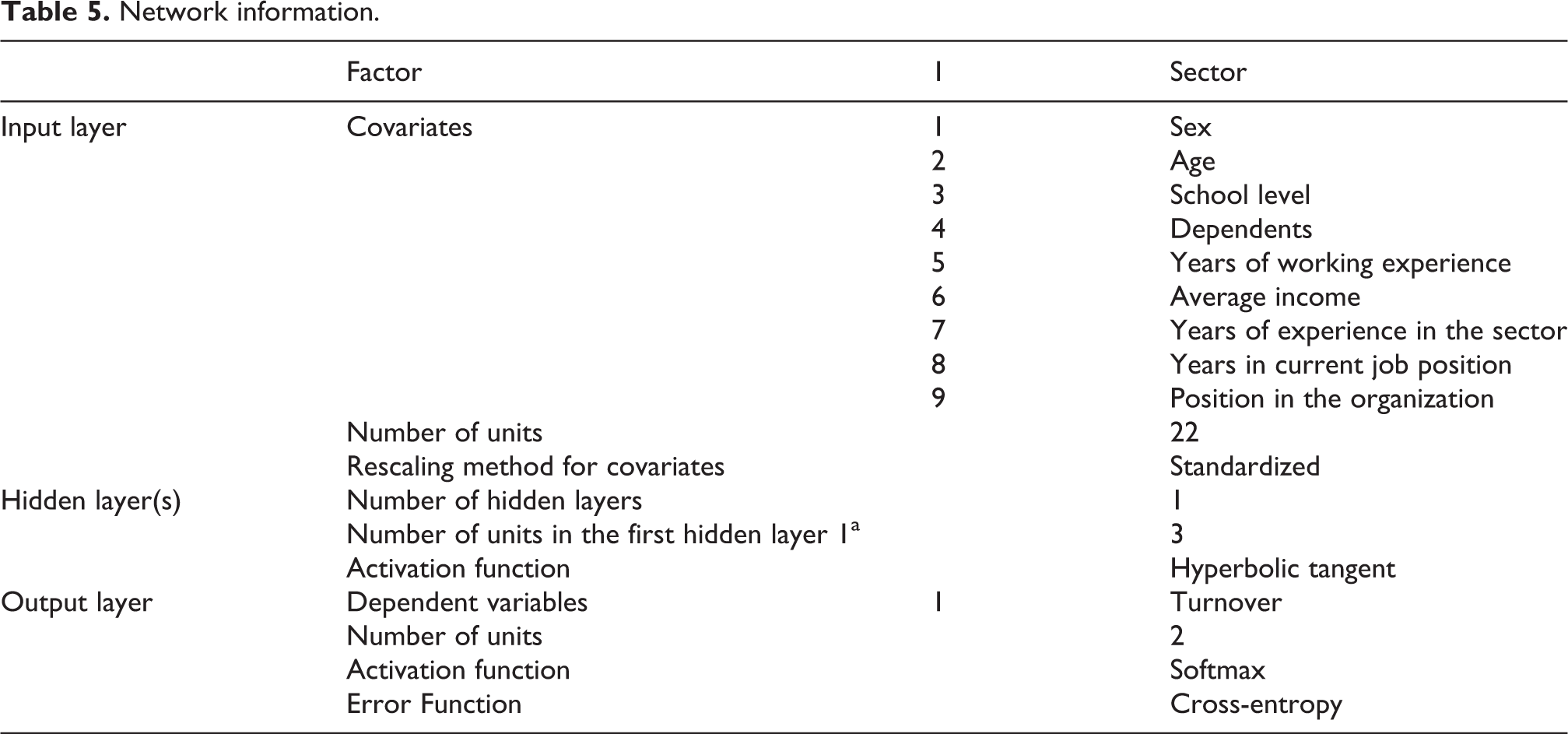
Figure 1 shows the architecture of the specified network.

Network architecture.
The summary of the model shown in Table 6 presents information on the results of the training and the application of the final network to the holdout sample.
Model summary.

Table 7, classification, shows the practical results of using the network and is based on the combined samples of training and testing. For each case, the predicted answer is Yes if the predicted pseudo-probability is greater than 0.5. For each sample, the cells in the diagonal of the cross-classification of the cases are correct predictions and the cells of the diagonal cross-classification of the cases are incorrect predictions.
Classification.

In general, 91.5% of the training cases are classified correctly (see Table 6), which corresponds to the incorrect 9.2% as shown in the model summary (see Table 5). The above shows that the model was able to correctly identify a high percentage of cases for workers who do not turnover. The retention sample helps validate the aforementioned; 90.8% of these cases were correctly classified by the model.
The receiver operating characteristic (ROC) curve shown in Figure 2 offers a visualization of the sensitivity and specificity of all the possible cutting points in a single plot.

ROC curve. ROC: receiver operating characteristic.
It is the representation of the ratio of true positives to the ratio of false positives as the discrimination threshold is varied (the value from which we decide that a case is positive or fluctuating). The graph shown has two curves, one for the category Does not turnover and another for the category Yes turnover. Since there are only two categories, the curves are symmetric around a 45° line from the upper left corner of the table to the lower right.
The area under the curve is a numerical summary of the ROC curve, for both categories (“No, there is not turnover” and “Yes, there is turnover”) is 0.881. These probabilities can be interpreted as follows, for a person that turnover and another that does not turnover, selected randomly, there is a probability of 0.881 that the pseudo-probability predicted by the model is greater for the one that turnover.
Figure 3 shows the accumulated earnings, the percentage of the total number of cases in a given category “gained” by addressing a percentage of the total number of cases.

Cumulative gain.
The first point of the curve for the category Yes Turnover is in (10%, 11%), which means that if a data set is analyzed with the network and all cases are ordered by the predicted pseudo-probability of Yes Turnover, it is expected that 10% will contain approximately 11% of all cases that assume the category Yes Turnover. Similarly, 20% would contain approximately 28% of those that turnover, the top 30% of cases would contain 40% of the defaulters, and so on.
The importance of an independent variable (Table 8) is a measure of how much the predictive value of the network model changes for different values of the independent variable. The normalized importance is simply the values of importance divided by the values of greatest importance and expressed as percentages.
Independent variable importance.

Table 8 shows that the variables related to average income, age, school level, and type of entity have the greatest effect on how the network classifies workers. The behavior of these variables is shown in Table 9. The entity variable is excluded from the characterization, since it is very diverse (31 entities).
Description of the variables that most influence and their relationship with the employee turnover.

From the analysis of the variables, it is inferred that the level of income constitutes the variable that has the greatest impact on employee turnover, that is, the lower the income, the greater the tendency to turnover. The above is closely related to the behavior of the school level, since the lower the school level, the greater the tendency to turnover, among other things, because in general, the lower the school level, the lower the income. A separate behavior shows the age variable, observing a greater tendency to turnover in the first ages, composed of people with less emotional stability, in search of what their future should be and still in formation, in the same way older people turnover is motivated by the very incidence of aging. The incidence of the type of entity in the employee turnover is interpreted from the fact that the entities generate other motivators such as work or welfare conditions, as well as the social meaning that it represents or the application of other motivating elements different from the economic income that it grants.
As a result of the research it was also found that variables such as gender, sector or position in the organization are not related to the tendency to turnover. However, years of experience shows a low relationship. A controversial result is the one observed with respect to the “number of dependent persons”, since it shows a low relation with staff turnover, which can be understood by the double relationship that exists between both variables. This is that if there is a greater number of dependents it generates greater need for income, also in turn generates the need to ensure greater job stability.
All the previous results were corroborated through the application of a χ 2 test, whose results are summarized in Table 10, in which it can be observed that according to the χ 2 test the variables that have the highest relation with the fluctuation are age, average income, years of experience in the sector, the type of entity, and the people who depend on the worker and do not show a significant impact on the rest of the variables.
Results of the χ 2 test to evaluate the relationship of the variables with the turnover decision.

Discussion
The results achieved in relation to the incidence of average income, the type of activity, and other motivational mechanisms coincide with those achieved by Cotton and Tuttle, 33 Korff et al., 32 Park and Sturman, 44 and Pohler and Schmidt 26 ; while the incidence observed in age differ from those reported by Dubey et al. 31 according to which age is not related to the tendency to turnover. However, they are similar in relation to other variables such as sex or the number of people dependent on income.
It is difficult to make a direct comparison with the current research models, taking into account that investigations aimed at analyzing the incidence of subjective variables in staff turnover were excluded and it is precisely in this conception where the greatest amount of research carried out on turnover is concentrated.
The results of this work have some key contributions and provide some excellent insights in some specific areas, but in the future, these factors can be further investigated and scrutinized and will be based on the data sources. Besides, variables that can influence turnover are not addressed, among these, relationships with managers, subordinates, and colleagues; work environment; family climate; perception of development possibilities in the organization; and job satisfaction. These variables must also affect the level of employee turnover, but their highly suggestive nature required the use of other qualitative research techniques that are not considered part of the research design. Neither did the incidence of the degree of specialization required and reached in the position deepen, since it was considered that the incidence of this variable was not significant, since independently of it the workers could perform in other positions.
As has been observed, the study assumed a cross-sectional design of the research and was carried out in a variety of sectors, it would be interesting if future research deepened the possible differences between sectors and verified whether the causes related to employee turnover show a constant evolution as long time.
Conclusions and managerial implications
In general, according to the results achieved, it can be concluded that variables such as the income received in the position, age, school level, the particularities of one or another entity in terms of its corporate purpose, and its conditions of work show a high relationship with the employee turnover decisions and, consequently, managers must pay special attention to these variables if they consider that the costs of high levels of employee turnover are high. Similarly, it is concluded that other variables such as sex, the sector of work, and the level that is occupied in the organization do not show a very significant relationship with employee turnover.
The application of a model of neural networks from the data that are available in the employee’s control databases, which almost all organizations have, is more feasible from the technical and economic point of view for the analysis of organizations, because it does not depend on additional studies in organizations, and the variables considered escape the high influence of subjectivity that can be influenced when applying information gathering instruments such as interviews and questionnaires, even when these have been subject to validity analysis, being conditioned by the sociopsychological factors existing at the time of the study. All of the above allows us to affirm that the use of neural networks with variables, such as those considered by the study and coming from sources of objective information, can be another tool through which managers can monitor and predict turnover tendencies that manifest themselves in their organizations, at least can identify those people who have qualities that rule out their turnover tendency. 26,29,33,34
Once the people in the organization are identified who may be susceptible to turnover, managers will be able to design personalized attention plans that allow avoiding or mitigating the turnover intention, or reduce the costs of staff turnover from a more proactive action that ensures a decrease in the negative impact of employee turnover. In this sense, the different functions of HRM in general and in particular those related to recruitment and selection, training, rewards, security systems, as well as other more general administrative aspects such as the promotion of a pleasant work climate and assertive leadership, are important work tools to be considered when looking for a successful management of employee turnover. 14 –16,21
In the same way, any action aimed at favoring the reduction of employee turnover, or reducing it only to the influence of its natural causes associated fundamentally with the retirement age, will have a favorable impact since, on the one hand, the economic benefit it receives from the company must have an equal impact on its offer to society, while socially it becomes a source of personal, family, and consequently, social well-being. This as long as the social development itself favors the generation of other employment opportunities for those who do not yet possess it.
Footnotes
Declaration of Conflicting Interests
The author(s) declared no potential conflicts of interest with respect to the research, authorship, and/or publication of this article.
Funding
The author(s) received no financial support for the research, authorship, and/or publication of this article.
