



Abstract
Climate change exacerbates food insecurity, malnutrition, and health risks, hindering child development in low- and middle-income countries, particularly in Africa. Nutrition education that is contextually relevant empowers caregivers with knowledge on nutrition literacy, food diversity, and hygiene, enabling informed decisions that support child well-being in environments adversely impacted by a changing climate. This article presents a qualitative case study of a facilitator-led nutrition education programme implemented in diverse South African communities. Drawing on Bronfenbrenner’s Ecological Systems Theory, the programme is positioned as a mesosystem intervention that strengthens connections between home, health, and early learning environments. Participant feedback gathered through interactive workshops highlighted increased understanding of dietary diversity, regular health checks, and hygiene practices. Participants reported greater confidence and a willingness to share their learning within their communities. Findings suggest that culturally relevant, community-based nutrition education can reduce malnutrition, strengthen climate resilience, and empower primary caregivers as community change agents. The study demonstrates how everyday caregiving and education practices can serve as practical mechanisms for climate adaptation and sustainable child development.
Keywords
Introduction
Malnutrition, specifically undernutrition, is recognised as one of the greatest global challenges, disproportionately affecting populations in low- and middle-income countries (Govender et al., 2021; Mabesa et al., 2023; Tirado et al., 2013). Undernutrition in children under five is of particular concern as it negatively affects cognitive and physical development (Govender et al., 2021; UNICEF, 2011). In 2020, an estimated 144 million children were stunted, 47 million wasted, and 14.3 million severely wasted. While global rates are declining, Africa’s stunting burden has increased from 49.7 million children in 2000 to 57.5 million in 2019 (Govender et al., 2021). In South Africa, a 2016 survey found that 27% of children were stunted, 3% wasted, and 6% underweight, with the highest rates among those aged 18–23 months (Mabesa et al., 2023; Modjadji & Mashishi, 2020).
Malnutrition is driven by interconnected factors at the individual, household, community, and national levels, aligning with Bronfenbrenner’s Ecological Systems Theory (EST). EST posits that development is influenced by interactions between nested systems the micro-, meso-, exo-, macro- and chronosystems (Bronfenbrenner, 1977, 1994). The microsystem encompasses a child’s immediate environment (family, home, and early learning), while the mesosystem reflects connections between these settings, such as between home and school. The exosystem includes external influences like primary caregivers’ workplaces, and the macrosystem refers to cultural and societal structures that shape daily life. The chronosystem considers the influence of time and life transitions.
Factors influencing malnutrition can be found across these systems: poverty, food insecurity, caregiver education levels, poor hygiene, and limited access to healthcare, water, and sanitation all contribute to nutritional risk. Additional determinants such as pre- and post-natal maternal health, lack of dietary diversity, low birthweight, and inadequate nutrition knowledge further exacerbate undernutrition (Govender et al., 2021; Mkhize & Sibanda, 2020; Modjadji & Mashishi, 2020; Said-Mohamed et al., 2015).
To address these challenges, nutrition education programmes such as the Eat Love Play Talk (ELPT) programme (Biersteker, 2023) was launched in 2022 by a South African non-profit organisation, focusing on nutrition education in caregiver programmes. Informed by the South African Food-Based Dietary Guidelines (Vorster et al., 2013) and the Nurturing Care Framework (World Health Organization et al., 2021), the programme aims to enhance nutrition literacy, hygiene practices, responsive caregiving, and early learning through play, equipping caregivers to provide nurturing care and support children’s holistic development (Do More Foundation, 2025).
The Impact of Climate Change on Nutritional Health
While the ELPT programme addresses many of the causes of malnutrition, several authors highlight the close link between nutritional health and climate change. Tirado et al. (2013) and McMahon and Gray (2021) emphasise that climate change disproportionately affects vulnerable groups such as mothers and young children. Globally, climate change threatens human development through its effects on health, water and food security, and socio-economic stability (Adom et al., 2022; Macdiarmid & Whybrow, 2019; Pérez-Escamilla, 2017). At a macrosystem level, low- and middle-income countries experience the impacts of droughts, floods, heatwaves and storms more acutely than wealthier nations (Ajilogba & Walker, 2020; Maslin et al., 2025; McMahon & Gray, 2021).
In South Africa, rising temperatures, recurring droughts, and more frequent extreme rainfall events have already affected food production and infrastructure (Carter & Gulati, 2014; Chersich et al., 2018; Wright et al., 2021). Temperature increases, with projections indicating that 20–40 additional days of extreme heat over 35°C, are expected between 2016 and 2035, and up to 80 more such days by 2065 (Wright et al., 2021). Regional projections show reduced rainfall in the west and increased rainfall in the east, leading to both droughts and flooding that disrupt food systems, housing, and schools (Brodie et al., 2024; UNICEF, 2011).
These climatic shifts directly affect South Africa’s food security. Although national food supply is generally adequate, many households, particularly in rural areas, face chronic food insecurity (Chakona & Shackleton, 2019; Masipa, 2017). Contributing factors include unemployment, poverty, rising food prices, limited access to arable land, weak distribution systems, and inadequate government support (Aphane & Muchopa, 2024; Masipa, 2017). Climate change amplifies these risks by reducing crop yields, degrading soil, and lowering the nutritional quality of food (Adom et al., 2022; Bibi & Rahman, 2023; Carter & Gulati, 2014; Owino et al., 2022). Only 13% of South Africa’s land is arable, and much of it is increasingly vulnerable to desertification and extreme weather (Adom et al., 2022; Wright et al., 2021).
Children under five are particularly susceptible to climate change. Increased temperatures and droughts are linked to higher rates of stunting and wasting (McMahon & Gray, 2021). In Kenya and Ethiopia, children born during droughts were 36–50% more likely to be malnourished (Tirado et al., 2013). These findings underscore the urgency of interventions that address both climate change and malnutrition concurrently.
Resilience to climate change operates across multiple levels from individuals and households to community systems and national policy. While agricultural measures such as crop diversification, altered planting cycles, and water conservation improve production, they do not necessarily safeguard vulnerable populations or improve nutrition outcomes (Ajilogba & Walker, 2020; Mirzabaev et al., 2023). To achieve these outcomes, climate-resilient strategies must be nutrition-focused and health-promoting, empowering households and caregivers to adopt sustainable, protective practices (Macheka et al., 2022; Tirado et al., 2013).
The Role of Primary Caregivers
According to Varela et al. (2024), food literacy that includes nutrition, child health, and food security can be classified as protective, climate-adaptive knowledge. By improving caregivers’ self-efficacy and knowledge, households can become more self-sustaining while addressing food scarcity and malnutrition.
Caregiver programmes must account for social, environmental, and behavioural factors distributed across Bronfenbrenner’s (1977) ecological systems, including cultural attitudes toward breastfeeding, household income, and food access (Macheka et al., 2022). Singla et al. (2015) note that parent-focused programmes are most effective when they follow a structured curriculum supported by group discussions, demonstrations, feedback, and opportunities to practise new skills,all integral to the ELPT approach. Nutrition education should also be integrated into broader caregiver and life-skills training, consistent with the Nurturing Care Framework (World Health Organization et al., 2021). The ELPT programme demonstrates how a caregiver-focused nutrition education initiative can simultaneously combat malnutrition and strengthen climate resilience.
Case Study: Eat Love Play Talk Programme
The ELPT programme, implemented in rural, peri-urban, and urban communities across three South African provinces, addresses nutritional deficits among children under five, particularly in low-resource areas. Informed by the South African Food-Based Dietary Guidelines (Vorster et al., 2013) and the Nurturing Care Framework (World Health Organization et al., 2021), it promotes food and nutrition literacy, hygiene, responsive caregiving, and early learning through play. ELPT is delivered to Early Childhood Development (ECD) principals, practitioners (teachers) and playgroup facilitators who are community leaders trusted by families. These participants complete a three-day training to become master trainers who then facilitate seven workshops with caregivers over seven months. The training builds facilitation, leadership, and organisational skills, while providing relevant nutrition and health knowledge and fostering a sense of collective purpose (Do More Foundation, 2025).
ECD centres serve as ideal implementation sites: they are embedded in communities, act as safe spaces for children, and provide natural linkages between home, school, and local health structures. Because clinics are often distant, ECD centres can serve as convenient points of contact for health and nutrition dissemination (Dos Santos et al., 2019; Vale et al., 2023; Ronaasen, 2013).
Workshops cover nutrition, hygiene, and caregiving practices from pregnancy through preschool years. Visual materials such as caregiver booklets, food cards, and height charts reinforce key messages. Sessions use experiential learning such as interactive activities, role-playing, and storytelling, to build skills in responsive caregiving, home gardening, meal planning, and food label interpretation, thereby strengthening household food security and dietary diversity.
On completion, participants report increased understanding of child health needs, improved nutrition knowledge, and greater confidence to apply and share these practices in their homes and communities (Do More Foundation, 2025).
ELPT’s Connection to Building Climate Resilience
The knowledge shared through the ELPT programme aligns closely with climate-resilient adaptations that are both nutrition-focused and health-promoting. Climate resilience is strengthened when educational activities increase understanding of nutrition, food diversity, and sustainable dietary practices (Pérez-Escamilla, 2017; Tirado et al., 2013). Mkhize and Sibanda (2020) note that caregivers’ education levels directly influence children’s nutritional health, with limited knowledge of dietary needs contributing to malnutrition. By improving caregivers’ understanding of good nutrition and hygiene, ELPT simultaneously addresses malnutrition and promotes adaptive, climate-resilient behaviours.
A key feature of the programme is its emphasis on the Road-to-Health Booklet (RtHB), a South African educational health record given to caregivers at birth to monitor a child’s growth and development. The RtHB tracks immunisations, deworming, growth measurements, and Vitamin A supplementation (Kitenge & Govender, 2013). This booklet becomes useful for early detection of developmental problems at local level and is a tool for caregivers to tack the growth of their child in the early years (Cloete et al., 2013; Mabesa et al., 2023). With climate change increasing the prevalence of infectious diseases such as malaria and diarrhoea (Maslin et al., 2025; McMahon & Gray, 2021), routine use of the RtHB acts as a climate-resilience tool, enabling caregivers to monitor health and prevent malnutrition.
ELPT sessions also emphasise maternal nutrition and exclusive breastfeeding, proven interventions that enhance child survival and resilience to environmental shocks (McMahon & Gray, 2021; Tirado et al., 2013). Complementary feeding guidance, supported by the South African Food-Based Dietary Guidelines (Vorster et al., 2013), encourages the inclusion of nutrient-dense fruits and vegetables such as leafy greens, squash, and legumes. Consuming diverse, micronutrient-rich foods strengthens immune systems and reduces disease vulnerability (Burchard-Dziubińska, 2021; Mirzabaev et al., 2023).
Participants are introduced to affordable and sustainable protein sources, including legumes, beans, soya, peanut butter, and even insects such as mopane worms, reflecting a global shift toward more climate-friendly diets (Maslin et al., 2025; Otorkpa et al., 2024). These practices enhance both nutritional quality and environmental sustainability.
Home and community gardens are another climate-resilient feature promoted by ELPT. Gardens improve dietary diversity, supplement household income through surplus sales, reduce food waste, and strengthen community bonds while mitigating risk of erosion and flooding (Aphane & Muchopa, 2024; Burchard-Dziubińska, 2021; Maredia et al., 2023).
The integration of Water, Sanitation, and Hygiene (WASH) practices further protects families in areas where drought or flooding limit access to clean water (Badji et al., 2022; Melariri et al., 2019).
At the macrosystem level, the programme values cultural knowledge and grassroots experience of climate change. By incorporating locally relevant foods, beliefs, and practices, ELPT ensures that messages resonate with community contexts and foster long-term behaviour change (Macheka et al., 2022; Owino et al., 2022; Tirado et al., 2013). This participatory, culturally grounded approach empowers caregivers as active contributors to sustainable, climate-resilient communities (Badji et al., 2022; Malhi et al., 2021).
Methodology
The study employed a qualitative, descriptive case study design to explore the adaptability, sustainability and perceived impact of the Eat Love Play Talk nutrition education programme (Do More Foundation, 2025). Data was collected between February 2023 and November 2024 as part of ongoing implementation monitoring, with the aim of capturing in-depth insights into participant experiences and programme delivery across diverse early childhood settings. Ethical approval was obtained from the Nelson Mandela University Human Research Committee, and all procedures were guided by the ethical principles outlined in the Declaration of Helsinki.
Participant Demographic Characteristics (n = 834)
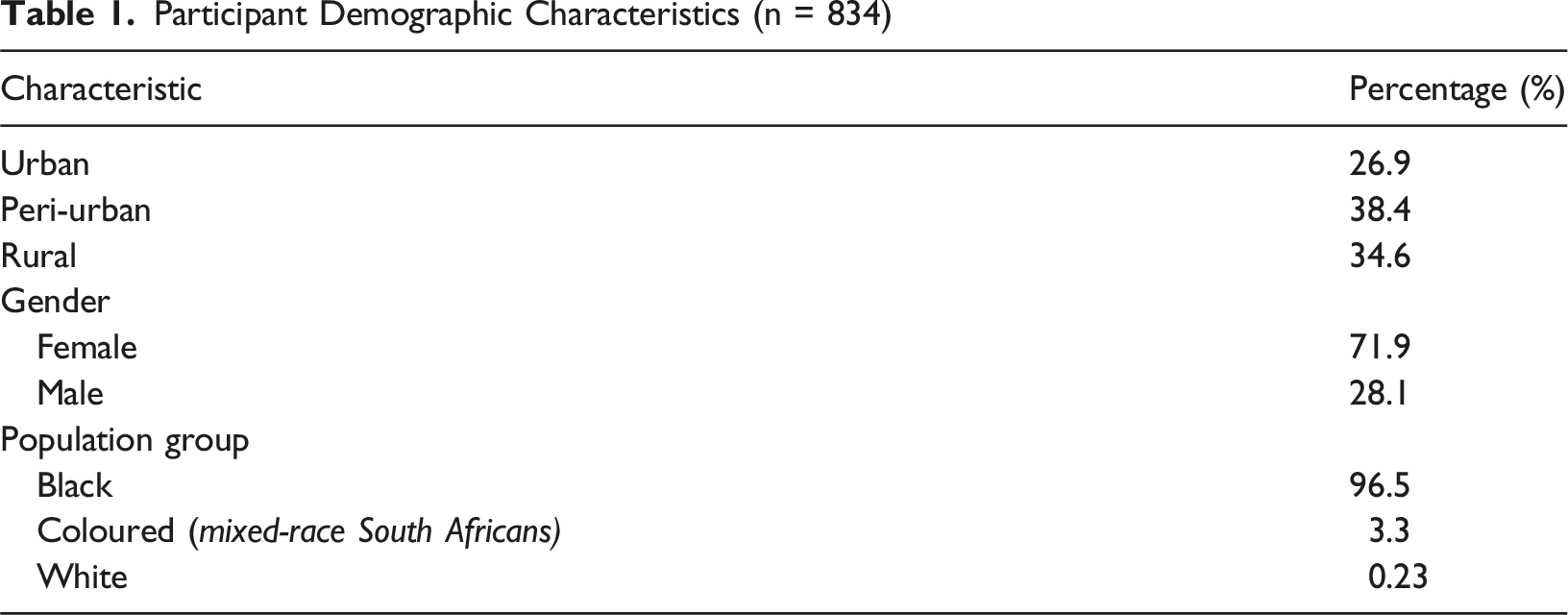
Participation was voluntary, with informed consent obtained and the right to withdraw respected throughout the research period (2022–2025). Figure 1 illustrates the data collection process. Training was delivered by master trainers to ensure consistent facilitation grounded in nutrition education, play-based learning strategies, and adult education principles. Content was designed to be inclusive and accessible to participants with diverse educational backgrounds, particularly those at the community level, where formal education levels vary. The programme aimed to build both knowledge and confidence in delivering nutrition messages through playful, developmentally appropriate approaches. Overview of the study design and data collection process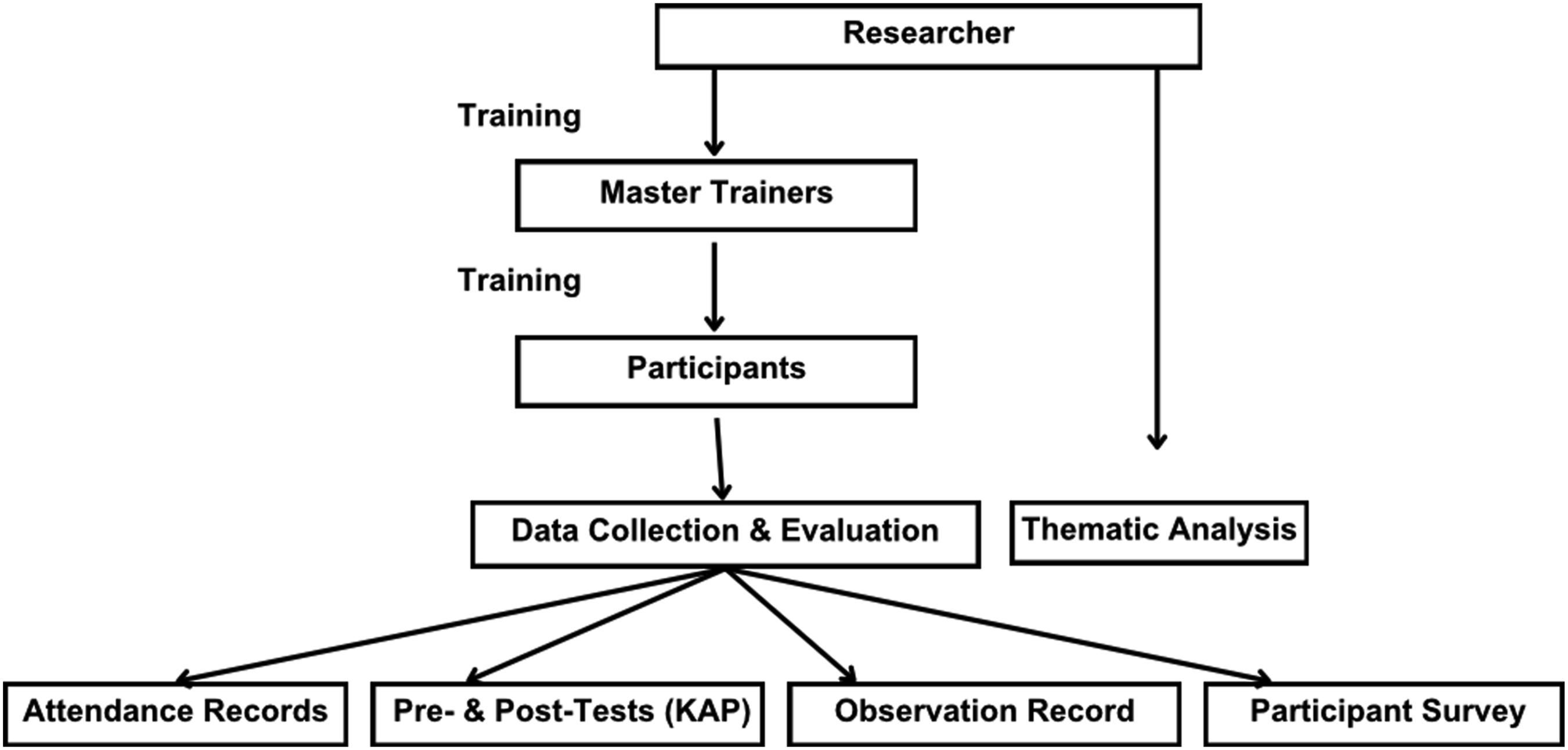
Data collection focused on participant perspectives and experiences. Qualitative sources included observation notes from sessions, trainer reflections, and open-ended responses from electronic evaluation surveys administered at the conclusion of training. These methods supported a holistic understanding of how the programme was received, interpreted, and applied in practice.
Thematic analysis was applied to identify patterns and themes related to programme relevance, facilitator effectiveness, and participant engagement. This approach enabled a nuanced exploration of emerging insights, providing a basis for understanding the perceived value and potential scalability of the Eat Love Play Talk programme in early learning contexts.
Results
The findings will explore the integration of climate resilience strategies within a caregiver focused nutrition education programme that utilises practical, community-driven approaches to empower participants and promote sustainable health practices, while showcasing how interactive, culturally relevant methods, such as storytelling and hands-on activities, can foster climate-adaptive behaviours.
The following themes are analysed through Bronfenbrenner’s Ecological Systems Theory, which posits that child development is influenced by a series of nested environmental systems. The Eat, Love, Play, Talk (ELPT) programme functions as a mesosystem intervention, creating crucial linkages between the microsystems of home, clinic, and ECD centre. By strengthening these connections, the programme enhances the entire ecological model’s ability to foster climate resilience.
Thematic Analysis Summary: Nutrition Education Builds Climate Resilience
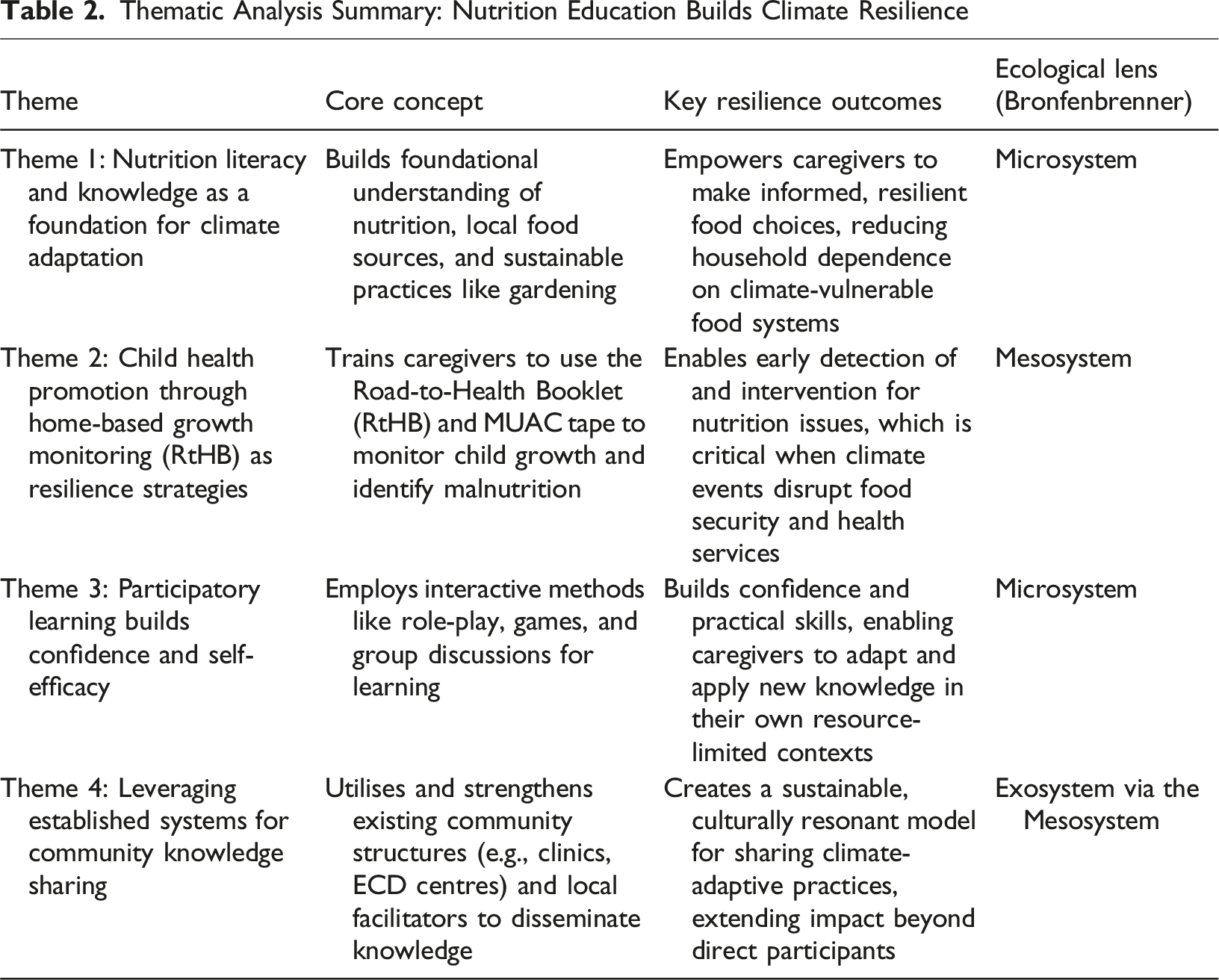
Theme 1: Nutrition Literacy and Knowledge as a Foundation for Climate Adaptation
The programme built essential knowledge on food groups, balanced diets, and sustainable practices, directly reducing dependence on climate-vulnerable food systems. Participants articulated a significant shift in their understanding of nutrition’s critical role for both caregiver and child. Participants gained insights into the various food groups, the necessity of incorporating them into a balanced diet, the relationship between dietary practices and malnutrition, and the importance of hygienic practices: Learned that [the]… important [importance] of eating food that builds, gives energy and food that protect, as they [are] healthy for the mother and child. (Bushbuckridge Cohort, 2024) I knew nothing about stunned [stunted] kids and it has shown me that the most critical stage of a child is the pregnancy, anything you put in during the term will give results when the baby is born or growing. (Johannesburg Cohort 3, 2023)
This was coupled with improved knowledge of hygienic practices to combat climate-related health risks in the home: How clean should I be before handling the food or preparing the food so it doesn’t go off in the heat. (Jericho Cohort, 2024)
Theme 2: Child Health Promotion through Home-Based Growth Monitoring (RtHB) as Resilience Strategies
Equipping caregivers to use the Road-to-Health Booklet (RtHB) and MUAC (Mid-upper arm circumference) tape transformed them into active agents in their children’s health, enabling early detection of malnutrition, a critical capacity in areas facing climate-induced food insecurity: Fascinating as I can now go through Road to Health book thoroughly. (Botshabelo Cohort, 2024) The clinic card, I didn't know what the graph means before I came to the workshop but now I know it. (Johannesburg Cohort 3, 2023)
Participants gained practical skills for growth monitoring and understanding vital health interventions: Knowledge about malnutrition and how to use MUAC to identify where a child's case is a referral case or she's healthy. (Turfloop Cohort, 2024) The information from Road to Health [book], that caregivers should know the kind of injections and deworming they will get in [at] their visit. (Bushbuckridge Cohort, 2024)
Theme 3: Participatory Learning Builds Confidence and Self-Efficacy
Interactive methods like role-play and games were not merely enjoyable; they were fundamental to translating knowledge into practical confidence and deepening understanding: I have gained confident [confidence] in myself. Dramatisation the role play made things more clear. (Johannesburg Cohort 1, 2023) When we was [were] doing practical[s] about the things we did in writing and playing games that helps our minds to think properly. (Jericho Cohort, 2024)
This approach built the self-efficacy necessary for participants to adapt and apply learning within their own resource-constrained contexts.
Theme 4: Leveraging Established Systems for Community Knowledge Sharing
The findings showcase the potential ripple effect, transforming participants from recipients of information into confident educators and advocates within their communities, thereby leveraging established social networks for knowledge sharing: I’ve gained confidence and I will now be able to train my participants and share with the community. (Johannesburg Cohort 1, 2023) I got to learn a lot and also I now have enough information I need to also empower my community about nutritional messages. (Standerton Cohort, 2024)
Discussion
The strength of this study lies in its evidence-based model for operationalizing Bronfenbrenner’s Ecological Systems Theory within existing ECD systems through the Eat Love Play Talk (ELPT) programme, producing outcomes across interconnected ecological layers (Ronaasen et al., 2017; Neal & Neal, 2013). This framework highlights how individual behaviours, community norms, and institutional structures interact, offering insight into how nutrition education influences child health outcomes and strengthens climate resilience.
At the microsystem level, ELPT empowers caregivers by enhancing knowledge, agency, and confidence to embed new learning into daily caregiving, including hygienic practices that mitigate climate-related risks such as food insecurity and malnutrition. Caregivers are also supported to use the RtHB effectively, tracking growth and vaccination status to take timely action. At the mesosystem level, the programme strengthens relational bridges between the ECD centre, home, and health clinic, creating reinforcing loops that sustain behaviour change and enhance family resilience. At the macrosystem level, ELPT integrates culturally grounded practices while addressing structural risks, including climate threats impacting food systems and child health (UNICEF, 2021).
Findings indicate that this approach boosts participants’ confidence and agency to promote health-conscious behaviours, share knowledge, and foster community dialogue. Adoption of these practices at meso- and exosystem levels contributes to broader climate resilience by embedding sustainable nutrition behaviours into community structures, addressing immediate nutritional needs while promoting long-term, climate-smart health outcomes.
Programme learnings that link climate resilience to nutrition education practice: • Strengthen caregiver capacity and confidence, translating knowledge into daily practices that reduce malnutrition and climate-related health risks. • Enhance collaboration between homes, ECD centres, and health services, sustaining behaviour change and reinforcing community resilience. • Promote the integration of culturally grounded, climate-smart nutrition practices, embedding health-promoting behaviours across families and communities
Conceptual Contribution: Reframing Tools for Climate Resilience
This article offers an conceptual contribution by reframing two familiar ECD and health tools as explicit climate resilience mechanisms. First, the Road to Health Booklet (RtHB), traditionally conceived as a child health monitoring record, is reimagined as an early-warning system for climate-sensitive malnutrition (Side by Side, 2020). By teaching caregivers to interpret growth charts, the programme positions routine health monitoring as an anticipatory adaptation skill, enabling families to identify nutritional risks that may be exacerbated by environmental shocks (Naidoo et al., 2018; WHO, 2018).
Second, nutrition education is leveraged as a resilience strategy rather than merely a dietary intervention. By equipping caregivers with knowledge of diverse, affordable, and locally available foods including beans, chickpeas, and indigenous vegetables for example, the intervention expands the adaptive capacity of households to withstand climate-related food price volatility and supply disruptions (FAO, 2020; Bhandari et al., 2025). Positioning everyday caregiving and educational practices as frontline strategies of climate adaptation is helpful for local policy makers.
Third, it underscores the role of ECD interventions as multidimensional systems interventions: they do not merely support child development, but simultaneously enhance community resilience, strengthen health systems, and provide cost-effective, scalable climate responses which is an opportunity for those working in development.
Implications for Practice
Building on these contributions, we propose that: 1. ECD interventions be reconceptualised as multidimensional systems innovations operating across education and health to embed climate resilience skills. Such interventions create synergies that amplify impact and reduce siloed programming, particularly in resource-scarce developing contexts. 2. Caregiver-facing health and education tools should be reframed as climate adaptation instruments, unlocking opportunities to embed climate-responsive messages, advocacy, and integration within national climate strategies. 3. Qualitative evidence from lived experience should be leveraged as proof of concept for systems interventions. Capturing local experiences provides practical insights that enhance traction and demonstrate feasibility. 4. ECD delivery systems can serve as mechanisms for climate resilience, where small-scale, everyday practices generate adaptive capacities that cascade into individual (micro) behaviour change and reinforced resilience at community and societal levels.
In this sense, ECD interventions such as ELPT showcase the opportunity for climate-responsive programming that leverages existing systems. By bridging health and education, and embedding culturally relevant practices, they show how investments in young children can simultaneously advance human capital and strengthen resilience in the face of climate uncertainty.
Conclusion
This article has argued for reconceptualizing nutrition education as a form of climate resilience building. Through the ELPT case study, we demonstrate how a facilitator-led, culturally relevant intervention functions as a critical mesosystem strategy within Bronfenbrenner’s Ecological Systems Theory.
Our contribution is twofold. First, we provide empirical evidence that empowering caregivers catalyses change across ecological systems: improving dietary practices (microsystem), strengthening community knowledge-sharing networks (mesosystem), and promoting sustainable, climate-resilient behaviours such as home gardens and diverse protein consumption (macrosystem). Second, we respond to calls in the literature (Leach & von Fintel, 2025) for multi-dimensional ECD approaches by showcasing a model integrating health, nutrition, and education through a climate resilience lens.
While macro-level infrastructure remains important, our findings highlight the complementary impact of meso-level, community-driven interventions. Nutrition education programmes offer a strategic pathway to build climate resilience by strengthening child health behaviours that reinforce the interconnections within a child’s ecological system. Future efforts to mitigate climate change impacts on child development should prioritise strengthening caregivers’ knowledge and agency, alongside the community structures that support them.
Footnotes
Acknowledgments
We would like to acknowledge the support and contributions of the team at the Do More Foundation, as well as the researcher support at Nelson Mandela University for their invaluable input. We also express gratitude to the participants of the facilitator-led programme for sharing their experiences.

Ethical Considerations
Ethical approval was obtained from Nelson Mandela University Human Research Ethics Committee.
Consent to Participate
Informed consent was obtained for the use of this data.
Consent for Publication
Informed consent for publication was obtained from all participants.
Funding
The authors received no financial support for the research, authorship, and/or publication of this article.
Declaration of Conflicting Interests
The authors declared no potential conflicts of interest with respect to the research, authorship, and/or publication of this article.
Data Availability Statement
All data is available upon request.
Other Information
This article has not been submitted to any other journal in South Africa or internationally.