



Abstract
Child wellbeing, as an outcome of early education, features highly in documents and policies in many countries internationally. In Australia, wellbeing is prominent in the National Quality Framework and the new Early Years Strategy 2023-2034. However, child wellbeing is a multi-faceted concept, difficult to conceptualise and important to define in context. This qualitative study surveyed 76 Australian early childhood teachers to garner their child wellbeing definitions, descriptions, pedagogy and practices. Reflective thematic analysis generated themes of ‘Seeing who you are’, ‘We are here for you’ and ‘Let’s learn’, with an overarching notion of child wellbeing as a continual ‘crossing’ of these areas. Hearing from early childhood teachers provides new perspectives, clarity and specificity on the complex topic of child wellbeing. In addition, understanding what child wellbeing is in the context of early childhood settings can inform both education and wellbeing literature.
Keywords
Introduction
Child wellbeing is a topic of global discourse and concern, particularly in education. The United Nations Educational, Scientific and Cultural Organisation (UNESCO) International Science and Evidence based Education (ISEE) Assessment speaks of ‘flourishing’ as an educational focus (De Ruyter et al., 2022) and the links between education and wellbeing outcomes continue to be positive (Organisation for Economic Co-operation and Development [OECD], 2020). Many developed countries have education and policy frameworks incorporating wellbeing, including the United Kingdom, USA, New Zealand, China, Portugal, Columbia and Denmark (Baker et al., 2017; Brogaard-Clausen et al., 2022). Wellbeing is, however, difficult to conceptualise, both in general and in the context of children and education.
What is ‘wellbeing’?
Defining the concept of wellbeing has been under examination for millennia (Jarden & Roache, 2023). From Greek philosopher Aristotle’s ideas of human functioning (Ransome, 2010) to today’s vast and expanding waves of wellbeing science (Lomas, 2022), the consideration of what makes humans ‘well’ is perpetually interrogated and fascinating. Complicating matters of definition are multiple terms commonly used for wellbeing (including happiness, mental health, quality of life, flourishing, life satisfaction) and the many identified domains of wellbeing, such as physical, psychological, subjective, social, mental, emotional, material (Christopher, 1999; Diener, 1984; Jarden & Roache, 2023; Keyes, 1998). Moreover, the term wellbeing exists in the discourse and endeavours of various disciplines, from education, psychology, philosophy and science to politics, economics, public policy and marketing (Jarden & Roache, 2023).
While defining the concept of wellbeing remains contested, literature concurs it is multidimensional, intangible, nuanced and complex (Christopher, 1999; Dodge et al., 2012). Research also agrees wellbeing is both contextual and cultural, dependent upon and impacted by complex influences including, but not limited to, individualist and collectivist viewpoints, societal morals and visions, external assets and personal capabilities, social justice factors and views of what is ‘good’ for humans (Ben-Arieh et al., 2014; Ransome, 2010; White, 2008).
Further nuance is created in wellbeing definitions and descriptions when the qualifier of ‘child’ or ‘childhood’ is added. Children’s interdependency and vulnerability in the world and the impact upon them of various cultural and contextual limits, expectations and opportunities, compounds complexity (Dirwan & Thévenon, 2023; Marbina et al., 2015; Pollard & Lee, 2003; White, 2008). Moreover, childhood is both a distinct and time-bound experience, during which rapid neurological, psychological and physical development occurs. Thus ‘wellbeing’ can refer to children’s immediate lives and experiences, but also the impacts on their future development and prospects (Ben-Arieh et al., 2014). Not only is child wellbeing a dynamic and elusive concept changing over time (Dirwan & Thévenon, 2023), it can be considered from multiple standpoints - from cultural and contextual perspectives as broad as economic sustainability, moral imperatives, ecology, government strategy, learning and development, education, child rights and voice (Baker et al., 2021; Jarden & Roache, 2023).
Despite these multiple standpoints, wellbeing interpretations, definitions, indicators, dimensions and measures can be found in important and influential global reports, policies and frameworks. For example, the World Health Organisation (WHO) suggests wellbeing as a positive state and resource determined by social economic and environmental factors (WHO, 2021). The OECD proffers wellbeing as compromising 11 dimensions relating to material conditions and quality of life (2020). Specifically, regarding child wellbeing, the United Nations Children’s Fund (UNICEF) provides a multi-level framework, radiating out from child outcomes through activities, relationships, networks, resources, policies and context (Gromada et al., 2020). In Australia, The National Children’s Mental Health and Wellbeing Strategy describes wellbeing as a continuum from well, coping and struggling to unwell (National Mental Health Commission, 2021) while the Australian Research Alliance for Children and Youth suggest six interlinked domains - Valued, loved, and safe; Material basics; Healthy; Learning; Participating, and Positive sense of identity and culture (Noble et al., 2023). Whatever the report, policy or framework, understanding and promoting child wellbeing, is a significant but complex topic of global concern.
Australian early childhood education context
Of interest to this study is the Australian context where national calls have been renewed for prioritising and monitoring children’s early education and wellbeing. A whole of government Early Years Strategy 2023-2034, focusing on child health and wellbeing, and the first National Children’s Mental Health and Wellbeing Strategy follow on from the momentous education reform of the 2012 National Quality Framework (NQF) (Department of Social Services, 2024; Fenech et al., 2012; National Mental Health Commission, 2021). Specifically in early education (0–8 years), wellbeing is a key learning outcome and focus of state, territory and national educational frameworks and regulations (ACECQA; 2023; Child Wellbeing and Safety Act, 2005; CoA, 2011). In the national Early Years Learning Framework (EYLF), one of the 5 key Learning Outcomes for children is “Children have a strong sense of wellbeing” (AGDE, 2022, p. 44). Moreover, the “safety, health and wellbeing of children” is a key objective of the National Quality Framework, Australia’s regulatory, assessment and quality improvement strategy for early education (NQF; ACECQA, 2023, p. 9).
With such a pedagogical focus, understanding what child wellbeing is and how those in ECEC, who are guided by the EYLF, perceive and promote it, is important. Particularly the perspectives of early childhood teachers (ECTs) are valued in this study as they are responsible for the pedagogical approach and practices to meet the EYLF child wellbeing outcomes. In addition to the EYLF, the state of Victoria has its own nationally recognised curriculum framework, the Victorian Early Years Learning and Development Framework (VEYLDF) which shares the same 5 key Learning Outcomes as the national EYLF including children having a strong sense of wellbeing (DET, 2016).
The current study
It is in this highly wellbeing-focused Australian ECEC context, whole-of-government attention, updated EYLF and underpinned by the understanding of child wellbeing as multi-faceted, dynamic and contextual, this current study finds its timely rationale. Science, health, education, policy and the like are increasing their focus on defining, improving, and measuring wellbeing in and with different contexts, cultures and cohorts (Khaw & Kern, 2014; OECD, 2020). Wellbeing is a multidisciplinary and transdisciplinary concept that sits across disciplines including psychology, economics and philosophy with key applications in health, education and legal systems. Wellbeing is used to refer to the broad concept valued by humans and particularly from a lived experience angle, differentiated from more objective approaches in health, which often orbit around disorders or disease. In this regard, health and wellbeing whilst related are not interchangeable. Moreover, theories of wellbeing suggest the importance of people being able to choose their own conceptualisations of wellbeing and to experience wellbeing by their own definition (Nussbaum, 2011; Ransome, 2010). Forgeard and colleagues (2011) call for a move away from broad and blurry definitions of wellbeing. With these factors in mind and moving from broad and global conceptions of wellbeing to child wellbeing in the context of ECEC in Australia (and, pragmatically, within a single state), this study sought to hear from early childhood teachers about their perspectives. It was guided by the research question ‘How do early childhood teachers (ECTs) in Victorian Kindergarten programs (early childhood settings for 3–5 year children) define, describe and promote children’s wellbeing?’.
Methodology
As the research focus was to hear from ECEC teachers about their ideas and practices, a qualitative, interpretivist approach was adopted. Qualitative research aims to explore and understand human experiences from the perspective of the participant, particularly the meaning individuals or groups assign to a phenomena or problem (Creswell & Creswell, 2023). Interpretivist research endeavours to generate new, deeper interpretations and understandings of contexts and social worlds (Saunders et al., 2019). Phenomenology, as a specific methodological approach within the broader interpretivist paradigm, places an emphasis on participants’ lived experiences, the pursuit of insight and mutually created findings (Van Manen, 2017). Inspired by this but recognising Van Manen’s (2017) cautions of the challenges of genuine phenomenological inquiry, a phenomenologically-informed approach was taken to hearing from and understanding ECTs and their practices and definitions around child wellbeing in their education contexts.
Theoretical framework
This study is framed by UNICEF’s child wellbeing framework (Gromada et al., 2020). Like Bronfenbrenner’s (1979) ecological theory of child development, UNICEF offers a multi-level framework with the child at the centre (see Figure 1). Relevant to this study is the UNICEF framework’s specific focus on wellbeing, providing a holistic view of child wellbeing as interacting with, and being influenced by, multiple environmental levels. The concentric spheres of influence places wellbeing outcomes for children at the heart, including mental wellbeing, physical health, academic and social skills (Gromada et al., 2020). Wellbeing outcomes for the child are influenced in the UNICEF framework, as they are in ECEC settings, by the ‘world of the child’ (including activities and relationships like those with family and peers), the ‘world around the child’ (of networks and resources) and the ‘world at large’ (context and policies). In this study, ‘the world of the child’ is relevant to understand child wellbeing in the context of their early education experience. While we acknowledge the broader contextual and policy level influences on child wellbeing included in the framework (particularly of the EYLF and ECEC Regulations), we are primarily concerned with the viewpoints of those who reside in the ‘relationships’ and ‘networks’ levels, that is ECEC teachers. Multi-level child wellbeing framework (Gromada et al., 2020, p. 6). Adapted from Worlds of Influence: Understanding what shapes child well-being in rich countries | Innocenti Global Office of Research and Foresight (unicef.org). In the public domain.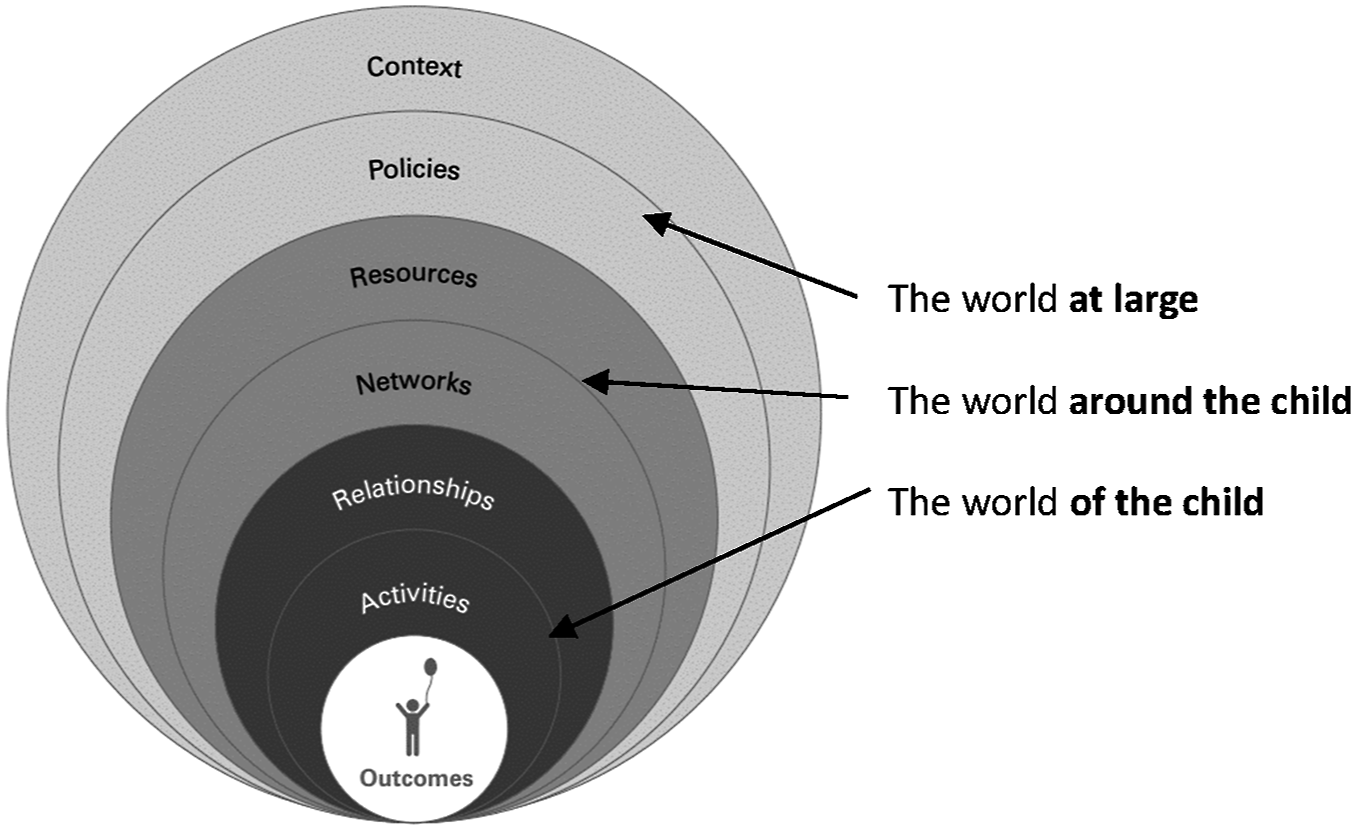
Participants
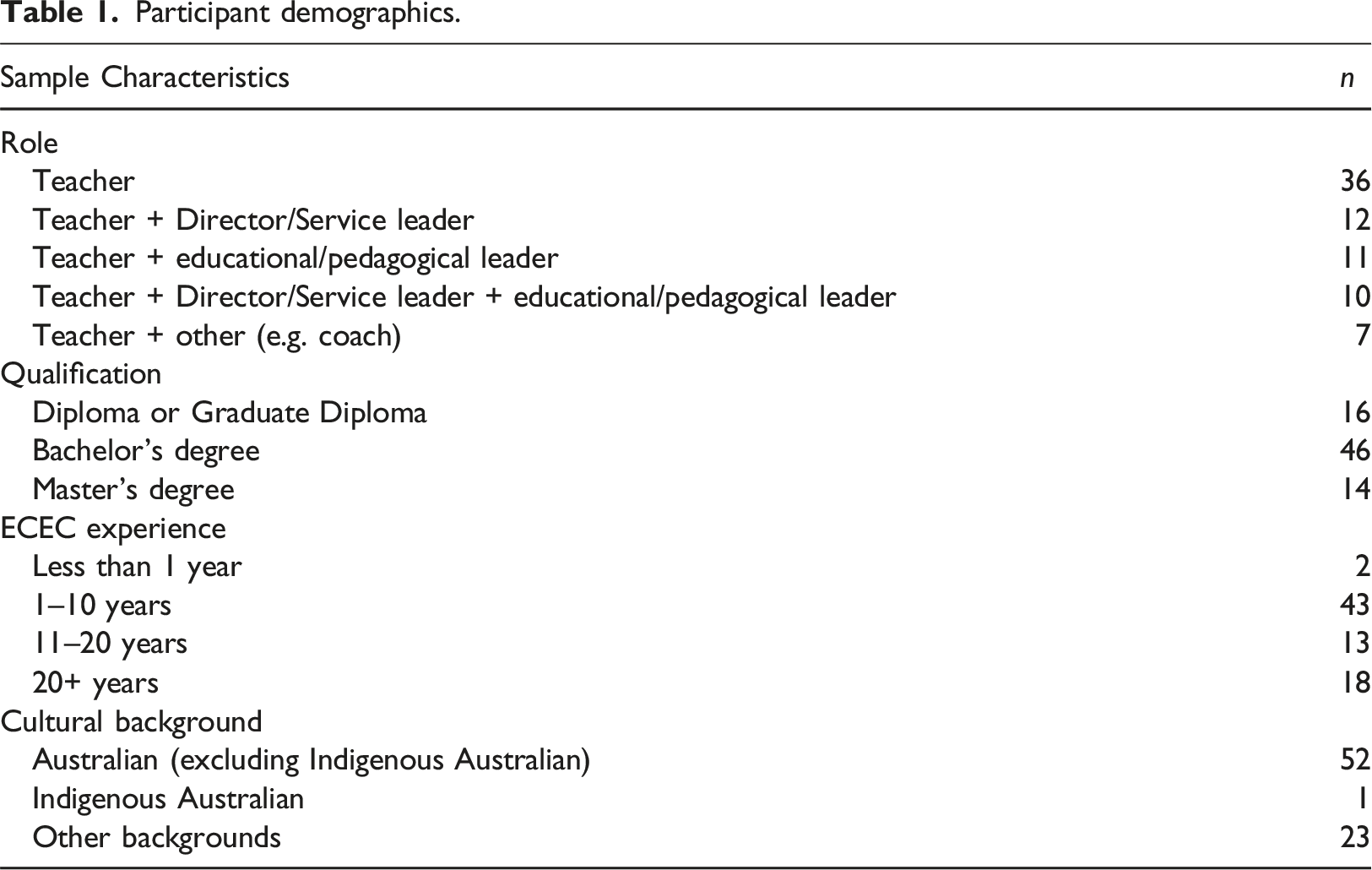
Data reported here came from a subset of questions from the larger online survey of ECTs working with 3–6-year-old children, in kindergarten programs (early childhood settings) in Victoria, Australia. Consistent with a phenomenologically-informed approach, participants should be relatively homogeneous and have significant and meaningful experiences with the phenomenon under investigation (Creswell & Creswell, 2023), hence the ECT sample.
Participant demographics.
Materials and methods
A qualitative online survey method was used to gather ECTs’ perspectives. Participants completed the survey between July and November 2023 and answered closed and open-ended questions regarding their wellbeing definitions, perspectives and pedagogical practices, for example, “If you had to choose 5 words to define or describe ‘child wellbeing’ what would they be?” (Q10); “In your work, how do you know if a child has a strong sense of wellbeing” (Q13); “What do you do to promote a child having a strong sense of wellbeing?” (Q14); “In what ways do you think children are effective communicators about their wellbeing?” (Q17); “What you think are the three most important things you teach children about wellbeing?” (Q18). To mitigate the limitations of a survey method and better explore participants’ experiences, iterative and follow up questions were included to allow participants to provide examples of their practices, others ways they promote child wellbeing, why wellbeing practices were at their identified level of importance and perceived barriers to practice. Questions were generated based on the EYLF Learning Outcomes and wellbeing literacy literature (Australian Government Department of Education [AGDE], 2022; Baker et al., 2021).
Justifications of sample size for qualitative research are complex, there are few rules and saturation is not recommended, however the ‘mid-range’ sample of 76 was deemed a rich enough dataset to answer the research questions but pragmatically be deeply analysed (Braun et al., 2021; Marshall et al., 2013). Also, aligning with qualitative values, we gave consideration to information power over sample size – that the ECEC context of the study’s aim was narrow; the participants belonged to a highly specific target group; and specific wellbeing theories were applied for exploratory analysis (Braun & Clarke, 2022; Malterud et al., 2016). Given the anonymous, survey design, quality of dialogue would be considered ‘weak’, however other indicators of rigour and trustworthiness added methodological integrity, including the data analysis method, reflexive thematic analysis (RTA)’s prolonged data engagement process, audit trail, peer debriefing, code to theme diagramming and continuous comparison against raw data (Malterud et al., 2016; Nowell et al., 2017).
Data analysis
Data was organized and analysed primarily through the NVivo platform (https://lumivero.com/). An in-depth qualitative analysis of the patterns of meaning within the survey data was undertaken using Reflexive Thematic Analysis (RTA; Braun & Clarke, 2022). Demarcating RTA from other types of thematic analysis, RTA highlights reflexivity and the researcher’s role in knowledge production, viewing subjectivity as a resource and acknowledging researchers inevitably bring a theoretical lens and social position (Braun & Clarke, 2022; Terry et al., 2017). We have backgrounds in early childhood education, psychology and wellbeing science. Congruous with RTA, analysis of data was undertaken primarily by the first author (LB) given her extensive ECEC teaching experience and supported throughout the process by the second and third authors (BR and LO). RTA can be used within most theoretical frameworks (Terry et al., 2017), and was relevant for our aim of exploring and identifying themes arising ECTs definitions and understanding of child wellbeing.
RTA consists of six key phases of recursive and iterative analysis – 1) data familiarisation, 2) code generation, 3) initial theme generation, 4) potential theme development and review, 5) theme refining, defining and review, and 6) writing up (Bryne, 2022; see Figure 2). In this way, the analysis process is subjective and evolving while rigorous, systematic and insightful (Braun & Clarke, 2022). Reflexive thematic data analysis process undertaken (adapted from Braun & Clarke, 2022).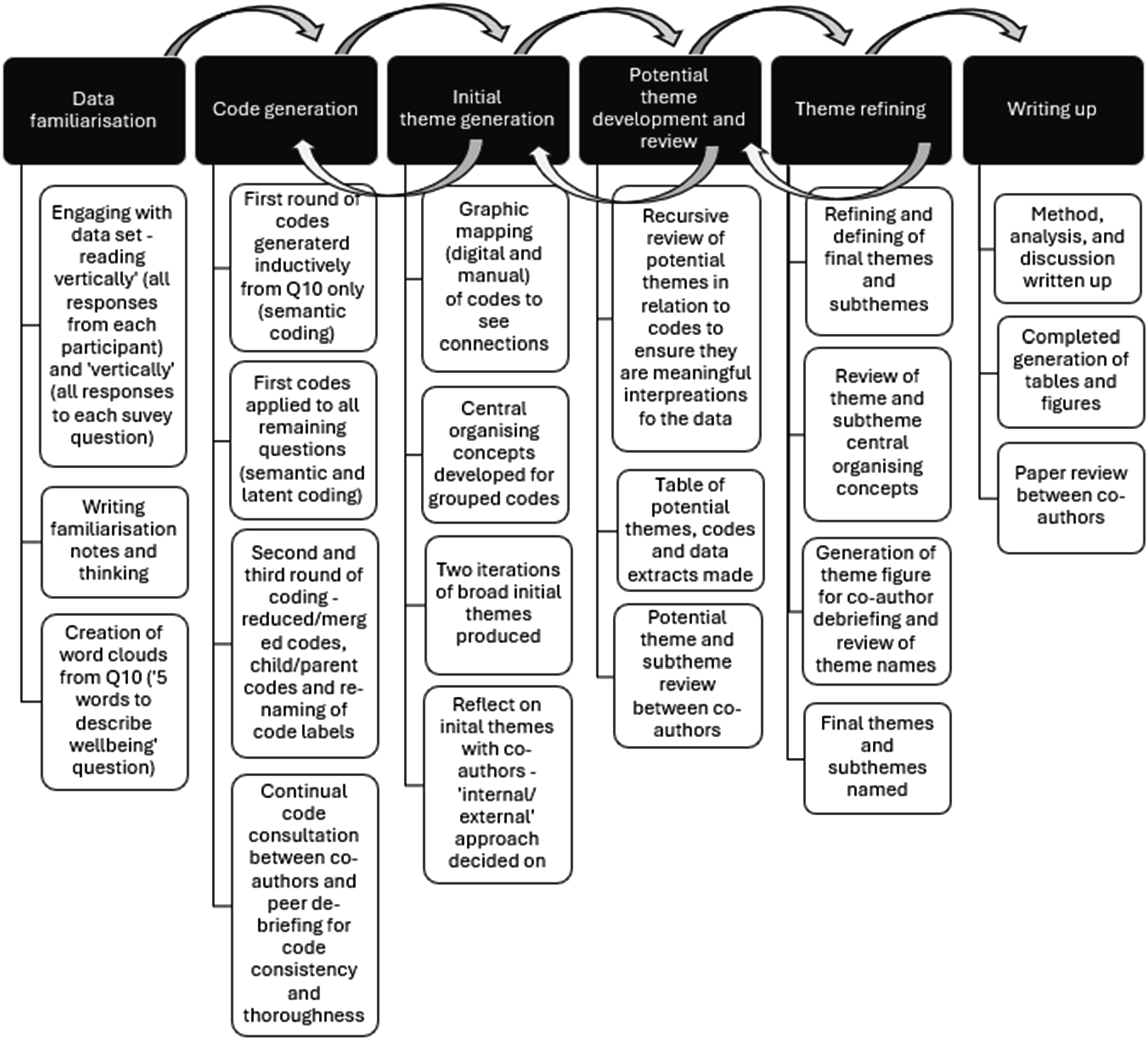
Analysis was primarily inductive, with semantic and latent codes and themes generated to reflect the content of the survey data, without preconceived theory or framework (Bryne, 2022.) With an aim of prioritising ECTs own conceptions of child wellbeing and understanding their wellbeing pedagogy and practices, we adopted an experiential orientation to data interpretation, to focus on what participants think, feel and do through analysis of open-text responses and iterative questions, as listed above (Terry et al., 2017).
Ethical considerations
This study was conducted in accordance with the Australian National Statement on Ethical Conduct in Human Research (National Health et al., 2023). All procedures were approved by the Human Research Ethics committee (ID #25979). Survey participation was voluntary, anonymous and confidential. Participants were informed of the purpose, risk and benefits and consent obtained. Data was collected via the secure Qualtrics platform and stored according to University data management protocols.
Findings
Key themes
Themes and subthemes about child wellbeing generated from the survey data.
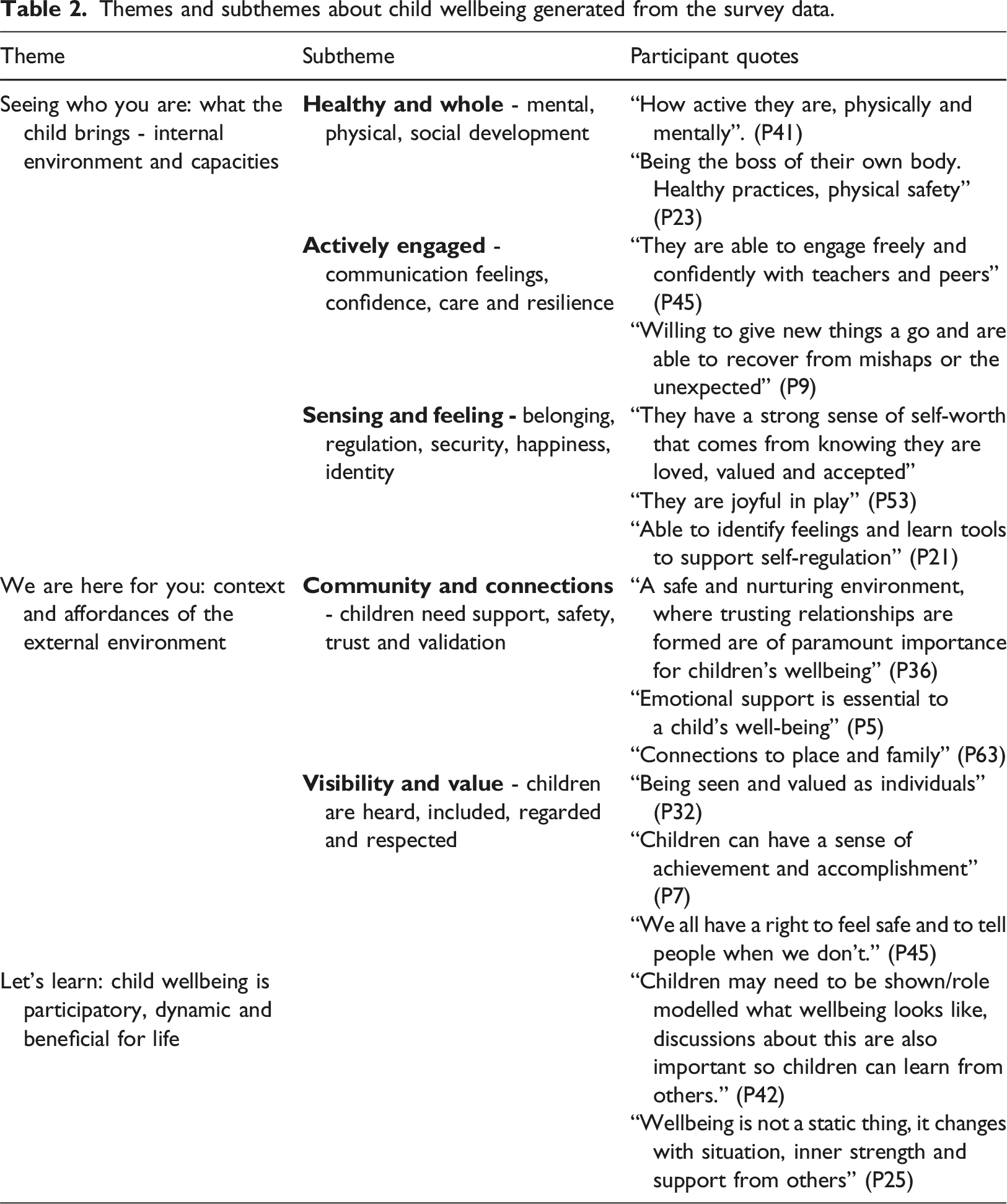
In the following section, each theme and relevant subtheme are discussed. Congruent with a qualitative approach, quantification of respondents and/or individual responses is not presented. However, during the RTA process, a recursive review of candidate themes was undertaken for internal theme clarity and to ensure the final themes represented meaningful interpretations of the entire dataset (Braun & Clarke, 2022; Bryne, 2022).
Theme 1: ‘Seeing who you are’
‘Seeing who you are: what the child brings - internal environment and capacities’ explores a core idea expressed across the data that child wellbeing exists and is impacted by internal factors within the child. Three subthemes explain this more fully – ‘
Subtheme: ‘Healthy and whole’
‘Healthy and whole’ highlighted views of child wellbeing from the perspectives of mental health, physical skills and bodily needs; elements of children’s development (including social and spiritual) along with the idea of the ‘whole child’. One respondent captured the essence of this subtheme suggesting understanding wellbeing in a child means “Looking at them as a whole person. Physical, mental, social, emotional, spiritual connections and skills” (P48).
Subtheme: ‘Sensing and Feeling’
‘Sensing and feeling’ conveyed the idea of what children feel and have a sense of within themselves. This spoke to positive psychological states with respondents directly identifying happiness, ease, calm and contentment to describe child wellbeing. Mindfulness, and dispositions of curiosity and empathy were also captured in the data alongside references to children’s “sense of” many things – identity, self-esteem, self-worth, belonging, stability, security and attachment. This subtheme also highlighted areas of regulation – self-regulation, co-regulation and dysregulation - with respondents acknowledging that child wellbeing includes managing “meltdowns”. Children with strong wellbeing were described variously as “well adjusted’, “calm and relaxed, expressing happiness and contentment”; “stable emotionally”, having a “strong sense of self” and “able to regulate own emotions”.
Subtheme: ‘Actively engaged’
‘Actively engaged’ focused on ways children leverage their internal environment and capacities to engage with the world, their skills, behaviours and interactions, communication, confidence and resilience. The data captured broader aspects of the child’s internal environment, alluding to engagement with the external environment – that wellbeing means being “engaged in learning”, “confident” in oneself and surrounds, “independent” but able to seek help and able to recognise and communicate their emotions and feelings. This subtheme also focused on participants’ recognition that wellbeing communication and signs can also be non-verbal. One participant responding, “Children use a lot of non-verbal communication and body language to communicate about their wellbeing” (P61). Resilience was also reflected in this subtheme speaking directly to children’s ability to “bounce back”, “problem solve”, “cope with challenges” and “take considered risks” as descriptors of wellbeing.
Theme 2: ‘We are here for you’
‘We are here for you: context and affordances of the external environment’ broadly represented respondents’ perspectives that child wellbeing in ECEC is defined and impacted by the external environment. By factors such as the support afforded to them, their relationships, community, and how they are valued, trusted, validated and included. One particular response captured the essence of the theme saying the most important thing to teach children for their wellbeing is “you are not alone, I am here to support you and we can find a solution together” (P2). Two subthemes encapsulate the data under this theme - ‘Community and connections’ and ‘Visibility and value’.
Subtheme: ‘Community and connections’
This theme represented views of child wellbeing as requiring trust, partnerships, strong relationships, routines and stability. Many forms of connection were expressed as important for child wellbeing – connection to family, community, peers, educators, culture, environment, place and nature. One respondent noted child wellbeing requires “Consideration and deep thought and planning around the whole child - not separate to their family, community, and any other influences: part of a supportive community of friends, teachers, parents and wider community” (P20). Notions of safety and emotional support, validation and safety were also prevalent, and the impact of trauma was acknowledged in responses suggesting child wellbeing cannot be conceptualised without consideration of the “nature, history and cultural context of the child” (P63).
Subtheme: ‘Visibility and Value’
‘Visibility and value’ reflected respondents’ views that to promote wellbeing, children need to be seen and heard; valued and afforded rights and respect, and experience autonomy and success, regardless of who they are. Ideas were identified of the ECEC environment supporting children as individuals with unique needs, and wellbeing requiring acceptance, valuing and celebrating diversity and including children with all levels of ability. Respondents’ perspectives regarding children’s rights (to safety and wellbeing) and the affordance of love, nurture and regard were evident. One respondent expressed “When children feel heard and when they feel that they are understood are more likely to form a strong sense of wellbeing” (P27).
Theme 3: ‘Let’s learn’
‘Let’s learn: child wellbeing is participatory, dynamic and beneficial for life’ signaled broad matters of empowering child agency, voice, autonomy, capability and choice, and ideas of wellbeing meaning children are adaptable and flexible. The notion that children’s wellbeing is dynamic, changeable and multi-faceted was evident; one respondent expressing “To support a feeling of worth and feelings of positive wellbeing we need to look at the multi-faceted parts of well-being and plan to support all of them” (P20). In this sense, respondents also describe child wellbeing as learnable, teachable and able to be influenced by the ECEC environment. This theme also highlighted respondents’ views of wellbeing as a skill for life and taking time - “Wellbeing a big outcome and not achieved in one day; it takes time and life experience” (P35).
Overarching theme of ‘constant crossings’
The idea that child wellbeing in ECEC is a continual (constant), oscillating and dynamic crossing between children’s internal and external environments, capacities, and affordances, as viewed by the teacher, was evident across the data set. Overall, child wellbeing was defined and described by the internal - what the child ‘brings’ – their health, what they experience ‘a sense of’ and how they engage with the ECEC space. Simultaneously, and in constant exchange, wellbeing is promoted by what the ECEC environment affords – how children are seen and valued and connected to and supported by the external environment. Underpinning and interplaying with these two themes were the notion that wellbeing is participatory and dynamic: not static but malleable, learnable, adapted and adjusted. Ideas of child agency and the impacts of time and change surfaced with the assumption strong wellbeing brings immediate and lifelong benefits for children. Figure 3 is offered to visualise the interaction of the themes and subthemes (Table 2) and represent an alternative conceptualisation of the data. Representing themes and subthemes as ‘constant crossings’ in the ECEC context.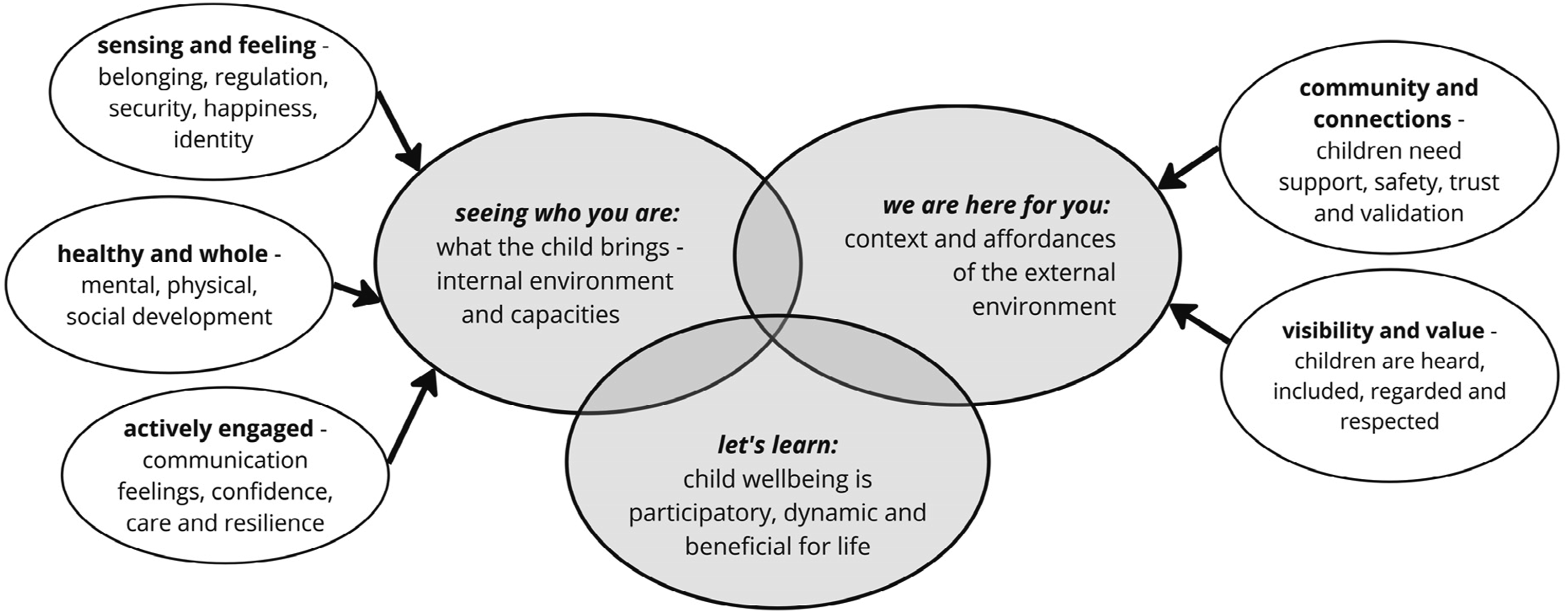
Discussion
In the current study, ECTs definitions, descriptions and ways they promote child wellbeing in ECEC settings were examined, offering important contextualised consideration of child wellbeing. The intent was to map meaning across the data, both semantically and latently, generating thematic views to answer the research question of how teachers define, describe and promote child wellbeing in ECEC. The findings reflect child wellbeing discourse of dynamism and life-trajectory benefits (Ben-Arieh et al., 2014; Dirwan & Thévenon, 2023), multiple influences (Gromada et al., 2020) and the continual nature of wellbeing change. Together the themes also reflected literature consensus about the multifaced nature and overlapping, or ‘crossing’ of facets, of wellbeing (Dodge et al., 2012; Jarden & Roache, 2023; Pollard & Lee, 2003). Resonance was also afforded with key Australian Government policy and curriculum documents, such as the EYLF and VEYLDF, where Learning Outcome 3 speaks to children having as strong ‘sense’ of wellbeing (AGDE, 2022; DET, 2016) and the themes and subthemes generated concerning teachers’ perceptions of children’s internal environment, capacities, senses and feelings.
The theme generation is also reflective of theories of ‘internal’ and ‘external’ environments interacting for wellbeing. Varying philosophical schools of thought have perspectives on what the boundaries, influences and conditions are between the mind, body and its physical and societal surroundings (De Ruyter et al., 2022). For example, some assume ‘internal’ is the classic phenomenological stance of consciousness, subjectively experienced, with all else (including the physical body) being ‘external’ (Johnson, 2008). Others suggest the ‘internal’ extends to the boundary of the body, with what is outside the physicality of the skin deemed ‘external’ (De Ruyter et al., 2022). This study (and the themes generated) reflects the stance of the physical body as the internal/external boundary, influenced by the recognition young children have relatively little control and power over their physical and societal circumstances compared to adults. The internal environment is therefore the child’s body – it is what they ‘bring’ as they step into the ‘external’ environment of the ECEC setting. This is signaled in the ‘Seeing who you are’ theme representing what the child senses and feels, their physical health and skills along with their behaviours and interactions (see Table 2 and Figure 3).
Like Bronfenbrenner’s (1979) micro system level and UNICEF’s multi-level child wellbeing framework (Gromada et al., 2020), the ‘external’ environment is demarcated by all that exists in the ECEC setting – the physical space, people and interactions, perceptions, values and situational affordances. Important to these internal/external assumptions and resultant themes is the idea of the interactive and dynamic exchanges between these environments. An underlying notion that child wellbeing is a ‘constant crossings’ between the internal and external environments of the child is reflected by the ‘Let’s learn’ theme. The conceptualisation of wellbeing as a dynamic and learnable ‘crossing’ between the two environments, not unlike Bronfenbrenner’s notion of bi-directional and reciprocal exchange (1979) supports the proposition of wellbeing being described and promoted by the exchange between what they bring (‘Seeing who you are’ – ‘healthy and whole’; ‘sensing and feeling’; ‘actively engaged’) and what the environment affords (‘We are here for you’ – ‘visibility and value’; ‘community and connections’).
Implications
Theoretical and research implications of this study lie in the addition of a contextualised ECEC perspective to education and child wellbeing literature and discourse. Jarden and Roache (2023) argue that despite the ubiquitous and popular nature of the term ‘wellbeing’, many disciplines fail to define it satisfactorily. Conceptualisation of the term ‘wellbeing’ influences how it is measured and promoted in education research and practice (Mashford-Scott et al., 2012), and this study offers contextualized, nuanced perspectives from those within education. Also elucidated in the themes is a continual interplay between the child, their ECEC environments, interactions and affordances, contributing to current thinking about the dynamic nature of child wellbeing (Ben-Arieh et al., 2014; Dirwan & Thévenon, 2023) specifically in education contexts.
Thematic findings of this study, viewed within an ecological wellbeing theoretical framework, further illustrate understanding around the intersection and interdependence of factors impacting wellbeing and its complex nature in childhood. Statham and Chase (2010) suggest the emerging consensus of multi-faceted child wellbeing should include physical, social and emotional dimensions, objective and subjective measures, and focus on both the immediate and future lives of children. These elements are present in the three broad themes from the data, offering insight not only into the specific factors that exist in early education settings, but the continual way they interact. The timebound experience and vulnerability of child wellbeing (Ben-Arieh et al., 2014; Pollard & Lee, 2003) is also highlighted and extended with respondents’ perspectives revealing both the proximal and distal influences of ECEC on children’s wellbeing.
ECEC practice implications are also relevant given education and policy frameworks incorporating children’s wellbeing exist in Australia and internationally. However, clarity around the complex, multifaceted and ‘blurry’ concept of wellbeing does not always exist for those working directly with children (Dodge et al., 2012; Christopher, 1999; Marbina et al., 2015). The perspectives offered in this study could assist with an increased understanding of child wellbeing, particularly in ECEC settings and for early childhood professionals. This study is not intended as a scholarly critique of educational frameworks’ approaches to wellbeing, but an opportunity for further interpretation, accessibility and specificity of this complex concept. This is particularly relevant in the Australian context at a time of the revised EYLF coming into full effect and around the mandated wellbeing Learning Outcomes (AGDE, 2022).
Additionally, by having greater clarity regarding how child wellbeing may be defined and promoted in ECEC, and adding these perspectives to their context and practices, early childhood professionals may increase their own wellbeing literacy, and that of the children. Baker et al., 2021 offer wellbeing literacy (the mindful communication for and about wellbeing) as a necessary and relevant construct to facilitate and conceptualise child wellbeing, and this study may offer insight to support wellbeing literacy understanding in ECEC.
Strengths, limitations and future directions
This study had the strength of drawing on the understanding of a knowledgeable and experienced cohort (ECTs working with children), to provide a contextualised and deeper understanding of child wellbeing in ECEC. Limitations exist in the one-off survey method which lacks opportunities for probing respondents about their account of wellbeing pedagogy (Braun et al., 2021). Opportunities include extending this research to teachers in other states and territories in Australia and using more traditional phenomenological methods of focus groups or in-depth interviews. Also, although this study situated itself amidst the changeover from the previous EYLF to V2.0, questions in the survey were about child wellbeing in practice, not in relation to any EYLF changes. Further studies could seek ECEC professionals’ perspectives on child wellbeing pedagogy and practice, both in an Australian context considering the EYLF, but additionally in other countries where child wellbeing is also highlighted in curriculum frameworks. A pedagogical model for child wellbeing may also be derived from the themes following additional research and perspective gathering.
A clear future direction is also to continue to consult with children about their wellbeing, particularly those in early childhood. The United Nations Convention on the Rights of the Child highlights children’s right to be heard and both sociological and pedagogical views of children increasingly see children as competent thinkers and communicators about matters affecting them (AGDE, 2022; United Nations, 1989). We concur with Mashford-Scott, Church and Taylor’s (2012) position about the lack of attention given to children’s perspectives on their wellbeing and echo the argument for increased participatory research approaches with young children. Similarly, family and caregivers’ views on child wellbeing could be sought, for their inherent value and contextual perspective, but also for future research in understanding how these compare and/or contrast to the positions held by ECEC teachers and/or policy.
Conclusion
With child wellbeing featured internationally in early education discourse and policy, and centrally located in the Australian curriculum and regulation landscape, clarity on how it is defined and promoted is important. This study heard from those mandated to implement the revised national EYLF, early childhood teachers. A conceptualisation was generated of child wellbeing as one of ‘constant crossings’ between the internal environment of the child and the external affordance of the ECEC context in a participatory, dynamic and beneficial way. This may provide a deeper and contextualised understanding of child wellbeing for ECEC professionals, adding clarity and specificity around wellbeing curriculum foci. This study also adds to wellbeing and education discourse and research, highlighting perceptions and perspectives from an early childhood context. Ensuring children have strong wellbeing, as is politically, economically, socially, educationally, and morally vital, can and should be supported during their earliest years. For children and their wellbeing, what happens early matters.
Footnotes
Author contributions
All authors contributed to the study conception and design. Material preparation, data collection and analysis were performed by Lisa M Baker. The first draft of the manuscript was written by Lisa M Baker and all authors commented on previous versions of the manuscript. All authors read and approved the final manuscript.
Declaration of conflicting interests
The author(s) declared no potential conflicts of interest with respect to the research, authorship, and/or publication of this article.
Funding
The author(s) disclosed receipt of the following financial support for the research, authorship, and/or publication of this article: This research is supported by an Australian Government Research Training Program (RTP) Scholarship.
Ethical statement
Disclosures
All authors certify that they have no affiliations with or involvement in any organization or entity with any financial interest or non-financial interest in the subject matter or materials discussed in this manuscript.
