



Abstract
Rapid technology advancements and global responses to sustainability have had a transformational impact on education in the 21st century. As early childhood teachers in Aotearoa/New Zealand respond these challenges, many have recognised the potential inquiry-based project learning (IBPL) has to transform learning for children through empowering them to discover answers through collaboration, representation, reflection and dialogue. This paper explores a current research project in Aotearoa/New Zealand examining how early childhood teachers have interpreted global and local discourses on IBPL and how this impacts children’s learning. The research utilised narrative inquiry to examine the experiences of six early childhood communities using this approach. The study found that IBPL contributes to environments of wellbeing and sustained focus for both children and teachers when relationships and time are prioritised and inquiries are focused on place, and that this approach can create pathways for early childhood teachers to enact rich bi-cultural practice.
Introduction
Inquiry-based project learning (IBPL) positions both children and teachers as active participants in learning as they research and co-construct understandings together. It allows space and time for children to explore their local environments, and to discover answers to questions about their worlds through a process of dialogue, representation and evaluation (Stacey, 2019). Children work collaboratively to represent and adapt their thinking as they co-construct new understandings over time. This paper explores a current research project in Aotearoa/New Zealand, examining how early childhood education [ECE] teachers have interpreted both global and local interpretations of IBPL, how these ideas have informed ECE teachers’ practices, and what this means for children’s learning.
Both globally and nationally, life in the 21st century is becoming progressively more complex to navigate, particularly throughout the past three years of the global pandemic. It is becoming more difficult to predict our social, economic, and environmental futures. Consequently, children and teachers are experiencing greater challenges to their health and wellbeing than ever before (Jalongo, 2021; Kim et al., 2022; Kotowski et al., 2022; Schmitt & deCourcy, 2022). Adding to this complexity is the state of the ECE sector in Aotearoa/New Zealand. Current statistics indicate the sector is in crisis and that teachers are being impacted by inadequate teacher/child ratios, a lack of qualified teachers, increased compliance requirements, and burnout (Office of Early Childhood Education, 2022). These complex issues raise questions about how the ECE sector can respond, to foster both children’s and teacher’s wellbeing and to promote environments of sustained, focused learning.
Inquiry-based project learning [IBPL] is a pedagogical approach with the potential to respond to these challenges. IBPL fosters intersubjectivity through collaboration, with the potential to simultaneously support the development of rich, localised curriculum whilst developing the skills, attitudes, and dispositions critical to navigating 21st century life, such as cultivating a love of life-long learning, creativity, communication skills, problem solving, and global citizenship (Cordoba & Sanders-Smith, 2018; Fernández & Feliu Torruella, 2017; Kim et al., 2019; Krogh & Morehouse, 2020; Stacey, 2019). Even the youngest of children can understand their environments and their roles within them by developing skills in response to real-world questions and interests (Hogan et al., 2020; Rockel, 2010). McLeod and Giardiello (2019) however, warn that childhood should not be viewed as preparation for the future, but that the child should be situated as ‘being’, present in their own place and time. These authors assert “if children are always viewed as being in preparation for the next developmental stage of life, any one moment or phase in its own right is devalued” (p. 24). The New Zealand early childhood bi-cultural curriculum, Te Whāriki: He Whāriki Mātauranga mō ngā Mokopuna o Aotearoa: Early Childhood Curriculum (Te Whāriki) (Ministry of Education [MoE], 2017) concurs, with an aspirational view of children as “competent and confident learners and communicators, healthy in mind, body and spirit, secure in their sense of belonging and in the knowledge that they make a valued contribution to society” (MoE, 2017, p. 5).
IBPL has increasingly captured the interest of ECE teachers in Aotearoa/New Zealand with its potential to develop many of these attributes in young children. As the infant and toddler centres and preschools of Reggio Emilia received international recognition for social-constructivist approaches to EC education in the 1980s, more teachers in Aotearoa/New Zealand grew interested in this work (Mawson, 2010). A Key aspect of this approach are the long-term investigations children and teachers engage in known as progettazione (flexible planning) (Gardner & Jones, 2016). Whilst examining these ideas can have great value for teachers, it has also been argued the potency of this international material could potentially overshadow localised theories, philosophies and approaches, and of particular importance, indigenous voices and priorities (Alcock & Ritchie, 2018).
In Aotearoa/New Zealand, little research has been conducted on how IBPL has been interpreted by ECE teachers and communities in this context. This research aimed to address this gap. The study is underpinned by sociocultural and bioecological theories and has drawn upon narrative inquiry. This paper examines findings from phase two of this project, which involved six ECE settings that currently use inquiry-based approaches. The implications for ECE teachers and communities who are currently working with inquiry-based approaches, and those settings curious about its potential, particularly as a means of creating rich learning environments that foster wellbeing and to strengthen bi-cultural practice, conclude this paper.
Approaches to inquiry-based project learning
The terminology to describe this approach varies. Teachers may refer to it as
Inquiry based approaches promote self-efficacy as children come to understand they have the capability to research and solve problems (Murphy et al., 2016; Fernández & Feliu, 2017). Similarly, teachers working with this approach position themselves as critically reflective researchers who work collaboratively and collectively value “uncertainty, subjectivity, democracy, creativity, curiosity and a desire to experiment and border cross (Dhalberg et al., 2007, p, xii). When these values are embedded in teaching and learning processes, ECE settings have the capacity to foster wellbeing through developing autonomy, self-worth and a sense of community for all members of the ECE setting (Hargraves, 2020).
Early childhood education in Aotearoa/New Zealand
In Aotearoa/New Zealand, children can attend an ECE service from the ages of 0 – 6 years. Families can choose from a range of types of provision, including private, state or community led settings or kōhanga reo (Māori led total immersion settings). All settings are guided by Te Whāriki (MoE, 2017). This curriculum has been recognised globally for its bi-cultural framework and the way it offers key principles for curriculum development but does not prescribe a particular approach. Each setting weaves their own curriculum and pedagogical approach based on the philosophical, cultural and theoretical ideas they prioritise (Giardiello et al., 2019). This has enabled ECE teachers in Aotearoa/New Zealand to choose to incorporate IBPL into their teaching.
How inquiry-based collaborative learning intersects with Te Whāriki
Whilst Te Whāriki (2017) does not prescribe a particular pedagogical approach, it identifies that “at the broadest level, curriculum planning begins with shared inquiry” (MoE, 2017, p. 65). The curriculum posits that being curious, posing questions, developing new ideas, testing them, evaluating and linking them to previous knowledge and experience is how children create meaning. The five learning strands, Wellbeing/Mana atua, Belonging/Mana whenua, Contribution/Mana tangata, Communication/Mana reo, and Exploration/Mana aotūroa align with the principles of IBPL, however it is the wellbeing strand that is particularly relevant to this paper. This strand emphasises that children should experience “responsive environments that support the development of self-worth, identity, confidence and enjoyment, together with emotional regulation and self-control” (p. 26). Further, Te Whāriki (2017) recognises that understanding who you are and where you come from (identity and place) assists children to become grounded in who they are, and as a result, better equipped to navigate change.
The curriculum is built on two key tenets, working theories (Hedges, 2021) and learning dispositions, both of which are valued within IBPL. The 2017 version of Te Whāriki emphasises the role of the teacher more strongly, highlighting the importance of intentional teaching. It provides reflective questions for teachers, some of which align closely with inquiry. For example, “How might kaiako (teachers) create and model a culture of inquiry amongst children?” (MoE, 2017, p. 50). Whilst theoretically and philosophically, Te Whāriki (2017) aligns with key aspects of IBPL, it does not provide detailed guidance on the processes of initiating or sustaining inquiries with children.
IBPL in the context of Aotearoa/New Zealand and bi-cultural practice
The lack of guidance surrounding the pedagogical processes involved in undertaking IBPL in Te Whāriki (2017), may have drawn many teachers to international materials examining this approach. In Aotearoa/New Zealand, inquiry-based pedagogy has been strongly influenced by the pedagogical ideas of Reggio Emilia, and the Project Approach (Mawson, 2010; Pohio, 2013). Whilst McLeod and Giardiello (2019) highlight that these ideas can provoke teachers to reconceptualise their images of childhood and teaching and learning, it has also been argued that transplanting pedagogical ideas from one place to another without critical examination, may overshadow the values and priorities of the new context and localised theories, philosophies and approaches, including bi-cultural curriculum (Alcock & Ritchie, 2018).
Whilst IBPL is now an established pedagogical approach in the ECE sector in Aotearoa/New Zealand, little research has sought to understand the theoretical influences that have shaped understandings of inquiry or the pedagogical processes teachers have developed. This may have implications as teachers have few resources to support their understanding of how to progress an inquiry whilst also fulfilling their commitments to Te Whāriki (2017).
A crucial aspect of Te Whāriki (2017) is the strong commitment it makes to bi-cultural practice. By the 1960s the negative impact on Māori identity through policies of assimilation that had prevailed in education in Aotearoa/New Zealand for a hundred years, were being exposed (Hunn, 1960, Currie, 1961). Prominent Māori leaders, educators and activists demanded redress. Assimilation policies were abandoned in favour of integration policies. This was the catalyst for bi-cultural education policy that emerged in the 1970s. The New Zealand Education Act (1989) mandated that education settings would take steps to provide instruction in Māori language and culture. Te Whāriki (1996), represented the country’s first bi-cultural curriculum framework. However, in the years since it was first published (1996) and updated (2017), bi-cultural practice has been implemented with varying degrees of success. The use of te reo Māori (the Māori language) in many settings is arbitrary with no Māori language strategy to guide the sector. Centres embrace Māori cultural practices or tikanga Māori in different ways. Māori pedagogies are a strong feature of Te Whāriki (2017), however, many settings appear to privilege Euro-centric philosophies and approaches, overlooking the richness of the bi-cultural framework of Te Whāriki (Alcock & Ritchie, 2018; Heta-Lensen, 2022; Ritchie, 2018).
There are some tacit assumptions made within Te Whāriki (2017) that all teachers understand Māori world views which has important implications and consequences (Jenkin, 2016). Ritchie (2018) identifies that the ability to develop bi-cultural curriculum requires an understanding that core identify markers of being Māori are encapsulated within te reo Māori. This includes recognition of the child’s human and geographic whakapapa (genealogical connections). These span “…across Te Kore, te pō, te ao mārama, atua Māori and tīpuna” (cosmological and genealogical origins and ancestral connections)” (MoE, 2017, p. 12). Speaking about the link between language and identity, Skerrett (2018) asserts that all children should be able to access to reo Māori in their ECE setting, given the expectation set by Te Whāriki (2017) for Māori language and knowledge to be woven across the curriculum. In reality, however, not all teachers have in-depth knowledge about how to create rich bi-cultural curriculum experiences (Heta-Lensen, 2022; Jenkin, 2016; Skerrett, 2018).
Introducing the study
This study is a collaborative project involving seven researchers - all initial teacher educators across a range of tertiary institutes in Aotearoa/New Zealand. The research sought to understand how ECE teachers have situated and developed their approaches to inquiry and the pedagogical influences that shaped their thinking. A further aim has been to understand how differing interpretations of IBPL play out in ECE learning environments and how this impacts children’s learning. The research has adopted a qualitative interpretivist approach underpinned by bioecological (Bronfenbrenner, 1979) and socio-cultural theories (Vygotsky, 1962). Both theories recognise that knowledge is subjective and its construction is a mediated process, influenced by contextual factors including culture, relationships and history. These theories are particularly relevant to the ECE sector in Aotearoa/New Zealand as they strongly underpin Te Whāriki (2017). The study design was influenced by narrative inquiry. Clandinin (2014) asserts that exploring lived experience through storying is a means of understanding of how “the social, cultural, familial, linguistic, institutional narratives within which individuals’ experiences were, and are, constituted, shaped, expressed and enacted” (p. 18).
Study design
The study had two data collection phases. Phase one comprised an online questionnaire, sent to all ECE settings registered on the national database of ECE settings. Phase two (the current focus) involved the selection of six ECE settings across Aotearoa/New Zealand. These settings expressed interest in participation at the conclusion of the phase one questionnaire. Settings were purposively selected to represent different types of provision. At each setting, where possible, two members of the research team collected data. This enabled the researchers to critically evaluate the data and establish credibility and trustworthiness of the findings (Liao & Hitchcock, 2018).
Data collection included a semi structured interview with teaching teams at each setting. A semi-structured approach encouraged teachers to talk freely about their experiences of inquiry without constraint (DeJonckheere & Vaughn, 2019). Teaching teams were asked how they had begun their journey with inquiry and the pedagogical influences that had shaped their thinking. Additional topics explored during interviews included perspectives on inclusion and culture, perspectives on the value of IBPL, the processes and practices developed by teams to initiate and sustain an inquiry, challenges, and the role of family.
A second data collection method was observations of current inquiries. Observation was undertaken differently at each setting relative to their unique approach to inquiry. In settings where there was a set inquiry period each day, researchers observed this inquiry each day for a week. They used videos, photographs and researcher notes to record teacher’s and children’s engagement, the environment, materials, and the role of documentation. In settings where the inquiry period was more fluid, after some initial observations, the teachers took responsibility for recording inquiries, which were then sent to the research team. The researchers also wrote their own reflections and narratives about their experiences and what had been significant for them. These narratives were collated along with other data (Hunter, 2010).
Analysis
The size of the research team made the process of analysis both challenging and exciting. A collaborative approach ensured multiple perspectives were applied to the data (Liao & Hitchcock, 2018). Interviews were recorded and transcribed for accuracy and interpretations were checked with participants as part of the interview process. Observation videos were also transcribed. The analysis was not confined to a set period, and this allowed for the data to be revisited regularly. Throughout the analysis process, researchers discussed and documented initial codes, generative themes and verbatim quotes, and all were evaluated inductively. Consensus of themes and variances specific to each centre’s philosophical and pedagogical context were verified as part of this process. Collaborative discussions where the researchers generated further open codes and axial codes, led to the establishment of key themes. This was particularly important given the researchers’ recognition of their own subjectivities and how this impacts analysis. During the period of analysis, the team had opportunities to present aspects of their emergent findings at a range of conferences. They recognise the dual acts of analysis and re-storying of the data as an intertwined process, where re-telling uncovered important new insights (Creswell, 2019; Hunter, 2010).
Ethics
Ethical permission was granted by the Manukau Institute of Technology/Te Pūkenga ethics committee (Approval no. E20-EDU-19). During phase two, participating settings and individual participants were given the option of being assigned a pseudonym. Five of the six settings chose to be identified in the research. Settings were also given assent forms for child participants to indicate their willingness to participate.
Limitations
A limitation of phase two is the small sample of centres meaning generalisations could not be drawn (Marshall & Rossman, 2014). Whilst the research collected rich narratives of inquiry in practice, these stories were bound within the specific cultural and social contexts of those settings. A further potential limitation is the subjectivity of the researchers’ interpretations of the data which they worked to counter through their collaborative approach to analysis.
Findings: Three key factors
The narratives collected at all six settings demonstrate that IBPL can foster an environment of wellbeing and sustained focus for both children and teachers. We found relationships, time and a focus on place are significant factors that can foster environments where IBPL can thrive.
Relationships
The principle of Relationships/Ngā hononga, in Te Whāriki (2017), recognises the importance of children having opportunities to develop “responsive and reciprocal relationships with people, places and things” (p. 21). From a Māori perspective, a focus on relationships is crucial in recognising children’s connection with their tīpuna (ancestors) and whakapapa (lineage), which also encompasses connection to specific landmarks and places. Aligned with these concepts, relationships were expressed as a foundation for authentic engagement. This was featured in all six conversations with teaching teams, and was strongly evident in classroom observations. Knowing children, their background, dispositions, interests and what they brought to learning was seen as an integral part of IBPL. For example, Helena, the head teacher at Toi Ohomai early childhood centre in Tauranga, expressed that their key focus was on “the entire holistic wellbeing of the child and their family”. They viewed this as crucial so children felt comfortable to share their ideas with confidence, knowing they would be valued. Similarly, at Little Doves early childhood centre in Auckland, the teachers working with two-year-olds investigating acorns collected from an oak tree in their playground, recognised each child as a unique individual with distinct ways of learning and communicating. During the classroom observations, a teacher, Sonya, revisited the group’s previous learning. They had recently been creating stories about acorns and Sonya reminded the children of the unique ways each child contributed: You [children] know so much about the cleverness of acorns and all the tricky ways they can move... You have been telling us stories for a long time, stories with your bodies, sometimes you tell the stories with your heads, I’ve seen some friends tell stories with their shoulders. Do you know one day I saw Lara tell a story with her tongue (demonstrates) when she was drawing.
At Daisies Early Education and Care Centre in Wellington, relationships between children and teachers are viewed as integral to supporting the IBPL process. At this setting they have developed a system where key teachers stay with their inquiry groups over time. Natalie, the acting head teacher of the infants and toddlers centre, explained: I think it works a lot better this way, because I’ve been with my key children since they were nine, ten months old, and now they’re three, so I’ve built a great relationship with them, and now I know them really well it’s easier for me to plan those experiences.
Time
The concept of unhurried time was a second factor contributing to environments of wellbeing and sustained focus. Notions of unhurried time were evident in the stories teaching teams shared about how they initially developed their approaches to IBPL, in the time taken to initiate new inquiries, and finally, in the practices of working collaboratively with children through daily inquiry work. All teaching teams spent considerable time developing their pedagogical approaches. At each setting, a core group of teachers had been working together for several years, allowing for deep pedagogical discussions and shared understandings to emerge. These included theoretical ideas underpinning their IBPL approaches, and pedagogical processes which they had adapted and refined over time. Two settings with larger teams, Little Doves and Daisies, developed clear guidelines which support teachers through the process of establishing an inquiry and progress an inquiry over time. This helps newer members of the teaching team become familiar with IBPL. For example, the teaching team at Little Doves shared how they have established a framework which makes explicit links to Te Whāriki (2017) during the initial planning phase. This enabled the teaching team to draw upon international literature on inquiry approaches, whilst also utilising Te Whāriki (2017) as a rich tool to drive inquiry.
Time is also a key factor in initiating and sustaining children’s inquiries. For example, at Daisies, significant time is taken to develop new inquiries. The teaching and pedagogical teams hold a full day wānanga (meeting) where the overarching inquiry is presented to the teachers who then discuss, theorise and research potential directions for the inquiry before beginning their work with children. More recently, they have incorporated time for meetings with families to seek their perspectives and aspirations in the initial stage. Similarly, the teaching team at Rimu kindergarten, a public kindergarten in Auckland, made a conscious decision to slow down the initial phase of their current inquiry. One of their past challenges was what Jasmine, a teacher, described as the ‘grey zone’ where they did not always know the next step as an inquiry progressed. In response, they chose instead to visit the local bush every day for a full term before determining their current focus. Ariana, the head teacher explained: I felt like my biggest challenge was to trust, slow down, because the whole purpose of it was that it was collaborative, so I know that that was a challenge for me was to just trust that we would see a collective inquiry spring up at some point. That was really effective.
Time was also prioritised regularly for children and teachers to come together, discuss their work and engage in inquiry for sustained periods. Time was taken to carefully document children’s learning and celebrate each new discovery. For example, at Little Doves, Sonya explained, “we really need to be equipped, and ready to recognise and celebrate, and to share, and to respond to every single tiny something that happens along the way”. Similarly, at Pakuranga Baptist kindergarten, a community-based centre in Auckland, the teaching team discussed the value of sustained periods of inquiry for both children and teachers. Jacqui, the head teacher explained: They (the children) are creating themselves as learners while they work so they’re developing a kind of meta-picture of themselves, how they learn best, who they can work with, who they can’t work with… so there is a huge amount to it.
Jacqui noted that IBPL also serves to support ‘‘teachers develop their pedagogical identity… [and]…“learn more and more about themselves as teachers and more and more about the children as part of the inquiry progresses."
The value all six settings placed on this approach resulted in them prioritising time for inquiry even during periods of disruption. Rachel, one of the pedagogical leads at Daisies, noted the importance of making time for ‘hui ako’, the period during which children met to focus on their inquiry, even during challenging periods such as the pandemic. She explained that whilst at first, postponing these meetings seemed logical during stressful periods, this resulted, in fact with teachers being less fulfilled, and children being less engaged. She said, “if we can find a way in those difficult times to still do them, no matter what, it can be like a lifeline through hard times”.
Place
An emphasis on place as a focus for IBPL was the third factor which contributed to environments of wellbeing and sustained focus. Te Whāriki (MoE, 2017) recognises the importance of all children developing “a sense of connection to others and the environment” (p. 31). All of the inquiries we observed were focused on connection to place in varying ways. For example, the two-year-old inquiry group’s investigation of acorns at Little Doves, and at Daisies, the current inquiry is exploring notions of community. At Li’l Pumpkins, an early learning centre in Hamilton, the children and teachers have been exploring children’s working theories related to outer space.
At Toi Ohomai, the centre’s overarching inquiry has been focused on connection to local place for the past three years. More recently, the teachers and children have been exploring local pūrākau (stories). Helena explained, “local curriculum is really important to us, children knowing where they come from and the stories of where they come from”. She explained that this connection is important to the children too. She gave the example of when the teachers had shared a pūrākau that did not relate to their local area and the children were completely disinterested. Yet they were passionate about anything related to Mauao (Mount Maunganui) which is an important landmark in their region. This focus was similar to the Pakuranga Baptist kindergarten inquiry which has also focused on exploring local place for several years. Lately, the children have been theorising about the creatures that might live in the local estuary. In response, the teachers introduced the local pūrākau of Te Moko Ika A Hikuwaru, an eight limbed taniwha (a spiritual guardian who usually lives in the water). This particular taniwha fell in love with Te Kopua Kai-a-hiku (now known as the Panmure basin) Representing Te Moko Ika A Hikuwaru. Inquiring into the use of traps in the bush.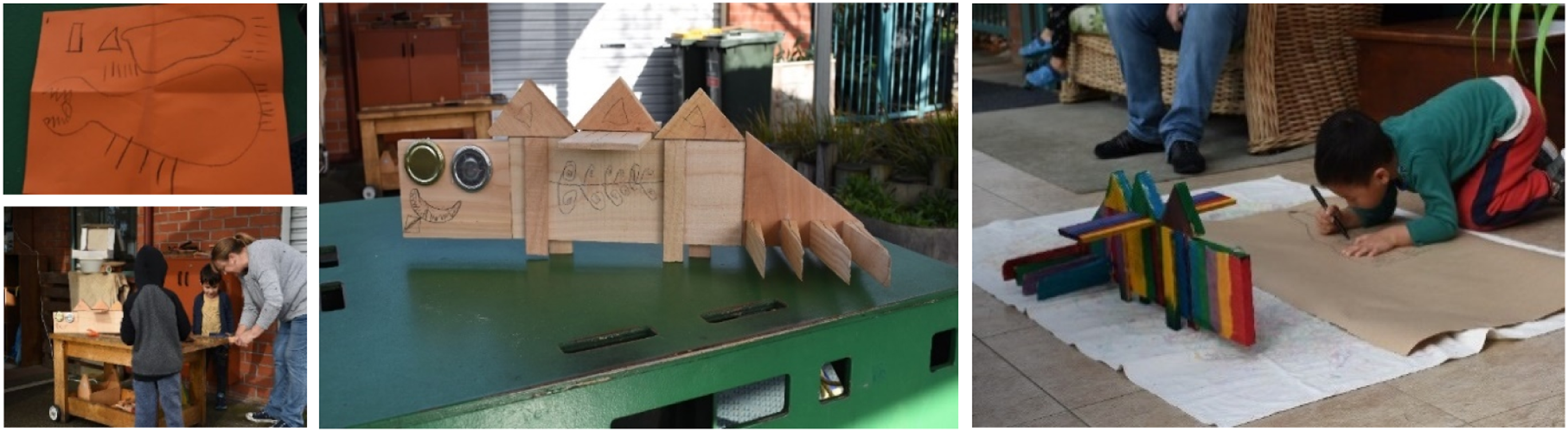
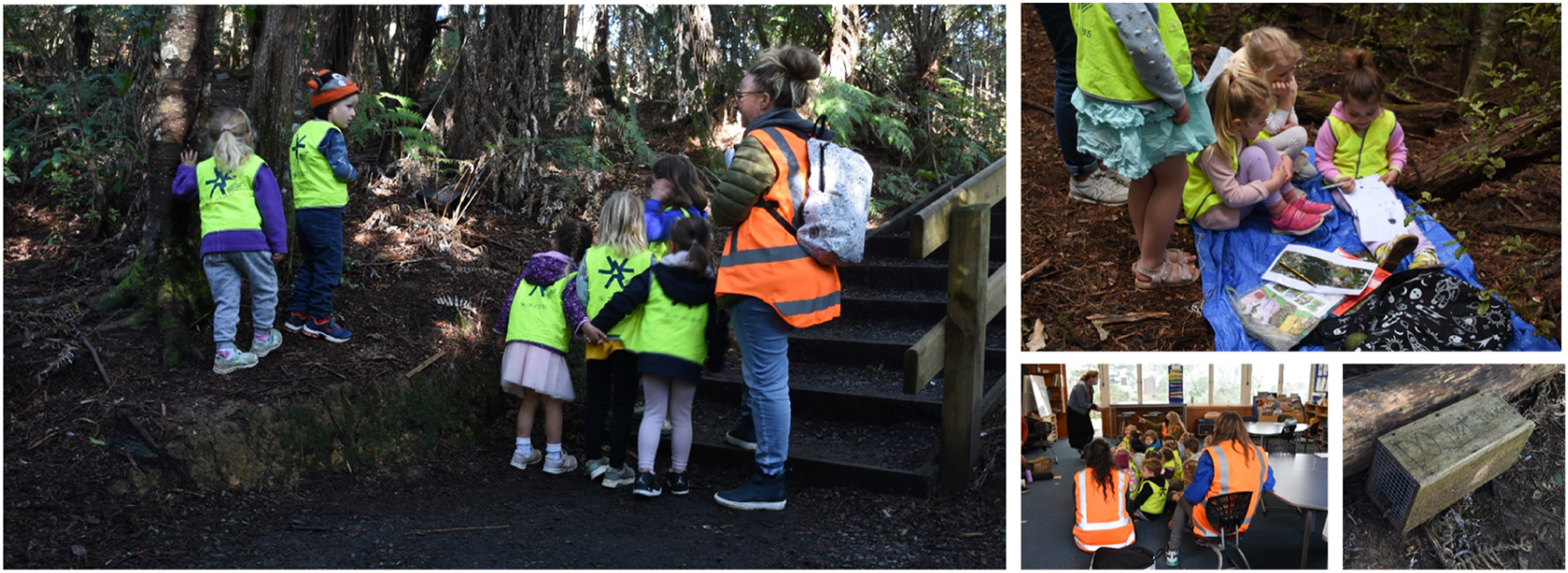
The children and teachers at Rimu kindergarten have a special opportunity to spend time each day in their local bush (Figure 2). Over time, teachers recognised children were deeply curious about the animal traps they discovered. This became the focus of their inquiry, leading them to connect with the local primary school and environmental group. The children are now taking responsibility for refilling ink traps that record small creatures' footprints to identify them. What was fascinating for us as researchers was watching the children’s interactions in this space transform as the inquiry unfolded over time. As they became more familiar with the space, children took on leadership roles as they guided the group through the bush, pointing out familiar landmarks and each trap they had already identified. They developed rituals, for example, checking each trap for prints and stopping each day in a clearing called ‘our spot”. Over the weeks, the children’s interactions with the environment slowed down and their attention became more focused on small details. They developed a sense of responsibility for this space, often initiating picking up pieces of rubbish and removing a common noxious weed. These practices closely align to the belonging strand of Te Whāriki (2017).
Discussion
Through IBPL children are learning how to work in a group, listen to diverse points of view, share ideas, debate, and work collaboratively to solve problems. As they engage in this work, they are developing many of the skills and dispositions the literature argues are critical for navigating life in the 21st century (Cordoba & Sanders-Smith, 2018; Fernández & Feliu, 2017; Krogh & Morehouse, 2020; Stacey, 2019). The children we observed were deeply engaged in their work, and often remained focused on their inquiries for significant periods. In alignment with the literature, we believe this is because their inquiries are focused on aspects of their world that they are deeply curious about, and that their contributions are genuinely valued by their teachers, in turn, fostering their self-efficacy and autonomy (Murphy et al., 2016; Fernández & Feliu, 2017). We found that the teachers’ engagement in IBPL aligns with Dahlberg et al. (2013) who assert that there is great value in teachers positioning themselves as co-researchers and collaborators alongside children. They too were deeply engaged in this work.
What is unique about these narratives is the context in which these events occurred. In addition to economic, environmental and technological challenges and the current political and economic climate affecting the ECE sector in this country, three years of navigating the COVID-19 pandemic has impacted our ECE communities profoundly, and yet, the participating settings in this research developed practices that allowed them to engage daily in deeply focused work with children through inquiry. We theorise that it is the collective nature of IBPL which provides a shared focus and sense of purpose for every member of the learning community that fosters a climate of sustained focus and wellbeing.
The further element we observed was the way each inquiry, albeit differently, focused on connecting children to their place. Ellis (2005) suggests that place can be “a source of security, meaning, belonging and identity” (p. 57). This is particularly important in ECE as children first develop a sense of themselves in their environment. In keeping with these ideas, place-based education (PBE) is a pedagogical approach that utilises the local environment or community as a site for experiential learning. Whilst globally, place-based education is still considered innovative, concepts from Te Whāriki (2017) align closely with its key values. The curriculum recognises that children’s connection to ‘their place’ whether it be home, community, ECE centre, hapū, iwi (kinship group, tribe) or country, grounds them in who they are and where they belong. These ideas are becoming increasingly important in a post-pandemic world as the impa
Whilst some literature on IBPL has raised concern that international approaches and pedagogical ideas could potentially silence national and indigenous perspectives and imperatives, we discovered that this is not definitive. The teaching communities that engaged in this research have also drawn upon key ideas from Te Whāriki (2017) to inform their work, and have demonstrated their deep commitment to bi-cultural practice through deliberate decisions to use IBPL to support children’s connection to their place and identity. The concept of inquiring into place is particularly important in the context of bicultural practice in Aotearoa/New Zealand. The settings involved in this research have utilised this approach to explore the histories of the whenua (land), and to support children to build a sense of belonging in alignment with the goals of Te Whāriki (2017). Whilst IBPL is not solely for this purpose and these practices may not necessarily address te reo Māori and tikanga Māori as a structured approach, they are addressing the inclusion of Māori knowledge in the curriculum. As such, we see that IBPL with a focus on place, has the potential for teachers and children to deepen their understandings related to the unique relationship that Māori have with the land and their cultural practices and preferences as tangata whenua (indigenous peoples).
Implications
A significant benefit of IBPL is that it fosters children’s and teachers’ sense of agency. This is particularly important in a climate where so little seems controllable. Martin et al. (2022), through their research on the impacts of climate change on children’s wellbeing assert that engagement in pro-environmental behaviours that hold meaning for children is one potential strategy to alleviate some of the impact of this stressor. The findings of our research align with this view and demonstrate that IBPL, when centred around place, has the potential to build children’s capacity to make choices, discuss, debate, collaborate, and to contribute within their learning communities and beyond. As a result, children learn that they have the capacity to make change, and to influence their environment in small but significant ways. Thynne (2021) highlights that we cannot burden our children with the responsibility of solving the problems the planet faces, but what we can do is develop a sense of agency in children, and develop dispositional attributes that will help to navigate an uncertain future. IBPL creates a space where children and teachers can both contribute and be valued.
These findings are particularly important when considering the wellbeing of Māori children. When IBPL is centred on place, it requires both teachers and children to connect with and learn about the history, the stories and whakapapa of place, as part of the process of connecting with it, as evidenced in some of the narratives shared in this research. The ECE communities involved in this research are deeply committed to this aspect of their inquiries, and their focus on inquiry has given them a new way to engage with the rich framework that Te Whāriki (2017) provides. As such, this approach can be a pathway to strengthen bi-cultural partnership in Aotearoa/New Zealand.
Footnotes
Declaration of conflicting interests
The author(s) declared no potential conflicts of interest with respect to the research, authorship, and/or publication of this article.
Funding
The author(s) received no financial support for the research, authorship, and/or publication of this article.
