




Abstract
In daily life, the accurate identification of others’ emotions is essential for individuals to respond appropriately in subsequent interactions and to provide effective behavioral feedback. Consequently, emotion recognition plays a crucial role in fostering positive interpersonal relationships and facilitating effective communication within social contexts. Previous research has indicated that empathy is significantly associated with emotion recognition. However, the relationship between the two has not yet reached a consensus. While some studies indicate a significant positive correlation between empathy and emotion recognition, others have reported significant negative correlations or even the absence of any significant relationship. To address this gap, the current study conducted a three-level meta-analysis model to quantitatively integrate the results of existing studies and evaluate the strength of this association. A moderation analysis was performed to investigate the factors contributing to the heterogeneity across studies. The meta-analysis included a total of 70 studies, generating 167 effect sizes and involving 17,880 participants. The results revealed a positive correlation between empathy and emotion recognition. Specifically, both other-oriented affective empathy and cognitive empathy were positively associated with emotion recognition, whereas self-oriented affective empathy exhibited no significant correlation. Moreover, when empathy was measured using the Emotional Quotient, the correlation between empathy and emotion recognition was stronger than when empathy was measured using the Interpersonal Reactivity Index, the Questionnaire of Cognitive and Affective Empathy, and other measurements, but was not significantly different from the correlation when empathy was measured using the Basic Empathy Scale. Notably, the strength of the correlation between empathy and emotion recognition diminished with increasing levels of individualism and age. In summary, this comprehensive meta-analysis provides a clear understanding of the relationship between empathy and emotion recognition, suggesting that empathy might play a key role in the development of emotion recognition ability.
Introduction
Emotion recognition is the ability to accurately interpret and understand the emotional state of others through cues, such as facial expressions, vocal tones, and body language (Blythe et al., 2023). This ability aids individuals in responding appropriately and providing behavioral feedback during interactions (Sagliano et al., 2022). Consequently, emotion recognition is vital for survival in both human and nonhuman social species and is important for successful social interactions (Ferretti & Papaleo, 2019; Heinze et al., 2015). Previous research has demonstrated that emotion recognition is significantly correlated with various psychosocial outcomes. Specifically, proficiency in emotion recognition is related to a variety of positive outcomes, including enhanced self-confidence and effective social adjustment (Goodfellow & Nowicki, 2009; Widen, 2019). Conversely, deficits in emotion recognition are associated with various internalizing and externalizing behavior problems and disorders (e.g., Acland et al., 2023; Dawel et al., 2012; Lozier et al., 2014; Morningstar et al., 2019; Zhang et al., 2024). Thus, exploring the factors related to emotion recognition is important, as it can offer insights for designing interventions aimed at addressing or preventing negative outcomes in society. Among the various factors related to emotion recognition, empathy is a particularly noteworthy area of interest for researchers.
The definitions of empathy are broad and complex, with a rich history of exploration that includes both early and modern research from various fields (Cuff et al., 2016). In the present study, we adopt a widely accepted definition of empathy, which refers to the ability to share, care, and understand the emotional states of others (e.g., Cuff et al., 2016; Israelashvili et al., 2019; Jolliffe & Farrington, 2006; Taylor et al., 2013; Yan et al., 2021). It is important to highlight that empathy serves as a socially functional response that has evolved as a mechanism for group survival (Preston & de Waal, 2002). Individuals with high levels of empathy are adept at accurately understanding others’ emotions and cognitive states, which helps to reduce conflict and maintain relationships (Chow et al., 2013). Therefore, investigating the role of empathy in emotion recognition may provide a comprehensive understanding of the interaction between these two factors in shaping interpersonal relationships, offering a holistic perspective for practices and interventions in interpersonal communication.
Before exploring the association between empathy and emotion recognition, it is necessary to clarify the conceptual disagreement that exists regarding the two. Some researchers argue that understanding others’ feelings inherently includes the ability to recognize their emotions, suggesting that emotion recognition is a component of empathy (Dvash & Shamay-Tsoory, 2014; Preston & de Waal, 2002). Conversely, a growing body of literature considers empathy and emotion recognition to be conceptually and empirically distinct constructs (e.g., Coll et al., 2017; Israelashvili et al., 2020). Empathy is typically understood as a dispositional tendency to share or respond to others’ emotions through affective concern or cognitive perspective-taking, while emotion recognition is generally treated as a performance-based social-perceptual ability, dependent on external social cues (Blythe et al., 2023; Davis, 1983; Matsumoto et al., 2000; Zaki & Ochsner, 2011). Importantly, high levels of empathy do not necessarily guarantee accurate recognition of others’ emotions (e.g., Israelashvili et al., 2020). Coll and colleagues (2017) emphasize that conflating empathy with emotion recognition results in a lack of precision in models of empathic response. They recommend distinguishing emotion recognition from affective sharing, emphasizing the theoretical and conceptual benefits of separating the process of empathizing from emotion recognition (Bird & Viding, 2014; Happé et al., 2017). Additionally, the distinction between empathy and emotion recognition is supported by numerous empirical studies, which include correlational, experimental, and neuroscientific evidence (e.g., Bek et al., 2022; Hu et al., 2023; Israelashvili et al., 2020; Zaki & Ochsner, 2012). Taken together, these perspectives suggest that while emotion recognition may function as an input to empathy in some models, it is not synonymous with empathy itself. Therefore, conceptualizing empathy and emotion recognition as distinct but associated constructs enables a more precise investigation into how and to what extent empathy correlates with the ability to identify others’ emotional expressions.
The relationship between empathy and emotion recognition remains unclear, making it a focus of numerous studies in recent years. Two competing theoretical perspectives have been proposed to explain this association. The first is the facial feedback hypothesis and the “like me” hypothesis of empathy (Adelmann & Zajonc, 1989; Meltzoff, 2005). These theories suggest that imitation underpins empathy, with the mimicry of facial expressions enabling individuals to internalize and comprehend others’ emotional experiences (Adelmann & Zajonc, 1989; Meltzoff, 2005). From this viewpoint, empathy may be positively related to the accuracy of emotion recognition. Several studies support this perspective, including two that found a positive correlation between empathy and the accurate understanding of others’ emotional states (Zaki et al., 2008, 2009). Furthermore, significant positive correlations have been found between empathy and the recognition of six basic emotions—happiness, sadness, anger, disgust, fear, and surprise—as well as across all emotional categories (Olderbak & Wilhelm, 2017).
The alternative perspective views empathy as a double-edged sword for emotion recognition. Some researchers argue that affect-biased attention shapes subsequent emotional responses by modulating the filters for initial focus and further cognitive processing (Todd et al., 2012). Specifically, emotional stimuli are more likely to capture individuals’ attention through bottom-up processing, leading to immersion that disrupts the emotion recognition process. From this viewpoint, empathy may be negatively related to the accuracy of emotion recognition (Israelashvili et al., 2020; Todd et al., 2012). Supporting this perspective, several studies have found that empathy is negatively associated with emotion recognition (Israelashvili et al., 2020; Mayukha et al., 2020).
In addition to the evidence supporting the aforementioned two theories, some empirical studies have provided a third finding, indicating that there is no significant correlation between empathy and emotion recognition (e.g., Allen-Walker & Beaton, 2015; Brosnan et al., 2014; Gallant & Good, 2020). Given the complex association between empathy and emotion recognition, we conducted a meta-analysis to synthesize previous findings and evaluate the overall connection between these two constructs.
Potential moderators of the association between empathy and emotion recognition
This study aimed to explore methodological and sample-based moderators of this relationship, including different components of empathy, measurement tools for empathy, different emotion expressions of emotion recognition tasks, societal individualism, age, developmental stage, and gender.
Components of empathy
Different components of empathy may moderate the relationship between empathy and emotion recognition. Most researchers consider empathy as a complex, multidimensional construct, primarily encompassing affective and cognitive components (de Waal & Preston, 2017; Shamay-Tsoory et al., 2009). Davis (1980) further delineated affective empathy into two subcategories: self-oriented and other-oriented (glossary in Table 1, Davis, 1980; Pick et al., 2022). Self-oriented affective empathy (also sometimes refers to emotional contagion or personal distress) involves emotional response where an individual feels emotion in reaction to another person's situation; however, these emotions are primarily centered on the self rather than the other person (Davis, 1980; Pick et al., 2022). This indicates that individuals exhibiting self-oriented affective empathy focus predominantly on their own feelings and experiences elicited by an other's circumstances, rather than genuinely understanding or sharing the other person's emotional state (Davis, 1980; Pick et al., 2022). In contrast, other-oriented affective empathy (also sometimes refers to empathic concern; sympathy, or compassion) involves the tendency to feel sympathy and care for others who are in distress (Davis, 1980; Israelashvili et al., 2020; Mayukha et al., 2020; Pick et al., 2022). Cognitive empathy involves the ability to understand and infer the emotions, feelings, thoughts, and motivations of others (Zhou et al., 2019). The terms and descriptions of the different components of empathy are presented in Table 1.
Glossary of terms.

Previous research has found that different components of empathy are associated with emotion recognition in distinct ways. Self-oriented affective empathy negatively correlates the accuracy of emotion recognition, whereas other-oriented affective empathy positively correlates with it (e.g., Israelashvili et al., 2020). Regarding cognitive empathy, studies indicate a positive association with accurate emotion recognition, as it necessitates the analysis and interpretation of emotional cues (Melchers et al., 2016; Mitchell & Phillips, 2015; Olderbak & Wilhelm, 2017). Therefore, it is necessary to examine whether different components of empathy moderate the relationship between empathy and emotion recognition. Based on previous work, we hypothesized that self-oriented affective empathy would have a significant negative association with emotion recognition, whereas other-oriented affective empathy and cognitive empathy would be positively associated with emotion recognition.
Measurement tools for empathy
Previous inconsistent findings may be partially attributed to the use of varying measurement tools for empathy. Empathy can be viewed from both state and trait perspectives (Mayukha et al., 2020). State empathy reflects considerable variability in individuals’ tendency to empathize across different contexts (Nezlek et al., 2001; Toomey & Rudolph, 2017), while trait empathy reflects stable differences in empathic responses (Cuff et al., 2016). Research on state empathy is typically assessed through performance-based tests, such as the Multifaceted Empathy Test, to measures individuals’ empathetic responses in different contexts (Dziobek et al., 2008). Research on trait empathy typically utilize questionnaires, such as the Interpersonal Reactivity Index, to measure individual differences in empathetic responses (Davis, 1983). Considering that state empathy is significantly influenced by various situational factors—such as interpersonal similarity with the target, social rewards, mood, and self-efficacy (Eklund et al., 2009; Ferguson et al., 2020; Galinsky et al., 2006; Pithers, 1999)—we examined the relationship between trait empathy, as an individual difference, and emotion recognition (Cuff et al., 2016). Consequently, the present study employs the term “empathy” to denote trait empathy.
While self-reported and other-reported empathy scales are among the most commonly used methods for measuring empathy as a trait, there are notable differences among the questionnaires assessing trait empathy, particularly regarding the dimensions of empathy and the specific measurement items utilized. For instance, the Interpersonal Reactivity Index (IRI) is one of the most frequently used questionnaires for assessing empathy. It categorizes empathy into four dimensions: personal distress, empathetic concern, perspective taking, and fantasy (Davis, 1983). Specifically, the personal distress dimension measures self-oriented affective empathy, while the empathetic concern dimension assesses other-oriented affective empathy. The perspective-taking and fantasy dimensions evaluate cognitive empathy (Davis, 1983). The usage frequency of the Emotional Quotient (EQ) is second only to that of the IRI, typically employing total scores to reflect general empathy (Baron-Cohen & Wheelwright 2004). A limited number of studies also utilize the two subdimensions of cognitive empathy and affective empathy, with affective empathy representing the self-oriented affective empathy (e.g., Bek et al., 2022). Both the Basic Empathy Scale (BES) and the Questionnaire of Cognitive and Affective Empathy (QCAE) include two dimensions: affective empathy and cognitive empathy, where affective empathy reflects the self-oriented affective empathy (Jolliffe & Farrington, 2006; Reniers et al., 2011). Furthermore, there are many other questionnaires that measure empathy using different items (e.g., The Toronto Empathy Questionnaire, Spreng et al., 2009; The Empathy Questionnaire, Rieffe et al., 2010). The results measured by different tools are not entirely consistent, which may moderate the relationship between empathy and emotion recognition. Therefore, this meta-analysis hypothesized that the relationship between empathy and emotion recognition would vary in different measurement tools.
Emotion expressions of emotion recognition tasks
It remains unclear how different emotion expressions moderate the relationship between empathy and emotion recognition. Previous work has varied in the emotion recognition measurements, including visual expression (e.g., RMET; Baron-Cohen et al., 2001), auditory expression (e.g., DANVA2-AP; Nowicki & Duke, 1994), as well as both visual and auditory expression (e.g., GERT; Schlegel et al., 2019). Although the utility of these measurement tools has been validated (Schlegel et al., 2019), emotion expressions through different sensory expressions may still affect the accuracy of emotion recognition in various ways. Individuals develop the ability to recognize facial expressions earlier than they do for vocal expressions (Morningstar et al., 2020). Additionally, emotional states can be inferred solely from the eyes (e.g., Allen-Walker & Beaton, 2015; Ipser & Cook, 2016). Therefore, from a developmental perspective, facial emotion expression may have certain advantages over vocal emotion expression, making it easier for individuals to recognize. However, auditory cues also play an irreplaceable role in an individual's emotion recognition. Notably, human voices are one of the primary carriers of social and emotional information, which is why newborns are able to express and understand emotions through sound long before they learn to speak (Jamesroberts, 2002; Liu et al., 2019). While unimodal stimuli can be useful for comparing recognition rates across different modalities, this is not how we typically interact with others in daily life. In reality, individuals often recognize emotions using multiple sensory cues. Consequently, multi-modal stimuli that combine visual and auditory information are considered to not only have greater ecological validity (Hall, 1978), but also potentially aid individuals in improving the accuracy of emotion recognition. Thus, this study hypothesized that the relationship between empathy and emotion recognition would vary in different emotion expression.
Societal individualism
Societal individualism may moderate the association between empathy and emotion recognition. Societal individualism refers to a societal orientation or ideology that emphasizes the value of individual self-reliance, personal responsibility, and the pursuit of personal goals and interests (Hofstede et al., 2010; Schwartz, 1990). Individualism recognizes and promotes the idea that individuals should have the freedom to make their own choices and decisions, and that society should respect and protect individual rights and liberties (Schwartz, 1990). It stands in contrast to collectivism, which places greater emphasis on the interests and goals of the collective or community over individual interests (Schwartz, 1990). Compared to individualistic cultures that value autonomy and independence, collectivist cultures’ emphasis on relational maintenance may create environments where empathic capacity is more consistently translated into emotion recognition skills through frequent practice in decoding subtle social cues (Chen et al., 2003; Hofstede, 1980; Kim et al., 2008; Markus & Kitayama, 2014). Therefore, individuals in collectivist cultures who exhibit higher levels of empathy are more like to accurately identify others’ emotions compared to those in individualist cultures. Although there is no direct evidence indicating that societal individualism plays a moderating role between empathy and emotion recognition, some indirect evidence roughly supports this perspective. Previous work shows that, compared with Americans, Chinese people in the context of collectivist culture are more likely to take others’ perspective and have higher levels of empathy (Chentsova-Dutton & Tsai, 2010; Wu & Keysar, 2007). In addition, Westerners tend to be less accurate than Easterners at recognizing complex facial expressions (Fang et al., 2022). This difference may be linked to the individualistic cultures of Western cultures, which prioritize personal independence (Ford & Mauss, 2015). These findings offer preliminary evidence for the potential moderating role of social individualism in the relationship between empathy and emotion recognition. Therefore, this study hypothesized that the association between empathy and emotion recognition would be stronger in collectivist cultures compared to individualistic cultures.
Age and gender
Age and gender may also moderate the relationship between empathy and emotion recognition. Research has found that the development of empathy occurs in stages (Wang et al., 2021). Affective empathy begins to emerge in infancy and early childhood (Imuta et al., 2016). Then, cognitive empathy begins to rapidly develop in preschool age, leading to more flexible and controllable empathetic responses (Decety & Svetlova, 2012). From adolescence to early adulthood, individuals’ empathy ability becomes more mature (O’Brien et al., 2013; Wang et al., 2021). In middle and late adulthood, affective empathy increases again while cognitive empathy tends to decline (Labouvie-Vief & González, 2004; Wang et al., 2021). The results related to age in empathy are less consistent. Some studies have found that empathy increases with age (e.g., Litvack-Miller et al., 1997; Richter & Kunzmann, 2011; Sze et al., 2012), while others concluded the opposite (e.g., Bailey et al., 2008; Pratt et al., 1996), and in some studies no age-related differences emerged (Bailey & Henry, 2010). In contrast, research on emotion recognition consistently demonstrates a negative correlation between age and the ability to recognize emotions. A meta-analysis reveals that among older adults, the greatest challenges in recognizing facial emotions were observed with sadness, fear, and anger. They also experience some difficulty with happiness, but show no age-related difficulty in recognizing disgust (Hayes et al., 2020). Furthermore, individuals differ in their capacity to understand another person's perspective and to experience empathy. Females exhibit higher levels of empathy compared to males (Ang & Goh, 2010; Rueckert et al., 2011; Topcu & Erdur-Baker, 2012). Additionally, some studies have indicated that females are more adept at identifying emotions than males (Abbruzzese et al., 2019; Lausen & Schacht, 2018). This may be due to the fact that women, in comparison to men, tend to experience and express a broader spectrum of emotions. This might enable them to more easily identify the emotions of others (Else-Quest et al., 2006). Therefore, this meta-analysis hypothesized that the relationship between empathy and emotion recognition would vary in age and gender.
To sum up, this meta-analysis has two primary aims: (1) to estimate the overall relationship between empathy and emotion recognition, and (2) to examine the moderating effects of components of empathy, measurement tools for empathy, emotion expressions of emotion recognition tasks, societal individualism, age, developmental stage, and gender.
Method
Literature search
A comprehensive literature search was conducted to identify all relevant studies for the meta-analysis. Electronic databases, including Web of Science, PubMed, PsycINFO, and ScienceDirect, were systematically searched for published and unpublished papers written in English. Additionally, the Chinese National Knowledge Infrastructure and Wanfang Database were searched to ensure the inclusion of relevant studies written in Chinese. The search strategy combined keywords using Boolean logic to retrieve the eligible studies: empath* AND (emotion* OR affect*) AND (recognition OR identification OR discrimination OR differentiation). To further supplement the electronic searches, the reference lists of included studies were manually scanned to identify any additional eligible studies. The initial search was performed in September 2023, and an updated search was conducted in February 2024 to capture the most recent literature.
The database search retrieved 4,110 articles. After removing duplicates, an additional 6 articles were identified by searching the citations of the retrieved studies. Finally, 49 published articles and 7 unpublished dissertations were included in the current meta-analysis. The study selection process is summarized in a flow diagram (Figure 1).

Flow diagram for study selection.
Inclusion criteria
The eligibility criteria for study inclusion were as follows: (a) This meta-analysis included studies published in a variety of peer-reviewed journal articles and unpublished dissertations. (b) Participants in the studies were required to be sampled from the normal population, excluding those with any known psychological or physiological disorders (e.g., autism, attention deficit hyperactivity disorder, intellectual disability, schizophrenia, or traumatic brain injury) and those under special conditions. (c) Studies were included if they measured empathy using appropriate measurement tools and without any experimental manipulation. In addition, studies were excluded if they used the term “empathy” but assessed a concept substantially divergent from the definition provided in the introduction. (d) Studies were included if they reported appropriate measurement tools of emotion recognition accuracy rather than other aspects, such as reaction time of emotion recognition. (e) Studies were included if they reported sufficient statistical information to allow for the calculation of effect sizes for the relation between empathy and emotion recognition. (f) Studies were included if they wrote in English or Chinese. (g) No restrictions were placed on time or publication status.
Study quality assessment
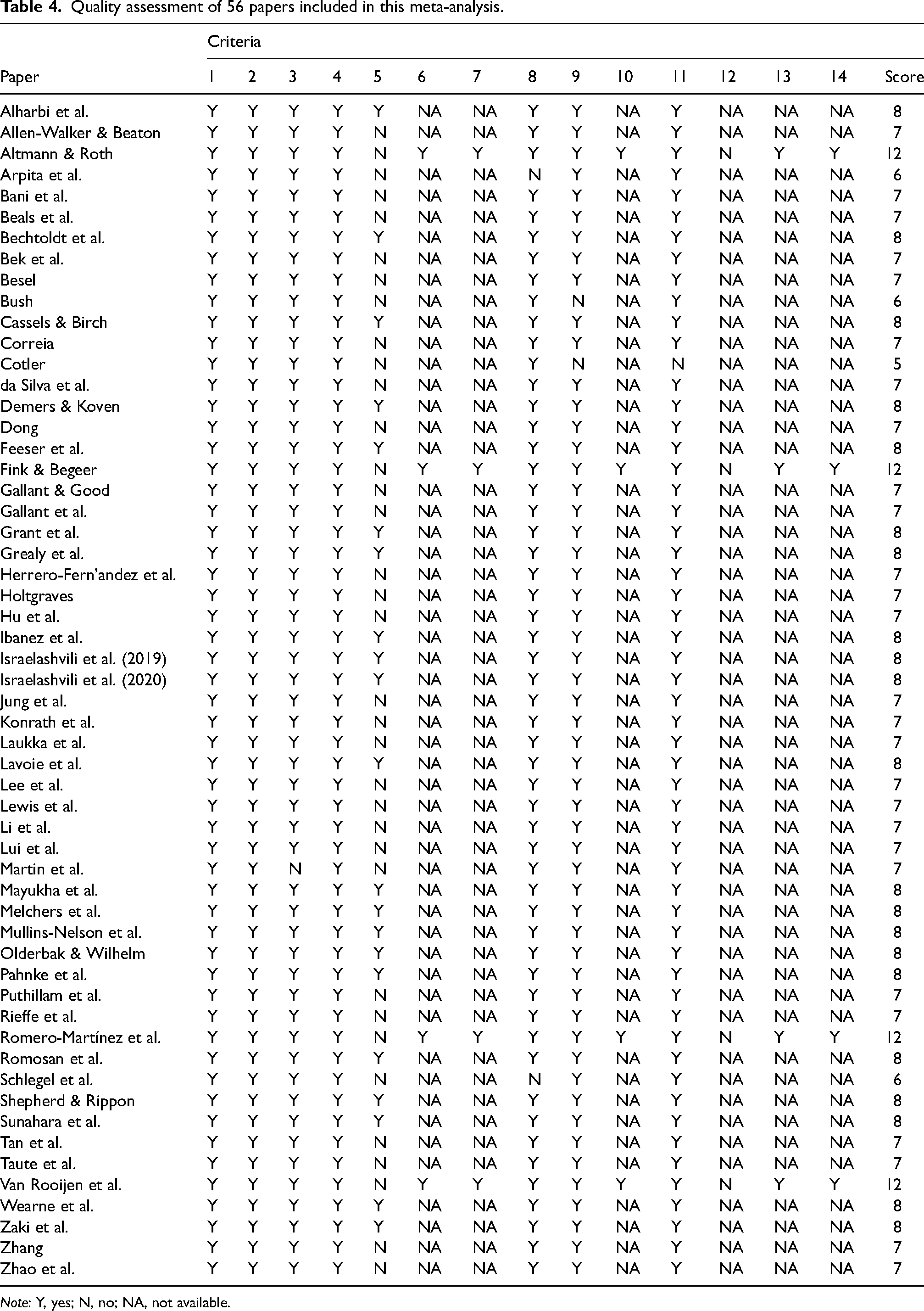
For each included study, an assessment was conducted based on criterion of the National Institutes of Health (NIH) Quality Assessment Tool for Observational Cohort and Cross-Sectional Studies (National Institutes of Health, 2014). Studies were scored as meeting the criterion (Yes: 1 point) or not meeting the criterion (No: 0 points). The total score for cross-sectional studies ranged from 0 to 8, while for longitudinal studies, it ranged from 0 to 14. Higher scores indicated better study quality. Two researchers independently assessed the study quality, and any differences in their scores were resolved through discussion between them.
Coding
Variables and effect sizes reported in each of the eligible studies were coded according to a formal coding document, which was based on the suggestions by Card (2012). Information was extracted from the included literature and as follows: (a) study ID, (b) effect ID, (c) study author, (d) publication year, (e) paper status (published or unpublished), (f) sample size, (g) sex ratio, (h) mean age, (i) developmental stage, (j) country of sample, (k) societal individualism, (l) measurement tools for empathy, (m) emotion expressions of emotion recognition tasks, and (n) effect sizes. Regarding moderators, components of empathy was coded into four categories: self-oriented affective empathy, other-oriented affective empathy, cognitive empathy and general empathy based on the original dimensions of each measurement tool, the content measured by specific items, and the descriptions in the original research. Measurement tools for empathy were coded into five categories: IRI, EQ, BES, QCAE, and other. In the included literature, some scales (e.g., the Toronto Empathy Questionnaire) were used infrequently, with effect sizes less than 5. Therefore, they were collectively classified as “other.” Emotion expressions of emotion recognition tasks were coded into three categories: visual expression, auditory expression, and both visual and auditory expression. Societal individualism was coded according to the Hofstede Index (see Table 2). The developmental stages, as indicated by the World Health Organization, were divided into four categories: children (1–13 years), adolescents (13–25 years), young adults (25–44 years), and middle adults (44–60 years) (Fatima & Babu, 2023). Of the effect sizes included, 150 were presented as Pearson correlation coefficients. Additionally, 16 effect sizes were reported as beta values from linear regression models, while 1 was beta from path analysis. All effect sizes were transformed into correlation coefficients (r) (Lipsey & Wilson, 2001).
Hofstede's individualism index by country.

Two independent authors (the first and the second author) screened the titles and abstracts of all identified records. Full-text articles were then retrieved and assessed for eligibility. To assess the inter-rater reliability between the two coders, the current meta-analysis calculated the Kappa coefficient and the Intraclass Correlation Coefficient (ICC) for categorical variables (e.g., status of papers, developmental stage, country of sample, components of empathy, measurement tools for empathy, and emotion expressions of emotion recognition tasks) and for continuous variables (e.g., study year, sex ratio, age, societal individualism, sample size, and effect size), respectively (Fleiss, 1986; Landis & Koch, 1977). The inter-rater reliability for the categorical variables was high (mean κ = .95; range = 0.85∼1.00). Any disagreements were resolved through discussion or consultation with the other authors. The ICCs for study year, age, societal individualism, sample size, and effect size were 1.00, indicating perfect agreement between the two coders on the coding of these variables.
Statistical analysis
The current meta-analysis used metafor package in R (4.4.1-win) with a three-level random effects model (Assink & Wibbelink, 2016; Cheung, 2014). The majority of studies included in this meta-analysis reported multiple interdependent outcomes. That is, multiple effect sizes reported within the same study often came from the same sample, and therefore were correlated with each other. Traditional meta-analytic methods would ignore this correlation, which may lead to an overestimation of the overall effect size (Lipsey & Wilson, 2001). Compared to traditional single-level approach, the three-level meta-analysis could resolve this problem, thereby maximizing the retention of information and improving the statistical power (Assink & Wibbelink, 2016). Specifically, this model considers three sources of variance: (a) sampling variance of the extracted effect sizes (Level 1); (b) variance among the effect sizes extracted from the same study (Level 2); and (c) variance among the effect sizes extracted from different studies (Level 3) (Cheung, 2014). Therefore, the three-level random effects model was used to analyze in this meta-analysis. In the present study, the correlation coefficients were transformed into Fisher's z-scores using the Fisher's z transformation. This procedure was employed to account for the sampling error that arose from the inconsistent sample sizes across the studies (Holzman et al., 2022). In order to interpret the overall effect size, the obtained Fisher's z-scores were transformed back into correlation coefficients using the inverse Fisher's z-to-r transformation.
The analysis of the effect size variability and potential moderators was conducted using the metafor package in the R (Viechtbauer & Cheung, 2010). To assess whether there was heterogeneity at level 2 (variance from the same study) and level 3 (variance between studies), one-sided log-likelihood-ratio-tests was conducted, in which the deviance of the full model was compared to the deviance of a model excluding one of the variance parameters (Assink & Wibbelink, 2016). If there was substantial heterogeneity in effect sizes, moderator analyses were used to examine variables that could potentially account for within- or between-study heterogeneity (Borenstein et al. 2009). Specifically, we used meta-regressions for continuous variables such as age, sex ratio, societal individualism, and publication year. Furthermore, subgroup analysis was conducted for categorical variables such as components of empathy, measurement tools for empathy, emotion expressions of emotion recognition tasks, and developmental stage. To ensure the representativeness of the moderation effect results, this study followed the recommendations of Card (2012), setting of categorical moderating variables so that each category includes at least 5 effect sizes.
Lastly, publication bias was tested using three methods. First, this study examined the status of papers (published vs. unpublished) as a potential moderator. If the moderating effect was found to be significant, publication bias existed. Second, this study used a funnel plot to qualitatively assess publication bias. If the funnel plot was asymmetrical, it suggests that publication bias existed (Sterne & Harbord, 2004). Third, the Egger-MLMA regression test was used to quantitatively assess publication bias. In situations where the effect sizes included in the analysis are not independent, the Egger-MLMA regression test is more effective at controlling Type I error compared to the trim and fill analysis and the traditional Egger regression (Rodgers & Pustejovsky, 2021). Since most of the studies included in this analysis reported multiple correlated effect sizes, the Egger-MLMA regression test was selected. If the results of the Egger-MLMA regression test were significant, it suggested that publication bias existed (Rodgers & Pustejovsky, 2021).
Anonymized data and analysis scripts have been made publicly available at the Open Science Framework and can be accessed at https://osf.io/zqyu3/?view_only=029cf14a04c0427cbd57914874342399.
Results
Study characteristics
Table 3 presents data from 70 studies yielding 167 effect sizes collected for the current meta-analysis, conducted between 2006 and 2024. These studies involved a total of 17,880 participants, with an average age ranging from 2.50 to 54.55 years. Sample sizes varied from 21 to 1,572 participants, and the proportion of female participants ranged from 0% to 89%. Each study contributed between 1 and 12 effect sizes.
Characteristics of the 70 studies included in this meta-analysis.

Note: SID, study ID; EID, effect size ID; ES, effect size; Pub, published; Unpub, unpublished; NA, not available; BES, Basic empathy scale; EQ, Empathy Quotient; TEQ, the Toronto Empathy Questionnaire; IRI, the Interpersonal Reactivity Index; BIE, Bryant Index of Empathy; EmQue, the Empathy Questionnaire; QMEE, Questionnaire Measure of Emotional Empathy; CES, the Child Empathy Scale; QCAE, the Child Empathy Scale; TEIQ, Trait Emotional Intelligence Questionnaire; GEM, Griffith Empathy Measure; ESE, Emotion Specific Empathy; MSME, Multiitem Scales of Multidimensional Empathy; BEES, Balanced Emotional Empathy Scale; SAE, self-oriented affective empathy; OAE, other-oriented affective empathy; CE, cognitive empathy; GE, general empathy; V & A, visual and auditory.
Study quality
The quality assessment scores for the 52 included cross-sectional studies ranged from 5 to 8, with an average score of 7.31, exceeding the theoretical average of 4. All four longitudinal studies scored 12 points, with an average of 12, also well above the theoretical mean of 7 points. Overall, the quality of the included articles was relatively high. The assessment results was depicted in Table 4.
Quality assessment of 56 papers included in this meta-analysis.
Note: Y, yes; N, no; NA, not available.
Overall effect size
The result of the three-level meta-analysis model showed that the overall correlation between empathy and emotion recognition was small but significant, r = 0.11, p < 0.001, 95% CI [0.08, 0.14] (Figure 2). This finding suggest that as hypothesized, empathy was significantly positively correlated with emotion recognition.

Forest plot with 95% confidence intervals for the relation between empathy and emotion recognition.
Heterogeneity analyses
The log-likelihood-ratio test was conducted to examine whether the within-study variance (Level 2) and between-study variance (Level 3) were significant. There was significant within-study variance (σ2 = 0.02, LRT = 307.21, p < 0.001) but nonsignificant between-study variance (σ2 = 0.02, LRT = 0.91, p = 0.34). Among the total sources of variance, the between-study variance accounted for 12.31% of the total variance, the within-study variance accounted for 73.32%, and sampling variance accounted for 14.37%. The results indicated that further exploration with moderator analyses should be investigated to explain the relationship between empathy and emotion recognition.
Moderator analyses
The results of moderator analyses of the relationship between empathy and emotion recognition can be found in Table 5.
Moderator effects of the association between empathy and emotion recognition.

Note: k = number of studies; ES = number of effect sizes; F (df1, df2) = the result of the omnibus test; β0 = mean effect size in Fisher's z; t0 = difference in mean Fisher's z with zero; β1 = estimated regression coefficient; t1 = difference in mean Fisher's z with reference category.
p* < 0.05, p** < 0.01, p*** < 0.001.
Components of empathy
Components of empathy significantly moderated the relationship between empathy and emotion recognition, F(3, 163) = 21.80, p < 0.001. Further exploratory analysis showed that the association between self-oriented affective empathy and emotion recognition was not significant (Fisher's z = −0.01, p = 0.54, 95% CI [−0.06, 0.03]). However, there was a positive association between other-oriented affective empathy and emotion recognition (Fisher's z = 0.18, p < 0.001, 95% CI [0.13, 0.22]; β1 = 0.19, t1 (163) = 7.23, p < 0.001, 95%CI [0.14, 0.24]), an association between cognitive empathy and emotion recognition (Fisher's z = 0.13, p < 0.001, 95% CI [0.09, 0.18]; β1 = 0.15, t1 (163) = 5.59, p < 0.001, 95%CI [0.09, 0.20]), as well as an association between general empathy and emotion recognition (Fisher's z = 0.18, p < 0.001, 95% CI [0.13, 0.24]; β1 = 0.20, t1 (163) = 6.18, p < 0.001, 95%CI [0.14, 0.26]).
Measurement tools for empathy
Measurement tools for empathy significantly moderated the relationship between empathy and emotion recognition, F(4, 158) = 6.50, p < 0.001. When empathy was measured using EQ, the correlation between empathy and emotion recognition was stronger than when empathy was measured using IRI (β1 = −0.23, t1 (158) = −4.51, p < 0.001, 95%CI [−0.33, −0.13]), QCAE (β1 = −0.22, t1 (158) = −2.71, p = 0.0075, 95%CI [−0.38, −0.06]), and other measurements (β1 = −0.13, t1 (158) = −2.26, p = 0.025, 95%CI [−0.25, −0.02]), but was not significantly different (β1 = −0.14,t1 (158) = 1.84, p = 0.067, 95%CI [−0.28, 0.01]) from the correlation when empathy was measured using the BES.
Emotion expressions of emotion recognition tasks
No significant moderating effect was found in measuring emotion recognition through different emotion expressions, F(2, 162) = 1.01, p = 0.37. Empathy was positively correlated with emotion recognition when emotion recognition was measured using visual expression (Fisher's z = 0.11, p < 0.001, 95% CI [0.07, 0.14]), and using visual and auditory expression (Fisher's z = 0.11, p = 0.002, 95% CI [0.04, 0.18]). The association between empathy and emotion recognition was not significant when emotion recognition was measured using auditory expression (Fisher's z = 0.009, p = 0.89, 95% CI [−0.12, 0.14]).
Societal individualism
The moderating effect of societal individualism between empathy and emotion recognition was significant, F(1, 165) = 3.98, p = 0.048, indicating that the relationship between empathy and emotion recognition became weaker with increased societal individualism (Fisher's z = −0.001, p = 0.048, 95% CI [−0.003, 0]).
Age and developmental stage
The moderating effect of mean age between empathy and emotion recognition was marginally significant, F(1, 139) = 3.72, p = 0.056, indicating that the relationship between empathy and emotion recognition became weaker with increased age (Fisher's z = −0.003, p = 0.056, 95% CI [−0.006, 0]). Furthermore, there was no significant moderating effect of different developmental stage, F(3, 137) = 1.30, p = 0.28. Empathy and emotion recognition were positively correlated in children (Fisher's z = 0.15, p = 0.001, 95% CI [0.06, 0.24]), adolescents (Fisher's z = 0.15, p < 0.001, 95% CI [0.09, 0.22]), and young adults (Fisher's z = 0.10, p < 0.001, 95% CI [0.05, 0.15]). The moderating effect of middle adults was not significant (Fisher's z = 0.007, p = 0.94, 95% CI [−0.17, 0.18]).
Gender
The moderating effect of gender on the relationship between empathy and emotion recognition was not significant, F(1, 147) = 0.10, p = 0.75, indicating that empathy was associated with emotion recognition regardless of gender.
Publication year
We further included the publication year as a moderator to explore whether it affects the relationship between empathy and emotion recognition. The moderating effect of publication year on the relationship between empathy and emotion recognition was not significant, F(1, 165) = 0.86, p = 0.36, indicating that empathy was associated with emotion recognition regardless of publication year.
Publication bias
The moderating effect of publication status was not significant, F(1, 165) = 0.64, p = 0.43, Empathy was positively related to emotion recognition in published (Fisher's z = 0.11, p < 0.001, 95% CI [0.08, 0.15]), but not significant in unpublished studies (Fisher's z = 0.08, p = 0.08, 95% CI [−0.01, 0.16]). Figure 3 presents the funnel plot, which depicted the standard errors in relation to the effect sizes. Egger-MLMA regression test produced a nonsignificant result, β1 = 0.65, t1 (165)= 1.73, p = 0.09, 95% CI [−0.09, 1.39], indicating that there was no publication bias in this meta-analysis.

Funnel plot. Note: The filled circles indicate the distribution of the standard error of effect sizes from every study included in this meta-analysis.
Discussion
Despite a growing number of empirical studies investigating the relationship between empathy and emotion recognition, uncertainties remain regarding this association. This study aimed to address this gap by conducting a three-level meta-analysis to examine the relationship between empathy and emotion recognition. Overall, the current study found a significant positive correlation between these two variables, which meant that individuals with high levels of empathy are more likely to accurately recognize others’ emotions. Moreover, this meta-analysis examined how this relationship was moderated by factors including components of empathy, measurement tools for empathy, emotion expressions of emotion recognition tasks, societal individualism, age, developmental stage, and gender. After examining a series of moderators, components of empathy, measurement tools for empathy, societal individualism, and age were found to be significant moderators. These findings may help clarify the association between empathy and emotion recognition, highlighting the importance of empathy in accuracy of emotion recognition. The moderating factors in this relationship provided a new reference for future research in this area.
The relationship between empathy and emotion recognition
The overall relationship between empathy and emotion recognition was positive. This finding is consistent with previous research, which shows that empathy is positively related to emotion recognition (Olderbak & Wilhelm, 2017; Zaki et al., 2008, 2009). This result may be explained by the facial feedback hypothesis and the “like me” hypothesis of empathy (Adelmann & Zajonc, 1989; Meltzoff, 2005). Individuals with higher levels of empathy tend to have a stronger ability to mimic facial expressions, which may enhance their emotion recognition (Adelmann & Zajonc, 1989; Meltzoff, 2005). Consequently, the current study suggests that the empathy plays an important role in emotion recognition, potentially protecting individuals from various internalizing and externalizing problems and facilitating successful social interactions (Ferretti & Papaleo, 2019; Heinze et al., 2015; Morningstar et al., 2019; Zhang et al., 2024). However, it is important to note that the positive correlation between empathy and emotion recognition was relatively weak, indicating the need to explore potential moderating factors.
The moderating effects
In line with our hypothesis, the present study demonstrated that components of empathy were a significant moderator, suggesting that other-oriented affective empathy and cognitive empathy was positive related to emotion recognition. However, contrary to our expectation, the relationship between self-oriented affective empathy and emotion recognition was not significant. One possible explanation is that the most fundamental component of empathy is self-oriented affective empathy. Self-oriented affective empathy is primarily a physiological response that does not require extensive conscious involvement (de Waal & Preston, 2017). Consequently, individuals may unconsciously empathize with others, a process that is independent of emotion recognition. On the contrary, other-oriented affective empathy and cognitive empathy require more self-other distinction and cognitive processing compared to self-oriented affective empathy (de Waal & Preston, 2017). Thus, individuals with high levels of other-oriented affective empathy and cognitive empathy are more likely to demonstrate concern about others’ state and take others’ emotional perspective, which leads to high levels of emotion recognition ability. These results are consistent with previous studies that show that self-oriented affective empathy is not significantly correlated with the ability for emotion recognition, while other-oriented affective empathy and cognitive empathy are positively related with emotion recognition (Herrero-Fernández et al., 2022; Israelashvili et al., 2020; Melchers et al., 2016; Mitchell & Phillips, 2015; Olderbak & Wilhelm, 2017; Zaki et al., 2008).
Moreover, the finding supports a significant moderating effect of the measurement tools for empathy. While the EQ revealed a notably stronger correlation compared to the IRI, QCAE, and other measurement tools, the results aligned with those obtained using the BES. Moreover, when empathy was measured using EQ, IRI, BES, and other measurement tools, the correlation between empathy and emotion recognition was positively significant. Nevertheless, when empathy was measured using QCAE, the correlation between empathy and emotion recognition became nonsignificant. One possible explanation is that there are differences in dimensions or evaluation methods among different measurement tools. Specially, QCAE differs from other measurements in its dimensional classification. While the QCAE categorizes empathy into affective and cognitive dimensions, it further differentiates itself by incorporating proximal responsivity and peripheral responsivity subscales within the affective dimension, as well as an online simulation subscale within the cognitive dimension (Gallant & Good, 2020; Reniers et al., 2011). The contents of these subscales are not reflected in other measurement tools (Baron-Cohen & Wheelwright 2004; Davis, 1983; Jolliffe & Farrington, 2006). Furthermore, there are relatively few studies that use QCAE to measure empathy, and a smaller effect size might also contribute to the lack of a significant relationship between empathy and emotion recognition. Thus, more research is needed to focus on the relationship between empathy and emotion recognition as measured by the QCAE, in order to gain a thorough understanding of their association.
Contrary to our hypothesis, the moderating effect of emotion expressions of emotion recognition tasks was not significant. This result suggests that the measurement tools for emotion recognition across different emotion expressions are all effective (Schlegel et al., 2019). However, it is important to notice that although there is no moderating effect of emotion expressions, the association between empathy and emotion recognition was significantly positive when emotion recognition was measured via visual expression and both visual and auditory expression, but not significant when emotion recognition was measured via auditory expression. One possible explanation is that individuals acquire the ability to recognize facial expressions earlier than they develop the ability to recognize vocal expressions (Morningstar et al., 2020). Therefore, facial emotional expressions may be easier for individuals to recognize compared to vocal emotional expressions. Another reason might be the lack of effect sizes measuring emotion recognition using only the auditory expression. In order to address appropriately whether emotion expressions moderates the associations between empathy and emotion recognition, it is essential for future studies to increase the measurement methods for emotion recognition through auditory expressions.
We found a significant moderating effect of societal individualism on the relationship between empathy and emotion recognition. The result showed that the this association became stronger with decreased societal individualism. This finding suggests that individuals from collectivist cultures exhibit a stronger positive correlation between empathy and emotion recognition than those from individualist cultures. This is because in collectivist cultures, notions of individuality are uniquely defined by the intrinsic connections between individuals. People from collectivist cultures prioritize being attentive to others, conforming to group norms, and fostering harmonious interdependence (Chen et al., 2003; Hofstede, 1980; Kim et al., 2008; Markus & Kitayama, 1991). Therefore, individuals from collectivist cultures who possess high levels of empathy are more likely to have better emotion recognition abilities. This finding is consistent with previous studies indicating that people from Eastern cultures generally exhibit higher levels of empathy and are often more adept than their Western counterparts at recognizing complex facial expressions (Chentsova-Dutton & Tsai, 2010; Fang et al., 2022; Wu & Keysar, 2007).
The moderating effect of age was marginally significant, while developmental stage and gender were not. These findings were somewhat surprising, as we had anticipated that the association between empathy and emotion recognition varies in age and gender. This nonsignificant result of developmental stage might be because studies did not provide effect sizes for each age groups. Consequently, in this meta-analysis, we had to compute the mean age for each sample without accounting for the age distribution. Nonetheless, the significant results for children, adolescents, and young adults, as well as marginally significant result for average age, still suggest that as individuals get older, the association between empathy and emotion recognition ability may diminish. These findings are roughly in line with studies indicating that, during middle and late adulthood, cognitive empathy and emotion recognition ability generally declines (Hayes et al., 2020; Labouvie-Vief & González, 2004; Wang et al., 2021). Regarding gender, this result may indicate a cross-gender convergence effect in the relationship between empathy and emotion recognition. That means gender has a limited influence on emotion recognition (Dores et al., 2020).
Limitations and future directions
This meta-analysis extends prior research by providing a comprehensive view of the relationship between empathy and emotion recognition. Nonetheless, findings must be considered in light of some limitations. First, the estimated effect size for the relationship between empathy and emotion recognition was small. This small correlation may be attributed to the inconsistency of previous research findings and the differences in measurement tools used in previous work. There is a need for extensive studies that offer consistent and reliable measurements along with large sample sizes. Second, although the current study showed a significant correlation between empathy and emotion recognition, it was unable to establish the directionality and causal relationship between the two variables. Some studies suggest that emotion recognition may also predict empathy, indicating that the relationship between empathy and recognition may be bi-directional (Eisenberg & Fabes, 1990; Mehrabian & Epstein, 1972; Olderbak & Wilhelm, 2017; Preston & de Waal, 2002). To further explore potential causal mechanisms, more experimental or longitudinal studies could be examined. Third, when examining moderating effects such as measurement tools for empathy and emotion recognition, as well as developmental stage, some subgroups exhibited a limited range of effect sizes. This variation in effect sizes may have influenced the overall conclusions. Further research should overcome language barriers and explore more databases to address the shortcomings. Fourth, this study did not investigate the relationship between state empathy and emotion recognition. Furthermore, due to the fact that most of the literature included in the meta-analysis reported accuracy as the sole indicator of emotion recognition ability, this paper also focused exclusively on accuracy when assessing emotion recognition ability, without considering other aspects such as reaction time or recognition bias. Future research should explore the relationship between state empathy and emotion recognition across various contexts and should incorporate multiple indicators to explore how empathy may relate to other aspects of emotion recognition. Finally, the present study did not investigate whether specific emotions as a moderator that influence the relationship between empathy and emotion recognition. Future studies could investigate more moderating factors, such as particular emotions.
Conclusion
Numerous studies have investigated the link between empathy and emotion recognition, yet no consensus has been established about their relationship. This study is the first to systematically organize and analyze all available research on this topic, employing a three-level meta-analysis model to explore the association between empathy and emotion recognition. The results show a statistically significant positive correlation between empathy and emotion recognition. Subsequent moderator analyses indicate that components of empathy, measurement tools for empathy, societal individualism, and age significantly moderate the relationship between empathy and emotion recognition. The current study not only helps enhance understanding of this association but also offers new perspectives for interventions aimed at decreasing internalizing and externalizing problems caused by deficits in emotion recognition.
Footnotes
Acknowledgments
We appreciate Rui Su for his contribution to the suggestions regarding the draft.
Declaration of conflicting interests
The authors declared no potential conflicts of interest with respect to the research, authorship, and/or publication of this article.
Funding
The authors disclosed receipt of the following financial support for the research, authorship, and/or publication of this article: This work was supported by the the National Natural Science Foundation of China (Grant No. 32371111 and Grant No. 32071075).
