




Abstract
Although the intergroup sensitivity effect has indicated that people are more defensive to out-group members’ criticism compared to in-group members’ criticism, it is still unclear how people react when they criticize their in-group and others validate their criticism. In two studies, we applied the tripartite model of self and social identity theory to investigate how people respond to such validation when the validation was from an out-group member compared to when it was from an in-group member. We found that even though participants initiated the criticism of their in-group, they perceived the out-group validation more as a criticism of their selves than the in-group validation. Consequently, their relationship with the person who validated was negatively influenced when the person was an out-group member compared to an in-group member. Furthermore, the effect was moderated by their psychological closeness to the in-group. Specifically, when participants felt closer to the in-group, they perceived the out-group (vs. in-group) validation more as a criticism of their selves, and thus their relationship with the person who validated was more negatively influenced. However, these effects disappeared (Study 1) or became smaller (Study 2) when participants felt less close to the in-group.
Introduction
Imagine that a college student is not satisfied with some policies of their university (a group the student belongs to). The student shares their criticism of the university with an acquaintance who then validates the criticism. Would the student respond differently toward the acquaintance and the validation when the acquaintance is a student from another university (an out-group member) compared to when the acquaintance is from the same university (an in-group member)? In this study, we investigated how out-group vs. in-group validation of one's criticism of an in-group influences their relationship with the person who validated the criticism, who is referred to as the validator hereafter.
Two forces of the validation of one's criticism of an in-group
The Tripartite model of self (Sedikides et al., 2011) depicts the self as comprising three components: the individual self (e.g., the unique features that make one different from others, such as their characteristics, goals, aspirations, experiences, interests, behaviors), the relational self (e.g., one's interpersonal attributes which define the relationship with close others, such as partners, friends, family members), and the collective self (e.g., the inter-group attributes that shared by members of a particular in-group and distinguish them from outsiders). This model explains how these three selves interact to enhance or protect the overall self, with the presumption that individuals’ three selves may momentarily become salient depending on the context. For instance, the collective self may become more prominent when group identity is threatened, leading individuals to strengthen their connection and identification with their group to enhance their sense of value and reduce anxiety about external threats (Jetten et al., 1997). Similarly, the individual self may become prominent when their personal values and identity are threatened or supported by others.
Based on the Tripartite model of self, when others validate people's criticism of their in-group, two forces that work in opposite directions are involved. On the one hand, the validation provides support for people's criticism, which would be perceived positively as being supportive of the self because their individual self is supported, and could potentially enhance their relationship with the validator, for example, the person who provided the validation (Kurzban & Leary, 2001; Reis, 2001; Shaw et al., 2017). On the other hand, given that the content of validation is a criticism of an in-group they belong to, the validation may also threaten their collective self and consequently damage their relationship with the validator. Thus, the validation of people's criticism of their in-group can either positively or negatively influence the relationship between the people who initiated the criticism and the validator, depending on the relative strength of the two opposite forces involved in such validations.
Impacts of out-group vs. in-group validation on the two forces
The relative strength of the two opposite forces involved in the validation of people's criticism of their in-group may vary depending on whether the validator is an in-group member or an out-group member. The intergroup sensitivity effect (Hornsey & Imani, 2004) suggests that individuals are more defensive toward criticism from out-group members and they are more accepting of in-group criticism. Consistent with the effect, when the validator is an in-group member, group identity is not salient (Wilder & Shapiro, 1984) because both the initiator of the criticism and the validator belong to the same group. Consequently, people are likely to focus on how the validation supported them, without worrying about how such validation might threaten their group. That is, the in-group validation is likely perceived more as a support for the individual self and less as a threat to the collective self, leading to more positive responses from the initiator. In contrast, when the validator is an out-group member, group identity becomes salient (Wilder & Shapiro, 1984). The mere existence of an out-group member and their validation of the criticism accentuate intergroup differences. As a result, people may shift their focus from how the validation supported their criticism to the group identity of the validator. They become more defensive, viewing the out-group member's validation more as an external threat to the in-group. Consequently, the out-group validation is perceived more as a threat to the collective self and less as support for the individual self. As a result, people may respond more negatively to the validation when the validator is an out-group member.
Research consistently has shown that an in-group member's criticism is likely to be perceived as being constructive, compared to an out-group member's criticism (Greenaway & Cruwys, 2019; Hornsey et al., 2002, 2005, 2008; Hornsey & Esposo, 2009; Hornsey & Imani, 2004; Thai et al., 2019). In one study, Australian participants read either a positive or a negative statement about Australian people from either an in-group member (an Australian) or an out-group member (a non-Australian). The experiment data showed that participants felt equally positive toward out-group and in-group members when the statement was positive. However, they felt more negatively toward the out-group member than toward the in-group member when the statement was negative because the negative statement from the out-group member was regarded as being hostile and threatening whereas the negative statement from the in-group member was considered as a constructive suggestion for the benefits of the group (Hornsey et al., 2002).
The mediating role of the construal of the validation
As discussed previously, people may construe the validation differently depending on whether the validator is an in-group or out-group member. Specifically, people tend to perceive the validation of their criticism of an in-group more as a support for the individual self and less as a criticism of their in-group when the validator is an in-group member. In contrast, they tend to perceive the validation more as a criticism of the in-group and less as a support for the self when the validator is an out-group member. According to social identity theory, a person's self is inextricably linked to significant in-groups (Hogg & Terry, 2000). They interweave and overlap with each other. Perceiving the out-group member's validation as a criticism of the in-group may be extended to the person, resulting in perceiving the validation also as a criticism of the self. Furthermore, according to the Tripartite model of self (Sedikides et al., 2011), the individual self and collective self play important roles in the effect of out-group (vs. in-group) validation on the relationship between participants and the validators. When the validator is an in-group member, people perceive the validation of their criticism of the in-group more as being supportive of the individual self, and less as a threat to the collective self. In contrast, when the validator is an out-group member, people are less likely to perceive the validation as being supportive of the individual self, and more likely as a threat to the collective self. Given that the individual self and collective self jointly construct one's overall self (Sedikides et al., 2011), the validation would be perceived more as a criticism of the self when the validator is an out-group member compared to an in-group member. Based on social identity theory and the Tripartite model of self, we explored whether perceiving the validation as a criticism of the self mediated the effect of out-group (vs. in-group) validation on the relationship. Specifically, we predicted that people tend to perceive the out-group (vs. in-group) validation of their criticism of an in-group as a criticism of the self, which in turn negatively influences their relationship with the validator.
The moderating effect of closeness to the in-group
Closeness to the in-group is defined as one's psychological tie to his/her group, which is a basic conceptualization of in-group identification (Smith et al., 1999) and was used to measure group identification in previous studies (e.g., Schubert & Otten, 2002). As aforementioned, individuals are more likely to perceive the validation of their criticism of an in-group as a criticism of the self when the validator is an out-group member compared to an in-group member. This effect might be stronger when individuals feel closer to and identify more with their in-group because these individuals are more likely to see their in-group as an important part of the self (Branscombe & Wann, 1994; Gagnon & Bourhis, 1996). In other words, when individuals feel closer to and identify more with their in-group, the in-group overlaps more with the self and they care more about the in-group. Meanwhile, the collective self would play a greater role in one's overall self. Consequently, the perceived criticism of the in-group from the out-group validation is more likely to be extended to the self and individuals are more likely to construe it as a criticism of the self. In contrast, when individuals feel less close to and identify less with the in-group, their self-concept overlaps less with the in-group and they care less about the in-group. Similarly, the collective self would play a less significant role in their overall self-concept. Consequently, the effect of out-group (vs. in-group) validation might become weaker when individuals feel less close to and identify less with their in-group. In short, closeness to the in-group would moderate the effects of out-group (vs. in-group) validation on perceiving the validation as a criticism of the self.
The present research
Although the intergroup sensitivity effect has pointed out people's sensitivity and defensiveness toward out-group members’ criticisms of their in-group, it does not consider (a) how people react to an out-group (vs. in-group) member's validation of their criticisms of an in-group, for example, people initiated the criticism of their in-group; (b) how such validation may influence the interpersonal relationships; (c) how perceiving the validation as a criticism on the self mediates the effect; and (d) how closeness to the in-group moderates the effects. The present study applied the tripartite model of self and social identity theory to investigate how people react to such validation when the validator was an out-group member compared to an in-group member.
Overall, it was hypothesized that when people criticize their in-group and others validate their criticism, depending on whether the validator is an out-group member or an in-group member, they may construe the validation differently, which in turn leads to different impacts on their relationship with the validator. Specifically, when the validator is an out-group (vs. in-group) member, people are less likely to perceive the validation as being constructive and more likely to perceive the validation as a criticism of themselves. Consequently, the out-group (vs. in-group) validation is likely to negatively influence the relationship between participants and the validator. In addition, the psychological closeness to the in-group would moderate the effect. Specifically, when people feel close to the in-group, the out-group validation of their criticism of the in-group is more likely to be perceived as a criticism of the self. Consequently, the out-group (vs. in-group) validation of criticism of the in-group would influence their relationship with the validator more negatively when people feel close to the in-group. In contrast, when people do not feel close to the in-group, the out-group validation is less likely to be perceived as a criticism of the self. Consequently, the out-group (vs. in-group) validation would influence the relationship less negatively.
We conducted two pre-registered studies to investigate these effects. In the studies, participants imagined that they had some criticism about their university (an in-group) and indicated how close they felt to their university. Then they shared the criticism with an acquaintance who was a student from either another university (an out-group member) or their university (an in-group member). The acquaintance validated participants’ criticism of their university. Finally, participants reported how they construed the validation (i.e., how much they felt that the validation was a criticism of themselves), and whether the validation positively or negatively influenced their relationship with the acquaintance validator.
The studies were approved by the Research Ethics Panel at the Department of Psychology, University of Macau with the approval number 2019-07. In the studies, sample sizes were determined before the data analyses. No data were collected after the data analyses. And we reported all measures, manipulations, and exclusions. The study materials and data that support the findings of the studies are available at https://osf.io/r94ph/?view_only=b50e4c8506d1411d8cd2237511085016.
Study 1
We pre-registered Study 1 at https://osf.io/6mr3x/?view_only=71968d1ab3fc47908e620acdb8009d11.
Method
Participants
We were interested in examining a moderated mediation model. To ensure sufficient statistical power, we estimated our sample size by assuming that all the effects, for example, the effect from out-group (vs. in-group) validation to construal of the validation, the effect from construal of the validation to impacts on the relationship with the validator, as well as the effect from the interaction term to the construal of the validation, are all of small size (βs = .14). We need 500 participants to examine the moderated mediation effect for 95% power at α = 0.05 (Chu & Chen, 2012). Five hundred ninety-one Chinese undergraduate students (129 males and 462 females) aged from 18 to 28 years old (M = 20.10, SD = 1.54) participated in the study. Participants received course credit for their participation. Data from 36 participants were excluded from analyses because they did not follow the instructions, for example, not writing down any criticism about their university (17 participants), or not following the in-group vs. out-group validation instructions—for example, they indicated that the acquaintance was an out-group (in-group) member in the in-group (out-group) condition (19 participants). Consequently, 555 participants (122 males and 433 females) were included in the data analyses.
Materials and procedure
Closeness to the in-group. Participants first thought about their relationship with their university. Then they completed the closeness to the in-group scale, which was adapted from Aron et al. (1992), to measure their closeness to the university. Specifically, the scale contains seven pairs of circles varying in the extent of overlap between the self as one circle and the university as the other circle. Participants were told that the degree of overlap represented the closeness they were with their university. They then chose one pair of circles that best described their closeness to their university from 1 (not at all close) to 7 (extremely close).
Out-group (vs. in-group) validation and closeness to the validator. Participants then thought about and wrote down a criticism they had about their university. Specifically, they read the following paragraph. Even for a group we belong to, there might be things that we want to criticize or complain about, such as the group norms and regulations, the culture of the group, the location of the group, the welfare of the members, the negative influence of the group on you, etc. Please briefly write down what are the things you would like to complain or criticize about <name of their university>.
1
Participants were then randomly assigned to either the out-group or the in-group validation conditions. In the out-group (in-group) validation condition, they thought about an acquaintance who was a student from another university that had a similar ranking as their university (from their university). To make sure that the acquaintance was a real and concrete person from the specified university, participants wrote down the name of their acquaintance and the university where the acquaintance was studying. They then reported their closeness to the acquaintance using the same closeness to the in-group question except that the target was the acquaintance rather than the university. The closeness to the acquaintance is a measure of closeness to the validator because the acquaintance next validated participants’ criticism. Specifically, participants imagined that they shared their criticism with the acquaintance who then validated it by repeating their criticism. Participants imagined the following. You shared the complaints and/or criticisms of <name of their university> with the acquaintance. The acquaintance validated your complaints or criticisms about <name of their university> . For example, you said that <name of their university>’s ranking was too low and the location was too remote. These problems created serious hurdles preventing students from accessing good learning resources and employment opportunities. So, you believed that <name of their university> was not a good university. Your acquaintance heard these criticisms, and he/she said that what you had said was true. He/she continued that as you said, <name of their university>'s ranking was too low; the location was too remote. <Name of their university> did not provide good learning resources and employment opportunities for students and <name of their university> was not a good university.
Construal of the validation. Next, participants reported how much they felt that the acquaintance's validation of their criticism of the university as if a criticism of themselves on a scale ranging from 1 (extremely not as if a criticism of me) to 7 (extremely as if criticism of me).
Impacts on the relationship. Two items adapted from Shaw et al. (2017) measured how the validation influenced participants’ relationships with the validator. Specifically, participants reported whether they would feel more or less close to the acquaintance, given what had happened, on a 7-point scale ranging from a lot less close to a lot closer, as well as whether their relationship with the acquaintance would have been damaged or strengthened on a 7-point scale ranging from damaged a lot to strengthened a lot. The two items were highly correlated, r(553) = 0.80, p < .001. We calculated the mean of the two items. A low score represents a negative influence on the relationship and a high score represents a positive influence on the relationship.
Results
Preliminary analyses with closeness to the validator, gender, and age revealed that gender and age did not but closeness to the validator positively predicted impacts on the relationship, B = 0.13, p < .001, 95% CI (0.08, 0.18). The closer participants were to the acquaintance before the validation, the more positive impacts the validation had on their relationship with the acquaintance. Closeness to the validator was included as a control variable in the subsequent moderated mediation analyses. 2
Independent Samples T Tests revealed that, as expected, compared to the in-group validation (M = 4.03, SD = 0.87), the out-group validation (M = 3.76, SD = 0.97) negatively influenced participants’ relationship with the validator, t(553) = 3.54, p < .001, d = 0.29, 95% CI (0.12, 0.43). Furthermore, participants were more likely to construe the out-group validation as a criticism of their selves (M = 3.77, SD = 1.75) than the in-group validation (M = 2.74, SD = 1.30), t(553) = 7.85, p < .001, d = 0.67, 95% CI (1.29, 0.78). See Figure 1 and Table 1.
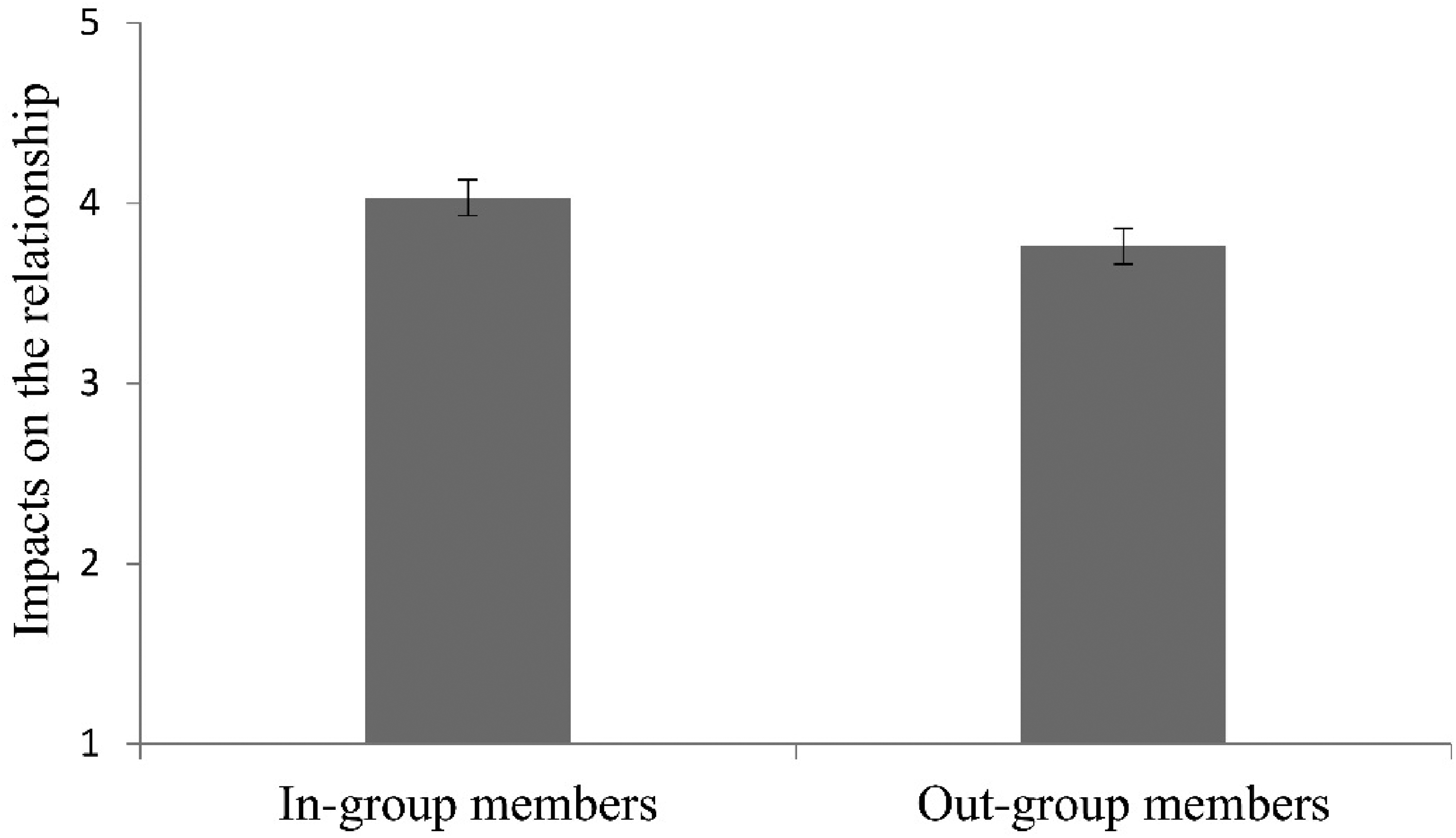
Impacts on the relationship in the out-group and in-group validation conditions in Study 1. Error bars are standard errors. Note: Impacts on the relationship: 1= “a lot less close” and “damaged a lot,” 5 = a lot closer” and “strengthened a lot.”
Descriptive statistics and correlations among all variables (controlling for closeness to the validator) in Study 1 (N = 555)
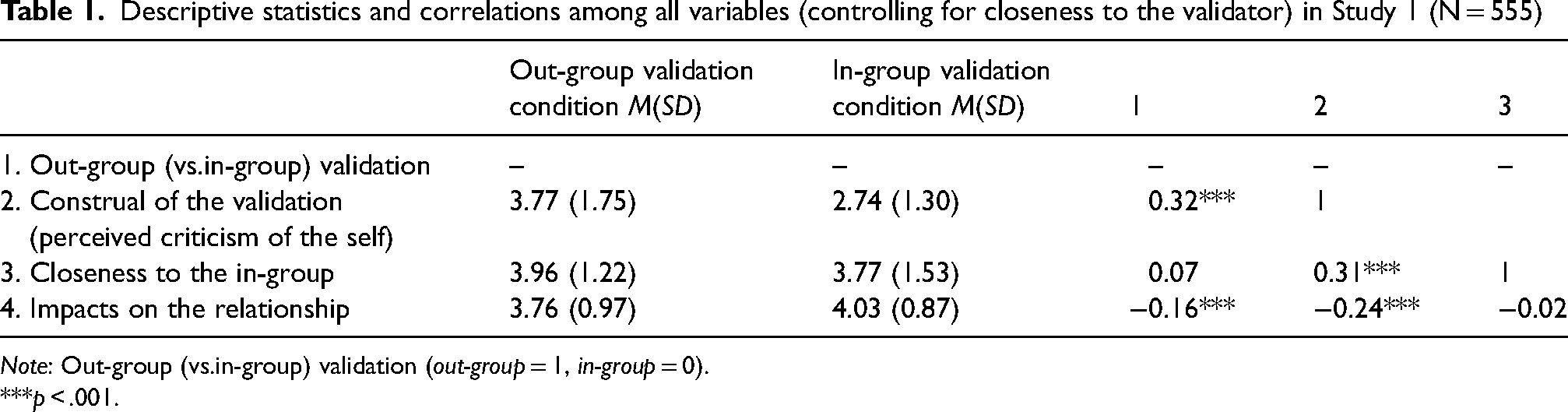
Note: Out-group (vs.in-group) validation (out-group = 1, in-group = 0).
***p < .001.
Moderated mediation analysis
A moderated mediation analysis using bootstrapping (Model 7 in Hayes, 2017; Number of bootstrap samples = 5,000) was conducted where out-group (vs. in-group) validation was the predictor (in-group = 0; out-group = 1), construal of the validation was the mediator, closeness to the in-group (mean-centered) moderated the effect from the predictor to the mediator, closeness to the validator was a control variable, and impacts on the relationship with the validator were the outcome variable. The results showed that after controlling for closeness to the validator before the validation, out-group (vs. in-group) positively predicted construal of the validation, B = 0.96, p < .001, 95% CI (0.72, 1.21). Participants construed the out-group validation more as a criticism of their selves than in-group validation. Construal of the validation in turn negatively predicted the relationship between participants and the validator, B = −0.12, p < .001, 95% CI (−0.17, −0.07). That is, the more participants construed the validation as a criticism of their selves, the more they felt that their relationship with the validator was negatively influenced by the validation. Importantly, the out-group (vs. in-group) validation by closeness to the in-group interaction was significant, B = 0.21, p = 0.02, 95% CI (0.03, 0.39). Compared with in-group validation, participants were more likely to construe the out-group validation as a criticism of their selves when they felt closer to the in-group (1.00 SD above the mean), B = 1.25, p < .001, 95% CI (0.91, 1.60). This effect became smaller when participants psychologically felt less close to the in-group (1.00 SD below the mean), B = 0.67, p < .001, 95% CI (0.32, 1.03). The indirect effect of out-group (vs. in-group) validation on the relationship with the validator via construal of the validation was also moderated by closeness to the in-group. It was greater when participants felt closer to the in-group (1.00 SD above the mean), B = −0.15, 95% CI (−0.25, −0.07). And it became smaller when they felt less close to the in-group (1.00 SD below the mean), B = −0.08, 95% CI (−0.14, −0.03). The contrast between the two indirect effects was significant, B = −0.07, 95% CI (−0.15, −0.003). See Table 2 and Figure 2.
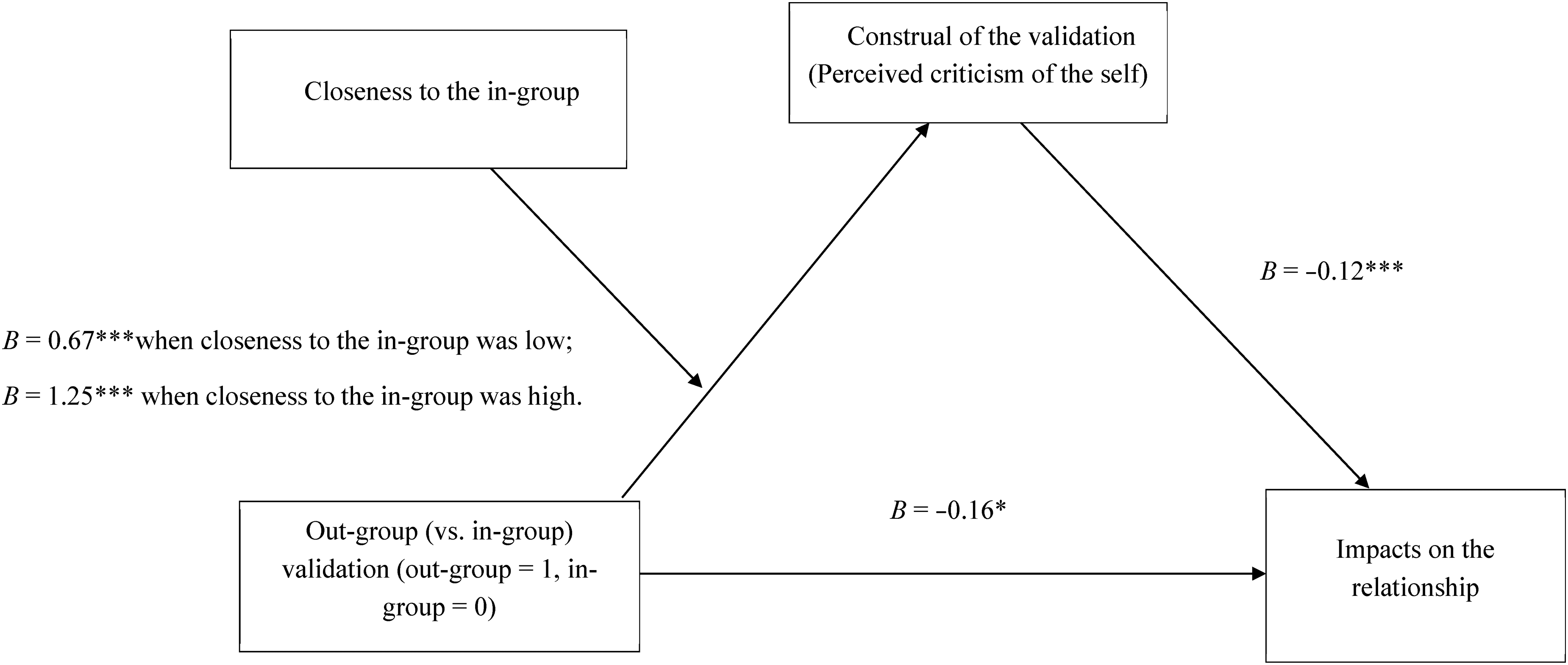
Closeness to the in-group moderated the effect of out-group (vs. in-group) validation on validation construal, which in turn impacted the relationship with the validator in Study 1.
Summary of the moderated mediation results in Study 1 (N = 555)
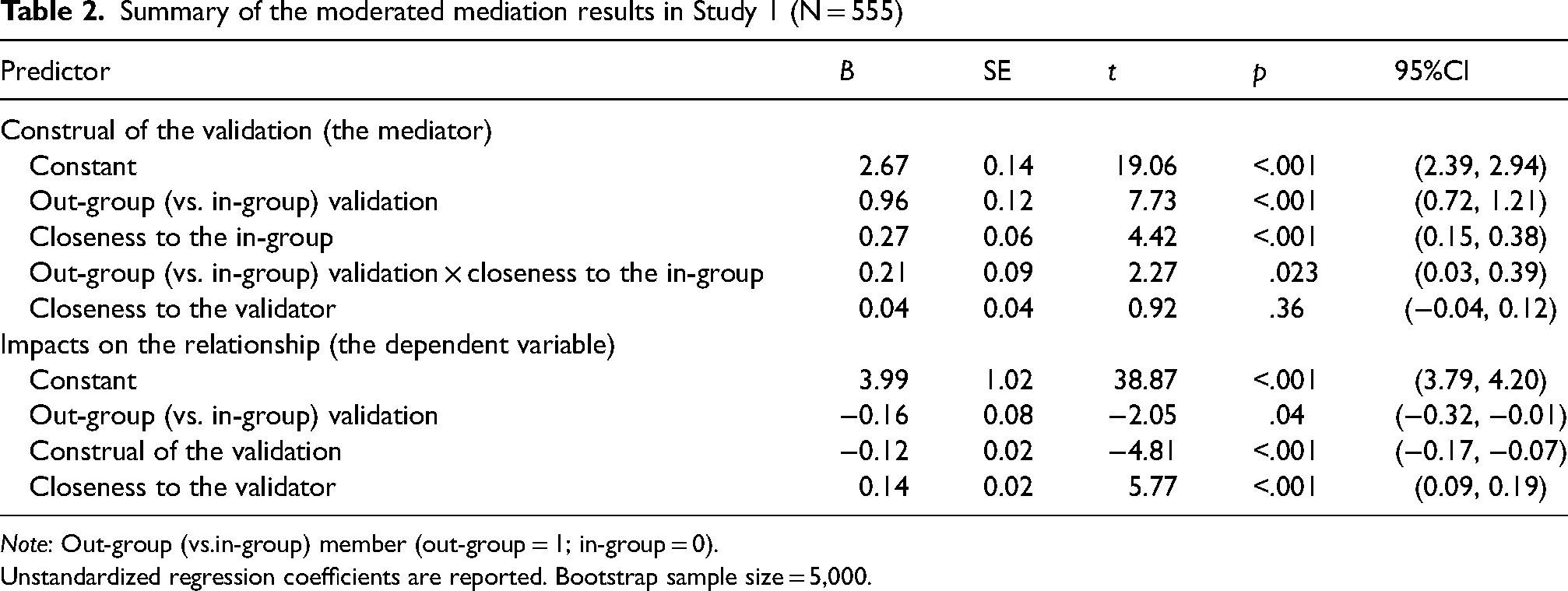
Note: Out-group (vs.in-group) member (out-group = 1; in-group = 0).
Unstandardized regression coefficients are reported. Bootstrap sample size = 5,000.
Discussion
Study 1 revealed that people were more likely to construe the out-group (vs. in-group) validation as criticism of their selves. Consequently, the out-group (vs. in-group) validation positively influenced their relationship with the validator. Furthermore, this effect was moderated by psychological closeness to the in-group. Specifically, the effect was greater when participants felt psychologically closer to the in-group. In contrast, it was smaller when participants felt less close to the in-group.
Study 2
In Study 1, participants reported their construal of the validation before reporting the impact on their relationship with the validator. Participants might only think about whether the validation felt like a criticism of their selves after they were asked to do so, which in turn influenced the relationship. To examine whether the effect remains when participants were not directly asked to think about whether they perceived the validation as a criticism of their selves, in Study 2 participants reported how the validation influenced their relationship with the validator before they reported their construal of the validation.
Besides, to further make sure that the validation was a mere repeat of their criticism, and did not include any new or additional criticism, participants were presented with the criticism they wrote down previously and imaged that the acquaintance validated their criticisms by repeating them and saying that what they had said was true and that he/she thought so too. We pre-registered Study 2 at https://osf.io/5u74m/?view_only = 3b58830fc0d7417fa4c2f6bd7f1eaf77.
Method
Participants
Based on the effect sizes obtained in Study 1, a Monte Carlo simulation following the procedure outlined by Chu and Chen (2012) revealed that we needed 400 participants to have 95% power to examine the moderated mediation effect at α = 0.05. Given that some participants might not follow the instructions and needed to be excluded as in Study 1, we decided to have approximately 450 participants. Four hundred fifty Chinese undergraduate students (208 males and 242 females) aged from 18 to 23 years old (M = 19.06, SD = 0.94, 11 did not report their age) participated in the study. Participants received course credit for their participation. Data from 8 participants were excluded from analyses because they did not write down any criticism about their university (4 participants) or did not follow the in-group vs. out-group validation instructions (4 participants). Consequently, 442 participants (204 males and 238 females) were included in the data analyses.
Materials and procedure
The vignettes and measures were identical to Study 1, except for two changes. First, participants reported how the validation influenced their relationship with the validator before reporting their construal of the validation. Besides, the criticisms participants wrote down earlier were presented to them, and then they imagined sharing the criticisms with an acquaintance from either an in-group or an out-group, who validated the criticisms by repeating them and saying that what they had said was true and that he/she thought so too. Specifically, participants imagined the acquaintance said “You are right. I think so, too” and repeated their criticisms.
Results
The two items measuring impacts on the relationship were highly correlated, r(440) = 0.64, p < .001. We calculated the mean of the two items.
Closeness to the validator again positively predicted the impacts of validation on the relationship between participants and the validator, B = 0.07, p = .01, 95% CI (0.02, 0.13). Again, the closer participants were to the acquaintance before the validation, the more positive impacts the validation had on their relationship with the acquaintance. Closeness to the validator was included as a control variable in the subsequent moderated mediation analyses. 3
Independent Samples T-Tests revealed that compared to the in-group validation (M = 4.62, SD = 0.97), the out-group validation (M = 4.07, SD = 0.74) negatively influenced the relationship with the validator, t(440) = 6.52, p < .001, d = 0.64, 95% CI (0.38, 0.71). Meanwhile, participants were more likely to construe the out-group validation as a criticism of their selves (M = 3.02, SD = 1.68) than the in-group validation (M = 2.70, SD = 1.51), t(412) = 2.08, p = .04, d = 0.20, 95% CI (0.62, 0.02). Thus, the findings replicated Study 1. See Figure 3 and Table 3.
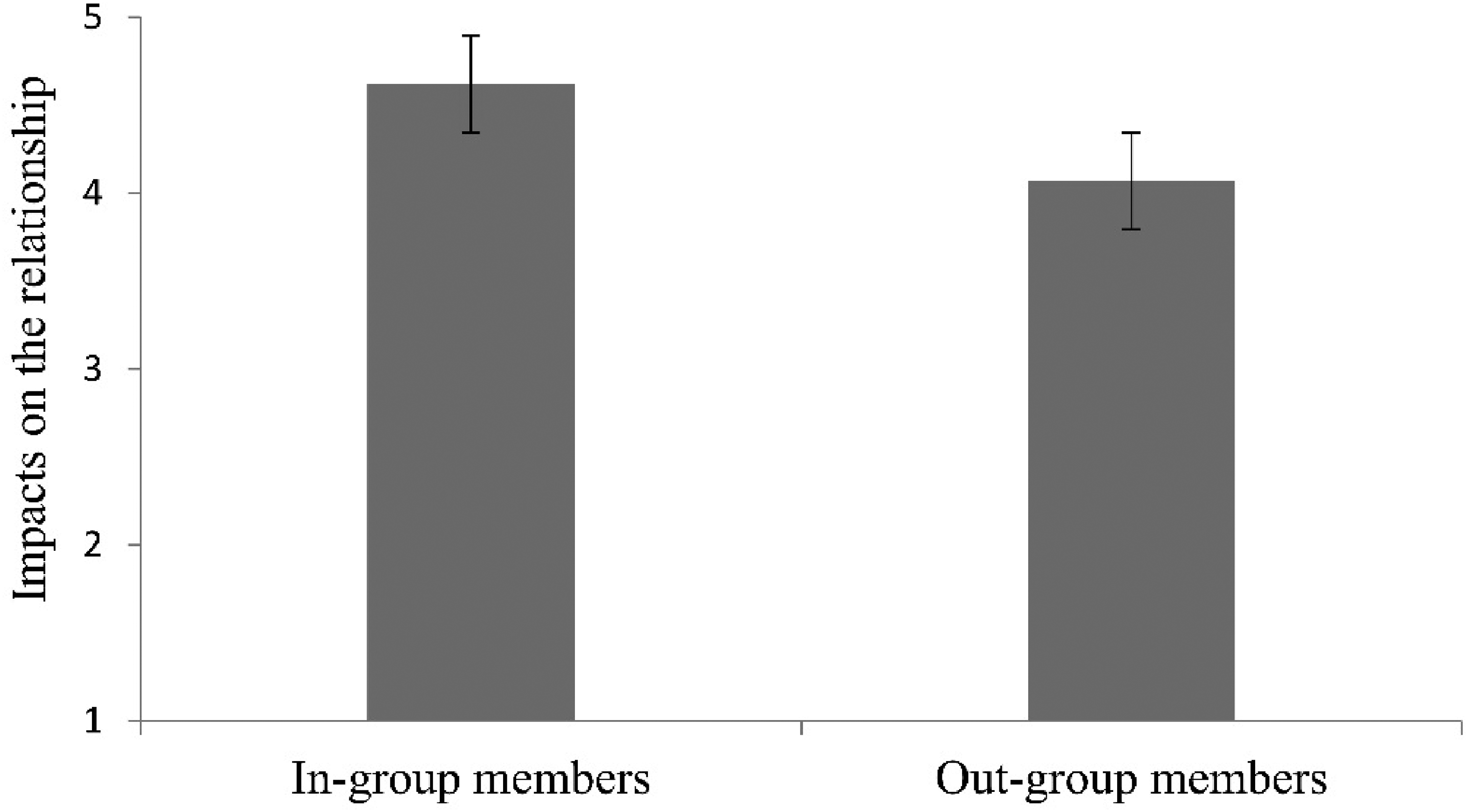
Impacts on the relationship in the out-group and in-group validation conditions in Study 2. Error bars are standard errors. Note: Impacts on the relationship: 1= “a lot less close” and “damaged a lot,” 5 = a lot closer” and “strengthened a lot.”
Descriptive statistics and correlations among all variables (controlling for closeness to the validator) in Study 2 (N = 442)
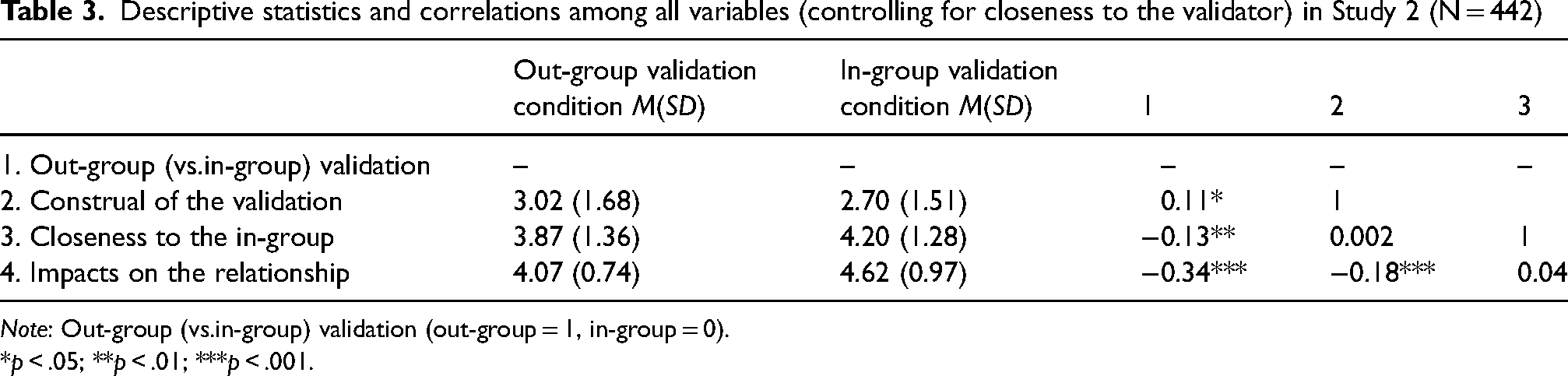
Note: Out-group (vs.in-group) validation (out-group = 1, in-group = 0).
*p < .05; **p < .01; ***p < .001.
Moderated mediation analysis
Similar to moderated mediation analysis in Study 1, Study 2 revealed that after controlling for closeness to the validator, out-group (vs. in-group) validation predicted construal of the validation, B = 0.38, p = .02, 95% CI (0.07, 0.69). Again, participants construed the out-group validation more as a criticism of their selves than in-group validation. Construal of validation in turn negatively influenced the relationship between participants and the validator, B = −0.08, p = .001, 95% CI (−0.13, −0.03). Importantly, the out-group (vs. in-group) validation by closeness to the in-group interaction was significant, B = 0.29, p = .01, 95% CI (0.06, 0.51). Out-group (vs. in-group) validation did not influence the construal of the validation when participants psychologically felt less close to the in-group (1.00 SD below the mean), B = −0.002, p = .99, 95% CI (−0.43, 0.43). However, as expected, out-group (vs. in-group) validation positively influenced construal of validation, for example, perceiving the validation more as a criticism of the self, when participants felt closer to the in-group (1.00 SD above the mean), B = 0.77, p < .001, 95% CI (0.33, 1.20). The indirect effect of out-group (vs. in-group) validation to impact on the relationship via construal of the validation was significant when participants felt closer to the in-group (1.00 SD above the mean), B = −0.06, 95% CI (−0.13, −0.02) and nonsignificant when they felt less close to the in-group (1.00 SD below the mean), B < 0.001, 95% CI (−0.04, 0.03). The contrast between the two indirect effects was significant, B = −0.06, 95% CI (−0.13, −0.01). See Table 4 and Figure 4. Thus, with a more rigorous design, Study 2 conceptually replicated the findings in Study 1.
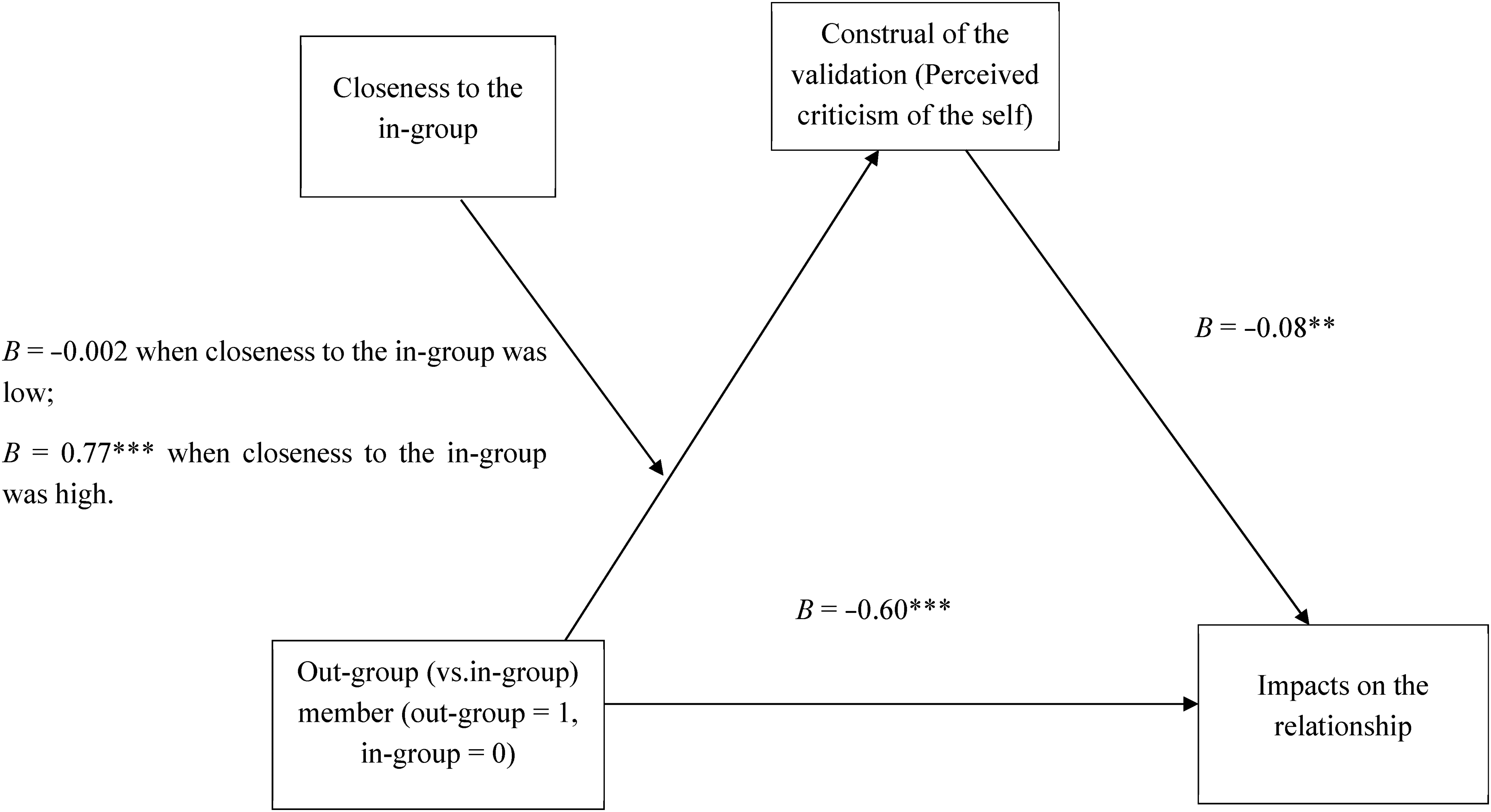
Closeness to the in-group moderated the effect of out-group (vs. in-group) validation on validation construal, which in turn impacted the relationship with the validator in Study 2.
Summary of the moderated mediation results in Study 2 (N = 442)
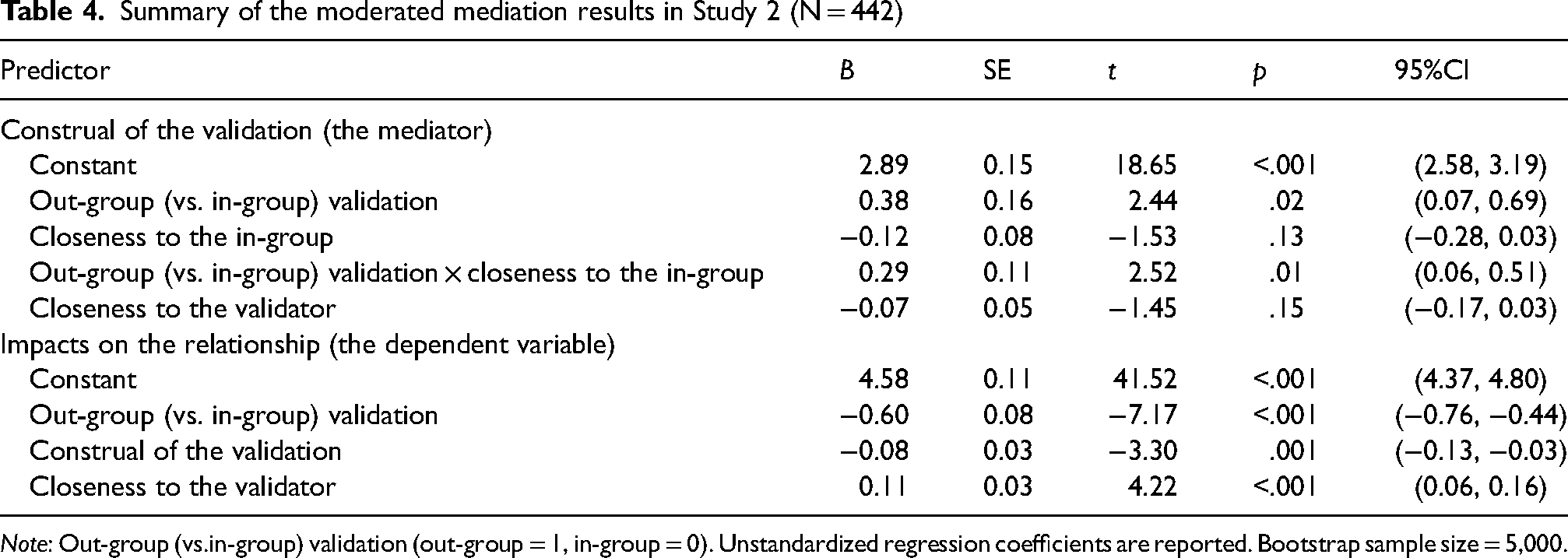
Note: Out-group (vs.in-group) validation (out-group = 1, in-group = 0). Unstandardized regression coefficients are reported. Bootstrap sample size = 5,000.
General discussion
In two studies, we found that people were more likely to perceive the validation of their criticism of an in-group as a criticism of their selves when the validator was an out-group member than when the validator was an in-group member. Consequently, compared to the in-group validation, the out-group validation negatively influenced their relationship with the validator. Furthermore, people's responses to the out-group vs. in-group validation were moderated by their psychological closeness to the in-group. Specifically, when people felt closer to the in-group, they were more likely to perceive the out-group (vs. in-group) validation of their criticism of an in-group as a criticism of their selves, and thus their relationship with the validator was negatively influenced. In contrast, when people felt less close to the in-group, the out-group and in-group validations were construed either similarly (Study 2) or the difference became smaller (Study 1). Consequently, the out-group (vs. in-group) validation had either a smaller influence (Study 1) or no significant influence (Study 2) on the relationship between participants and the validator when they felt less close to the in-group.
Interestingly, the present findings are seemingly inconsistent with findings in interpersonal responsiveness literature, which has primarily focused on the positive aspects of validation. According to the interpersonal responsiveness literature, when people have conflicts with others, they tend to respond positively to the third party's validations (e.g., Eaton et al., 2006; Eaton & Sanders, 2012; Segal & Fraley, 2016). For instance, when people have conflicts with a friend, they feel more positively toward another friend who provides validation, compared with those who minimize the conflicts and those who do not offer any support (Eaton, 2013). Similarly, when individuals reveal to their close partners their disputes involving antagonists outside the dyad, they feel positively toward their partners’ validation (Lemay et al., 2020). It is worth noting that in previous studies, informal third parties often refer to friends, family members, and trusted others of the discloser (Klein & Milardo, 2000), which may lead to an oversimplification of the role of informal third parties. In real life, the informal third party can be someone outside the relationship between the dyads, for example, out-group members. Extending the existing findings in previous studies, the present research revealed that validation is not always positively perceived. Instead, a validation can be viewed negatively when an out-group member validates people's criticism of their in-group. This is especially true when people feel closer (vs. less close) to their in-group because when people feel closer (vs. less close) to their in-group, the out-group validation of the criticism is more likely to be construed as criticism of the self.
The present research has important theoretical implications. The present study extended the intergroup sensitivity effect to situations where people initiated criticism of their in-group and others simply validated the criticism. The results showed the robustness of the intergroup sensitivity effect. People responded more negatively toward out-group validation than in-group validation even when they initiated the criticism themselves. Consequently, people felt that their relationship with the validator was more negatively influenced when the validator was an out-group (vs. in-group) member. Meanwhile, based on the tripartite model of self and social identity theory, the present study revealed that closeness to the in-group moderated the effects of out-group (vs. in-group) validation on construal of the validation, which in turn predicted the impact on the relationship.
The present research also has important practical implications for interpersonal interactions. Sometimes an outsider tries to improve the relationship with a target person by validating his or her opinions and arguments. However, such validation could backfire and harm the relationship when the outsider validates the target person's criticism of his or her in-group. This is especially true when the target person feels closer (vs. less close) to and identifies more (vs. less) with the in-group. The validation from an outsider might be construed as criticism of the target person. Simply put, an outsider's validation is not always viewed as a supportive response. It suggests that insiders may share their criticisms about their in-group with outsiders, but they may not prefer outsiders validate their criticisms. As an outsider, it might not be wise to be involved in the internal affairs of the insiders.
The present research has a few limitations. First, our participants were primarily emerging adults, most at the ages of 18 to 21 years old. Compared to middle or late adults, they are more influenced by their group identity (Arnett, 2004; Benson & Elder, 2011; Schwartz et al., 2013), which may make them more defensive toward out-group members’ validations. Our findings are observed in emerging adults and future studies could examine whether a similar effect can be observed with a more representative population. Second, all participants in the research were from China. The observed findings can potentially differ in other cultures. For instance, previous research has revealed that North Americans take less responsibility for in-group members and are concerned less with maintaining in-group harmony than the Chinese do (Oyserman et al., 2002). In a similar vein, collectivism is positively related to in-group favoritism, a phenomenon consistent with social identity theory (Fischer & Derham, 2016; Yamagishi et al., 1998). Meanwhile, some researchers proposed that Chinese people are more tolerant of negative evaluations from in-group members rather than from out-group members (Lv et al., 2017; Song et al., 2020). As indicated above, we speculated that Westerners (vs. Chinese) may respond less negatively to out-group validation of their criticism about their in-group. Future research can examine the potential cultural variation. Third, in the present research, the validator was an acquaintance of the participants. People's relationship with the validator might also influence the results. For example, people's responses toward the validator might be different if the validator was a stranger rather than an acquaintance. Similarly, the intergroup relationship between the group people belong to and the group the validator belongs to might also influence the results. For example, people may react more negatively when the group they belong to and the group the validator belongs to are in competitive, rival, or antagonistic positions. Future research can examine these possible influences. Finally, to make participants’ criticism about their university authentic, participants were free to write down their criticisms based on their own discretion. They wrote down a wide range of diverse criticisms about their university. Consequently, it is not feasible to provide direct validations of those different criticisms, for example, the acquaintance would not be able to repeat these different criticisms to the participants. We thus asked participants to imagine that the acquaintance repeated and validated their criticisms. Previous studies have shown that people tend to have similar responses to imagined situations and real situations that they face (Bolle & Kemp, 2009; Kühberger et al., 2002). That said, future studies could examine the effects with participants directly receiving actual validation from the validators.
Conclusion
Although validating other people's opinions usually enhances interpersonal relationships, it may negatively influence interpersonal relationships when an outsider (vs. an insider) validates people's criticism of a group they belong to. People may remain more defensive toward out-group (vs. in-group) validation and construe the validation as a criticism of themselves. An outsider thus should be more cautious when being involved in the internal affairs of another group.
Footnotes
Acknowledgments
We thank Dr. Han Zhang, Dr. Juan-juan Zhang, Dr. Yi Yang, Prof. Lin Yu, and Prof. You-ping Chen for their help in data collection.
Declaration of conflicting interests
The authors declared no potential conflicts of interest with respect to the research, authorship, and/or publication of this article.
Ethical statement
The authors report there are no competing interests to declare. The research adheres to the APA ethical principles as well as the ethical guidelines in Macao, S.A.R., China.
Funding
The authors disclosed receipt of the following financial support for the research, authorship, and/or publication of this article: This work was supported by the Southwest University of Science and Technology (grant number 24sxb05).
