




Abstract
People with disabilities often encounter numerous obstacles in securing and maintaining employment, as well as achieving success in their professional roles. This study initially examined how workplace ostracism influenced self-views and workplace behaviors of disabled employees. More importantly, using belief in a just-world theory as the overarching framework, we further explored whether these linkages were contingent on personal belief in a just world (BJW), which was considered to be a personal contract between the individual and the social world (i.e., the world is fair to me). A total of 1,605 Chinese employees with different categories and degrees of disabilities were invited to participate in an online survey. The results showed that self-esteem partially mediated the relationship between workplace ostracism and workplace deviance. Specifically, workplace ostracism had a detrimental effect on the self-esteem of disabled employees, subsequently leading to engagement in deviant behaviors at work. Furthermore, personal BJW played a moderating role in the links between ostracism, self-esteem, and deviance. When employees with disabilities held stronger BJW, they tended to experience more significant adverse effects of workplace ostracism, resulting in lower self-esteem and increased deviant behaviors. Supporting a first-stage moderated mediation model, the indirect effect of workplace ostracism on deviance through self-esteem was contingent on BJW. This indirect effect was more pronounced when participants exhibited higher levels of BJW. Our findings highlight the importance of fair treatment and the meaningfulness of personal BJW by uncovering diverse response patterns to workplace ostracism among employees with disabilities with varying levels of BJW.
Keywords
Introduction
Disabled people are eligible for a wide range of job positions (e.g., education and customer service), so numerous countries have enacted legislation and policies to ensure their employment opportunities. For instance, China has implemented the People with Disabilities Act of the People's Republic of China (2008), the Employment Promotion Law (2008), and the Regulations on the Employment of the Disabled (2007). Companies that hire qualified employees with disabilities can also benefit from various preferential tax policies. While a low level of labor-market participation typically signals social exclusion or injustice (Thornton, 2005), it is important to acknowledge that disability is often accompanied by stigma. Employees with disabilities are frequently portrayed as less capable, valuable, and productive than non-disabled ones (Jammaers et al., 2016). Due to potential ableism and discrimination, disabled employees may encounter a lack of social acceptance and ostracism within organizations (Barnes & Mercer, 2016).
Ostracism (sometimes interchangeable with “rejection” or “exclusion”) is a painful experience and silent treatment that involves being ignored, isolated, or excluded by others without excessive explanation or experiencing explicit negative attention (Williams, 2007, p. 429). Workplace ostracism occurs “when an individual or group neglect to take actions that engage another organizational member when it is socially appropriate to do so” (Robinson et al., 2012, p. 206). Focusing on non-disabled employees, workplace ostracism has received sufficient academic attention (see Howard et al., 2020, for a review). Leadership, along with personal and contextual characteristics such as personality and social support, have been identified as triggering factors for workplace ostracism (Chang et al., 2021). Moreover, workplace ostracism often leads to maladaptive responses among victims. It is likely to impair personal well-being, decrease job performance, increase negative attitudes, and induce counterproductive workplace behaviors (CWBs) particularly avoidance-oriented CWBs (Ferris et al., 2016; Kwan et al., 2018).
Despite the prevalence of workplace ostracism among disabled employees, its influences on this demographic remain understudied. Among the various negative responses to workplace ostracism, workplace deviance warrants attention due to its potential to create a vicious cycle. Deviant workplace behaviors refer to voluntary actions that violate organizational norms, posing a threat to the well-being of both the organization and its members (Bennett & Robinson, 2000). Deviance may aggravate the stigma or negative stereotypes people associate with disabilities and lead to further ostracism (Howard et al., 2020). Ostracism and aggression are mutually causative, with each feeding the other and causing a spiraling escalation of both (Warburton et al., 2006). Thus, by examining disabled employees’ psychological and behavioral responses, we clarified how workplace ostracism indirectly induced workplace deviance via the focal employees’ self-evaluation.
Even within the same situation, individuals may hold diverse subjective perceptions and exhibit varied responses, depending on to which extent they believe that “the world is just and fair” and “they will get what they deserve,” namely, belief in a just world (BJW). There are general and personal BJW. People with high general BJW tend to see their world as predictable, orderly, and meaningful (i.e., the world is fair to everyone), while those with high personal BJW are inclined to consider their own experience fair (i.e., the world is fair to me; Dalbert, 1999). In our study, we focused on personal BJW since both disability and workplace ostracism are personal experiences encountered in daily life, and Dalbert (1999) emphasized the importance of personal BJW for mental health and coping.
Previous research has highlighted the adaptive functions of BJW (see Bartholomaeus & Strelan, 2019, for a review). Associated with greater well-being and less intense negative emotions, BJW has proven instrumental in regulating emotions during challenging times, such as the COVID-19 pandemic (Wang et al., 2021a). Individuals with higher BJW also tend to experience negative affect less frequently, even in the face of violence (Dzuka & Dalbert, 2007). Moreover, BJW serves as a cognitive resource, helping rationalizing unfair experiences. Research by Donat et al. (2018) demonstrated that students with higher personal BJW were more likely to perceive their teachers’ behavior as fair and were less prone to reporting instances of bullying.
Although BJW has been studied predominantly among undergraduates and young adults, studies have also revealed the benefits of BJW for employees, including enhancing evaluations of working life (e.g., organizational commitment), increasing organizational self-efficacy and job performance, and boosting mental health (e.g., low emotional exhaustion; Otto & Schmidt, 2007; Otto et al., 2009). For example, Cheng et al. (2019) indicated that bolstering employee belief in justice was an effective way to increase organizational voice behaviors. BJW also help alleviate driver's anger and aggression, particularly when BJW is violated (Nesbit et al., 2012).
We explored the role of disabled employees’ BJW to make two contributions. First, relatively little research has been devoted to BJW and individuals’ reactions to their own victimized or disadvantaged state (Hafer & Sutton, 2016). Unlike most previous studies, from the perspective of BJW, we attempted to test the boundary conditions in the linkage between workplace ostracism and the psychological and behavioral responses among disabled employees, instead of examining the immediate consequences of individual variations in BJW. Second, both disabilities and being ostracized in the workplace can be viewed as unjust fates. We have known little about what would happen when individuals with varying levels of BJW experience repeated negative events. BJW indicates people's awareness of justice or injustice in their daily lives. With repeated and prolonged exposure to negative events, people with high personal BJW may be sensitive to perceived victimization (Cubela Adoric & Kvartuc, 2007). BJW associated with an elevated awareness of injustice may also increase the likelihood of engaging in deviant behavior due to the negative emotions (e.g., anger) stemming from the divergence between reality and expectation (Bennett et al., 2018).
The current study
This study aimed to clarify the association between experiencing ostracism, diminished self-esteem, and heightened engagement in workplace deviant behaviors among disabled employees. Furthermore, we investigated whether the influences of workplace ostracism were contingent upon disabled employees’ personal BJW.
Hypotheses development
Disabled employees’ responses to workplace ostracism
Being treated unfairly by others is likely to be associated with feelings that one is less worthy than those who receive fair treatment, resulting in negative evaluations of one's self-worth and standing in an organization (Bies & Moag, 1986). Given that self-views tend to fluctuate with the quality of social interactions, workplace ostracism, as a kind of interpersonal mistreatment enacted by supervisors or colleagues, inevitably threatens focal employees’ self-esteem (i.e., “the extent to which one prizes, values, approves, or likes oneself”; Blascovich & Tomaka, 1991, p. 115; Ferris et al., 2008).
Ostracism is particularly devastating for the self-esteem of employees with disabilities. First, the victim may not know why they are being ostracized and make attempts to seek an explanation for what happened to them. Consequently, it is easy for employees with disabilities to mentally catalog the negative characteristics they believe could have resulted in ostracism, such as limb deformity, functional impairments (e.g., visual and hearing impairment), and even stigmatized low competencies (Ferris et al., 2015). Second, people may look through others’ eyes to evaluate their values, and an individual's high self-esteem relies on positive external feedback, as well as others’ acknowledgment, affection, and respect. Even when not being ostracized, people with disabilities must constantly cope with assaults on their self-esteem generated by negative societal attitudes (Nosek et al., 2003). The threats from workplace ostracism will further diminish their self-esteem.
Diminished self-esteem plays an important role in predicting aggressive behavior and violence due to two key factors: motivations of retaliation or revenge and insufficient self-regulatory abilities (Smart Richman & Leary, 2009). On the one hand, hostile responses are likely to be chosen as an expression of the self's rejection of esteem-threatening evaluations received from others in order to reduce or forestall the experience of low self-esteem. That is, as an act of revenge, demonstrations of deviant behavior help validate the sense of self of disabled employees at the cost of the organization and other organizational members. On the other hand, esteem threats are resource-consuming. Compared with non-disabled employees, employees with disabilities generally lack opportunities and resources in the workplace. When limited self-regulatory resources are used to deal with threatening events and negative feelings associated with lowered self-esteem, it is difficult for these employees to refrain from deviant and even unethical acts (Lin et al., 2016). Thus, we expected that workplace ostracism leads to an unfolding sequence of responses:
BJW as a moderator in the workplace ostracism−deviance relation
Existing research has proposed that embracing a strong BJW can act as a buffer against the adverse effects of negative events and assist individuals in rationalizing unfair experiences. However, our anticipation is of a distinct pattern for disabled employees, wherein those with higher BJW are more prone to displaying psychological and behavioral response after experiencing workplace ostracism.
People with high BJW tend to believe that the world is a just place where people get what they deserve and deserve what they get (Dalbert, 1999). When such a belief system is challenged by repeated experiences of injustice, actions should be taken to protect and maintain BJW. There are various ways to defend BJW (Hafer & Rubel, 2015), such as implementing physical and psychological distancing, compensatory rationalization, and reactions/displaced reactions to the perpetrator of injustice. Strategies that require few efforts but are highly available and effective may be pursued. Workplace ostracism occurs during the daily interpersonal interactions. Cooperation and communication are necessary for most job tasks, so it is difficult and unrealistic to distance oneself from others in the workplace. Compensatory rationalization involves offsetting either a positive or negative undeserved event with a negative or positive outcome. This strategy is applicable for minor injustices that people experience in everyday life rather than an extended or lifelong situation (e.g., having a disability) and repetitious exposure to injustices (e.g., a disabled employee being further ostracized by organizational members). Finally, transgressive behaviors toward perpetrators or organizations become one possible way to protect BJW.
People perceive improvement in a personal just world over time (Busseri et al., 2020). An upward subjective trajectory (i.e., a belief that life becomes increasingly satisfying over time) also applies to people's perceptions of justice in their lives. Employees with disabilities who have high BJW may have already experienced different kinds of injustice (e.g., suffering from their disabilities and encountering difficulties in obtaining employment). They expect that they deserve fair treatment in the future or in other aspects. Unfortunately, workplace ostracism violates such expectations. Then, as a punishment for violations of justice, antisocial or transgressive behaviors become acceptable in the eyes of the focal person (Faccenda et al., 2009). More importantly, disabilities, barriers to gaining employment, and workplace mistreatment represent multiple and repeated exposures to injustice for employees with disabilities. The frequency of perceived cases of injustice increases the sensitivity and awareness of workplace ostracism among individuals with high BJW, leading to strong responses (Schmitt et al., 1995). Thus, we proposed the second hypothesis:
BJW as a moderator in the workplace ostracism−self-esteem relation
A negative outcome such as workplace ostracism is deemed less unfair when it is assumed to be caused by one's own actions or characteristics (e.g., disabilities or a lack of ability). It has been found that strong believers in a just world are more likely to minimize the role of external agents and make stronger internal attributions for negative outcomes in order to protect their BJW (Hafer & Correy, 1999). While attributing ostracism to internal factors is another way to maintain BJW, the side effect is that victims may feel worse about themselves, resulting in poorer self-esteem. Indeed, researchers have suggested the psychological costs posed by threats to one's BJW. For example, threats to one's BJW can bring “troubles” (e.g., impaired self-esteem), especially to strong believers who encounter repetitive events indicating that the world is not just and orderly (Ramos et al., 2014).
According to the worldview verification model of responses to discrimination (Major et al., 2007), worldviews refer to core assumptions and beliefs about the way the world works, and they play an important role in how people appraise and adjust to negative life events. When an event aligns with one's worldview, it serves as a buffer, mitigating the impact on self-esteem and potentially enhancing it. Conversely, if negative experience contradicts worldview, it poses a threat to an individual's self-esteem. For example, after reading materials about gender discrimination, women who strongly endorsed system-justifying beliefs reported lower self-esteem (Major et al., 2007). Building on this reasoning, workplace ostracism contradicts the tenets of BJW. The stronger an individual's endorsement of BJW, the more likely they respond to workplace ostracism with diminished self-esteem.
BJW encourages optimistic bias about the future. Individuals with high BJW tend to predict that they will attain a valued outcome and avoid an undesirable one. Strelan and Callisto (2020) suggested that such optimistic and biased thinking might result from dispositional optimism, emphasis on social comparison and global sense of control, and especially activated self-focus. It is likely that negative or undesirable events are more threatening to stronger believers in a just world, since these events violate their optimistic prediction and they put more focus on the self. In sum, we hypothesized that workplace ostracism might pose more risks on self-esteem of disabled employees who hold higher BJW:
A first-stage moderated mediation model (see Figure 1), stipulating that the mediating effect of self-esteem operates contingently on BJW, was further proposed.
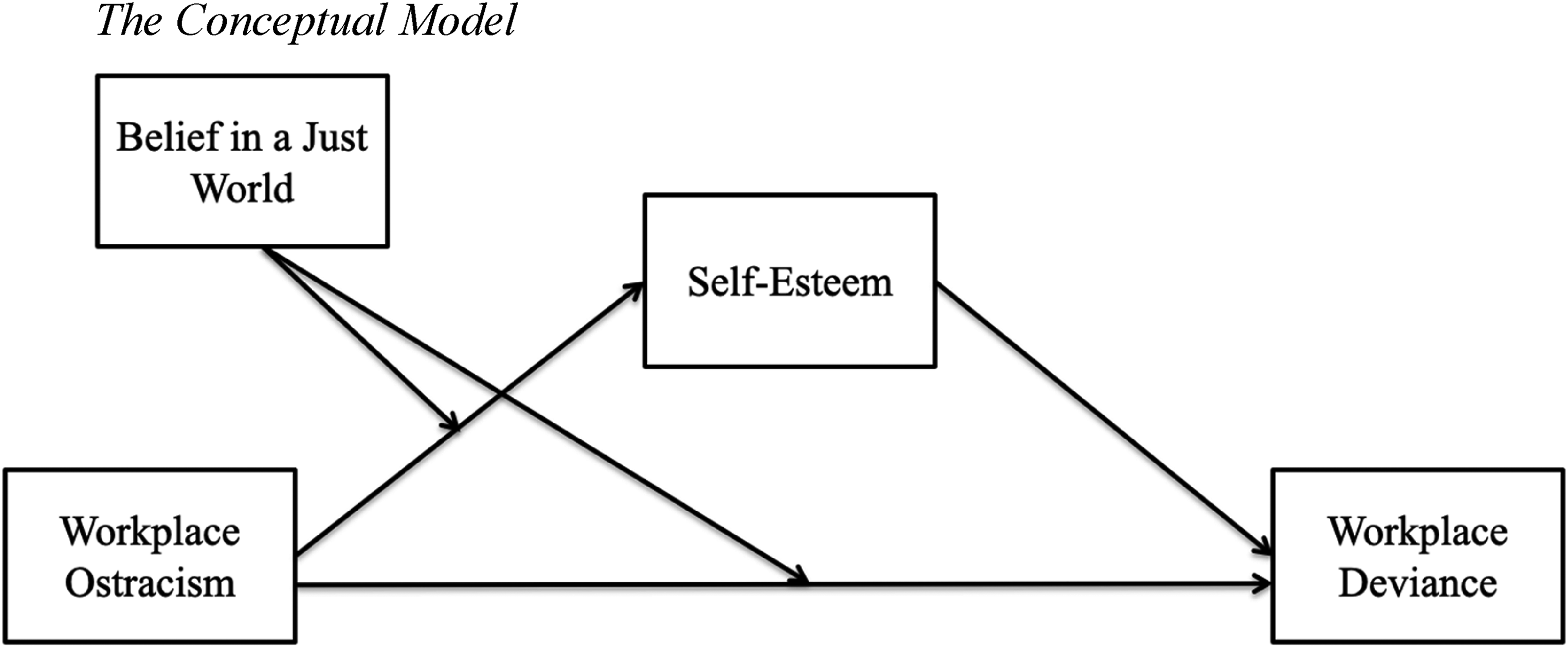
The conceptual model.
Method
Participants and procedure
We collected data via an online survey platform (https://www.wjx.cn). The survey link was generated and distributed to disabled employment service centers in various provinces and cities of China. The approached affiliates further delivered it to grassroots organizations in various districts and counties. Then, the grassroots organizations helped post the link on social media accounts. Individuals with disabilities were invited to complete the survey, and blind people could also participate by using a special kind of mobile phone.
We first screened the data according to participants’ type of economic activity. To ensure that there were enough workplace interactions between disabled and non-disabled employees, only full- or part-time employees working in enterprises that were required to employ a certain proportion of persons with disabilities due to a diversity policy were included. Ultimately, we obtained valid data from 1,605 disabled employees (see Table 1 for detailed demographic information). Their ages ranged from 18 to 66 years (Mage = 37.10, SD = 8.60), and 45.5% of them were female (n = 731). More than half of the participants (63.4%, n = 1018) had obtained associate or higher educational degrees. Concerning disability categories, 61.1% of participants (n = 981) reported having physical disabilities, while 30.5% (n = 489) reported visual or auditory disabilities.
Demographic information of participants.
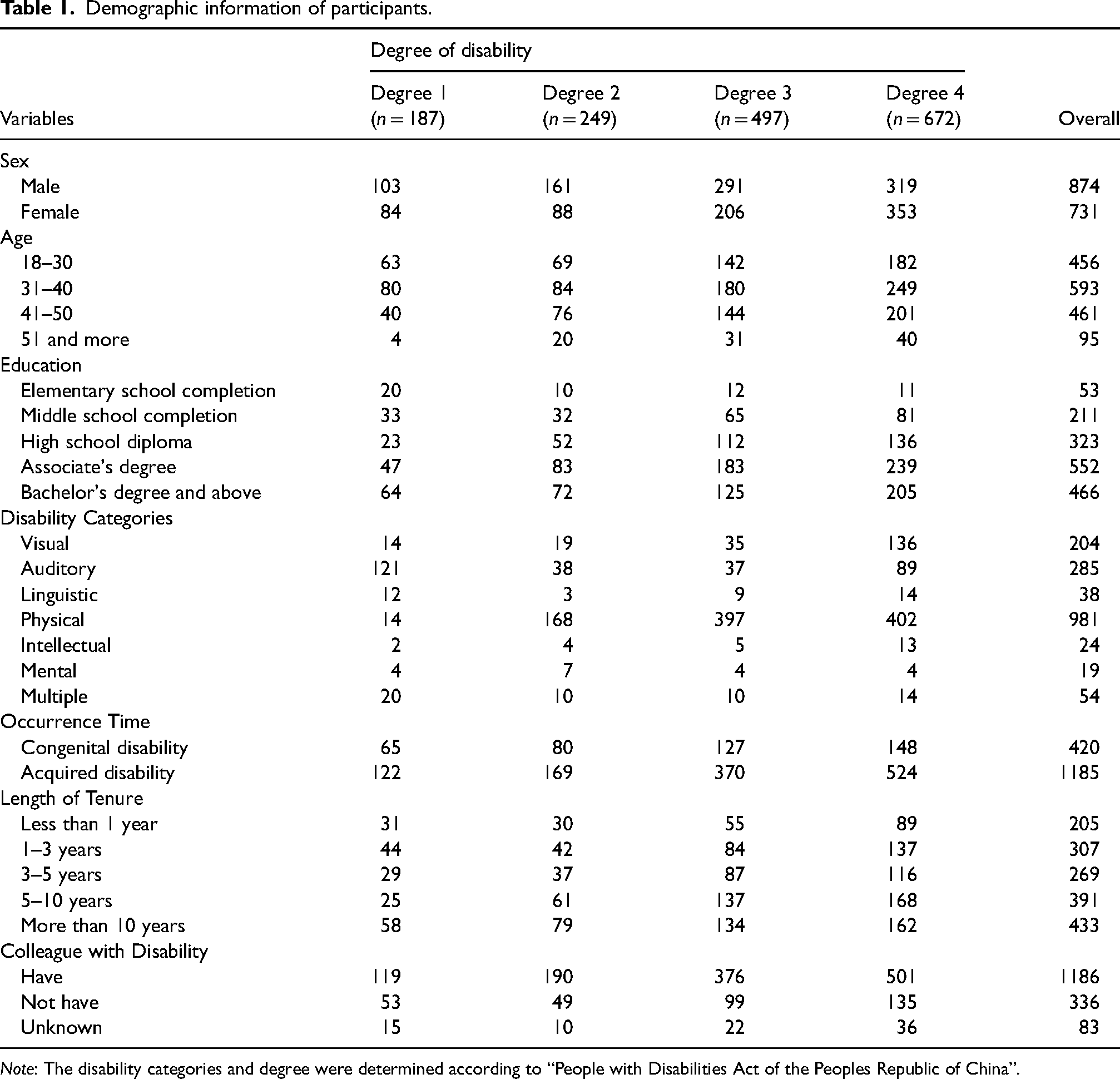
Note: The disability categories and degree were determined according to “People with Disabilities Act of the Peoples Republic of China”.
Measures
Workplace ostracism
Jiang et al. (2011) revised the Workplace Ostracism Scale of Ferris et al. (2008), demonstrating satisfactory reliability and validity among Chinese samples (e.g., Wang et al., 2021b). We used six items with the highest factor loadings, assessing participants’ perceived workplace ostracism from both leaders (e.g., “Even if I am competent, my leader still does not assign important tasks to me”) and colleagues (e.g., “When I ask my colleagues for help when I am in trouble, they ignore me or give me perfunctory answers”). All the items were rated on a 5-point Likert scale (1 = never, 5 = always; α = .93).
Workplace deviance behavior
We adapted six items from Bennett and Robinson's (2000) measure to capture both interpersonal and organizational workplace deviance (e.g., “Acted rudely toward someone at work” and “Put little effort into work”). The participants responded to each item based on a 5-point Likert scale (1 = never, 5 = always; α = .92).
Belief in a just world
BJW was assessed with the three-item Personal Belief in a Just World Scale (e.g., “I think the world is basically a just place”) (Dalbert, 1999). It is a 5-point Likert scale (1 = totally disagree, 5 = totally agree; α = .76).
Self-esteem
Five items from Rosenberg's (1965) Self-Esteem Scale were used. The participants rated the five statements, for example, “On the whole, I am satisfied with myself,” via a 5-point Likert scale (1 = totally disagree, 5 = totally agree; α = .71).
Control variables
We included demographic variables (e.g., age, sex, subjective social economic status, tenure) and disability characteristics (e.g., degree of disability, occurrence time) as covariates (Howard et al., 2020). The MacArthur Scale of Subjective Social Economic Status (SES) (a 10-point ladder scale, 1 = the lowest social status to 10 = the highest social status) was used to measure SES (M = 4.14, SD = 2.29; Adler et al., 2000).
Results
Since all data were self-reported and collected at a single time point, we initially conducted Harman's one-factor test to assess common method bias (CMB). The results identified four factors with eigenvalues greater than 1, and the maximum factor explained 28.39% of the variance. Confirmatory factor analyses also revealed acceptable psychometric properties of our four-factor measurement model, χ2 = 981.33, df = 158, CFI = .963, TLI = .956, RMSEA = .057. These findings indicated that the items effectively captured each construct and our results were not influenced a lot by CMB.
The results of descriptive analyses are presented in Table 2. There was a significantly positive association between workplace ostracism and deviant workplace behavior (r = .65, p < .001). Self-esteem was also negatively correlated with both workplace ostracism (r = −.33, p < .001) and deviant workplace behaviors (r = −.34, p < .001).
Results of descriptive analyses.
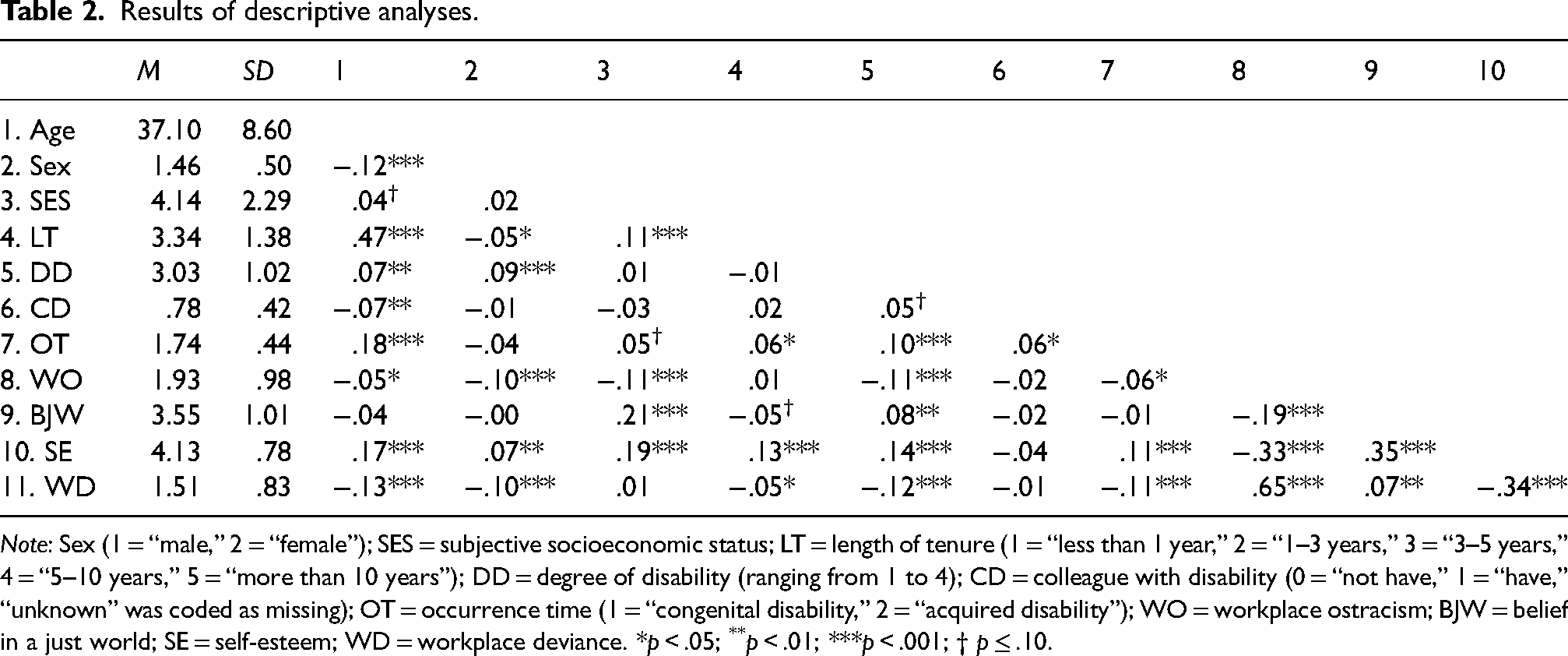
Note: Sex (1 = “male,” 2 = “female”); SES = subjective socioeconomic status; LT = length of tenure (1 = “less than 1 year,” 2 = “1–3 years,” 3 = “3–5 years,” 4 = “5–10 years,” 5 = “more than 10 years”); DD = degree of disability (ranging from 1 to 4); CD = colleague with disability (0 = “not have,” 1 = “have,” “unknown” was coded as missing); OT = occurrence time (1 = “congenital disability,” 2 = “acquired disability”); WO = workplace ostracism; BJW = belief in a just world; SE = self-esteem; WD = workplace deviance. *p < .05; **p < .01; ***p < .001; † p ≤ .10.
We first examined the mediating role of self-esteem by conducting linear regression analyses (see Table 3). Workplace ostracism negatively correlated with self-esteem (β = −.23, SE = .02, t = −12.21, p < .001) and positively correlated with workplace deviance (β = .54, SE = .02, t = 32.23, p < .001). Workplace ostracism and self-esteem were then entered into the equation together. The coefficient of workplace ostracism remained significant but decreased (β = .50, SE = .02, t = 29.17, p < .001), while the coefficient of self-esteem was also significant (β = −.15, SE = .02, t = −6.82, p < .001). The results of using PROCESS Model 4 further revealed a significant indirect effect (effect = .04, SE = .01, 95% CIs = .02 to .05). The above results partially supported H1.
Results of the mediating role of self-esteem.
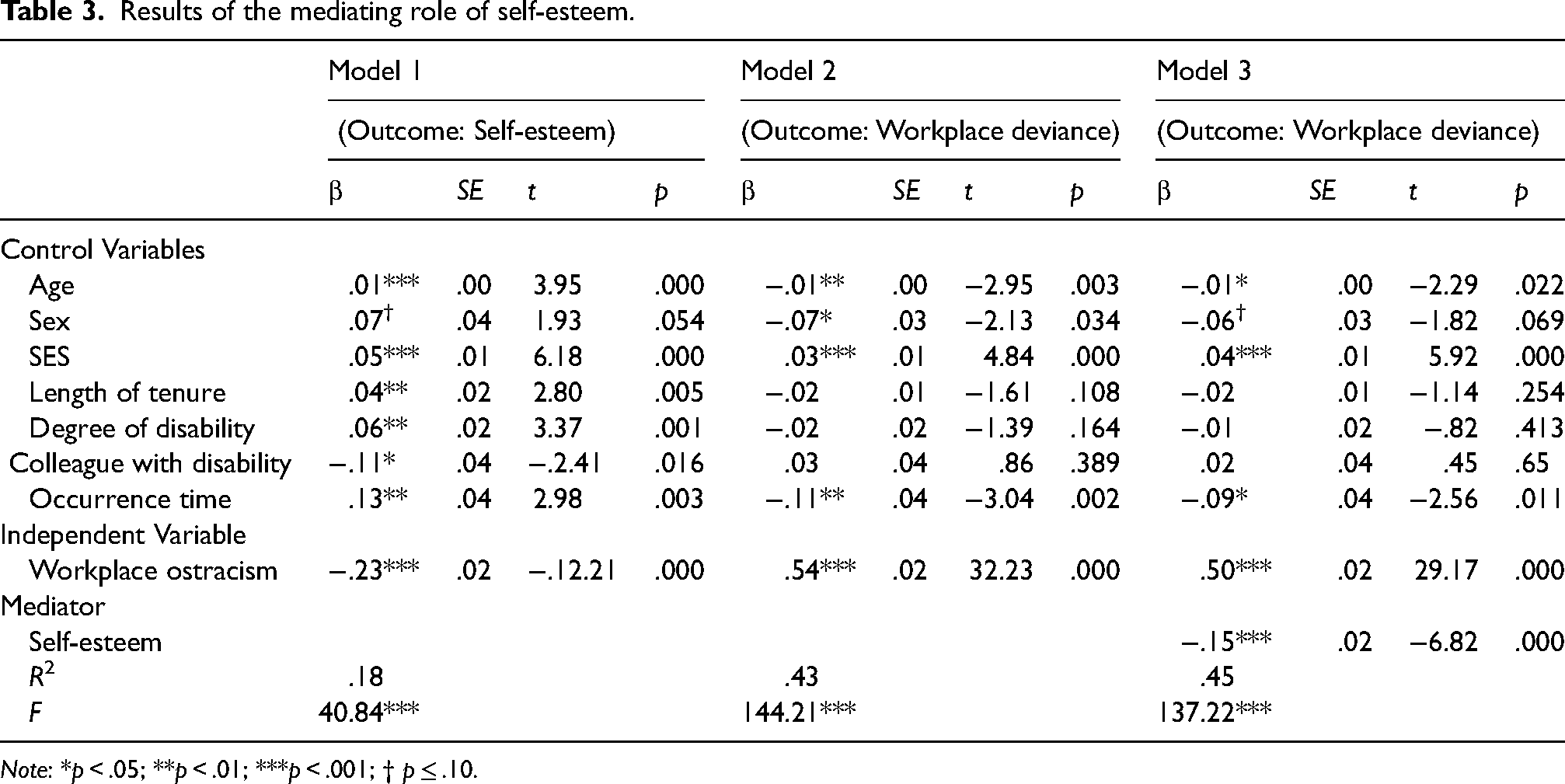
Note: *p < .05; **p < .01; ***p < .001; † p ≤ .10.
Next, the moderating roles of BJW in the ostracism−deviance and ostracism−self-esteem relations were tested by using PROCESS Model 1 (see Table 4). When the dependent variable was workplace deviance, workplace ostracism × BJW was significant (β = .15, SE = .01, t = 12.06, p < .001) and accounted for an additional 4% of the variance in workplace deviance. We then separated BJW into high and low groups based on scores that were one standard deviation above and below the mean. Workplace ostracism was positively related to workplace deviance in both groups; however, the simple slope in the high BJW group (βsimple = .65, SE = .02, t = 33.94, p < .001) was steeper than that in the low BJW group (βsimple = .33, SE = .02, t = 15.23, p < .001). Figure 2 illustrates this pattern.
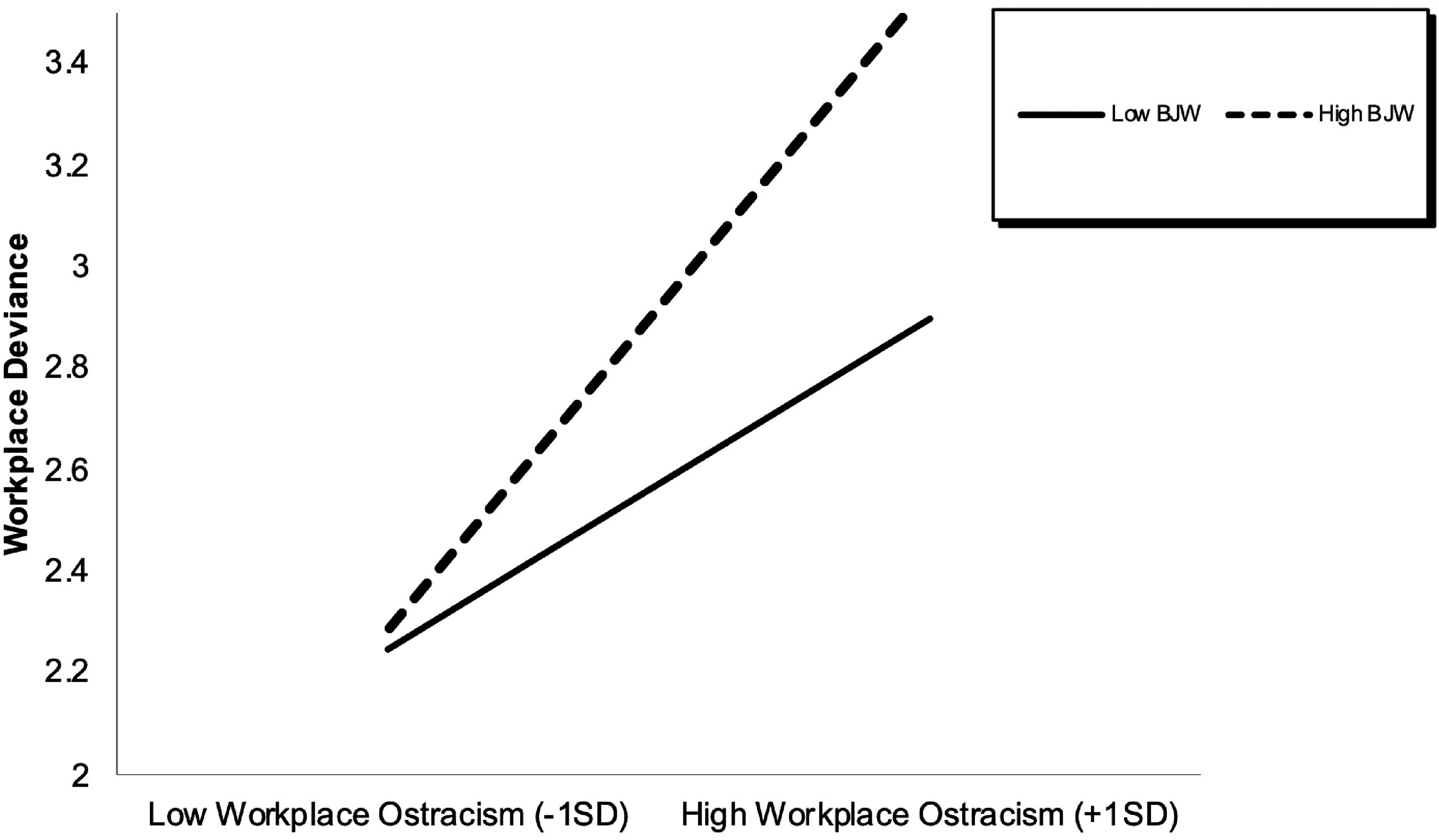
The Interactive effect of workplace ostracism × BJW on workplace deviance.
Results of the moderating roles of BJW.
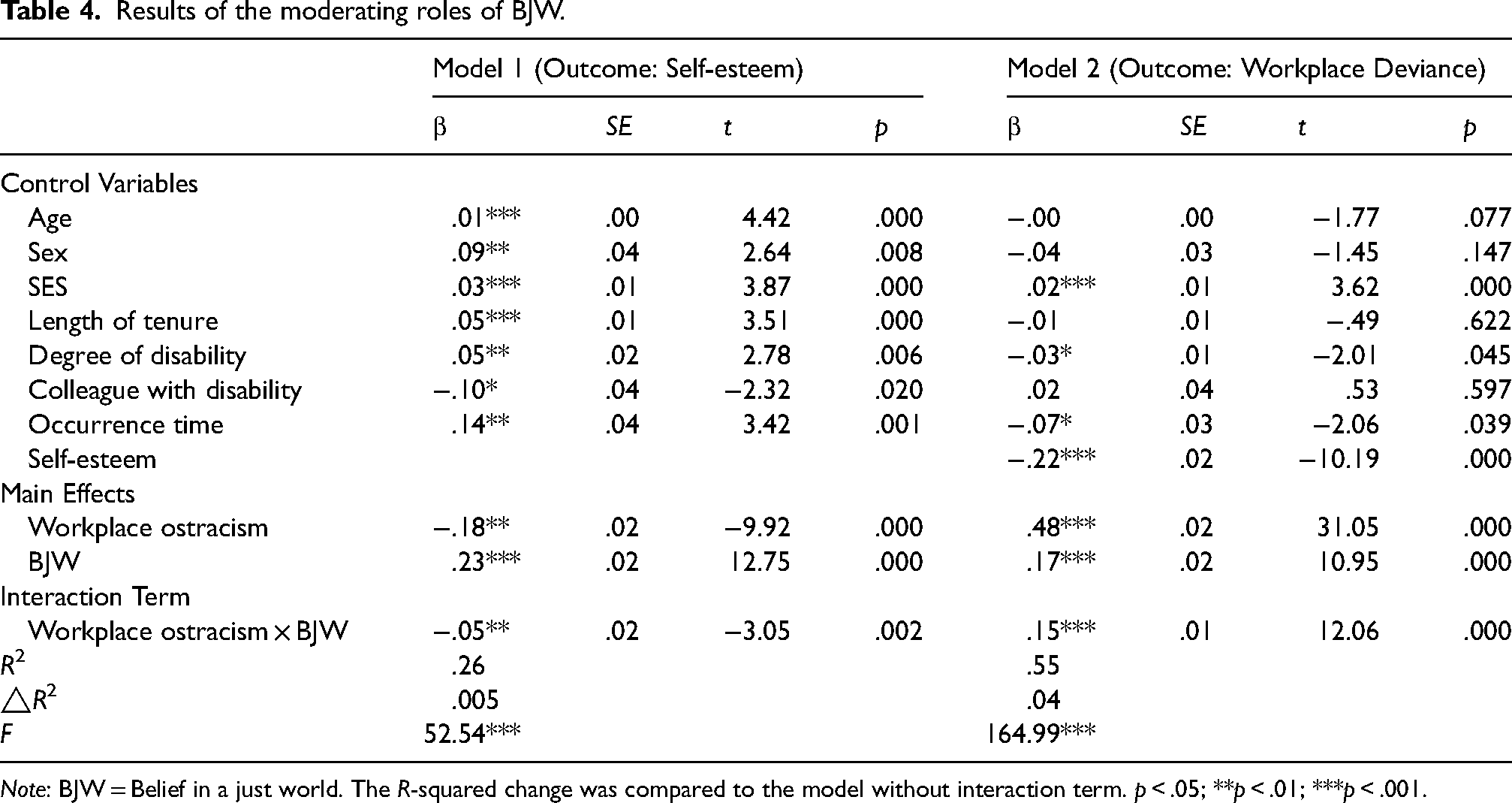
Note: BJW = Belief in a just world. The R-squared change was compared to the model without interaction term. p < .05; **p < .01; ***p < .001.
When the dependent variable was self-esteem, workplace ostracism × BJW was also significant (β = −.05, SE = .02, t = −3.05, p = .002), accounting for an additional .5% of the variance in self-esteem. The results of the simple slope test (see Figure 3) showed that workplace ostracism significantly and negatively corelated with self-esteem among disabled employees with high BJW (βsimple = −.23, SE = .02, t = −10.38, p < .001). However, the focal relation became weaker for those with low BJW (βsimple = −.13, SE = .03, t = −5.17, p < .001). H2 and H3 were confirmed.
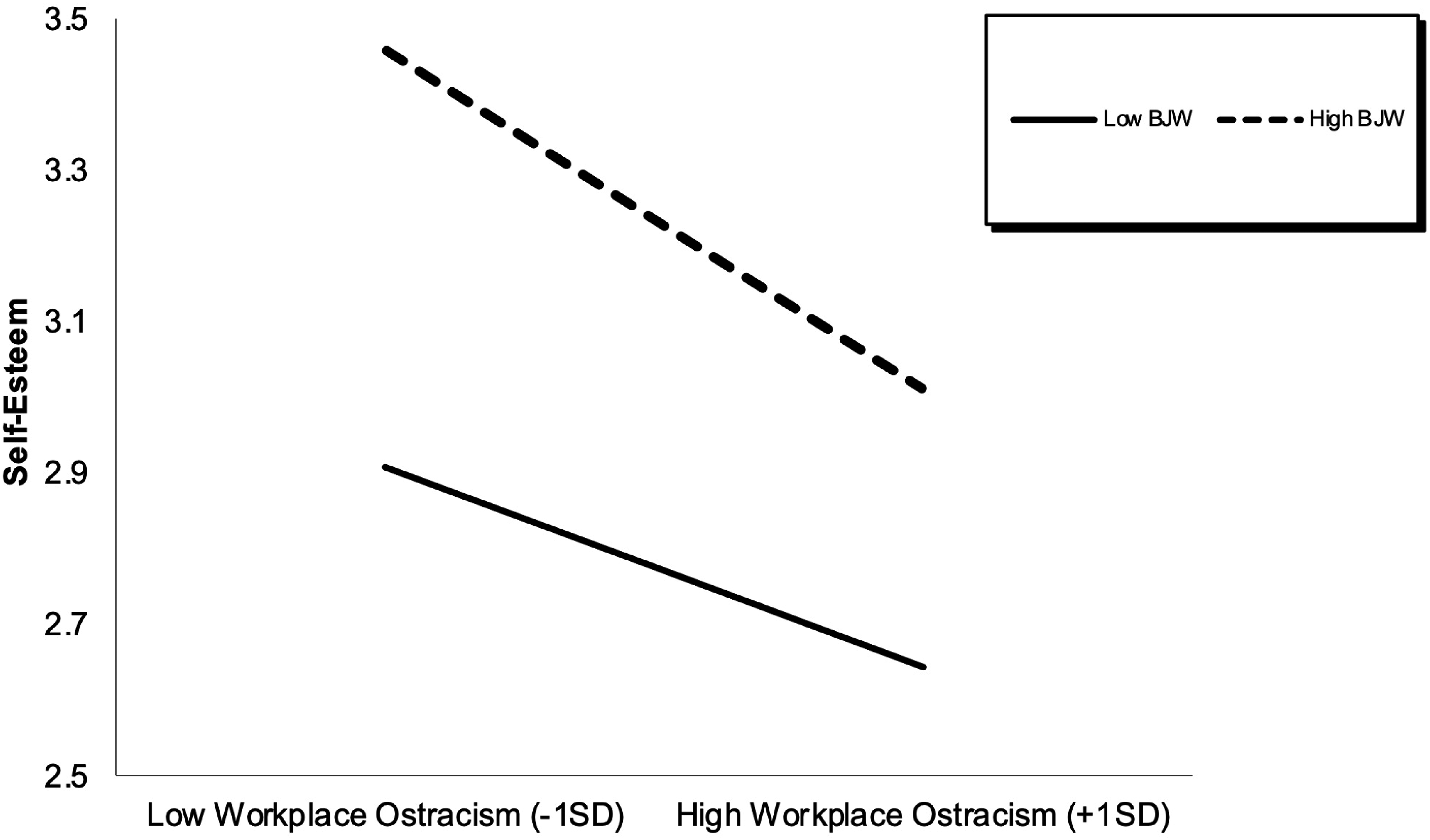
The interactive effect of workplace ostracism × BJW on self-esteem.
Finally, PROCESS Model 8 was employed to explore whether the mediating effect of self-esteem was conditional and depended on BJW (i.e., H4). The significant coefficient of the workplace ostracism × BJW interaction (β = .16, SE = .01, t = 12.06, p < .001) provided initial evidence for the hypothesized conditional indirect effect. Bootstrapping results also revealed a significant moderated mediation index (effect = .01, SE = .00, 95% CIs = .002 to .019). When splitting BJW into high and low levels, the indirect effect was significant among those with higher BJW (effect = .05, SE = .01, 95% CIs = .04 to .06), and weak but still significant when BJW was lower (effect = .03, SE = .01, 95% CIs = .01 to .05). However, their difference was .02, which was not significant (95% CIs = −.00 to .04) (Edwards & Lambert, 2007). Thus, H4 was partially supported.
Discussion
Focusing on disabled employees, this study extends existing literatures on the associations among workplace ostracism, self-esteem, and workplace deviance. An empirical examination of the influences of BJW on disabled employees’ psychological and behavioral responses to workplace ostracism was undertaken. The findings supported the predictions drawn from the BJW theory. After being ostracized in the workplace, employees with disabilities suffer impaired self-esteem and, subsequently, demonstrate deviant behaviors. However, as a kind of repeated exposure to unjust events (i.e., both exclusion and impairments), workplace ostracism harms individuals with disabilities who have higher BJW to a greater extent, leading to lower self-esteem and more workplace deviance. The indirect effect of workplace ostracism on deviance via self-esteem is also strengthened by BJW.
Further analysis of workplace ostracism and its detrimental effects on victims’ psychology and behavior among employees with disabilities is crucial. First, individuals often categorize themselves and others based on demographic characteristics, leading to favoritism toward in-group members and distrust or aggression toward those from out-groups (Tajfel & Turner, 1986). Disability status serves as a basis for individuals’ identification with in-groups and out-groups. Those with impairments, such as visible disabilities or physical and mental illnesses, are often perceived as members of minority groups and may consequently experience ostracism from members of the majority. Second, employees tend to interpret their social environment differently based on their individual characteristics, leading to varied perceptions of others’ behaviors (Yang & Treadway, 2016). Employees with disabilities may possess a heightened sensitivity to perceived ostracism, particularly in ambiguous situations (Peng & Salter, 2021). Third, disability constitutes a chronic and stressful experience that can disrupt perceived social support, one's sense of control over life, and self-worth (Yang, 2006). Ostracism exacerbates feelings of deprivation of control and resources, thereby increasing the likelihood of aggressive responses. However, it is important to note that in our survey, we did not determine the reasons behind workplace ostracism, and data were only collected from non-disabled employees, making it challenging to compare the frequency and consequences of workplace ostracism between these two demographics. We encourage future research to consider both employees with and without disabilities to gain a comprehensive understanding.
Our study reveals that BJW aggravates the adverse effects of workplace ostracism on the self-evaluations and behaviors of employees with disabilities. The first explanation for these findings may derive from self-efficacy. Compared with non-disabled employees, disabled ones are more likely to have lower perceived self-efficacy or to be regarded as less effective or productive by others. It has been found that high personal BJW and high self-efficacy jointly contribute to maintaining self-esteem in the face of unfavorable social comparisons. Nevertheless, in cases of low perceived self-efficacy, personal BJW acts in the opposite direction. Self-esteem might be weakened by unfavorable social comparisons when people endorse strong BJW, while self-esteem is protected and remains stable for people with low BJW (Bègue, 2005).
The second explanation is related to stigma internalization, namely, thoughts of “I am who you think I am.” Kato et al. (2016) found that when patients with type 2 diabetes formed a negative image of their illness and encountered negative experiences such as social stigma, they tended to internalize that stigma, which decreased their sense of self-worth and hindered compliance. Similarly, when people with impairments are excluded, those with high BJW easily internalize the stigma resulting from such negative interpersonal experiences due to their strong tendency to attribute ostracism to internal factors. Stigma internalization can lead employees with disabilities to form a negative self-image of “an incapable, unqualified, and irresponsible person” (i.e., self-stigma), and those who internalize the stigma may further exhibit the deviant behaviors that the stigma manifest (Vogel et al., 2013).
We focused on the roles of personal BJW instead of general BJW. When considering general BJW, the strength of focal relations examined in this study may exhibit different patterns. Making internal attributions for negative events and behaving aggressively are potential strategies to protect personal BJW among strong believers, especially those who repeatedly encounter injustices (Hafer & Rubel, 2015). However, Poon and Chen (2014) found that after encountering ostracism, victims with low general BJW perceive the ostracizing experience as less deserved and make fewer internal attributions. They subsequently behave more aggressively after being ostracized than people with strong general BJW. Some evidence has also indicated various differences between personal BJW and general BJW. For example, personal BJW is uniquely related to psychological health, while general BJW is uniquely related to harsh attitudes toward vulnerable groups, such as the poor (Sutton & Douglas, 2005). Future studies can deepen the current findings in at least two ways: (1) by including the two kinds of BJW in the research model and comparing their roles, and (2) by exploring how the influences of workplace ostracism operate contingently on observers’ (i.e., non-disabled employees who observe the ostracism of their disabled coworkers) levels of general BJW.
The current study was conducted within the cultural context of China, known for its high collectivism and power distance. It should be cautious when generalizing and interpreting the findings in other cultural settings. For instance, in cultures characterized by high collectivism and power distance, individuals may demonstrate greater obedience to authority and conform to majority opinions (Hofstede, 1980). Cultural values also influence behavioral patterns (Kalemci et al., 2019). Consequently, individuals who experience ostracism may refrain from engaging in deviant behaviors, despite experiencing diminished self-esteem, due to a strong adherence to societal or organizational norms.
Theoretical contributions
People with disabilities, especially those with severe and visible disabilities, are likely to be judged negatively by others, making it difficult for them to form and maintain social relationships. Due to a lack of interpersonal competencies, they may also worry about being rejected by others due to their disabilities. While previous studies have well documented that ostracism is related to aversive self-evaluations and increased aggression (e.g., Barnes & Mercer, 2016; Warburton et al., 2006; Yang & Treadway, 2016), few empirical studies have examined the consequences of ostracism for disabled employees. By analyzing a large sample of employees with disabilities, this study takes an initial step to confirm the problematic outcomes of workplace ostracism among these employees. Specifically, by demonstrating the vulnerability of employees with disabilities when confronted with workplace ostracism, this research indicates not only that people with disabilities are at high risk of being ostracized but also that being ostracized will result in decreased self-esteem and increased workplace deviance.
Employees’ beliefs, resources, cognitive appraisals, and emotions play important roles in their responses and adaption to organizational changes and experiences (Vakola & Petrou, 2018). Since scant attention has been paid to the role of BJW in victims’ reactions to their own victimization or disadvantages (Hafer & Sutton, 2016), our study extends the extant findings by revealing that various patterns of response to workplace ostracism are displayed among employees with disabilities who have different levels of BJW. More importantly, most extant studies on BJW have tended to regard it as a kind of personal resource that helps individuals cope with and rationalize unfair experiences (Donat et al., 2018); that is, BJW facilitates adaptive functions and attenuates the harms that arise from negative life events. Nevertheless, this study suggests a different pattern for persons with disabilities. The levels of BJW of employees with disabilities strengthen, rather than mitigate, the positive association between workplace ostracism and deviance.
Practical implications
First, organizations should make efforts to reduce the unfair workplace experiences of employees with disabilities in various ways, for example, by formulating organizational policies regarding the inclusion of all employees, implementing employee reward and punishment systems, and opening complaint channels. Second, besides disabilities and challenges in entering the job market, workplace ostracism represents a recurring unjust experience for disabled employees. This not only jeopardizes their self-esteem but also contributes to the emergence of deviant behaviors in the workplace. Considering the well-being of employees with disabilities as well as potential organizational costs, organizations should take effective actions to compensate for the impaired self-esteem of employees with disabilities if they are ostracized by their colleagues. For example, an inclusive organizational climate can be built to fully recognize the value and contributions of employees with disabilities (Carmeli et al., 2010). Third, employees with disabilities who have higher BJW suffer more, both psychologically and behaviorally, from workplace ostracism. Psychological assessments can help organizations better understand employees’ individual differences, and more attention can be paid to those with higher BJW when handling workplace unjust events.
Limitations
This study adopted a victim-centric perspective, exclusively involving disabled employees. In addition to collecting data from both disabled and non-disabled groups, future research can advance in two ways. First, examining the vicarious effects of workplace ostracism experienced by disabled employees from the perspective of observers, particularly their non-disabled colleagues, could offer valuable insights. Second, disabled employees might also engage in ostracizing behaviors, for example, targeting those with more severe disabilities or out-group members. Exploring a perpetrator-centric perspective would be meaningful for future research on workplace ostracism among disabled employees.
“Belief in an unjust world” refers to the self-rationalizing cognitions that hold that people often get what they do not deserve or do not get what they deserve (Dalbert et al., 2001). Beliefs in a just and unjust world are distinct constructs, measurable as individual differences. While BJW is considered to be a personal contract between the individual and social worlds, belief in an unjust world may indicate the cancellation of such a contract. Future research should investigate the similarities and differences between the two kinds of beliefs about justice/injustice. Furthermore, Ferris et al. (2016) identified two categories of CWBs: approach-oriented and avoidance-oriented. They established a connection between workplace ostracism and avoidance-oriented CWBs, exemplified by behaviors like maintaining distance from perpetrators. We advocate for future research to explore the relationship between workplace ostracism and CWBs with various orientations.
A limitation stemming from our methodology is the use of a cross-sectional design. Future researchers should endeavor to gather data at multiple points in time and from various sources. This approach not only helps mitigate the influences of CMB but also enables the capture of within-individual variances in workplace experiences.
Supplemental Material
sj-docx-1-pac-10.1177_18344909241265515 - Supplemental material for Self-protect or revenge? Disabled employees’ psychological and behavioral responses to workplace ostracism: The role of belief in a just world
Supplemental material, sj-docx-1-pac-10.1177_18344909241265515 for Self-protect or revenge? Disabled employees’ psychological and behavioral responses to workplace ostracism: The role of belief in a just world by Rong Wang, Yue Zhang and Jiang Jiang in Journal of Pacific Rim Psychology
Footnotes
Authors’ contributions
Rong Wang contributed in results interpretation, and drafting and revising the article. Yue Zhang contributed in analyzing data and hypotheses examination. Jiang Jiang contributed in research design, data collection, analysis and interpretation, and revising the article critically. Rong Wang and Yue Zhang have equal contribution to this paper.
Authors' note
Yue Zhang is currently affiliated to School of Economics and Management, North China Electric Power University, Beijing, China.
Declaration of conflicting interests
The authors declare that the research was conducted in the absence of any commercial or financial relationships that could be construed as a potential conflict of interest.
Funding
The authors disclosed receipt of the following financial support for the research, authorship, and/or publication of this article: This work was supported by Humanities and Social Sciences Youth Foundation, Ministry of Education of the People’s Republic of China, Guangdong Philosophy and Social Science Foundation (Co-Building Project), Natural Science Foundation of Guangdong Province, China, and Project of Cultivating Outstanding Outcomes in the Third Phase of High-level University Construction of Shenzhen University (grant number 21YJC190016, GD23XGL111, 2022A1515011838, 24GSPCG12).
Ethics approval
All procedures performed in studies involving human participants were in accordance with the ethical standards of the institutional and/or national research committee. Prior to the research, ethical approval was obtained from the Academic Ethics Committee of Beijing Normal University, China.
Consent to participate
All participants provided the informed consent before participating in this study.
Data availability
The dataset analyzed during this study is available at https://osf.io/v4wsa/. Other research materials or scales used have been uploaded as the  .
.
Code availability
Supplemental material
Supplemental material for this article is available online.
References
Supplementary Material
Please find the following supplemental material available below.
For Open Access articles published under a Creative Commons License, all supplemental material carries the same license as the article it is associated with.
For non-Open Access articles published, all supplemental material carries a non-exclusive license, and permission requests for re-use of supplemental material or any part of supplemental material shall be sent directly to the copyright owner as specified in the copyright notice associated with the article.
