




Abstract
Many governments including Malaysia imposed movement restrictions as a public health measure to minimize COVID-19 (coronavirus) risks. Due to prolonged isolation, poorer physical and mental health are expected in the general population. Our aims were to examine (1) the mediating role of perceived social isolation (SI) and fear of social isolation (FSI) on the relationship between gratitude and anxiety, and (2) to explore the moderating role of age, education, and socioeconomic status (SES) on the mediation model. A total of 427 participants currently living in Malaysia (Mage = 37.90, SD = 16.51, 313 females) completed a survey on isolation, gratitude, and anxiety during a period of national lockdown. Results showed that that those with higher gratitude reported having less SI and FSI and less anxiety (Model 1). In Model 2 with age as moderator, young adults (YA) and middle-aged adults (MA) who had higher gratitude experienced lower SI and in turn had lowered anxiety, but such a mediating role of SI was not observed among older adults (OA). As for FSI, MA who had higher gratitude had lower FSI and also lower anxiety but this relationship was not observed in YA or OA. We also examined the role of education and SES as moderators in the parallel mediation analysis. Results showed that the indirect association of gratitude with anxiety via FI and FSI was moderated by both education and SES. Specifically, among those with low education levels (regardless of SES), those with higher gratitude had lower SI and FSI, which in turn reduced anxiety. This relationship is similar for those with medium levels of education and from low and middle levels of SES as well. Our findings highlight the importance of having some coping mechanism, for example, gratitude and social connection, during the pandemic to have higher well-being and quality of life, especially for MA sample and people from low education and SES backgrounds.
Keywords
Introduction
Almost no country has been spared from the devastating effects of the SARS-CoV-2 virus (severe acute respiratory syndrome coronavirus 2) with over five million deaths in 219 countries and territories worldwide as of January 2022 (Cumulative Confirmed COVID-19 Deaths, n.d.). Apart from physical health complications, the COVID-19 pandemic has been reported to negatively affect mental health (Kontoangelos et al., 2020; Saltzman et al., 2020; Varma et al., 2021). This impact on mental health is not unusual as we have observed similar negative consequences in previous global pandemics such as the SARS outbreak in 2003 (Maunder et al., 2003) and 2008 (Reynolds et al., 2008), and in natural disasters, for example earthquakes (Kılıç & Ulusoy, 2003).
Early evidence reported psychological distress, depressive symptoms, and anxiety across various age groups globally in the early days of the pandemic, that is, the March to May 2020 time frame (Torales et al., 2020). However, not much is known about mental health outcomes in other less developed parts of the world, for example Malaysia. Although it is not likely that developing nations are spared from the psychological distress that comes with the pandemic, developing nations have a harder time in managing the impact due to weaker economies and less than ideal healthcare systems (Bruckner & Mollerus, 2020; Hawker, 2020).
For this study, we focused on anxiety over depression as anxiety is related to threats to the future whereas depression is concerned with the responses to past or imminent events (Addis et al., 2016). The focus to examine future threats is in part due to the uncertainty in the early phases of the COVID-19 pandemic. As the pandemic unfolded to disproportionate possible consequences and threats to mortality, many individuals were confused and were at a lost as to how it would affect their lives in the near future and beyond (Paredes et al., 2021). Intolerance of the uncertainty, the fundamental fear of the unknown, is a key component for anxiety disorders (Gu et al., 2020), more so in a “tight” country that has low tolerance for uncertainty and relatively high indulgence to pursue leisurely activities (Huang et al., 2022). It is conceivable that anxiety may be prominent within the population during the early phase as well. Depression is not likely to develop at the early phase of the pandemic unless individuals are already at risk or suffering from it, which the pandemic may have exacerbated further (Renaud-Charest et al., 2021).
Perceived social isolation (SI) and fear of isolation (FSI) as mediators of the relationship between gratitude and anxiety (Model 1)
Social isolation. To curb infection, many governments imposed physical distancing measures that hindered many social activities resulting in involuntary physical and SI that might contribute to increased fear and anxiety. One study showed the detrimental effect of isolation on traumatic stress (TS), in that the indirect effect of perceived vulnerability to COVID on TS through COVID-related worries was stronger for participants who reported greater SI (Boyraz et al., 2020). The loss or reduced connections with others has been linked to poor health and well-being (Cacioppo & Hawkley, 2009), more so for some groups, for example children and adolescents, older groups, minority groups, those from lower socioeconomic groups, females, and people with preexisting mental health conditions (Perrin et al., 2009). During the SARS outbreak, people reported increased anxiety in relation to returning to the workplace, hygiene, and public spaces (Reynolds et al., 2008), which subsequently led to a reduction in social interactions. The loss or drop in social interactions is an indication of SI taking place. Many expect the COVID-19 situation to exacerbate symptoms of poor mental health, and this has been demonstrated in several meta-analyses studies (Giannopoulou et al., 2021; Santabárbara et al., 2021). Among the identified risk factors for an increase in anxiety during the pandemic are feelings of SI, and many researchers encouraged the use of alternative modes to maintain social contact.
Fear of social isolation. Beyond the physical isolation due to movement restrictions, additional worry may also include fear of future SI from their friends’ “fear of social isolation,” which may contribute to actual physical SI in the future (lack of social contacts and having few people to interact with regularly). Noelle-Neumann (1993) observed that most people are not willing to lose the goodwill of others and, with it, the risk of being rejected, despised, and alone, hence the fear might be quite a cost to them cognitively and to their mental health. One way to address this is to maintain social networks online to cope with feelings of SI as it may help ease boredom (Sadiković et al., 2020), and as a coping mechanism when “stuck” with unsupportive family members (Fish et al., 2020).
Gratitude. Gratitude is a type of life orientation towards identifying, noticing, and appreciating the positivity in life (Wood et al., 2010), and is interdependent of having social interactions with others (Emmons & Mccullough, 2003). Caputo (2015) reported that gratitude accounts for almost 20% of loneliness when controlling for other variables such as social desirability, well-being (subjective happiness and life satisfaction), and socio-demographic characteristics, making it an important protective factor against loneliness.
The association between social isolation, fear of social isolation, gratitude, and anxiety. The find-remind-and-bind theory of gratitude suggests gratitude may lead to the increment of positive social interactions in that gratitude encourages individuals to develop and maintain relationships not only with people whom one has an established relation with but also strangers (Algoe, 2012). Specifically, this theory highlights that expressing gratitude has the advantage of identifying new or existing high-quality relationships (i.e., find) and the coordinated response to improve the relationship such as self-reminder of a known good relationship (i.e., remind) which helps to bring individuals closer together (i.e., bind). This theory is particularly useful because individuals facing uncertain futures with others during the pandemic may experience a loss in their social interactions from the forced SI and a drop in future social interactions, and are therefore motivated to maintain good relationships with others.
In a similar vein, the broaden-and-build-theory of positive emotions (Fredrickson, 2001) also suggests that gratitude, considered a positive emotion, can protect individuals from SI by encouraging variety in coping behaviors. This theory states that positive emotions like gratitude diversify individuals’ thought-action repertoire, helping them build personal resources ranging from the social, intellectual, and physical, which can be utilized for future crises. In contrast, negative emotions narrow thought-action diversity in favor of those that bring immediate benefit, similar to fight-or-flight responses. With gratitude, individuals can consider more behavioral options during a stressful situation, translating to potentially more effective coping strategies. Applied in the pandemic setting, individuals who experience gratitude may be better able to interact with the significant people in their lives, which in turn protects them from SI.
Evidence has emerged supporting these theories. Gordon et al. (2012) found expressions of gratitude predicted an increase in individuals’ maintenance behavior of existing relationships as well as facilitating relationship development amongst strangers. Bartlett et al. (2012) also found gratitude to facilitate relationship-building behaviors; individuals experiencing gratitude were more likely to choose to spend time with a benefactor (which may include family or friends) as compared to those who did not, even when it came at a cost to themselves.
Positive effects of gratitude on mental health have been reported in some studies, in that having higher gratitude was associated with lower self-reported levels of loneliness, which in turn predicted more favorable self-reported physical health symptoms (O’Connell et al., 2016). Lies et al. (2014) reported that those with higher levels of gratitude had lower posttraumatic stress symptoms eight months after the 2009 Sumatra earthquake. Gratitude intervention studies have reported improvement in life satisfaction and a reduction in negative affect and depression, and the protective effect was demonstrated in both young adults (YA) (Ni et al., 2015) and older adults (OA) (Killen & Macaskill, 2015). Ni et al. (2015) further reported that YA with good social support had partially mediated the relationship between gratitude and loneliness. When individuals develop strong bonds and connection with others, they feel less isolated from others (Hajek & König, 2019) and less fear of exclusion from groups (Lin et al., 2017), which results in higher psychological well-being (Saeri et al., 2018). That said, there is still a lack of literature investigating the impact of gratitude on mental health “anxiety” during the COVID-19 pandemic.
Other factors such as SI and FSI may also influence anxiety (Mertens et al., 2020) and managing both may mediate the effect on anxiety. SI is an inevitability during this pandemic and the mental health consequences associated with it may remain for long periods (Saltzman et al., 2020). Due to constantly changing public health rules and governmental decisions on movement (“Malaysian Movement Control Order,” 2021), people are likely to fluctuate between periods of isolation “lockdown” and periods of freer social movement (easing of movement restrictions) when the disease is more “controlled,” which may further exacerbate FSI worries. The severity of these mental health outcomes highlights the importance of managing SI and FSI to prevent a mental health crisis on top of the pandemic, and that gratitude may be the key in encouraging helpful behaviors to reduce feelings of SI.
In summary, according to the find-remind-and-bind and broaden-and-build theories, gratitude may prompt individuals to develop or maintain social connections through online means during the pandemic, which could help manage their feelings of SI. Lower feelings of isolation would then enhance one's psychological well-being (Saeri et al., 2018). Therefore, establishing that gratitude indirectly influences anxiety by mediating SI and FSI seems possible.
Exploring sociodemographic variables as moderators of the indirect relationship between gratitude and anxiety (Model 2)
Age. Age difference in gratitude has been argued to differ across the lifespan and priorities (Chopik et al., 2019). In young adolescents, gratitude was not significant to feeling negative affect (Froh et al., 2009), but in YA, those with more gratitude had higher life satisfaction (Kong et al., 2015). OA were reported having higher gratitude compared to middle-age and YA (Chopik et al., 2019). Some posited that increased gratitude in OA is related to time left in life, and increased willingness to experience more positivity.
When comparing the experiences of YA and late middle-age adults, YA reported experiencing twice as many days feeling lonely and isolated as compared to the late middle-age adults (Child & Lawton, 2019). A global study reported that younger adults are at a greater risk of poor mental health, especially with increased feelings of loneliness that could be attributed to isolation (Varma et al., 2021). Furthermore, their SI experience was related to different factors; connectedness of the social network and close network ties were more relevant for YA and late middle-age adults respectively. The result suggests the different age cohorts may anchor their perception of SI on different types or aspects of social relationships. Given mental health is associated with SI across the lifespan (Matthews et al., 2015; Santini et al., 2020), this presents a curious line of inquiry concerning how individuals of different age groups may potentially experience SI during the pandemic, which in turn may also affect their mental health/anxiety.
Education and SES. Other factors such as education level and SES may influence how gratitude is expressed and subsequently effect health and well-being. Bono et al. (2020) reported that compared to high-education, the low-education participants had expressed higher gratitude and that this contributed to better academic performance, suggesting that gratitude practices are different between education levels. Similar to education, SES may also play a role in how individuals from high or low SES backgrounds practice gratitude. Similarly, Hartanto et al. (2019) reported that those with low dispositional gratitude and from low SES had higher inflammatory biomarkers (a sign of stress) while the association between SES and inflammatory markers was not significant among those with high dispositional gratitude, suggesting that gratitude may not directly lead to physical health improvement, but it may indirectly function as a possible psychological resource in buffering the negative effects of SES disparities on physical health.
Education level and SES have also been found to be associated with perceptions of SI, which also has an effect on mental health. Evidence has shown that those from low SES had higher prevalence of SI and loneliness compared to medium or high SES (Algren et al., 2020) and those with lower levels of education were associated with higher anxiety and depression (Bjelland et al., 2008). Shankar et al. (2017) reported that low SES and lower education participants had higher SI and slower walking speed compared to higher SES. They posited that the conditions or resources associated with different SES levels may offset or facilitate the influence of their perception of SI or loneliness on an individual's physical health. A similar outcome is possible, that is, limited resources often associated in low education and SES individuals may be found in increased anxiety, given the relationship between SI and mental health has been established (Leigh-Hunt et al., 2017).
This study
Our aim was to examine the relationships between anxiety, gratitude, and perceived SI and FSI in the Malaysian population during restricted movement order “lockdown.” Empirical evidence suggests that those with lower perceived SI and FSI should have lower anxiety, and that those with higher gratitude will experience lower anxiety and lower perceived SI. We hypothesized that perceived SI and FSI would mediate the relationship between gratitude and anxiety. Following empirical evidence on SI and FSI on anxiety, we explored other socio-demographic variables, for example age, education, and SES, which may explain the variance in anxiety and gratitude.
Methods
Participants
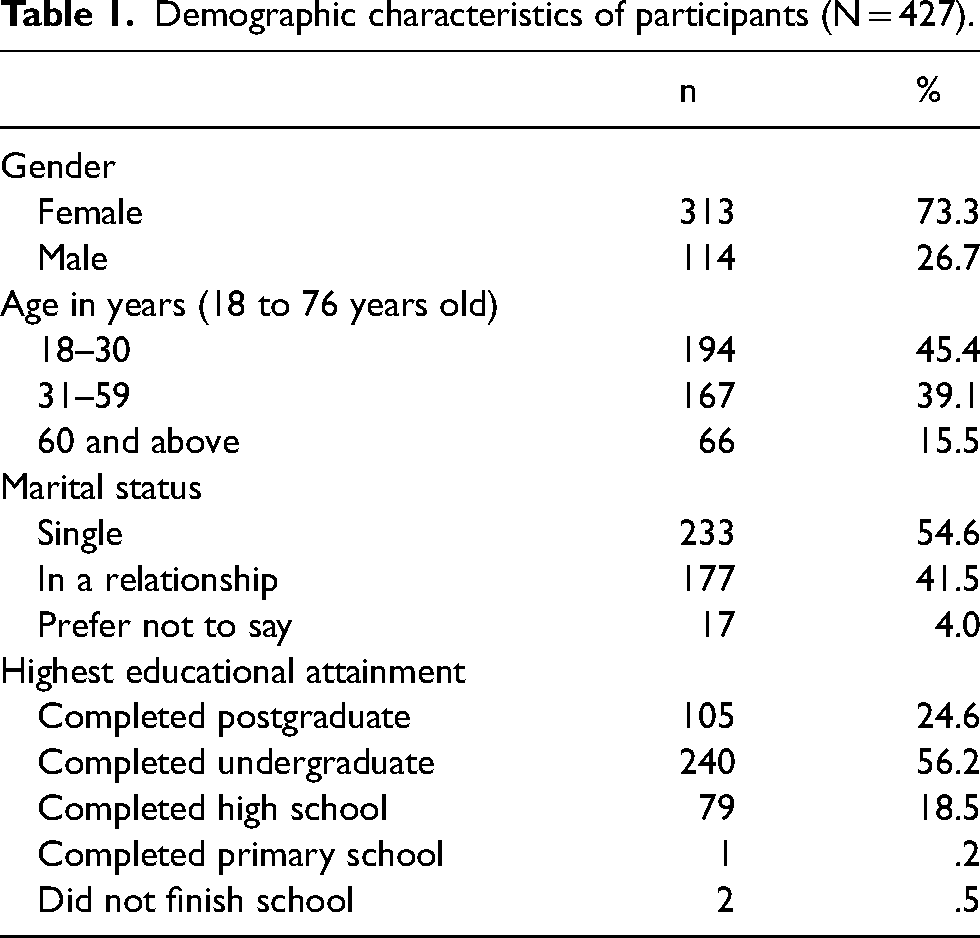
A total of 479 respondents participated in this survey. We removed a total of 52 respondents for not meeting specific eligibility criteria; below 18 years old (n = 1), nonresidents (n = 51), leaving us a final sample of 427 respondents for analyses. Out of the 427 respondents, there were 313 females with a mean age of 37.90 years (SD = 16.51) (see Table 1). Participants were recruited from social media posts and word-of-mouth references. We obtained ethics approval from Sunway University Research Ethics Committee (SUREC2020/053) and participants provided consent on the website before completing the survey.
Demographic characteristics of participants (N = 427).
Measures/procedure
All participants completed a set of questionnaires on their demographic status, subjective levels of SES, gratitude, anxiety, SI, and FSI. Participants completed the demographics, SES, and anxiety scale before moving on to others. The order of gratitude, SI, and FSI were randomized for each participant. Data were collected from April 8, 2020 to April 27, 2020.
Gratitude. The 3-item Gratitude scale was rated on a 5-point scale from 1 = Strongly disagree to 5 = Strongly agree (Krause & Hayward, 2014). The total score was obtained by summing the scores of three items, where higher scores represent greater feelings of gratitude. An example of these items was “I have much to be thankful for.” The internal consistency reliability estimate was .89 (Krause & Hayward, 2014) (refer to Table 2 for the current study's internal reliability).
Means, standard deviations, and bivariate correlations among study variables.

Note: N = 427. * p < .05, ** p < .001, Education—completed primary school is 1, completed secondary school is 2, completed undergraduate is 3, completed postgraduate is 4, () reflects Cronbach alpha for the measures.
Anxiety. We used the anxiety subscale from the Hospital and Anxiety and Depression Scale (HADS). Bjelland et al. (2002) found the HADS to have good psychometric properties when used in both psychiatric and the general population. The use of the HADS during the pandemic has also showed good reliability (Fernández-de-las-Peñas et al., 2022). The score of each item ranged between 0 and 3, and the total score was obtained by summing up individual score from each item after adjusting the three items (Q3, Q7, and Q13) that were reversed-scored. An example of these items was “I feel tense or wound up.”
Perceived SI. The 3-item SI Scale (Cotten et al., 2013) was used to assess participant's SI in present time. An example of these items was “How often do you feel that you lack companionship?” Each item was coded from 1 = none at all to 5 = a great deal, and total score was calculated by summing up score of all three items, in which higher scores indicate higher SI. Hughes et al. (2004) reported that the alpha coefficient of internal consistency reliability of this scale was .72 (refer to Table 2 for the current study's internal reliability).
FSI. The FSI questionnaire was intended to measure participants’ perceived FSI in the future (Hayes et al., 2013). This 5-point Likert scale contained five items, ranging from 1 = strongly disagree to 5 = strongly agree. An example of these items is “It is scary to think about not being invited to social gatherings by people I know.” The total score was summed up for all five items and a higher total score indicated a higher FSI. This scale was reported alpha coefficient of .71 (Hayes et al., 2013) (refer to Table 2 for the current study's internal reliability).
SES. We used the MacArthur Ladder as a subjective measure of SES (Adler et al., 2008) to capture the large diversity in our sample. Objective SES does not include other factors (i.e., ethnicity and rurality) that are related to individual status in the society (Rubin et al., 2014), which helps us to understand how an individual perceived themselves in a community or a nation. Participants rated themselves on a ladder with ten rungs from 1 (lowest) to 10 (highest) SES with the following instruction: “Imagine a ladder. This ladder pictures how the society in your country is set up. At the top of the ladder are the people who have the most money, most education, and most respected jobs. At the bottom are the people who have the least money, least education, and least respected jobs or no job. The higher up you are on this ladder, the closer you are to the people at the very top, and the lower you are, the closer you are to the people at the very bottom. Where would you place yourself on this ladder? Please select a number to represent ‘on the rung’ where you think you stand at this time in your life, relative to others.” A higher number denotes a higher perceived SES.
Data analysis
We first analyzed our data for normality and outliers. The Shapiro–Wilk test indicated non-normally distributed data for gratitude, perceived SI, FSI, and anxiety (all Ps < .001), hence we used bootstrap analyses. Further, there was no significant influential outlier based on boxplots and no other problems such as missing values or multicollinearity.
We performed parallel mediation analysis (Model 4) and moderated mediation analyses (model 75) on SPSS version 25 with PROCESS v3.4 (Hayes, 2017). For parallel mediation, we included anxiety as an outcome variable, gratitude as a predictor variable, and SI and FSI as mediators. Then we tested moderated mediation with similar variables in the parallel mediation with age as moderator. We repeated this again with education and SES as moderators simultaneously. For the moderated mediation analysis, age and SES were mean-centered (i.e., individual score minus mean score). For age, the indirect effect referred to three centerings: YA (mean − 1SD = 16.51), MA (mean = .00), and OA (mean + 1SD = 16.51), and for SES, the indirect effect was examined at: low (mean − 1SD = −1.37), medium (mean = .00), and high (mean + 1SD = 1.37). Unlike age and SES, education was examined at low (completed secondary school), medium (completed undergraduate), and high (completed postgraduate) levels.
The significance of the indirect effects of SI and FSI on anxiety through our proposed mediators was determined using a percentile bootstrap analysis with 5,000 samples. If the upper and lower boundaries of the CI do not include zero, the moderated mediation effect is considered significant. As SPSS does not explicitly include the index of moderated mediation for this model, the conditional indirect effects (refers to the moderated mediation relationship) were examined in order to further probe the moderated mediation effect.
Results
Preliminary analyses
Bivariate correlations for our main variables; gratitude, anxiety, SI and FSI, and socio-demographic variables: age, education, and SES are reported in Table 2. The results showed that there was a significant negative correlation between gratitude and anxiety, r = −.18, p < .001. Significant negative relationships were also found between gratitude and SI, r = −.233 and FSI, r = −.183 (both ps < .001). SI and FSI were positively related to each other, r = .508, p < .001.
Model 1 parallel mediation analysis
The results of the mediation analysis showed that all direct associations were significant. Higher gratitude was associated with lower SI, B = −.316, β = −.233, p < .001, and FSI, B = −.397, β = −.183, p < .001. In addition, both higher SI, B = .514, β = .390, p < .001 and FSI, B = .169, β = .205, p < .001 predicted higher anxiety. We found that anxiety was mediated by SI and FSI with higher gratitude (B = −.229, β = .128, bootstrap SE = .049, 95% bootstrap CI = [−.332, −.138]). This meant that those with higher gratitude reported having less SI (B = −.162, β = −.091, bootstrap SE = .041, 95% bootstrap CI = [−.249, −.090]) and also less FSI (B = −.067, β = −.038, bootstrap SE = .024, 95% bootstrap CI = [−.118, −.026]). The results supported our hypothesized model, indicating that the relationship between gratitude and anxiety is mediated by SI and FSI.
Model 2 moderated mediation analyses
Age as Moderator

Moderated mediation analyses for (a) age as moderator and (b) education and socioeconomic status as moderator.
Education and SES as moderators. We examined the moderating role of education and SES in the parallel mediation model, similar to the one previously. First, the direct effect of gratitude on anxiety was not significant (B = −.063, β = −.035, bootstrap SE = .077, 95% bootstrap CI = [−.214, .088]) (see Figure 1(b)). Second, we found that the conditional indirect effects of SI and FSI were significantly moderated by education and SES. Results showed that for those with lower levels of education (completed secondary school), the mediating role of SI, that is the conditional indirect effect, was significant at low (centering on M-SD; B = −.263, β = −.147, bootstrap SE = .092, 95% bootstrap CI [−.471, −.109]), medium (centering on M; B = −.193, β = −.108, bootstrap SE = .083, 95% bootstrap CI [−.386, −.065]), and high levels of SES (centering on M + SD; B = −.133, β = −.074, bootstrap SE = .085, 95% bootstrap CI [−.343, −.014]). For the medium level of education (completed undergraduate degree), the mediating role of SI was significant at low (centering on M-SD; B = −.150, β = −.084, bootstrap SE = .044, 95% bootstrap CI [−.243, −.075]) and medium SES (centering on M; B = −.088, β = −.049, bootstrap SE = .036, 95% bootstrap CI [−.168, −.025]), but not for the high level of SES (centering on M + SD; B = −.037, β = −.021, bootstrap SE = .046, 95% bootstrap CI [−.139, .044]). Similarly, for the low education level, the mediating role of FSI was also significant and all three SES levels: low (centering on M-SD; B = −.129, β = −.072, bootstrap SE = .062, 95% bootstrap CI [−.265, −.025]), medium (centering on M; B = −.121, β = −.068, bootstrap SE = .054, 95% bootstrap CI [−.236, −.024]), and high levels of SES (centering on M + SD; B = −.113, β = −.063, bootstrap SE = .060, 95% bootstrap CI [−.235, −.002]). In addition, the mediating role of FSI for the medium education level was significant at low (centering on M-SD; B = −.055, β = −.031, bootstrap SE = .028, 95% bootstrap CI [−.121, −.009]) and medium levels of SES (centering on M; B = −.050, β = −.028, bootstrap SE = .028, 95% bootstrap CI [−.097, −.012]), but not at high SES levels (centering on M + SD; B = −.045, β = −.025, bootstrap SE = .028, 95% bootstrap CI [−.103, .006]).
Discussion
Our results suggest that gratitude may have indirect association with anxiety through SI and FSI during the pandemic and is concordant with gratitude literature as an effective life orientation to manage mental health issues in general (Jans-Beken et al., 2018; Petrocchi & Couyoumdjian, 2016). Additionally, social network and participation in social activities is important for psychological well-being because social connection is a resource to boost our mood, self-esteem, and well-being when needed. Likewise, a lack of social connection as experienced in our sample—a higher feeling of SI and higher FSI—was associated with higher anxiety, an indicator of poor mental health.
While we cannot infer whether the feelings of SI or FSI were caused by isolation or vice versa from our study, our results were similar to other studies that examined gratitude and SI (Caputo, 2015) and FSI (MacKenzie & Baumeister, 2019). Empirical studies on SI and loneliness reported that higher gratitude was related to lower levels of loneliness and that the relationship was completely mediated by psychological flexibility (Frinking et al., 2020). The ability to engage in flexible coping would be especially relevant during a pandemic when conventional socializing methods, that is, face-to-face, are no longer an option. Another study demonstrated that gratitude was positively related to the tendency to perceive meaningful benefits during the COVID-19 pandemic (Tong & Oh, 2021), indicating that gratitude is relevant to the ability to generate positive appraisals in highly adverse situations. According to the broaden-and-build theory (Fredrickson, 2001), gratitude is a typical positive emotion that helps individuals perceive the world positively. It also opens them to more behavioral options, increasing the probability of effective coping behaviors that reduce mental distress and anxiety. It is possible that the individuals in our study who were more grateful were able to manage their SI and FSI through their ability to identify or engage in alternative methods of socializing as well as to look at the bright side during the pandemic, thus indirectly help them to cope with their anxious feelings.
We also examined three socio-demographic variables—age, education, and SES—which may explain the variance between gratitude and anxiety that was indirectly mediated by SI and FSI. First, we examined whether age may explain the association between gratitude and anxiety via SI and FSI by moderating the relationship between gratitude with SI and FSI and also moderating the relationship of SI and FSI with anxiety. We found that YA and MA who had higher gratitude experienced lower feelings of isolation and in turn had lowered anxiety, but the mediating role of SI was not observed among OA. It is possible that OA are more vulnerable to the impacts of the COVID-19 pandemic in general and that SI no longer has a mediating effect on their gratitude and mental health, that is, anxiety. Some studies reported that OA were likely to experience more anxiety and depressive symptoms (Qiu et al., 2020) and they had a greater concern about COVID-19 compared to younger adults, more so if they have chronic health conditions, which increases their mortality risk (Sanyaolu et al., 2020). We found that OA were likely to be more grateful as indicated by a positive relationship between age and gratitude. One possibility is that OA are likely to focus on the positives in the current moment as they perceive their future time shorter compared to YA, providing a natural buffer against negative emotions (Reed & Carstensen, 2012). As for FSI, MA who had higher gratitude had lower FSI and in turn reported lower anxiety. This relationship was not observed in the young and older adults. One possibility is that the MA have multiple roles (e.g., spouse, employee, parent) and stressful life demands (e.g., employment, empty nest, death of a spouse) that may impact both physical and mental health negatively (Scott et al., 2013), unlike in young and older adults. Past literature showed that fear for the future such as fear for death and uncertainties grow in young adulthood, peak around middle age, and decline with aging (Russac et al., 2007). Together with increased responsibilities for their children, aging parents and themselves, this may have contributed to why MA had a significant negative outcome to FSI and anxiety.
Second, we examined the moderating role of education and SES. We found that the indirect association of gratitude with anxiety via FI and FSI was moderated by both education and SES. Specifically, among the participants with low education levels (regardless of SES), those who had higher gratitude had lower SI and FSI, which in turn reduced anxiety levels. For those with medium levels of education and from low and middle levels of SES, higher gratitude was associated with lower FI and FSI and reducing feelings of anxiety indirectly. While studies have shown that those with lower levels of education and SES had poorer mental health outcomes (Arokiasamy et al., 2015; Luo & Waite, 2005), many lost employment due to the COVID-19 pandemic and this is likely to have hit the poor the hardest as they are more vulnerable to job insecurity, food insecurity, and housing instability (Kantamneni, 2020).
Contrary to the low and medium levels, we did not find any significant associations for those with high education and high SES. Past evidence on SES may shed some light on the differential demands and expectations in explaining the mechanisms underlying the relationship between SES, education, and mental health. People from lower education and low SES background reported having fewer psychosocial resources such as lower sense of control and resilience (Niemeyer et al., 2019), smaller social networks, and more SI and loneliness (Algren et al., 2020), and that their living environment with less material and psychological resources has a long-term impact on their cognition and behavior (Arokiasamy et al., 2015; Luo & Waite, 2005). All of these have an indirect influence on mental health. There has been reported success in increasing one's gratitude (Jans-Beken et al., 2018; Killen & Macaskill, 2015) and this targeted intervention may be particularly useful for those in the low SES background as a means of protection during this difficult time.
Our results also showed that by lowering SI and FSI, anxiety could be reduced as well. Our findings are similar to one study that indicated a moderate positive effect of social support on mental health (Kong et al., 2015). When comparing the psychological distress of university students before and during the pandemic, Hamza et al. (2021) found students without preexisting mental health conditions showed increased psychological distress during the pandemic, coinciding with their increased feelings of SI. It suggests that these individuals who are not accustomed to SI may suffer deteriorating mental health. Although some may argue that the online connection is not the same as physical meetings, having social connection and support from online platforms is important in combating mental health issues during this pandemic. For example, people can communicate and conduct activities together in an online community that mimics a physical community in the real world where people can seek help and exchange ideas for problem-solving such as Reddit or Quora for online community discussions or Sacred Space, where people can do daily prayer together online.
There are several limitations in this study. This was a cross-sectional and a single time-point study, thus we were unable to determine causality or distinguish possible mechanisms that may affect participants’ anxiety over time. We also could not identify which directions these variables may have occurred that could have affected participants’ anxiety. Future studies should examine them again as the lockdown strategies are constantly evolving to meet the public health concerns. Additionally, we did not measure other aspects that may have influenced anxiety, for example economic hardship, as studies have shown unemployment and financial worries contributed significantly to anxiety (Jones et al., 2021; Zenger et al., 2011). We measured dispositional gratitude in our study, and did not ask for participants’ trait gratitude. Future study could examine both dispositional and trait gratitude in order to obtain a more full picture of the effect of gratitude on mental health.
Individuals with known physical health conditions such as hypertension and chronic heart disease have been found to experience greater anxiety during the pandemic due to being at higher risk of contracting COVID (Sayeed et al., 2020). In addition, insomnia or difficulty in maintenance of sleep also contributes to mental health issues including anxiety, depression, and stress in the current pandemic (Varma et al., 2021). As we did not include questions related to physical health or sleep quality, we are unable to ascertain whether the feelings of anxiety were in part contributed by poor sleep or existing physical health conditions/illnesses. Future studies should include these variables to account for one of the factors in impacting mental health during a global pandemic.
Another limitation of this study is that we did not examine the role of resilience and its protective effect on mental health. Resilience has been touted as a trait that helps an individual to cope with adversity, although some have argued that resilience also comes from the environment (Foster, 2020). Zhang et al. (2020) found that resilience was a protective factor for anxiety and depression among 296 mild-COVID19-symptom patients from China. This is because resilience is the ability to adapt well with changes in life and promote positive changes in adversity or trauma and hence individuals with high resilience are able to adapt to the changing environment and also protect their own mental health when faced with difficulties by using both internal (e.g., self-encouragement) and external resources, for example seeking help from family (Poudel-Tandukar et al., 2019). Future research could examine the role of resilience and its protective effect on mental health over time.
We acknowledge that our sampling is not a gender-balanced sample and that our results might skew to one gender, “female.” Past studies showed a gender difference in gratitude (Yue et al., 2017) and anxiety (Strand et al., 2021) in which females reported higher gratitude and anxiety compared to males. Other than gender balance, future studies should include a more inclusive and diverse sampling for example, inclusion of sexual minorities as evidence has shown differential access to healthcare between heterosexual individuals and sexual minorities, especially during the pandemic, for example myths relating to homosexual individuals as the source of COVID-19 or fear of discrimination among the lesbian, gay, transgender, and queer communities as potential barriers for early diagnosis and prompt treatment for COVID-19 (Chatterjee et al., 2020).
Our study only explored anxiety, which reflects the current situation, but future studies could explore the relationship between depression or post-traumatic stress disorder (PTSD) with the study variables (Giannopoulou et al., 2021; Iodice, 2021). The prolonged fear and isolation from the pandemic may have exerted a toll on mental health particularly for those who are vulnerable and at-risk, and some COVID-19 survivors are demonstrating PTSD symptoms that affect their recovery (Giannopoulou et al., 2021).
Conclusions
It should be emphasized that feeling anxious is a normal response to a threatening and uncertain situation. Our findings showed that gratitude significantly lowered SI and FSI, which in turn reduces anxiety, and those in low education and SES experience a greater reduction in anxiety when they have higher gratitude. Further, our study highlights the importance of having some coping mechanism and social connection during the pandemic to have higher well-being and quality of life, especially for people from low education and SES background. Having new knowledge specifically addressing the mental health challenges during the COVID-19 pandemic would help not only for individuals but also policymakers and those working in the field of mental healthcare. For example, gratitude intervention can be targeted for those from low education and low SES across the adulthood lifespan to reduce feelings of anxiety during the pandemic. Consistent with past literature in that gratitude intervention can enhance well-being in YA (Emmons & Mccullough, 2003), middle-age adults (Noor et al., 2018), and OA (Lau & Cheng, 2011), gratitude as a coping mechanism could be an easy and cheaper mechanism to tide us over during this difficult time.
Footnotes
Acknowledgements
CYT, JYN, MHL, and MHY were involved and contributed at each step of manuscript writing. All the authors read and approved the final manuscript.
Data availability statement
The datasets generated during and/or analyzed during the current study are available in the OSF repository, DOI:10.17605/OSF.IO/ZW245.
Declaration of conflicting interests
The authors declared no potential conflicts of interest with respect to the research, authorship, and/or publication of this article.
Funding
This work was supported by Newton Fund Institutional Links grant ID: 331745333, under Newton-Ungku Omar Fund partnership to MHY. The grant is funded by the UK Department for Business, Energy and Industrial Strategy and Malaysian Industry-Government Group for High Technology (MIGHT) and delivered by the British Council. For further information, please visit  . The Newton Fund played no role in the planning and conceptualization of the manuscript, did not participate in the writing of the manuscript, and played no role in the decision to submit the manuscript.