




Abstract
Background:
Health Information Managers (HIMs) play a crucial role in the management and governance of health information ensuring the accuracy, confidentiality and accessibility of health data for clinical care and business operational purposes. This role also extends to education and training in the workplace.
Objective:
The aim of this scoping review was to explore and elucidate the role played by HIMs when they undertake a health workplace-based (healthcare organisation or service) educational role and/or functions as evidenced in the existing body of literature.
Method:
A scoping review of the literature to investigated the importance of the educator role for HIM health workplace-based educators. A three-step search strategy was designed to ensure a comprehensive exploration of relevant research.
Results:
Of 63 articles assess for eligibility, 14 were included in the final analysis. All included articles acknowledged the importance of the HIM-educator workplace-based role. Half of the included articles had been published within the last 7 years. Only 8 of the 14 articles provided some description of HIM-educator attributes, suggesting that these characteristics remain unexplored.
Discussion:
Findings from this scoping review have shed light on the limitations within the current available literature concerning the attributes of HIM health workplace-based educators. The findings also highlight an important gap in knowledge concerning the qualities of these HIM-educators.
Conclusion:
This identified gap in the literature signals a need for further exploration and investigation into the specific attributes, skills, and characteristics that define effective HIM-educators undertaking a health workplace-based educational role.
Keywords
Introduction
Health information plays a crucial role in clinical decision-making and overall healthcare service delivery. Informative and effective clinical decision-making is contingent upon the right information being provided about the right patient, at the right time, for the right reason and accessed by an authorised user (Dimick, 2012). For example, Dinh et al. (2010) acknowledged the significant role of health information not only in patient care but also in billing functions. The integration of health information into system processes reflects the broader impact that comprehensive and accurate data can have on various aspects of healthcare management. Rapid changes, implementation issues and progression of health information technologies continue to make an impact on health information (Acker et al., 2008; Campbell and Giadresco, 2020; Dolan et al., 2009; Hunt, 2014; Stanfill and Marc, 2019), in its creation, use, protection and management by Health Information Managers (HIMs). In turn, the roles, skill set and health information management context have changed dramatically with paper-based healthcare records being replaced by the rapid evolution of both digitised and electronic health records. Butler (2016) described an example of the significant shrinking of the health information management workforce and department space arising with the inception of digitisation and electronic formats of health information. HIMs are compelled to re-think and reinvent their professional skills for successful adaptation to the evolving work environment, survivability and the sustainability of future professional health information management practice (Calhoun et al., 2012; Gibson et al., 2015; Robb, 2009; Sherifi et al., 2021).
The functions of the health workplace-based educator role of HIMs or ‘HIM-educators’ (both defined below) have been extrapolated from descriptors in the HIMAA HIM Competency Standards (HIMAA, 2017), 1 and from the [United States] National Commission for Health Education Credentialing, Inc. (NCHEC, n.d.). 2 The HIMAA HIM Competency Standards articulate the design, administration, review, updating and evaluation of education and training programmes as they relate to staff orientation, information privacy practice and health classification, and are articulated in competency subdomains I1.2E Human Resources, B1.9E Health data and records, B2.2E Health information standards and governance, D2.6 E Clinical coding, D3.2A Casemix management and activity-based funding methodologies, and G1.31 Healthcare privacy, confidentiality: disclosure, legal and ethical practice. It is noteworthy that the HIMAA HIM Competency Standards use education and training synonymously. The NCHEC (2024) has provided a relevant definition of the health educator as ‘. . .professionals who design, conduct and evaluate activities that help improve the health of all people’. The definition from the NCHEC also describes the educator as adopting a broad range of roles and across a wide variety of settings with diverse job titles (NCHEC, n.d.). This description and definition parallels some of the literature describing the HIM-educator working within a broad range of settings. For example, ‘educating’ appears to be practised by HIMs and others within the broader health information professional workforce, internationally. In Australia, Cheney, a HIM, described providing education on the use of the Abbreviated Injury Scale for coding of ‘compulsory third-party claims’ (Cheney, 2009: 70). In the USA, Stanfill and Marc (2019) identified a generic responsibility of ‘health information management professionals’ (HIMPs) for training staff. (For the purposes of the current review, the term ‘health information manager (HIM) educator’ is defined as qualified HIMs working in health workplace-based practitioner roles, who are responsible for educating others in relation to the management, protection and/or analysis of health data and information. These roles included HIMs, Health Data Analysts, Clinical Documentation Integrity Specialists, Clinical Coders, Clinical Coding Auditors and others operating within the broader health information workforce). Watzlaf et al. (2009) also referred to HIMs conducting education for healthcare providers and administrators, and like Stanfill and Marc (2019), suggested educator role opportunities for HIM-educators in relation to the EMR (Electronic Medical Record).
Some professional bodies, such as the American Health Information Management Association (AHIMA), have recognised the workplace-based education and training role for their members in relation to privacy and protection (Swede et al., 2019), and there are HIM-educator roles that include information governance, data quality and standards (Hjort, 2011). There are also well-recognised educator role titles (e.g. Clinical Documentation Improvement Specialists, Coding Auditor/Educator, Privacy Officer, EMR trainer) that imply a requirement for HIM competencies. In addition, the HIM-educator role is well recognised in current health information, management practice. For example, Hay et al. (2020: 72) identified the potential for HIMs to engage more closely with clinicians through education on documentation practice. Similarly, Hyde (2017: 53) suggested a potential role for the Terminology Educator as a career opportunity for HIMs.
However, the specific educator attributes of HIMs undertaking a health workplace-based educational role remain unexplored. There are many references and descriptors of such HIM roles, including the terms ‘educator’ and ‘training’ without specific formal details to validate this practitioner role. Nexhip et al. (2022: 5) in surveying a cross-sectional cohort of degree qualified HIMs, recorded responses acknowledging the role of training healthcare professionals in documentation practice but without further elaboration. Meidani et al. (2012) alluded to HIMs requiring well-developed interpersonal communication skills and comprehensive curriculum development to effectively deliver patient education in the workplace. However, a brief analysis of this literature reveals a lack of certification and competency identification attached to the HIM role in providing education in the health workplace setting.
Current research
This article reports results from a scoping review that was conducted as part of a larger study. The focus of the review was the educator role of qualified HIMs working in the healthcare industry, including in hospital, community and government settings. It included the provision of workplace-based education and training in the specialist area of clinical coding, with formal role titles such as ‘Coding Educator’ (Seek Job Search, 2023), providing education on accreditation, and on clinical governance (Harwood, 2010), preceptorship roles (Branda et al., 2022), and privacy training. The review did not include higher education academics. The objective of the review was to gather information about role types and to provide insights into the educator roles of HIMPs in the workplace, as discovered in the literature. Thus, the review focused on the educational domain of the health information management profession and those who work in this field, to gain a broader understanding of the intersection between education in the healthcare sector generally, and the education of HIMs and CCs in the health workplace more specifically. It aimed to ‘descriptively map and explain the nature of’ (Peters et al., 2022: 954) evidence gathered on the role of the HIM-educator in the education of HIMs in the workplace. The review included the nature of the HIM-educator role, its extent and the value of the role of HIM-educator within the health information management profession, as reflected in the literature. The purpose of the review was to inform future professional competency and practice standards for upcoming generations of HIMs in Australia. The review aimed to answer the following research questions:
What does the literature reveal about the HIM educator role in the workplace and the accompanying professional attributes?
What educator attributes do HIM-educator practitioners perceive as important for professional practice?
Method
Protocol, context and eligibility criteria
A scoping review protocol was developed to direct, structure and organise the review. The mnemonic of population, concept and context (PCC) built a selection of key search terms to aid the scoping review. The review included literature relating to practising HIM professionals working in health-related environments such as public and private hospitals, technology companies, health insurance firms and primary care facilities. Data analysis identified study characteristics and involved the descriptive mapping of these features back to the HIMAA HIM Competency Standards and research questions presented.
In Canada, the term ‘HIM professional’ has been used to include healthcare professionals responsible for the management of health information (Gibson et al., 2015: 165). This professional identity has expanded in Canada to include the ‘structure and translation of data’ into useful information for progressing healthcare practice and delivery for both individual and population groups 3 (Gibson et al., 2015: 165).
Information sources and search strategy
The scoping review performed literature searches across six databases – Medline, CINAHL, PubMed, Scopus, Google Scholar and EMBASE Ovid.
The three-step search strategy involved:
(1) Keyword searches conducted across recognised the previously mentioned databases.
(2) Further hand searches performed from selected, internationally high profile, peer-reviewed health information management journals, such as Health Information Management Journal and Perspectives in Health Information Management.
(3) Additional final searches involved searches of reference lists of all articles included in the final screening process.
Inclusion/exclusion criteria
The inclusion criteria note articles published in peer-reviewed journals from January 2002 to December 2022 in the English language. Articles that specifically identified and described the educator role of HIMs and articles that described and explored the educating attributes of HIMs were included, and study designs included qualitative, descriptive articles, focus group and survey tools. Articles focused specifically on educating attributes of HIMs or reference this characteristic qualified for inclusion and demonstrated direct connection to the objectives of this scoping review.
Data presentation and analysis
By employing descriptive analysis in the data capture process, the research aimed to provide a comprehensive overview and summary of the current literature perspectives on the educating practices of HIMs. Covidence software was used to assist with extraction and screening. (Covidance, 2023). A data extraction template was developed in accordance with guidelines described by Pollock et al. (2023: 522–523) to ensure that content relevant to the research study was collected. The data collection template was revised multiple times to ensure the inclusion of data fields relevant to the research. One researcher performed the data extraction with a second researcher checking this work. Pollock et al. (2023: 523) recommend two independent researchers performing the data extraction but makes provision for selective checking by a second researcher, which enables a pragmatic approach to the research practice. An abductive approach was used to examine the data applying a mixture of deductive and inductive analysis (Karlsen et al., 2021: 2). A deductive approach was used to map the data to the existing framework of the HIMAA HIM Competency Standards (refer to Table 2). In contrast, inductive analysis enabled new themes arising from the scoping review to be discovered.
Results
Across the six databases examined, a total of 2751 articles emerged for screening. There were 26 duplicate entries removed and a further 2422 articles were excluded based on their lack of relevance to the research questions. Concurrently, hand searches identified an additional 582 articles. These too underwent careful evaluation against the research questions, hypotheses and key terms derived from the PCC framework, resulting in a refined selection of pertinent literature for the comprehensive scoping review. There were 308 articles extracted for screening in Covidence software (see Figure 1).
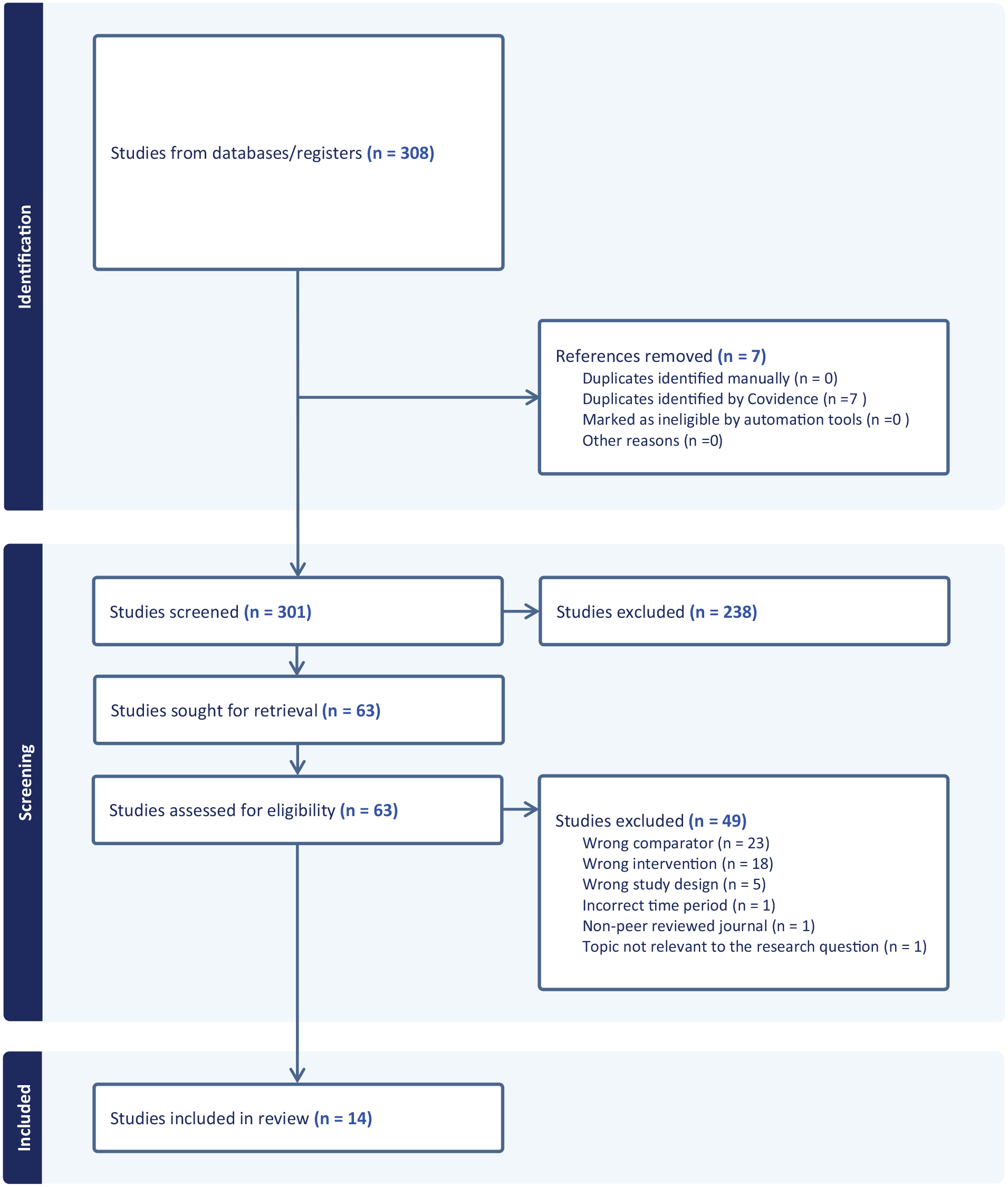
Preferred reporting items for systematic reviews and meta-analyses flow diagram illustrating the search strategy (Tricco et al., 2018).
Screening in Covidence included title, abstract and content analysis of each article for direct relevance to the research questions, hypotheses and key terms derived using the mnemonic PCC. In addition, key articles were selected from Covidence to perform reference list searches but limited to a range of 5–10 journal articles due to time constraints and the practicalities for conducting this review. The Preferred Reporting Items for Systematic reviews and Meta-Analyses extension for Scoping Reviews flow chart in Figure 1 captures the search strategies of this research project. The initial results revealed a body of evidence on the research question as indicated by the number of journal articles recorded. Further analysis required the researchers to perform reference list searching as well as recording profile information of the articles selected and mapping themes and subthemes as they related back to the original research questions. There were 14 articles included in the extraction phase of Covidence screening, qualifying for data analysis from database, hand and reference list searches. The profile of the 14 articles included in the final analysis are detailed in Table 1.
Study characteristics.
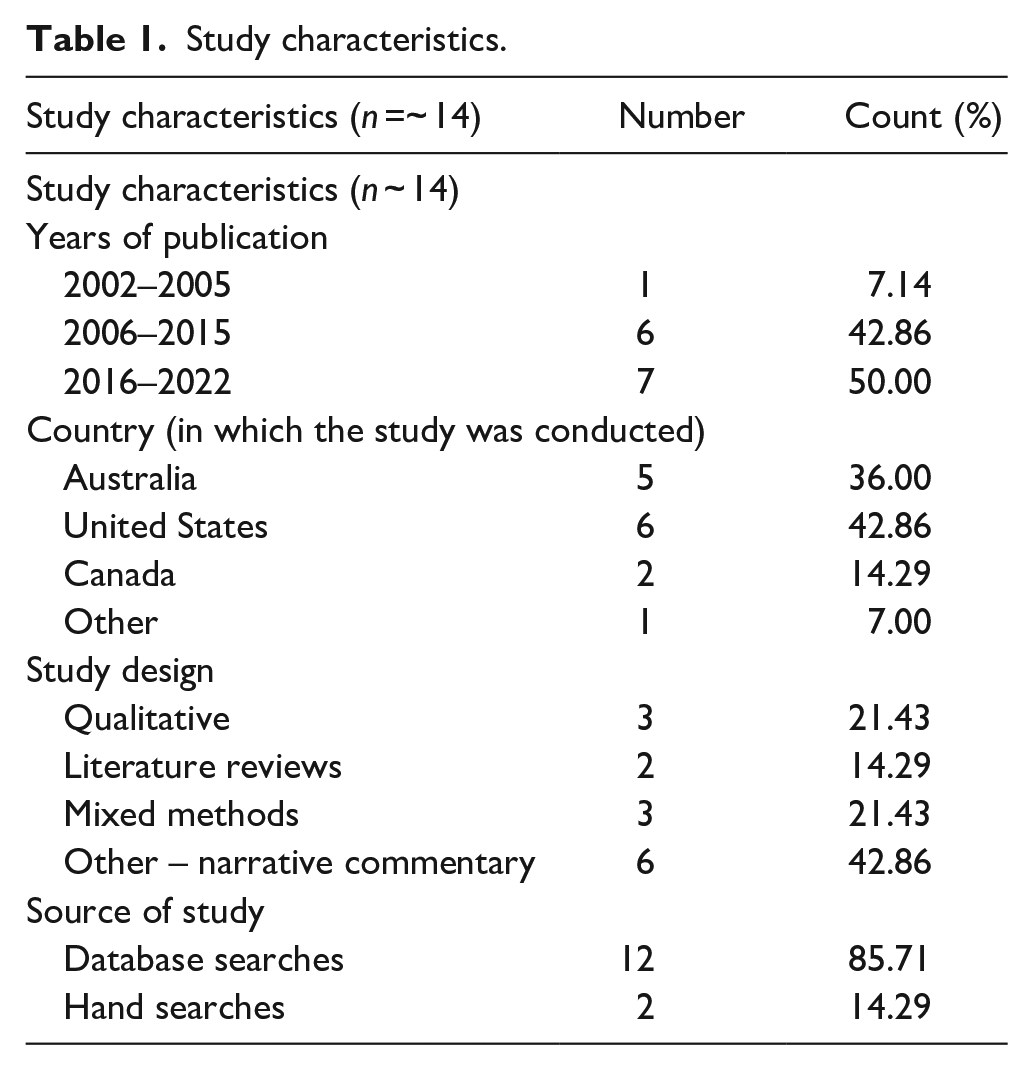
There were six articles from the United States, five from Australia, two from Canada, and one from another country (see Table 1). Not all of the selected articles were studies (three were professional profiles and two were commentary or forum-type articles. The most common design was categorised as ‘other’ including narrative commentaries. Additional study designs included qualitative (n ~ 3), mixed methods (n ~ 3) and literature reviews (n ~ 2). Half of the articles (n ~ 7) were published between 2016 and 2022, indicating the recency of the topic area under discussion. Six of the remaining articles were published between 2006 and 2015, and there was only one study pre-dating 2006.
The included articles were mapped against specific data fields pertaining to education characteristics (see Table 2). Data analysis revealed important themes. All 14 articles revealed direct connection between workplace educating roles and professional practice. For example, Stanfill and Marc’s (2019) acknowledgement that health information management roles include ‘training staff’ (p. 61). Beesley et al. (2021) in their comparisons of 2016 AHIMA job survey data and ‘current industry job listings’ identified ‘Education/Communication’ (Beesley et al., 2021: 9) as one of the four job family categories listed. All 14 articles acknowledged the importance of educational practice for HIMs. Doktorchik et al. (2020: 21) shared coding manager perspectives raising suggestions of educating clinicians on clinical documentation practices ‘for clinical coding purposes’. All articles included in the data analysis bore relevance to the proposition that the role of educator is a substantial part of the HIM’s professional practice. Riley et al.’s (2020) workforce survey on HIM graduates reported ‘educating’ as part of their professional practice and cited this job role (i.e. ‘educator’) in their Appendix.
The final list of included articles in the scoping review.
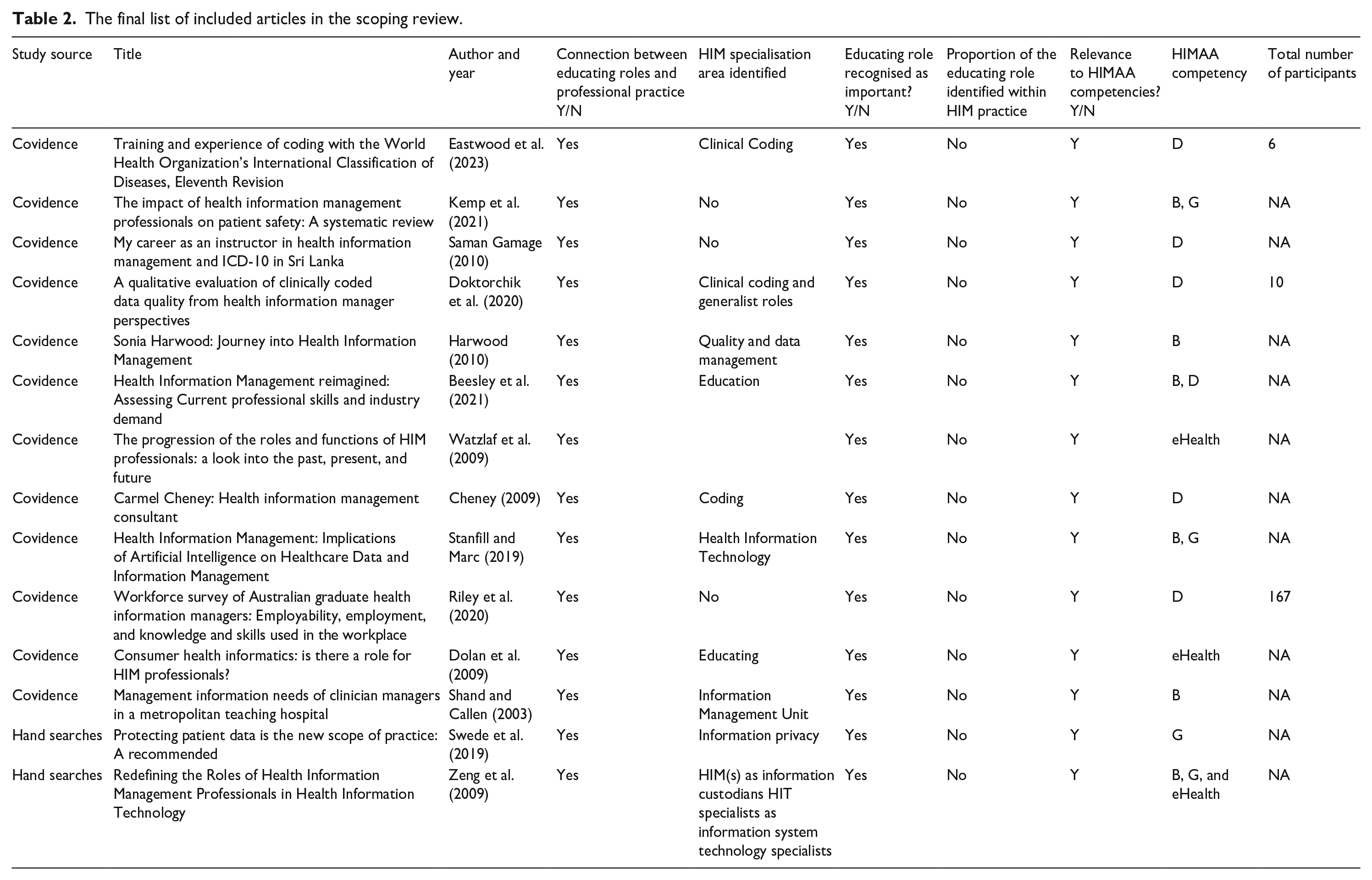
With reference to the HIMAA’s HIM Competency Standards, all 14 included articles mapped relevancy to a specific competency domain. In some instances, more than one competency domain was applicable (see Table 2). For example, Eastwood et al. (2023) described the education process for training clinical coders in ICD-11 classification utilising classification experts and this aligns with the HIMAA competency domain D: Health terminologies and classification. Further verification of this mapping was cross-referenced from the data field for the HIM specialisation and HIMAA competency domain (see Table 1). The most populous competency domains were D: Health terminologies and classification, represented in 7 of the 14 included articles (50%), and domain B: Health information and records management denoting 6 of the 14 articles (42.86%).
Only 8 of the 14 articles (57.1%) demonstrated relevance to the question of what educational attributes HIMs regard as important. The findings suggest that the educational attributes of the HIM-educator role remain unexplored and that there is scope for advancing research practice in this specialisation. Kemp et al. (2021) highlighted the importance of the educator possessing current industry knowledge and practice skills and that continuing education of HIM educators is a ‘given’. This adds credibility and validity to the training that HIM-educators are delivering to other health professionals. Comparably, Dolan et al. (2009) identified a potential educator role for HIMs pertaining to the emergence of consumer informatics and health literacy. Dolan et al. (2009) perceived a conduit of health information specialisation extending beyond personal health record expertise (as possessed by HIMs) and into the realm of consumer informatics. None of the articles included in this scoping review described the proportion of the work role of the HIM that was devoted to ‘educating’. This is a new finding from the current review.
Discussion
HIMs are working within a rapidly changing healthcare context, with health information technologies and production of electronic health data increasing in number and complexity (Sherifi et al., 2021). This constantly transforming work environment compels the health information management profession to re-examine its skills, knowledge and professional practice to ensure sustainability and viability of the profession heading into the future. Preliminary surveillance of the literature and job title postings suggests that HIMs have adopted roles as educators in professional practice. This scoping review has revealed an existent literature, totalling 14 articles, focused on the educating attributes of HIM practitioners. All 14 articles included in this review mapped back to select HIMAA professional competency domains, such as health terminologies and classification, health records and information management. All included articles positioned the practitioner HIM-educator role as important and featured specialisations such as clinical coding, information privacy and records management. The proportion of time spent on educating was not identified in any of the articles, suggesting further opportunities to investigate the proportion of time spent on ‘educating’ and the implications for this on workloads and role descriptions. Although the HIM Competency Standards (HIMAA, 2017) generalise the educating functions within select competency domains (as identified in Table 2), there is a substantial gap in linking the HIM-educator role to a suitable educational framework and intentional description of the educator characteristics in HIMPs practice in comparison to clinical professions such as nursing and medicine. For example, the National League for Nursing identified eight core competencies (Wanchai et al. 2022: 245) and Hatem et al. (2011) described a set of educator attributes that apply to all teaching levels for medical educators. Extensive further research and investigation into the HIM-educator role will serve to increase the visibility and positioning of this professional specialisation, potentially in professional practice, possible intentional embedding into health information management curricula design and development, and thereby leveraging its important contribution towards health data integrity and quality for healthcare decision-making, treatment and performance. Raising the profile of the HIM-educator role potentially expands the career succession planning pathways for HIMs. A prime example to illustrate this progression could be clinical coders extending their expert knowledge and field of practice to the education arena, to share their expertise with a wider audience, including the coding workforce, clinicians and business managers in health care.
Limitations
The first stage of the initial searching of the six databases, using the PCC tool and the hand searches through three primary journals, was conducted by one researcher only. A second researcher was introduced to screen the 308 journal articles selected for their relevance to the research questions and the reference list used for searching. The scoping review was also limited by the omission of grey literature, articles published in languages other than English and more recent publications post-2022. In addition, the qualifying inclusion criteria resulted in several useful articles captured in the early searches being excluded from the review. Including articles published in peer-reviewed journals only, provides credibility for the information sources but may also have limited the body of evidence available on the topic of educator attributes of HIMs. The authors assume that the lack of representation from European, African, Middle Eastern and South American perspectives suggests there may be non-English published works that fall outside of the parameters of this scoping review, or that the research topic remains unexplored in these parts of the world. Not all the included studies were research studies and included narrative commentaries and non-peer reviewed professional profiles published in a peer-reviewed journal.
Conclusion
The findings from this scoping review are particularly important for the health information management profession as these data reveal a significant gap in the literature exploring the educator qualities of HIMPs. There were only 14 articles for inclusion in the scoping review analysis. However, all 14 articles provided evidence for the HIMPs practice of educating, which confirms and validates the position of the HIM-educator in health information management industry practice.
Although existent literature has confirmed the importance of educator roles for HIMPs in health workplace-based education, the findings of this scoping review have demonstrated a scarcity of research focused on exploring the specific characteristics of the HIM-educator, apart from the expertise, skills and knowledge in areas such as records management, information privacy and clinical documentation practice. This invites further exploration of the practitioner role of the HIM-educator. Findings from this scoping review will assist to inform industry as well as future research.
Footnotes
Acknowledgements
The authors acknowledge the contributions of the La Trobe University librarians in constructing the search strategy and key academic staff for their review of this manuscript.
Declaration of conflicting interests
The author(s) declared no potential conflicts of interest with respect to the research, authorship and/or publication of this article.
Funding
The author(s) received no financial support for the research, authorship and/or publication of this article.
Registration
The scoping review protocol has been registered with Open Science Framework (OSF Registries | Masters Scoping Literature Review Protocol HMASR).
