




Abstract
Background:
Traditionally, health placements have required practical in-person learning, including placements completed by health information management (HIM) students. COVID-19 made in-person healthcare placements largely unviable. Alternative virtual/remote placements were required.
Aims:
(1) Explore the experiences of virtual/remote placements for HIM students and their supervisors; (2) Compare these experiences to the literature on barriers and facilitators for virtual/remote placement and (3) Develop best practice guidelines for the delivery of virtual/remote placements for HIM students.
Method:
A cross-sectional survey asked final-year HIM placement students and their supervisors about their virtual/remote placement experiences in 2021. Survey findings were compared to 10 barriers and facilitators for remote/virtual placements identified in the literature.
Results:
Students were challenged by autonomous virtual/remote placements but enjoyed their flexibility. A work schedule provides placement structure to students. The use of technology was embraced although unfamiliarity with video-conferencing software prior to placement was an issue for some students. The most common method of student–supervisor communication was email. However, students missed casual corridor conversations. The importance of maintaining a community of practice was reported in the literature and confirmed by students. Most students preferred undertaking a virtual/remote placement rather than delaying graduation. The majority of supervisors reported complete satisfaction with the placement students’ performance.
Conclusion:
Virtual/remote placements were a viable option for HIM students when in-person placements were impossible. Students required a work-based schedule, appropriate information technology, a dedicated workspace, familiarity with communication technologies, good communication channels with their supervisors and a supportive ‘community of practice’. HIM supervisors were satisfied with virtual/remote methods of placement delivery.
Keywords
Introduction
Work-integrated learning (WIL) is perceived by universities (Universities Australia, 2019), employers (Zegwaard, 2014) and government (Matook and Knaggs, 2021) as an integral part of university studies. Through WIL, students link theory to practice (Fleming and Haigh, 2017), enhance both their technical knowledge and soft skills (Andrews and Higson, 2008) and improve their employability (Smith et al., 2016). In 2017, just 37.4% of university students engaged in WIL (Universities Australia, 2019, p. 8). In 2020, there was an increased investment in university-based WIL through the introduction of the National Priorities and Industry Linkage funds (Australian Government Department of Education, 2020). This saw the Australian Government’s commitment to ensuring the growth in partnerships between universities, employers and students to maximise the opportunity for all students, both domestic and offshore, to participate in WIL (Australian Government Department of Education, 2020). Student (clinical) placements, as one form of WIL, are well established within the health disciplines’ teaching curriculum as a form of practical, face-to-face learning. In 2017, health disciplines had the highest engagement with WIL activities of all disciplines at 57.7% (Universities Australia, 2019). Placements are highly valued in healthcare education for creating immersive, industry experiences that advance student competencies through mentorship and WIL (Robinson et al., 2020).
The Discipline of Health Information Management (HIM), La Trobe University (LTU), offers placements for both undergraduates and postgraduates. Students physically attend health agencies and work alongside health professionals within their field. In their final year, all HIM students complete 44 days of placement at agencies across the whole of health: hospitals, government, community health, private health information technology (IT) firms, registries and screening services, health research centres, etc. These placements are project based, research based or internships.
However, in 2020, the spread of coronavirus disease (SARS CoV-2) (COVID-19) made in-person placements in healthcare largely unviable (Brack, 2021). Alternative solutions were required to overcome difficulties with industry-based on-site placements with remote or virtual solutions. ‘Virtual placements’ are considered a form of industry training undertaken totally online through technology-assisted communication between a student and supervisor. The rapid adoption of technological placement solutions during the COVID-19 pandemic left little understanding of the efficacy of virtual placements in providing the level of professional competency typically achieved through face-to-face placements (Twogood et al., 2020). The need to produce competent healthcare graduates remained pertinent to the maintenance of both the health workforce and public health (Bayerlein, 2015; Taylor et al., 2021).
Current study
A scoping literature review indicated no research has been undertaken on HIM student cohorts to determine the value of virtual/remote placements for the development of professional competence. The aims of this study were to:
Explore the experiences of virtual/remote placements for HIM students and their supervisors;
Compare these experiences to information provided in the literature on barriers and facilitators for virtual/remote placement; and
Develop best practice guidelines for the delivery of virtual/remote placements for HIM students.
Method
Study design
This research utilised a cross-sectional design. A survey was conducted in 2021 at LTU, Melbourne, in the Discipline of HIM. It also incorporated a literature review to identify the main facilitators and barriers to effective delivery of virtual/remote placements.
Literature search strategy
In 2021, a search of Medline (OVID) and CINAHL was undertaken. The key terms used included ‘virtual placement’, ‘online placement’, ‘remote placement’, ‘distance placement’, ‘virtual residency’, ‘online residency’, ‘virtual internship’, ‘remote internship’, ‘student placement’ and ‘virtual learning’. ‘Virtual, remote and online’ and ‘placement, residency and internship’ were used as synonyms to scope a wider breadth of literature.
Inclusion and exclusion criteria
Selection was limited to full-text articles published in English, without date or location constraints. Studies focused on clinical research were excluded as virtual best practices were less likely to be elaborated. Relevant studies were selected based on students undergoing any form of placement, internship or conference residency via a virtual or online means. The inclusion was confirmed with reference to the title and abstract and screening full copies of the paper where relevant. Data elements were extracted from each article including the following: year of publication, industry, healthcare discipline, sample size, length of study, the type of learning (synchronous or asynchronous) and theoretical models underpinning virtual teaching approaches.
Survey sample
The sample consisted of two groups of participants: final-year undergraduate (double degree) and profession-entry (Masters) HIM students enrolled in the 2021 final-year placement subjects; and agency supervisors of these students on placement in 2021. Supervisor contact details were provided on student journals submitted as part of placement communication.
Only students who completed some, or all, of their placements remotely in the second semester (2021) were included in the study. Students were informed of the study both verbally and via the Learning Management System and were invited to a drop-in session. First contact for agency supervisors was made via email which included details about the study and a link to the survey. Two follow-up emails were sent if participants did not respond by the 1- and 2-week timepoints.
Survey instrument
The online survey was created using Research Electronic Data Capture (REDCap) and distributed in Semester 2, 2021 (see Supplemental Appendices A and B for survey questions). A survey pilot was conducted with past students and past agency supervisors. Final survey questions related to demographics, the nature of the placement, communication, training and support during placement, the physical working environment, and reflections on the overall placement experience.
Data analysis
Data were analysed using thematic analysis (Arksey and O’Malley, 2005). Each resource was read thoroughly for information pertaining to barriers and facilitators related to virtual experiences. Quantitative data were analysed using IBM SPSS Version 28. Descriptive statistics were utilised to analyse and present the quantitative responses. Utilising the framework by Braun and Clark (2006), thematic analysis was undertaken on the open-ended survey responses. The initial stages of the analysis were undertaken by two authors independently, with themes identified using an inductive process. The final themes were agreed upon by one author. Questions related to methods of communication and physical environments enabled students to select multiple responses so there were more responses than students. The total number of responses was the denominator for these questions. Open-ended responses that addressed multiple themes were separated so there were more responses than students.
Ethics approval
The La Trobe University Human Research Ethics Committee approved this study (HEC21315).
Results
Literature review
After screening, a total of 14 articles met the inclusion criteria of the literature review (Figure 1). Among the 14 selected articles, 12 were written within the health industry covering medicine, nursing, and allied health disciplines. Eight articles specifically referred to COVID-19. Nine of the articles were published between 2020 and 2021. Countries of publication included England (UK), Australia and the United States of America (USA). A total of 10 themes in relation to barriers and facilitators for virtual placements were identified (Table 1).
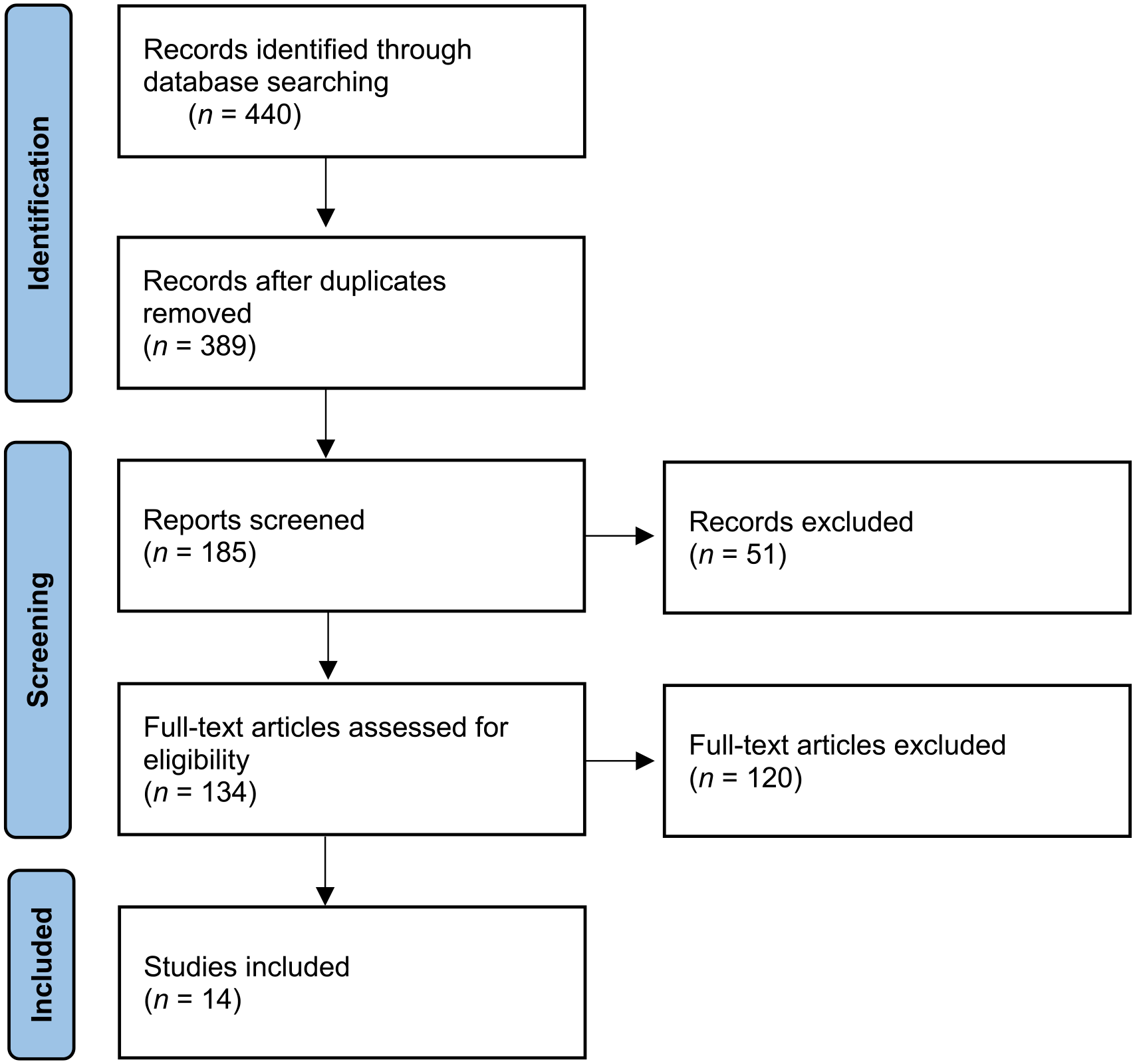
Literature review screening pathway.
Themes identified within the literature.
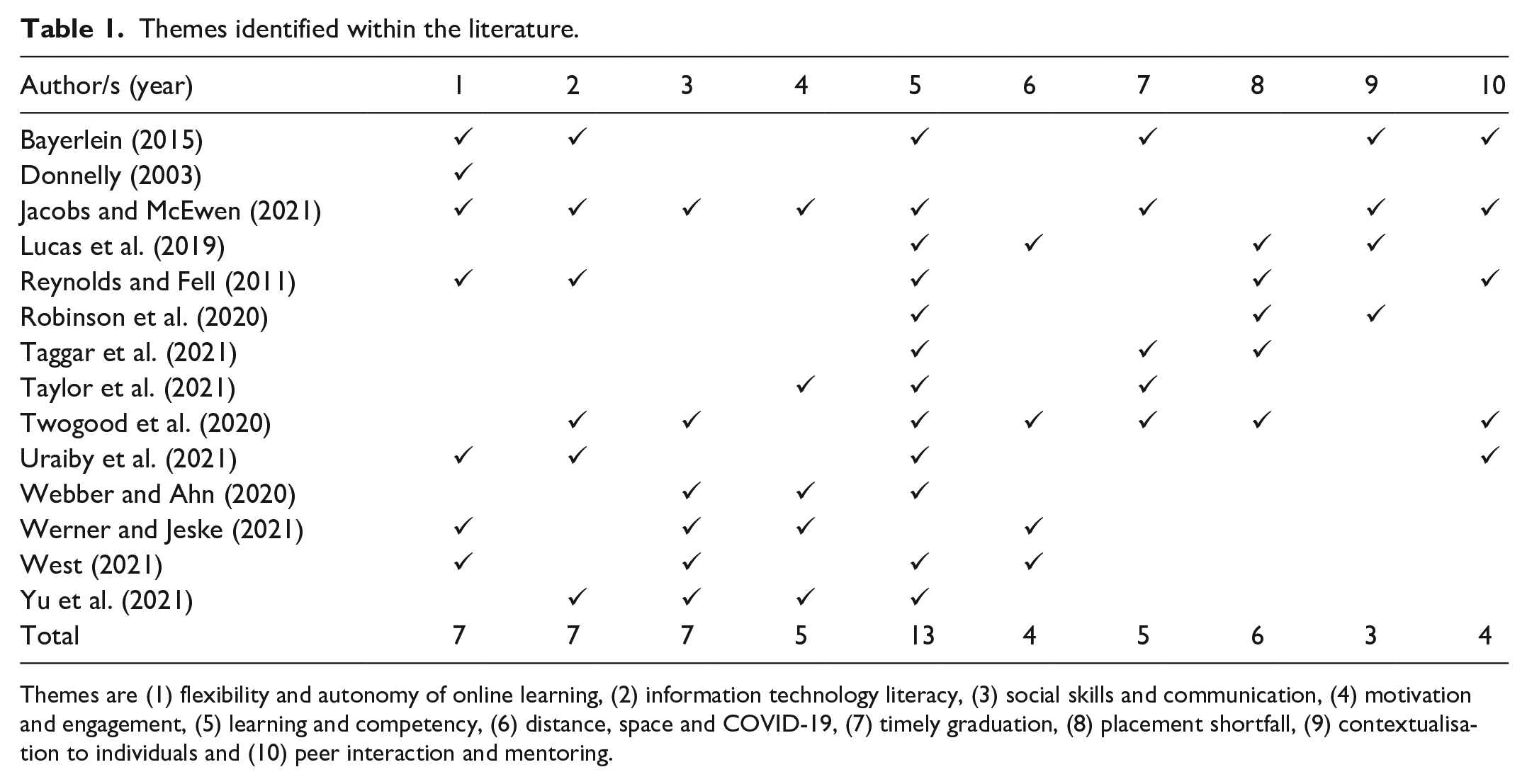
Themes are (1) flexibility and autonomy of online learning, (2) information technology literacy, (3) social skills and communication, (4) motivation and engagement, (5) learning and competency, (6) distance, space and COVID-19, (7) timely graduation, (8) placement shortfall, (9) contextualisation to individuals and (10) peer interaction and mentoring.
Survey response rate
In all, 46 students were enrolled in the placement subject. One student was excluded from the study as they were part of the research team, and two were excluded because their placements fell outside the semester. Of the 43 students remaining, 25 attempted the survey. One response was excluded due to non-completion and two additional responses were excluded as their placement modes were face-to-face resulting in a response rate of 51.2%. In total, 54 supervisors were approached to complete the survey. There was a larger supervisor cohort compared to the student cohort as one student could potentially complete two different blocks of placement which meant two separate supervisors. Of the 26 attempts, two responses were excluded due to non-completion resulting in a response rate of 44.4%.
Demographic data
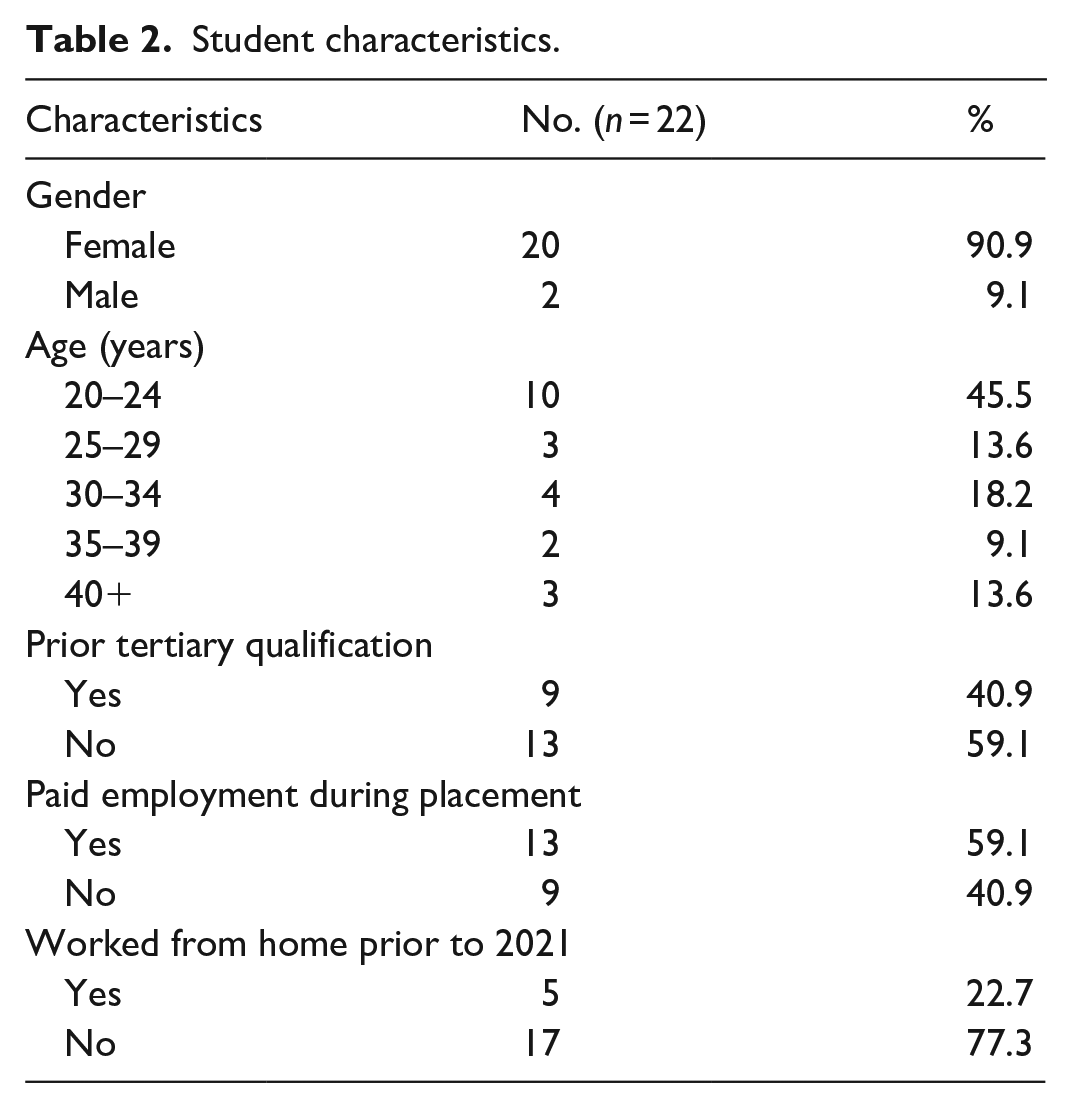
Most students were female (90.9%) and aged between 20 and 24 years (45.5%). Approximately 59% of students had no previous tertiary qualifications and 59.1% undertook paid employment during placement. Over 77% of students had not worked from home prior to 2021 (Table 2). Three-quarters of the agency supervisors were female (75.0%). Over 62% held a HIM qualification and 92% were either fully or partly working remotely during the placement period of July–October 2021.
Student characteristics.
Flexibility and autonomy
Fifty percent of students identified that they did not receive a work schedule for their placement from their supervisor and 16.7% of supervisors identified they had not provided their students with a fixed schedule. However, 83.3% of supervisors indicated some form of a written schedule was provided prior to commencement (12.5%), at commencement (37.5%), early in the placement (16.7%), after student consultation (4.2%) or other (4.2%) stating ‘schedule was agreed verbally before the placement’. Two supervisors (8.3%) indicated some form of a written schedule was provided both at commencement and early in the placement.
Use of technology
Almost 91% of students reported owning the appropriate equipment to complete a virtual/remote placement. Of the 9% that did not, one student alerted their agency and/or academic supervisor and it was provided on day one of placement. The remaining students did not alert their agency and/or academic supervisor and were not provided with equipment. When ascertaining whether students had sufficient technical equipment/knowledge to complete placement, 8.3% of supervisors asked prior to placement, 79.2% asked at the start or during placement, 8.3% did not ask at all, and one response was missing.
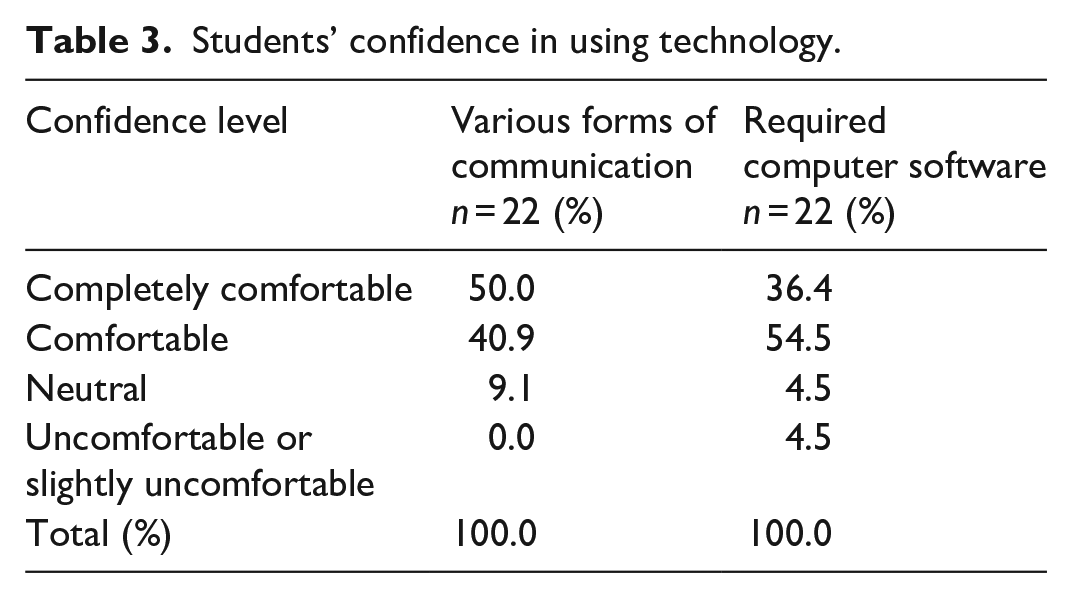
Students were exposed to a range of different software to complete placement. This included communication software such as Microsoft Teams, Zoom, Signal and WebEx; research and data analysis software such as STATA, Tableau and REDCap, as well as auditing tools. Students were also provided access to various in-house systems to complete their placement such as patient administrative systems, Clinical Information Systems and mental health systems. Most students felt confident using various forms of communication and computer software whilst on placement (Table 3). However, when describing what could have helped increase their confidence, participants frequently stated the need for hands-on practice and exposure prior to placement as the key drivers to enabling them to feel more comfortable and confident with the software: ‘I had never used Microsoft Teams before my second block placement, so I wasn’t confident using this at first but gained confidence throughout placement. I had never really used Zoom for meetings prior to the first block of placement. I had used Zoom for university classes previously, but never initiated meetings, shared my screen, etc. Again, I wasn’t confident at first, but gained confidence and familiarity with this throughout placement.’ [Student 14]
Students’ confidence in using technology.
Communication
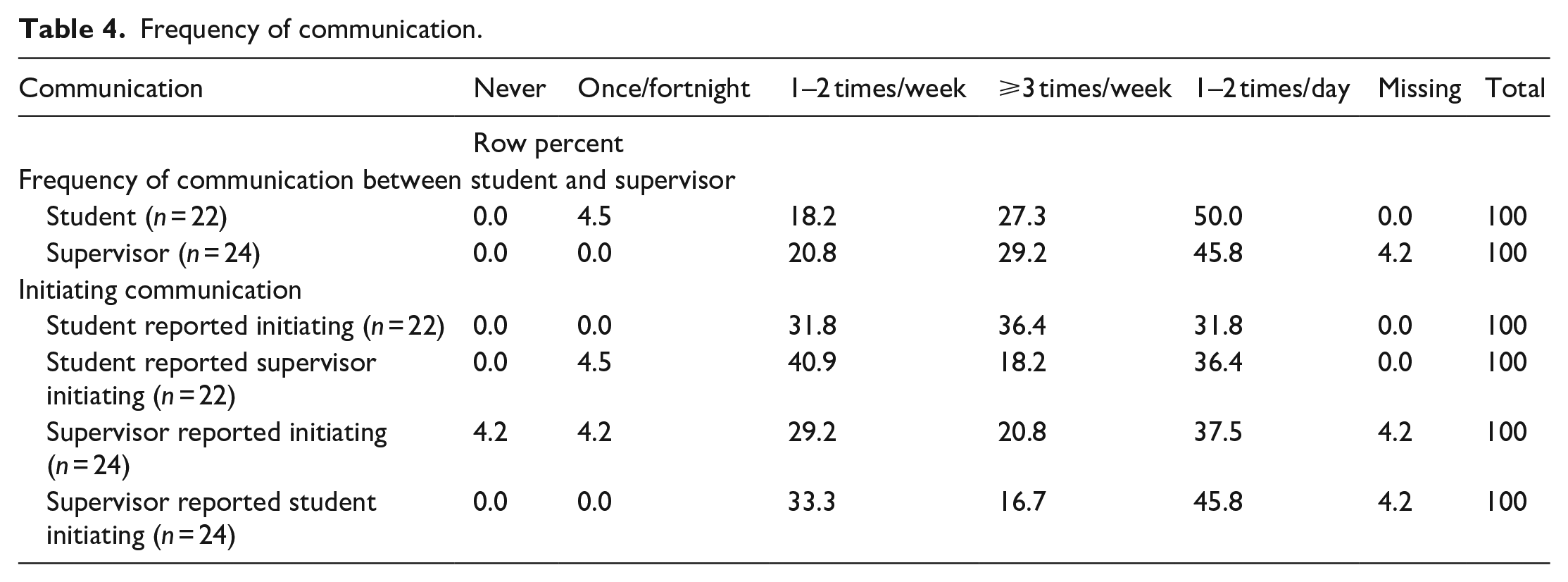
Most students (50.0%) and supervisors (45.8%) communicated with each other once or more per day. Almost 41% of students reported supervisors initiating communication once or twice per week compared to 29.2% of supervisors who reported they initiated communication once or twice per week. Almost the same proportion of students (31.8%) and supervisors (33.3%) reported the student-initiated communication (Table 4). Emails were the most common method of communication utilised by students (31.4%) and supervisors (26.4%), followed by Microsoft Teams (23.5% and 22.6% respectively) (Table 5).
Frequency of communication.
Methods of communication. a
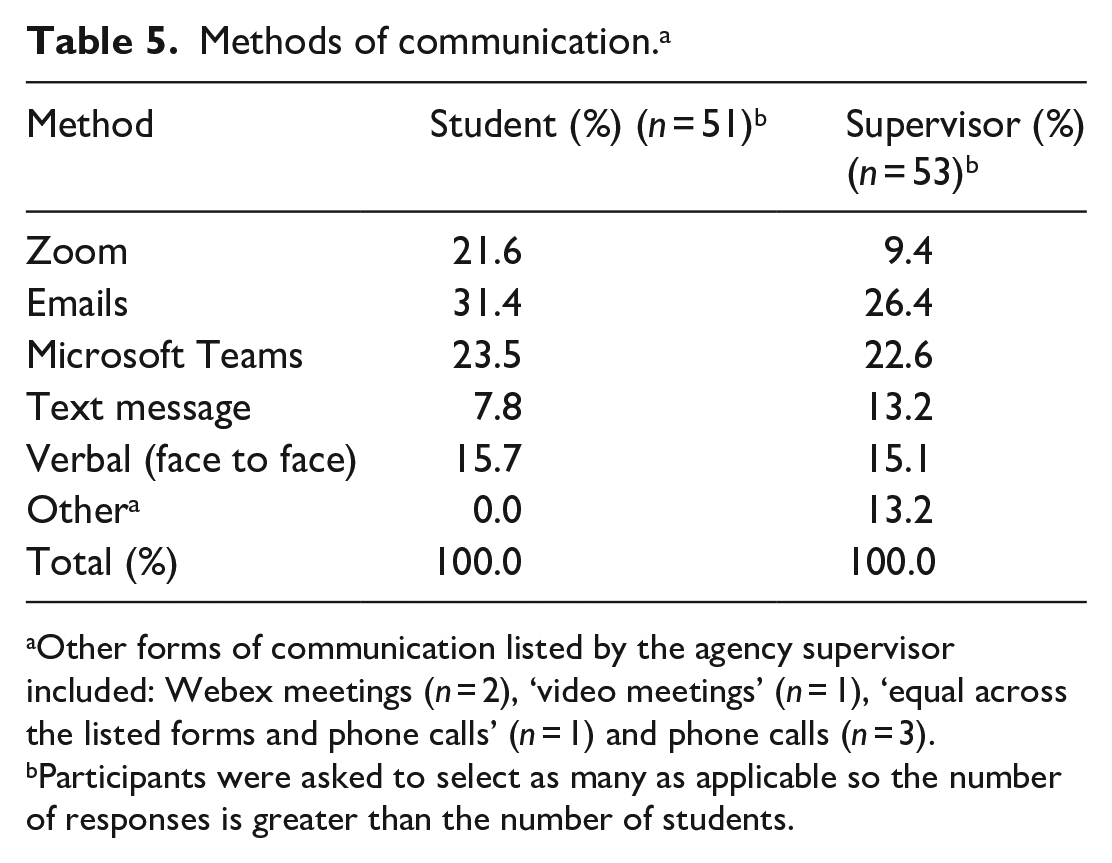
Other forms of communication listed by the agency supervisor included: Webex meetings (n = 2), ‘video meetings’ (n = 1), ‘equal across the listed forms and phone calls’ (n = 1) and phone calls (n = 3).
Participants were asked to select as many as applicable so the number of responses is greater than the number of students.
Preparedness
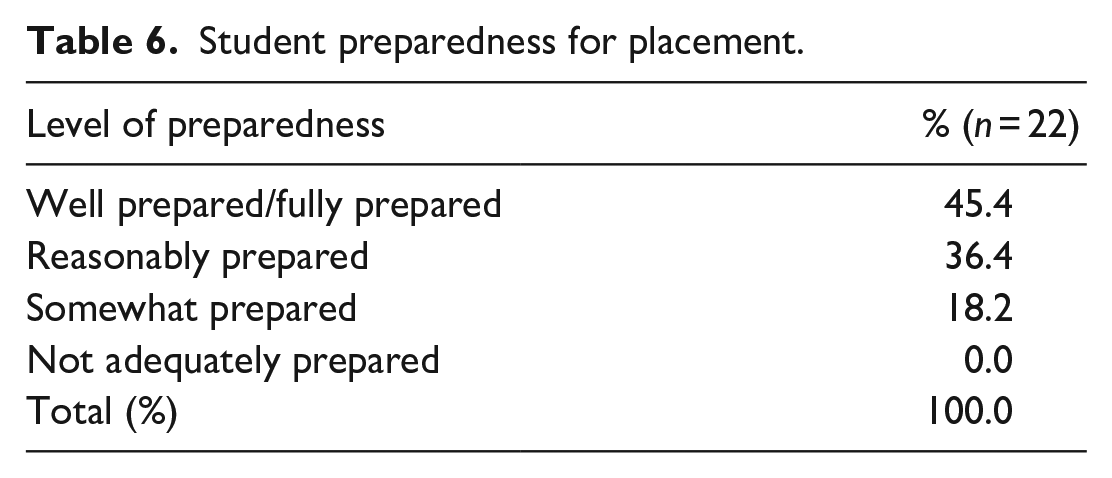
Most students felt they were sufficiently prepared for placement (Table 6). When prompted to describe what could have helped them feel more prepared, some students would have liked more support and guidance and further personal preparation. ‘More learning about how to prepare for a virtual placement (i.e. conducting work at home rather than an office, alone without direct supervision or interaction with others, how to maintain concentration and minimise distractions)’ [Student 7]. Other students wanted further guidance from their placement agency: ‘A lockdown started the weekend before my placement so I was unsure whether it would be virtual/on-site, so felt unprepared in that sense’ [Student 5]. Other students described wanting further guidance from the University: ‘More placement-specific classes’ [Student 16]. Those who felt that their personal preparation was a barrier described that having a ‘better understanding of the organisation’ [Student 13] would have helped them feel more prepared. Almost 60% of supervisors felt completely or well-prepared for student placement, and the remainder felt moderately or somewhat prepared. Most supervisors (95.8%) stated that their students were prepared for completion of the activities whilst on placement with one response missing.
Student preparedness for placement.
Physical environments
Space(s) utilised by students in their homes during their virtual/remote placement ranged from the bedroom (28.0%), living room (12.0%), dining room (12.0%), kitchen (4.0%), study/office (36.0%), other (8.0%) being a ‘bedroom/lounge’ and ‘spare room’. Regardless of the space(s) utilised, almost 55% of participants shared this space with other members of their household. Approximately 27% of students had dependents that were of primary/secondary school age at home whilst they were on placement. Of these, around 17% of students were home-schooling their dependents.
Improving learning and competency through feedback
Most students (86.4%) were provided with timely feedback on their work. When asked to describe what they classified as timely feedback, responses varied; however, the majority listed immediate feedback or within three business days as timely (53.6%). Conversely, some students felt weekly feedback was sufficient (21.4%), whilst others stated greater than a week (3.6%). Almost 18% classified providing feedback once the task was completed as timely, whilst 3.6% listed ‘ad hoc’.
Distance
Twenty-seven percent of students stated time saved in not travelling to placement was the most enjoyable part of their virtual/remote placement. Comments ranged from ‘Less driving/commute, money saved on petrol’ [Student 4], ‘I enjoyed not having to travel’ [Student 3], ‘not having to travel onsite/use public transport during COVID’ [Student 8].
Timely graduation
Given the external circumstances of COVID-19 (and lockdown), over 86% of students preferred not to delay their placement (and hence graduation) waiting for a face-to-face placement.
Contextualisation to individuals
Contextualisation to the needs of individuals was not an issue that arose in our study other than potentially altering the student’s career goals. Over 72% of students reported their placement altered their career goals to some extent. In terms of support in meeting their placement goals, the majority of students (59.1%) felt extremely supported, 36.4% felt well supported and 4.5% felt moderately supported. No student stated ‘somewhat’ or ‘not at all’ supported.
Discussion
The COVID-19 pandemic fast-tracked the use of technology in education (Roe et al., 2022) and the utilisation of virtual/remote activities in higher education from 2020 onwards (Taylor et al., 2021). It gave a new impetus for acceptance and investigation into virtual placement models. From our survey of HIM students and supervisors experiencing remote placements, we were able to investigate the relationship between some of the barriers and facilitators identified in the literature for virtual/remote placements compared to our survey responses.
Flexibility and autonomy
Uraiby et al. (2021) and Jacobs and McEwen (2021) reported that the online nature of learning during remote placements provided students with a greater sense of autonomy than traditional placements. Our survey did not ask specific questions regarding autonomy but qualitative comments indicated this was something which students identified and enjoyed. Students stated, ‘freedom to be in my own space’ [Student 3], ‘more time at home by myself’ [Student 4], ‘high level of independence and self-direction’ [Student 5] and ‘ability to do work and explore independently’ [Student 10].
Donnelly (2003) noted an increase in self-directed and self-managed learning in virtual environments allowed students to practice skills of time management. Many students (50%) stated they did not have fixed placement schedules, supporting Donnelly’s point on the self-directed nature of virtual/remote placements. However, having schedules ensured that students stayed on task and achieved their goals (Werner and Jeske, 2021), and the lack of a schedule may have negatively impacted students by leaving them without adequate direction. Half of our students were not provided with a fixed schedule, and 19.2% of supervisors stated not providing a written schedule for their students created potential challenges. These findings agreed with Werner and Jeske (2021), where students reported lower performance when they lacked goal clarity. West (2021) also identified the lack of structured time associated with online placements to be a challenge to both the students and their mentors: Recommendation 1: Students are provided with a written work schedule prior to, or at the commencement of placement, after student consultation.
IT literacy
IT literacy was discussed in the literature as heavily influencing the placement experience of both students and mentors (Reynolds and Fell, 2011). Prior to the pandemic, a lack of IT literacy prevented the uptake of virtual models (Reynolds and Fell, 2011). Technological influences were echoed in a mid-pandemic environment where developing online competence was crucial to positive placement outcomes (Jacobs and McEwen, 2021). Results from our survey demonstrated most students (>90%) were comfortable in utilising both the communication technology (e.g. Zoom, Teams, emails) and specific placement software (e.g. STATA, Tableau and REDCap). As per the findings of Jacobs and McEwen (2021), this level of confidence can be correlated with the previously reported (Prasad et al., 2022) high levels of both HIM students and supervisors (75%) who were completely satisfied with their remote/virtual placement experience.
Other problems associated with the use of technology reported in the literature included time lags (Yu et al., 2021) and accessibility limitations for individuals with disabilities (Twogood et al., 2020). Most (90%) HIM students reported they had the appropriate equipment to complete remote/virtual placements. For many students (79%), however, this was not ascertained until placement commencement. Given the potential for time lags in obtaining appropriate equipment and/or software, our findings support the literature that there are potential challenges here that may impact placement efficiency: Recommendation 2: Supervisors conducting remote place-ments should determine if students have access to appropriate equipment and software prior to the commencement of placement.
Social skills and communication
Communication difficulties can affect the ability of students to build rapport with mentors and colleagues (Jacobs and McEwen, 2021). West (2021) identified the virtual nature of placements resulted in students missing transient conversations which involved the transfer of knowledge through short meaningful exchanges. Additionally, social interactions, or lack thereof, were also reported to negatively impact the student placement experience (Jacobs and McEwen, 2021). One HIM student stated that ‘missing out on the social/networking side of placement’ [Student 11] was the most challenging aspect of placement. The solution to this was presented by another student’s qualitative comment: ‘I was included in social remote activities e.g., quizzes, the team step challenge. It was really nice to feel included and part of the team’ [Student 14]: Recommendation 3: Supervisors include students in remote social activities to enable students to form social skills while on their virtual/remote placements.
Twogood et al (2020) identified that the virtual medium for placements had challenges for effective communication. Students communicating online often miss body language cues (Webber and Ahn, 2020). As a result of possible distorted communication and loss of non-verbal cues, students required a greater focus and use of energy than in-person encounters (Jacobs and McEwen, 2021; Yu et al., 2021). Werner and Jeske (2021) found that communication issues commonly resulted in student confusion and assumptions. Our survey focused on methods and frequency of communication and feedback rather than its effectiveness. Emails were the most common method of communication for students and supervisors (31.4% and 26.4%, respectively). The frequency of communication between students and supervisors varied from once or more per day to once a fortnight and was initiated both by students and supervisors. The variability in communication frequency may mean students were not receiving the feedback they needed to resolve any confusion or assumptions made in a timely manner: Recommendation 4: During remote placements, greater emphasis should be placed on modes of communication where visual, verbal and nonverbal cues are present and there is provision for timely feedback (i.e. video-conferencing).
Motivation and learning
Asynchronous learning may support student engagement by enabling students to work at their own pace (Taylor et al., 2021) and provide a non-threatening environment for student participation (Bayerlein, 2015). Engagement could also improve due to the absence of work colleagues who were considered a physical distraction to students during placement (Werner and Jeske, 2021). However, working from home could bring similar challenges as over half of our participants shared their working space with other members of their households. Students reported difficulty remaining engaged (Jacobs and McEwen, 2021) and faced feelings of burnout associated with the overuse of technology and screen fatigue (Yu et al., 2021) in the virtual environment. Manifestations of burnout were driven by the passivity of sitting at a computer screen and often decreasing attention (Webber and Ahn, 2020). From qualitative feedback, four students stated staying focused or motivated was the most challenging aspect of placement. ‘Sitting at the desk at the end of my bed all day every day and trying to keep motivated in such conditions’ [was the most challenging] [Student 5]. Motivation to persist with placement tasks could also be impacted if there were non-placement tasks that demand attention. Webber and Ahn (2020) found that students reported decreased attention and performed twice as many non-conference-related activities during online conferences versus in-person conferences. From our study, a quarter of all students had at-home dependents, some of which were being home-schooled, and thus impacting the focus on placement activities: Recommendation 5: Students should have a dedicated space, free from distractions, to help simulate the work-based placement experience. For those unable to have a suitable home-based dedicated space, it is recommended that educational institutions and agencies work with the student to organise an appropriate working space.
Learning and competency
Webber and Ahn (2020) found virtual experiences assisted learning and competency by supporting a range of learning styles. Virtual placements were also cited as providing effective simulations in preparing students for telehealth (Jacobs and McEwen, 2021; Taggar et al., 2021), whilst for clinical interactions, students were able to shadow a broader range of mentors and attend clinics that would not typically be available in person (Twogood et al., 2020). Robinson et al. (2020) also reported an increase in student confidence in their ability to undertake work through the practice of communication via remote means, whilst Bayerlein (2015) found virtual placements enhanced the development of soft skills and technical knowledge required in the workplace. Negative aspects of virtual placements, as applied to learning and competency, were also identified. West (2021) noted the difficulty with signing off student proficiencies and associated anxiety from students surrounding expectations. Virtual learning commonly prevented opportunities for students to perform practical skills (Reynolds and Fell, 2011) and often health students were unable to take a lead in virtual clinical interactions (Twogood et al., 2020). Supervisors, overwhelmingly, perceived that students were prepared for placement. As Prasad et al. (2022) previously reported, three-quarters of supervisors reported being completely satisfied with the placement students’ performance: Recommendation 6: Supervisors establish a balanced virtual-placement schedule that incorporates both independent industry practice and collaborative engagement. It should be consistently reviewed involving communication with the student and adapted to reflect their learning approach and performance.
Distance, space and COVID-19
The virtual medium of placement overcomes some of the challenges faced in running physical placements. For example, technology overcame barriers associated with distance, space and travel as placements were not limited by typical physical constraints (Lucas et al., 2019; Twogood et al., 2020; Werner and Jeske, 2021). This is positive in allowing students from different cities, time zones and countries to participate in placements where physical presence would not have previously been possible (Werner and Jeske, 2021). This was reflected in our study with 27.3% of our students identifying time saved in not travelling to placement as the most positive benefit of remote/virtual placements that included ‘money saved on petrol’ [Student 4].
Recommendation 7: Virtual/remote placements may be utilised when student access to specialist placement sites is inhibited by location.
Timely graduation
Many studies suggested a major benefit of virtual placements was to enable students to graduate on time (Jacobs and McEwen, 2021; Taggar et al, 2021; Twogood et al, 2020). In our survey, most students (86.4%) preferred not to delay their placement to wait for a fully on-site placement if it meant their graduation would be delayed. ‘I would have preferred an on-site placement, however graduating on time was more important to me’ [Student 5] and another ‘I just wanted to finish the degree!’ [Student 14]: Recommendation 8: Virtual/remote placements are utilised when there are significant disruptions to student progression if face-to-face placement options are not available.
Placement shortfall
Virtual placements provided some agencies with increased student capacity where the opportunity for placement was compromised by a lack of space and shortages of other agencies/mentors willing to take students (Jacobs and McEwen, 2021; Lucas et al., 2019; Reynolds and Fell, 2011; Robinson et al., 2020). Prasad and Riley (2021) reported that during the height of the pandemic, agencies could not offer placements, had to cancel placements or could only offer remote placements due to the above-mentioned reasons. Solutions included partly remote/fully remote placements and several internal university placements being offered: Recommendation 9: Virtual/remote placements are a valid mechanism for providing placements when there are agency or mentor shortfalls in placement offers.
Contextualisation
Contextualising individual placement experiences to suit different personal career goals was found difficult via virtual placements due to the broad HIM career pathways available; however, Bayerlein (2015) identified that virtual placements could contextualise the development of skills. Almost three-quarters of surveyed students reported placement altering their career goal to some extent with some stating that placement sparked new areas of interest. This was not unique to remote/virtual placements but is an outcome for most students undertaking placements independent of their mode of delivery.
Peer interaction and mentoring
Virtual placements were commonly found to assist students in developing mentorship skills through working in a peer-led system established through group tasks (Twogood et al., 2020). Bayerlein (2015) reported the importance of peer interactions during virtual placements and highlighted the importance of group engagement in creating immersive experiences. Prasad and Riley (2021) previously reported the importance of fostering a sense of community in the online environment. This was achieved via an optional Community of Practice session run every second week of placement. Students would attend the sessions to share their placement experiences and ask questions: Recommendation 10: Educational institutions create opportunities for students to interact with each other virtually to share common experiences during the placement.
Decreased activity during COVID-19, leading to quieter ‘clinical diaries’ (p. 7), allowed students to perform tasks that normally would not be manageable (Twogood et al., 2020) and improved use of contact time between the student and the mentor (Reynolds and Fell, 2011). Prasad et al. (2022) reported that the supervisors enjoyed teaching and mentoring the next generation in the virtual/remote environment and witnessing student learning and growth: Recommendation 11: Students are invited to have one-to-one conversations with their agency and academic supervisors either weekly or fortnightly to enable a private forum to share ideas and to develop a working relationship.
Limitations
The literature review in this study was limited by the availability of research pertaining to virtual/remote student placements and the range of databases searched. The themes covered within this paper arose from the literature review. There are potentially other additional themes to be addressed if a more extensive review has been completed. For example, issues surrounding the security of systems with staff and students working remotely. The agency supervisor might not be the official supervisor for the student and this could impact upon the accuracy of the results collected around questions on frequency of communication. The sample size was small which may impact the representativeness of results. Investigation into the home working environment was not covered in depth in our survey and the authors acknowledge that at-home workstations should be assessed to meet Occupational Health and Safety standards.
Conclusion
This study explored the experiences of virtual/remote placements for HIM students and their supervisors. Some of the barriers of virtual/remote placements discussed can be overcome with consideration for the student placement experience and the practical nature of WIL. This requires ongoing collaboration between students, agency supervisors and the university discipline to cultivate a learning experience where distance does not impede a ‘hands-on’ approach. Facilitators for virtual/remote placement should familiarise themselves with the challenges associated with the virtual student placement experience to facilitate an effective learning environment. This research will benefit future HIM students completing virtual/remote placements, agency supervisors who offer virtual HIM placements, as well as Academic Supervisors in the Discipline of HIM at La Trobe University. It will also benefit those looking to offer or supervise students in a virtual/remote environment.
Supplemental Material
sj-docx-1-him-10.1177_18333583241227002 – Supplemental material for Work-integrated learning for health information management students: Lessons learned from literature, and experiences of supervisors and students on virtual or remote placements
Supplemental material, sj-docx-1-him-10.1177_18333583241227002 for Work-integrated learning for health information management students: Lessons learned from literature, and experiences of supervisors and students on virtual or remote placements by Natasha Prasad, Madeleine Maloof, Stephanie Gjorgioski and Merilyn Riley in Health Information Management Journal
Footnotes
Acknowledgements
The authors wish to acknowledge the work completed by Ho Chit (Sampson) Yeung in 2020 as part of his final-year placement. The findings of his work justified a formal ethics approval and subsequent research study.
Declaration of conflicting interests
The author(s) declared no potential conflicts of interest with respect to the research, authorship and/or publication of this article.
Funding
The author(s) received no financial support for the research, authorship and/or publication of this article.
ORCID iDs

Supplemental material
Supplemental material for this article is available online.
References
Supplementary Material
Please find the following supplemental material available below.
For Open Access articles published under a Creative Commons License, all supplemental material carries the same license as the article it is associated with.
For non-Open Access articles published, all supplemental material carries a non-exclusive license, and permission requests for re-use of supplemental material or any part of supplemental material shall be sent directly to the copyright owner as specified in the copyright notice associated with the article.
