




Abstract
Background:
Career success can be defined as the accomplishment of desirable outcomes in an individual’s work experiences. It can be divided into objective and subjective career success. Objective success refers to tangible and measurable outcomes such as promotions and position titles. Subjective career success relates to an individual’s interpretations of their success or accomplishments. The career success of health information management professionals has not been explored in the literature.
Aim:
To determine the indicators of career success as reported by health information managers (HIMs) and identify whether there are any differences based on length of time in the profession.
Methods:
Using a cross-sectional study design, an online survey was administered to a sample of La Trobe University and Lincoln Institute of Health Sciences Medical Record Administration and Health Information Management graduates from 1985, 1995, 2005 and 2015, which included the following question: “How would you define success in your career?”
Results:
Almost 88% (n = 63) of overall participants in the study responded to this item. Subjective factors (n = 77) of career success, compared to objective factors (n = 22), were more common. The categories of recognition (feeling valued/appreciated), job satisfaction and feelings of accomplishment/sense of achievement were commonly reported.
Discussion:
Subjective factors of an individual’s career success were deemed to be more significant than objective factors among HIMs.
Conclusion:
Factors such as recognition and appreciation at work, job satisfaction, fostering high-quality work outputs and creating a sense of achievement should be the major foci for managers, organisations and individuals.
Keywords
Introduction
Career success has been broadly defined as the positive feelings that an individual attaches to their work-related outcomes, accomplishments and experiences (Converse et al., 2012; Ng et al., 2005). Two distinctive dimensions of career success have been identified: objective (or extrinsic) and subjective (or intrinsic) (Arthur et al., 2005; Ng et al., 2005; Spurk et al., 2018). Objective career success can be represented through calculable indicators of an individual’s career, such as income, promotions and attained organisational position (Arthur et al., 2005). Conversely, the subjective pillar is determined by an individual’s appraisal of their success within the context of their work experience(s), such as job satisfaction, work-life balance and a sense of accomplishment (Guan et al., 2019; Heslin, 2005; Stumpf and Tymon, 2012).
The careers landscape has changed significantly in the last 20 years to accommodate technological, societal, political, economic and organisational changes (Chudzikowski, 2012; Colakoglu, 2011). The cumulative adjustments have seen the subtle deconstruction of the traditional career, which was characterised by upward role attainment in a single organisation (Colakoglu, 2011). This employment pattern was considered a criterion for objective career success (Stumpf, 2014). In contrast, contemporary employees are more likely to pursue roles that they consider meaningful (Ng and Feldman, 2014) and are, therefore, less likely to anticipate a long-term career within a single organisation. This career concept has been described as the “protean career” (Converse et al., 2012: 149), where individuals are becoming more determined to shape their own careers and are open to flexible and dynamic movement between workplaces. This shift from a career conditional upon “linear” (Ng and Feldman, 2014: 169) mobility within one workplace, to a career path where transition may occur more frequently (Chudzikowski, 2012), has amplified the importance of subjective career success. This is consistent with the findings of several researchers who have argued that the subjective interpretation of one’s career is the primary indicator for career success, rather than objective measurements (Heslin, 2005; Shockley et al., 2016). Individuals are increasingly making career-related decisions based on subjective characteristics, rather than on factors such as salary or promotions. Contemporary career mobility, as described by Chudzikowski (2012), can be attributed to an increase in contractualised and project-based employment opportunities. All of these factors contribute to an increasingly complex working environment. This complexity can make it difficult for individuals to navigate their career paths and understand their feelings towards their work (Converse et al., 2012; Ng et al., 2005).
Achieving career success is valuable to both the individual and their organisation. It enhances an individual’s energy and dedication to their work and leads to continuous professional development, improved quality of work, increased staff retention rates and fewer errors (Dyess et al., 2015; Zhang et al., 2020). Ng et al. (2005) advised that understanding the determinants of career success can assist organisations in meeting their goals.
Human capital theory
Several theories have served as a theoretical underpinning within the career success literature. In the current study, Becker’s (1993) human capital theory was used to underlie the concept of career success. Becker (1993) posited that every individual brings a set of different skills, education, experience and personal characteristics to their job. Shahibudin (2015) asserted that the amount of human capital a person utilises within their job (such as their effort and knowledge) is the main determining factor of career success. The current study aimed to highlight how health information managers (HIMs) define their career success which, in turn, may reflect their perceptions of their human capital.
The link between motivation and career success
The career literature suggests that individuals who are self-determined in their work motivation will achieve high career success (Dahling and Lauricella, 2016; Schmitt et al., 2021). Schmitt et al. (2021) found that women in science, technology, engineering and mathematics who felt under-valued, and consequently demonstrated amotivation, perceived themselves as having lower levels of career success. Career success was described by Hupkens et al. (2021) as a dynamic concept that can be continuously (re)shaped and (re)assessed. For example, when the individual’s work-related goals are met, or no longer serve that individual, they will develop new career goals and internal motivators. Through this adaptive process, their perceptions of career success will continuously change to align with their goals (Hupkens et al., 2021). This was reinforced by McDonald and Hite (2008), for whom career success constitutes much more than verifiable measurements such as promotions and pay rises, but rather, is influenced by a range of factors. This links to the concept of motivation, which is continuously changing and based on internal and external influences (Dysvik and Kuvaas, 2013).
The way in which HIMs define success in their career is a topic that has not previously been reported in the literature.
The current study
This research was part of a larger study that aimed to investigate the motivators of HIMs in the construction of their professional identity and associated relationships to job satisfaction and engagement with their profession. The objectives of this component of the research were to
(1) Determine the subjective and objective factors of career success as reported by HIMs; and,
(2) Identify whether there are any differences in factors that impact on career success, based on length of time in the profession.
Method
Study design and sample
A cross-sectional study design using a convergent mixed-methods approach (Creswell and Creswell, 2017) was utilised. Data were collected from the 1985, 1995, 2005 and 2015 Medical Record Administration and Health Information Management graduate cohorts from La Trobe University (LTU) and Lincoln Institute of Health Sciences, in the state of Victoria. The method has been reported previously (Nexhip et al., 2022).
Graduates from the requisite cohorts were approached using three recruitment methods, via information contained in an LTU Discipline of Health Information Management database; LinkedIn; or the researchers’ professional networks. Graduates who had retired or changed careers from health information management to another profession were included. Exclusions included graduates whose contact details could not be obtained, who had died or who were a member of the research team. Of the 136 eligible graduates, a sample of 99 was reached following application of the exclusion criteria.
Data collection
An online Research Electronic Data Capture (REDCap) survey was developed to collect HIMs’ responses regarding motivation; engagement with their profession; job satisfaction; professional identity and reflection on professional careers. In the open-ended items eliciting qualitative data about motivation, the following was asked: “How would you define success in your career?” The responses for this component of the survey are reported herein.
Data analysis
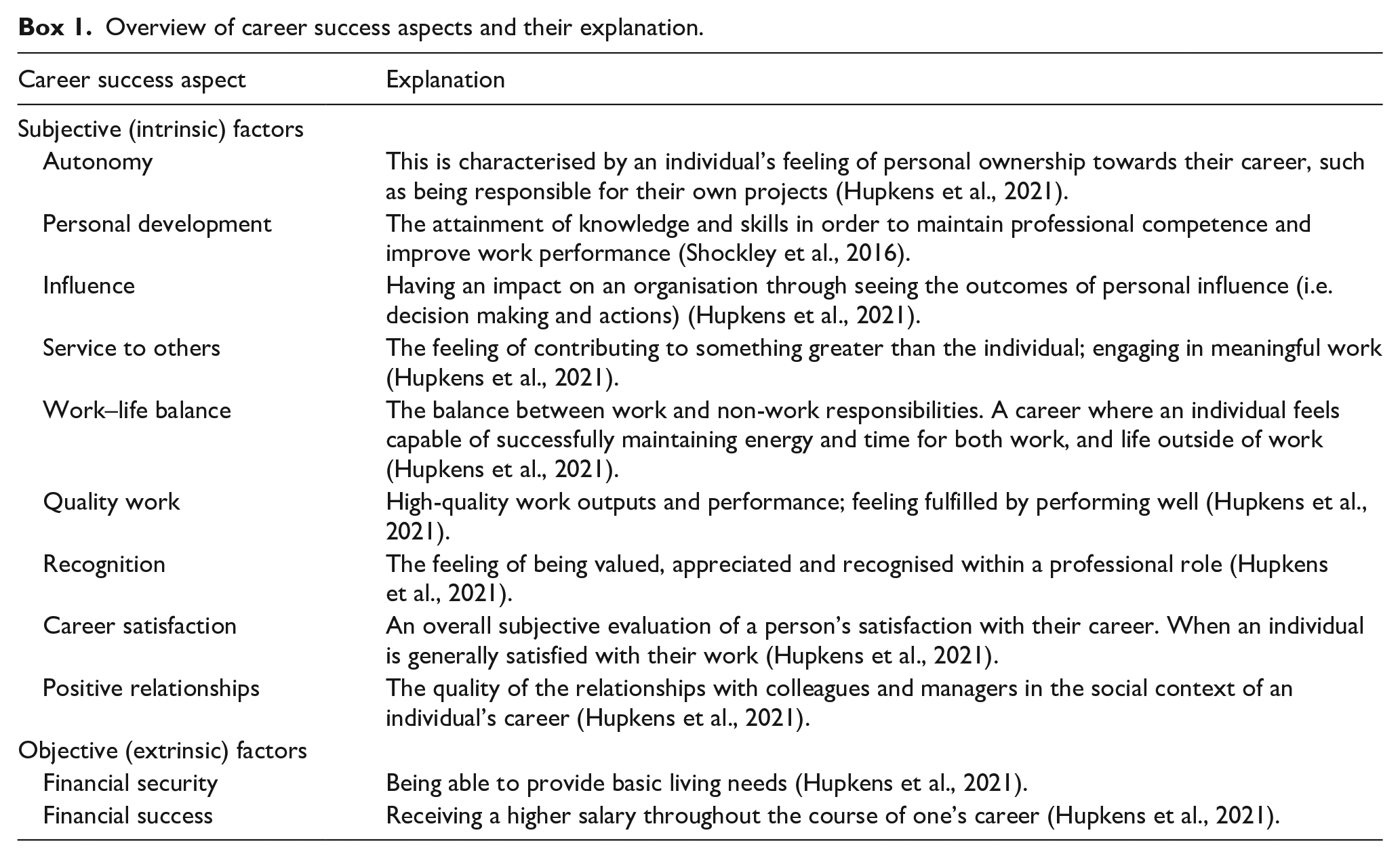
The data were analysed using qualitative content analysis. The free-text responses on how HIMs defined success in their career were systematically grouped into specific content categories (Hesse-Biber and Leavy, 2004). This was performed by a single researcher (AN), with verification completed by the remainder of the research team. The categories of career success indicators identified by Hupkens et al. (2021) were used (in a customised format) to categorise the qualitative data (Box 1).
Overview of career success aspects and their explanation.
Ethics approval
The study was approved by the LTU Human Research Ethics Committee.
Results
Response rate
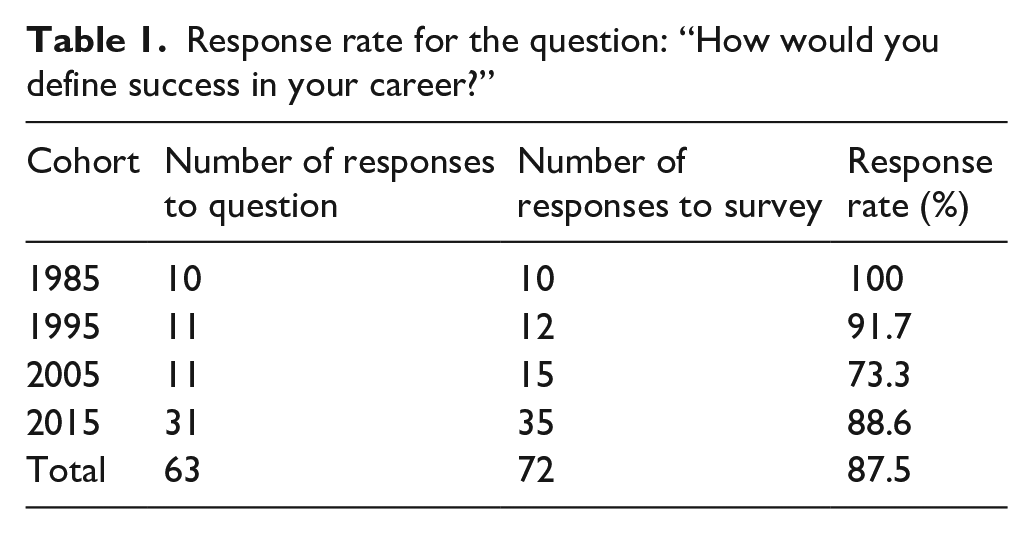
As reported previously by Nexhip et al. (2022), 72 responses were received from 99 (72.7%) invitations to complete the survey. Sixty-three (87.5%) respondents answered the item addressing career success. Table 1 highlights the response rate, by graduate cohort.
Response rate for the question: “How would you define success in your career?”
Indicators of career success
Figure 1 summarises the key indicators of career success, grouped into the broader categories of objective and subjective factors, using a modified version of those identified by Hupkens et al. (2021) (Table 1).
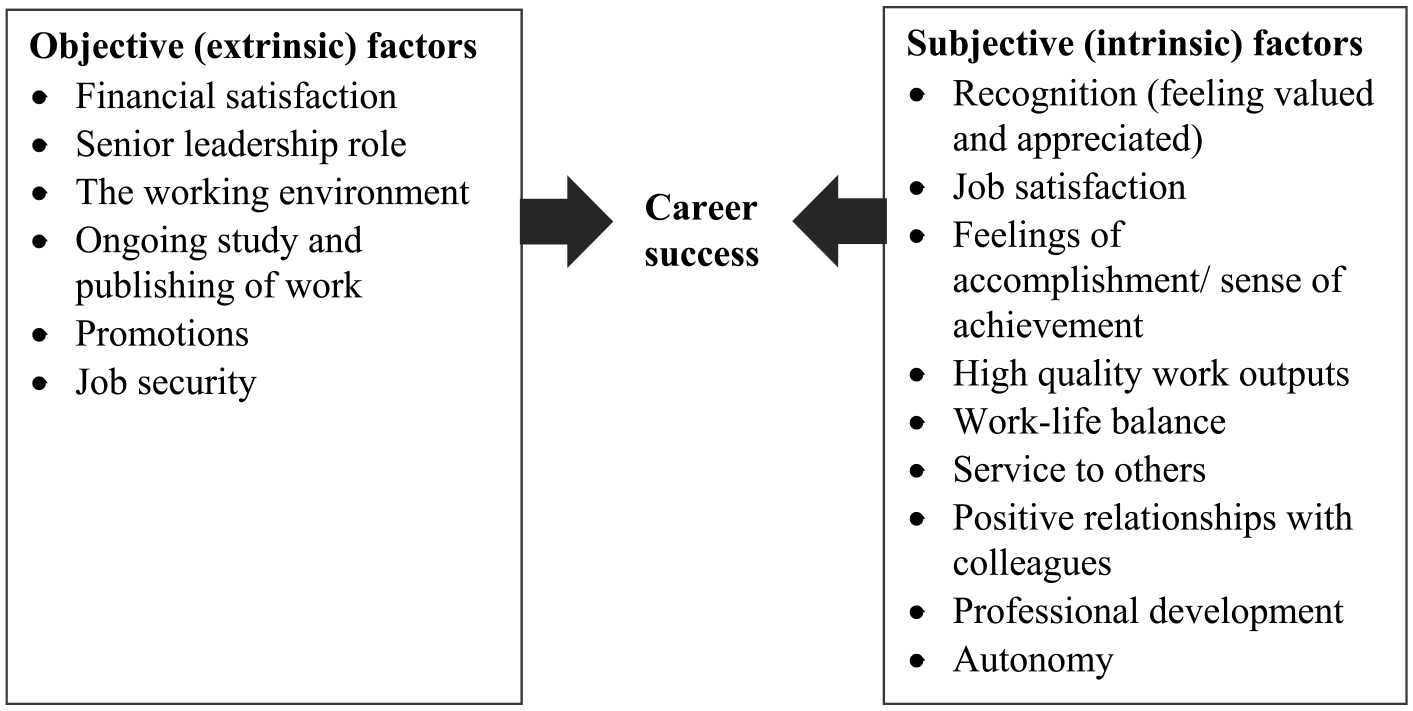
Factors in objective and subjective career success of health information managers (HIMs).
Objective (extrinsic) career success
Table 2 highlights the categories, frequency and participants’ quotations relating to the objective factors of career success. Financial satisfaction (n = 5) and attaining a position in a senior leadership role (n = 5) were the most common objective factors indicative of a successful career.
Quotations relating to HIMs’ objective career success.
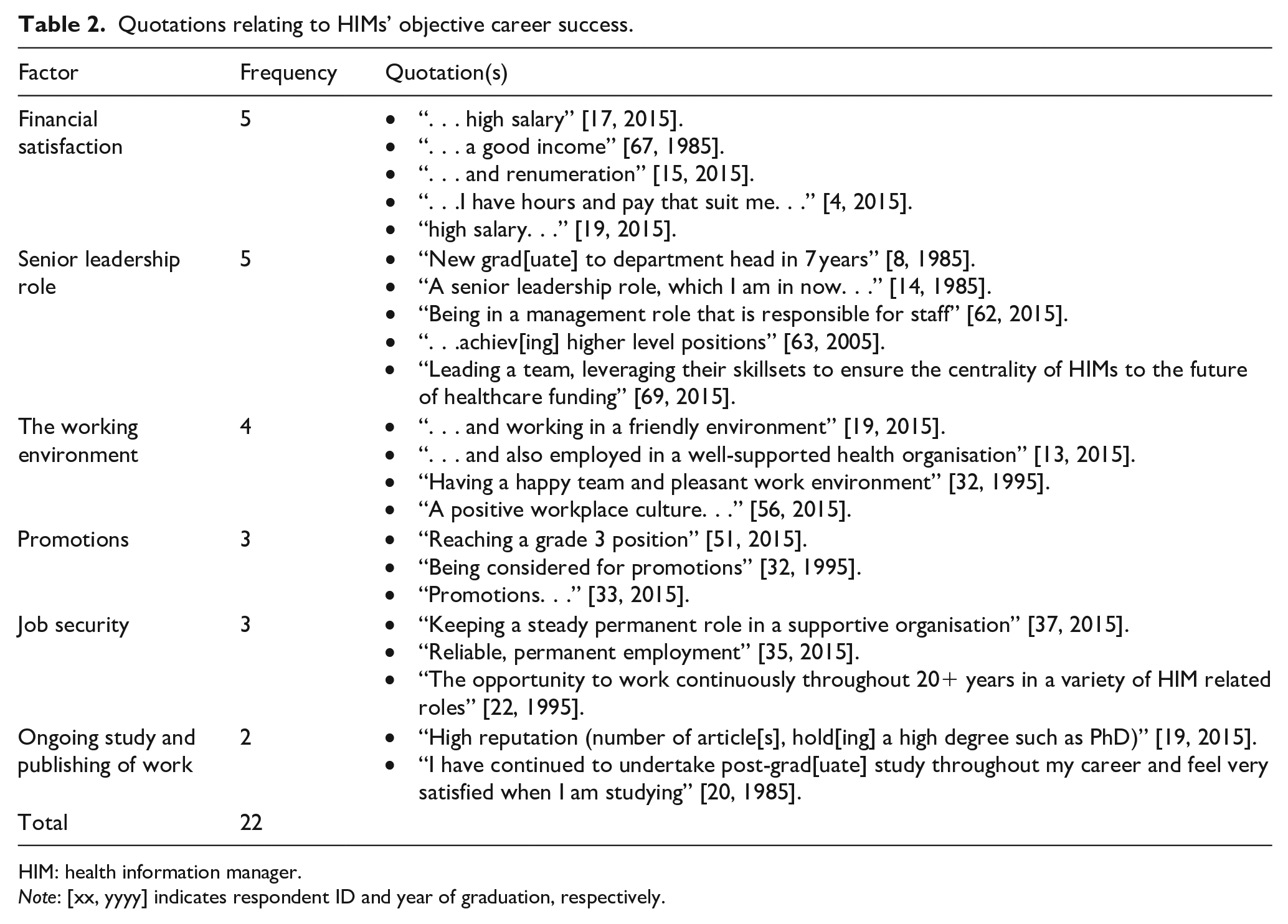
HIM: health information manager.
Note: [xx, yyyy] indicates respondent ID and year of graduation, respectively.
Subjective (intrinsic) career success
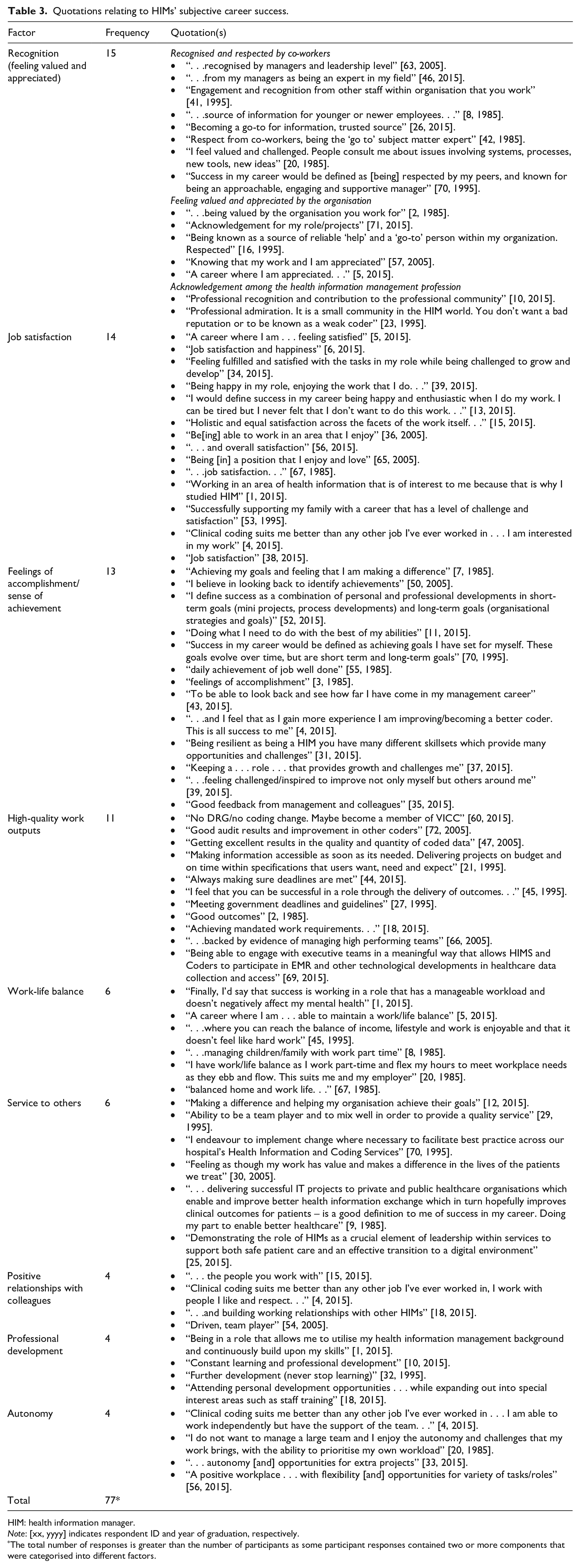
Table 3 highlights the factors of subjective career success and their frequency, with related quotations from participant HIMs.
Quotations relating to HIMs’ subjective career success.
HIM: health information manager.
Note: [xx, yyyy] indicates respondent ID and year of graduation, respectively.
The total number of responses is greater than the number of participants as some participant responses contained two or more components that were categorised into different factors.
Participants more commonly reported on subjective factors (n = 77), compared to objective factors (n = 22). The most common intrinsic responses from participants, when defining their career success, were embedded within the subjective categories of recognition (feeling valued and appreciated) (n = 15), job satisfaction (n = 14) and feelings of accomplishment/sense of achievement (n = 13).
Respondents acknowledged the receipt of recognition in three ways: feeling valued and appreciated by the organisation; being recognised and respected by co-workers and being acknowledged within the health information management profession. Respondents commented on the attainment of being a “subject matter expert” [42] and a “go-to for information” [26] within their workplace as an indicator of career success. Job satisfaction, as a driver of career success, was reported by approximately 22% (n = 14) of participants. Respondents commented on “enjoying the work that [I] do” [39] and “being happy and enthusiastic . . . [at] work” [13] as definitions of work-related career success. The third most common factor of career success was related to intrinsic motivation and achievement of work-related goals. Respondents measured their career success according to “feelings of accomplishment” [3] and “feeling challenged/inspired to improve. . .” [39].
Discussion
This study has provided significant insight into the perspectives on career success of cross-generational cohorts of health information management graduates. The results support Heslin’s (2005) and Shockley et al.’s (2016) notion, that subjective factors of career success are deemed to be more meaningful than objective factors. The study has identified that the major factors of career success relate to the respondent HIMs’ appreciation by managers and colleagues, job satisfaction, intrinsic feelings of accomplishment and production of high-quality work that is specific to their role.
Subjective factors of HIMs’ career success
The results demonstrate that the feeling of being valued and appreciated at work was the primary subjective factor in how HIMs in this study defined success in their career. The concept of appreciation at work relates to the acknowledgement of an individual’s values, achievements and personal characteristics in a positive manner (Semmer et al., 2016). Appreciation at work has also been addressed by Van Quaquebeke et al. (2009) within the context of appraisal and recognition respect; that is, the respect employees receive for their work, from supervisors and colleagues, as well as the respect they receive as a person. Receiving respect in the workplace enhances an individual’s self-esteem and can lead to higher perceptions of career success and satisfaction (Van Quaquebeke et al., 2009). Takeuchi et al.’s (2008) study of physiotherapists found that recognition from their patients and colleagues for their efforts was a marker for career success, and although HIMs are not directly involved in patient interactions, our findings highlighted the intrinsic value of recognition from colleagues in a health context. Reinforcing this, approximately 24% (n = 15) of the responses to this question in the current study identified the feeling of being valued and appreciated at work as an important element of success in the HIMs’ roles. This was reported by members of all cohorts, suggesting that the importance of being recognised for the work that HIMs do is significant across their early-, mid- and late-career stages.
The general satisfaction that an individual has within their job is another important factor of career success. The feeling of “being happy in [my] role” [39] was reported in 22% (n = 14) of the responses. The nexus between job satisfaction and career success was examined by Tremblay et al. (2014), who found that individuals experiencing job success feel a greater sense of satisfaction with their roles and have a greater appreciation of their employing organisation. In their study of professionals working within the technology sector in Canada, Dyke and Duxbury (2010) found that enjoyment of work and a personal sense of accomplishment were the two most important factors of career success. The latter was also identified as an important factor of career success in the current study, with approximately 21% (n = 13) of the responses reporting “achieving goals” [70] or other feelings of personal accomplishment as definitions of HIMs’ work-related success. This is consistent with findings from other components of this study: in the context of McClelland’s (1985) achievement needs theory, HIMs are inherently motivated by the desire to fulfill and accomplish set goals (Nexhip et al., 2022).
Objective factors of HIMs’ career success
Financial satisfaction and attained organisational position emerged from the objective factors (related to the organisation or external to the individual) as the most common examples of career success. While not as common as subjective factors (n = 77), objective factors of career success were reported 22 times by participants in the current study. This is consistent with the findings of Abele et al.’s (2010) study of university-qualified professionals from a range of disciplines, specifically that their perceptions of career success and satisfaction were largely based on factors external to money and position.
Practical implications
From a practical perspective, the results of this study underscore the importance of subjective factors in shaping an individual’s perceptions of their career success, with a particular focus on appreciation and recognition at work. They suggest implications for individuals and organisations. The greater acknowledgement of subjective factors indicates that individuals are increasingly occupying roles that offer compatibility with their personal lives and values (Heslin, 2005; Shockley et al., 2016). This has led researchers to suggest that organisations and managers need to understand that salaries and promotions are not as important to an individual’s work-related success, in contrast to their internal feelings of being acknowledged, respected, satisfied and motivated to perform well in their work. This further supports the idea that individuals, when crafting their own careers, and organisations, when strategising employee engagement and retention, should pay more attention to the subjective meanings of career success.
Limitations
Measurement of career success was not the primary focus of the main study; therefore, this concept was not captured using quantifiable measurement tools. Responses to the open-ended item were informative in eliciting information on how the HIMs defined success in their careers; however, the integration of a quantifiable career success measurement tool would enrich the findings in this area. Additionally, the relative numbers in each graduate cohort suggest a higher representation of early-career respondents in the study. The sample of Victorian graduates is a limitation, and further studies on a wider cohort of Australian HIMs would enhance generalisability of results and allow for cross-jurisdictional analyses. Nexhip et al. (2022) have previously reported the study limitations more extensively.
Conclusion
The “work world” continues to change and adapt in response to technological, societal and economic shifts. Consequently, individuals have an increased responsibility to self-manage their careers, which can make it difficult for them to orientate their work-related preferences and pathways. The findings of the current study highlighted the subjective and objective dimensions of how the HIM respondents defined success in their careers. The results suggested that meeting employees’ aspirations for success may be best achieved through subjective factors such as feelings of accomplishment, career satisfaction, high-quality work outcomes, work-life balance, and the achievement of work-related goals, as opposed to objective factors such as salary and promotions. No trends could be identified in factors that were more prominent, based on length of time in the profession, implying that subjective elements of HIMs’ career success were commonplace regardless of the individual HIM’s position in early-, mid- or late-career stages. The findings have led the researchers to recommend that HIMs with staff management portfolios should nourish subjective career success factors in their management approaches. In an environment where individuals are increasingly required to take ownership of their career development, health information management professionals should be proactive and consider which factors are the most important in their work-related success. Understanding this can lead to higher levels of productivity, better quality outputs and increased employee engagement: benefits for both individuals and employing organisations.
Footnotes
Declaration of conflicting interests
The author(s) declared no potential conflicts of interest with respect to the research, authorship, and/or publication of this article.
Funding
The author(s) received no financial support for the research, authorship, and/or publication of this article.
